Metals and Extremophilic Bacteria in Mining Environments: A Systematic Review

 ,
,  , , and
Abstract
1. Introduction
2. Materials and Methods
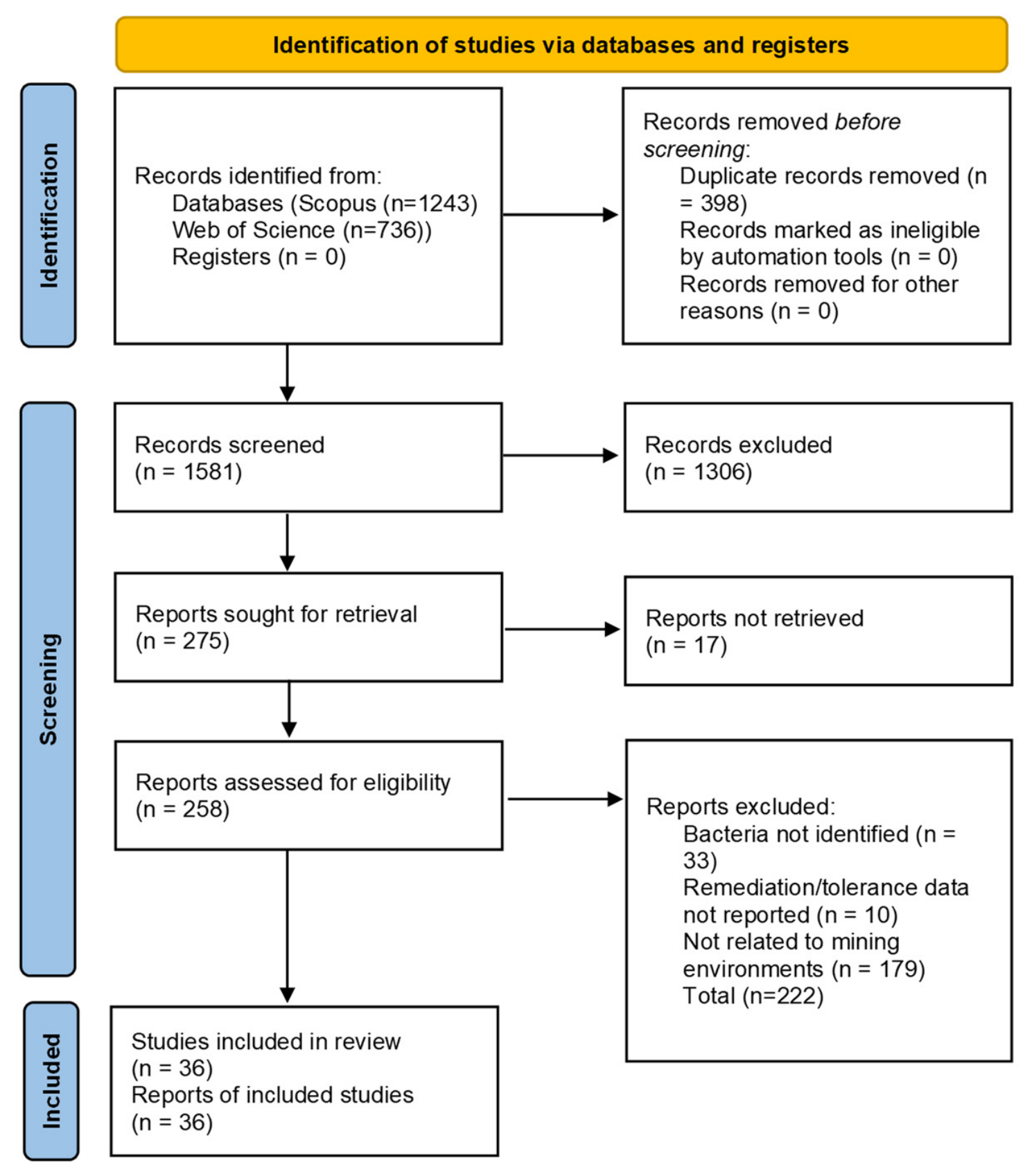
2.1. Systematic Review Protocol
2.2. Article Selection and Eligibility
2.3. Data Extraction and Analysis
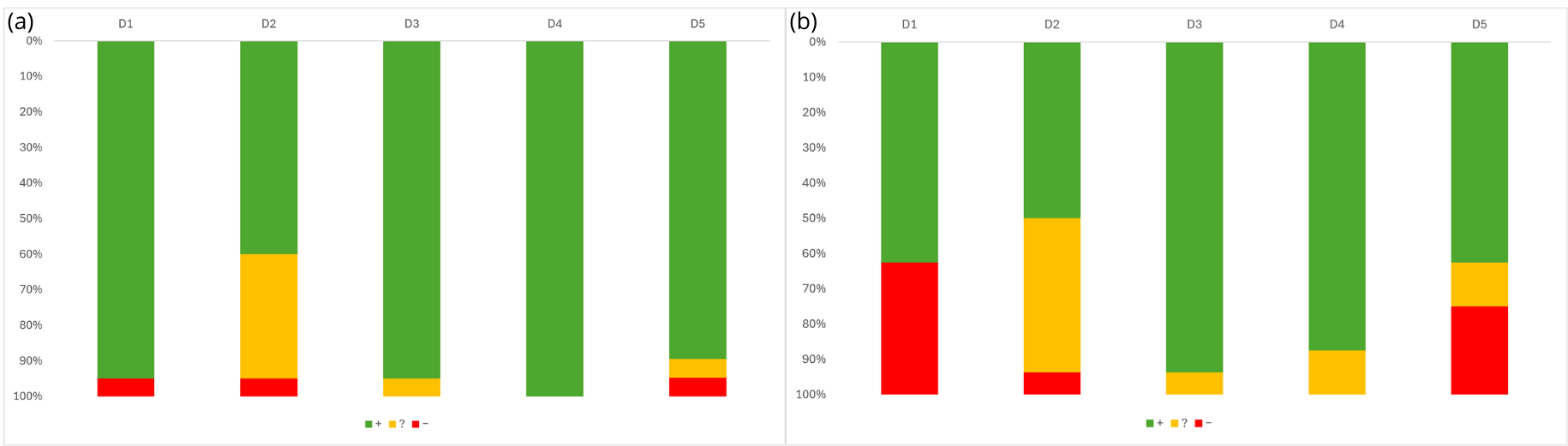
2.4. Quality and Risk of Bias Assessment
2.4.1. Exposure and Tolerance Studies Checklist (20 Articles): Focused on Capturing Analytical and Ecological Rigor, Evaluating Five Specific Domains
- •
- (D1) Selection and environmental characterization of sampling sites.
- •
- (D2) Measurement of metal exposure using high-precision instrumental quantification (e.g., ICP-MS, ICP-OES, or ASS) to avoid nominal dosing bias.
- •
- (D3) Robust molecular and taxonomic identification of extremophile isolates (e.g., 16S rRNA gene sequencing with public repository accession numbers).
- •
- (D4) Control of operational and environmental confounding factors (e.g., temperature and buffered initial pH).
- •
- (D5) Selective reporting of results across all tested strains and metals.
2.4.2. Experimental Remediation Studies Checklist (16 Articles): Focused on the Internal Validity and Experimental Design Controls of Active In Vitro or In Situ Removal Assays, Evaluating Five Domains
- •
- (D1) Experimental design validity and the mandatory inclusion of parallel sterile abiotic controls to differentiate microbially mediated removal from spontaneous chemical precipitation.
- •
- (D2) Strict adherence to and reporting of protocol conditions (e.g., incubation time, agitation speed, and mass balance validation).
- •
- (D3) Taxonomic traceability, purity validation, and biological characterization of the remediating strain or complex microbial consortium.
- •
- (D4) Active monitoring and control of chemical confounding factors (e.g., kinetic fluctuations in pH capable of inducing spontaneous chemical precipitation).
- •
- (D5) Reporting of experimental replicates (minimum in triplicates) along with statistical dispersion parameters.
3. Results
3.1. Identification of Metallotolerant Bacteria
3.2. Methodological Quality and Risk of Bias Assessment
3.3. Performance and Operational Ranges of Active Metal-Remediating Bacteria
3.4. Analysis of Metallotolerant Bacteria
4. Discussion
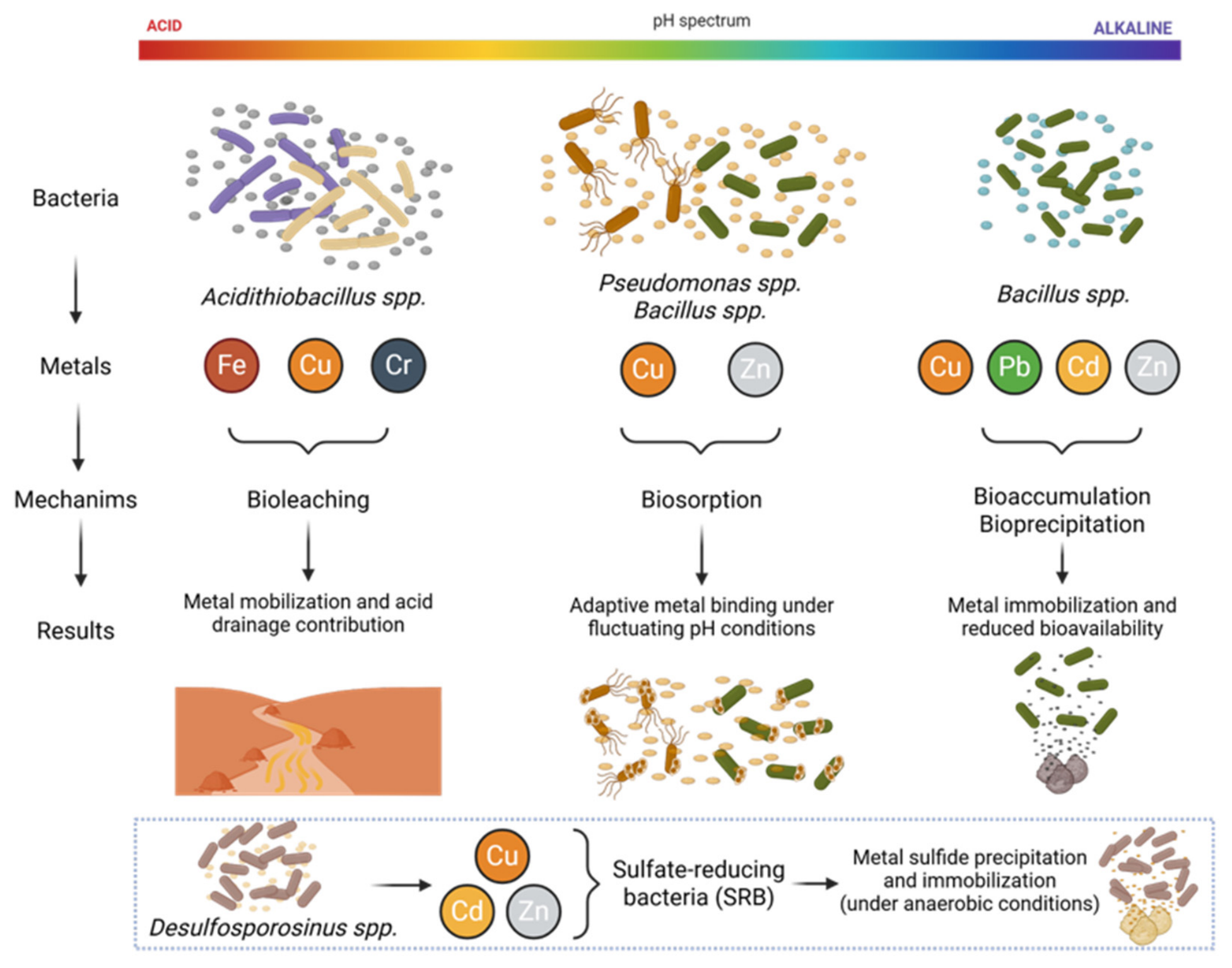
4.1. Metal-Remediating Bacteria
4.2. Bacillus Subtilis: A Potential Extremophilic Metal-Remediating Bacterium
4.3. Parameters Influencing Remediation Capacity of Bacteria
4.4. Research Prospects
4.5. Limitations of the Study
5. Conclusions
Supplementary Materials
Author Contributions
Funding
Institutional Review Board Statement
Informed Consent Statement
Data Availability Statement
Conflicts of Interest
References
- Ferrer, M.; Golyshina, O.; Beloqui, A.; Golyshin, P.N. Mining enzymes from extreme environments. Curr. Opin. Microbiol. 2007, 10, 207–214. [Google Scholar] [CrossRef]
- Gallo, G.; Imbimbo, P.; Aulitto, M. The Undeniable Potential of Thermophiles in Industrial Processes. Int. J. Mol. Sci. 2024, 25, 7685. [Google Scholar] [CrossRef]
- Jia, B.; Cheong, G.W.; Zhang, S. Multifunctional enzymes in archaea: Promiscuity and moonlight. Extremophiles 2013, 17, 193–203. [Google Scholar] [CrossRef]
- Martínez, G.M.; Pire, C.; Martínez-Espinosa, R.M. Hypersaline environments as natural sources of microbes with potential applications in biotechnology: The case of solar evaporation systems to produce salt in Alicante County (Spain). Curr. Res. Microb. Sci. 2022, 3, 100136. [Google Scholar] [CrossRef] [PubMed]
- Takano, C.; Nakashima, K.; Kawasaki, S.; Aoyagi, H. Utilisation of acid-tolerant bacteria for base metal recovery under strongly acidic conditions. Extremophiles 2024, 28, 45. [Google Scholar] [CrossRef] [PubMed]
- Alhammadi, E.; Halimoon, N.; Johari, W.L.W.; Zulkeflee, Z. Potentially applicable bioremediation mechanisms for metal-tolerant bacteria from industrial waste electroplating. Int. J. Environ. Sci. Technol. 2024, 21, 4817–4836. [Google Scholar] [CrossRef]
- Antranikian, G.; Vorgias, C.E.; Bertoldo, C. Extreme Environments as a Resource for Microorganisms and Novel Biocatalysts. In Marine Biotechnology I; Ulber, R., Le Gal, Y., Eds.; Springer: Berlin/Heidelberg, Germany, 2005; Volume 96, pp. 219–262. [Google Scholar] [CrossRef]
- Reed, C.J.; Lewis, H.; Trejo, E.; Winston, V.; Evilia, C. Protein Adaptations in Archaeal Extremophiles. Archaea 2013, 2013, 373275. [Google Scholar] [CrossRef]
- Canganella, F.; Wiegel, J. Extremophiles: From abyssal to terrestrial ecosystems and possibly beyond. Naturwissenschaften 2011, 98, 253–279. [Google Scholar] [CrossRef]
- Chung, A.P.; Coimbra, C.; Farias, P.; Francisco, R.; Branco, R.; Simão, F.V.; Gomes, E.; Pereira, A.; Vila, M.C.; Fiúza, A.; et al. Tailings microbial community profile and prediction of its functionality in basins of tungsten mine. Sci. Rep. 2019, 9, 19596. [Google Scholar] [CrossRef]
- Covacevich, F.; Silva, R.; Cumino, A.; Caló, G.; Negri, R.; Salerno, G. First archaeal rDNA sequences from Argentine coastal waters: Unexpected PCR characterization using eukaryotic primers. Cienc. Mar. 2012, 38, 427–439. [Google Scholar] [CrossRef][Green Version]
- Li, X.; Dong, S.; Yao, Y.; Shi, W.; Wu, M.; Xu, H. Inoculation of bacteria for the bioremediation of heavy metals contaminated soil by Agrocybe aegerita. RSC Adv. 2016, 6, 65816–65824. [Google Scholar] [CrossRef]
- Narayan, S.; Beck, M.W.; Reguero, B.G.; Losada, I.J.; Van Wesenbeeck, B.; Pontee, N.; Sanchirico, J.N.; Ingram, J.C.; Lange, G.-M.; Burks-Copes, K.A. The Effectiveness, Costs and Coastal Protection Benefits of Natural and Nature-Based Defences. PLoS ONE 2016, 11, e0154735. [Google Scholar] [CrossRef]
- Torres Rodríguez, D. El papel de los microorganismos en la biodegradación de compuestos tóxicos. Ecosistemas 2003, 12, 1–5. [Google Scholar]
- Toledo-Hernández, E.; Santana-Flores, A.; Sánchez-Ayala, A.; Romero-Ramírez, Y.; Ortega-Acosta, S.Á.; Toribio-Jiménez, J. Aislamiento e identificación de bacterias tolerantes y bioacumuladoras de metales pesados, obtenidas de los jales mineros El Fraile, México. Terra 2020, 38, 67. [Google Scholar] [CrossRef]
- Choudhury, R.; Srivastava, S. Zinc resistance mechanisms in bacteria. Curr. Sci. 2001, 81, 768–775. [Google Scholar]
- Costa, A.C.A.D.; Duta, F.P. Bioaccumulation of copper, zinc, cadmium and lead by Bacillus sp., Bacillus cereus, Bacillus sphaericus and Bacillus subtilis. Braz. J. Microbiol. 2001, 32, 1–5. [Google Scholar] [CrossRef]
- El Baz, S.; Baz, M.; Barakate, M.; Hassani, L.; El Gharmali, A.; Imziln, B. Resistance to and Accumulation of Heavy Metals by Actinobacteria Isolated from Abandoned Mining Areas. Sci. World J. 2015, 2015, 761834. [Google Scholar] [CrossRef]
- Hassan, S.H.A.; Abskharon, R.N.N.; Gad El-Rab, S.M.F.; Shoreit, A.A.M. Isolation, characterization of heavy metal resistant strain of Pseudomonas aeruginosa isolated from polluted sites in Assiut city, Egypt. J. Basic Microbiol. 2008, 48, 168–176. [Google Scholar] [CrossRef] [PubMed]
- Trujillo Peralta, F.A.; López Avilés, G.; Mondragón Camarillo, L.; Calderón Alvarado, K.D.C. Bacterias tolerantes y resistentes a los metales pesados en el ambiente. Epistemus 2023, 18, 80–87. [Google Scholar] [CrossRef]
- Rocco, D.H.E.; Freire, B.M.; Oliveira, T.J.; Alves, P.L.M.; De Oliveira Júnior, J.M.; Batista, B.L.; Grotto, D.; Jozala, A.F. Bacillus subtilis as an effective tool for bioremediation of lead, copper and cadmium in water. Discov. Appl. Sci. 2024, 6, 430. [Google Scholar] [CrossRef]
- Zhang, S.; Yan, L.; Xing, W.; Chen, P.; Zhang, Y.; Wang, W. Acidithiobacillus ferrooxidans and its potential application. Extremophiles 2018, 22, 563–579. [Google Scholar] [CrossRef]
- Zhou, H.; Fu, C. Manganese-oxidizing microbes and biogenic manganese oxides: Characterization, Mn(II) oxidation mechanism and environmental relevance. Rev. Environ. Sci. Biotechnol. 2020, 19, 489–507. [Google Scholar] [CrossRef]
- Marzan, L.W.; Hossain, M.; Mina, S.A.; Akter, Y.; Chowdhury, A.M.M.A. Isolation and biochemical characterization of heavy-metal resistant bacteria from tannery effluent in Chittagong city, Bangladesh: Bioremediation viewpoint. Egypt. J. Aquat. Res. 2017, 43, 65–74. [Google Scholar] [CrossRef]
- Priyadarshanee, M.; Das, S. Biosorption and removal of toxic heavy metals by metal tolerating bacteria for bioremediation of metal contamination: A comprehensive review. J. Environ. Chem. Eng. 2021, 9, 104686. [Google Scholar] [CrossRef]
- Baker, B.J.; Banfield, J.F. Microbial communities in acid mine drainage. FEMS Microbiol. Ecol. 2003, 44, 139–152. [Google Scholar] [CrossRef] [PubMed]
- Zhang, T.; Zhang, C.; Du, S.; Zhang, Z.; Lu, W.; Su, P.; Jiao, Y.; Zhao, Y. A review: The formation, prevention, and remediation of acid mine drainage. Environ. Sci. Pollut. Res. 2023, 30, 111871–111890. [Google Scholar] [CrossRef] [PubMed]
- Dai, S.; Chen, Q.; Jiang, M.; Wang, B.; Xie, Z.; Yu, N.; Zhou, Y.; Li, S.; Wang, L.; Hua, Y.; et al. Colonized extremophile Deinococcus radiodurans alleviates toxicity of cadmium and lead by suppressing heavy metal accumulation and improving antioxidant system in rice. Environ. Pollut. 2021, 284, 117127. [Google Scholar] [CrossRef]
- Diba, H.; Cohan, R.A.; Salimian, M.; Mirjani, R.; Soleimani, M.; Khodabakhsh, F. Isolation and characterization of halophilic bacteria with the ability of heavy metal bioremediation and nanoparticle synthesis from Khara salt lake in Iran. Arch. Microbiol. 2021, 203, 3893–3903. [Google Scholar] [CrossRef] [PubMed]
- Matlakowska, R.; Skudlarska, E.; Skłodowska, A. The growth, ferrous iron oxidation and ultrastructure of Acidithiobacillus ferrooxidans in the presence of dibutyl phthalate. Pol. J. Microbiol. 2006, 55, 203–210. [Google Scholar]
- Moreno, M.L.; Piubeli, F.; Bonfá, M.R.L.; García, M.T.; Durrant, L.R.; Mellado, E. Analysis and characterization of cultivable extremophilic hydrolytic bacterial community in heavy-metal-contaminated soils from the Atacama Desert and their biotechnological potentials. J. Appl. Microbiol. 2012, 113, 550–559. [Google Scholar] [CrossRef]
- Qiu, Y.; Tong, Y.; Yang, H.; Feng, S. Molecular Insights into a Novel Cu(I)-Sensitive ArsR/SmtB Family Repressor in Extremophile Acidithiobacillus caldus. Appl. Environ. Microbiol. 2023, 89, e01266-22. [Google Scholar] [CrossRef] [PubMed]
- Gallo, G.; Aulitto, M.; Contursi, P.; Limauro, D.; Bartolucci, S.; Fiorentino, G. Bioprospecting of Extremophilic Microorganisms to Address Environmental Pollution. J. Vis. Exp. 2021, 178, 63453. [Google Scholar] [CrossRef]
- Ramanathan, T.; Ting, Y.P. Alkaline bioleaching of municipal solid waste incineration fly ash by autochthonous extremophiles. Chemosphere 2016, 160, 54–61, Erratum in Chemosphere 2016, 164, 692. [Google Scholar] [CrossRef] [PubMed]
- Xie, C.; Guo, S.; Chen, K.; Yu, X.; Li, Y.; Xu, X. Removal of copper and lead ions from water using the extremophile Deinococcus wulumuqiensis R12. Desalin. Water Treat. 2021, 228, 276–285. [Google Scholar] [CrossRef]
- Kossoff, D.; Dubbin, W.E.; Alfredsson, M.; Edwards, S.J.; Macklin, M.G.; Hudson-Edwards, K.A. Mine tailings dams: Characteristics, failure, environmental impacts, and remediation. Appl. Geochem. 2014, 51, 229–245. [Google Scholar] [CrossRef]
- Gadd, G.M. Bioremedial potential of microbial mechanisms of metal mobilization and immobilization. Curr. Opin. Biotechnol. 2000, 11, 271–279. [Google Scholar] [CrossRef]
- Valls, M.; Delorenzo, V. Exploiting the genetic and biochemical capacities of bacteria for the remediation of heavy metal pollution. FEMS Microbiol. Rev. 2002, 26, 327–338. [Google Scholar] [CrossRef]
- Dold, B. Submarine tailings disposal (STD)—A review. Minerals 2014, 4, 642–666. [Google Scholar] [CrossRef]
- Newsome, L.; Falagán, C. The Microbiology of Metal Mine Waste: Bioremediation Applications and Implications for Planetary Health. GeoHealth 2021, 5, e2020GH000380. [Google Scholar] [CrossRef]
- Haghighizadeh, A.; Rajabi, O.; Nezarat, A.; Hajyani, Z.; Haghmohammadi, M.; Hedayatikhah, S.; Asl, S.D.; Beni, A.A. Comprehensive analysis of heavy metal soil contamination in mining environments: Impacts, monitoring techniques, and remediation strategies. Arab. J. Chem. 2024, 17, 105777. [Google Scholar] [CrossRef]
- Liu, J.; Hua, Z.S.; Chen, L.X.; Kuang, J.L.; Li, S.J.; Shu, W.S.; Huang, L.N. Correlating microbial diversity patterns with geochemistry in an extreme and heterogeneous environment of mine tailings. Appl. Environ. Microbiol. 2014, 80, 3677–3686. [Google Scholar] [CrossRef] [PubMed]
- Orell, A.; Navarro, C.A.; Arancibia, R.; Mobarec, J.C.; Jerez, C.A. Life in blue: Copper resistance mechanisms of bacteria and Archaea used in industrial biomining of minerals. Biotechnol. Adv. 2010, 28, 839–848. [Google Scholar] [CrossRef]
- Neaman, A.; Ginocchio, R.; Yáñez, C. Restoration and Conservation Actions: Chilean Studies on Phytoremediation of Metal-Polluted, Acidic Soils. In Ecotoxicology in Latin America; Nova Science Publishers: New York, NY, USA, 2017. [Google Scholar]
- Sibanda, T.; Selvarajan, R.; Msagati, T.; Venkatachalam, S.; Meddows-Taylor, S. Defunct gold mine tailings are natural reservoirs for unique bacterial communities revealed by high-throughput sequencing analysis. Sci. Total Environ. 2019, 650, 2199–2209. [Google Scholar] [CrossRef]
- Page, M.J.; McKenzie, J.E.; Bossuyt, P.M.; Boutron, I.; Hoffmann, T.C.; Mulrow, C.D.; Shamseer, L.; Tetzlaff, J.M.; Akl, E.A.; Brennan, S.E.; et al. The PRISMA 2020 statement: An updated guideline for reporting systematic reviews. BMJ 2021, 372, n71. [Google Scholar] [CrossRef] [PubMed]
- Chileshe, M.N.; Syampungani, S.; Festin, E.S.; Tigabu, M.; Daneshvar, A.; Odén, P.C. Physico-chemical characteristics and heavy metal concentrations of copper mine wastes in Zambia: Implications for pollution risk and restoration. J. For. Res. 2020, 31, 1283–1293. [Google Scholar] [CrossRef]
- Livoreil, B.; Glanville, J.; Haddaway, N.R.; Bayliss, H.; Bethel, A.; De Lachapelle, F.F.; Robalino, S.; Savilaakso, S.; Zhou, W.; Petrokofsky, G.; et al. Systematic searching for environmental evidence using multiple tools and sources. Environ. Evid. 2017, 6, 23. [Google Scholar] [CrossRef]
- Kohl, C.; Frampton, G.; Sweet, J.; Spök, A.; Haddaway, N.R.; Wilhelm, R.; Unger, S.; Schiemann, J. Can Systematic Reviews Inform GMO Risk Assessment and Risk Management? Front. Bioeng. Biotechnol. 2015, 3, 113. [Google Scholar] [CrossRef]
- Morgan, R.L.; Thayer, K.A.; Santesso, N.; Holloway, A.C.; Blain, R.; Eftim, S.E.; Goldstone, A.E.; Ross, P.; Ansari, M.; Akl, E.A.; et al. A risk of bias instrument for non-randomized studies of exposures: A users’ guide to its application in the context of GRADE. Environ. Int. 2019, 122, 168–184. [Google Scholar] [CrossRef]
- Morgan, R.L.; Thayer, K.A.; Santesso, N.; Holloway, A.C.; Blain, R.; Eftim, S.E.; Goldstone, A.E.; Ross, P.; Guyatt, G.; Schünemann, H.J. Evaluation of the risk of bias in non-randomized studies of interventions (ROBINS-I) and the ‘target experiment’ concept in studies of exposures: Rationale and preliminary instrument development. Environ. Int. 2018, 120, 382–387. [Google Scholar] [CrossRef]
- Thomson, H.; Craig, P.; Hilton-Boon, M.; Campbell, M.; Katikireddi, S.V. Applying the ROBINS-I tool to natural experiments: An example from public health. Syst. Rev. 2018, 7, 15. [Google Scholar] [CrossRef]
- Mnkandla, S.M.; Otomo, P.V. Effectiveness of mycofiltration for removal of contaminants from water: A systematic review protocol. Environ. Evid. 2021, 10, 17. [Google Scholar] [CrossRef]
- Sterne, J.A.; Hernán, M.A.; Reeves, B.C.; Savović, J.; Berkman, N.D.; Viswanathan, M.; Henry, D.; Altman, D.G.; Ansari, M.T.; Boutron, I.; et al. ROBINS-I: A tool for assessing risk of bias in non-randomised studies of interventions. BMJ 2016, 355, i4919. [Google Scholar] [CrossRef] [PubMed]
- Higgins, J.P.T.; Thomas, J.; Chandler, J.; Cumpston, M.; Li, T.; Page, M.J.; Welch, V.A. Cochrane Handbook for Systematic Reviews of Interventions, 1st ed.; Wiley: Hoboken, NJ, USA, 2019. [Google Scholar] [CrossRef]
- Jüni, P. The Hazards of Scoring the Quality of Clinical Trials for Meta-analysis. JAMA 1999, 282, 1054. [Google Scholar] [CrossRef]
- Wu, X.; Ding, J.; Gao, J.; Liu, X.; Qiu, G. Isolation and identification of metal-resistant iron-oxidizing bacteria. Min. Metall. Explor. 2007, 24, 57–60. [Google Scholar] [CrossRef]
- Tomova, I.; Stoilova−Disheva, M.; Vasileva−Tonkova, E. Characterization of heavy metals resistant heterotrophic bacteria from soils in the Windmill Islands region, Wilkes Land, East Antarctica. Pol. Polar Res. 2014, 35, 593–607. [Google Scholar] [CrossRef]
- Bafana, A.; Chakrabarti, T.; Krishnamurthi, K. Mercuric reductase activity of multiple heavy metal-resistant Lysinibacillus sphaericus G1. J. Basic Microbiol. 2015, 55, 285–292. [Google Scholar] [CrossRef] [PubMed]
- Asatiani, N.; Kartvelishvili, T.; Sapojnikova, N.; Abuladze, M.; Asanishvili, L.; Osepashvili, M. Effect of the Simultaneous Action of Zinc and Chromium on Arthrobacter spp. Water Air Soil Pollut. 2018, 229, 395. [Google Scholar] [CrossRef]
- Abbaszade, G.; Szabó, A.; Vajna, B.; Farkas, R.; Szabó, C.; Tóth, E. Whole genome sequence analysis of Cupriavidus campinensis S14E4C, a heavy metal resistant bacterium. Mol. Biol. Rep. 2020, 47, 3973–3985. [Google Scholar] [CrossRef]
- Sher, S.; Sultan, S.; Rehman, A. Characterization of multiple metal resistant Bacillus licheniformis and its potential use in arsenic contaminated industrial wastewater. Appl. Water Sci. 2021, 11, 69. [Google Scholar] [CrossRef]
- Ausuri, J.; Dell’Anno, F.; Vitale, G.A.; Palma Esposito, F.; Funari, V.; Franci, G.; Galdiero, M.; Della Sala, G.; Tedesco, P.; Coppola, D.; et al. Bioremediation of Multiple Heavy Metals Mediated by Antarctic Marine Isolated Dietzia psychralcaliphila JI1D. J. Mar. Sci. Eng. 2022, 10, 1669. [Google Scholar] [CrossRef]
- Patel, M.; Patel, K.; Al-Keridis, L.A.; Alshammari, N.; Badraoui, R.; Elasbali, A.M.; Abu Al-Soud, W.; Hassan, I.; Yadav, D.K.; Adnan, M. Cadmium-Tolerant Plant Growth-Promoting Bacteria Curtobacterium oceanosedimentum Improves Growth Attributes and Strengthens Antioxidant System in Chili (Capsicum frutescens). Sustainability 2022, 14, 4335. [Google Scholar] [CrossRef]
- Yang, Q.; Jie, S.; Lei, P.; Gan, M.; He, P.; Zhu, J.; Zhou, Q. Effect of Anthropogenic Disturbances on the Microbial Relationship during Bioremediation of Heavy Metal-Contaminated Sediment. Microorganisms 2023, 11, 1185. [Google Scholar] [CrossRef] [PubMed]
- Rosas-Ramírez, J.R.; Isaac-Olivé, K.; Moreno-Pérez, M.P.; Manzanares-Leal, G.L.; Serment Guerrero, J.H.; Sandoval-Trujillo, Á.H.; Ramírez-Durán, N. Identification of halophilic bacteria tolerant to heavy metals. Rev. Int. Contam. Ambient. 2023, 39, 391–403. [Google Scholar] [CrossRef]
- Wang, L.; Wang, Y.; Dai, S.; Wang, B. Surface Display of Multiple Metal-Binding Domains in Deinococcus radiodurans Alleviates Cadmium and Lead Toxicity in Rice. Int. J. Mol. Sci. 2024, 25, 12570. [Google Scholar] [CrossRef]
- Panyushkina, A.; Matyushkina, D.; Pobeguts, O.; Muravyov, M.; Letarov, A. Mechanisms of microbial hyper-resistance to heavy metals: Cellular metal accumulation, metabolic reorganization, and GroEL chaperonin in extremophilic bacterium Sulfobacillus thermotolerans in response to zinc. J. Hazard. Mater. 2025, 488, 137490. [Google Scholar] [CrossRef]
- Groudev, S.N.; Georgiev, P.S.; Spasova, I.I.; Komnitsas, K. Bioremediation of a soil contaminated with radioactive elements. Hydrometallurgy 2001, 59, 311–318. [Google Scholar] [CrossRef]
- Hulshof, A.H.M.; Blowes, D.W.; Ptacek, C.J.; Gould, W.D. Microbial and Nutrient Investigations into the Use of in Situ Layers for Treatment of Tailings Effluent. Environ. Sci. Technol. 2003, 37, 5027–5033. [Google Scholar] [CrossRef]
- Pruden, A.; Messner, N.; Pereyra, L.; Hanson, R.E.; Hiibel, S.R.; Reardon, K.F. The effect of inoculum on the performance of sulfate-reducing columns treating heavy metal contaminated water. Water Res. 2007, 41, 904–914. [Google Scholar] [CrossRef] [PubMed]
- Kang, C.H.; Oh, S.J.; Shin, Y.; Han, S.H.; Nam, I.H.; So, J.S. Bioremediation of lead by ureolytic bacteria isolated from soil at abandoned metal mines in South Korea. Ecol. Eng. 2015, 74, 402–407. [Google Scholar] [CrossRef]
- Nicolova, M.; Spasova, I.; Georgiev, P.; Groudev, S. Microbial removal of toxic metals from a heavily polluted soil. J. Geochem. Explor. 2017, 182, 242–246. [Google Scholar] [CrossRef]
- Chang, J.; Deng, S.; Liang, Y.; Chen, J. Cr(VI) removal performance from aqueous solution by Pseudomonas sp. strain DC-B3 isolated from mine soil: Characterization of both Cr(VI) bioreduction and total Cr biosorption processes. Environ. Sci. Pollut. Res. 2019, 26, 28135–28145. [Google Scholar] [CrossRef]
- Zhu, X.; Lv, B.; Shang, X.; Wang, J.; Li, M.; Yu, X. The immobilization effects on Pb, Cd and Cu by the inoculation of organic phosphorus-degrading bacteria (OPDB) with rapeseed dregs in acidic soil. Geoderma 2019, 350, 1–10. [Google Scholar] [CrossRef]
- Liu, C.; Lin, H.; Li, B.; Dong, Y.; Gueret Yadiberet Menzembere, E.R. Endophyte Pseudomonas putida enhanced Trifolium repens L. growth and heavy metal uptake: A promising in-situ non-soil cover phytoremediation method of nonferrous metallic tailing. Chemosphere 2021, 272, 129816. [Google Scholar] [CrossRef]
- Oyetibo, G.O.; Enahoro, J.A.; Ikwubuzo, C.A.; Ukwuoma, C.S. Microbiome of highly polluted coal mine drainage from Onyeama, Nigeria, and its potential for sequestrating toxic heavy metals. Sci. Rep. 2021, 11, 17496. [Google Scholar] [CrossRef]
- Liu, M.; Wang, S.; Yang, M.; Ning, X.; Nan, Z. Experimental study on treatment of heavy metal–contaminated soil by manganese-oxidizing bacteria. Environ. Sci. Pollut. Res. 2022, 29, 5526–5540. [Google Scholar] [CrossRef] [PubMed]
- Sur, I.M.; Micle, V.; Hegyi, A.; Lăzărescu, A.V. Extraction of Metals from Polluted Soils by Bioleaching in Relation to Environmental Risk Assessment. Materials 2022, 15, 3973. [Google Scholar] [CrossRef]
- Zheng, K.; Liu, Z.; Liu, C.; Liu, J.; Zhuang, J. Enhancing remediation potential of heavy metal contaminated soils through synergistic application of microbial inoculants and legumes. Front. Microbiol. 2023, 14, 1272591. [Google Scholar] [CrossRef]
- Han, L.J.; Li, J.S.; Chen, Z.; Xue, Q. Stabilization of Pb(II) in wastewater and tailings by commercial bacteria through microbially induced phosphate precipitation (MIPP). Sci. Total Environ. 2023, 868, 161628. [Google Scholar] [CrossRef]
- Hu, X.; He, B.; Liu, Y.; Ma, S.; Yu, C. Genomic characterization of a novel ureolytic bacteria, Lysinibacillus capsici TSBLM, and its application to the remediation of acidic heavy metal-contaminated soil. Sci. Total Environ. 2024, 927, 172170. [Google Scholar] [CrossRef] [PubMed]
- Ghosh, A.; Chakraborty, M.; Sah, D.; Rai, J.P.N. Augmented elimination of cadmium and mercury by Cytobacillus firmus and Paenibacillus massiliensis isolated from heavy metal contaminated soil samples. Biocatal. Agric. Biotechnol. 2025, 67, 103669. [Google Scholar] [CrossRef]
- Yang, D.; Bei, S.; Yang, Y. Effect of urea concentration on the combined pollution of Cd and Ni in microbiologically induced calcite precipitation (MICP) treatment. Biodegradation 2025, 36, 107. [Google Scholar] [CrossRef]
- Kelly, D.P.; Wood, A.P. Reclassification of some species of Thiobacillus to the newly designated genera Acidithiobacillus gen. nov., Halothiobacillus gen. nov. and Thermithiobacillus gen. nov. Int. J. Syst. Evol. Microbiol. 2000, 50, 511–516. [Google Scholar] [CrossRef] [PubMed]
- Patel, S.; Gupta, R.S. A phylogenomic and comparative genomic framework for resolving the polyphyly of the genus Bacillus: Proposal for six new genera of Bacillus species, Peribacillus gen. nov., Cytobacillus gen. nov., Mesobacillus gen. nov., Neobacillus gen. nov., Metabacillus gen. nov. and Alkalihalobacillus gen. nov. Int. J. Syst. Evol. Microbiol. 2020, 70, 406–438. [Google Scholar] [CrossRef]
- Gupta, R.S.; Patel, S.; Saini, N.; Chen, S. Robust demarcation of 17 distinct Bacillus species clades, proposed as novel Bacillaceae genera, by phylogenomics and comparative genomic analyses: Description of Robertmurraya kyonggiensis sp. nov. and proposal for an emended genus Bacillus limiting it only to the members of the Subtilis and Cereus clades of species. Int. J. Syst. Evol. Microbiol. 2020, 70, 5753–5798. [Google Scholar] [CrossRef]
- Kelly, D.P.; McDonald, I.R.; Wood, A.P. Proposal for the reclassification of Thiobacillus novellus as Starkeya novella gen. nov., comb. nov., in the alpha-subclass of the Proteobacteria. Int. J. Syst. Evol. Microbiol. 2000, 50, 1797–1802. [Google Scholar] [CrossRef] [PubMed]
- Busse, H.J. Review of the taxonomy of the genus Arthrobacter, emendation of the genus Arthrobacter sensu lato, proposal to reclassify selected species of the genus Arthrobacter in the novel genera Glutamicibacter gen. nov., Paeniglutamicibacter gen. nov., Pseudoglutamicibacter gen. nov., Paenarthrobacter gen. nov. and Pseudarthrobacter gen. nov., and emended description of Arthrobacter roseus. Int. J. Syst. Evol. Microbiol. 2016, 66, 9–37. [Google Scholar] [CrossRef]
- Elicker, C.; Sanches Filho, P.J.; Castagno, K.R.L. Electroremediation of heavy metals in sewage sludge. Braz. J. Chem. Eng. 2014, 31, 365–371. [Google Scholar] [CrossRef]
- Park, I.; Tabelin, C.B.; Jeon, S.; Li, X.; Seno, K.; Ito, M.; Hiroyoshi, N. A review of recent strategies for acid mine drainage prevention and mine tailings recycling. Chemosphere 2019, 219, 588–606. [Google Scholar] [CrossRef] [PubMed]
- Gupta, R.K.; Lee, E.Y. Harnessing Sustainable Biopolymers: Engineered Alginate-Based Materials for Whole-Cell Environmental Remediation. ChemSusChem 2025, 19, e202501882. [Google Scholar] [CrossRef]
- Fan, J.; Onal Okyay, T.; Frigi Rodrigues, D. The synergism of temperature, pH and growth phases on heavy metal biosorption by two environmental isolates. J. Hazard. Mater. 2014, 279, 236–243. [Google Scholar] [CrossRef]
- Valdivia Tejada, F. Bioprecipitación de Metales Pesados Utilizando Bacterias Reductoras de Sulfato (BRS) para su Aplicación en un Bioreactor Sulfidogénico. 2017. Available online: https://repositorio.ucsm.edu.pe/handle/20.500.12920/6016 (accessed on 20 February 2026).
- Lu, J.; Lu, X.; Wang, R.; Li, J.; Zhu, C.; Gao, J. Pyrite Surface after Thiobacillus ferrooxidans Leaching at 30°C. Acta Geol. Sin.-Engl. Ed. 2010, 80, 451–455. [Google Scholar] [CrossRef]
- Konishi, Y.; Kubo, H.; Asai, S. Bioleaching of zinc sulfide concentrate by Thiobacillus ferrooxidans. Biotechnol. Bioeng. 1992, 39, 66–74. [Google Scholar] [CrossRef]
- Rawlings, D.E.; Kusano, T. Molecular genetics of Thiobacillus ferrooxidans. Microbiol. Rev. 1994, 58, 39–55. [Google Scholar] [CrossRef]
- Gadd, G.M. Metals, minerals and microbes: Geomicrobiology and bioremediation. Microbiology 2010, 156, 609–643. [Google Scholar] [CrossRef]
- Valdés, J.; Pedroso, I.; Quatrini, R.; Dodson, R.J.; Tettelin, H.; Blake, R.; Eisen, J.A.; Holmes, D.S. Acidithiobacillus ferrooxidans metabolism: From genome sequence to industrial applications. BMC Genom. 2008, 9, 597. [Google Scholar] [CrossRef] [PubMed]
- Samaras, A.; Roumeliotis, E.; Ntasiou, P.; Karaoglanidis, G. Bacillus subtilis MBI600 Promotes Growth of Tomato Plants and Induces Systemic Resistance Contributing to the Control of Soilborne Pathogens. Plants 2021, 10, 1113. [Google Scholar] [CrossRef]
- Krishna Kanamarlapudi, S.L.R.; Muddada, S. Structural Changes of Bacillus subtilis Biomass on Biosorption of Iron (II) from Aqueous Solutions: Isotherm and Kinetic Studies. Pol. J. Microbiol. 2019, 68, 549–558. [Google Scholar] [CrossRef] [PubMed]
- Wierzba, S. Biosorption of lead(II), zinc(II) and nickel(II) from industrial wastewater by Stenotrophomonas maltophilia and Bacillus subtilis. Pol. J. Chem. Technol. 2015, 17, 79–87. [Google Scholar] [CrossRef]
- Alotaibi, B.S.; Khan, M.; Shamim, S. Unraveling the Underlying Heavy Metal Detoxification Mechanisms of Bacillus Species. Microorganisms 2021, 9, 1628. [Google Scholar] [CrossRef] [PubMed]
- Moore, C.M.; Helmann, J.D. Metal ion homeostasis in Bacillus subtilis. Curr. Opin. Microbiol. 2005, 8, 188–195. [Google Scholar] [CrossRef]
- Shi, W.; Liu, C.; Ding, D.; Lei, Z.; Yang, Y.; Feng, C.; Zhang, Z. Immobilization of heavy metals in sewage sludge by using subcritical water technology. Bioresour. Technol. 2013, 137, 18–24. [Google Scholar] [CrossRef]
- Yao, Z.; Li, J.; Xie, H.; Yu, C. Review on Remediation Technologies of Soil Contaminated by Heavy Metals. Procedia Environ. Sci. 2012, 16, 722–729. [Google Scholar] [CrossRef]
- Zhou, D.M.; Hao, X.Z.; Xue, Y. Advances in remediation technologies of contaminated soils. Ecol. Environ. Sci. 2004, 13, 234–242. [Google Scholar]
- Khalid, S.; Shahid, M.; Niazi, N.K.; Murtaza, B.; Bibi, I.; Dumat, C. A comparison of technologies for remediation of heavy metal contaminated soils. J. Geochem. Explor. 2017, 182, 247–268. [Google Scholar] [CrossRef]
- Navarro, A.; Cardellach, E.; Cañadas, I.; Rodríguez, J. Solar thermal vitrification of mining contaminated soils. Int. J. Miner. Process. 2013, 119, 65–74. [Google Scholar] [CrossRef]
- Wang, Z.; Li, Z.; Gao, C.; Jiang, Z.; Huang, S.; Li, X.; Yang, H. Bacillus Subtilis as an Excellent Microbial Treatment Agent for Environmental Pollution: A Review. Biotechnol. J. 2025, 20, e70026. [Google Scholar] [CrossRef]
- Yang, C.; Song, C.; Freudl, R.; Mulchandani, A.; Qiao, C. Twin-Arginine Translocation of Methyl Parathion Hydrolase in Bacillus subtilis. Environ. Sci. Technol. 2010, 44, 7607–7612. [Google Scholar] [CrossRef]
- Wróbel, M.; Śliwakowski, W.; Kowalczyk, P.; Kramkowski, K.; Dobrzyński, J. Bioremediation of Heavy Metals by the Genus Bacillus. Int. J. Environ. Res. Public Health 2023, 20, 4964. [Google Scholar] [CrossRef]
- Greger, M. Metal Availability and Bioconcentration in Plants. In Heavy Metal Stress in Plants; Springer: Berlin/Heidelberg, Germany, 1999; pp. 1–27. [Google Scholar] [CrossRef]
- Jadhav, S.V.; Gadipelly, C.R.; Marathe, K.V.; Rathod, V.K. Treatment of fluoride concentrates from membrane unit using salt solutions. J. Water Process Eng. 2014, 2, 31–36. [Google Scholar] [CrossRef]
- Zhou, J.Z.; Wu, Y.Y.; Liu, C.; Orpe, A.; Liu, Q.; Xu, Z.P.; Qian, G.R.; Qiao, S.Z. Effective Self-Purification of Polynary Metal Electroplating Wastewaters through Formation of Layered Double Hydroxides. Environ. Sci. Technol. 2010, 44, 8884–8890. [Google Scholar] [CrossRef]
- Covarrubias, S.A.; García Berumen, J.A.; Peña Cabriales, J.J. Microorganisms role in the bioremediation of contaminated soils with heavy metals. Acta Univ. 2015, 25, 40–45. [Google Scholar] [CrossRef][Green Version]
- Wang, W.; Mao, J.; Zhang, Z.; Tang, Q.; Xie, Y.; Zhu, J.; Zhang, L.; Liu, Z.; Shi, Y.; Goodfellow, M. Deinococcus wulumuqiensis sp. nov., and Deinococcus xibeiensis sp. nov., isolated from radiation-polluted soil. Int. J. Syst. Evol. Microbiol. 2010, 60, 2006–2010. [Google Scholar] [CrossRef]
- Keshri, J.; Mankazana, B.B.J.; Kachieng’a, L.; Momba, M.N.B. Indigenous metal-tolerant mine water bacterial populations under varying metal stresses. Sci. Total Environ. 2024, 948, 174830. [Google Scholar] [CrossRef]
- Dahnoun, K.; Djadouni, F.; Essghaier, B.; Naccache, C.; Zitouna, N.; Zehdi-Azouzi, S.; Bayyiğit, I.; Latif, H.R.; Mezghani-Khemakhem, M.; Bourguiba, H. Characterization and bioremediation potential of heavy-metal resistant bacteria isolated from agricultural soil. Turk. J. Agric. For. 2024, 48, 607–617. [Google Scholar] [CrossRef]
- Shil, H.; Sharma, P.; Gola, R. Exploring Copper-Resistant Bacterial Diversity in Coal Mines: Implications for Environmental Bioremediation. Geomicrobiol. J. 2025, 1–9. [Google Scholar] [CrossRef]
- Liu, Z.; Cai, Y.; Chen, X.; Cang, Y.; Yu, J.; Shaaban, M.; Cai, Y.; Peng, Q.-A. Functional genomic analysis of Bacillus cereus BC4 strain for chromium remediation in contaminated soil. Curr. Res. Microb. Sci. 2025, 8, 100388. [Google Scholar] [CrossRef]
- Zhu, X.; Ju, W.; Beiyuan, J.; Chao, H.; Zhang, Z.; Chen, L.; Cui, Q.; Qiu, T.; Zhang, W.; Huang, M.; et al. Bacterial consortium amendment effectively reduces Pb/Cd bioavailability in soil and their accumulation in wheat. J. Environ. Manag. 2024, 370, 122789. [Google Scholar] [CrossRef]
- Li, Q.; Wang, P.; Li, Y.; Yang, Z.; Yang, X.; Liang, K.; Liu, Y.; Wen, Z.; Zhang, S.; Zhang, Z. Improving Cd and Zn enrichment in leaf mustard (Brassica juncea) on heavy metal-contaminated soil using metal-activating probiotics. Pedosphere 2025, 35, 858–868. [Google Scholar] [CrossRef]
- Fu, J.; Ran, M.; Zhou, H.; Jiao, Y.; Shi, Y.; Li, J. Enhancing Copper (Cu) Phytostabilization Efficiency of Commelina communis by Inoculating with Endophytic Bacillus sp. D2: Impacts on Plant Growth, Soil Ecological Characteristics, and Underground Bacterial Community. Water Air Soil Pollut. 2025, 236, 322. [Google Scholar] [CrossRef]
- Kong, G.; Song, D.; Zhang, C.; Jia, X.; Ren, Y.; Wei, S.; Dai, H. The Effect of Plant Growth Promoting Rhizobacteria Bacillus thuringiensis LKT25 on Cadmium Accumulation and Physiological Responses in Solanum nigrum L. Plants 2025, 14, 2918. [Google Scholar] [CrossRef]



| Criteria | Extremophilic Microorganisms | Remediation Bacteria |
|---|---|---|
| Inclusion | Studies that specified metal concentrations and identified tolerant extremophilic or extremotolerant bacteria. | Studies that identified bacteria involved in metal remediation |
| Exclusion | Studies focused on microorganisms that are neither extremophilic nor extremotolerant, or environments not characterized by high metal content | Studies not centered on microorganisms or lacking a remediation focus |
| Studies focused on non-mining environments |
| N | Author(s) | Year | Title | Metals Reports | DOI or PMID |
|---|---|---|---|---|---|
| 1 | Matlakowska et al. [30] | 2006 | The growth, ferrous iron oxidation, and ultrastructure of Acidithiobacillus ferrooxidans in the presence of dibutyl phthalate | Fe | PMID: 17338273 |
| 2 | Wu et al. [57] | 2007 | Isolation and identification of metal-resistant iron-oxidizing bacteria | Cu and Pb | 10.1007/BF03403359 |
| 3 | Moreno et al. [31] | 2012 | Analysis and characterization of cultivable extremophilic hydrolytic bacterial community in heavy metal-contaminated soils from the Atacama Desert and their biotechnological potentials | Cd, Cu, Fe and Zn | 10.1111/j.1365-2672.2012.05366.x |
| 4 | Tomova et al. [58] | 2014 | Characterization of heavy metals resistant heterotrophic bacteria from soils in the Windmill Islands region, Wilkes Land, East Antarctica | Cr, Cu, Pb and Zn | 10.2478/popore-2014-0028 |
| 5 | Bafana et al. [59] | 2015 | Mercuric reductase activity of multiple heavy metal-resistant Lysinibacillus sphaericus G1 | Cd, Cr, Zn | 10.1002/jobm.201300308 |
| 6 | Ramanathan y Ting [34] | 2016 | Alkaline bioleaching of municipal solid waste incineration fly ash by autochthonous extremophiles | Cd, Cr, Cu, Fe, Pb and Zn | 10.1016/j.chemosphere.2016.06.055 |
| 7 | Asatiani et al. [60] | 2018 | Effect of the simultaneous action of zinc and chromium on Arthrobacter spp. | Cr and Zn | 10.1007/s11270-018-4046-0 |
| 8 | Abbaszade et al. [61] | 2020 | Whole genome sequence analysis of Cupriavidus campinensis S14E4C, a heavy metal resistant bacterium | Pb | 10.1007/s11033-020-05490-8 |
| 9 | Gallo et al. [33] | 2021 | Bioprospecting of extremophilic microorganisms to address environmental pollution | Cd, Cr and Cu | 10.3791/63453 |
| 10 | Sher et al. [62] | 2021 | Characterization of multiple metal resistant Bacillus licheniformis and its potential use in arsenic contaminated industrial wastewater | Cd, Cr, Cu, Pb and Zn | 10.1007/s13201-021-01407-3 |
| 11 | Dai et al. [28] | 2021 | Colonized extremophile Deinococcus radiodurans alleviates toxicity of Cd and Pb by suppressing heavy metal accumulation and improving antioxidant system in rice | Cd and Pb | 10.1016/j.envpol.2021.117127 |
| 12 | Diba et al. [29] | 2021 | Isolation and characterization of halophilic bacteria with the ability of heavy metal bioremediation and nanoparticle synthesis from the Khara Salt Lake in Iran | Pb | 10.1007/s00203-021-02380-w |
| 13 | Xie et al. [35] | 2021 | Removal of Cu and Pb ions from water using the extremophile Deinococcus wulumuqiensis R12 | Cr, Cu and Pb | 10.5004/dwt.2021.27338 |
| 14 | Ausuri et al. [63] | 2022 | Bioremediation of multiple heavy metals mediated by Antarctic marine isolate Dietzia psychralcaliphila JI1D | Cd, Cr, Cu, Pb and Zn | 10.3390/jmse10111669 |
| 15 | Patel et al. [64] | 2022 | Cadmium-tolerant plant growth-promoting bacteria Curtobacterium oceanosedimentum improves growth attributes and strengthens antioxidant system in chili (Capsicum frutescens) | Cd | 10.3390/su14074335 |
| 16 | Yang et al. [65] | 2023 | Effect of anthropogenic disturbances on the microbial relationship during bioremediation of heavy metal-contaminated sediment | Cd, Cu and Zn | 10.3390/microorganisms11051185 |
| 17 | Rosas-Ramírez et al. [66] | 2023 | Identification of halophilic bacteria tolerant to heavy metals | Cr and Pb | 10.20937/RICA.54220 |
| 18 | Qiu et al. [32] | 2023 | Molecular insights into a novel Cu(I)-sensitive ArsR/SmtB family repressor in extremophile Acidithiobacillus caldus | Cu | 10.1128/aem.01266-22 |
| 19 | Wang et al. [67] | 2024 | Surface display of multiple metal-binding domains in Deinococcus radiodurans alleviates cadmium and lead toxicity in rice | Cd and Pb | 10.3390/ijms252312570 |
| 20 | Panyushkina et al. [68] | 2025 | Mechanisms of microbial hyper-resistance to heavy metals: Cellular metal accumulation, metabolic reorganization, and GroEL chaperonin in extremophilic bacterium Sulfobacillus thermotolerans in response to zinc | Cu, Pb and Zn | 10.1016/j.jhazmat.2025.137490 |
| N | Author(s) | Year | Title | Metals Reports | DOI or PMID |
|---|---|---|---|---|---|
| 1 | Groudev et al. [69] | 2001 | Bioremediation of a soil contaminated with radioactive elements | Cu and Pb | 10.1016/S0304-386X(00)00187-0 |
| 2 | Hulshof et al. [70] | 2003 | Microbial and nutrient investigations into the use of in situ layers for treatment of tailings effluent | Cu, Fe and Zn | 10.1021/es020822r |
| 3 | Pruden et al. [71] | 2007 | The effect of inoculum on the performance of sulfate-reducing columns treating heavy metal contaminated water | Cd and Zn | 10.1016/j.watres.2006.11.025 |
| 4 | Kang et al. [72] | 2015 | Bioremediation of lead by ureolytic bacteria isolated from soil at abandoned metal mines in South Korea | Pb | 10.1016/j.ecoleng.2014.10.009 |
| 5 | Nicolova et al. [73] | 2017 | Microbial removal of toxic metals from a heavily polluted soil | Cd, Cu and Zn | 10.1016/j.gexplo.2016.11.003 |
| 6 | Chang et al. [74] | 2019 | Cr(VI) removal performance from aqueous solution by Pseudomonas sp. strain DC-B3 isolated from mine soil: characterization of both Cr(VI) bioreduction and total Cr biosorption processes | Cr | 10.1007/s11356-019-06017-w |
| 7 | Zhu et al. [75] | 2019 | The immobilization effects on Pb, Cd and Cu by the inoculation of organic phosphorus-degrading bacteria (OPDB)with rapeseed dregs in acidic soil | Cd, Cu and Pb | 10.1016/j.geoderma.2019.04.015 |
| 8 | Liu et al. [76] | 2021 | Endophyte Pseudomonas putida enhanced Trifolium repens L. growth and heavy metal uptake: A promising in situ non-soil cover phytoremediation method of nonferrous metallic tailing | Cd, Cr, and Pb | 10.1016/j.chemosphere.2021.129816 |
| 9 | Oyetibo et al. [77] | 2021 | Microbiome of highly polluted coal mine drainage from Onyeama, Nigeria, and its potential for sequestrating toxic heavy metals | Cd and Pb | 10.1038/s41598-021-96899-z |
| 10 | Liu et al. [78] | 2022 | Experimental study on treatment of heavy metal-contaminated soil by manganese-oxidizing bacteria | Cd, Cu, Pb, and Zn | 10.1007/s11356-021-15475-0 |
| 11 | Sur et al. [79] | 2022 | Extraction of metals from polluted soils by bioleaching in relation to environmental risk assessment | Cr, Cu and Pb | 10.3390/ma15113973 |
| 12 | Zheng et al. [80] | 2023 | Enhancing remediation potential of heavy metal contaminated soils through synergistic application of microbial inoculants and legumes | Cd and Pb | 10.3389/fmicb.2023.1272591 |
| 13 | Han et al. [81] | 2023 | Stabilization of Pb(II) in wastewater and tailings by commercial bacteria through microbially induced phosphate precipitation (MIPP) | Pb | 10.1016/j.scitotenv.2023.161628 |
| 14 | Hu et al. [82] | 2024 | Genomic characterization of a novel ureolytic bacteria, Lysinibacillus capsici TSBLM, and its application to the remediation of acidic heavy metal-contaminated soil | Cu and Pb | 10.1016/j.scitotenv.2024.172170 |
| 15 | Ghosh et al. [83] | 2025 | Augmented elimination of cadmium and mercury by Cytobacillus firmus and Paenibacillus massiliensis isolated from heavy metal contaminated soil samples | Cd | 10.1016/j.bcab.2025.103669 |
| 16 | Yang et al. [84] | 2025 | Effect of urea concentration on the combined pollution of Cd and Ni in microbiologically induced calcite precipitation (MICP) treatment | Cd | 10.1007/s10532-025-10204-7 |
| N | Family | Genus | Specie ‡ | Environment | Metal Interaction | pH | Cd | Cr | Cu | Fe | Pb | Zn | Ref. |
|---|---|---|---|---|---|---|---|---|---|---|---|---|---|
| 1 | Acidithiobacillaceae | Acidithiobacillus | A. ferrooxidans | Acid drainage | Bioleaching | 7.2 | 4 | - | 1 | 190 | - | 65 | [70] |
| 2 | Acidithiobacillaceae | Acidithiobacillus | A. ferrooxidans a | Mining soils/Cinnamon forest soils | Precipitation/Bioleaching | 2.80–5.35 | - | 63 | 140–816.11 | - | 643.8 | 168 | [79,73] |
| 3 | Acidithiobacillaceae | Acidithiobacillus | A. thiooxidans | Acid drainage | Bioleaching | 7.2 | 4 | - | 1 | 190 | - | 65 | [70] |
| 4 | Bacillaceae | Bacillus | B. cereus | Mine drainages | Precipitation | 8.2 | 139.3 | - | - | - | 593.3 | - | [77] |
| 5 | Bacillaceae | Bacillus | B. subtilis | Mining tailings | Precipitation | 3.00–9.00 | - | - | - | - | 250–495.0 | - | [81] |
| 6 | Bacillaceae | Cytobacillus | Cytobacillus firmus (strain BS4) | Industrial soils | Biosorption | 7 | 19 | - | - | - | - | - | [83] |
| 7 | Bacillaceae | Lysinibacillus | Lysinibacillus capsici (strain TSBLM) | Mining soils | Precipitation | 5.16 | - | - | 18 | - | 28.8 | - | [82] |
| 8 | Bacillaceae | Priestia | P. megaterium b | Mining tailings | Precipitation | 3.00–9.00 | - | - | - | - | 250–420.5 | - | [81] |
| 9 | Desulfitobacteriaceae | Desulfosporosinus | Desulfosporosinus acidianus | Cinnamon forest soils | Precipitation/Bioleaching | 3 | 4.4 | - | - | - | - | - | [73] |
| 10 | Desulfobacteriaceae | Desulfobacterium | - | Acid drainage | Bioleaching | 6 | 0.24 | - | - | - | - | 0.43 | [71] |
| 11 | Enterobacteriaceae | - | - | Mine drainages | Precipitation | 8.2 | 139.3 | - | - | - | 593.3 | - | [77] |
| 12 | Enterobacteriaceae | Enterobacter cloacae strain KJ-46 | Mining soils | Precipitation | 7 | - | - | - | - | 3.2–4.9 mg/L | - | [72] | |
| 13 | Enterobacteriaceae | Enterobacter sp. strains SX4 | Enterobacter sp. (strain SX4) | Cinnamon agricultural soils | Precipitation | 7 | 0.9 | - | - | - | - | - | [84] |
| 14 | Enterobacteriaceae | Serratia | S. marcescens | Mining tailings | Immobilization | 5.60–9.96 | 0.04–35 | - | 6.0–40.0 | - | 4.0–156 | - | [75,80] |
| 15 | Exiguobacteriaceae | Exiguobacterium | E. aurantiacum | Mine drainages | Precipitation | 8.2 | 139.3 | - | - | - | 593.3 | - | [77] |
| 16 | Halothiobacillaceae | Halothiobacillus | H. neapolitanus c | Agricultural soils * | Immobilization | 7.59 | 2.4 | - | 260 | - | 123 | - | [69] |
| 17 | Hydrogenophilaceae | Thiobacillus | T. thioparus | Acid drainage | Bioleaching/Immobilization | 7.2 | 2.3–4.0 | - | 1.0–260 | 190 | 123 | 65 | [70,69] |
| 18 | Hydrogenophilaceae | Thiobacillus | T. denitrificans | Agricultural soils * | Immobilization | 7.59 | 2.4 | - | 260 | - | 123 | - | [69] |
| 19 | Leptospirillaceae | Leptospirillum | L. ferrooxidans | Cinnamon forest soils | Precipitation/Bioleaching | 3 | - | - | 140 | - | - | - | [73] |
| 20 | Moraxellaceae | Acinetobacter | A. pittii | Mine drainages | Precipitation | 8.2 | 139.3 | - | - | - | 593.3 | - | [77] |
| 21 | Nocardiopsaceae | Nocardiopsis | Nocardiopsis sp. (strain TXV7-8SG2) | Lake Texcoco, Mexico | Exposed† | 7 | - | 65,000 | - | - | 1600 | - | [71] |
| 22 | Paenibacillaceae | Paenibacillus | P. massiliensis (strain BS10) | Industrial soils | Biosorption | 7 | 16 | - | - | - | - | - | [83] |
| 23 | Planococcaceae | Sporosarcina | S. koreensis | Mine drainages | Precipitation | 8.2 | 139.3 | - | - | - | 593.3 | - | [77] |
| 24 | Pseudomonaceae | Pseudomonas | P. taiwanensis (strain ZM11) | Agricultural soils * | Precipitation/Biosorption | 6.5–7.0 | 12.5–20 | - | 30–45 | - | 45–75 | 16–28 | [78] |
| 25 | Pseudomonadaceae | Pseudomonas | P. citronellolis | Mine drainages | Precipitation | 8.2 | 139.3 | - | - | - | 593.3 | - | [77] |
| 26 | Pseudomonadaceae | Pseudomonas | P. putida | Mining tailings | Biosorption | 7.6 | 3 | 9 | - | - | 10 | - | [76] |
| 27 | Pseudomonadaceae | Pseudomonas | Pseudomonas sp. | Mining soils | Biosorption | 2 | - | 32 | - | - | - | - | [74] |
| 28 | Xanthobacteraceae | Starkeya | S. novella d | Agricultural soils * | Immobilization | 7.59 | 2.3 | - | 260 | - | 123 | - | [69] |
Disclaimer/Publisher’s Note: The statements, opinions and data contained in all publications are solely those of the individual author(s) and contributor(s) and not of MDPI and/or the editor(s). MDPI and/or the editor(s) disclaim responsibility for any injury to people or property resulting from any ideas, methods, instructions or products referred to in the content. |
© 2026 by the authors. Licensee MDPI, Basel, Switzerland. This article is an open access article distributed under the terms and conditions of the Creative Commons Attribution (CC BY) license.
Share and Cite
Jiménez-Venegas, J.; Zamora-Leiva, L.; Román-Figueroa, C.; Tapia, Y.; Paneque, M. Metals and Extremophilic Bacteria in Mining Environments: A Systematic Review. Microorganisms 2026, 14, 1312. https://doi.org/10.3390/microorganisms14061312
Jiménez-Venegas J, Zamora-Leiva L, Román-Figueroa C, Tapia Y, Paneque M. Metals and Extremophilic Bacteria in Mining Environments: A Systematic Review. Microorganisms. 2026; 14(6):1312. https://doi.org/10.3390/microorganisms14061312
Chicago/Turabian StyleJiménez-Venegas, Joseline, Leonardo Zamora-Leiva, Celián Román-Figueroa, Yasna Tapia, and Manuel Paneque. 2026. "Metals and Extremophilic Bacteria in Mining Environments: A Systematic Review" Microorganisms 14, no. 6: 1312. https://doi.org/10.3390/microorganisms14061312
APA StyleJiménez-Venegas, J., Zamora-Leiva, L., Román-Figueroa, C., Tapia, Y., & Paneque, M. (2026). Metals and Extremophilic Bacteria in Mining Environments: A Systematic Review. Microorganisms, 14(6), 1312. https://doi.org/10.3390/microorganisms14061312