Article

Isolation, Identification, and Characterization of Colletotrichum falcatum and Fusarium madaense Associated with Sugarcane Red Rot Disease in Southwest China

Yunnan Key Laboratory of Sugarcane Genetic Improvement, Sugarcane Research Institute, Yunnan Academy of Agricultural Sciences, Kaiyuan 661699, China
*
Author to whom correspondence should be addressed.
Microorganisms 2026, 14(6), 1280; https://doi.org/10.3390/microorganisms14061280
Submission received: 26 March 2026 / Revised: 22 May 2026 / Accepted: 28 May 2026 / Published: 5 June 2026
(This article belongs to the Section Microbiomes)

Abstract

Sugarcane red rot is a critical constraint threatening the stability and sustainability of sugarcane production in Southwest China, where Yunnan and Guangxi Provinces are the core cultivation regions. To provide a scientific basis for targeted disease management and ensure sugarcane production security, 40 symptomatic red rot samples were collected from 10 sugarcane varieties across 7 locations in these two provinces. A total of 57 fungal isolates were obtained, and they were identified through morphological characterization, multigene phylogenetic analysis (ITS/ACT/TUB2 for Colletotrichum sp. and EF-1α/RPB2 for Fusarium sp.), and pathogenicity tests on the susceptible cultivar Yuetang 93-159 using three representative isolates per species. The results show that 36 isolates were identified as Colletotrichum falcatum and divided into light and dark morphotypes. Phylogenetic analysis revealed that Yunnan and Guangxi isolates clustered in Clade I and Clade II, respectively. The remaining 21 isolates were identified as Fusarium madaense, and no sequence polymorphisms were detected in either EF1α or RPB2 among these isolates, which clustered with the F. madaense strain isolated from sugarcane in Brazil. Pathogenicity tests on leaf midribs and stalks of this cultivar showed that the representative isolates of C. falcatum and F. madaense induced typical red rot symptoms consistent with field observations. Among the representative isolates tested, preliminary findings suggest that light-type C. falcatum isolates were more virulent than dark-type ones, and the C. falcatum isolates Cf16 and Cf1 showed higher stalk virulence than the tested F. madaense isolates. To our knowledge, this is the first report of F. madaense causing typical red rot symptoms on sugarcane in China.

1. Introduction

Sugarcane (Saccharum spp. hybrids) is an important sugar and energy crop widely cultivated in tropical and subtropical regions worldwide, particularly in Brazil, India and China [1]. It is one of the main sources of sugar, accounting for more than 85% of the total sugar production in China, and Guangxi and Yunnan Provinces are the main sugar production regions [2,3]. Due to the hot climate and perennial cultivation of sugarcane being conducive to disease development, it is susceptible to several fungal diseases affecting roots, stalks and leaves in the field, of which red rot caused by Colletotrichum falcatum is one of the devastating diseases of and a major constraint on sugarcane production [4,5,6]. Red rot is one of the oldest diseases of sugarcane. It was first reported in Java by Went (1893) [7] and has been found in 68 sugarcane-growing countries worldwide [8]. It has been reported as a damaging disease of sugarcane in India, Pakistan, Bangladesh, Brazil, Thailand, the United States, and China [4,5,6,8,9,10,11,12,13,14]. The loss in cane yield can be 29% with sugar recovery loss up to 31%, and under conditions favorable for the development of red rot, almost 100% loss of cane yield in seriously affected fields were reported [4,15]. In addition, sucrose inversion occurs when the stalks are infected by the fungus and reduces the total amount of recoverable sugar of the plant [11].
Red rot is reported in all sugarcane-growing areas in China, although it occurred sporadically before the 1980s and caused no threat to sugarcane production. Damaging epidemics occurred in 1993, when the disease incidence was 61.2% in severely affected fields, cane yield decreased by 15.7–30.5%, and sucrose content decreased by 27.6% in the sugarcane-growing area of Hanchuan City, Hubei Province [16]. In 2005 and 2006, red rot outbreaks caused significant yield loss in the sugarcane-growing area of Hainan Province [17]. In 2009, following a prolonged rainy season, red rot epidemics occurred on ROC22, causing significant yield losses in Zhanjiang City, Guangdong Province [18]. In 2018, the major cultivated variety ROC 1 was susceptible to red rot in Shiping County, Yunnan Province, with yield losses reaching up to 100% in severely affected fields, severely threatening sugar production output [4]. In the same year, the major cultivars Yuetang 93-159 and ROC 22 were severely infected with red rot in both the Lincang and Menglian sugarcane-planting areas of Yunnan Province, and the disease incidence was as high as 100% in severely affected fields, resulting in significant yield losses [4]. At present, because susceptible varieties have been continually planted on a large scale, coupled with outbreaks of borers, red rot has been reported in all sugarcane-planting areas and caused significant yield losses in China [4,19].
Most recently, preliminary studies have shown that other fungal species were isolated from red rot-infected sugarcane. In addition to C. falcatum, Fusarium species such as F. sacchari, F. proliferatum and F. madaense were reported to induce symptoms of red rot in sugarcane [20,21]. Accurate identification of the causal organism is vital in disease management and plant breeding programs. The objective of this study was to preliminarily identify the pathogens causing red rot from different sugarcane varieties in the main sugarcane production areas of Guangxi and Yunnan Provinces, China. We combined morphological characterization, molecular phylogenetic analysis, and pathogenicity tests to clarify the disease etiology. The results from this study could establish a scientific foundation for the management and development of disease-resistant varieties of red rot in China.

2. Materials and Methods

2.1. Sample Collection, Fungal Isolation and Pure Culture Maintenance

Sugarcane stalks and leaf midrib samples were collected in 2022 from plants in the field from 10 varieties exhibiting symptoms of red rot. From each field, four symptomatic stalks or leaves were collected from diseased plants of the same variety within the field as one sample. Samples were obtained from seven cities/counties in two major sugarcane-producing provinces in China, including (1) Lincang City, (2) Puer City, (3) Kaiyuan City, (4) Mile City and (5) Menghai County of Yunnan Province and (6) Hechi and (7) Wuzhou City of Guangxi Province (Table 1). The red rot-symptomatic samples of sugarcane cultivars included six varieties (Yuetang 93-159, Yunzhe 081609, Funong 10-14405, ROC 22, Chuantang 79-15 and Yingyu 91-59) from Yunnan and four varieties (Guitang 44, Guitang 42, Liucheng 05-136, and Liucheng 03-1137) from Guangxi in this study. Symptomatic tissues were taken from the margins of lesions; cut into 5 × 5 mm pieces; surface-sterilized with 75% ethanol (Tianjin Fuyu Fine Chemical Co., Ltd., Tianjin, China) for 30 s, followed by 2% NaOCl (Nanjing Chemical Reagent Co., Ltd., Nanjing, China) for 2 min; rinsed three times with sterile water; air-dried on sterile filter paper; and then transferred to potato dextrose agar (PDA, Guangdong Huankai Microbial Sci. & Tech. Co., Ltd., Guangdong, China) medium and incubated at 25 °C in the dark. Pure isolates were obtained by transferring hyphal tips onto fresh PDA plates and, using the single-spore isolation technique, and maintained on PDA plates with periodic sub-culture and stored in a refrigerator at 4 °C [5].

2.2. Morphological Characterization

Thirty-six Colletotrichum isolates were cultured on PDA in the dark at 25 °C for 14  days for cultural characterization (colony color and mycelium). For morphological observation, conidia, appressoria, setae, and acervulus were recorded, and the shape and size of the conidia (50 per isolate) from three representative isolates were measured [22]. Twenty-one Fusarium isolates were incubated on synthetic nutrient-poor agar (SNA, Coolaber Science & Technology, Beijing, China) and PDA plates for 7 days at 25 °C in the dark for cultural characterization (colony color, mycelium and pigmentation) [23,24]. Micromorphological characteristics (conidiophores, microconidia and macroconidia, and chlamydospores) were observed after 14 days of incubation under a 12/12 h near-ultraviolet light/dark cycle at 25 °C on SNA, and their shape and size (50 per isolate) from three representative isolates were measured using a light microscope (Leica DM4, Leica Microsystems, Wetzlar, Germany) [25].

2.3. Molecular Identification of the Pathogen

For genomic DNA extraction, 57 isolates were grown on PDA in the dark at 28 °C for 7 days. Fresh mycelia were scraped from the surface of each colony. The genomic DNA was extracted using the Ezup Column Fungi Genomic DNA Purification Kit (Sangon Biotech, Shanghai, China) according to the manufacturer’s instructions. DNA products were stored at −20 °C. For Colletotrichum isolates, DNA sequences were amplified by PCR using the internal transcribed spacer region (ITS), Actin (ACT), and β-tubulin (TUB2) with the primer pairs ITS1/ITS4 [26], ACT-512F/ACT-783R [27], and Bt-1/Bt-2 [27,28,29], respectively. For Fusarium isolates, fragments of the translation elongation factor-1α gene (EF-1α) and the second largest subunit of RNA polymerase II (RPB2) were amplified by PCR with the primer pairs EF1/EF2 [30], 5F2/7cR and 7cf/11ar, respectively [31,32]. The primers used in this study were synthesized by Sangon Biotech (Shanghai, China).
The PCR was performed with a volume of 25 µL containing 2.5 µL of DNA template, 1 µL (10 µM) of each primer, 12.5 µL of 2 × EasyTaq PCR SuperMix (TransGen Biotech, Beijing, China) and 8 µL of nuclease-free water. The amplification conditions were as follows: initial denaturation at 94 °C for 4 min, followed by 35 cycles of denaturation at 94 °C for 30 s; annealing at 52 °C (ITS), 58 °C (ACT), 55 °C (TUB2 and EF-1α), or 60 °C (RPB2) for 30 s; extension at 72 °C for 45 s; and a final extension at 72 °C for 7 min. The amplified products were analyzed by electrophoresis on a 1.5% agarose gel and stained with GoldView (Solarbio, Beijing, China). DNA sequencing was done by the BGI Sequencing Co., Ltd. (Beijing, China).

2.4. Phylogenetic Analysis

The obtained sequences were deposited in GenBank, and the accession numbers are listed in Table 1. Sequencing results obtained in this study were subjected to BLAST analysis in GenBank (https://blast.ncbi.nlm.nih.gov), and reference species sequences used for phylogenetic analyses were also obtained from GenBank and are listed in Table 2. The sequences were aligned using the DNAMAN 8 software (Lynnon Biosoft, San Ramon, CA, USA) and concatenated in the Sequence Matrix v1.9 program. The evolutionary history was inferred using the neighbor-joining (NJ) and maximum likelihood (ML) methods for concatenated sequences. NJ and ML analyses were performed in the Molecular Evolutionary Genetics Analysis (MEGA) software version 6 under the Kimura 2-parameter model [33,34] with 1000 bootstrap replications [34,35] and manually adjusted to allow for maximum sequence similarity [35]. In this study, phylogenetic analyses performed by both NJ and ML methods produced similar topologies, so only the phylogenetic tree constructed by the ML method is presented.

2.5. Pathogenicity Tests

Pathogenicity tests were performed on healthy six-month-old potted plants of Yuetang 93-159, a susceptible and major cultivated sugarcane variety. Representative isolates of C. falcatum (Cf1, Cf16 and Cf33) and F. madaense (FM2, FM9 and FM6) were selected for pathogenicity tests and grown on PDA at 25 °C for 14 days. Two methods of inoculation were used. In the first, sugarcane leaf midribs of each plant were wounded with a sterile needle, inoculated using 8 mm mycelial agar plugs from each representative isolate, and covered with wet cotton to maintain high relative humidity [20]. Sterile PDA plugs were used as controls. Disease symptoms were observed and recorded at 7 days post-inoculation, and lesion lengths were measured with a ruler to assess disease severity and evaluate virulence. In the second method, the inoculum of each representative isolate was adjusted to a concentration of 1 × 10⁶ conidia/mL in sterile water by a hemocytometer. A hole was made using a cork borer on the 3rd internode from the base of the stalk, and 100 µL of spore suspension was injected into the hole of each sugarcane plant using a pipette [5]. The punctured point was sealed with plastic wrap to prevent entry of insects and secondary infections. Plants inoculated with sterile distilled water via the same method were used as controls. Stalks were cut longitudinally to observe internal symptoms 30 days after inoculation. Disease severity was assessed by visual observation of internal lesion transgression of the inoculated node. Plants were placed in a greenhouse at 25 ±  2 °C. For each isolate, three plants were inoculated per replicate, and the experiment was independently repeated three times, for a total of nine plants tested per isolate (3 plants × 3 replicates). Every fungal isolate included in the pathogenicity tests was re-isolated from inoculated leaves and stalks using the same method used above to confirm its identity by morphological and molecular techniques as described above.

2.6. Statistical Analyses

Statistical analyses were performed using the GraphPad Prism 8.0 software (GraphPad Software, San Diego, CA, USA). All data were first tested for normality (Shapiro–Wilk test) and homogeneity of variances (Levene’s test). As not all datasets met the assumptions of parametric ANOVA, the non-parametric Kruskal–Wallis test was subsequently applied. Conidia size and lesion length data from the pathogenicity test were analyzed using the Kruskal–Wallis test, followed by Dunn’s post hoc test. For the stalk assay, the indicator for lesion transgression across nodes is an ordinal scale of 0–4. For conidial size, comparisons were performed only within C. falcatum isolates or within F. madaense isolates; no cross-genus comparisons were made. The significance level was set at p < 0.05. All data are expressed as the mean ± standard deviation (SD).

3. Results

3.1. Fungal Isolation

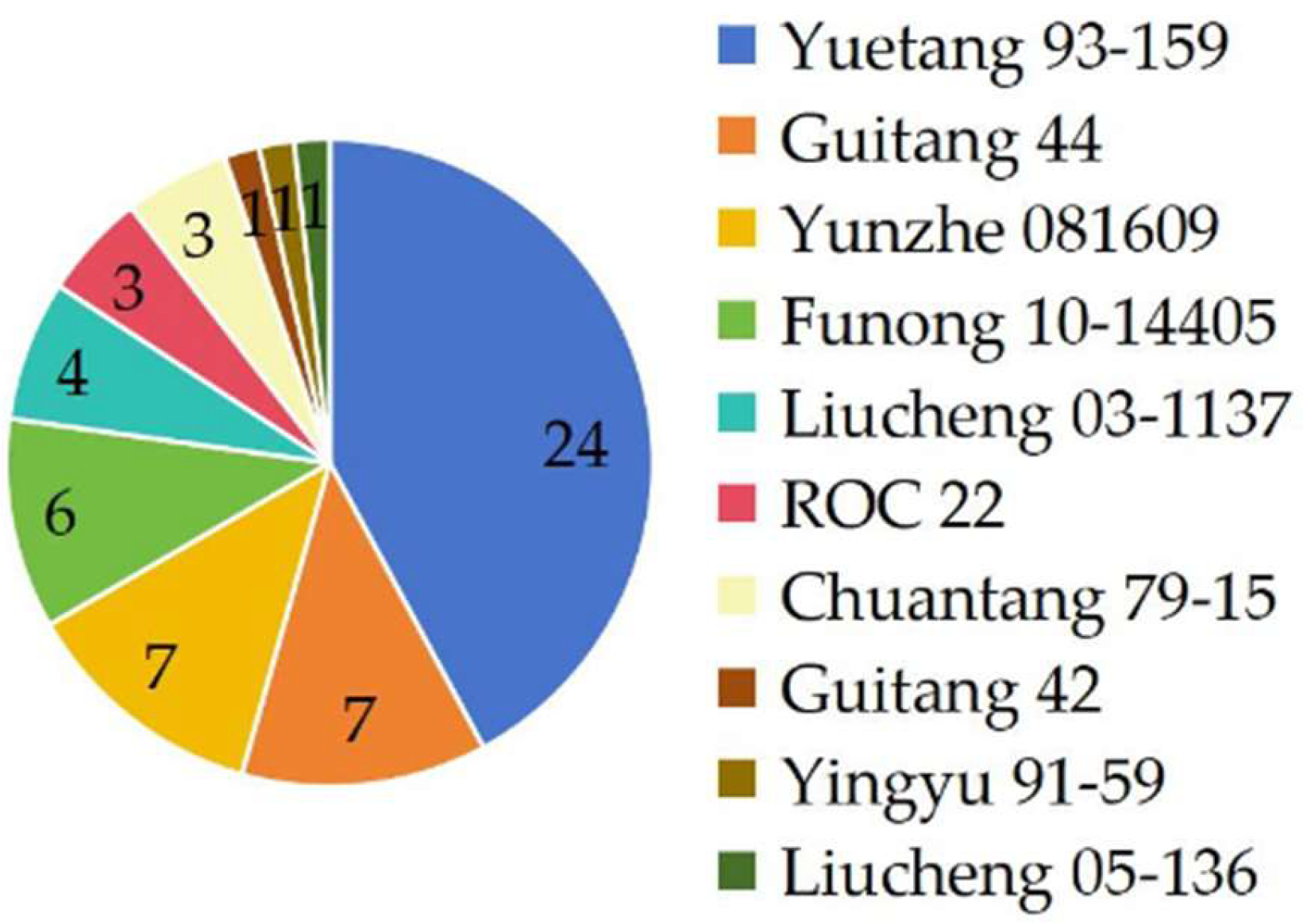
A total of 57 isolates were obtained in this study, of which 44 were from Yunnan Province and 13 from Guangxi Province. Among the ten sugarcane varieties, isolates were most frequently obtained from Yuetang 93-159 (24 isolates); followed by seven isolates each from Guitang 44 and Yunzhe 081609; six from Funong 10-14405, four from Liucheng 03-1137; three each from ROC 22 and Chuantang 79-15; and one each from Yingyu 91-59, Guitang 42, and Liucheng 05-136 (Figure 1).

3.2. Morphology Characteristics of Isolates

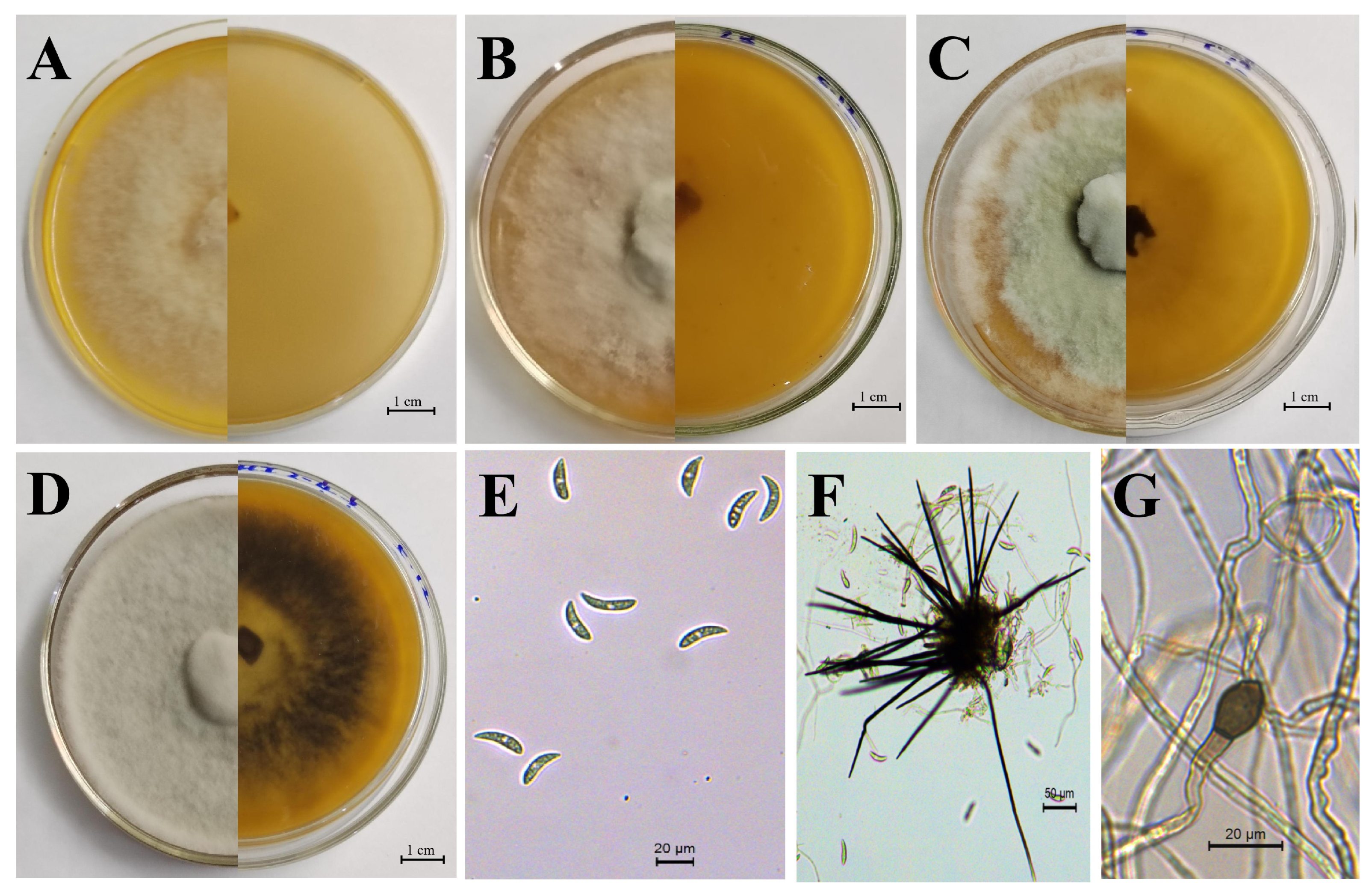
The morphological characterization revealed the presence of two fungal species. A total of 36 isolates were identified as Colletotrichum sp. and 21 isolates were putatively known as Fusarium sp. In this survey, Colletotrichum sp. was the most frequently isolated genus, accounting for 63.2% (36 of 57) of the total isolates. According to colonies and morphological features on PDA, the 36 Colletotrichum sp. isolates were classified into light and dark types. The isolates in group 1 (the light type) were greyish white or whitish grey, with sparse aerial mycelium, colonies were mostly raised and fluffy, conidial masses were salmon pink, and there was medium to high sporulation (Figure 2A,B). The isolates in group 2 (the dark type) were greyish green or dark grey, with abundant aerial mycelium, colonies were mostly flat and less fluffy, and there was poor sporulation (Figure 2C,D). Group 1 comprised 25 isolates, and group 2 comprised 11 isolates (Table 1). Conidia were falcate or sickle-shaped, contents were granular and sometimes contained oil globules, and the size of all the isolates ranged between 26.4 and 38.3 × 5.3–6.9 µm (Figure 2E). Setae were black and sparse (Figure 2F). Appressoria were globose or clavate, and medium brown (Figure 2G). These morphological characteristics were similar to C. falcatum [21], while species identification was confirmed by multigene phylogenetic analysis. The morphological and colony features of three representative isolates (Cf1, Cf16 and Cf33) are described in Table 3. The light type (Cf1 and Cf16) produced more conidia than the dark type (Cf33), and significant differences in conidial size among isolates were determined by the Kruskal–Wallis test with Dunn’s post hoc test (p < 0.05), as denoted by different superscript letters in the table.
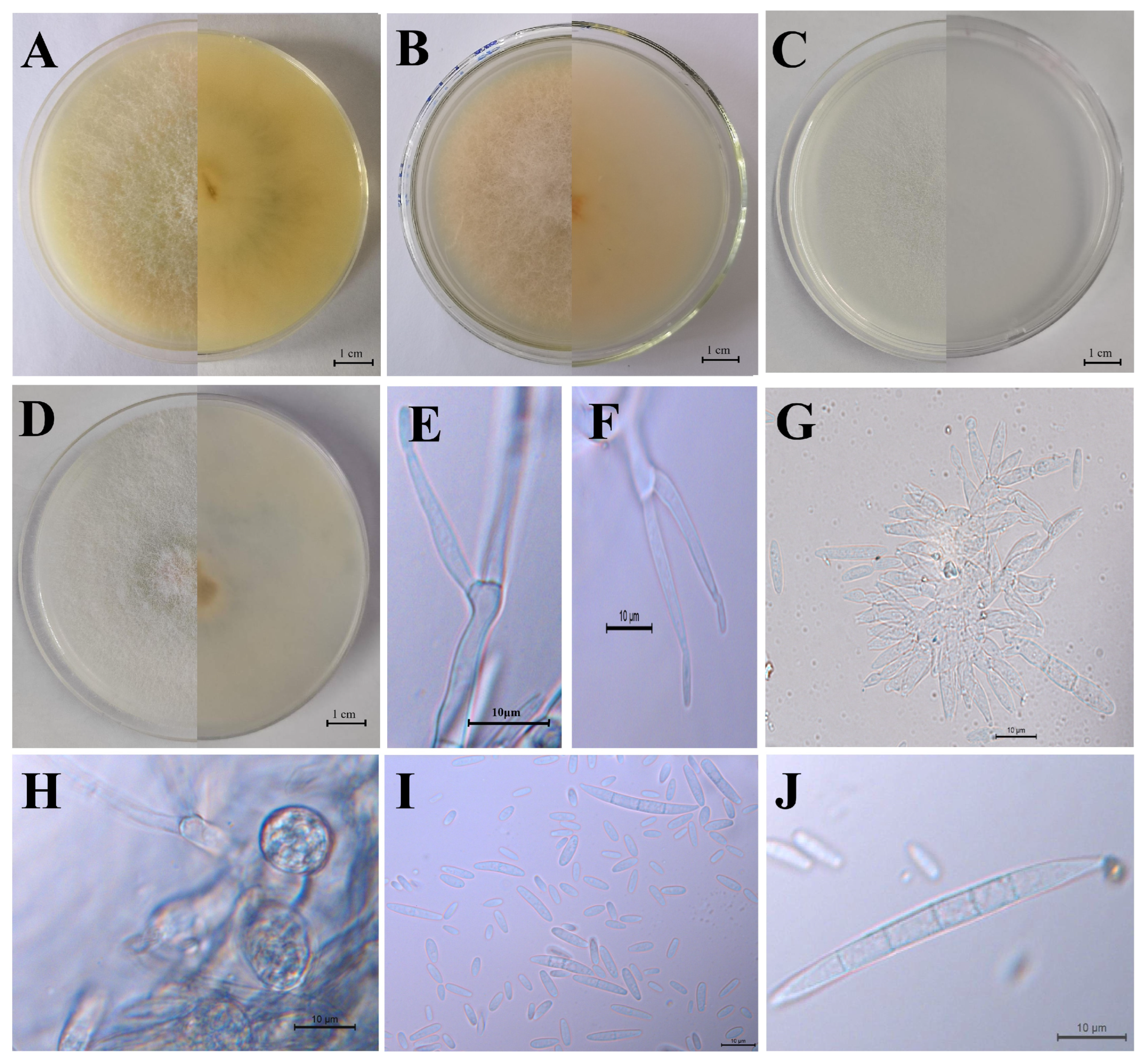
Colonies of Fusarium sp. on PDA were white to pale salmon, flat, floccose aerial mycelium, and pigmentation of the reverse side of the colony was also white to lavender gray to pale salmon (Figure 3A,B). Colonies of Fusarium sp. on SNA were white and velvety, with scarce aerial mycelium without pigmentation (Figure 3C,D). Conidiophores on aerial mycelium were straight or flexuous, septate, hyaline, smooth and thin-walled; simple or reduced to conidiogenous cells; and bore terminal single monophialides. Phialides were subulate to subcylindrical, smooth and thin-walled (17.8–38.6 × 2.5–3.5 µm) (Figure 3E,F). Sporodochium phialides were doliiform to subcylindrical smooth and thin-walled (9.2–15.4 × 3.0–4.0 µm) (Figure 3G). Chlamydospores present on SNA were globose to subglobose, hyaline, solitary, smooth and thick-walled (7.5–13.3 × 5.8–11.7 µm) (Figure 3H). Microconidia were produced in long chains at the tip of monophialides and were hyaline, ellipsoidal or clavate, smooth and thin-walled, with 0–3-septate and mostly 0 septate (4.2–22.9 × 1.7–4.2 µm) (Figure 3I). Macroconidia were lunate to falcate, tapered towards apical and basal ends, hyaline, smooth and thin-walled, with 3–5-septate and mostly 3 septate (25.8–52.5 × 3.3–4.6 μm) (Figure 3I,J). The cultural and morphological characteristics of the colony and conidia matched the description of F. madaense [36,37]. The morphological and colony features of three representative isolates (FM2, FM6 and FM9) are described in Table 3, and there are no significant differences among the isolates.

3.3. Molecular Identification

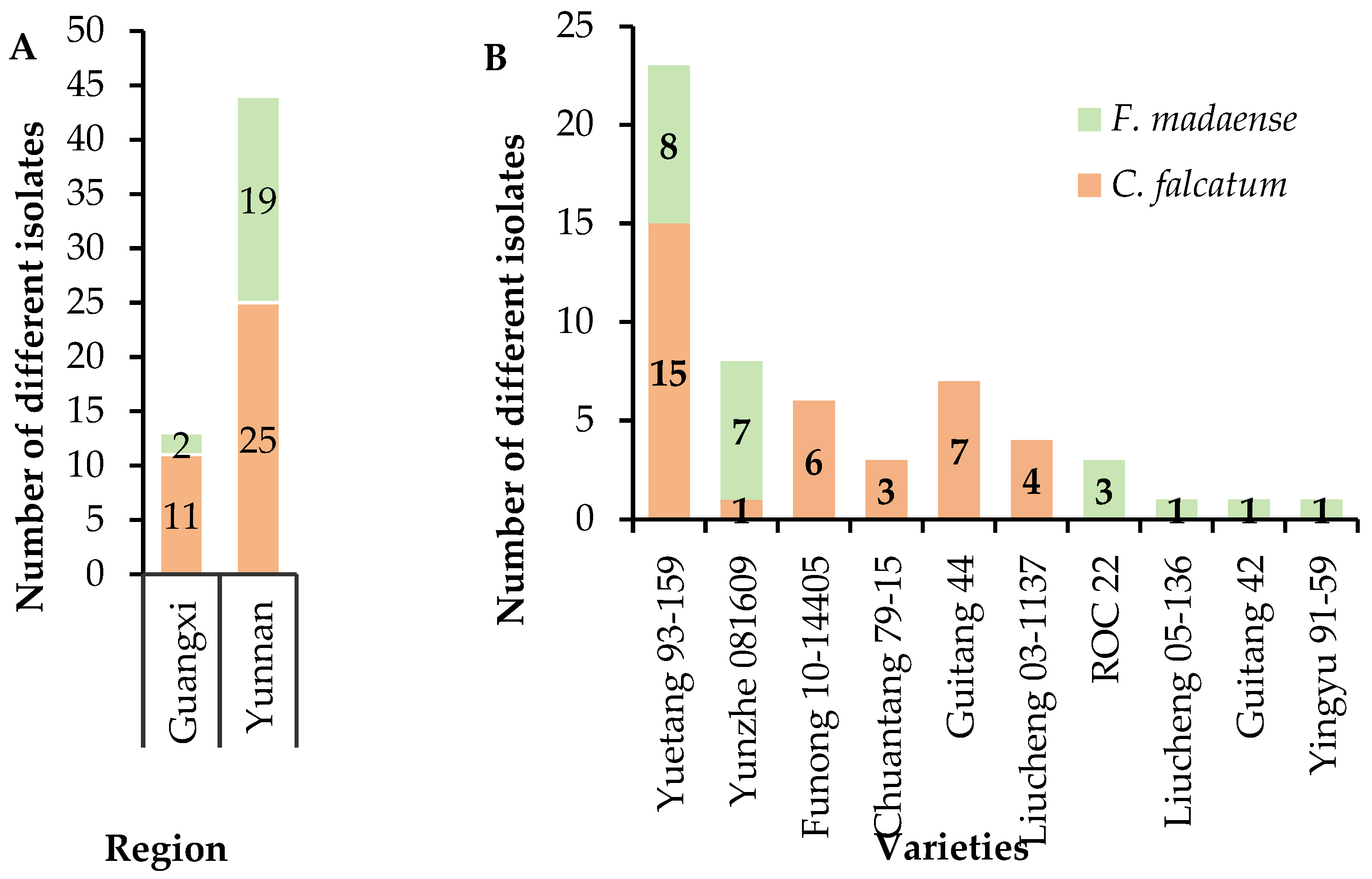
The aligned sequences of ITS (565 bp), ACT (277 bp) and TUB2 (770 bp) were obtained from 36 Colletotrichum sp. isolates for further molecular identification. GenBank BLAST searches with DNA sequences of ITS (OR523414–OR523449) confirmed that the nucleotide sequences of these isolates showed 99–100% nucleotide identity with the C. falcatum isolates COUFAL0263–COUFAL0266 (MT796068–MT796071) from Brazil and the isolate SUCF04 (MT197390) from Pakistan. BLAST searches of the ACT (OR542860–OR542895) sequences also revealed 99–100% identity with the ACT sequences of the C. falcatum isolates CML 4080 (MW455492) from Brazil. BLAST searches of the TUB2 (OR542896–OR542931) sequences shared 99–100% identity with the TUB2 sequences of the C. falcatum isolates COUFAL0263–COUFAL0266 (MT778880–MT778883) from Brazil. The 36 isolates were identified and confirmed as C. falcatum using sequence data of ITS, ACT and TUB2 genes, including 25 isolates from Yunnan Province and 11 from Guangxi Province (Figure 4A). Among these isolates, C. falcatum was most frequently isolated from the cultivar Yuetang 93-159 (15 isolates), followed by Guitang 44 (seven isolates), Funong 10-14405 (six isolates), Liucheng 03-1137 (four isolates), Chuantang 79-15 (three isolates), and Yunzhe 081609 (one isolate) (Figure 4B).
The sequences of the EF-1α (657 bp) and RPB2 (1806 bp) genes were obtained from 21 Fusarium sp. isolates for further molecular identification. The EF-1α (PP796366–PP796386) and RPB2 (PP691538–PP691558) nucleotide sequences showed 99.62% and 99.88% sequence similarity to the type strain CBS 146669 (EF-1α: MW402098, RPB2: MW402764) of F. madaense, respectively, and 99.88% and 100% sequence similarity to the strain CML 3586 of F. madaense (EF-1α: MH187929, RPB2: MH187912), respectively. No sequence polymorphisms were observed within EF-1α and RPB2 DNA loci among F. madaense isolates obtained in this study, and all isolates yielded identical sequences at all loci. The 21 isolates were identified as F. madaense based on BLAST searches of the two loci, and 19 isolates were from Yunnan Province and two from Guangxi Province (Figure 4A). Among these isolates, F. madaense was also most frequently isolated from the cultivar Yuetang 93-159 (eight isolates), followed by Yunzhe 081609 (seven isolates), ROC 22 (three isolates), Guitang 42 (one isolate), Liucheng 05-136 (one isolate), and Yingyu 91-59 (one isolate) (Figure 4B).

3.4. Phylogenetic Analysis

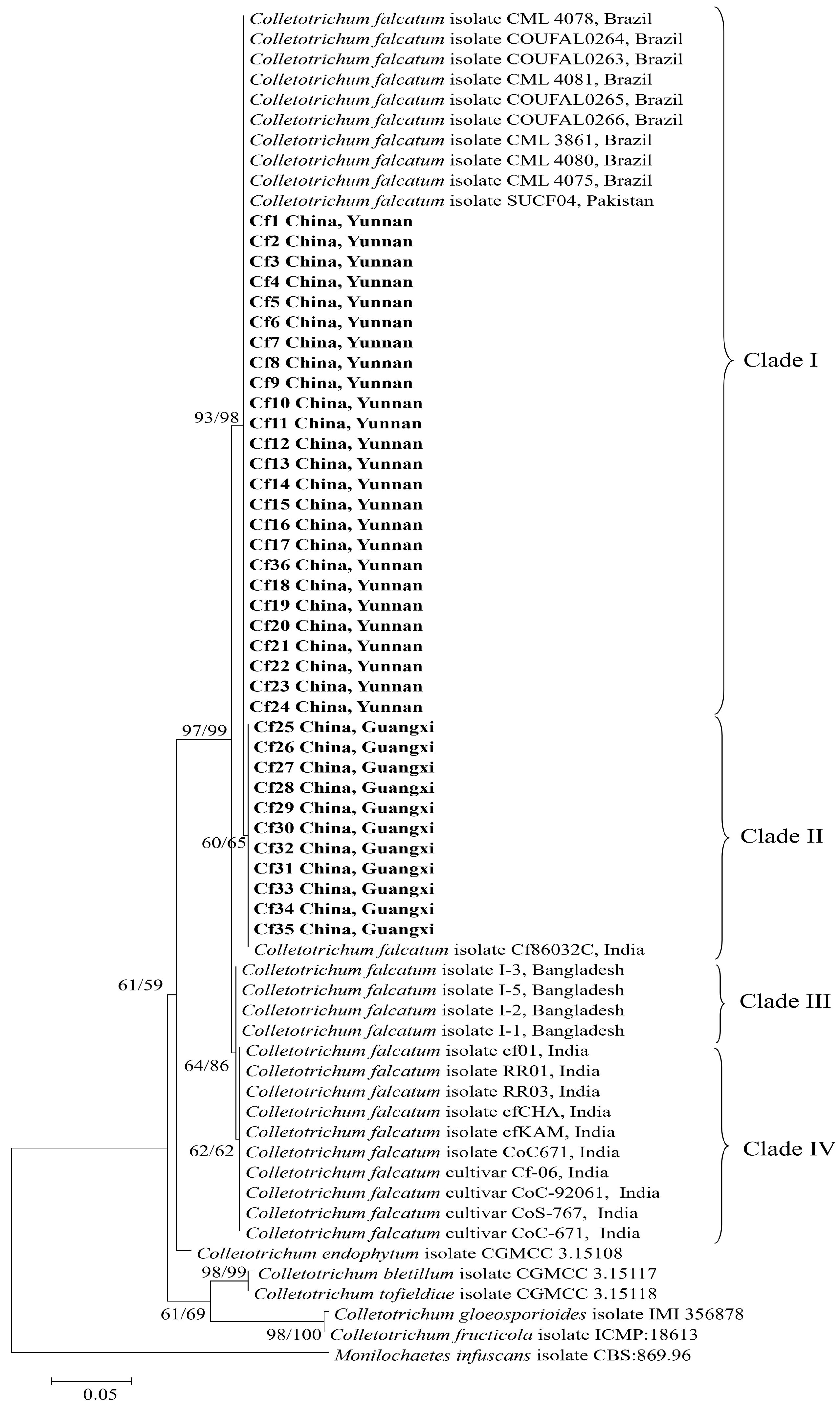
The phylogram constructed from the combined ITS, ACT and TUB2 genes revealed that the 36 Colletotrichum sp. isolates obtained in this study and 25 C. falcatum isolates from GenBank were clustered into four clades: Clade I (Yunnan, Brazil and Pakistan), Clade II (Guangxi and one isolate from India), Clade III (Bangladesh) and Clade IV (India) (Figure 5). In Clade I, twenty-five isolates from Yunnan, China, clustered with C. falcatum isolates from Brazil and Pakistan, with bootstrap values of 98% NJ and 93% ML. In Clade II, 11 isolates from Guangxi, China, showed a tendency to group the C. falcatum isolate Cf86032C from India, with bootstrap values of 65% NJ and 60% ML. The Yunnan clade and Guangxi clade appeared as sister clades with weak to moderate support. Clade III consisted of the isolates from Bangladesh, while Clade IV consisted of the isolates from India (Figure 5). Clade III and Clade IV were rebuilt as sister clades. Thus, the phylogenetic analysis based on the combined ITS, ACT and TUB2 sequences supports the identification of the 36 fungal isolates as C. falcatum.
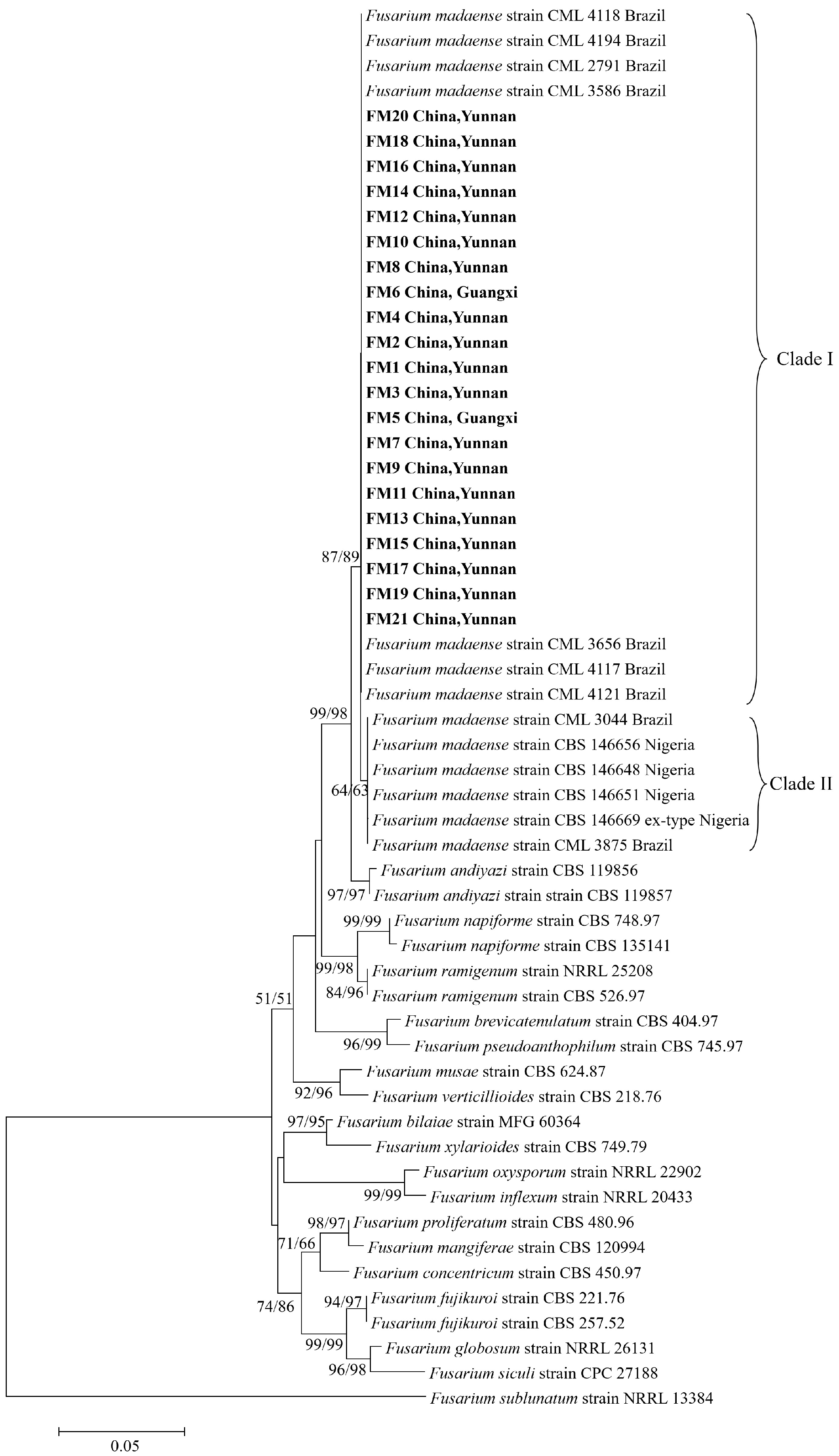
The phylogram constructed from the combined EF-1α and RPB2 gene sequences revealed that the 21 Fusarium sp. isolates obtained in this study and 13 F. madaense isolates from GenBank were clustered into two clades: Clade I (China and Brazil) and Clade II (Nigeria and Brazil) (Figure 6). All the 21 Fusarium sp. isolates from this study clustered in the same clade (Clade I) with the F. madaense strain (CML 3586) isolated from sugarcane in Brazil, with bootstrap values of 87% NJ and 89% ML, supporting that these 21 isolates belonged to F. madaense (Figure 6). Additionally, there were no sequence polymorphisms observed within these two DNA loci among the F. madaense isolates obtained in this study.

3.5. Pathogenicity Test

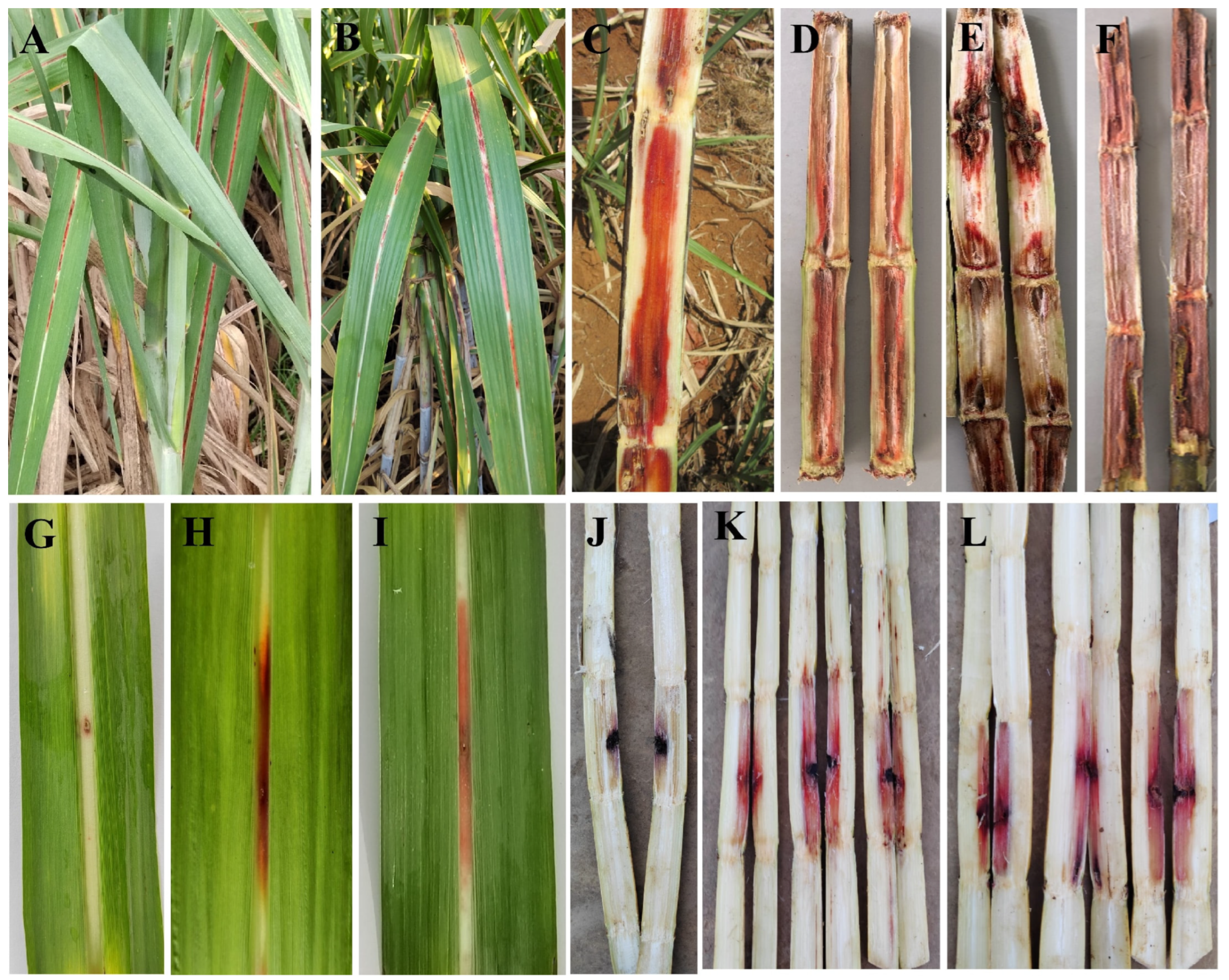
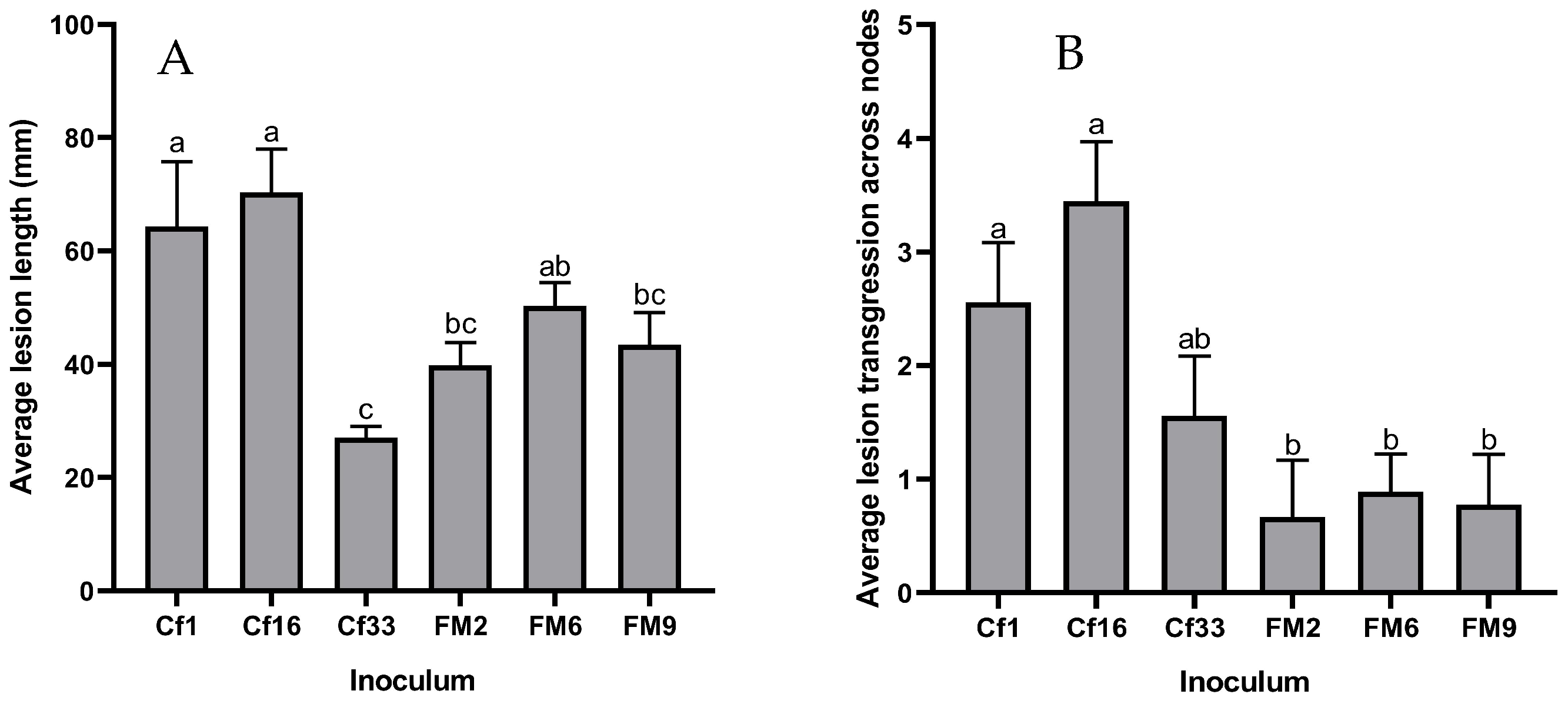
After 2 days of inoculation, red dots appeared on the leaf midribs inoculated with the tested C. falcatum and F. madaense isolates. As the disease developed, these red dots expanded and elongated, with typical long red lesions observed 7 days post-inoculation. The symptoms exhibited in the greenhouse were similar to the red rot symptoms observed in the field, whereas the controls inoculated with sterile PDA plugs exhibited redness at the inoculation sites but no further spread of symptoms (Figure 7A,B,G–I). The Kruskal–Wallis test revealed significant differences (p < 0.05) in the average lesion lengths among six representative isolates, indicating variations in their virulence (Figure 8A). Post hoc comparisons using Dunn’s post hoc test showed that the isolates Cf16 and Cf1 were the most virulent, with no significant difference between them, while the isolate Cf33 was significantly less virulent than Cf1, Cf16, and FM6 (p < 0.05) but did not differ significantly from FM2 or FM9 (p > 0.05). The isolate FM6 exhibited intermediate virulence, and no significant differences were observed from Cf1, Cf16, FM2, or FM9 (p > 0.05), but it was significantly more virulent than Cf33 (p < 0.05). The isolates Cf33, FM2 and FM9 displayed lower virulence levels, with no significant difference between them (p > 0.05). In this experiment, the C. falcatum isolate Cf16 was the most virulent, with an average lesion length of 70.3 mm at 7 days post-inoculation, followed by the C. falcatum isolate Cf1 (mean length: 64.3 mm), the F. madaense isolate FM6 (mean length: 50.3 mm), the F. madaense isolate FM9 (mean length: 43.4 mm), the F. madaense isolate FM2 (mean length: 39.9 mm), and the C. falcatum isolate Cf33 (mean length: 27.1 mm) (Table 3).
Thirty days after inoculation with the spore suspension, the tested C. falcatum and F. madaense isolates induced typical stalk red rot symptoms in the internal tissues of the inoculated stalks, which were similar to those observed under field conditions. Only reddening occurred at the inoculation sites on stalks inoculated with sterile distilled water, and no lesion development was observed (Figure 7C–F,J–L). The Kruskal–Wallis test revealed significant differences (p < 0.05) in lesion transgression across nodes among the six isolates (Figure 8B). Dunn’s post hoc test showed that the isolates Cf16 and Cf1 showed the highest stalk virulence, while Cf33 showed an intermediate response with no significant difference between them (p > 0.05), and Cf16 and Cf1 were significantly more virulent than FM2, FM6, and FM9 (p < 0.05). The isolates FM2, FM6, and FM9 exhibited the lowest virulence levels, with no significant differences among them (p > 0.05). Among the tested isolates, the C. falcatum isolate Cf16 was also the most virulent (as in leaf midrib inoculation), with a lesion transgression of 3–4 nodes above the inoculated node, followed by the C. falcatum isolates Cf1 and Cf33, as well as the F. madaense isolates FM6, FM9 and FM2 (Table 3).
Pathogenicity tests showed that both C. falcatum and F. madaense induced typical red rot symptoms. The results also indicate that the light-type C. falcatum isolates (Cf1 and Cf16) were more virulent than the dark-type isolate (Cf33), and the C. falcatum isolates Cf16 and Cf1 were more virulent than F. madaense with inoculation of sugarcane stalks (Figure 8, Table 3). The tested fungi were re-isolated from the inoculated plants and confirmed to be the original isolates based on the morphological characteristics and molecular identification methods (EF1α and RPB2 sequencing), which yielded sequences identical to those of the inoculated isolates described above; however, no fungi were isolated from the control plants. Representative isolates of C. falcatum and F. madaense fulfilled Koch’s postulates, confirming their ability to cause red rot symptom.

4. Discussion

Red rot commonly occurs on the leaf midribs and stalks of sugarcane, and the most damaging phase of this disease occurs when the pathogen attacks the stalk [19]. The emergence of new races has led to the breakdown of resistance in sugarcane varieties after several years of cultivation, and the disease cannot be effectively controlled by a single measure [15,38]. Many commercially popular varieties have become susceptible to red rot, such as Isd 17, Isd 18, Isd 28 and Isd 32 in Bangladesh [39]; Co 419, CoC 671, and CoJ 64 in India [15,38]; and Yuetang 93-159 and Guitang 44 in China [4,18,19].
In this study, based on the morphological characterization, molecular identification and pathogenicity assays, the pathogens associated with red rot symptoms were identified as F. madaense and C. falcatum. Of the 57 isolates obtained, 44 isolates (19 F. madaense and 25 C. falcatum) were from Yunnan Province, and 13 isolates (two F. madaense and 11 C. falcatum) were from Guangxi Province (Figure 4A). This may be attributed to the diverse cultivation of sugarcane varieties in Yunnan, where six varieties were sampled, compared with four varieties in Guangxi. Among the ten sampled varieties, F. madaense and C. falcatum were frequently isolated from Yuetang 93-159, and both fungi were also isolated from Yunzhe 081609, whereas only one of the two species (F. madaense or C. falcatum) was isolated in the other eight varieties (Figure 4B). Notably, F. madaense and C. falcatum were not isolated simultaneously from the same sample, and co-isolation was not observed among the samples analyzed in this study. However, it remains to be determined whether expanded sampling across sugarcane varieties and growing regions in China would identify other pathogens or co-infection events.
In recent years, C. falcatum and Fusarium species associated with sugarcane red rot symptoms have been reported. Dela Cueva et al. [20] reported that F. sacchari and F. proliferatum induce red rot in both the leaf midribs and stalks of sugarcane in the Philippines. Costa et al. [21] showed that F. sacchari, F. proliferatum and F. madaense cause cane stalk red rot in Brazil. Nevertheless, these Fusarium species are also pathogens of sugarcane pokkah boeng [37,40]. F. madaense was first isolated from groundnut (Arachis hypogaea) and sorghum (Sorghum bicolor) in Nigeria by Ezekiel et al. [36]. In recent years, F. madaense has been reported as a pathogen of multiple plants in Brazil, including Brachiaria spp., Zea mays, Eleusine coracana, Pennisetum glaucum, Oryza sativa, S. bicolor, and S. officenarum (pokkah boeng) [37]. Subsequently, Gunasinghe et al. [41] reported for the first time that F. madaense causes root and stalk rot on S. bicolor in Australia. To our knowledge, this is the first report of F. madaense associated with and inducing red rot symptoms in sugarcane leaf midribs and stalks in China.
Morphological and colony observations revealed no significant differences among F. madaense isolates. Phylogenetic analysis based on EF-1α and RPB2 sequences further confirmed that no sequence polymorphisms were detected within these two DNA loci among the F. madaense isolates obtained in this study. F. madaense isolates from China clustered in the same clade with the F. madaense strain (CML 3586) isolated from sugarcane in Brazil and were phylogenetically closely related to F. andiyazi, which is consistent with previous reports by Ezekiel et al. [36] and Costa et al. [21]. In addition to F. madaense, C. falcatum showed distinct characteristics in morphological and genetic traits. This is the first study to classify C. falcatum isolates using morphological characteristics and multigene phylogenetic analysis in China. Thirty-six C. falcatum isolates were obtained from different sugarcane varieties and growing regions in China. This study revealed that C. falcatum is divided into a light type and dark type based on morphological characters in China, which is consistent with the previous reports from India, Thailand, Brazil, Bangladesh and Pakistan [5,9,10,21,42]. We also found that light-type colonies were whitish grey or greyish white, mostly raised and fluffy, with moderate to high sporulation; the dark type forms greyish green or dark grey colonies that are flat, less fluffy and have poor sporulation. Morphological and colonial differences indicated that there were significant differences among the C. falcatum isolates. Pathological assessment provided a preliminary finding that the light-type isolates are more virulent than the dark-type isolates; however, this finding requires validation with a larger number of isolates in future studies.
The ITS, ACT and TUB2 genes have been widely used for the identification and phylogenetic analysis of the genus Colletotrichum [10,11,43]. Hossain et al. [5] reported that 41 C. falcatum isolates from Bangladesh clustered into a single clade, with no distinct geographical structuring evident within this clade based on multigene phylogenetic analysis. In this study, multigene phylogenetic analysis of 36 C. falcatum isolates from sugarcane in China was performed based on the ITS, ACT and TUB2 sequences. The results show that isolates from Yunnan Province clustered into Clade I, whereas those from Guangxi Province clustered as Clade II. Guangxi and Yunnan Provinces are the first and second largest sugarcane-producing regions in China, both geographically located in southern China and sharing a contiguous border. However, the major cultivated sugarcane varieties differ between the two regions: Guangxi mainly grows varieties such as Guitang 42 and Guitang 44, while Yunnan primarily cultivates Yuetang 93-159, Yunzhe 081609, and ROC 22. Notably, no correlation was found between the genetic clades (Clade I and Clade II) and the morphological morphotypes (light type and dark type) in this study. A distinct geographical clustering was observed in Southwest China, which may be influenced by the diverse ecological conditions and cultivar compositions in the study area. In contrast, the hypothesis that the observed geographical differentiation of C. falcatum is partly related to the divergence in main cultivated varieties between Guangxi and Yunnan lacks supporting evidence and remains to be tested with additional data (e.g., seed cane movement records or population genetic analyses). Additionally, the molecular mechanisms underlying the virulence differences between light-type and dark-type C. falcatum remain unclear, which should be addressed in future studies through transcriptomic or genomic analyses.
In this study we confirmed that C. falcatum and the novel pathogen F. madaense induce leaf midribs and stalk red rot in Southwest China, and the C. falcatum isolates Cf16 and Cf1 showed higher stalk virulence than the tested F. madaense isolates. However, the pathogenicity test was performed exclusively on the susceptible variety Yuetang 93-159. Consequently, the observed virulence levels are specific to this variety and may differ from other sugarcane varieties with different genetic backgrounds. The results of this study can provide a scientific basis for resistance breeding, as well as the monitoring and management of this disease. The present study provides first-hand information on characterization and phylogenetic analyses of F. madaense and C. falcatum associated with sugarcane red rot disease in China.

5. Conclusions

Preliminary findings suggest that sugarcane red rot in Southwest China is caused by two fungal pathogens in the samples examined in this study: C. falcatum and the novel pathogen F. madaense. C. falcatum is the most frequently isolated species associated with sugarcane red rot, accounting for 63.2% of the total isolates in this study. Isolates of C. falcatum from sugarcane in Southwest China are classified into light and dark morphotypes, and preliminary findings from the tested isolates suggest that light-type isolates show significantly higher virulence than dark-type ones; however, further investigation with a larger number of isolates is required to confirm this observation. Additionally, the C. falcatum isolates Cf16 and Cf1 showed higher stalk virulence than the tested F. madaense isolates. Our findings thus lay a scientific foundation for the targeted monitoring, resistance breeding, and integrated management of sugarcane red rot in China. To our knowledge, this is the first report of F. madaense causing typical red rot symptoms on sugarcane in China.

Author Contributions

Conceptualization, J.L.; methodology, J.L.; visualization, J.L. and H.S.; formal analysis, C.W. and R.Z.; data curation, Y.L. and J.Y.; investigation, J.L., X.W., R.Z. and Y.L.; supervision, J.Y. and H.S.; validation, R.Z., C.W. and X.W.; writing—original draft preparation, J.L.; writing—review and editing, J.L. and H.S.; project administration, J.L. and H.S.; funding acquisition, J.L., X.W. and H.S. All authors have read and agreed to the published version of the manuscript.

Funding

This research was supported by the Yunnan Fundamental Research Project (202101AT070247); the Yunnan Provincial Science and Technology Department Innovative Talent Training Program (202405AD350069); the China Agriculture Research System of MOF and MARA (CARS-17); and the Yunnan Province Agriculture Research System (YNGZTX-4-92).

Institutional Review Board Statement

Not applicable.

Informed Consent Statement

Not applicable.

Data Availability Statement

The original contributions presented in this study are included in the article. Further inquiries can be directed to the corresponding authors. The DNA sequence data generated for this study have been deposited in the GenBank database under the accession numbers listed in Table 1.

Conflicts of Interest

The authors declare no conflicts of interest.

References

  1. Zhao, H.H.; Sun, D.L.; Lu, Y.L.; Chen, L.J.; Fu, J.T.; Gong, H.L.; Dai, S.X.; An, Y.X. Status, Hotspot analysis and outlook of sugarcane research in China. Sugarcane Canesugar 2018, 3, 65–70. (In Chinese) [Google Scholar]
  2. Liu, X.X.; Liu, Y.X.; Bai, C. Characteristics, problems of sugar industry in China and development trends in 2021. Sugarcane Canesugar 2021, 50, 102–108. (In Chinese) [Google Scholar]
  3. Zhang, Y.B.; Deng, J.; Hu, Z.H. The 13th five-year plan of cane sugar industry in China and development trend of the 14th five-year plan. Sugar Crops China 2022, 44, 71–76. (In Chinese) [Google Scholar]
  4. Li, J.; Li, W.F.; Zhang, R.Y.; Shan, H.L.; Wang, X.Y.; Cang, X.Y.; Luo, Z.M.; Yin, J.; Huang, Y.K. The epidemic characteristics and control strategies of sugarcane red rot. Sugar Crops China 2019, 41, 58–64. (In Chinese) [Google Scholar]
  5. Hossain, M.I.; Ahmad, K.; Vadamalai, G.; Siddiqui, Y.; Saad, N.; Ahmed, O.H.; Hata, E.M.; Adzmi, F.; Rashed, O.; Rahman, M.Z.; et al. Phylogenetic analysis and genetic diversity of Colletotrichum falcatum isolates causing sugarcane red rot disease in Bangladesh. Biology 2021, 10, 862. [Google Scholar] [CrossRef]
  6. Marins, É.F.C.; da Silva, M.J.d.S.; da Silva, J.L.; Silva-Cabral, J.R.A.; Costa, J.F.d.O.; Feijó, F.M.; Assunção, I.P.; Lima, G.S.d.A. Colletotrichum Species Associated with Sugarcane Red Rot in Brazil. Fungal Biol. 2022, 126, 290–299. [Google Scholar] [CrossRef] [PubMed]
  7. Went, F.A.F.C. Het Rood Snot (Summary in English). Arch. Java Suikerindus. 1893, 1, 265–282. [Google Scholar]
  8. Bharti, Y.P.; Vishwakarma, S.K.; Kumar, A.; Singh, A.; Sharma, M.; Shukla, D. Physiological and pathological aspects of some new isolates of Colletotrichum falcatum causing red rot disease in Saccharum spp complex. Acta Phytopathol. Entomol. Hung. 2012, 47, 35–50. [Google Scholar] [CrossRef]
  9. Sangdit, P.; Leksomboon, C.; Lertsrutaiyotin, R. Cultural, morphological and pathological characterization of Colletotrichum falcatum causing red rot disease of sugarcane in Thailand. Agric. Nat. Reso. 2014, 48, 880–892. [Google Scholar]
  10. Ahmad, Z.; Farooq, M.A.; Fatima, A.; Nisa, S.G.; Tabassum, S.; Ismat, B.; Waseem, S.; Iqbal, U.; Akbar, A.; Haroon, U.; et al. Molecular diagnosis of red rot of sugarcane in Pakistan and in vitro control of isolated pathogen using rhizobacteria. Plant Prot. Sci. 2023, 59, 124–133. [Google Scholar] [CrossRef]
  11. Silva, F.R.; Resende, M.L.V.D.; Ferreira, L.C.; Adesina, O.; Xavier, K.V. Molecular characterization and pathogenicity of Colletotrichum falcatum causing red rot on sugarcane in Southern Florida. J. Fungi 2024, 10, 742. [Google Scholar] [CrossRef]
  12. Silva, T.C.; Moreira, S.I.; Felizardo, L.M.; Martins, R.M.; Suzuki, A.N.; Faria, G.A.; Montanari, R.; Ceresini, P.C. Dry rot caused by the complex Colletotrichum falcatum and Thielaviopsis paradoxa emerges as a key stalk disorder in newly expanded sugarcane plantations from Northwestern São Paulo, Brazil. Agronomy 2023, 13, 2729. [Google Scholar] [CrossRef]
  13. Viswanathan, R.; Singh, S.P.; Selvakumar, R.; Raj, C.; Singh, D.; Bharti, Y.P.; Chhabra, M.L.; Sharma, A.; Minnatullah, M.; Mehra, R.; et al. Widespread occurrence of Colletotrichum falcatum pathotype CF13 in the subtropical India dictates continuous pathogenic virulence and severe sugarcane crop destructions. Sugar Tech 2025, 27, 1397–1408. [Google Scholar] [CrossRef]
  14. Jiang, C.X.; Xu, Y.Z.; Wei, Y.B.; Khan, M.T.; Wu, Y.; Li, H.; Chen, J.; Zhang, C.; Zeng, L.F.; Zhang, M. Occurrence and field evaluation of promising sugarcane genotypes for resistance to midrib red rot disease in China. Plant Pathol. 2024, 73, 1469–1479. [Google Scholar] [CrossRef]
  15. Viswanathan, R.; Padmanaban, P.; Selvakumar, R. Emergence of new pathogenic variants in Colletotrichum falcatum, stalk infecting ascomycete in sugarcane: Role of host varieties. Sugar Tech 2020, 22, 473–484. [Google Scholar] [CrossRef]
  16. Wan, H.E. Brief report on damage caused by red rot of sugarcane. Hubei Plant Prot. 1994, 3, 18. [Google Scholar]
  17. Wu, W.H.; Hu, D.; He, C.P.; Zheng, F.C. Carbon and nitrogen utilization and toxic test of sugarcane red rot. Sugar Crops China 2008, 1, 14–17. (In Chinese) [Google Scholar]
  18. Lin, M.J.; Gong, H.L.; An, Y.X.; Chen, L.J.; Guan, C.X.; Xu, H.L.; Zheng, X.W.; Lu, B.; Lu, J.X. Preliminary study on occurrence and causes of sugarcane red rot disease in Zhanjiang. Sugarcane Canesugar 2011, 1, 34–37. (In Chinese) [Google Scholar]
  19. Huang, Y.K.; Li, W.F.; Wang, X.Y.; Shan, H.L. Color Illustration of Diagnosis and Control for Modern Sugarcane Harmful Organisms; China Agricultural Press: Beijing, China, 2019; p. 8. [Google Scholar]
  20. Dela Cueva, F.; De Torres, R.; de Castro, A.; Mendoza, J.; Balendres, M.A. Susceptibility of sugarcane to red rot caused by two Fusarium species and its impact on stalk sugar level. J. Plant Pathol. 2019, 101, 639–646. [Google Scholar] [CrossRef]
  21. Costa, M.M.; Silva, B.A.A.S.; Moreira, G.M.; Pfenning, L.H. Colletotrichum falcatum and Fusarium species induce symptoms of red rot in sugarcane in Brazil. Plant Pathol. 2021, 70, 1807–1818. [Google Scholar] [CrossRef]
  22. Cai, L.; Hyde, K.D.; Taylor, P.W.J.; Weir, B.S.; Waller, J.M.; Abang, M.M.; Zhang, J.Z.; Yang, Y.L.; Phoulivong, S.; Liu, Z.Y.; et al. A polyphasic approach for studying Colletotrichum. Fungal Divers. 2009, 39, 183–204. [Google Scholar]
  23. Nirenberg, H.I. Untersuchungen über die Morphologische und Biologische Differenzierung in der Fusarium-Sektion Liseola; Mitteilungen aus der Biologischen Bundesanstalt für Land-und Forstwirtschaft, Berlin Dahlem; Kommissionsverlag Paul Parey: Singhofen, Germany, 1976; Volume 169, 117p. [Google Scholar]
  24. Wang, M.M.; Crous, P.W.; Sandoval-Denis, M.; Han, S.L.; Liu, F.; Liang, J.M.; Duan, W.J.; Cai, L. Fusarium and allied genera from China: Species diversity and distribution. Persoonia 2022, 48, 1–53. [Google Scholar] [CrossRef]
  25. Leslie, J.F.; Summerell, B.A. The Fusarium Laboratory Manual; Blackwell Publishing Ltd.: Oxford, UK, 2006. [Google Scholar]
  26. White, T.J.; Bruns, T.; Lee, S.; Taylor, J.W. Amplification and direct sequencing of fungal ribosomal RNA genes for phylogenetics. In PCR Protocols: A Guide to Methods and Applications; Innis, M.A., Gelfand, D.H., Sninsky, J.J., White, T.J., Eds.; Academic Press: New York, NY, USA, 1990; pp. 315–322. [Google Scholar]
  27. Carbone, I.; Kohn, L.M. A method for designing primer sets for speciation studies in filamentous ascomycetes. Mycologia 1999, 91, 553–556. [Google Scholar] [CrossRef]
  28. Glass, N.L.; Donaldson, G.C. Development of primer sets designed for use with the PCR to amplify conserved genes from filamentous ascomycetes. Appl. Environ. Microb. 1995, 61, 1323–1330. [Google Scholar] [CrossRef]
  29. O’Donnell, K.; Cigelnik, E. Two divergent intragenomic rDNA ITS2 types within a monophyletic lineage of the fungus Fusariumare nonorthologous. Mol. Phylogenet. Evol. 1997, 7, 103–116. [Google Scholar] [CrossRef] [PubMed]
  30. O’Donnell, K.; Kistler, H.C.; Cigelnik, E.; Ploetz, R.C. Multiple evolutionary origins of the fungus causing Panama disease of banana: Concordant evidence from nuclear and mitochondrial gene genealogies. Proc. Natl. Acad. Sci. USA 1998, 95, 2044–2049. [Google Scholar] [CrossRef] [PubMed]
  31. Liu, Y.J.; Whelen, S.; Hall, B.D. Phylogenetic relationships among ascomycetes: Evidence from an RNA polymerse II subunit. Mol. Biol. Evol. 1999, 16, 1799–1808. [Google Scholar] [CrossRef]
  32. O’Donnell, K.; Sutton, D.A.; Rinaldi, M.G.; Sarver, B.A.; Balajee, S.A.; Schroers, H.J.; Summerbell, R.C.; Robert, V.A.R.G.; Crous, P.W.; Zhang, N.; et al. Internet-accessible DNA sequence database for identifying fusaria from human and animal infections. J. Clin. Microbiol. 2010, 48, 3708–3718. [Google Scholar] [CrossRef]
  33. Kimura, M. A simple method for estimating evolutionary rate of base substitutions through comparative studies of nucleotide sequences. J. Mol. Evol. 1980, 16, 111–120. [Google Scholar] [CrossRef]
  34. Cano, J.; Guarro, J.; Gené, J. Molecular and morphological identification of Colletotrichum species of clinical Interest. J. Clin. Microbiol. 2004, 42, 2450–2454. [Google Scholar] [CrossRef]
  35. Tamura, K.; Stecher, G.; Peterson, D.; Peterson, N.; Filipski, A.; Kumar, S. MEGA6, Molecular evolutionary genetics analysis version 6.0. Mol. Biol. Evol. 2013, 30, 2725–2729. [Google Scholar] [CrossRef] [PubMed]
  36. Ezekiel, C.N.; Kraak, B.; Sandoval-Denis, M.; Sulyok, M.; Oyedele, O.A.; Ayeni, K.I.; Makinde, O.M.; Akinyemi, O.M.; Krska, R.; Crous, P.W.; et al. Diversity and toxigenicity of fungi and description of Fusarium madaense sp. nov. from cereals, legumes and soils in north-central Nigeria. MycoKeys 2020, 67, 95–124. [Google Scholar] [CrossRef]
  37. Costa, M.M.; Saleh, A.A.; Melo, M.P.; Guimarães, E.A.; Esele, J.P.; Zeller, K.A.; Summerell, B.A.; Pfenning, L.H.; Leslie, J.F. Fusarium mirum sp. nov, intertwining Fusarium madaense and Fusarium andiyazi, pathogens of tropical grasses. Fungal Biol. 2022, 126, 250–266. [Google Scholar] [CrossRef]
  38. Yadav, R.L. Research vision to manage red-rot disease of sugarcane in India. Sugar Tech 2006, 8, 99–100. [Google Scholar] [CrossRef]
  39. Rahman, M.S.; Khatun, K.; Rahman, K. Sugarcane and sugar industry in Bangladesh, An Overview. Sugar Tech 2016, 18, 627–635. [Google Scholar] [CrossRef]
  40. Costa, M.M.; Melo, M.P.; Guimarães, E.A.; Veiga, C.M.O.; Carmo, S.F.; Moreira, G.M.; Costa, S.S.; Pfenning, L.H. Identification and pathogenicity of Fusarium species associated with pokkah boeng of sugarcane in Brazil. Plant Pathol. 2019, 68, 1350–1360. [Google Scholar] [CrossRef]
  41. Gunasinghe, N.; Vaghefi, N.; Shivas, R.G.; Tan, Y.P.; Jordan, D.; Mace, E.S.; Cruickshank, A.; Martin, A. First report of Fusarium madaense as a cause of root and stalk rot on Sorghum bicolor in Australia. New Dis. Rep. 2023, 47, e12192. [Google Scholar] [CrossRef]
  42. Bharti, Y.P.; Kumar, A.; Sharma, D.D.K.; Singh, S.K.; Shukla, D.N. Morphological, physiological and pathological variations among isolates of Colletotrichum falcatum that cause red rot of sugarcane. Afr. J. Microbiol. Res. 2014, 8, 1040–1049. [Google Scholar] [CrossRef]
  43. Jayawardena, R.S.; Hyde, K.D.; Damm, U.; Cai, L.; Liu, M.; Li, X.H.; Zhang, W.; Zhao, W.S.; Yan, J.Y. Notes on currently accepted species of Colletotrichum. Mycosphere 2016, 7, 1192–1260. [Google Scholar] [CrossRef]
Figure 1. Number of isolates obtained from ten sugarcane varieties.
Microorganisms 14 01280 g001
Figure 2. Morphological characteristics of C. falcatum isolated from red rot of sugarcane. (AD) Top and underside view of C. falcatum on PDA. (E) Conidia. (F) Setae. (G) Appressoria. Scale bars: (AD) = 1 cm, (E,G) =20 μm, and (F) = 50 μm.
Microorganisms 14 01280 g002
Figure 3. Morphological characteristics of F. madaense isolated from red rot of sugarcane. (AD) Top and underside view of F. madaense on SNA. (E,F) Conidiophores and phialides. (G) Sporodochium phialides. (H) Chlamydospores. (I) Microconidia and macroconidia. (J) Macroconidia. Scale bars: (AD) = 1 cm and (EJ) = 10 μm.
Microorganisms 14 01280 g003
Figure 4. Proportions of C. falcatum and F. madaense isolated from sugarcane in China. (A) Number of C. falcatum and F. madaense isolates collected from Yunnan and Guangxi. (B) Number of C. falcatum and F. madaense isolates collected from ten sugarcane varieties.
Microorganisms 14 01280 g004
Figure 5. Phylogenetic tree of C. falcatum based on concatenated ITS, ACT and TUB2 sequences, constructed using neighbor-joining and maximum likelihood. Bootstrap support values (1000 replicates) ≥ 50% are shown at the nodes as NJ/ML. Isolates obtained in this study are indicated in bold.
Microorganisms 14 01280 g005
Figure 6. Phylogenetic tree of F. madaense based on the concatenated sequences of EF-1α and RPB2 genes by neighbor-joining and maximum likelihood. Bootstrap support values (1000 replicates) ≥ 50% are shown at the nodes as NJ/ML. Isolates obtained in this study are indicated in bold.
Microorganisms 14 01280 g006
Figure 7. Disease symptoms of leaf midrib and stalk red rot on sugarcane plants under natural conditions and artificial inoculation. Natural infections: (A) Leaf midrib red rot caused by C. falcatum. (B) Leaf midrib red rot caused by F. madaense. (C) Stalk red rot caused by C. falcatum. (DF) Stalk red rot caused by F. madaense. Artificial inoculations: (G) Negative control for leaf midrib. (H) Leaf midrib red rot inoculation with the C. falcatum isolate Cf33. (I) Leaf midrib red rot inoculated with the F. madaense isolate FM2. (J) Negative control for stalk. (K) Stalk red rot inoculation with the C. falcatum isolate Cf33. (L) Stalk red rot inoculated with the F. madaense isolate FM2.
Microorganisms 14 01280 g007
Figure 8. Disease development after inoculation with different strains. (A) Average lesion lengths (in millimeters) on sugarcane leaf midrib 7 days after inoculation with mycelial plugs of six fungal isolates. (B) Average lesion transgression across nodes on sugarcane stalks 30 days after inoculation with spore suspension of six fungal isolates. Columns with different letters indicate significant differences (Kruskal–Wallis test followed by Dunn’s post hoc test; p < 0.05).
Microorganisms 14 01280 g008
Table 1. C. falcatum and F. madaense isolates collected from different sugarcane varieties with symptoms of red rot in China.
IsolateSpeciesColony Colour 1VarietiesSite of CollectionRegionLatitude (°N), Longitude (°E)GenBank Accession No. 2
ITSACTTUBEF-1αRPB2
Cf1C. falcatumWhitish greyYuetang 93-159Menghai CountyYunnan100°20′5″ E, 22°10′35″ NOR523414OR542860OR542896
Cf2C. falcatumGreyish whiteYuetang 93-159Menghai CountyYunnan100°20′5″ E, 22°10′35″ NOR523415OR542861OR542897
Cf3C. falcatumWhitish greyYuetang 93-159Menghai CountyYunnan100°20′5″ E, 22°10′35″ NOR523416OR542862OR542898
Cf4C. falcatumDark greyYuetang 93-159Puer CityYunnan99°35′24″ E, 22°9′57″ NOR523417OR542863OR542899
Cf5C. falcatumGreyish whiteYuetang 93-159Puer CityYunnan99°35′24″ E, 22°9′57″ NOR523418OR542864OR542900
Cf6C. falcatumDark greyYuetang 93-159Puer CityYunnan99°35′24″ E, 22°9′57″ NOR523419OR542865OR542901
Cf7C. falcatumGreyish whiteYuetang 93-159Puer CityYunnan99°35′24″ E, 22°9′57″ NOR523420OR542866OR542902
Cf8C. falcatumGreyish whiteYuetang 93-159Puer CityYunnan99°35′24″ E, 22°9′57″ NOR523421OR542867OR542903
Cf9C. falcatumWhitish greyYuetang 93-159Puer CityYunnan99°35′24″ E, 22°9′56″ NOR523427OR542873OR542909
Cf10C. falcatumGreyish whiteYuetang 93-159Puer CityYunnan99°35′24″ E, 22°9′56″ NOR523438OR542884OR542920
Cf11C. falcatumGreyish whiteYuetang 93-159Puer CityYunnan99°35′24″ E, 22°9′56″ NOR523435OR542881OR542917
Cf12C. falcatumGreyish whiteYuetang 93-159Puer CityYunnan99°35′24″ E, 22°9′56″ NOR523436OR542882OR542918
Cf13C. falcatumGreyish whiteYuetang 93-159Puer CityYunnan99°35′24″ E, 22°9′56″ NOR523428OR542874OR542910
Cf14C. falcatumDark greyYuetang 93-159Lincang CityYunnan99°26′54″ E, 23°20′38″ NOR523449OR542895OR542931
Cf15C. falcatumGreyish whiteYunzhe 081609Puer CityYunnan99°49′9″ E,
23°2′12″ N
OR523430OR542876OR542912
Cf16C. falcatumGreyish whiteFunong 10-14405Mile CityYunnan103°19′55″ E, 23°55′27″ NOR523440OR542886OR542922
Cf17C. falcatumGreyish greenFunong 10-14405Mile CityYunnan103°19′55″ E, 23°55′27″ NOR523441OR542887OR542923
Cf18C. falcatumWhitish greyFunong 10-14405Mile CityYunnan103°19′55″ E, 23°55′27″ NOR523442OR542888OR542924
Cf19C. falcatumGreyish greenFunong 10-14405Mile CityYunnan103°19′55″ E, 23°55′27″ NOR523443OR542889OR542925
Cf20C. falcatumGreyish greenFunong 10-14405Mile CityYunnan103°19′55″ E, 23°55′27″ NOR523445OR542891OR542927
Cf21C. falcatumGreyish greenFunong 10-14405Mile CityYunnan103°19′55″ E, 23°55′27″ NOR523444OR542890OR542926
Cf22C. falcatumGreyish whiteChuantang 79-15Lincang CityYunnan99°8′16″ E,
23°37′6″ N
OR523446OR542892OR542928
Cf23C. falcatumGreyish whiteChuantang 79-15Lincang CityYunnan99°8′16″ E,
23°37′6″ N
OR523447OR542893OR542929
Cf24C. falcatumGreyish whiteChuantang 79-15Lincang CityYunnan99°8′16″ E,
23°37′6″ N
OR523448OR542894OR542930
Cf25C. falcatumGreyish whiteGuitang 44Hechi CityGuangxi108°32′19″ E, 24°24′41″ NOR523422OR542868OR542904
Cf26C. falcatumGreyish whiteGuitang 44Hechi CityGuangxi108°7′11″ E, 24°46′44″ NOR523431OR542877OR542913
Cf27C. falcatumGreyish whiteGuitang 44Hechi CityGuangxi108°7′11″ E, 24°46′44″ NOR523437OR542883OR542919
Cf28C. falcatumGreyish whiteGuitang 44Wuzhou CityGuangxi110°39′55″ E, 24°7′58″ NOR523426OR542872OR542908
Cf29C. falcatumGreyish whiteGuitang 44Wuzhou CityGuangxi110°39′55″ E, 24°7′58″ NOR523425OR542871OR542907
Cf30C. falcatumGreyish whiteLiucheng 03-1137Hechi CityGuangxi108°7′20″ E, 24°46′35″ NOR523423OR542869OR542905
Cf31C. falcatumGreyish whiteLiucheng 03-1137Hechi CityGuangxi108°7′20″ E, 24°46′35″ NOR523439OR542885OR542921
Cf32C. falcatumGreyish greenLiucheng 03-1137Hechi CityGuangxi108°7′20″ E, 24°46′35″ NOR523434OR542880OR542916
Cf33C. falcatumGreyish greenLiucheng 03-1137Wuzhou CityGuangxi110°39′41″ E, 24°8′5″ NOR523424OR542870OR542906
Cf34C. falcatumGreyish greenGuitang 44Hechi CityGuangxi108°7′11″ E, 24°46′44″ NOR523432OR542878OR542914
Cf35C. falcatumGreyish whiteGuitang 44Hechi CityGuangxi108°7′11″ E, 24°46′44″ NOR523433OR542879OR542915
Cf36C. falcatumGreyish greenYuetang 93-159Puer CityYunnan99°35′24″ E, 22°9′56″ NOR523429OR542875OR542911
FM1F. madaensePale salmonYunzhe 081609Kaiyuan CityYunnan103°15′52″ E, 23°42′22″ NPP796366PP691538
FM2F. madaenseWhiteYuetang 93-159Puer CityYunnan99°41′27″ E, 22°26′7″ NPP796367PP691539
FM3F. madaenseWhiteROC 22Lincang CityYunnan99°21′19″ E, 23°26′56″ NPP796368PP691540
FM4F. madaenseWhiteYunzhe 081609Lincang CityYunnan100°2′9″ E,
24°4′21″ N
PP796369PP691541
FM5F. madaensePale salmonLiucheng 05-136Hechi CityGuangxi108°6′53″ E, 24°36′31″ NPP796370PP691542
FM6F. madaensePale salmonGuitang 42Hechi CityGuangxi108°17′19″ E, 24°33′15″ NPP796371PP691543
FM7F. madaenseWhiteYuetang 93-159Puer CityYunnan99°35′15″ E, 22°10′33″ NPP796372PP691544
FM8F. madaenseWhiteYuetang 93-159Puer CityYunnan99°41′27″ E, 22°26′7″ NPP796373PP691545
FM9F. madaenseWhiteROC 22Lincang CityYunnan100°1′31″ E, 24°4′37″ NPP796374PP691546
FM10F. madaenseWhiteYuetang 93-159Puer CityYunnan99°50′35″ E, 23°5′31″ NPP796375PP691547
FM11F. madaenseWhiteYuetang 93-159Puer CityYunnan99°50′35″ E, 23°5′31″ NPP796376PP691548
FM12F. madaenseWhiteYuetang 93-159Puer CityYunnan99°50′35″ E, 23°5′31″ NPP796377PP691549
FM13F. madaenseWhiteYingyu 91-59Lincang CityYunnan99°27′3″ E, 23°21′43″ NPP796378PP691550
FM14F. madaenseWhiteYunzhe 081609Lincang CityYunnan100°1′23″ E, 24°4′39″ NPP796379PP691551
FM15F. madaenseWhiteYunzhe 081609Lincang CityYunnan100°1′25″ E, 24°4′36″ NPP796380PP691552
FM16F. madaensePale salmonYunzhe 081609Kaiyuan CityYunnan103°15′52″ E, 23°42′22″ NPP796381PP691553
FM17F. madaensePale salmonYunzhe 081609Kaiyuan CityYunnan103°15′52″ E, 23°42′22″ NPP796382PP691554
FM18F. madaenseWhiteYunzhe 081609Lincang CityYunnan100°1′31″ E, 24°4′49″ NPP796383PP691555
FM19F. madaenseWhiteROC 22Lincang CityYunnan99°24′18″ E, 23°27′6″ NPP796384PP691556
FM20F. madaensePale salmonYuetang 93-159Kaiyuan CityYunnan103°15′51″ E, 23°42′21″ NPP796385PP691557
FM21F. madaensePale salmonYuetang 93-159Kaiyuan CityYunnan103°15′51″ E, 23°42′21″ NPP796386PP691558
1 Colony color: The colony characteristics of this fungus on PDA; light type: greyish white or whitish grey; dark type: greyish green or dark grey. 2 ITS: internal transcribed spacer; ACT: Actin; TUB2: β-tubulin; EF-1α: the translation elongation factor-1α gene; RPB2: the second largest subunit of RNA polymerase II. The representative isolates used for the pathogenicity test and micromorphological characteristics are highlighted in bold.
Table 2. Information of reference strains used for the phylogenetic analyses in this study.
SpeciesStrainsHostCountryGenBank Accession No. 1
ITSACTTUBEF-1αRPB2
C. falcatumI-1Saccharum officinarumBangladeshMN636336MN643114MN643093
C. falcatumI-2S. officinarumBangladeshMK850182MK867379MK867399
C. falcatumI-3S. officinarumBangladeshMN636355MN643115MN643094
C. falcatumI-5S. officinarumBangladeshMK850183MK867380MK867400
C. falcatumCML 4078S. officinarumBrazilMW471110MW455491Unknown
C. falcatumCML 4080S. officinarumBrazilMW471111MW455492Unknown
C. falcatumCML 4081S. officinarumBrazilMW471112MW455493Unknown
C. falcatumCML 3861S. officinarumBrazilMW471108MW455489Unknown
C. falcatumCML 4075S. officinarumBrazilMW471109MW455490Unknown
C. falcatumCOUFAL0263S. officinarumBrazilMT796068UnknownMT778880
C. falcatumCOUFAL0264S. officinarumBrazilMT796069UnknownMT778881
C. falcatumCOUFAL0265S. officinarumBrazilMT796070UnknownMT778882
C. falcatumCOUFAL0266S. officinarumBrazilMT796071UnknownMT778883
C. falcatumCf86032CS. officinarumIndiaFJ002036FJ008081Unknown
C. falcatumcf01S. officinarumIndiaKU220959UnknownUnknown
C. falcatumCf-06S. officinarumIndiaAB242414UnknownUnknown
C. falcatumRR01S. officinarumIndiaKU220961UnknownUnknown
C. falcatumRR03S. officinarumIndiaKU220963UnknownUnknown
C. falcatumcfCHAS. officinarumIndiaKP869833UnknownUnknown
C. falcatumcfKAMS. officinarumIndiaKP869832UnknownUnknown
C. falcatumCoC671S. officinarumIndiaKP184444UnknownUnknown
C. falcatumSUCF04S. officinarumPakistanMT197390UnknownUnknown
C. falcatumUnknownS. officinarumIndiaAY944749UnknownUnknown
C. falcatumUnknownS. officinarumIndiaAY944745UnknownUnknown
C. falcatumUnknownS. officinarumIndiaAY944744UnknownUnknown
C. endophytumCGMCC 3.15108Bletilla ochraceaChinaJX625177KC843533JX625206
C. bletillumCGMCC 3.15117B. ochraceaChinaJX625178KC843542JX625207
C. tofieldiaeCGMCC 3.15118B. ochraceaChinaJX625176KC843541JX625205
C. gloeosporioidesIMI 356878Citrus sinensisItalyJX010152JX009531JX010445
C. fructicolaC1253.2Limonium sinuatumIsraelJX010167JX010388JX009491
Monilochaetes infuscansCBS 869.96UnknownUnknownJQ005780JQ005864JQ005843
F. andiyaziCBS 119856Sorghum grainEthiopiaMN533989MN534286
F. andiyaziCBS 119857Sorghum bicolor soil debrisSouth AfricaMN193854LT996138
F. bilaiaeMFG 60364Helianthus annuusRussian FederationMW286112MW286116
F. brevicatenulatumCBS 404.97Striga asiaticaMadagascarMN533995MN534295
F. concentricumCBS 450.97Musa fruitCosta RicaAF160282JF741086
F. fujikuroiCBS 221.76Oryza sativa culmChina, TaiwanMN534010KU604255
F. fujikuroiCBS 257.52O. sativaJapanMW402119MW402812
F. globosumNRRL 26131Zea maysSouth AfricaKF466417KF466406
F. inflexumNRRL 20433Vicia fabaUSAAF008479JX171583
F. madaenseCBS 146648Arachis hypogaeaNigeriaMW402095MW402761
F. madaenseCBS 146651S. bicolorNigeriaMW402096MW402762
F. madaenseCBS 146656A. hypogaeaNigeriaMW402097MW402763
F. madaenseCBS 146669A. hypogaeaNigeriaMW402098MW402764
F. madaenseCML 2791S. bicolorBrazilMK895716Unknown
F. madaenseCML 3044Brachiaria brizanthaBrazilMK895713Unknown
F. madaenseCML 3586S. officinarumBrazilMH187929MH187912
F. madaenseCML 3656Urochloa brizanthaBrazilMT901357Unknown
F. madaenseCML 3875S. bicolorBrazilMK895722Unknown
F. madaenseCML 4117S. officinarumBrazilMW455466Unknown
F. madaenseCML 4118S. officinarumBrazilMW455467Unknown
F. madaenseCML 4121S. officinarumBrazilMW455468Unknown
F. madaenseCML 4194S. officinarumBrazilMW455473Unknown
F. mangiferaeCBS 120994Mangifera indicaIsraelMN534017MN534271
F. musaeCBS 624.87Musa sapientumHondurasFN552086MW402772
F. napiformeCBS 748.97Pennisetum typhoidesNamibiaMN193863MN534291
F. napiformeCBS 135141ClinicalUnknownMW402045MW402797
F. oxysporumNRRL 22902Pseudotsuga menziesiiUSAAF160312LT575065
F. proliferatumCBS 480.96SoilPapua NewMN534059MN534272
F. pseudoanthophilumCBS 745.97Z. maysZimbabweMW402148MW402820
F. ramigenumNRRL 25208Ficus caricaUSAKF466423KF466412
F. ramigenumCBS 526.97F. caricaUSAMN534032MN534292
F. siculiCPC 27188C. sinensisItalyLT746214LT746327
F. sublunatumNRRL 13384SoilCosta RicaOM160871OM160850
F. verticillioidesCBS 218.76Z. maysGermanyMW402113MW928835
F. xylarioidesCBS 749.79Coffea canephoraGuineaMN534049MN534259
1 ITS: internal transcribed spacer; ACT: Actin; TUB2: β-tubulin; EF-1α: the translation elongation factor-1α gene; RPB2: the second largest subunit of RNA polymerase II.
Table 3. Micromorphology of the conidia and pathogenicity of the representative C. falcatum and F. madaense isolates from China.
InoculumColony Color (on PDA)Sporulation 1Conidial Size (µm) 2Disease Reactions
Conidia/MicroconidiaMacroconidiaInfected Leaf Midrib (mm) 3Infected Stalk 4
LengthWidthLengthWidth
Cf1Whitish grey++32.07 ± 2.49 a5.56 ± 0.23 c64.33 ± 11.42 a2–3 nodes,
2.56 ± 0.53 a
Cf16Greyish white+++29.93 ± 1.63 b5.93 ± 0.39 b70.33 ± 7.66 a3–4 nodes,
3.44 ± 0.53 a
Cf33Greyish green+29.54 ± 1.43 b6.56 ± 0.26 a27.11 ± 1.97 c1–2 node,
1.56 ± 0.53 ab
FM2White+++15.13 ± 5.17 a3.00 ± 0.68 a36.36 ± 7.23 a3.66 ± 0.31 a39.89 ± 3.98 bc0–1 node,
0.67 ± 0.50 b
FM6Pale salmon+++13.88 ± 5.48 a2.88 ± 0.65 a35.77 ± 9.27 a3.69 ± 0.38 a50.33 ± 4.09 ab0–1 node,
0.89 ± 0.33 b
FM9White+++14.56 ± 6.35 a2.85 ± 0.68 a35.25 ± 6.84 a3.60 ± 0.26 a43.44 ± 5.70 bc0–1 node,
0.78 ± 0.44 b
1 Sporulation: ‘+’ poor; ‘++’ medium; ‘+++’ high. 2,3 Mean ± standard deviation. Values within the same column followed by the same letters mean that they are not significantly different based on the Kruskal–Wallis test with Dunn’s post hoc test at p < 0.05. For conidial size, comparisons were made only within C. falcatum isolates or within F. madaense isolates; no cross-genus comparisons were performed. 3 Average lesion length. 4 Lesion transgression of the inoculated node: 0 = no node transgression; 1 = transgression of one node; 2 = transgression of two nodes; 3 = transgression of three nodes; 4 = transgression of four nodes.
Disclaimer/Publisher’s Note: The statements, opinions and data contained in all publications are solely those of the individual author(s) and contributor(s) and not of MDPI and/or the editor(s). MDPI and/or the editor(s) disclaim responsibility for any injury to people or property resulting from any ideas, methods, instructions or products referred to in the content.