Article

Environmental Investigations of Travel-Associated Legionnaires’ Disease Cases: Timeliness, Microbiological Findings, and Public Health Response


by
Antonios Papadakis
1,2,*,
Eleftherios Koufakis
3,
Dimosthenis Chochlakis
1,4 and
Anna Psaroulaki
1,4,*
1
Department of Clinical Microbiology and Microbial Pathogenesis, School of Medicine, University of Crete, Voutes—Staurakia, 71110 Heraklion, Greece
2
Directorate General of Public Health and Social Welfare, Region of Crete, 71201 Heraklion, Greece
3
Civil Protection of the Region of Crete, 71201 Heraklion, Greece
4
Regional Laboratory of Public Health of Crete, School of Medicine, 70013 Heraklion, Greece
*
Authors to whom correspondence should be addressed.
Microorganisms 2026, 14(6), 1253; https://doi.org/10.3390/microorganisms14061253

Submission received: 29 April 2026 / Revised: 29 May 2026 / Accepted: 30 May 2026 / Published: 2 June 2026

Abstract

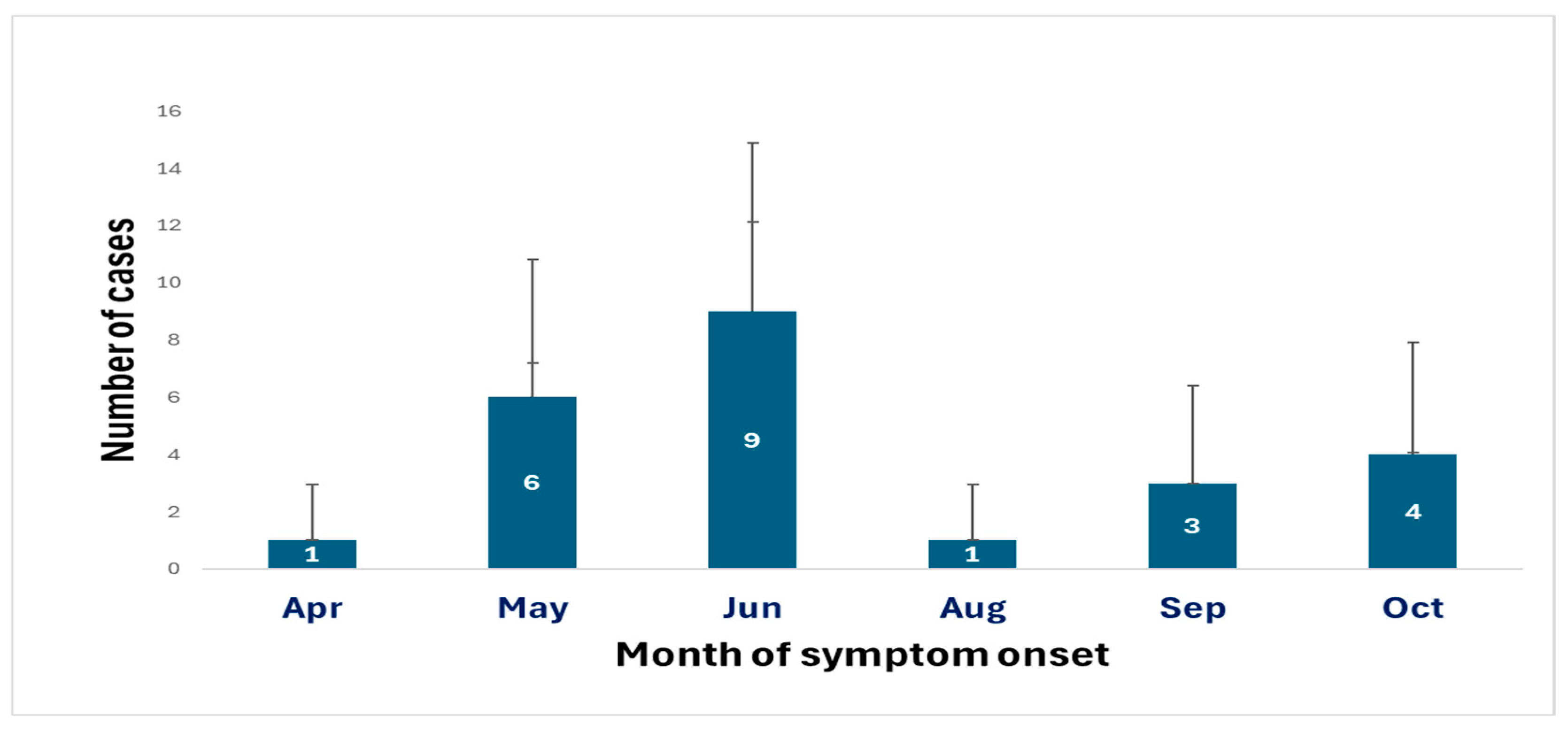
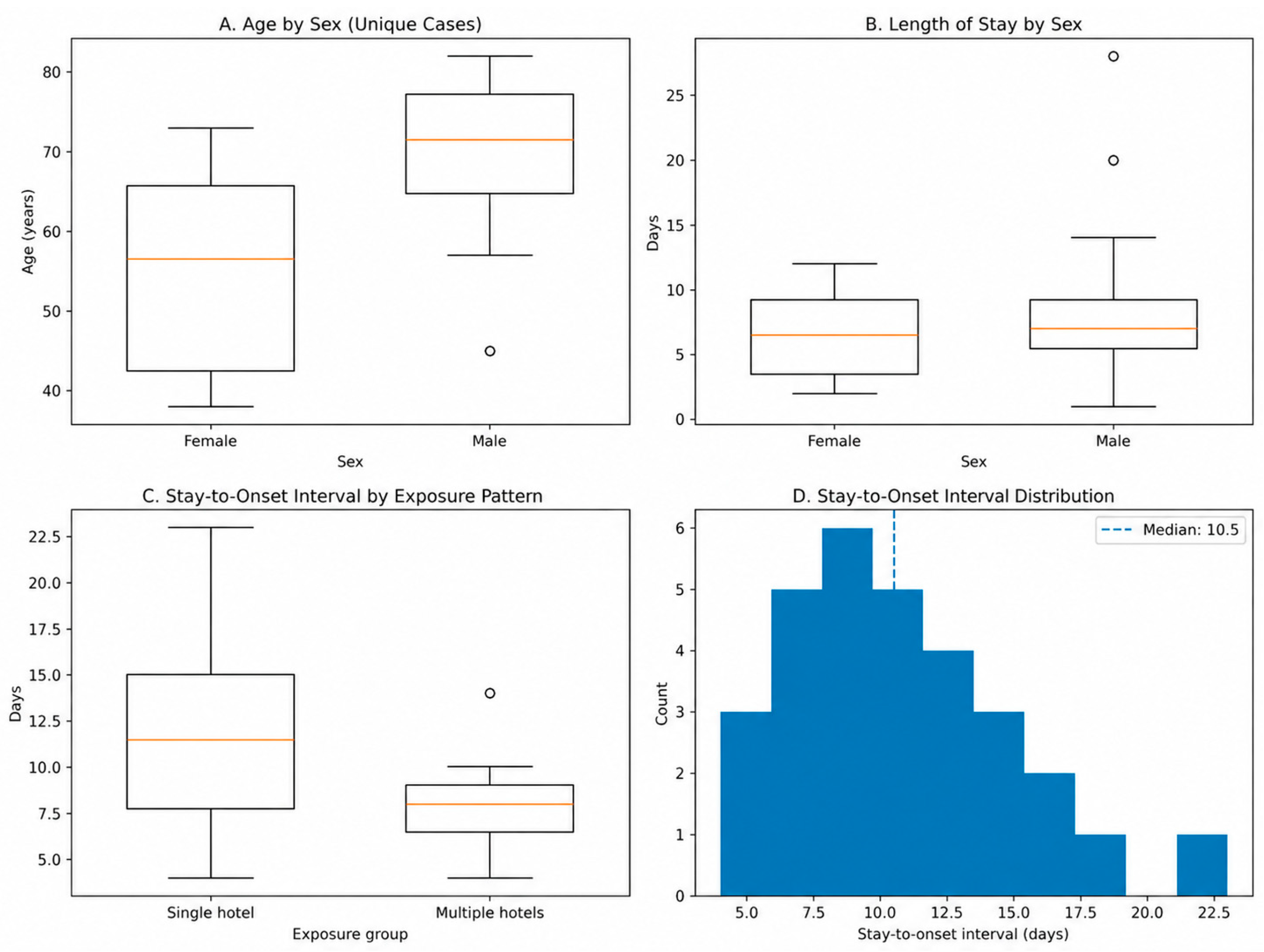
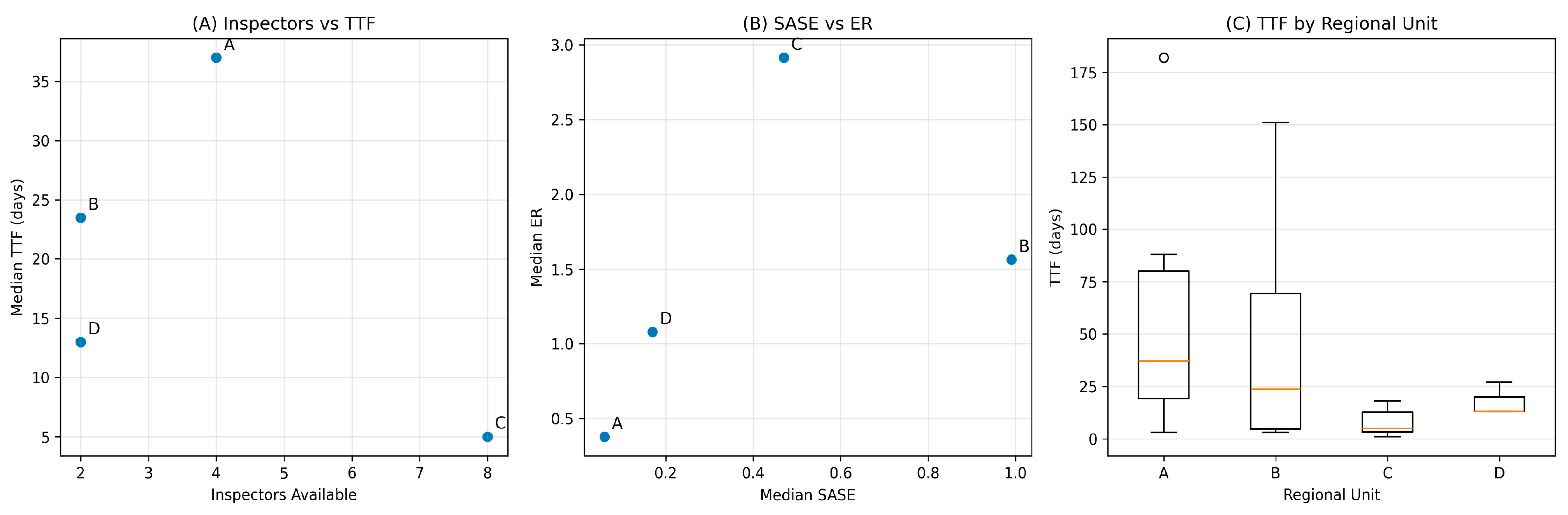
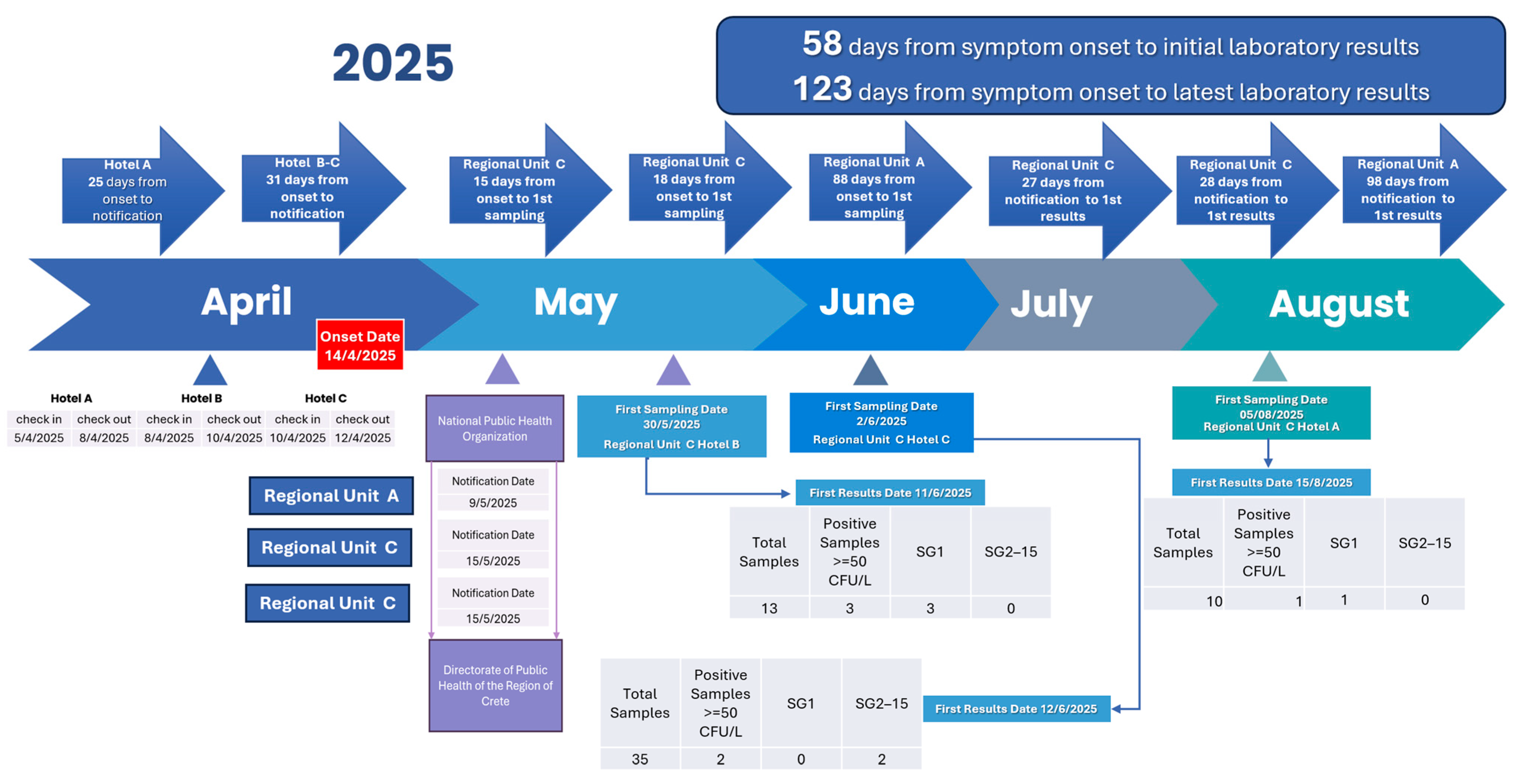
In Europe, travel-associated Legionnaires’ disease (TALD) cases require timely environmental investigations to support risk assessment, rapid control measures, and prompt reporting of investigation findings to the European Legionnaires’ Disease Surveillance Network (ELDSNet). This study evaluated TALD-related environmental investigations conducted during 2025 and early 2026 in Crete, Greece, following notifications through ELDSNet. Overall, 30 notifications corresponded to 24 unique confirmed TALD cases with illness onset in 2025 and 24 implicated hotels, with some cases involving stays in multiple hotels and Regional Units and clusters identified in some implicated hotels. The investigation framework combined microbiological, physicochemical, and operational data, focusing on delays from symptom onset, notification, sampling, and laboratory reporting. Overall, 516 environmental samples were collected, of which 503 yielded valid analytical results. Among the 503 samples analyzed, Legionella spp. were detected at ≥50 colony-forming units per liter (CFU/L) in 127 samples (25.25%). This included 123 samples positive for L. pneumophila (24.45%), of which 31 were serogroup 1 (6.16%). Concentrations exceeding the 1000 CFU/L threshold were recorded in 53 samples (10.54%). Operational indicators varied, with median values of 31.0 days for reporting delay (RD), 14.5 days from notification to first sampling (TTF), 47.5 days from symptom onset to first sampling (TDS), and 67.0 days from symptom onset to first laboratory result (OELR). The findings underscore the necessity to document response delays, enhance inspector capacity and cross-regional coordination, and integrate microbiological results with operational indicators. This integration is crucial for facilitating earlier environmental risk assessments, expediting reporting, and implementing more effective TALD public health interventions.
Keywords: Legionella pneumophila; travel-associated Legionnaires’ disease; environmental investigation; hotel water systems; source investigation; public health response Legionella pneumophila; travel-associated Legionnaires’ disease; environmental investigation; hotel water systems; source investigation; public health response