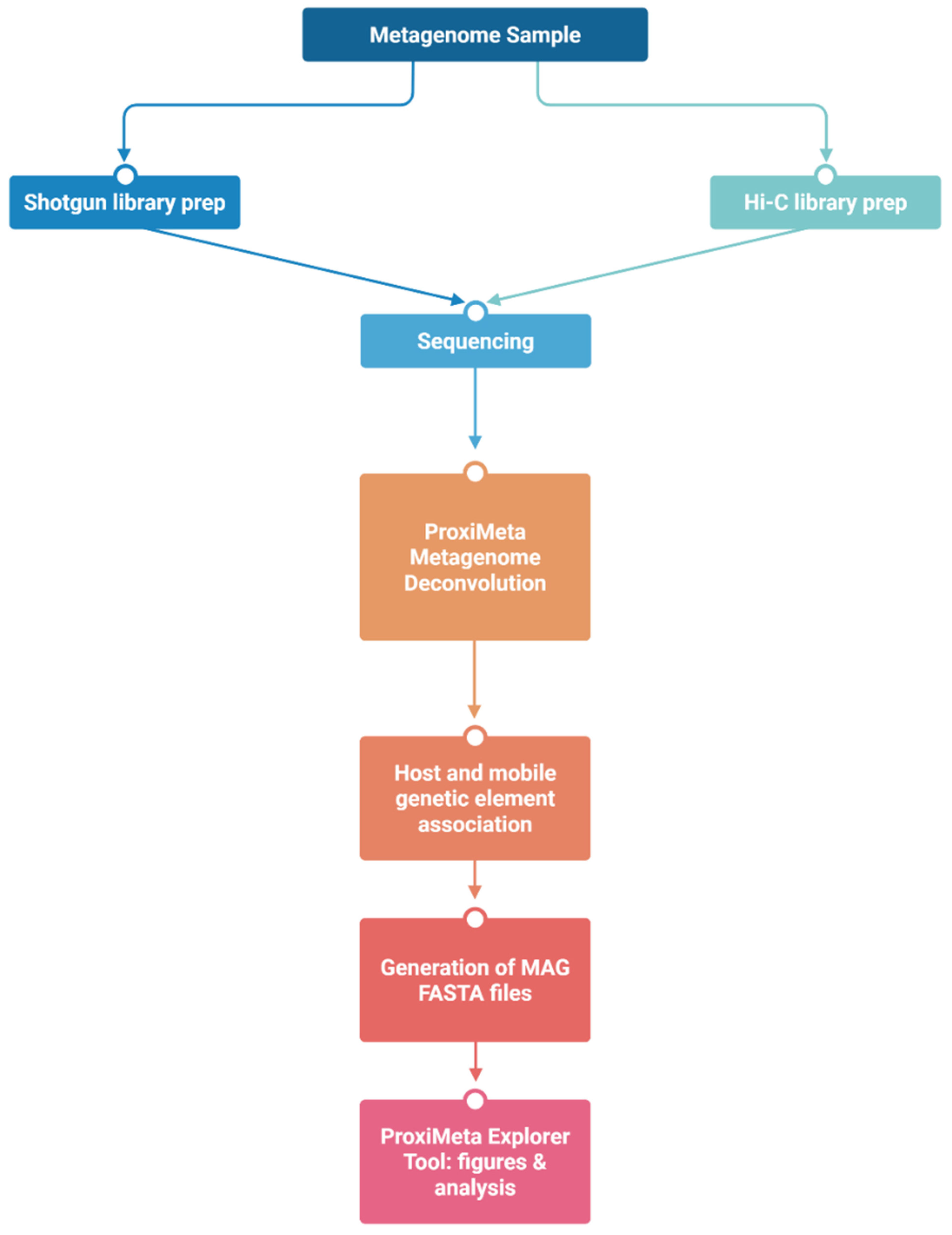
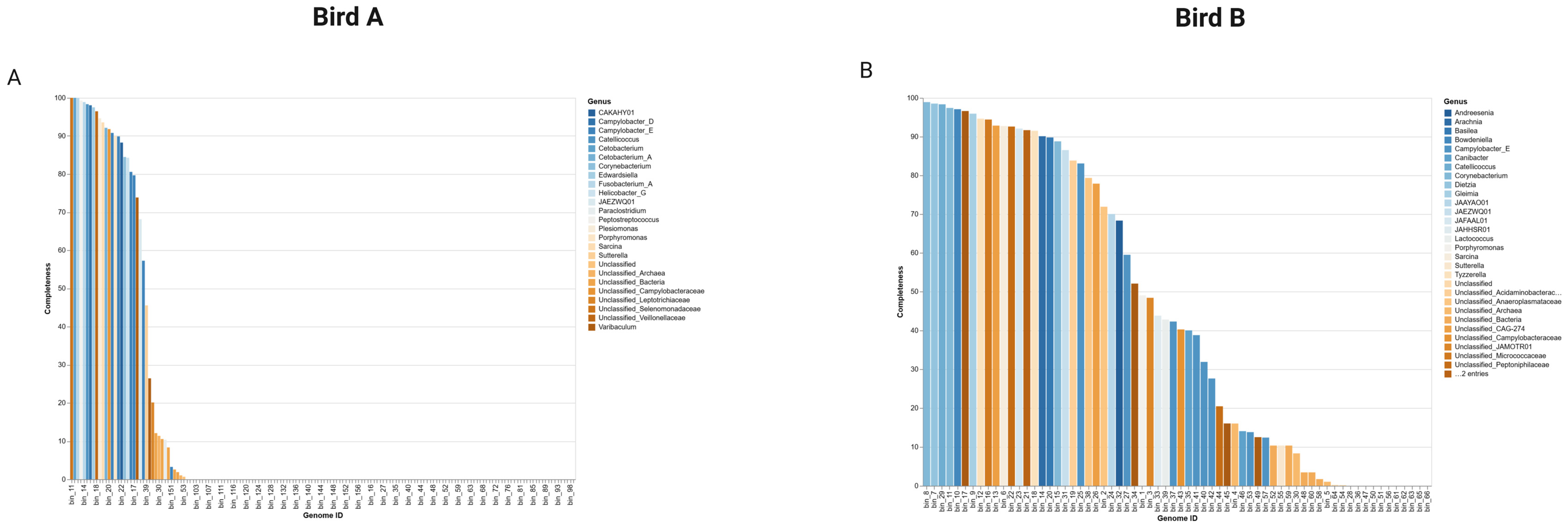
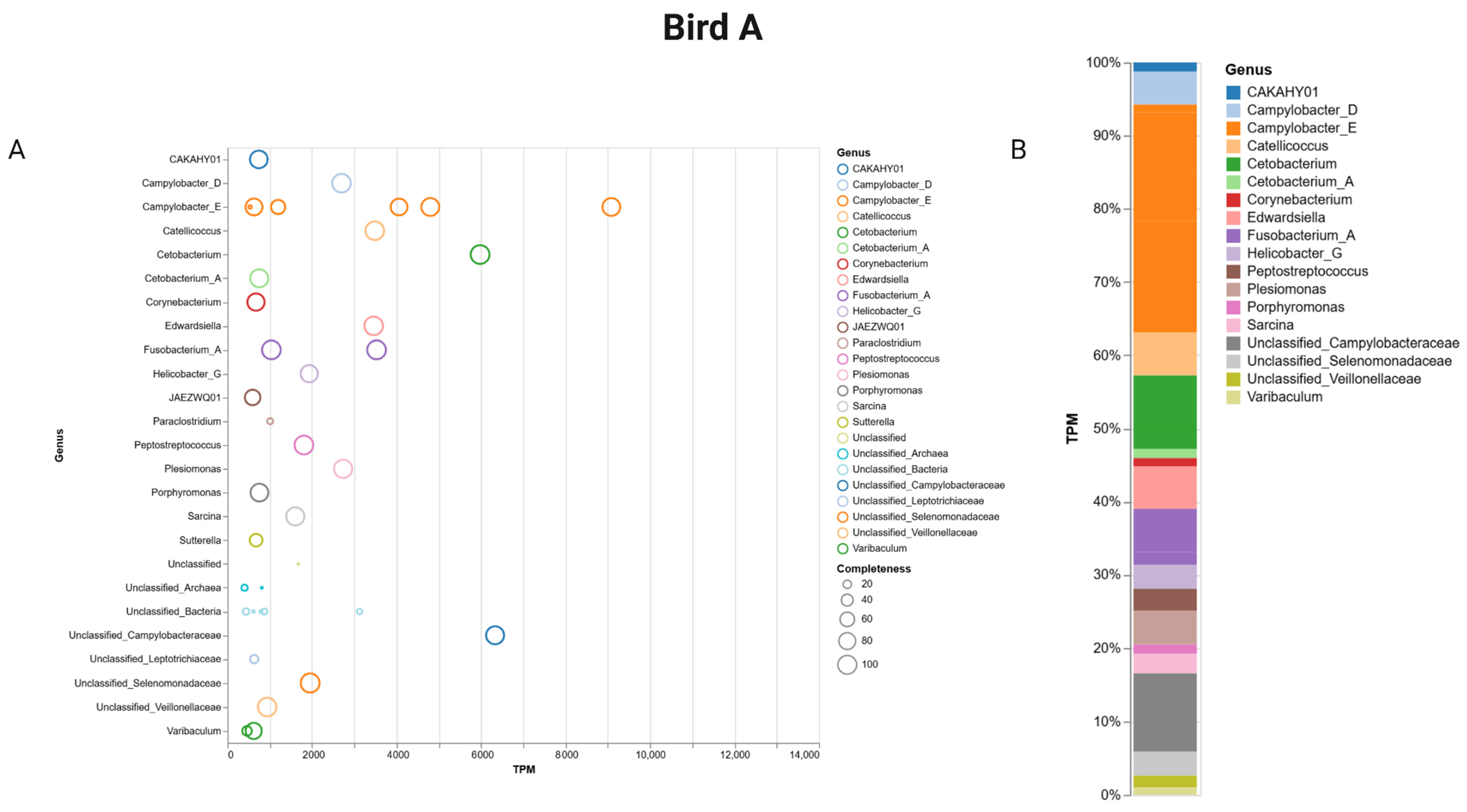
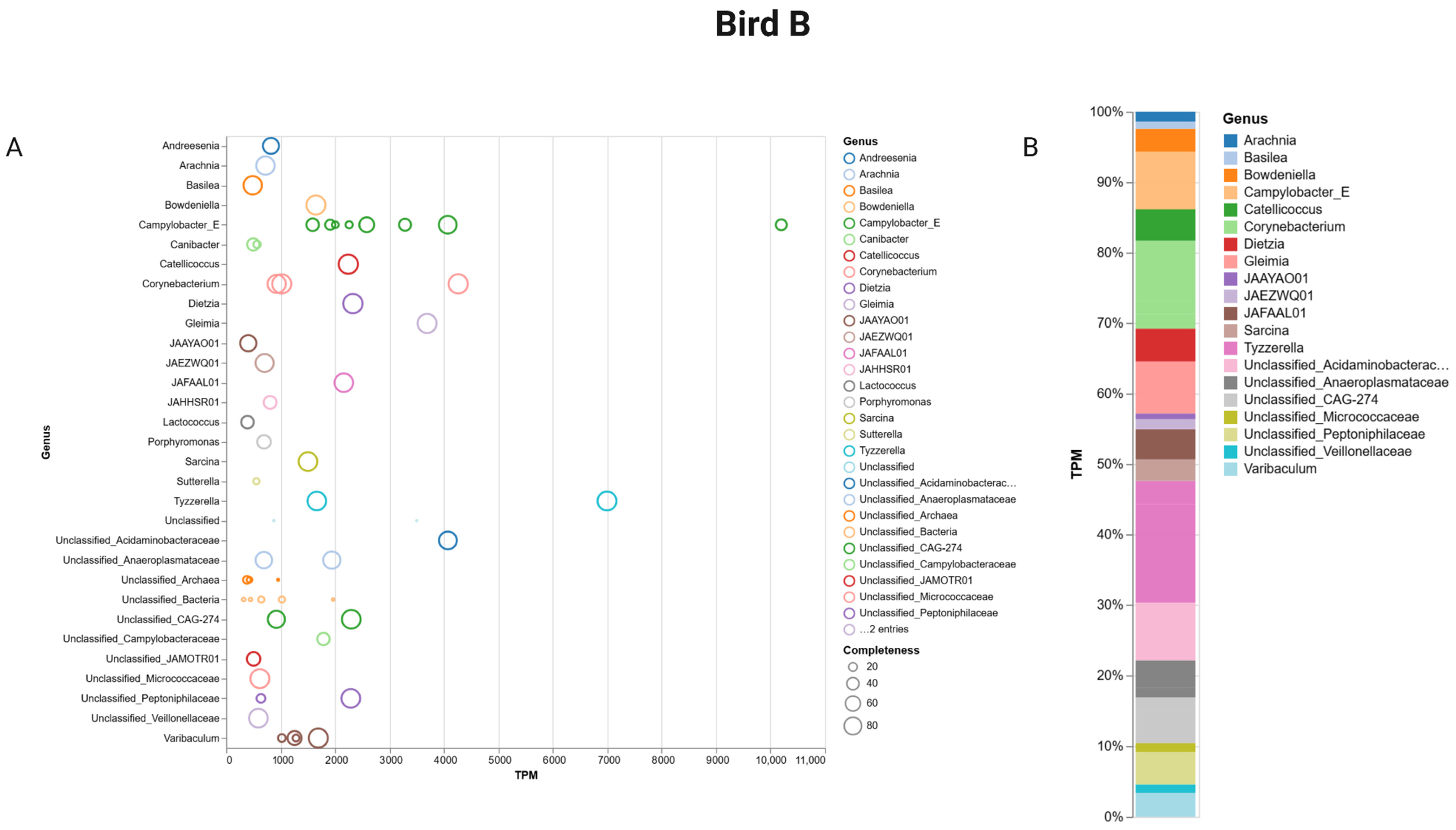
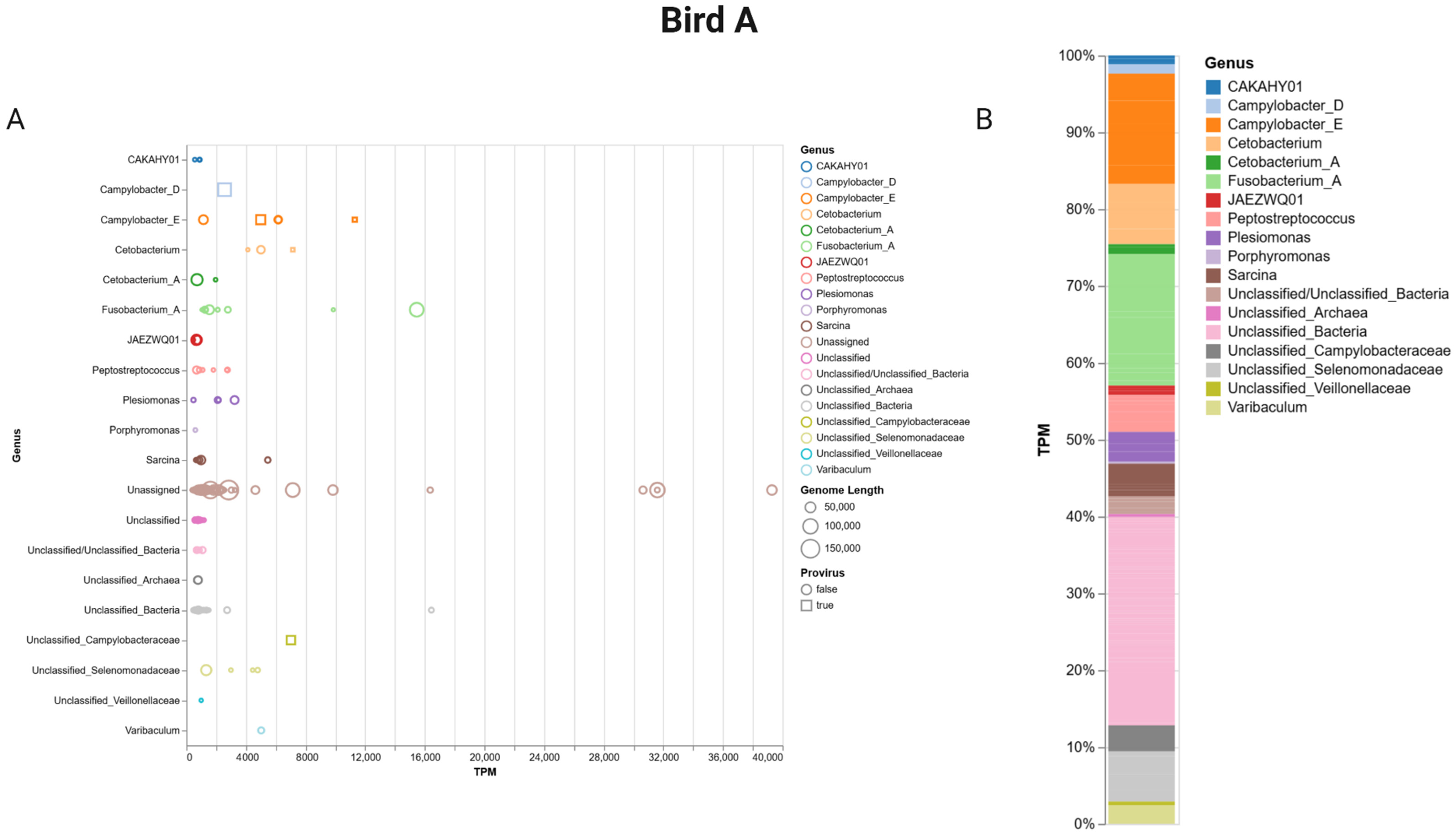
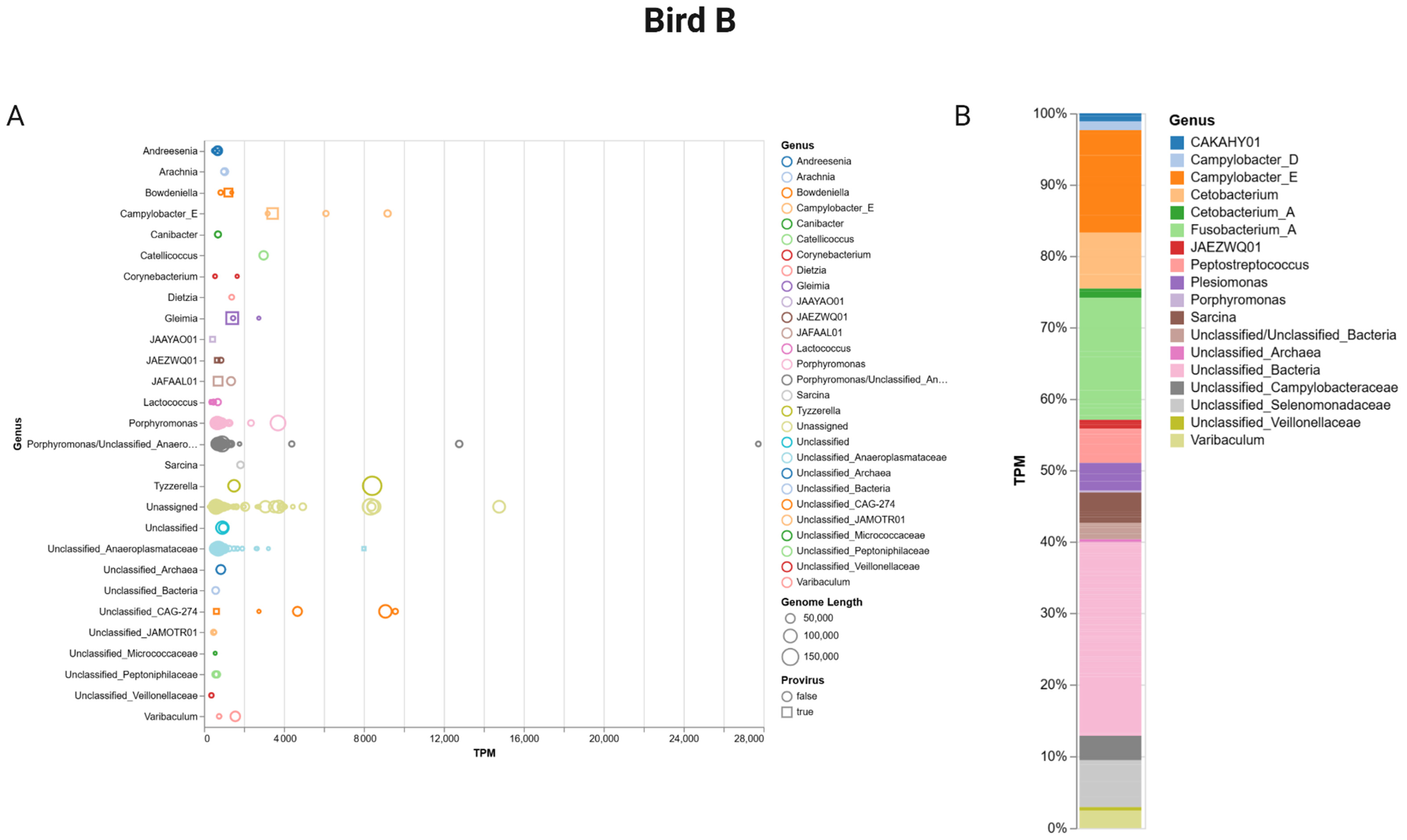
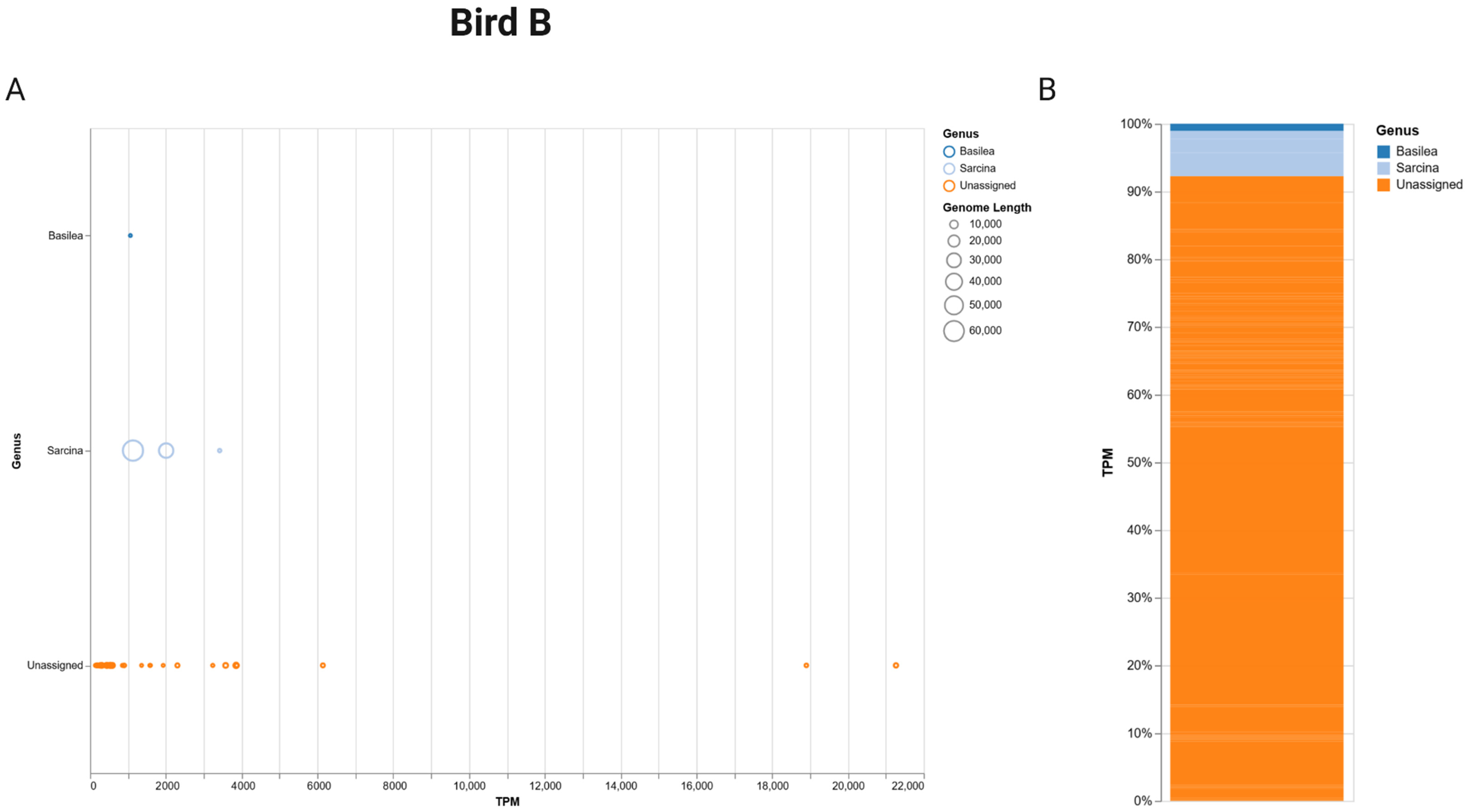
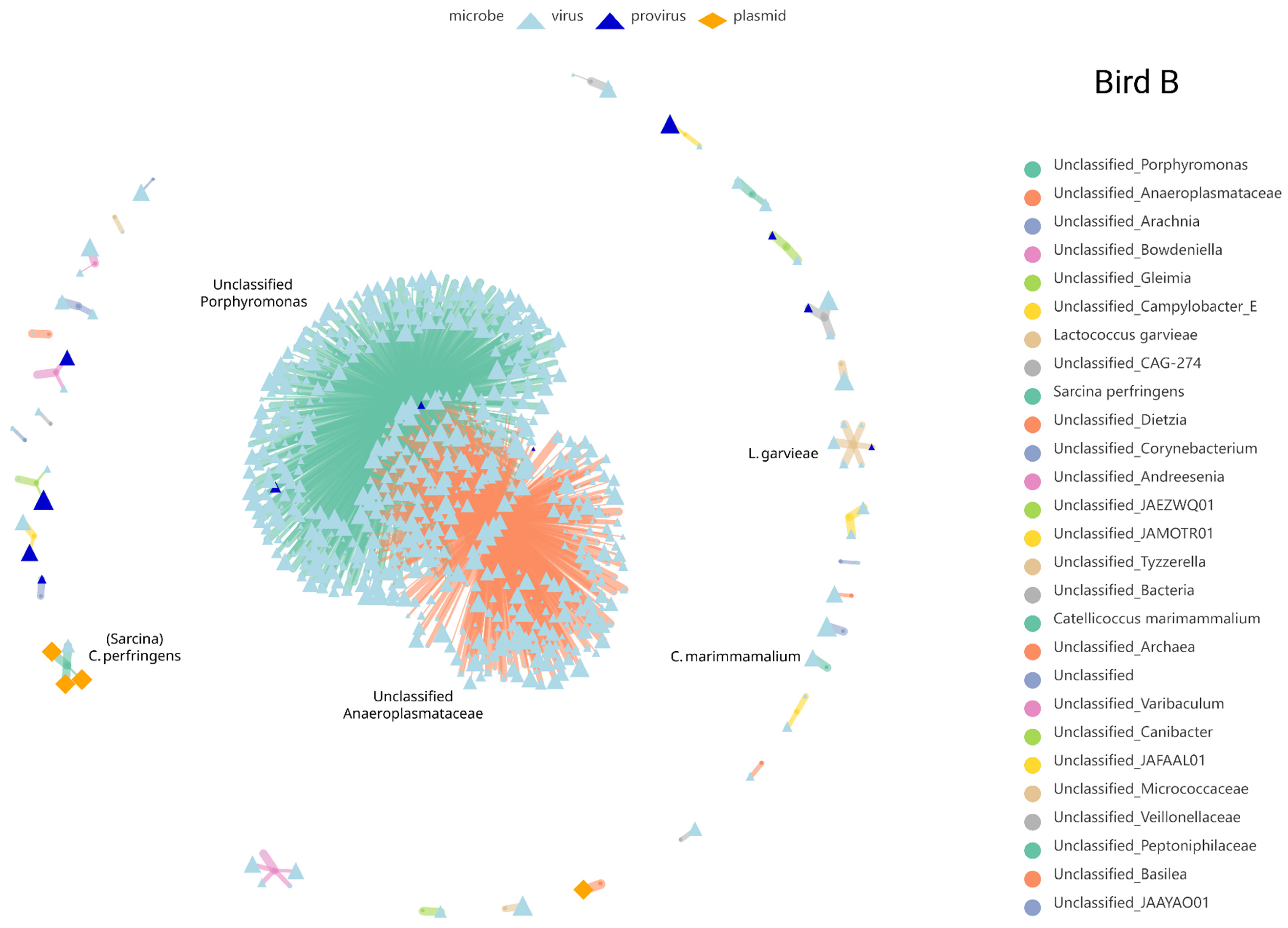
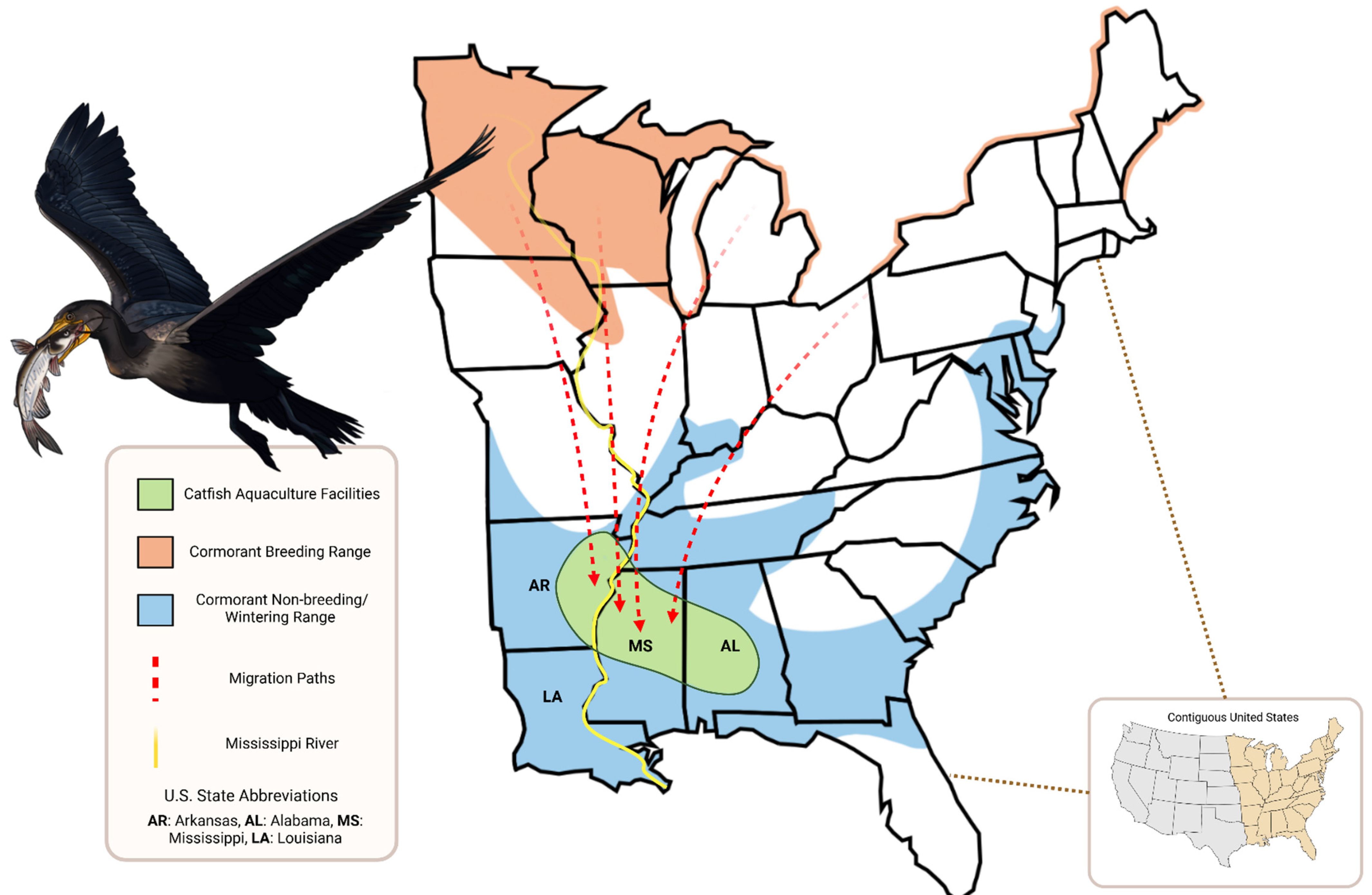
Hi-C Metagenome Deconvolution of Double-Crested Cormorant (Nannopterum auritum) Fecal Samples Demonstrates Feasibility of Linking Microbial Genomes, AMR Genes, and Mobile Elements in Avian Microbiomes

 ,
,
Abstract
1. Introduction
2. Materials and Methods
2.1. Collection of Double-Crested Cormorant Fecal Samples
2.2. Library Preparation and Sequencing
2.3. Metagenome Assembly, Quality Assessment, and Taxonomic and Functional Assignment of Assembled Microbes
2.4. Mobile Genetic Elements
2.5. Abundance Analysis
3. Results
3.1. Microbial Composition of Metagenome Samples
3.2. Mobile Genetic Element Composition of Metagenome Samples
3.3. Linking Mobile Elements to Host Microbes Within the Metagenome
3.4. Virulence Genes Associated with MAGs
3.5. Antimicrobial Resistance Genes Associated with MAGs
4. Discussion
Supplementary Materials
Author Contributions
Funding
Institutional Review Board Statement
Informed Consent Statement
Data Availability Statement
Acknowledgments
Conflicts of Interest
References
- Verdegem, M.; Buschmann, A.H.; Latt, U.W.; Dalsgaard, A.J.T.; Lovatelli, A. The contribution of aquaculture systems to global aquaculture production. J. World Aquac. Soc. 2023, 54, 206–250. [Google Scholar] [CrossRef]
- FAO. The State of the World Fisheries and Aquaculture 2024—Blue Transformation in Action; FAO: Rome, Italy, 2024; p. 264. [Google Scholar]
- FAO. Fisheries and Aquaculture: FishStat; FAO: Rome, Italy, 2020; Available online: https://www.fao.org/fishery/en/fishstat (accessed on 1 December 2024).
- Wise, A.L.; LaFrentz, B.R.; Kelly, A.M.; Khoo, L.H.; Xu, T.; Liles, M.R.; Bruce, T.J. A Review of Bacterial Co-Infections in Farmed Catfish: Components, Diagnostics, and Treatment Directions. Animals 2021, 11, 3240. [Google Scholar] [CrossRef]
- Agriculture USDA. 2018 Census of Aquaculture; USDA: Washington, DC, USA, 2019.
- Posadas, B.C. U.S. Catfish Production, Farm-gate and Wholesale Prices, and Imports; Mississippi MarketMaker Newsletter: Biloxi, MS, USA, 2020; Volume 10, Available online: http://extension.msstate.edu/newsletters/mississippi-marketmaker (accessed on 1 December 2024).
- Kumar, G.; Engle, C.; Hegde, S.; van Senten, J. Economics of US catfish farming practices: Profitability, economies of size, and liquidity. J. World Aquac. Soc. 2020, 51, 829–846. [Google Scholar] [CrossRef]
- Hanson, T.R.; Stuart, D.; Spurlock, S.R. Economic Impact of the Farm-Raised Catfish Industry on the Mississippi State Economy. J. Appl. Aquac. 2004, 15, 11–28. [Google Scholar] [CrossRef]
- Hisham, A.A.; William, G.H.; Luke, A.R.; Terrill, R.H.; Benjamin, H.B.; Anita, M.K. Epidemiology and economic impact of disease-related losses on commercial catfish farms: A seven-year case study from Alabama, USA. Aquaculture 2023, 566, 739206. [Google Scholar] [CrossRef]
- Peterman, M.A.; Posadas, B.C. Direct Economic Impact of Fish Diseases on the East Mississippi Catfish Industry. N. Am. J. Aquac. 2019, 81, 222–229. [Google Scholar] [CrossRef]
- LaFrentz, B.R.; Khoo, L.H.; Lawrence, M.L.; Petrie-Hanson, L.; Hanson, L.A.; Baumgartner, W.A.; Hemstreet, W.G.; Kelly, A.M.; García, J.C.; Shelley, J.P.; et al. Flavobacterium covae is the predominant species of columnaris-causing bacteria impacting the Channel Catfish industry in the southeastern United States. J. Aquat. Anim. Health 2024, 36, 3–15. [Google Scholar] [CrossRef]
- Wagner, B.A.; Wise, D.J.; Khoo, L.H.; Terhune, J.S. The Epidemiology of Bacterial Diseases in Food-Size Channel Catfish. J. Aquat. Anim. Health 2002, 14, 263–272. [Google Scholar] [CrossRef]
- Kumar, G.; Hegde, S.; Wise, D.; Mischke, C.; Dorr, B. Economic Losses of Catfish to Avian Predation: A Case Report. N. Am. J. Aquac. 2021, 83, 127–137. [Google Scholar] [CrossRef]
- White, F.H.; Forrester, D.J. Antimicrobial resistant Salmonella spp. isolated from double-crested cormorants (Phalacrocorax auritus) and common loons (Gavia immer) in Florida. J. Wildl. Dis. 1979, 15, 235–237. [Google Scholar] [CrossRef]
- Taylor, P.W. Fish-Eating Birds as Potential Vectors of Edwardsiella ictaluri. J. Aquat. Anim. Health 1992, 4, 240–243. [Google Scholar] [CrossRef]
- Cunningham, F.L.; Jubirt, M.M.; Hanson-Dorr, K.C.; Ford, L.; Fioranelli, P.; Hanson, L.A. Potential of Double-crested Cormorants (Phalacrocorax auritus), American White Pelicans (Pelecanus erythrorhynchos), and Wood Storks (Mycteria americana) to Transmit a Hypervirulent Strain of Aeromonas hydrophila between Channel Catfish Culture Ponds. J. Wildl. Dis. 2018, 54, 548–552. [Google Scholar] [CrossRef] [PubMed]
- Yost, M.C. The Study of the Life Cycle of Bolbophorus damnificus and Its Pathology in the Channel Catfish (Ictalurus punctatus); Mississippi State University: Mississippi State, MS, USA, 2008. [Google Scholar]
- Gunn, M.A.; Allen, P.J.; Rosser, T.G.; Wise, D.J.; Khoo, L.H.; Griffin, M.J. Assessment of Bolbophorus damnificus prevalence and cercariae shedding in Planorbella trivolvis populations from catfish aquaculture ponds in Mississippi, USA. J. World Aquac. Soc. 2021, 52, 395–404. [Google Scholar] [CrossRef]
- Mourkas, E.; Valdebenito, J.O.; Marsh, H.; Hitchings, M.D.; Cooper, K.K.; Parker, C.T.; Székely, T.; Johansson, H.; Ellström, P.; Pascoe, B.; et al. Proximity to humans is associated with antimicrobial-resistant enteric pathogens in wild bird microbiomes. Curr. Biol. 2024, 34, 3955–3965.e4. [Google Scholar] [CrossRef]
- Carlson, J.C.; Chandler, J.C.; Bisha, B.; LeJeune, J.T.; Wittum, T.E. Bird-livestock interactions associated with increased cattle fecal shedding of ciprofloxacin-resistant Escherichia coli within feedlots in the United States. Sci. Rep. 2020, 10, 10174. [Google Scholar] [CrossRef]
- Mbuthia, C.W.; Hoza, A.S. Wild birds as potential reservoirs of antimicrobial-resistant Escherichia coli: A systematic review. Front. Microbiol. 2025, 16, 1615826. [Google Scholar] [CrossRef]
- Arnold, B.J.; Huang, I.T.; Hanage, W.P. Horizontal gene transfer and adaptive evolution in bacteria. Nat. Rev. Microbiol. 2022, 20, 206–218. [Google Scholar] [CrossRef]
- Rodriguez-Beltran, J.; DelaFuente, J.; Leon-Sampedro, R.; MacLean, R.C.; San Millan, A. Beyond horizontal gene transfer: The role of plasmids in bacterial evolution. Nat. Rev. Microbiol. 2021, 19, 347–359. [Google Scholar] [CrossRef]
- Baquero, F.; Martínez, J.-L.; Cantón, R. Antibiotics and antibiotic resistance in water environments. Curr. Opin. Biotechnol. 2008, 19, 260–265. [Google Scholar] [CrossRef]
- Tekedar, H.C.; Arick, M.A.; Hsu, C.-Y.; Thrash, A.; Blom, J.; Lawrence, M.L.; Abdelhamed, H. Identification of antimicrobial resistance determinants in Aeromonas veronii strain MS-17-88 recovered from channel catfish (Ictalurus punctatus). Front. Cell. Infect. Microbiol. 2020, 10, 348. [Google Scholar] [CrossRef]
- Mog, M.; Ngasotter, S.; Tesia, S.; Waikhom, D.; Panda, P.; Sharma, S.; Varshney, S. Problems of antibiotic resistance associated with oxytetracycline use in aquaculture: A review. J. Entomol. Zool. Stud. 2020, 8, 1075–1082. [Google Scholar]
- Islam, S.; Riman, M.M.; Mannan, S.; Lawrence, M.L.; Abdelhamed, H. Characterisation and mobilisation of IncA/C plasmid-mediated antibiotic resistance in Edwardsiella ictaluri. J. Glob. Antimicrob. Resist. 2023, 33, 177–185. [Google Scholar] [CrossRef]
- Hacker, J.; Kaper, J.B. Pathogenicity islands and the evolution of microbes. Annu. Rev. Microbiol. 2000, 54, 641–679. [Google Scholar] [CrossRef]
- Partridge, S.R.; Tsafnat, G.; Coiera, E.; Iredell, J.R. Gene cassettes and cassette arrays in mobile resistance integrons. FEMS Microbiol. Rev. 2009, 33, 757–784. [Google Scholar] [CrossRef]
- Canchaya, C.; Proux, C.; Fournous, G.; Bruttin, A.; Brüssow, H. Prophage genomics. Microbiol. Mol. Biol. Rev. 2003, 67, 238–276. [Google Scholar] [CrossRef]
- Thomas, C.M.; Nielsen, K.M. Mechanisms of, and barriers to, horizontal gene transfer between bacteria. Nat. Rev. Microbiol. 2005, 3, 711–721. [Google Scholar] [CrossRef]
- Davison, J. Genetic exchange between bacteria in the environment. Plasmid 1999, 42, 73–91. [Google Scholar] [CrossRef]
- Korotetskiy, I.S.; Shilov, S.V.; Kuznetsova, T.; Kerimzhanova, B.; Korotetskaya, N.; Ivanova, L.; Zubenko, N.; Parenova, R.; Reva, O.N. Analysis of whole-genome sequences of pathogenic Gram-positive and Gram-negative isolates from the same hospital environment to investigate common evolutionary trends associated with horizontal gene exchange, mutations and DNA methylation patterning. Microorganisms 2023, 11, 323. [Google Scholar] [CrossRef]
- Escobar-Zepeda, A.; Vera-Ponce de León, A.; Sanchez-Flores, A. The Road to Metagenomics: From Microbiology to DNA Sequencing Technologies and Bioinformatics. Front. Genet. 2015, 6, 348. [Google Scholar] [CrossRef]
- Kim, C.; Pongpanich, M.; Porntaveetus, T. Unraveling metagenomics through long-read sequencing: A comprehensive review. J. Transl. Med. 2024, 22, 111. [Google Scholar] [CrossRef]
- Umbarger, M.A.; Toro, E.; Wright, M.A.; Porreca, G.J.; Baù, D.; Hong, S.-H.; Fero, M.J.; Zhu, L.J.; Marti-Renom, M.A.; McAdams, H.H.; et al. The Three-Dimensional Architecture of a Bacterial Genome and Its Alteration by Genetic Perturbation. Mol. Cell 2011, 44, 252–264. [Google Scholar] [CrossRef]
- Beitel, C.W.; Froenicke, L.; Lang, J.M.; Korf, I.F.; Michelmore, R.W.; Eisen, J.A.; Darling, A.E. Strain- and plasmid-level deconvolution of a synthetic metagenome by sequencing proximity ligation products. PeerJ 2014, 2, e415. [Google Scholar] [CrossRef]
- Marbouty, M.; Cournac, A.; Flot, J.-F.; Marie-Nelly, H.; Mozziconacci, J.; Koszul, R. Metagenomic chromosome conformation capture (meta3C) unveils the diversity of chromosome organization in microorganisms. eLife 2014, 3, e03318. [Google Scholar] [CrossRef]
- Stalder, T.; Press, M.O.; Sullivan, S.; Liachko, I.; Top, E.M. Linking the resistome and plasmidome to the microbiome. ISME J. 2019, 13, 2437–2446. [Google Scholar] [CrossRef]
- Burton, J.N.; Liachko, I.; Dunham, M.J.; Shendure, J. Species-Level Deconvolution of Metagenome Assemblies with Hi-C–Based Contact Probability Maps. G3 Genes Genomes Genet. 2014, 4, 1339–1346. [Google Scholar] [CrossRef]
- Malecki, R.A.; Batt, B.D.; Sheaffer, S.E. Spatial and temporal distribution of Atlantic population Canada geese. J. Wildl. Manag. 2001, 65, 242–247. [Google Scholar] [CrossRef]
- King, D.T.; Tobin, M.E. Capture and telemetry techniques for Double-crested Cormorants (Phalacrocorax auritus). In Proceedings of the 19th Proceedings of the Vertebrate Pest Conference, San Diego, CA, USA, 6–9 March 2000. [Google Scholar]
- Genomics, P. Main Page. Available online: https://phasegenomics.com/ (accessed on 1 December 2024).
- Press, M.O.; Wiser, A.H.; Kronenberg, Z.N.; Langford, K.W.; Shakya, M.; Lo, C.C.; Mueller, K.A.; Sullivan, S.T.; Chain, P.S.G.; Liachko, I. Hi-C deconvolution of a human gut microbiome yields high-quality draft genomes and reveals plasmid-genome interactions. bioRxiv 2017. bioRxiv:198713. [Google Scholar] [CrossRef]
- Bickhart, D.M.; Watson, M.; Koren, S.; Panke-Buisse, K.; Cersosimo, L.M.; Press, M.O.; Van Tassell, C.P.; Van Kessel, J.A.S.; Haley, B.J.; Kim, S.W.; et al. Assignment of virus and antimicrobial resistance genes to microbial hosts in a complex microbial community by combined long-read assembly and proximity ligation. Genome Biol. 2019, 20, 153. [Google Scholar] [CrossRef]
- Uritskiy, G.; Press, M.; Sun, C.; Huerta, G.D.; Zayed, A.A.; Wiser, A.; Grove, J.; Auch, B.; Eacker, S.M.; Sullivan, S.; et al. Accurate viral genome reconstruction and host assignment with proximity-ligation sequencing. bioRxiv 2021. bioRxiv:448389. [Google Scholar] [CrossRef]
- DeMaere, M.Z.; Darling, A.E. bin3C: Exploiting Hi-C sequencing data to accurately resolve metagenome-assembled genomes. Genome Biol. 2019, 20, 46. [Google Scholar] [CrossRef]
- Chen, S.; Zhou, Y.; Chen, Y.; Gu, J. fastp: An ultra-fast all-in-one FASTQ preprocessor. Bioinformatics 2018, 34, i884–i890. [Google Scholar] [CrossRef]
- Li, D.; Liu, C.-M.; Luo, R.; Sadakane, K.; Lam, T.-W. MEGAHIT: An ultra-fast single-node solution for large and complex metagenomics assembly via succinct de Bruijn graph. Bioinformatics 2015, 31, 1674–1676. [Google Scholar] [CrossRef] [PubMed]
- Li, H.; Durbin, R. Fast and accurate short read alignment with Burrows–Wheeler transform. Bioinformatics 2009, 25, 1754–1760. [Google Scholar] [CrossRef]
- Parks, D.H.; Imelfort, M.; Skennerton, C.T.; Hugenholtz, P.; Tyson, G.W. CheckM: Assessing the quality of microbial genomes recovered from isolates, single cells, and metagenomes. Genome Res. 2015, 25, 1043–1055. [Google Scholar] [CrossRef] [PubMed]
- Chaumeil, P.-A.; Mussig, A.J.; Hugenholtz, P.; Parks, D.H. GTDB-Tk: A Toolkit to Classify Genomes with the Genome Taxonomy Database; Oxford University Press: Oxford, UK, 2020. [Google Scholar]
- Aziz, R.K.; Bartels, D.; Best, A.A.; DeJongh, M.; Disz, T.; Edwards, R.A.; Formsma, K.; Gerdes, S.; Glass, E.M.; Kubal, M.; et al. The RAST Server: Rapid annotations using subsystems technology. BMC Genom. 2008, 9, 75. [Google Scholar] [CrossRef] [PubMed]
- Zhou, S.; Liu, B.; Zheng, D.; Chen, L.; Yang, J. VFDB 2025: An integrated resource for exploring anti-virulence compounds. Nucleic Acids Res. 2024, 53, D871–D877. [Google Scholar] [CrossRef]
- Feldgarden, M.; Brover, V.; Gonzalez-Escalona, N.; Frye, J.G.; Haendiges, J.; Haft, D.H.; Hoffmann, M.; Pettengill, J.B.; Prasad, A.B.; Tillman, G.E.; et al. AMRFinderPlus and the Reference Gene Catalog facilitate examination of the genomic links among antimicrobial resistance, stress response, and virulence. Sci. Rep. 2021, 11, 12728. [Google Scholar] [CrossRef]
- Alcock, B.P.; Huynh, W.; Chalil, R.; Smith, K.W.; Raphenya, A.R.; Wlodarski, M.A.; Edalatmand, A.; Petkau, A.; Syed, S.A.; Tsang, K.K.; et al. CARD 2023: Expanded curation, support for machine learning, and resistome prediction at the Comprehensive Antibiotic Resistance Database. Nucleic Acids Res. 2023, 51, D690–D699. [Google Scholar] [CrossRef]
- Kieft, K.; Zhou, Z.; Anantharaman, K. VIBRANT: Automated recovery, annotation and curation of microbial viruses, and evaluation of viral community function from genomic sequences. Microbiome 2020, 8, 90. [Google Scholar] [CrossRef]
- Nayfach, S.; Camargo, A.P.; Schulz, F.; Eloe-Fadrosh, E.; Roux, S.; Kyrpides, N.C. CheckV assesses the quality and completeness of metagenome-assembled viral genomes. Nat. Biotechnol. 2021, 39, 578–585. [Google Scholar] [CrossRef]
- Wishart, D.S.; Han, S.; Saha, S.; Oler, E.; Peters, H.; Grant, J.R.; Stothard, P.; Gautam, V. PHASTEST: Faster than PHASTER, better than PHAST. Nucleic Acids Res. 2023, 51, W443–W450. [Google Scholar] [CrossRef] [PubMed]
- Galata, V.; Fehlmann, T.; Backes, C.; Keller, A. PLSDB: A resource of complete bacterial plasmids. Nucleic Acids Res. 2019, 47, D195–D202. [Google Scholar] [CrossRef] [PubMed]
- Burr, P.C.; Avery, J.L.; Street, G.M.; Strickland, B.K.; Dorr, B.S. Historic and contemporary use of catfish aquaculture by piscivorous birds in the Mississippi Delta. Ornithol. Appl. 2020, 122, duaa036. [Google Scholar] [CrossRef]
- Christie, T.W.; Dorr, B.S.; Davis, J.B.; Roy, L.A.; Engle, C.R.; Hanson-Dorr, K.C.; Kelly, A.M. Food habits of wintering double-crested cormorants in the Mississippi Delta. Food Webs 2021, 26, e00185. [Google Scholar] [CrossRef]
- Burr, P.; Avery, J.; Street, G.; Strickland, B.; Dorr, B. Fish-Eating Birds on Catfish Ponds in the Mississippi Delta; USDA National Wildlife Research Center—Staff Publications: Fort Collins, CO, USA, 2020; p. 2359.
- U.S. Fish & Wildlife. Expanding Management of Conflicts Associated with Double-Crested Cormorants; USFW: Tampa, FL, USA, 2025. Available online: https://www.fws.gov/node/417891 (accessed on 1 December 2024).
- Dorr, B.S.; Sullivan, K.L.; Curtis, P.D.; Chipman, R.B.; McCullough, R.D. Double-Crested Cormorants; USDA-APHIS Wildlife Damage Management Technical Series; USDA: Washington, DC, USA, 2016.
- Mott, D.F.; Brunson, M.W. A Historical Perspective of Catfish Production in the Southeast in Relation to Avian Predation; University of Nebraska—Lincoln: Lincoln, NE, USA, 1995. [Google Scholar]
- Laviad-Shitrit, S.; Izhaki, I.; Lalzar, M.; Halpern, M. Comparative Analysis of Intestine Microbiota of Four Wild Waterbird Species. Front. Microbiol. 2019, 10, 1911. [Google Scholar] [CrossRef]
- Olvera-Ramírez, A.M.; McEwan, N.R.; Stanley, K.; Nava-Diaz, R.; Aguilar-Tipacamú, G. A Systematic Review on the Role of Wildlife as Carriers and Spreaders of Campylobacter spp. Animals 2023, 13, 1334. [Google Scholar] [CrossRef]
- Altinok Dindar, D.; Chun, B.; Palma, A.; Cheney, J.; Krieger, M.; Kasschau, K.; Stagaman, K.; Mitri, Z.I.; Goodyear, S.M.; Shannon, J.; et al. Association between Gut Microbiota and Breast Cancer: Diet as a Potential Modulating Factor. Nutrients 2023, 15, 4628. [Google Scholar] [CrossRef]
- Xu, A.A.; Kennedy, L.K.; Hoffman, K.; White, D.L.; Kanwal, F.; El-Serag, H.B.; Petrosino, J.F.; Jiao, L. Dietary Fatty Acid Intake and the Colonic Gut Microbiota in Humans. Nutrients 2022, 14, 2722. [Google Scholar] [CrossRef]
- Kulinich, A.; Wang, Q.; Duan, X.-C.; Lyu, Y.-M.; Zhang, X.-Y.; Awad, F.N.; Liu, L.; Voglmeir, J. Biochemical characterization of the endo-α-N-acetylgalactosaminidase pool of the human gut symbiont Tyzzerella nexilis. Carbohydr. Res. 2020, 490, 107962. [Google Scholar] [CrossRef]
- Ma, E.; Maskarinec, G.; Lim, U.; Boushey, C.J.; Wilkens, L.R.; Setiawan, V.W.; Le Marchand, L.; Randolph, T.W.; Jenkins, I.C.; Curtis, K.R.; et al. Long-term association between diet quality and characteristics of the gut microbiome in the multiethnic cohort study. Br. J. Nutr. 2022, 128, 93–102. [Google Scholar] [CrossRef]
- Armwood, A.R.; Griffin, M.J.; Richardson, B.M.; Wise, D.J.; Ware, C.; Camus, A.C. Pathology and virulence of Edwardsiella tarda, Edwardsiella piscicida, and Edwardsiella anguillarum in channel (Ictalurus punctatus), blue (Ictalurus furcatus), and channel × blue hybrid catfish. J. Fish Dis. 2022, 45, 1683–1698. [Google Scholar] [CrossRef]
- Reichley, S.R.; Ware, C.; Steadman, J.; Gaunt, P.S.; García, J.C.; LaFrentz, B.R.; Thachil, A.; Waldbieser, G.C.; Stine, C.B.; Buján, N.; et al. Comparative Phenotypic and Genotypic Analysis of Edwardsiella Isolates from Different Hosts and Geographic Origins, with Emphasis on Isolates Formerly Classified as E. tarda, and Evaluation of Diagnostic Methods. J. Clin. Microbiol. 2017, 55, 3466–3491. [Google Scholar] [CrossRef] [PubMed]
- Martins, A.F.M.; Pinheiro, T.L.; Imperatori, A.; Freire, S.; Sá-Freire, L.; Moreira, B.; Bonelli, R. Plesiomonas shigelloides: A notable carrier of acquired antimicrobial resistance in small aquaculture farms. Aquaculture 2019, 500, 514–520. [Google Scholar] [CrossRef]
- Abdelhamed, H.; Mannan, S.B.; Riman, M.M.; Tekedar, H.C.; Lawrence, M.L. Comparative analysis of three plasmids from Plesiomonas shigelloides strain MS-17-188 and their role in antimicrobial resistance. JAC-Antimicrob. Resist. 2024, 6, dlae109. [Google Scholar] [CrossRef]
- Debruyne, L.; Broman, T.; Bergström, S.; Olsen, B.; On, S.L.W.; Vandamme, P. Campylobacter volucris sp. nov., isolated from black-headed gulls (Larus ridibundus). Int. J. Syst. Evol. Microbiol. 2010, 60, 1870–1875. [Google Scholar] [CrossRef]
- Lawson, P.A.; Collins, M.D.; Falsen, E.; Foster, G. Catellicoccus marimammalium gen. nov., sp. nov., a novel Gram-positive, catalase-negative, coccus-shaped bacterium from porpoise and grey seal. Int. J. Syst. Evol. Microbiol. 2006, 56, 429–432. [Google Scholar] [CrossRef]
- Uzal, F.A.; Navarro, M.A.; Li, J.; Freedman, J.C.; Shrestha, A.; McClane, B.A. Comparative pathogenesis of enteric clostridial infections in humans and animals. Anaerobe 2018, 53, 11–20. [Google Scholar] [CrossRef] [PubMed]
- Horne, T.; Orr, V.T.; Hall, J.P.J. How do interactions between mobile genetic elements affect horizontal gene transfer? Curr. Opin. Microbiol. 2023, 73, 102282. [Google Scholar] [CrossRef]
- Maguire, F.; Jia, B.; Gray, K.L.; Lau, W.Y.V.; Beiko, R.G.; Brinkman, F.S.L. Metagenome-assembled genome binning methods with short reads disproportionately fail for plasmids and genomic Islands. Microb. Genom. 2020, 6, e000436. [Google Scholar] [CrossRef]
- Pizarro-Cerdá, J.; Cossart, P. Bacterial Adhesion and Entry into Host Cells. Cell 2006, 124, 715–727. [Google Scholar] [CrossRef]
- Sharma, A.K.; Dhasmana, N.; Dubey, N.; Kumar, N.; Gangwal, A.; Gupta, M.; Singh, Y. Bacterial Virulence Factors: Secreted for Survival. Indian J. Microbiol. 2017, 57, 1–10. [Google Scholar] [CrossRef]
- Søborg, D.A.; Hendriksen, N.B.; Kilian, M.; Christensen, J.H.; Kroer, N. Bacterial Human Virulence Genes across Diverse Habitats As Assessed by In silico Analysis of Environmental Metagenomes. Front. Microbiol. 2016, 7, 1712. [Google Scholar] [CrossRef]
- Georgieva, M.; Sia Jonathan, K.; Bizzell, E.; Madan-Lala, R.; Rengarajan, J. Mycobacterium tuberculosis GroEL2 Modulates Dendritic Cell Responses. Infect. Immun. 2018, 86, e00387-17. [Google Scholar] [CrossRef]
- Ryndak Michelle, B.; Wang, S.; Smith, I.; Rodriguez, G.M. The Mycobacterium tuberculosis High-Affinity Iron Importer, IrtA, Contains an FAD-Binding Domain. J. Bacteriol. 2010, 192, 861–869. [Google Scholar] [CrossRef]
- Yibar, A.; Ay, H.; Aydin, F.; Abay, S.; Karakaya, E.; Kayman, T.; Dalyan, C.; Koca, F.D.; Aydogdu, D.; Ajmi, N.; et al. Integrated assessment of mucilage impact on human health using the One Health approach: Prevalence and antimicrobial resistance profiles of Escherichia coli and Clostridium perfringens in the Marmara Sea, Turkiye. Heliyon 2025, 11, e42103. [Google Scholar] [CrossRef]
- Tercero-Guerrero, D.; Blanco, J.L.; Hernandez, M.; Torre-Fuentes, L.; Alvarez, J.; Garcia, M.E. Whole-genome sequencing of toxigenic Clostridioides difficile reveals multidrug resistance and virulence genes in strains of environmental and animal origin. BMC Vet. Res. 2024, 20, 479. [Google Scholar] [CrossRef] [PubMed]
- Dons, L.; Eriksson, E.; Jin, Y.; Rottenberg, M.E.; Kristensson, K.; Larsen, C.N.; Bresciani, J.; Olsen, J.E. Role of Flagellin and the Two-Component CheA/CheY System of Listeria monocytogenes in Host Cell Invasion and Virulence. Infect. Immun. 2004, 72, 3237–3244. [Google Scholar] [CrossRef] [PubMed]
- Jiao, J.; Zhao, L.; Huang, L.; Qin, Y.; Su, Y.; Zheng, W.; Zhang, J.; Yan, Q. The contributions of fliG gene to the pathogenicity of Pseudomonas plecoglossicida and pathogen-host interactions with Epinephelus coioides. Fish Shellfish Immunol. 2021, 119, 238–248. [Google Scholar] [CrossRef] [PubMed]
- Ohtani, K.; Bando, M.; Swe, T.; Banu, S.; Oe, M.; Hayashi, H.; Shimizu, T. Collagenase gene (colA) is located in the 3′-flanking region of the perfringolysin O (pfoA) locus in Clostridium perfringens. FEMS Microbiol. Lett. 1997, 146, 155–159. [Google Scholar] [CrossRef]
- Ohtani, K. Gene regulation by the VirS/VirR system in Clostridium perfringens. Anaerobe 2016, 41, 5–9. [Google Scholar] [CrossRef]
- Li, J.; McClane, B.A. NanH is Produced by Sporulating Cultures of Clostridium perfringens Type F Food Poisoning Strains and Enhances the Cytotoxicity of C. perfringens Enterotoxin. mSphere 2021, 6, e00176-21. [Google Scholar] [CrossRef]
- Wanja, D.W.; Mbindyo, C.M.; Mbuthia, P.G.; Bebora, L.C.; Aboge, G.O. Molecular Detection of Virulence-Associated Markers in Campylobacter coli and Campylobacter jejuni Isolates from Water, Cattle, and Chicken Faecal Samples From Kajiado County, Kenya. BioMed Res. Int. 2024, 2024, 4631351. [Google Scholar] [CrossRef]
- de Vries, S.P.; Gupta, S.; Baig, A.; Wright, E.; Wedley, A.; Jensen, A.N.; Lora, L.L.; Humphrey, S.; Skovgård, H.; Macleod, K.; et al. Genome-wide fitness analyses of the foodborne pathogen Campylobacter jejuni in in vitro and in vivo models. Sci. Rep. 2017, 7, 1251. [Google Scholar] [CrossRef]
- Song, H.; Kang, Y.; Qian, A.; Shan, X.; Li, Y.; Zhang, L.; Zhang, H.; Sun, W. IInactivation of the T6SS inner membrane protein DotU results in severe attenuation and decreased pathogenicity of Aeromonas veronii TH0426. BMC Microbiol. 2020, 20, 76. [Google Scholar] [CrossRef]
- Poole, T.L.; Schlosser, W.D.; Crippen, T.L.; Swiger, S.L.; Norman, K.N.; Anderson, R.C. Whole-Genome Sequence of Aeromonas spp. Isolated from a Dairy Farm in Central Texas. Microbiol. Res. 2023, 14, 161–176. [Google Scholar] [CrossRef]
- Lee, E.H.; Shafer, W.M. The farAB-encoded efflux pump mediates resistance of gonococci to long-chained antibacterial fatty acids. Mol. Microbiol. 1999, 33, 839–845. [Google Scholar] [CrossRef] [PubMed]
- Padilla, E.; Llobet, E.; Doménech-Sánchez, A.; Martínez-Martínez, L.; Bengoechea, J.A.; Albertí, S. Klebsiella pneumoniae AcrAB efflux pump contributes to antimicrobial resistance and virulence. Antimicrob. Agents Chemother. 2010, 54, 177–183. [Google Scholar] [CrossRef] [PubMed]
- Weston, N.; Sharma, P.; Ricci, V.; Piddock, L.J.V. Regulation of the AcrAB-TolC efflux pump in Enterobacteriaceae. Res. Microbiol. 2018, 169, 425–431. [Google Scholar] [CrossRef]
- Elola-Lopez, A.; Esquivel, M.J.; Muñoz-Bergmann, C.; Beltran, S.; Osorio, C.G.; Trombert, A.N. PCR restriction fragment lenght polymorphism analyses of V. parahaemolyticus MAM-7 virulence gene in clinical and environmental strains. Electron. J. Biol. 2015, 11, 119–125. [Google Scholar]
- Wimalasekara, R.L.; White, D.; Kumar, A. Targeting Acinetobacter baumannii resistance-nodulation-division efflux pump transcriptional regulators to combat antimicrobial resistance. npj Antimicrob. Resist. 2025, 3, 4. [Google Scholar] [CrossRef]
- Brencic, A.; Lory, S. Determination of the regulon and identification of novel mRNA targets of Pseudomonas aeruginosa RsmA. Mol. Microbiol. 2009, 72, 612–632. [Google Scholar] [CrossRef]
- Llanes, C.; Köhler, T.; Patry, I.; Dehecq, B.; Delden Cv Plésiat, P. Role of the MexEF-OprN Efflux System in Low-Level Resistance of Pseudomonas aeruginosa to Ciprofloxacin. Antimicrob. Agents Chemother. 2011, 55, 5676–5684. [Google Scholar] [CrossRef]
- Parmar, N.; Singh, R.; Tyagi, A.; Kaur, S. Antimicrobial resistance profiles and genomic insights of phenotypically extended spectrum β-lactamase-positive Klebsiella pneumoniae from cattle farms. Curr. Genet. 2025, 71, 23. [Google Scholar] [CrossRef]
- Sundaresan, A.K.; Gangwar, J.; Murugavel, A.; Malli Mohan, G.B.; Ramakrishnan, J. Complete genome sequence, phenotypic correlation and pangenome analysis of uropathogenic Klebsiella spp. AMB Express 2024, 14, 78. [Google Scholar] [CrossRef]
- Hakenbeck, R.; Brückner, R.; Denapaite, D.; Maurer, P. Molecular Mechanisms of β-Lactam Resistance in Streptococcus Pneumoniae. Future Microbiol. 2012, 7, 395–410. [Google Scholar] [CrossRef]
- Glen, K.A.; Lamont, I.L. Penicillin-binding protein 3 sequence variations reduce susceptibility of Pseudomonas aeruginosa to β-lactams but inhibit cell division. J. Antimicrob. Chemother. 2024, 79, 2170–2178. [Google Scholar] [CrossRef]
- Yarlagadda, V.; Manjunath, G.B.; Sarkar, P.; Akkapeddi, P.; Paramanandham, K.; Shome, B.R.; Ravikumar, R.; Haldar, J. Glycopeptide Antibiotic To Overcome the Intrinsic Resistance of Gram-Negative Bacteria. ACS Infect. Dis. 2016, 2, 132–139. [Google Scholar] [CrossRef]
- Ernst, C.M.; Peschel, A. MprF-mediated daptomycin resistance. Int. J. Med. Microbiol. 2019, 309, 359–363. [Google Scholar] [CrossRef]
- Thitiananpakorn, K.; Aiba, Y.; Tan, X.-E.; Watanabe, S.; Kiga, K.; Sato’o, Y.; Boonsiri, T.; Li, F.-Y.; Sasahara, T.; Taki, Y.; et al. Association of mprF mutations with cross-resistance to daptomycin and vancomycin in methicillin-resistant Staphylococcus aureus (MRSA). Sci. Rep. 2020, 10, 16107. [Google Scholar] [CrossRef]
- Stogios, P.J.; Savchenko, A. Molecular mechanisms of vancomycin resistance. Protein Sci. 2020, 29, 654–669. [Google Scholar] [CrossRef]
- Miniero Davies, Y.; Xavier de Oliveira, M.G.; Paulo Vieira Cunha, M.; Soares Franco, L.; Pulecio Santos, S.L.; Zanolli Moreno, L.; Túlio de Moura Gomes, V.; Zanolli Sato, M.I.; Schiavo Nardi, M.; Micke Moreno, A.; et al. Edwardsiella tarda outbreak affecting fishes and aquatic birds in Brazil. Vet. Q. 2018, 38, 99–105. [Google Scholar] [CrossRef]
- Ogunleye, S.C.; Ishola, O.O.; Olatoye, I.O.; Dada, O.E.; Adedeji, O.B. Edwardsiella tarda-The Despised Threat to Nigerian Aquaculture and Human Health: A Review. Agric. Rev. 2022, 43, 428–435. [Google Scholar] [CrossRef]
- González-Rey, C.; Siitonen, A.; Pavlova, A.; Ciznar, I.; Svenson, S.B.; Krovacek, K. Molecular evidence of Plesiomonas shigelloides as a possible zoonotic agent. Folia Microbiol. 2011, 56, 178–184. [Google Scholar] [CrossRef]
- Ewing, W.H.; Mcwhorter, A.C.; Escobar, M.R.; Lubin, A.H. Edwardsiella, a new genus of Enterobacteriaceae based on a new species, E. tarda. Int. J. Syst. Evol. Microbiol. 1965, 15, 33–38. [Google Scholar] [CrossRef]
- Cao, B.; Yan, J.; Santos, J.A. Chapter 50—Plesiomonas. In Molecular Medical Microbiology, 3rd ed.; Tang, Y.-W., Hindiyeh, M.Y., Liu, D., Sails, A., Spearman, P., Zhang, J.-R., Eds.; Academic Press: Cambridge, MA, USA, 2024; pp. 1027–1042. [Google Scholar]


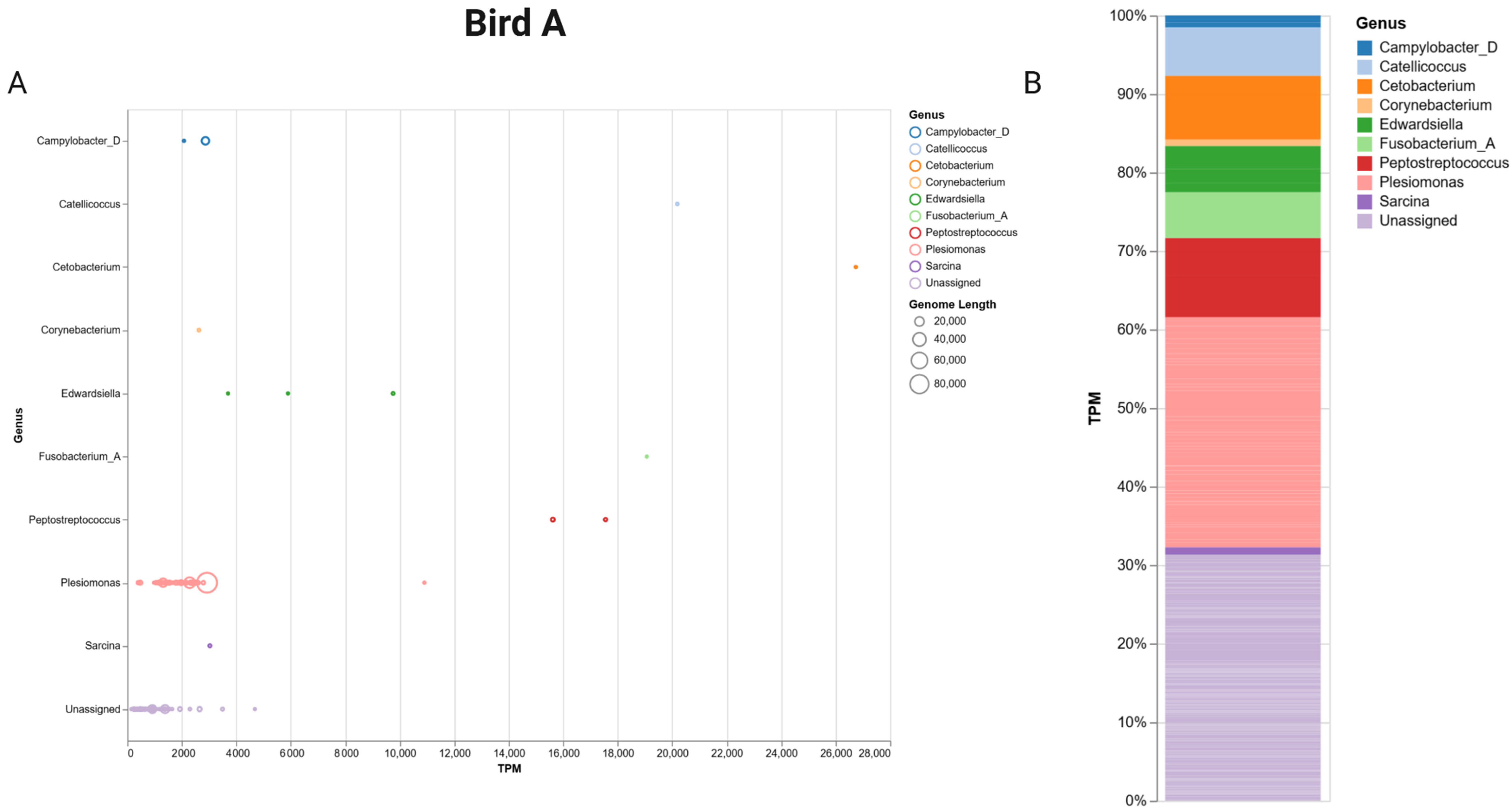

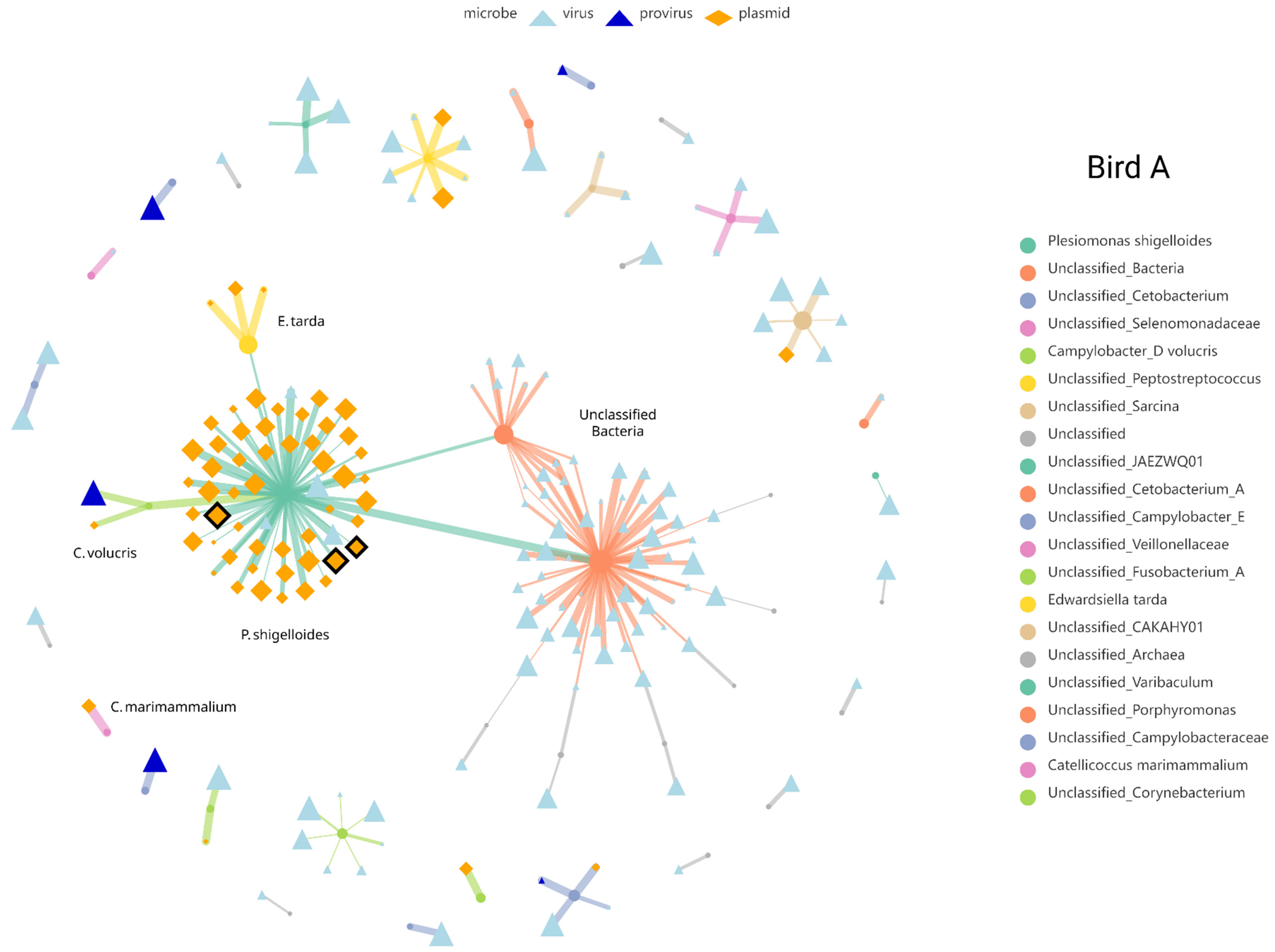

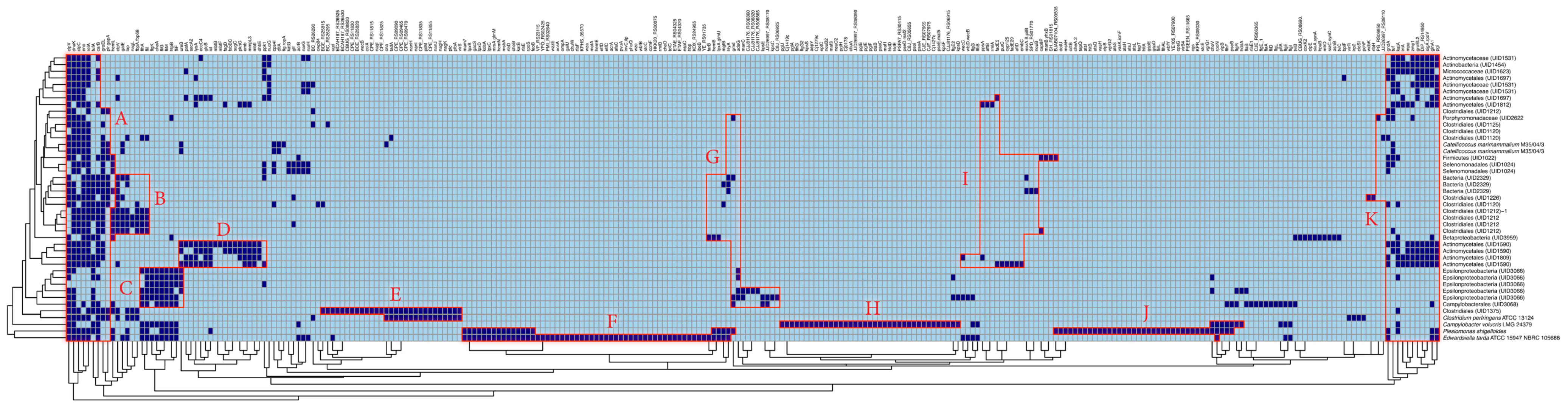


| Bird A | |||||||||
|---|---|---|---|---|---|---|---|---|---|
| Cluster ID | Top Reference | Completeness (%) | MGO (%) | Novelty Score | Abundance | Contig N50 | Genome Size | Number of Contigs | GC (%) |
| bin 11 | Firmicutes (UID1022) | 100 | 1.48 | 98.01 | 0.08 | 97,977 | 1,901,298 | 34 | 34.77 |
| bin 6 | Bacteria (UID2329) | 100 | 0.16 | 97.23 | 1.09 | 27,226 | 2,586,251 | 64 | 28.36 |
| bin 7 | Bacteria (UID2329) | 100 | 1.12 | 97.62 | 0.4 | 163,501 | 2,200,486 | 120 | 28.23 |
| bin 12 | Clostridiales (UID1120) | 99.3 | 0 | 98.8 | 0.06 | 51,471 | 1,894,079 | 84 | 30.59 |
| bin 14 | Bacteria (UID2329) | 98.88 | 3.42 | 97.59 | 0.27 | 21,191 | 1,823,829 | 173 | 28.2 |
| bin 23 | Catellicoccus marimammalium M35/04/3 | 98.34 | 0.74 | 18.44 | 0.13 | 1,023,821 | 1,367,748 | 15 | 33.7 |
| bin 21 | Campylobacter volucris LMG 24379 | 98.05 | 0 | 12.12 | 2.93 | 77,015 | 1,506,994 | 48 | 28.17 |
| bin 3 | Edwardsiella tarda ATCC 15947 NBRC 105688 | 97.51 | 0.36 | 0.32 | 1.51 | 782,853 | 3,840,500 | 33 | 56.75 |
| bin 18 | Selenomonadales (UID1024) | 96.47 | 0.15 | 98.35 | 0.09 | 56,858 | 1,622,822 | 78 | 38.32 |
| bin 5 | Plesiomonas shigelloides | 94.63 | 1.84 | 12.03 | 0.46 | 10,168 | 3,268,833 | 373 | 51.55 |
| bin 4 | Clostridiales (UID1375) | 93.55 | 0.81 | 81.74 | 0.11 | 123,993 | 3,295,749 | 59 | 27.58 |
| bin 8 | Bacteria (UID2329) | 92.13 | 2.81 | 85.65 | 0.26 | 6250 | 2,139,963 | 330 | 31.17 |
| bin 20 | Epsilonproteobacteria (UID3066) | 91.79 | 2.75 | 98.7 | 2.89 | 50,597 | 1,514,045 | 69 | 29.86 |
| bin 19 | Epsilonproteobacteria (UID3066) | 90.79 | 0.43 | 98.68 | 1.32 | 118,224 | 1,550,314 | 50 | 36.74 |
| bin 10 | Porphyromonadaceae (UID2622) | 90.03 | 0.79 | 98.67 | 0.51 | 6232 | 2,017,534 | 257 | 33.74 |
| bin 13 | Epsilonproteobacteria (UID3066) | 89.87 | 8.27 | 99.11 | 8.79 | 33,637 | 1,849,317 | 170 | 54.6 |
| bin 22 | Clostridiales (UID1226) | 88.25 | 1.27 | 98.65 | 0.34 | 5139 | 1,406,458 | 183 | 28.65 |
| bin 9 | Actinomycetales (UID1590) | 84.47 | 1.45 | 92.64 | 0.18 | 8432 | 2,120,299 | 355 | 74.34 |
| bin 29 | Campylobacterales (UID3068) | 84.27 | 0.82 | 96.26 | 0.01 | 249,928 | 1,248,954 | 9 | 35.79 |
| bin 28 | Epsilonproteobacteria (UID3066) | 80.56 | 2.77 | 99.5 | 0.17 | 4948 | 1,263,334 | 220 | 39.88 |
| bin 17 | Epsilonproteobacteria (UID3066) | 79.66 | 3.4 | 99 | 1.71 | 15,913 | 1,686,941 | 297 | 54.1 |
| Assembly length (bp) | 993,740,580 | ||||||||
| Number of contigs total | 399,340 | ||||||||
| Number of contigs in clusters | 21,063 | ||||||||
| Percent assembly length in clusters | 16.73 | ||||||||
| Percent contigs in clusters | 5.27 | ||||||||
| Total clusters | 162 | ||||||||
| Complete clusters (>95% complete, <10% MGO) | 9 | ||||||||
| Excellent clusters (>90% complete, <10% MGO) | 15 | ||||||||
| Good clusters (>70% complete, <10% MGO) | 22 | ||||||||
| Reasonable clusters (>50% complete, <10% MGO) | 24 | ||||||||
| Bird B | |||||||||
|---|---|---|---|---|---|---|---|---|---|
| Cluster ID | Top Reference | Completeness (%) | MGO (%) | Novelty Score | Abundance | Contig N50 | Genome Size | Number of Contigs | GC (%) |
| bin 8 | Actinomycetales (UID1590) | 98.91 | 1.59 | 94.07 | 0.22 | 71,588 | 2,609,314 | 89 | 74.79 |
| bin 7 | Actinomycetales (UID1590) | 98.53 | 1.08 | 99.19 | 0.18 | 467,041 | 2,666,558 | 28 | 60.04 |
| bin 29 | Catellicoccus marimammalium M35/04/3 | 98.34 | 0.74 | 8.66 | 0.01 | 1,015,554 | 1,301,184 | 6 | 33.82 |
| bin 11 | Actinomycetales (UID1809) | 97.4 | 0.75 | 98.37 | 0.07 | 87,253 | 2,135,811 | 55 | 60.98 |
| bin 10 | Actinobacteria (UID1454) | 97.08 | 2.5 | 99.18 | 0.11 | 22,620 | 2,209,776 | 128 | 61.43 |
| bin 17 | Actinomycetaceae (UID1531) | 96.61 | 1.75 | 99.17 | 0.04 | 13,823 | 1,775,997 | 38 | 48.51 |
| bin 9 | Actinomycetaceae (UID1531) | 95.93 | 7.03 | 99.17 | 0.23 | 97,809 | 2,432,383 | 182 | 60.53 |
| bin 12 | Clostridiales (UID1212) | 94.64 | 0.02 | 98.74 | 0.57 | 248,518 | 2,055,247 | 116 | 25.79 |
| bin 16 | Micrococcaceae (UID1623) | 94.41 | 1.87 | 98.73 | 0.03 | 16,276 | 1,869,592 | 71 | 57.03 |
| bin 13 | Clostridiales (UID1212) | 92.84 | 0.36 | 98.29 | 0.05 | 26,283 | 2,026,667 | 52 | 24.32 |
| bin 6 | Clostridium perfringens ATCC 13124 | 92.74 | 0 | 18.16 | 0.02 | 411,685 | 2,773,671 | 28 | 27.91 |
| bin 22 | Clostridiales (UID1125) | 92.6 | 0.2 | 99.14 | 0.06 | 11,250 | 1,556,095 | 54 | 46.34 |
| bin 23 | Clostridiales (UID1120) | 92.08 | 0.71 | 99.13 | 0.06 | 21,711 | 1,549,620 | 88 | 56.41 |
| bin 21 | Selenomonadales (UID1024) | 91.67 | 1.35 | 98.7 | 0.06 | 4283 | 1,559,231 | 136 | 38.22 |
| bin 18 | Clostridiales (UID1212) | 91.5 | 0.23 | 98.69 | 0.17 | 121,991 | 1,721,280 | 65 | 27.44 |
| bin 14 | Actinomycetales (UID1697) | 90.1 | 1.18 | 98.67 | 0.03 | 20,360 | 1,975,032 | 162 | 61.58 |
| bin 20 | Betaproteobacteria (UID3959) | 89.78 | 0.33 | 98.23 | 0.04 | 15,239 | 1,593,082 | 142 | 41.51 |
| bin 15 | Actinomycetales (UID1812) | 88.78 | 2.69 | 98.66 | 0.05 | 13,413 | 1,973,127 | 190 | 62.05 |
| bin 31 | Clostridiales (UID1212) | 86.52 | 0.67 | 99.08 | 0.03 | 4390 | 1,152,148 | 100 | 28.85 |
| bin 19 | Clostridiales (UID1120) | 83.81 | 2.48 | 98.58 | 0.05 | 91,195 | 1,691,311 | 57 | 23.38 |
| bin 25 | Epsilonproteobacteria (UID3066) | 83.07 | 1.04 | 99.52 | 0.15 | 30,502 | 1,475,623 | 93 | 50.27 |
| bin 38 | Bacteria (UID2328) | 79.33 | 0 | 99 | 0.01 | 96,073 | 748,216 | 19 | 26.56 |
| bin 26 | Clostridiales (UID1212) | 77.85 | 2.68 | 97.96 | 0.04 | 18,116 | 1,461,644 | 223 | 25.2 |
| Assembly length (bp): | 1,338,254,414 | ||||||||
| Number of contigs total: | 120,972 | ||||||||
| Number of contigs in clusters: | 14,866 | ||||||||
| Percent assembly length in clusters: | 18.05 | ||||||||
| Percent contigs in clusters: | 12.29 | ||||||||
| Total clusters: | 66 | ||||||||
| Complete clusters (>95% complete, <10% MGO): | 7 | ||||||||
| Excellent clusters (>90% complete, <10% MGO): | 16 | ||||||||
| Good clusters (>70% complete, <10% MGO): | 25 | ||||||||
| Reasonable clusters (>50% complete, <10% MGO): | 28 | ||||||||
| Drug Class | Glycopeptides | Aminoglycosides | Fluoroquinolones | Macrolide Antibiotics | Disinfecting Agents and Antiseptics | Cephalosporins | Peptide Antibiotics | Elfamycin | |||||||||||
|---|---|---|---|---|---|---|---|---|---|---|---|---|---|---|---|---|---|---|---|
| Assigned MAGs | vanW | mprF | vanY | vanH | Van ligase | vanG | vanT | rpsL | adeF | gyrB | rsmA | KpnH | KpnF | CRP | qacG | PBP3 | mprF | EF-Tu | |
| Bird B | bin 6—Clostridium perfringens ATCC 13124 | X | X | X | X | ||||||||||||||
| bin 7—Actinomycetales (UID1590) | |||||||||||||||||||
| bin 8—Actinomycetales (UID1590) | |||||||||||||||||||
| bin 9—Actinomycetaceae (UID1531) | X | ||||||||||||||||||
| bin 10—Actinobacteria (UID1454) | X | ||||||||||||||||||
| bin 11—Actinomycetales (UID1809) | X | ||||||||||||||||||
| bin 12—Clostridiales (UID1212) | X | X | X | ||||||||||||||||
| bin 13—Clostridiales (UID1212) | X | X | X | X | |||||||||||||||
| bin 14—Actinomycetales (UID1697) | X | X | |||||||||||||||||
| bin 15—Actinomycetales (UID1812) | X | ||||||||||||||||||
| bin 16—Micrococcaceae (UID1623) | X | ||||||||||||||||||
| bin 17—Actinomycetaceae (UID1531) | |||||||||||||||||||
| bin 18—Clostridiales (UID1212) | X | X | X | ||||||||||||||||
| bin 19—Clostridiales (UID1120) | X | ||||||||||||||||||
| bin 20—Betaproteobacteria (UID3959) | X | ||||||||||||||||||
| bin 21—Selenomonadales (UID1024) | X | X | |||||||||||||||||
| bin 22—Clostridiales (UID1125) | X | X | |||||||||||||||||
| bin 23—Clostridiales (UID1120) | X | X | |||||||||||||||||
| bin 24—Actinomycetales (UID1697) | |||||||||||||||||||
| bin 25—Epsilonproteobacteria (UID3066) | |||||||||||||||||||
| bin 26—Clostridiales (UID1212) | X | X | X | ||||||||||||||||
| bin 29—Catellicoccus marimammalium M35/04/3 | X | X | |||||||||||||||||
| bin 31—Clostridiales (UID1212) | X | ||||||||||||||||||
| bin 38—Bacteria (UID2328) | |||||||||||||||||||
| Bird A | bin 1—Firmicutes (UID1022) | ||||||||||||||||||
| bin 3—Edwardsiella tarda ATCC 15947 NBRC 105688 | X | X | X | X | X | X | X | ||||||||||||
| bin 4—Clostridiales (UID1375) | X | X | X | X | X | X | |||||||||||||
| bin 5—Plesiomonas shigelloides | X | X | X | X | |||||||||||||||
| bin 6—Bacteria (UID2329) | |||||||||||||||||||
| bin 7—Bacteria (UID2329) | X | ||||||||||||||||||
| bin 8—Bacteria (UID2329) | X | ||||||||||||||||||
| bin 9—Actinomycetales (UID1590) | |||||||||||||||||||
| bin 10—Porphyromonadaceae (UID2622) | X | ||||||||||||||||||
| bin 12—Clostridiales (UID1120) | X | X | |||||||||||||||||
| bin 13—Epsilonproteobacteria (UID3066) | |||||||||||||||||||
| bin 14—Bacteria (UID2329) | X | X | |||||||||||||||||
| bin 17—Epsilonproteobacteria (UID3066) | |||||||||||||||||||
| bin 18—Selenomonadales (UID1024) | X | X | |||||||||||||||||
| bin 19—Epsilonproteobacteria (UID3066) | |||||||||||||||||||
| bin 20—Epsilonproteobacteria (UID3066) | |||||||||||||||||||
| bin 21—Campylobacter volucris LMG 24379 | |||||||||||||||||||
| bin 22—Clostridiales (UID1226) | X | ||||||||||||||||||
| bin 23—Catellicoccus marimammalium M35/04/3 | X | X | |||||||||||||||||
| bin 24—Actinomycetaceae (UID1531) | |||||||||||||||||||
| bin 28—Epsilonproteobacteria (UID3066) | |||||||||||||||||||
| bin 29—Campylobacterales (UID3068) | |||||||||||||||||||
Disclaimer/Publisher’s Note: The statements, opinions and data contained in all publications are solely those of the individual author(s) and contributor(s) and not of MDPI and/or the editor(s). MDPI and/or the editor(s) disclaim responsibility for any injury to people or property resulting from any ideas, methods, instructions or products referred to in the content. |
© 2026 by the authors. Licensee MDPI, Basel, Switzerland. This article is an open access article distributed under the terms and conditions of the Creative Commons Attribution (CC BY) license.
Share and Cite
O’Donald, S.N.; Patel, F.; Keen, P.; Hanson, L.A.; Cunningham, F.; Lawrence, M.L.; Tekedar, H.C. Hi-C Metagenome Deconvolution of Double-Crested Cormorant (Nannopterum auritum) Fecal Samples Demonstrates Feasibility of Linking Microbial Genomes, AMR Genes, and Mobile Elements in Avian Microbiomes. Microorganisms 2026, 14, 1198. https://doi.org/10.3390/microorganisms14061198
O’Donald SN, Patel F, Keen P, Hanson LA, Cunningham F, Lawrence ML, Tekedar HC. Hi-C Metagenome Deconvolution of Double-Crested Cormorant (Nannopterum auritum) Fecal Samples Demonstrates Feasibility of Linking Microbial Genomes, AMR Genes, and Mobile Elements in Avian Microbiomes. Microorganisms. 2026; 14(6):1198. https://doi.org/10.3390/microorganisms14061198
Chicago/Turabian StyleO’Donald, Sydney N., Fenny Patel, Patricia Keen, Larry A. Hanson, Frederick Cunningham, Mark L. Lawrence, and Hasan C. Tekedar. 2026. "Hi-C Metagenome Deconvolution of Double-Crested Cormorant (Nannopterum auritum) Fecal Samples Demonstrates Feasibility of Linking Microbial Genomes, AMR Genes, and Mobile Elements in Avian Microbiomes" Microorganisms 14, no. 6: 1198. https://doi.org/10.3390/microorganisms14061198
APA StyleO’Donald, S. N., Patel, F., Keen, P., Hanson, L. A., Cunningham, F., Lawrence, M. L., & Tekedar, H. C. (2026). Hi-C Metagenome Deconvolution of Double-Crested Cormorant (Nannopterum auritum) Fecal Samples Demonstrates Feasibility of Linking Microbial Genomes, AMR Genes, and Mobile Elements in Avian Microbiomes. Microorganisms, 14(6), 1198. https://doi.org/10.3390/microorganisms14061198