Identification, Biology, and Bactericide Control of Peach Bacterial Shot Hole in Hebei Province, China
 , ,
, ,
Abstract
1. Introduction
2. Materials and Methods
2.1. Sample Collection and Pathogen Isolation
2.2. Pathogenicity Test
2.3. Morphological Identification and Biochemical Assay
2.4. PCR Amplification and Phylogenetic Analysis
2.5. Inoculum Preparation and Bacterial Growth Rate Determination
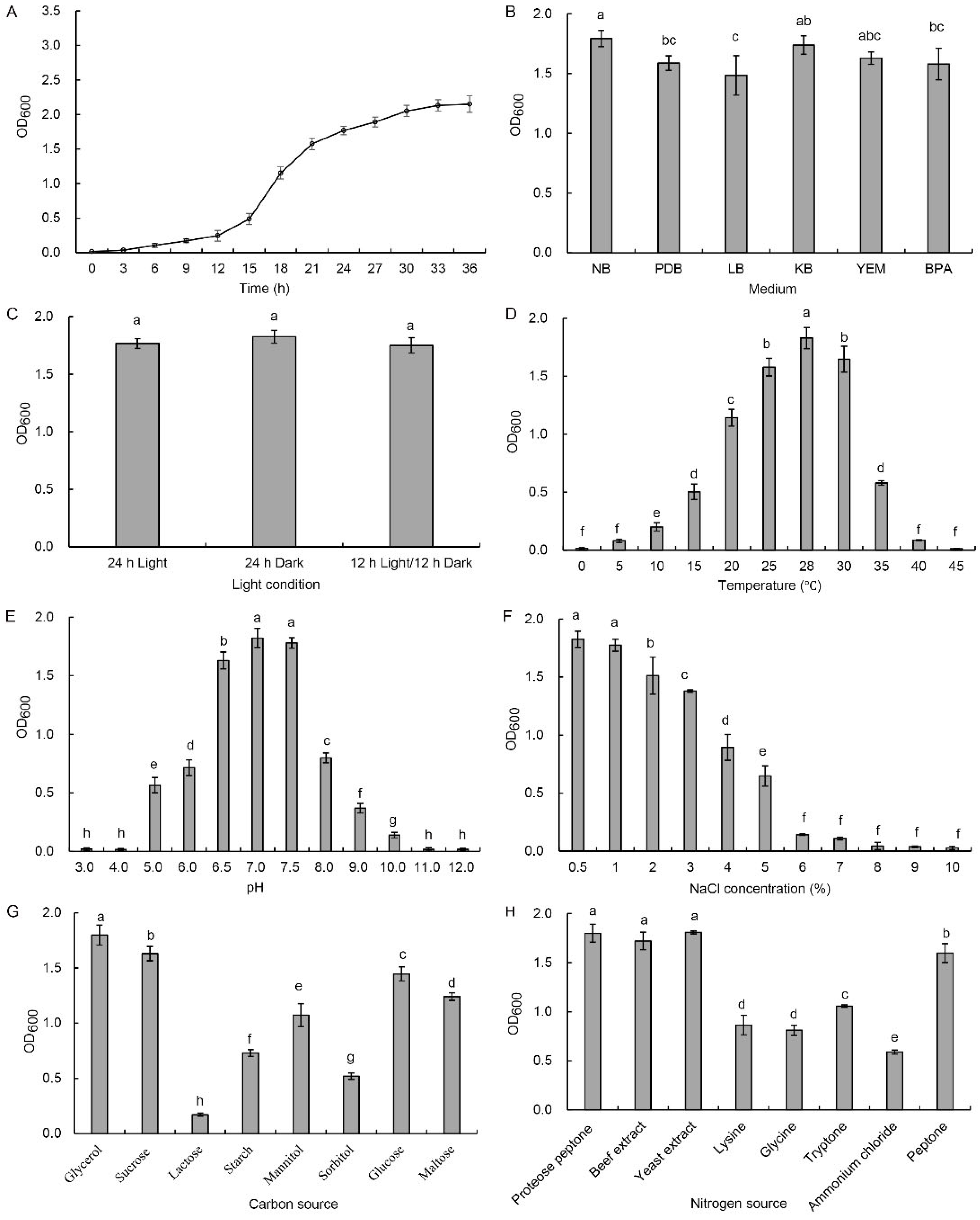
2.6. Effects of Culture Conditions on Bacterial Growth
2.7. Lethal Temperature Determination
2.8. Bactericide Screening
2.9. Data Analysis
3. Results
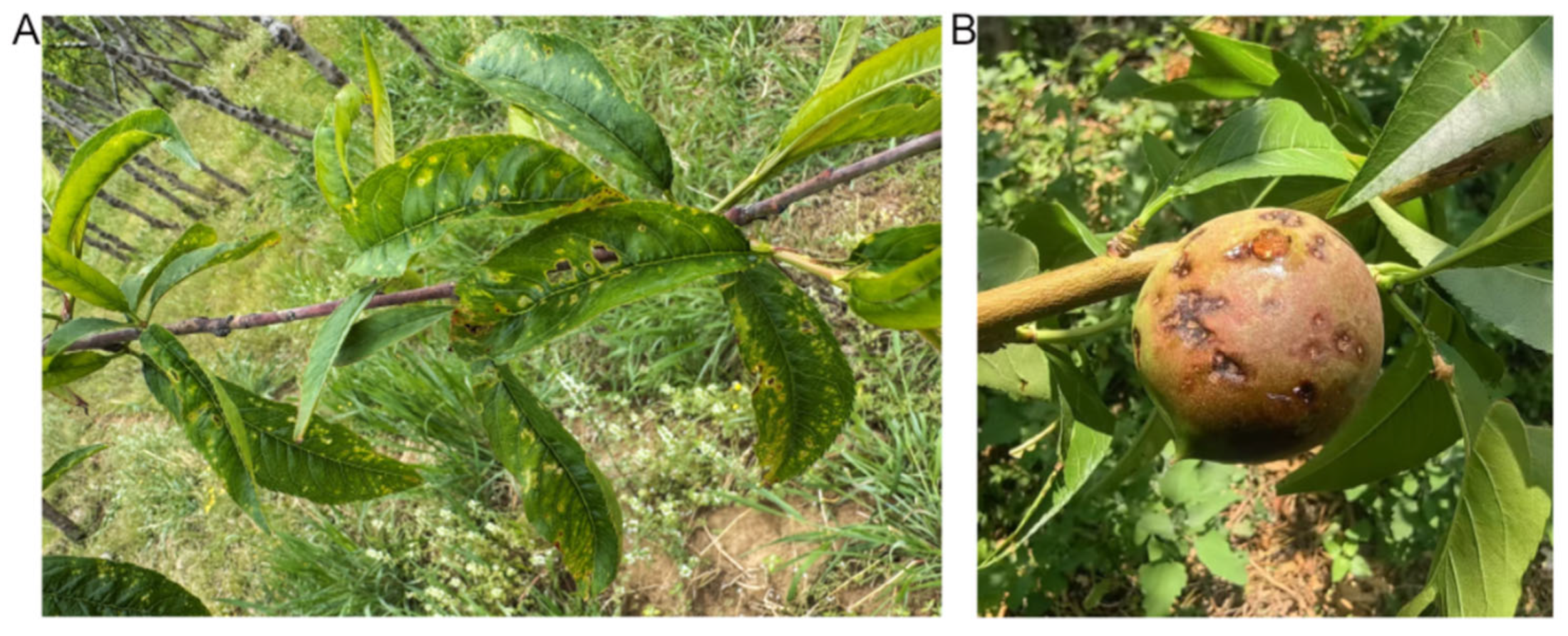
3.1. Disease Symptoms
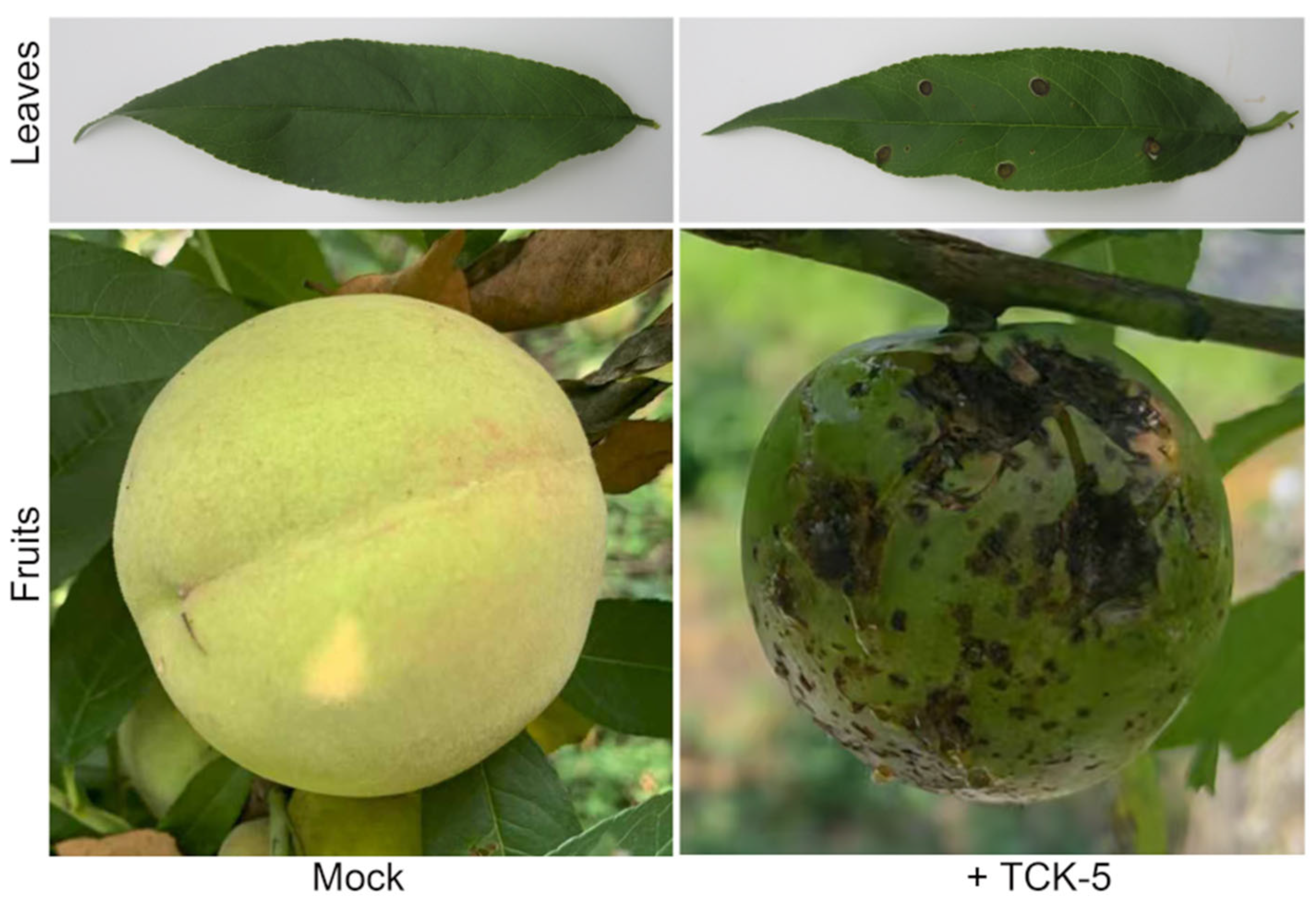
3.2. Pathogen Isolation and Pathogenicity Study
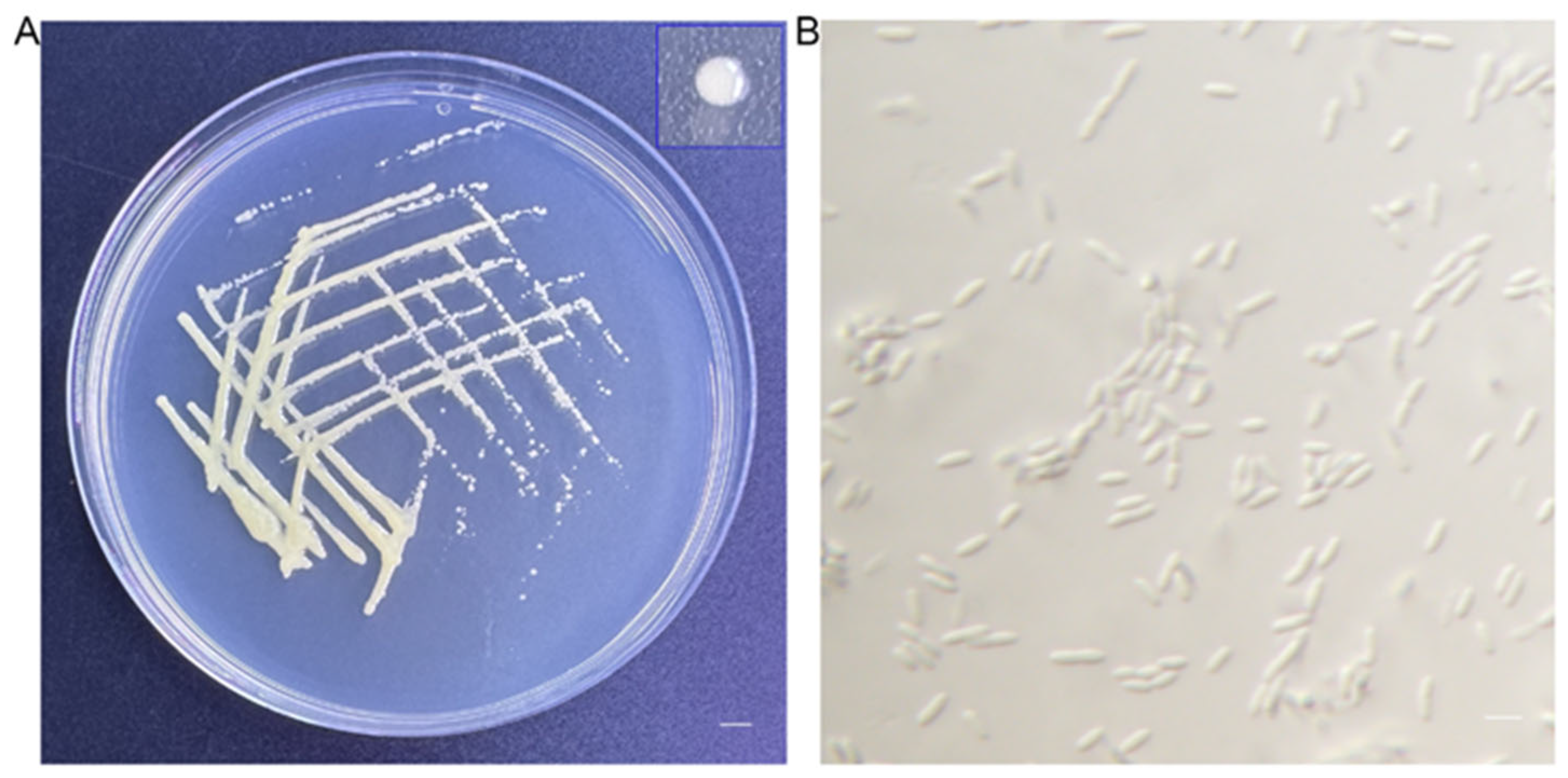
3.3. Morphological and Biochemical Identification
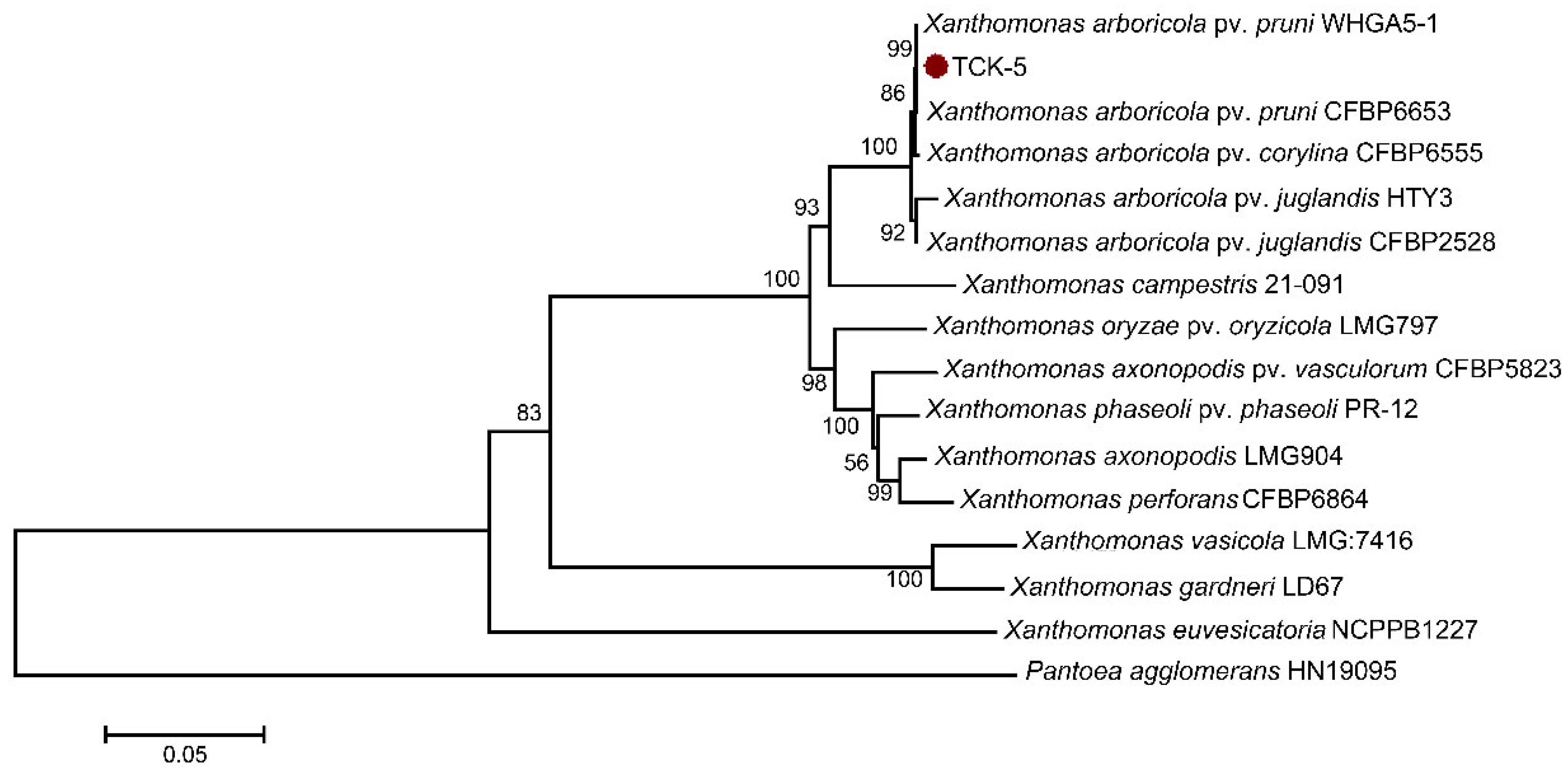
3.4. Molecular Identification and Phylogenetic Analysis
3.5. Optimization for TCK-5 Growth In Vitro
3.6. Indoor Virulence Determination of Bactericides Against Isolate TCK-5
4. Discussion
5. Conclusions
Supplementary Materials
Author Contributions
Funding
Institutional Review Board Statement
Informed Consent Statement
Data Availability Statement
Acknowledgments
Conflicts of Interest
References
- Lu, W.Q.; Du, W.X.; Chen, C.L. Research progress of peach bacterial spot disease. Int. J. Mol. Sci. 2026, 27, 2639. [Google Scholar] [CrossRef] [PubMed]
- Sakata, N.; Ishiga, Y. Advancing sustainable management of bacterial spot of peach: Insights into Xanthomonas arboricola pv. pruni pathogenicity and control strategies. Bacteria 2025, 4, 27. [Google Scholar] [CrossRef]
- Cui, Z.C.; Sun, X.K.; Yuan, S.T.; Ma, J.Y.; Liu, J.Y.; Meng, L.S.; Wang, H.Y. Identification and antagonistic bacterium screening of the pathogen causing peach bacterial leaf spot in Hebei Province, China. Plant Pathol. 2025, 74, 825–833. [Google Scholar] [CrossRef]
- Jin, S.; Wang, N.; Zhou, Z.S.; Ji, Z.R.; Zhang, J.X. Identification of Bacillus species causing bacterial leaf spot of peach in China. J. Phytopathol. 2022, 170, 811–819. [Google Scholar] [CrossRef]
- Iličić, R.; Popović, T. Occurrence of Xanthomonas arboricola pv. pruni causing bacterial leaf spot and shot-hole on peach in Montenegro. Plant Dis. 2020, 104, 1250. [Google Scholar] [CrossRef]
- Zang, R.; Song, L.L.; Xu, C.; Yin, X.M.; Qiao, Z.X.; Geng, Y.H.; Zhang, M. Clarification of the etiology of peach bacteria leaf shot hole caused by Pantoea spp. in Henan Province, China, based on morphological characteristics and multi-locus sequences analysis. Eur. J. Plant Pathol. 2021, 161, 253–271. [Google Scholar] [CrossRef]
- Luo, M.; Meng, F.Z.; Tan, Q.; Zhou, Y.; Chaisiri, C.; Fan, F.; Yin, W.X.; Yin, W.X.; Luo, C.X. Identification, genetic diversity, and chemical control of Xanthomonas arboricola pv. pruni in China. Plant Dis. 2022, 106, 2415–2423. [Google Scholar] [CrossRef]
- Wong-Bajracharya, J.; Webster, J.; Rigano, L.A.; Kant, P.; Englezou, A.; Snijders, F.; Chapman, T.A. All-in-one Xylella detection and identification: A nanopore sequencing-compatible conventional PCR. Plant Pathol. 2024, 73, 1072–1089. [Google Scholar] [CrossRef]
- Clavijo, F.; Curland, R.D.; Croce, V.; Lapaz, M.I.; Dill-Macky, R.; Pereyra, S.; Siri, M.I. Genetic and phenotypic characterization of Xanthomonas species pathogenic in wheat in Uruguay. Phytopathology 2022, 112, 511–520. [Google Scholar] [CrossRef]
- Kumar, V.; Kumari, P.; Samal, I.; Singh, S.; Kumar, A.; Kumar, L. Efficacy, cost-effectiveness, and residue levels of fungicides for managing panicle blight, fruit blight and anthracnose diseases of litchi. Crop Prot. 2025, 198, 107391. [Google Scholar] [CrossRef]
- Strayer-Scherer, A.L.; Sharpe, S.R.; Louws, F.J.; Meadows, I.M. Evaluation of systemic acquired resistance inducers for the management of copper and streptomycin resistant strains of Xanthomonas perforans on tomato. Crop Prot. 2024, 175, 106430. [Google Scholar] [CrossRef]
- Herbert, A.; Hancock, C.N.; Cox, B.; Schnabel, G.; Moreno, D.; Carvalho, R.; Jones, J.; Paret, M.; Geng, X.; Wang, H. Oxytetracycline and streptomycin resistance genes in Xanthomonas arboricola pv. pruni, the causal agent of bacterial spot in peach. Front. Microbiol. 2022, 13, 821808. [Google Scholar] [CrossRef] [PubMed]
- Cao, J.Y.; Li, J.W.; Liu, C.X.; Gong, H.J.; Qi, B.B.; Zhu, R.X.; Xia, L.M.; Li, L.; Liu, S.B.; Jiang, Q.S.; et al. Application of trichloroisocyanuric acid in controlling kiwifruit bacterial canker disease demonstrates its promising potential as an eco-friendly bactericide. Chem. Biol. Technol. Agric. 2025, 12, 3. [Google Scholar]
- Balaž, J.; Ivanović, Ž.; Davidović, A.; Iličić, R.; Janse, J.; Popović, T. Characterization of Xanthomonas hortorum pv. pelargonii isolated from Geranium in Serbia. Plant Dis. 2016, 100, 164–170. [Google Scholar] [CrossRef]
- Larkin, M.A.; Blackshields, G.; Brown, N.P.; Chenna, R.; McGettigan, P.A.; McWilliam, H.; Valentin, F.; Wallace, I.M.; Wilm, A.; Lopez, R. Clustal W and Clustal X version 2.0. Bioinformatics 2007, 23, 2947–2948. [Google Scholar] [CrossRef]
- Kumar, S.; Stecher, G.; Tamura, K. MEGA7: Molecular evolutionary genetics analysis version 7.0 for bigger datasets. Mol. Biol. Evol. 2016, 33, 1870–1874. [Google Scholar] [CrossRef] [PubMed]
- Hall, T.; Biosciences, I.; Carlsbad, C. BioEdit: An important software for molecular biology. GERF Bull. Biosci. 2011, 2, 60–61. [Google Scholar]
- Zhao, Y.M.; Zhao, H.J.; Liu, J.C.; Decroocq, V.; Yang, H.; Liu, S. Progress in research on bacterial shot hole in Prunus. Plant Pathol. 2025, 74, 2492–2507. [Google Scholar] [CrossRef]
- Li, J.L.; Hu, M.; Xue, Y.; Chen, X.; Lu, G.T.; Zhang, L.H.; Zhou, J.N. Screening, identification and efficacy evaluation of antagonistic bacteria for biocontrol of soft rot disease caused by Dickeya zeae. Microorganisms 2020, 8, 697. [Google Scholar] [CrossRef] [PubMed]
- Zheng, D.; Armstrong, C.M.; Yao, W.; Wu, B.; Luo, W.; Powell, C.; Duan, Y. Towards the completion of Koch’s postulates for the citrus huanglongbing bacterium, Candidatus Liberibacter asiaticus. Hortic. Res. 2024, 11, uhae011. [Google Scholar] [CrossRef]
- Garita-Cambronero, J.; Palacio-Bielsa, A.; Cubero, J. Xanthomonas arboricola pv. pruni, causal agent of bacterial spot of stone fruits and almond: Its genomic and phenotypic characteristics in the X. arboricola species context. Mol. Plant Pathol. 2018, 19, 2053–2065. [Google Scholar] [CrossRef] [PubMed]
- Tian, T.P.; Wang, M.Q.; Zhu, J.M.; Sun, Y.N.; Ma, M.J.; Liu, G.L.; Wang, J.S.; Zhao, B.; Yan, Y.P.; Wang, Y.; et al. Biological characterization and in vitro fungicide screening of a new pathogen of basal stem rot of Schisandra chinensis in Jilin Province, China. Front. Microbiol. 2025, 16, 1633730. [Google Scholar] [CrossRef] [PubMed]
- Morales, G.; Moragrega, C.; Montesinos, E.; LIorente, I. Effects of leaf wetness duration and temperature on infection of prunus by Xanthomonas arboricola pv. pruni. PLoS ONE 2018, 13, e193813. [Google Scholar] [CrossRef]
- Nascimento, A.R.; Mariano, R.L.R.; Gama, M.A.S. Preservation methods and growth of Xanthomonas campestris pv. viticola in culture medium varying temperature, pH and NaCl concentration. Fitopatol. Bras. 2005, 30, 650–654. [Google Scholar] [CrossRef]
- Ji, W.J.; Song, Z.W.; Li, C.; Zeng, R.; Xu, J.J.; Gao, P.; Xu, L.H.; Gao, S.G.; Zhu, J.M.; Dai, F.M. Biological characteristics of Xanthomonas fragariae casuing strawberry crown infection cavity and bactericides-screening for its control. Plant Prot. 2025, 51, 201–210. [Google Scholar]
- Kung’u, M.W.; Nyaboga, E.N.; Rey, C. Reduction of cassava mosaic geminiviruses from infected stem cuttings using salicylic acid, hydrogen peroxide and hot water treatment. J. Phytopathol. 2024, 172, e13347. [Google Scholar] [CrossRef]
- Song, D.B.; Zhang, G.X.; Wang, Q.; Liu, B.J.; Huang, T.; Han, H.W.; Bai, J.Y.; Guo, Q.Y. Study on the biological characteristics of the pathogen of bacterial perforation of Pseudomonas sp. in Xinjiang and the screening of laboratory agents. Xinjiang Agric. Sci. 2023, 60, 1515–1522. [Google Scholar]
- Bang, X.; Ma, X.Y.; Zhang, F.P.; Zhang, W.B. Acute toxicity and risk assessment of pesticides aginst pear fire blight on Italian honeybees. Acta Agric. Zhejiangensis 2023, 35, 2160–2168. [Google Scholar]
- Christiano, R.S.C.; Reilly, C.C.; Miller, W.P.; Scherm, H. Oxytertacycline dynamics on peach leaves in relation to temperature, sunlight, and simulated rain. Plant Dis. 2010, 94, 1213–1218. [Google Scholar] [CrossRef]
- Aarrouf, J.; Garcin, A.; Lizzi, Y.; Maâtaoui, M.E. Immunolocalization and histocytopathological effects of Xanthomonas arboricola pv. pruni on naturally infected leaf and fruit tissues of peach (Prunus persica L. Batsch). J. Phytopathol. 2008, 156, 338–345. [Google Scholar] [CrossRef]
- Fan, K.; Qi, Y.K.; Fu, L.; Li, L.; Liu, X.H.; Qu, J.L.; Li, D.W.; Dong, A.X.; Peng, Y.J.; Wang, Q.H. Identification and fungicide screening of fungal species associated with walnut anthracnose in Shaanxi and Liaoning provinces, China. Plant Dis. 2024, 108, 599–607. [Google Scholar] [CrossRef]



| Test | Observation | Results |
|---|---|---|
| Gram staining | Cells pinkish red | − |
| Oxidase | No violet color | − |
| Catalase | Bubbles produced | + |
| Starch hydrolase | Clear halo around colonies | + |
| H2S production | Medium turned black | + |
| Gelatin hydrolysis | Liquefaction | + |
| Esculin hydrolysis | No black color | − |
| Nitrate reduction | No red color | − |
| Citrate utilization | Color changed from green to blue | + |
| Temperature (°C) | ||||||||||
|---|---|---|---|---|---|---|---|---|---|---|
| 46 | 47 | 48 | 49 | 50 | 51 | 52 | 53 | 54 | 55 | |
| Appearance | + | + | + | + | + | − | − | − | − | − |
| Bactericides | Toxicity Regression Equation | EC50 (mg/L) | Coefficient (R) |
|---|---|---|---|
| 0.3% Tetramycin AS a | y = 0.3295x + 5.3224 | 0.1051 | 0.9918 |
| 3% Zhongshengmycin SL a | y = 0.2618x + 4.8780 | 2.9252 | 0.9755 |
| 20% Bronopol SC b | y = 0.9611x + 4.7684 | 5.7931 | 0.9611 |
| 2% Zhongshengcin·Tetracycline SC a | y = 0.5173x − 4.2328 | 30.4126 | 0.9861 |
| 1 × 10⁹ spores/g Bacillus amyloliquefaciens B7900 WP a | y = 4.0932x − 1.3362 | 35.3182 | 0.8498 |
| 8 × 10⁹ spores/mL Bacillus licheniformis AS a | y = 0.6306x + 3.9168 | 52.2061 | 0.9080 |
| 1 × 10⁹ CFU/g Paenibacillus polymyxa WP a | y = 5.0479x − 3.8911 | 57.7241 | 0.9509 |
| 35% Quinolinone·Tetramycin SC b | y = 0.4283x + 4.2251 | 64.4231 | 0.9617 |
| 60% Pyraclostrobin·Metiram WG b | y = 0.2150x + 4.6022 | 70.8361 | 0.8891 |
| 3% Benziothiazolinone ME b | y = 0.5592x + 3.7478 | 173.5425 | 0.9912 |
| 2% Kasugamycin AS a | y = 4.7554x − 9.5458 | 1145.0433 | 0.8990 |
| 50% Chloroisobromine Cyanurate SP b | y = 0.8207x + 2.1963 | 2607.1132 | 0.9495 |
| 40% Zinc Thiazole SC b | y = 0.4465x + 3.3193 | 5807.5958 | 0.8918 |
| 80% Mancozeb WP b | y = 0.4139x + 3.3516 | 9614.5734 | 0.9724 |
| 45% Kasugamycin·Quinolinone SC b | y = 2.7073x − 6.1236 | 12,845.5096 | 0.9222 |
| 40% Tebuconazole·Zinc Thiazole SC b | y = 2.8161x − 7.5459 | 28,511.7524 | 0.8114 |
| 52% Copper Oxychloride·Zineb WP b | y = 1.8854x − 3.4000 | 28,531.4094 | 0.8028 |
| 30% Thiodiazole Copper SC b | y = 4.0167x − 13.0720 | 31,563.7135 | 0.9627 |
Disclaimer/Publisher’s Note: The statements, opinions and data contained in all publications are solely those of the individual author(s) and contributor(s) and not of MDPI and/or the editor(s). MDPI and/or the editor(s) disclaim responsibility for any injury to people or property resulting from any ideas, methods, instructions or products referred to in the content. |
© 2026 by the authors. Licensee MDPI, Basel, Switzerland. This article is an open access article distributed under the terms and conditions of the Creative Commons Attribution (CC BY) license.
Share and Cite
Cui, J.; Xu, H.; Fan, L.; Wang, Y.; He, L.; Wang, Z.; Han, J.; Li, J.; Tian, Q.; Zhao, W.; et al. Identification, Biology, and Bactericide Control of Peach Bacterial Shot Hole in Hebei Province, China. Microorganisms 2026, 14, 1179. https://doi.org/10.3390/microorganisms14061179
Cui J, Xu H, Fan L, Wang Y, He L, Wang Z, Han J, Li J, Tian Q, Zhao W, et al. Identification, Biology, and Bactericide Control of Peach Bacterial Shot Hole in Hebei Province, China. Microorganisms. 2026; 14(6):1179. https://doi.org/10.3390/microorganisms14061179
Chicago/Turabian StyleCui, Jianchao, Haijiao Xu, Liying Fan, Yu Wang, Limin He, Zhaoyuan Wang, Jicheng Han, Jie Li, Qihang Tian, Wenshi Zhao, and et al. 2026. "Identification, Biology, and Bactericide Control of Peach Bacterial Shot Hole in Hebei Province, China" Microorganisms 14, no. 6: 1179. https://doi.org/10.3390/microorganisms14061179
APA StyleCui, J., Xu, H., Fan, L., Wang, Y., He, L., Wang, Z., Han, J., Li, J., Tian, Q., Zhao, W., & Li, Y. (2026). Identification, Biology, and Bactericide Control of Peach Bacterial Shot Hole in Hebei Province, China. Microorganisms, 14(6), 1179. https://doi.org/10.3390/microorganisms14061179