Synergistic Integration of Maize Biochar and Bacillus amyloliquefaciens Modulates Rhizosphere Bacterial Communities and Enhances Tomato Yield



Abstract
1. Introduction
2. Materials and Methods
2.1. Characterization of Maize Biochar
2.2. Greenhouse Experiment
2.3. Determination of Plant Performance
2.4. Soil Physicochemical Properties Determination
2.5. Soil Enzyme Activity Determination
2.6. DNA Extraction, Bioinformatic and Statistical Analyses
3. Results
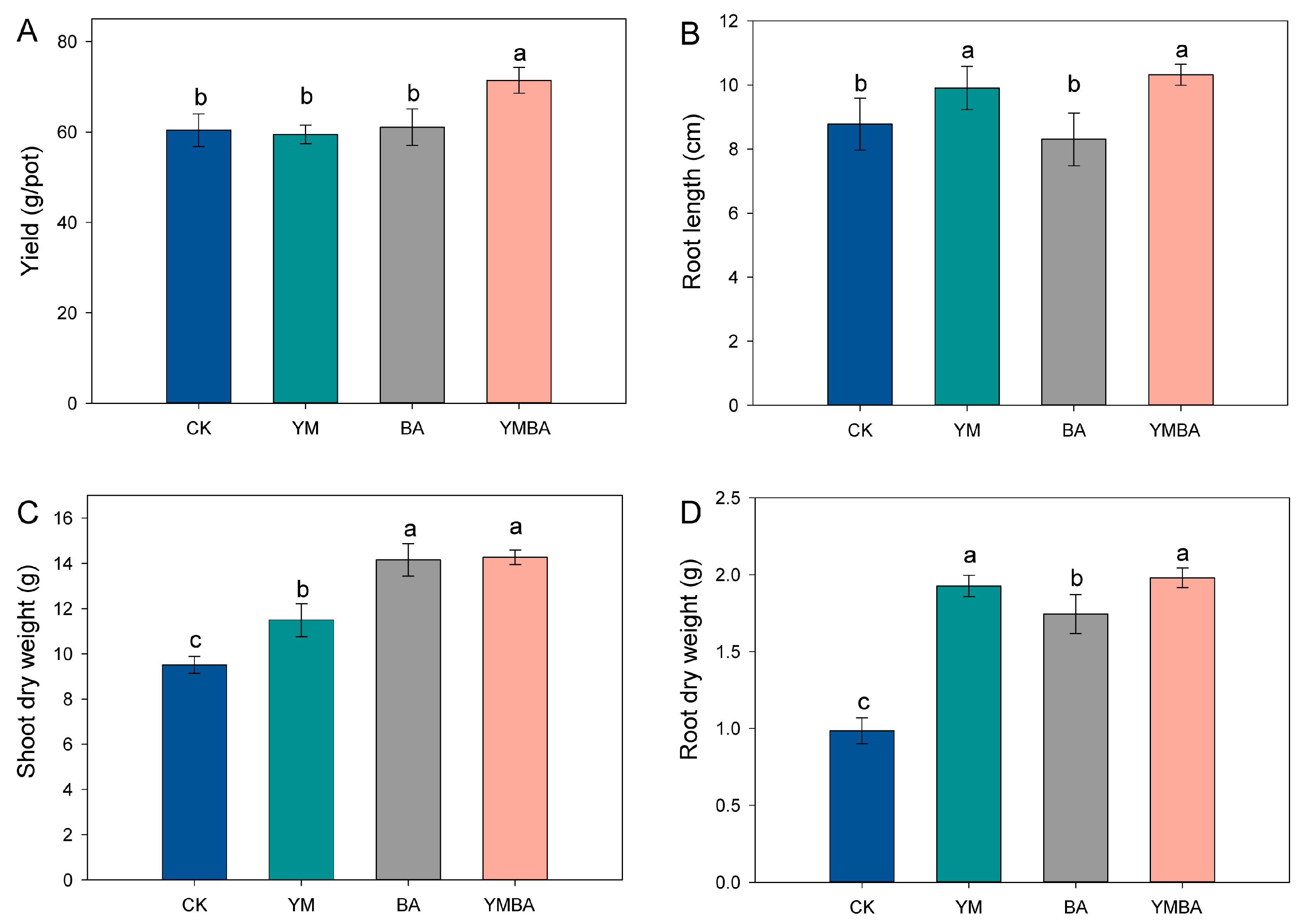
3.1. The Influences of Different Treatments on Plant Performance
3.2. The Influences of Different Treatments on Soil Physicochemical Properties
3.3. The Influences of Different Treatments on Soil Enzyme Activity
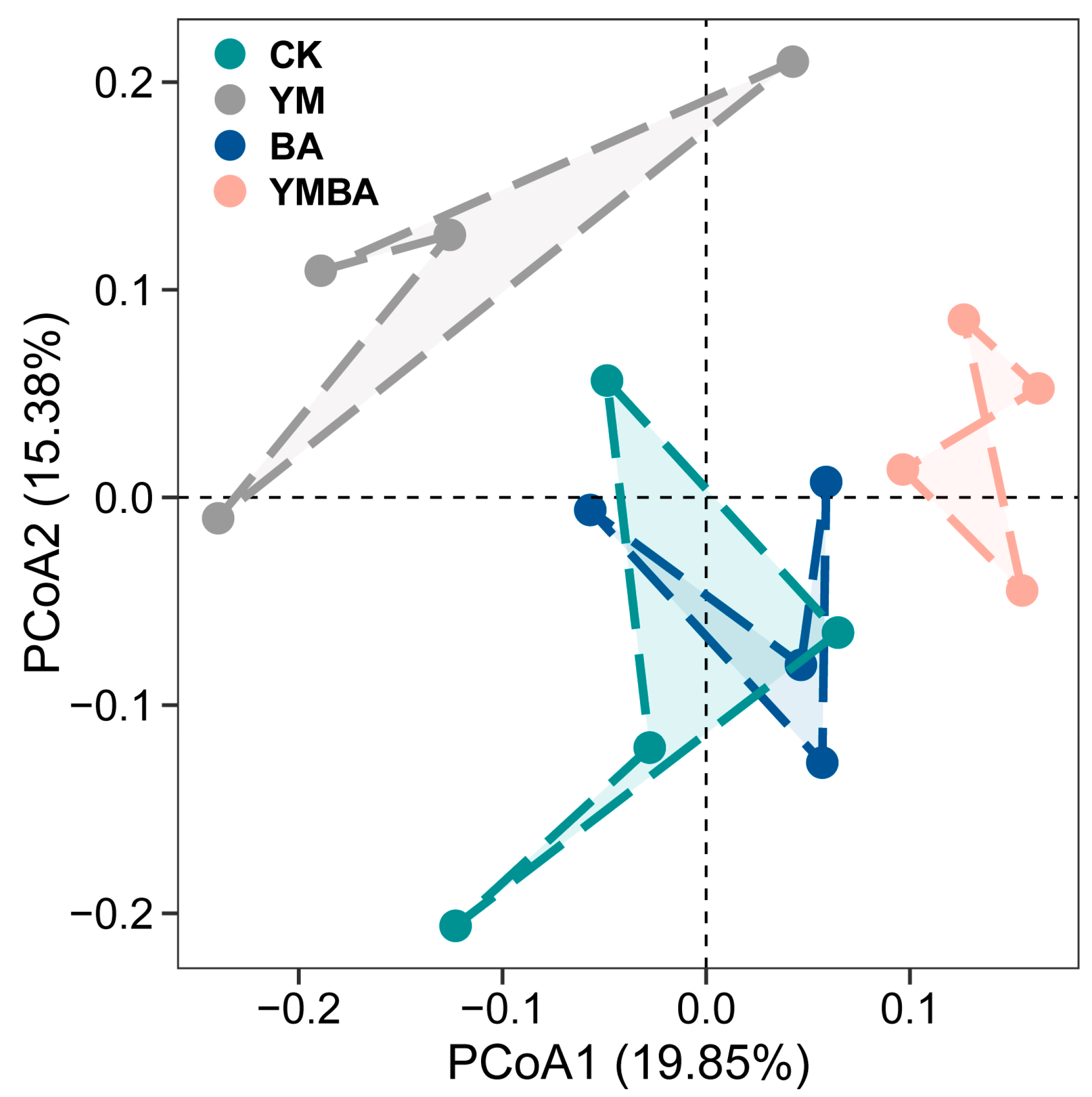
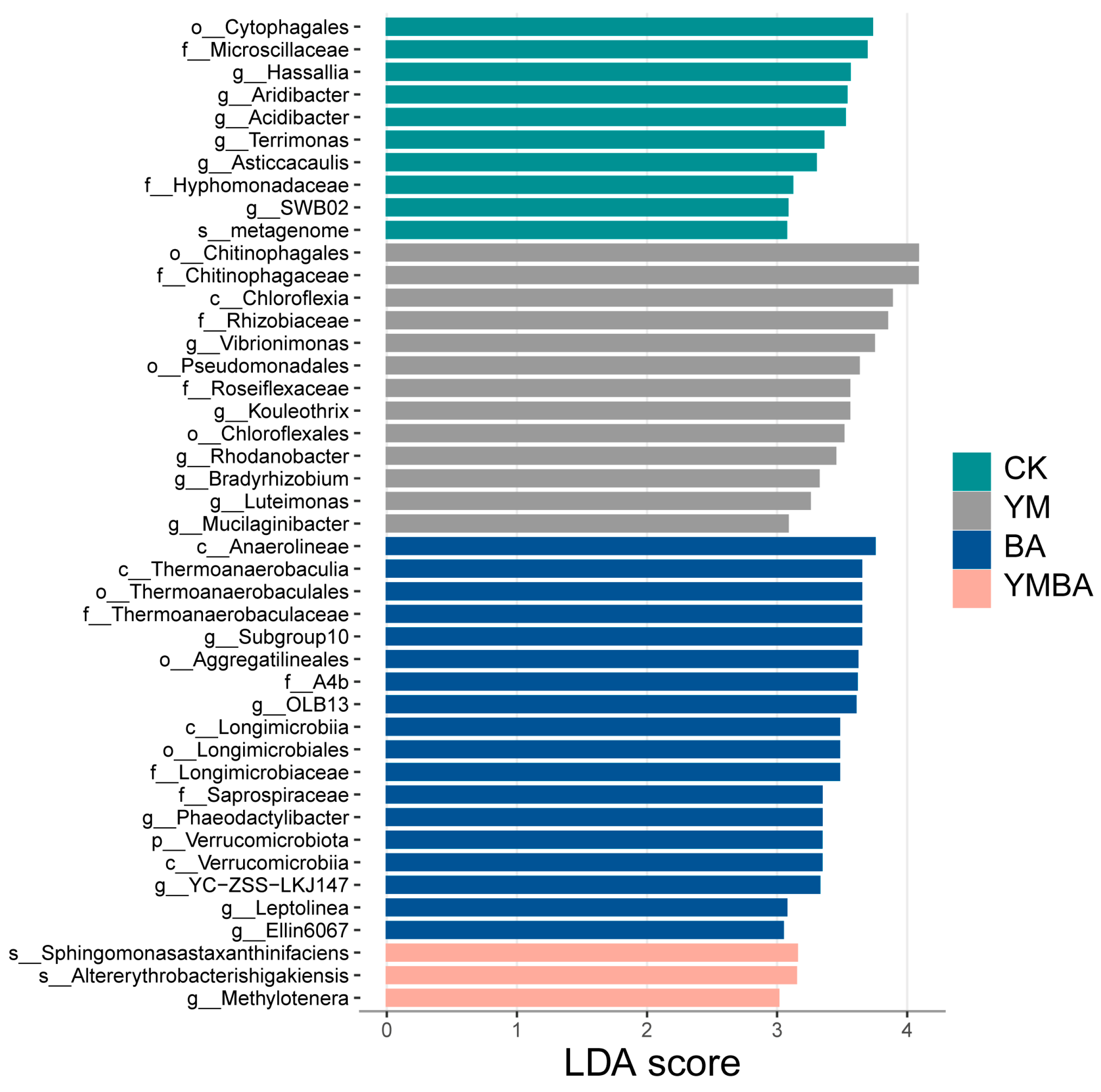
3.4. The Influences of Different Treatments on Bacterial Communities
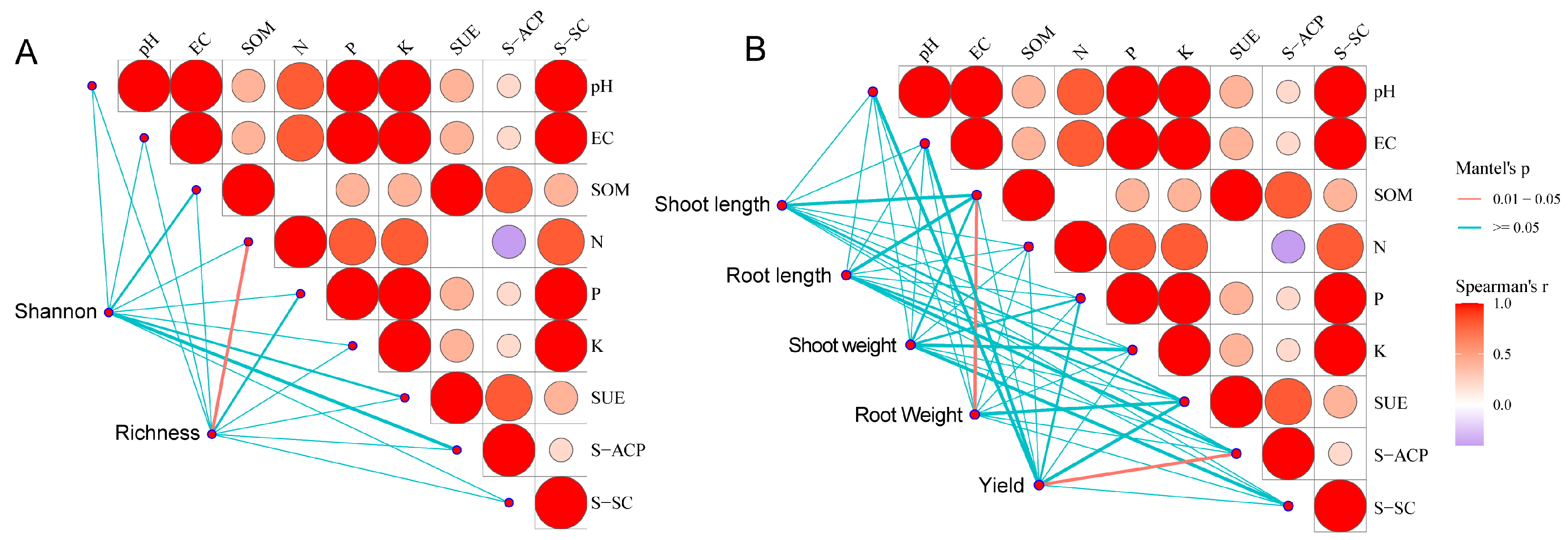
3.5. The Linkages Between Bacterial Abundance/Plant Performance and Soil Nutrients
4. Discussion
4.1. Combination of Biochar and PGPR Can Promote Plant Performance
4.2. Effects of Different Treatments on Soil Physicochemical Properties and Soil Enzyme Activity
4.3. Differences in Microbial Communities Among the Treatments
4.4. Linkages Between Soil Environmental Properties and α-Diversity or Plant Performance
5. Conclusions
Supplementary Materials
Author Contributions
Funding
Institutional Review Board Statement
Informed Consent Statement
Data Availability Statement
Conflicts of Interest
References
- Kloepper, J.; Schroth, M. Plant growth-promoting rhizobacteria and plant growth under gnotobiotic conditions. Phytopathology 1981, 71, 642–644. [Google Scholar] [CrossRef] [Scilit]
- Goswami, D.; Thakker, J.N.; Dhandhukia, P.C. Portraying mechanics of plant growth promoting rhizobacteria (PGPR): A review. Cogent Food Agric. 2016, 2, 1127500. [Google Scholar] [CrossRef] [Scilit]
- Hale, L.; Luth, M.; Kenney, R.; Crowley, D. Evaluation of pinewood biochar as a carrier of bacterial strain Enterobacter cloacae UW5 for soil inoculation. Appl. Soil Ecol. 2014, 84, 192–199. [Google Scholar] [CrossRef] [Scilit]
- Alzate Zuluaga, M.Y.; Fattorini, R.; Cesco, S.; Pii, Y. Plant-microbe interactions in the rhizosphere for smarter and more sustainable crop fertilization: The case of PGPR-based biofertilizers. Front. Microbiol. 2024, 15, 1440978. [Google Scholar] [CrossRef] [Scilit]
- Antal, M.J.; Grønli, M. The art, science, and technology of charcoal production. Ind. Eng. Chem. Res. 2003, 42, 1619–1640. [Google Scholar] [CrossRef] [Scilit]
- Zhao, J.; Jiang, Y.; Chen, X.; Wang, C.; Nan, H. Unlocking the potential of element-doped biochar: From tailored synthesis to multifunctional applications in environment and energy. Biochar 2025, 7, 77. [Google Scholar] [CrossRef] [Scilit]
- Atkinson, C.J.; Fitzgerald, J.D.; Hipps, N.A. Potential mechanisms for achieving agricultural benefits from biochar application to temperate soils: A review. Plant Soil 2010, 337, 1–18. [Google Scholar] [CrossRef] [Scilit]
- Ma, Z.; Yang, Y.; Ma, Q.; Zhou, H.; Luo, X.; Liu, X.; Wang, S. Evolution of the chemical composition, functional group, pore structure and crystallographic structure of bio-char from palm kernel shell pyrolysis under different temperatures. J. Anal. Appl. Pyrolysis 2017, 127, 350–359. [Google Scholar] [CrossRef] [Scilit]
- Saeed, M.; Ilyas, N.; Jayachandran, K.; Shabir, S.; Akhtar, N.; Shahzad, A.; Sayyed, R.; Bano, A. Advances in Biochar and PGPR engineering system for hydrocarbon degradation: A promising strategy for environmental remediation. Environ. Pollut. 2022, 305, 119282. [Google Scholar] [CrossRef] [Scilit]
- Ajeng, A.A.; Abdullah, R.; Ling, T.C. Biochar-Bacillus consortium for a sustainable agriculture: Physicochemical and soil stability analyses. Biochar 2023, 5, 17. [Google Scholar] [CrossRef] [Scilit]
- Yang, K.; Wang, X.; Hou, R.; Lu, C.; Fan, Z.; Li, J.; Wang, S.; Xu, Y.; Shen, Q.; Friman, V.; et al. Rhizosphere phage communities drive soil suppressiveness to bacterial wilt disease. Microbiome 2023, 11, 16. [Google Scholar] [CrossRef] [Scilit]
- Wang, L.; Du, Y.; Song, Y.; Yang, Y.; Zhou, Y.; Yuan, C. Effects of three rhizosphere growth-promoting bacterial strains on strawberry seedling growth. China Fruits 2025, 256, 56–62. (In Chinese) [Google Scholar] [CrossRef]
- Cui, W.; Li, R.; Fan, Z.; Wu, L.; Zhao, X.; Wei, G.; Shu, D. Weak environmental adaptation of rare phylotypes sustaining soil multi-element cycles in response to decades-long fertilization. Sci. Total Environ. 2023, 871, 162063. [Google Scholar] [CrossRef] [Scilit]
- Oksanen, J.; Blanchet, G.; Kindt, R.; Legendre, P.; O’Hara, R.B. vegan: Community Ecology Package, R package version 1.17-3; The Comprehensive R Archive Network (CRAN): Berkeley, CA, USA, 2010; Available online: https://vegandevs.github.io/vegan/ (accessed on 16 June 2025).
- Nawaz, F.; Rafeeq, R.; Majeed, S.; Ismail, M.S.; Ahsan, M.; Ahmad, K.S.; Akram, A.; Haider, G. Biochar amendment in combination with endophytic bacteria stimulates photosynthetic activity and antioxidant enzymes to improve soybean yield under drought stress. J. Soil Sci. Plant Nutr. 2023, 23, 746–760. [Google Scholar] [CrossRef] [Scilit]
- Hao, Z.; Zhang, S.; Shao, Y.; Pan, Z.; Meng, T.; Liu, T.; Yan, L. Preparation and inoculation of Bacillus spp. and Sinorhizobium meliloti strains immobilized on biochar-humic acid improve potted soybean traits and soil parameters. Environ. Technol. Innov. 2025, 38, 104210. [Google Scholar] [CrossRef] [Scilit]
- Valente, J.; Gerin, F.; Mini, A.; Richard, R.; Le Gouis, J.; Prigent-Combaret, C.; Moënne-Loccoz, Y. Symbiotic variations among wheat genotypes and detection of quantitative trait loci for molecular interaction with auxin-producing Azospirillum PGPR. Microorganisms 2023, 11, 1615. [Google Scholar] [CrossRef] [Scilit]
- Fanin, N.; Mooshammer, M.; Sauvadet, M.; Meng, C.; Alvarez, G.; Bernard, L.; Bertrand, I.; Blagodatskaya, E.; Bon, L.; Fontaine, S. Soil enzymes in response to climate warming: Mechanisms and feedbacks. Funct. Ecol. 2022, 36, 1378–1395. [Google Scholar] [CrossRef] [Scilit]
- El-Naggar, A.; El-Naggar, A.H.; Shaheen, S.M.; Sarkar, B.; Chang, S.X.; Tsang, D.C.; Jörg, R.; Ok, Y.S. Biochar composition-dependent impacts on soil nutrient release, carbon mineralization, and potential environmental risk: A review. J. Environ. Manag. 2019, 241, 458–467. [Google Scholar] [CrossRef] [Scilit] [PubMed]
- Luo, L.; Li, L.; Raza, A.; Zhao, C.; Pang, X.; Zhang, J.; Müller, C.; Yin, C. Organic fertilizer and Bacillus amyloliquefaciens promote soil N availability via changing different mineralization–immobilization turnover rates in acidic soils. Agric. Ecosyst. Environ. 2024, 366, 108950. [Google Scholar] [CrossRef] [Scilit]
- Wang, X.; Song, D.; Liang, G.; Zhang, Q.; Ai, C.; Zhou, W. Maize biochar addition rate influences soil enzyme activity and microbial community composition in a fluvo-aquic soil. Appl. Soil Ecol. 2015, 96, 265–272. [Google Scholar] [CrossRef] [Scilit]
- Ali, A.; Jabeen, N.; Chachar, Z.; Chachar, S.; Ahmed, S.; Ahmed, N.; Laghari, A.A.; Sahito, Z.A.; Farruhbek, R.; Yang, Z. The role of biochar in enhancing soil health & interactions with rhizosphere properties and enzyme activities in organic fertilizer substitution. Front. Plant Sci. 2025, 16, 1595208. [Google Scholar] [CrossRef] [Scilit]
- Jia, Z.; Li, C.; Zhang, S.; Tang, Y.; Ma, S.; Liu, X.; Zhang, J. Microbial inoculants modify the functions of soil microbes to optimize plant growth at abandoned mine sites. J. Environ. Sci. 2025, 154, 678–690. [Google Scholar] [CrossRef] [Scilit]
- Philippot, L.; Raaijmakers, J.; Lemanceau, P.; van der Putten, W.H. Going back to the roots: The microbial ecology of the rhizosphere. Nat. Rev. Microbiol. 2013, 11, 789–799. [Google Scholar] [CrossRef] [Scilit]
- Mendes, R.; Kruijt, M.; de Bruijn, I.; Dekkers, E.; van der Voort, M.; Schneider, J.H.M.; Piceno, Y.M.; DeSantis, T.Z.; Andersen, G.L.; Bakker, P.A.H.M.; et al. Deciphering the rhizosphere microbiome for disease-suppressive bacteria. Science 2011, 332, 1097–1100. [Google Scholar] [CrossRef] [Scilit]
- Wei, Z.; Gu, Y.; Friman, V.-P.; Kowalchuk, G.A.; Xu, Y.; Shen, Q.; Jousset, A. Initial soil microbiome composition and functioning predetermine future plant health. Sci. Adv. 2019, 5, eaaw0759. [Google Scholar] [CrossRef] [Scilit]
- Fierer, N.; Bradford, M.A.; Jackson, R.B. Toward an ecological classification of soil bacteria. Ecology 2007, 88, 1354–1364. [Google Scholar] [CrossRef] [Scilit]
- Lehmann, J.; Rillig, M.; Thies, J.; Masiello, C.; Hockaday, W.; Crowley, D. Biochar effects on soil biota—A review. Soil Biol. Biochem. 2011, 43, 1812–1836. [Google Scholar] [CrossRef] [Scilit]
- Zhang, D.; Yao, Z.; Chen, J.; Yao, P.; Zhao, N.; He, W.; Li, Y.; Zhang, S.; Zhai, B.; Wang, Z. Improving soil aggregation, aggregate-associated C and N, and enzyme activities by green manure crops in the Loess Plateau of China. Eur. J. Soil Sci. 2019, 70, 1267–1279. [Google Scholar] [CrossRef] [Scilit]
- Pawlowski, E.; Sobucki, L.; Barbosa, J.G.P.; Handte, V.G.; Vieira, I.B.; Brunetto, G.; de Carvalho Mendes, I.; Jacques, R.J.S. Relationships between yield, enzymatic activity, and chemical properties across different soil layers and phenological stages of grapevines in southern Brazil. Appl. Soil Ecol. 2024, 204, 105732. [Google Scholar] [CrossRef] [Scilit]
- Burns, R.G.; DeForest, J.L.; Marxsen, J.; Sinsabaugh, R.L.; Stromberger, M.E.; Wallenstein, M.D.; Weintraub, M.N.; Zoppini, A. Soil enzymes in a changing environment: Current knowledge and future directions. Soil Biol. Biochem. 2013, 58, 216–234. [Google Scholar] [CrossRef] [Scilit]
- Sasse, J.; Martinoia, E.; Northen, T. Feed your friends: Do plant exudates shape the root microbiome? Trends Plant Sci. 2018, 23, 25–41. [Google Scholar] [CrossRef] [Scilit] [PubMed]





| Treatment | EC (us cm−1) | pH | SOM (g kg−1) | AP (mg kg−1) | AK (mg kg−1) | AN (mg kg−1) |
|---|---|---|---|---|---|---|
| CK | 398 ± 19.22 c | 6.83 ± 0.05 b | 21.04 ± 5.68 c | 9.23 ± 0.31 b | 185.75 ± 5.68 b | 218.31 ± 11.19 b |
| YM | 390 ± 18.78 c | 6.82 ± 0.03 b | 43.67 ± 2.62 a | 8.09 ± 0.34 b | 184.25 ± 3.77 b | 257.25 ± 10.88 a |
| BA | 508.25 ± 21.17 b | 6.87 ± 0.04 b | 33 ± 5.59 b | 10.60 ± 0.30 a | 236.25 ± 3.30 a | 266.88 ± 4.97 a |
| YMBA | 710 ± 22.46 a | 6.95 ± 0.07 ab | 44.5 ± 2.57 a | 11.67 ± 1.40 a | 239 ± 5.35 a | 266 ± 8.57 a |
| Treatment | SUE (mg g−1d−1) | SACP (mg g−1d−1) | SSC (mg g−1d−1) |
|---|---|---|---|
| CK | 0.73 ± 0.03 c | 4.69 ± 0.39 b | 7.07 ± 0.80 a |
| YM | 0.86 ± 0.09 ab | 5.40 ± 0.21 a | 6.97 ± 0.05 a |
| BA | 0.81 ± 0.03 bc | 4.23 ± 0.35 b | 7.78 ± 0.68 a |
| YMBA | 0.96 ± 0.07 a | 5.87 ± 0.51 a | 7.91 ± 0.49 a |
Disclaimer/Publisher’s Note: The statements, opinions and data contained in all publications are solely those of the individual author(s) and contributor(s) and not of MDPI and/or the editor(s). MDPI and/or the editor(s) disclaim responsibility for any injury to people or property resulting from any ideas, methods, instructions or products referred to in the content. |
© 2026 by the authors. Licensee MDPI, Basel, Switzerland. This article is an open access article distributed under the terms and conditions of the Creative Commons Attribution (CC BY) license.
Share and Cite
Wang, L.; Tian, Y.; Jiang, J.; Yuan, C.; Du, Y.; Song, Y. Synergistic Integration of Maize Biochar and Bacillus amyloliquefaciens Modulates Rhizosphere Bacterial Communities and Enhances Tomato Yield. Microorganisms 2026, 14, 979. https://doi.org/10.3390/microorganisms14050979
Wang L, Tian Y, Jiang J, Yuan C, Du Y, Song Y. Synergistic Integration of Maize Biochar and Bacillus amyloliquefaciens Modulates Rhizosphere Bacterial Communities and Enhances Tomato Yield. Microorganisms. 2026; 14(5):979. https://doi.org/10.3390/microorganisms14050979
Chicago/Turabian StyleWang, Lin, Yuanfeng Tian, Jiandong Jiang, Cansheng Yuan, Yingchun Du, and Yuqi Song. 2026. "Synergistic Integration of Maize Biochar and Bacillus amyloliquefaciens Modulates Rhizosphere Bacterial Communities and Enhances Tomato Yield" Microorganisms 14, no. 5: 979. https://doi.org/10.3390/microorganisms14050979
APA StyleWang, L., Tian, Y., Jiang, J., Yuan, C., Du, Y., & Song, Y. (2026). Synergistic Integration of Maize Biochar and Bacillus amyloliquefaciens Modulates Rhizosphere Bacterial Communities and Enhances Tomato Yield. Microorganisms, 14(5), 979. https://doi.org/10.3390/microorganisms14050979