Article

Microbial-Mediated Differential Regulation of Yttrium Behavior in the Rhizosphere: Blocking Uptake in Lactuca sativa L. While Enhancing Bioavailability in Solanum nigrum L.


Jiangxi Provincial Key Laboratory of Biodiversity Conservation and Resource Utilization, College of Life Science, Jiangxi Normal University, Nanchang 330022, China
*
Author to whom correspondence should be addressed.
Microorganisms 2026, 14(5), 962; https://doi.org/10.3390/microorganisms14050962
Submission received: 10 March 2026 / Revised: 20 April 2026 / Accepted: 22 April 2026 / Published: 24 April 2026
(This article belongs to the Section Environmental Microbiology)

Abstract

To address yttrium (Y) contamination from ion adsorption mining, this study developed a combined microbial phytoremediation strategy for dual objectives: ensuring crop safety in Lactuca sativa and enhancing Y recovery by Solanum nigrum. Two specific microbial consortia were constructed from rare earth tailings isolates: inoculant I (bacterial: Enterobacter sp., Serratia sp., Bacillus sp.) applied to L. sativa, and inoculant II (fungal: Penicillium sp., Aspergillus sp., Talaromyces sp.) applied to S. nigrum. Inoculant I increased L. sativa biomass by 26% while reducing Y content in roots and rhizosphere soil solution by 47% and 56%, respectively, potentially through down-regulation of amino acid metabolites. Inoculant II increased Y content in the S. nigrum rhizosphere soil solution by 89%, linked to up-regulation of organic acids and coumarin derivatives. Both consortia reduced plant stress markers and enhanced soil enzyme activities. These findings demonstrate that specialized microbial consortia can differentially regulate Y behavior in the rhizosphere—immobilizing it in a crop for food safety, while enhancing its bioavailability for a hyperaccumulator—offering a targeted strategy for managing rare earth element-contaminated agricultural soils.

1. Introduction

Rare earth elements (REEs), which encompass the lanthanide series along with scandium and yttrium, are essential components in numerous modern technologies, including renewable energy systems, electronic devices, and defense applications [1]. China is the world’s leading producer and exporter of REEs, with ion adsorption rare earth deposits—predominantly located in seven southern provinces—being particularly important due to their enrichment in medium and heavy REEs such as yttrium. These deposits account for over 80% of global reserves [2]. However, extensive leaching mining over several decades has led to substantial releases of ammonium salts and REEs into surrounding ecosystems [3]. This contamination has been shown to significantly alter soil microbial community structures [4] and may pose health risks through food chain transfer, with potential hepatotoxic and neurotoxic effects documented [5]. Elevated REE concentrations in the environment thus represent both an ecological concern and a loss of valuable strategic resources [6]. Consequently, there is a need for effective and environmentally sustainable remediation approaches for REE-contaminated areas.
Phytoremediation has received increasing attention as a cost-effective and ecologically benign remediation strategy [7]. Two principal approaches have been developed: phytoextraction, which utilizes hyperaccumulator plants to recover REEs, and phytostabilization, which aims to limit crop uptake of these elements [8,9]. Plant growth-promoting rhizobacteria (PGPR) play a critical role in these processes by modifying rhizosphere conditions through the secretion of organic acids, phytohormones, and other bioactive metabolites [10,11]. Depending on the specific microbial strains and plant species involved, PGPR can either enhance plant REE accumulation [12] or suppress its uptake through distinct regulatory mechanisms [13]. Despite increasing recognition of their potential, the mechanisms by which PGPR mediate plant-REE interactions remain incompletely understood.
In this study, microbial strains previously isolated from ion adsorption rare earth tailings were selected. Based on comprehensive characterization of plant growth-promoting traits—including indole-3-acetic acid (IAA) production, siderophore biosynthesis, 1-aminocyclopropane-1-carboxylate (ACC) deaminase activity, and phosphate solubilization—two microbial consortia with distinct functional properties were constructed. Bacterial consortium I, consisting of three bacterial strains exhibiting favorable plant growth-promoting traits, was inoculated into Lactuca sativa L. in pot experiments to reduce REE accumulation in vegetable and ensure food safety. Fungal consortium II, comprising three fungal strains with strong plant growth-promoting characteristics and acid-producing capabilities, was inoculated into the hyperaccumulator Solanum nigrum L. to enhance REE phytoaccumulation and facilitate subsequent resource recovery. By analyzing yttrium accumulation patterns, plant and rhizosphere physicochemical properties, and changes in microbial community structure, this study sought to elucidate the differential effects and underlying mechanisms of these PGPR consortia on plant yttrium uptake. This work provides a foundation for the application of microbe–plant systems in REE resource recovery and environmental remediation.

2. Materials and Methods

2.1. Screening of Plant Growth-Promoting Rhizobacteria (PGPR)

A total of 128 microbial strains were isolated from rare earth tailings and evaluated for plant growth-promoting traits using multiple assays. Phosphate solubilization capacity was assessed by observing halo zones on Mengjina inorganic and organic phosphorus media. Siderophore production was determined using Chrome Azurol S (CAS) agar plates. Indole-3-acetic acid (IAA) production was assessed via the Salkowski colorimetric method [14]. ACC deaminase activity was evaluated by culturing strains on DF/ADF media and monitoring bacterial growth curves [15]. Based on comprehensive evaluation of these plant growth-promoting traits, six strains exhibiting superior characteristics were selected as candidate PGPR. Molecular identification at the genus level was performed through 16S rRNA gene (for bacteria) and ITS region (for fungi) amplification and sequencing, followed by BLASTn (https://blast.ncbi.nlm.nih.gov/, accessed on 21 April 2026) homology analysis.

2.2. Preparation of Soil Substrate, Organic Fertilizer, Seedlings, and Microbial Consortia

Soil substrate: A mixture comprising 1.5 kg of uncontaminated forest soil, 0.5 kg of river sand, 5 mL of 100 mg·mL−1 yttrium solution (resulting in a final soil yttrium concentration of 250 mg·kg−1), and 40 g of organic fertilizer was thoroughly homogenized and sterilized by autoclaving at 121 °C for 1 h.
Seedlings: Plant seeds were surface-sterilized and germinated in quartz sand, alternately irrigated with Hoagland nutrient solution and sterile water.
Microbial consortia: Two distinct microbial consortia were prepared from the selected strains. For bacterial consortium I, bacterial strains were cultured overnight in Luria–Bertani (LB) medium with shaking, harvested by centrifugation, washed, and resuspended in sterile water to adjust the optical density at 600 nm (OD600) to 1.0 (approximately 108 CFU·mL−1). Equal volumes (20 mL) of each bacterial suspension were mixed to obtain consortium I. For fungal consortium II, spores of strains 27, 32, and 33 were collected by adding sterile water to solid potato dextrose agar (PDA) plates and scraping with a spreader. The spore suspension was adjusted to a concentration of 108 spores·mL−1 using a hemocytometer, and equal volumes (20 mL) of each spore suspension were mixed to obtain consortium II [16].

2.3. Pot Experiment and Soil Solution Collection

Four treatment groups were established: lettuce control (LCK), lettuce with consortium I (LM), Solanum nigrum control (SCK), and S. nigrum with consortium II (SM). Each pot was filled with one unit of the prepared soil substrate. Two uniform seedlings were transplanted into each pot, with five replicate pots per treatment. Plants in the treatment groups received 60 mL of the respective microbial consortium inoculated into the rhizosphere weekly, while control plants received an equal volume of sterile water. Plants were cultivated under controlled conditions with a 16/8 h light/dark photoperiod and day/night temperatures of 28/22 °C. After 45 d, plants were harvested for subsequent analyses, including collection of rhizosphere soil, roots, and leaves.
Prior to harvest, soil moisture content was equalized across all pots. Rhizosphere soil solution was collected using soil solution samplers (Rhizosphere, Rhizon-MOM, Wageningen, The Netherlands). Sampler tips were moistened for 5 s, inserted into the soil at an angle, and connected to a syringe. A vacuum was created by pulling the syringe plunger and maintained with a wooden block to draw pore water. After approximately 30 min, the accumulated solution was collected. A 10 mL aliquot was acidified with 0.1 mL nitric acid, filtered through a 0.45 μm membrane, and stored at 4 °C for subsequent analysis.

2.4. Analysis of Plant Biomass, Yttrium Accumulation, and Physicochemical Properties

Plant fresh and dry weights were recorded. For oxidative stress assessment, fresh leaf samples were collected at harvest, immediately frozen in liquid nitrogen, and stored at −80 °C until analysis. Frozen leaf tissues (0.2 g) were ground to a fine powder in liquid nitrogen using a pre-chilled mortar and pestle, then homogenized in 2 mL of pre-cooled phosphate buffer (0.1 M, pH 7.4). The homogenate was centrifuged at 4000× g for 15 min at 4 °C, and the supernatant was used for the determination of proline (Pro) and malondialdehyde (MDA) contents, as well as catalase (CAT), superoxide dismutase (SOD), and peroxidase (POD) activities according to established methods [17], using commercial assay kits (Solarbio, Beijing, China: BC0290 for Pro, BC0020 for MDA, BC0200 for CAT, and BC0170 for SOD) according to the manufacturer’s protocols.
For rhizosphere soil enzyme assays, fresh soil samples were air-dried naturally, passed through a 2-mm sieve, and stored at 4 °C for no more than one week prior to analysis. Soil catalase (S-CAT), soil urease (S-UE), and soil acid phosphatase (S-ACP) were measured using corresponding Solarbio kits (BC0100, BC0125, and BC0145, respectively) following the manufacturer’s instructions. Enzyme activities were expressed as units per gram of soil (U·g−1) [18].
For yttrium concentration analysis in plant tissues, accurately weighed 0.2 g of dried, ground, and well-mixed samples were digested with HNO3-H2O2 8:1, v/v in a microwave digestion system following a programmed procedure: 150 °C for 2 min, 170 °C for 2 min, and 190 °C for 30 min [19]. Yttrium concentrations in the digested solutions were analyzed by inductively coupled plasma mass spectrometry (ICP-MS). Differences in biomass, yttrium content, enzyme activities, and physicochemical properties were analyzed using SPSS (version 20.0) with least significant difference (LSD) tests at significance levels of p < 0.05 and p < 0.01.

2.5. Microbial Community Analysis

Soil microbial DNA was extracted using the cetyltrimethylammonium bromide (CTAB)/sodium dodecyl sulfate (SDS) method. Following quality assessment by agarose gel electrophoresis, DNA samples were diluted to 1 ng·μL−1. Target regions were amplified by PCR using high-fidelity DNA polymerase, and high-throughput sequencing was performed on the NovaSeq 6000 platform (Novogene, Beijing, China). After quality filtering, sequencing data were clustered into operational taxonomic units (OTUs) at 97% sequence similarity using UPARSE (v7.0.1090). Representative sequences were taxonomically annotated against the SILVA database.
All subsequent statistical analyses were performed in R (version 4.3.3). Microbial community diversity and structure were evaluated using alpha diversity indices (Chao1 and Shannon) and principal coordinate analysis (PCoA) based on Bray–Curtis distances. To identify key microbial taxa, two complementary approaches were employed. First, Student’s t-test was used to compare the relative abundances of each genus between inoculated and control groups, with taxa exhibiting p < 0.05 considered significantly different. Second, based on genus-level abundance tables aggregated from non-rarefied OTU tables, random forest classification models were constructed using the classif.ranger() function from the mlr3 package (version 0.22.0). Nested stratified cross-validation was applied to identify microbial biomarkers contributing significantly to discrimination between groups. Finally, to examine associations between microbes and environmental factors, Spearman’s rank correlation analysis was conducted between the relative abundances of identified differential taxa and simultaneously measured soil physicochemical properties.

2.6. Non-Targeted Metabolomic Analysis of Rhizosphere Soil

Non-targeted metabolomic profiling of rhizosphere soil samples from inoculated and control groups was performed using ultra-performance liquid chromatography-tandem mass spectrometry (UPLC-MS/MS). Freeze-dried soil samples were extracted with pre-cooled extraction solvent (methanol-acetonitrile-water, 2:2:1, v/v/v), vortexed, sonicated at low temperature, and centrifuged. The supernatants were filtered through membranes prior to analysis. Chromatographic separation was achieved on an ACQUITY UPLC BEH C18 column (2.1 mm × 100 mm, 1.7 μm) maintained at 40 °C, with gradient elution using 0.1% formic acid in water and 0.1% formic acid in acetonitrile as mobile phases. Mass spectrometric data were acquired in both positive and negative ion modes using an electrospray ionization (ESI) source.
Raw mass spectrometry data were converted using ProteoWizard (v3.0) software, and peak detection, alignment, and extraction were performed using the XCMS (v4.4.0) software package. Metabolites were identified by matching against databases including HMDB, MassBank, and METLIN. Following data preprocessing, statistical analyses were conducted: Student’s t-test (p < 0.05) combined with fold change criteria (|log2FC| > 1) was used to screen for differentially abundant metabolites between groups. Identified metabolites were annotated using the KEGG database, and their compositional characteristics were visualized using circular plots according to metabolite classes. Spearman’s rank correlation analysis was performed to explore relationships between relative abundances of differential metabolites and environmental factors. Additionally, scatter plots were generated to display the log2FC distribution of differential metabolites across compound classes, and bar plots were used to visualize the top 20 metabolites ranked by fold change.

3. Results

3.1. Selection of Microbial Consortia I and II

Based on comprehensive evaluation of plant growth-promoting traits, three bacterial strains—Enterobacter sp. 2, Serratia sp. 14, and Bacillus sp. 16—were selected to formulate bacterial consortium I for inoculation into Lactuca sativa. Among these, Enterobacter sp. 2 exhibited strong indole-3-acetic acid (IAA) production capacity, while Serratia sp. 14 demonstrated excellent phosphate solubilization, siderophore production, and IAA biosynthesis. Both Enterobacter sp. 2 and Bacillus sp. 16 showed ACC deaminase activity and moderate siderophore-producing capability (Supplementary Figure S1). For fungal consortium II, three fungal strains—Penicillium sp. 27, Aspergillus sp. 32, and Talaromyces sp. 33—were selected for inoculation into S. nigrum. Both Penicillium sp. 27 and Talaromyces sp. 33 exhibited pronounced inorganic and organic phosphate solubilization activities, whereas Aspergillus sp. 32 showed the lowest fermentation broth pH among all fungal strains evaluated (Supplementary Figure S1, Supplementary Table S1).

3.2. Effects of Microbial Consortia on Biomass and Yttrium Accumulation in L. sativa and S. nigrum

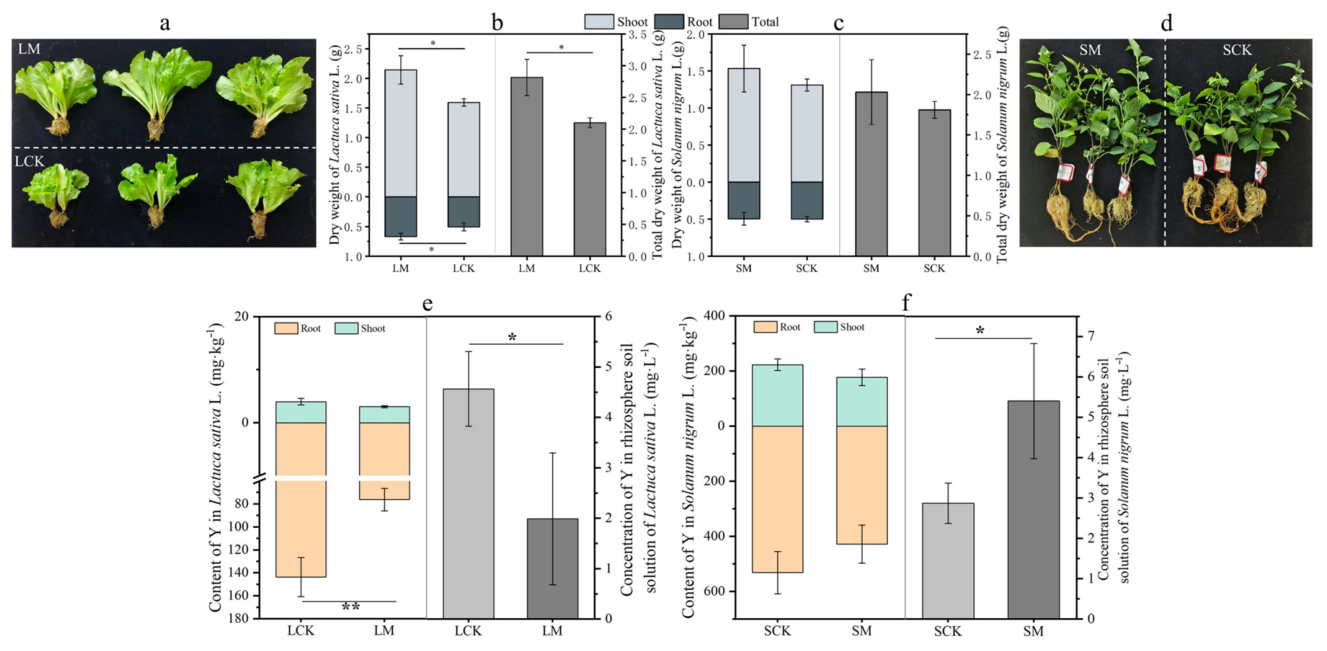
Biomass measurements revealed that inoculation with bacterial consortium I significantly increased the shoot dry weight and total dry weight of L. sativa by 33% and 26%, respectively (Figure 1a,b). In contrast, no significant differences in either fresh or dry weight were observed between S. nigrum plants inoculated with fungal consortium II and their non-inoculated controls (Figure 1c,d).
Analysis of yttrium concentrations in plant roots and leaves, as well as in rhizosphere soil solutions, revealed markedly distinct regulatory patterns of the two microbial consortia on plant–yttrium interactions. Inoculation with consortium I significantly reduced yttrium content in L. sativa roots (by 47%, p < 0.01) and in the rhizosphere soil solution (by 56%, p < 0.05), while no significant effect was observed in aboveground tissues (Figure 1e). This finding suggests that consortium I may inhibit plant yttrium accumulation through modulation of yttrium bioavailability and regulation of uptake and transport systems. In striking contrast, inoculation with consortium II significantly increased yttrium concentration in the rhizosphere soil solution of S. nigrum by 89% (p < 0.05), yet this was not accompanied by a corresponding increase in plant tissue yttrium content (Figure 1f). This observation implies that while consortium II effectively mobilizes soil yttrium, the plants may simultaneously induce tolerance mechanisms to maintain yttrium homeostasis.

3.3. Effects of Microbial Consortia on Plant Stress Responses and Rhizosphere Soil Physicochemical Properties

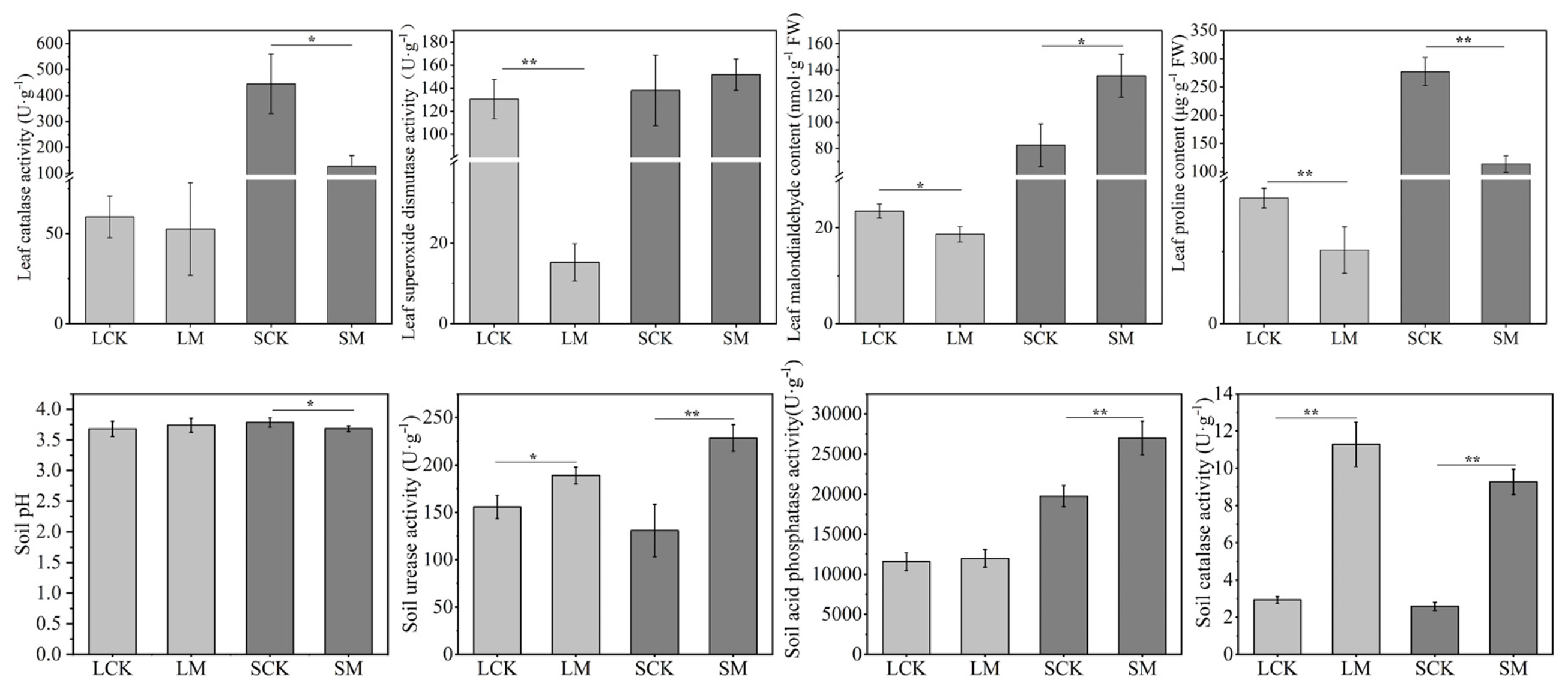
Physiological indicator analysis revealed that both microbial consortia significantly alleviated stress in the host plants. Following inoculation with consortium I, L. sativa exhibited marked reductions in proline and MDA contents by 41% and 21%, respectively, accompanied by an 88% decrease in SOD activity (Figure 2). In S. nigrum inoculated with consortium II, proline content and CAT activity decreased by 59% and 72%, respectively (Figure 2). The substantial declines in osmoregulatory substances, oxidative damage markers, and antioxidant enzyme activities in both plant species indicate that the microbial consortia effectively mitigated rare earth element-induced stress.
Analysis of soil enzyme activities demonstrated that both consortia significantly enhanced rhizosphere microenvironment functionality. Inoculation with consortium I increased soil catalase and urease activities in the L. sativa rhizosphere by 285.32% and 21.40%, respectively (Figure 2). These enzymatic changes suggest that the bacterial consortium modulated key metabolic enzyme systems, thereby improving rhizosphere nutrient cycling and stress defense functions, ultimately creating a more favorable rhizosphere environment for plant growth. For S. nigrum, inoculation with consortium II reduced rhizosphere soil pH by 2.70%, a phenomenon potentially attributable to the acid-producing capability of Aspergillus sp. 32. Concurrently, significant enhancements were observed in soil catalase (259.69%), acid phosphatase (37.22%), and urease (74.62%) activities (Figure 2). Elevated catalase activity contributes to reactive oxygen species scavenging, thereby alleviating oxidative stress [20]; increased acid phosphatase facilitates organic phosphorus mineralization [21]; and enhanced urease activity promotes nitrogen cycling [22].

3.4. Effects of Microbial Consortia on Rhizosphere Soil Microbial Communities

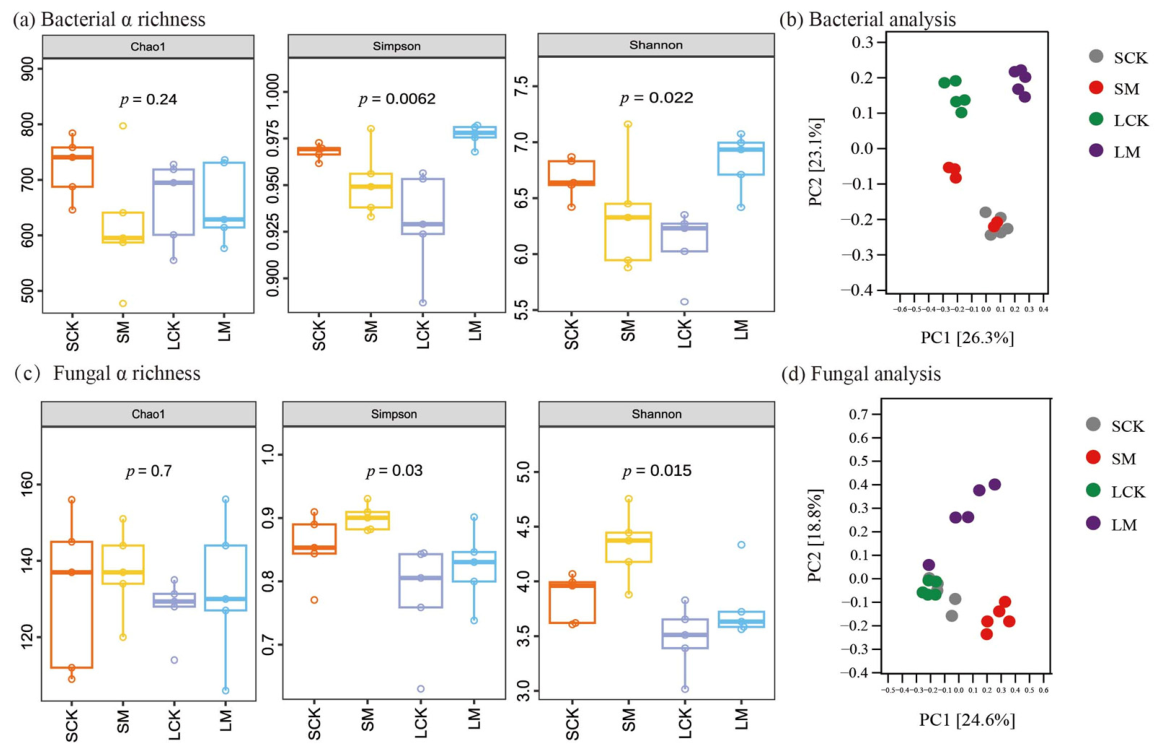
Through comprehensive analysis of soil microbial community diversity, this study systematically evaluated the regulatory effects of consortia I and II on the rhizosphere microecology of L. sativa and S. nigrum, respectively. The results revealed distinct impacts of the different treatments on bacterial and fungal communities (Supplementary Figure S2). Alpha diversity analysis indicated that although no significant differences were observed in the Chao1 index for either bacterial or fungal communities across treatment groups (Figure 3a,c), microbial diversity exhibited consortium-specific regulatory patterns. Specifically, the bacterial diversity indices (Simpson and Shannon) were significantly higher in the L. sativa rhizosphere following inoculation with consortium I (LM) compared to the non-inoculated control (LCK). In contrast, fungal diversity indices were significantly elevated in the S. nigrum rhizosphere upon inoculation with consortium II (SM) relative to its control (SCK). These findings demonstrate that the microbial consortia effectively enhanced species evenness and ecological diversity within the rhizosphere microbial communities.
Principal coordinate analysis (PCoA) based on Bray–Curtis distances revealed clear separations between LCK and LM for bacterial communities, as well as between SCK and SM for fungal communities (Figure 3b,d). These distinct clusterings indicate that consortia I and II specifically modulated the bacterial community in the L. sativa rhizosphere and the fungal community in the S. nigrum rhizosphere, respectively.

3.5. Consortium I Modulates Rhizosphere Bacterial Community Structure and Enriches Functional Microbes to Promote L. sativa Growth

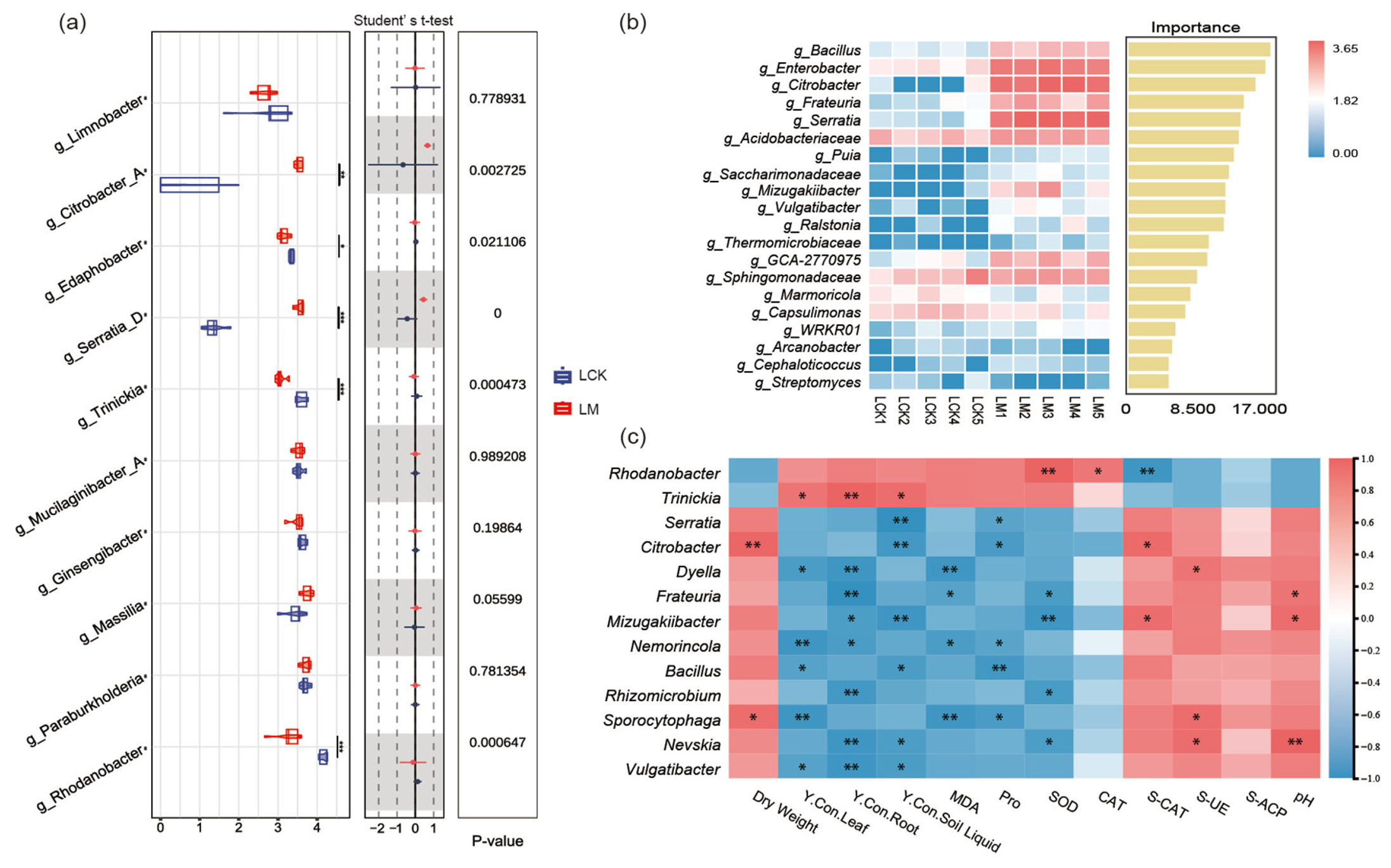
Differential abundance analysis revealed that the relative abundances of Citrobacter and Serratia were significantly higher in the rhizosphere of inoculated L. sativa (LM) compared to the control (LCK) (Figure 4a). This finding indicates successful rhizosphere colonization by Serratia sp. 14 from the inoculated consortium.
Random forest analysis identified Bacillus, Enterobacteriaceae, Citrobacter, and Serratia as significant biomarkers in the rhizosphere soil of the inoculated group (LM) (Figure 4b). The emergence of these taxa as prominent biomarkers likely stems from the pivotal roles played by the three bacterial strains constituting consortium I, which collectively shaped the distinctive rhizosphere microbial community structure and thereby attained biomarker status.
Correlation analysis revealed that Citrobacter and Sporocytophaga exhibited significant positive correlations with plant dry weight and soil enzyme activities, while Serratia and Citrobacter showed positive associations with reduced yttrium concentrations in the rhizosphere soil solution (Figure 4c). These findings suggest that these genera may fulfill specific functional roles within the plant–soil system.
Notably, the microbial taxa showing significant positive correlations with plant dry weight were not the inoculated strains themselves, but rather Citrobacter and Sporocytophaga. Citrobacter, a recognized rhizosphere growth-promoting bacterium, may contribute through direct mechanisms including nitrogen fixation, phosphate solubilization, or phytohormone production [23,24]. Sporocytophaga, a cellulose-decomposing bacterium [25,26,27], suggests the involvement of indirect growth-promoting mechanisms: by degrading cellulose in the rhizosphere soil, this genus may improve soil structure and nutrient availability, thereby facilitating L. sativa growth. Collectively, these observations indicate that inoculation with consortium I may promote plant growth not solely through direct effects of the introduced strains, but also by modulating the rhizosphere microbial community to enrich indigenous populations with specific functional attributes.

3.6. Metabolite-Mediated Reduction of Yttrium Mobility and Plant Uptake by Consortium I in L. sativa

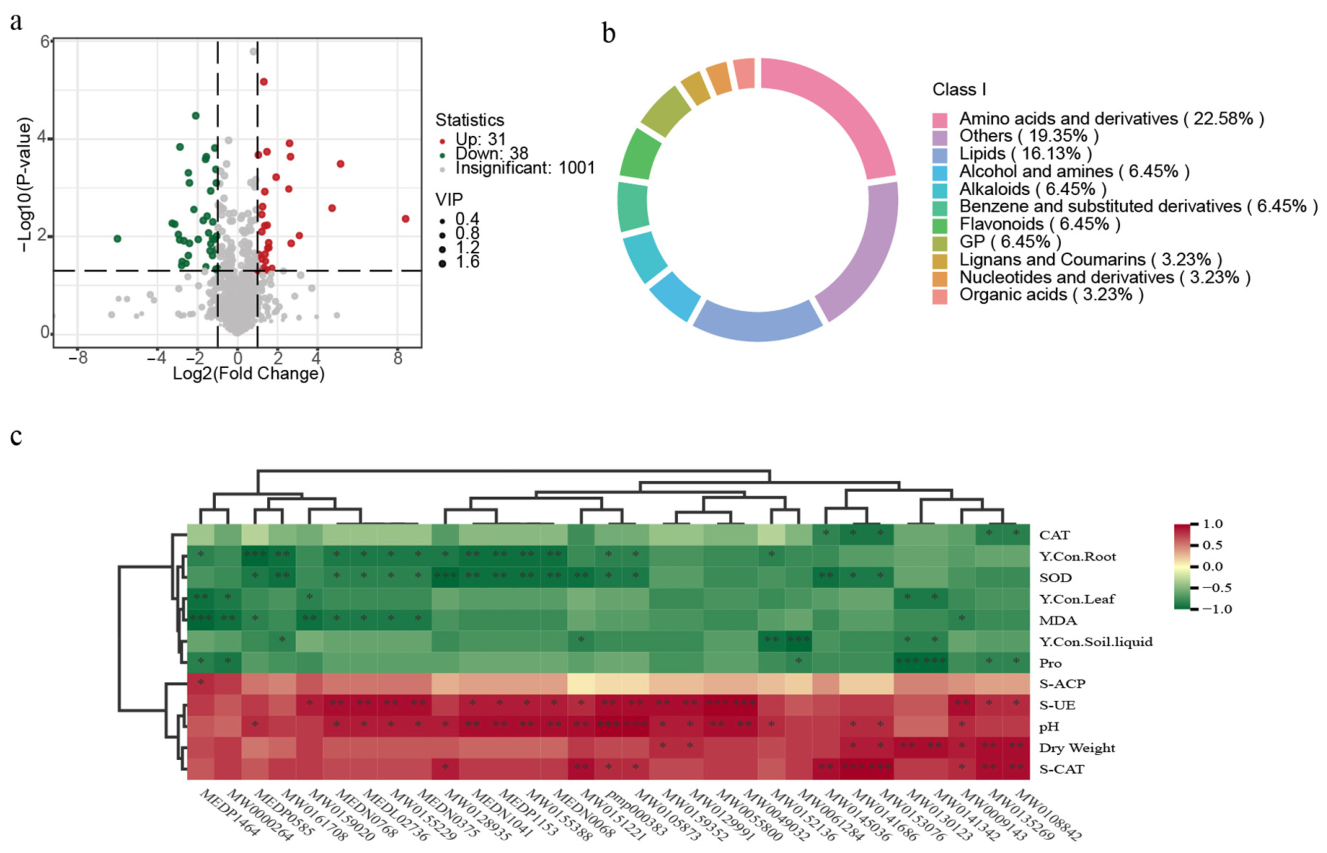
Non-targeted metabolomic analysis revealed that inoculation with consortium I induced significant alterations in the rhizosphere metabolic profile of L. sativa. A total of 69 differentially abundant metabolites were identified in the rhizosphere soil of the inoculated group compared to the control, comprising 31 upregulated and 38 downregulated metabolites, while 1001 metabolites showed no significant changes (Figure 5a). These differential metabolites were primarily classified into amino acids and their derivatives, fatty acids, and other compound categories (Figure 5b).
Correlation analysis demonstrated that among the upregulated metabolites, laserpitin (MW0152136) and phosphatidylglycerol PG (a-13:0/i-12:0) (MW0061284) exhibited highly significant negative correlations with yttrium concentration in the rhizosphere soil solution. Additionally, deoxyuridine-phosphate (MW0161708), the dipeptide H-Phe-Phe-OH (MW0151221), dihydroquercetin (MW0130123), and croton factor F1 (MW0141342) showed significant negative correlations with rhizosphere solution yttrium levels (Figure 5c). These metabolites, which were substantially enriched in the inoculated group, may coordinately participate in the immobilization or transformation of yttrium ions within the rhizosphere solution, thereby contributing to the observed reduction in yttrium concentration.
Furthermore, yttrium accumulation in L. sativa roots exhibited a highly significant negative correlation with octadecatetraenoic acid (MEDP0585), and significant negative correlations with deoxyuridine-phosphate (MW0161708), octadecatrienoic acid (MEDN1041), tetracosatetraenoic acid (MEDP1153), the amino acid derivative Phe-Tyr-Lys-Arg (MW0155388), and homocysteine (MEDN0068) (Figure 5c). These significantly enriched rhizosphere metabolites—particularly unsaturated fatty acids (e.g., octadecatetraenoic acid, tetracosatetraenoic acid), sulfur-containing amino acids (e.g., homocysteine), and deoxyuridine-phosphate—may serve as effective organic ligands. Through their functional groups, including carboxyl, sulfhydryl, and phosphate moieties, these compounds can undergo complexation reactions with yttrium ions (Y3+), potentially forming stable metal–organic complexes [28,29,30,31]. This process may immobilize yttrium ions onto rhizosphere soil particles or root surfaces, or facilitate their transformation into less bioavailable forms (such as insoluble phosphate precipitates), thereby substantially reducing yttrium mobility and phytoavailability in the rhizosphere solution [32,33,34,35]. Consequently, this mechanism ultimately suppresses yttrium migration and accumulation from the rhizosphere into plant roots and aboveground tissues.

3.7. Rhizosphere Metabolic Reprogramming Induced by the Two Microbial Consortia

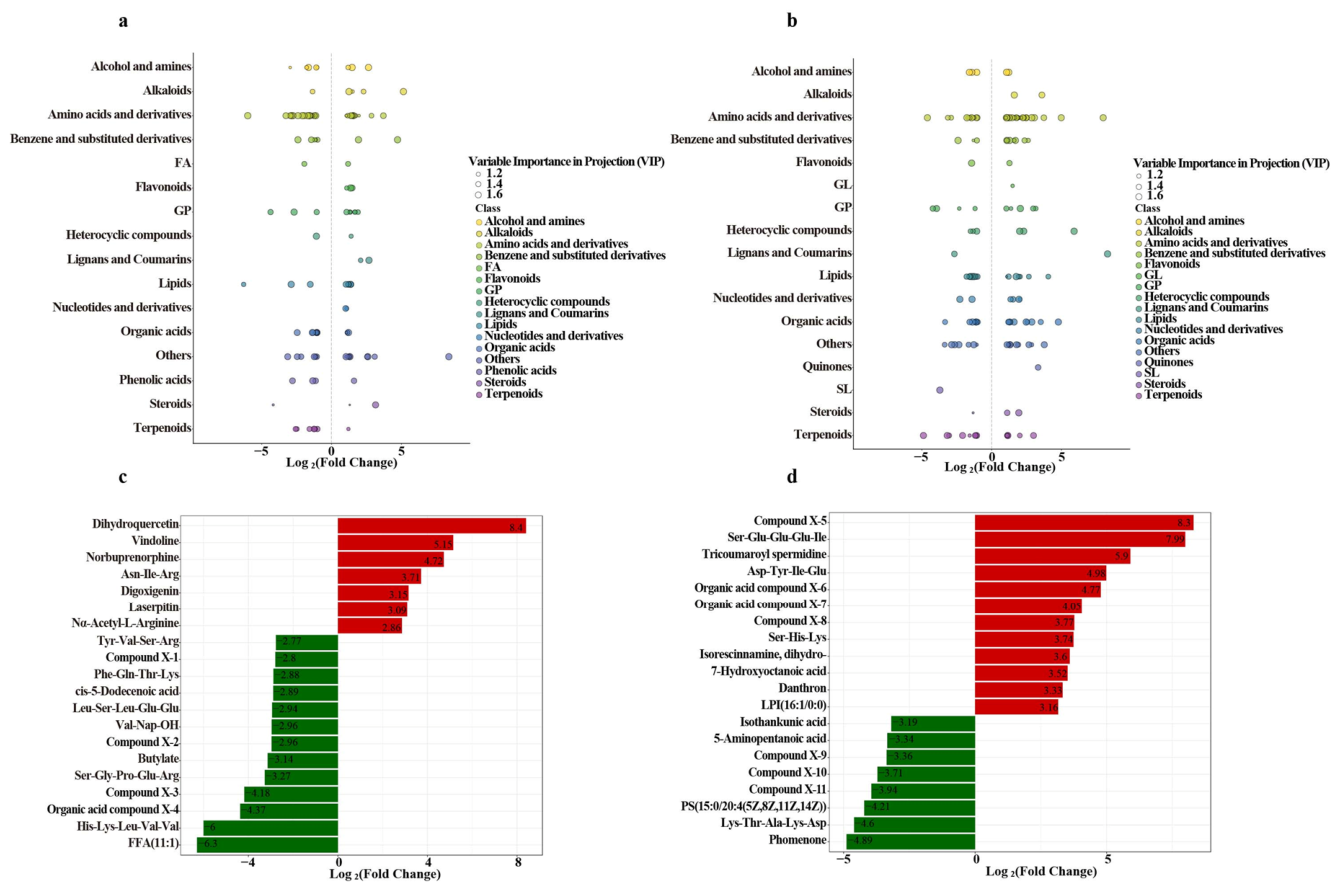
Non-targeted metabolomic analysis was performed on rhizosphere samples of L. sativa and S. nigrum following inoculation with their respective consortia (Figure 6a,b). In the L. sativa rhizosphere, consortium I upregulated flavonoids and alkaloids, and downregulated amino acids and their derivatives, organic acids, and fatty acids (Figure 6a,c). In the S. nigrum rhizosphere, consortium II upregulated amino acids and their derivatives, organic acids, lignans, and coumarins (Figure 6b,d). As shown in Table 1, the majority of differentially expressed amino acids (e.g., Ser-His-Lys, Trp-Ala-Phe) and organic acids (e.g., sulfonated derivatives, 3-hydroxydecanoic acid) in the S. nigrum rhizosphere were upregulated following consortium II inoculation.

4. Discussion

4.1. Microbial Consortia Alleviate Plant Stress and Influence Growth Through Divergent Pathways

Consortia I and II effectively mitigated rare earth element-induced stress in L. sativa and S. nigrum, respectively, yet their effects on plant growth exhibited contrasting patterns. In L. sativa, inoculation with consortium I significantly reduced leaf proline and malondialdehyde contents (by 41% and 21%, respectively), indicating effective alleviation of physiological stress, concomitantly with a 26% increase in biomass. This growth promotion likely arose from two synergistic factors: direct plant growth-promoting activities of the inoculated strains (e.g., IAA production, ACC deaminase activity, phosphate solubilization, siderophore production), and the reshaping of rhizosphere bacterial communities by consortium I, which enriched indigenous functional taxa such as Citrobacter and Sporocytophaga. These taxa, identified as key biomarkers by random forest analysis and exhibiting significant positive correlations with plant dry weight, may promote growth indirectly through mechanisms including cellulose decomposition, soil structure improvement, or nutrient mobilization [36,37]. Collectively, these findings elucidate a multifaceted growth-promoting pathway whereby inoculation with consortium I not only provides direct beneficial effects through the introduced strains but also modulates the indigenous microbial community to enrich functional taxa that further contribute to plant growth.
In contrast, although fungal consortium II similarly alleviated oxidative stress in S. nigrum (evidenced by a 59% reduction in proline content), it did not significantly enhance biomass. This discrepancy likely stems from differences in consortium composition and the inherent biological characteristics of the constituent strains. Consortium I comprises three bacterial strains with well-characterized plant growth-promoting traits (e.g., IAA production, ACC deaminase activity, phosphate solubilization, siderophore production), rendering its mechanisms inherently predisposed toward direct growth promotion and stress alleviation. Conversely, the fungal strains in consortium II exhibited few typical plant growth-promoting features. With the exception of phosphate solubilization capacities displayed by Penicillium sp. 27 and Talaromyces sp. 33, these strains lacked other common plant growth-promoting traits. Their most pronounced characteristic was instead the strongly acidic nature of their fermentation broths. Consequently, the primary influence of consortium II on plants may be mediated through metabolic activities (such as acid production) that substantially alter the rhizosphere chemical environment, rather than through direct stimulation of plant growth. This fundamental distinction in rhizosphere interaction modes aligns with the divergent design objectives of the two consortia: consortium I was intended to promote growth while immobilizing yttrium in the rhizosphere, whereas consortium II was designed to mobilize the rhizosphere metal pool.

4.2. Directional Remodeling of Rhizosphere Microbial Communities and Metabolic Networks

The present study revealed that the two microbial consortia differentially modulated the rhizosphere microflora of their respective host plants, providing the ecological basis for their functional divergence. Bacterial consortium I primarily altered the bacterial community structure in the L. sativa rhizosphere (as evidenced by significant separation in PCoA analysis) and enriched biomarker genera including Enterobacter and Serratia. In contrast, fungal consortium II significantly enhanced fungal diversity (as indicated by increased Shannon index) and reshaped the fungal community structure in the S. nigrum rhizosphere. This inoculant-type-specific regulation, whereby bacterial consortium I predominantly influenced bacterial communities and fungal consortium II targeted fungal communities, may be attributable to the inherent characteristics of the inoculants themselves, as well as the distinct microecological niche preferences associated with different plant rhizospheres.
Furthermore, these shifts in community structure were directly linked to alterations in functional metabolic networks [38,39]. Correlation analysis revealed that in the L. sativa rhizosphere, genera such as Citrobacter and Serratia exhibited significant negative correlations with yttrium concentrations in the soil solution. This suggests that the enrichment or activation of these functionally specialized populations following consortium I inoculation may drive localized biogeochemical processes, ultimately leading to yttrium immobilization. Conversely, consortium II substantially enhanced fungal communities in the S. nigrum rhizosphere. This modulation, combined with the acid-producing capacity and phosphate solubilization activities of the constituent fungi, may collectively contribute to a microbial functional network conducive to metal mobilization. This coupling between community structure and function ultimately reshapes the rhizosphere chemical environment (including pH and metabolic exudates), thereby influencing yttrium bioavailability in the rhizosphere.

4.3. Core Metabolite-Mediated Mechanisms of Yttrium Bioavailability in the Rhizosphere

The distinct rhizosphere metabolic reprogramming induced by the two consortia, as detailed in Figure 6, provides the chemical basis for the differential regulation of yttrium behavior. In the L. sativa rhizosphere, consortium I induced an immobilization-oriented metabolic pattern characterized by global upregulation of flavonoids and alkaloids, accompanied by widespread downregulation of amino acids and their derivatives, organic acids, and fatty acids. Dihydroquercetin—the metabolite exhibiting the highest fold change in the L. sativa rhizosphere—is a flavonol with potent antioxidant properties that can significantly enhance plant tolerance to oxidative stress [40]. More importantly, its ortho-phenolic hydroxyl groups possess strong metal-chelating capacity, potentially immobilizing yttrium ions (Y3+) through the formation of stable metal–organic complexes, thereby reducing their bioavailability [41,42,43]. Vindoline, the metabolite with the second highest fold change, is a plant defense-related alkaloid. Its enrichment suggests activation of systemic resistance responses in L. sativa [44,45]. Concurrently, amino acid derivatives and organic acids—which can form soluble complexes with metals—were predominantly downregulated, reducing the supply of metal-mobilizing agents. This dual metabolic remodeling, characterized by upregulation of immobilizing factors and downregulation of mobilizing factors, provides a chemical basis for the substantial reduction in yttrium concentration observed in the L. sativa rhizosphere solution and the consequent decrease in root uptake.
In the S. nigrum rhizosphere, consortium II induced a mobilization-oriented metabolic pattern dominated by substantial upregulation of amino acids and their derivatives, organic acids, lignans, and coumarins. Among these, Compound X-5—a coumarin derivative—was the most highly upregulated metabolite and has been associated with plant defense against metal stress. Certain coumarins are known to influence metal transport and detoxification through complexation mechanisms [46,47]. Organic acids, including various sulfonated derivatives and 3-hydroxydecanoic acid, function as canonical metal-mobilizing agents: their carboxyl groups form soluble complexes with Y3+, thereby enhancing metal mobility in the soil solution [48,49]. Table 1 further confirms the widespread upregulation of amino acids and organic acids in the S. nigrum rhizosphere after consortium II inoculation. This widespread enrichment of organic acids and amino acid derivatives may represent the primary driver of yttrium mobilization in the rhizosphere. The coordinated accumulation of these metabolites not only likely contributed to the observed decrease in rhizosphere soil pH but also enhanced Y3+ solubility and chemical reactivity through the provision of abundant organic ligands. These findings mechanistically explain the significant increase in rhizosphere yttrium concentration and establish favorable rhizosphere chemical conditions for potential phytoextraction.
Collectively, these metabolomic profiles suggest a potential chemical basis for the differential yttrium behavior observed in the two rhizosphere systems. In the L. sativa rhizosphere, the upregulation of metal-chelating flavonoids (e.g., dihydroquercetin) together with the downregulation of metal-mobilizing organic acids may contribute to yttrium immobilization. In the S. nigrum rhizosphere, the upregulation of organic acids and coumarin derivatives may promote yttrium complexation and solubility, potentially enhancing its bioavailability in the soil solution. However, given the complexity of rhizosphere processes, further investigation is needed to elucidate the direct causal links between specific metabolites and yttrium speciation.

5. Conclusions

This study demonstrates that specific microbial consortia can precisely regulate the rhizosphere behavior of yttrium.
Bacterial consortium I reshaped the bacterial community structure in the L. sativa rhizosphere. It also altered the metabolic profile, upregulating flavonoids and alkaloids while downregulating organic acids. These changes promoted yttrium immobilization and reduced plant uptake. The consortium simultaneously alleviated stress and enhanced plant growth.
Fungal consortium II enriched acid-producing fungi in the S. nigrum rhizosphere. This drove substantial upregulation of organic acids and amino acids. These metabolic shifts effectively mobilized the rhizosphere yttrium pool, establishing a foundation for potential resource recovery.
Together, these findings provide a theoretical and technical basis for developing microbe-mediated differential remediation strategies for rare earth element-contaminated sites.

Supplementary Materials

The following supporting information can be downloaded at: https://www.mdpi.com/article/10.3390/microorganisms14050962/s1, Figure S1: Functional characterization of plant growth-promoting traits of the tested strains. (a–c) Phosphorus solubilization: (a) Serratia sp. 14, (b) Penicillium sp. 27, (c) Talaromyces sp. 33 (top: inorganic P; bottom: organic P). (d,e) Siderophore production: (d) Enterobacter sp. 2, (e) Serratia sp. 14. (f,g) IAA production: (f) Enterobacter sp. 2 (top left) and Bacillus sp. 16 (top right); (g) Serratia sp. 14 (top right); controls shown at bottom. (h,i) ACC deaminase production: (h) Enterobacter sp. 2, (i) Bacillus sp. 16.; Figure S2: Soil microbial community structure in Lactuca sativa and Solanum nigrum rhizosphere; Table S1: pH of fermentation broths from plant growth-promoting bacteria (LB) and fungi (PDB).

Author Contributions

Y.C.: Methodology, Data curation, Software, Writing—original draft. J.C.: Methodology, Data curation. L.L.: Methodology, Software. C.T.: Investigation. M.J.: Investigation, Supervision. W.W.: Methodology, Investigation, Visualization, Validation, Writing, Review & editing, Funding acquisition. All authors have read and agreed to the published version of the manuscript.

Funding

This work was supported by the National Natural Science Foundation of China (32460031).

Institutional Review Board Statement

Not applicable.

Informed Consent Statement

Not applicable.

Data Availability Statement

The original contributions presented in this study are included in the article/Supplementary Material. Further inquiries can be directed to the corresponding author.

Acknowledgments

We thank JiaoHua He from the National Engineering Research Center for Monosaccharide Chemical Synthesis for her assistance with ICP-MS analysis of yttrium.

Conflicts of Interest

The authors declare no conflicts of interest.

Abbreviations

The following are abbreviations for some compounds in Figure 6:
Compound X-12,3-(S)-hexahydroxydiphenoyl-D-glucose
Compound X-2Sphingosine-1-phosphocholine
Compound X-3(25S)-5ß-spirostan-3ß-yl-ß-D-glucopyranosyl-(1->3)-[ß-D-xylopyranosyl-(1->4)-ß-D-glucopyranosyl-(1->4)]-ß-D-glucopyranoside
Compound X-4(2S)-2-amino-3-[hydroxy-[(2R)-2-[(Z)-octadec-11-enoyl]oxy-3-pentadecanoyloxypropo-xy]phosphoryl]oxypropanoic acid
Organic acid Compound X-58-[2-(acetyloxy)-1-hydroxypropan-2-yl]-2-oxo-2H,8H,9H-furo[2,3-h]chro-men-9-yl(2E)-2-methylbut-2-enoate
Organic acid Compound X-66-{3,5-dihydroxy-2-[(2E)-1-hydroxy-3-(4-hydroxyphenyl)prop-2-en-1-yl]-4-{[3,4,5-trihydroxy-6-(hydroxymethyl)oxan-2-yl]oxy}phenoxy}-3,4,5-trihydroxyoxane-2-carboxylic acid
Organic acid Compound X-715S-hydroperoxy-11Z,13E-eicosadienoic acid
Compound X-8alpha-Pyrrolidinopropiophenone
Compound X-9(3S,8S,9R,10R,13R,14S,17R)-17-[(2R)-5,6-dihydroxy-6-methylheptan-2-yl]-3-hydroxy-44,9,13,14-pentamethyl-1,2,3,7,8,10,12,15,16,17-decahydrocyclopenta[a]phenanthren-11-one
Compound X-10N-(dodecanoyl)-sphing-4-enine-1-phosphocholine
Compound X-11[[(2R,3S,4R,5R)-5-(4-amino-2-oxopyrimidin-1-yl)-3,4-dihydroxyoxolan-2-yl]methoxy-hydroxyphosphoryl][(2S)-2,3-bis(3,7,11,15-tetramethylhexadecoxy)propyl] hydrogenphosphate

References

  1. Balaram, V. Rare earth elements: A review of applications, occurrence, exploration, analysis, recycling, and environmental impact. Geosci. Front. 2019, 10, 1285–1303. [Google Scholar] [CrossRef]
  2. Yang, X.J.; Li, A.J.; Li, X.L.; Wu, Y.D.; Zhou, W.B.; Chen, Z.H. China’s ion-adsorption rare earth resources, mining consequences and preservation. Environ. Dev. 2013, 8, 131–136. [Google Scholar] [CrossRef]
  3. Chao, Y.Q.; Liu, W.S.; Chen, Y.M.; Chen, W.H.; Zhao, L.H.; Ding, Q.B.; Wang, S.Z.; Tang, Y.T.; Zhang, T.; Qiu, R.L. Structure, variation, and co-occurrence of soil microbial communities in abandoned sites of a rare earth elements mine. Environ. Sci. Technol. 2016, 50, 11481–11490. [Google Scholar] [CrossRef]
  4. Zhang, J.; Zeng, J.F.; Tian, S.; Liu, Z.W. Ageing of Pb in farmland soil near an ionic rare earth mine. Eurasian Soil Sci. 2023, 56, 1172–1177. [Google Scholar] [CrossRef]
  5. Li, X.F.; Chen, Z.B.; Chen, Z.Q.; Zhang, Y.H. A human health risk assessment of rare earth elements in soil and vegetables from a mining area in Fujian Province, Southeast China. Chemosphere 2013, 93, 1240–1246. [Google Scholar] [CrossRef]
  6. Thomas, P.J.; Carpenter, D.; Boutin, C.; Allison, J.E. Rare earth elements (REEs): Effects on germination and growth of selected crop and native plant species. Chemosphere 2014, 96, 57–66. [Google Scholar] [CrossRef]
  7. Liu, C.; Yuan, M.; Liu, W.S.; Guo, M.N.; Zheng, H.X.; Hout, H.; Jally, B.; Tang, Y.T.; Laubie, B.; Simonnot, M.O.; et al. Element case studies: Rare earth elements. In Agromining: Farming for Metals: Extracting Unconventional Resources Using Plants; Van der Ent, A., Baker, A.J.M., Echevarria, G., Simonnot, M.O., Morel, J.L., Eds.; Springer International Publishing: Cham, Switzerland, 2021; pp. 471–483. [Google Scholar] [CrossRef]
  8. Mohsin, M.; Salam, M.M.A.; Nawrot, N.; Kaipiainen, E.; Lane, D.J.; Wojciechowska, E.; Kinnunen, N.; Heimonen, M.; Tervahauta, A.; Peräniemi, S.; et al. Phytoextraction and recovery of rare earth elements using willow (Salix spp.). Sci. Total Environ. 2022, 809, 152209. [Google Scholar] [CrossRef]
  9. Rabbani, M.; Rabbani, M.T.; Muthoni, F.; Sun, Y.; Vahidi, E. Advancing phytomining: Harnessing plant potential for sustainable rare earth element extraction. Bioresource Technol. 2024, 401, 130751. [Google Scholar] [CrossRef] [PubMed]
  10. Yu, F.M.; He, Z.; Xin, X.M.; Shi, X.W.; Chen, L.X.; He, X.Y.; Huang, Y.Y.; Li, Y. Evidence that beneficial microbial inoculation enhances heavy metal-contaminated soil remediation: Variations in plant endophyte communities. J. Hazard. Mater. 2024, 480, 135883. [Google Scholar] [CrossRef] [PubMed]
  11. Ma, Y.; Wang, Y.; Shi, X.J.; Chen, X.P.; Li, Z.L. Mechanism and application of plant growth-promoting bacteria in heavy metal bioremediation. Environ. Sci. 2022, 43, 4911–4922. (In Chinese) [Google Scholar] [CrossRef]
  12. Zhu, Y.X.; Wang, Y.; He, X.L.; Li, B.E.; Du, S.T. Plant growth-promoting rhizobacteria: A good companion for heavy metal phytoremediation. Chemosphere 2023, 338, 139475. [Google Scholar] [CrossRef]
  13. Cheng, C.; Wang, R.; Sun, L.J.; He, L.Y.; Sheng, X.F. Cadmium-resistant and arginine decarboxylase-producing endophytic Sphingomonas sp. C40 decreases cadmium accumulation in host rice (Oryza sativa Cliangyou 513). Chemosphere 2021, 275, 130109. [Google Scholar] [CrossRef]
  14. Mehmood, S.; Muneer, M.A.; Tahir, M.; Javed, M.T.; Mahmood, T.; Afridi, M.S.; Pakar, N.P.; Abbasi, H.A.; Munis, M.F.; Chaudhary, H.J. Decipher ing distinct biological control and growth promoting potential of multistress tolerant Bacillus subtilis PM32 for potato stem canker. Physiol. Mol. Biol. Plants 2021, 27, 2101–2114. [Google Scholar] [CrossRef]
  15. Zainab, N.A.; Khan, A.A.; Azeem, M.A.; Ali, B.; Wang, T.; Chaudhary, H.J. PGPR-mediated plant growth attributes and metal extraction ability of Sesbania sesban L. in industrially contaminated soils. Agronomy 2021, 11, 1820. [Google Scholar] [CrossRef]
  16. Pakar, N.P.; Munis, M.F.H.; Chaudhary, H.J. Synergistic inoculation of diazotrophic Pseudomonas and Bacillus spp. in mitigating salt-drought stress in Cicer Arietinum L. via phytohormonal modulation and antioxidant pathways. Plant Soil 2025, 513, 2097–2117. [Google Scholar] [CrossRef]
  17. Yasmin, H.; Mazher, J.; Azmat, A.; Nosheen, A.; Naz, R.; Hassan, M.N.; Ahmad, P. Combined application of zinc oxide nanoparticles and biofertilizer to induce salt resistance in safflower by regulating ion homeostasis and antioxidant defense responses. Ecotoxicol. Environ. Saf. 2021, 218, 112262. [Google Scholar] [CrossRef]
  18. Han, Y.H.; Cui, X.W.; Han, H.B.; Jiang, Y.L.; Tong, L.C.; Chen, J.F.; Zhang, H.; Zhang, Y.; Chen, Z.B. Metabolic flexibility of rhizobacteria drives soil nutrient cycling and enhances rare earth elements hyperaccumulation in ferns colonizing degraded mine ecosystems. J. Environ. Manag. 2025, 395, 128013, Erratum in J. Environ. Manag. 2026, 397, 128320. https://doi.org/10.1016/j.jenvman.2025.128013. [Google Scholar] [CrossRef]
  19. Grosjean, N.; Blaudez, D.; Chalot, M.; Gross, E.M.; Le Jean, M. Identification of new hardy ferns that preferentially accumulate light rare earth elements: A conserved trait within fern species. Environ. Chem. 2020, 17, 191–200. [Google Scholar] [CrossRef]
  20. Farooqi, A.; ul Haq, E.; Johansen, A.; Ellegaard-Jensen, L.; Iqbal, M.; Yousaf, S.; Lackner, M. Plant growth-promoting bacteria and nanomaterials synergism to enhance Lolium perenne growth and phytoremediation in cadmium-contaminated soil. Chem. Eng. J. Adv. 2025, 21, 100695. [Google Scholar] [CrossRef]
  21. Kumar, A.; Singh, S.; Mukherjee, A.; Rastogi, R.P.; Verma, J.P. Salt-tolerant plant growth-promoting Bacillus pumilus strain jpvs11 to enhance plant growth attributes of rice and improve soil health under salinity stress. Microbiol. Res. 2020, 242, 126616. [Google Scholar] [CrossRef] [PubMed]
  22. Rocha, S.M.B.; Antunes, J.E.L.; Araujo, J.M.A.; de Aquino, J.P.A.; de Melo, W.J.; Mendes, L.W.; de Araujo, A.S.F. Capability of plant growth-promoting bacteria in chromium-contaminated soil after application of composted tannery sludge. Ann. Microbiol. 2019, 69, 665–671. [Google Scholar] [CrossRef]
  23. Jiang, Z.; Shen, X.; Shi, B.; Cui, M.J.; Wang, Y.H.; Li, P. Arsenic mobilization and transformation by ammonium-generating bacteria isolated from high arsenic groundwater in Hetao Plain, China. Int. J. Environ. Res. Public Health 2022, 19, 9606. [Google Scholar] [CrossRef] [PubMed]
  24. Li, Y.Z.; Guo, S.Y.; Zheng, Y.T.; Yu, J.X.; Chi, R.; Xiao, C.Q. Bioimmobilization of lead in phosphate mining wasteland by isolated strain Citrobacter farmeri CFI-01. Environ. Pollut. 2022, 307, 119485. [Google Scholar] [CrossRef]
  25. Chen, X.Y.; Gao, Z.L.; Wang, S.; Yang, F. Processivity and enzymatic mechanism of a non-modular family 5 endoglucanase from Sporocytophaga sp. CX11 with potential applications in cellulose saccharification. Enzym. Microb. Technol. 2025, 185, 110609. [Google Scholar] [CrossRef]
  26. Wang, J.W.; Zhuang, Y.; Song, X.H.; Lin, X.; Wang, X.Y.; Yang, F.; Chen, X.Y. Differential transcriptome analysis of Sporocytophaga sp. CX11 and identification of candidate genes involved in lignocellulose degradation. Bioresour. Bioprocess. 2023, 10, 8. [Google Scholar] [CrossRef]
  27. Wang, X.R.; Peng, Z.Q.; Sun, X.L.; Liu, D.B.; Chen, S.; Li, F.; Xia, H.M.; Lu, T.C. The FPase properties and morphology changes of a cellulolytic bacterium, Sporocytophaga sp. JL-01, on decomposing filter paper cellulose. J. Gen. Appl. Microbiol. 2012, 58, 429–436. [Google Scholar] [CrossRef]
  28. Han, J.L.; Wu, G.L.; Li, Y.L.; Li, S.S.; Liao, W.P. Efficient separation of high-abundance rare earth element yttrium and lanthanides by solvent extraction using 2-(bis((2-ethylhexyl)oxy)phosphoryl)-2-hydroxyacetic acid. Sep. Purif. Technol. 2023, 306, 122683. [Google Scholar] [CrossRef]
  29. Zhang, X.Y.; Zhang, X.; Zheng, H.F.; Kuang, S.T.; Liu, X.J.; Liao, W.P. Yttrium separation by phosphorylcarboxylic acid and the underlying tetrad effect along lanthanide unveiled from different microscopic interactions. Fundam. Res. 2025, 5, 1495–1504. [Google Scholar] [CrossRef] [PubMed]
  30. Steblevskaya, N.I.; Emelina, T.B.; Medkov, M.A. Yttrium complexation with benzoic acid and tris(hydroxymethyl)aminomethane. Russ. J. Inorg. Chem. 2013, 58, 1009–1013. [Google Scholar] [CrossRef]
  31. Wei, R.F.; Liu, Y.Z.; Kang, F.X.; Tian, L.Y.; Wei, Q.; Li, Z.Y.; Xu, P.; Hu, H.Y.; Tan, Q.Y.; Zhao, C.Q.; et al. Impact of rhizosphere biostimulation on Cd transport and isotope fractionation in Cd-tolerant and hyperaccumulating plants based on MC-ICP-MS and NanoSIMS. Environ. Sci. Technol. 2024, 58, 19408–19418. [Google Scholar] [CrossRef]
  32. Wiche, O.; Pourret, O. The role of root carboxylate release on rare earth element (hyper)accumulation in plants—A biogeochemical perspective on rhizosphere chemistry. Plant Soil 2023, 492, 79–90. [Google Scholar] [CrossRef]
  33. Sajid, A.; Zhang, H.J.; Amir, H.; Jing, C.; Ren, M.Y.; Wei, Z.G. Enhanced impacts of lanthanum on organic acid accumulation and transport in tomato plants compared to yttrium. Int. J. Phytoremediat. 2025, 27, 1100–1109. [Google Scholar] [CrossRef]
  34. Dinsley, J.M.; Halsey, K.; Venter, E.; Gomez-Gonzalez, M.A.; Moore, K.L.; Field, L.P.; Shaw, S.; Robinson, C.H.; Pittman, J.K. Arbuscular mycorrhizal fungi influence the speciation and subcellular abundance of uranium in plant roots. Environ. Sci. Process. Impacts 2025, 27, 2394–2409. [Google Scholar] [CrossRef] [PubMed]
  35. Edayilam, N.; Montgomery, D.; Ferguson, B.; Maroli, A.S.; Martinez, N.; Powell, B.A.; Tharayil, N. Phosphorus stress-induced changes in plant root exudation could potentially facilitate uranium mobilization from stable mineral forms. Environ. Sci. Technol. 2018, 52, 7652–7662. [Google Scholar] [CrossRef]
  36. Dehghani, F.; Wagner, R.C.; Blagodatskaya, E.; Schlüter, S.; Reitz, T. Microbial decomposition of cellulose in soil: Insights into the roles of resource stoichiometry and water content. Eur. J. Soil Sci. 2025, 76, e70184. [Google Scholar] [CrossRef]
  37. Milkereit, J.; Geisseler, D.; Lazicki, P.; Settles, M.L.; Durbin-Johnson, B.P.; Hodson, A. Interactions between nitrogen availability, bacterial communities, and nematode indicators of soil food web function in response to organic amendments. Appl. Soil Ecol. 2021, 157, 103767. [Google Scholar] [CrossRef]
  38. Honjo, M.; Suzuki, K.; Katai, J.; Tashiro, Y.; Aoyagi, T.; Hori, T.; Okada, T.; Saito, Y.; Futamata, H. Stable states of a microbial community are formed by dynamic metabolic networks with members functioning to achieve both robustness and plasticity. Microbes Environ. 2024, 39, ME23091. [Google Scholar] [CrossRef]
  39. Kushwaha, P.; Tran, A.; Quintero, D.; Song, M.; Yu, Q.; Yu, R.; Downes, M.; Evans, R.M.; Babst-Kostecka, A.; Schroeder, J.I.; et al. Zinc accumulation in Atriplex lentiformis is driven by plant genes and the soil microbiome. Environ. Sci. Technol. 2023, 899, 165667. [Google Scholar] [CrossRef]
  40. Wang, Q.Y.; Guo, J.Q.; Xu, C.J.; Tang, W.S.; Chen, K.; Wang, Y.L.; Zhou, Y.B.; Chen, J.; Xu, Z.S.; Wang, S.G.; et al. Application of dihydroquercetin reduces oxidative damage and enhances drought resistance in wheat. Acta Physiol. Plant. 2025, 47, 98. [Google Scholar] [CrossRef]
  41. Romanenko, N.R.; Faraonov, M.A.; Mikhailenko, M.V.; Kuzmin, A.V.; Khasanov, S.S.; Otsuka, A.; Yamochi, H.; Kitagawa, H.; Konarev, D.V. Molecular structure, as well as optical and magnetic properties, of coordination complexes comprising the organic dye flavanthrone with transition metals (MnII, CrIII, CrIV) and lanthanides (DyIII, GdIII). Dyes Pigments 2023, 218, 111471. [Google Scholar] [CrossRef]
  42. Reeta; Kaushal, R. Pharmacological perspectives on flavonol and its metal complexes for diabetes: A comprehensive review. J. Coord. Chem. 2025, 78, 2113–2155. [Google Scholar] [CrossRef]
  43. Engelmann, M.D.; Hutcheson, R.; Cheng, I.F. Stability of ferric complexes with 3-hydroxyflavone (flavonol), 5,7-dihydroxyflavone (chrysin), and 3’,4’-dihydroxyflavone. J. Agric. Food Chem. 2005, 53, 2953–2960. [Google Scholar] [CrossRef]
  44. Ahmed, J.; Sajjad, Y.; Gatasheh, M.K.; Ibrahim, K.E.; Huzafa, M.; Khan, S.A.; Situ, C.; Abbasi, A.M.; Hassan, A. Genome-wide identification of NAC transcription factors and regulation of monoterpenoid indole alkaloid biosynthesis in Catharanthus roseus. Front. Plant Sci. 2023, 14, 1286584. [Google Scholar] [CrossRef]
  45. Paeizi, M.; Karimi, F.; Abedi, M. In vitro accumulation of alkaloids and upregulation of their biosynthetic and regulatory genes in Catharantus roseus (L.) G. Don using chitin and methyl jasmonate treatments. In Vitro Cell. Dev. Biol.-Plant 2025, 61, 1037–1050. [Google Scholar] [CrossRef]
  46. Huang, W.L.; Wu, T.; Xie, R.R.; Xia, T.T.; Tong, L.Y.; Chen, X.F.; Huang, Z.R.; Guo, J.X.; Ye, X.; Yang, L.T.; et al. Mechanisms of coumarin against copper toxicity in citrus leaves based on physiological, transcriptomic, and metabolomic analysis. Ind. Crops Prod. 2025, 237, 122174. [Google Scholar] [CrossRef]
  47. Huang, W.L.; Huang, W.T.; Chen, X.F.; Wu, T.; Tong, L.Y.; Xia, T.T.; Wu, B.S.; Lu, F.; Lai, N.W.; Yang, L.T.; et al. Exogenous coumarin improves cell wall and plasma membrane stability and function by maintaining copper and calcium homeostasis in citrus roots under copper excess. Plant Physiol. Biochem. 2025, 224, 109949. [Google Scholar] [CrossRef]
  48. Liu, P.D.; Wang, X.; Zhang, W.C. Impact of organic acids on extraction of rare earth elements: Mechanisms and optimization. J. Rare Earths 2026, 44, 299–310. [Google Scholar] [CrossRef]
  49. Alvarenga, L.M.D.; Vaccari, M.; Espinosa, D.C.R.; Junior, A.B.B. Extraction of yttrium from waste: Analysis of hydrometallurgical processing by organic acids and life cycle assessment. ACS Omega 2025, 10, 58072–58083. [Google Scholar] [CrossRef] [PubMed]
Figure 1. Effects of PGPR consortium I on Lactuca sativa and consortium II on Solanum nigrum: biomass and yttrium (Y) accumulation. (a) Growth phenotype of L. sativa after 30 days. (b) Dry weight of L. sativa. (c) Dry weight of S. nigrum. (d) Growth phenotype of S. nigrum after 30 days. (e) Y content in shoots, roots and rhizosphere soil solution of L. sativa. (f) Y content in shoots, roots and rhizosphere soil solution of S. nigrum. LCK: L. sativa non-inoculated control, LM: L. sativa inoculated with consortium I, SCK: S. nigrum non-inoculated control, SM: S. nigrum inoculated with consortium II. Data are presented as mean ± SD (n = 5). Asterisks indicate significant differences (* p < 0.05, ** p < 0.01) by LSD test.
Microorganisms 14 00962 g001
Figure 2. Effects of PGPR consortia on physiological and biochemical indicators in plant leaves and rhizosphere soil. (Upper panels) Proline (Pro) and malondialdehyde (MDA) contents (μg·g−1 FW), superoxide dismutase (SOD) and catalase (CAT) activities in leaves. (Lower panels) Soil pH, urease (S-UE), acid phosphatase (S-ACP) and catalase (S-CAT) activities (U·g−1) in rhizosphere soil. Data are presented as mean ± SD (n = 5). Asterisks indicate significant differences (* p < 0.05, ** p < 0.01) by LSD test.
Microorganisms 14 00962 g002
Figure 3. Alpha and beta diversity analyses of rhizosphere soil microbial communities. (a,c) Alpha diversity indices (Chao1, Simpson, and Shannon) for bacterial and fungal communities, respectively. circles represent individual biological replicates (n = 5). (b,d) Principal coordinate analysis (PCoA) plots based on Bray–Curtis distances depicting bacterial and fungal community structures, respectively. LCK: L. sativa non-inoculated control, LM: L. sativa inoculated with Consortium I, SCK: S. nigrum non-inoculated control, SM: S. nigrum inoculated with Consortium II.
Microorganisms 14 00962 g003
Figure 4. Key microbial taxa responsive to inoculation in L. sativa rhizosphere soil and their correlations with environmental factors. (a) Bacterial genera exhibiting significant abundance differences between LM (lettuce with consortium I) and LCK (lettuce control). (b) Importance ranking of microbial biomarkers identified by random forest analysis. (c) Correlation heatmap between differential microbial taxa (y-axis) and soil environmental factors (x-axis). Asterisks denote significant correlations (* p < 0.05, ** p < 0.01, *** p < 0.001).
Microorganisms 14 00962 g004
Figure 5. Rhizosphere metabolic profiling of L. sativa in response to consortium I inoculation. (a) Volcano plot of differentially abundant metabolites between LM (lettuce with consortium I) and LCK (lettuce control). (b) Circular plot showing compositional categories of upregulated metabolites. (c) Correlation heatmap between upregulated metabolites (x-axis) and environmental factors (y-axis). The color scale indicates Spearman correlation coefficients. Asterisks denote significant correlations (* p < 0.05, ** p < 0.01,*** p < 0.001).
Microorganisms 14 00962 g005
Figure 6. Distribution and fold change in differentially abundant metabolites. (a,b) Scatter plots showing the Log2FC distribution of differentially abundant metabolites across different compound classes in the L. sativa and S. nigrum rhizosphere soils, respectively. (c,d) Bar plots showing the top 20 metabolites ranked by fold change in the L. sativa and S. nigrum rhizosphere soils, respectively. The whole names of compounds X1–11 in the figure can be found in the Abbreviations section.
Microorganisms 14 00962 g006
Table 1. Differential metabolites (amino acids and derivatives, organic acids) in S. nigrum rhizosphere soil following consortium II inoculation.
CompoundsSM_vs_SCK_p-ValueSM_vs_SCK_Fold_
Change
SM_vs_SCK_Type
Amino acid and derivatives   
Ser-His-Lys2.40 × 10−213.34up
Trp-Ala-Phe2.76 × 10−28.34up
Glu-Phe-Leu-Val-Met1.27 × 10−27.28up
N2-(1-Carboxyethyl)-L-arginine1.59 × 10−25.58up
Arg-Pro-Ser3.22 × 10−25.57up
Asn-Ile-Arg1.78 × 10−35.52up
Lys-Phe-Phe3.09 × 10−23.50up
Lys-His-Ala3.09 × 10−33.36up
Asn-Ile-Phe-Lys1.15 × 10−22.75up
Lys-Thr-Ile-Thr-Leu3.96 × 10−22.41up
His-Lys-Leu-Val-Val1.64 × 10−42.40up
Phe-TyrMe-OH1.84 × 10−32.15up
Phe-HoPhe-OH1.62 × 10−22.09up
Gln-Glu-Asp2.20 × 10−42.09up
Glutathione Reducedform7.72 × 10−30.47down
His-Phe-His2.57 × 10−40.37down
Ile-Phe-Arg-Lys3.75 × 10−20.31down
Ile-Val5.10 × 10−60.29down
Glutamylproline2.84 × 10−20.13down
Glu-Val8.44 × 10−30.11down
Lys-Thr-Ala-Lys-Asp1.13 × 10−40.04down
Organic acids   
6-{3,5-dihydroxy-2-[(2E)-1-hydroxy-3-(4-hydroxyphenyl)prop-2-en-1-yl]-4-{[3,4,5-trihydroxy-6-(hydroxymethyl)oxan-2-yl]oxy}phenoxy}-3,4,5-trihydroxyoxane-2-carboxylic acid1.59 × 10−227.37up
6-{3,5-dihydroxy-4-[3,4,5-trihydroxy-6-(hydroxymethyl)oxan-2-yl]phenoxy}-3,4,5-trihydroxyoxane-2-carboxylic acid3.63 × 10−37.32up
[2-(2-hydroxypropan-2-yl)-6-(2-methylbut-3-en-2-yl)-7-oxo-2H,3H,7H-furo[3,2-g]chromen-3-yl]oxidanesulfonic acid2.59 × 10−35.55up
[2,6-dihydroxy-4-(3,5,7-trihydroxy-3,4-dihydro-2H-1-benzopyran-2-yl)phenyl]oxidanesulfonic acid2.16 × 10−33.04up
3-[3,4-dihydroxy-5-(3,4,5-trihydroxybenzoyloxy)benzoyloxy]-5-hydroxy-4-methoxybenzoic acid2.19 × 10−32.48up
{4-[(1E)-3-(4-methoxyphenyl)-3-oxoprop-1-en-1-yl]phenyl}oxidanesulfonic acid2.69 × 10−32.40up
3-Hydroxydecanoic acid1.17 × 10−22.30up
{8-[2-(acetyloxy)propan-2-yl]-2-oxo-2H,8H,9H-furo[2,3-h]chromen-9-yl}oxidanesulfonic acid7.00 × 10−50.46down
{4-[3,5-dihydroxy-8-(hydroxymethyl)-8-methyl-4-oxo-4H,8H-pyrano[2,3-f]chromen-2-yl]phenyl}oxidanesulfonic acid3.13 × 10−50.38down
Disclaimer/Publisher’s Note: The statements, opinions and data contained in all publications are solely those of the individual author(s) and contributor(s) and not of MDPI and/or the editor(s). MDPI and/or the editor(s) disclaim responsibility for any injury to people or property resulting from any ideas, methods, instructions or products referred to in the content.