Rumen-Derived Consortia Shaped by Substrate-Specific Enrichment Show Specialized Lignocellulose Utilization, Diversified Hydrogen Metabolism, and Cryopreservation Stability


Abstract
1. Introduction
2. Materials and Methods
2.1. Chemicals
2.2. Experimental Design for Enrichment Culture Experiments
2.3. DNA Extraction
2.4. Sequencing and Data Analysis
2.5. Statistical Tests
3. Results
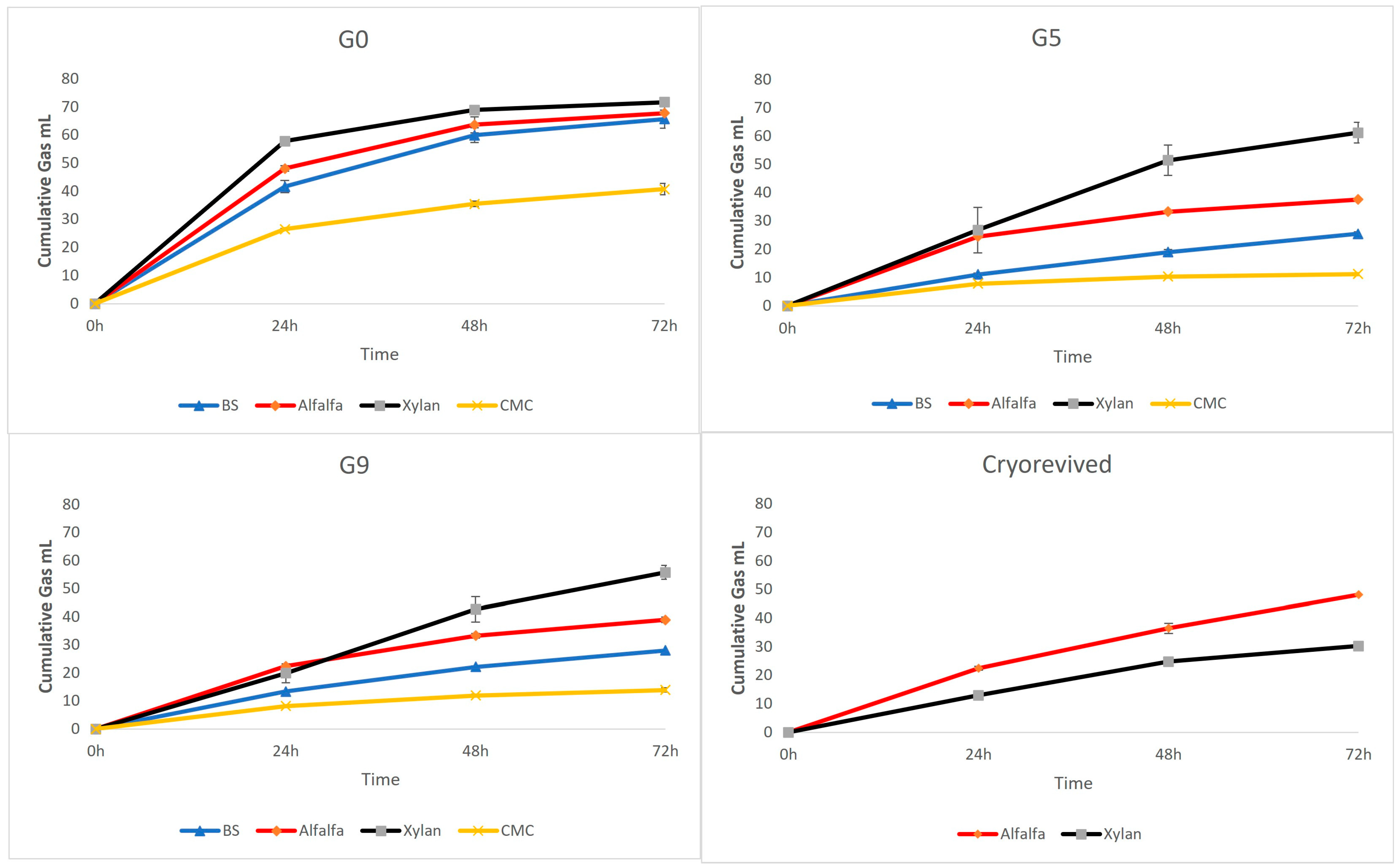
3.1. Gas Production Across Enrichment Generations
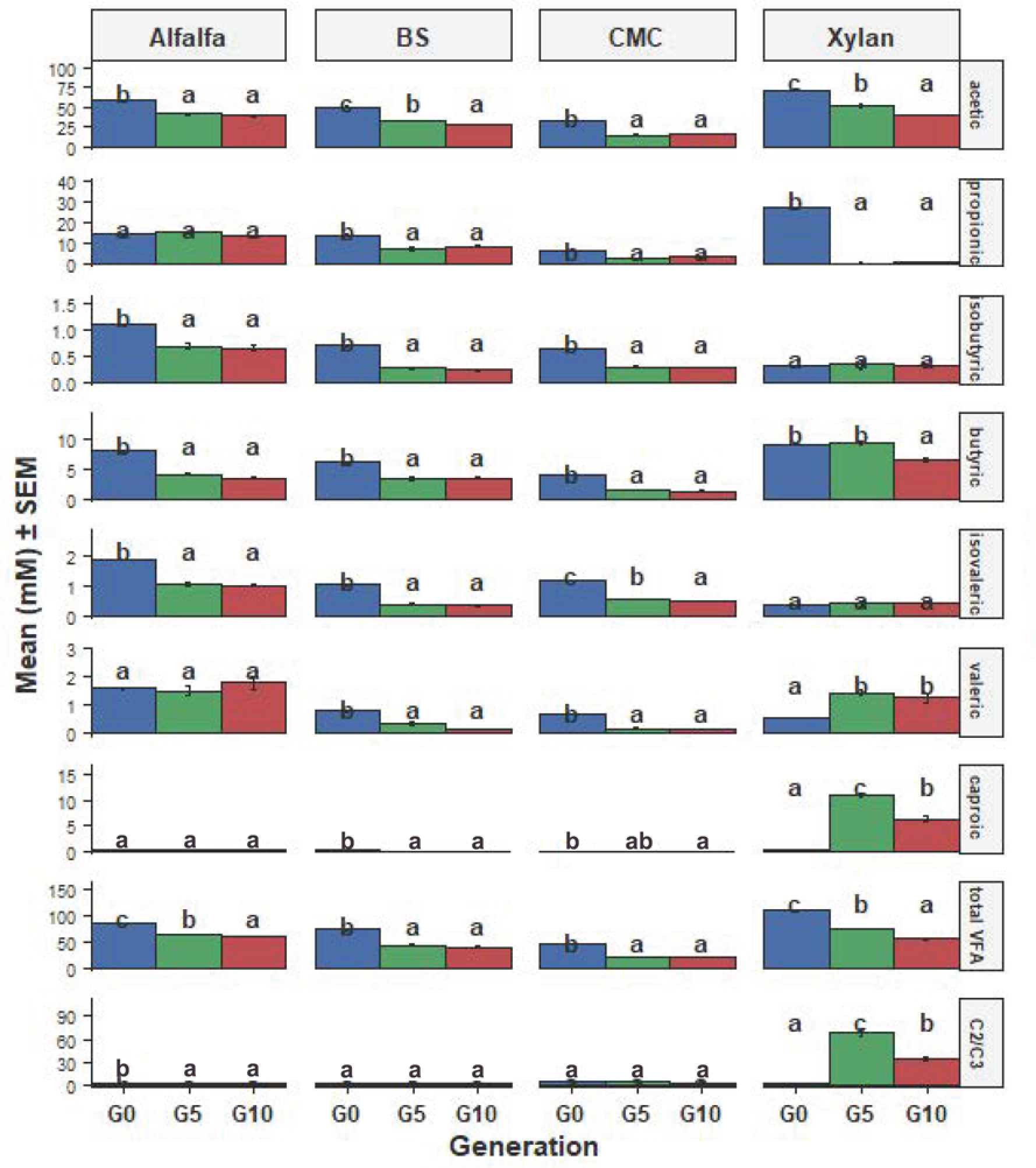
3.2. Volatile Fatty Acid (VFA) Profiles Across Generations
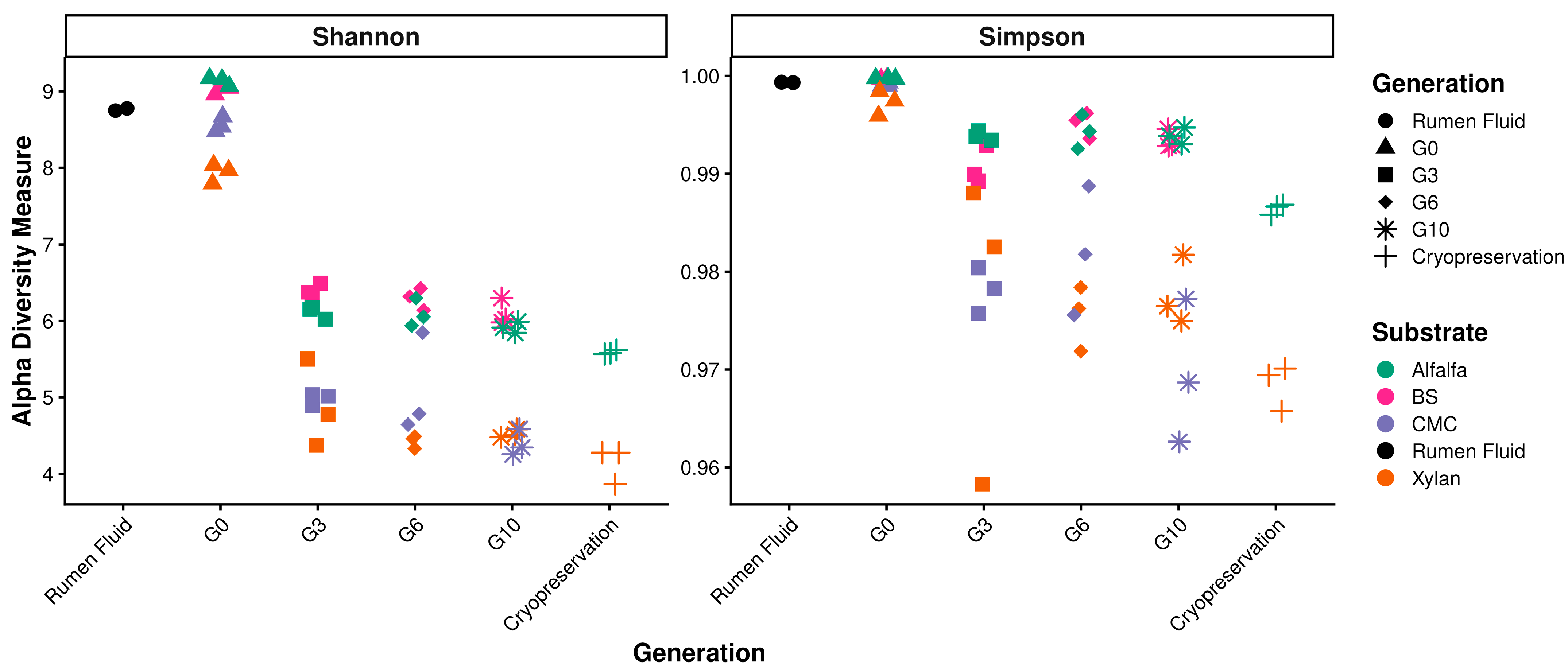
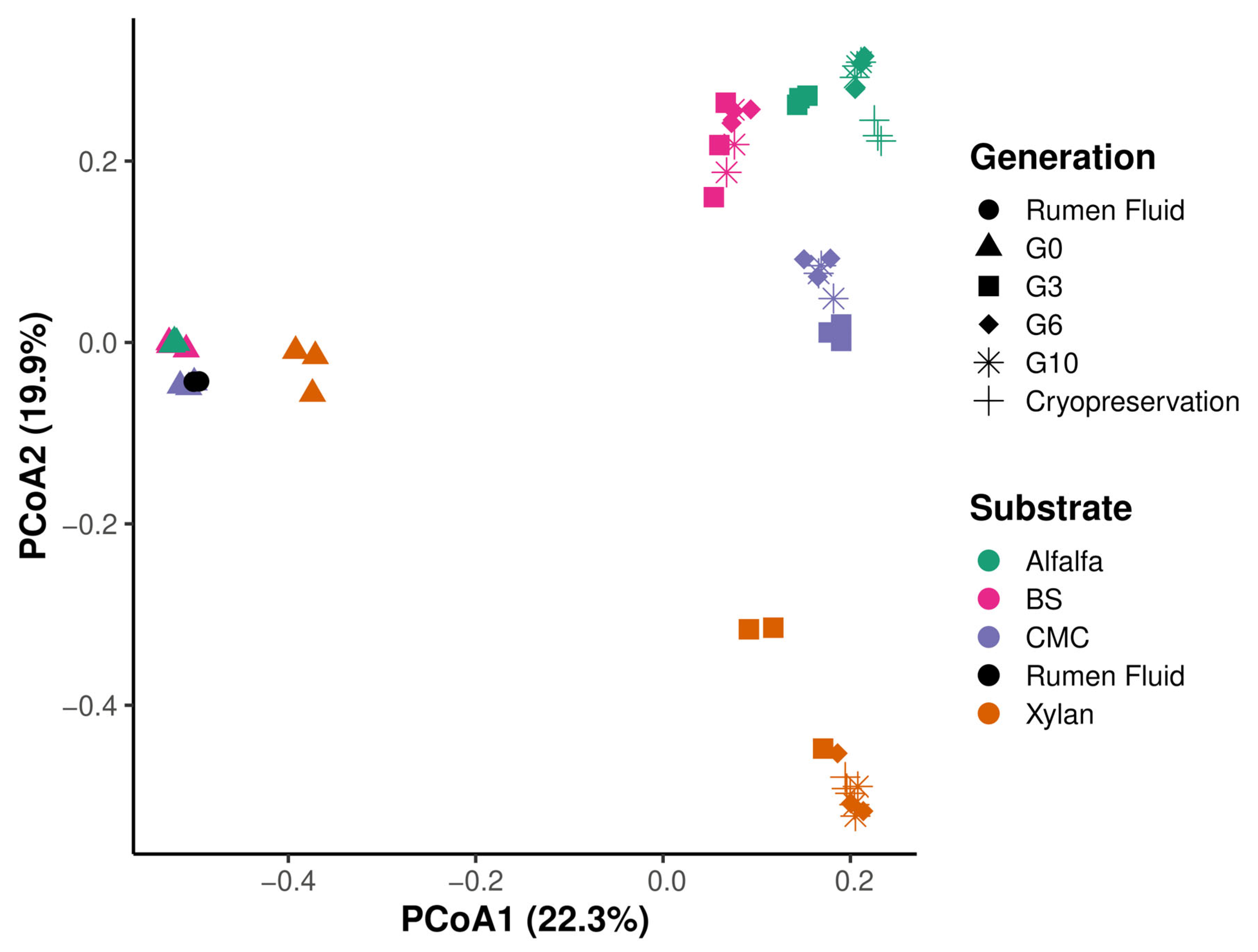
3.3. Diversity Dynamics Across Generations
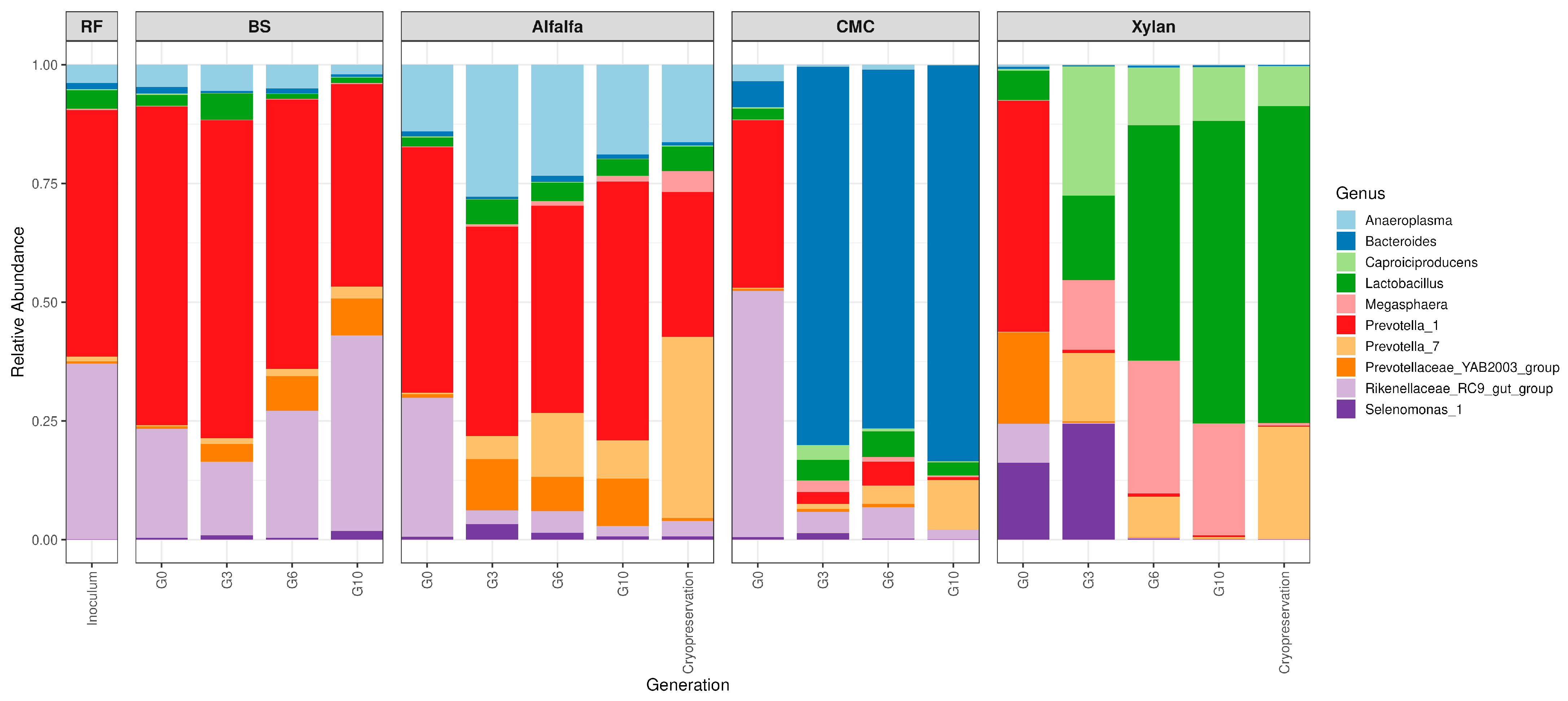
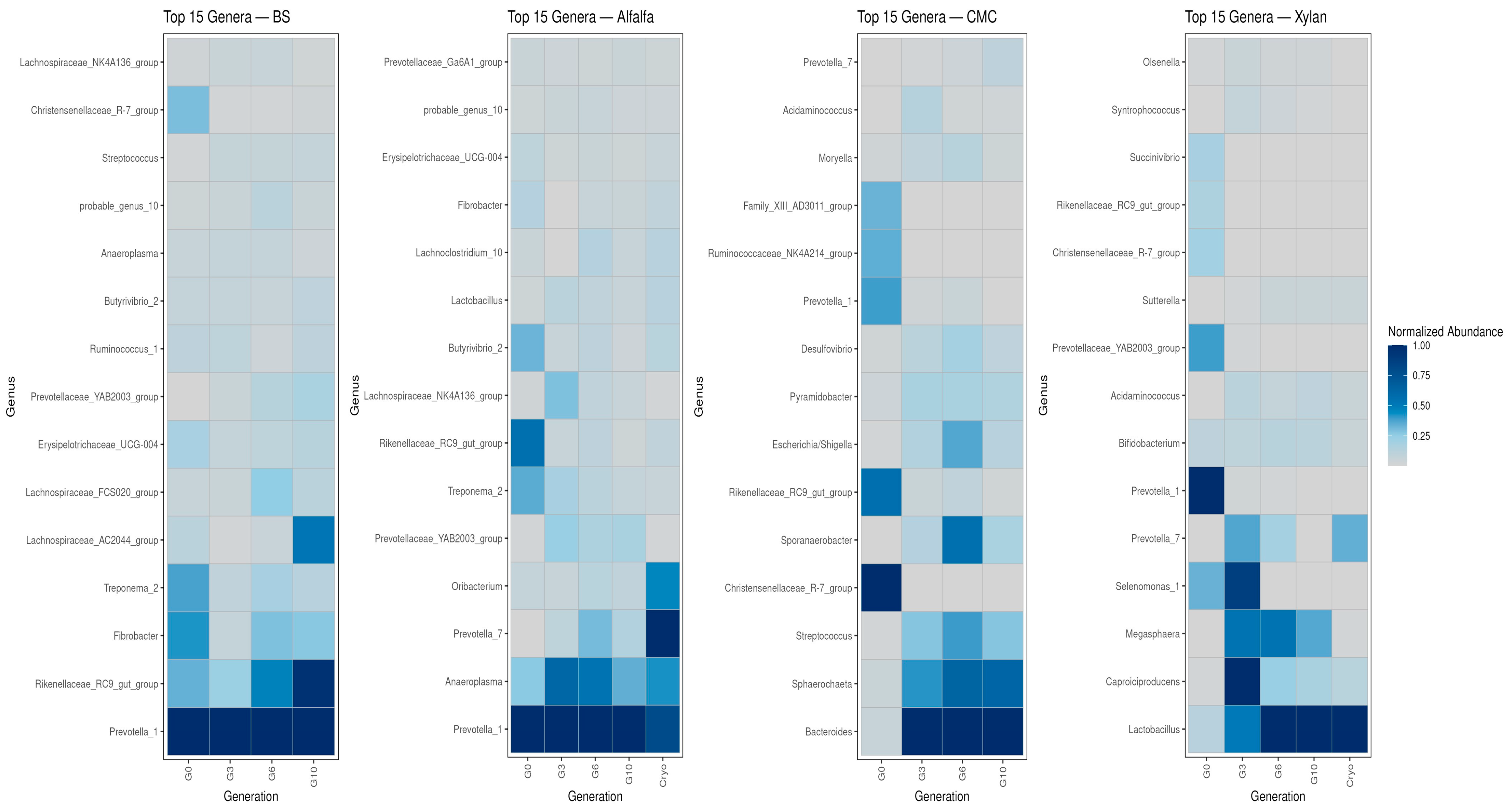
3.4. Genus-Level Community Composition
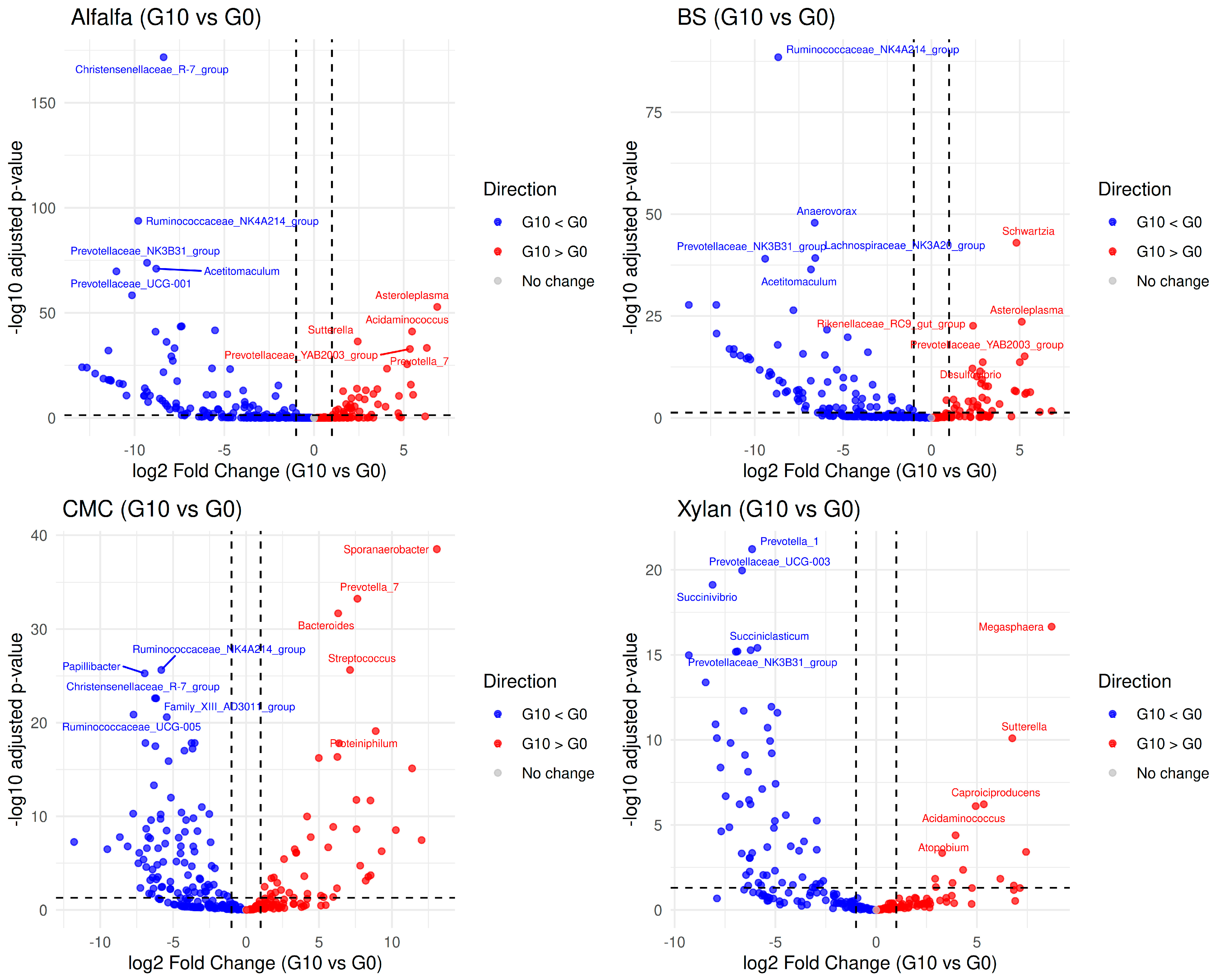
3.5. Differential Relative Abundance Between G0 and G10
3.6. Dynamics of Core Versus Transient Taxa
4. Discussion
4.1. Ecology-Guided Enrichment as an Alternative to Model-Driven Design Under Metabolic Uncertainty
4.2. Emergence of Metabolic Networks and Cross-Feeding Interactions
4.3. Implications for Hydrogen Metabolism
4.4. Stability and Resilience of Enriched Consortia Following Cryopreservation
4.5. Limitations and Future Perspectives
4.6. Conclusions
Supplementary Materials
Author Contributions
Funding
Institutional Review Board Statement
Informed Consent Statement
Data Availability Statement
Acknowledgments
Conflicts of Interest
References
- Gerber, P.J.; Hristov, A.N.; Henderson, B.; Makkar, H.; Oh, J.; Lee, C.; Meinen, R.; Montes, F.; Ott, T.; Firkins, J.; et al. Technical options for the mitigation of direct methane and nitrous oxide emissions from livestock: A review. Animal 2013, 7, 220–234. [Google Scholar] [CrossRef] [PubMed]
- Mottet, A.; de Haan, C.; Falcucci, A.; Tempio, G.; Opio, C.; Gerber, P. Livestock: On our plates or eating at our table? A new analysis of the feed/food debate. Glob. Food Secur. 2017, 14, 1–8. [Google Scholar] [CrossRef]
- Johnson, K.A.; Johnson, D.E. Methane emissions from cattle. J. Anim. Sci. 1995, 73, 2483–2492. [Google Scholar] [CrossRef] [PubMed]
- Smith, P.E.; Kelly, A.K.; Kenny, D.A.; Waters, S.M. Differences in the composition of the rumen microbiota of finishing beef cattle divergently ranked for residual methane emissions. Front. Microbiol. 2022, 13, 855565. [Google Scholar] [CrossRef] [PubMed]
- Badhan, A.; Wang, Y.; Terry, S.; Gruninger, R.; Guan, L.L.; McAllister, T.A. Interplay of rumen microbiome and the cattle host in modulating feed efficiency and methane emissions. J. Dairy Sci. 2025, 108, 5489–5501. [Google Scholar] [CrossRef]
- Ben Shabat, S.K.; Sasson, G.; Doron-Faigenboim, A.; Durman, T.; Yaacoby, S.; Berg Miller, M.E.; White, B.A.; Shterzer, N.; Mizrahi, I. Specific microbiome-dependent mechanisms underlie the energy harvest efficiency of ruminants. ISME J. 2016, 10, 2958–2972. [Google Scholar] [CrossRef]
- Li, F.; Guan, L.L. Metatranscriptomic profiling reveals linkages between the active rumen microbiome and feed efficiency in beef cattle. Appl. Environ. Microbiol. 2017, 83, e00061-17. [Google Scholar] [CrossRef]
- Lima, J.; Auffret, M.D.; Stewart, R.D.; Dewhurst, R.J.; Duthie, C.-A.; Snelling, T.J.; Walker, A.W.; Freeman, T.C.; Watson, M.; Roehe, R. Identification of rumen microbial genes involved in pathways linked to appetite, growth, and feed conversion efficiency in cattle. Front. Genet. 2019, 10, 701. [Google Scholar] [CrossRef]
- Weimer, P.J. Redundancy, resilience, and host specificity of the ruminal microbiota: Implications for engineering improved ruminal fermentations. Front. Microbiol. 2015, 6, 296. [Google Scholar] [CrossRef]
- Monteiro, H.F.; Lelis, A.L.J.; Fan, P.; Calvo Agustinho, B.; Lobo, R.R.; Arce-Cordero, J.A.; Dai, X.; Jeong, K.C.; Faciola, A.P. Effects of lactic acid-producing bacteria as direct-fed microbials on the ruminal microbiome. J. Dairy Sci. 2022, 105, 2242–2255. [Google Scholar] [CrossRef]
- Nalla, K.; Manda, N.K.; Dhillon, H.S.; Kanade, S.R.; Rokana, N.; Hess, M.; Puniya, A.K. Impact of probiotics on dairy production efficiency. Front. Microbiol. 2022, 13, 805963. [Google Scholar] [CrossRef]
- Chiquette, J.; Talbot, G.; Markwell, F.; Nili, N.; Forster, R.J. Repeated ruminal dosing of Ruminococcus flavefaciens NJ along with a probiotic mixture in forage- or concentrate-fed dairy cows. Can. J. Anim. Sci. 2007, 87, 237–249. [Google Scholar] [CrossRef]
- Ribeiro, G.O.; Oss, D.B.; He, Z.; Gruninger, R.J.; Elekwachi, C.; Forster, R.J.; Yang, W.; Beauchemin, K.A.; McAllister, T.A. Repeated inoculation of cattle rumen with bison rumen contents alters the rumen microbiome and improves nitrogen digestibility in cattle. Sci. Rep. 2017, 7, 1276. [Google Scholar] [CrossRef]
- Nguyen, T.T.M.; Badhan, A.K.; Reid, I.D.; Ribeiro, G.; Gruninger, R.; Tsang, A.; Guan, L.L.; McAllister, T.A. Comparative analysis of functional diversity of rumen microbiome in bison and beef heifers. Appl. Environ. Microbiol. 2023, 89, e01320-23. [Google Scholar] [CrossRef]
- Robles-Rodríguez, C.; Cardoso-Carmona, D.; González-Dávalos, L.; Lozano-Flores, C.; Páez-Trejo, A.; Shimada, A.; Mora, O. Characterization of an acidogenic bacterial consortium as probiotic and its effect on rumen fermentation in vitro and in vivo. Ruminants 2023, 3, 324–346. [Google Scholar] [CrossRef]
- El Jeni, R.; Villot, C.; Koyun, O.Y.; Osorio-Doblado, A.; Baloyi, J.J.; Lourenco, J.M.; Steele, M.; Callaway, T.R. Probiotic approaches to improving dairy production: Reassessing “magic foo-foo dust”. J. Dairy Sci. 2024, 107, 1832–1856. [Google Scholar] [CrossRef] [PubMed]
- Timmerman, H.M.; Koning, C.J.M.; Mulder, L.; Rombouts, F.M.; Beynen, A.C. Monostrain, multistrain and multispecies probiotics—A comparison of functionality and efficacy. Int. J. Food Microbiol. 2004, 96, 219–233. [Google Scholar] [CrossRef]
- Peng, X.; Wilken, S.E.; Lankiewicz, T.S.; Gilmore, S.P.; Brown, J.L.; Henske, J.K.; Swift, C.L.; Salamov, A.; Barry, K.; Grigoriev, I.V.; et al. Genomic and functional analyses of fungal and bacterial consortia that enable lignocellulose breakdown in goat gut microbiomes. Nat. Microbiol. 2021, 6, 499–511. [Google Scholar] [CrossRef] [PubMed]
- Wang, Y.; McAllister, T.A.; Yanke, L.J.; Xu, Z.; Cheeke, P.R.; Cheng, K.J. In vitro effects of steroidal saponins from Yucca schidigera extract on rumen microbial protein synthesis and fermentation. J. Sci. Food Agric. 2000, 80, 2114–2122. [Google Scholar] [CrossRef]
- Wang, P.; Qi, M.; Barboza, P.; Leigh, M.B.; Ungerfeld, E.; Selinger, L.B.; McAllister, T.A.; Forster, R.J. Isolation of high-quality total RNA from rumen anaerobic bacteria and fungi. Can. J. Microbiol. 2011, 57, 590–598. [Google Scholar] [CrossRef]
- Betancur-Murillo, C.L.; Aguilar-Marín, S.B.; Jovel, J. Prevotella: A key player in ruminal metabolism. Microorganisms 2022, 11, 1. [Google Scholar] [CrossRef]
- Qiu, Q.; Gao, C.; Aziz Ur Rahman, M.; Cao, B.; Su, H. Digestive ability and rumen bacterial community of Holstein steers under different diets. Microorganisms 2020, 8, 335. [Google Scholar] [CrossRef]
- Esquivel-Elizondo, S.; Bağcı, C.; Temovska, M.; Jeon, B.S.; Bessarab, I.; Williams, R.B.H.; Huson, D.H.; Angenent, L.T. Caproiciproducens sp. produces n-caproate under mildly acidic conditions. Front. Microbiol. 2021, 11, 594524. [Google Scholar]
- Ungerfeld, E.M. A theoretical comparison between two ruminal electron sinks. Front. Microbiol. 2013, 4, 319, Erratum in Front. Microbiol. 2014, 5, 235. [Google Scholar] [CrossRef]
- Ungerfeld, E.M. Metabolic hydrogen flows in rumen fermentation. Front. Microbiol. 2020, 11, 589. [Google Scholar] [CrossRef]
- Counotte, G.H.M.; Prins, R.A. Regulation of lactate metabolism in the rumen. Vet. Res. Commun. 1981, 5, 101–115. [Google Scholar] [CrossRef]
- Weimer, P.J.; Stevenson, D.M. Isolation and characterization of Clostridium kluyveri from the bovine rumen. Appl. Microbiol. Biotechnol. 2012, 94, 461–466. [Google Scholar] [CrossRef] [PubMed]
- Wang, K.; Xiong, B.; Zhao, X. Could propionate formation reduce methane emission in ruminants? Sci. Total Environ. 2023, 855, 158867. [Google Scholar] [CrossRef] [PubMed]
- Goel, G.; Arvidsson, K.; Vlaeminck, B.; Bruggeman, G.; Deschepper, K.; Fievez, V. Effects of capric acid on rumen methanogenesis. Animal 2009, 6, 810–816. [Google Scholar] [CrossRef] [PubMed]
- Zhou, X.; Meile, L.; Kreuzer, M.; Zeitz, J.O. Effect of saturated fatty acids on methanogenesis. Archaea 2013, 2013, 106916. [Google Scholar] [CrossRef]
- Li, Z.; Qiu, S.; Xu, J.; Ge, S. Effect of Undissociated n-Caproic Acid on Methanogen Activity and Subsequent Recovery: Methane Anabolism. ACS ES&T Eng. 2024, 4, 706–716. [Google Scholar]
- Huws, S.A.; Creevey, C.J.; Oyama, L.B.; Mizrahi, I.; Denman, S.E.; Popova, M.; Muñoz-Tamayo, R.; Forano, E.; Waters, S.M.; Hess, M.; et al. Addressing global ruminant challenges through rumen microbiome understanding. Front. Microbiol. 2018, 9, 2161. [Google Scholar] [CrossRef]
- Liu, K.; Zhang, Y.; Yu, Z.; Xu, Q.; Zheng, N.; Zhao, S.; Huang, G.; Wang, J. Ruminal microbiota–host interaction and nutrient metabolism. Anim. Nutr. 2021, 7, 49–55. [Google Scholar] [CrossRef] [PubMed]
- Cangiano, L.R.; Yohe, T.T.; Steele, M.A.; Renaud, D.L. Use of probiotics and prebiotics in dairy calf rearing. Appl. Anim. Sci. 2020, 36, 630–651. [Google Scholar] [CrossRef]
- Weimer, P.J.; Da Silva Cabral, L.; Cacite, F. Effects of ruminal dosing with Megasphaera elsdenii on milk fat production and rumen chemistry. J. Dairy Sci. 2015, 98, 8078–8092. [Google Scholar] [CrossRef] [PubMed]




Disclaimer/Publisher’s Note: The statements, opinions and data contained in all publications are solely those of the individual author(s) and contributor(s) and not of MDPI and/or the editor(s). MDPI and/or the editor(s) disclaim responsibility for any injury to people or property resulting from any ideas, methods, instructions or products referred to in the content. |
© 2026 by the authors. Licensee MDPI, Basel, Switzerland. This article is an open access article distributed under the terms and conditions of the Creative Commons Attribution (CC BY) license.
Share and Cite
Badhan, A.; Li, C.; Guan, L.L.; McAllister, T.A. Rumen-Derived Consortia Shaped by Substrate-Specific Enrichment Show Specialized Lignocellulose Utilization, Diversified Hydrogen Metabolism, and Cryopreservation Stability. Microorganisms 2026, 14, 1149. https://doi.org/10.3390/microorganisms14051149
Badhan A, Li C, Guan LL, McAllister TA. Rumen-Derived Consortia Shaped by Substrate-Specific Enrichment Show Specialized Lignocellulose Utilization, Diversified Hydrogen Metabolism, and Cryopreservation Stability. Microorganisms. 2026; 14(5):1149. https://doi.org/10.3390/microorganisms14051149
Chicago/Turabian StyleBadhan, Ajay, Chunli Li, Le Luo Guan, and Tim A. McAllister. 2026. "Rumen-Derived Consortia Shaped by Substrate-Specific Enrichment Show Specialized Lignocellulose Utilization, Diversified Hydrogen Metabolism, and Cryopreservation Stability" Microorganisms 14, no. 5: 1149. https://doi.org/10.3390/microorganisms14051149
APA StyleBadhan, A., Li, C., Guan, L. L., & McAllister, T. A. (2026). Rumen-Derived Consortia Shaped by Substrate-Specific Enrichment Show Specialized Lignocellulose Utilization, Diversified Hydrogen Metabolism, and Cryopreservation Stability. Microorganisms, 14(5), 1149. https://doi.org/10.3390/microorganisms14051149