Halotolerant Rhizobacteria from Phragmites Communis: A Controlled Proof-of-Concept for Crop Improvement in Degraded Sandy Soils


Abstract
1. Introduction
2. Materials and Methods
2.1. Isolation of Bacterial Strains
2.2. Screening for Plant Growth-Promoting (PGP) Traits
2.3. Enzymatic Activity Assays
2.4. Phylogenetic Characterization and Multilocus Sequence Analysis (MLSA)
2.5. Seed Germination and In Vivo Greenhouse Assays
2.6. Soil Characterization
2.7. Plant Growth Parameters Assessment
2.8. Analysis of Micro and Macro Elements in Soil and Plants
2.9. Salt Tolerance Characterization
2.10. Statistical Analysis
3. Results
3.1. Biochemical Characterization of Plant Growth-Promoting Traits
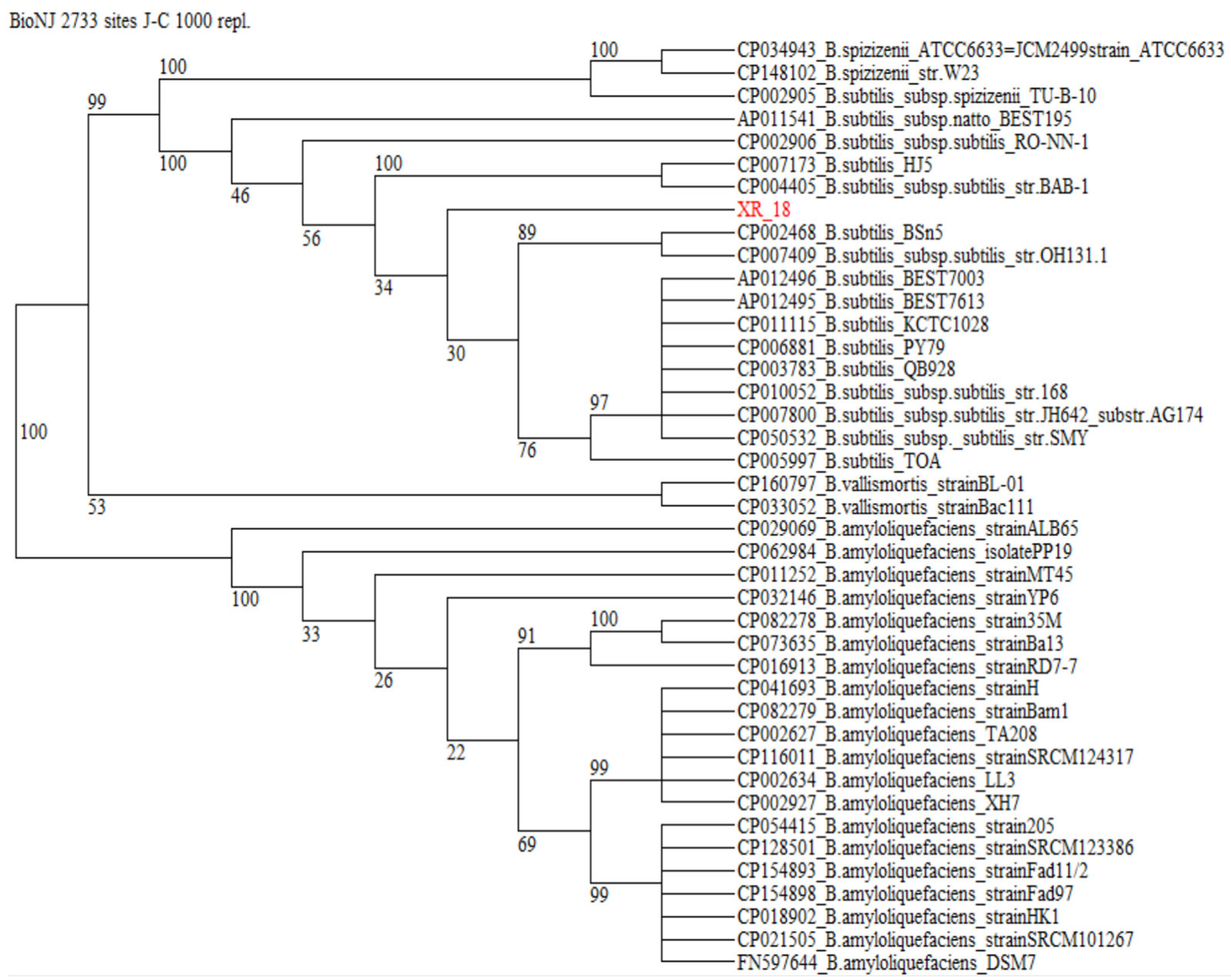
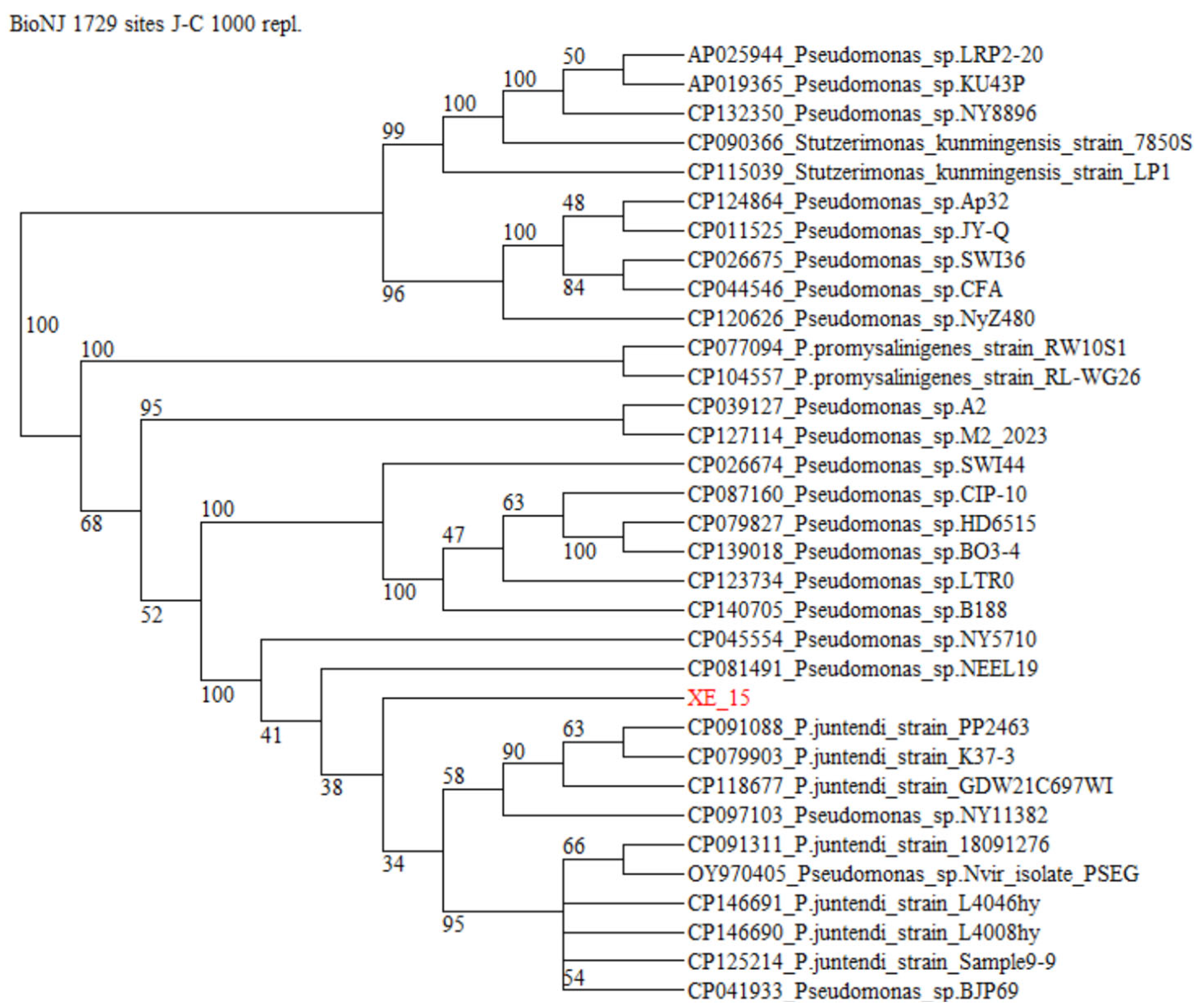
3.2. Phylogenetic Characterization and Taxonomic Placement
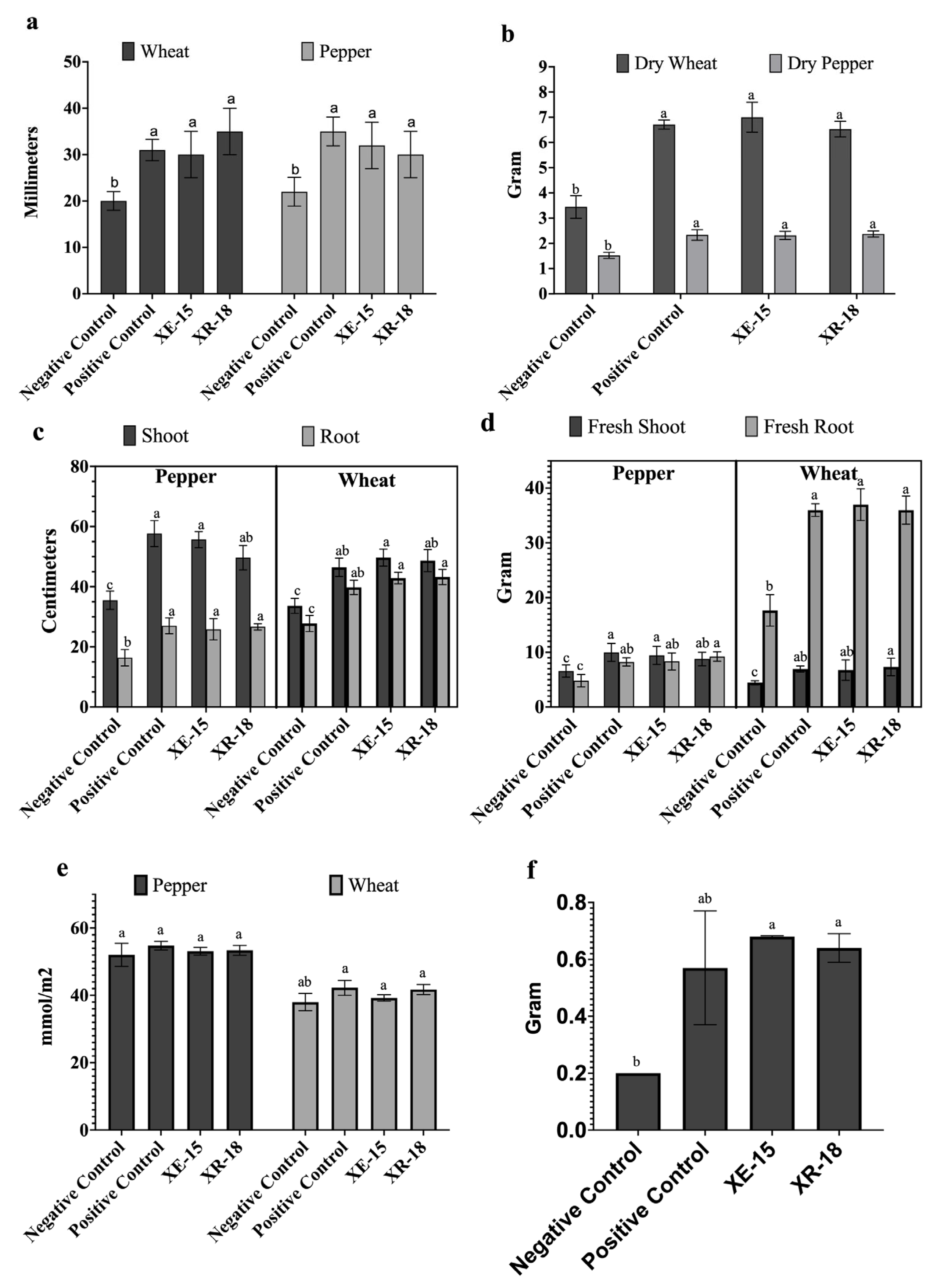
3.3. In Vitro Seed Germination Assays
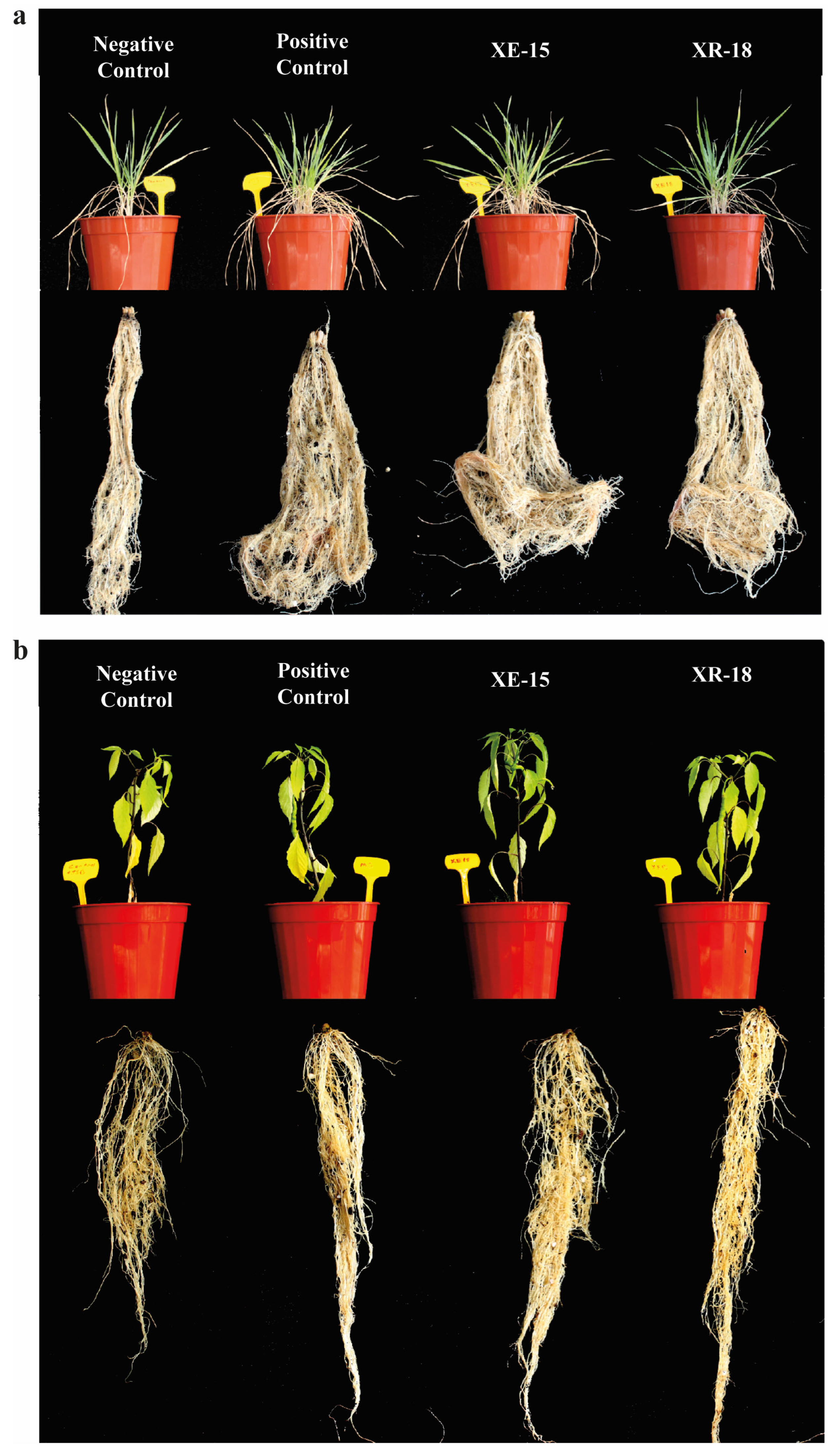
3.4. Enhancement of Plant Growth and Productivity in Sandy Soil
3.5. Macro- and Microelement Accumulation in Plants
3.6. Impact on Soil Quality and Physicochemical Properties
3.7. Correlation Between Soil Properties and Plant Performance
4. Discussion
4.1. Global Soil Degradation and the Strategic Role of PGPR
4.2. Multifunctional Growth-Promoting Traits and Taxonomic Resolution
4.3. Plant-Strain Specificity and Comparative Efficacy in Greenhouse Assays
4.4. Nutrient Acquisition and Biofortification in Nutrient-Poor Soil
4.5. Impact on Soil Physical Properties and Future Ecological Perspectives
5. Conclusions
Supplementary Materials
Author Contributions
Funding
Institutional Review Board Statement
Informed Consent Statement
Data Availability Statement
Acknowledgments
Conflicts of Interest
References
- Worldometer. World Population. Available online: https://www.worldometers.info/world-population/ (accessed on 25 February 2026).
- Kapur, S.; Akça, E. Soil degradation: Global assessment. In Landscape and Land Capacity; Wang, Y., Ed.; CRC Press: Boca Raton, FL, USA, 2020; pp. 199–210. [Google Scholar]
- Shi, T.; Guo, L.; Chen, Y.; Wang, W.; Shi, Z.; Li, Q.; Wu, G. Proximal and remote sensing techniques for mapping of soil contamination with heavy metals. Appl. Spectrosc. Rev. 2018, 53, 783–805. [Google Scholar] [CrossRef] [Scilit]
- Zweifel, L.; Meusburger, K.; Alewell, C. Spatio-temporal pattern of soil degradation in a Swiss Alpine grassland catchment. Remote Sens. Environ. 2019, 235, 111441. [Google Scholar] [CrossRef] [Scilit]
- Nunes, F.C.; de Jesus Alves, L.; Cseko Nolasco de Carvalho, C.; Gross, E.; de Marchi Soares, T.; Prasad, M.N.V. Soil as a complex ecological system for meeting food and nutritional security. In Climate Change and Soil Interactions; Prasad, M.N.V., Pietrzykowski, M., Eds.; Elsevier: Amsterdam, The Netherlands, 2020; pp. 229–269. [Google Scholar] [CrossRef] [Scilit]
- Tarolli, P.; Rizzo, D.; Brancucci, G. Terraced landscapes: Land abandonment, soil degradation, and suitable management. In World Terraced Landscapes: History, Environment, Quality of Life; Varotto, M., Bonardi, L., Tarolli, P., Eds.; Springer: Cham, Switzerland, 2019; pp. 195–210. [Google Scholar] [CrossRef] [Scilit]
- da Costa, D.P.; Silva, T.d.G.E.d.; Araujo, A.S.F.; Pereira, A.P.d.A.; Mendes, L.W.; Borges, W.d.S.; da França, R.F.; de Souza, C.A.F.; da Silva, B.A.; Silva, R.O.; et al. Soil fertility impact on recruitment and diversity of the soil microbiome in sub-humid tropical pastures in Northeastern Brazil. Sci. Rep. 2024, 14, 3919. [Google Scholar] [CrossRef] [Scilit]
- Yetgin, A. Exploring the link between soil microbial diversity and nutritional deficiencies. J. Agric. Prod. 2023, 4, 81–90. [Google Scholar] [CrossRef] [Scilit]
- Bouri, M.; Taieb, K.H.; Bolouri, P.; Rhouma, A.; Şahin, F. Microbial biostimulants for improving crop nutrition, health, and productivity in climate-smart agriculture. In Plant Holobiome Engineering for Climate-Smart Agriculture; Sayyed, R.Z., Ilyas, N., Eds.; Springer: Singapore, 2024. [Google Scholar] [CrossRef] [Scilit]
- Silverstein, M.R.; Segrè, D.; Bhatnagar, J.M. Environmental microbiome engineering for the mitigation of climate change. Glob. Change Biol. 2023, 29, 2050–2066. [Google Scholar] [CrossRef] [Scilit]
- Fan, D.; Wei, C.; Zhao, M.; Wang, K. Forest-based climate change mitigation measures can generate economy-environment-bioenergy synergistic benefits in China. Appl. Energy 2024, 373, 123929. [Google Scholar] [CrossRef] [Scilit]
- Zhu, Z.; Bai, Y.; Lv, M.; Tian, G.; Zhang, X.; Li, L.; Jiang, Y.; Ge, S. Soil fertility, microbial biomass, and microbial functional diversity responses to four years fertilization in an apple orchard in North China. Hortic. Plant J. 2020, 6, 223–230. [Google Scholar] [CrossRef] [Scilit]
- Koshila Ravi, R.; Anusuya, S.; Balachandar, M.; Muthukumar, T. Microbial interactions in soil formation and nutrient cycling. In Mycorrhizosphere and Pedogenesis; Springer: Singapore, 2019; pp. 363–382. [Google Scholar]
- Goswami, D.; Thakker, J.N.; Dhandhukia, P.C. Portraying mechanics of plant growth-promoting rhizobacteria (PGPR): A review. Cogent Food Agric. 2016, 2, 1127500. [Google Scholar] [CrossRef] [Scilit]
- Nabi, M. Role of microorganisms in plant nutrition and soil health. In Sustainable Plant Nutrition; Aftab, T., Hakeem, K.R., Eds.; Academic Press: Cambridge, MA, USA, 2023; pp. 263–282. [Google Scholar]
- Hartmann, M.; Six, J. Soil structure and microbiome functions in agroecosystems. Nat. Rev. Earth Environ. 2023, 4, 4–18. [Google Scholar] [CrossRef] [Scilit]
- Etesami, H.; Beattie, G.A. Mining halophytes for plant growth-promoting halotolerant bacteria to enhance the salinity tolerance of non-halophytic crops. Front. Microbiol. 2018, 9, 148. [Google Scholar] [CrossRef] [Scilit] [PubMed]
- Saghafi, D.; Delangiz, N.; Lajayer, B.A.; Ghorbanpour, M. An overview on improvement of crop productivity in saline soils by halotolerant and halophilic PGPRs. 3 Biotech 2019, 9, 261. [Google Scholar] [CrossRef] [Scilit] [PubMed]
- Chen, C.; Xin, K.; Liu, H.; Cheng, J.; Shen, X.; Wang, Y.; Zhang, L. Pantoea alhagi, a novel endophytic bacterium with ability to improve growth and drought tolerance in wheat. Sci. Rep. 2017, 7, 41564, Erratum in Sci. Rep. 2021, 9, 8160. https://doi.org/10.1038/s41598-021-86899-4.. [Google Scholar] [CrossRef] [Scilit]
- Döbereiner, J. Isolation and identification of root associated diazotrophs. In Nitrogen Fixation with Non-Legumes; Springer: Dordrecht, The Netherlands, 1989; pp. 103–108. [Google Scholar]
- Pikovskaya, R.I. Mobilization of phosphorus in soil in connection with vital activity of some microbial species. Mikrobiologiya 1948, 17, 362–370. [Google Scholar]
- Patten, C.L.; Glick, B.R. Role of Pseudomonas putida indoleacetic acid in development of the host plant root system. Appl. Environ. Microbiol. 2002, 68, 3795–3801. [Google Scholar] [CrossRef] [Scilit]
- Schwyn, B.; Neilands, J.B. Universal chemical assay for the detection and determination of siderophores. Anal. Biochem. 1987, 160, 47–56. [Google Scholar] [CrossRef] [Scilit]
- Fasim, F.; Ahmed, N.; Parsons, R.; Gadd, G.M. Solubilization of zinc salts by a bacterium isolated from the air environment of a tannery. FEMS Microbiol. Lett. 2002, 213, 1–6. [Google Scholar] [CrossRef] [Scilit]
- Bernfeld, P. Amylases, α and β. Methods Enzymol. 1955, 1, 149–158. [Google Scholar] [CrossRef] [Scilit]
- Kumar, C.G.; Takagi, H. Microbial alkaline proteases: From a bioindustrial viewpoint. Biotechnol. Adv. 1999, 17, 561–594. [Google Scholar] [CrossRef] [Scilit] [PubMed]
- Sierra, G. Studies on bacterial esterases: Part III. Influence of the composition of the culture media on the production of ali-esterase and lipase of Pseudomonas aeruginosa. Antonie Van Leeuwenhoek 1957, 23, 278–288. [Google Scholar] [CrossRef] [Scilit] [PubMed]
- Teather, R.M.; Wood, P.J. Use of Congo red-polysaccharide interactions in enumeration and characterization of cellulolytic bacteria from the bovine rumen. Appl. Environ. Microbiol. 1982, 43, 777–780. [Google Scholar] [CrossRef] [Scilit]
- Ait Tayeb, L.; Ageron, E.; Grimont, F.; Grimont, P.A.D. Molecular phylogeny of the genus Pseudomonas based on rpoB sequences and application for the identification of isolates. Res. Microbiol. 2005, 156, 763–773. [Google Scholar] [CrossRef] [Scilit] [PubMed]
- Yamamoto, S.; Kasai, H.; Arnold, D.L.; Jackson, R.W.; Vivian, A.; Harayama, S. Phylogeny of the genus Pseudomonas: Intrageneric structure reconstructed from the nucleotide sequences of gyrB and rpoD genes. Microbiology 2000, 146, 2385–2394. [Google Scholar] [CrossRef] [Scilit]
- Ben Gharsa, H.; Bouri, M.; Mougou Hamdane, A.; Schuster, C.; Leclerque, A.; Rhouma, A. Bacillus velezensis strain MBY2, a potential agent for the management of crown gall disease. PLoS ONE 2021, 16, e0252823. [Google Scholar] [CrossRef] [Scilit] [PubMed]
- Turan, M.; Gulluce, M.; von Wirén, N.; Sahin, F. Yield promotion and phosphorus solubilization by plant growth–promoting rhizobacteria in extensive wheat production in Turkey. J. Plant Nutr. Soil Sci. 2012, 175, 818–826. [Google Scholar] [CrossRef] [Scilit]
- Tolno, S.G.; Camara, S.; Sylla, A.; Sakho, A.M.; Traore, L. Physico-chemical analysis of soils used for pineapple cultivation in the sub-prefectures of Maferinyah and Friguiagbé, Republic of Guinea. J. Agric. Chem. Environ. 2024, 13, 251–262. [Google Scholar] [CrossRef]
- Boss, C.B.; Fredeen, K.J. Concepts, Instrumentation and Techniques in Inductively Coupled Plasma Optical Emission Spectroscopy; Perkin Elmer: Norwalk, CT, USA, 1999. [Google Scholar]
- Sparks, D.L.; Page, A.L.; Helmke, P.A.; Loeppert, R.H. (Eds.) Methods of Soil Analysis, Part 3: Chemical Methods; John Wiley & Sons: Hoboken, NJ, USA, 2020. [Google Scholar]
- Baldani, J.I.; Reis, V.M.; Videira, S.S.; Boddey, L.H.; Baldani, V.L.D. The art of isolating nitrogen-fixing bacteria from non-leguminous plants using N-free semi-solid media: A practical guide for microbiologists. Plant Soil 2014, 384, 413–431. [Google Scholar] [CrossRef] [Scilit]
- FAO; ITPS. State of the World’s Soil Resources; FAO: Rome, Italy, 2015. [Google Scholar]
- Panagos, P.; Borrelli, P.; Jones, A.; Robinson, D.A. A 1 billion euro mission: A soil deal for Europe. Eur. J. Soil Sci. 2024, 75, e13466. [Google Scholar] [CrossRef] [Scilit]
- AbuQamar, S.F.; El-Saadony, M.T.; Saad, A.M.; Desoky, E.M.; Elrys, A.S.; El-Mageed, T.A.A.; Semida, W.M.; Abdelkhalik, A.; Mosa, W.F.; Al Kafaas, S.S.; et al. Halotolerant plant growth-promoting rhizobacteria improve soil fertility and plant salinity tolerance for sustainable agriculture—A review. Plant Stress 2024, 12, 100482. [Google Scholar] [CrossRef] [Scilit]
- Ayangbenro, A.S.; Babalola, O.O. Reclamation of arid and semi-arid soils: The role of plant growth-promoting archaea and bacteria. Curr. Plant Biol. 2021, 25, 100173. [Google Scholar] [CrossRef] [Scilit]
- Wang, Y.; Zhang, G.; Huang, Y.; Guo, M.; Song, J.; Zhang, T.; Long, Y.; Wang, B.; Liu, H. A potential biofertilizer—Siderophilic bacteria isolated from the rhizosphere of Paris polyphylla var. yunnanensis. Front. Microbiol. 2022, 13, 870413. [Google Scholar] [CrossRef] [Scilit]
- Su, P.; Kang, H.; Peng, Q.; Wicaksono, W.A.; Berg, G.; Liu, Z.; Ma, J.; Zhang, D.; Cernava, T.; Liu, Y. Microbiome homeostasis on rice leaves is regulated by a precursor molecule of lignin biosynthesis. Nat. Commun. 2024, 15, 23. [Google Scholar] [CrossRef] [Scilit]
- Stringlis, I.A.; Yu, K.; Feussner, K.; de Jonge, R.; Van Bentum, S.; Van Verk, M.C.; Berendsen, R.L.; Bakker, P.A.H.M.; Feussner, I.; Pieterse, C.M.J. MYB72-dependent coumarin exudation shapes root microbiome assembly to promote plant health. Proc. Natl. Acad. Sci. USA 2018, 115, E5213–E5222. [Google Scholar] [CrossRef] [Scilit]
- Mendis, H.C.; Thomas, V.P.; Schwientek, P.; Salamzade, R.; Chien, J.T.; Waidyarathne, P.; Kloepper, J.; De La Fuente, L. Strain-specific quantification of root colonization by plant growth promoting rhizobacteria Bacillus firmus I-1582 and Bacillus amyloliquefaciens QST713 in non-sterile soil and field conditions. PLoS ONE 2018, 13, e0193119. [Google Scholar] [CrossRef] [Scilit]
- Yang, P.; Condrich, A.; Scranton, S.; Hebner, C.; Lu, L.; Ali, M.A. Utilizing plant growth-promoting rhizobacteria (PGPR) to advance sustainable agriculture. Bacteria 2024, 3, 434–451. [Google Scholar] [CrossRef] [Scilit]
- Alishahi, F.; Alikhani, H.A.; Khoshkholgh-Sima, N.A.; Etesami, H. Mining the roots of various species of the halophyte Suaeda for halotolerant nitrogen-fixing endophytic bacteria with the potential for promoting plant growth. Int. Microbiol. 2020, 23, 415–427. [Google Scholar] [CrossRef] [Scilit]
- Patel, P.R.; Shaikh, S.S.; Sayyed, R.Z. Dynamism of PGPR in bioremediation and plant growth promotion in heavy metal contaminated soil. Indian J. Exp. Biol. 2016, 54, 286–290. [Google Scholar]
- Riva, V.; Terzaghi, E.; Vergani, L.; Mapelli, F.; Zanardini, E.; Morosini, C.; Raspa, G.; Di Guardo, A.; Borin, S. Exploitation of rhizosphere microbiome services. In Methods in Rhizosphere Biology Research; Reinhardt, D., Sharma, A., Eds.; Springer: Singapore, 2019; pp. 105–132. [Google Scholar]
- FAO. Nutrient management guidelines for some major field crops. In Plant Nutrition for Food Security; FAO: Rome, Italy, 2006. [Google Scholar]
- Yi, L.; Ming, L.; Zhi, Y.; Xin-ping, C.; Li, G.; Dun-yi, L. Enrichment of compound NPK fertilizer with polyhalite enhances pepper (Capsicum annuum) yield and quality on poor yellow soils in Southwest China. Int. Potash Inst. e-ifc 2021, 65, 12–23. [Google Scholar]
- Ali, M.; Ahmed, I.; Tariq, H.; Abbas, S.; Zia, M.H.; Mumtaz, A.; Sharif, M. Growth improvement of wheat (Triticum aestivum) and zinc biofortification using potent zinc-solubilizing bacteria. Front. Plant Sci. 2023, 14, 1140454. [Google Scholar] [CrossRef] [Scilit]
- Wang, J.; Li, R.; Zhang, H.; Wei, G.; Li, Z. Beneficial bacteria activate nutrients and promote wheat growth under conditions of reduced fertilizer application. BMC Microbiol. 2020, 20, 38. [Google Scholar] [CrossRef] [Scilit]
- Gaspareto, R.N.; Jalal, A.; Ito, W.C.N.; Oliveira, C.E.S.; Garcia, C.M.P.; Boleta, E.H.M.; Rosa, P.A.L.; Galindo, F.S.; Buzetti, S.; Ghaley, B.B.; et al. Inoculation with Plant Growth-Promoting Bacteria and Nitrogen Doses Improves Wheat Productivity and Nitrogen Use Efficiency. Microorganisms 2023, 11, 1046. [Google Scholar] [CrossRef] [Scilit] [PubMed]
- Jalal, A.; Junior, E.F.; Teixeira Filho, M.C.M. Interaction of Zinc Mineral Nutrition and Plant Growth-Promoting Bacteria in Tropical Agricultural Systems: A Review. Plants 2024, 13, 571. [Google Scholar] [CrossRef] [Scilit] [PubMed]
- Pokharel, A.K.; Jannoura, R.; Heitkamp, F.; Kleikamp, B.; Wachendorf, C.; Dyckmans, J.; Ludwig, B.; Joergensen, R.G. Development of aggregates after application of maize residues in the presence of mycorrhizal and non-mycorrhizal pea plants. Geoderma 2013, 202–203, 38–44. [Google Scholar] [CrossRef] [Scilit]
- Alzate Zuluaga, M.Y.; Fattorini, R.; Cesco, S.; Pii, Y. Plant-microbe interactions in the rhizosphere for smarter and more sustainable crop fertilization: The case of PGPR-based biofertilizers. Front. Microbiol. 2024, 15, 1440978. [Google Scholar] [CrossRef] [Scilit] [PubMed]
- Samain, E.; Duclercq, J.; Ait Barka, E.; Eickermann, M.; Ernenwein, C.; Mazoyon, C.; Sarazin, V.; Dubois, F.; Aussenac, T.; Selim, S. PGPR-Soil Microbial Communities’ Interactions and Their Influence on Wheat Growth Promotion and Resistance Induction against Mycosphaerella graminicola. Biology 2023, 12, 1416. [Google Scholar] [CrossRef] [Scilit]



| Strains Codes | M3 | XE-15 | XR-18 |
|---|---|---|---|
| Species | B. megaterium | Pseudomonas sp. | Bacillus sp. |
| N-fixation activity | − | + | − |
| Phosphate solubilization | + | + | − |
| Potassium Solubilization | + | + | − |
| Zinc solubilization | − | + | − |
| Iron siderophore production | − | + | + |
| HCN production | − | − | − |
| IAA production | + | + | + |
| ACC deaminase | − | − | + |
| Amylase | − | − | + |
| Protease | + | − | + |
| Lipase | − | − | − |
| Cellulase | − | − | − |
| Isolate | Housekeeping Gene | Sequence Length | Accession Number | 16S rRNA 100% of Similarity and Coverage |
|---|---|---|---|---|
| XE-15 | 16S | 1532 bp | PV400807 | P. juntendi Pseudomonas sp. P. promysalinigenes |
| rpoB | 1047 bp | PX933507 | ||
| gyrB | 888 bp | PX933508 | ||
| XR-18 | 16S | 1067 bp | PV400808 | B. amyloliquefaciens B. vallismortis B. subtilis subsp. subtilis B. velezensis |
| rpoB | 813 bp | PX933303 | ||
| groEL | 624 bp | PX933504 | ||
| gyrA | 669 bp | PX933505 | ||
| purH | 627 bp | PX933506 |
| (mg kg−1) | NC | PC | XE-15 | XR-18 |
|---|---|---|---|---|
| N (%) | 0.415 ± 0.050 a | 0.84 ± 0.07 b | 1.08 ± 0.088 c | 0.86 ± 0.054 b |
| P (mg kg−1) | 6.27 ± 1.04 b | 2.92 ± 0.96 a | 6.87 ± 0.85 b | 7.98 ± 1.32 b |
| K (mg kg−1) | 37.84 ± 6.32 a | 41.78 ± 9.37 a | 40.87 ± 7.33 a | 39.19 ± 11.04 a |
| Fe (mg kg−1) | 80.17 ± 18.52 b | 37.73 ± 7.73 a | 110.48 ± 26.33 b | 198.65 ± 47.64 c |
| Mg (mg kg−1) | 2.05 ± 1.02 a | 2.56 ± 0.56 a | 4.11 ± 0.78 a | 3.17 ± 0.88 a |
| Zn (mg kg−1) | 74.80 ± 5.88 b | 51.50 ± 9.38 a | 102.3 ± 13.63 c | 89.86 ± 5.31 c |
| Ca (mg kg−1) | 15.99 ± 2.19 a | 10.94 ± 3.89 a | 36.56 ± 6.12 c | 22.66 ± 4.23 b |
| Na (mg kg−1) | 4.76 ± 0.98 a | 5.45 ± 1.10 a | 4.55 ± 1.30 a | 5.33 ± 0.91 a |
| Cl (mg kg−1) | 27.89 ± 4.12 a | 21.75 ± 3.22 a | 23.56 ± 3.33 a | 22.35 ± 4.02 a |
| (mg kg−1) | NC | PC | XE-15 | XR-18 |
|---|---|---|---|---|
| N % | 1.25 ± 0.04 b | 1.50 ± 0.03 c | 1.02 ± 0.055 a | 1.28 ± 0.051 b |
| P (mg kg−1) | 10.08 ± 3.63 a | 16.01 ± 3.73 a | 19.90 ± 4.74 a | 14.17 ± 3.77 a |
| K (mg kg−1) | 115.44 ± 22.25 a | 71.60 ± 25.31 a | 142.67 ± 17.81 a | 82.79 ± 23.59 a |
| Fe (mg kg−1) | 150.18 ± 36.04 a | 93.90 ± 21.67 a | 125.84 ± 29.83 a | 90.07 ± 21.43 a |
| Mg (mg kg−1) | 8.74 ± 1.11 a | 8.57 ± 1.83 a | 9.57 ± 1.89 a | 6.70 ± 1.10 a |
| Zn (mg kg−1) | 207.93 ± 18.94 a | 216.40 ± 18.95 a | 317.30 ± 10.61 b | 275.90 ± 18.89 a |
| Ca (mg kg−1) | 35.58 ± 11.16 a | 30.58 ± 11.83 a | 25.61 ± 9.13 a | 29.76 ± 10.61 a |
| Na (mg kg−1) | 5.22 ± 0.84 a | 4.77 ± 0.41 a | 5.51 ± 0.31 a | 3.38 ± 0.49 a |
| Cl (mg kg−1) | 18.58 ± 3.80 a | 20.87 ± 5.31 a | 15.70 ± 3.50 a | 19.44 ± 3.03 a |
| Initial | NC | PC | XE-15 | XR-18 | |
|---|---|---|---|---|---|
| Bulk density (g cm−3) | 1.37 ± 0.039 a | 1.36 ± 0.022 a | 1.32 ± 0.020 a | 1.35 ± 0.020 a | 1.32 ± 0.020 a |
| pH | 7.17 ± 0.072 ab | 7.61 ± 0.086 a | 6.68 ± 0.067 c | 6.97 ± 0.071 ab | 6.72 ± 0.067 c |
| EC (µS cm−1) | 274.30 ± 22.43 d | 174.30 ± 12.40 c | 127.80 ± 11.73 b | 72.50 ± 10.01 a | 156.60 ± 15.51 c |
| WHC * (%) | 7.43 ± 1.15 a | 8.47 ± 0.31 a | 10.33 ± 0.10 c | 9.80 ± 0.14 b | 10.00 ± 0.15 b |
| Fe (mg kg−1) | 4.13 ± 0.90 a | 50.00 ± 10.10 b | 432.80 ± 82.50 d | 204.00 ± 49.80 c | 370.00 ± 73.20 d |
| Mg (mg kg−1) | 349.00 ± 23.92 a | 549.00 ± 45.92 b | 536.00 ± 41.88 b | 455.00 ± 39.40 b | 480.00 ± 49.40 b |
| Zn (mg kg−1) | 3.52 ± 0.63 a | 4.42 ± 0.67 a | 4.57 ± 0.61 a | 6.48 ± 0.97 b | 9.37 ± 1.21 c |
| Ca (mg kg−1) | 5.03 ± 0.55 a | 4.45 ± 0.40 a | 4.79 ± 0.41 a | 4.84 ± 0.81 a | 4.49 ± 0.39 a |
| Na (mg kg−1) | 234.44 ± 31.17 a | 204.10 ± 31.62 a | 188.50 ± 22.28 a | 190.30 ± 38.55 a | 262.50 ± 39.38 a |
| Cl (mg kg−1) | 216.12 ± 42.20 a | 285.90 ± 58.10 a | 348.55 ± 61.70 a | 215.00 ± 42.00 a | 529.00 ± 115.80 b |
| K (mg kg−1) | 135.32 ± 11.80 a | 152.10 ± 12.10 a | 135.10 ± 13.80 a | 126.30 ± 10.10 a | 136.00 ± 10.80 a |
| P (mg kg−1) | 17.60 ± 2.31 b | 16.20 ± 1.94 b | 15.90 ± 1.51 b | 11.30 ± 1.96 a | 16.40 ± 1.97 b |
| Total N (%) | 0.19 ± 0.05 a | 0.30 ± 0.04 a | 0.21 ± 0.02 a | 0.61 ± 0.03 c | 0.49 ± 0.04 b |
Disclaimer/Publisher’s Note: The statements, opinions and data contained in all publications are solely those of the individual author(s) and contributor(s) and not of MDPI and/or the editor(s). MDPI and/or the editor(s) disclaim responsibility for any injury to people or property resulting from any ideas, methods, instructions or products referred to in the content. |
© 2026 by the authors. Licensee MDPI, Basel, Switzerland. This article is an open access article distributed under the terms and conditions of the Creative Commons Attribution (CC BY) license.
Share and Cite
Arslan, K.S.; Bouri, M.; Bakelli, A.; Şahin, F. Halotolerant Rhizobacteria from Phragmites Communis: A Controlled Proof-of-Concept for Crop Improvement in Degraded Sandy Soils. Microorganisms 2026, 14, 1120. https://doi.org/10.3390/microorganisms14051120
Arslan KS, Bouri M, Bakelli A, Şahin F. Halotolerant Rhizobacteria from Phragmites Communis: A Controlled Proof-of-Concept for Crop Improvement in Degraded Sandy Soils. Microorganisms. 2026; 14(5):1120. https://doi.org/10.3390/microorganisms14051120
Chicago/Turabian StyleArslan, Kadir Sinan, Meriam Bouri, Aissa Bakelli, and Fikrettin Şahin. 2026. "Halotolerant Rhizobacteria from Phragmites Communis: A Controlled Proof-of-Concept for Crop Improvement in Degraded Sandy Soils" Microorganisms 14, no. 5: 1120. https://doi.org/10.3390/microorganisms14051120
APA StyleArslan, K. S., Bouri, M., Bakelli, A., & Şahin, F. (2026). Halotolerant Rhizobacteria from Phragmites Communis: A Controlled Proof-of-Concept for Crop Improvement in Degraded Sandy Soils. Microorganisms, 14(5), 1120. https://doi.org/10.3390/microorganisms14051120