The Quorum Sensing Inhibitor Qstatin Has Broad-Spectrum Antivirulence Activity Towards Shrimp-Pathogenic Vibrios


Abstract
1. Introduction
2. Materials and Methods
2.1. Bacterial Strains, Culture Media, and Reagents
2.2. Bacterial Growth and Bioluminescence Assays
2.3. Impact of Qstatin on Viability in a Nutrient-Limited Environment
2.4. Proteolytic Activity Assay
2.5. Swimming Motility Assay
2.6. Biofilm Formation Assay
2.7. Axenic Hatching and Rearing of Brine Shrimp Larvae
2.8. Brine Shrimp Challenge Tests
2.9. RNA Extraction and Reverse Transcription
2.10. Quantitative Reverse Transcriptase Real-Time PCR (RT-qPCR)

| Gene | Primer Sequence (5′–3′) | Product Size (bp) | References |
|---|---|---|---|
| flaA | F: CTGCGGGTCTTCAAATCTC | 205 | [32] |
| F: CTGCGGGTCTTCAAATCTC | |||
| flaK | F: ATTGCCCGTTGATGATTTG | 128 | [32] |
| R: CTTCTGTGCCCGATACTTGT | |||
| lafA | F: TAACTTCGCATCGCTTGTAAC | 210 | [32] |
| R: TCGTCTGCTGCTGAGTTGATA | |||
| lafK | F: GAGCCAAATGAACACCTCG | 111 | [32] |
| R: AACAATCGCAATCACCACA | |||
| vpsR | F: GCAGTTCTGATGTCTGATAGCG | 132 | [38] |
| R: CTCCAACACCACCAGCAATG | |||
| vpsT | F: TTACGGCTAAACCACATA | 127 | [38] |
| R: CGATTACAACGGAAGAGT | |||
| vhp | F: CTGAACGACGCCCATTATTT | 201 | [39] |
| R: CGCTGACACATCAAGGCTAA | |||
| pirA | F: TTGGACTGTCGAACCAAACG | 135 | [40] |
| R: GCACCCCATTGGTATTGAATG | |||
| pirB | F: ACTAGGCAAGGCTCATAAATATGACG | 102 | [41] |
| R: ATTGCTTCAGGTCCATTGGCAATAA | |||
| rpoA | F: TGGTCGTGGTTATGTTCC | 189 | This study |
| R: AGAGTACCGTTCGTTTCC |
2.11. Statistics
3. Results
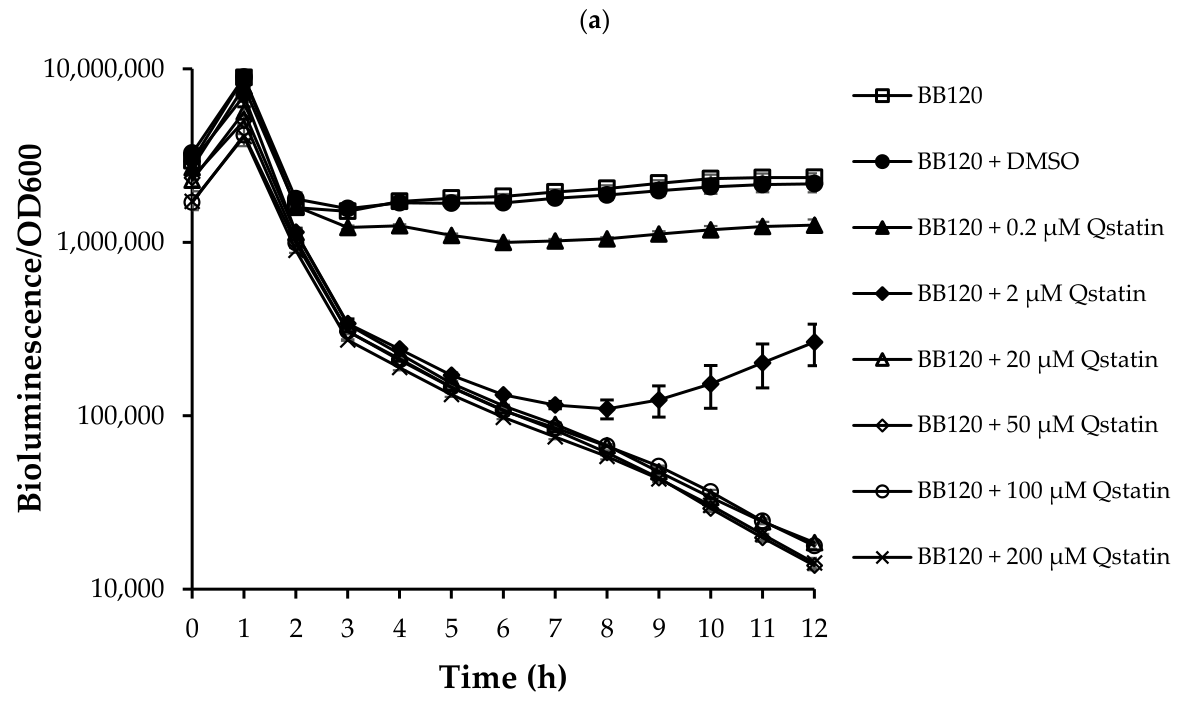
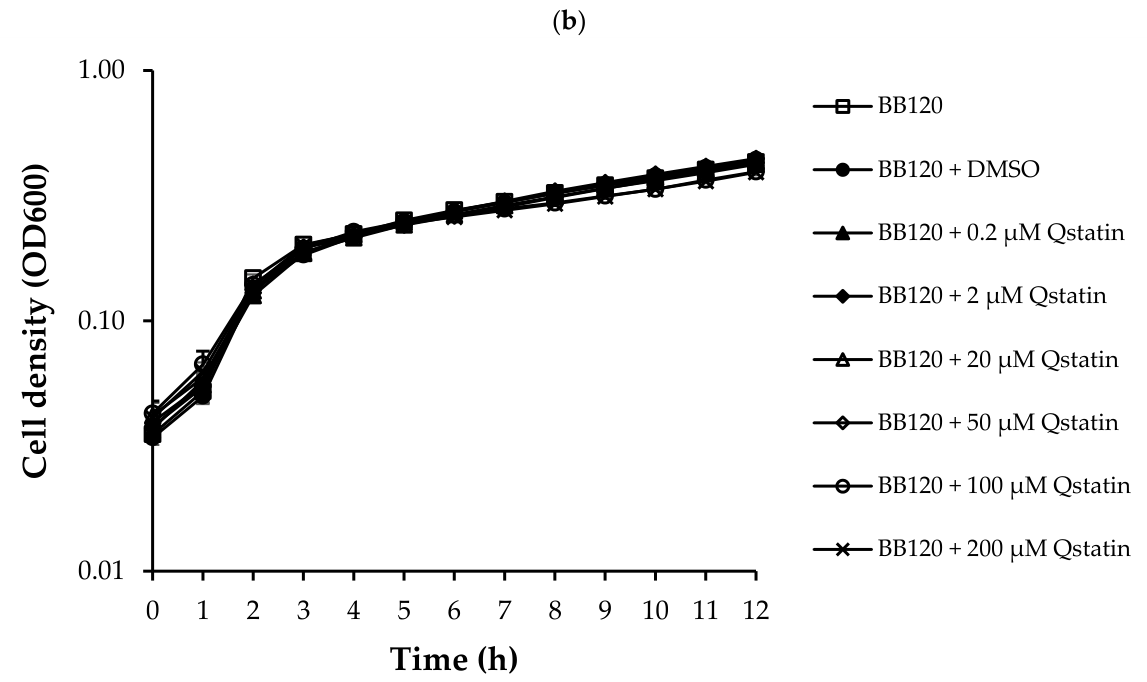
3.1. Impact of Qstatin on Growth Kinetics and Quorum Sensing-Regulated Bioluminescence of V. campbellii
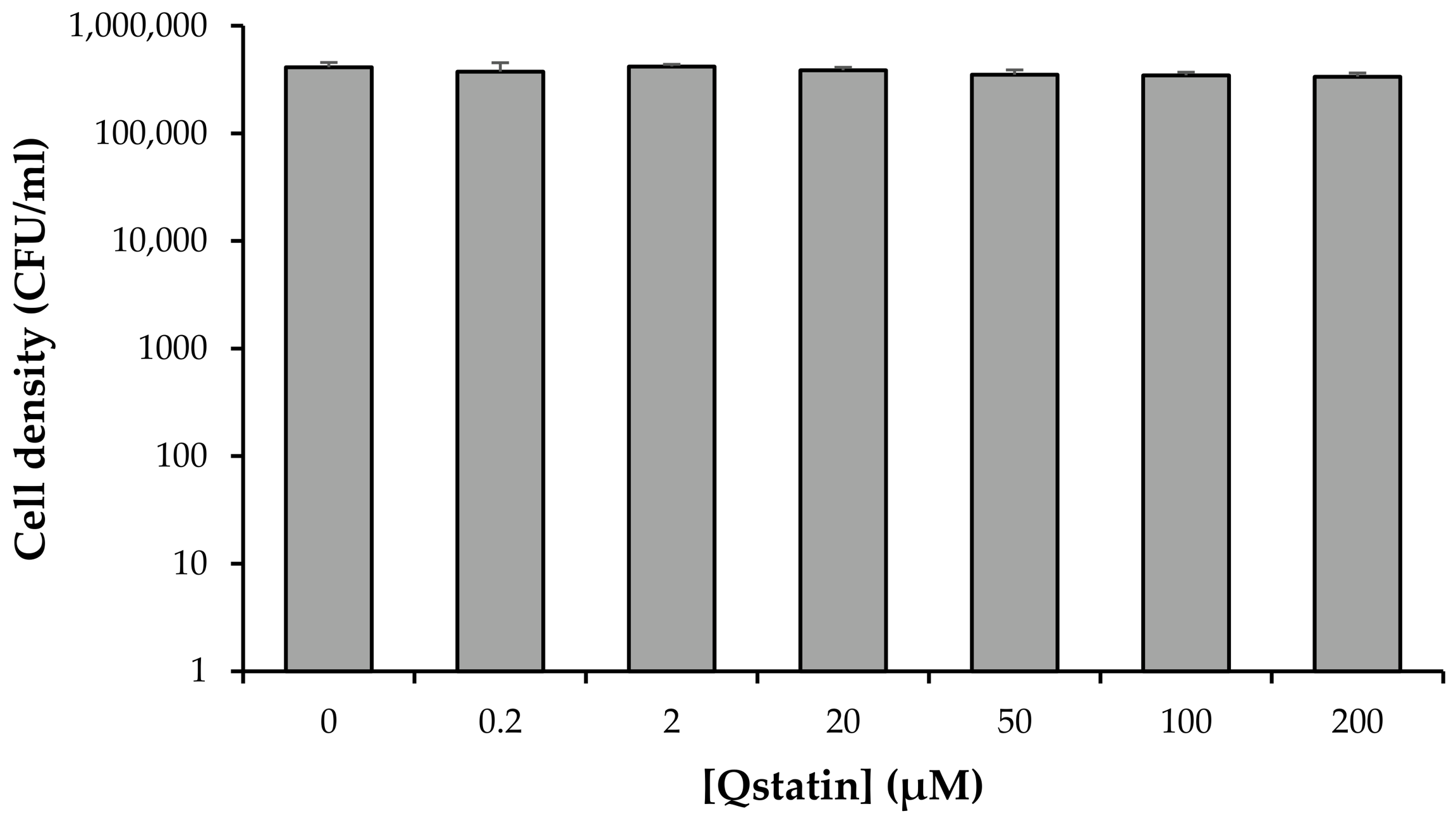
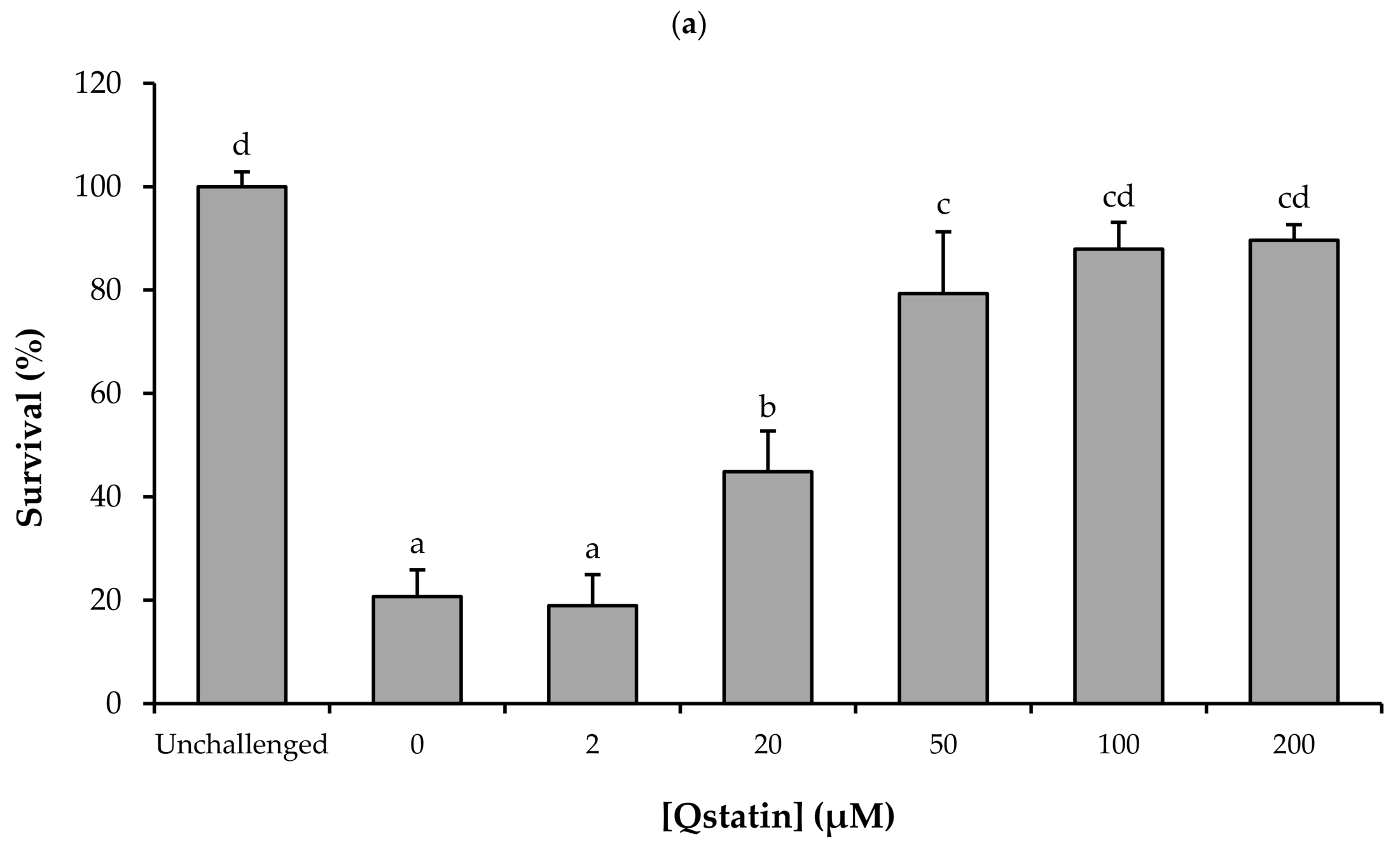
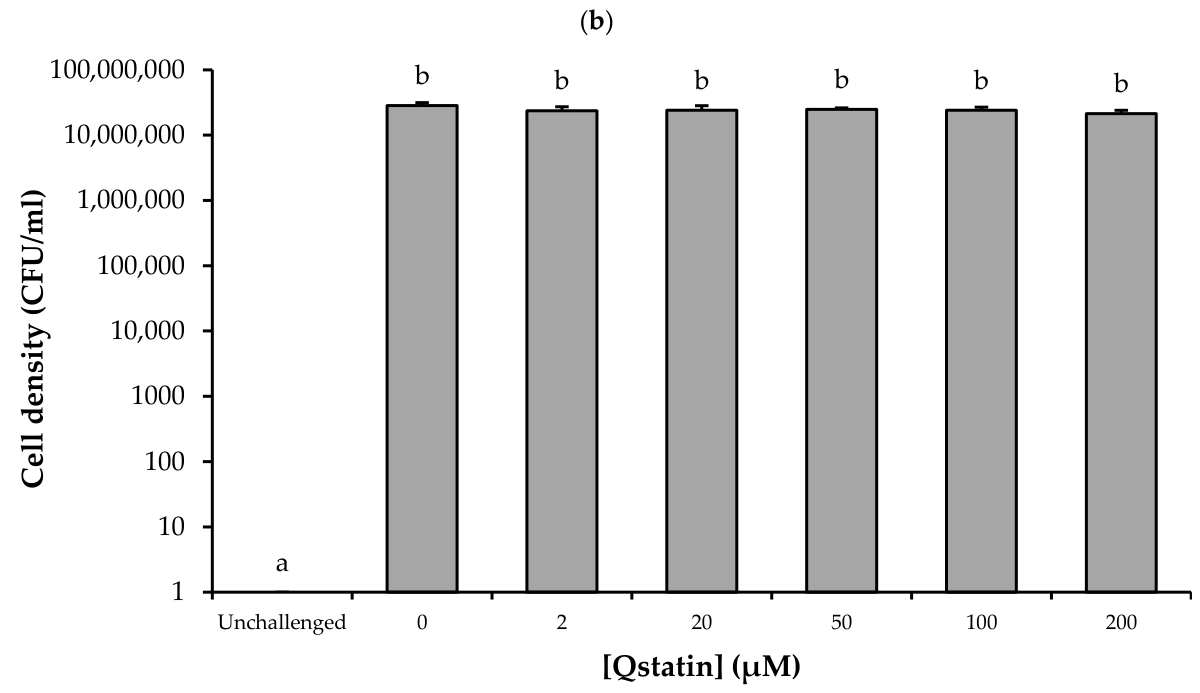
3.2. Impact of Qstatin on the Survival of V. campbellii in a Nutrient-Limited Environment
3.3. Impact of Qstatin on the Expression of Quorum Sensing-Regulated Genes in V. campbellii
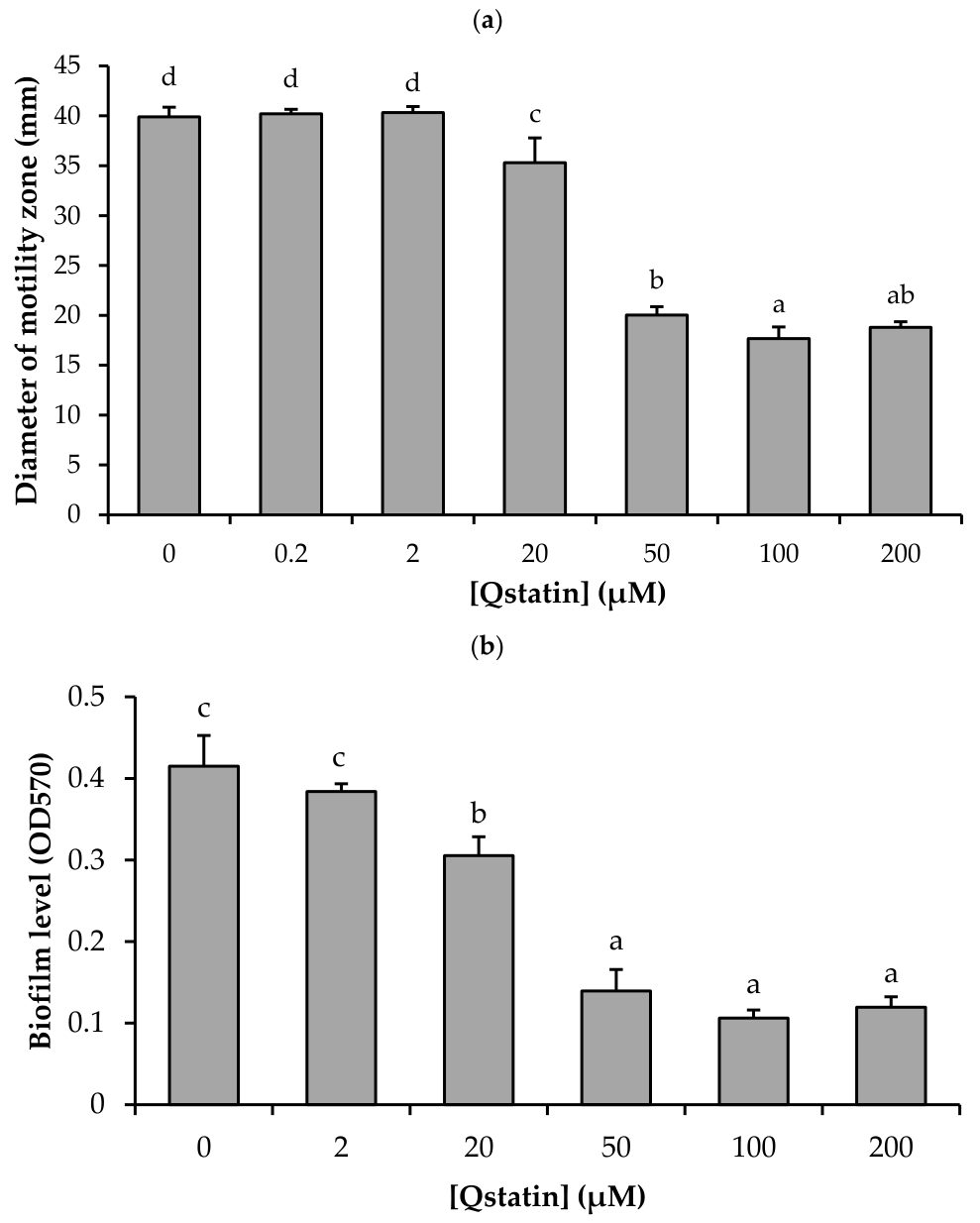
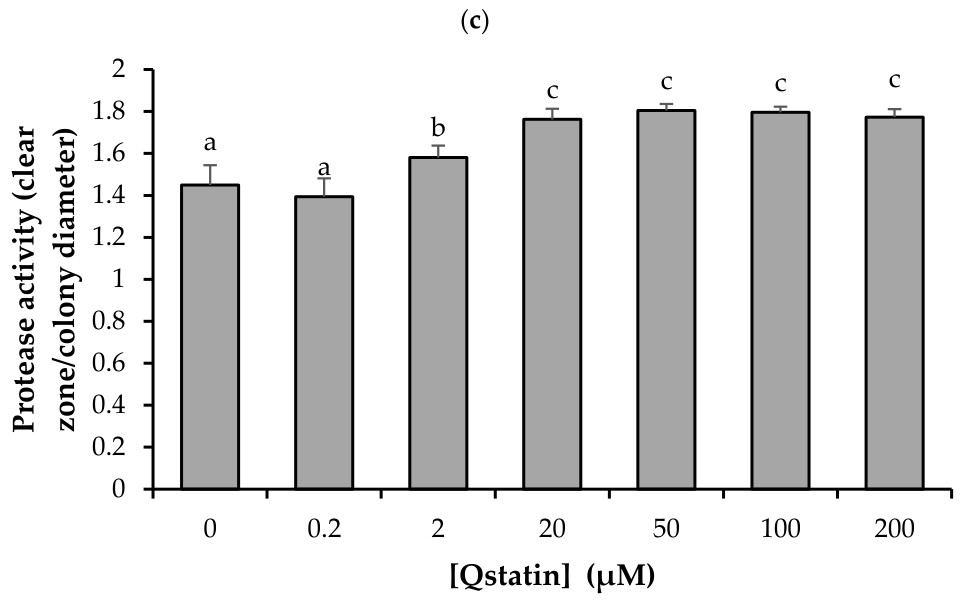
3.4. Impact of Qstatin on Swimming Motility, Biofilm Formation, and Proteolytic Activity of V. campbellii
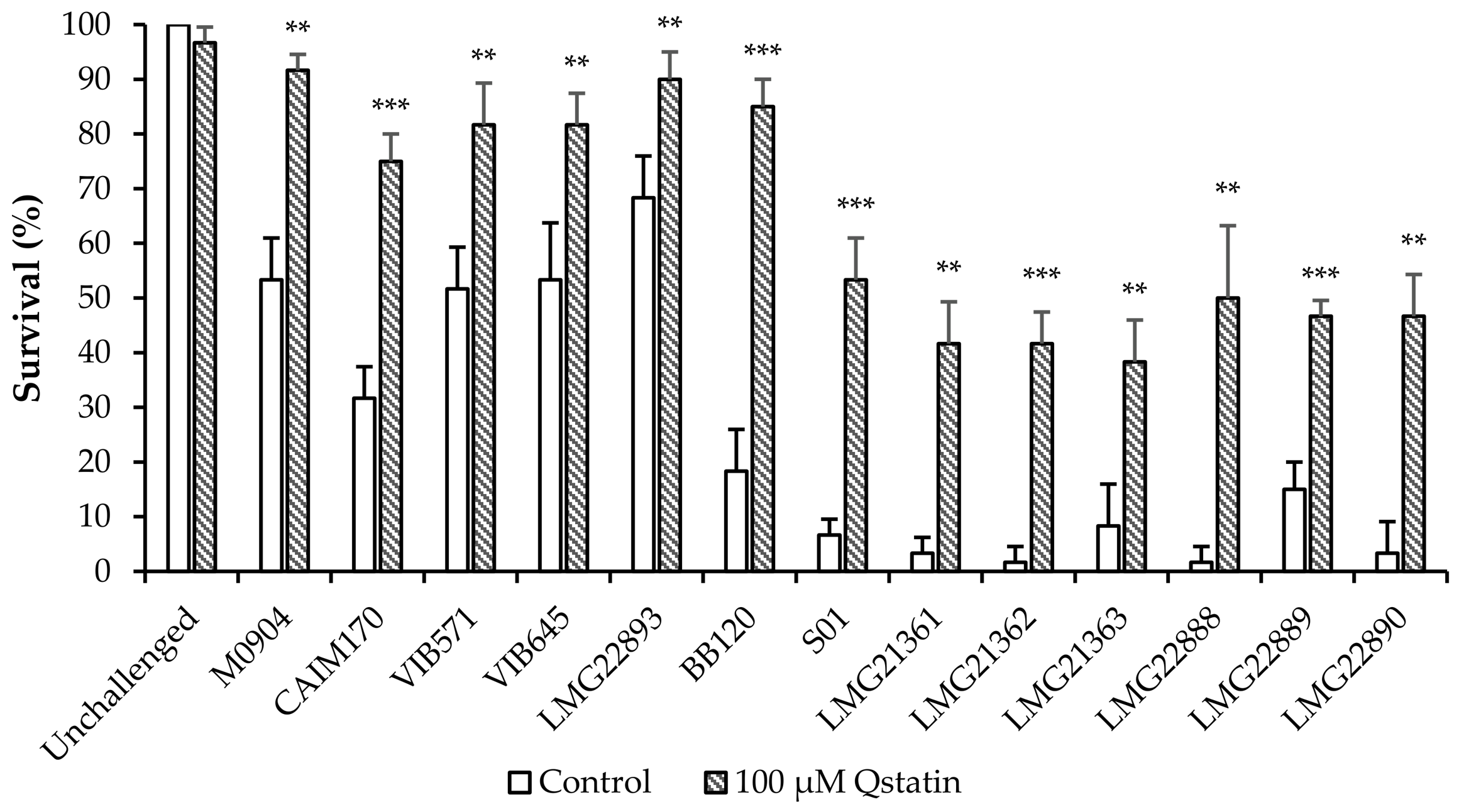
3.5. Impact of Qstatin on the Virulence of Harveyi Clade Vibrios in the Gnotobiotic Brine Shrimp (Artemia franciscana) Model
4. Discussion
5. Conclusions
Author Contributions
Funding
Institutional Review Board Statement
Informed Consent Statement
Data Availability Statement
Conflicts of Interest
Abbreviations
| V. | Vibrio |
| AHPND | Acute Hepatopancreatic Necrosis Disease |
| WOAH | World Organization for Animal Health |
| LB35 | Luria–Bertani Medium Containing 35 g/L NaCl |
Appendix A




References
- Hegde, A.; Kabra, S.; Basawa, R.M.; Khile, D.A.; Abbu, R.U.F.; Thomas, N.A.; Manickam, N.B.; Raval, R. Bacterial diseases in marine fish species: Current trends and future prospects in disease management. World J. Microbiol. Biotechnol. 2023, 39, 317. [Google Scholar] [CrossRef] [PubMed]
- Bonnin-Jusserand, M.; Copin, S.; Le Bris, C.; Brauge, T.; Gay, M.; Brisabois, A.; Grard, T.; Midelet-Bourdin, G. Vibrio species involved in seafood-borne outbreaks (Vibrio cholerae, V. parahaemolyticus and V. vulnificus): Review of microbiological versus recent molecular detection methods in seafood products. Crit. Rev. Food Sci. Nutr. 2019, 59, 597–610. [Google Scholar] [CrossRef]
- Darshanee Ruwandeepika, H.A.; Sanjeewa Prasad Jayaweera, T.; Paban Bhowmick, P.; Karunasagar, I.; Bossier, P.; Defoirdt, T. Pathogenesis, virulence factors and virulence regulation of vibrios belonging to the Harveyi clade. Rev. Aquac. 2012, 4, 59–74. [Google Scholar] [CrossRef]
- Zhang, S.; Yang, Q.; Eggermont, M.; Defoirdt, T. Quorum-sensing interference in vibrios. Rev. Aquac. 2023, 15, 1452–1466. [Google Scholar] [CrossRef]
- Su, Y.-C.; Liu, C. Vibrio parahaemolyticus: A concern of seafood safety. Food Microbiol. 2007, 24, 549–558. [Google Scholar] [CrossRef] [PubMed]
- Tang, K.F.J.; Bondad-Reantaso, M.G. Impacts of acute hepatopancreatic necrosis disease on commercial shrimp aquaculture. Sci. Tech. Rev. 2019, 38, 477–490. [Google Scholar] [CrossRef]
- Soto-Rodriguez, S.A.; Lozano-Olvera, R.; Ramos-Clamont Montfort, G.; Zenteno, E.; Sánchez-Salgado, J.L.; Vibanco-Pérez, N.; Aguilar Rendón, K.G. New insights into the mechanism of action of PirAB from Vibrio parahaemolyticus. Toxins 2022, 14, 243. [Google Scholar] [CrossRef]
- Choi, M.; Stevens, A.M.; Smith, S.A.; Taylor, D.P.; Kuhn, D.D. Strain and dose infectivity of Vibrio parahaemolyticus: The causative agent of early mortality syndrome in shrimp. Aquac. Res. 2017, 48, 3719–3727. [Google Scholar] [CrossRef]
- Kumar, R.; Ng, T.H.; Wang, H.-C. Acute hepatopancreatic necrosis disease in penaeid shrimp. Rev. Aquac. 2020, 12, 1867–1880. [Google Scholar] [CrossRef]
- Kumar, V.; Roy, S.; Behera, B.K.; Bossier, P.; Das, B.K. Acute hepatopancreatic necrosis disease (AHPND): Virulence, pathogenesis and mitigation strategies in shrimp aquaculture. Toxins 2021, 13, 524. [Google Scholar] [CrossRef]
- Defoirdt, T.; Sorgeloos, P.; Bossier, P. Alternatives to antibiotics for the control of bacterial disease in aquaculture. Curr. Opin. Microbiol. 2011, 14, 251–258. [Google Scholar] [CrossRef] [PubMed]
- Deng, Y.; Tan, A.; Zhao, F.; Wang, F.; Gong, H.; Lai, Y.; Huang, Z. Global distribution of antimicrobial resistance genes in aquaculture. One Health Adv. 2025, 3, 6. [Google Scholar] [CrossRef]
- Santos, L.; Ramos, F. Antimicrobial resistance in aquaculture: Current knowledge and alternatives to tackle the problem. Int. J. Antimicrob. Agents 2018, 52, 135–143. [Google Scholar] [CrossRef]
- Defoirdt, T. Virulence mechanisms of bacterial aquaculture pathogens and antivirulence therapy for aquaculture. Rev. Aquac. 2014, 6, 100–114. [Google Scholar] [CrossRef]
- Defoirdt, T. Quorum-sensing systems as targets for antivirulence therapy. Trends Microbiol. 2018, 26, 313–328. [Google Scholar] [CrossRef]
- Denzer, L.; Schroten, H.; Schwerk, C. From Gene to Protein—How Bacterial Virulence Factors Manipulate Host Gene Expression During Infection. Int. J. Mol. Sci. 2020, 21, 3730. [Google Scholar] [CrossRef]
- Dickey, S.W.; Cheung, G.Y.C.; Otto, M. Different drugs for bad bugs: Antivirulence strategies in the age of antibiotic resistance. Nat. Rev. Drug Discov. 2017, 16, 457–471. [Google Scholar] [CrossRef]
- Leitão, J.H. Microbial virulence factors. Int. J. Mol. Sci. 2020, 21, 5320. [Google Scholar] [CrossRef]
- Yang, Q.; Defoirdt, T. Weak selection for resistance to quorum sensing inhibition during multiple host infection cycles. ISME J. 2024, 18, wrae251. [Google Scholar] [CrossRef] [PubMed]
- Kim, B.S.; Jang, S.Y.; Bang, Y.-j.; Hwang, J.; Koo, Y.; Jang, K.K.; Lim, D.; Kim, M.H.; Choi, S.H. Qstatin, a selective inhibitor of quorum sensing in Vibrio species. mBio 2018, 9, e02262-17. [Google Scholar] [CrossRef] [PubMed]
- Soto-Rodriguez, S.A.; Gomez-Gil, B.; Lozano-Olvera, R.; Betancourt-Lozano, M.; Morales-Covarrubias, M.S. Field and experimental evidence of Vibrio parahaemolyticus as the causative agent of acute hepatopancreatic necrosis disease of cultured shrimp (Litopenaeus vannamei) in northwestern Mexico. Appl. Environ. Microbiol. 2015, 81, 1689–1699. [Google Scholar] [CrossRef]
- Defoirdt, T.; Crab, R.; Wood, T.K.; Sorgeloos, P.; Verstraete, W.; Bossier, P. Quorum sensing-disrupting brominated furanones protect the gnotobiotic brine shrimp Artemia franciscana from pathogenic Vibrio harveyi, Vibrio campbellii, and Vibrio parahaemolyticus isolates. Appl. Environ. Microbiol. 2006, 72, 6419–6423. [Google Scholar] [CrossRef] [PubMed]
- Zhang, X.-H.; Meaden, P.G.; Austin, B. Duplication of hemolysin genes in a virulent Isolate of Vibrio harveyi. Appl. Environ. Microbiol. 2001, 67, 3161–3167. [Google Scholar] [CrossRef]
- Bassler, B.L.; Greenberg, E.P.; Stevens, A.M. Cross-species induction of luminescence in the quorum-sensing bacterium Vibrio harveyi. J. Bacteriol. 1997, 179, 4043–4045. [Google Scholar] [CrossRef] [PubMed]
- Dong, X.; Wang, H.; Xie, G.; Zou, P.; Guo, C.; Liang, Y.; Huang, J. An isolate of Vibrio campbellii carrying the pirVP gene causes acute hepatopancreatic necrosis disease. Emerg. Microbes Infect. 2017, 6, e2. [Google Scholar] [CrossRef]
- Gomez-Gil, B.; Soto-Rodríguez, S.; García-Gasca, A.; Roque, A.; Vazquez-Juarez, R.; Thompson, F.L.; Swings, J. Molecular identification of Vibrio harveyi-related isolates associated with diseased aquatic organisms. Microbiology 2004, 150, 1769–1777. [Google Scholar] [CrossRef]
- Soto-Rodriguez, S.A.; Roque, A.; Lizarraga-Partida, M.L.; Guerra-Flores, A.L.; Gomez-Gil, B. Virulence of luminous vibrios to Artemia franciscana nauplii. Dis. Aquat. Org. 2003, 53, 231–240. [Google Scholar] [CrossRef]
- Verschuere, L.; Rombaut, G.; Huys, G.; Dhont, J.; Sorgeloos, P.; Verstraete, W. Microbial control of the culture of Artemia juveniles through preemptive colonization by selected bacterial strains. Appl. Environ. Microbiol. 1999, 65, 2527–2533. [Google Scholar] [CrossRef]
- Yang, Q.; Pande, G.S.J.; Wang, Z.; Lin, B.; Rubin, R.A.; Vora, G.J.; Defoirdt, T. Indole signalling and (micro)algal auxins decrease the virulence of Vibrio campbellii, a major pathogen of aquatic organisms. Environ. Microbiol. 2017, 19, 1987–2004. [Google Scholar] [CrossRef] [PubMed]
- Karsi, A.; Menanteau-Ledouble, S.; Lawrence, M.L. Development of bioluminescent Edwardsiella ictaluri for noninvasive disease monitoring. FEMS Microbiol. Lett. 2006, 260, 216–223. [Google Scholar] [CrossRef]
- Natrah, F.M.I.; Ruwandeepika, H.A.D.; Pawar, S.; Karunasagar, I.; Sorgeloos, P.; Bossier, P.; Defoirdt, T. Regulation of virulence factors by quorum sensing in Vibrio harveyi. Vet. Microbiol. 2011, 154, 124–129, Erratum in Vet. Microbiol. 2013, 163, 404. [Google Scholar] [CrossRef]
- Yang, Q.; Defoirdt, T. Quorum sensing positively regulates flagellar motility in pathogenic Vibrio harveyi. Environ. Microbiol. 2015, 17, 960–968. [Google Scholar] [CrossRef]
- Stepanović, S.; Vuković, D.; Hola, V.; Di Bonaventura, G.; Djukić, S.; Cirković, I.; Ruzicka, F. Quantification of biofilm in microtiter plates: Overview of testing conditions and practical recommendations for assessment of biofilm production by staphylococci. APMIS 2007, 115, 891–899. [Google Scholar] [CrossRef]
- Defoirdt, T.; Bossier, P.; Sorgeloos, P.; Verstraete, W. The impact of mutations in the quorum sensing systems of Aeromonas hydrophila, Vibrio anguillarum and Vibrio harveyi on their virulence towards gnotobiotically cultured Artemia franciscana. Environ. Microbiol. 2005, 7, 1239–1247. [Google Scholar] [CrossRef] [PubMed]
- Yang, Q.; Zou, P.; Cao, Z.; Wang, Q.; Fu, S.; Xie, G.; Huang, J. QseC Inhibition as a Novel Antivirulence Strategy for the Prevention of Acute Hepatopancreatic Necrosis Disease (AHPND)-Causing Vibrio parahaemolyticus. Front. Cell. Infect. Microbiol. 2021, 10, 594652. [Google Scholar] [CrossRef]
- Zhang, S.; Yang, Q.; Defoirdt, T. Indole decreases the virulence of pathogenic vibrios belonging to the Harveyi clade. J. Appl. Microbiol. 2022, 132, 167–176. [Google Scholar] [CrossRef] [PubMed]
- Livak, K.J.; Schmittgen, T.D. Analysis of relative gene expression data using real-time quantitative PCR and the 2−ΔΔCT method. Methods 2001, 25, 402–408. [Google Scholar] [CrossRef]
- Yildiz, F.H.; Dolganov, N.A.; Schoolnik, G.K. VpsR, a member of the response regulators of the two-component regulatory systems, is required for expression of vps biosynthesis genes and EPSETr-associated phenotypes in Vibrio cholerae O1 El Tor. J. Bacteriol. 2001, 183, 1716–1726. [Google Scholar] [CrossRef]
- Ruwandeepika, H.A.D.; Defoirdt, T.; Bhowmick, P.P.; Karunasagar, I.; Karunasagar, I.; Bossier, P. In vitro and in vivo expression of virulence genes in Vibrio isolates belonging to the Harveyi clade in relation to their virulence towards gnotobiotic brine shrimp (Artemia franciscana). Environ. Microbiol. 2011, 13, 506–517. [Google Scholar] [CrossRef]
- Han, J.E.; Tang, K.F.J.; Pantoja, C.R.; White, B.L.; Lightner, D.V. qPCR assay for detecting and quantifying a virulence plasmid in acute hepatopancreatic necrosis disease (AHPND) due to pathogenic Vibrio parahaemolyticus. Aquaculture 2015, 442, 12–15. [Google Scholar] [CrossRef]
- Han, J.E.; Tang, K.F.J.; Tran, L.H.; Lightner, D.V. Photorhabdus insect-related (Pir) toxin-like genes in a plasmid of Vibrio parahaemolyticus, the causative agent of acute hepatopancreatic necrosis disease (AHPND) of shrimp. Dis. Aquat. Org. 2015, 113, 33–40. [Google Scholar] [CrossRef]
- Miller, M.B.; Bassler, B.L. Quorum sensing in bacteria. Annu. Rev. Microbiol. 2001, 55, 165–199. [Google Scholar] [CrossRef]
- Defoirdt, T.; Benneche, T.; Brackman, G.; Coenye, T.; Sorgeloos, P.; Scheie, A.A. A Quorum Sensing-Disrupting Brominated Thiophenone with a Promising Therapeutic Potential to Treat Luminescent Vibriosis. PLoS ONE 2012, 7, e41788. [Google Scholar] [CrossRef]
- Defoirdt, T.; Pande, G.S.J.; Baruah, K.; Bossier, P. The apparent quorum-sensing inhibitory activity of pyrogallol is a side effect of peroxide production. Antimicrob. Agents Chemother. 2013, 57, 2870–2873. [Google Scholar] [CrossRef] [PubMed]
- McCarter, L.L. Dual flagellar systems enable motility under different circumstances. J. Mol. Microbiol. Biotechnol. 2004, 7, 18–29. [Google Scholar] [CrossRef]
- Mueller, R.S.; Beyhan, S.; Saini, S.G.; Yildiz, F.H.; Bartlett, D.H. Indole acts as an extracellular cue regulating gene expression in Vibrio cholerae. J. Bacteriol. 2009, 191, 3504–3516. [Google Scholar] [CrossRef] [PubMed]
- Mok, K.C.; Wingreen, N.S.; Bassler, B.L. Vibrio harveyi quorum sensing: A coincidence detector for two autoinducers controls gene expression. EMBO J. 2003, 22, 870–881. [Google Scholar] [CrossRef] [PubMed]
- Ruwandeepika, H.A.D.; Bhowmick, P.P.; Karunasagar, I.; Bossier, P.; Defoirdt, T. Quorum sensing regulation of virulence gene expression in Vibrio harveyi in vitro and in vivo during infection of gnotobiotic brine shrimp larvae. Environ. Microbiol. Rep. 2011, 3, 597–602. [Google Scholar] [CrossRef]


| Strain | Relevant Features | References |
|---|---|---|
| Vibrio parahaemolyticus | ||
| M0904 | AHPND-causing strain; isolated from the hepatopancreas of diseased shrimp (Penaeus vannamei), Mexico. | [21] |
| CAIM 170 | Isolated from the hemolymph of diseased shrimp (Penaeus spp.), Mexico. | [22] |
| Vibrio harveyi | ||
| VIB 571 | Isolated from sea bass (Dicentrarchus labrax), Spain. | [23] |
| VIB 645 | Isolated from sea bass (Dicentrarchus labrax), Tunisia. | [23] |
| LMG 22893 | Isolated from the hemolymph of diseased shrimp (Penaeus spp.), Mexico. | [22] |
| Vibrio campbellii | ||
| BB120 | Model strain for studying quorum sensing in vibrios; previously classified as V. harveyi. | [24] |
| S01 | AHPND-causing strain; isolated from a shrimp (Penaeus spp.) farm, China. | [25] |
| LMG 21361 | Isolated from seawater from shrimp (Litopenaeus spp.) broodstock tanks, Mexico. | [26,27] |
| LMG 21362 | Isolated from seawater from shrimp (Litopenaeus spp.) broodstock tanks, Mexico. | [26,27] |
| LMG 21363 | Isolated from lymphoid organs from diseased juveniles (Penaeus spp.) Philippines. | [27] |
| LMG 22888 | Isolated from seawater from shrimp (Litopenaeus spp.) broodstock tanks, Mexico. | [26,27] |
| LMG 22889 | Isolated from seawater from shrimp (Litopenaeus spp.) broodstock tanks, Mexico. | [26,27] |
| LMG 22890 | Isolated from seawater from shrimp (Litopenaeus spp.) broodstock tanks, Ecuador. | [26,27] |
| Aeromonas sp. | ||
| LVS3 | Feed for brine shrimp larvae. | [28] |
| Relative Expression 1 | |||||
|---|---|---|---|---|---|
| BB120 | S01 | ||||
| Gene | Function | Untreated | +Qstatin | Untreated | +Qstatin |
| flaA | Polar flagellar flagellin | 1.0 ± 0.3 | 0.6 ± 0.1 * | 1.0 ± 0.3 | 0.5 ± 0.1 * |
| flaK | Polar flagellar regulator | 1.0 ± 0.1 | ND | 1.0 ± 0.2 | ND |
| lafA | Lateral flagellar flagellin | 1.0 ± 0.0 | 1.2 ± 0.2 | NT | NT |
| lafK | Lateral flagellar regulator | 1.0 ± 0.1 | 1.1 ± 0.2 | NT | NT |
| vpsR | Main activator of VPS production | 1.1 ± 0.5 | 0.2 ± 0.1 ** | 1.0 ± 0.3 | 0.3 ± 0.1 ** |
| vpsT | Secondary activator of VPS production | 1.0 ± 0.3 | 0.1 ± 0.0 *** | 1.0 ± 0.3 | 0.1 ± 0.0 *** |
| vhp | metalloprotease | 1.0 ± 0.4 | 0.4 ± 0.0 ** | 1.0 ± 0.3 | 0.4 ± 0.1 ** |
| pirA | AHPND toxin gene | NT | NT | 1.0 ± 0.2 | 0.9 ± 0.2 |
| pirB | AHPND toxin gene | NT | NT | 1.0 ± 0.3 | 0.8 ± 0.3 |
Disclaimer/Publisher’s Note: The statements, opinions and data contained in all publications are solely those of the individual author(s) and contributor(s) and not of MDPI and/or the editor(s). MDPI and/or the editor(s) disclaim responsibility for any injury to people or property resulting from any ideas, methods, instructions or products referred to in the content. |
© 2026 by the authors. Licensee MDPI, Basel, Switzerland. This article is an open access article distributed under the terms and conditions of the Creative Commons Attribution (CC BY) license.
Share and Cite
Zou, P.; Yang, Q.; Defoirdt, T. The Quorum Sensing Inhibitor Qstatin Has Broad-Spectrum Antivirulence Activity Towards Shrimp-Pathogenic Vibrios. Microorganisms 2026, 14, 1065. https://doi.org/10.3390/microorganisms14051065
Zou P, Yang Q, Defoirdt T. The Quorum Sensing Inhibitor Qstatin Has Broad-Spectrum Antivirulence Activity Towards Shrimp-Pathogenic Vibrios. Microorganisms. 2026; 14(5):1065. https://doi.org/10.3390/microorganisms14051065
Chicago/Turabian StyleZou, Peizhuo, Qian Yang, and Tom Defoirdt. 2026. "The Quorum Sensing Inhibitor Qstatin Has Broad-Spectrum Antivirulence Activity Towards Shrimp-Pathogenic Vibrios" Microorganisms 14, no. 5: 1065. https://doi.org/10.3390/microorganisms14051065
APA StyleZou, P., Yang, Q., & Defoirdt, T. (2026). The Quorum Sensing Inhibitor Qstatin Has Broad-Spectrum Antivirulence Activity Towards Shrimp-Pathogenic Vibrios. Microorganisms, 14(5), 1065. https://doi.org/10.3390/microorganisms14051065