Article

Antimicrobial Susceptibility and Characterization of Extended-Spectrum β-Lactamases in Escherichia coli Isolated from Buffalo Mastitis Milk in Guangdong Province, China


School of Animal Science and Technology, Foshan University, Foshan 528231, China
*
Author to whom correspondence should be addressed.
Microorganisms 2026, 14(5), 1055; https://doi.org/10.3390/microorganisms14051055
Submission received: 21 April 2026 / Revised: 3 May 2026 / Accepted: 6 May 2026 / Published: 8 May 2026
(This article belongs to the Section Antimicrobial Agents and Resistance)

Abstract

Antimicrobial resistance (AMR) in Escherichia coli (E. coli) from food-producing animals constitutes a substantial public health concern. This study characterized antimicrobial resistance profiles, phylogenetic diversity, virulence-gene distribution, and plasmid-borne extended-spectrum β-lactamase (ESBL) determinants of E. coli isolates recovered from water buffaloes with subclinical mastitis. Among the 54 ESBL-producing E. coli isolates, all were resistant to ampicillin and cefotaxime. High resistance rates were also observed for cephalothin (75.9%), trimethoprim–sulfamethoxazole (74.0%), ceftiofur (70.4%), florfenicol (68.5%), and cefazolin (63.0%). Lower resistance was recorded for colistin sulfate (40.7%), enrofloxacin (33.3%), and gentamicin (25.9%). Phylogenetic analysis of ESBL producers identified phylogroup B1 (42.6%) as predominant, followed by groups A (29.6%) and D (25.9%). Multilocus sequence typing (MLST) revealed that ST50 (20.4%) was the most common sequence type, and serogroup O150 was dominant (70.4%). Virulence genes, such as iss (81.5%), astA (59.3%), and espP (38.9%), were frequently detected among ESBL isolates. ESBL genes were predominantly blaCTX-M-1 (27.8%) in all isolates, while the narrow-spectrum β-lactamase genes blaTEM-1 (55.6%) and blaOXA-10 (14.8%) were also commonly co-detected. Bioinformatic analysis predicted that all ESBL genes were associated with plasmid-derived contigs, with the predicted plasmid size ranging from approximately 32 to 187 kb and belonging to IncFIB, IncFIA, IncI1, IncFIA + I1, and IncFII replicon types. Conjugation frequencies ranged from 4.8 × 10⁻⁷ to 4.1 × 10⁻², and plasmids were predicted to carry additional resistance genes mediating resistance to chloramphenicol (floR), sulfonamides (sul1, sul3), tetracyclines (tet(A) and tet(B)), and trimethoprim (dfrA1, dfrA12). The co-carriage of ESBL genes with additional antimicrobial resistance and virulence determinants suggests the potential role of water buffaloes as reservoirs of clinically relevant resistance traits that may disseminate through horizontal gene transfer.

1. Introduction

Antimicrobial resistance (AMR) poses a serious threat to public health. By 2050, AMR could cause approximately 10 million deaths annually and result in economic losses of around $100 trillion [1]. The misuse and overuse of antimicrobial agents in clinical practice have led to the emergence of diverse antimicrobial-resistant bacteria, including extended-spectrum β-lactamase (ESBL)-producing Enterobacteriaceae, carbapenem-resistant Enterobacteriaceae (CRE), vancomycin-resistant Enterococci (VRE), and methicillin-resistant Staphylococcus aureus (MRSA) [2]. Novel antimicrobial resistance mechanisms have raised increasing concern, such as the mobile colistin resistance gene (mcr-1) identified in pigs [3] and the plasmid-mediated tigecycline resistance gene tet(X) detected in pigs and chickens [4,5]. Notably, these resistance mechanisms are frequently reported in animals, especially food-producing animals. Consequently, they are considered not only reservoirs of antimicrobial resistance genes (ARGs) and antimicrobial-resistant bacteria (ARB) but also sources of novel resistance mechanisms [6]. Accordingly, products derived from food-producing animals may serve as potential vehicles for transmitting these ARGs or antimicrobial-resistant bacteria (ARB) to humans [7]. Therefore, increased attention should be paid to ARGs and ARB in food animals.
Among antimicrobial resistance mechanisms, ESBL production has become one of the most concerning forms of resistance to β-lactams, as it can inactivate oxyimino-β-lactams such as third-generation cephalosporins and aztreonam [8]. Moreover, ESBL-encoding genes, including blaSHV and blaCTX-M, are typically located on transmissible plasmids and can be acquired by susceptible bacteria through conjugation [9]. As a result, these genes have been isolated from humans, the environment, and animals in numerous countries, including China, and the dissemination of ESBL-producing isolates has become a serious public health concern [6]. Furthermore, ESBL-producing isolates are often resistant not only to β-lactams but also to fluoroquinolones, aminoglycosides, and sulfonamides, which are commonly used to treat or prevent infections in livestock [10]. ESBL-encoding genes are frequently linked to plasmid-mediated quinolone resistance, and E. coli isolates co-expressing plasmid-mediated quinolone resistance (PMQR) and ESBL can complicate treatment [11].
Buffalo milk is preferred by consumers in much of Southeast Asia because of its taste and quality. However, mastitis is the most prevalent disease in buffaloes, and various bacteria contribute to its occurrence, including E. coli and Staphylococcus aureus (S. aureus). Buffaloes with mastitis are recognized as reservoirs of ESBL-producing E. coli, and zoonotic transmission of such pathogens to animal handlers and consumers is possible. Owing to antimicrobial resistance, ESBL-producing E. coli often leads to infections that cause economic losses, increased veterinary and labor costs, and higher culling rates [12]. Moreover, it also poses a substantial threat to human health [13]. Therefore, investigating the virulence and antimicrobial resistance of ESBL-producing E. coli is of great importance.
Buffalo milk is popular in Guangdong Province, China, and mastitis has been extensively reported in this species. However, few studies have investigated the distribution of virulence genes and antimicrobial resistance in ESBL-producing E. coli isolates from buffaloes with mastitis. Our findings will provide information to guide antibiotic use when treating mastitis in buffaloes.

2. Materials and Methods

2.1. Sample Collection

Milking was performed twice daily on all farms. Sample collection involved forestripping (3–5 squirts), pre-milking teat disinfection with 0.25% iodine, and drying with a clean towel. After automatic cluster removal, post-milking teat disinfection with 0.5% iodine was applied. Duplicate quarter milk samples were aseptically collected following National Mastitis Council protocols [14]. Briefly, after discarding the first 3 streams, 3 mL of milk was collected from each quarter, stored on ice, and transported to the laboratory within 6 h. Subclinical mastitis was presumptively identified using a commercial California Mastitis Test kit (ImmuCell, Portland, ME, USA) according to the manufacturer’s instructions: 2 mL of milk was mixed with an equal volume of CMT reagent and stirred for 30 s, with gel formation indicating elevated somatic cell counts. CMT-positive samples were subsequently subjected to bacterial isolation and identification.

2.2. Isolation of E. coli

Isolation of E. coli was performed as described in our previous work [15]. Briefly, for E. coli isolation, a 0.1 mL milk sample was inoculated into 3 mL Mueller–Hinton broth (MHB; Oxoid, Shanghai, China), which was incubated at 37 °C for 24 h. Samples were then streaked onto MacConkey agar (AoBOX, Beijing, China) plates, which were kept at 37 °C for 24 h. Pink colonies were presumptively identified as E. coli and then subjected to matrix-assisted laser desorption ionization–time-of-flight mass spectrometry (MALDI-TOF MS) using a Microflex LT instrument (Bruker Daltonics, Bremen, Germany).

2.3. Identification of ESBL-Producing E. coli Isolates

All the E. coli isolates were screened for ESBL production using the disk diffusion method according to CLSI guidelines [16]. Isolates showing inhibition zone diameters of ≤27 mm for cefotaxime and ≤22 mm for ceftazidime were considered suspected ESBL producers.
Suspected isolates were further tested using a phenotypic confirmatory test. Briefly, isolates were spread onto Mueller–Hinton agar (MHA, Oxoid, Shanghai, China), and commercial antibiotic disks (ThermoFisher, Shanghai, China) containing ceftazidime (30 µg), ceftazidime–clavulanic acid (30/10 µg), cefotaxime (30 µg), and cefotaxime–clavulanic acid (30/10 µg) were placed onto plates. Inhibition zones were measured, and any isolate exhibiting a ≥5 mm increase in zone diameter for either antimicrobial agent tested in combination with clavulanic acid compared to the agent alone was confirmed as an ESBL-producing E. coli strain.

2.4. Antimicrobial Susceptibility Testing

Antimicrobial susceptibility testing was performed using the broth microdilution method in MHB (Oxoid) according to the guidelines of CLSI [16]. A loopful of each E. coli isolate preserved in glycerinated MHB (Oxoid) was streaked on MHA (Oxoid) and incubated at 37 °C for 24 h. Three colonies were inoculated into MHB (Oxoid), and the bacterial suspension was adjusted to a turbidity equivalent to a 0.5 McFarland standard (approximately 105–106 colony-forming units (CFU)/mL) using sterile normal saline. Minimum inhibitory concentrations (MICs) were determined in 96-well microtiter plates. Each plate included positive growth control wells (containing MHB and bacterial inoculum without an antimicrobial agent) and negative sterility control wells (containing MHB only). Plates were incubated at 37 °C for 24 h. All determinations were performed in triplicate on separate occasions, and E. coli ATCC 25922 was included as a reference strain. The MIC was defined as the lowest concentration of antimicrobial agent that completely inhibited visible bacterial growth, as assessed by unaided visual inspection. Antimicrobial agents were purchased from MeilunBio (Dalian, China) and are listed in Table 1.

2.5. Genomic DNA Sequencing and Analysis

The DNA of each ESBL-producing E. coli isolate was extracted using a TIANamp Bacteria DNA Kit (Tiangen Biotech, Beijing, China) according to the manufacturer’s instructions. Sequencing was performed using an Illumina Nextera XT library with 2 × 300 bp paired-end reads (BGI, Shenzhen, China), yielding an average of 2,232,425 reads per isolate (63× average coverage). Raw data were assembled using SPAdes (version 3.0). Multilocus sequence types (MLST), plasmid replicon types, serotypes, virulence genes, and antimicrobial resistance genes were identified using MLST 2.0, PlasmidFinder 2.0, SeroTyperFinder 2.0, VirulenceFinder 2.0, and ResFinder 3.0, respectively, all available from the Center for Genomic Epidemiology database (http://genomicepidemiology.org/, accessed on 15 January 2026). Plasmids were also analyzed using PLACNETw (https://castillo.dicom.unican.es/upload/, accessed on 26 January 2026).
Parsnp v2.0 was used to align the core genome of ESBL-producing E. coli isolates, to call single-nucleotide polymorphisms (SNPs), and to generate a core-genome SNP tree with 1000 bootstrap resamples [17].

2.6. Conjugation Experiments

Before conjugation experiments, ESBL-producing E. coli isolates were tested for susceptibility to sodium azide. Conjugation experiments were then performed using sodium azide-resistant E. coli J53 as a recipient by filter mating as described previously [18].
The transferability of ESBL-encoding plasmids was assessed by filter mating using a sodium azide-resistant derivative of E. coli J53 as the recipient strain. Donor isolates (ESBL-producing isolates) were cultivated in MHB (Oxoid) supplemented with 2,6-diaminopimelic acid (DAP, 50 µg/mL) (Merck, Shanghai, China). DAP is an essential component of the peptidoglycan layer in certain bacterial species and was included here because preliminary experiments indicated that several of our E. coli donor strains exhibited impaired growth or loss of viability in standard MHB (Oxoid), potentially due to cell wall synthetic defects associated with their clinical origin. The addition of DAP restored robust growth and ensured consistent donor cell integrity during the mating procedure. Donor and recipient strains were grown to the mid-logarithmic phase (OD600nm 0.5–0.6), and equal volumes of each culture were mixed. The mixture was collected on a sterile 0.45 µm nitrocellulose filter (Merck, Shanghai, China) placed on an MHA (Oxoid) plate supplemented with DAP (50 µg/mL, Merck) and incubated overnight at 37 °C. Following incubation, the filter was resuspended in sterile saline (Tiangen Biotech, Beijing, China), and serial dilutions were plated onto MHA (Oxoid) containing azide (100 µg/mL, Merck, Shanghai, China) plus cefotaxime (2 μg/mL, MeilunBio) for each plasmid to enumerate transconjugants. Simultaneously, donor counts were determined on MHA (Oxoid) containing DAP (50 µg/mL, Merck) and cefotaxime (2 μg/mL, MeilunBio), and recipient counts were confirmed on MHA (Oxoid) containing azide (100 µg/mL) alone. Conjugation frequency was calculated for each successful mating as the number of transconjugants (CFU/mL) divided by the number of donor cells (CFU/mL) at the end of the mating period.

3. Results

3.1. Antimicrobial Resistance

Among 276 E. coli isolates from buffaloes with subclinical mastitis, 54 were identified as ESBL-producing E. coli. All isolates were subjected to antimicrobial susceptibility testing (Table 2). Among the ESBL-producing E. coli isolates, all demonstrated resistance to ampicillin and cefotaxime, followed by resistance to cephalothin (75.9%), trimethoprim-sulfamethoxazole (75.9%), ceftiofur (70.4%), florfenicol (68.5%), and cefazolin (63.0%). Lower resistance rates were observed for colistin (40.7%), enrofloxacin (33.3%), gentamicin (25.9%), amoxicillin–clavulanic acid (20.4%), amikacin (1.9%), and imipenem (1.9%). Among non-ESBL-producing E. coli isolates, the highest resistance rate was observed for trimethoprim–sulfamethoxazole (74.0%), followed by enrofloxacin (37.8%), doxycycline (35.1%), florfenicol (34.2%), gentamicin (30.6%), and colistin (23.4%). Lower resistance rates were observed for amoxicillin–clavulanic acid (13.5%), cephalothin (9.9%), ampicillin (9.0%), cefazolin (7.7%), cefotaxime (6.3%), ceftiofur (5.4%), amikacin (0.9%), and imipenem (0%).
ESBL-producing isolates exhibited markedly elevated MICs to β-lactams compared with non-ESBL-producing isolates (Table 3). The MIC50 and MIC90 of ampicillin were 8 and 16 µg/mL, respectively, in ESBL producers, versus 0.06 and 0.25 µg/mL in non-ESBL producers. For cefotaxime, the MIC50 was 256 µg/mL (compared with 4 µg/mL), and the MIC90 was 512 µg/mL (compared with 64 µg/mL). Both the MIC50 and MIC90 of ceftiofur were 16 µg/mL in ESBL-producing isolates, compared with 0.12 and 0.5 µg/mL in non-ESBL-producing isolates. Cephalothin MIC50 and MIC90 values (64 and 128 µg/mL) were 16- and 8-fold higher, respectively, than those in non-ESBL producers (4 and 16 µg/mL). MICs of amoxicillin–clavulanic acid and imipenem were comparable between the two groups. The MIC50 of enrofloxacin was identical (0.12 µg/mL) across ESBL and non-ESBL isolates, whereas the MIC90 was higher among ESBL producers (8 vs. 2 µg/mL). The MIC50 of florfenicol was twofold higher in ESBL producers. Doxycycline MIC50 and MIC90 values were higher in ESBL producers, while the MIC90 of colistin sulfate was lower (32 vs. 64 µg/mL).

3.2. Phylogenetic Groups, MLST, and Serotypes of ESBL-Producing E. coli

The predominant phylogroup was group B1 (23/54, 42.6%), followed by A (16/54, 29.6%) and D (14/54, 25.9%), whereas only one ESBL-producing isolate belonged to phylogroup B2. MLST analysis of 54 ESBL-producing E. coli isolates identified ST50 as the most frequent sequence type (ST) at 20.4% (11/54), followed by ST2797 (11.1%, 6/54). ST398 was also identified (3.7%, 2/54). The isolates were associated with serogroups O150 (70.4%, 38/54), O28 (18.5%, 10/54), O154 (1.0%, 1/54), O8 (1.9%, 1/54), O162 (1.9%, 1/54), O89 (1.9%, 1/54), and O173 (1.85%, 1/54).

3.3. Virulence Gene Distribution

Among the 54 ESBL-producing E. coli isolates, iss, astA, espP, and iroN were detected at 81.5% (44/54), 59.3% (32/54), 38.9% (21/54), and 31.5% (17/54), respectively (Figure 1). Other virulence genes, such as cma, mchB/C, and mchH, showed positive rates ranging from 14.8% (8/54) to 29.6% (16/54), while other virulence genes were rarely detected.

3.4. ESBL Gene Distribution

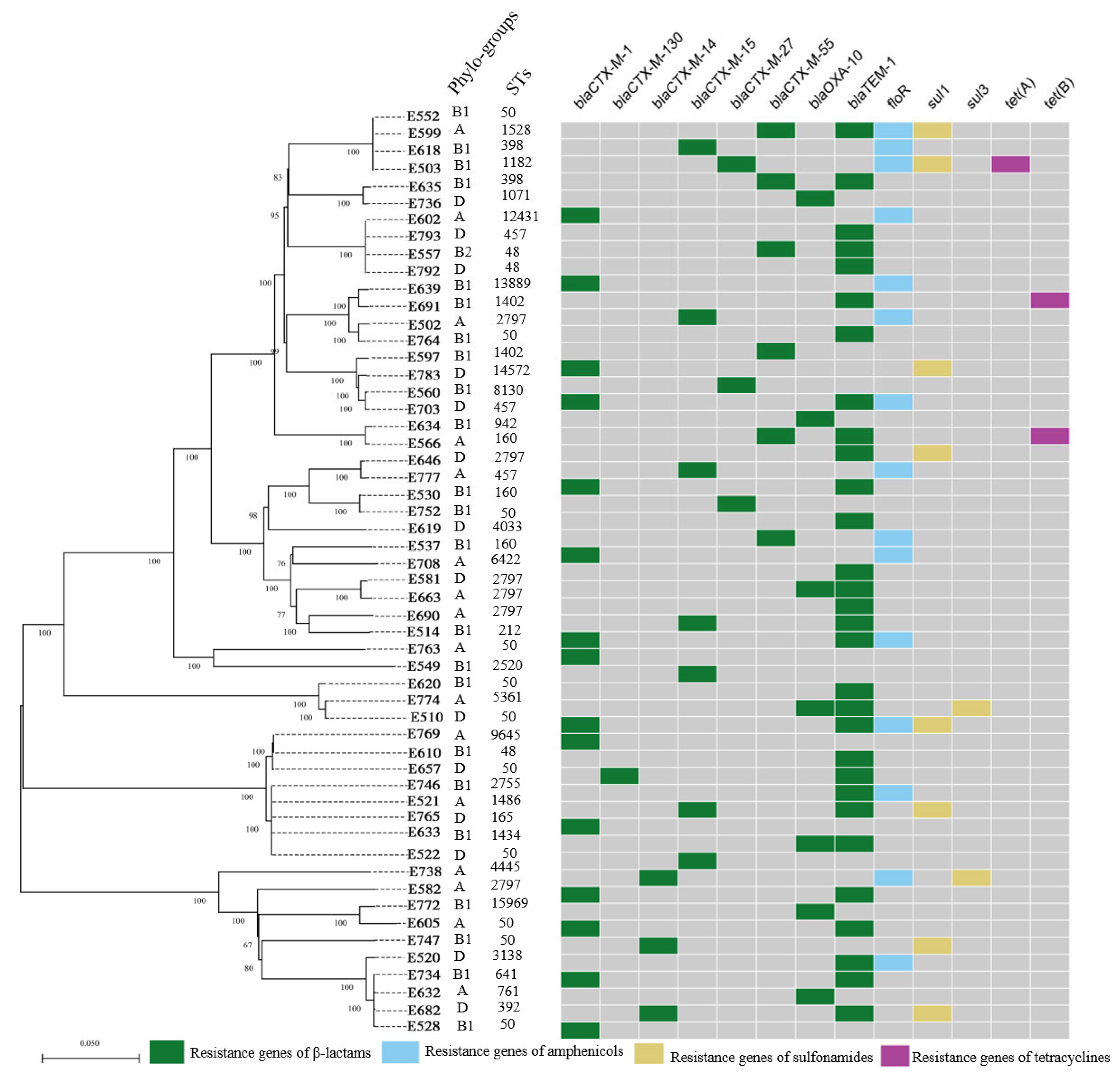
ESBL-encoding genes were detected in all isolates, with blaCTX-M and blaOXA types present (Figure 2). The most prevalent ESBL gene was blaCTX-M-1 (27.8%, 15/54), followed by blaCTX-M-15 (13.0%, 7/54). Other ESBL genes detected included blaCTX-M-55 (11.1%, 6/54), blaCTX-M-27 (1.8%, 1/54), blaCTX-M-14 (5.6%, 3/54), and blaCTX-M-130 (1.8%, 1/54). In addition to these ESBL genes, other narrow-spectrum β-lactamase genes were also detected, including blaTEM-1 (55.56%, 30/54) and blaOXA-10 (14.8%, 7/54).

3.5. Characteristics of ESBL Gene-Carrying Plasmids

Bioinformatic analysis predicted that all ESBL genes were associated with plasmid-derived contigs, which ranged in size from approximately 32 to 187 kb. Based on in silico prediction and conjugation assays, all plasmids appeared to be transferable via conjugation, with observed conjugation frequencies varying between 4.8 × 10⁻⁷ and 4.1 × 10⁻² (Table 3). Putative plasmid replicon types identified among contigs harboring ESBL genes included IncFIB (10/54), IncFIA (10/54), IncI1 (8/54), IncFIA + I1 (5/54), and IncFII (4/54). Additionally, these ESBL-carrying plasmid-derived contigs were predicted to carry additional antimicrobial resistance genes, including those conferring resistance to chloramphenicol (floR), sulfonamides (sul1 and sul3), tetracyclines (tet(A) and tet(B)), and trimethoprim (dfrA1 and dfrA12) (Table 4).

4. Discussion

In this study, we determined the antimicrobial susceptibility, distribution of virulence and antimicrobial resistance genes, and plasmid characteristics of ESBL-producing E. coli isolates recovered from buffalo mastitis milk in China. Our results indicate that 19.6% (54/276) of the isolates were ESBL-producing E. coli. All ESBL producers were resistant to ampicillin and cefotaxime and also exhibited high resistance rates to cephalothin, trimethoprim–sulfamethoxazole, ceftiofur, florfenicol, and cefazolin. Phylogroup B1 was predominant, followed by phylogroups A and D. Isolates showed diverse STs and serotypes. Virulence genes, including iss, astA, espP, and iroN, were carried by most ESBL-producing isolates, and blaCTX-M was the predominant ESBL gene type. Based on in silico analysis of short-read sequencing data, all the detected ESBL genes were predicted to be located on plasmids, which were inferred to belong mainly to IncFIB, IncFIA, IncI1, IncFIA + I1, and IncFII replicon types. Additional resistance genes (floR, sul1, sul3, tet(A), and tet(B)) were also predicted to be present on these plasmids. To the best of our knowledge, this study provides insights into ESBL-producing E. coli from buffalo mastitis, which is important for ensuring buffalo health and welfare.
E. coli remains one of the most significant etiological agents of bovine mastitis. Classical studies have established that E. coli predominantly infects the mammary gland during the periparturient and early lactation periods, characteristically inducing acute, local clinical mastitis [19]. However, the role of E. coli in subclinical mastitis has also been increasingly documented across diverse geographic settings. In Portugal, E. coli was identified as the second most prevalent bacterial species, following coagulase-negative staphylococci (CNS), in bulk tank milk [20]. Similarly, in Uruguay, E. coli ranked second only to S. aureus among pathogens isolated from bovine subclinical mastitis cases [21]. In China, E. coli was reported as one of the predominant coliform bacteria recovered from the milk of cows with subclinical mastitis [22,23]. Collectively, these findings underscore the dual clinical manifestation of E. coli infections, ranging from classic acute presentations to persistent subclinical states, thereby reinforcing the relevance of its inclusion in the present study.
ESBL-producing E. coli isolates from mastitis milk have raised global concern for both veterinary and public health [24,25]. In this study, the occurrence of ESBL-producing E. coli from mastitic buffaloes (19.6%) was lower than that reported in a previous study from China [26]. ESBL-producing E. coli isolates showed resistance to a variety of antimicrobial agents. Prolonged use of antibiotics, which exerts selective pressure for the emergence and dissemination of resistant isolates, may contribute to this phenomenon [27]. In this study, blaCTX-M-15 (7/54) was the most prevalent genotype, followed by blaCTX-M-55 (6/54). blaTEM-1, a narrow-spectrum β-lactamase gene, was also carried by most isolates (55.6%), which is consistent with findings in E. coli from bovine mastitis milk in China and Brazil [28,29]. This contrasts with a previous report from Nigeria, in which blaCTX-M-1 was the most prevalent gene (56.1%) and also showed the highest rate in E. coli from bovine mastitis milk [30]. The variation in the distribution of β-lactamase genes across geographic regions may stem from several factors, such as genetic mobility, plasmid associations, host and geographic dissemination, and selective pressures exerted by antibiotic use [31].
Phylogroups are widely used as predictors of E. coli pathogenicity in humans and cattle. Phylogroup B1 is considered the main pathogenic E. coli group in cattle and is also the most prevalent group in bovine mastitis worldwide [32]; similar results were observed in the present study. Meanwhile, phylogroup A is believed to be primarily associated with environmental sources. However, up to 29.6% of ESBL-producing E. coli isolates in this study belonged to phylogroup A, indicating that environmental contamination of teats with E. coli also plays an important role in the development of mastitis in buffaloes. Therefore, appropriate management practices, such as daily waste removal and avoidance of moisture on the farm, may help reduce the risk of contamination and control mastitis in buffaloes. Because phylotyping has limited discriminatory ability for epidemiological source tracking, we performed MLST. A variety of STs was observed, with ST50 being the most prevalent (11/54, 20.4%). However, this ST is rarely reported in both humans and animals. Importantly, because our study did not systematically capture herd-level, farm-level, or temporal structure, it remains unclear whether the predominance of ST50, serotype O150, and phylogroup B1 reflects a broader population-level signal or possible local clonal enrichment within the sampled buffalo populations. Therefore, while these findings identify a potentially distinctive profile, they should not be overinterpreted as representing the general ESBL-producing E. coli population in water buffaloes without further large-scale, longitudinal, and multi-farm sampling.
Several factors contribute to antimicrobial resistance in E. coli from mastitis milk, including β-lactamase production, target site modifications, and efflux pumps. AMR genes (tet(A), mcr-1, and blaCTX-M) located on plasmids can be transferred horizontally among animals, humans, and the environment [33]. The blaCTX-M gene has been reported to be mainly located on IncF group plasmids [34]. In this study, blaCTX-M genes were predicted to be located on a variety of plasmid types, including IncI1, IncFIA, IncHI2, and IncFIB. The conjugation efficiency, as assessed by laboratory mating assays, of IncI1 plasmids appeared to be related to their size. Our results differ from previous reports that indicate that plasmids carrying the blaCTX-M-15 gene mainly belong to IncI1 and often exhibit higher conjugation efficiency compared to other plasmid types [35]. It seems that IncI1 plasmids carrying AMR genes or virulence determinants may have reduced transfer efficiency due to increased metabolic burden on the donor.
A limitation of this study is that plasmid characterization relied exclusively on short-read sequencing data and in silico prediction tools. Therefore, the localization of ESBL genes to plasmids, the reported plasmid sizes, and their Inc-type assignments are putative and require validation by long-read sequencing, hybrid assembly, or S1-PFGE for definitive confirmation.

5. Conclusions

In conclusion, this study provides the first comprehensive characterization of ESBL-producing E. coli from water buffaloes with subclinical mastitis. The novelty of this work lies in the identification of potentially distinctive phylogenetic (predominant B1 phylogroup, ST50) and serological (O150) profiles, coupled with the co-carriage of multiple clinically relevant resistance genes on presumably transferable IncF plasmids based on in silico prediction and conjugation experiments. However, given that herd-level, farm-level, and temporal structures were not systematically captured in this study, we cannot definitively distinguish whether the observed predominance of ST50/O150/B1 reflects a broader population-level signal or local clonal enrichment. Consequently, these findings should be interpreted as hypothesis-generating, and further studies incorporating longitudinal, multi-farm sampling are needed to confirm whether these profiles are truly characteristic of ESBL-producing E. coli in water buffalo populations. These findings suggest that water buffaloes may represent previously underrecognized reservoirs of clinically relevant, multidrug-resistant ESBL-producing E. coli capable of horizontal gene transfer, raising the concern that buffalo farming systems could contribute to the dissemination of such strains. From a practical standpoint, the identification of predominant sequence types and plasmid types circulating in buffalo populations provides actionable molecular targets for the design of farm-level surveillance programs and rapid diagnostic screening tools. Furthermore, the observed transferability of ESBL-encoding plasmids under laboratory conditions underscores the risk of resistance dissemination within mixed-species livestock environments and highlights the urgent need for antimicrobial stewardship interventions—such as the restriction of critically important antimicrobials and the implementation of routine susceptibility testing in buffalo farming systems. These findings also lay the groundwork for future risk assessment studies aimed at quantifying the potential for zoonotic transmission along the dairy production chain.

Author Contributions

Conceptualization, D.Z.; Methodology, Y.Z., R.X., S.W. and Y.W.; Validation, Y.Z., S.W., B.L., Y.W., C.W. and D.Z.; Formal analysis, R.X., S.W. and B.L.; Investigation, Y.Z., R.X. and S.W.; Data curation, Y.Z., S.W., B.L., Y.W. and C.W.; Writing—original draft, Y.Z.; Writing—review & editing, Y.Z. and D.Z.; Visualization, Y.W. and C.W.; Supervision, D.Z.; Project administration, Y.Z., R.X., S.W., B.L., Y.W. and C.W.; Funding acquisition, D.Z. All authors have read and agreed to the published version of the manuscript.

Funding

This research is funded by the National Natural Science Foundation of China (No. 31772795).

Institutional Review Board Statement

The study was conducted in accordance with the Declaration of Helsinki, and approved by the Ethics Committee of Foshan University (protocol code 20220073 and date of 18 March 2026).

Informed Consent Statement

Not applicable.

Data Availability Statement

The data presented in this study are openly available in GenBank at NCBI, reference number PRJNA1450891.

Conflicts of Interest

The authors declare no competing interests.

References

  1. O’Neill, J. Review on Antimicrobial Resistance: Tackling Drug-Resistant Infections Globally: Final Report and Recommendations; Government of the United Kingdom: London, UK, 2016. Available online: https://apo.org.au/node/63983 (accessed on 24 November 2025).
  2. Okpara, E.O.; Ojo, O.E.; Awoyomi, O.J.; Dipeolu, M.A.; Oyekunle, M.A.; Schwarz, S. Antimicrobial usage and presence of extended-spectrum β-lactamase-producing Enterobacteriaceae in animal-rearing households of selected rural and Peri-Urban Communities. Vet. Microbiol. 2018, 218, 31–39. [Google Scholar] [CrossRef] [PubMed]
  3. Liu, Y.; Wang, Y.; Walsh, T.R.; Yi, L.X.; Zhang, R.; Spencer, J.; Doi, Y.; Tian, G.; Dong, B.; Huang, X.; et al. Emergence of plasmid-mediated colistin resistance mechanism mcr-1 in animals and human Beings in China: A microbiological and molecular biological study. Lancet Infect. Dis. 2016, 16, 161–168. [Google Scholar] [CrossRef] [PubMed]
  4. He, T.; Wang, R.; Liu, D.; Walsh, T.R.; Zhang, R.; Lv, Y.; Ke, Y.; Ji, Q.; Wei, R.; Liu, Z.; et al. Emergence of plasmid-mediated high-level tigecycline resistance genes in animals and humans. Nat. Microbiol. 2019, 4, 1450–1456. [Google Scholar] [CrossRef]
  5. Sun, J.; Chen, C.; Cui, C.; Zhang, Y.; Liu, X.; Cui, Z.H.; Ma, X.Y.; Feng, Y.; Fang, L.X.; Lian, X.L.; et al. Plasmid-encoded tet (X) genes that confer high-level tigecycline resistance in Escherichia coli. Nat. Microbiol. 2019, 4, 1457–1464. [Google Scholar] [CrossRef] [PubMed]
  6. Liu, Z.H.; Wang, K.; Zhang, Y.R.; Xia, L.; Zhao, L.; Guo, C.; Liu, X.; Qin, L.; Hao, Z. High prevalence and diversity characteristics of blaNDM, mcr, and blaESBL harboring multidrug-resistant Escherichia coli from chicken, pig, and cattle in China. Front. Cell. Infect. Microbiol. 2022, 11, 755545. [Google Scholar] [CrossRef]
  7. de Alcantara Rodrigues, I.; Ferrari, R.G.; Panzenhagen, P.H.N.; Mano, S.B.; Conte-Junior, C.A. Antimicrobial resistance genes in bacteria from animal-based foods. Adv. Appl. Microbiol. 2020, 112, 143–183. [Google Scholar] [CrossRef]
  8. Liu, H.H.; Wang, Y.L.; Wang, G.; Xing, Q.T.; Shao, L.H.; Dong, X.M.; Sai, L.T.; Liu, Y.J.; Ma, L.X. The prevalence of Escherichia coli strains with extended spectrum beta-lactamases isolated in China. Front. Microbiol. 2015, 6, 335. [Google Scholar] [CrossRef]
  9. Cantas, L.; Suer, K.; Guler, E.; Imir, T. High emergence of ESBL-producing E. coli cystitis: Time to get smarter in Cyprus. Front. Microbiol. 2015, 6, 1446. [Google Scholar] [CrossRef] [PubMed]
  10. Tian, G.B.; Wang, H.N.; Zhang, A.Y.; Zhang, Y.; Fan, W.Q.; Xu, C.W.; Zeng, B.; Guan, Z.B.; Zou, L.K. Detection of clinically important beta-lactamases in commensal Escherichia coli of human and swine origin in western China. J. Med. Microbiol. 2012, 61, 233–238. [Google Scholar] [CrossRef]
  11. Wang, Y.; He, T.; Han, J.; Wang, J.; Foley, S.L.; Yang, G.; Wan, S.; Shen, J.; Wu, C. Prevalence of ESBL and PMQR genes in fecal Escherichia coli isolated from the non-human primates in six zoos in China. Vet. Microbiol. 2012, 159, 53–59. [Google Scholar] [CrossRef]
  12. Lamey, A.E.; Ammar, A.M.; Zaki, E.R.; Khairy, N.; Moshref, B.S.; Refai, M.K. Virulence factors of Escherichia coli isolated from recurrent cases of clinical and subclinical mastitis in buffaloes. Int. J. Microbiol. Res. 2013, 4, 86–94. [Google Scholar] [CrossRef]
  13. Ducarmon, Q.R.; Zwittink, R.D.; Willems, R.P.J.; Verhoeven, A.; Nooij, S.; van der Klis, F.R.M.; Franz, E.; Kool, J.; Giera, M.; Vandenbroucke-Grauls, C.M.J.E.; et al. Gut colonisation by extended-spectrum β-lactamase-producing Escherichia coli and its association with the gut microbiome and metabolome in Dutch adults: A matched case-control study. Lancet Microbe 2022, 3, e443–e451. [Google Scholar] [CrossRef]
  14. Adkins, P.R.F.; Middleton, J.R. Laboratory Handbook on Bovine Mastitis; National Mastitis Council: Madison, WI, USA, 2017. [Google Scholar]
  15. Zhang, D.; Lu, X.; Feng, X.; Shang, X.; Liu, Q.; Zhang, N.; Yang, H. Molecular characteristics of Staphylococcus aureus strains isolated from subclinical mastitis of water buffaloes in Guangdong Province, China. Front. Vet. Sci. 2023, 10, 1177302. [Google Scholar] [CrossRef] [PubMed]
  16. CLSI. Performance Standards for Antimicrobial Susceptibility Testing; CLSI Document M100-S27; Clinical Laboratory Standards Institute (CLSI): Wayne, PA, USA, 2017. [Google Scholar]
  17. Treangen, T.J.; Ondov, B.D.; Koren, S.; Phillippy, A.M. The Harvest suite for rapid core-genome alignment and visualization of thousands of intraspecific microbial genomes. Genome Biol. 2014, 15, 524. [Google Scholar] [CrossRef]
  18. Liu, H.X.; Zhou, H.C.; Li, Q.F.; Peng, Q.; Zhao, Q.; Wang, J.; Liu, X. Molecular characteristics of extended-spectrum β-lactamase-producing Escherichia coli isolated from the rivers and lakes in Northeast China. BMC Microbiol. 2018, 18, 125. [Google Scholar] [CrossRef]
  19. Burvenich, C.; Van Merris, V.; Mehrzad, J.; Diez-Fraile, A.; Duchateau, L. Severity of E. coli mastitis is mainly determined by cow factors. Vet. Res. 2003, 34, 521–564. [Google Scholar] [CrossRef]
  20. Azevedo, C.; Pacheco, I.; Soares, C.; Romao, R.; Silva, M.; Maltez, P.; Tavares, L.; Santos, I. Prevalence of contagious and environmental mastitis-causing bacteria in bulk tank milk and its relationships with milking practices of dairy cattle herds in Sao Miguel Island (Azores). Trop. Anim. Health Prod. 2016, 48, 491–498. [Google Scholar] [CrossRef]
  21. Gianneechini, R.; Concha, C.; Rivero, R.; Delucci, I.; López, J.M. Occurrence of clinical and sub-clinical mastitis in dairy herds in the West Littoral Region of Uruguay. Acta Vet. Scand. 2002, 43, 221–230. [Google Scholar] [CrossRef]
  22. Memon, M.I.; Mirani, K.A.; Junejo, H.A.; Abro, S.H.; Korejo, N.A.; Soomro, N.M.; Fazlani, S.A. Isolation and identification of bacterial flora from subclinical mastitic buffaloes in Hyderabad District, Sindh, Pakistan. Pak. Vet. J. 2013, 33, 265–268. [Google Scholar]
  23. Wang, Y.; Chen, H.; Ma, Y.; Yu, S.; Wang, J. Prevalence and antimicrobial resistance of major pathogens isolated from bovine mastitis in northern China. J. Dairy Sci. 2015, 14, 1202–1209. [Google Scholar]
  24. Chowdhury, M.S.R.; Hossain, H.; Rahman, M.N.; Rahman, A.; Ghosh, P.K.; Uddin, M.B.; Hoque, M.N.; Hossain, M.M.; Rahman, M.M. Emergence of highly virulent multidrug and extensively drug resistant Escherichia coli and Klebsiella pneumoniae in buffalo subclinical mastitis cases. Sci. Rep. 2025, 15, 11704. [Google Scholar] [CrossRef]
  25. Penati, M.; Musa, L.; Pavesi, L.F.; Guaraglia, A.; Ulloa, F.; Moroni, P.; Piccinini, R.; Addis, M.F. Multidrug-resistant extended-spectrum beta-lactamase (ESBL)-Producing Escherichia coli in a dairy herd: Distribution and antimicrobial resistance profiles. Antibiotics 2024, 13, 241. [Google Scholar] [CrossRef]
  26. Ali, T.; Rahman, S.U.; Zhang, L.; Shahid, M.; Zhang, S.; Liu, G.; Gao, J.; Han, B. ESBL-producing Escherichia coli from cows suffering mastitis in China contain clinical class 1 integrons with CTX-M linked to ISCR1. Front. Microbiol. 2016, 7, 1931. [Google Scholar] [CrossRef]
  27. Aavash, K.; Sajita, G.; Narayan, G.C.; Kumar, S.A. Prevalence of subclinical mastitis and antibiogram of Escherichia coli in cow milk of Western Chitwan. J. Vet. Med. Res. 2023, 10, 1248. [Google Scholar]
  28. Zhao, H.; Ma, H.; Song, C.; Fan, S.; Fan, H.; Zhou, W.; Cao, J. Prevalence and molecular characterization of multi-resistant Escherichia coli isolates from clinical bovine mastitis in China. Anim. Biotechnol. 2024, 35, 2322541. [Google Scholar] [CrossRef]
  29. Sierra, T.A.O.; Acosta, A.C.; de Melo, R.P.B.; de Oliveira, P.R.F.; de Moraes Peixoto, R.; Cavalcanti, E.F.T.S.F.; Junior, J.W.P.; Mota, R.A. Occurrence of extended-spectrum beta-lactamase-producing Enteobacteriaceae in raw milk from cows with subclinical mastitis in northeast Brazil. Braz. J. Microbiol. 2023, 54, 1303–1307. [Google Scholar] [CrossRef]
  30. Anueyiagu, K.N.; Agusi, E.R.; Kabantiyok, D.; Ayanbimpe, G.M.; Ikeh, E.I. Zoonotic potential of ESBL-producing coliforms in pastorally managed ruminants with subclinical mastitis in Plateau State, Nigeria. Front. Antibiot. 2025, 4, 1632264. [Google Scholar] [CrossRef]
  31. Hoque, M.N.; Talukder, A.K.; Saha, O.; Hasan, M.M.; Sultana, M.; Rahman, A.A.; Das, Z.C. Antibiogram and virulence profiling reveals multidrug resistant Staphylococcus aureus as the predominant aetiology of subclinical mastitis in riverine buffaloes. Vet. Med. Sci. 2022, 8, 2631–2645. [Google Scholar] [CrossRef]
  32. Filioussis, G.; Kachrimanidou, M.; Christodoulopoulos, G.; Kyritsi, M.; Hadjichristodoulou, C.; Adamopoulou, M.; Tzivara, A.; Kritas, S.K.; Grinberg, A. Short communication: Bovine mastitis caused by a multidrug-resistant, mcr-1-positive (colistin-resistant), extended-spectrum β-lactamase-producing Escherichia coli clone on a Greek dairy farm. J. Dairy Sci. 2020, 103, 852–857. [Google Scholar] [CrossRef]
  33. Ribeiro, L.F.; Nespolo, N.M.; Rossi, G.A.M.; Fairbrother, J.M. Exploring extended-spectrum beta-lactamase (ESBL)-producing Escherichia coli in food-producing animals and animal-derived foods. Pathogens 2024, 13, 346. [Google Scholar] [CrossRef]
  34. Oliveira, R.P.; da Silva, J.S.; da Silva, G.C.; Rosa, J.N.; Bazzolli, D.M.S.; Mantovani, H.C. Prevalence and characteristics of ESBL-producing Escherichia coli in clinically healthy pigs: Implications for antibiotic resistance spread in livestock. J. Appl. Microbiol. 2024, 135, lxae058. [Google Scholar] [CrossRef] [PubMed]
  35. Freitag, C.; Michael, G.B.; Kadlec, K.; Hassel, M.; Schwarz, S. Detection of plasmid-borne extended-spectrum β-lactamase (ESBL) genes in Escherichia coli isolates from bovine mastitis. Vet. Microbiol. 2017, 200, 151–156. [Google Scholar] [CrossRef]
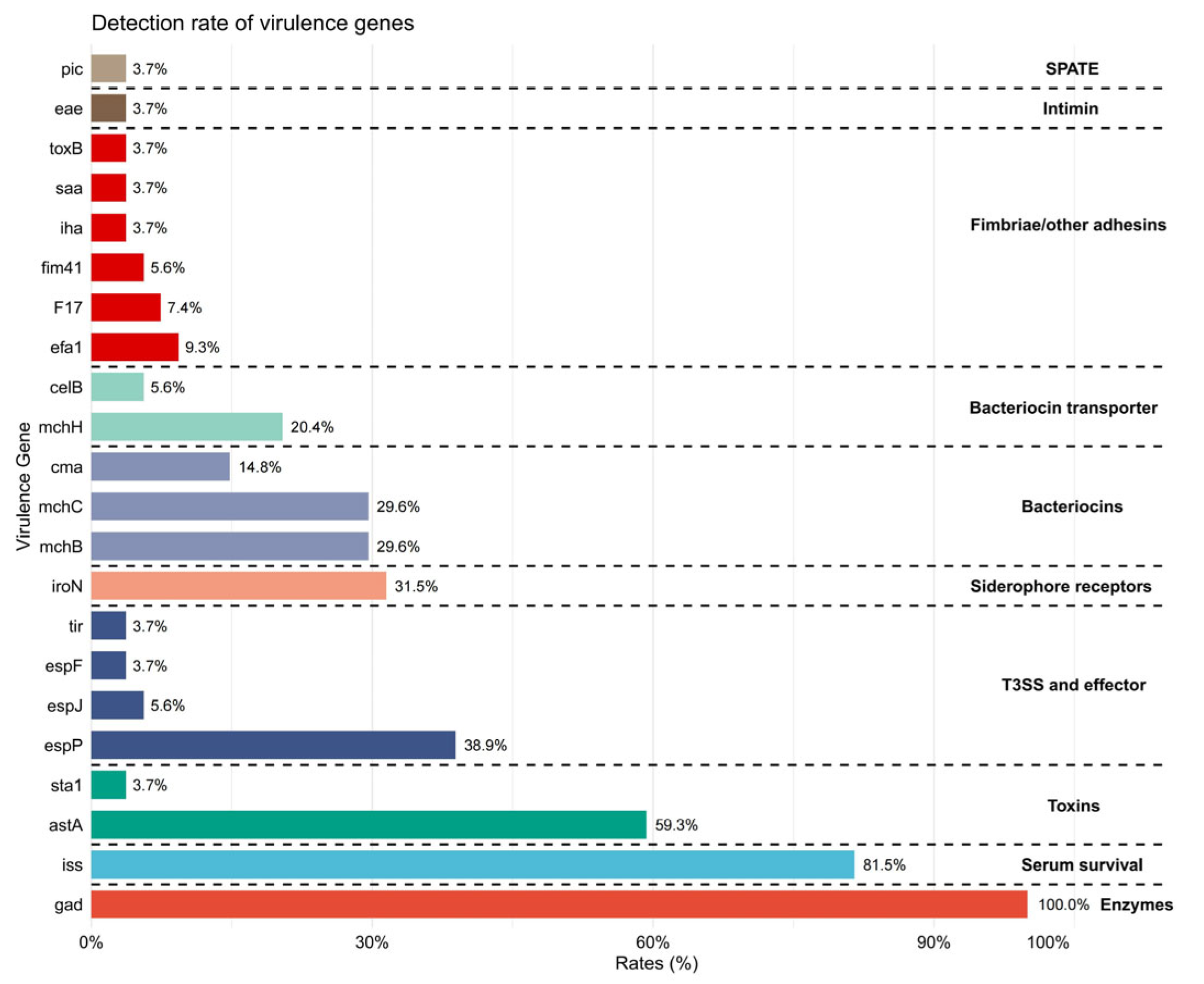
Figure 1. Distribution of virulence genes among ESBL-producing E. coli isolates.
Microorganisms 14 01055 g001
Figure 2. The core-genome single-nucleotide polymorphism (SNP) tree of 54 ESBL-producing E. coli isolates. The tree was generated using Parsnp with 1000 bootstrap resamples. Phylogroups, sequence types (STs), and serogroups are indicated. The scale bar represents the number of SNP substitutions per site.
Microorganisms 14 01055 g002
Table 1. Clinical breakpoints of the antimicrobial agents tested in this study.
Antimicrobial AgentsBreakpointsRange (mg/L)
ESBLNon-ESBL
Ampicillin ≤0.25, 0.5, 1≥0.125–320.03–16
Amoxicillin–clavulanic acid ≤0.25/0.12, 0.5/0.25, 1.0/0.5≥0.125–320.03–16
Ceftiofur ≤2, 4, 8≥0.06–320.03–16
Cephalothin ≤8, 16, 32≥0.5–1280.03–16
Cefotaxime ≤8, 16–32, 64≥1–5120.5–128
Cefazolin≤2, 4, 8≥0.25–1280.125–64
Enrofloxacin ≤0.12, 0.25, 0.5≥0.03–160.03–16
Gentamicin ≤2, 4, 8≥0.25–1280.25–128
Amikacin ≤4, 8, 16≥0.03–160.03–16
Florfenicol ≤4, 8, 16≥0.125–640.03–16
Trimethoprim–sulfamethoxazole ≤2/38, -, 4/76≥0.06/2.38–32/6080.06/2.38–32/608
Doxycycline ≤0.12, 0.25, 0.5≥0.03–160.03–16
Colistin sulphate ≤1, 2≥0.06–320.06–32
Imipenem≤1, 2, 4≥0.015–80.015–8
Table 2. Antimicrobial susceptibility testing for ESBL-producing and non-ESBL-producing E. coli isolates.
Antimicrobial AgentsRange (mg/L)Resistant Rates (%)
ESBLNon-ESBLESBLNon-ESBL
Ampicillin 16 to >640.03 to 16100%9.01%
Amoxicillin–clavulanic acid 0.03/0.02 to 4/20.03/0.02 to 4/220.37%13.51%
Ceftiofur 0.06 to >320.03 to 1670.37%5.41%
Cephalothin 1 to 1280.03 to 1675.93%9.91%
Cefotaxime 64 to 5122 to 128100%6.31%
Cefazolin0.25 to 640.12 to 3262.96%7.66%
Enrofloxacin 0.03 to 160.03 to 433.33%37.83%
Gentamicin 0.5 to 640.5 to 3225.93%30.63%
Amikacin 0.03 to 160.03 to 161.85%0.9%
Florfenicol 0.12 to >640.06 to >1668.52%34.23%
Trimethoprim–sulfamethoxazole 0.12/4.75 to >32/6080.06/2.38 to 32/60875.93%73.97%
Doxycycline 0.03 to 160.03 to 872.22%35.14%
Colistin sulfate 0.12 to 640.06 to 3240.74%23.42%
Imipenem0.03 to 10.03 to 11.85%0
Table 3. Comparison of MIC50 and MIC90 between ESBL-producing and non-ESBL-producing E. coli isolates.
Antimicrobial AgentsMIC50MIC90
ESBLNon-ESBLESBLNon-ESBL
Ampicillin 80.06160.25
Amoxicillin–clavulanic acid0.12/0.060.06/0.031/0.51/0.5
Ceftiofur 160.12160.5
Cephalothin 64412816
Cefotaxime 256451264
Cefazolin1623216
Enrofloxacin 0.120.1282
Gentamicin 113232
Amikacin 0.50.521
Florfenicol 846464
Trimethoprim–sulfamethoxazole16/30416/30432/60832/608
Doxycycline 20.25168
Colistin sulphate 10.53264
Imipenem0.250.250.50.5
Table 4. Characteristics of ESBL-producing E. coli isolates and their blaESBL gene-carrying plasmids.
IsolatesSize (kb)Inc GroupConjugation Efficiency
E502133HI25.6 × 10−7
E50385FIA + I11.4 × 10−5
E510157FIB6.2 × 10−6
E51497I14.8 × 10−4
E52036F2.5 × 10−2
E52173FIA6.3 × 10−4
E522106I15.2 × 10−5
E528108FII6.4 × 10−6
E53069HI28.1 × 10−5
E53782FIA7.2 × 10−4
E549139I11.5 × 10−6
E55258FIA + I13.9 × 10−4
E55789FIB + HI27.4 × 10−5
E56043FIB4.8 × 10−3
E56644FIA3.2 × 10−4
E581110FIB + Q14.9 × 10−6
E582109FIA + I19.3 × 10−6
E59732FIB1.7 × 10−2
E599187FII6.7 × 10−6
E60247I13.8 × 10−4
E605105FIB4.2 × 10−4
E61065X17.2 × 10−5
E61838FIB9.6 × 10−3
E619117HI27.6 × 10−5
E62053FIC6.7 × 10−4
E632139FIB5.2 × 10−6
E63358FII1.7 × 10−4
E63483FII3.6 × 10−5
E63574I15.3 × 10−4
E63958FIB + FII3.7 × 10−4
E646184FIA + HI24.8 × 10−7
E65785FIB6.8 × 10−4
E663165I16.7 × 10−6
E68240FIA2.7 × 10−3
E69064FIA2.6 × 10−4
E69142X21.6 × 10−3
E70398FIA2.8 × 10−5
E70838X14.1 × 10−2
E73473FIA7.3 × 10−4
E736173HI27.5 × 10−7
E738150FIB1.3 × 10−6
E74641X11.4 × 10−3
E747169FIA7.4 × 10−6
E75236I12.6 × 10−2
E76394FIA9.5 × 10−4
E764103FIB + I16.4 × 10−5
E76573FIA9.3 × 10−5
E76963FIB8.3 × 10−4
E77285FIA + I14.6 × 10−5
E77453I11.3 × 10−3
E77768FIB6.8 × 10−4
E78348FIA + I13.6 × 10−3
E792147FIA + FIB3.7 × 10−6
E79356HI22.1 × 10−4
Disclaimer/Publisher’s Note: The statements, opinions and data contained in all publications are solely those of the individual author(s) and contributor(s) and not of MDPI and/or the editor(s). MDPI and/or the editor(s) disclaim responsibility for any injury to people or property resulting from any ideas, methods, instructions or products referred to in the content.