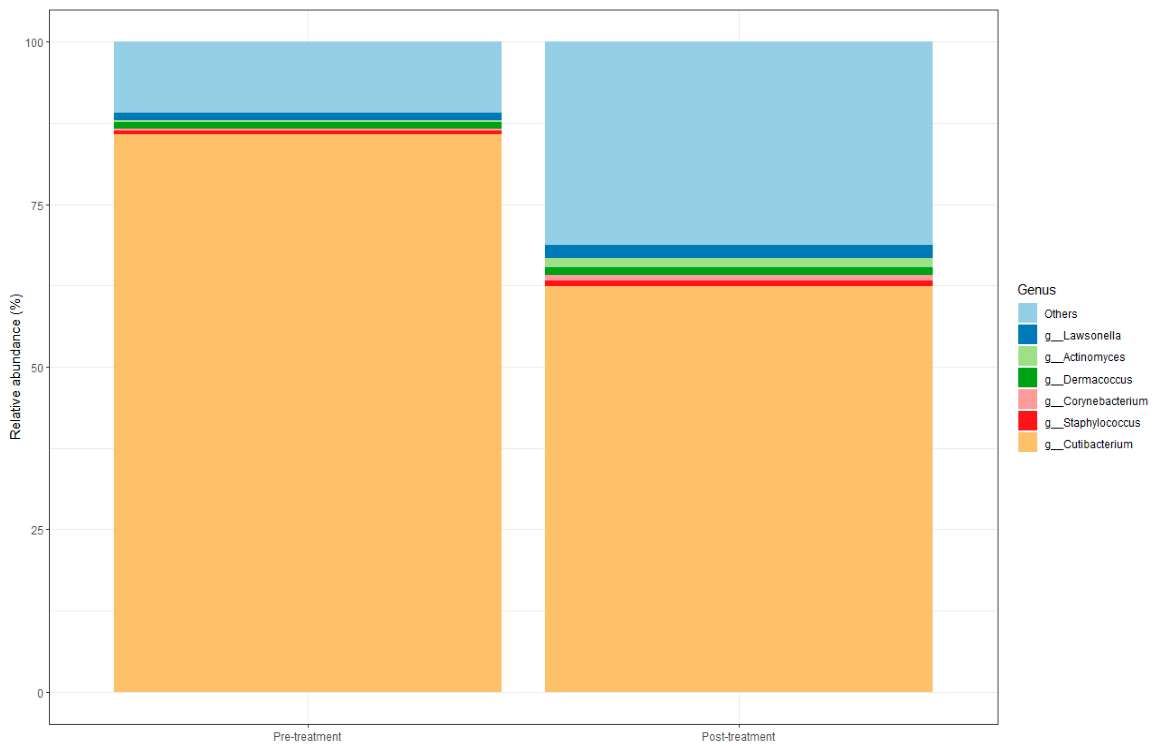
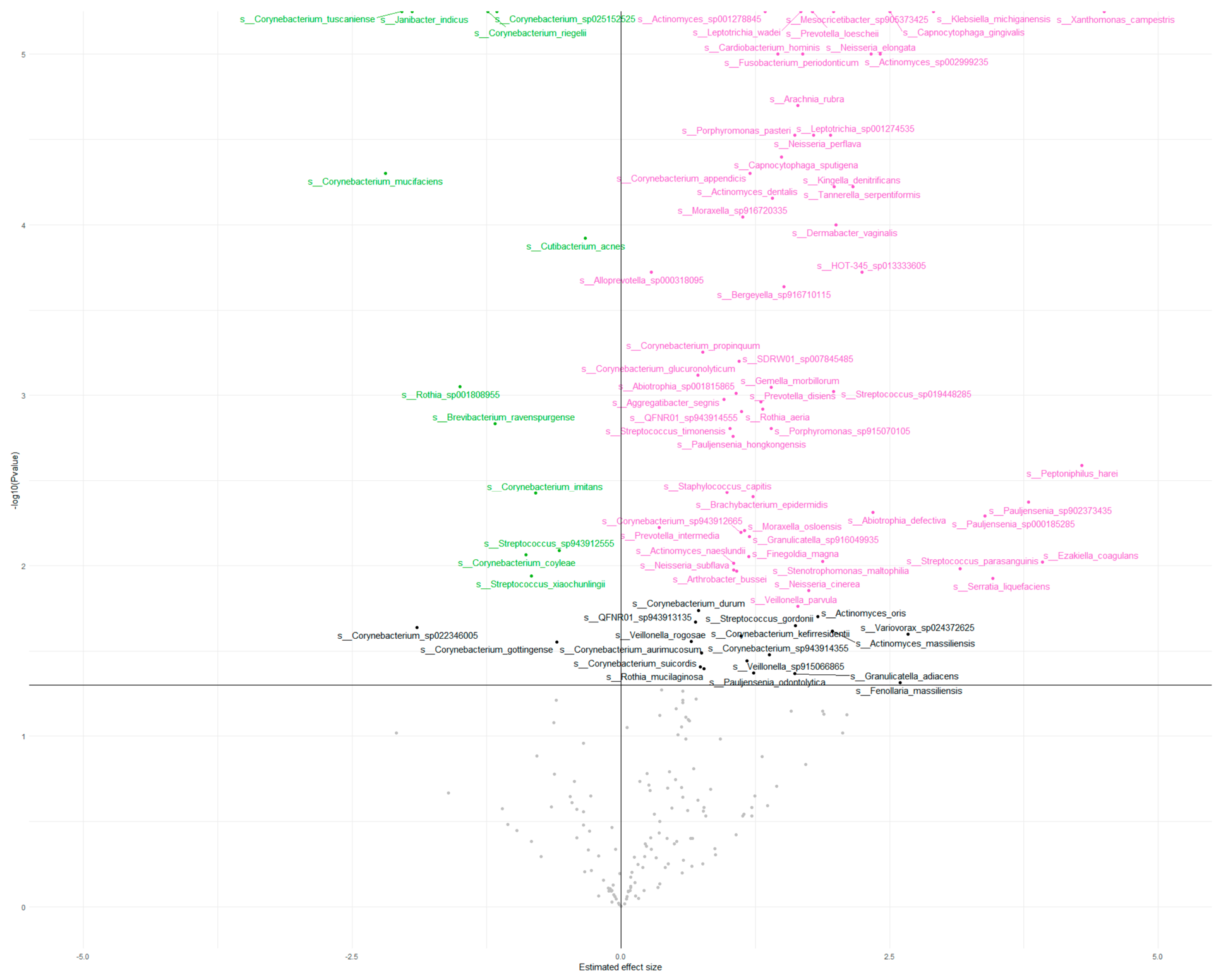
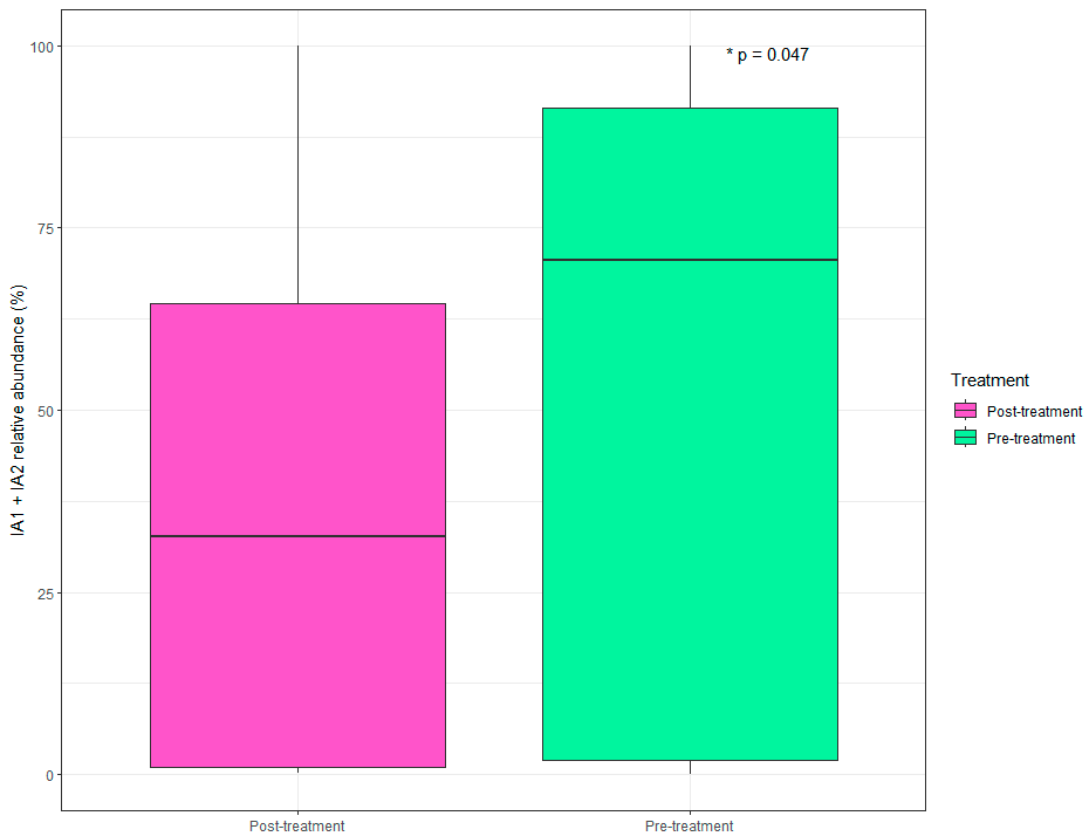
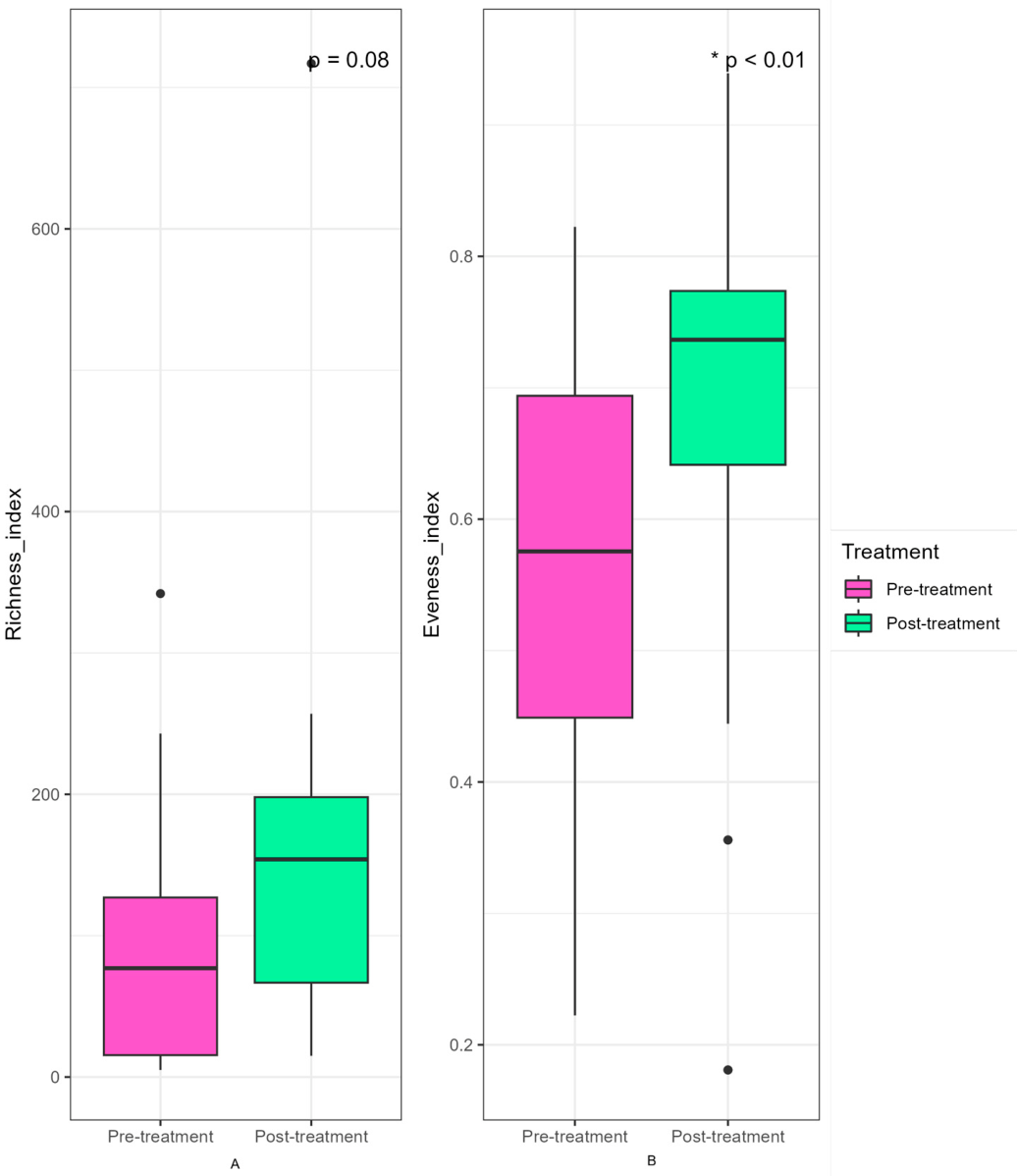
Shotgun Metagenomic Characterization of Acne Microbiota Before and After Treatment with a Topical Biotechnological Phytocomplex: Understanding Skin Dysbiosis

 , , , , ,
Abstract
1. Introduction
2. Materials and Methods
2.1. Study Design
2.2. Study Population
2.2.1. Inclusion Criteria
- Age between 12 and 35 years.
- Caucasian men and women presenting oily skin with mild to moderate acne-prone conditions.
- Acne evolution time of more than 2 months.
- Discontinuation of topical anti-acne or sebum-regulating products at least 7 days prior to the start of the study.
- Ability and willingness to sign the informed consent form.
- No application of any products to the experimental area on the first day of the study.
2.2.2. Exclusion Criteria
- Use of antibiotics, antihistamines, corticosteroids, beta-blockers, retinoids, azelaic acid, or any anti-acne therapy that was not discontinued at least 15 days before study initiation.
- Use of oral contraceptives or any other form of hormonal treatment.
- Application of topical products other than those provided by the study on the experimental area, or exposure of the area to sunlight or UVA radiation during the study period.
- History of allergy to cosmetic products, skin hyperreactivity, oncologic disease, recent surgery or treatment in the study area, or autoimmune disorders.
2.3. Study Assessments
2.3.1. Samples
2.3.2. Shotgun Analysis
2.4. Statistical Analysis
3. Results
3.1. Demographic Analysis
3.2. Prokaryotic Domain
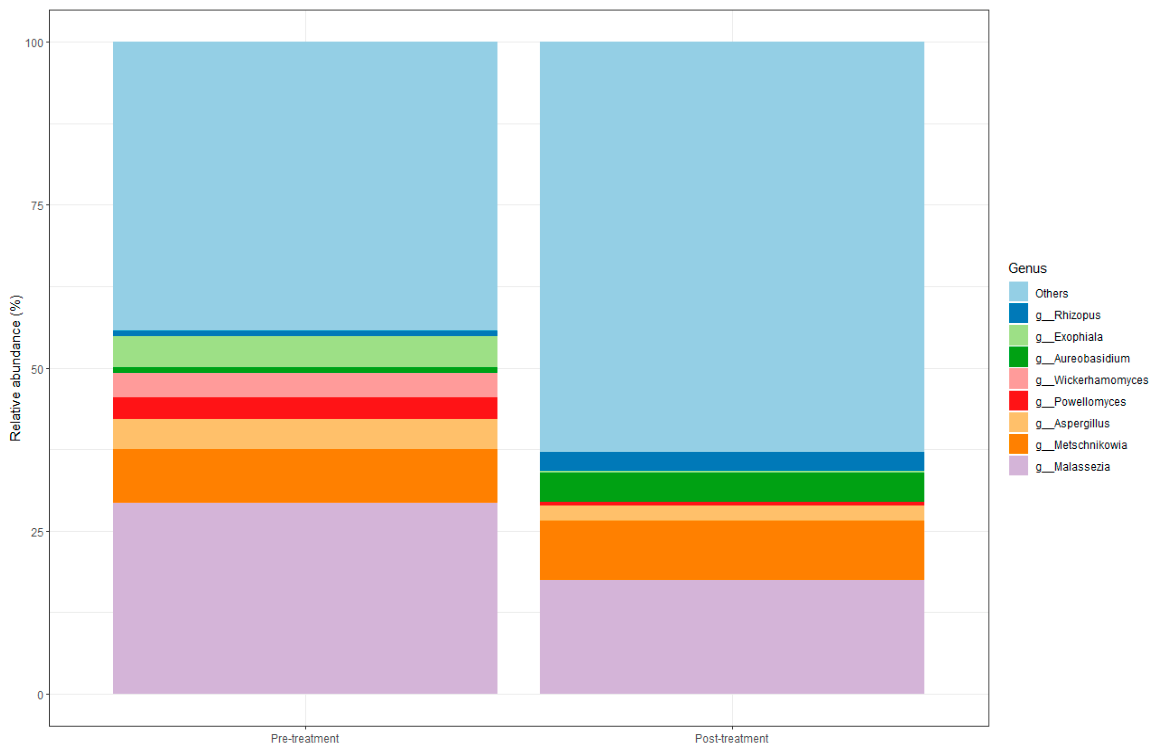
3.3. Fungal Domains
3.4. Phage Domain
4. Discussion
5. Conclusions
Supplementary Materials
Author Contributions
Funding
Institutional Review Board Statement
Informed Consent Statement
Data Availability Statement
Acknowledgments
Conflicts of Interest
References
- Sutaria, A.H.; Masood, S.; Saleh, H.M.; Schlessinger, J. Acne Vulgaris. In StatPearls; StatPearls Publishing: Treasure Island, FL, USA, 2026. Available online: http://www.ncbi.nlm.nih.gov/books/NBK459173/ (accessed on 17 March 2026).
- Berson, D.S.; Chalker, D.K.; Harper, J.C.; Leyden, J.J.; Shalita, A.R.; Webster, G.F. Current concepts in the treatment of acne: Report from a clinical roundtable. Cutis 2003, 72, 5–13. [Google Scholar] [PubMed]
- Vasam, M.; Korutla, S.; Bohara, R.A. Acne vulgaris: A review of the pathophysiology, treatment, and recent nanotechnology based advances. Biochem. Biophys. Rep. 2023, 36, 101578. [Google Scholar] [CrossRef] [PubMed] [PubMed Central]
- Guguluș, D.L.; Vâță, D.; Popescu, I.A.; Pătrașcu, A.I.; Halip, I.A.; Mocanu, M.; Solovăstru, L.G. The Epidemiology of Acne in the Current Era: Trends and Clinical Implications. Cosmetics 2025, 12, 106. [Google Scholar] [CrossRef]
- Tapia, A.G. Estudio epidemiológico descriptivo transversal sobre la prevalencia del acné en la población adolescente española. Actual. Dermatol. Rev. Cient. Dermatol. Med.-Quir. 2001, 40, 897–902. [Google Scholar]
- Reynolds, R.V.; Yeung, H.; Cheng, C.E.; Cook-Bolden, F.; Desai, S.R.; Druby, K.M.; Freeman, E.E.; Keri, J.E.; Gold, L.F.S.; Tan, J.K.; et al. Guidelines of care for the management of acne vulgaris. J. Am. Acad. Dermatol. 2024, 90, 1006.e1–1006.e30. [Google Scholar] [CrossRef] [PubMed]
- Walsh, T.R.; Efthimiou, J.; Dréno, B. Systematic review of antibiotic resistance in acne: An increasing topical and oral threat. Lancet Infect. Dis. 2016, 16, e23–e33. [Google Scholar] [CrossRef] [PubMed]
- O’Neill, A.M.; Gallo, R.L. Host-microbiome interactions and recent progress into understanding the biology of acne vulgaris. Microbiome 2018, 6, 177. [Google Scholar] [CrossRef] [PubMed] [PubMed Central]
- Dessinioti, C.; Katsambas, A. The Microbiome and Acne: Perspectives for Treatment. Dermatol. Ther. 2024, 14, 31–44. [Google Scholar] [CrossRef] [PubMed] [PubMed Central]
- Byrd, A.L.; Belkaid, Y.; Segre, J.A. The human skin microbiome. Nat. Rev. Microbiol. 2018, 16, 143–155. [Google Scholar] [CrossRef] [PubMed]
- Prajapati, S.K.; Lekkala, L.; Yadav, D.; Jain, S.; Yadav, H. Microbiome and Postbiotics in Skin Health. Biomedicines 2025, 13, 791. [Google Scholar] [CrossRef]
- Cundell, A.M. Microbial Ecology of the Human Skin. Microb. Ecol. 2018, 76, 113–120. [Google Scholar] [CrossRef] [PubMed]
- Kong, H.H.; Segre, J.A. Skin microbiome: Looking back to move forward. J. Investig. Dermatol. 2012, 132, 933–939. [Google Scholar] [CrossRef] [PubMed] [PubMed Central]
- Fitz-Gibbon, S.; Tomida, S.; Chiu, B.H.; Nguyen, L.; Du, C.; Liu, M.; Elashoff, D.; Erfe, M.C.; Loncaric, A.; Kim, J.; et al. Propionibacterium acnes Strain Populations in the Human Skin Microbiome Associated with Acne. J. Investig. Dermatol. 2013, 133, 2152–2160. [Google Scholar] [CrossRef]
- Cros, M.P.; Mir-Pedrol, J.; Toloza, L.; Knödlseder, N.; Maruotti, J.; Zouboulis, C.C.; Güell, M.; Fábrega, M.-J. New insights into the role of Cutibacterium acnes-derived extracellular vesicles in inflammatory skin disorders. Sci. Rep. 2023, 13, 16058. [Google Scholar] [CrossRef]
- Dagnelie, M.A.; Khammari, A.; Dréno, B.; Corvec, S. Cutibacterium acnes molecular typing: Time to standardize the method. Clin. Microbiol. Infect. 2018, 24, 1149–1155. [Google Scholar] [CrossRef] [PubMed]
- Wojciechowska, K.; Dos Santos Szewczyk, K. The Skin Microbiome and Bioactive Compounds: Mechanisms of Modulation, Dysbiosis, and Dermatological Implications. Molecules 2025, 30, 4363. [Google Scholar] [CrossRef] [PubMed]
- Platsidaki, E.; Dessinioti, C. Recent advances in understanding Propionibacterium acnes (Cutibacterium acnes) in acne. F1000Research 2018, 7, 1953. [Google Scholar] [CrossRef] [PubMed] [PubMed Central]
- Hoz-Romo, M.C.D.L.; Díaz, L.; Gómez-León, J.; Quintero, M.; Villamil, L. Quorum Quenching: A Key Biological Activity of Marine Actinobacteria Extracts for Acne Vulgaris Control. Biotechnol. Rep. 2025, 47, e00903. [Google Scholar] [CrossRef]
- Ianiri, G.; LeibundGut-Landmann, S.; Dawson, T.L. Malassezia: A Commensal, Pathogen, and Mutualist of Human and Animal Skin. Annu. Rev. Microbiol. 2022, 76, 757–782. [Google Scholar] [CrossRef]
- Prohic, A.; Jovovic Sadikovic, T.; Krupalija-Fazlic, M.; Kuskunovic-Vlahovljak, S. Malassezia species in healthy skin and in dermatological conditions. Int. J. Dermatol. 2016, 55, 494–504. [Google Scholar] [CrossRef]
- Grice, E.A.; Kong, H.H.; Renaud, G.; Young, A.C.; Bouffard, G.G.; Blakesley, R.W.; Wolfsberg, T.G.; Turner, M.L.; Segre, J.A. A diversity profile of the human skin microbiota. Genome Res. 2008, 18, 1043–1050. [Google Scholar] [CrossRef] [PubMed] [PubMed Central]
- Numata, S.; Akamatsu, H.; Akaza, N.; Yagami, A.; Nakata, S.; Matsunaga, K. Analysis of Facial Skin-Resident Microbiota in Japanese Acne Patients. Dermatology 2014, 228, 86–92. [Google Scholar] [CrossRef] [PubMed]
- Cho, Y.J.; Kim, T.; Croll, D.; Park, M.; Kim, D.; Keum, H.L.; Sul, W.J.; Jung, W.H. Genome of Malassezia arunalokei and Its Distribution on Facial Skin. Microbiol. Spectr. 2022, 10, e0050622. [Google Scholar] [CrossRef] [PubMed] [PubMed Central]
- De Lucas, R.; Martínez, H.; Nieto, C.; Ruiz-Alonso, C.; Bermejo, R.; Carrón, N.; Garcia-Segura, S.; Gonzalez-Torres, P.; Palacios-Martínez, D.; Guerra-Tapia, A.; et al. New clinical approach in facial mild–moderate acne: Re-stabilization of skin microbiota balance with a topical biotechnological phytocomplex. J. Cosmet. Dermatol. 2024, 23, 3616–3627. [Google Scholar] [CrossRef]
- Bolger, A.M.; Lohse, M.; Usadel, B. Trimmomatic: A flexible trimmer for Illumina sequence data. Bioinformatics 2014, 30, 2114–2120. [Google Scholar] [CrossRef] [PubMed] [PubMed Central]
- Bushnell, B. BBMap—Official BBTools Suite. Available online: https://bbmap.org/ (accessed on 17 March 2026).
- Langmead, B.; Salzberg, S.L. Fast gapped-read alignment with Bowtie 2. Nat. Methods 2012, 9, 357–359. [Google Scholar] [CrossRef]
- Shaw, J.; Yu, Y.W. Rapid species-level metagenome profiling and containment estimation with sylph. Nat. Biotechnol. 2025, 43, 1348–1359. [Google Scholar] [CrossRef]
- Parks, D.H.; Chuvochina, M.; Rinke, C.; Mussig, A.J.; Chaumeil, P.A.; Hugenholtz, P. GTDB: An ongoing census of bacterial and archaeal diversity through a phylogenetically consistent, rank normalized and complete genome-based taxonomy. Nucleic Acids Res. 2022, 50, D785–D794. [Google Scholar] [CrossRef] [PubMed] [PubMed Central]
- Li, D.; Liu, C.M.; Luo, R.; Sadakane, K.; Lam, T.W. MEGAHIT: An ultra-fast single-node solution for large and complex metagenomics assembly via succinct de Bruijn graph. Bioinformatics 2015, 31, 1674–1676. [Google Scholar] [CrossRef]
- Seemann, T. Prokka: Rapid prokaryotic genome annotation. Bioinformatics 2014, 30, 2068–2069. [Google Scholar] [CrossRef]
- Kanehisa, M.; Goto, S. KEGG: Kyoto Encyclopedia of Genes and Genomes. Nucleic Acids Res. 2000, 28, 27–30. [Google Scholar] [CrossRef] [PubMed]
- Caspi, R.; Billington, R.; Keseler, I.M.; Kothari, A.; Krummenacker, M.; Midford, P.E.; Ong, W.K.; Paley, S.; Subhraveti, P.; Karp, P.D. The MetaCyc database of metabolic pathways and enzymes—A 2019 update. Nucleic Acids Res. 2020, 48, D445–D453. [Google Scholar] [CrossRef]
- Kim, D.; Song, L.; Breitwieser, F.P.; Salzberg, S.L. Centrifuge: Rapid and sensitive classification of metagenomic sequences. Genome Res. 2016, 26, 1721–1729. [Google Scholar] [CrossRef] [PubMed] [PubMed Central]
- Parks, D.H.; Imelfort, M.; Skennerton, C.T.; Hugenholtz, P.; Tyson, G.W. CheckM: Assessing the quality of microbial genomes recovered from isolates, single cells, and metagenomes. Genome Res. 2015, 25, 1043–1055. [Google Scholar] [CrossRef] [PubMed] [PubMed Central]
- Liu, B.; Pop, M. ARDB—Antibiotic Resistance Genes Database. Nucleic Acids Res. 2009, 37, D443–D447. [Google Scholar] [CrossRef] [PubMed]
- RefSeq: NCBI Reference Sequence Database. Available online: https://www.ncbi.nlm.nih.gov/refseq/?charset=utf-8&__char_set=utf8&genre=article&atitle=RefSeq%3A%20NCBI%20Reference%20Sequence%20Database (accessed on 17 March 2026).
- Menzel, P.; Ng, K.L.; Krogh, A. Fast and sensitive taxonomic classification for metagenomics with Kaiju. Nat. Commun. 2016, 7, 11257. [Google Scholar] [CrossRef]
- Guerra-Tapia, A.; Martínez, H.; Nieto, C.; Ruiz Alonso, C.; Bermejo, R.; Carrón, N.; Garcia-Segura, S.; Gonzalez-Torres, P.; Palacios-Martínez, D.; Bou, L.; et al. A new topical biotechnological phytocomplex for truncal mild-moderate acne restores skin microbiota balance. Ski. Res. Technol. 2024, 30, e13806. [Google Scholar] [CrossRef] [PubMed] [PubMed Central]
- Bouslimani, A.; da Silva, R.; Kosciolek, T.; Janssen, S.; Callewaert, C.; Amir, A.; Dorrestein, K.; Melnik, A.V.; Zaramela, L.S.; Kim, J.-N.; et al. The impact of skin care products on skin chemistry and microbiome dynamics. BMC Biol. 2019, 17, 47. [Google Scholar] [CrossRef] [PubMed] [PubMed Central]
- Oh, J.; Byrd, A.L.; Park, M.; Kong, H.H.; Segre, J.A. Temporal Stability of the Human Skin Microbiome. Cell 2016, 165, 854–866. [Google Scholar] [CrossRef] [PubMed]
- Fluhr, J.W.; Darlenski, R.; Daehnhardt-Pfeiffer, S.; Albrecht, M. Impact of multilamellar formulations on stratum corneum lipid organization and epidermal lipid barrier enhancement (Part II). Int. J. Cosmet. Sci. 2024, 46, 578–589. [Google Scholar] [CrossRef]
- Fluhr, J.W.; Menzel, P.; Schwarzer, R.; Nikolaeva, D.G.; Darlenski, R.; Albrecht, M. Clinical efficacy of a multilamellar cream on skin physiology and microbiome in an epidermal stress model: A controlled double-blinded study (Part I). Int. J. Cosmet. Sci. 2024, 46, 566–577. [Google Scholar] [CrossRef]
- Abida, O.; Ramiro, R.; Bahloul, E.; Frikha, R.; Charfi, S.; Turki, H.; Gonçalves, C.P.; Masmoudi, H. Distinct anti-microbial peptides expression patterns and microbiome profiles in skin of Tunisian endemic Pemphigus foliaceus patients. Arch. Dermatol. Res. 2025, 317, 497. [Google Scholar] [CrossRef] [PubMed]
- Yu, T.; Xu, X.; Liu, Y.; Wang, X.; Wu, S.; Qiu, Z.; Liu, X.; Pan, X.; Gu, C.; Wang, S.; et al. Multi-omics signatures reveal genomic and functional heterogeneity of Cutibacterium acnes in normal and diseased skin. Cell Host Microbe 2024, 32, 1129–1146.e8. [Google Scholar] [CrossRef] [PubMed]
- Characterization of the Human Skin Resistome and Identification of Two Microbiota Cutotypes. Available online: https://pubmed.ncbi.nlm.nih.gov/33597039/ (accessed on 18 March 2026).
- Gupta, S.K.; Vyavahare, S.; Duchesne Blanes, I.L.; Berger, F.; Isales, C.; Fulzele, S. Microbiota-derived tryptophan metabolism: Impacts on health, aging, and disease. Exp. Gerontol. 2023, 183, 112319. [Google Scholar] [CrossRef] [PubMed]
- Swaney, M.H.; Kalan, L.R. Living in Your Skin: Microbes, Molecules, and Mechanisms. Infect. Immun. 2021, 89, e00695-20. [Google Scholar] [CrossRef] [PubMed] [PubMed Central]
- Reuter, K.; Steinbach, A.; Helms, V. Interfering with Bacterial Quorum Sensing. Perspect. Medicin. Chem. 2016, 8, 1–15. [Google Scholar] [CrossRef] [PubMed] [PubMed Central]
- Li, X.; Jin, J. The Mechanism and Research Progress of Skin Microbiota in Pathogenesis of Acne. Dermatol. Res. Pract. 2025, 2025, 9910076. [Google Scholar] [CrossRef]
- Wei, F.; Cui, C.; Fang, L. Wickerhamomyces Anomalus Skin Infection. J. Infect. Dis. Ther. 2024, 12, 584. [Google Scholar]
- Harris, J.E.; Sutton, D.A.; Rubin, A.; Wickes, B.; de Hoog, G.S.; Kovarik, C. Exophiala spinifera as a Cause of Cutaneous Phaeohyphomycosis: Case Study and Review of the Literature. Med. Mycol. 2009, 47, 87–93. [Google Scholar] [CrossRef] [PubMed] [PubMed Central][Green Version]
- Nguyen, U.T.; Kalan, L.R. Forgotten fungi: The importance of the skin mycobiome. Curr. Opin. Microbiol. 2022, 70, 102235. [Google Scholar] [CrossRef] [PubMed]
- Szczepańska, M.; Blicharz, L.; Nowaczyk, J.; Makowska, K.; Goldust, M.; Waśkiel-Burnat, A.; Czuwara, J.; Samochocki, Z.; Rudnicka, L. The Role of the Cutaneous Mycobiome in Atopic Dermatitis. J. Fungi 2022, 8, 1153. [Google Scholar] [CrossRef] [PubMed] [PubMed Central]
- Zhang, E.; Tanaka, T.; Tajima, M.; Tsuboi, R.; Nishikawa, A.; Sugita, T. Characterization of the skin fungal microbiota in patients with atopic dermatitis and in healthy subjects. Microbiol. Immunol. 2011, 55, 625–632. [Google Scholar] [CrossRef] [PubMed]
- Castillo, D.J.; Rifkin, R.F.; Cowan, D.A.; Potgieter, M. The Healthy Human Blood Microbiome: Fact or Fiction? Front. Cell. Infect. Microbiol. 2019, 9, 148. [Google Scholar] [CrossRef] [PubMed] [PubMed Central]
- Marinelli, L.J.; Do, T.; Kim, J.; Modlin, R. 1016 Lysis by bacteriophages can modulate Cutibacterium (formerly Propionibacterium) acnes-induced immune responses. J. Investig. Dermatol. 2018, 138, S172. [Google Scholar] [CrossRef]
- Liu, J.; Yan, R.; Zhong, Q.; Ngo, S.; Bangayan, N.J.; Nguyen, L.; Lui, T.; Liu, M.; Erfe, M.C.; Craft, N.; et al. The diversity and host interactions of Propionibacterium acnes bacteriophages on human skin. ISME J. 2015, 9, 2078–2093. [Google Scholar] [CrossRef] [PubMed] [PubMed Central]



| Pathway | Estimated Effect Size | SE | p-Value | p-Adjusted |
|---|---|---|---|---|
| TRPSYN-PWY | 0.30 | 0.09 | 0.0062 | 0.0311 |
| CENTFERM-PWY | 0.97 | 0.31 | 0.0063 | 0.0316 |
| TRIGLYN-PWY | 1.45 | 0.39 | 0.0019 | 0.0149 |
| RIBOSYN2-PWY | 1.69 | 0.34 | 0.0001 | 0.0020 |
| FOLSYN-PWY | 1.41 | 0.33 | 0.0006 | 0.0059 |
| EC | Estimated Effect Size | SE | p-Value | p-Adjusted |
|---|---|---|---|---|
| 1.1.1.135 | 52.52 | 0.11 | <0.0001 | <0.0001 |
| 1.1.1.194 | 51.88 | 0.12 | <0.0001 | <0.0001 |
| 1.6.5.10 | 1.14 | 0.28 | 0.0009 | 0.0065 |
| 1.6.5.7 | 1.85 | 0.31 | 0.0002 | 0.0026 |
| 3.5.1.11 | 46.53 | 0.12 | <0.0001 | <0.0001 |
| 2.3.1.20 | 52.34 | 0.09 | <0.0001 | <0.0001 |
| 2.3.1.79 | 1.92 | 0.50 | 0.0014 | 0.0080 |
| 3.1.1.41 | −0.27 | 0.10 | 0.0157 | 0.0490 |
| 3.1.1.99 | −0.65 | 0.22 | 0.0092 | 0.0335 |
| 3.2.1.17 | −0.96 | 0.32 | 0.0086 | 0.0325 |
| 3.4.11.18 | −0.16 | 0.04 | 0.0030 | 0.0156 |
| 3.4.24.55 | −1.46 | 0.31 | 0.0002 | 0.0022 |
| EC | Pre-Treatment Mean Abundance | Post-Treatment Mean Abundance | p-Value | p-Adjusted |
|---|---|---|---|---|
| PHL082M03 | 0.0000 | 0.1274 | <0.0001 | <0.0001 |
| P14 | 0.0401 | 0.2184 | 0.0002 | 0.0013 |
| Moyashi | 0.1400 | 0.0047 | 0.0034 | 0.0121 |
| PHL041M10 | 0.3125 | 0.0000 | 0.0070 | 0.0226 |
| PHL092M00 | 0.4607 | 0.0254 | 0.0284 | 0.0782 |
Disclaimer/Publisher’s Note: The statements, opinions and data contained in all publications are solely those of the individual author(s) and contributor(s) and not of MDPI and/or the editor(s). MDPI and/or the editor(s) disclaim responsibility for any injury to people or property resulting from any ideas, methods, instructions or products referred to in the content. |
© 2026 by the authors. Licensee MDPI, Basel, Switzerland. This article is an open access article distributed under the terms and conditions of the Creative Commons Attribution (CC BY) license.
Share and Cite
Cruells, A.; Eguren, C.; Robainas Barcia, A.; Martínez, H.; Sharaf, M.; Ruiz, C.; Sánchez-Baos, A.; Carrón, N.; Bou, L.; Pérez, M.; et al. Shotgun Metagenomic Characterization of Acne Microbiota Before and After Treatment with a Topical Biotechnological Phytocomplex: Understanding Skin Dysbiosis. Microorganisms 2026, 14, 915. https://doi.org/10.3390/microorganisms14040915
Cruells A, Eguren C, Robainas Barcia A, Martínez H, Sharaf M, Ruiz C, Sánchez-Baos A, Carrón N, Bou L, Pérez M, et al. Shotgun Metagenomic Characterization of Acne Microbiota Before and After Treatment with a Topical Biotechnological Phytocomplex: Understanding Skin Dysbiosis. Microorganisms. 2026; 14(4):915. https://doi.org/10.3390/microorganisms14040915
Chicago/Turabian StyleCruells, Adrià, Cristina Eguren, Aymée Robainas Barcia, Helena Martínez, Mohammed Sharaf, Carlos Ruiz, Antonio Sánchez-Baos, Nerea Carrón, Lola Bou, Montse Pérez, and et al. 2026. "Shotgun Metagenomic Characterization of Acne Microbiota Before and After Treatment with a Topical Biotechnological Phytocomplex: Understanding Skin Dysbiosis" Microorganisms 14, no. 4: 915. https://doi.org/10.3390/microorganisms14040915
APA StyleCruells, A., Eguren, C., Robainas Barcia, A., Martínez, H., Sharaf, M., Ruiz, C., Sánchez-Baos, A., Carrón, N., Bou, L., Pérez, M., De Lucas, R., & Guerra-Tapia, A. (2026). Shotgun Metagenomic Characterization of Acne Microbiota Before and After Treatment with a Topical Biotechnological Phytocomplex: Understanding Skin Dysbiosis. Microorganisms, 14(4), 915. https://doi.org/10.3390/microorganisms14040915