Review

Research Progress on Rhizosphere Microbiota for Controlling Soil-Borne Diseases: Mechanisms, Applications, and Challenges


Industrial Crop Research Institute, Sichuan Academy of Agricultural Sciences/Horticultural Crops Germplasm Innovation and Utilization Key Laboratory of Sichuan Province, Chengdu 610300, China
*
Authors to whom correspondence should be addressed.
Microorganisms 2026, 14(4), 900; https://doi.org/10.3390/microorganisms14040900
Submission received: 18 March 2026 / Revised: 11 April 2026 / Accepted: 14 April 2026 / Published: 16 April 2026
(This article belongs to the Special Issue Advances in Soil Microbial Ecology, 3rd Edition)

Abstract

Soil-borne diseases pose a severe threat to global agricultural production and food security. Traditional chemical control methods face significant challenges, including environmental pressure, pathogen resistance, and food safety concerns. The rhizosphere microbial community, often termed the plant’s ‘second genome’, plays a pivotal role in maintaining plant health and defending against pathogen invasion. Recent advances in multi-omics technologies, synthetic microbial communities (SynComs) construction, and rhizosphere metabolomics have significantly advanced our understanding of the mechanisms by which rhizosphere microbiomes suppress soil-borne diseases. This review systematically summarizes the following: 1. key drivers of rhizosphere microbial community assembly, particularly plant “cry for help” signaling; 2. core beneficial microbial taxa and their disease-suppressive mechanisms; 3. the critical role of microbial interaction networks; 4. microbiome-based management strategies and their application progress; and 5. current challenges and future research directions. Compared with previous reviews that separately discussed rhizosphere microbiota, disease-suppressive soils, synthetic microbial communities (SynComs), or prebiotics, this review uniquely integrates multiple levels of regulation, from plant genetic determinants (‘M genes’) and root exudate-mediated ‘crying for help’ to microbiome engineering (SynComs and prebiotics) and cross-kingdom interactions (bacteria–fungi–protists–phages). A central conceptual axis of ‘M genes → microbiome engineering → breeding’ is proposed, bridging plant genetics, microbial ecology, and crop improvement for durable disease suppression. Ultimately, this work aims to provide a theoretical foundation for developing efficient and sustainable green control technologies against soil-borne diseases.

1. Introduction

Soil-borne pathogens, including Fusarium spp., Ralstonia solanacearum, and Phytophthora spp., can persist in agricultural soils for a long time, causing devastating crop diseases, such as wilt disease and root rot, which incur substantial economic losses [1,2,3]. However, overreliance on chemical agents and pesticides introduces critical drawbacks: environmental contamination, enhanced pathogen resistance, and ecosystem disruption [4]. The rhizosphere, a soil microzone directly influenced by plant roots, harbors exceptionally diverse and dynamic microbial communities encompassing bacteria, fungi, archaea, protists, and viruses [5]. Moreover, it also harbors intricate networks of microbial communities and metabolites that are increasingly recognized as central determinants of plant health and resistance to soil-borne pathogens. Maintaining soil health represents a critical challenge for sustaining agricultural productivity under the pressure of modern intensive farming systems worldwide. Soil microorganisms serve as core regulators in preserving soil health, and one of their most representative functions is the suppression of soil-borne diseases [6]. Crucially, robust evidence confirms that microbiomes in a healthy rhizosphere effectively suppress soil-borne pathogens, forming naturally occurring ‘disease-suppressive soils’ [7,8]. Understanding the establishment, interaction networks, and ecological functions of plant microbial communities, as well as how plants regulate their microbial communities in response to external stresses, is fundamental for leveraging the plant microbiome to promote plant health and advance sustainable agriculture. The formation of plant microbial communities is influenced by a variety of biological and abiotic factors, with pathogen infections being a typical biological factor. Under pathogen invasion, plant roots recruit beneficial microbes by altering root exudates or releasing volatile organic compounds (VOCs), thereby facilitating the survival of their offspring or neighboring plants. This strategy is considered a plant’s ‘crying for help’. Beneficial microbes can serve as key components of the plant microbiome, promoting host health by inducing immune responses, secreting antibiotics, or competing with pathogens for resources and ecological niches. Thus, deciphering the assembly principles of rhizosphere microbiomes and their pathogen-inhibiting mechanisms and leveraging this knowledge for biocontrol strategies represents a pivotal pathway toward sustainable agriculture [9,10].
Several recent reviews have summarized the roles of rhizosphere microbiota in plant health, the formation of disease-suppressive soils, or the application of SynComs and prebiotics. However, an integrated framework that simultaneously considers plant genetic drivers (especially ‘M genes’), root exudate-mediated recruitment, multi-kingdom microbial interactions (including bacteria, fungi, protists, and phages), and translational strategies (SynComs, prebiotics, rotation, and organic amendments) remains lacking. Moreover, the potential to translate knowledge of microbiome-shaping genes into breeding programs, termed the ‘M gene → microbiome engineering → breeding’ axis, has not been explicitly articulated as a central concept in the previous literature. This review fills these gaps by (i) systematically presenting the ‘crying for help’ mechanism and its underlying signals; (ii) highlighting the emerging concept of ‘M genes’ that link plant genotype to rhizosphere microbiome assembly; (iii) integrating cross-domain interactions and network stability; and (iv) proposing a coherent pipeline from M gene identification to SynCom/prebiotics design and finally to resistant cultivar breeding. By doing so, we aim to provide a forward-looking framework that goes beyond descriptive accounts of microbial communities and offers actionable strategies for sustainable soil-borne disease management.

2. Rhizosphere Microbial Communities Assembly

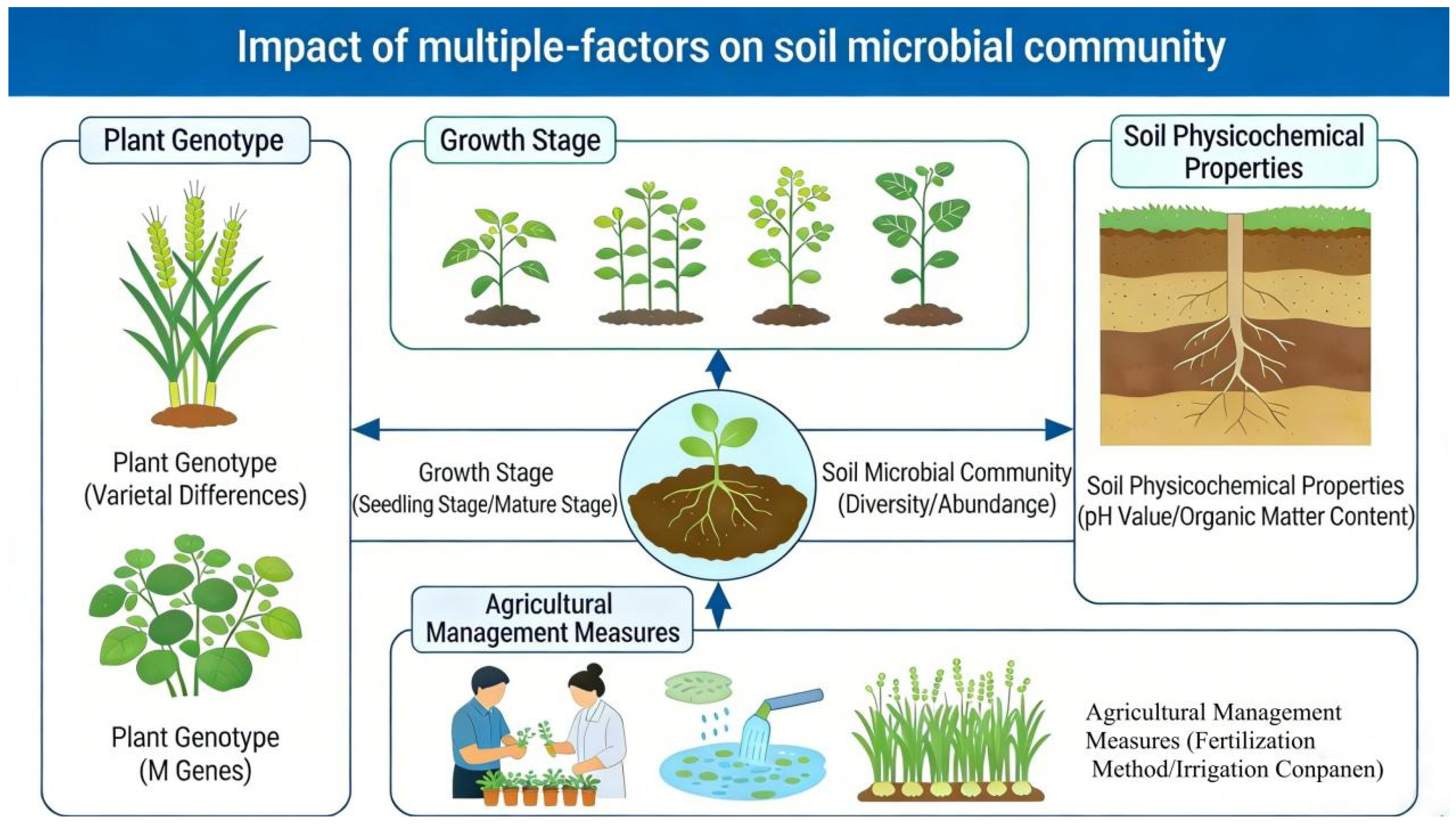
The composition and function of the rhizosphere microbial community are not random, but are shaped by many factors such as plant genotype, development stage, soil physical and chemical properties and agronomic management measures (Figure 1) [11]. Among them, plant root exudates, as a key “bridge”, play a core role in driving microbial community assembly [12].

2.1. Assembly of Microbial Communities Through ‘Crying for Help’ Mediated by Root Exudates

When plants are infected or stressed by pathogens, they will actively change the composition of root exudates, release specific “cry for help” signals to the rhizosphere, and recruit beneficial microorganisms with antagonistic ability or those inducing plant resistance [13]. Many studies have revealed that plants can secrete specific primary and secondary metabolites, such as sugars, organic acids, amino acids, phenols, terpenoids, flavonoids, riboflavin, 3-hydroxyflavone, astaxanthin, and palmitic acid, to shape microbial communities in the rhizosphere, thereby enhancing their plant disease resistance (Table 1).
For example, after tomato was infected by R. solanacearum, malic acid secreted by roots recruited Sphingomonas to reduce bacterial wilt disease [14]. After cucumber was infected by Fusarium oxysporum, the secretion of four organic acids (citric acid, pyruvate acid, succinic acid, and fumarate) increased, recruiting beneficial microorganisms Comamonadaceae and Xanthomonas to produce anti-pathogenic substances and increase disease resistance [15]. Ma et al. [16] observed that methyl ferulate was secreted in greater quantities in the tobacco, recruiting disease-suppressive rhizosphere microbes, such as Bacillus (the relative abundance of these microbes increased from 4.69% to 13.79%), thereby increasing black shank disease resistance. Another study demonstrated that salicylic acid could specifically increase some beneficial rhizosphere species that can confer resistance against watermelon Fusarium wilt, such as Rhodanobacter, Sphingomonas, and Micromonospora [17].
In addition to the root exudates secreted by plants themselves, the root exudates secreted by neighboring or other plants can also reshape the microbial communities, thereby resulting in enhanced plant disease suppression. For example, in the cabbage–buckwheat rotation system, buckwheat root-secreted flavonoids 6,7,4′-trihydroxyisoflavone and 7,3′,4′-trihydroxyflavone, as key drivers of microbial community restructuring, synergistically enhanced the efficacy of a synthetic microbial community, boosting clubroot disease suppression by 34% in greenhouse trials [18]. In an intercropping system, the root exudate taxifolin secreted by potato onion (Allium cepa var. aggregatum) recruits beneficial bacteria such as Bacillus sp. to protect tomato plants against Verticillium dahliae [19]. Similarly, Zhu et al. [20] demonstrated that ginger root exudates, including sinapyl alcohol and 6-gingerol, greatly promoted the proliferation and colonization of Burkholderia sp. in the chrysanthemum rhizosphere, conferring enhanced Fusarium wilt disease suppression. In addition, the coexistence of five phenolic acids in the maize rhizosphere showed strong synergistic antimicrobial activity against the infection of Phytophthora sojae on soybean [21]. Although an increasing number of root exudates are involved in recruiting disease resistance-associated microbes to enhance plant disease resistance, little is known about the ternary link of plant genes, root exudates, and disease resistance-associated microbes [12].

2.2. Assembly of Microbial Communities Influenced by Host Genotype and ‘M Genes’

Host genotype plays a pivotal role in shaping the rhizosphere microbiome, which directly impacts the plant’s susceptibility or resistance to soil-borne diseases. Resistant cultivars often assemble distinct microbial communities enriched with beneficial taxa such as Pseudomonas, Bacillus, and Sphingomonas, which contribute to disease suppression through mechanisms like antibiosis, competition, and induced systemic resistance. In contrast, susceptible cultivars tend to harbor more pathogenic microbes and less diverse beneficial communities. This differentiation is largely driven by plant genetic factors, including “M genes” (microbiome-shaping genes), which regulate root exudate profiles, such as the secretion of flavonoids, organic acids, and nucleotides that selectively recruit protective microbes. For instance, when resistant tomato varieties were infected by Fusarium oxysporum, the fusaric acid promoted the recruitment of beneficial microbial taxa led by Sphingomonas sp. Sm12 and prevented Fusarium wilt by antagonizing and inducing host resistance [22]. Maize cultivars resistant to stalk rot reshaped the microbiota and recruited Bacillus species with three phenotypes against Fusarium graminearum, including niche pre-emption, potential secretion of antimicrobial compounds, and no inhibition to alleviate pathogen stress [23]. Among them, Bacillus isolates that do not directly suppress pathogen infection inhibited pathogen growth by inducing the synthesis of berberine, an isoquinoline alkaloid. Yue et al. [24] found that a wild wheat cultivar was able to harness rhizosphere microorganisms carrying nitrogen transformation (i.e., nitrification and denitrification) and phosphorus mineralization pathways, whereas rhizobiomes carrying inorganic nitrogen fixation, organic nitrogen ammonification, and inorganic phosphorus solubilization genes were recruited by the release of root exudates from domesticated wheat.
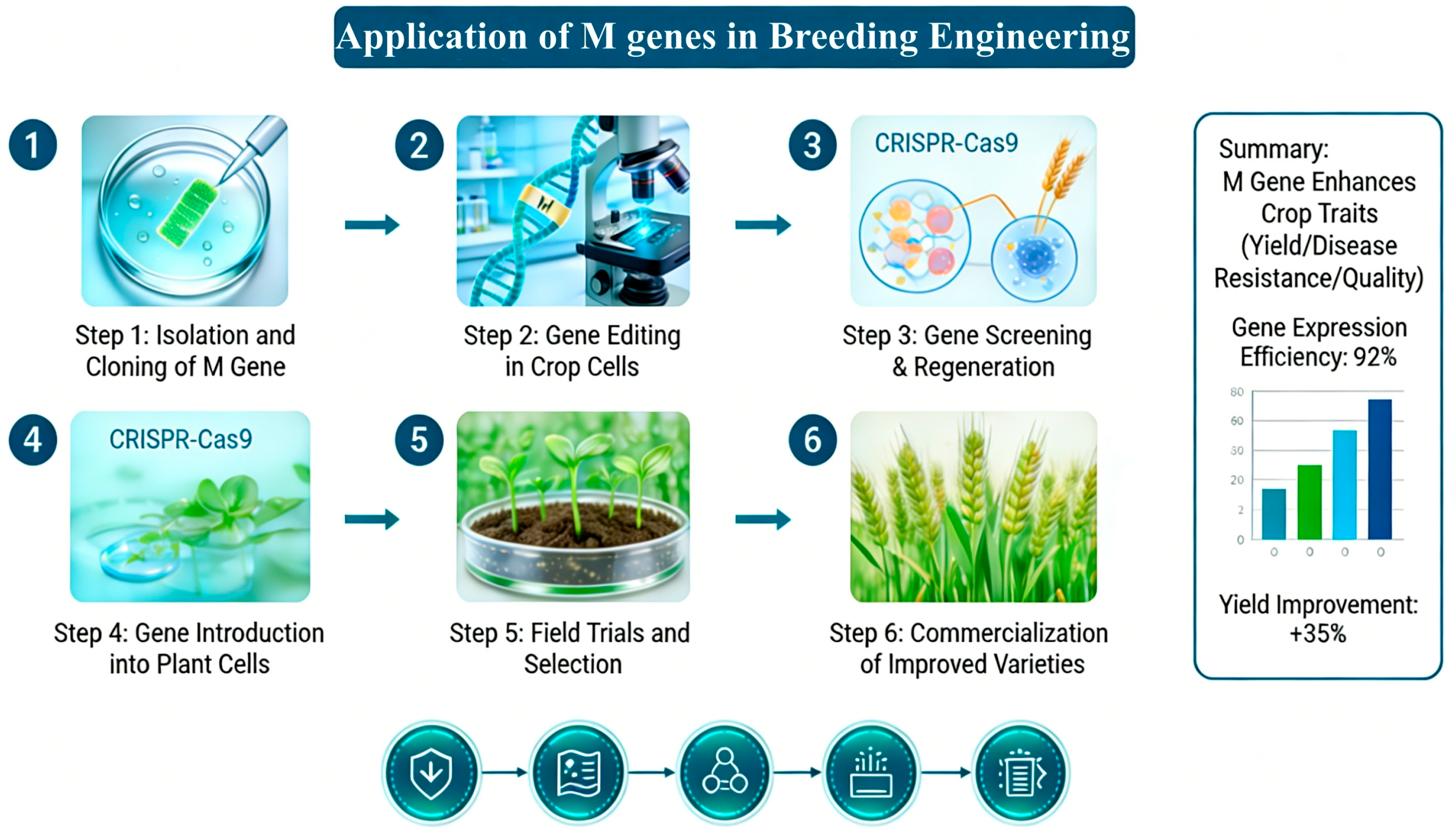
The capacity to shape the microbiome through specific genes has previously been demonstrated in various plants, including Arabidopsis, barley, tomato, cabbage, cucumber, maize and rice [25]. These microbiome-shaping genes have been reported to contribute to promoting host plant performance and resilience against diverse stresses, including balancing the growth–defense trade-off, coping with nitrogen deficiency, defending against soilborne pathogens and enhancing nitrogen acquisition. A common characteristic of these genes is the dependence of their shaping effect on the root or rhizosphere microbiota. Therefore, these genes that can shape the microbiome are called ‘microbiome-shape genes’ or ‘M genes’ for short. Yang et al. [26] found that RIN, the key transcription factor of tomato fruit ripening, recruited actinomycetes to inhibit tomato bacterial wilt by promoting the secretion of riboflavin and 3-hydroxyflavone. The Fusarium wilt resistance gene FOC1 was transferred into the susceptible variety to breed resistant varieties with a highly similar genetic background. Compared with the susceptible variety, Pseudomonas brasciarum NA13, a dominant bacterium recruited by resistant varieties, can significantly improve the resistance of cabbage varieties susceptible to Fusarium wilt by directly inhibiting the growth of Fusarium oxysporum f. sp. conglutinans (FOC) and triggering the root defense mechanism [27]. Therefore, exploring the possibility of different functional genes in plants becoming ‘M genes’ and carrying out the corresponding microbial breeding project will open up a new way for more effective utilization of microbial communities for disease prevention and control (Figure 2).

2.3. Assembly of Microbial Communities Driven by Soil Physicochemical Properties

Soil physicochemical properties form a critical environmental filter that deterministically shapes the assembly, diversity, and function of the rhizosphere microbial community. Recent studies continue to highlight soil pH as a master regulator, exerting a dominant influence on bacterial community composition and niche differentiation by altering nutrient solubility and microbial cellular physiology. For instance, in flue-cured tobacco, soil acidification was linked to reduced microbial diversity and altered community structure, often favoring pathogenic fungi while suppressing beneficial bacteria [28]. Similarly, in pepper soils, pH showed strong correlations with the abundance of specific bacterial phyla like Actinobacteria and Planctomycetes [29]. In soybean, pH was identified as the strongest predictor of microbial community structure, showing the highest correlation with beta diversity [30]. In addition, the availability of macronutrients like nitrogen (N), phosphorus (P), and potassium (K) is equally crucial. Available phosphorus (AP) and potassium (AK) were significantly higher in intercropped pepper–maize systems, which corresponded to increased microbial diversity and enrichment of beneficial taxa like Sphingomonadales [29]. In soybean, potassium was the most important macronutrient distinguishing high-yield from low-yield states, showing a strong positive correlation with yield and microbial modules beneficial for plant growth [30]. In Ligusticum chuanxiong, the severity of root rot was significantly influenced by soil available nitrogen (AN), AP, and AK, which, in turn, shaped the rhizosphere microbiome, affecting the abundance of biocontrol agents like Trichoderma and Bacillus [31]. Soil organic matter (SOM) serves as a critical carbon and energy source for microbes. Higher SOM content generally promotes microbial abundance and diversity. In Cerasus humilis orchards, SOM content increased with planting years and was positively correlated with the abundance of beneficial bacteria like Acidobacteria and Proteobacteria [32]. Conversely, continuous tobacco cropping led to a decline in SOM, which was associated with a reduction in microbial diversity and a shift towards a more pathogenic community [33]. Furthermore, the interplay of these physicochemical properties creates distinct ecological niches that select for specific microbial taxa. For example, soil cation exchange capacity (CEC) and metal content can also exert selective pressures, as demonstrated in cherimoya and lucuma soils, where metal concentrations correlated with shifts in microbial diversity [34]. In summary, soil physicochemical properties act as environmental filters that govern the assembly of rhizosphere microbial communities by influencing nutrient availability, creating chemical gradients, and modulating microbial interactions. Maintaining balanced soil properties is, therefore, crucial for promoting beneficial microbiomes and ensuring plant health.

2.4. Assembly of Microbial Communities Affected by Agricultural Management

Enhancing the disease-suppressive capacity of the plant rhizosphere is an ideal approach for reducing pesticide use in sustainable agriculture. Consequently, employing specific agricultural management practices to manipulate the soil microbiome for the creation of disease-suppressive soils represents a challenging yet promising area of exploration. Studies have shown that soil fumigation and reductive soil disinfestation (RSD) are relatively effective methods for directly modulating the soil microbial community to suppress soil-borne diseases. The combined application of fumigation, RSD, and various amendments such as microbial organic fertilizers and microbe-enriched biochar-based fertilizers can significantly enhance the suppression of soil-borne diseases. These strategies have been widely used to control Fusarium wilt in crops like watermelon, eustoma, pepper, banana, and Salvia miltiorrhiza [35,36,37]. Additionally, practices like crop rotation, intercropping, and the incorporation of plant residues are common and powerful measures for manipulating the soil microbiome to control soil-borne diseases. Compared with crop rotation, monoculture systems often lead to a competitive disadvantage among soil microbes for limited root exudate resources, resulting in the loss of key rhizosphere microorganisms. However, supplementing these missing microbial consortia can restore the rhizosphere’s ability to suppress root rot in monoculture systems [38]. For example, when pepper and eggplant were rotated with banana, distinct core microbiomes were formed under different crop rotations [39]. In the case of intercropping potato onion with tomato, the root exudates of potato onion, particularly taxifolin (a flavonoid), alter the chemical properties of tomato root exudates. This directly inhibits the growth of Verticillium dahliae and indirectly promotes the colonization of Bacillus spp. on tomato roots, inducing systemic resistance to control Verticillium wilt [19]. When aboveground and belowground residues of pineapple were added to soil with a high incidence of banana Fusarium wilt, they significantly enriched Aspergillus fumigatus and Fusarium solani. These fungi reduce the abundance of pathogens and suppress disease through direct antibiotic production and indirect nutrient competition [40]. Thus, regulating the establishment of disease-suppressive microbiomes through agricultural practices offers diverse options for precisely manipulating the plant microbiome.

3. Core Beneficial Microbes and Their Disease Suppression Mechanisms

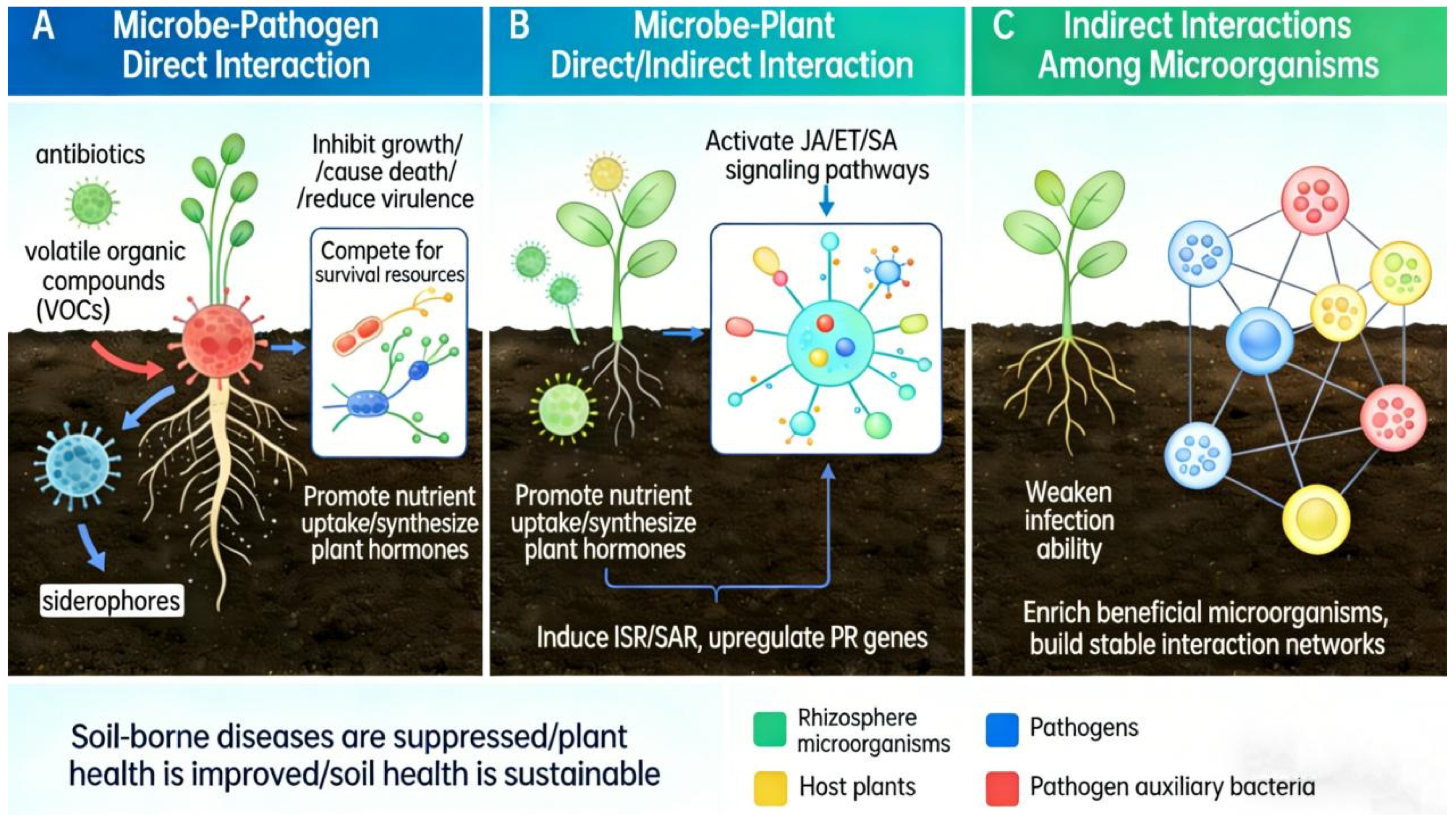
Currently, a growing body of research confirms that plant root-associated microorganisms, a general term for rhizosphere and root endophytic microorganisms, play crucial roles in plant–pathogen interactions through various mechanisms. These include the production of antibiotics [40], competition for ecological niches and nutrients [40], suppression of pathogen helpers [41], induction of host disease resistance [42], and promotion of host antibiotic production [23]. It is noteworthy that the root-associated microbial communities recruited by plants often function as a whole through multifunctional synergistic interactions and exhibit a certain degree of functional redundancy. This microbiota forms a functional alliance through complex interspecific interactions to jointly resist pathogens. Among them, some core microbes have been repeatedly proven to play a key role in disease suppression. These microbes employ a multifaceted approach to suppress soil-borne diseases, primarily through the production of antimicrobial compounds such as phenazines, siderophores, and volatile organic compounds (VOCs) that directly inhibit pathogen growth by targeting essential cellular processes like DNA topoisomerase IV, leading to DNA damage and cell death. They also modulate the rhizosphere microbiome by enriching beneficial microbes, such as Bacillus and Trichoderma, and suppress pathogens through competitive exclusion and iron competition. Additionally, they induce systemic resistance in plants by upregulating defense-related genes involved in jasmonic acid (JA)/ethylene (ET) and salicylic acid (SA) signaling pathways, enhancing plant innate immunity [43]. This combined action results in reduced disease incidence, improved plant growth, and sustained soil health. The main pathways and mechanisms of rhizosphere microbes controlling soil-borne diseases in crops are presented in Figure 3.

3.1. Bacteria

Pseudomonas spp.: In tomato plants, Pseudomonas consortia significantly suppressed bacterial wilt caused by R. solanacearum primarily through siderophore-mediated iron competition under iron-limited conditions, where siderophores accounted for 73.81% of pathogen growth inhibition in vitro, and stronger siderophore-driven interactions within consortia directly reduced pathogen abundance and disease severity in greenhouse trials [44]. Moreover, Pseudomonas rhizophila CTR8 isolated from healthy cotton roots significantly suppressed Verticillium wilt caused by the fungus Verticillium dahliae. Its primary mechanisms include the production of specific VOCs, namely, dimethyl trisulfur compounds (causing 100% mycelial growth inhibition), 2-undecanone (56.33% inhibition), and 1-decanol (13.67% inhibition), which directly inhibited the pathogen and downregulated its virulence genes, alongside activating the plants’ JA/ET-dependent induced systemic resistance [45]. Additionally, the combined application of Trichoderma asperellum + Pseudomonas fluorescens + arbuscular mycorrhizal fungi (AMF) controlled the root rot disease caused by Rhizoctonia solani through direct antagonism via metabolite production and enrichment in the rhizosphere microbiome, achieving reduced disease severity and improved plant vigor in field experiments [46]. Furthermore, Pseudomonas chlororaphis controlled various soil-borne diseases caused by Fusarium in multiple plants through production of phenazines like phenazine-1-carboxamide (PCN), which directly bind to bacterial topoisomerase IV, inhibiting decatenation activity and causing DNA damage and cell death in pathogens, achieving high inhibition rates, such as 100% mycelial growth inhibition, and reduced disease incidence in laboratory and field settings [47]. Pseudomonas fluorescens LJPf01 controlled bacterial wilt caused by R. solanacearum in tomato through induction of plant defense pathways, such as upregulation of PR genes and phenylpropanoid biosynthesis, modulation of rhizosphere microbial communities, and production of inhibitory metabolites, achieving a biocontrol efficiency of up to 76.08%, significantly increased plant height, root length and stem thickness from 96.47 cm, 13.14 cm and 9.06 mm to 105.49 cm, 15.48 cm and 11.75 mm, respectively, and improved chlorophyll content [48].
Bacillus spp.: Bacillus velezensis RC116 effectively controlled tomato bacterial wilt caused by R. solanacearum and Fusarium wilt caused by Fusarium oxysporum by secreting the extracellular enzymes protease and amylase, siderophores, and indoleacetic acid (IAA), while possessing biocontrol genes for antimicrobial compound synthesis [49]. B. velezensis ZF481, encapsulated in chitosan or carrageenan macrospheres for slow release, targeted clubroot disease caused by Plasmodiophora brassicae in Chinese cabbage and pak choi by producing antifungal metabolites and enhancing soil nutrient availability, such as phosphorus and potassium [50]. Similarly, fengycin, produced by B. subtilis XF-1, enhanced the activation of plant defense via JA and SA signaling pathways, thus controlling the Chinese cabbage clubroot [51]. Moreover, Bacillus species in resistant maize cultivars combated corn stalk rot caused by Fusarium graminearum through inducing host alkaloid biosynthesis and other metabolic defenses, such as berberine expressed by TYDC1, which inhibited pathogen growth. This reshaped the rhizosphere microbiome, reducing disease incidence in resistant cultivars [23].
Streptomyces spp.: Alper et al. [52] isolated Streptomyces from the rhizosphere soil of olive trees, whose inhibitory effect on Aspergillus niger could achieve the same effect as ketoconazole. Sujarit et al. [53] found that three kinds of Streptomyces (Streptomyces noursei CMU-AB21, Streptomyces sioyaensis CMU-AB83 and Streptomyces palmae CMU-AB204T) all had strong antifungal activity. Among them, S. palmae CMU-AB204T can reduce the incidence of stem base rot of palm by 75.8–81.6%. Nguyen et al. [54] showed that the growth of Fusarium verticillioides could be reduced to 60% by adding Streptomyces isolated from soil, and the toxins Fumonisin B1 and Fumonisin B2 secreted by eumycetes could be reduced by 87.5–98.2% after 6 days of cultivation. Streptomyces sp. JCK-6116 produced rimocidin compounds that disrupt fungal cell membranes by binding to ergosterol, effectively suppressing Fusarium wilt and damping-off caused by Fusarium oxysporum and Rhizoctonia solani in cucumbers [55]. Streptomyces R02, a strain from the tomato rhizosphere, enhanced biocontrol efficacy of bacterial wilt caused by R. solanacearum through synergistic interactions with native rhizosphere microbes, such as Stenotrophomonas maltophilia CSC98 and Paenibacillus cellulositrophicus CSC13 [56]. This interaction induced the production of erythromycin E, a macrolide antibiotic that directly inhibited the pathogen by disrupting bacterial protein synthesis. A recent study demonstrated that Streptomyces specifically primed pepper root biosynthesis of 6-nitrocoumarin, a nitrated coumarin derivative exhibiting potent broad-spectrum antioomycete activity [57]. Crucially, this Streptomyces-recruited metabolite functions as a keystone rhizosphere signal, selectively enriching beneficial bacterial consortia while directly disrupting the ABC transporters of pathogens. The restructured microbiome synergistically amplifies plant systemic resistance through upregulating defense genes and enhancing root immunity. Furthermore, Streptomyces was demonstrated to be mainly negatively correlated with the abundance of the pathogen Fusarium pseudograminearum causing wheat crown rot [58].
Burkholderia spp.: In recent research, intercropping chrysanthemum with ginger suppressed Fusarium wilt disease caused by Fusarium oxysporum f. sp. chrysanthemi (Foc) by modulating the rhizosphere microbiome through root exudate-mediated interactions. The suppression mechanism is achieved as specific compounds in ginger root exudates (e.g., sinapyl alcohol and 6-gingerol) stimulate chrysanthemum roots to recruit and enrich beneficial Burkholderia species, which, in turn, inhibit the pathogen via antagonism and induce systemic resistance in the host plant [20]. Shen et al. [59] identified antagonistic bacteria for biocontrol against cucumber Fusarium wilt caused by Fusarium oxysporum f. sp. cucumerinum. Among eight strains, Burkholderia cepacia L1-3 and Sphingomonas paucimobilis L5-4 showed the strongest disease suppression, with 42.67% and 36.67% efficacy and growth-promoting traits. The mechanism includes direct antagonism (inhibiting pathogen growth), enhancing plant immunity (elevating antioxidant enzymes like POD and SOD), and improving nutrient uptake (solubilizing phosphorus, producing IAA, and fixing nitrogen). Applied as microbial agents, these strains increase cucumber seedling vigor, chlorophyll content, and root activity, demonstrating their potential as eco-friendly alternatives to chemical fungicides. Moreover, another study demonstrated that rewilding the rhizosphere microbiome of cultivated Coptis chinensis by introducing key ancestral bacteria, particularly strains of Paraburkholderia (P. nemoris and P. phytofirmans), played an essential role in suppressing root rot disease caused by fungal pathogens like Ilyonectria robusta and Fusarium solani. The control mechanism involves the direct antagonistic activity of the Paraburkholderia isolates, which inhibit pathogen growth and spore germination, coupled with their plant growth-promoting properties, such as nitrogen fixation and phosphate solubilization, which enhance overall plant health and immune responses [60].
Sphingomonas spp.: Sphingomonas confers effective suppression against diverse soil-borne diseases via multiple consistent mechanisms. In wheat, increased Sphingomonas, such as Sphingomonas azotifigens, reduced infection by Wheat yellow mosaic virus (WYMV) transmitted by Polymyxa graminis by upregulating auxin and cytokinin signaling pathways for growth promotion and modulating jasmonic acid (JA) and salicylic acid (SA) pathways to activate host systemic resistance, with a significant reduction in viral load [61]. For potato, Sphingomonas enrichment in the rhizosphere, induced by Pseudomonas frederiksbergensis FC-17-fortified bio-organic fertilizer, mitigates bacterial wilt triggered by R. solanacearum through rhizosphere microbiome restructuring, ecological niche competition, and negative correlation with disease index [62]. In Chinese cabbage, high Sphingomonas abundance serves as a key biomarker to resist clubroot caused by Plasmodiophora brassicae, with higher relative abundance in healthy soils than diseased soils and potential involvement in suppressing pathogen colonization [63]. In tomato, augmented Sphingomonas alleviates Fusarium wilt caused by Fusarium oxysporum f. sp. Lycopersici and bacterial wilt caused by R. solanacearum through multiple mechanisms: direct antagonism against pathogens, induced systemic resistance (ISR) via upregulating defense-related genes, synergistic interactions with other beneficial microbes, and recruitment by root exudates such as succinic acid [14].
In conclusion, it can be seen that multiple bacterial genera suppress soil-borne diseases via overlapping and synergistic mechanisms. Pseudomonas spp. employ siderophore-mediated iron competition, volatile organic compounds (e.g., dimethyl trisulfur), and JA/ET-dependent induced resistance. Bacillus spp. secrete antimicrobial metabolites (e.g., fengycin), activate JA/SA signaling, enhance nutrient availability, and trigger host alkaloid biosynthesis (e.g., berberine). Streptomyces spp. produce antifungal compounds (rimocidin and 6-nitrocoumarin), synergize with native rhizobacteria, and prime plant roots for defense. Burkholderia spp. directly inhibit fungal pathogens, induce systemic resistance via root exudates, promote plant growth (P solubilization and N fixation), and boost antioxidant enzymes. Sphingomonas spp. antagonize pathogens, activate JA/SA pathways, restructure the rhizosphere microbiome, and serve as biomarkers of soil health. Collectively, these core bacteria achieve disease suppression through direct antagonism, resource competition, immune activation, and microbiome modulation.

3.2. Fungi

Trichoderma spp.: Trichoderma asperellum FJ035 controls cucumber Fusarium wilt caused by Fusarium oxysporum f. sp. cucumerinum by restructuring the rhizosphere microbiome, promoting the colonization of beneficial bacterial consortia, such as Streptomyces and Pseudomonas, and inducing ROS bursts and systemic resistance via upregulating antioxidant enzyme and defense-related gene expression [64]. Trichoderma harzianum T891 suppresses red kidney bean root rot incited by Fusarium oxysporum by enhancing plant antioxidant enzyme (SOD, POD, and CAT) activity, reducing pathogen abundance, and enriching beneficial rhizobacteria to stabilize the microbial co-occurrence network [65]. Trichoderma virens, a component of synthetic consortia derived from wheat rhizosphere, inhibits wheat crown rot caused by Fusarium pseudograminearum by direct antagonism against the pathogen and synergizing with other beneficial microbes to activate salicylic acid, jasmonic acid, and abscisic acid-mediated defense pathways [58]. Additionally, Trichoderma-based bioorganic fertilizers mitigate soil-borne diseases by modulating native microbial communities, competing for ecological niches with pathogens, and inducing plant systemic resistance, thereby forming a protective rhizosphere microbiota against diverse soil-borne pathogens [66].
Arbuscular mycorrhizal fungi (AMF): AMF serve as pivotal regulators of rhizosphere microbial dynamics, enabling plants to combat soil-borne diseases through multifaceted and synergistic mechanisms. AMF establish extensive extraradical mycelial networks that modify soil microhabitats, selectively recruiting beneficial microbes such as Pseudoxanthomonas, Sphingomonas, and Bacillus to enhance antagonistic activities against pathogens via antibiotic secretion and niche competition [67]. They modulate root exudate profiles and trigger mycorrhiza-induced resistance (MIR), activating salicylic acid (SA)- and jasmonic acid (JA)-mediated defense pathways and upregulating pathogenesis-related (PR) genes to reinforce plant immunity [68]. Nursery-stage AMF inoculation induces long-lasting shifts in rhizobacterial metabolic functions, including enhanced carbohydrate degradation, stress-responsive metabolite biosynthesis, and reduced energy-intensive processes, which persist throughout the crop cycle [69]. AMF also promotes common mycorrhizal networks (CMNs) that facilitate interplant defense signal transmission and nutrient sharing, while increasing the complexity and stability of rhizosphere microbial networks. In intercropping systems, AMF further amplify disease suppression by boosting microbial diversity, optimizing nutrient uptake, and enhancing the expression of resistance-related genes [68]. These advances highlight AMF as key drivers of rhizosphere microbiome engineering, offering sustainable and eco-friendly alternatives to chemical fungicides in agricultural disease management.
Chaetomium spp: Chaetomium species exhibit robust biocontrol potential against diverse soil-borne diseases across multiple crops, with distinct strains targeting specific pathogens through synergistic mechanisms. Specifically, Chaetomium cupreum CT07 combats Rhizoctonia solani-induced damping-off in cruciferous vegetables, such as Brassica juncea and Brassica rapa var. Integrifolia, via antifungal metabolite production and nutrient competition, achieving 83.4% inhibition in dual cultures, while concurrently promoting plant growth, indicating iron competition can dominate over other specific mechanisms in this system [70]. Meanwhile, Chaetomium globosum 12XP1-2-3 controls wheat Fusarium crown rot caused by Fusarium pseudograminearum through mycelial antagonism, fermentation broth-mediated suppression of spore germination and mycelial growth, induced systemic resistance, and favorable modulation of the rhizosphere microbiome [71]. For eggplant, Chaetomium globosum CEF-082 inhibits three key soil-borne pathogens, Verticillium dahliae, Fusarium solani and Phomopsis vexans, with its 10% fermentation broth suppressing spore germination by 67.7–70.6% and delivering 39.4–95.2% control efficacy in pot trials [72]; notably, this same strain also alleviates cotton Verticillium wilt and mitigates continuous cropping obstacles by regulating soil microbial communities, enhancing soil enzyme activities, and improving nutrient balance [73]. Additionally, Chaetomium globosum NP2 mitigates tobacco root rot by modifying rhizosphere microbiome structure and inhibiting pathogen colonization [74].
In summary, fungal biocontrol agents, including Trichoderma spp., arbuscular mycorrhizal fungi (AMF), and Chaetomium spp., suppress diseases through diverse mechanisms. Trichoderma spp. directly antagonize pathogens, restructure the rhizosphere microbiome to enrich beneficial bacteria, induce systemic resistance and oxidative bursts, and synergize with bio-organic fertilizers to activate SA/JA/abscisic acid pathways. AMF form extraradical mycelial networks that recruit beneficial bacteria, trigger mycorrhiza-induced resistance (MIR) via SA/JA signaling and PR gene upregulation, induce long-lasting metabolic shifts in rhizobacteria, and establish common mycorrhizal networks (CMNs) for interplant defense signaling and nutrient sharing. Chaetomium spp. produce antifungal metabolites (e.g., 83.4% inhibition against Rhizoctonia solani), induce systemic resistance, modulate rhizosphere microbiome structure and enzyme activities, and exhibit broad-spectrum activity against Verticillium, Fusarium, and Phomopsis. Together, these fungi employ direct antagonism, microbiome engineering, induced plant resistance, and network-mediated cooperation to enhance rhizosphere disease suppression.

4. Microbial Interaction Network and Community Stability

Rhizosphere disease suppression depends not only on a single or a few beneficial microorganisms, but also on the composition, diversity and stability of the whole microbial community. The interactions between microorganisms, such as symbiosis, antagonism and predation, form a complex network structure.

4.1. Network Structure and Disease Inhibition

A healthy plant rhizosphere usually has a more complex and highly connected microbial co-occurrence network, which contains more negative correlation connections, which may represent antagonism or competition. The key species, namely, keystone taxa or hub taxa in the network, are very important to maintain the stability of community structure and function. For example, the rhizosphere microbial network of disease-resistant wheat is more complex and robust than that of susceptible varieties [24]. The microbial network in disease-resistant soil has a higher density and a more negative correlation [1,75].

4.2. Functional Redundancy and Resilience

The functional redundancy of microbial communities, namely, different species performing similar functions, can enhance the resilience of communities against environmental disturbances, such as drought and acidification, and pathogen invasion. Soil acidification will destroy the bacterial community structure and reduce its disease-inhibiting ability, partly because of the decrease in the abundance of key functional groups, such as microorganisms involved in sulfur metabolism, and the damage to the stability of the interaction network [76].

4.3. The Role of Protozoa and Viruses

Predatory protozoa can regulate the structure and function of bacterial communities through predation and indirectly affect the abundance of pathogens. For example, the abundance of bacteria-eating protozoa, such as Cercomonas, is negatively correlated with the density of R. solanacearum, and its community structure can predict the health status of plants [77]. Phage deeply influences the dynamics and functions of bacterial communities by lysing host bacteria, including pathogens, and mediating horizontal gene transfer [78].
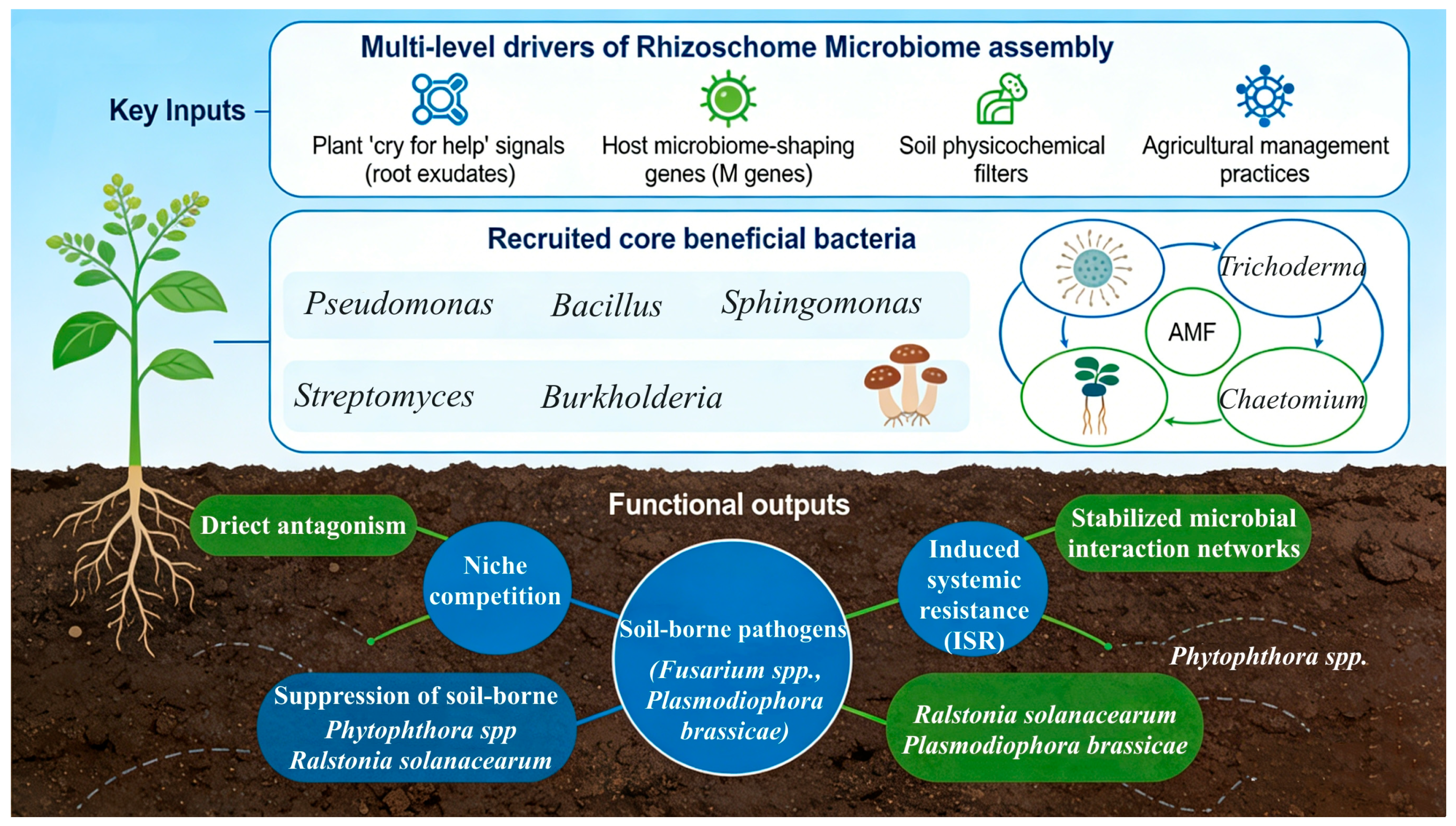
Collectively, the assembly of rhizosphere microbial communities is shaped by root exudates, host genotype, soil properties, and agricultural practices, while core beneficial microbes (e.g., Pseudomonas, Bacillus, Streptomyces, Trichoderma, and AMF) suppress soil-borne pathogens through antibiosis, competition, induced systemic resistance, and modulation of microbial interaction networks (Figure 4).

5. Control Strategy and Application Based on Rhizosphere Microbiota

Based on the understanding of the disease suppression mechanism of rhizosphere microbiota, a variety of strategies for preventing and controlling soil-borne diseases by using microbiota are being developed and applied.

5.1. Synthetic Microbial Community (SynCom)

SynCom refers to the combination and application of microorganisms (usually including bacteria and fungi) with specific functions to simulate or optimize the functions of natural communities. SynCom usually has a more stable and efficient inhibitory effect than a single strain. For example, SynCom, composed of 16 core bacteria, can effectively inhibit watermelon Fusarium wilt, and its effect is better than that of single bacteria, and it can reshape rhizosphere microbial groups and enrich beneficial Pseudomonas [79]. SynCom, which is composed of Bacillus and Streptomyces, significantly enhances the control effect of tomato bacterial wilt through the synergy among its members, such as metabolite-induced antibiotic synthesis [56]. SynCom, composed of five strains of Bacillus and five strains of Pseudomonas, inhibited strawberry wilt by improving soil versatility, nutrient cycle and enzyme activity, and enriching beneficial microorganisms such as Burkholderia, and showed a lasting legacy effect [80].

5.2. Rhizosphere Prebiotics

Rhizosphere prebiotics are screened compounds (usually plant or microbial metabolites) that can specifically stimulate the growth or activity of beneficial microorganisms but not promote the growth of pathogens. For example, metabolites such as ribose, lactic acid, xylose, mannose, maltose, gluconolactone and ribitol identified from the rhizosphere of healthy tomatoes can selectively promote the growth of beneficial bacteria such as Bacillus and Lysobacter and inhibit bacterial wilt, and they can effectively control tomato bacterial wilt when applied to soil [81]. Specific nucleotides enriched in the citrus rhizosphere, such as adenosine, can recruit beneficial microorganisms and enhance plant heat resistance and disease resistance [82].

5.3. Legacy Effect of Soil Microorganisms and Rotation/Intercropping

The previous crop creates a specific rhizosphere microbial group through root exudates and residues, which has a legacy effect on the health of the next crop. Reasonable rotation or intercropping can take advantage of this effect to prevent and control soil-borne diseases. For example, buckwheat–cabbage rotation significantly reduces the incidence of cabbage clubroot, and its mechanism is that flavonoids secreted by buckwheat roots enrich beneficial microorganisms, including Microbacterium, Stenotrophomonas and R. solanacearum, which can inhibit pathogens [18]. Ginger–chrysanthemum intercropping stimulates the root system of chrysanthemum to release specific metabolites through ginger root exudates, such as sinapine and 6-gingerol, which promote the colonization of Burkholderia in the root system of chrysanthemum and the formation of biofilm, thus inhibiting chrysanthemum wilt [20].

5.4. Organic Improvement and Soil Health Management

The application of organic fertilizer and compost can improve soil physical and chemical properties, increase microbial diversity, enrich beneficial microorganisms and enhance soil disease inhibition. For example, the application of bio-organic fertilizer can significantly reduce the incidence of tomato bacterial wilt, and its effect is related to the change in rhizosphere microbial community structure by the enrichment of Pseudomonas and the enhancement of function, for example, the increase in antibiotic synthesis gene abundance [8,83]. Furthermore, long-term application of organic fertilizer is helpful to maintain a healthy rhizosphere microbial network by regulating bacterial composition and soil metabolic processes [2,84].

5.5. Host Plant Breeding and Engineering

Enhancing plant disease resistance in both the plant pathway and the rhizobiome pathway is undoubtedly a shared goal for plant breeders and microbiologists. For microbiologists, recognizing the contribution of the rhizobiome pathway to plant disease resistance is a prerequisite for the precise and efficient utilization of rhizosphere microbes in promoting plant disease resistance [12]. In the context of disease resistance breeding, the microbiome-shaping genes enable both the enrichment of disease-suppressive microbiota and a direct disease-suppressive effect. Current breeding strategies based on the accumulation of resistance genes are increasingly challenged by rapidly evolving pathogens [25]. By contrast, harnessing microbiome-shaping genes may facilitate the breeding of crop varieties that are more broad-spectrum and durable in disease resistance. Therefore, crop varieties that can effectively recruit and maintain beneficial rhizosphere microorganisms should be bred or transformed, for example, using GWAS and other technologies to identify plant gene loci related to root exudate composition and microbial recruitment ability and guide disease-resistant breeding [12].

6. Challenges and Future Directions

Although rhizosphere microbiotas show great potential in controlling soil-borne diseases, it still faces many challenges. First of all, field stability and predictability are often lacking. Synthetic microbial communities (SynComs) or prebiotic strategies that perform effectively in laboratories or greenhouses frequently become unstable in complex field environments. Environmental factors (e.g., soil type, climate, and agricultural practices), competition from indigenous microbial communities, and dynamic shifts in pathogenic bacterial communities collectively influence the colonization efficiency and functional expression of introduced microorganisms or metabolites. Secondly, the depth of mechanistic understanding is insufficient. The molecular mechanisms underlying complex signal communication among plants, beneficial microbes, and pathogens, such as root exudate–microbial receptor recognition and microbial secondary metabolite-mediated plant immune activation, remain to be deeply dissected. Moreover, the functional redundancy and synergistic mechanisms at the microbiome level need to be clearly clarified. Thirdly, the complexity of cross-domain interactions is understudied. The comprehensive contributions of interactions across microbial domains (e.g., bacteria–fungi cross-talk, protist predation, and phage-mediated regulation) to disease suppression require systematic investigation. In addition, standardization and large-scale application are urgently needed. The production, storage, transportation, application techniques, and efficacy evaluation systems of SynComs require standardization, and the screening, dosage, and application modes of prebiotics also need optimization, with cost-effectiveness being the key constraint for large-scale field deployment. Finally, studies on rhizosphere viruses, especially the structure, function, and disease-suppressive roles of bacteriophages in the rhizosphere, represent an emerging and promising research direction [78].
To further advance the development and application of rhizosphere microbiome-based disease control strategies, future research should focus on the following key directions. Firstly, in-depth analysis of the molecular mechanisms underlying rhizosphere ‘crying for help’ signals is urgently needed, including the identification of key signal molecules and their corresponding microbial receptors, as well as clarification of the signaling pathways that regulate the synthesis and secretion of these signals after plants perceive pathogen invasion. Next, the design of smarter and more stable synthetic microbial communities (SynComs) should be achieved based on a systematic understanding of microbial interaction networks and functional redundancy. Such SynComs should be capable of self-assembly, environmental adaptation, and sustained functional expression, and ideally include cross-domain members such as bacteria, fungi, and bacteriophages. Subsequently, development of precision delivery systems is required to protect introduced microorganisms or bioactive metabolites using nanomaterials and biomaterials, thereby enabling targeted delivery and controlled release in the rhizosphere. Then, integration with host breeding should be strengthened by using genome editing and other biotechnologies to create new crop varieties that can more efficiently recruit and maintain beneficial microbial communities, for example, by optimizing root system architecture and root exudate profiles. Eventually, integration of multiple strategies is essential to combine synthetic microbial community inoculation with soil health management (e.g., organic amendment, crop rotation, and intercropping), disease-resistant variety breeding, and physical control measures, thereby forming a comprehensive and efficient disease prevention and control system. If possible, field validation and modeling prediction should be enhanced through large-scale field trials across diverse ecological regions and crop systems to evaluate long-term efficacy and ecological risks. Meanwhile, predictive models for disease occurrence and control efficacy should be developed using big data and artificial intelligence to support precise and intelligent management of soil-borne diseases.

7. Conclusions

The rhizosphere microbiota serves as a natural barrier for plants against soil-borne diseases. The ‘crying for help’ mechanism, whereby stressed plants actively recruit beneficial microbes via root exudates, and the complex interaction networks among microorganisms form the foundation of rhizosphere disease suppression.
We distinctly contribute the articulation of the ‘M genes → microbiome engineering → breeding’ axis as a central conceptual framework. This axis connects M genes that shape root exudate profiles to the rational design of SynComs and prebiotics, and ultimately to the breeding of crop varieties with enhanced capacity to recruit and maintain disease-suppressive microbiomes.
Strategies based on the rhizosphere microbiota, represented by SynComs and prebiotics, show great potential to replace or supplement traditional chemical control. The rapid development of omics, culturomics, and bioinformatics has greatly advanced our understanding of the structure and function of rhizosphere microbiota. Although challenges remain in field stability, mechanistic depth, and large-scale application, deep analysis of plant–microbe–environment interactions, design of smarter microbial products, integration with soil health management and crop breeding, and especially the translation of M genes into breeding programs will provide critical support for sustainable agriculture and green control of soil-borne diseases.

Author Contributions

Y.L. wrote this manuscript. S.W., Y.S. and Y.Z. performed the literature investigation and collected related data. X.S. and J.L. analyzed the microbial community assembly data and wrote the corresponding manuscript sections. Q.Z. and P.Y. collated some data and revised part of this manuscript. L.H. and H.Z. conceived, designed and revised this manuscript. All authors have read and agreed to the published version of the manuscript.

Funding

This research was financially supported by the Natural Science Foundation of Sichuan Province of China [grant number: 2025ZNSFSC0203] and the Sichuan Innovation Team of the Chinese National Modern Agriculture Industry Technology System [grant number: SCCXTD-2024-19].

Data Availability Statement

The original contributions presented in this study are included in the article. Further inquiries can be directed to the corresponding authors.

Acknowledgments

We thank the research team for securing the funding for this study. We thank Yi Tian, who works for the Bureau of Agriculture and Rural Affairs of Daying County, for her help in downloading the literature. We also thank the anonymous reviewers for their comments on this manuscript.

Conflicts of Interest

The authors declare no conflicts of interest.

References

  1. Wen, T.; Xie, P.H.; Penton, C.R.; Hale, L.; Thomashow, L.S.; Yang, S.D.; Ding, Z.X.; Su, Y.Q.; Yuan, J.; Shen, Q.R. Specific metabolites drive the deterministic assembly of diseased rhizosphere microbiome through weakening microbial degradation of autotoxin. Microbiome 2022, 10, 177. [Google Scholar] [CrossRef] [PubMed]
  2. Deng, X.H.; Zhang, N.; Li, Y.C.; Zhu, C.Z.; Qu, B.Y.; Liu, H.J.; Li, R.; Bai, Y.; Shen, Q.R.; Falcao, S.J. Bio-organic soil amendment promotes the suppression of Ralstonia solanacearum by inducing changes in the functionality and composition of rhizosphere bacterial communities. New Phytol. 2022, 235, 1558–1574. [Google Scholar] [CrossRef] [PubMed]
  3. Kilian, V.L.; Noémie, D.Z.; Kris, A.; Barbara, D.C.; Monica, H. Towards effective biocontrol of Phytophthora root rot in annual crops: A meta-analysis. Biol. Control 2025, 207, 105834. [Google Scholar]
  4. Gao, Y.H.; Zheng, Z.H.; Zhang, Y.; Hu, Y.G.; Wang, X.F. Mechanism of rhizosphere micro-ecology in controlling soil-borne fungal diseases: A review. J. China Agric. Univ. 2021, 26, 100–113. (In Chinese) [Google Scholar]
  5. Zhang, J.H.; Wei, L.F.; Yang, J.; Ahmed, W.; Wang, Y.T.; Fu, L.N.; Ji, G.H. Probiotic consortia: Reshaping the rhizospheric microbiome and its role in suppressing root-rot disease of Panax notoginseng. Front. Microbiol. 2020, 11, 701. [Google Scholar] [CrossRef]
  6. Wen, T.; Ding, Z.X.; Thomashow, L.S.; Hale, L.; Yang, S.D.; Xie, P.H.; Liu, X.Y.; Wang, H.Q.; Shen, Q.R.; Yuan, J. Deciphering the mechanism of fungal pathogen-induced disease-suppressive soil. New Phytol. 2023, 238, 2634–2650. [Google Scholar] [CrossRef]
  7. Liu, S.; Li, H.Y.; Zhang, T.; Li, Y.K.; Liao, X.D.; Xing, S.C. Organic fertilizer enhances the secretion of microRNAs from tomato roots to facilitate beneficial rhizosphere microorganism expansion and suppress Ralstonia solanacearum proliferation. Microbiome 2025, 13, 159. [Google Scholar] [CrossRef]
  8. Tao, C.Y.; Li, R.; Xiong, W.; Shen, Z.Z.; Liu, S.S.; Wang, B.B.; Ruan, Y.Z.; Geisen, S.; Shen, Q.R.; Kowalchuk, G.A. Bio-organic fertilizers stimulate indigenous soil Pseudomonas populations to enhance plant disease suppression. Microbiome 2020, 8, 137. [Google Scholar] [CrossRef]
  9. Stéphane, C.; Fabricio, C.; Tanja, K.; Linda, J.; Günter, B.; Friederike, T.; Angela, S. Harnessing the plant microbiome for sustainable crop production. Nat. Rev. Microbiol. 2024, 23, 9–23. [Google Scholar] [CrossRef]
  10. Samyuktha, D.C.; Angappan, K.; Johnson, I.; Karthikeyan, M.; Kalaiyarasi, R.; Poorniammal, R. Plant microbiome for soil borne pathogen-current status and future challenges. Physiol. Mol. Plant Pathol. 2025, 139, 102827. [Google Scholar]
  11. Fan, X.Y.; Ge, A.H.; Qi, S.S.; Guan, Y.F.; Wang, R.; Yu, N.; Wang, E.T. Root exudates and microbial metabolites: Signals and nutrients in plant-microbe interactions. Sci. China Life Sci. 2025, 68, 2290–2302. [Google Scholar] [CrossRef]
  12. Feng, Z.W.; Liang, Q.H.; Yao, Q.; Bai, Y.; Zhu, H.H. The role of the rhizobiome recruited by root exudates in plant disease resistance: Current status and future directions. Environ. Microbiome 2024, 19, 91. [Google Scholar] [CrossRef]
  13. Fang, T.Y.; Yue, Y.L. Mechanisms of root exudates-mediated plant resistance to soil-borne diseases. Biotechnol. Bull. 2024, 40, 52–61. (In Chinese) [Google Scholar]
  14. Wang, N.Q.; Ping, L.; Mei, X.L.; Zhang, Y.Z.; Zhang, Y.L.; Yang, X.R.; Guo, Y.T.; Gao, Y.; Xu, Y.C.; Shen, Q.R.; et al. Succinic acid reduces tomato bacterial wilt disease by recruiting Sphingomonas sp. Environ. Microbiome 2025, 20, 85. [Google Scholar] [CrossRef] [PubMed]
  15. Wen, T.; Yuan, J.; He, X.M.; Lin, Y.; Huang, Q.W.; Shen, Q.R. Enrichment of beneficial cucumber rhizosphere microbes mediated by organic acid secretion. Hortic. Res. 2020, 7, 348–353. [Google Scholar] [CrossRef] [PubMed]
  16. Ma, S.Q.; Chen, Q.R.; Zheng, Y.F.; Ren, T.T.; He, R.; Cheng, L.R.; Zou, P.; Jing, C.L.; Zhang, C.S.; Li, Y.Q. A tale for two roles: Root-secreted methyl ferulate inhibits P. nicotianae and enriches the rhizosphere Bacillus against black shank disease in tobacco. Microbiome 2025, 13, 33. [Google Scholar] [CrossRef]
  17. Zhu, F.Y.; Fang, Y.; Wang, Z.w.; Wang, P.; Yang, K.K.; Xiao, L.T.; Wang, R.Z. Salicylic acid remodeling of the rhizosphere microbiome induces watermelon root resistance against Fusarium oxysporum f. sp. niveum infection. Front. Microbiol. 2022, 13, 1015038. [Google Scholar] [CrossRef]
  18. Wu, J.B.; Hu, S.L.; Chen, J.; Zhou, L.L.; Yang, S.D.; Zhou, N.; Wu, L.; Niu, G.Q.; Zhang, Y.; Ren, X.S.; et al. Soil microbial legacy mediated by buckwheat flavonoids enhances cabbage resistance to clubroot disease. Microbiome 2025, 13, 176. [Google Scholar] [CrossRef]
  19. Zhou, X.G.; Zhang, J.Y.; u Rahman, M.K.; Gao, D.M.; Wei, Z.; Wu, F.Z.; Francisco, D.A. Interspecific plant interaction via root exudates structures the disease suppressiveness of rhizosphere microbiomes. Mol. Plant 2023, 16, 849–864. [Google Scholar] [CrossRef]
  20. Zhu, L.; Zhou, W.; Wang, J.F.; Guo, J.S.; Zhou, C. Root exudate-mediated assemblage of rhizo-microbiome enhances Fusarium wilt suppression in chrysanthemum. Microbiol. Res. 2025, 292, 128031. [Google Scholar] [CrossRef]
  21. Zhang, H.; Yang, Y.X.; Mei, X.Y.; Li, Y.; Wu, J.Q.; Li, Y.W.; Wang, H.L.; Huang, H.C.; Yang, M.; He, X.H.; et al. Phenolic acids released in maize rhizosphere during maize-soybean intercropping inhibit Phytophthora blight of soybean. Front. Plant Sci. 2020, 11, 886. [Google Scholar] [CrossRef] [PubMed]
  22. Jin, X.; Jia, H.T.; Ran, L.Y.; Wu, F.Z.; Liu, J.J.; Klaus, S.; Francisco, D.A.; Wei, Z.; Zhou, X.G. Fusaric acid mediates the assembly of disease-suppressive rhizosphere microbiota via induced shifts in plant root exudates. Nat. Commun. 2024, 15, 5125. [Google Scholar] [CrossRef] [PubMed]
  23. Xia, X.Y.; Wei, Q.H.; Wu, H.X.; Chen, X.Y.; Xiao, C.X.; Ye, Y.P.; Liu, C.T.; Yu, H.Y.; Guo, Y.W.; Sun, W.X.; et al. Bacillus species are core microbiota of resistant maize cultivars that induce host metabolic defense against corn stalk rot. Microbiome 2024, 12, 156. [Google Scholar] [CrossRef] [PubMed]
  24. Yue, H.; Yue, W.J.; Jiao, S.; Hyun, K.; Lee, Y.H.; Wei, G.H.; Song, W.N.; Shu, D.T. Plant domestication shapes rhizosphere microbiome assembly and metabolic functions. Microbiome 2023, 11, 70. [Google Scholar] [CrossRef]
  25. Zhan, C.F.; Wang, M.C. Disease resistance through M genes. Nat. Plants 2024, 10, 352–353. [Google Scholar] [CrossRef]
  26. Yang, K.M.; Fu, R.X.; Feng, H.C.; Jiang, G.F.; Omri, F.; Sun, T.Y.; Liu, M.C.; Huang, B.W.; Li, S.; Wang, X.F.; et al. RIN enhances plant disease resistance via root exudate-mediated assembly of disease-suppressive rhizosphere microbiota. Mol. Plant 2023, 16, 1379–1395. [Google Scholar] [CrossRef]
  27. Ping, X.X.; Khan, R.A.A.; Chen, S.M.; Jiao, Y.; Zhuang, X.; Jiang, L.J.; Song, L.Q.; Yang, Y.H.; Zhao, J.L.; Li, Y.; et al. Deciphering the role of rhizosphere microbiota in modulating disease resistance in cabbage varieties. Microbiome 2024, 12, 160. [Google Scholar] [CrossRef]
  28. Li, C.J.; Ahmed, W.; Li, D.F.; Yu, L.J.; Xu, L.; Xu, T.Y.; Zhao, Z.X. Biochar suppresses bacterial wilt disease of flue-cured tobacco by improving soil health and functional diversity of rhizosphere microorganisms. Appl. Soil Ecol. 2022, 171, 104314. [Google Scholar] [CrossRef]
  29. Chen, Z.L.; Wang, W.Z.; Chen, L.; Zhang, P.; Liu, Z.H.; Yang, X.K.; Shao, J.L.; Ding, Y.; Mi, Y.H. Effects of pepper-maize intercropping on the physicochemical properties, microbial communities, and metabolites of rhizosphere and bulk soils. Environ. Microbiome 2024, 19, 108. [Google Scholar] [CrossRef]
  30. Niraula, S.; Rose, M.; Chang, W.S. Microbial co-occurrence network in the rhizosphere microbiome: Its association with physicochemical properties and soybean yield at a regional scale. J. Microbiol. 2022, 60, 986–997. [Google Scholar] [CrossRef]
  31. Sun, X.F.; Liu, Y.; He, L.; Kuang, Z.Y.; Dai, S.D.; Hua, L.X.; Jiang, Q.P.; Wei, T.Y.; Ye, P.S.; Zeng, H.L. Response of yields, soil physiochemical characteristics, and the rhizosphere microbiome to the occurrence of root rot caused by Fusarium solani in Ligusticum chuanxiong Hort. Microorganisms 2024, 12, 2350. [Google Scholar] [CrossRef] [PubMed]
  32. Mu, X.P.; Wang, J.; Qin, H.; Ding, J.Q.; Mou, X.Y.; Liu, S.; Wang, L.; Zhang, S.; Zhang, J.C.; Wang, P.F. Analyses of rhizosphere soil physicochemical properties and microbial community structure in Cerasus humilis orchards with different planting years. Horticulturae 2024, 10, 1102. [Google Scholar] [CrossRef]
  33. Gong, B.; He, Y.; Luo, Z.B.; Peng, H.W.; Cai, H.Q.; Zhu, Y.N.; Bin, J.; Ding, M.J. Response of rhizosphere soil physicochemical properties and microbial community structure to continuous cultivation of tobacco. Ann. Microbiol. 2024, 74, 4. [Google Scholar] [CrossRef]
  34. Estrada, R.; Porras, T.; Romero, Y.; Pérez, W.E.; Vilcara, E.A.; Cruz, J.; Arbizu, C.I. Soil depth and physicochemical properties influence microbial dynamics in the rhizosphere of two Peruvian superfood trees, cherimoya and lucuma, as shown by PacBio-HiFi sequencing. Sci. Rep. 2024, 14, 19508. [Google Scholar] [CrossRef]
  35. Cai, Z.C.; Zhang, J.B.; Huang, X.Q.; Zhu, T.B.; Wen, T. Application of reductive soil disinfestation to suppress soil-borne pathogens. Acta Pedol. Sin. 2015, 52, 469–476. (In Chinese) [Google Scholar]
  36. Liu, L.L. Study on the Effect of Reductive Soil Disinfestation to Control Soil-Borne Diseases and Its Microbial Mechanism. Ph.D. Thesis, Nanjing Normal University, Nanjing, China, 2019. [Google Scholar]
  37. Ali, A.; Elrys, A.S.; Liu, L.L.; Xia, Q.; Wang, B.Y.; Li, Y.L.; Dan, X.Q.; Iqbal, M.; Zhao, J.; Huang, X.Q.; et al. Deciphering the synergies of reductive soil disinfestation combined with biochar and antagonistic microbial inoculation in cucumber Fusarium wilt suppression through rhizosphere microbiota structure. Microb. Ecol. 2022, 85, 980–997. [Google Scholar] [CrossRef]
  38. Zhou, Y.Y.; Yang, Z.; Liu, J.G.; Li, X.D.; Wang, X.X.; Dai, C.C.; Zhang, T.L.; Carrión, V.J.; Wei, Z.; Cao, F.L.; et al. Crop rotation and native microbiome inoculation restore soil capacity to suppress a root disease. Nat. Commun. 2023, 14, 8126. [Google Scholar] [CrossRef]
  39. Hong, S.; Yuan, X.F.; Yang, J.M.; Yang, Y.; Jv, H.L.; Li, R.; Jia, Z.J.; Ruan, Y.Z. Selection of rhizosphere communities of diverse rotation crops reveals unique core microbiome associated with reduced banana Fusarium wilt disease. New Phytol. 2023, 238, 2194–2209. [Google Scholar] [CrossRef]
  40. Yuan, X.F.; Hong, S.; Xiong, W.; Waseem, R.; Shen, Z.Z.; Wang, B.B.; Li, R.; Ruan, Y.Z.; Shen, Q.R.; Francisco, D.A. Development of fungal-mediated soil suppressiveness against Fusarium wilt disease via plant residue manipulation. Microbiome 2021, 9, 200. [Google Scholar] [CrossRef]
  41. Li, M.; Thomas, P.; Yin, Y.; Wang, J.N.; Gu, S.H.; Alexandre, J.; Joost, K.; Wang, H.G.; Wei, Z.; Xu, Y.C.; et al. Indirect reduction of Ralstonia solanacearum via pathogen helper inhibition. ISME J. 2021, 16, 868–875. [Google Scholar] [CrossRef]
  42. Li, Z.F.; Bai, X.L.; Jiao, S.; Li, Y.M.; Li, P.R.; Yang, Y.; Zhang, H.; Wei, G.H. A simplified synthetic community rescues Astragalus mongholicus from root rot disease by activating plant-induced systemic resistance. Microbiome 2021, 9, 217. [Google Scholar] [CrossRef]
  43. Pan, S.F.; Feng, Z.W.; Yao, Q.; Yang, E.; Zhou, Y.; Zhu, H.H. Green control of soil-borne crop diseases: Advances in rhizosphere microbe research. Acta Microbiol. Sin. 2026, 66, 496–515. [Google Scholar]
  44. Shao, Z.Y.; Gu, S.H.; Zhang, X.N.; Xue, J.; Yan, T.; Guo, S.S.; Pommier, T.; Jousset, A.; Yang, T.J.; Xu, Y.C.; et al. Siderophore interactions drive the ability of Pseudomonas spp. consortia to protect tomato against Ralstonia solanacearum. Hortic. Res. 2024, 11, uhae186. [Google Scholar] [CrossRef] [PubMed]
  45. Yin, Y.L.; Cheng, Q.; Shi, Y.; Du, Z.N.; Luo, X.X.; Chen, X.Y.; Hu, X.P.; Wang, Y.; Wan, C.X.; Shen, X.H. Healthy cotton roots assemble a Pseudomonas sp. contributing to disease resistance against Verticillium wilt and cotton seedlings growth promotion. Ind. Crops Prod. 2025, 233, 121451. [Google Scholar] [CrossRef]
  46. Sain, S.K.; Dewasi, H.; Singh, A. Combined application of effective Trichoderma, Pseudomonas and arbuscular mycorrhiza spp. reduced soil-borne diseases and boosted growth in cotton. Egypt. J. Biol. Pest Control 2023, 33, 94. [Google Scholar] [CrossRef]
  47. Zhou, Y.Q.; Wang, H.K.; Sun, J.X.; Wicaksono, W.A.; Liu, C.; He, Y.H.; Qin, Y.X.; Berg, G.; Li, L.; Lin, H.W.; et al. Phenazines contribute to microbiome dynamics by targeting topoisomerase IV. Nat. Microbiol. 2025, 10, 2396–2411. [Google Scholar] [CrossRef]
  48. Du, X.Q.; Sun, T.X.; Xu, W.L.; Zhu, T.; Wang, Q.; Gu, P.W.; Lu, J. Multi-omics analysis reveals the specific role of biocontrol reagents against tomato bacterial wilt. Front. Plant Sci. 2025, 16, 1620460. [Google Scholar] [CrossRef]
  49. Dong, H.H.; Gao, R.X.; Dong, Y.J.; Yao, Q.; Zhu, H.H. Bacillus velezensis RC116 inhibits the pathogens of bacterial wilt and Fusarium wilt in tomato with multiple biocontrol traits. Int. J. Mol. Sci. 2023, 24, 8527. [Google Scholar] [CrossRef]
  50. Kang, H.J.; Fan, T.F.; Shi, Y.X.; Xie, X.W.; Li, L.; Xiang, S.; Xie, J.M.; Li, B.J.; Chai, A.L. Encapsulation of Bacillus velezensis and its biocontrol efficiency against Plasmodiophora brassicae in Chinese cabbage. Sci. Hortic. 2024, 337, 113473. [Google Scholar] [CrossRef]
  51. He, P.J.; Cui, W.Y.; Shahzad, M.; He, P.B.; Huang, R.R.; Li, X.Y.; Wu, Y.X.; Wang, Y.H.; Yang, J.; Tang, P.; et al. Fengycin produced by Bacillus subtilis XF-1 plays a major role in the biocontrol of Chinese cabbage clubroot via direct effect and defense stimulation. J. Cell. Physiol. 2023, 239, e30991. [Google Scholar] [CrossRef]
  52. Alper, D.; Kıymet, G.; Nevzat, Ş. Isolation, plant growth-promoting traits, antagonistic effects on clinical and plant pathogenic organisms and identification of actinomycetes from olive rhizosphere. Microb. Pathog. 2020, 143, 104134. [Google Scholar] [CrossRef]
  53. Sujarit, K.; Pathom-aree, W.; Mori, M.; Dobashi, K.; Shiomi, K.; Lumyong, S. Streptomyces palmae CMU-AB204 T, an antifungal producing-actinomycete, as a potential biocontrol agent to protect palm oil producing trees from basal stem rot disease fungus, Ganoderma boninense. Biol. Control 2020, 148, 104307. [Google Scholar] [CrossRef]
  54. Nguyen, P.; Strub, C.; Durand, N.; Alter, P.; Fontana, A.; Schorr-Galindo, S. Biocontrol of Fusarium verticillioides using organic amendments and their actinomycete isolates. Biol. Control 2018, 118, 55–66. [Google Scholar] [CrossRef]
  55. Nguyen, H.T.T.; Nguyen, L.T.T.; Park, A.R.; Nguyen, V.T.; Dang, Q.L.; Kim, J.C. Harnessing rimocidins-producing Streptomyces sp. JCK-6116 as a sustainable fungicide for biocontrol of cucumber soil-borne diseases. J. Microbiol. Biotechnol. 2025, 35, e2508023. [Google Scholar] [CrossRef] [PubMed]
  56. Sun, T.Y.; Liu, H.W.; Wang, N.Q.; Huang, M.C.; Banerjee, S.; Jousset, A.; Xu, Y.C.; Shen, Q.R.; Wang, S.M.; Wang, X.F.; et al. Interactions with native microbial keystone taxa enhance the biocontrol efficiency of Streptomyces. Microbiome 2025, 13, 126. [Google Scholar] [CrossRef]
  57. Zhou, T.B.; Xu, Y.X.; Chen, Y.T.; Tang, Z.B.; Wang, E.X.; Li, M.M.; Dou, M.R.; Zhang, Z.J.; Zhang, T.; Huang, S.J.; et al. Streptomyces-induced 6-nitrocoumarin coordinates rhizosphere microbiome recruitment for pepper blight suppression. J. Agric. Food Chem. 2025, 73, 25425–25439. [Google Scholar] [CrossRef]
  58. Wang, C.H. Mechanism of Rhizosphere Microbiome Regulating the Occurrence of Wheat Crown Rot. Master’s Thesis, Jiangxi University of Science and Technology, Ganzhou, China, 2025. [Google Scholar]
  59. Shen, Y.Q.; Hou, D.; Li, Y.L.; Yang, Q.; Yue, H.Z.; Zhang, D.Q.; Zhao, P.; Zhong, X.R.; Xie, J.M. Identification of disease control and growth promoting ability of antagonistic strains of cucumber Fusarium wilt strains. J. Gansu Agric. Univ. 2023, 58, 162–169+182. [Google Scholar]
  60. Cao, X.H.; Yuan, Q.J.; Hu, C.C.; Zhang, H.X.; Sun, X.Y.; Yan, B.B.; Ma, X.J.; Zhang, L.; Huang, L.Q.; Li, S.J.; et al. Wild wisdom meets cultivation: Comparative rhizomicrobiome analysis unveils the key role of Paraburkholderia in growth promotion and disease suppression in Coptis chinensis. Microbiome 2025, 13, 150. [Google Scholar] [CrossRef]
  61. Wang, F.Y.; Zhang, H.Q.; Liu, H.W.; Wu, C.F.; Wan, Y.; Zhu, L.F.; Yang, J.; Cai, P.; Chen, J.P.; Ge, T.D. Combating wheat yellow mosaic virus through microbial interactions and hormone pathway modulations. Microbiome 2024, 12, 200. [Google Scholar] [CrossRef]
  62. Li, S.; Xu, X.M.; Chen, Y.X.; Wang, X.; Li, X.; Li, J.Y.; Zhu, M.R.; Yan, L.; Wang, H.Y. Effects of Pseudomonas frederiksbergensis FC-17 on potato bacterial wilt and rhizosphere microbial community. Biol. Control 2026, 214, 105988. [Google Scholar] [CrossRef]
  63. Kang, H.J.; Chai, A.L.; Lin, Z.H.; Shi, Y.X.; Xie, X.W.; Li, L.; Fan, T.F.; Xiang, S.; Xie, J.M.; Li, B.J. Deciphering differences in microbial community diversity between clubroot-diseased and healthy soils. Microorganisms 2024, 12, 251. [Google Scholar] [CrossRef] [PubMed]
  64. Zhang, M.M.; Wang, R.; Khan, R.A.A.; Zhan, X.; Ren, S.; Jiang, H.N.; Zheng, C.Y.; Wu, Y.G.; Yang, F.X.; Yu, X.L.; et al. Trichoderma asperellum FJ035 restructure the rhizosphere microbiome to control the cucumber Fusarium wilt. Plant Cell Environ. 2025, 49, 858–877. [Google Scholar] [CrossRef] [PubMed]
  65. Guo, Z.F.; Zhang, J.X.; Liu, Z.B.; Li, Y.; Li, M.; Meng, Q.X.; Yang, Z.P.; Luo, Y.; Zhang, Q.; Yan, M. Trichoderma harzianum prevents red kidney bean root rot by increasing plant antioxidant enzyme activity and regulating the rhizosphere microbial community. Front. Microbiol. 2024, 15, 1348680. [Google Scholar] [CrossRef] [PubMed]
  66. Tao, C.Y.; Wang, Z.; Shen, Z.Z.; Zhang, N.; Liu, S.S.; Lv, N.; Deng, X.H.; Xiong, W.; Geisen, S.; Li, R.; et al. Additive fungal interactions drive biocontrol of Fusarium wilt disease. New Phytol. 2023, 238, 1198–1214. [Google Scholar] [CrossRef]
  67. Li, Y.; Shen, Y.; Zheng, R.; Shang, P.; Wang, Y.; Nan, Z.; Duan, T. Arbuscular mycorrhizal fungus reshapes the rhizosphere microbiome of alfalfa in response to above-ground attack by aphids and a fungal plant pathogen. Funct. Ecol. 2025, 39, 2149–2169. [Google Scholar] [CrossRef]
  68. Liu, Y.C.; Dai, L.L.; Wan, S.P. Research progress on mechanisms of arbuscular mycorrhizal fungi enhancing resistance of intercropping systems to soil-borne diseases. Plant Prot. 2025, 51, 95–101. [Google Scholar]
  69. Moreno, B.; Lidoy, J.; Aguirrebengoa, M.; España, L.; Ramos, A.; García, J.M.; Pozo, M.J.; López-Ráez, J.A.; Benítez, E. Early inoculation with arbuscular mycorrhizal fungi shifts metabolic functions of rhizosphere bacteria in field-grown tomato plants. Plant Soil 2025, 517, 1623–1641. [Google Scholar] [CrossRef]
  70. Nguyen, T.N.T.; Nguyen, M.T.; Nguyen, V.P. Biocontrol of Rhizoctonia solani by Chaetomium cupreum CT07 in cruciferous vegetables. Biocontrol Sci. Technol. 2025, 35, 1296–1308. [Google Scholar] [CrossRef]
  71. Feng, C.; Xu, F.; Li, L.J.; Zhang, J.J.; Wang, J.M.; Li, Y.H.; Liu, L.L.; Han, Z.H.; Shi, R.J.; Wan, X.R.; et al. Biological control of Fusarium crown rot of wheat with Chaetomium globosum 12XP1-2-3 and its effects on rhizosphere microorganisms. Front. Microbiol. 2023, 14, 1133025. [Google Scholar] [CrossRef]
  72. Li, W.Y.; Zhou, J.L.; Zhang, Y.L.; Zhao, L.H.; Feng, H.J.; Wei, F.; Wang, C.Y.; Zhu, H.Q.; Feng, Z.L. Identification of pathogenic bacteria of eggplant soil borne diseases and control effect of Chaetomium globosum CEF-082. Chin. Agric. Sci. Bull. 2025, 41, 111–118. [Google Scholar]
  73. Ma, X.J. Soil Microecology Study on Control of Cotton Verticillium Wilt by Chaetomium globosum. Master’s Thesis, Chinese Academy of Agricultural Sciences, Beijing, China, 2023. [Google Scholar]
  74. Zhan, Q.Q. Analysis of Microbial Community in Healthy Rhizosphere and Occurrence of Tobacco Root Rot and Biocontrol Effect of Chaetomium globosum NP2. Master’s Thesis, Hubei University, Wuhan, China, 2024. [Google Scholar]
  75. Zhou, X.G.; Zhang, J.Y.; Shi, J.B.; Khashi u Rahman, M.; Liu, H.W.; Wei, Z.; Wu, F.Z.; Dini-Andreote, F. Volatile-mediated interspecific plant interaction promotes root colonization by beneficial bacteria via induced shifts in root exudation. Microbiome 2024, 12, 207. [Google Scholar] [CrossRef] [PubMed]
  76. Li, X.G.; Chen, D.L.; Carrión, V.J.; Revillini, D.; Yin, S.; Dong, Y.H.; Zhang, T.L.; Wang, X.X.; Delgado-Baquerizo, M. Acidification suppresses the natural capacity of soil microbiome to fight pathogenic Fusarium infections. Nat. Commun. 2023, 14, 5090. [Google Scholar] [CrossRef] [PubMed]
  77. Xiong, W.; Song, Y.Q.; Yang, K.M.; Gu, Y.; Wei, Z.; Kowalchuk, G.A.; Xu, Y.C.; Jousset, A.; Shen, Q.R.; Geisen, S. Rhizosphere protists are key determinants of plant health. Microbiome 2020, 8, 27. [Google Scholar] [CrossRef] [PubMed]
  78. Muscatt, G.; Hilton, S.; Raguideau, S.; Teakle, G.; Lidbury, I.D.E.A.; Wellington, E.M.H.; Quince, C.; Millard, A.; Bending, G.D.; Jameson, E. Crop management shapes the diversity and activity of DNA and RNA viruses in the rhizosphere. Microbiome 2022, 10, 181. [Google Scholar] [CrossRef]
  79. Qiao, Y.Z.; Wang, Z.D.; Sun, H.; Guo, H.Y.; Song, Y.; Zhang, H.; Ruan, Y.; Xu, Q.C.; Huang, Q.W.; Shen, Q.R.; et al. Synthetic community derived from grafted watermelon rhizosphere provides protection for ungrafted watermelon against Fusarium oxysporum via microbial synergistic effects. Microbiome 2024, 12, 101. [Google Scholar] [CrossRef]
  80. Lei, G.S.; Han, Z.X.; Wang, X.Y.; Malacrinò, A.; Kang, T.; Zhang, D.D.; Zhang, J.Y.; Zhang, Z.; Wu, H.M. Synthetic microbial communities rescues strawberry from soil-borne disease by enhancing soil functional microbial abundance and multifunctionality. J. Adv. Res. 2025, 58, 197–214. [Google Scholar] [CrossRef]
  81. Wen, T.; Xie, P.H.; Liu, H.W.; Liu, T.; Zhao, M.L.; Yang, S.D.; Niu, G.Q.; Hale, L.; Singh, B.K.; Kowalchuk, G.A.; et al. Tapping the rhizosphere metabolites for the prebiotic control of soil-borne bacterial wilt disease. Nat. Commun. 2023, 14, 4497. [Google Scholar] [CrossRef]
  82. Liu, H.J.; Su, Y.W.; Ye, C.; Zuo, D.H.; Wang, L.T.; Mei, X.Y.; Deng, W.P.; Liu, Y.X.; Huang, H.C.; Hao, J.J.; et al. Nucleotides enriched under heat stress recruit beneficial rhizomicrobes to protect plants from heat and root-rot stresses. Microbiome 2025, 13, 160. [Google Scholar] [CrossRef]
  83. Han, Q.; Zhu, G.H.; Qiu, H.M.; Li, M.B.; Zhang, J.M.; Wu, X.Y.; Xiao, R.H.; Zhang, Y.; Yang, W.; Tian, B.; et al. Quality traits drive the enrichment of Massilia in the rhizosphere to improve soybean oil content. Microbiome 2024, 12, 224. [Google Scholar] [CrossRef]
  84. Li, S.M.; Fan, W.; Xu, G.; Cao, Y.; Zhao, X.; Hao, S.W.; Deng, B.; Ren, S.Y.; Hu, S.L. Bio-organic fertilizers improve Dendrocalamus farinosus growth by remolding the soil microbiome and metabolome. Front. Microbiol. 2023, 14, 1117355. [Google Scholar] [CrossRef]
Figure 1. Multiple factors influencing rhizosphere microbial community.
Microorganisms 14 00900 g001
Figure 2. The pipeline for harnessing M genes as a breeding target.
Microorganisms 14 00900 g002
Figure 3. The main pathways and mechanisms of rhizosphere microbes controlling soil-borne diseases in crops. VOCs: volatile organic compounds; SAR: systemic acquired resistance; ISR: induced systemic resistance; JA: jasmonic acid; SA: salicylic acid; ET: ethylene.
Microorganisms 14 00900 g003
Figure 4. Multi-level drivers of rhizosphere microbiome assembly and disease suppression.
Microorganisms 14 00900 g004
Table 1. Key root exudate signals and recruited beneficial microbes.
Root Exudate SignalRecruited MicrobesTarget DiseaseCropReference
Malic acidSphingomonasBacterial wiltTomato[14]
Organic acidsComamonadaceae, XanthomonasFusarium wiltCucumber[15]
Methyl ferulateBacillusBlack shankTobacco[16]
Salicylic acidRhodanobacter, SphingomonasFusarium wiltWatermelon[17]
FlavonoidsMicrobacterium, StenotrophomonasClubrootCabbage[18]
TaxifolinBacillus spp.Verticillium wiltTomato[19]
Sinapyl alcohol, 6-gingerolBurkholderiaFusarium wiltChrysanthemum[20]
Disclaimer/Publisher’s Note: The statements, opinions and data contained in all publications are solely those of the individual author(s) and contributor(s) and not of MDPI and/or the editor(s). MDPI and/or the editor(s) disclaim responsibility for any injury to people or property resulting from any ideas, methods, instructions or products referred to in the content.