Divergent Expression of Acidic and Alkaline Pectate Lyases in Ditylenchus destructor During Initial Infection Time Course

Abstract
1. Introduction
2. Materials and Methods
2.1. Maintenance and Propagation of D. destructor
2.2. Identification of the Pectate Lyase Gene Family in D. destructor A Population
2.3. Heterologous Expression of Pectate Lyase
2.4. RNA-Seq Transcriptome Analysis
2.5. Relative Expression of Ddpel Genes
2.6. Pathogenicity Assay of Purified Pectate Lyase
2.7. Agrobacterium-Mediated Transient Expression
2.8. Assay of DdPeL Activity
2.9. Electrolyte Leakage Rate
2.10. Determination of pH in Healthy and Diseased Plant Tissues
2.11. Statistical Analysis
3. Results
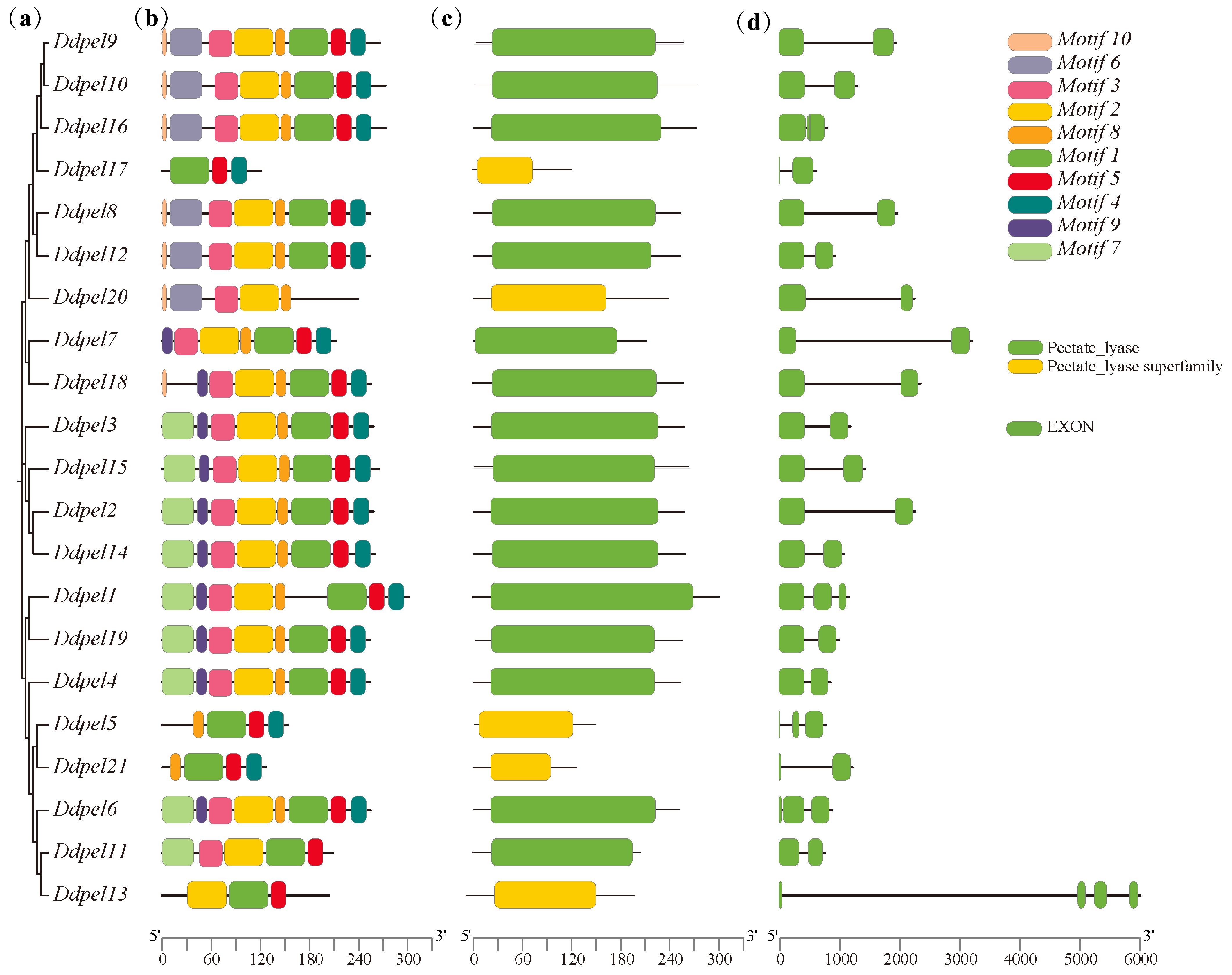
3.1. Identification of Pectate Lyase Gene Family
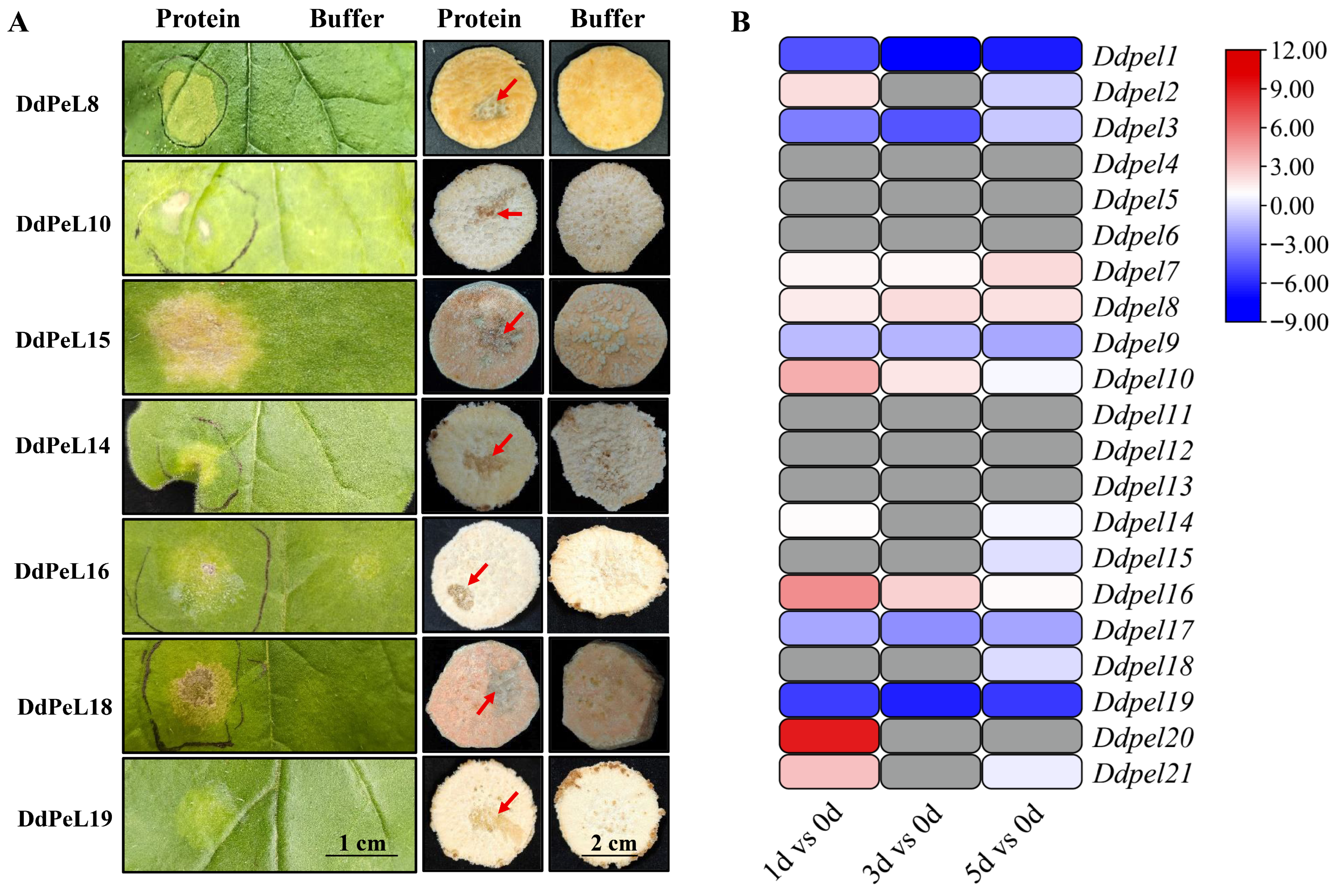
3.2. Recombinant Pectate Lyase Is Pathogenic to Sweet Potato and Tobacco
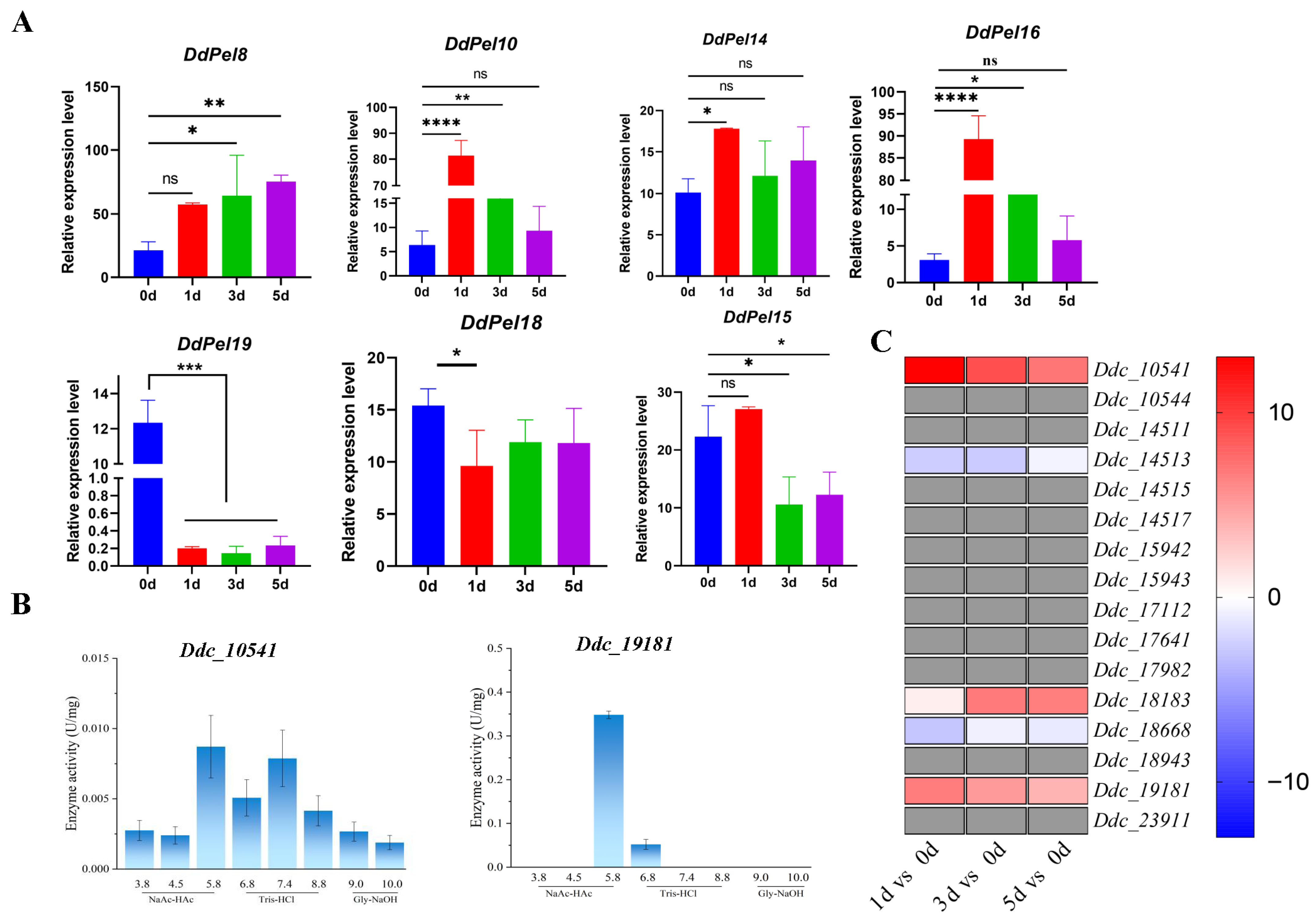
3.3. Enzymatic Activities and Optimal pH of DdPeLs
3.4. Expression of Acidic Pectate Lyase Gene Was Induced During Initial Infection Stage
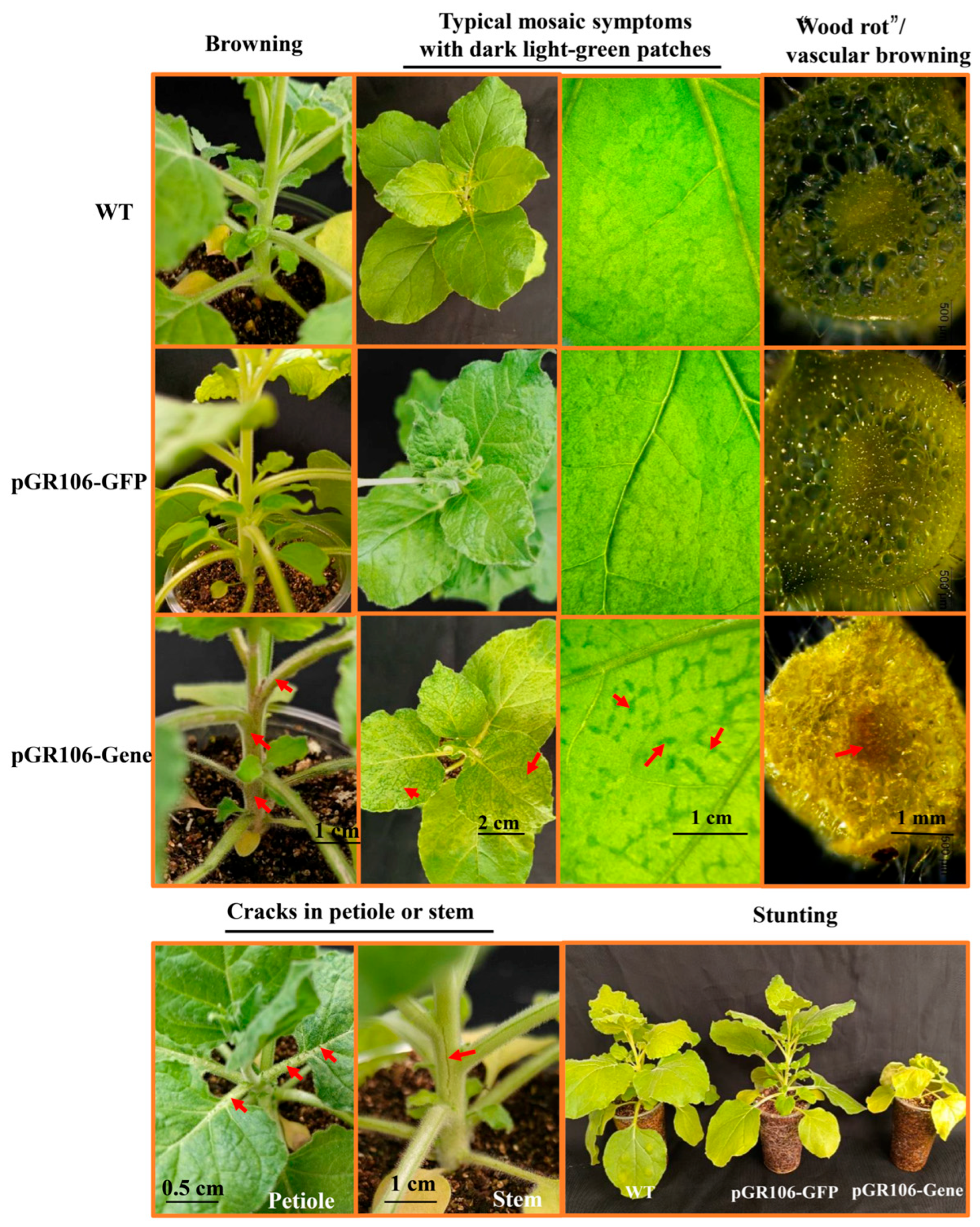
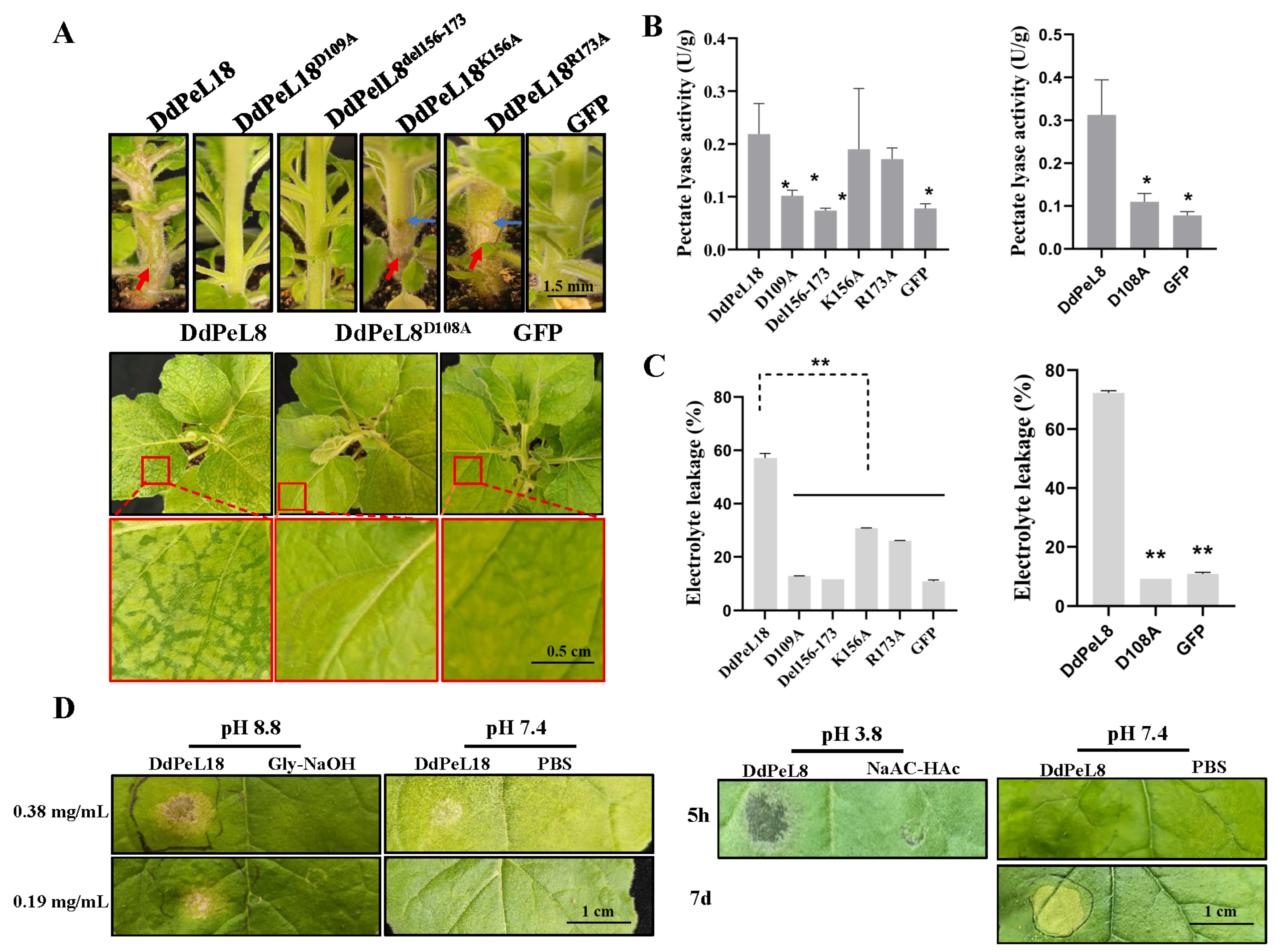
3.5. Alkaline Pectate Lyase Induces More Severe Necrosis in N. benthamiana than Acidic Pectate Lyase
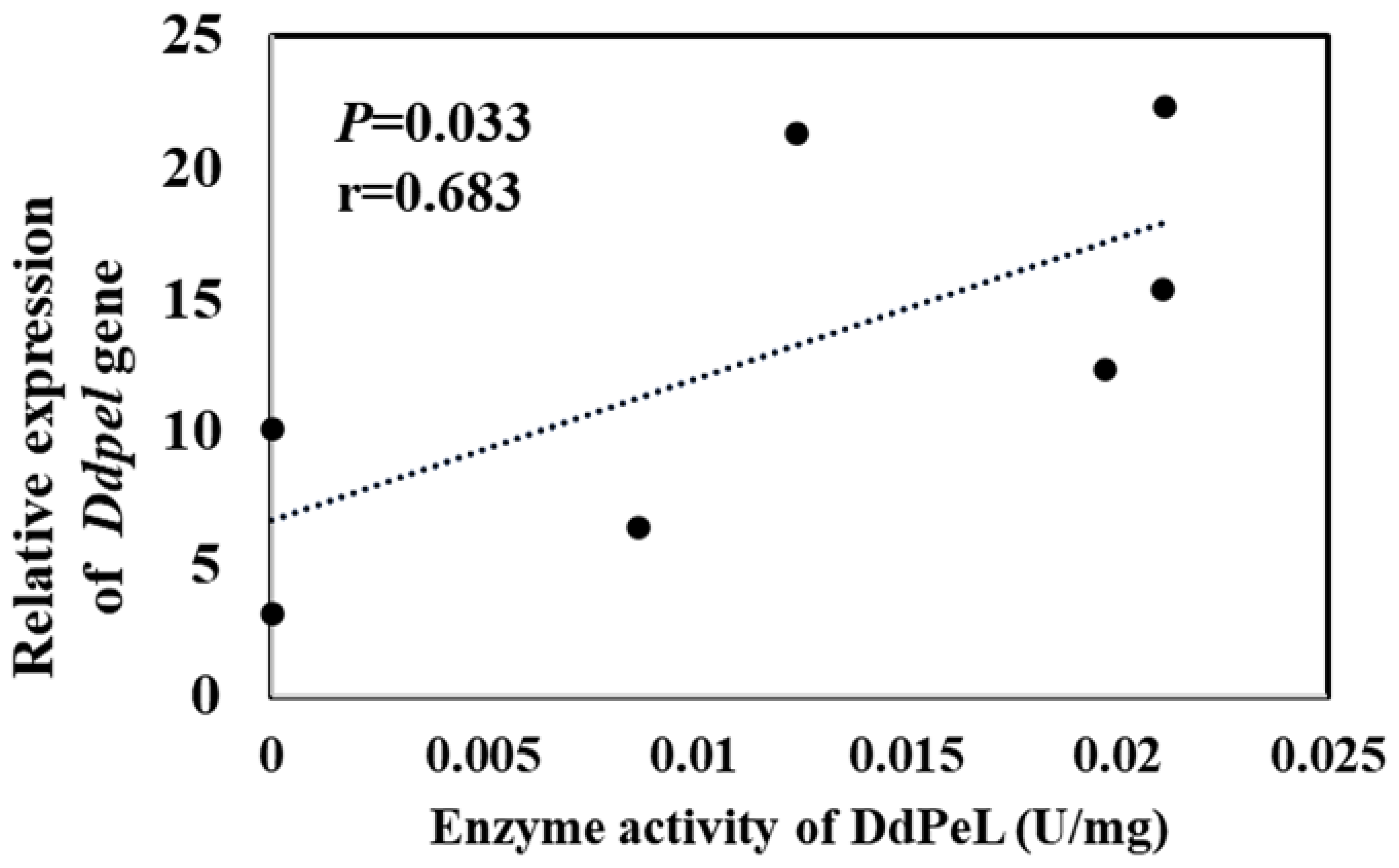
3.6. Enzymatic Activity Is a Critical Determinant of Pathogenicity
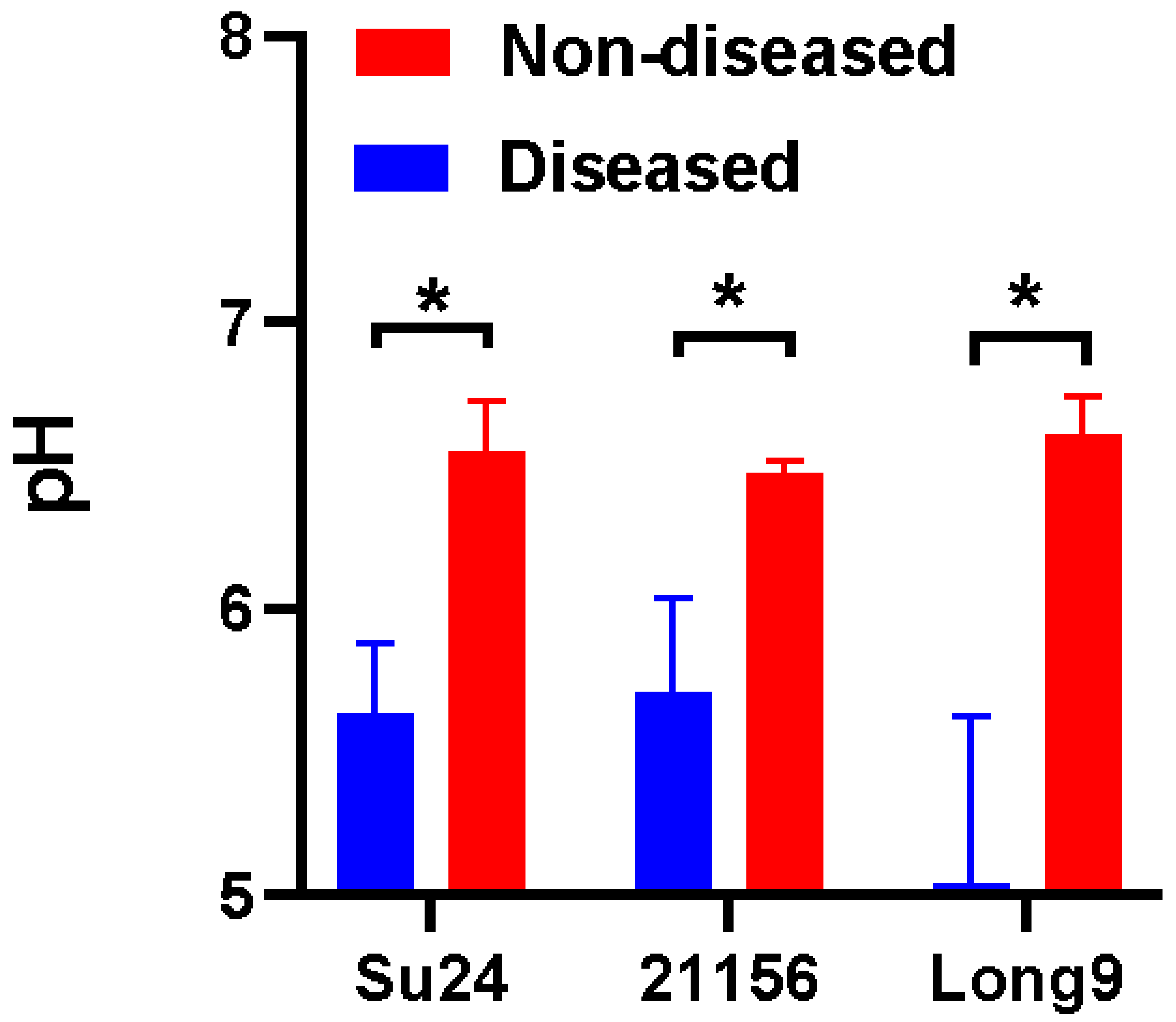
3.7. pH Is Significantly Lower in Infected Sweet Potato Tissues
4. Discussion
4.1. Limitations of Agrobacterium-Mediated Transient Expression in Tobacco for Screening CWDE Effector Proteins
4.2. Exploration of Pectate Lyase Secretion by D. destructor
4.3. Limitations and Future Perspectives
5. Conclusions
Supplementary Materials
Author Contributions
Funding
Institutional Review Board Statement
Informed Consent Statement
Data Availability Statement
Conflicts of Interest
References
- Jones, J.T.; Haegeman, A.; Danchin, E.G.J.; Gaur, H.S.; Helder, J.; Jones, M.G.K.; Kikuchi, T.; Manzanilla-López, R.; Palomares-Rius, J.E.; Wesemael, W.M.L.; et al. Top 10 plant-parasitic nematodes in molecular plant pathology. Mol. Plant Pathol. 2013, 14, 946–961. [Google Scholar] [CrossRef] [Scilit]
- Ni, C.H.; Han, B.; Liu, Y.G.; Munawar, M.; Liu, S.M.; Li, W.H.; Shi, M.M.; Li, H.X.; Peng, D.L. Diagnosis and characterization of the ribosomal DNA-ITS of potato rot nematode (Ditylenchus destructor) populations from Chinese medicinal herbs. J. Integr. Agric. 2023, 22, 1763–1781. [Google Scholar] [CrossRef] [Scilit]
- Abd-Elgawad, M.M.M. Understanding molecular plant-nematode interactions to develop alternative approaches for nematode control. Plants 2022, 11, 2141. [Google Scholar] [CrossRef] [Scilit]
- Uluisik, S.; Seymour, G.B. Pectate lyases: Their role in plants and importance in fruit ripening. Food Chem. 2020, 309, 125559. [Google Scholar] [CrossRef] [Scilit]
- Li, W.; Li, P.; Deng, Y.; Situ, J.; He, Z.; Zhou, W.; Li, M.; Xi, P.; Liang, X.; Kong, G.; et al. A plant cell death-inducing protein from litchi interacts with Peronophythora litchii pectate lyase and enhances plant resistance. Nat. Commun. 2024, 15, 22. [Google Scholar] [CrossRef] [Scilit]
- Li, W.; Li, P.; Deng, Y.; Zhang, Z.; Situ, J.; Huang, J.; Li, M.; Xi, P.; Jiang, Z.; Kong, G. Litchi aspartic protease LcAP1 enhances plant resistance via suppressing cell death triggered by the pectate lyase PlPeL8 from Peronophythora litchii. New Phytol. 2024, 242, 2682–2701. [Google Scholar] [CrossRef] [Scilit] [PubMed]
- Ji, X.B.; Zhang, Q.L.; Liu, X.X.; Wang, X.Y.; Zhang, Y.D.; Dai, X.F.; Wang, J.L.; Subbarao, K.V.; Zhang, D.D.; Hu, X.P.; et al. Dual-Role GH7 family proteins from Verticillium dahliae function as virulence factors and intracellular effectors triggering NLR-Mediated immunity. Plant Cell Environ. 2026, 49, 1491–1504. [Google Scholar] [CrossRef] [Scilit]
- Lu, Y.; Yang, S.; Chen, W.; Xie, H.; Xu, C. Advances in migratory plant endoparasitic nematode effectors. Int. J. Mol. Sci. 2024, 25, 6435. [Google Scholar] [CrossRef] [Scilit] [PubMed]
- Dayi, M. Evolution of parasitism genes in the plant parasitic nematodes. Sci. Rep. 2024, 14, 3733. [Google Scholar] [CrossRef] [Scilit] [PubMed]
- Rutter, W.B.; Franco, J.; Gleason, C. Rooting out the mechanisms of root-knot nematode-plant interactions. Annu. Rev. Phytopathol. 2022, 60, 43–76. [Google Scholar] [CrossRef] [Scilit]
- Pinto, L.; Soler-López, L.; Serrano, A.; Sánchez-Rodríguez, C. Between host and invaders: The subcellular cell wall dynamics at the plant-pathogen interface. Annu. Rev. Plant Biol. 2025, 76, 255–284. [Google Scholar] [CrossRef] [Scilit]
- Wang, H.; Li, X.; Zhai, K.; Rhodes, J.; Sang, T.; Zhao, J.; Gao, Y.; Ma, S.; Song, B.; Pan, Q.; et al. A regulatory network promotes apoplastic alkalinization to prime plant immunity in tissues distal to site of infection. Cell 2026, 189, 1389–1406.e19. [Google Scholar] [CrossRef] [Scilit]
- Zhu, W.; Wang, Z.; Zheng, C.; Fang, M.; Huang, B.; Nie, X.; Liang, Y.; Li, Z.; Bi, K. Secreted glycoside hydrolase BcGH61 from Botrytis cinerea induces cell death by the apoplastic location and triggers intracellular immune perception. Mol. Plant Pathol. 2026, 27, e70199. [Google Scholar] [CrossRef] [Scilit]
- Isshiki, A.; Akimitsu, K.; Nishio, K.; Tsukamoto, M.; Yamamoto, H. Purification and characterization of an endo-polygalacturonase from the rough lemon pathotype of Alternaria alternata, the cause of citrus brown spot disease. Physiol. Mol. Plant Pathol. 1997, 51, 155–167. [Google Scholar] [CrossRef] [Scilit]
- Lee, G.H.; Min, C.W.; Wang, Y.; Gupta, R.; Kim, S.T. Understanding the functional role of cell wall-degrading enzymes in Magnaporthe oryzae and their interactions with the rice immune system. Plant Physiol. Biochem. 2026, 231, 111027. [Google Scholar] [CrossRef] [Scilit] [PubMed]
- Fernandes, T.R.; Segorbe, D.; Prusky, D.; Di Pietro, A. How alkalinization drives fungal pathogenicity. PLoS Pathog. 2017, 13, e1006621. [Google Scholar] [CrossRef] [Scilit] [PubMed]
- Müller, N.; Leroch, M.; Schumacher, J.; Zimmer, D.; Könnel, A.; Klug, K.; Leisen, T.; Scheuring, D.; Sommer, F.; Mühlhaus, T.; et al. Investigations on VELVET regulatory mutants confirm the role of host tissue acidification and secretion of proteins in the pathogenesis of Botrytis cinerea. New Phytol. 2018, 219, 1062–1074. [Google Scholar] [CrossRef] [Scilit] [PubMed]
- Yang, Y.; Zhang, Y.; Li, B.; Yang, X.; Dong, Y.; Qiu, D. A Verticillium dahliae pectate lyase induces plant immune responses and contributes to virulence. Front. Plant Sci. 2018, 9, 1271. [Google Scholar] [CrossRef] [Scilit]
- Geilfus, C.M. The pH of the apoplast: Dynamic factor with functional impact under stress. Mol. Plant 2017, 10, 1371–1386. [Google Scholar] [CrossRef] [Scilit]
- Chen, J.; Li, Z.; Lin, B.; Liao, J.; Zhuo, K. A Meloidogyne graminicola pectate lyase is involved in virulence and activation of host defense responses. Front. Plant Sci. 2021, 12, 651627. [Google Scholar] [CrossRef] [Scilit]
- DeTemple, M.F.; Zabotina, O.A. Different strategies of altering the cell wall to study the impact that these introduced changes have on plant resistance to pathogens. Front. Plant Sci. 2025, 16, 1680357. [Google Scholar] [CrossRef] [Scilit]
- Doyle, E.A.; Lambert, K.N. Cloning and characterization of an esophageal-gland-specific pectate lyase from the root-knot nematode Meloidogyne javanica. Mol. Plant-Microbe Interact. 2002, 15, 549–556. [Google Scholar] [CrossRef] [Scilit]
- Qiu, X.W.; Wu, X.Q.; Huang, L.; Ye, J.R. Influence of bxpel1 gene silencing by dsRNA interference on the development and pathogenicity of the pine wood nematode, Bursaphelenchus xylophilus. Int. J. Mol. Sci. 2016, 17, 125. [Google Scholar] [CrossRef] [Scilit]
- Peng, H.; Cui, J.; Long, H.; Huang, W.; Kong, L.; Liu, S.; He, W.; Hu, X.; Peng, D. Novel pectate lyase genes of Heterodera glycines play key roles in the early stage of parasitism. PLoS ONE 2016, 11, e0149959. [Google Scholar] [CrossRef] [Scilit]
- Sun, G.; Xiao, Y.; Yin, H.; Yu, K.; Wang, Y.; Wang, Y. Oligosaccharide elicitors in plant immunity: Molecular mechanisms and disease resistance strategies. Plant Commun. 2025, 6, 101469. [Google Scholar] [CrossRef] [Scilit] [PubMed]
- Jiang, M.; Tan, M.Q.; Wang, D.; Zhang, D.D.; Chen, J.Y. Functional analyses of pectate lyase family 1 gene VdPL1-4 in the pathogenicity of Verticillium dahlia. Plant Prot. 2023, 49, 19–31. (In Chinese) [Google Scholar] [CrossRef]
- Yang, S.; Yang, S.; Li, Q.; Lu, Y.; Huang, X.; Chen, C.; Xu, C.; Xie, H. Pectate lyase genes from Radopholus similis and their application in pathotype identification. Appl. Microbiol. Biotechnol. 2024, 108, 298. [Google Scholar] [CrossRef] [Scilit]
- Molloy, B.; Shin, D.S.; Long, J.; Pellegrin, C.; Senatori, B.; Vieira, P.; Thorpe, P.J.; Damm, A.; Ahmad, M.; Vermeulen, K.; et al. The origin, deployment, and evolution of a plant-parasitic nematode effectorome. PLoS Pathog. 2024, 20, e1012395. [Google Scholar] [CrossRef] [Scilit]
- Vieira, P.; Myers, R.Y.; Pellegrin, C.; Wram, C.; Hesse, C.; Maier, T.R.; Shao, J.; Koutsovoulos, G.D.; Zasada, I.; Matsumoto, T.; et al. Targeted transcriptomics reveals signatures of large-scale independent origins and concerted regulation of effector genes in Radopholus similis. PLoS Pathog. 2021, 17, e1010036. [Google Scholar] [CrossRef] [Scilit]
- Xiao, Y.; Sun, G.; Yu, Q.; Gao, T.; Zhu, Q.; Wang, R.; Huang, S.; Han, Z.; Cervone, F.; Yin, H.; et al. A plant mechanism of hijacking pathogen virulence factors to trigger innate immunity. Science 2024, 383, 732–739. [Google Scholar] [CrossRef] [Scilit] [PubMed]
- Gao, B.; Ma, J.; Li, X.; Wang, R.; Chen, S. A real-time recombinase polymerase amplification assay for fast and accurate detection of Ditylenchus destructor. Mol. Cell. Probes 2022, 61, 101788. [Google Scholar] [CrossRef] [Scilit] [PubMed]
- Zhao, Z.; Zhang, H.; Wang, J.; Luo, N.; Li, H.; Lin, R.; Xie, B. Comparative genomics of different haplotypes in Ditylenchus destructor provides insights into their host preferences. Commun. Biol. 2026, 2026. [Google Scholar] [CrossRef] [Scilit]
- Cheng, Z.; Pu, H.; Zheng, W.; Miao, P.; Wei, J.; Zhao, Z.; Zhang, X.; Cheng, X.; Toyota, K.; Xu, J.Q.; et al. Relationship between the density of Ditylenchus destructor in soil at harvest evaluated using real-time PCR and sweetpotato disease incidence. Plant Dis. 2025, 109, 1640–1647. [Google Scholar] [CrossRef] [Scilit]
- Akimitsu, K.; Isshiki, A.; Ohtani, K.; Yamamoto, H.; Eshel, D.; Prusky, D. Sugars and pH: A clue to the regulation of fungal cell wall-degrading enzymes in plants. Physiol. Mol. Plant Pathol. 2004, 65, 271–275. [Google Scholar] [CrossRef] [Scilit]
- Kesten, C.; Gámez-Arjona, F.M.; Menna, A.; Scholl, S.; Dora, S.; Huerta, A.I.; Huang, H.Y.; Tintor, N.; Kinoshita, T.; Rep, M.; et al. Pathogen-induced pH changes regulate the growth-defense balance in plants. EMBO J. 2019, 38, e101822. [Google Scholar] [CrossRef] [Scilit]
- Geilfus, C.M.; Tenhaken, R.; Carpentier, S.C. Transient alkalinization of the leaf apoplast stiffens the cell wall during onset of chloride salinity in corn leaves. J. Biol. Chem. 2017, 292, 18800–18813. [Google Scholar] [CrossRef] [Scilit] [PubMed]
- He, Y.L.; Wang, B.; Pan, L. High-level expression of recombinant acidic pectin lyase gene from Aspergillus niger and application of the enzyme in juice clarification. Food Sci. 2019, 40, 83–88. (In Chinese) [Google Scholar] [CrossRef]





| Protein | Optimal pH for Enzyme Activity | Grouping by Optimum pH | Phenotype of N. benthamian |
|---|---|---|---|
| DdPeL18 | 9 | Alkalinity | Browning in stem |
| DdPeL15 | 9 | Alkalinity | Cracks in petiole or stem |
| DdPeL19 | 8.8 | Alkalinity | Browning in stem |
| DdPeL16 | 9 | Alkalinity | “Brittle as Rotten Wood” |
| DdPeL14 | 7.4 | Neutrality | Typical mosaic symptoms with dark light-green patches |
| DdPeL8 | 3.8 | Acidity | Typical mosaic symptoms with dark light-green patches |
| DdPeL10 | 5.8 | Acidity | Typical mosaic symptoms with dark light-green patches |
| Gene | Phenotypes in Tobacco | Main Phenotype | ||||
|---|---|---|---|---|---|---|
| Typical Mosaic Symptoms with Dark Light-Green Patches | Browning in Stem | Cracks in Petioles or Stems | “Brittle as Rotten Wood” | Stunting | ||
| Ddpel8 | √ | × | × | × | × | Typical mosaic symptoms with dark light-green patches (Type I) |
| Ddpel14 | √ | × | × | × | × | Typical mosaic symptoms with dark light-green patches (Type I) |
| Ddpel10 | √ | × | × | × | × | Typical mosaic symptoms with dark light-green patches (Type I) |
| Ddpel15 | √ | × | √ | √ | √ | Cracks in petiole or stem (Type III) |
| Ddpel16 | √ | × | × | √ | √ | “Brittle as Rotten Wood” (Type II) |
| Ddpel18 | √ | √ | × | × | √ | Browning in stem (Type IV) |
| Ddpel19 | √ | √ | × | × | √ | Browning in stem (Type IV) |
Disclaimer/Publisher’s Note: The statements, opinions and data contained in all publications are solely those of the individual author(s) and contributor(s) and not of MDPI and/or the editor(s). MDPI and/or the editor(s) disclaim responsibility for any injury to people or property resulting from any ideas, methods, instructions or products referred to in the content. |
© 2026 by the authors. Licensee MDPI, Basel, Switzerland. This article is an open access article distributed under the terms and conditions of the Creative Commons Attribution (CC BY) license.
Share and Cite
Sun, B.; Gao, B.; Dong, Y.; Li, X.; Ma, J.; Wang, R.; Chen, S. Divergent Expression of Acidic and Alkaline Pectate Lyases in Ditylenchus destructor During Initial Infection Time Course. Microorganisms 2026, 14, 829. https://doi.org/10.3390/microorganisms14040829
Sun B, Gao B, Dong Y, Li X, Ma J, Wang R, Chen S. Divergent Expression of Acidic and Alkaline Pectate Lyases in Ditylenchus destructor During Initial Infection Time Course. Microorganisms. 2026; 14(4):829. https://doi.org/10.3390/microorganisms14040829
Chicago/Turabian StyleSun, Bingxue, Bo Gao, Yonghao Dong, Xiuhua Li, Juan Ma, Rongyan Wang, and Shulong Chen. 2026. "Divergent Expression of Acidic and Alkaline Pectate Lyases in Ditylenchus destructor During Initial Infection Time Course" Microorganisms 14, no. 4: 829. https://doi.org/10.3390/microorganisms14040829
APA StyleSun, B., Gao, B., Dong, Y., Li, X., Ma, J., Wang, R., & Chen, S. (2026). Divergent Expression of Acidic and Alkaline Pectate Lyases in Ditylenchus destructor During Initial Infection Time Course. Microorganisms, 14(4), 829. https://doi.org/10.3390/microorganisms14040829