Article

Effect of Aerobic Exposure on Microbial Community Changes and Mycotoxin Content Changes in Corncob Silage


College of Animal Science and Technology, Shihezi University, Shihezi 832000, China
*
Authors to whom correspondence should be addressed.
Microorganisms 2026, 14(4), 778; https://doi.org/10.3390/microorganisms14040778
Submission received: 21 January 2026 / Revised: 2 March 2026 / Accepted: 7 March 2026 / Published: 30 March 2026
(This article belongs to the Section Plant Microbe Interactions)

Abstract

This study aimed to investigate the effects of different aerobic exposure durations on mycotoxin accumulation, nutritional quality changes, and microbial community dynamics of corncob silage. The experiment was divided into four groups: T0 (corncob silage fermented for 45 days without aerobic exposure), T4 (corncob silage exposed to air for 4 days), T8 (corncob silage exposed to air for 8 days), and T12 (corncob silage exposed to air for 12 days). The results showed that after aerobic exposure, the contents of dry matter (DM), crude protein (CP), water-soluble carbohydrates (WSC), Crude Ash, lactic acid (LA), and ammonia nitrogen (NH3-N) in all exposed groups (T4, T8, T12) were significantly lower than those in the T0 group, whereas the contents of neutral detergent fiber (NDF), acid detergent fiber (ADF), propionic acid (PA), and butyric acid (BA) were significantly higher than those in the T0 group. Exposure to aerobic conditions for 12 days resulted in the four mycotoxins exhibiting levels significantly higher than those in the other groups, and notably, zearalenone (ZEN) and ochratoxin (OT) exhibited a continuous increase in concentration with the extension of aerobic exposure. Aerobic exposure increased bacterial diversity and fungal relative abundance, and significant separations were observed in both bacterial and fungal communities between the T0 group and the aerobic exposure groups. At the phylum level, Firmicutes was the dominant bacterial phylum in the T0 group, while Pseudomonadota became the dominant phylum after aerobic exposure. At the genus level, Lacticaseibacillus was the dominant bacterial genus in the T0 group, whereas Variovorax, Vibrionimonas, and Mycobacterium dominated the bacterial communities in the aerobic exposure groups. The relative abundance of the fungal phylum Ascomycota increased from 30% in the T0 group to 80~90% in the aerobic exposure groups; the dominant fungal genera shifted from Zygosaccharomyces to Albifimbria and Pichia. In conclusion, prolonged aerobic exposure elevates the concentrations of mycotoxins in corncob silage, reduces the nutritional quality, and induces significant shifts in both bacterial and fungal community compositions.

1. Introduction

At present, silage constitutes the primary feed source for ruminants. This ensiling technology not only enhances the nutritional quality of feed but also extends its storage duration and eliminates constraints imposed by ambient climatic conditions [1]. Silage is a feed product fermented anaerobically by lactic acid bacteria naturally occurring on plant tissues, with the advantage of long-term storability. Its core microbial components include lactic acid bacteria, yeasts, enterobacteria, molds, and other bacteria [2]. However, once silage silos or bales are opened, the anaerobic conditions are disrupted, triggering secondary fermentation of the well-fermented silage. This process not only causes dry matter loss but also leads to severe nutrient depletion. Furthermore, aerobic conditions facilitate the proliferation of spoilage microorganisms such as molds, which produce mycotoxins that compromise feeding efficiency [3]. Studies have demonstrated that in whole-plant corn silage contaminated by field molds, the populations of yeasts and molds proliferate more rapidly during aerobic exposure and remain consistently at higher levels [4].
Mycotoxins refer to a class of toxic secondary metabolites synthesized by various mold species. Ingestion of mycotoxin-contaminated feeds by livestock and poultry induces not only a spectrum of toxicological manifestations but also considerable economic losses to the animal production sector, which in turn hinders the advancement of the livestock industry. Notably, these mycotoxins can undergo biomagnification through livestock and poultry, enter the human food supply, and ultimately endanger human health [5]. More than 300 distinct mycotoxins have been identified to date, among which over 40 are amenable to quantitative detection; the common mycotoxins in feed include aflatoxin B1 (AFB1), zearalenone (ZEN), deoxynivalenol (DON) and ochratoxin (OT) [6]. As an effective strategy to mitigate mycotoxin contamination in roughage feeds, ensiling relies on the production of organic acids during anaerobic fermentation to inhibit fungal growth. Organic acids produced during ensiling can inhibit mold growth, with acetic acid content enhancing the aerobic stability of silage. Of note, the storage performance of silage largely depends on its aerobic stability [7].
Aerobic deterioration of silage has long been a research hotspot in the livestock industry; however, most studies have focused on the fermentation process, with relatively limited attention paid to the aerobic exposure phase [8]. This study aimed to investigate the dynamics of mycotoxins, nutritional quality, and microbial community changes during aerobic exposure, thereby providing a theoretical basis for ensuring feed safety and mitigating aerobic spoilage in subsequent applications.

2. Materials and Methods

2.1. Fermentation Process

Corncobs were collected from Bole Zonghai Jiahui Feed Company (Bole, China) in May 2024 and crushed to a size of 1–3 cm. Then, 0.5% microbial preparation (the microbial preparation used in this study was a specialized silage fermentation inoculum developed by the Feed Comprehensive Utilization Laboratory at Shihezi University, with an initial composition of Saccharomyces cerevisiae at 2.5 × 10⁸ CFU/mL, Bacillus subtilis at 5.5 × 10⁸ CFU/mL, Lactobacillus plantarum at 2.5 × 10⁸ CFU/mL, Geotrichum candidum at 7.5 × 10⁸ CFU/mL, and Candida utilis at 1.0 × 10⁸ CFU/mL) was evenly sprayed onto the surfaces of corncobs. In addition, 0.2% salt (based on total weight) was added as an energy source for microorganisms, and 200 g·kg−1 corn steep liquor (purchased from Xinjiang Wujiaqu Meihua Biological Company) (Wujiaqu, China) was used as the nitrogen source. The samples were evenly mixed until the moisture content reached 65%, with a total weight of 1000 g per group, and each treatment was conducted with five biological replicates. After thorough mixing, samples were placed into polyethylene vacuum bags, sealed with a vacuum packaging machine, and fermented under dark conditions at room temperature for 45 days. After ensiling, the polyethylene vacuum bags were opened, and the corncob silage was aerobically exposed at ambient temperature for 4, 8, and 12 days. Subsequently, corncob silage samples at different aerobic exposure time points were collected using the five-point sampling method, and various parameters including mycotoxin concentrations, microbial community composition, and nutritional quality indices were determined for all collected samples.

2.2. Chemical Composition Analysis

After 45 days of fermentation, 200 g samples from each group were dried in the oven at 65 °C for 48 h to determine the DM content. Crude protein was determined using an N310 automatic Kjeldahl nitrogen analyzer (Guangzhou, China), and was calculated by multiplying TN by 6.25 [9]. Soluble sugars were determined using the anthrone-sulfuric acid method, while NDF and ADF contents were assessed according to the Van Soest method [10]. Crude fat was determined by the Soxhlet extraction method, and Crude Ash was determined based on the GB/T 23742-2009 standard [11,12].

2.3. Fermentation Quality Analysis

After 45 days of silage, 20 g samples were taken from each treatment and mixed with 180 mL of distilled water. The mixture was stored in a refrigerator at 4 °C for 24 h and then filtered through four layers of gauze and qualitative filter paper. The resulting filtrate was defined as the feed extract. The pH value of this extract was measured using a pH meter (PHBJ-260F; Shanghai INESA Scientific Instrument Co., Ltd., Shanghai, China), while the NH3-N content was analyzed using colorimetry based on the phenol–hypochlorite method [13]. Volatile acids were determined using a high-efficiency gas chromatograph (Agilent Technologies 7890A, Santa Clara, CA, USA), and LA content was assessed using a lactic acid kit from Nanjing Jiancheng Bioengineering Institute.

2.4. Determination of Mycotoxins

The concentrations of AFB1, ZEN, OT, and DON were determined in accordance with the national standard GB 13078-2017. The enzyme-linked immunosorbent assay (ELISA) kits used for detection was purchased from Shihezi Warder Biotechnology Co., Ltd., Shihezi, China, and all assays were performed strictly following the manufacturer’s instructions.

2.5. Microbial Community Analysis

Microbial DNA was isolated according to the Fast DNA ®Spin Kit for Soil (Shanghai BIOZERON Co, Ltd., Shanghai, China), with quality assessed through agarose gel electrophoresis. The primers 341F (CCTACGGGNGGCWGCAG) and 806R (GGACTACHVGGGTATCTAAT) were used to amplify the V3–V4 region of 16S rDNA. The fungal ITS region was targeted using primers TAReuk454FWD1 (5′-CCAGCASCYGCGGTAATTCC-3′) and TAReukREV3 (5′-ACTTTCGTTCTTGATYRA-3′). The PCR products were quantified using a Quanti Fluor™ ST Blue fluorescence quantification system (Promega, Madison, WI, USA) and mixed according to the sequencing volume requirements. Finally, a PE250 library was constructed, and sequencing was conducted by Shanghai Ling En Biotechnology Co. Ltd. (Shanghai, China). Sequencing was performed on the Illumina PE250 platform (Shanghai BIOZERON Co, Ltd., Shanghai, China). The obtained data were analyzed using QIIME2 software.

2.6. Statistical Analysis

One-way analysis of variance (ANOVA) was performed using IBM SPSS Statistics 27.0, and the relevant plots of microbial community composition were generated with Origin 2021. Multiple comparisons were conducted via Duncan’s multiple range test, where a value of p < 0.05 indicated a significant difference and p < 0.01 denoted an extremely significant difference. Results are presented as ‘mean value ± standard deviation (SD)’.

3. Results

3.1. Effects of Aerobic Exposure on the Nutritional Quality of Corncob Silage

The effects of aerobic exposure for different durations on the nutritional quality of corncob silage are presented in Table 1. With the extension of aerobic exposure time, all nutritional parameters of corncob silage were significantly affected (p < 0.05). Specifically, the contents of DM, CP, WSC, and ash in the T0 group were the highest, which were significantly higher than those in all other groups (p < 0.05). The DM content decreased to 35.19% after 4 days of aerobic exposure and further dropped to 30.31% after 8 days of exposure. In contrast, the T8 group exhibited the lowest DM and CP contents, while no significant difference in CP content was observed between the T4 and T12 groups. The WSC content decreased significantly with increasing aerobic exposure duration (p < 0.05). The Ash content in the T0 group was significantly higher than that in other groups (p < 0.05), whereas no significant differences were detected in ash content among the remaining groups. Additionally, the T0 group had the lowest NDF and ADF contents; no significant difference in NDF content was found among the other groups, while the T8 group had the highest ADF content, which was significantly higher than that in all other groups (p < 0.05).

3.2. Effects of Aerobic Exposure on the Fermentation Quality of Corncob Silage

The effects of aerobic exposure on the fermentation quality of corncob silage are summarized in Table 2. With the extension of aerobic exposure duration, the pH value of corncob silage increased significantly (p < 0.05). The NH3-N contents in the T4 and T8 groups, at 1.13% and 1.25%, were significantly lower than those in the T0 and T12 groups (p < 0.05), whereas the LA content after aerobic exposure was significantly lower than that in the T0 group (p < 0.05). Although no significant differences were detected in AA and BA contents among all groups (p > 0.05), the T0 group had the highest AA content (1.37 µg/mL) and the lowest BA content (0.03 µg/mL). Additionally, the PA content in the T0 group was significantly lower than that in all groups subjected to aerobic exposure (p < 0.05), with the T8 group showing the maximum PA content (6.67 µg/mL).

3.3. Mycotoxin Variations in Corncob Silage Following Aerobic Exposure

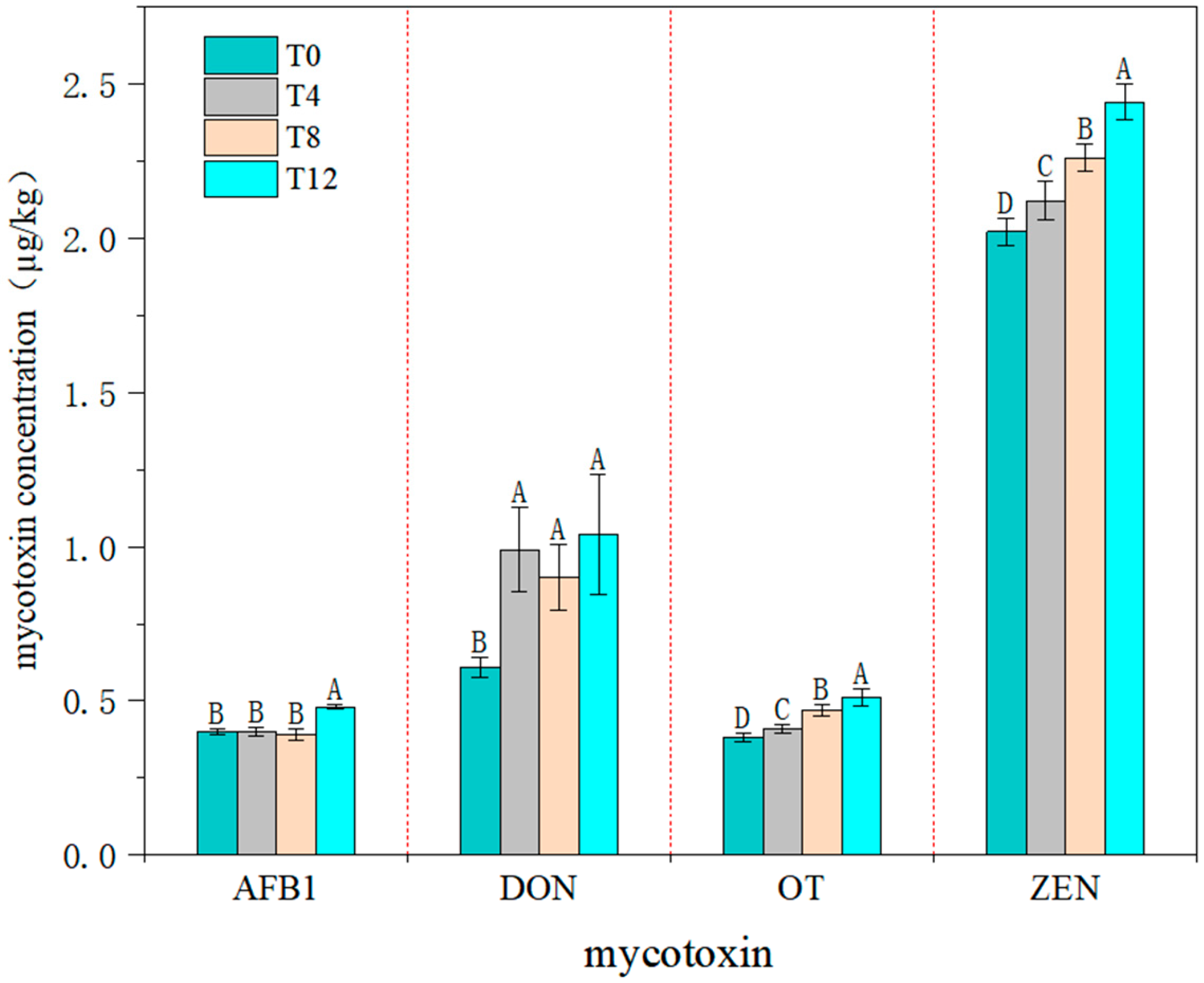
Variations in mycotoxin contents of corncob silage following aerobic exposure are illustrated in Figure 1. Aerobic exposure exerted a significant effect on all mycotoxin contents (p < 0.05). Specifically, AFB1 content in the T12 group was the highest (0.48 µg/kg), which was significantly higher than that in all other groups (p < 0.05), whereas no significant difference in AFB1 content was observed among the remaining groups. DON content in the T0 group was the lowest (0.61 µg/kg), and there was no significant difference in DON content among all groups subjected to aerobic exposure (p > 0.05). Additionally, the contents of OT and ZEN increased with the extension of aerobic exposure duration, with the T12 group exhibiting the maximum levels of these two mycotoxins. Moreover, the OT and ZEN contents in the aerobic exposure groups were significantly higher than those in the T0 group (p < 0.05).

3.4. Effects of Aerobic Exposure on the Bacterial Diversity of Corncob Silage

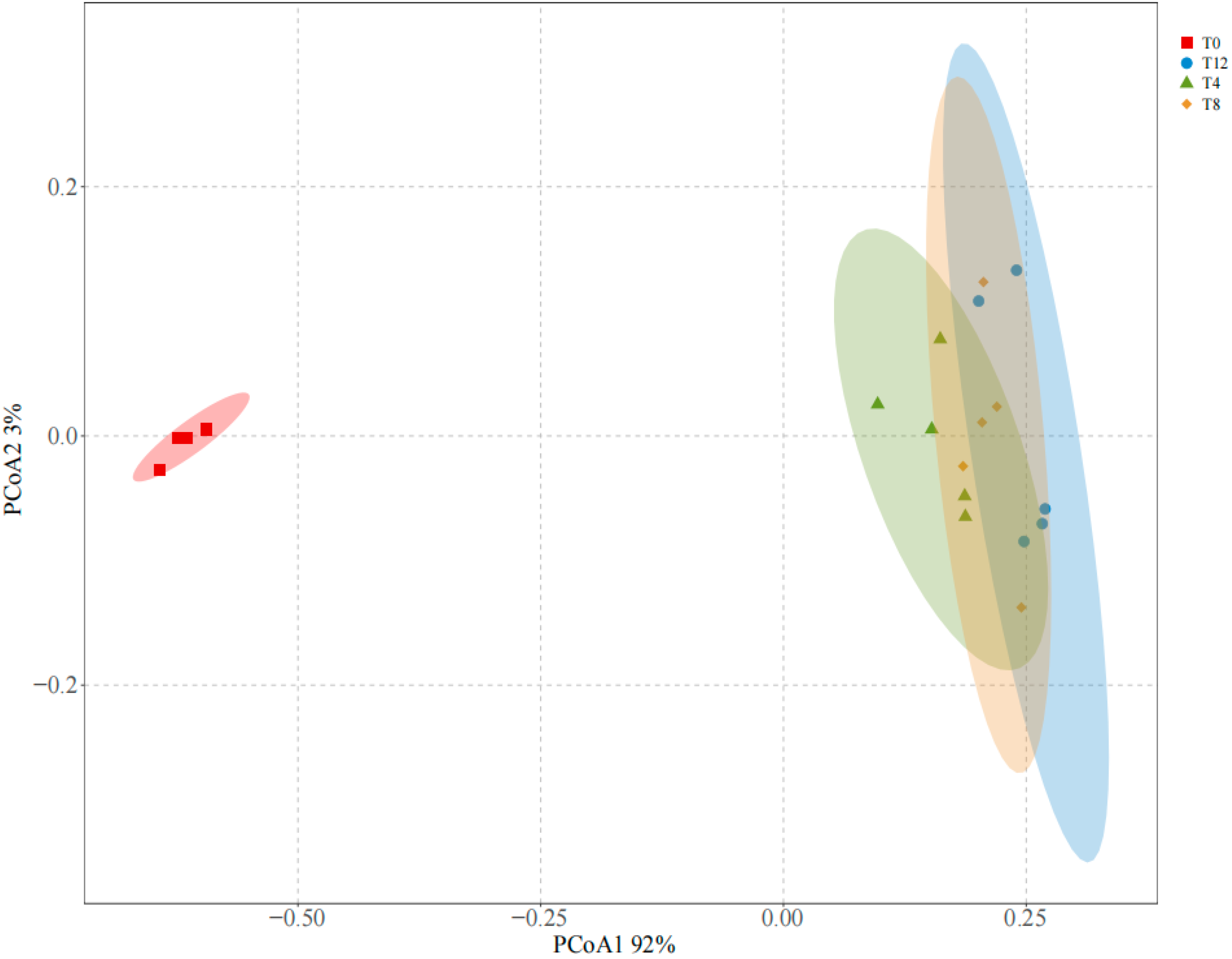
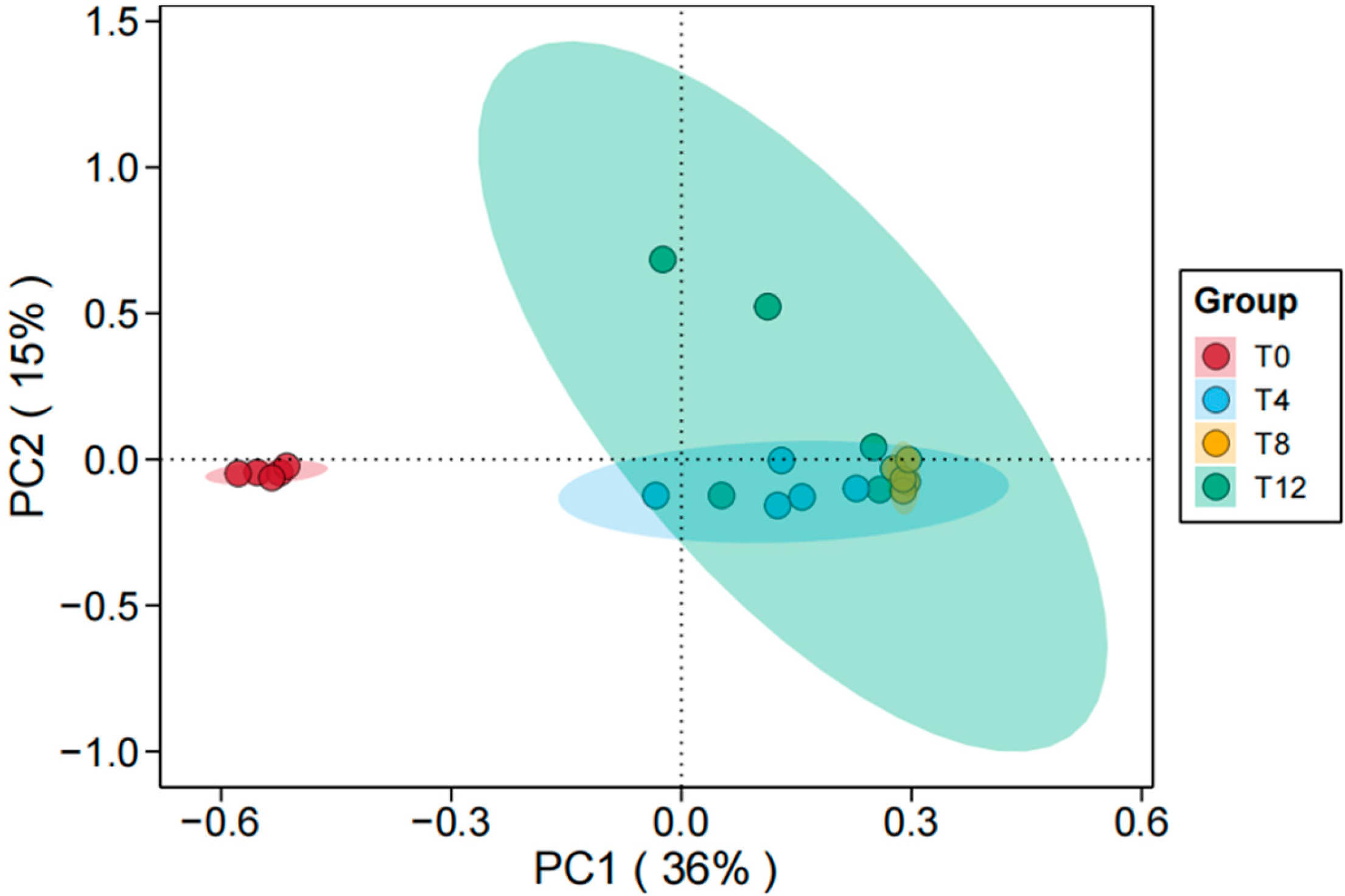
A total of 856 amplicon sequence variants (ASVs) were obtained in this study, with the sequencing coverage of all groups exceeding 99%. As shown in Table 3, no significant difference in species richness was observed among all groups after different durations of aerobic exposure (p > 0.05). However, the Chao1 and ACE indices showed a slight decrease in the T0 and T4 groups, whereas the microbial richness tended to increase in the T8 and T12 groups. Furthermore, the Shannon index of the aerobic exposure groups was significantly higher than that of the T0 group, while the Simpson index was significantly lower (p < 0.05), indicating that aerobic exposure enhanced the microbial diversity of corncob silage. Figure 2 presents the bacterial β-diversity, from which it can be seen that there were significant differences in β-diversity between the T0 group and all groups subjected to aerobic exposure.

3.5. Effects of Aerobic Exposure on Bacterial Diversity at the Phylum Level in Corncob Silage

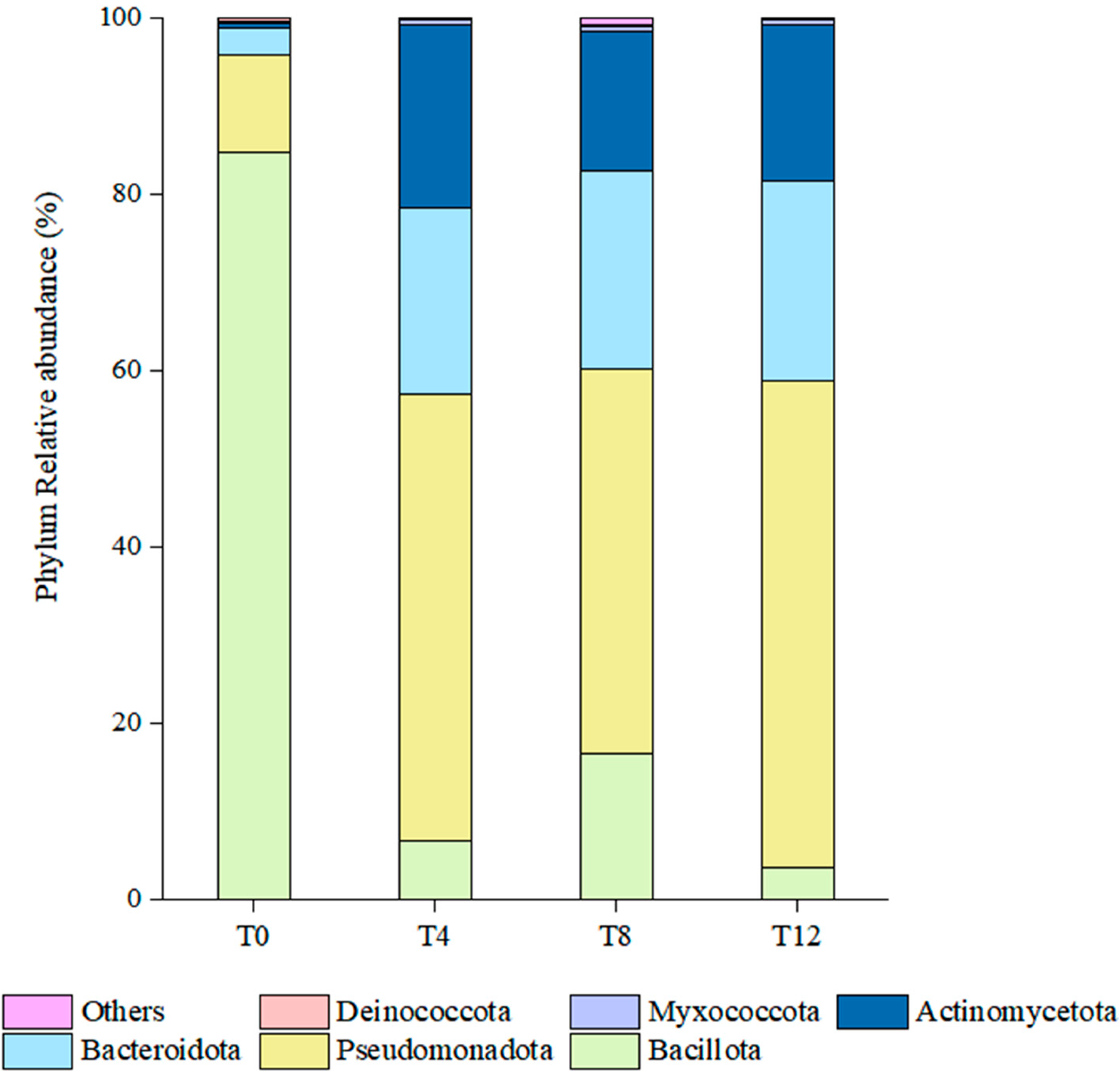
Figure 3 illustrates the bacterial diversity at the phylum level following aerobic exposure. As shown in the figure, the top three dominant phyla in the T0 group were Bacillota, Pseudomonadota and Bacteroidota, whereas these dominant phyla shifted to Pseudomonadota, Bacteroidota and Actinomycetota after aerobic exposure. With the extension of aerobic exposure duration, the dominant phylum changed from Bacillota to Pseudomonadota. Specifically, the relative abundance of Bacillota in the T0 group exceeded 80%, while Pseudomonadota accounted for the highest relative abundance (approximately 55%) in the T12 group. The relative abundance of Bacteroidota in the T0 group was only about 3%, whereas this value increased to around 22% in the T4, T8, and T12 groups after aerobic exposure. In addition, the relative abundance of Actinomycetota was even lower in the T0 group, and it ranged from 15% to 20% following aerobic exposure.

3.6. Effects of Aerobic Exposure on Bacterial Diversity at the Genus Level in Corncob Silage

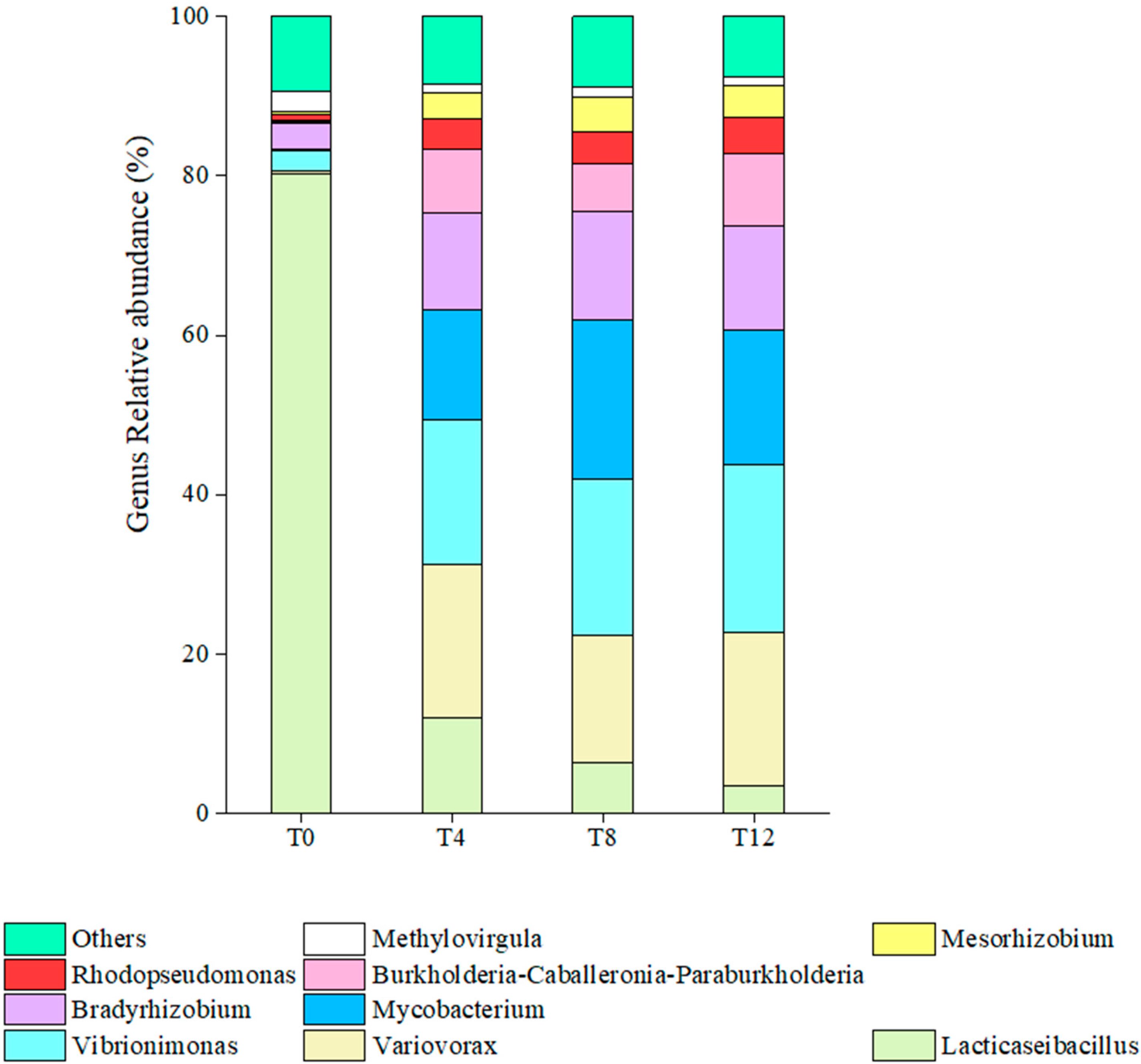
The genus-level relative abundances of microorganisms in corncob silage after aerobic exposure are presented in Figure 4. In the T0 group, the dominant genus was Lacticaseibacillus, with its relative abundance reaching as high as 80%, whereas the total relative abundance of all other genera accounted for only approximately 9%. After aerobic exposure, the dominant genera shifted to Variovorax, Vibrionimonas and Mycobacterium, with each of these three genera contributing a relative abundance ranging from 16% to 20%. Collectively, aerobic exposure significantly altered the genus-level relative abundances of the microbial community.

3.7. Differential Microorganisms in Corncob Silage Before and After Aerobic Exposure

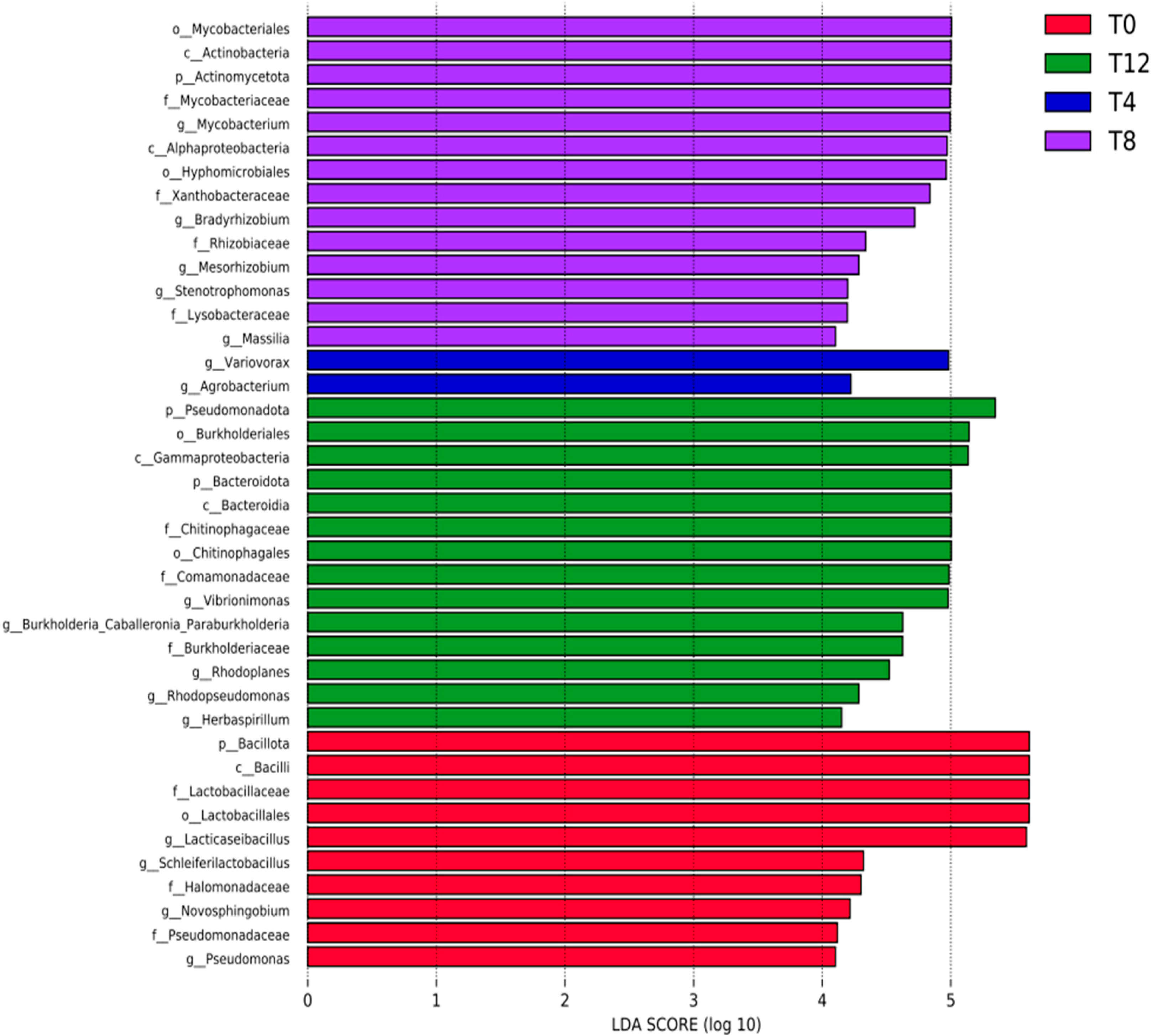
Linear discriminant analysis effect size (LEfSe) was employed to identify differential microorganisms across all groups. Microbial taxa with a linear discriminant analysis (LDA) score > 4 and p-value < 0.05 were defined as differentially abundant taxa. As shown in Figure 5, the discriminant genera in the T0 group included g__Pseudomonas, g__Novosphingobium, g__Schleiferilactobacillus and g__Lacticaseibacillus; those in the T4 group included g__Agrobacterium and g__Variovorax; those in the T8 group included g__Stenotrophomonas, g__Mesorhizobium, g__Massillia, g__Bradyrhizobium and g__Mycobacterium; those in the T12 group included g__Herbaspirillum, g__Rhodopseudomonas, g__Rhodoplanes, g__Burkholderia_Caballeronia_Paraburkholderia and g__Vibrionimonas. Collectively, these results indicated that aerobic exposure altered the composition of microbial genera in corncob silage.

3.8. Correlation Analysis of Differential Microorganisms with Mycotoxins and Fermentation Characteristics in Corncob Silage Pre- and Post-Aerobic Exposure

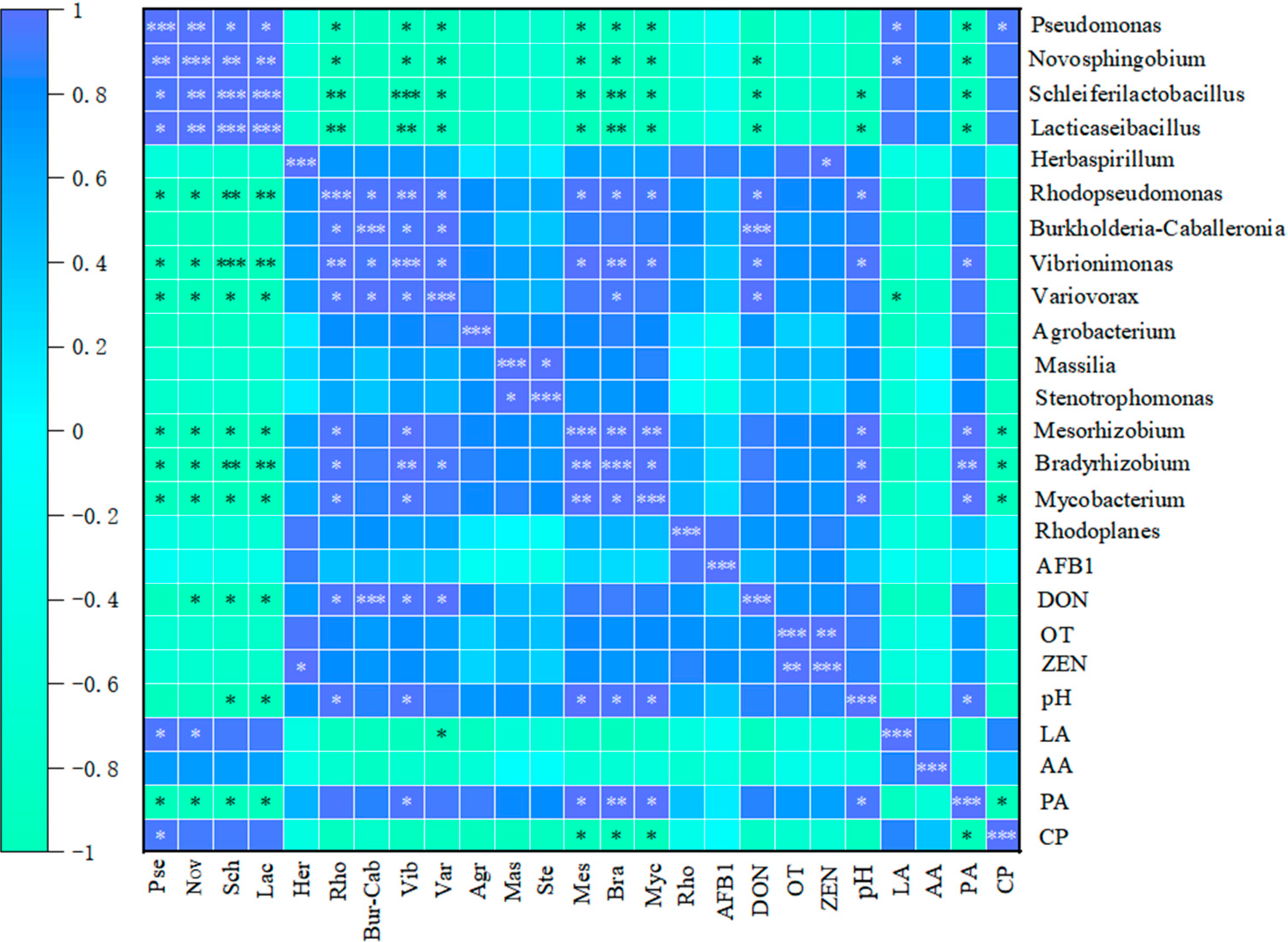
Figure 6 presents a correlation heatmap illustrating the relationships between 16 differentially abundant bacterial genera and 9 experimental indicators. As shown in the heatmap, Pseudomonas exhibited a positive correlation with LA and CP. Novosphingobium was positively correlated with LA, but negatively correlated with DON and PA. Schleiferilactobacillus and Lacticaseibacillus showed negative correlations with DON, pH, and PA. Herbaspirillum was positively correlated with ZEN. Rhodopseudomonas and Burkholderia-Caballeronia-Paraburkholderia both presented positive correlations with DON, and Rhodopseudomonas was additionally positively correlated with pH. Vibrionimonas was positively correlated with DON, pH, and PA. Variovorax was positively correlated with DON but negatively correlated with LA. Furthermore, Mesorhizobium, Bradyrhizobium, and Mycobacterium were positively correlated with pH and PA, while negatively correlated with CP. No statistically significant correlations were detected between Rhodoplanes and all the evaluated parameters in this study.

3.9. Effects of Aerobic Exposure on Fungal Diversity in Corncob Silage

The α-diversity indices of fungi in corncob silage after 45 days of fermentation followed by aerobic exposure are presented in Table 4. The Good’s coverage values for all groups exceeded 99%, indicating sufficient sequencing depth to capture the majority of fungal taxa in the samples. A total of 24,000 ASVs were obtained across all treatments. Compared with the T0 group, the Chao1 and ACE indices were significantly higher in the aerobic exposure groups (p < 0.05), with the highest values observed at 4 days and 8 days of aerobic exposure, which were significantly greater than those in other groups. However, the species richness slightly decreased at 12 days of aerobic exposure. No significant differences were detected in the Shannon and Simpson indices among all groups (p > 0.05), though a slight reduction in fungal diversity was noted in the T8 and T12 groups. The β-diversity of fungi among different aerobic exposure periods is illustrated in Figure 7, where the T0 group was significantly separated from the aerobic exposure groups. This result confirms that aerobic exposure induced substantial changes in the fungal diversity of corncob silage.

3.10. Effects of Aerobic Exposure on Phylum-Level Fungal Diversity of Corncob Silage

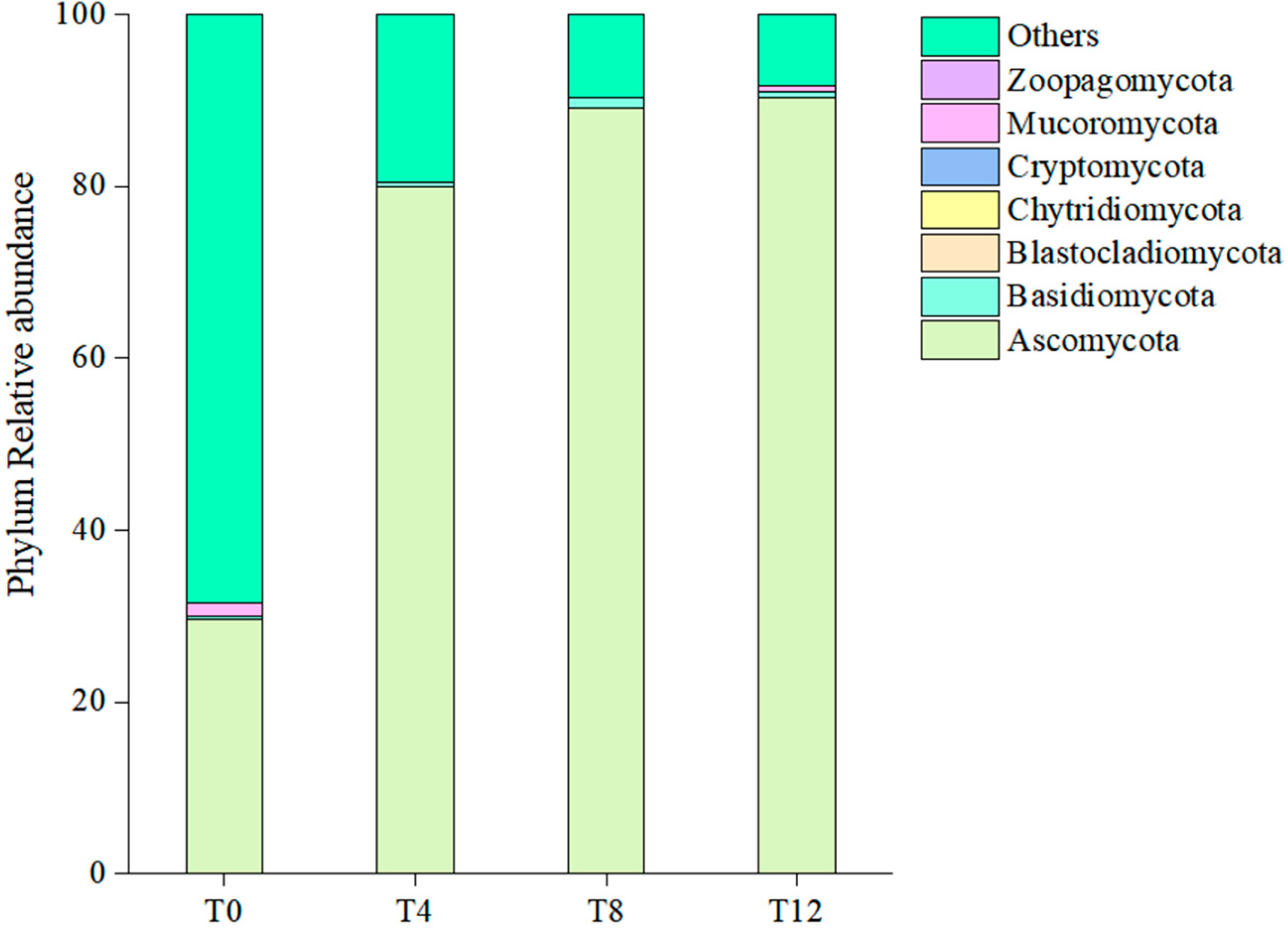
Figure 8 shows the relative abundances of fungal phyla following aerobic exposure. Ascomycota became the dominant fungal phylum during aerobic exposure. In the T0 group, Ascomycota constituted approximately 30% of the community, but its relative abundance increased sharply to nearly 80% by T4 and remained stable at this high level through T12. This dominance was accompanied by a significant reduction in the “Others” category, which declined from 70% at T0 to approximately 10% at T4, T8, and T12.

3.11. Effects of Aerobic Exposure on Genus-Level Fungal Diversity of Corncob Silage

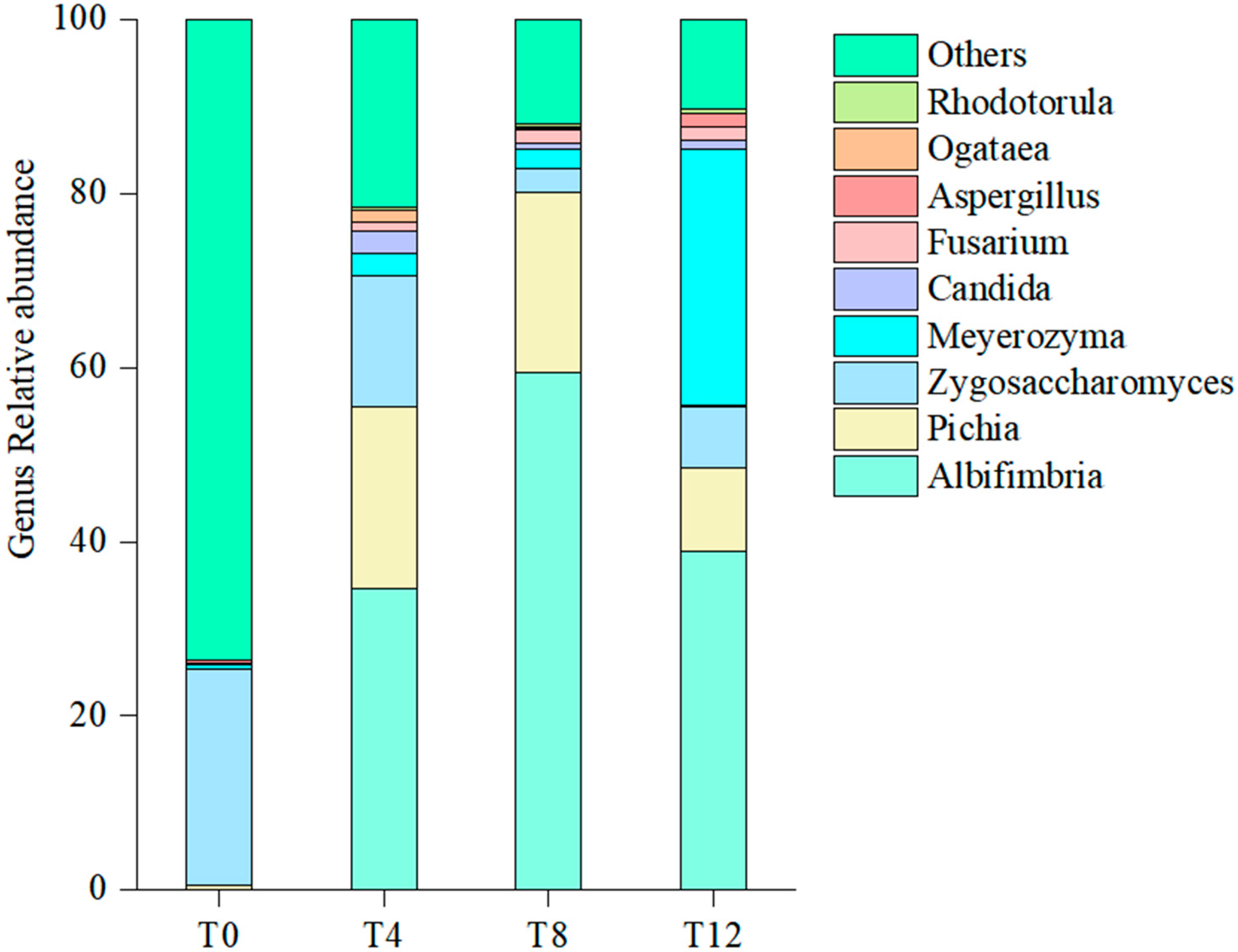
Figure 9 illustrates the effects of aerobic exposure on the fungal diversity of corncob silage at the genus level. At the initial stage of aerobic exposure, the dominant fungal genus in the silage community was Zygosaccharomyces. As the aerobic exposure period extended to 4 days and 8 days, a significant shift occurred in the dominant community structure, with Albifimbria and Pichia emerging as the core dominant genera in both groups. When aerobic exposure persisted for 12 days, the composition of dominant genera changed again, ultimately shifting to Albifimbria and Meyerozyma.

3.12. Differential Fungi in Corncob Silage Before and After Aerobic Exposure

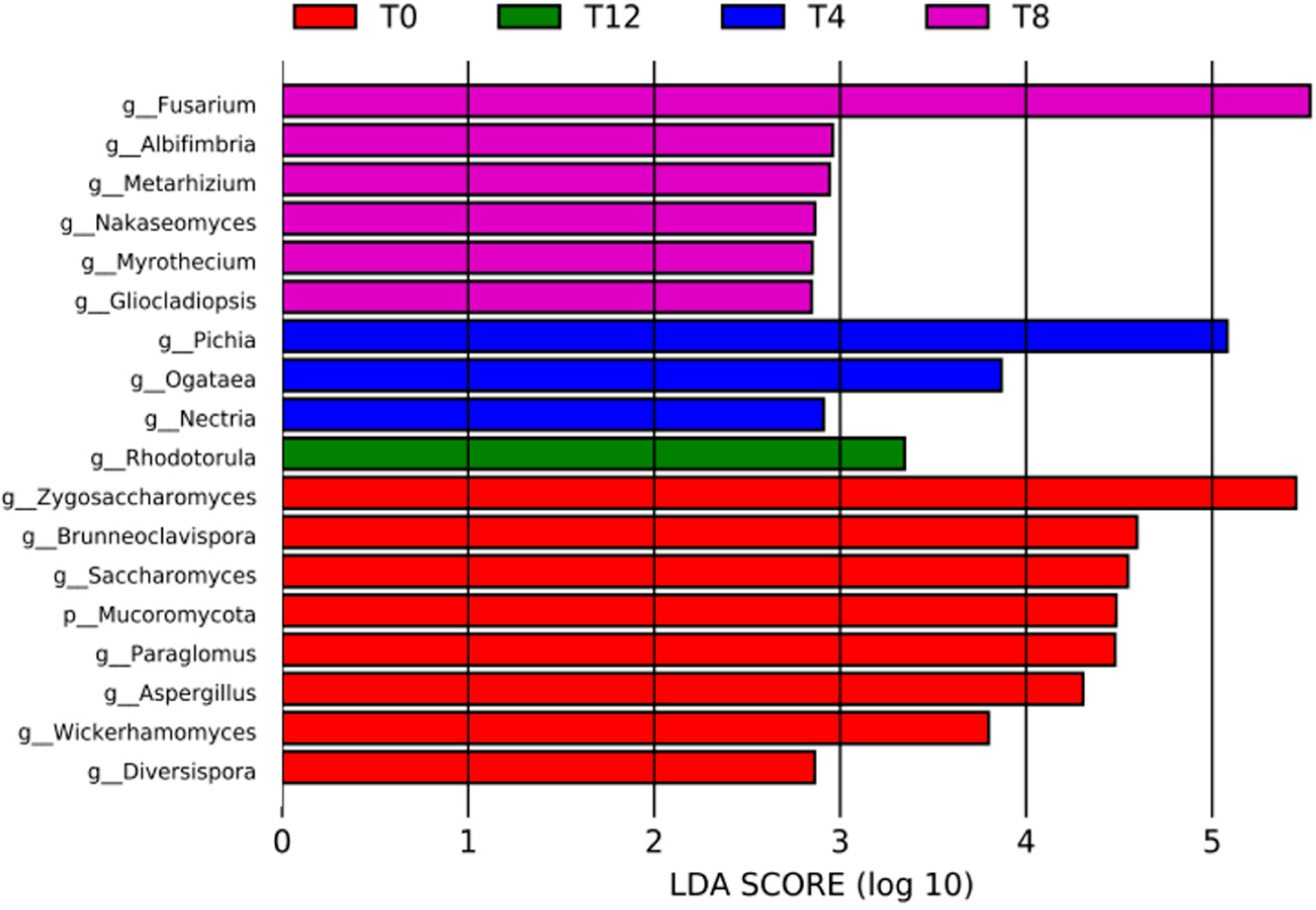
LEfSe was employed to identify the differential fungal taxa across all experimental groups. Specifically, Figure 10 depicts the microbial taxa screened as differential ones with an LDA score > 4 and a p-value < 0.05. As illustrated in Figure 10, the differential microbial genera in the T0 group included Zygosaccharomyces, Brunneoclavispora, Saccharomyces, Paraglomus, and Aspergillus; in contrast, the T4 group had Pichia as the differential genus, while the T8 group was characterized by Fusarium as the differential genus.

3.13. Correlation Analysis Between Differential Fungi, Mycotoxins, and Fermentation Parameters in Corncob Silage Before and After Aerobic Exposure

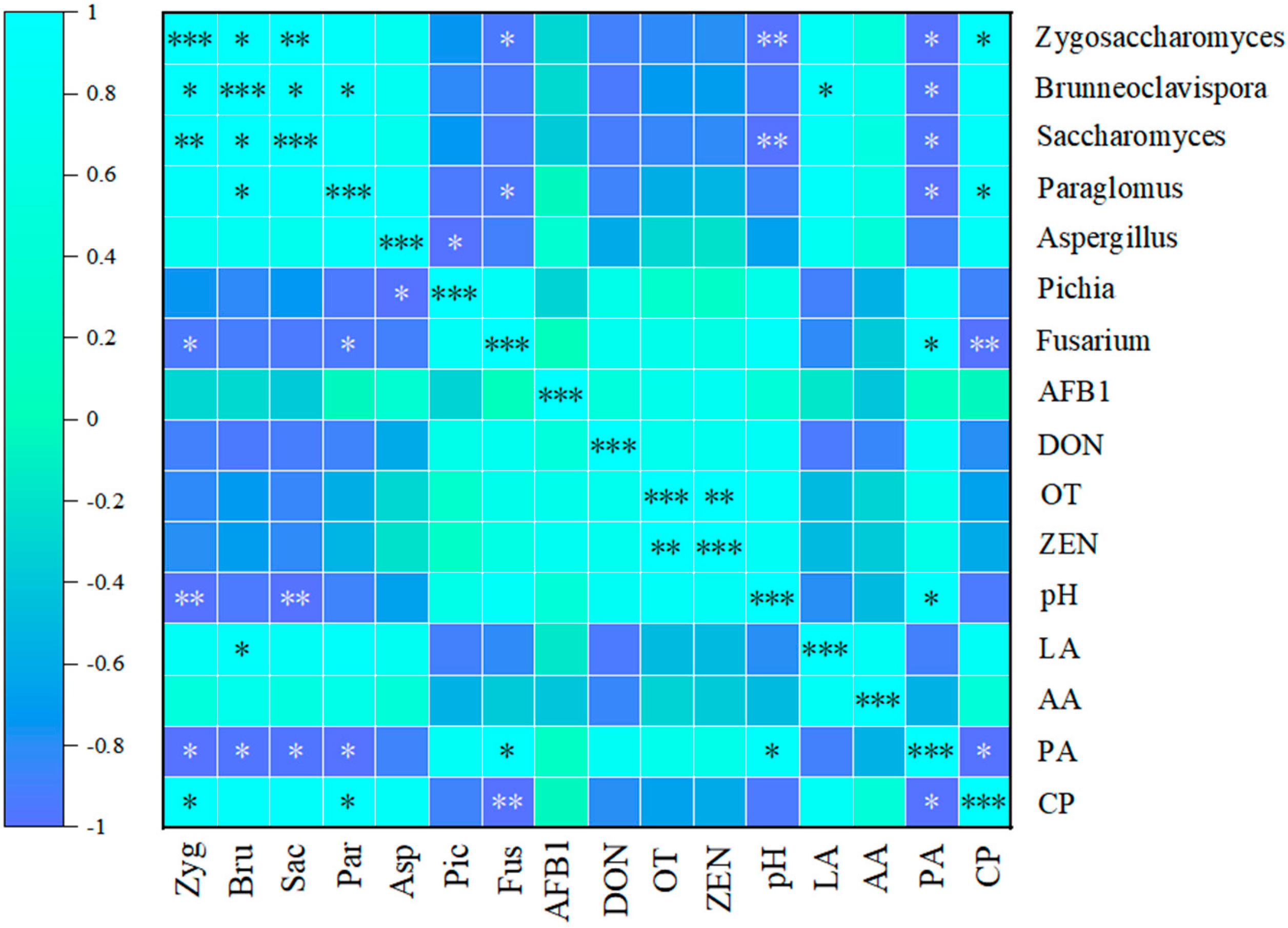
Figure 11 displays a Spearman correlation heatmap illustrating the relationships between differentially abundant fungal genera and nine experimental indicators. Zygosaccharomyces and Saccharomyces exhibited significant negative correlations with pH and PA (p < 0.05). Brunneoclavispora showed significant positive correlations with LA (p < 0.05), being significantly negatively correlated with PA (p < 0.05). Paraglomus was negatively correlated with PA and positively correlated with CP (p < 0.05). In comparison, Fusarium exhibited positive correlations with PA and significant negative correlations with CP (p < 0.05). Notably, no significant correlations were detected between differentially abundant fungal genera and mycotoxin indicators or AA.

4. Discussion

4.1. Effects of Aerobic Exposure on the Nutritional Quality of Corncob Silage

Aerobic exposure disrupts the strictly anaerobic microenvironment indispensable for successful silage fermentation, thereby inhibiting the proliferation of anaerobic taxa (with Lactobacillus species as the dominant group); conversely, yeasts are well recognized as the primary microbial drivers of aerobic spoilage in silage, and their vigorous growth results in the depletion of soluble carbohydrate substrates [14]. With the increase in aerobic exposure days, microbial growth consumed nutrients in corncob silage, resulting in a significant decrease in DM and WSC contents. This finding was consistent with the results reported by Zhang et al. [15]. Enhanced activities of aerobic microorganisms induced by aerobic exposure accelerated the decomposition of CP, leading to the accumulation of high levels of NH3-N. Meanwhile, the extensive consumption and utilization of nutrients further contributed to the reduction in DM content.
After aerobic exposure, the CP content decreased significantly. This observation was consistent with the findings of Ren et al. [16], who reported that both DM and CP contents were markedly reduced in alfalfa silage following aerobic exposure. The ingress of oxygen into silage stimulates microbial proliferation using carbohydrates and proteins as energy substrates. In addition, Chen et al. [17] proposed that elevated oxygen concentrations enhance the activity of plant proteases; moreover, most microorganisms belonging to the phylum Firmicutes possess protein-degrading capabilities. The proliferation of aerobic bacteria converts soluble sugars, proteins, and other nutrients into carbon dioxide. The gaseous loss of these nutrients consequently increases the relative proportions of NDF and ADF. However, during the aerobic exposure phase, the abundance of fiber-degrading microorganisms decreased, which alleviated the decomposition of fiber components. Wan et al. [18] demonstrated that the concentrations of NDF and ADF in whole-plant corn silage exhibited a gradual increase during the initial 0–7 days of aerobic exposure, followed by a dramatic decline after 15 days of aerobic exposure. In our study, a significant reduction in DM, WSC, and CP contents was observed in silage samples subjected to aerobic exposure compared with the T0 group, while NDF and ADF contents were significantly elevated in the aerobically exposed groups. This phenomenon could be attributed to the microbial decomposition of nutrients, and aerobic exposure inhibited the growth of fiber-degrading bacteria in the silage.

4.2. Effects of Aerobic Exposure on the Fermentation Quality of Corncob Silage

Aerobic exposure significantly alters key fermentation indicators of silage, thereby affecting its aerobic stability. With the increase in aerobic exposure days, the pH value increased significantly. This phenomenon was primarily attributed to the rapid consumption of LA by yeasts after the silage microenvironment shifted from anaerobic to aerobic conditions [19]; LA depletion resulted in a significant pH increase, which in turn promoted the proliferation of undesirable microorganisms. In the silage, the LA content decreased with the extension of aerobic exposure duration. LA content was negatively correlated with silage pH, meaning that a lower pH corresponded to a higher LA content [20]. Previous studies have demonstrated that aerobic exposure in silage leads to an increase in pH, elevates the risk of protein degradation, and promotes mold proliferation [21]. This is consistent with the findings of the present study, where the pH of corncob silage after aerobic exposure was significantly higher than that of the T0 group, whereas the lactic acid content was significantly lower.
NH3-N reflects the degree of protein and amino acid decomposition in silage. A higher NH3-N content indicates more extensive protein degradation, and this parameter is crucial for evaluating the aerobic stability of silage [22]. Previous studies have demonstrated that NH3-N content tends to increase with the progression of fermentation and the extension of aerobic exposure duration [23]. In the present study, the NH3-N content in the T4 and T8 groups was significantly lower than that in the T0 and T12 groups, and protein decomposition exhibited an upward trend on the 12th day of aerobic exposure. This variation was closely driven by the changes in silage bacterial communities. At T4 and T8, Lacticaseibacillus remained at a certain amount in the silage, effectively suppressing microbial proteolytic activity by maintaining a low pH environment [24]. Concurrently, the increased relative abundances of Bradyrhizobium and Variovorax may have driven the consumption of NH3-N via nitrogen assimilation [25], thereby leading to a decrease in NH3-N content. After 12 days of aerobic exposure, dominant bacterial groups including Mycobacterium accelerated the decomposition of proteins in the silage [26].
AA is the second most important organic acid in silage, and its content serves as a key indicator for evaluating nutrient degradation and diagnosing secondary fermentation. When the DM content of silage is relatively low, aerobic exposure will lead to a decrease in AA content [20]. When silage is exposed to air, AA and PA can improve the aerobic stability of the forage to a certain extent [27]. In the present study, the acetic acid content of corncob silage showed no significant difference after aerobic exposure. Furthermore, microbial inoculant application could extend the aerobic stability of the silage to a certain extent. Previous studies have indicated that adding microbial inoculants to silage increases NH3-N and acetic acid contents, leading to an increase in pH value. In contrast, the supplementation of lactic acid bacteria inoculants improves aerobic stability and inhibits aerobic spoilage [3].

4.3. Effects of Aerobic Exposure on Mycotoxins in Corncob Silage

Mycotoxins are secondary metabolites produced by fungi that pose potential hazards to human health. In natural settings, it is less likely for feed raw materials to be contaminated by a single type of mycotoxin; instead, interactive or synergistic effects often exist among different mycotoxins [28]. The most prevalent mycotoxins in corn silage include AFB1, ZEN, OT, and DON. In this study, the concentrations of these mycotoxins in Group T12 were significantly higher than those in all other experimental groups. This phenomenon could be attributed to the disruption of the anaerobic environment during ensiling, which allowed oxygen ingress and thereby facilitated the proliferation of spoilage microorganisms such as molds. Notably, mycotoxin biosynthesis is influenced by multiple factors including moisture content, relative humidity, ambient temperature, and oxygen utilization capacity, among which temperature and moisture content exert pivotal regulatory effects on mycotoxin production [16]. Qiu et al. [29] reported that the exposure of fermented feed to ambient air would trigger the proliferation of aerobic microorganisms. Mold contamination is a prevalent issue in ensiled forages during practical production. Upon aerobic exposure, the pH value of silage increases rapidly, thereby relieving the inhibitory effect on mold growth. In contrast, LAB additives have been demonstrated to mitigate the accumulation of AFB1 during aerobic exposure. In the present study, microbial inoculants were applied, and AFB1 levels exhibited a marked increase only in Group T12. This observation could be ascribed to two key factors: first, mold growth remained suppressed prior to 12 days of aerobic exposure; second, a prolonged latency period is required for molds to initiate AFB1 biosynthesis after colonization. Consistent with this finding, previous studies on corn silage have indicated that a substantial surge in AFB1 concentrations typically occurs after 14 days of aerobic exposure, and silages with poor aerobic stability are more prone to excessive aflatoxin accumulation [16].
Fusarium is ubiquitously present in field-grown crops, yet its relative abundance in silage samples is typically negligible, primarily due to its inability to survive under hypoxic and low pH conditions. Notably, elevated ambient temperatures can facilitate the proliferation of Fusarium species [30]. In our study, ZEN levels exhibited a marked upward trend with the extension of aerobic exposure duration. DON and ZEN are primarily produced by fungi of the genus Fusarium, and this genus was detected in all aerobic exposure groups in the present study. Consistent with previous findings, DON has been identified as the most frequently detected mycotoxin, which usually co-occurs with ZEN in corn silage samples [31]. Furthermore, the concentrations of DON and ZEN were found to be negatively correlated with the metabolic activity of LAB. Li et al. [32] reported a sharp increase in mycotoxin concentrations after 7 days of aerobic exposure in their experiment on mixed corn-soybean silage treated with the LAB strain LG608. Collectively, these observations suggest that lactic acid content and pH exert a certain inhibitory effect on mold proliferation. Oxygen ingress elevates the pH value and simultaneously facilitates mold proliferation. Huang [33] observed that the concentrations of ZEA, T-2 toxin, DON, and AFB1 increased slowly during the initial 0–3 days of aerobic exposure; as the aerobic exposure period prolonged, the rate of mycotoxin accumulation accelerated significantly. According to China’s national feed hygiene standard (GB 13078-2017), the limit of AFB1 in feed is 50 µg/kg; the maximum AFB1 content in the T12 group of the present study was only 0.48 µg/kg, and the contents of the other three mycotoxins were far below the corresponding national limit values. It is therefore hypothesized that a further extension of the aerobic exposure duration would result in mycotoxin concentrations exceeding the maximum permissible limits specified in the National Feed Standards of China.

4.4. Effects of Aerobic Exposure on the Bacterial Community of Corncob Silage

The Chao1 index indicates microbial richness; the higher the Shannon index, the richer the community diversity; the lower the Simpson index, the richer the community diversity; the higher the ACE index, the greater the number of microorganisms [34]. In the present study, no significant differences in Chao1 and ACE indices were observed among all groups following aerobic exposure. Specifically, these two indices exhibited a slight decreasing trend on the 4th day of aerobic exposure. Mechanistically, aerobic exposure inhibited the growth of anaerobic microorganisms involved in the silage fermentation process, leading to a reduction in the relative abundance of anaerobes. In contrast, prolonged aerobic exposure (8–12 days) facilitated the proliferation of aerobic bacteria, and the aerobic microenvironment ultimately contributed to an increase in overall microbial diversity. This finding was consistent with the results reported by Liu [35]. The growth and reproduction of harmful bacteria are the main factors leading to aerobic spoilage, and the analysis of microbial diversity showed that the diversity of bacterial species in each treatment tended to increase during aerobic exposure. A significant difference in β-diversity was observed between the T0 group and the groups after aerobic exposure.
At the phylum level, the dominant bacterial phylum in the T0 group was Firmicutes, which shifted to Pseudomonadota following aerobic exposure. This observation is consistent with the findings of Huang et al. [36], who reported that the dominant phylum switched from Firmicutes to Pseudomonadota in silages after aerobic exposure. During the aerobic exposure period, the relative abundances of Bacteroidota and Actinobacteriota gradually increased, while Pseudomonadota emerged as the dominant bacterial phylum. Pseudomonadota represent a diverse and ecologically significant group of microbes renowned for their metabolic versatility, resilience, and beneficial interactions with plants [37]. The phyla Bacteroidota and Actinobacteriota are enriched in aerobic bacteria, and the aerobic exposure environment consequently promotes the proliferation of such aerobic taxa. At the genus level, the dominant taxon in the T0 group was Lacticaseibacillus, with its relative abundance reaching as high as 80%. Notably, Lacticaseibacillus exhibits a highly complex taxonomic structure at the genus level, encompassing 170 distinct species, and this bacterial genus is typically adapted to survive under acidic conditions [38]. The dominant bacterial genera shifted to Variovorax and Vibrionimonas, both of which are classified under the phylum Pseudomonadota. In the anaerobic fermentation stage of silage, the relative abundance of Pseudomonadota was maintained at a low level. This is mainly because the rapid proliferation of lactic acid bacteria in the early stage of ensiling converts water-soluble carbohydrates into lactic acid, which forms an acidic microenvironment that inhibits the growth of Pseudomonadota strains sensitive to low pH [39]. The aerobic exposure stage is the key period where Pseudomonadota exerts a major regulatory effect on silage quality, and its relative abundance after aerobic exposure was significantly higher than that in the T0 group. Oxygen invasion after silage bag opening led to a decrease in the relative abundance of anaerobic LAB, a gradual rise in silage pH, and the destruction of the acidic anaerobic microenvironment, which provides suitable growth conditions for aerobic Pseudomonadota.
Correlation analysis between bacteria at the genus level and nine indicators revealed that Pseudomonas and Novosphingobium exhibited a positive correlation with LA but a negative correlation with PA, whereas the opposite trend was observed for Schleiferilactobacillus and Lacticaseibacillus. Pseudomonas can survive in micro-aerobic and anaerobic environments, and it plays a pivotal role in the process of meat spoilage and may be involved in the degradation of non-protein nitrogen compounds in silage [40]. Novosphingobium showed a positive correlation with LA and negative correlations with DON and PA. LA is the core acid-producing metabolite that maintains the low pH environment of silage; Novosphingobium exhibits a positive correlation with LAB, and this genus may exert a synergistic effect with LAB owing to its ability to adapt to the acidic microenvironment generated by LA accumulation [41]. In the current study, Schleiferilactobacillus and Lacticaseibacillus exhibited positive correlations with LA and negative correlations with silage pH. However, Variovorax showed an opposing correlative profile, with negative associations with LA and positive associations with DON. It should be emphasized that the present study only identified these potential statistical links between Variovorax and the aforementioned fermentation and mycotoxin indicators based on correlation analysis; no functional validation experiments were performed to deduce the specific biological mechanisms underlying these observed associations, which constitutes a key limitation of this research. Additionally, Mesorhizobium, Bradyrhizobium, and Mycobacterium exhibited positive correlations with pH and PA as well as negative correlations with CP. Similar to the findings for Variovorax, only the statistical relationships between these three genera and the above fermentation and nutritional indices were revealed in this study, without further experimental validation of their underlying biological connections. Collectively, these correlative results provide preliminary insights into the co-variation characteristics of dominant bacterial genera with key silage quality indicators, laying a foundational basis for subsequent targeted functional experiments to elucidate the ecological roles of these taxa in silage fermentation and deterioration processes.

4.5. Effects of Aerobic Exposure on the Fungal Community of Corncob Silage

Aerobic exposure induced an initial increase followed by a decrease in fungal community abundance, with the peak value observed at the T8 sampling point. No significant differences were detected in the Shannon and Simpson diversity indices across all groups. β-diversity analysis revealed a clear separation of microbial communities between the T0 group and aerobic exposure groups. At the phylum level, the relative abundance of Ascomycota in the T0 group only accounted for 30%, and it increased to 80~90% after aerobic exposure. Consistent with this finding, previous studies have reported that the application of EM inoculants also results in Ascomycota becoming the dominant fungal phylum in silages [42]. The dominant genus of the fungal community in corncob silage was identified as Zygosaccharomyces; Zygosaccharomyces is a well-documented osmotolerant yeast genus that can survive in the acidic and low-water-activity microenvironment of well-preserved silage. Yang et al. [43] demonstrated that the inoculation of Zygosaccharomyces into broad bean paste enhanced its flavor profiles. In conclusion, the succession of dominant fungal genera from Zygosaccharomyces to Albifimbria/Pichia during aerobic exposure underscores the critical role of oxygen availability in shaping the fungal community structure of corncob silage. This finding provides a theoretical basis for developing targeted strategies to mitigate aerobic deterioration, for instance, by applying antifungal additives or optimizing packaging techniques to prolong the anaerobic storage phase and suppress the growth of spoilage-related fungal genera.
Figure 11 presents the correlation heatmap between differential fungal genera and nine key indicators. Among them, Zygosaccharomyces and Saccharomyces exhibited significant negative correlations with pH and PA. In contrast, Brunneoclavispora displayed a significant positive correlation with LA and a significant negative correlation with PA. This correlative profile differs from that of the aforementioned yeast genera, highlighting the divergent responses of distinct fungal taxa to silage fermentation conditions. For other fermentation parameters, Paraglomus was negatively correlated with PA and positively correlated with CP, while Fusarium showed positive correlations with PA and significant negative correlations with CP. These contrasting associations between Paraglomus and Fusarium with PA and CP suggest that these genera may occupy distinct ecological niches within the silage ecosystem, though further functional validation is required to confirm this hypothesis. Notably, no significant correlations were detected between any of the differentially abundant fungal genera and mycotoxin indicators or AA.

5. Conclusions

This study elucidates the effects of aerobic exposure duration on the nutritional quality, mycotoxin accumulation, and microbial community structure of corncob silage. The key findings demonstrate that aerobic exposure significantly impairs silage nutritional quality, as evidenced by the reduced contents of DM, CP, WSC, and LA, and the increased contents of NDF and ADF. Concomitantly, aerobic exposure for 12 days resulted in the four mycotoxins reaching their highest levels, posing potential risks to animal health. Moreover, aerobic exposure induces profound shifts in the microbial community composition; at the phylum level, the dominant bacterial phylum shifts from Firmicutes to Pseudomonadota, the relative abundance of the fungal phylum Ascomycota increased from 30% in the T0 group to 80~90% in the aerobic exposure groups; at the genus level, the relative abundance of Lacticaseibacillus was progressively replaced by that of Variovorax, Vibrionimonas, and Mycobacterium; and the dominant fungal genera shifted from Zygosaccharomyces to Albifimbria and Pichia. These findings not only enhance our understanding of the ecological mechanisms underlying the deterioration of corncob silage during aerobic exposure but also provide critical theoretical support for the development of strategies to improve silage aerobic stability.

Author Contributions

X.W. (Xinyi Wang): data curation, writing and editing, formal analysis, investigation, methodology, software, T.W.: data curation, review and editing, W.S.: data curation, project administration, supervision, Q.L.: data curation, formal analysis, methodology, X.G.: conceptualization, data curation, investigation, D.H.: data curation, funding acquisition, project administration, review and editing. X.W. (Xinfeng Wang): conceptualization, data curation, investigation, review and editing, project administration, X.S.: formal analysis, methodology, Y.L.: supervision. All authors have read and agreed to the published version of the manuscript.

Funding

This work was financially supported by the Research and Demonstration of Key Technologies for Feed Utilization of Cotton Straw project (NYHXGG2023AA603), the Xinjiang Production and Construction Corps, the Third Division’s unveiling and leadership project (KY2024JBGS08), the Eighth Group Key Areas of Technological Research and Development (2023NY03), the Xinjiang Production and Construction Corps Key Areas of Technological Research and Development (2023AB008), Shihezi University High-level Talent Research (RCZK202539), “Tianchi Talent (Young PhD)”, Project of Shihezi University High-level Talent Research (RCZK202581), and Project of “Tianchi Talent” (CZ004343).

Institutional Review Board Statement

Not applicable.

Informed Consent Statement

Not applicable.

Data Availability Statement

The original contributions presented in this study are included in the article. Further inquiries can be directed to the corresponding authors.

Conflicts of Interest

The authors declare no conflict of interest.

References

  1. Cheas, S.; Suntara, C.; Cherdthong, A. Bioactive Roles of Lactic Acid Bacteria in Enhancing Corn Silage Quality and Ruminant Dietary Fiber Utilization: A Comprehensive Review. Bioact. Carbohydr. Diet. Fibre 2025, 34, 100512. [Google Scholar] [CrossRef]
  2. McAllister, T.A.; Dunière, L.; Drouin, P.; Xu, S.; Wang, Y.; Munns, K.; Zaheer, R. Silage Review: Using Molecular Approaches to Define the Microbial Ecology of Silage. J. Dairy Sci. 2018, 101, 4060–4074. [Google Scholar] [CrossRef]
  3. Yin, H.; Zhao, M.; Pan, G.; Zhang, H.; Yang, R.; Sun, J.; Yu, Z.; Bai, C.; Xue, Y. Effects of Bacillus Subtilis or Lentilactobacillus Buchneri on Aerobic Stability, and the Microbial Community in Aerobic Exposure of Whole Plant Corn Silage. Front. Microbiol. 2023, 14, 1177031. [Google Scholar] [CrossRef] [PubMed]
  4. Liang, C.; Wang, W.; Yuan, X.; Cai, X.; Qi, B.; Bao, Y. Effects of Inoculation with Lactic Acid Bacteria on Aerobic Stability and Mycotoxin Contents in Whole-Plant Corn Silages. Chin. J. Anim. Nutr. 2024, 36, 7383–7393. [Google Scholar]
  5. Bandyk, C.A. Review: Mycotoxins in Ruminant Livestock Production: An Underestimated and Overlooked Risk and Opportunity? Appl. Anim. Sci. 2024, 40, 802–817. [Google Scholar] [CrossRef]
  6. Njumbe Ediage, E.; Van Poucke, C.; De Saeger, S. A Multi-Analyte LC–MS/MS Method for the Analysis of 23 Mycotoxins in Different Sorghum Varieties: The Forgotten Sample Matrix. Food Chem. 2015, 177, 397–404. [Google Scholar] [CrossRef]
  7. Liang, G.; Yan, Z.; Wang, J.; Ye, Q.; Gu, Q.; Zou, C.; Wei, C. Effects of different lactobacillus combinations on the quality and aerobic stability of sugarcane tops silage. Mod. Anim. Husb. Sci. Technol. 2025, 53, 33–37. [Google Scholar] [CrossRef]
  8. Li, H.; Jia, Z.; Liu, W.; Ma, X.; Zhou, Q.; Guan, H. Effects of freeze-thaw on bacterial and fungal succession duringaerobic exposure stage of oat silage. Acta Microbiol. Sin. 2025, 65, 1301–1318. [Google Scholar] [CrossRef]
  9. Hall, M.B. Feed Analyses and Their Interpretation. Vet. Clin. N. Am. Food Anim. Pract. 2014, 30, 487–505. [Google Scholar] [CrossRef]
  10. Wang, H.; Wei, H.; Xu, C. A Comparative Study on the Determination Methods of Crude Fat Content in Feed. China Anim. Husb. Vet. Med. 2004, 31, 17–18. [Google Scholar]
  11. Van Soest, P.J.; Robertson, J.B.; Lewis, B.A. Methods for Dietary Fiber, Neutral Detergent Fiber, and Nonstarch Polysaccharides in Relation to Animal Nutrition. J. Dairy Sci. 1991, 74, 3583–3597. [Google Scholar] [CrossRef] [PubMed]
  12. GB/T 23742-2009; Determination of Ash Insoluble in Hydrochloric acid in Feeds. Standards Press of China: Beijing, China, 2009. (In Chinese)
  13. Broderick, G.A.; Kang, J.H. Automated Simultaneous Determination of Ammonia and Total Amino Acids in Ruminal Fluid and in Vitro Media. J. Dairy Sci. 1980, 63, 64–75. [Google Scholar] [CrossRef] [PubMed]
  14. Tuovinen, O.H.; Niemelä, S.I.; Rajala-Schultz, P.J. The Role of Microbes in Ensiling. Microorganisms 2025, 13, 2237. [Google Scholar] [CrossRef]
  15. Zhang, M.; Wang, C.; Ye, X.; Han, F.; Liang, L.; Sun, W.; Hao, J. Dynamic Changes in the Quality and Microorganisms Present in Whole-Plant Corn Silage under Aerobic Exposure. Pratacult. Sci. 2022, 39, 1675–1685. [Google Scholar]
  16. Ren, L.; Gao, Y.; Wu, X.; Ren, L. Study on the Dynamic Changes of Long-Chain Fatty Acids in Alfalfa Silage during Aerobic Exposure. J. Southwest Minzu Univ. (Nat. Sci. Ed.) 2024, 50, 355–360. [Google Scholar]
  17. Chen, S.; Gun, H.; Yin, G.; Shi, S. Nutrient Quality and Bacterial Community Diversity of Silage Corn During Aerobic Exposure. Acta Agrestia Sin. 2023, 31, 388–395. [Google Scholar]
  18. Wan, X.; Dou, S.; Li, Y.; He, Y.; Wang, C.; Zhang, X.; Lei, Z. Effect of Lactic Acid Bacteria Preparations on Microbial Population Counts and Silage Quality in Maize Silage during Fermentation and on Aerobic Exposure. Acta Pratacult. Sin. 2020, 29, 83–90. [Google Scholar]
  19. Guan, H.; Shuai, Y.; Ran, Q.; Yan, Y.; Wang, X.; Li, D.; Cai, Y.; Zhang, X. The Microbiome and Metabolome of Napier Grass Silages Prepared with Screened Lactic Acid Bacteria during Ensiling and Aerobic Exposure. Anim. Feed. Sci. Technol. 2020, 269, 114673. [Google Scholar] [CrossRef]
  20. Duvnjak, M.; Bogunović, I.; Kljak, K. Aerobic Stability of High-Moisture Corn Ensiled with Lactiplantibacillus Plantarum during Prolonged Air Exposure. Fermentation 2024, 10, 580. [Google Scholar] [CrossRef]
  21. Yao, Y.; Wang, R.; Xiong, P.; An, Q.; Deng, C.; Lu, X.; Jiang, H.; Xu, L. Effects of Aerobic Exposure on Qualityand Microbial Composition in Mixed Silage of Red Clover and Italian Ryegrass. Feed. Res. 2025, 48, 121–125. [Google Scholar] [CrossRef]
  22. Li, W.; Zhou, X.; Peng, S.; Li, Y.; Liu, Q.; Liu, Q.; Liu, G. Identification of Dominant Strains and Influence on Fermentation Quality of Pennisetum Giganteum Silage. Southwest China J. Agric. Sci. 2025, 38, 865–871. [Google Scholar] [CrossRef]
  23. Wang, Z.; Tan, Z.; Wu, G.; Wang, L.; Qin, G.; Wang, Y.; Pang, H. Microbial Community and Fermentation Characteristic of Whole-Crop Wheat Silage Treated by Lactic Acid Bacteria and Artemisia Argyi during Ensiling and Aerobic Exposure. Front. Microbiol. 2022, 13, 1004495. [Google Scholar] [CrossRef] [PubMed]
  24. Cheng, Q.; Chen, L.; Chen, Y.; Li, P.; Chen, C. Effects of LAB Inoculants on the Fermentation Quality, Chemical Composition, and Bacterial Community of Oat Silage on the Qinghai-Tibetan Plateau. Microorganisms 2022, 10, 787. [Google Scholar] [CrossRef] [PubMed]
  25. Zhou, X.; Zhang, Y.; Yang, T.; Wang, Q.; Lin, X.; Zhao, W. Physicochemical Mechanisms Underpinning the Improving Effects of Rhodopseudomonas Palustris on the Yield and Quality of Angelica Sinensis Available. Microbiol. China 2025, 23. [Google Scholar] [CrossRef]
  26. Xu, J.; Ma, J.; Sa, R.; Sui, H.; Wang, H.; Li, Q.; Zhu, X.; Wu, B.; Hu, Z.; Niu, H. Effects of lactic acid bacteria inoculants on the nutrient composition, fermentation quality, and microbial diversity of whole-plant soybean-corn mixed silage. Front. Microbiol. 2024, 15, 1347293. [Google Scholar] [CrossRef]
  27. Liu, B.; Huan, H.; Gu, H.; Xu, N.; Shen, Q.; Ding, C. Dynamics of a Microbial Community during Ensiling and upon Aerobic Exposure in Lactic Acid Bacteria Inoculation-Treated and Untreated Barley Silages. Bioresour. Technol. 2019, 273, 212–219. [Google Scholar] [CrossRef]
  28. Bills, G.F.; Gloer, J.B.; Joseph, H.; Howlett, B.H.; Stukenbrock, E.H. Biologically Active Secondary Metabolites from the Fungi. Microbiol. Spectr. 2016, 4, 6. [Google Scholar] [CrossRef]
  29. Qiu, M.; Guo, Y.; Xu, J.; Ding, L.; Cui, J.; Wang, Y.; Liu, J.; Zhu, F. Effects of Mixing Ratios and Ensiling Time on the Nutritional Quality and Mycotoxin Content of Whole Crop Quinoa-Wheat Straw Silage. Pratacult. Sci. 2025, 30, 22. [Google Scholar]
  30. González-Jartín, J.M.; Ferreiroa, V.; Rodríguez-Cañás, I.; Alfonso, A.; Sainz, M.J.; Aguín, O.; Vieytes, M.R.; Gomes, A.; Ramos, I.; Botana, L.M. Occurrence of Mycotoxins and Mycotoxigenic Fungi in Silage from the North of Portugal at Feed-Out. Int. J. Food Microbiol. 2022, 365, 109556. [Google Scholar] [CrossRef]
  31. Rodríguez-Blanco, M.; Ramos, A.J.; Sanchis, V.; Marín, S. Mycotoxins Occurrence and Fungal Populations in Different Types of Silages for Dairy Cows in Spain. Fungal Biol. 2021, 125, 103–114. [Google Scholar] [CrossRef]
  32. Li, J. Effect of Lactic Acid Bacteria LG608 Onaerobic Stability and Mycotoxins of Cornand Soybean Mixed. Master’s Thesis, Sichuan Agriculture University, Chengdu, China, 2025. [Google Scholar]
  33. Huang, Y. Effects of Silage Methods on the Quality and Mycotoxin Content of Whole-Plant Corn Forage. Master’s Thesis, Guizhou University, Guiyang, China, 2023. [Google Scholar]
  34. Zhang, N.; Zhou, Y.; Ali, A.; Wang, T.; Wang, X.; Sun, X. Effect of Molasses Addition on the Fermentation Quality and Microbial Community during Mixed Microstorage of Seed Pumpkin Peel Residue and Sunflower Stalks. Fermentation 2024, 10, 314. [Google Scholar] [CrossRef]
  35. Liu, Y.; Li, Y.; Lu, Q.; Sun, L.; Du, S.; Liu, T.; Hou, M.; Ge, G.; Wang, Z.; Jia, Y. Effects of Lactic Acid Bacteria Additives on the Quality, Volatile Chemicals and Microbial Community of Leymus Chinensis Silage during Aerobic Exposure. Front. Microbiol. 2022, 13, 938153. [Google Scholar] [CrossRef] [PubMed]
  36. Huang, R.; Ma, C.; Zhang, F.; Wang, X. Effects of Condensed Tannins on Bacterial and Fungal Communities during Aerobic Exposure of Sainfoin Silage. Plants 2023, 12, 2967. [Google Scholar] [CrossRef] [PubMed]
  37. Negi, R.; Sharma, B.; Kaur, T.; Renuka Jyothi, S.; Gupta, A.; Thakur, N.; Jhamta, S.; Rathore, S.; Yadav, N.; Kapoor, M.; et al. Pseudomonadota: Biodiversity, Functional Annotation for Plant Growth and Biotechnological Applications for Agro-Environmental Sustainability. Ecol. Front. 2025, 46, 459–474. [Google Scholar] [CrossRef]
  38. Goldstein, E.J.C.; Tyrrell, K.L.; Citron, D.M. Lactobacillus Species: Taxonomic Complexity and Controversial Susceptibilities. Clin. Infect. Dis. 2015, 60, 98–107. [Google Scholar] [CrossRef]
  39. Chen, L.; Wang, Y.; Li, X.; MacAdam, J.W.; Zhang, Y. Interaction between Plants and Epiphytic Lactic Acid Bacteria That Affect Plant Silage Fermentation. Front. Microbiol. 2023, 14, 1164904. [Google Scholar] [CrossRef]
  40. Yang, J.; Rong, G.; Liang, R.; Zhu, L.; Mao, Y.; Luo, X.; Zhang, Y.; Yang, X. New Insights into the Growth Characteristics, Bacterial Interaction and Spoilage Contribution of Pseudomonas Species in Vacuum Skin Packaged Beef. Food Packag. Shelf Life 2025, 52, 101622. [Google Scholar] [CrossRef]
  41. Terán, F.; Vives-Peris, V.; Gómez-Cadenas, A.; Pérez-Clemente, R.M. Enhancing Citrus Resilience to High Temperature and Intense Light Stress with Pseudomonas Putida and Novosphingobium sp. Environ. Exp. Bot. 2025, 235, 106167. [Google Scholar] [CrossRef]
  42. Sun, T.; Liu, Y.; Gao, X.; Zhao, J. Study on the Mechanism of Microbial Communities in Different EM Fertilizers under Drought Stress Affecting Lettuce Growth. N. Hortic. 2026, 4, 17–26. [Google Scholar]
  43. Yang, B.; Li, X.; Wang, F.; Min, X.; Li, T.; Zhou, H.; Jiang, S.; Fan, Z.; Zhang, Q.; Li, H.; et al. The Contribution of Zygosaccharomyces rouxii Enhanced Fermentation to the Quality of Tank-Fermented Broad Bean Chili Paste. Sci. Technol. Food Ind. 2025, 5, 17. [Google Scholar] [CrossRef]
Figure 1. Changes in mycotoxins in corncob silage after aerobic exposure. Note: Different colors represent different days of aerobic exposure. The same letter indicates no significant difference (p > 0.05), while different letters indicate a significant difference (p < 0.05).
Microorganisms 14 00778 g001
Figure 2. PCoA analysis of bacterial community structure in corncob silage following aerobic exposure. Note: T0 represents the corncob silage group after fermentation; T4 represents the corncob silage group after fermentation and aerobic exposure for 4 days; T8 represents the corncob silage group after fermentation and aerobic exposure for 8 days; T12 represents the corncob silage group after fermentation and aerobic exposure for 12 days; Different colors or shapes indicate different groupings.
Microorganisms 14 00778 g002
Figure 3. Relative abundances of bacterial phyla in corncob silage following aerobic exposure. Note: T0 represents the corncob silage group after fermentation; T4 represents the corncob silage group after fermentation and aerobic exposure for 4 days; T8 represents the corncob silage group after fermentation and aerobic exposure for 8 days; T12 represents the corncob silage group after fermentation and aerobic exposure for 12 days.
Microorganisms 14 00778 g003
Figure 4. Relative abundances of bacterial genera in corncob silage following aerobic exposure. Note: T4 represents the corncob silage group after fermentation and aerobic exposure for 4 days; T8 represents the corncob silage group after fermentation and aerobic exposure for 8 days; T12 represents the corncob silage group after fermentation and aerobic exposure for 12 days.
Microorganisms 14 00778 g004
Figure 5. LDA histogram and evolutionary branching diagram of microorganisms in corncob silage exposed to oxygen for different numbers of days. Note: Figure 5 displays the distribution of LDA scores for different treatments. The histogram counts microbial taxa that exhibit significant effects in each group, with bar length corresponding to the magnitude of the effect size.
Microorganisms 14 00778 g005
Figure 6. Correlation heatmap of differential genera, mycotoxins and silage fermentation parameters. Note: Different colors indicate the magnitude of correlation, with green representing positive correlation and blue denoting negative correlation. Statistical significance is denoted by asterisks: * for (p < 0.05), ** for (p < 0.01), and *** for (p < 0.001).
Microorganisms 14 00778 g006
Figure 7. PCoA analysis of fungal community structure in corncob silage following aerobic exposure. Note: T0 represents the corncob silage group after fermentation; T4 represents the corncob silage group after fermentation and aerobic exposure for 4 days; T8 represents the corncob silage group after fermentation and aerobic exposure for 8 days; T12 represents the corncob silage group after fermentation and aerobic exposure for 12 days; Different colors indicate different groupings.
Microorganisms 14 00778 g007
Figure 8. Relative abundances of fungal phyla in corncob silage following aerobic exposure. Note: T0 represents the corncob silage group after fermentation; T4 represents the corncob silage group after fermentation and aerobic exposure for 4 days; T8 represents the corncob silage group after fermentation and aerobic exposure for 8 days; T12 represents the corncob silage group after fermentation and aerobic exposure for 12 days.
Microorganisms 14 00778 g008
Figure 9. Relative abundances of fungal genera in corncob silage following aerobic exposure. Note: T0 represents the corncob silage group after fermentation; T4 represents the corncob silage group after fermentation and aerobic exposure for 4 days; T8 represents the corncob silage group after fermentation and aerobic exposure for 8 days; T12 represents the corncob silage group after fermentation and aerobic exposure for 12 days.
Microorganisms 14 00778 g009
Figure 10. LDA histogram of microorganisms in corncob silage exposed to oxygen for different numbers of days. Note: Figure 10 displays the distribution of LDA scores for different treatments. The histogram counts microbial taxa that exhibit significant effects in each group, with bar length corresponding to the magnitude of the effect size.
Microorganisms 14 00778 g010
Figure 11. Correlation analysis between differential fungi, mycotoxins, and fermentation parameters in corncob silage before and after aerobic exposure. Note: Different colors indicate the magnitude of correlation, with blue representing positive correlation and violet denoting negative correlation. Statistical significance is denoted by asterisks: * for (p < 0.05), ** for (p < 0.01), and *** for (p < 0.001).
Microorganisms 14 00778 g011
Table 1. Changes in nutritional quality of corncob silage after aerobic exposure.
ItemsT0T4T8T12p-Value
DM (%)36.56 ± 0.54 A35.19 ± 1.00 B30.31 ± 1.06 C31.03 ± 0.37 C<0.001
CP (DM%)7.83 ± 0.52 A6.18 ± 0.43 B5.49 ± 0.30 C6.26 ± 0.49 B<0.001
WSC (DM%)2.91 ± 0.65 A1.74 ± 0.08 B1.57 ± 0.28 B0.61 ± 0.29 C<0.001
Ash (DM%)5.25 ± 0.34 A3.48 ± 0.37 B3.40 ± 0.15 B3.52 ± 0.21 B<0.001
NDF (DM%)62.79 ± 1.16 B69.54 ± 1.41 A68.39 ± 0.76 A69.55 ± 1.78 A<0.001
ADF (DM%)30.41 ± 0.76 C42.24 ± 0.70 B44.56 ± 1.38 A42.52 ± 0.96 B<0.001
Note: T0 represents the corncob silage group after fermentation; T4 represents the corncob silage group after fermentation and aerobic exposure for 4 days; T8 represents the corncob silage group after fermentation and aerobic exposure for 8 days; T12 represents the corncob silage group after fermentation and aerobic exposure for 12 days; different uppercase letters in the same row indicate significant differences (p < 0.05). DM, dry matter; CP, crude protein; WSC, water-soluble carbohydrate; Ash, Crude Ash; NDF, neutral detergent fiber; ADF, acid detergent fiber.
Table 2. Changes in the fermentation quality of corncob silage after aerobic exposure.
ItemsT0T4T8T12p-Value
pH4.09 ± 0.01 C4.77 ± 0.22 B5.13 ± 0.15 A5.15 ± 0.04 A<0.001
NH3-N (TN%)2.50 ± 0.29 A1.13 ± 0.25 B1.25 ± 0.26 B2.16 ± 0.45 A<0.001
LA (mmol/mL)4.87 ± 0.27 A3.17 ± 0.15 B3.65 ± 0.54 B3.62 ± 0.70 B<0.001
AA (µg/mL)1.37 ± 0.490.96 ± 0.561.28 ± 0.281.06 ± 0.440.481
PA (µg/mL)3.21 ± 1.44 B5.97 ± 0.93 A6.67 ± 0.78 A5.99 ± 1.10 A<0.002
BA (µg/mL)0.03 ± 0.020.10 ± 0.070.12 ± 0.080.16 ± 0.120.102
Note: T0 represents the corncob silage group after fermentation; T4 represents the corncob silage group after fermentation and aerobic exposure for 4 days; T8 represents the corncob silage group after fermentation and aerobic exposure for 8 days; T12 represents the corncob silage group after fermentation and aerobic exposure for 12 days; different uppercase letters in the same row indicate significant differences (p < 0.05). NH3-N, ammonia nitrogen; LA, lactic acid; AA, acetic acid; PA, propionic acid; BA, butyric acid.
Table 3. Effects of aerobic exposure on microbial diversity in corncob silage.
ItemT0T4T8T12p-Value
Chao158.60 ± 11.8056.80 ± 2.5960.60 ± 6.1969.30 ± 16.180.286
ACE58.60 ± 11.8056.80 ± 2.5960.60 ± 6.1970.18 ± 17.230.288
Shannon1.29 ± 0.19 B2.52 ± 0.03 A2.48 ± 0.09 A2.43 ± 0.08 A<0.001
Simpson0.58 ± 0.06 A0.12 ± 0.01 B0.13 ± 0.01 B0.14 ± 0.01 B<0.001
Note: T0 represents the corncob silage group after fermentation; T4 represents the corncob silage group after fermentation and aerobic exposure for 4 days; T8 represents the corncob silage group after fermentation and aerobic exposure for 8 days; T12 represents the corncob silage group after fermentation and aerobic exposure for 12 days; different uppercase letters in the same row indicate significant differences (p < 0.05).
Table 4. Effects of aerobic exposure on fungal diversity in corncob silage.
ItemT0T4T8T12p-Value
Chao12522.36 ± 295.06 C6865.37 ± 1173.92 A7199.12 ± 763.69 A5217.34 ± 862.89 B<0.001
ACE3003.56 ± 437.16 C7558.61 ± 1519.07 A7267.54 ± 1114.18 A5641.51 ± 1214.75 B<0.001
Shannon5.36 ± 0.305.72 ± 0.245.37 ± 0.345.36 ± 0.570.392
Simpson0.06 ± 0.020.05 ± 0.010.09 ± 0.040.09 ± 0.050.211
Note: T0 represents the corncob silage group after fermentation; T4 represents the corncob silage group after fermentation and aerobic exposure for 4 days; T8 represents the corncob silage group after fermentation and aerobic exposure for 8 days; T12 represents the corncob silage group after fermentation and aerobic exposure for 12 days; different uppercase letters in the same row indicate significant differences (p < 0.05).
Disclaimer/Publisher’s Note: The statements, opinions and data contained in all publications are solely those of the individual author(s) and contributor(s) and not of MDPI and/or the editor(s). MDPI and/or the editor(s) disclaim responsibility for any injury to people or property resulting from any ideas, methods, instructions or products referred to in the content.