Article

Occurrence and Genomic Characterization of ESBL-, AmpC-, and Carbapenemase-Producing Escherichia coli and Klebsiella pneumoniae Isolated from Surface Water in Southern Italy, 2023–2024

by
Gaia Nobili
1,*,†,
Annachiara Cocomazzi
1,†,
Maria Grazia Basanisi
1,*,
Annita Maria Damato
1,
Rosa Coppola
1,
Maria Grazia Cariglia
1,
Ilenia Franconieri
2,
Antonella Stallone
2,
Michelina Notarangelo
2,
Tommaso Scirocco
3,
Valeria Bortolaia
4 and
Giovanna La Salandra
1
1
Istituto Zooprofilattico Sperimentale Della Puglia e Della Basilicata, Via Manfredonia 20, 71121 Foggia, Italy
2
Dipartimento Ambientale Provinciale (DAP) Foggia, Agenzia Regionale per la Prevenzione e la Protezione Dell’Ambiente Puglia, Via Giuseppe Rosati 139, 71121 Foggia, Italy
3
Istituto per le Risorse Biologiche e le Biotecnologie Marine del Consiglio Nazionale Delle Ricerche (IRBIM CNR), Via Pola 4, 71010 Lesina, Italy
4
Statens Serum Institut, Artillerivej 5, 2300 Copenhagen, Denmark
*
Authors to whom correspondence should be addressed.
These authors contributed equally to this work and share first authorship.
Microorganisms 2026, 14(2), 508; https://doi.org/10.3390/microorganisms14020508
Submission received: 12 January 2026 / Revised: 11 February 2026 / Accepted: 13 February 2026 / Published: 22 February 2026
(This article belongs to the Special Issue Antibiotic Resistance in Pathogenic Bacteria)

Abstract

Antimicrobial resistance (AMR) is recognised as a major global public health threat, with the environment increasingly acknowledged as a key reservoir and dissemination pathway for resistant bacteria and resistance genes. In this study, 148 surface water samples were collected between 2023 and 2024 from six rivers and three canals discharging wastewater into two lake waters in Southern Italy to assess the occurrence and genomic features of extended-spectrum β-lactamase (ESBL)-, AmpC-, and carbapenemase-producing Escherichia coli and Klebsiella pneumoniae. Relevant isolates were obtained using selective culturing, and tested for antimicrobial susceptibility by broth microdilution. Major β-lactam resistance genes were detected by real-time PCR. Whole-genome sequencing (WGS) was performed on presumptive carbapenemase-producing isolates. ESBL- and/or carbapenemase-producing Enterobacterales were detected in 67.6% of samples, yielding a total of 176 non-duplicate isolates. The most prevalent gene was blaCTX-M, detected in 79.3% of positive isolates (96/121), while carbapenemase genes were detected in 20.6% (25/121) of isolates, mainly blaOXA-48 and blaVIM. WGS analysis of carbapenemase PCR-positive isolates revealed occurrence of clinically relevant high-risk clones, such as K. pneumoniae ST512/ST307 carrying blaKPC-3 and E. coli ST10 harbouring blaOXA-244. These findings highlight a potential risk to public health and underscore the importance of integrating environmental compartments into One Health surveillance frameworks for AMR.

1. Introduction

Antimicrobial resistance (AMR) has been recognised by the World Health Organization (WHO) as one of the major global health threats, driven by the rise of multidrug-resistant (MDR) bacteria and the progressive reduction of effective therapeutic options [1]. Projections estimate that AMR could cause up to 10 million deaths annually by 2050 [2]. Among Enterobacterales, the predominant mechanism of resistance to β-lactam antibiotics is the production of enzymes capable of hydrolysing and inactivating such antimicrobials [3]. More than 2000 naturally occurring β-lactamase variants have been described to date, including clinically relevant families such as class A penicillinases, extended-Spectrum β-Lactamases (ESBLs; e.g., TEM, SHV, VEB, CTX-M), AmpC cephalosporinases (e.g., CMY, FOX, DHA, ACT, MOX), and carbapenemases belonging either to serine-β-lactamases (e.g., KPC, IMI, SME, GES) or metallo-β-lactamases (e.g., NDM, VIM, IMP) [4]. Environmental detection of antimicrobial-resistant bacteria (ARBs) has received increasing attention due to the potential health risk posed by bacteria associated with humans, livestock or wildlife at the interface with anthropogenic environments [5,6]. Historically, research has focused primarily on clinical, veterinary, and food-producing animal settings. However, over the past decade, the environment has been increasingly recognised as playing a significant role in the development and dissemination of AMR [7,8]. The environment contributes to AMR through two major processes [7]. First, it serves as a vehicle for the dissemination of already resistant bacteria between humans, or between animals and humans. ARBs may be released into the environment through municipal wastewater [9], irrigation with reclaimed water [10], agricultural practices [11], and the application of treated sewage sludge as biosolids [12]. There is evidence that resistant bacteria can subsequently re-enter the human microbiome via environmental exposure [13], for example through ingestion of water contaminated by sewage during recreational activities [14], consumption of fresh produce irrigated with surface water [15,16], or more generally in settings with inadequate sanitation [17]. Second, the environment acts as a reservoir and facilitator for the evolution of AMR. Surface waters can constitute resistance hotspots where antibiotic resistance genes (ARGs) disseminate—favoured by bacteriophages, integrons, and other mobile genetic elements—and new resistant strains can be generated through horizontal gene transfer [18]. Although the presence of β-lactamase-encoding genes in bacteria isolated from surface waters, livestock wastes (including dairy farm effluents), and wastewater treatment plants has been reported in several geographical settings [5,18,19,20], robust and harmonised environmental surveillance data remain limited. In particular, limited data are available for Apulia, a large region in Southern Italy characterised by high population mobility and seasonal tourist influx. The present study aims to assess the occurrence and genomic characteristics of extended-spectrum β-lactamase (ESBL)-, AmpC-, and carbapenemase-producing Escherichia coli and Klebsiella pneumoniae in surface waters of Apulia with the objective of generating baseline evidence to support environmental antimicrobial resistance surveillance, within a One Health approach.

2. Materials and Methods

2.1. Sampling Points

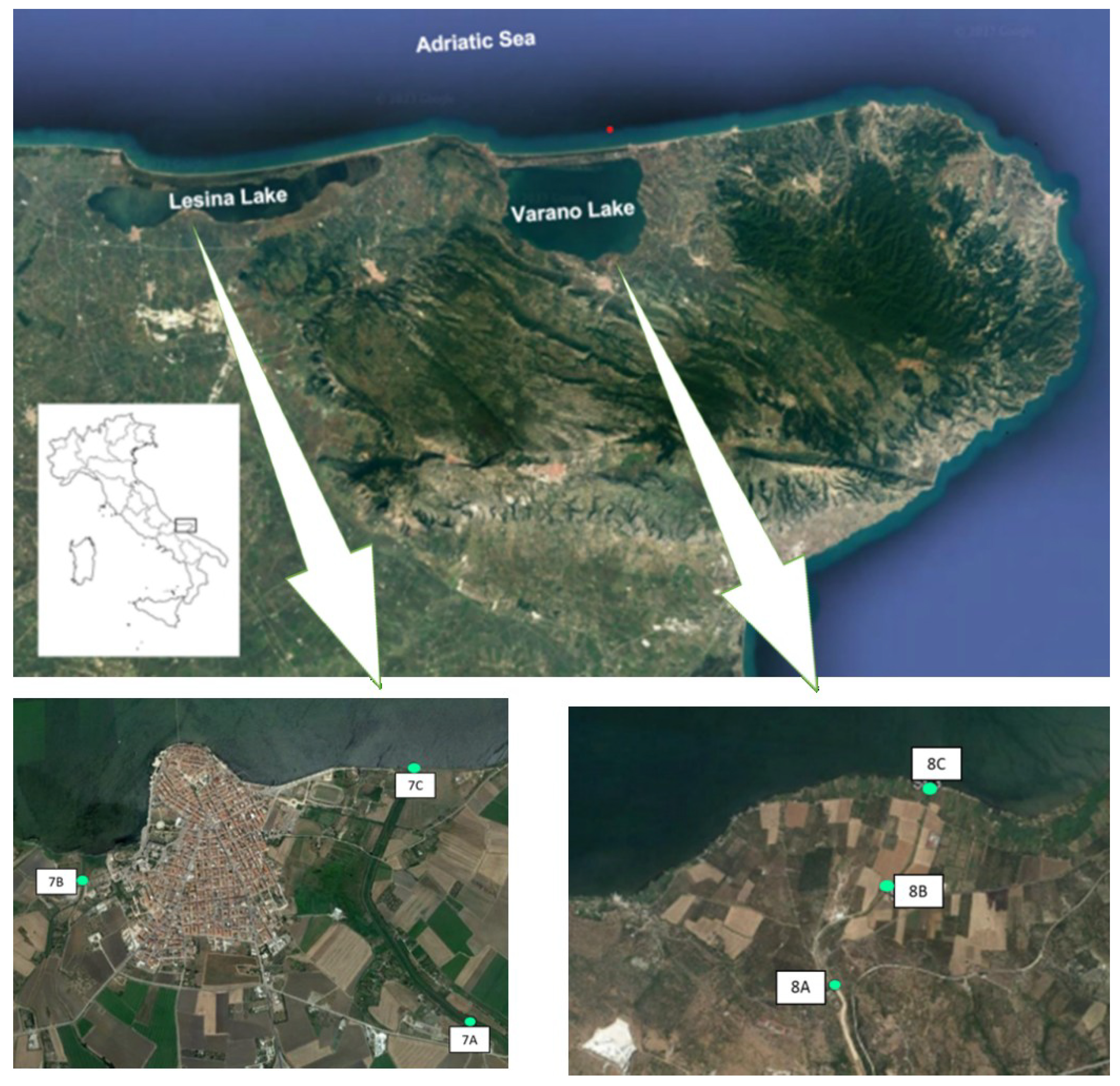
Water samples were collected from four rivers, two torrents, and three canals conveying water into two lakes of the Apulia region between 2023 and 2024. The rivers included Candelaro (4 sampling points; 1A, 1B, 1C, 1D), Fortore (1 sampling point; 2A), Cervaro (3 sampling points; 3A, 3B, 3C), and Ofanto (1 sampling point; 6A) rivers (Figure 1 and Table S1); and torrents Carapelle (2 sampling points; 4A, 4B) and Triolo (1 sampling point; 5A). Rivers and torrents were selected for sampling based on the annual mean E. coli concentrations recorded in 2021 at each monitoring site, as reported by ARPA Puglia (https://www.arpa.puglia.it/pagina2975_ii-ciclo-sessennale-2016-2021.html, accessed on 14 November 2025). Specifically, sampling sites with the highest average E. coli values were prioritised, given the role of E. coli as an indicator of faecal contamination in surface waters. In addition, sampling points were also chosen on the basis of their proximity to agricultural land observed using satellite imagery. Sampling stations within the canals were strategically located along channels receiving wastewater discharges from adjacent settlements into the lake systems. Overall, a total of six sampling points were set for this study: three for Lake Lesina (7A, 7B, and 7C) and three for Lake Varano (8A, 8B, and 8C) (Figure 2 and Table S1). For Lesina lake, it was chosen to sample the waters of the Cammarata canal within which wastewater from the settlements of Lesina and Poggio Imperiale are conveyed. Of the three sampling points, two (7A, 7C) were placed along the Cammarata canal: 7A at the outlet of the wastewater treatment plant and 7C at the incile of the Cammarata canal into the lagoon. A third sampling point (7B) was fixed along the La Fara canal, which collects wastewater from an area close to the town of Lesina affected by various agricultural and livestock activities and discharges it into the lagoon (Figure 2). For Varano lake, it was chosen to sample the waters of the San Francesco canal within which wastewater from the town of Cagnano Varano is conveyed. The sampling point 8A is located at the outlet of the wastewater treatment plant, 8B in an area of the canal near which there is a livestock farm, and a third sampling point (8C) at the incile of the San Francesco canal in the lagoon (Figure 2). The analysed canals constitute critical control points for the environmental quality of the lakes, as they play a pivotal role in maintaining the ecological equilibrium of the lagoon system and in safeguarding the safety and long-term sustainability of associated economic activities.

2.2. Sampling Procedure

From May 2023 to December 2024, a total of 148 surface water samples were collected from surface water bodies in the Apulia region, including four rivers, two torrents, and three canals conveying water into two lakes (Figure 1, Figure 2, Table S1). For each surface water body, a minimum of ten samples were collected and analysed (Table S1). On each sampling occasion, a volume of 500 mL was collected at each site directly by filling a sterile glass container with surface water. The samples were transferred under refrigerated conditions to the laboratories of the Istituto Zooprofilattico Sperimentale della Puglia e della Basilicata (IZS PB, Foggia, Italy). The samples were stored at 4 °C and analysed within 24 h.

2.3. Microbiological Screening, Isolation and Identification of Target Bacteria

The isolation procedure aimed to selectively detect resistant bacteria from the examined samples. For the isolation of target microorganisms, 100 mL of each water sample was filtered (0.45 μm; Sartorius Stedim Biotech GmbH, Goettingen, Germany). To select for ESBL-producing Enterobacterales, the filter was placed in 100 mL of Buffer Peptone Water (BPW) (Thermo Fisher Scientific, Rhone, MI) and incubated at 42 °C for 18–24 h. Subsequently, 100 μL of each dilution (up to 10-3) was plated on CHROMagar ESBL plates (CHROMagar, Paris, France) and incubated at 42 °C for 18–24 h. For the isolation of carbapenemase-producing Enterobacterales (CPE), the filter was placed in 100 mL of Mossel broth (EE Broth) (Scharlab S.L., Sentmenat, Spain) and the enrichment incubated at 42 °C for 18–24 h. Subsequently, 100 μL of each dilution (up to 10-2) was plated on CHROMagar mSuperCARBA plates (CHROMagar, Paris, France) and incubated at 42 °C for 18–24 h. After incubation, up to three presumptive colonies of E. coli and Klebsiella spp. per sample were subcultured onto Blood Agar plates (Liofilchem, Roseto degli Abruzzi, Italy), incubated at 37 °C for 24 h, and subjected to identification by MALDI-TOF mass spectrometry (Bruker Daltonics, Milan, IT). The isolates were cryopreserved in Microbank (PRO-LAB DIAGNOSTICS, Richmond Hill, ON, Canada) and stored at –80 °C.

2.4. Phenotypic Detection of Antimicrobial Resistance

Phenotypic antimicrobial susceptibility was assessed using the broth microdilution method, following EUCAST guidelines (version 15.0; www.eucast.org) [21]. GN4F and EUVSEC2 panels (Thermo Fisher Scientific Diagnostics, Netherlands) were used. Plates were incubated at 37 °C for 24 h, and MICs were read using the Thermo Scientific™ Sensititre™ Vizion™ system. E. coli ATCC 25922 and K. pneumoniae ATCC 700603 served as quality control strains. Results were interpreted according to epidemiological cut-off values (ECOFFs) provided by the European Committee on Antimicrobial Susceptibility Testing (EUCAST) (www.eucast.org) [21]. Multidrug resistance (MDR) was defined as non-susceptibility to at least one agent in three or more antimicrobial classes, according to Magiorakos et al. [22].

2.5. Genotypic Detection of ESBL- and Carbapenemase-Encoding Genes and Characterisation by Whole-Genome Sequencing

Automated bacterial DNA extraction was performed on the Maxwell RSC Extraction System (Promega, USA) using the Maxwell RSC PureFood Pathogen kit (Promega, USA). The quantity (ng/μL) and purities (260/280 and 260/230 ratios) of the extracted DNA were measured spectrophotometrically using the IMPLEN NanoPhotometer N60 (Implen GmbH, München, Germany). DNA from all isolates was used for real-time PCR using the Allplex EnteroDR assay kit for the detection of blaNDM, blaKPC, blaOXA-48, blaVIM, blaIMP, blaCTX-M genes (Seegene Inc, Seoul, Republic of Korea). DNA from isolates that tested positive in PCR for carbapenemase genes was also characterised by whole-genome sequencing (WGS). Genomic DNA was sequenced using Illumina short-read technology on a NextSeq platform with 2 × 151 bp reads. Short-read assembly was performed with SPAdes v3.15.2. The quality of raw sequencing and assembly data was assessed using the analytical tool BIFROST (https://github.com/ssi-dk/bifrost/). For K. pneumoniae strains, species identification, multilocus sequence typing (MLST), resistance gene detection, and plasmid replicon typing were performed using the Pathogenwatch platform (https://pathogen.watch). For E. coli, all bioinformatics analyses were performed on the public ARIES Galaxy server [23].

2.6. Data Availability and Sequence Deposition

Whole-genome sequencing data generated in this study have been deposited in the NCBI Sequence Read Archive (SRA) under BioProject accession number PRJNA1358062.

3. Results

3.1. Selective Isolation of Presumptive ESBL- and Carbapenemase-Producing Enterobacterales from Surface Water

Out of 148 water samples analysed, isolates presumptively identified as ESBL- and/or carbapenemase-producing Enterobacterales were recovered from 67.6% (100/148) of the samples. All surface water sites tested positive for presumptive ESBL- and/or carbapenemase-producing Escherichia coli and Klebsiella pneumoniae on at least one sampling occasion, as indicated by growth on selective media. A total of 176 strains were obtained. When multiple isolates were recovered from the same sampling site across different sampling occasions, one representative strain per sample was selected for downstream analyses. Overall, 57.4% (101/176) of the isolates were E. coli and 42.6% (75/176) were K. pneumoniae.

3.2. Detection of ESBL- and Carbapenemase-Encoding Genes by Multiplex Real-Time PCR

Out of 176 isolates analysed by PCR, 68.8% (121/176) carried at least one of the investigated resistance genes, while 31.2% (55/176) were negative for all targets (Supplementary data, Table S2). Among gene-positive isolates (n = 121), the most prevalent resistance determinant was blaCTX-M, detected in 79.3% (96/121) of isolates, either as the sole resistance gene or in combination with carbapenemase-encoding genes. Carbapenemase genes were identified in 20.6% (25/121) of isolates, including blaOXA-48 (3.3%, 4/121), blaKPC (1.7%, 2/121), and blaVIM (9.1%, 11/121), either alone or in combination with blaCTX-M (Table 1).
Among E. coli isolates (n = 101), 30.7% (31/101) were PCR-negative for all resistance genes (Table S3). The distribution of resistance genes and gene combinations among E. coli and K. pneumoniae isolates is summarised in Table 1.

3.3. Phenotypic and Genotypic Detection of Antimicrobial Resistance

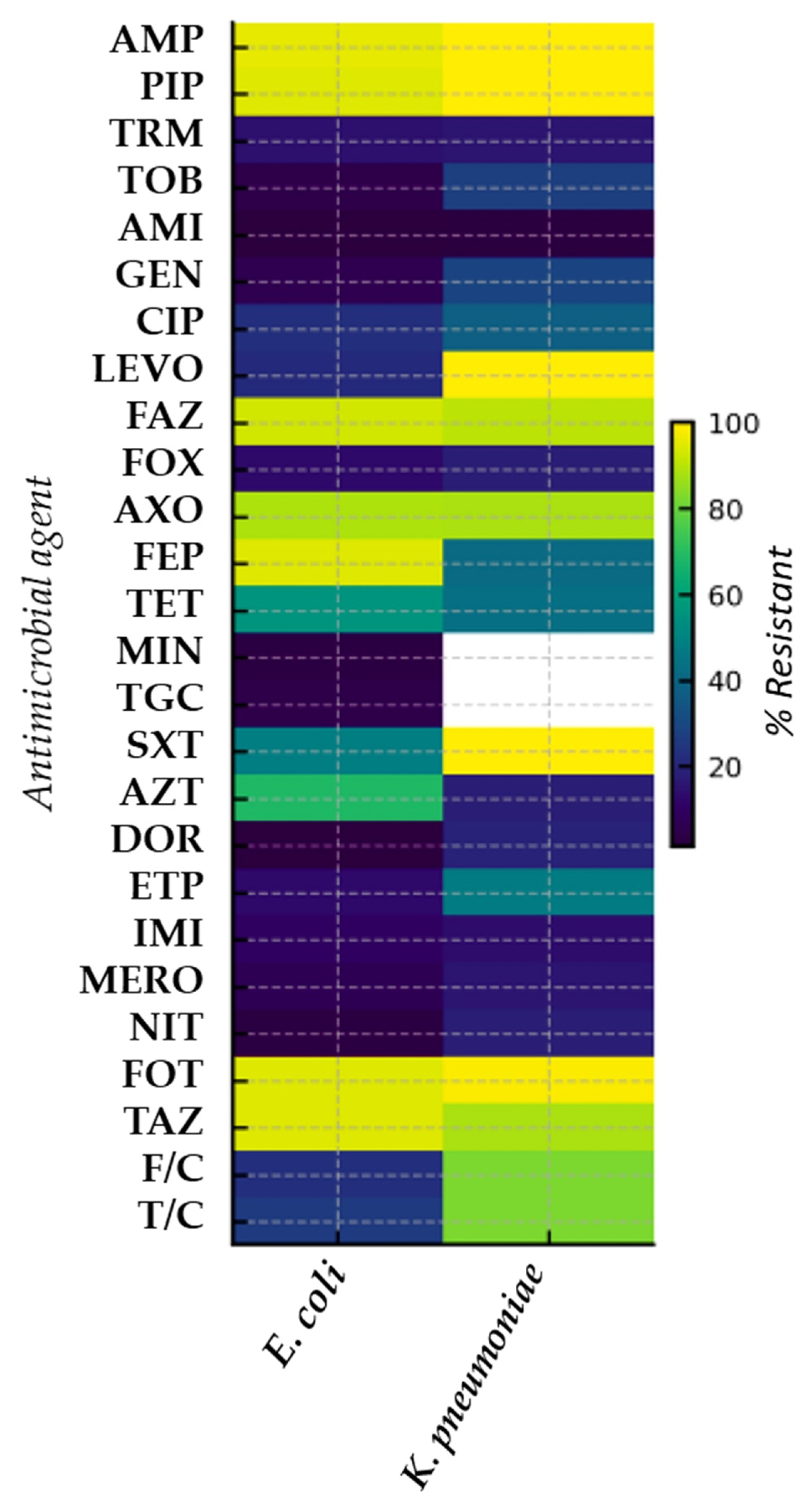
Antimicrobial susceptibility testing was performed on all 176 isolates (Table 2, Figure 3). Among the 31 E. coli strains that tested negative for all resistance genes by PCR, 19 isolates were susceptible to all antibiotics tested, 11 showed resistance to up to three antibiotic classes, and only one isolate was multidrug-resistant (Supplementary Data). For K. pneumoniae, 24 isolates tested negative in the PCR analysis, and their antimicrobial profiles are reported in the Supplementary Data. Overall, resistance patterns varied between E. coli and K. pneumoniae, with multidrug resistance observed in both species (Table 3 and Figure 3). Detailed MIC values and breakpoints for each antimicrobial are reported in Supplementary Table S4.

3.4. Whole-Genome Sequencing (WGS) of Isolates Positive for Carbapenemase-Encoding Genes by PCR

All (25/121) of Enterobacterales PCR-positive for carbapenemase encoding were subjected to WGS. Detailed isolate-level WGS results are provided in Table 3 for the 25 isolates (56% (14/25) E. coli and 44% (11/25) K. pneumoniae), including detected β-lactamase genes (carbapenemases, ESBL/AmpC), additional antimicrobial resistance (AMR) determinants, multilocus sequence types (MLST), and plasmid replicon types. WGS confirmed the presence of carbapenemase-encoding genes in 68% (17/25) of isolates, of which 58.8% (10/17) were E. coli and 41.2% (7/17) K. pneumoniae. Among E. coli, carbapenemase genes were blaOXA-244 (4/10, 40%), followed by blaVIM-4 (3/10, 30%), blaOXA-181 (1/10, 10%), and blaKPC-3 (2/10, 20%). In K. pneumoniae, carbapenemase genes included blaKPC-3 (3/7, 42.85%) and blaVIM-1 (4/7, 57.14%). ESBL/AmpC genes were detected in 36.0% (9/25) of isolates, including five E. coli and four K. pneumoniae. The most frequently detected ESBL/AmpC genes were blaCTX-M-15, blaSHV-12, blaSHV-28, blaTEM-52B, and blaDHA-1. Multilocus sequence typing (MLST) revealed considerable diversity. High-risk clones such as K. pneumoniae ST512 and ST307 carrying blaKPC-3 and E. coli ST10 carrying blaOXA-244 were identified (Table S4). In addition to β-lactam resistance determinants, multiple acquired resistance genes were detected: 72% of isolates carried aminoglycoside-modifying enzymes (aac, aph), 64% harboured sulfonamide resistance genes (sul1 or sul2), 60% carried dfrA variants (trimethoprim resistance), 44% had macrolide resistance genes (mph(A)), and 40% possessed tetracycline resistance genes (tet(A/B/D)). The isolates showed marked genomic diversity, encompassing 12 distinct MLST types (e.g., ST10, ST43, ST307, ST512, ST540, ST746, ST1721), and multiple plasmid incompatibility groups, most frequently IncFIB (56%), IncFIA (48%), IncX1 (28%), IncR (20%), and Col-type plasmids (32%).

4. Discussion

Antimicrobial resistance (AMR) in Enterobacterales, including E. coli and K. pneumoniae, represents a critical global health threat, responsible for significant mortality, morbidity, and economic burden. Environmental reservoirs and human activities play a key role in the persistence and dissemination of AMR, particularly with respect to carbapenem resistance [24,25,26,27]. In this study, we provide evidence of widespread contamination of surface waters in the Apulia region (Southern Italy) with ESBL- and carbapenemase-producing E. coli and K. pneumoniae. Using selective culture methods, 176 non-duplicate isolates were recovered from 148 samples collected across eight surface water bodies, with ESBL- or carbapenemase-producing E. coli or K. pneumoniae detected in 68.8% of the analysed samples.
These findings confirm that surface waters can act as important reservoirs and dissemination pathways for AMR, particularly in areas influenced by wastewater discharge and agricultural activities [28,29] and support the integration of environmental surveillance into One Health AMR surveillance frameworks. Marked spatial heterogeneity in E. coli concentrations was observed across sampling sites, indicating variable faecal contamination, which may be associated with anthropogenic influences such as wastewater inputs, agricultural runoff, and livestock-related activities. According to previous studies [30,31], E. coli was the most frequently isolated species (57.4%), in line with its recognised ubiquity and persistence in aquatic environments [32], where it can act as a reservoir and vector for horizontally transferable resistance genes [33]. The co-occurrence of K. pneumoniae (42.6%) further suggests faecal contamination and potential contributions from both human and animal sources [14]. Notably, all sampling sites yielded presumptive ESBL- and carbapenemase-producing strains on at least one sampling occasion, suggesting widespread environmental dissemination of resistant clones. Phenotypic antimicrobial susceptibility testing revealed high occurrence of resistance to multiple antimicrobial classes. The heatmap highlights clear species-specific differences in the distribution of phenotypes across antimicrobial classes. The high levels of resistance observed in both E. coli and K. pneumoniae to aminopenicillins and extended-spectrum cephalosporins should be interpreted in light of the study design, as isolates were recovered using selective culture media. This targeted isolation approach was intentionally applied to enhance the recovery of resistant Enterobacterales and, by definition, enriches for resistance to the corresponding antimicrobial classes. Consequently, the observed resistance profiles do not reflect the background prevalence of AMR in the sampled environments, but rather the phenotypic characteristics of the selected isolate collection. Nevertheless, the identified resistance patterns are consistent with EU-level surveillance data documenting the widespread occurrence of ESBL-producing Enterobacterales in environmental and food-production settings [21]. The recovery of isolates growing on selective chromogenic media but testing negative for the ESBL- and carbapenemase-encoding genes targeted by PCR can be explained by the intrinsic characteristics of the screening approach. Chromogenic media such as CHROMagar ESBL and CHROMagar mSuperCARBA are designed to maximise sensitivity and may therefore allow the growth of Enterobacterales with reduced β-lactam susceptibility due to intrinsic or low-level resistance mechanisms, even in the absence of classical ESBL or carbapenemase genes. Similar limitations, including reduced specificity and occasional growth of PCR-negative isolates, have been reported previously [34,35]. In addition, phenotypic resistance patterns not explained by the PCR targets may reflect the presence of alternative β-lactam resistance mechanisms not covered by the multiplex assay, such as non-CTX-M ESBLs, chromosomal AmpC overexpression, porin alterations, or efflux mechanisms [35,36]. These findings highlight both the complementary value and limitations of selective culture and targeted molecular assays in environmental AMR surveillance and support the use of broader genomic approaches when detailed characterisation of resistance determinants is required [36]. Comparison between phenotypic antimicrobial resistance and WGS-based predictions showed a high degree of concordance. Among ESBL genes, blaCTX-M was the most frequently detected (79.3%), in agreement with its global predominance in both clinical and environmental settings [37,38]. Its similar prevalence in E. coli and K. pneumoniae suggests sustained selective pressure in the environment, potentially driven by antimicrobial residues and/or untreated wastewater inputs [39]. Carbapenemase genes were detected in 20.6% (25/121) of isolates carrying at least one of the investigated resistance genes, mainly blaVIM, blaKPC, and blaOXA-48-like variants, which are widely disseminated in Europe [40,41,42]. The observed co-occurrence of multiple resistance determinants, including combinations of ESBL- and carbapenemase-encoding genes, indicates the presence of complex resistance profiles within the analysed isolates. While such genetic constellations are commonly associated with mobile genetic elements and horizontal gene transfer in aquatic environments [43], the present findings should be interpreted cautiously, as no specific analyses of plasmids or other mobile genetic elements were performed, and no conclusions can therefore be drawn regarding the underlying mechanisms of gene dissemination.
Whole-genome sequencing of 25 presumptive carbapenemase-producing isolates confirmed carbapenemase genes in 68%, supporting the reliability of PCR screening but also highlighting occasional discrepancies between phenotypic and genotypic methods [36]. Discrepancies between PCR and WGS results likely reflect differences in gene variants, sequencing depth, assembly limitations, or the plasmidic location of resistance determinants. PCR was therefore used as a targeted screening tool, while WGS confirmation was interpreted within its technical constraints. Detected carbapenemase variants included blaKPC-3, blaVIM-1, blaVIM-4, blaOXA-244, and blaOXA-181, confirming that surface waters can act as convergence points for multiple resistance genes [44]. WGS also revealed substantial clonal diversity. The detection of high-risk clinical lineages, such as K. pneumoniae ST512 and ST307 carrying blaKPC-3, and E. coli ST10 carrying blaOXA-244, is particularly noteworthy, as these lineages are commonly associated with healthcare-associated outbreaks in Italy and Europe [45,46,47,48]. Their presence in rivers and canals suggests possible bidirectional exchange between clinical environments and natural ecosystems [47,49]. In addition, several sequence types (STs) typically associated with environmental or zoonotic reservoirs were identified, including E. coli ST602, ST746, and ST1721 and K. pneumoniae ST34, ST45, and ST1537, which have been increasingly reported in surface waters, wastewater effluents, and animal-associated settings [7,50,51,52,53,54]. Freshwater ecosystems receiving inputs from wastewater treatment plants, agricultural effluents, and stormwater runoff are recognised as hotspots of microbial evolution, where multiple selective pressures can promote the emergence and maintenance of resistant strains [17,34]. Plasmid replicon typing showed a predominance of IncF, IncX, and IncN plasmids, which are key vectors for ESBL and carbapenemase dissemination [55,56]. However, due to availability of short-read data only, we could not associate ESBL and carbapenemase genes to plasmid replicons. Overall, the high occurrence of ESBL- and carbapenemase-producing E. coli and K. pneumoniae that we observed in surface waters of Southern Italy is consistent with—and in some aspects even higher than—what has been reported from other Italian and European regions. In Northern Italy, ESBL-, KPC-, and mcr-1.2–producing Enterobacterales have been described in streams, wells, and wastewater treatment plants in the Oltrepò Pavese area, and ESBL-producing E. coli and Klebsiella spp. carrying blaCTX-M, including OXA-244-producing ST131 E. coli and blaKPC-2 ST258 K. pneumoniae, were detected in surface and groundwaters of the Pavia urban area [57]. Similar findings have been reported for Dutch and Nordic surface waters, where multidrug-resistant and ESBL-producing E. coli are ubiquitous and frequently belong to internationally disseminated clones [58]. Moreover, KPC-producing Enterobacterales have been repeatedly recovered from the Douro River in Portugal and from Italian rivers such as the Lambro, highlighting rivers as long-term reservoirs of carbapenemase producers [42]. Taken together, these data indicate that the contamination we document in Southern Italy is part of a broader European pattern, in which surface waters impacted by urban and healthcare-related wastewater act as hubs for the persistence and dissemination of high-risk ESBL- and carbapenemase-producing Enterobacterales.

5. Conclusions

The findings of this study provide qualitative evidence of the presence and diversity of resistant bacteria and indicate that surface waters in the Apulia region act both as reservoirs of clinically relevant high-risk clones and as dynamic environments supporting the persistence and evolution of environmentally adapted Enterobacterales. This highlights the permeability of ecological boundaries between human, animal, and environmental compartments and reinforces the importance of integrating environmental surveillance into One Health AMR monitoring systems. Future studies integrating quantitative microbial measurements, metagenomic approaches, and exposure assessment would be essential to better characterise the environmental burden of AMR and its implications for human and animal health. Targeted interventions addressing wastewater treatment, agricultural runoff, and environmental contamination are urgently needed to mitigate the environmental spread of carbapenemase-producing Enterobacterales in Italy.

Supplementary Materials

The following supporting information can be downloaded at: https://www.mdpi.com/article/10.3390/microorganisms14020508/s1, Table S1: Antibiotic resistance profiles of E. coli isolates negative for all genes tested by PCR.; Table S2: Antibiotic susceptibility testing of Klebsiella pneumoniae isolates negative for antimicrobial resistance genes tested by PCR.

Author Contributions

Conceptualisation, G.N., A.C., M.G.B., G.L.S. and V.B.; methodology, G.N., A.C. and M.G.B.; software, G.N. and V.B.; investigation, G.N., A.C., M.G.B., A.M.D., R.C., M.G.C., I.F., A.S., M.N. and T.S.; resources, G.L.S.; data curation, G.N., A.C., G.L.S. and V.B.; writing—review and editing, G.N., A.C., M.G.B., G.L.S. and V.B.; supervision, G.N., M.G.B., V.B. and G.L.S. All authors have read and agreed to the published version of the manuscript.

Funding

This project was funded by the Italian Ministry of Health (IZSPB 05/22 RC).

Institutional Review Board Statement

Not applicable.

Informed Consent Statement

Not applicable.

Data Availability Statement

Whole-genome sequencing data generated in this study have been deposited in the NCBI Sequence Read Archive (SRA) under BioProject accession number PRJNA1358062. All other data supporting the findings of this study are available from the corresponding authors upon reasonable request.

Conflicts of Interest

The authors declare no conflicts of interest.

References

  1. FAO; OIE; WHO; UNEP. Antimicrobial Resistance and the United Nations Sustainable Development Cooperation Framework: Guidance for United Nations Country Teams; World Health Organization: Geneva, Switzerland, 2021; ISBN 978-92-4-003602-4. [Google Scholar]
  2. Clifford, K.; Desai, D.; Prazeres Da Costa, C.; Meyer, H.; Klohe, K.; Winkler, A.; Rahman, T.; Islam, T.; Zaman, M.H. Antimicrobial Resistance in Livestock and Poor Quality Veterinary Medicines. Bull. World Health Organ. 2018, 96, 662–664. [Google Scholar] [CrossRef] [PubMed]
  3. Mora-Ochomogo, M.; Lohans, C.T. β-Lactam Antibiotic Targets and Resistance Mechanisms: From Covalent Inhibitors to Substrates. RSC Med. Chem. 2021, 12, 1623–1639. [Google Scholar] [CrossRef] [PubMed]
  4. Bonomo, R.A. β-Lactamases: A Focus on Current Challenges. Cold Spring Harb. Perspect. Med. 2017, 7, a025239. [Google Scholar] [CrossRef]
  5. Shoaib, M.; Gul, S.; Majeed, S.; He, Z.; Hao, B.; Tang, M.; Zhang, X.; Wu, Z.; Wang, S.; Pu, W. Pathogenomic Characterization of Multidrug-Resistant Escherichia coli Strains Carrying Wide Efflux-Associated and Virulence Genes from the Dairy Farm Environment in Xinjiang, China. Antibiotics 2025, 14, 511. [Google Scholar] [CrossRef]
  6. Xu, X.; Zhou, W.; Xie, C.; Zhu, Y.; Tang, W.; Zhou, X.; Xiao, H. Airborne Bacterial Communities in the Poultry Farm and Their Relevance with Environmental Factors and Antibiotic Resistance Genes. Sci. Total Environ. 2022, 846, 157420. [Google Scholar] [CrossRef] [PubMed]
  7. Bengtsson-Palme, J.; Kristiansson, E.; Larsson, D.G.J. Environmental Factors Influencing the Development and Spread of Antibiotic Resistance. FEMS Microbiol. Rev. 2018, 42, fux053. [Google Scholar] [CrossRef]
  8. Shoaib, M.; Tang, M.; Awan, F.; Aqib, A.I.; Hao, R.; Ahmad, S.; Wang, S.; Shang, R.; Pu, W. Genomic Characterization of Extended-Spectrum β -Lactamase (ESBL) Producing E. coli Harboring BlaOXA−1-catB3-Arr-3 Genes Isolated from Dairy Farm Environment in China. Transbound. Emerg. Dis. 2024, 2024, 3526395. [Google Scholar] [CrossRef]
  9. Marathe, N.P.; Pal, C.; Gaikwad, S.S.; Jonsson, V.; Kristiansson, E.; Larsson, D.G.J. Untreated Urban Waste Contaminates Indian River Sediments with Resistance Genes to Last Resort Antibiotics. Water Res. 2017, 124, 388–397. [Google Scholar] [CrossRef]
  10. Christou, A.; Agüera, A.; Bayona, J.M.; Cytryn, E.; Fotopoulos, V.; Lambropoulou, D.; Manaia, C.M.; Michael, C.; Revitt, M.; Schröder, P.; et al. The Potential Implications of Reclaimed Wastewater Reuse for Irrigation on the Agricultural Environment: The Knowns and Unknowns of the Fate of Antibiotics and Antibiotic Resistant Bacteria and Resistance Genes—A Review. Water Res. 2017, 123, 448–467. [Google Scholar] [CrossRef]
  11. Jechalke, S.; Broszat, M.; Lang, F.; Siebe, C.; Smalla, K.; Grohmann, E. Effects of 100 Years Wastewater Irrigation on Resistance Genes, Class 1 Integrons and IncP-1 Plasmids in Mexican Soil. Front. Microbiol. 2015, 6, 163. [Google Scholar] [CrossRef]
  12. Gigliucci, F.; Barbieri, G.; Veyrunes, M.; Chiani, P.; Marra, M.; Carollo, M.; Knijn, A.; Brambilla, G.; Morabito, S. Characterization of the Resistome and Antibiotic-Resistant Bacteria in Top Soil Improvers and Irrigation Waters Devoted to Food Production: A Case Study from Italy. Environ. Sci. Pollut. Res. 2025, 32, 14691–14705. [Google Scholar] [CrossRef]
  13. Stanton, I.C.; Bethel, A.; Leonard, A.F.C.; Gaze, W.H.; Garside, R. Existing Evidence on Antibiotic Resistance Exposure and Transmission to Humans from the Environment: A Systematic Map. Environ. Evid. 2022, 11, 8. [Google Scholar] [CrossRef] [PubMed]
  14. Leonard, A.F.C.; Zhang, L.; Balfour, A.J.; Garside, R.; Hawkey, P.M.; Murray, A.K.; Ukoumunne, O.C.; Gaze, W.H. Exposure to and Colonisation by Antibiotic-Resistant E. coli in UK Coastal Water Users: Environmental Surveillance, Exposure Assessment, and Epidemiological Study (Beach Bum Survey). Environ. Int. 2018, 114, 326–333. [Google Scholar] [CrossRef]
  15. O’Flaherty, E.; Solimini, A.G.; Pantanella, F.; De Giusti, M.; Cummins, E. Human Exposure to Antibiotic Resistant-Escherichia coli through Irrigated Lettuce. Environ. Int. 2019, 122, 270–280. [Google Scholar] [CrossRef] [PubMed]
  16. Rahman, M.; Alam, M.-U.; Luies, S.K.; Kamal, A.; Ferdous, S.; Lin, A.; Sharior, F.; Khan, R.; Rahman, Z.; Parvez, S.M.; et al. Contamination of Fresh Produce with Antibiotic-Resistant Bacteria and Associated Risks to Human Health: A Scoping Review. Int. J. Environ. Res. Public Health 2021, 19, 360. [Google Scholar] [CrossRef] [PubMed]
  17. Mahmood, S.; Rasool, F.; Parveen, S.; Ayub, A.; Manzoor, K.; Matiullah, M.; Latif, M.D.; Hussain , T.; Younas , A.; Rabbani, G.; et al. Prevalence, Antimicrobial Profiling and Molecular Characterization of Antimicrobial Resistant Genes of Pathogenic Bacteria Detected in Channa Marulius of the Indus Riverine System in Pakistan. Pak. Vet. J. 2024, 44, 1308–1314. [Google Scholar] [CrossRef]
  18. Berglund, B. Environmental Dissemination of Antibiotic Resistance Genes and Correlation to Anthropogenic Contamination with Antibiotics. Infect. Ecol. Epidemiol. 2015, 5, 28564. [Google Scholar] [CrossRef]
  19. Schwartz, T.; Kohnen, W.; Jansen, B.; Obst, U. Detection of Antibiotic-Resistant Bacteria and Their Resistance Genes in Wastewater, Surface Water, and Drinking Water Biofilms. FEMS Microbiol. Ecol. 2003, 43, 325–335. [Google Scholar] [CrossRef]
  20. Bouki, C.; Venieri, D.; Diamadopoulos, E. Detection and Fate of Antibiotic Resistant Bacteria in Wastewater Treatment Plants: A Review. Ecotoxicol. Environ. Saf. 2013, 91, 1–9. [Google Scholar] [CrossRef]
  21. European Food Safety Authority (EFSA); European Centre for Disease Prevention and Control (ECDC). The European Union Summary Report on Antimicrobial Resistance in Zoonotic and Indicator Bacteria from Humans, Animals and Food in 2021–2022. EFSA J. 2024, 22, e8583. [Google Scholar] [CrossRef]
  22. Magiorakos, A.-P.; Srinivasan, A.; Carey, R.B.; Carmeli, Y.; Falagas, M.E.; Giske, C.G.; Harbarth, S.; Hindler, J.F.; Kahlmeter, G.; Olsson-Liljequist, B.; et al. Multidrug-Resistant, Extensively Drug-Resistant and Pandrug-Resistant Bacteria: An International Expert Proposal for Interim Standard Definitions for Acquired Resistance. Clin. Microbiol. Infect. 2012, 18, 268–281. [Google Scholar] [CrossRef]
  23. Knijn, A.; Michelacci, V.; Orsini, M.; Morabito, S. Advanced Research Infrastructure for Experimentation in genomicS (ARIES): A Lustrum of Galaxy Experience. bioRxiv 2020. [Google Scholar] [CrossRef]
  24. Sati, H.; Carrara, E.; Savoldi, A.; Hansen, P.; Garlasco, J.; Campagnaro, E.; Boccia, S.; Castillo-Polo, J.A.; Magrini, E.; Garcia-Vello, P.; et al. The WHO Bacterial Priority Pathogens List 2024: A Prioritisation Study to Guide Research, Development, and Public Health Strategies against Antimicrobial Resistance. Lancet Infect. Dis. 2025, 25, 1033–1043. [Google Scholar] [CrossRef] [PubMed]
  25. Larsson, D.G.J.; Flach, C.-F. Antibiotic Resistance in the Environment. Nat. Rev. Microbiol. 2022, 20, 257–269. [Google Scholar] [CrossRef] [PubMed]
  26. Mills, M.C.; Lee, J. The Threat of Carbapenem-Resistant Bacteria in the Environment: Evidence of Widespread Contamination of Reservoirs at a Global Scale. Environ. Pollut. 2019, 255, 113143. [Google Scholar] [CrossRef]
  27. Schwermer, C.U.; Krzeminski, P.; Anglès d’Auriac, M.; Gjeitnes, M.; Moe, J.; Bellanger, X.; Bürgmann, H.; Carapeto García, R.; Crespo Iniesta, P.; Dagot, C.; et al. Pilot Study on Antimicrobial Resistance Monitoring in European Surface Waters—Final Report of the Eionet Working Group; Zenodo: Geneva, Switzerland, 2025. [Google Scholar]
  28. Baquero, F.; Martínez, J.-L.; Cantón, R. Antibiotics and Antibiotic Resistance in Water Environments. Curr. Opin. Biotechnol. 2008, 19, 260–265. [Google Scholar] [CrossRef]
  29. Rizzo, L.; Manaia, C.; Merlin, C.; Schwartz, T.; Dagot, C.; Ploy, M.C.; Michael, I.; Fatta-Kassinos, D. Urban Wastewater Treatment Plants as Hotspots for Antibiotic Resistant Bacteria and Genes Spread into the Environment: A Review. Sci. Total Environ. 2013, 447, 345–360. [Google Scholar] [CrossRef]
  30. Bong, C.W.; Low, K.Y.; Chai, L.C.; Lee, C.W. Prevalence and Diversity of Antibiotic Resistant Escherichia coli from Anthropogenic-Impacted Larut River. Front. Public Health 2022, 10, 794513. [Google Scholar] [CrossRef]
  31. Crettels, L.; Champon, L.; Burlion, N.; Delrée, E.; Saegerman, C.; Thiry, D. Antimicrobial Resistant Escherichia coli Prevalence in Freshwaters in Belgium and Human Exposure Risk Assessment. Heliyon 2023, 9, e16538. [Google Scholar] [CrossRef]
  32. García-Aljaro, C.; Ballesté, E.; Muniesa, M.; Jofre, J. Determination of crAssphage in Water Samples and Applicability for Tracking Human Faecal Pollution. Microb. Biotechnol. 2017, 10, 1775–1780. [Google Scholar] [CrossRef]
  33. Zhang, S.; Abbas, M.; Rehman, M.U.; Huang, Y.; Zhou, R.; Gong, S.; Yang, H.; Chen, S.; Wang, M.; Cheng, A. Dissemination of Antibiotic Resistance Genes (ARGs) via Integrons in Escherichia coli: A Risk to Human Health. Environ. Pollut. 2020, 266, 115260. [Google Scholar] [CrossRef] [PubMed]
  34. Wilkinson, K.M.; Winstanley, T.G.; Lanyon, C.; Cummings, S.P.; Raza, M.W.; Perry, J.D. Comparison of Four Chromogenic Culture Media for Carbapenemase-Producing Enterobacteriaceae. J. Clin. Microbiol. 2012, 50, 3102–3104. [Google Scholar] [CrossRef] [PubMed]
  35. Noster, J.; Thelen, P.; Hamprecht, A. Detection of Multidrug-Resistant Enterobacterales—From ESBLs to Carbapenemases. Antibiotics 2021, 10, 1140. [Google Scholar] [CrossRef]
  36. Bortolaia, V.; Kaas, R.S.; Ruppe, E.; Roberts, M.C.; Schwarz, S.; Cattoir, V.; Philippon, A.; Allesoe, R.L.; Rebelo, A.R.; Florensa, A.F.; et al. ResFinder 4.0 for Predictions of Phenotypes from Genotypes. J. Antimicrob. Chemother. 2020, 75, 3491–3500. [Google Scholar] [CrossRef]
  37. Cantón, R.; Coque, T.M. The CTX-M β-Lactamase Pandemic. Curr. Opin. Microbiol. 2006, 9, 466–475. [Google Scholar] [CrossRef]
  38. Pehrsson, E.C.; Tsukayama, P.; Patel, S.; Mejía-Bautista, M.; Sosa-Soto, G.; Navarrete, K.M.; Calderon, M.; Cabrera, L.; Hoyos-Arango, W.; Bertoli, M.T.; et al. Interconnected Microbiomes and Resistomes in Low-Income Human Habitats. Nature 2016, 533, 212–216. [Google Scholar] [CrossRef]
  39. Karkman, A.; Do, T.T.; Walsh, F.; Virta, M.P.J. Antibiotic-Resistance Genes in Waste Water. Trends Microbiol. 2018, 26, 220–228. [Google Scholar] [CrossRef]
  40. Giani, T.; Pini, B.; Arena, F.; Conte, V.; Bracco, S.; Migliavacca, R.; AMCLI-CRE Survey Participants; Pantosti, A.; Pagani, L.; Luzzaro, F.; et al. Epidemic Diffusion of KPC Carbapenemase-Producing Klebsiella Pneumoniae in Italy: Results of the First Countrywide Survey, 15 May to 30 June 2011. Euro Surveill. 2013, 18, 20489. [Google Scholar] [CrossRef] [PubMed]
  41. Potron, A.; Poirel, L.; Nordmann, P. Emerging Broad-Spectrum Resistance in Pseudomonas Aeruginosa and Acinetobacter Baumannii: Mechanisms and Epidemiology. Int. J. Antimicrob. Agents 2015, 45, 568–585. [Google Scholar] [CrossRef]
  42. Dantas Palmeira, J.; Do Arte, I.; Ragab Mersal, M.M.; Carneiro Da Mota, C.; Ferreira, H.M.N. KPC-Producing Enterobacterales from Douro River, Portugal—Persistent Environmental Contamination by Putative Healthcare Settings. Antibiotics 2022, 12, 62. [Google Scholar] [CrossRef]
  43. Partridge, S.R.; Kwong, S.M.; Firth, N.; Jensen, S.O. Mobile Genetic Elements Associated with Antimicrobial Resistance. Clin. Microbiol. Rev. 2018, 31, e00088-17. [Google Scholar] [CrossRef]
  44. Lupo, A.; Coyne, S.; Berendonk, T.U. Origin and Evolution of Antibiotic Resistance: The Common Mechanisms of Emergence and Spread in Water Bodies. Front. Microbiol. 2012, 3, 18. [Google Scholar] [CrossRef]
  45. Van Beek, J.; Räisänen, K.; Broas, M.; Kauranen, J.; Kähkölä, A.; Laine, J.; Mustonen, E.; Nurkkala, T.; Puhto, T.; Sinkkonen, J.; et al. Tracing Local and Regional Clusters of Carbapenemase-Producing Klebsiella Pneumoniae ST512 with Whole Genome Sequencing, Finland, 2013 to 2018. Eurosurveillance 2019, 24, 1800522. [Google Scholar] [CrossRef]
  46. Grundmann, H.; Glasner, C.; Albiger, B.; Aanensen, D.M.; Tomlinson, C.T.; Andrasević, A.T.; Cantón, R.; Carmeli, Y.; Friedrich, A.W.; Giske, C.G.; et al. Occurrence of Carbapenemase-Producing Klebsiella Pneumoniae and Escherichia coli in the European Survey of Carbapenemase-Producing Enterobacteriaceae (EuSCAPE): A Prospective, Multinational Study. Lancet Infect. Dis. 2017, 17, 153–163. [Google Scholar] [CrossRef] [PubMed]
  47. Wyres, K.L.; Holt, K.E. Klebsiella Pneumoniae as a Key Trafficker of Drug Resistance Genes from Environmental to Clinically Important Bacteria. Curr. Opin. Microbiol. 2018, 45, 131–139. [Google Scholar] [CrossRef] [PubMed]
  48. Monaco, M.; Giani, T.; Raffone, M.; Arena, F.; Garcia-Fernandez, A.; Pollini, S.; Network EuSCAPE-Italy, C.; Grundmann, H.; Pantosti, A.; Rossolini, G.M. Colistin Resistance Superimposed to Endemic Carbapenem-Resistant Klebsiella Pneumoniae: A Rapidly Evolving Problem in Italy, November 2013 to April 2014. Eurosurveillance 2014, 19, 14–18. [Google Scholar] [CrossRef]
  49. Ludden, C.; Coll, F.; Gouliouris, T.; Restif, O.; Blane, B.; Blackwell, G.A.; Kumar, N.; Naydenova, P.; Crawley, C.; Brown, N.M.; et al. Defining Nosocomial Transmission of Escherichia coli and Antimicrobial Resistance Genes: A Genomic Surveillance Study. Lancet Microbe 2021, 2, e472–e480. [Google Scholar] [CrossRef]
  50. Ben Said, L.; Jouini, A.; Klibi, N.; Dziri, R.; Alonso, C.A.; Boudabous, A.; Ben Slama, K.; Torres, C. Detection of Extended-Spectrum Beta-Lactamase (ESBL)-Producing Enterobacteriaceae in Vegetables, Soil and Water of the Farm Environment in Tunisia. Int. J. Food Microbiol. 2015, 203, 86–92. [Google Scholar] [CrossRef]
  51. Di Pilato, V.; Pollini, S.; Miriagou, V.; Rossolini, G.M.; D’Andrea, M.M. Carbapenem-Resistant Klebsiella pneumoniae: The Role of Plasmids in Emergence, Dissemination, and Evolution of a Major Clinical Challenge. Expert Rev. Anti Infect. Ther. 2024, 22, 25–43. [Google Scholar] [CrossRef] [PubMed]
  52. Manges, A.R.; Geum, H.M.; Guo, A.; Edens, T.J.; Fibke, C.D.; Pitout, J.D.D. Global Extraintestinal Pathogenic Escherichia coli (ExPEC) Lineages. Clin. Microbiol. Rev. 2019, 32, e00135-18. [Google Scholar] [CrossRef]
  53. Totsika, M.; Beatson, S.A.; Sarkar, S.; Phan, M.-D.; Petty, N.K.; Bachmann, N.; Szubert, M.; Sidjabat, H.E.; Paterson, D.L.; Upton, M.; et al. Insights into a Multidrug Resistant Escherichia coli Pathogen of the Globally Disseminated ST131 Lineage: Genome Analysis and Virulence Mechanisms. PLoS ONE 2011, 6, e26578. [Google Scholar] [CrossRef]
  54. Hendriksen, R.S.; Bortolaia, V.; Tate, H.; Tyson, G.H.; Aarestrup, F.M.; McDermott, P.F. Using Genomics to Track Global Antimicrobial Resistance. Front. Public Health 2019, 7, 242. [Google Scholar] [CrossRef]
  55. Villa, L.; García-Fernández, A.; Fortini, D.; Carattoli, A. Replicon Sequence Typing of IncF Plasmids Carrying Virulence and Resistance Determinants. J. Antimicrob. Chemother. 2010, 65, 2518–2529. [Google Scholar] [CrossRef]
  56. Rozwandowicz, M.; Brouwer, M.S.M.; Fischer, J.; Wagenaar, J.A.; Gonzalez-Zorn, B.; Guerra, B.; Mevius, D.J.; Hordijk, J. Plasmids Carrying Antimicrobial Resistance Genes in Enterobacteriaceae. J. Antimicrob. Chemother. 2018, 73, 1121–1137. [Google Scholar] [CrossRef] [PubMed]
  57. Caltagirone, M.; Nucleo, E.; Spalla, M.; Zara, F.; Novazzi, F.; Marchetti, V.M.; Piazza, A.; Bitar, I.; De Cicco, M.; Paolucci, S.; et al. Occurrence of Extended Spectrum β-Lactamases, KPC-Type, and MCR-1.2-Producing Enterobacteriaceae from Wells, River Water, and Wastewater Treatment Plants in Oltrepò Pavese Area, Northern Italy. Front. Microbiol. 2017, 8, 2232. [Google Scholar] [CrossRef] [PubMed]
  58. Blaak, H.; Lynch, G.; Italiaander, R.; Hamidjaja, R.A.; Schets, F.M.; De Roda Husman, A.M. Multidrug-Resistant and Extended Spectrum Beta-Lactamase-Producing Escherichia coli in Dutch Surface Water and Wastewater. PLoS ONE 2015, 10, e0127752. [Google Scholar] [CrossRef] [PubMed]
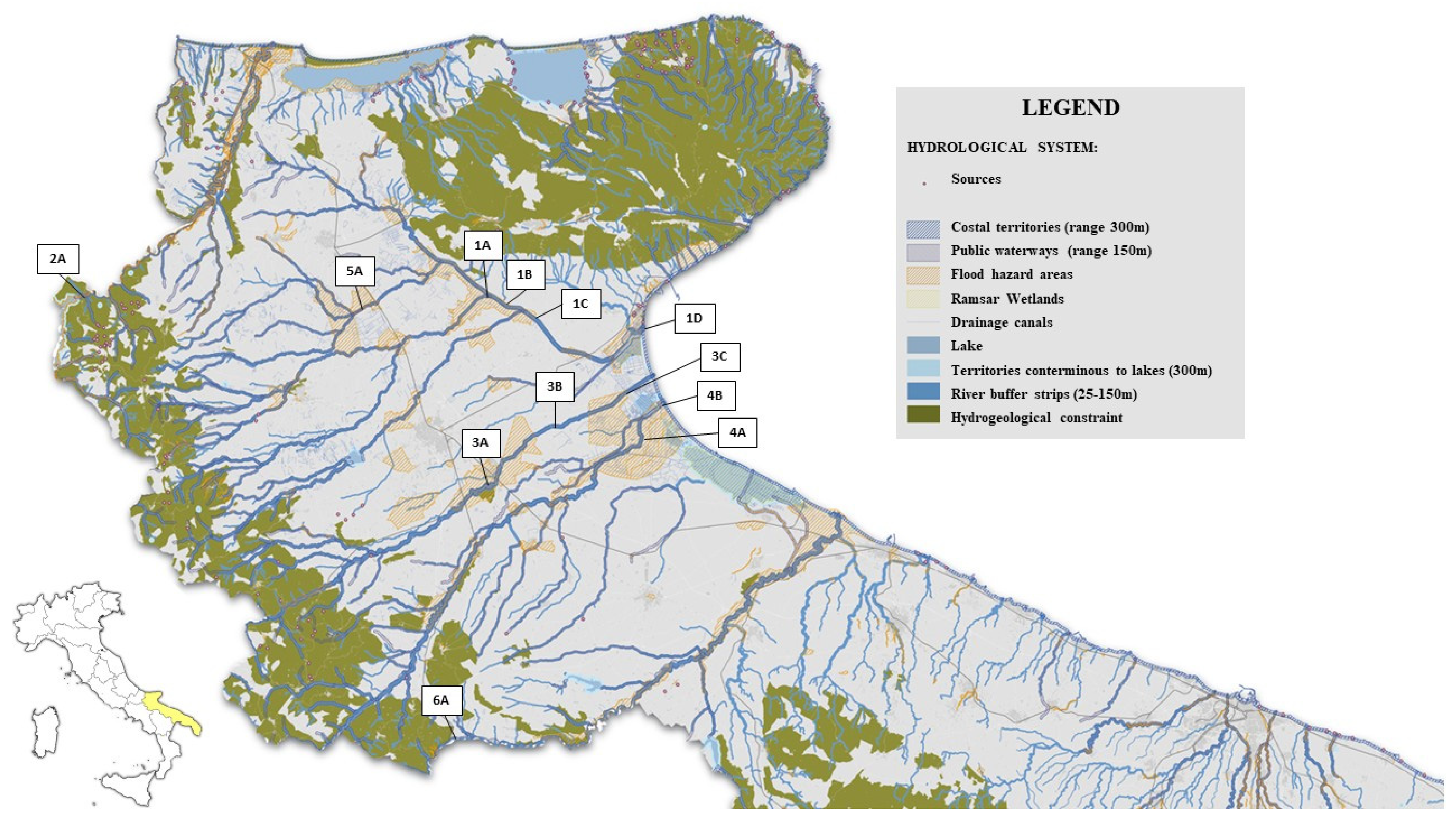
Figure 1. Map of river sampling points.
Microorganisms 14 00508 g001
Figure 2. Map of lake sampling points.
Microorganisms 14 00508 g002
Figure 3. Heatmap of AMR profiles of E. coli and K. pneumoniae isolated. Antibiotic abbreviations are as follows: AMP, ampicillin; PIP, piperacillin; TRM, temocillin; TOB, tobramycin; AMI, amikacin; GEN, gentamicin; CIP, ciprofloxacin; LEVO, levofloxacin; FAZ, cefazolin; FOX, cefoxitin; AXO, ceftriaxone; FEP, cefepime; TET, tetracycline; MIN, minocycline; TGC, tigecycline; SXT, trimethoprim-sulfamethoxazole; AZT, aztreonam; DOR, doripenem; ETP, ertapenem; IMI, imipenem; MERO, meropenem; NIT, nitrofurantoin; TAZ, ceftazidime; F/C, cefotaxime-clavulanic acid; T/C, ceftazidime-clavulanic acid.
Microorganisms 14 00508 g003
Table 1. Occurrence of ESBL- and carbapenemase-encoding genes in E. coli and K. pneumoniae isolated on selective agar plates.
OrganismNo. of PCR-Positive IsolatesResistance Genes in Enterobacterales Isolates
blaCTX-MCRE * (25/121, 20.6%)
blaOXA-48blaKPCblaVIMblaCTX-M + blaKPCblaCTX-M + blaVIMblaCTX-M + blaOXA-48
K. pneumoniae51/75 (68%)40/51 (78.4%)1/51
(2%)
-5/51 (9.8%)3/51
(5.9%)
2/51
(3.9%)
-
E. coli70/101 (69.3%)56/70 (80%)3/70 (4.3%)2/70 (2.9%)6/70 (8.6%)-1/70
(1.4%)
2/70
(2.9%)
Total No.121/176 (68.8%)96/121 (79.3%)4/121
(3.3%)
2/121 (1.7%)11/121
(9.1%)
3/121
(2.5%)
3/121
(2.5%)
2/121 (1.7%)
* CRE, carbapenem-resistant Enterobacterales.
Table 2. Antimicrobial susceptibility profiles of presumptive ESBL- and carbapenemase-producing Enterobacterales isolates.
Antibiotic Class/Phenotypic Test *MoleculesNo. of E. coli Categorized as Resistant (%)No. of K. pneumoniae Categorized as Resistant (%)
Beta-lactamsPenicillinsAMP67/70 (95.71)- **
PIP67/70 (94.28)- **
Penicillin derivatives ***TRM10/70 (14.28)8/51 (15.68)
First generation cephalosporinsFAZ65/70 (92.85)46/51 (90.19)
Second-generation cephalosporinsFOX9/70 (12.85)9/51 (17.64)
Third- and fourth-generationAXO62/70 (88.57)45/51 (88.23)
FEP66/70 (94.28)21/51 (41.17)
MonobactamAZT48/70 (68.57)9/51 (17.64)
CarbapenemsDOR1/70 (1.42)10/51 (19.60)
ETP9/70 (12.85)24/51 (47.05)
IMI7/70 (10.00)7/51 (13.72)
MERO7/70 (7.14)8/51 (15.68)
AminoglycosidesTOB3/70 (4.28)14/51 (27.45)
AMI1/70 (1.42)1/51 (1.96)
GEN4/70 (5.71)15/51 (29.41)
FluoroquinolonesCIP16/70 (22.85)19/51 (37.25)
LEVO16/70 (21.42)11/51 (21.56)
TetracyclinesTET39/70 (55.71)22/51 (43.13)
MIN2/70 (2.85)8/51 (15.68)
TGC3/70 (4.28)2/51 (3.92)
SulfonamidesSXT34/70 (48.57)36/51 (70.58)
NitrofuransNIT2/70 (2.85)-**
ESBL confirmatory tests *FOT67/70 (94.28)50/51 (98.03)
TAZ67/70 (94.28)45/51 (88.23)
F/C16/70 (22.85)42/51 (82.35)
T/C18/70 (25.71)42/51 (82.35)
* The MIC values reported in the table represent the epidemiological cut-off values (ECOFFs) used for categorisation, except for ESBL confirmatory tests, which were interpreted according to EUCAST phenotypic criteria. ** For K. pneumoniae, no ECOFFs were applied for ampicillin, piperacillin and nitrofurantoin, as this species is considered intrinsically resistant or not a target organism according to EUCAST. *** Temocillin susceptibility was interpreted as an ESBL screening marker according to EUCAST recommendations.
Table 3. Whole-genome sequencing summary of 25 presumptive carbapenemase-producing Enterobacterales isolated from surface waters.
IDSampling PointsDateSpeciesMultiplex PCR
Results
CarbapenemaseESBL/
AmpC
Other AMR GenesMLSTPlasmid Replicon
IZSPB_EC011B11/23E. coliblaCTX-M
blaOXA-48
blaOXA-244blaCTX-M-15blaTEM-1B, qnrS1, aph(6)-Id, aph(3’’)-Ib, sul2, dfrA14, tet(A)ST10IncFIB(K),
IncFIB(AP0019)
IZSPB_KP011B06/24K. pneumoniaeblaCTX-M, blaOXA-48blaKPC-3-blaTEM-1A, blaOXA-9, aadA3, aac(3)-IIa, aadA2, aph(3’)-Ia, aac(6’)-Ib, mph(A), sul1, dfrA12, catA1ST512IncFIB(K)
ColRNAI
IncQ1,
IncFIB(pQil)
IZSPB_EC021B07/24E. coliblaVIM-blaTEM-52Bant(3’’)-Ia, lnu(F)ST602IncX1
IncI1-I(Alpha)
IZSPB_EC031D02/24E. coliblaOXA-48blaOXA-244--ST43IncFIB(AP0019)
IZSPB_EC041D05/24E. coliblaKPCblaKPC-3--ST1139IncI(Gamma), IncFIB(pQil)
IZSPB_KP021D05/24K. pneumoniaeblaCTX-M, blaKPCblaKPC-3blaSHV-28, blaCTX-M-15blaTEM-1A, blaOXA-1, blaOXA-9, qnrB1, aac(3)-IIa, aph(6)-Id, aph(3’’)-Ib, sul2, dfrA14, aac(6’)-Ib-crST307IncFIB(K),
IncN4, IncFIB(pQil)
IZSPB_KP032A02/24K. pneumoniaeblaOXA-48---ST3442IncFIB(K)(pCA), RepB
IZSPB_KP043B02/24K. pneumoniaeblaVIMblaVIM-1blaSHV-12qnrS1, aph(3’)-XV, mph(A), sul1, dfrA14, catB2ST1537IncA
IZSPB_KP053B07/24K. pneumoniaeblaCTX-M, blaKPCblaKPC-3 blaTEM-1A, blaOXA-9, tet(D)ST45IncFIB(K), Col440II, ColRNAI, IncFIB(pQil)
IZSPB_KP063B08/24K. pneumoniaeblaVIM-blaDHA-1blaOKP-B-2, qnrB4, sul1, dfrA1ST2059IncFIB(K), IncR, Col440I
IZSPB_KP073B09/24K. pneumoniaeblaVIM---ST983negative
IZSPB_EC053B09/24E. coliblaVIM--blaTEM-1B, aph(3’’)-Ib, tet(B)ST Novel IncFIB (AP0019)
IZSPB_EC064A03/24E. coliblaOXA-48blaOXA-181-blaTEM-1B, aac(3)-IId, aph(6)-Id, aph(3’)-Ia, aph(3’’)-Ib, aadA5, mph(A), erm(B), sul1, sul2, dfrA17, floR, catA1ST542IncFII,
IncX1,
Col (BS512), Col156,
IncQ1
IZSPB_EC075A02/24E. coliblaOXA-48blaOXA-244--ST746negative
IZSPB_EC085A02/24E. coliblaVIMblaVIM-4--ST Novel IncFIB(K), IncFIA(HI1)
IZSPB_KP085A02/24K. pneumoniaeblaVIMblaVIM-1-aph(3’)-XV, mph(A), sul1, catB2ST Novel repB(R1701), IncFIB(K) (pCA), IncFIB(pKPHS1, Col440I
IZSPB_KP095A03/24K. pneumoniaeblaVIMblaVIM-1-qnrS1, aph(3’)-XV, mph(A), sul1, dfrA14, catB2ST34IncFIB(K),
IncN,
IncR
IZSPB_EC095A03/24E. coliblaOXA-48blaOXA-244blaCTX-M-15blaTEM-1B, qnrS1, aph(6)-Id, aph(3’’)-Ib, sul2, dfrA14, tet(A)ST540IncFIB(K), IncFIB(AP0019)
IZSPB_KP105A03/24K. pneumoniaeblaCTX-M,blaVIM-blaCTX-M-15qnrS1, aph(6)-Id, aadA2, aph(3’)-Ia, aph(3’’)-Ib, mph(A), sul1, sul2, dfrA12, catA2ST469IncFIB(K)(pCA), IncFIB(pKPHS1, RepB
IZSPB_EC105A04/24E. coliblaCTX-M,blaVIMblaVIM-4-ST1721negative
IZSPB_KP115A04/24K. pneumoniaeblaVIMblaVIM-1-aph(3’)-XV, sul1, catB2ST Novel IncFIB(K), IncFIA(HI1), IncX1,
IncR, Col(pHAD28), Col440I
IZSPB_EC115A06/24E. coliblaVIMblaVIM-4- -ST1721IncFIB(pHCM2)
IZSPB_EC128A08/24E. coliblaVIM-blaSHV-12qnrS1, aph(3’’)-Ib, tet(A), floRST2144IncFIA,
IncX1,
ColpVC, IncFIB(AP0019)
IZSPB_EC138B02/24E. coliblaKPCblaKPC-3- -ST141IncN
IZSPB_EC148B08/24E. coliblaVIM-blaSHV-12qnrS1, aph(3’’)-Ib, tet(A), floRST2144IncFII(29), IncFIA,
IncX1,
ColpVC, IncFIB(AP0019)
Disclaimer/Publisher’s Note: The statements, opinions and data contained in all publications are solely those of the individual author(s) and contributor(s) and not of MDPI and/or the editor(s). MDPI and/or the editor(s) disclaim responsibility for any injury to people or property resulting from any ideas, methods, instructions or products referred to in the content.