Methicillin-Resistant Staphylococcus aureus (MRSA) and Vancomycin-Resistant Enterococci (VRE) in Nosocomial Infections: A Systematic Review of Resistance, Pathogenesis, and Clinical Management
 , , , , , , ,
  and
and
Abstract
1. Introduction
1.1. Epidemiology of MRSA and VRE in Nosocomial Settings

| Context (Region/Setting) | MRSA (Reported Proportion) | VRE (Reported Proportion/Prevalence) | Ref. |
|---|---|---|---|
| Europe—S. aureus isolates | 20% | - | [12] |
| U.S. hospitals—S. aureus isolates | 33–55% | - | [12] |
| Europe—nosocomial S. aureus infections | 5–25%; >30% in high-risk centres | - | [15] |
| Multi-hospital study (169 hospitals) | - | 4.8% (E. faecium), 0.3% (E. faecalis); ICU: 0.1–0.7% | [14] |
| Transplant/haematology centres | - | up to 15–20% | [14] |
1.2. Mechanisms of Antimicrobial Resistance
1.3. Pathogenesis and Virulence Factors
1.4. Clinical Manifestations of MRSA and VRE Infections
2. Materials and Methods
2.1. Objectives and Research Question
2.2. Identification of Relevant Articles
2.3. Eligibility Criteria for Study Selection
2.3.1. Inclusion Criteria
- Epidemiology and burden across clinical settings (e.g., ICU, oncology, surgery, geriatrics);
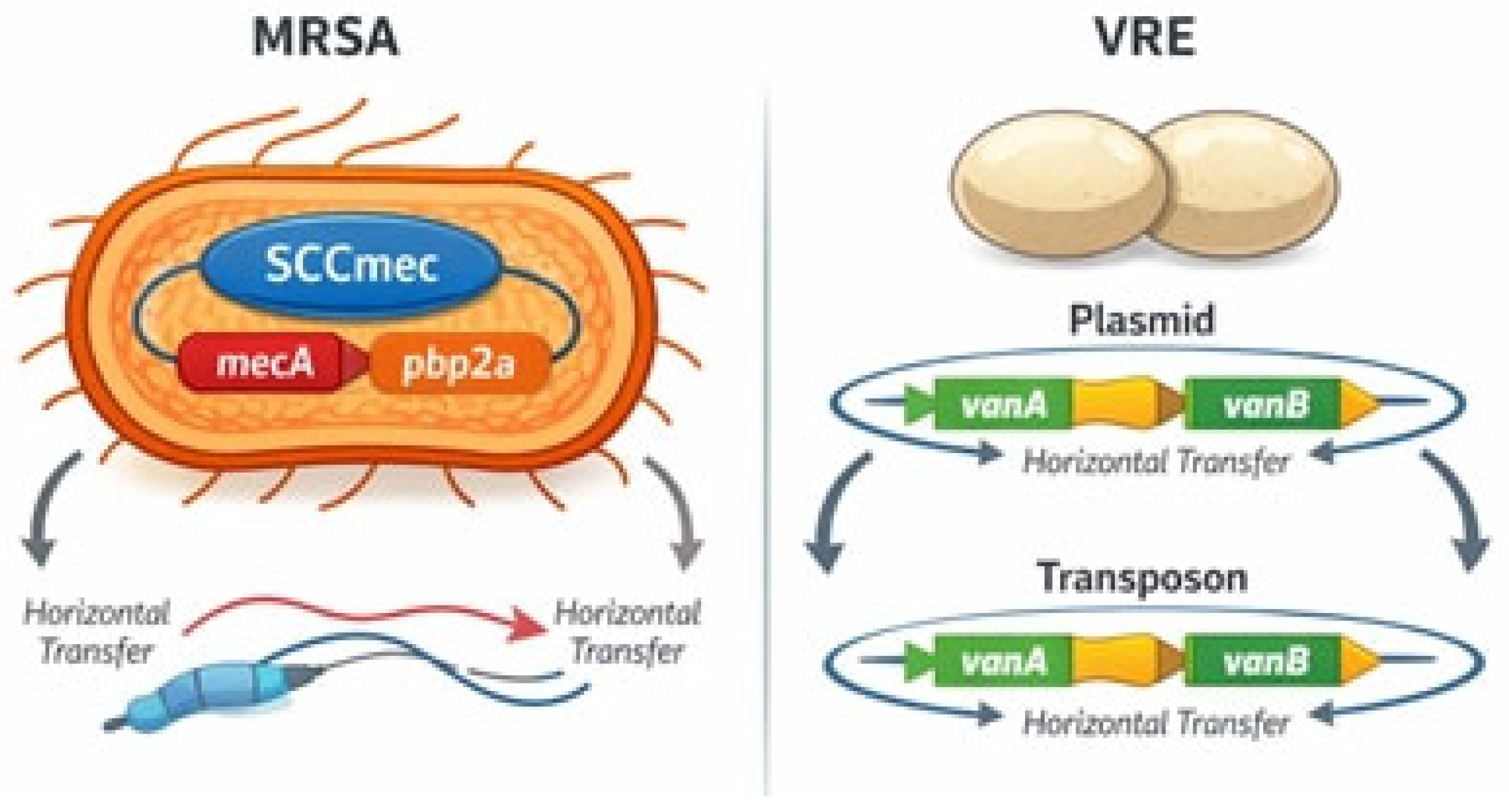
- Molecular mechanisms of antimicrobial resistance (e.g., mecA/mecC; vanA/vanB and related determinants);
- Clinical manifestations, severity, complications, and outcomes;
- Diagnostic strategies, including conventional microbiology and rapid molecular methods;
- Therapeutic options and challenges for multidrug-resistant infections;
- Infection prevention and control measures and antimicrobial stewardship initiatives.
2.3.2. Exclusion Criteria
- Single case reports lacking broader relevance or sufficient data on prevalence, management, or control of MRSA/VRE;
- Studies focusing on community-acquired infections with susceptible S. aureus or non-VRE Enterococcus spp. without clear applicability to nosocomial infections;
- Studies focused exclusively on the development of new antibiotics without linkage to clinical or epidemiological hospital context;
- Editorials, letters, commentaries, and other opinion pieces;
- Records lacking direct clinical relevance to MRSA/VRE healthcare-associated infections.
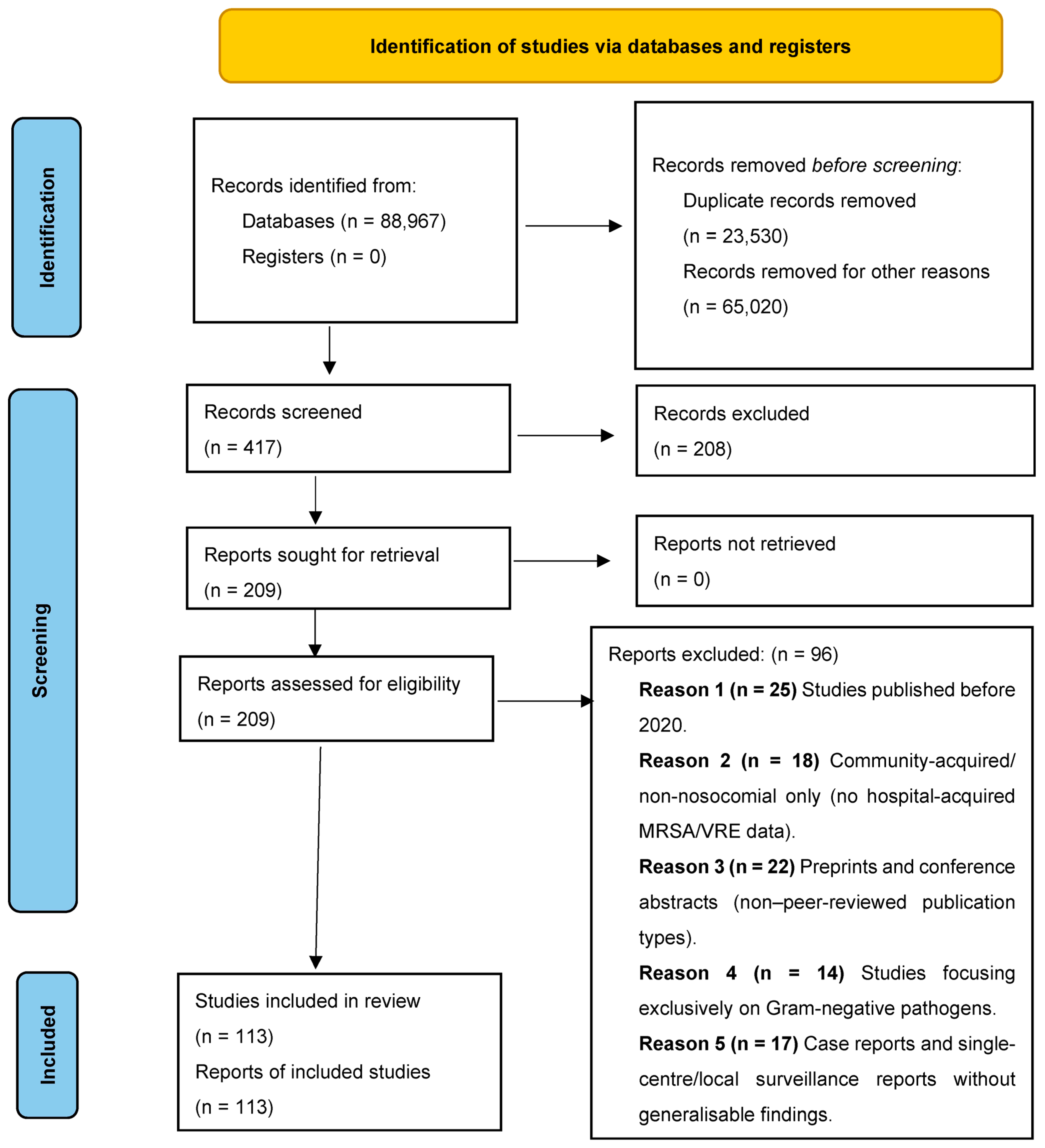
2.3.3. Screening Process and Inclusion Decisions
2.3.4. Data Collection Methods
2.3.5. Study Limitations
- Exclusion of grey literature: institutional reports, conference abstracts, and non-indexed papers were not considered, although they might contain relevant contextual information;
- Language restriction: only English-language records were included, potentially excluding valuable contributions in other languages;
- Source coverage: although major databases/platforms were searched, relevant studies may have been missed;
- Temporal restriction (2020–2025): studies published prior to 2020 were not included, which may limit historical context.
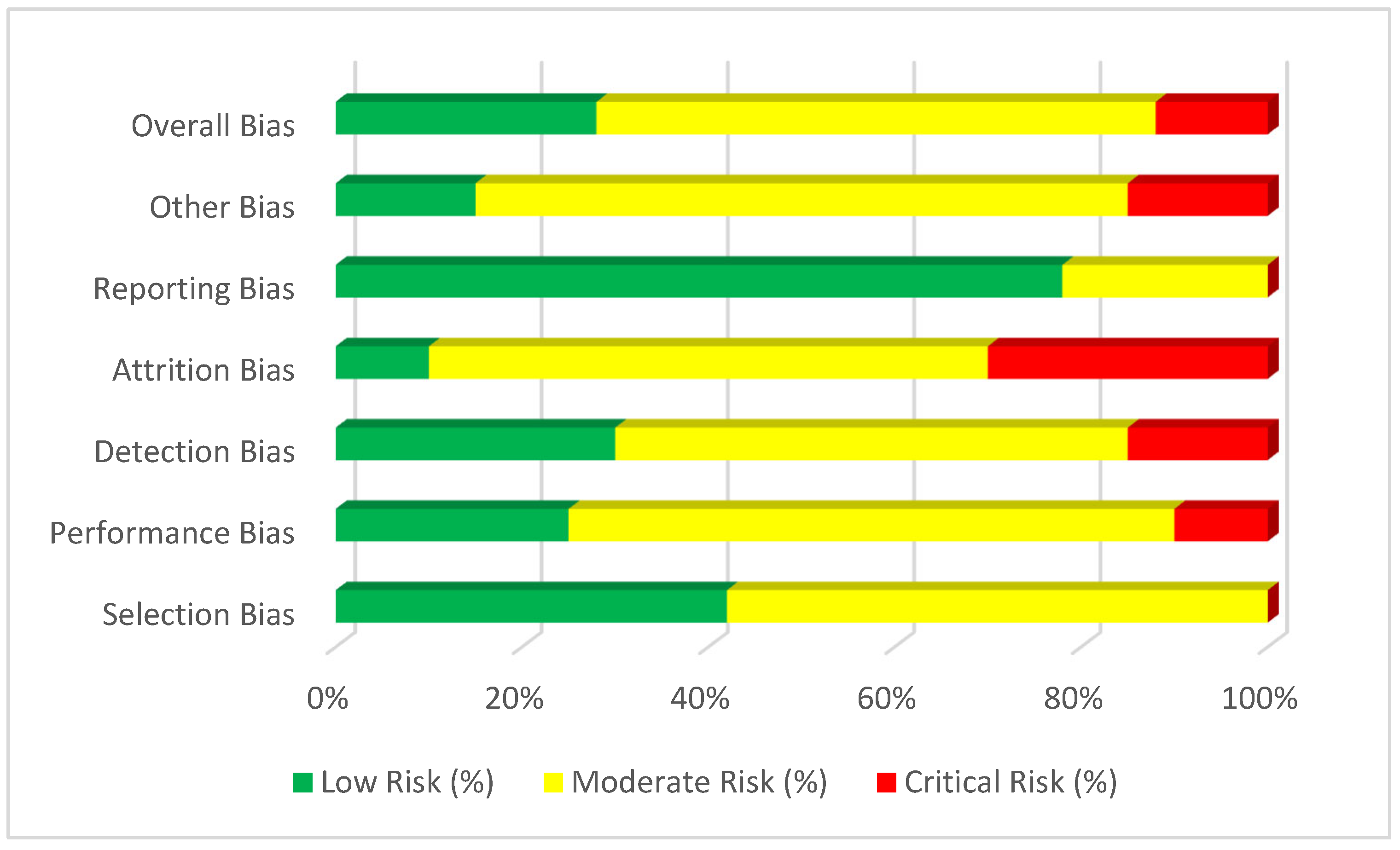
2.4. Risk of Bias and Overall Quality Assessment
2.5. Data Synthesis
- Therapeutic strategies (antimicrobial regimens, combination therapy, synergy testing, clinical outcomes);
- Diagnostics and molecular characterisation (PCR detection of mecA/mecC, vanA/vanB; typing methods such as MLST and SCCmec classification; rapid diagnostic platforms);
- Infection prevention and institutional control measures (contact precautions, cohorting, screening, environmental decontamination, guideline implementation);
- Antimicrobial stewardship and policy-focused studies (antibiotic consumption, appropriateness, de-escalation programmes, institutional drivers of AMR);
- Outbreak investigations and epidemiological surveillance (transmission pathways, risk factor analysis, setting-specific prevalence).
2.6. Effect Measures
2.7. Certainty Assessment
3. Results
3.1. Overview of Selected Studies
- Prevalence and distribution of MRSA and VRE in hospital settings (including ICU, oncology, surgery, and geriatrics);
- Antimicrobial resistance mechanisms, particularly the role of mecA, vanA, and vanB genes;
- Clinical manifestations and associated risks in immunocompromised patients;
- Microbiological and molecular diagnostics (rapid testing vs. conventional methods);
- Efficacy of treatment strategies and institutional infection control measures.
- The clinical relevance of MRSA and VRE infections;
- Validated diagnostic and infection control strategies;
- Clear reporting of outcomes such as mortality, length of hospital stay, complications, and associated costs.
- Highlights the clinical and economic impact of MRSA and VRE infections on the healthcare system and patient outcomes;
- Provides a clear picture of the existing gaps in early detection and targeted treatment, particularly in cases of severe or recurrent infections;
- Proposes clear directions for clinical practice and future research, including the development of rapid diagnostic technologies, the optimisation of antimicrobial therapy, and the strengthening of institutional infection control measures.
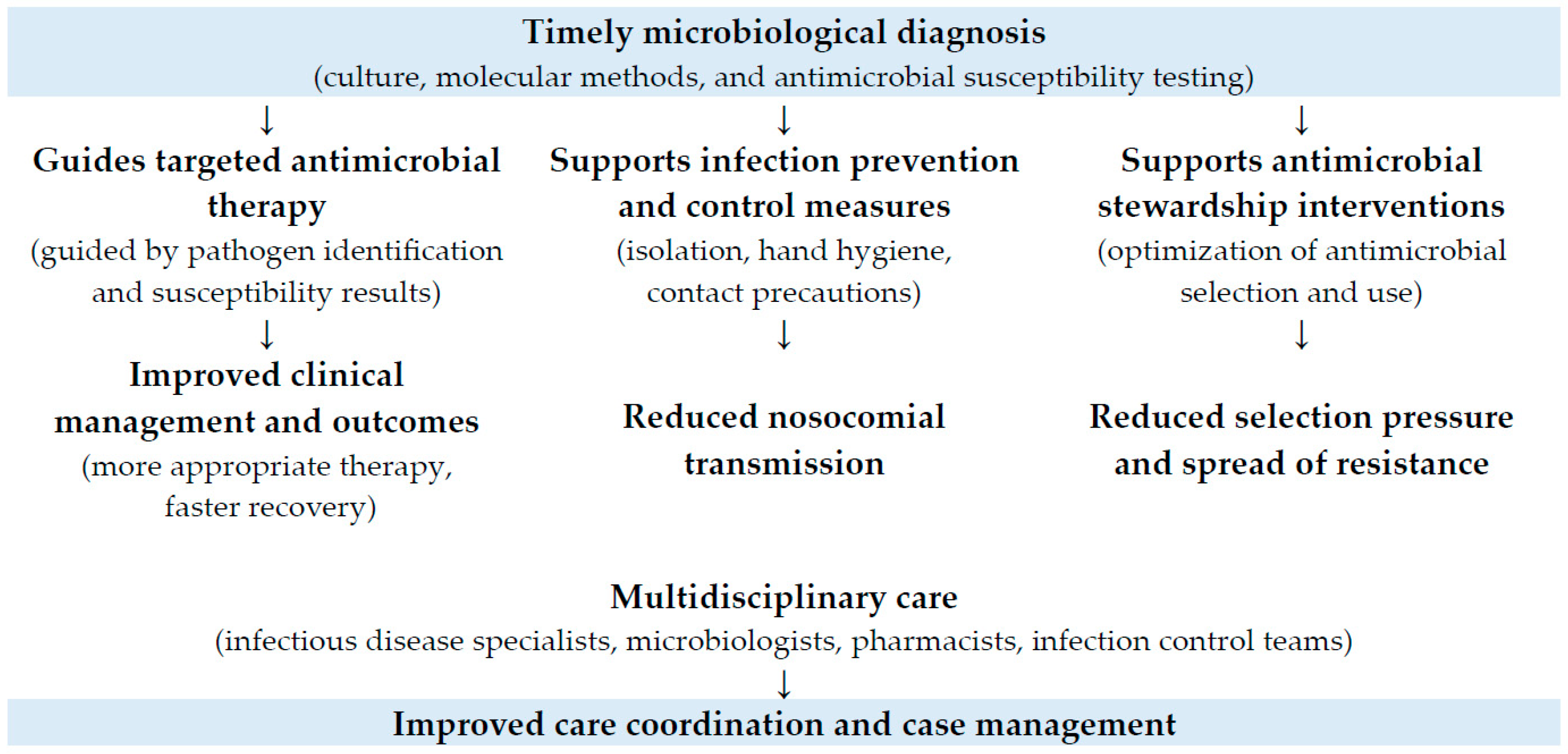
3.2. Types of Clinical and Institutional Interventions in the Management of MRSA and VRE Infections
3.3. Evidence of the Effectiveness of Interventions in MRSA and VRE Infections
3.4. Evaluation of the Effectiveness of Treatment and Prevention Strategies in MRSA and VRE
- Resistance mechanisms (enzymatic, mutational, efflux-based),
- Primary vectors of nosocomial transmission (invasive devices, healthcare workers’ hands, contaminated hospital environments),
- The patient profile (immunocompromised, elderly, long-term hospitalisation).
- Prompt initiation of targeted antibiotic therapy—linezolid or ceftaroline for MRSA pneumonia; high-dose daptomycin for bacteraemia/endocarditis—depending on the site of infection and susceptibility profile. Early identification through rapid PCR tests or bacterial cultures is essential to therapeutic success;
- Careful monitoring of clinical efficacy and toxicity, especially with agents that carry a risk of nephrotoxicity (e.g., vancomycin); dose adjustment based on plasma concentrations or clinical response is critical to avoid complications;
- Strict implementation of infection control measures, such as contact isolation, rigorous hand hygiene, use of personal protective equipment (PPE), and wound decontamination in surgical cases.
- Early detection of colonisation, especially in high-risk units (e.g., intensive care, oncology, transplant), through systematic rectal screening and surveillance cultures;
- Restriction of vancomycin and broad-spectrum antibiotic use, which is essential for reducing the selection pressure that promotes VRE strains; this is a central component of antibiotic stewardship programmes, supported by institutional policies and clinical decision algorithms;
- Strict environmental disinfection and isolation procedures, considering the high environmental persistence of VRE on inanimate surfaces; cleaning protocols must be intensified and continuously monitored.
- Differentiated screening and isolation strategies;
- The adoption of distinct therapeutic protocols;
- Ongoing training of clinical teams to allow rapid adaptation to the epidemiological profile of each outbreak [98].
3.5. Barriers to the Implementation of Treatment and Prevention Strategies for MRSA and VRE Infections
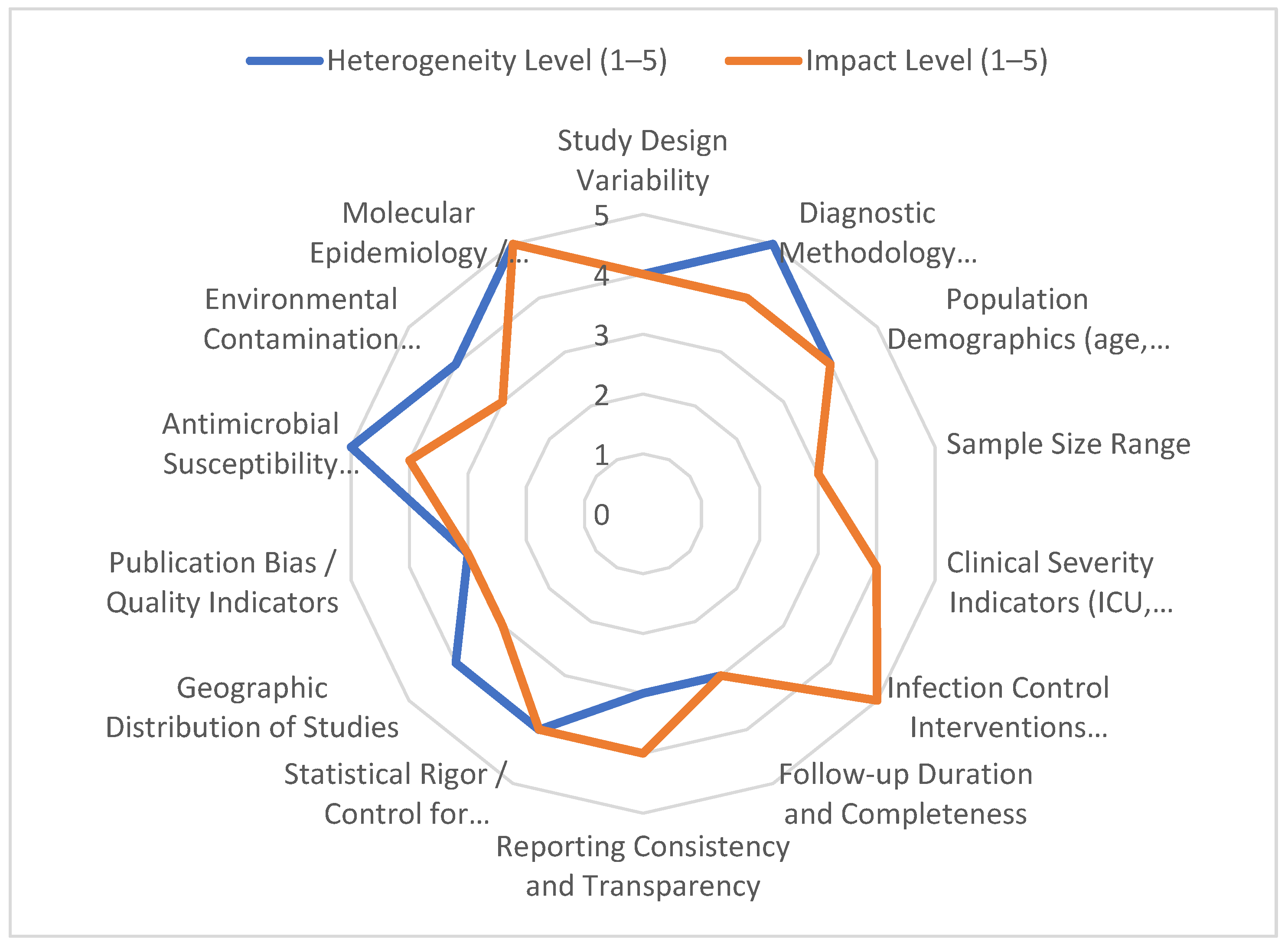
3.6. Quantitative Assessment of Clinical and Methodological Heterogeneity in Studies on MRSA and VRE in Nosocomial Settings
- Diagnostic methodologies, particularly differences between PCR-based assays, conventional culture, MALDI-TOF identification, SCCmec typing, and vancomycin-resistance gene detection (vanA, vanB). These discrepancies significantly influenced reported prevalence and resistance profiles.
- Infection prevention and control strategies, including variations in screening frequency, contact precautions, environmental decontamination, decolonisation protocols, and institutional adherence to CDC/ECDC guidelines, contributed to inconsistent outcome comparability.
- Antimicrobial susceptibility testing standards, especially differences between CLSI- and EUCAST-based breakpoints for agents such as vancomycin, linezolid, daptomycin, and ceftaroline.
- Clinical severity indicators, given the variability in ICU settings, comorbidity burden, invasive device use, and definitions of bloodstream infections, pneumonia, or surgical site infection.
- Study design, with cross-sectional prevalence studies, retrospective cohorts, prospective surveillance, outbreak investigations, and laboratory-based mechanistic studies all present within the same thematic space.
- Population demographics, including age range, comorbidity profiles, immunosuppression status, and exposure to high-risk hospital units (ICU, transplant units).
- Geographical distribution, with significant differences in MRSA and VRE epidemiology observed across Europe, Asia, North America, and low- and middle-income countries.
- Environmental sampling and contamination assessment, which varied in sampling protocol, surface types, and microbiological processing.
- Sample size, which, despite notable variation, remained relatively stable within defined subclusters such as MRSA bacteraemia cohorts or VRE colonisation surveillance studies.
- Reporting quality and methodological transparency, with most studies providing adequate descriptions of microbiological methods and infection-control interventions, though sometimes lacking detailed confounder adjustment.
- Follow-up duration, which tended to be more consistent among prospective cohorts and outbreak investigations but variable in cross-sectional screening studies.
4. Discussion
5. Conclusions
- In the case of MRSA, emphasis is placed on early initiation of therapy with vancomycin, linezolid, or daptomycin, alongside close monitoring of surgical wounds and systemic complications;
- In VRE infections, strategies focus on limiting empirical use of vancomycin, early detection of colonisation in high-risk units, and prevention of transmission through thorough environmental cleaning and adequate patient isolation.
6. Future Perspectives
- The development and clinical validation of MRSA and VRE vaccines;
- Evaluation of novel antimicrobial agents and combination therapies targeting biofilm-associated infections;
- Expansion of AI-assisted diagnostic and infection prediction systems in hospitals;
- Large-scale, multicentre studies assessing the cost-effectiveness of preventive interventions and stewardship programmes.
Author Contributions
Funding
Institutional Review Board Statement
Informed Consent Statement
Data Availability Statement
Acknowledgments
Conflicts of Interest
Abbreviations
| AI | Artificial Intelligence |
| ASP | Antimicrobial Stewardship Program |
| CA-MRSA | Community-Acquired Methicillin-Resistant Staphylococcus aureus |
| CDC | Centers for Disease Control and Prevention |
| DNA | Deoxyribonucleic Acid |
| ESCMID | European Society of Clinical Microbiology and Infectious Diseases |
| HAI | Healthcare-Associated Infection |
| HA-MRSA | Hospital-Acquired Methicillin-Resistant Staphylococcus aureus |
| ICA | Immunochromatographic Assay |
| ICU | Intensive Care Unit |
| LAMP | Loop-Mediated Isothermal Amplification |
| MIC | Minimum Inhibitory Concentration |
| MRSA | Methicillin-Resistant Staphylococcus aureus |
| PBP2a | Penicillin-Binding Protein 2a |
| PCR | Polymerase Chain Reaction |
| PPE | Personal Protective Equipment |
| PVL | Panton-Valentine Leukocidin |
| RNA | Ribonucleic Acid |
| SCCmec | Staphylococcal Cassette Chromosome mec |
| UTI | Urinary Tract Infection |
| VAP | Ventilator-Associated Pneumonia |
| VRE | Vancomycin-Resistant Enterococci |
| WHO | World Health Organization |
Appendix A
| Database | Date of Last Search | Search String/Boolean Logic | Filters and Limits Applied | Records Retrieved (n) |
|---|---|---|---|---|
| PubMed | 30 September 2025 | ((((“MRSA”[Title/Abstract]) OR (“methicillin-resistant Staphylococcus aureus”[MeSH Terms]) OR (“VRE”[Title/Abstract]) OR (“vancomycin-resistant Enterococcus”[MeSH Terms])) AND ((“nosocomial infection”[MeSH Terms]) OR (“hospital-acquired infection”[Title/Abstract]) OR (“healthcare-associated infection”[Title/Abstract]))) AND ((“infection control”[Title/Abstract]) OR (“antimicrobial resistance”[Title/Abstract]) OR (“clinical outcomes”[Title/Abstract]) OR (“diagnostic methods”[Title/Abstract])))) | Publication years: 2020–2025; Species: Humans; Language: English | 38,967 |
| Web of Science (Core Collection) | 30 September 2025 | TS = (“MRSA” OR “methicillin-resistant Staphylococcus aureus” OR “VRE” OR “vancomycin-resistant Enterococcus”) AND TS = (“nosocomial infection” OR “hospital-acquired infection” OR “HAI”) AND TS = (“infection control” OR “antimicrobial resistance” OR “clinical outcomes” OR “molecular diagnostics”) | Timespan: 2020–2025; Document type: Article; Language: English; Research areas: Infectious Diseases, Microbiology, Public Health | 12,430 |
| Scopus | 30 September 2025 | TITLE-ABS-KEY (“MRSA” OR “methicillin-resistant Staphylococcus aureus” OR “VRE” OR “vancomycin-resistant Enterococcus”) AND TITLE-ABS-KEY (“nosocomial infection” OR “hospital-acquired infection”) AND TITLE-ABS-KEY (“antimicrobial resistance” OR “infection control” OR “diagnostic methods”) | Years: 2020–2025; Language: English; Document type: Article | 18,520 |
| SpringerLink | 30 September 2025 | (“MRSA” OR “methicillin-resistant Staphylococcus aureus” OR “VRE” OR “vancomycin-resistant Enterococcus”) AND (“nosocomial infection” OR “hospital infection” OR “infection control”) | Content type: Journal articles; Years: 2020–2025 | 6780 |
| ScienceDirect | 30 September 2025 | TITLE-ABS-KEY (“MRSA” OR “VRE” OR “multidrug-resistant Gram-positive cocci”) AND TITLE-ABS-KEY (“hospital-acquired infection” OR “nosocomial infection”) AND TITLE-ABS-KEY (“antimicrobial resistance” OR “clinical management” OR “diagnostic techniques”) | Years: 2020–2025; Language: English; Research domain: Medicine, Microbiology | 7270 |
| Wiley Online Library | 30 September 2025 | (“MRSA” OR “VRE”) AND (“healthcare-associated infection” OR “nosocomial infection”) AND (“molecular diagnostics” OR “screening strategies” OR “antimicrobial stewardship”) | Journals only; Years: 2020–2025; Language: English | 2000 |
| Frontiers (Frontiers in Microbiology/Frontiers in Public Health) | 30 September 2025 | (“MRSA” OR “methicillin-resistant Staphylococcus aureus” OR “VRE” OR “vancomycin-resistant Enterococcus”) AND (“nosocomial infection” OR “hospital-acquired infection” OR “healthcare-associated infection”) AND (“antimicrobial resistance” OR “infection control” OR “genomic epidemiology” OR “diagnostic methods”) | Years: 2020–2025; Article Type: Original Research; Language: English | 3000 |
References
- Haque, M.; McKimm, J.; Sartelli, M.; Dhingra, S.; Labricciosa, F.M.; Islam, S.; Charan, J. Strategies to Prevent Healthcare-Associated Infections: A Narrative Overview. Risk Manag. Healthc. Policy 2020, 13, 1765–1780. [Google Scholar] [CrossRef]
- Sheykhsaran, E.; Ebrahimzadeh Leylabadlo, H.; Alinezhad, F.; Feizi, H.; Bannazadeh Baghi, H. A New Insight into Nosocomial Infections: A Worldwide Crisis. J. Med. Microbiol. Infect. Dis. 2022, 10, 64–74. [Google Scholar] [CrossRef]
- Sedarat, Z.; Taylor-Robinson, A.W. Biofilm Formation by Pathogenic Bacteria: Applying a Staphylococcus aureus Model to Appraise Potential Targets for Therapeutic Intervention. Pathogens 2022, 11, 388. [Google Scholar] [CrossRef]
- Grieshop, M.P.; Behr, A.A.; Bowden, S.; Lin, J.D.; Molari, M.; Reynolds, G.Z.; Bhatt, A.S. Replicative Selfish Genetic Elements Are Driving Rapid Pathogenic Adaptation of Enterococcus faecium. bioRxiv 2025. preprint. [Google Scholar] [CrossRef]
- Cho, S.H.; Barrett, J.B.; Frye, J.G.; Jackson, C.R. Antimicrobial Resistance Gene Detection and Plasmid Typing Among Multidrug Resistant Enterococci Isolated from Freshwater Environment. Microorganisms 2020, 8, 1338. [Google Scholar] [CrossRef]
- Li, G.; Walker, M.J.; De Oliveira, D.M. Vancomycin Resistance in Enterococcus and Staphylococcus aureus. Microorganisms 2022, 11, 24. [Google Scholar] [CrossRef]
- Singh, A.; Padmesh, S.; Dwivedi, M.; Kostova, I. How Good Are Bacteriophages as an Alternative Therapy to Mitigate Biofilms of Nosocomial Infections. Infect. Drug Resist. 2022, 15, 503–532. [Google Scholar] [CrossRef]
- Lima, M.C.; de Barros, M.; Scatamburlo, T.M.; Polyeiro, R.C.; de Castro, L.K.; Guimaraes, S.H.S.; da Costa, S.L.; da Costa, M.M.; Moreira, M.A.S. Profiles of Staphylococcus aureus isolated from goat persistent mastitis before and after treatment with enrofloxacin. BMC Microbiol. 2020, 20, 127. [Google Scholar] [CrossRef]
- Iancu, A.V.; Arbune, M.; Zaharia, E.A.; Tutunaru, D.; Maftei, N.M.; Peptine, L.D.; Gurău, G. Prevalence and Antibiotic Resistance of Enterococcus spp.: A Retrospective Study in Hospitals of Southeast Romania. Appl. Sci. 2023, 13, 3866. [Google Scholar] [CrossRef]
- Gandra, S.; Alvarez-Uria, G.; Turner, P.; Joshi, J.; Limmathurotsakul, D.; van Doorn, H.R. Antimicrobial Resistance Surveillance in Low-and Middle-Income Countries: Progress and Challenges in Eight South Asian and Southeast Asian Countries. Clin. Microbiol. Rev. 2020, 33, e00048-19. [Google Scholar] [CrossRef]
- Sandu, A.M.; Chifiriuc, M.C.; Vrancianu, C.O.; Cristian, R.E.; Alistar, C.F.; Constantin, M.; Tantu, M.M. Healthcare-Associated Infections: The Role of Microbial and Environmental Factors in Infection Control—A Narrative Review. Infect. Dis. Ther. 2025, 14, 933–971. [Google Scholar] [CrossRef]
- Mohamad Farook, N.A.; Argimón, S.; Abdul Samat, M.N.; Salleh, S.A.; Sulaiman, S.; Tan, T.L.; Neoh, H.M. Diversity and Dissemination of Methicillin-Resistant Staphylococcus aureus (MRSA) Genotypes in Southeast Asia. Trop. Med. Infect. Dis. 2022, 7, 438. [Google Scholar] [CrossRef]
- Tălăpan, D.; Sandu, A.M.; Rafila, A. Antimicrobial Resistance of Staphylococcus aureus Isolated between 2017 and 2022 from Infections at a Tertiary Care Hospital in Romania. Antibiotics 2023, 12, 974. [Google Scholar] [CrossRef]
- Mellinghoff, S.C.; Bruns, C.; Albertsmeier, M.; Ankert, J.; Bernard, L.; Budin, S.; Liss, B.J. Staphylococcus aureus Surgical Site Infection Rates in 5 European Countries. Antimicrob. Resist. Infect. Control 2023, 12, 104. [Google Scholar] [CrossRef]
- Edgeworth, J.D.; Batra, R.; Wulff, J.; Harrison, D. Reductions in Methicillin-Resistant Staphylococcus aureus, Clostridium difficile Infection and Intensive Care Unit–Acquired Bloodstream Infection across the United Kingdom Following Implementation of a National Infection Control Campaign. Clin. Infect. Dis. 2020, 70, 2530–2540. [Google Scholar] [CrossRef]
- Davis, E.; Hicks, L.; Ali, I.; Salzman, E.; Wang, J.; Snitkin, E.; Foxman, B. Epidemiology of Vancomycin-Resistant Enterococcus faecium and Enterococcus faecalis Colonization in Nursing Facilities. Open Forum Infect. Dis. 2020, 7, ofz553. [Google Scholar] [CrossRef]
- Szczesny, G.; Leszczynski, P.; Sokol-Leszczynska, B.; Maldyk, P. Identification of Human-Dependent Routes of Pathogen’s Transmission in a Tertiary Care Hospital. Jt. Dis. Relat. Surg. 2022, 33, 330–337. [Google Scholar] [CrossRef] [PubMed]
- Holland, J.; Kingston, L.; McCarthy, C.; Armstrong, E.; O’Dwyer, P.; Merz, F.; McConnell, M. Service Robots in the Healthcare Sector. Robotics 2021, 10, 47. [Google Scholar] [CrossRef]
- Lei, H.; Jones, R.M.; Li, Y. Quantifying the Relative Impact of Contact Heterogeneity on MRSA Transmission in ICUs—A Modelling Study. BMC Infect. Dis. 2020, 20, 6. [Google Scholar] [CrossRef]
- Park, S.; Ronholm, J. Staphylococcus aureus in Agriculture: Lessons in Evolution from a Multispecies Pathogen. Clin. Microbiol. Rev. 2021, 34, e00182-20. [Google Scholar] [CrossRef]
- Wardhani, P. International Conference on Prevention and Infection Control 2023. Antibiot. Resist. Infect. Control 2023, 12, 81. [Google Scholar]
- Thitiananpakorn, K.; Aiba, Y.; Tan, X.E.; Watanabe, S.; Kiga, K.; Sato’o, Y.; Boonsiri, T.; Li, F.Y.; Sasahara, T.; Taki, Y.; et al. Association of mprF mutations with cross-resistance to daptomycin and vancomycin in methicillin-resistant Staphylococcus aureus (MRSA). Sci. Rep. 2020, 10, 16107. [Google Scholar] [CrossRef]
- Boonsiri, T.; Watanabe, S.; Tan, X.E.; Thitiananpakorn, K.; Narimatsu, R.; Sasaki, K.; Cui, L. Identification and Characterization of Mutations Responsible for the β-Lactam Resistance in Oxacillin-Susceptible mecA-Positive Staphylococcus aureus. Sci. Rep. 2020, 10, 16907. [Google Scholar] [CrossRef]
- Fisher, J.F.; Mobashery, S. Constructing and Deconstructing the Bacterial Cell Wall. Protein Sci. 2020, 29, 629–646. [Google Scholar] [CrossRef]
- Miller, W.R.; Murray, B.E.; Rice, L.B.; Arias, C.A. Resistance in Vancomycin-Resistant Enterococci. Infect. Dis. Clin. North Am. 2020, 34, 751–771. [Google Scholar] [CrossRef]
- Kim, D.; Kang, D.Y.; Choi, M.H.; Hong, J.S.; Kim, H.S.; Kim, Y.R.; Jeong, S.H. Fitness Costs of Tn1546-Type Transposons Harboring the vanA Operon by Plasmid Type and Structural Diversity in Enterococcus faecium. Ann. Clin. Microbiol. Antimicrob. 2024, 23, 62. [Google Scholar] [CrossRef]
- De Oliveira, D.M.; Forde, B.M.; Kidd, T.J.; Harris, P.N.; Schembri, M.A.; Beatson, S.A.; Walker, M.J. Antimicrobial Resistance in ESKAPE Pathogens. Clin. Microbiol. Rev. 2020, 33, e00181-19. [Google Scholar] [CrossRef]
- Nandhini, P.; Kumar, P.; Mickymaray, S.; Alothaim, A.S.; Somasundaram, J.; Rajan, M. Recent Developments in Methicillin-Resistant Staphylococcus aureus (MRSA) Treatment: A Review. Antibiotics 2022, 11, 606. [Google Scholar] [CrossRef]
- Singh, S.; Datta, S.; Narayanan, K.B.; Rajnish, K.N. Bacterial Exo-Polysaccharides in Biofilms: Role in Antimicrobial Resistance and Treatments. J. Genet. Eng. Biotechnol. 2021, 19, 140. [Google Scholar] [CrossRef]
- Hanawa, T.; Shimoda-Komatsu, Y.; Araki, K.; Ohyama, M.; Ohnishi, H.; Kamiya, S.; Matsuda, T. Skin and Soft Tissue Infections Caused by Different Genotypes of PVL-Positive Community-Acquired Methicillin-Resistant Staphylococcus aureus Strains. Jpn. J. Infect. Dis. 2020, 73, 72–75. [Google Scholar] [CrossRef]
- Albert, E.; Sahin-Tóth, J.; Horváth, A.; Papp, M.; Biksi, I.; Dobay, O. Genomic Evidence for Direct Transmission of mecC-MRSA between a Horse and Its Veterinarian. Antibiotics 2023, 12, 408. [Google Scholar] [CrossRef]
- Fahim, N.A.I.; Masud, R.I.; Salam, S.; Hasan, M.A.E.; Rahman, A.M.T.; Punom, S.A.; Rahman, M.T. Role of Enterococcus in Spreading Antimicrobial Resistance Genes and Its Public Health Significance. Geman J. Vet. Res. 2025, 5, 95–112. [Google Scholar]
- Pishkar, S.E.; Nejat, S.H.; Zarei-Yazdeli, M.; Estarki, N.S.K. A Review of Genes Related to Biofilm Formation in Enterococcus. Int. J. Enteric Pathog. 2024, 12, 38–46. [Google Scholar] [CrossRef]
- Javed, M.U.; Hayat, M.T.; Mukhtar, H.; Imre, K. CRISPR-Cas9 System: A Prospective Pathway toward Combatting Antibiotic Resistance. Antibiotics 2023, 12, 1075. [Google Scholar] [CrossRef]
- Halat, D.H.; Moubareck, C.A. Hospital-Acquired and Ventilator-Associated Pneumonia Caused by Multidrug-Resistant Gram-Negative Pathogens: Understanding Epidemiology, Resistance Patterns, and Implications with COVID-19. F1000Research 2024, 12, 92. [Google Scholar] [CrossRef]
- Lipsky, B.A.; Uçkay, İ. Treating Diabetic Foot Osteomyelitis: A Practical State-of-the-Art Update. Medicina 2021, 57, 339. [Google Scholar] [CrossRef]
- Lam, J.C.; Lang, R.; Stokes, W. How I Manage Bacterial Prostatitis. Clin. Microbiol. Infect. 2023, 29, 32–37. [Google Scholar] [CrossRef]
- Harky, A.; Zaim, S.; Mallya, A.; George, J.J. Optimizing Outcomes in Infective Endocarditis: A Comprehensive Literature Review. J. Card. Surg. 2020, 35, 1600–1608. [Google Scholar] [CrossRef]
- Nappi, F. Native Infective Endocarditis: A State-of-the-Art Review. Microorganisms 2024, 12, 1481. [Google Scholar] [CrossRef]
- Kaviani, A.; Ince, D.; Axelrod, D.A. Management of Antimicrobial Agents in Abdominal Organ Transplant Patients in Intensive Care Unit. Curr. Transplant. Rep. 2020, 7, 1–11. [Google Scholar] [CrossRef]
- Mokhtar, J.A.; Attallah, D.; Al-Rabia, M.W.; Alqarni, M.A.; Alkuwaity, K.K.; Almoghrabi, Y.; Ibrahem, K. Epidemiology and Clinical Impact of Vancomycin-Resistant Enterococcus at King Abdulaziz University Hospital (2015–2022): Prevalence, Risk Factors, and Mortality. Int. J. Gen. Med. 2025, 18, 2021–2031. [Google Scholar] [CrossRef] [PubMed]
- Vandenberg, O.; Martiny, D.; Rochas, O.; van Belkum, A.; Kozlakidis, Z. Considerations for diagnostic COVID-19 tests. Nat. Rev. Microbiol. 2021, 19, 171–183. [Google Scholar] [CrossRef]
- Larrosa, M.N.; Almirante, B. Isolation strategy for controlling the spread of multidrug-resistant organisms: Is this still an essential option in hospitals? Enferm. Infecc. Microbiol. Clin. 2021, 39, 425–428. [Google Scholar] [CrossRef]
- Yilmaz, M.; Şeker, E. Investigation of mecA, vanA and pvl genes in Staphylococcus aureus strains isolated from bovine mastitis in smallholder dairy farms. Etlik Vet. Mikrobiyol. Derg. 2022, 33, 50–55. [Google Scholar] [CrossRef]
- Reddy, P. Clinical approach to nosocomial bacterial sepsis. Cureus 2022, 14, e27948. [Google Scholar] [CrossRef]
- Riccardi, N.; Monticelli, J.; Antonello, R.M.; Di Lallo, G.; Frezza, D.; Luzzati, R.; Di Bella, S. Therapeutic options for infections due to vanB genotype vancomycin-resistant enterococci. Microb. Drug Resist. 2021, 27, 536–545. [Google Scholar] [CrossRef]
- Yi, J.; Kim, K.H. Identification and infection control of carbapenem-resistant Enterobacterales in intensive care units. Acute Crit. Care 2021, 36, 175–184. [Google Scholar] [CrossRef] [PubMed]
- Vaughn, V.M.; Gupta, A.; Petty, L.A.; Malani, A.N.; Osterholzer, D.; Patel, P.K.; Gandhi, T.N. A Statewide Quality Initiative to Reduce Unnecessary Antibiotic Treatment of Asymptomatic Bacteriuria. JAMA Intern. Med. 2023, 183, 933–941. [Google Scholar] [CrossRef]
- Boyce, J.M. Hand and Environmental Hygiene: Respective Roles for MRSA, Multi-Resistant Gram Negatives, Clostridioides difficile, and Candida spp. Antimicrob. Resist. Infect. Control 2024, 13, 110. [Google Scholar] [CrossRef] [PubMed]
- Ambrosioni, J.; Hernández-Meneses, M.; Durante-Mangoni, E.; Tattevin, P.; Olaison, L.; Freiberger, T.; Miró, J.M. Epidemiological Changes and Improvement in Outcomes of Infective Endocarditis in Europe in the Twenty-First Century: An International Collaboration on Endocarditis (ICE) Prospective Cohort Study (2000–2012). Infect. Dis. Ther. 2023, 12, 1083–1101, Erratum in: Infect Dis Ther. 2023, 12, 2819–2821. [Google Scholar] [CrossRef]
- Paglicci, L.; Borgo, V.; Lanzarone, N.; Fabbiani, M.; Cassol, C.; Cusi, M.G.; Montagnani, F. Incidence and Risk Factors for Respiratory Tract Bacterial Colonization and Infection in Lung Transplant Recipients. Eur. J. Clin. Microbiol. Infect. Dis. 2021, 40, 1271–1282. [Google Scholar] [CrossRef]
- Thomas, R.E.; Thomas, B.C.; Conly, J.; Lorenzetti, D. Cleaning and Disinfecting Surfaces in Hospitals and Long-Term Care Facilities for Reducing Hospital- and Facility-Acquired Bacterial and Viral Infections: A Systematic Review. J. Hosp. Infect. 2022, 122, 9–26. [Google Scholar] [CrossRef]
- Yiek, W.K.; Tromp, M.; Strik-Albers, R.; van Aerde, K.; Van der Geest-Blankert, N.; Wertheim, H.F.; Bleeker-Rovers, C.P. Success Rates of MRSA Decolonization and Factors Associated with Failure. Antimicrob. Resist. Infect. Control 2022, 11, 143. [Google Scholar] [CrossRef]
- Martin, E.; Morgan, D.J.; Pryor, R.; Bearman, G. Contact Precautions for MRSA and VRE: Where Are We Now? A Survey of the Society for Healthcare Epidemiology of America Research Network. Antimicrob. Steward. Healthc. Epidemiol. 2024, 4, e137. [Google Scholar] [CrossRef]
- Bavaro, D.F.; Belati, A.; Bussini, L.; Cento, V.; Diella, L.; Gatti, M.; Bartoletti, M. Safety and Effectiveness of Fifth Generation Cephalosporins for the Treatment of Methicillin-Resistant Staphylococcus aureus Bloodstream Infections: A Narrative Review Exploring Past, Present, and Future. Expert Opin. Drug Saf. 2024, 23, 9–36. [Google Scholar] [CrossRef]
- White, B.P.; Barber, K.E.; Chastain, D.B. Treatment Decisions in VRE Bacteraemia: A Survey of Infectious Diseases Pharmacists. AC-Antimicrob. Resist. 2023, 5, dlad063. [Google Scholar] [CrossRef]
- Abramowicz, J.S.; Basseal, J.M.; Brezinka, C.; Dall’Asta, A.; Deng, J.; Harrison, G.; Lees, C. ISUOG Safety Committee Position Statement on Use of Personal Protective Equipment and Hazard Mitigation in Relation to SARS-CoV-2 for Practitioners Undertaking Obstetric and Gynecological Ultrasound. Ultrasound Obstet. Gynecol. 2020, 55, 886. [Google Scholar] [CrossRef]
- Kakkar, A.K.; Shafiq, N.; Singh, G.; Ray, P.; Gautam, V.; Agarwal, R.; Arora, P. Antimicrobial Stewardship Programs in Resource Constrained Environments: Understanding and Addressing the Need of the Systems. Front. Public Health 2020, 8, 140. [Google Scholar] [CrossRef]
- Paleckyte, A.; Dissanayake, O.; Mpagama, S.; Lipman, M.C.; McHugh, T.D. Reducing the Risk of Tuberculosis Transmission for HCWs in High Incidence Settings. Antimicrob. Resist. Infect. Control 2021, 10, 106. [Google Scholar] [CrossRef]
- Kufel, W.D.; MacDougall, C.; Aitken, S.L.; Dzintars, K.; Davis, M.R.; Mahoney, M.V.; Gallagher, J.C. Antimicrobial Stewardship and Beyond: The Many Essential Roles of Infectious Diseases Pharmacists. Clin. Infect. Dis. 2025, 80, 992–997. [Google Scholar] [CrossRef]
- Nguyen, N.; Chua, H.C.; Drake, T.; Jo, J.; Stramel, S.A.; Vuong, N.N. Houston Infectious Diseases Network. Significant Publications on Infectious Diseases Pharmacotherapy in 2021. J. Pharm. Pract. 2024, 37, 198–211. [Google Scholar] [CrossRef]
- Haas, W.; Singh, N.; Lainhart, W.; Mingle, L.; Nazarian, E.; Mitchell, K.; Musser, K.A. Genomic Analysis of Vancomycin-Resistant Staphylococcus aureus Isolates from the 3rd Case Identified in the United States Reveals Chromosomal Integration of the vanA Locus. Microbiol. Spectr. 2023, 11, e04317-22. [Google Scholar] [CrossRef]
- El Haddad, L.; Hanson, B.M.; Arias, C.A.; Ghantoji, S.S.; Harb, C.P.; Stibich, M.; Chemaly, R.F. Emergence and Transmission of Daptomycin and Vancomycin-Resistant Enterococci between Patients and Hospital Rooms. Clin. Infect. Dis. 2021, 73, 2306–2313. [Google Scholar] [CrossRef]
- Popovich, K.J.; Aureden, K.; Ham, D.C.; Harris, A.D.; Hessels, A.J.; Huang, S.S.; Calfee, D.P. SHEA/IDSA/APIC Practice Recommendation: Strategies to Prevent Methicillin-Resistant Staphylococcus aureus Transmission and Infection in Acute-Care Hospitals: 2022 Update. Infect. Control Hosp. Epidemiol. 2023, 44, 1039–1067. [Google Scholar] [CrossRef]
- Pallares, C.; Hernández-Gómez, C.; Appel, T.M.; Escandón, K.; Reyes, S.; Salcedo, S.; Villegas, M.V. Impact of Antimicrobial Stewardship Programs on Antibiotic Consumption and Antimicrobial Resistance in Four Colombian Healthcare Institutions. BMC Infect. Dis. 2022, 22, 420. [Google Scholar] [CrossRef]
- Almeida, L.M.; Gaca, A.; Bispo, P.M.; Lebreton, F.; Saavedra, J.T.; Silva, R.A.; Basílio-Júnior, I.D.; Zorzi, F.M.; Filsner, P.H.; Moreno, A.M.; et al. Coexistence of the Oxazolidinone Resistance–Associated Genes cfr and optrA in Enterococcus faecalis From a Healthy Piglet in Brazil. Front. Public Health 2020, 8, 518. [Google Scholar] [CrossRef]
- Elia, F.; Calzavarini, F.; Bianco, P.; Vecchietti, R.G.; Macor, A.F.; D’Orazio, A.; Aprà, F. A Nudge Intervention to Improve Hand Hygiene Compliance in the Hospital. Intern. Emerg. Med. 2022, 17, 1899–1905. [Google Scholar] [CrossRef]
- Yuan, X.; Wang, P.; Liu, J. A Novel Intelligent Approach for Infection Protection Using a Multidisciplinary Collaboration in Regional General Hospitals. Sci. Rep. 2025, 15, 22639. [Google Scholar] [CrossRef]
- Silverberg, S.L.; Puchalski Ritchie, L.M.; Gobat, N.; Murthy, S. COVID-19 Infection Prevention and Control Procedures and Institutional Trust: Perceptions of Canadian Intensive Care and Emergency Department Nurses. Can. J. Anesth. 2021, 68, 1165–1175. [Google Scholar] [CrossRef]
- Wu, S.; Wang, Y.; Jin, X.; Tian, J.; Liu, J.; Mao, Y. Environmental Contamination by SARS-CoV-2 in a Designated Hospital for Coronavirus Disease 2019. Am. J. Infect. Control 2020, 48, 910–914. [Google Scholar] [CrossRef]
- Oudkerk, M.; Liu, S.; Heuvelmans, M.A.; Walter, J.E.; Field, J.K. Lung Cancer LDCT Screening and Mortality Reduction—Evidence, Pitfalls and Future Perspectives. Nat. Rev. Clin. Oncol. 2021, 18, 135–151. [Google Scholar] [CrossRef]
- Antonios, K.; Croxatto, A.; Culbreath, K. Current State of Laboratory Automation in Clinical Microbiology Laboratory. Clin. Chem. 2022, 68, 99–114. [Google Scholar] [CrossRef]
- Xu, Z.; Zhang, X.; Chen, J.; Shi, Y.; Ji, S. Bacterial Infections in Acute-on-Chronic Liver Failure: Epidemiology, Diagnosis, Pathogenesis, and Management. J. Clin. Transl. Hepatol. 2024, 12, 667–676. [Google Scholar] [CrossRef]
- Lee, A.S.; Huttner, B.D.; Catho, G.; Harbarth, S. Methicillin-Resistant Staphylococcus aureus: An Update on Prevention and Control in Acute Care Settings. Infect. Dis. Clin. North Am. 2021, 35, 931–952. [Google Scholar] [CrossRef]
- Ishak, A.; Mazonakis, N.; Spernovasilis, N.; Akinosoglou, K.; Tsioutis, C. Bactericidal versus Bacteriostatic Antibacterials: Clinical Significance, Differences and Synergistic Potential in Clinical Practice. J. Antimicrob. Chemother. 2025, 80, 1–17. [Google Scholar] [CrossRef]
- Shorten, R.; Pickering, K.; Goolden, C.; Harris, C.; Clegg, A. Diagnostic Stewardship in Infectious Diseases: A Scoping Review. J. Med. Microbiol. 2024, 73, 001831. [Google Scholar] [CrossRef]
- Suh, J.W.; Kim, N.H.; Lee, M.J.; Lee, S.E.; Chun, B.C.; Lee, C.K.; Kim, M.J. Real-World Experience of How Chlorhexidine Bathing Affects the Acquisition and Incidence of Vancomycin-Resistant Enterococci (VRE) in a Medical Intensive Care Unit with VRE Endemicity: A Prospective Interrupted Time-Series Study. Antimicrob. Resist. Infect. Control 2021, 10, 160. [Google Scholar] [CrossRef]
- Schmitz, J.E.; Stratton, C.W.; Persing, D.H.; Tang, Y.W. Forty Years of Molecular Diagnostics for Infectious Diseases. J. Clin. Microbiol. 2022, 60, e02446-21. [Google Scholar] [CrossRef]
- Pickens, C.I.; Wunderink, R.G. Methicillin-Resistant Staphylococcus aureus Hospital-Acquired Pneumonia/Ventilator-Associated Pneumonia. Semin. Respir. Crit. Care Med. 2022, 43, 304–309. [Google Scholar] [CrossRef]
- Albaqawi, A.F. The Synergistic Role of Interprofessional Healthcare Teams in Advancing Antimicrobial Stewardship Programs. Saudi J. Med. Pharm. Sci. 2025, 11, 581–593. [Google Scholar] [CrossRef]
- Brooks, S.K.; Greenberg, N.; Wessely, S.; Rubin, G.J. Factors Affecting Healthcare Workers’ Compliance with Social and Behavioural Infection Control Measures during Emerging Infectious Disease Outbreaks: Rapid Evidence Review. BMJ Open 2021, 11, e049857. [Google Scholar] [CrossRef]
- Paras, M.; Craig, R.; Germaine, L.; Green, C.; Vernick, Z.; Ha, J.; Shenoy, E. Timesavers: Clinical Decision Support and Automation of MRSA and VRE Deisolation. Antimicrob. Steward. Healthc. Epidemiol. 2024, 4, s114–s117. [Google Scholar] [CrossRef]
- Zaheer, R.; Cook, S.R.; Barbieri, R.; Goji, N.; Cameron, A.; Petkau, A.; Polo, R.O.; Tymensen, L.; Stamm, C.; Song, J.; et al. Surveillance of Enterococcus spp. reveals distinct species and antimicrobial resistance diversity across a One-Health continuum. Sci. Rep. 2020, 10, 3937. [Google Scholar] [CrossRef]
- Wu, S.; Ye, X.; Liu, X.; Dai, L.; Chen, H. Dermatologists’ Knowledge, Attitudes, and Practices Regarding Omalizumab Therapy for Chronic Urticaria. Arch. Dermatol. Res. 2025, 317, 309. [Google Scholar] [CrossRef]
- Penner, T. Conference on Prevention & Infection Control (ICPIC 2021). Antimicrob. Resist. Infect. Control 2021, 10, 101. [Google Scholar]
- Giamarellou, H.; Galani, L.; Karavasilis, T.; Ioannidis, K.; Karaiskos, I. Antimicrobial Stewardship in the Hospital Setting: A Narrative Review. Antibiotics 2023, 12, 1557. [Google Scholar] [CrossRef]
- Feng, J.; Xiang, F.; Cheng, J.; Gou, Y.; Li, J. Comparative Efficacy and Safety of Vancomycin, Linezolid, Tedizolid, and Daptomycin in Treating Patients with Suspected or Proven Complicated Skin and Soft Tissue Infections: An Updated Network Meta-Analysis. Infect. Dis. Ther. 2021, 10, 1531–1547. [Google Scholar] [CrossRef]
- Shah, S.; McManus, D.; Topal, J.E. Combination Therapy of Chloramphenicol and Daptomycin for the Treatment of Infective Endocarditis Secondary to Multidrug Resistant Enterococcus faecium. Hosp. Pharm. 2022, 57, 345–348. [Google Scholar] [CrossRef]
- Purwoningsih, E.; Endraswari, P.D.; Widodo, A.D.W. Vancomycin, Linezolid, and Ceftaroline In Vitro Activity against Methicillin Susceptible Staphylococcus aureus (MSSA) and Methicillin-Resistant Staphylococcus aureus (MRSA) Isolates. Pharmacogn. J. 2022, 14, 671–674. [Google Scholar] [CrossRef]
- Wang, Y.; Dai, N.; Wei, W.; Jiang, C. Outcomes and Nephrotoxicity Associated with Vancomycin Treatment in Patients 80 Years and Older. Clin. Interv. Aging 2021, 16, 1023–1035. [Google Scholar] [CrossRef]
- Kollef, M.H.; Shorr, A.F.; Bassetti, M.; Timsit, J.F.; Micek, S.T.; Michelson, A.P.; Garnacho-Montero, J. Timing of Antibiotic Therapy in the ICU. Crit. Care 2021, 25, 360. [Google Scholar] [CrossRef]
- Abdelsalam Elshenawy, R.; Umaru, N.; Aslanpour, Z. Evaluating Antibiotic Review Timing, Clinical Characteristics, and Stewardship Interventions to Confront Antimicrobial Resistance: A Retrospective Cohort Study of 640 Patients in Two UK Hospitals Before and During the COVID-19 Pandemic. medRxiv 2025. preprint, 2025–07. [Google Scholar] [CrossRef]
- Vuichard-Gysin, D.; Sommerstein, R.; Kronenberg, A.; Buetti, N.; Eder, M.; Piezzi, V.; Swissnoso. High Adherence to National IPC Guidelines as Key to Sustainable VRE Control in Swiss Hospitals: A Cross-Sectional Survey. Antimicrob. Resist. Infect. Control 2022, 11, 19. [Google Scholar] [CrossRef]
- Huang, L.J.; Chen, S.J.; Hu, Y.W.; Liu, C.Y.; Wu, P.F.; Sun, S.M.; Wang, F.D. The Impact of Antimicrobial Stewardship Program Designed to Shorten Antibiotics Use on the Incidence of Resistant Bacterial Infections and Mortality. Sci. Rep. 2022, 12, 913. [Google Scholar] [CrossRef]
- Agrati, C.; Bartolini, B.; Bordoni, V.; Locatelli, F.; Capobianchi, M.R.; Di Caro, A.; Ippolito, G. Emerging Viral Infections in Immunocompromised Patients: A Great Challenge to Better Define the Role of Immune Response. Front. Immunol. 2023, 14, 1147871. [Google Scholar] [CrossRef]
- Al-Hussaniy, H.; Kadhim, Z. Methicillin-Resistant Staphylococcus aureus and New Delhi Metallo Beta-Lactamases—Types of Antibiotic Resistance, Methods of Prevention. Med. Pharm. J. 2022, 1, 14–24. [Google Scholar] [CrossRef]
- Soffritti, I.; D’Accolti, M.; Bini, F.; Mazziga, E.; Volta, A.; Bisi, M.; Caselli, E. Probiotic-Based Approaches for Sustainable Control of Infectious Risk in Mass Transport: Current Data and Future Perspectives. Microb. Biotechnol. 2025, 18, e70177. [Google Scholar] [CrossRef]
- Raftery, P.; Hossain, M.; Palmer, J. An Innovative and Integrated Model for Global Outbreak Response and Research—A Case Study of the UK Public Health Rapid Support Team (UK-PHRST). BMC Public Health 2021, 21, 1378. [Google Scholar] [CrossRef]
- Simons, C.C.; Capraro, G.A. Barriers to Implementation of Rapid Identification and Antimicrobial Susceptibility Testing Technologies in the Clinical Microbiology Laboratory: An American Perspective. J. Antimicrob. Chemother. 2024, 79, i32–i36. [Google Scholar] [CrossRef]
- Azzam, A.; Khaled, H.; Fayed, H.M.; Mansour, Y.; Eldalil, M.; Elshennawy, E.; Elkatan, H.A. Prevalence, Antibiogram, and Risk Factors of Methicillin-Resistant Staphylococcus aureus (MRSA) Asymptomatic Carriage in Africa: A Systematic Review and Meta-Analysis. BMC Infect. Dis. 2025, 25, 505. [Google Scholar] [CrossRef]
- Huo, Y.; Couzner, L.; Windsor, T.; Laver, K.; Dissanayaka, N.N.; Cations, M. Barriers and Enablers for the Implementation of Trauma-Informed Care in Healthcare Settings: A Systematic Review. Implement. Sci. Commun. 2023, 4, 49. [Google Scholar] [CrossRef]
- Panditrao, A.; Panditrao, M.M. Toward Smarter Testing: Diagnostic Stewardship in Healthcare Systems. Adesh Univ. J. Med. Sci. Res. 2025, 6, 11–21. [Google Scholar] [CrossRef]
- Vieceli, T.; Rello, J. Optimization of Antimicrobial Prescription in the Hospital. Eur. J. Intern. Med. 2022, 106, 39–44. [Google Scholar] [CrossRef]
- Sartelli, M.; Pagani, L.; Iannazzo, S.; Moro, M.L.; Viale, P.; Pan, A.; Catena, F. A Proposal for a Comprehensive Approach to Infections across the Surgical Pathway. World J. Emerg. Surg. 2020, 15, 13. [Google Scholar] [CrossRef]
- Janssen, R.M.; Oerlemans, A.J.; Van Der Hoeven, J.G.; Ten Oever, J.; Schouten, J.A.; Hulscher, M.E. Why We Prescribe Antibiotics for Too Long in the Hospital Setting: A Systematic Scoping Review. J. Antimicrob. Chemother. 2022, 77, 2105–2119. [Google Scholar] [CrossRef]
- Mahjabeen, F.; Saha, U.; Mostafa, M.N.; Siddique, F.; Ahsan, E.; Fathma, S.; Ashraf, A. An Update on Treatment Options for Methicillin-Resistant Staphylococcus aureus (MRSA) Bacteremia: A Systematic Review. Cureus 2022, 14, e31945. [Google Scholar] [CrossRef]
- Goswami, C.; Fox, S.; Holden, M.; Leanord, A.; Evans, T.J. Genomic Analysis of Global Staphylococcus argenteus Strains Reveals Distinct Lineages With Differing Virulence and Antibiotic Resistance Gene Content. Front. Microbiol. 2021, 12, 795173. [Google Scholar] [CrossRef]
- Cui, P.; Feng, L.; Zhang, L.; He, J.; An, T.; Fu, X.; Li, C.; Zhao, X.; Zhai, Y.; Li, H.; et al. Antimicrobial resistance, virulence genes, and biofilm formation capacity among Enterococcus species from yaks in Aba Tibetan Autonomous Prefecture, China. Front. Microbiol. 2020, 11, 1250. [Google Scholar] [CrossRef]
- Karnwal, A.; Jassim, A.Y.; Mohammed, A.A.; Al-Tawaha, A.R.M.S.; Selvaraj, M.; Malik, T. Addressing the Global Challenge of Bacterial Drug Resistance: Insights, Strategies, and Future Directions. Front. Microbiol. 2025, 16, 1517772. [Google Scholar] [CrossRef]
- Hourigan, D.; Stefanovic, E.; Hill, C.; Ross, R.P. Promiscuous, Persistent and Problematic: Insights into Current Enterococcal Genomics to Guide Therapeutic Strategy. BMC Microbiol. 2024, 24, 103. [Google Scholar] [CrossRef]
- Lipsky, B.A.; Senneville, É.; Abbas, Z.G.; Aragón-Sánchez, J.; Diggle, M.; Embil, J.M.; IWGDF. Guidelines on the Diagnosis and Treatment of Foot Infection in Persons with Diabetes (IWGDF 2019 Update). Diabetes Metab. Res. Rev. 2020, 36, e3280. [Google Scholar] [CrossRef]
- Weterings, V.; Van Oosten, A.; Nieuwkoop, E.; Nelson, J.; Voss, A.; Wintermans, B.; Veenemans, J. Management of a Hospital-Wide Vancomycin-Resistant Enterococcus faecium Outbreak in a Dutch General Hospital, 2014–2017: Successful Control Using a Restrictive Screening Strategy. Antimicrob. Resist. Infect. Control 2021, 10, 38. [Google Scholar] [CrossRef] [PubMed]
- Zhang, X.; Zhang, D.; Zhang, X.; Zhang, X. Artificial Intelligence Applications in the Diagnosis and Treatment of Bacterial Infections. Front. Microbiol. 2024, 15, 1449844. [Google Scholar] [CrossRef]
- Ibrahim, E.S.; Abdalhamed, A.M.; Arafa, A.A.; Eid, R.H.; Khalil, H.M.A.; Hedia, R.H.; Hozyen, H.F. In Vitro and In Vivo Antibacterial and Antibiofilm Efficacy of Selenium Nanoparticles against Staphylococcus aureus Supported with Toxicopathological and Behavioral Studies in Rats. Int. J. Vet. Sci. 2024, 13, 490–500. [Google Scholar]
- Abd El-Razik, K.A.; Soror, A.H.; Sedky, D.; Fouad, E.A.; Arafa, A.A. Detection of Methicillin-Resistant Staphylococcus aureus (MRSA) from Bovine Subclinical Mastitis in Egypt Using Real-Time PCR. Int. J. Vet. Sci. 2025, 14, 188–195. [Google Scholar]
- Hao, R.; Shoaib, M.; Tang, M.; Cao, Z.; Liu, G.; Zhang, Y.; Wang, S.; Shang, R.; Zhang, H.; Pu, W. Genomic Insights into Resistome, Virulome, and Mobilome as Organic Contaminants of ESKAPE Pathogens and E. coli Recovered from Milk, Farm Workers, and Environmental Settings in Hainan, China. Emerg. Contam. 2024, 10, 100385. [Google Scholar] [CrossRef]
- Ahmad, S.; Aqib, A.I.; Ghafoor, M.; Shoaib, M.; ul Haq, S.; Ataya, F.S.; Jianxi, L. Drug Resistance Modulation of Dairy MRSA through Berberine, Artesunate and Quercetin in Combination with β-Lactams. Pak. Vet. J. 2024, 44, 510–516. [Google Scholar]


| Ref. | Type of Study | Focused Intervention | Target Domain | Key Findings/Results |
|---|---|---|---|---|
| [43] | Systematic review | Rapid molecular tests (PCR, LAMP) | Early diagnosis | Rapid PCR/LAMP detects mecA, vanA, and vanB and shortens time to initiation of targeted therapy. |
| [44] | Narrative review | New-line antimicrobial therapy (linezolid, daptomycin) | Treatment of severe infections | Linezolid/daptomycin are effective options for MRSA/VRE but require toxicity monitoring and dose adjustment. |
| [45] | Multicentre observational study | Response to daptomycin treatment in VRE | Therapeutic response | Daptomycin response in VRE varies by genotype (vanA vs. vanB), dosing, and disease severity. |
| [46] | International guidelines | Admission screening and isolation of colonised patients | Transmission control | Admission screening and isolation reduce MRSA/VRE transmission in high-risk units (ICU, haematology). |
| [47] | Review | Antibiotic stewardship programmes | Institutional policy | Stewardship reduces inappropriate antibiotic use and slows the emergence of resistance to last-line agents. |
| [48] | Quantitative (interventional) study | Educational campaigns for healthcare staff | Education and prevention | Staff education improves hand hygiene/PPE adherence and reduces nosocomial MRSA/VRE incidence. |
| [49] | Review | Multidisciplinary approaches in the management of resistant infections | Integrated clinical interventions | Multidisciplinary management improves clinical outcomes and strengthens epidemiological control. |
| [50] | Observational study | Impact of MRSA colonisation on hospital stay duration | Clinical and economic burden | MRSA colonisation increases length of stay and risk of invasive infection, requiring additional precautions. |
| [51] | Best practice guideline | Decontamination of surfaces and medical equipment | Prevention of indirect transmission | Routine surface/equipment decontamination reduces environmental bioburden and transmission risk. |
| [52] | Randomised controlled trial | Extended screening + isolation + patient education | Comprehensive preventive interventions | Combined screening, isolation, and patient education reduce MRSA/VRE infection rates in new admissions. |
| Ref. | Type of Study | Focus of Intervention | Key Findings | Implications for Clinical Practice |
|---|---|---|---|---|
| [61] | Systematic review | Rapid molecular diagnostics (PCR for mecA, vanA, vanB) | Reduced time to treatment initiation and earlier isolation | Supports integration of rapid testing into admission triage procedures |
| [62] | Multicentre observational study | Daptomycin therapy for vancomycin-resistant VRE infections | >85% therapeutic efficacy in severe infections; good tolerability | Highlights need for antibiogram-guided treatment |
| [63] | International clinical guidelines | Isolation and screening measures for at-risk patients | 50% reduction in MRSA transmission in ICU and oncology units | Confirms necessity of standardised infection control protocols |
| [64] | Randomised controlled trial | Institutional antibiotic stewardship | Reduced emerging resistance; lower empirical vancomycin use | Emphasises involvement of pharmacists and infectious disease specialists in clinical teams |
| [65] | Narrative review | Second-line therapy (linezolid, ceftaroline) for MRSA | Decreased mortality and hospital stay by up to 5 days | Recommends sensitivity-guided use rather than empirical prescribing |
| [66] | Observational study (pre–post) | Educational campaigns on hand hygiene in COVID-19 wards | Improved hygiene compliance; 40% reduction in nosocomial infections | Highlights importance of continuous healthcare staff training |
| [67] | Systematic review | Multidisciplinary approaches for resistant infection management | Reduced therapeutic errors; improved decision-making efficiency | Validates integrated care models in hospital settings |
| [68] | Qualitative study | Staff perceptions of isolation protocols | Need for procedural clarity and institutional support | Points to need for ongoing training and strong leadership in IPC |
| [69] | Best practice guideline | Disinfection of surfaces and medical equipment | Proven effectiveness in reducing environmental contamination | Calls for frequent audits and strict standards in ICU/oncology wards |
| [70] | Meta-analysis | Universal vs. targeted admission screening | Targeted screening = similar effectiveness with reduced costs | Recommended for hospitals with limited resources |
| [71] | Implementation study | Digital microbiological alert systems for MRSA/VRE positive results | Faster intervention and more efficient therapeutic adjustments | Encourages integration of digital technologies in hospital networks |
| [72] | Randomised studies | Combined strategies: rapid diagnostics + isolation + stewardship | Lower nosocomial infection rates and reduced mortality | Confirms the effectiveness of integrated intervention packages |
| Ref. | Therapeutic/Preventive Strategy | Main Findings | Clinical Implications |
|---|---|---|---|
| [87] | Linezolid therapy for severe MRSA infections | Effective in pneumonia and complicated skin infections, including vancomycin-resistant strains | Provides an effective alternative in resistant forms; requires haematological monitoring |
| [88] | Daptomycin therapy for invasive VRE infections | Rapid bactericidal activity, useful in VRE bacteraemia and endocarditis | Preferred in VRE infections; requires CPK monitoring and dose adjustment in renal failure |
| [89] | Ceftaroline therapy for MRSA with reduced vancomycin susceptibility | Effective in skin infections and community-acquired pneumonia; good tolerability | May replace more toxic therapies; suitable for sequential treatment strategies |
| [90] | Recommended duration of therapy for MRSA bacteraemia | Uncomplicated MRSA bacteraemia requires ≥14 days from the first negative blood culture; longer courses for endocarditis/osteomyelitis/deep foci | Shorter courses (e.g., 5–10 days) apply to uncomplicated skin/soft-tissue infections, not bacteraemia. |
| [91] | Response-guided antibiotic optimisation | Reassessment at 48–72 h allows early modification of therapy | Increases treatment efficiency and reduces unnecessary antibiotic use |
| [92] | Implementation of the “Start Smart—Then Focus” protocol | Early reassessment reduces antibiotic duration and empirical overuse | Systematic implementation improves infectious outcomes |
| [93] | Infection prevention and control (isolation, hand hygiene) | Significantly reduces nosocomial transmission, especially during VRE outbreaks | Essential for preventing transmission in intensive care settings |
| [94] | Antimicrobial stewardship programmes (ASPs) | Decrease resistance incidence and optimise antimicrobial use | Require interdepartmental collaboration and ongoing audit |
| [95] | Treatment response in immunocompromised patients | Often delayed response; higher risk of treatment failure | Requires aggressive therapy, close monitoring, and individualised adjustments |
Disclaimer/Publisher’s Note: The statements, opinions and data contained in all publications are solely those of the individual author(s) and contributor(s) and not of MDPI and/or the editor(s). MDPI and/or the editor(s) disclaim responsibility for any injury to people or property resulting from any ideas, methods, instructions or products referred to in the content. |
© 2026 by the authors. Licensee MDPI, Basel, Switzerland. This article is an open access article distributed under the terms and conditions of the Creative Commons Attribution (CC BY) license.
Share and Cite
Peptine, L.-D.; Zaharia, A.-E.; Maftei, N.-M.; Răileanu, C.-R.; Matache, E.-R.; Conea, A.-C.; Chesaru, B.-I.; Tutunaru, D.; Dragostin, O.-M.; Mititelu-Tarţău, L.; et al. Methicillin-Resistant Staphylococcus aureus (MRSA) and Vancomycin-Resistant Enterococci (VRE) in Nosocomial Infections: A Systematic Review of Resistance, Pathogenesis, and Clinical Management. Microorganisms 2026, 14, 428. https://doi.org/10.3390/microorganisms14020428
Peptine L-D, Zaharia A-E, Maftei N-M, Răileanu C-R, Matache E-R, Conea A-C, Chesaru B-I, Tutunaru D, Dragostin O-M, Mititelu-Tarţău L, et al. Methicillin-Resistant Staphylococcus aureus (MRSA) and Vancomycin-Resistant Enterococci (VRE) in Nosocomial Infections: A Systematic Review of Resistance, Pathogenesis, and Clinical Management. Microorganisms. 2026; 14(2):428. https://doi.org/10.3390/microorganisms14020428
Chicago/Turabian StylePeptine, Lucian-Daniel, Andreea-Eliza Zaharia, Nicoleta-Maricica Maftei, Cosmin-Răducu Răileanu, Elena-Roxana Matache (Vasilache), Alice-Crina Conea, Bianca-Ioana Chesaru, Dana Tutunaru, Oana-Maria Dragostin, Liliana Mititelu-Tarţău, and et al. 2026. "Methicillin-Resistant Staphylococcus aureus (MRSA) and Vancomycin-Resistant Enterococci (VRE) in Nosocomial Infections: A Systematic Review of Resistance, Pathogenesis, and Clinical Management" Microorganisms 14, no. 2: 428. https://doi.org/10.3390/microorganisms14020428
APA StylePeptine, L.-D., Zaharia, A.-E., Maftei, N.-M., Răileanu, C.-R., Matache, E.-R., Conea, A.-C., Chesaru, B.-I., Tutunaru, D., Dragostin, O.-M., Mititelu-Tarţău, L., & Gurău, G. (2026). Methicillin-Resistant Staphylococcus aureus (MRSA) and Vancomycin-Resistant Enterococci (VRE) in Nosocomial Infections: A Systematic Review of Resistance, Pathogenesis, and Clinical Management. Microorganisms, 14(2), 428. https://doi.org/10.3390/microorganisms14020428