Tick-Borne Co-Infection in Lyme Disease: Clinical Impact, Diagnostic Challenges, and Therapeutic Perspectives

Abstract
1. Introduction
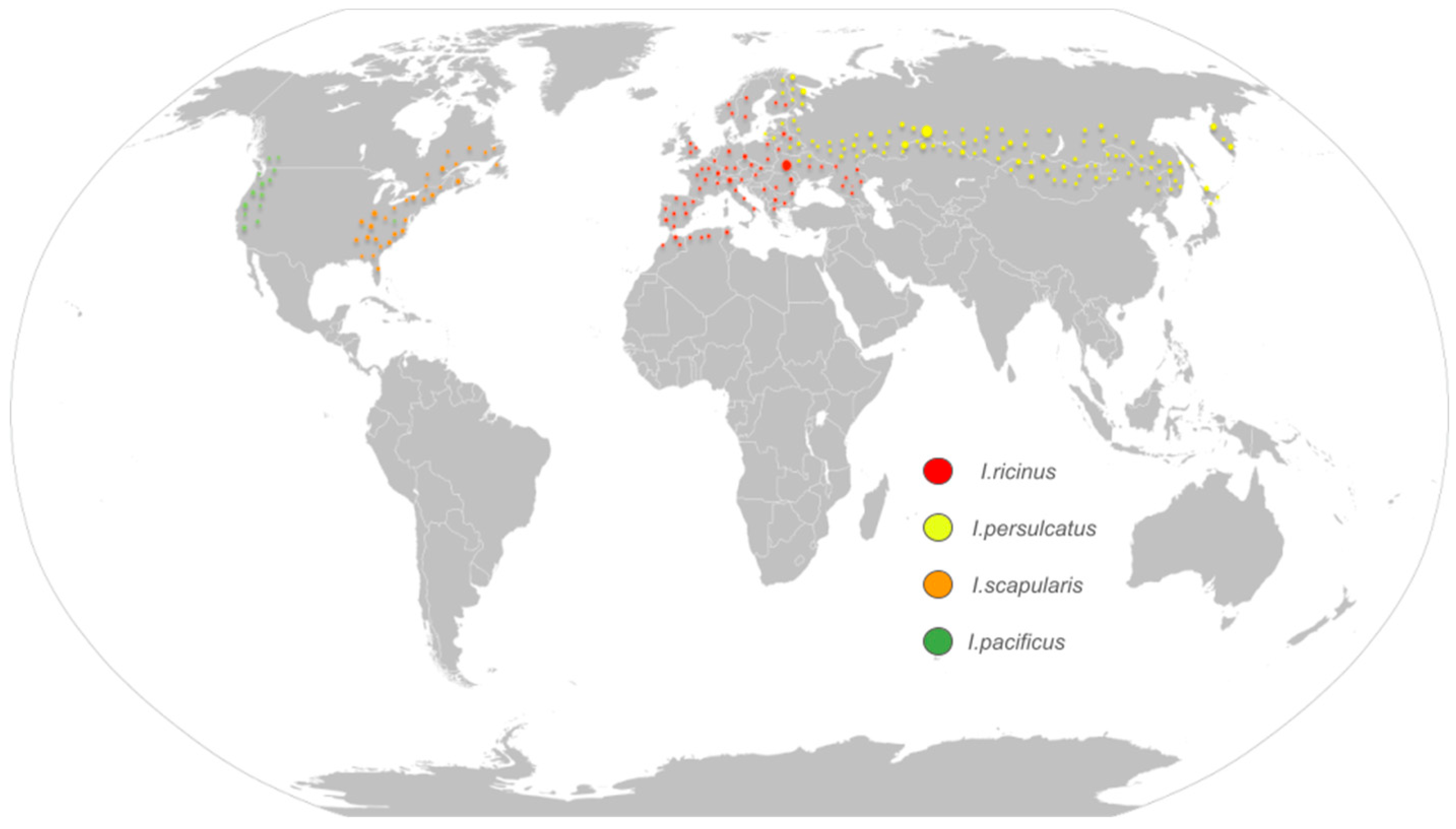
2. Epidemiology of Vectors and Co-Occurrence Pathogens
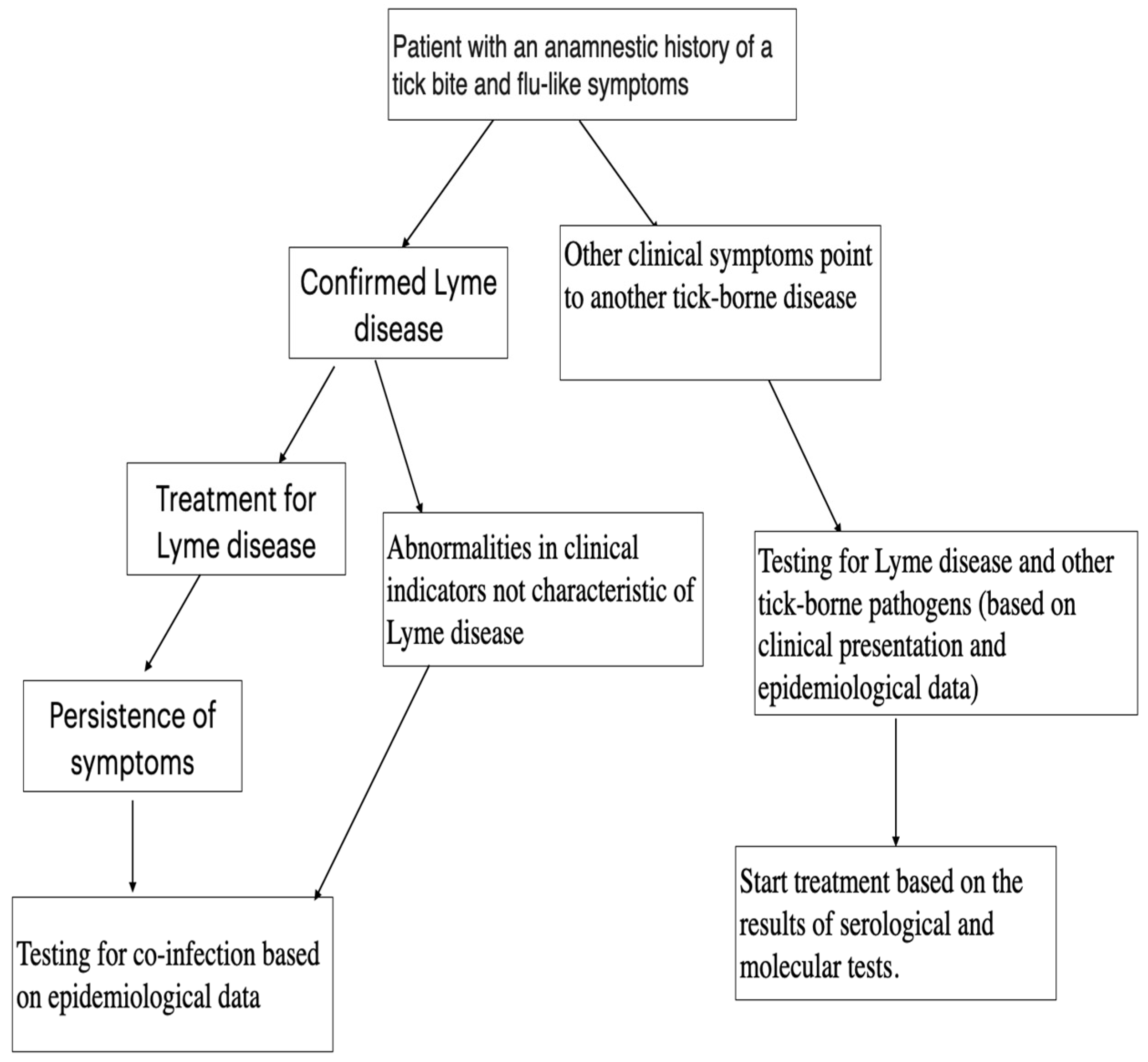
3. The Clinical Characteristics of Co-Infections in Lyme Disease
3.1. Co-Infection with Borrelia burgdorferi and Babesia spp.: Clinical Presentation and Diagnosis
3.2. Co-Infection with Borrelia burgdorferi and Anaplasmosis phagocytophilum: Clinical Presentation and Diagnosis
3.3. Co-Infection with Borrelia burgdorferi and Ehrlichia spp.: Clinical Presentation and Diagnosis
3.4. Co-Infection with Borrelia burgdorferi and N. mikurensis: Clinical Presentation and Diagnosis
3.5. Co-Infection with Borrelia burgdorferi and Bartonella spp.: Clinical Presentation and Diagnosis
3.6. Co-Infection with Borrelia burgdorferi and Rickettsia spp.: Clinical Presentation and Diagnosis
3.7. Co-Infection with Borrelia burgdorferi and Borrelia miyamotoi: Clinical Presentation and Diagnosis
3.8. Co-Infection with Borrelia burgdorferi and Tick-Borne Encephalitis Virus: Clinical Presentation and Diagnosis
3.9. Co-Infection with Borrelia burgdorferi and Other Tick-Borne Viruses: Clinical Presentation and Diagnosis
4. Treatment and Prevention of Lyme Disease and Co-Infections


| Borreli burgdorferi s.l. Complex | Borrelia miyamotoi | Babesia spp. | An. phagocytophilum | Ehrlichia spp. | N. mikurensis | Rikettsia spp. | Bartonella spp. | Tick-Borne Virus |
|---|---|---|---|---|---|---|---|---|
| doxycycline [58] | atovaquone and azithromycin [20,59] | doxycycline [58,83] | supportive treatment [18,106,110] | |||||
| ceftriaxone [58] | clindamycin and quinine [20,59] | rifampin [21] | azithromycin [21,83] | |||||
| Amoxicillin [58] | fluoroquinoles [21,83] | |||||||
5. Conclusions
Author Contributions
Funding
Institutional Review Board Statement
Informed Consent Statement
Data Availability Statement
Conflicts of Interest
References
- Lane, R.S.; Piesman, J.; Burgdorfer, W. Lyme borreliosis: Relation of its causative agent to its vectors and hosts in North America and Europe. Annu. Rev. Entomol. 1991, 36, 587–609. [Google Scholar] [CrossRef]
- Hartemink, N.; Takken, W. Trends in tick population dynamics and pathogen transmission in emerging tick-borne pathogens in Europe: An introduction. Exp. Appl. Acarol. 2016, 68, 269–278. [Google Scholar] [CrossRef]
- Goodman, J.L.; Dennis, D.T.; Sonenshine, D.E. Tick-Borne Diseases of Humans; ASM Press: Washington, DC, USA, 2005; 401p. [Google Scholar]
- Ji, Z.; Jian, M.; Yue, P.; Cao, W.; Xu, X.; Zhang, Y.; Pan, Y.; Yang, J.; Chen, J.; Liu, M.; et al. Prevalence of Borrelia burgdorferi in Ixodidae Tick around Asia: A Systematic Review and Meta-Analysis. Pathogens 2022, 11, 143. [Google Scholar] [CrossRef] [PubMed]
- Pritt, B.S.; Mead, P.S.; Johnson, D.K.H.; Neitzel, D.F.; Respicio-Kingry, L.B.; Davis, J.P.; Schiffman, E.; Sloan, L.M.; Schriefer, M.E.; Replogle, A.J.; et al. Identification of a novel pathogenic Borrelia species causing Lyme borreliosis with unusually high spirochaetaemia: A descriptive study. Lancet Infect. Dis. 2016, 16, 556–564, Erratum in Lancet Infect Dis. 2016, 16, 636. [Google Scholar] [CrossRef] [PubMed]
- Johnson, T.L.; Graham, C.B.; Hojgaard, A.; Breuner, N.E.; Maes, S.E.; Boegler, K.A.; Replogle, A.J.; Kingry, L.C.; Petersen, J.M.; Eisen, L.; et al. Isolation of the Lyme Disease Spirochete Borrelia mayonii from Naturally Infected Rodents in Minnesota. J. Med. Entomol. 2017, 54, 1088–1092. [Google Scholar] [CrossRef] [PubMed]
- Nepveu-Traversy, M.-E.; Fausther-Bovendo, H.; Babuadze, G. Human Tick-Borne Diseases and Advances in Anti-Tick Vaccine Approaches: A Comprehensive Review. Vaccines 2024, 12, 141. [Google Scholar] [CrossRef]
- Koczwarska, J.; Polaczyk, J.; Wieczorek, W.; Zdzienicka, O.; Żórańska, J.; Pawełczyk, A.; Welc-Falęciak, R. Coexistence of Borrelia spp. with different tick-borne pathogens in Ixodes ricinus ticks removed from humans in Poland. Sci. Rep. 2025, 15, 21684. [Google Scholar] [CrossRef]
- Kahl, O.; Gray, J.S. The biology of Ixodes ricinus with emphasis on its ecology. Ticks Tick-Borne Dis. 2023, 14, 102114. [Google Scholar] [CrossRef]
- Narvaez, Z.E.; Rainey, T.; Puelle, R.; Khan, A.; Jordan, R.A.; Egizi, A.M.; Price, D.C. Detection of multiple tick-borne pathogens in Ixodes scapularis from Hunterdon County, NJ, USA. Curr. Res. Parasitol. Vector-Borne Dis. 2023, 4, 100140. [Google Scholar] [CrossRef]
- Platonov, A.E.; Karan, L.S.; Kolyasnikova, N.M.; Makhneva, N.A.; Toporkova, M.G.; Maleev, V.V.; Fish, D.; Krause, P.J. Humans infected with relapsing fever spirochete Borrelia miyamotoi, Russia. Emerg. Infect. Dis. 2011, 17, 1816–1823. [Google Scholar] [CrossRef]
- Stuen, S.; Granquist, E.G.; Silaghi, C. Anaplasma phagocytophilum—A widespread multi-host pathogen with highly adaptive strategies. Front. Cell. Infect. Microbiol. 2013, 3, 31. [Google Scholar] [CrossRef]
- Pritt, B.S.; Sloan, L.M.; Johnson, D.K.H.; Munderloh, U.G.; Paskewitz, S.M.; McElroy, K.M.; McFadden, J.D.; Binnicker, M.J.; Neitzel, D.F.; Liu, G.; et al. Emergence of a new pathogenic Ehrlichia species, Wisconsin and Minnesota, 2009. N. Engl. J. Med. 2011, 365, 422–429. [Google Scholar] [CrossRef]
- Portillo, A.; Santibáñez, P.; Palomar, A.M.; Santibáñez, S.; Oteo, J.A. ‘Candidatus Neoehrlichia mikurensis’ in Europe. New Microbes New Infect. 2018, 22, 30–36. [Google Scholar] [CrossRef] [PubMed]
- Kovalev, S.Y.; Mukhacheva, T.A. Tick-borne encephalitis virus subtypes emerged through rapid vector switches rather than gradual evolution. Ecol. Evol. 2014, 4, 4307–4316. [Google Scholar] [CrossRef] [PubMed]
- McLean, D.; Donohue, W.L. Powassan virus: Isolation of virus from a fatal case of encephalitis. Can. Med. Assoc. J. 1959, 80, 708–711. [Google Scholar] [PubMed]
- Zanotto, P.M.A.; Gao, G.F.; Gritsun, T.; Marin, M.S.; Jiang, W.R.; Venugopal, K.; Reid, H.W.; Gould, E.A. An arbovirus cline across the northern hemisphere. Virology 1995, 210, 152–159. [Google Scholar] [CrossRef]
- Chastel, C.; Main, A.J.; Couatarmanac’h, A.; Le Lay, G.; Knudson, D.L.; Quillien, M.C.; Beaucournu, J.C. Isolation of Eyach virus (Reoviridae, Colorado tick fever group) from Ixodes ricinus and I. ventalloi ticks in France. Arch. Virol. 1984, 82, 161–171. [Google Scholar] [CrossRef]
- Kumar, A.; O’Bryan, J.; Krause, P.J. The Global Emergence of Human Babesiosis. Pathogens 2021, 10, 1447, Erratum in Pathogens 2022, 11, 923. [Google Scholar] [CrossRef]
- Andonova, R.; Bashchobanov, D.; Gadzhovska, V.; Popov, G. Tick-Borne Diseases—Still a Challenge: A Review. Biologics 2024, 4, 130–142. [Google Scholar] [CrossRef]
- Stinco, G.; Bergamo, S. Impact of Co-Infections in Lyme Disease. Open Dermatol. J. 2016, 10, 55–61. [Google Scholar] [CrossRef]
- Oechslin, C.P.; Heutschi, D.; Lenz, N.; Tischhauser, W.; Péter, O.; Rais, O.; Beuret, C.M.; Leib, S.L.; Bankoul, S.; Ackermann-Gäumann, R. Prevalence of tick-borne pathogens in questing Ixodes ricinus ticks in urban and suburban areas of Switzerland. Parasites Vectors 2017, 10, 558. [Google Scholar] [CrossRef]
- Lommano, E.; Bertaiola, L.; Dupasquier, C.; Gern, L. Infections and Coinfections of Questing Ixodes ricinus Ticks by Emerging Zoonotic Pathogens in Western Switzerland. Appl. Environ. Microbiol. 2012, 78, 4606–4612. [Google Scholar] [CrossRef]
- Pawełczyk, A.; Bednarska, M.; Hamera, A.; Religa, E.; Poryszewska, M.; Mierzejewska, E.J.; Welc-Falęciak, R. Long-term study of Borrelia and Babesia prevalence and co-infection in Ixodes ricinus and Dermacentor recticulatus ticks removed from humans in Poland, 2016–2019. Parasites Vectors 2021, 14, 348. [Google Scholar] [CrossRef] [PubMed]
- Sawczyn-Domańska, A.; Zwoliński, J.; Kloc, A.; Wójcik-Fatla, A. Prevalence of Borrelia, Neoehrlichia mikurensis and Babesia in ticks collected from vegetation in eastern Poland. Exp. Appl. Acarol. 2023, 90, 409–428. [Google Scholar] [CrossRef] [PubMed]
- Jaenson, T.G.T.; Gray, J.S.; Lindgren, P.-E.; Wilhelmsson, P. Coinfection of Babesia and Borrelia in the Tick Ixodes ricinus—A Neglected Public Health Issue in Europe? Pathogens 2024, 13, 81. [Google Scholar] [CrossRef] [PubMed]
- Nader, J.; Król, N.; Pfeffer, M.; Ohlendorf, V.; Marklewitz, M.; Drosten, C.; Junglen, S.; Obiegala, A. The diversity of tick-borne bacteria and parasites in ticks collected from the Strandja Nature Park in south-eastern Bulgaria. Parasites Vectors 2018, 11, 165. [Google Scholar] [CrossRef]
- Sprong, H.; Azagi, T.; Hoornstra, D.; Nijhof, A.M.; Knorr, S.; Baarsma, M.E.; Hovius, J.W. Control of Lyme borreliosis and other Ixodes ricinus-borne diseases. Parasites Vectors 2018, 11, 145. [Google Scholar] [CrossRef]
- Fanny, O.; Sprong, H.; Fonville, M.; Rocchi, M.; Medlock, J.; Gilbert, L.; Ghazoul, J. Occurrence of tick-borne pathogens in questing Ixodes ricinus ticks from Wester Ross, Northwest Scotland. Parasites Vectors 2021, 14, 430. [Google Scholar] [CrossRef]
- Lagunova, E.K.; Liapunova, N.A.; Tuul, D.; Otgonsuren, G.; Nomin, D.; Erdenebat, N.; Abmed, D.; Danchinova, G.A.; Sato, K.; Kawabata, H.; et al. Co-infections with multiple pathogens in natural populations of Ixodes persulcatus ticks in Mongolia. Parasites Vectors 2022, 15, 236. [Google Scholar] [CrossRef]
- Alekseev, A.N.; Semenov, A.V.; Dubinina, H.V. Evidence of Babesia microti infection in multi-infected Ixodes persulcatus ticks in Russia. Exp. Appl. Acarol. 2003, 29, 345–353. [Google Scholar] [CrossRef]
- Eremeeva, M.E.; Oliveira, A.; Robinson, J.B.; Ribakova, N.; Tokarevich, N.K.; Dasch, G.A. Prevalence of bacterial agents in Ixodes persulcatus ticks from the Vologda Province of Russia. Ann. N. Y. Acad. Sci. 2006, 1078, 291–298. [Google Scholar] [CrossRef]
- Lyubeznova, O.N.; Bondarenko, J.A.; Karan, L.S. Infectiousness of Ixodes Persulcatus Ticks with Pathogens of Various Diseases in Endemic Regions of European Russia. Aktual. Infektologiâ 2014, 2, 49–52. [Google Scholar] [CrossRef]
- Bugmyrin, S.V.; Romanova, L.Y.; Belova, O.A.; Kholodilov, I.S.; Bespyatova, L.A.; Chernokhaeva, L.L.; Gmyl, L.V.; Klimentov, A.S.; Ivannikova, A.Y.; Polienko, A.E.; et al. Pathogens in Ixodes persulcatus and Ixodes ricinus ticks (Acari, Ixodidae) in Karelia (Russia). Ticks Tick-Borne Dis. 2022, 13, 102045. [Google Scholar] [CrossRef] [PubMed]
- Laaksonen, M.; Klemola, T.; Feuth, E.; Sormunen, J.J.; Puisto, A.; Mäkelä, S.; Penttinen, R.; Ruohomäki, K.; Hänninen, J.; Sääksjärvi, I.E.; et al. Tick-borne pathogens in Finland: Comparison of Ixodes ricinus and I. persulcatus in sympatric and parapatric areas. Parasites Vectors 2018, 11, 556. [Google Scholar] [CrossRef] [PubMed]
- Cross, S.T.; Kapuscinski, M.L.; Perino, J.; Maertens, B.L.; Weger-Lucarelli, J.; Ebel, G.D.; Stenglein, M.D. Co-Infection Patterns in Individual Ixodes scapularis Ticks Reveal Associations between Viral, Eukaryotic and Bacterial Microorganisms. Viruses 2018, 10, 388. [Google Scholar] [CrossRef]
- Johnson, T.L.; Graham, C.B.; Maes, S.E.; Hojgaard, A.; Fleshman, A.; Boegler, K.A.; Delory, M.J.; Slater, K.S.; Karpathy, S.E.; Bjork, J.K.; et al. Prevalence and distribution of seven human pathogens in host-seeking Ixodes scapularis (Acari: Ixodidae) nymphs in Minnesota, USA. Ticks Tick-Borne Dis. 2018, 9, 1499–1507. [Google Scholar] [CrossRef]
- Wilson, C.H.; Gasmi, S.; Bourgeois, A.C.; Badcock, J.; Chahil, N.; Kulkarni, M.A.; Lee, M.K.; Lindsay, L.R.; Leighton, P.A.; Morshed, M.G.; et al. Surveillance for Ixodes scapularis and Ixodes pacificus ticks and their associated pathogens in Canada, 2019. Can. Commun. Dis. Rep. 2022, 48, 208. [Google Scholar] [CrossRef]
- Lehane, A.; Maes, S.E.; Graham, C.B.; Jones, E.; Delorey, M.; Eisen, R.J. Prevalence of single and coinfections of human pathogens in Ixodes ticks from five geographical regions in the United States, 2013–2019. Ticks Tick-Borne Dis. 2021, 12, 101637, Erratum in Ticks Tick-Borne Dis. 2021, 12, 101681. [Google Scholar] [CrossRef]
- Swanson, S.J.; Neitzel, D.; Reed, K.D.; Belongia, E.A. Coinfections acquired from Ixodes ticks. Clin. Microbiol. Rev. 2006, 19, 708–727. [Google Scholar] [CrossRef]
- Sanchez-Vicente, S.; Tokarz, R. Tick-Borne Co-Infections: Challenges in Molecular and Serologic Diagnoses. Pathogens 2023, 12, 1371. [Google Scholar] [CrossRef]
- Madison-Antenucci, S.; Kramer, L.D.; Gebhardt, L.L.; Kauffman, E. Emerging tick-borne diseases. Clin. Microbiol. Rev. 2020, 33, 10–128. [Google Scholar] [CrossRef] [PubMed]
- Gorenflot, A.; Moubri, K.; Precigout, E.; Carcy, B.; Schetters, T.P. Human babesiosis. Ann. Trop. Med. Parasitol. 1998, 92, 489–501. [Google Scholar] [CrossRef] [PubMed]
- Krause, P.J.; Telford, S.R.; Spielman, A.; Sikand, V.; Ryan, R.; Christianson, D.; Burke, G.; Brassard, P.; Pollack, R.; Peck, J.; et al. Concurrent Lyme disease and babesiosis: Evidence for increased severity and duration of illness. JAMA 1996, 275, 1657–1660. [Google Scholar] [CrossRef] [PubMed]
- Folgueras, M.; González, L.M.; Gil, A.; Collazos, J.; Rodríguez-Pérez, M.; Pérez-Is, L.; Díaz-Arias, J.; Meana, M.; Revuelta, B.; Gray, J.; et al. Epidemiological, Clinical and Analytical Features in Lyme Borreliosis Patients Seropositive for Babesia divergens/venatorum. Microorganisms 2025, 13, 1383. [Google Scholar] [CrossRef]
- Hoversten, K.; Bartlett, M.A. Diagnosis of a tick-borne coinfection in a patient with persistent symptoms following treatment for Lyme disease. Case Rep. 2018, 2018, bcr-2018. [Google Scholar] [CrossRef]
- Djokic, V.; Akoolo, L.; Primus, S.; Schlachter, S.; Kelly, K.; Bhanot, P.; Parveen, N. Protozoan parasite Babesia microti subverts adaptive immunity and enhances Lyme disease severity. Front. Microbiol. 2019, 10, 1596. [Google Scholar] [CrossRef]
- Djokic, V.; Primus, S.; Akoolo, L.; Chakraborti, M.; Parveen, N. Age-related differential stimulation of immune response by Babesia microti and Borrelia burgdorferi during acute phase of infection affects disease severity. Front. Immunol. 2018, 9, 2891. [Google Scholar] [CrossRef]
- Rocha, S.C.; Moustafa, M.A.M.; Velásquez, C.V.; Azuama, O.C.; Zafar, K.; Meyer, C.; Araujo, M.; Taylor, K.; Parveen, N. Long-term survival of Babesia microti and Borrelia burgdorferi in C3H/HeJ mice and their effect on Lyme arthritis and babesiosis manifestations. Microbiol. Spectr. 2025, 13, e00252-25. [Google Scholar] [CrossRef]
- Akoolo, L.; Djokic, V.; Rocha, S.C.; Parveen, N. Pathogenesis of Borrelia burgdorferi and Babesia microti in TLR4-Competent and TLR4-dysfunctional C3H mice. Cell. Microbiol. 2021, 23, e13350. [Google Scholar] [CrossRef]
- Bhanot, P.; Parveen, N. Investigating disease severity in an animal model of concurrent babesiosis and Lyme disease. Int. J. Parasitol. 2019, 49, 145–151. [Google Scholar] [CrossRef]
- Parveen, N.; Bhanot, P. Babesia microti—Borrelia burgdorferi Coinfection. Pathogens 2019, 8, 117. [Google Scholar] [CrossRef]
- Wang, T.J.; Liang, M.H.; Sangha, O.; Phillips, C.B.; Lew, R.A.; Wright, E.A.; Berardi, V.; Fossel, A.H.; Shadick, N.A. Coexposure to Borrelia burgdorferi and Babesia microti does not worsen the long-term outcome of Lyme disease. Clin. Infect. Dis. 2000, 31, 1149–1154. [Google Scholar] [CrossRef]
- Coleman, J.L.; LeVine, D.; Thill, C.; Kuhlow, C.; Benach, J.L. Babesia microti and Borrelia burgdorferi follow independent courses of infection in mice. J. Infect. Dis. 2005, 192, 1634–1641. [Google Scholar] [CrossRef] [PubMed]
- Moniuszko, A.; Dunaj, J.; Święcicka, I.; Zambrowski, G.; Chmielewska-Badora, J.; Żukiewicz-Sobczak, W.; Zajkowska, J.; Czupryna, P.; Kondrusik, M.; Grygorczuk, S.; et al. Co-infections with Borrelia species, Anaplasma phagocytophilum and Babesia spp. in patients with tick-borne encephalitis. Eur. J. Clin. Microbiol. Infect. Dis. 2014, 33, 1835–1841. [Google Scholar] [CrossRef] [PubMed]
- Stinco, G.; Ruscio, M.; Bergamo, S.; Trotter, D.; Patrone, P. Clinical features of 705 Borrelia burgdorferi seropositive patients in an endemic area of northern Italy. Sci. World J. 2014, 2014, 414505. [Google Scholar] [CrossRef] [PubMed]
- Boyer, P.H.; Lenormand, C.; Jaulhac, B.; Talagrand-Reboul, E. Human Co-Infections between Borrelia burgdorferi s.l. and Other Ixodes-Borne Microorganisms: A Systematic Review. Pathogens 2022, 11, 282. [Google Scholar] [CrossRef]
- Lantos, P.M.; Rumbaugh, J.; Bockenstedt, L.K.; Falck-Ytter, Y.T.; Aguero-Rosenfeld, M.E.; Auwaerter, P.G.; Baldwin, K.; Bannuru, R.R.; Belani, K.K.; Bowie, W.R.; et al. Clinical practice guidelines by the Infectious Diseases Society of America (IDSA), American Academy of Neurology (AAN), and American College of Rheumatology (ACR): 2020 guidelines for the prevention, diagnosis and treatment of Lyme disease. Clin. Infect. Dis. 2021, 72, e1–e48. [Google Scholar] [CrossRef]
- Krause, P.J.; Auwaerter, P.G.; Bannuru, R.R.; Branda, J.A.; Falck-Ytter, Y.T.; Lantos, P.M.; Lavergne, V.; Meissner, H.C.; Osani, M.C.; Rips, J.G.; et al. Clinical practice guidelines by the Infectious Diseases Society of America (IDSA): 2020 guideline on diagnosis and management of babesiosis. Clin. Infect. Dis. 2021, 72, e49–e64. [Google Scholar] [CrossRef]
- Guzman, N.; Yarrarapu, S.N.S.; Beidas, S.O. Anaplasma phagocytophilum. In StatPearls [Internet]; StatPearls Publishing: Treasure Island, FL, USA, 2025. [Google Scholar] [PubMed]
- Dumic, I.; Jevtic, D.; Veselinovic, M.; Nordstrom, C.W.; Jovanovic, M.; Mogulla, V.; Veselinovic, E.M.; Hudson, A.; Simeunovic, G.; Petcu, E.; et al. Human Granulocytic Anaplasmosis—A Systematic Review of Published Cases. Microorganisms 2022, 10, 1433. [Google Scholar] [CrossRef]
- Cheran, C.A.; Iacob, D.G.; Neagu, G.; Panciu, A.M.; Hristea, A. Seroprevalence of Anaplasma phagocytophilum Antibodies Following Tick Bites: A Serosurvey in a Tertiary Care Hospital in Romania. Microorganisms 2025, 13, 1758. [Google Scholar] [CrossRef]
- Panczuk, A.; Tokarska-Rodak, M.; Kozioł-Montewka, M.; Plewik, D. The incidence of Borrelia burgdorferi, Anaplasma phagocytophilum and Babesia microti coinfections among foresters and farmers in eastern Poland. J. Vector Borne Dis. 2016, 53, 348–354. [Google Scholar] [CrossRef]
- Dvořáčková, M. Seroprevalence of Anaplasma phagocytophilum in patients with suspected Lyme borreliosis. Epidemiol. Mikrobiol. Imunol. Cas. Spol. Epidemiol. Mikrobiol. Ceske Lek. Spol. JE Purkyne 2014, 63, 297–302. [Google Scholar]
- Krause, P.J.; McKay, K.; Thompson, C.A.; Sikand, V.K.; Lentz, R.; Lepore, T.; Closter, L.; Christianson, D.; Telford, S.R.; Persing, D.; et al. Disease-specific diagnosis of coinfecting tickborne zoonoses: Babesiosis, human granulocytic ehrlichiosis, and Lyme disease. Clin. Infect. Dis. 2002, 34, 1184–1191. [Google Scholar] [CrossRef] [PubMed]
- Belongia, E.A.; Reed, K.D.; Mitchell, P.D.; Chyou, P.H.; Mueller-Rizner, N.; Finkel, M.F.; Schriefer, M.E. Clinical and epidemiological features of early Lyme disease and human granulocytic ehrlichiosis in Wisconsin. Clin. Infect. Dis. 1999, 29, 1472–1477. [Google Scholar] [CrossRef] [PubMed]
- Horowitz, H.W.; Aguero-Rosenfeld, M.E.; Holmgren, D.; McKenna, D.; Schwartz, I.; Cox, M.E.; Wormser, G.P. Lyme disease and human granulocytic anaplasmosis coinfection: Impact of case definition on coinfection rates and illness severity. Clin. Infect. Dis. 2013, 56, 93–99. [Google Scholar] [CrossRef]
- Porcelli, S.; Deshuillers, P.L.; Moutailler, S.; Lagrée, A.C. Meta-analysis of tick-borne and other pathogens: Co-infection or co-detection? That is the question. Curr. Res. Parasitol. Vector-Borne Dis. 2024, 6, 100219. [Google Scholar] [CrossRef]
- Holden, K.; Hodzic, E.; Feng, S.; Freet, K.J.; Lefebvre, R.B.; Barthold, S.W. Coinfection with Anaplasma phagocytophilum alters Borrelia burgdorferi population distribution in C3H/HeN mice. Infect. Immun. 2005, 73, 3440–3444. [Google Scholar] [CrossRef]
- Bakken, J.S.; Dumler, J.S. Human granulocytic anaplasmosis. Infect. Dis. Clin. N. Am. 2015, 29, 341. [Google Scholar] [CrossRef]
- Gygax, L.; Schudel, S.; Kositz, C.; Kuenzli, E.; Neumayr, A. Human monocytotropic ehrlichiosis—A systematic review and analysis of the literature. PLoS Negl. Trop. Dis. 2024, 18, e0012377. [Google Scholar] [CrossRef]
- Thomas, R.J.; Dumler, J.S.; Carlyon, J.A. Current management of human granulocytic anaplasmosis, human monocytic ehrlichiosis and Ehrlichia ewingii ehrlichiosis. Expert Rev. Anti-Infect. Ther. 2009, 7, 709–722. [Google Scholar] [CrossRef]
- Paparone, P.W.; Glenn, W.B. Lyme disease with concurrent ehrlichiosis. J. Osteopath. Med. 1994, 94, 568. [Google Scholar] [CrossRef]
- Ahkee, S.; Ramirez, J. A case of concurrent Lyme meningitis with ehrlichiosis. Scand. J. Infect. Dis. 1996, 28, 527–528. [Google Scholar] [CrossRef] [PubMed]
- Mitchell, P.D.; Reed, K.D.; Hofkes, J.M. Immunoserologic evidence of coinfection with Borrelia burgdorferi, Babesia microti, and human granulocytic Ehrlichia species in residents of Wisconsin and Minnesota. J. Clin. Microbiol. 1996, 34, 724–727. [Google Scholar] [CrossRef] [PubMed]
- Bonin, J.L.; Torres, S.R.; Marcinkiewicz, A.L.; Duhamel, G.E.; Yang, X.; Pal, U.; DiSpirito, J.M.; Nowak, T.A.; Lin, Y.P.; MacNamara, K.C. Impact of E. muris infection on B. burgdorferi–induced joint pathology in mice. Front. Immunol. 2024, 15, 1430419. [Google Scholar] [CrossRef]
- Wennerås, C.; Wass, L.; Bergström, B.; Grankvist, A.; Lingblom, C. Ten years of detecting Neoehrlichia mikurensis infections in Sweden: Demographic, clinical and inflammatory parameters. Eur. J. Clin. Microbiol. Infect. Dis. 2024, 43, 2083–2092. [Google Scholar] [CrossRef]
- Grankvist, A.; Andersson, P.O.; Mattsson, M.; Sender, M.; Vaht, K.; Höper, L.; Sakiniene, E.; Trysberg, E.; Stenson, M.; Fehr, J.; et al. Infections with the tick-borne bacterium “Candidatus Neoehrlichia mikurensis” mimic noninfectious conditions in patients with B cell malignancies or autoimmune diseases. Clin. Infect. Dis. 2014, 58, 1716–1722. [Google Scholar] [CrossRef]
- Höper, L.; Skoog, E.; Stenson, M.; Grankvist, A.; Wass, L.; Olsen, B.; Nilsson, K.; Mårtensson, A.; Söderlind, J.; Sakinis, A.; et al. Vasculitis due to Candidatus Neoehrlichia mikurensis: A cohort study of 40 Swedish patients. Clin. Infect. Dis. 2021, 73, e2372–e2378. [Google Scholar] [CrossRef]
- Quarsten, H.; Grankvist, A.; Høyvoll, L.; Myre, I.B.; Skarpaas, T.; Kjelland, V.; Wenneras, C.; Noraas, S. Candidatus Neoehrlichia mikurensis and Borrelia burgdorferi sensu lato detected in the blood of Norwegian patients with erythema migrans. Ticks Tick-Borne Dis. 2017, 8, 715–720. [Google Scholar] [CrossRef]
- Andersson, M.; Zaghdoudi-Allan, N.; Tamba, P.; Stefanache, M.; Chitimia, L. Co-infection with ‘Candidatus Neoehrlichia mikurensis’ and Borrelia afzelii in an Ixodes ricinus tick that has bitten a human in Romania. Ticks Tick-Borne Dis. 2014, 5, 706–708. [Google Scholar] [CrossRef]
- Andersson, M.; Bartkova, S.; Lindestad, O.; Råberg, L. Co-infection with ‘Candidatus Neoehrlichia mikurensis’ and Borrelia afzelii in Ixodes ricinus ticks in southern Sweden. Vector-Borne Zoonotic Dis. 2013, 13, 438–442. [Google Scholar] [CrossRef]
- Rolain, J.M.; Brouqui, P.; Koehler, J.E.; Maguina, C.; Dolan, M.J.; Raoult, D. Recommendations for treatment of human infections caused by Bartonella species. Antimicrob. Agents Chemother. 2004, 48, 1921–1933. [Google Scholar] [CrossRef] [PubMed]
- Bass, J.W.; Vincent, J.M.; Person, D.A. The expanding spectrum of Bartonella infections: II. Cat-scratch disease. Pediatr. Infect. Dis. J. 1997, 16, 163–179. [Google Scholar] [CrossRef] [PubMed]
- Kim, C.M.; Kim, J.Y.; Yi, Y.H.; Lee, M.J.; Cho, M.R.; Shah, D.H.; A Klein, T.; Kim, H.C.; Song, J.W.; Chong, S.T.; et al. Detection of Bartonella species from ticks, mites and small mammals in Korea. J. Vet. Sci. 2005, 6, 327–334. [Google Scholar] [CrossRef] [PubMed]
- Chang, C.C.; Hayashidani, H.; Pusterla, N.; Kasten, R.W.; Madigan, J.E.; Chomel, B.B. Investigation of Bartonella infection in ixodid ticks from California. Comp. Immunol. Microbiol. Infect. Dis. 2002, 25, 229–236. [Google Scholar] [CrossRef]
- Sanogo, Y.O.; Zeaiter, Z.; Caruso, G.; Merola, F.; Shpynov, S.; Brouqui, P.; Raoult, D. Bartonella henselae in Ixodes ricinus ticks (Acari: Ixodida) removed from humans, Belluno province, Italy. Emerg. Infect. Dis. 2003, 9, 329–332. [Google Scholar] [CrossRef]
- Telford, S.R., III; Wormser, G.P. Bartonella spp. transmission by ticks not established. Emerg. Infect. Dis. 2010, 16, 379–384. [Google Scholar] [CrossRef]
- Angelakis, E.; Billeter, S.A.; Breitschwerdt, E.B.; Chomel, B.B.; Raoult, D. Potential for tick-borne bartonelloses. Emerg. Infect. Dis. 2010, 16, 385. [Google Scholar] [CrossRef]
- Chmielewska-Badora, J.; Cisak, E.; Zając, V.; Zwoliński, J.; Dutkiewicz, J. Occurrence of coinfections with Borrelia burgdorferi, Anaplasma phagocytophilum, Bartonella spp. and Babesia microti in patients diagnosed with borreliosis. Medycyna Ogólna Nauki Zdrowiu 2010, 16, 217–225. [Google Scholar]
- Eskow, E.; Rao, R.V.; Mordechai, E. Concurrent infection of the central nervous system by Borrelia burgdorferi and Bartonella henselae: Evidence for a novel tick-borne disease complex. Arch. Neurol. 2001, 58, 1357–1363. [Google Scholar] [CrossRef]
- Podsiadly, E.; Chmielewski, T.; Tylewska-Wierzbanowska, S. Bartonella henselae and Borrelia burgdorferi infections of the central nervous system. Ann. N. Y. Acad. Sci. 2003, 990, 404–406. [Google Scholar] [CrossRef]
- McCormick, D.W.; Rassoulian-Barrett, S.L.; Hoogestraat, D.R.; Salipante, S.J.; SenGupta, D.; Dietrich, E.A.; Cookson, B.T.; Marx, G.E.; Lieberman, J.A. Bartonella spp. infections identified by molecular methods, United States. Emerg. Infect. Dis. 2023, 29, 467–476. [Google Scholar] [CrossRef]
- Walker, D.H.; Ismail, N. Emerging and re-emerging rickettsioses: Endothelial cell infection and early disease events. Nat. Rev. Microbiol. 2008, 6, 375–386. [Google Scholar] [CrossRef] [PubMed]
- Schicht, S.; Schnieder, T.; Strube, C. Rickettsia spp. and coinfections with other pathogenic microorganisms in hard ticks from northern Germany. J. Med. Entomol. 2012, 49, 766–771. [Google Scholar] [CrossRef] [PubMed]
- May, K.; Jordan, D.; Fingerle, V.; Strube, C. Borrelia burgdorferi sensu lato and co-infections with Anaplasma phagocytophilum and Rickettsia spp. in Ixodes ricinus in Hamburg, Germany. Med. Vet. Entomol. 2015, 29, 425–429. [Google Scholar] [CrossRef] [PubMed]
- Tijsse-Klasen, E.; Sprong, H.; Pandak, N. Co-infection of Borrelia burgdorferi sensu lato and Rickettsia species in ticks and in an erythema migrans patient. Parasites Vectors 2013, 6, 347. [Google Scholar] [CrossRef]
- Berghoff, W. Chronic Lyme disease and co-infections: Differential diagnosis. Open Neurol. J. 2012, 6, 158. [Google Scholar] [CrossRef]
- Cleveland, D.W.; Anderson, C.C.; Brissette, C.A. Borrelia miyamotoi: A Comprehensive Review. Pathogens 2023, 12, 267. [Google Scholar] [CrossRef]
- Krause, P.J.; Fish, D.; Narasimhan, S.; Barbour, A.G. Borrelia miyamotoi infection in nature and in humans. Clin. Microbiol. Infect. 2015, 21, 631–639. [Google Scholar] [CrossRef]
- Gugliotta, J.L.; Goethert, H.K.; Berardi, V.P.; Telford, S.R., III. Meningoencephalitis from Borrelia miyamotoi in an immunocompromised patient. N. Engl. J. Med. 2013, 368, 240–245. [Google Scholar] [CrossRef]
- Hovius, J.W.; de Wever, B.; Sohne, M.; Brouwer, M.C.; Coumou, J.; Wagemakers, A.; Oei, A.; Knol, H.; Narasimhan, S.; Hodiamont, C.J.; et al. A case of meningoencephalitis by the relapsing fever spirochaete Borrelia miyamotoi in Europe. Lancet 2013, 382, 658. [Google Scholar] [CrossRef]
- Jahfari, S.; Herremans, T.; Platonov, A.E.; Kuiper, H.; Karan, L.S.; Vasilieva, O.; Koopmans, M.P.; Hovius, J.W.; Sprong, H. High seroprevalence of Borrelia miyamotoi antibodies in forestry workers and individuals suspected of human granulocytic anaplasmosis in the Netherlands. New Microbes New Infect. 2014, 2, 144–149. [Google Scholar] [CrossRef] [PubMed][Green Version]
- Hamšíková, Z.; Coipan, C.; Mahríková, L.; Minichová, L.; Sprong, H.; Kazimírová, M. Borrelia miyamotoi and co-infection with Borrelia afzelii in Ixodes ricinus ticks and rodents from Slovakia. Microb. Ecol. 2017, 73, 1000–1008. [Google Scholar] [CrossRef] [PubMed]
- Knoll, S.; Springer, A.; Hauck, D.; Schunack, B.; Pachnicke, S.; Fingerle, V.; Strube, C. Distribution of Borrelia burgdorferi s.l. and Borrelia miyamotoi in Ixodes tick populations in Northern Germany, co-infections with Rickettsiales and assessment of potential influencing factors. Med. Vet. Entomol. 2021, 35, 595–606. [Google Scholar] [CrossRef] [PubMed]
- Pustijanac, E.; Buršić, M.; Talapko, J.; Škrlec, I.; Meštrović, T.; Lišnjić, D. Tick-Borne Encephalitis Virus: A Comprehensive Review of Transmission, Pathogenesis, Epidemiology, Clinical Manifestations, Diagnosis, and Prevention. Microorganisms 2023, 11, 1634. [Google Scholar] [CrossRef]
- Logina, I.; Krumina, A.; Karelis, G.; Elsone, L.; Viksna, L.; Rozentale, B.; Donaghy, M. Clinical features of double infection with tick-borne encephalitis and Lyme borreliosis transmitted by tick bite. J. Neurol. Neurosurg. Psychiatry 2006, 77, 1350–1353. [Google Scholar] [CrossRef][Green Version]
- Porcelli, S.; Heckmann, A.; Deshuillers, P.L.; Wu-Chuang, A.; Galon, C.; Mateos-Hernandez, L.; Rakotobe, S.; Canini, L.; Rego, R.O.; Simo, L.; et al. Co-infection dynamics of B. afzelii and TBEV in C3H mice: Insights and implications for future research. Infect. Immun. 2024, 92, e00249-24. [Google Scholar] [CrossRef]
- Kakoullis, L.; Vaz, V.R.; Kaur, D.; Kakoulli, S.; Panos, G.; Chen, L.H.; Behlau, I. Powassan Virus Infections: A Systematic Review of Published Cases. Trop. Med. Infect. Dis. 2023, 8, 508. [Google Scholar] [CrossRef]
- Schotthoefer, A.; Frost, H.; Thomm, A.; Dupuis, A.; Kehl, S.; Kramer, L.; Fritsche, T.; Harrington, Y.; Knox, K. Evidence of High Rate of Powassan Virus Co-infection in Lyme Disease Patients. Open Forum Infect. Dis. 2016, 3, 89. [Google Scholar] [CrossRef]
- Jeffries, C.L.; Mansfield, K.L.; Phipps, L.P.; Wakeley, P.R.; Mearns, R.; Schock, A.; Bell, S.; Breed, A.C.; Fooks, A.R.; Johnson, N. Louping ill virus: An endemic tick-borne disease of Great Britain. J. Gen. Virol. 2014, 95, 1005–1014. [Google Scholar] [CrossRef]
- Charrel, R.N.; Attoui, H.; Butenko, A.M.; Clegg, J.C.; Deubel, V.; Frolova, T.V.; Gould, E.A.; Gritsun, T.S.; Heinz, F.X.; Labuda, M.; et al. Tick-borne virus diseases of human interest in Europe. Clin. Microbiol. Infect. 2004, 10, 1040–1055. [Google Scholar] [CrossRef]
- Abbas, M.N.; Jmel, M.A.; Mekki, I.; Dijkgraaf, I.; Kotsyfakis, M. Recent advances in tick antigen discovery and anti-tick vaccine development. Int. J. Mol. Sci. 2023, 24, 4969. [Google Scholar] [CrossRef]
- Agudelo, M.; Palus, M.; Keeffe, J.R.; Bianchini, F.; Svoboda, P.; Salát, J.; Peace, A.; Gazumyan, A.; Cipolla, M.; Kapoor, T.; et al. Broad and potent neutralizing human antibodies to tick-borne flaviviruses protect mice from disease. J. Exp. Med. 2021, 218, e20210236. [Google Scholar] [CrossRef]
- VanBlargan, L.A.; Errico, J.M.; Kafai, N.M.; Burgomaster, K.E.; Jethva, P.N.; Broeckel, R.M.; Meade-White, K.; Nelson, C.A.; Himansu, S.; Wang, D.; et al. Broadly neutralizing monoclonal antibodies protect against multiple tick-borne flaviviruses. J. Exp. Med. 2021, 218, e20210174. [Google Scholar] [CrossRef]
- Wang, Y.; Kern, A.; Boatright, N.K.; Schiller, Z.A.; Sadowski, A.; Ejemel, M.; Souders, C.A.; Reimann, K.A.; Hu, L.; Thomas, W.D., Jr.; et al. Pre-exposure prophylaxis with OspA-specific human monoclonal antibodies protects mice against tick transmission of Lyme disease spirochetes. J. Infect. Dis. 2016, 214, 205–211. [Google Scholar] [CrossRef]

| No | Author (Year) | Country/ Region | Pathogens Studied | % ≥1 Pathogen | % ≥2 Pathogen | Most Common Combinations |
|---|---|---|---|---|---|---|
| 1 | Oechslin et al. (2017) [22] | Switzerland | Borrelia s.l., B. miyamotoi, Anaplasma, Neoehrlichia mikurensis, Rickettsia spp., Babesia spp. | 30.9% | 20.0% | Borrelia s.l. + Rickettsia, Borrelia + Anaplasma |
| 2 | Lommano et al. (2012) [23] | Switzerland | Borrelia s.l., Anaplasma, Babesia, Rickettsia | 31% | 13% | Borrelia + Anaplasma |
| 3 | Pawełczyk et al. (2021) [24] * | Poland | Borrelia s.l., Babesia spp. | 10–24% | 1.5–5% | Borrelia + Babesia microti |
| 4 | Jaenson et al. (2024) [26] | Northern Europe | Borrelia s.l., Babesia spp. | ~20% | 2–4% | Borrelia + Babesia venatorum |
| 5 | Olsthoorn et al. (2021) [29] | Western Europe | Borrelia s.l., Anaplasma, Neoehrlichia mikurensis, Rickettsia spp., Babesia spp. | 25–30% | 8–12% | Borrelia + Anaplasma, Borrelia + Neoehrlichia |
| 6 | Sawczyn- Domańska et al. (2023) [25] | Poland | Borrelia s.l., B. miyamotoi, Neoehrlichia mikurensis, Babesia spp. | 28.6% | 9.4% | Borrelia + Babesia, Borrelia + Neoehrlichia |
| 8 | Sprong et al. (2018) [28] | Europe | Review | – | – | Borrelia + Anaplasma + Babesia |
| 8 | Nader et al. (2018) [27] * | Bulgaria | Borrelia s.l., Anaplasma, Neoehrlichia mikurensis, Rickettsia spp., Babesia spp. | 23.2% | 2.5% (mainly in Ixodes spp.) | Babesia spp. + other pathogens Rikettsia spp. + Borrelia s.l. |
Disclaimer/Publisher’s Note: The statements, opinions and data contained in all publications are solely those of the individual author(s) and contributor(s) and not of MDPI and/or the editor(s). MDPI and/or the editor(s) disclaim responsibility for any injury to people or property resulting from any ideas, methods, instructions or products referred to in the content. |
© 2026 by the authors. Licensee MDPI, Basel, Switzerland. This article is an open access article distributed under the terms and conditions of the Creative Commons Attribution (CC BY) license.
Share and Cite
Popov, G.; Bashchobanov, D.; Andonova, R. Tick-Borne Co-Infection in Lyme Disease: Clinical Impact, Diagnostic Challenges, and Therapeutic Perspectives. Microorganisms 2026, 14, 325. https://doi.org/10.3390/microorganisms14020325
Popov G, Bashchobanov D, Andonova R. Tick-Borne Co-Infection in Lyme Disease: Clinical Impact, Diagnostic Challenges, and Therapeutic Perspectives. Microorganisms. 2026; 14(2):325. https://doi.org/10.3390/microorganisms14020325
Chicago/Turabian StylePopov, Georgi, Dzhaner Bashchobanov, and Radina Andonova. 2026. "Tick-Borne Co-Infection in Lyme Disease: Clinical Impact, Diagnostic Challenges, and Therapeutic Perspectives" Microorganisms 14, no. 2: 325. https://doi.org/10.3390/microorganisms14020325
APA StylePopov, G., Bashchobanov, D., & Andonova, R. (2026). Tick-Borne Co-Infection in Lyme Disease: Clinical Impact, Diagnostic Challenges, and Therapeutic Perspectives. Microorganisms, 14(2), 325. https://doi.org/10.3390/microorganisms14020325