
Probiotics for Anxiety and Depressive Symptoms in Cancer: A Systematic Review of Animal and Human Studies with Mechanistic Insights

 , , ,
, , , 
Abstract
1. Introduction
2. Methods
2.1. Study Selection Criteria
2.2. Target Database and Search Strategies
2.3. Review Process
2.4. Quality Appraisal
2.5. Data Extraction and Synthesis
3. Results
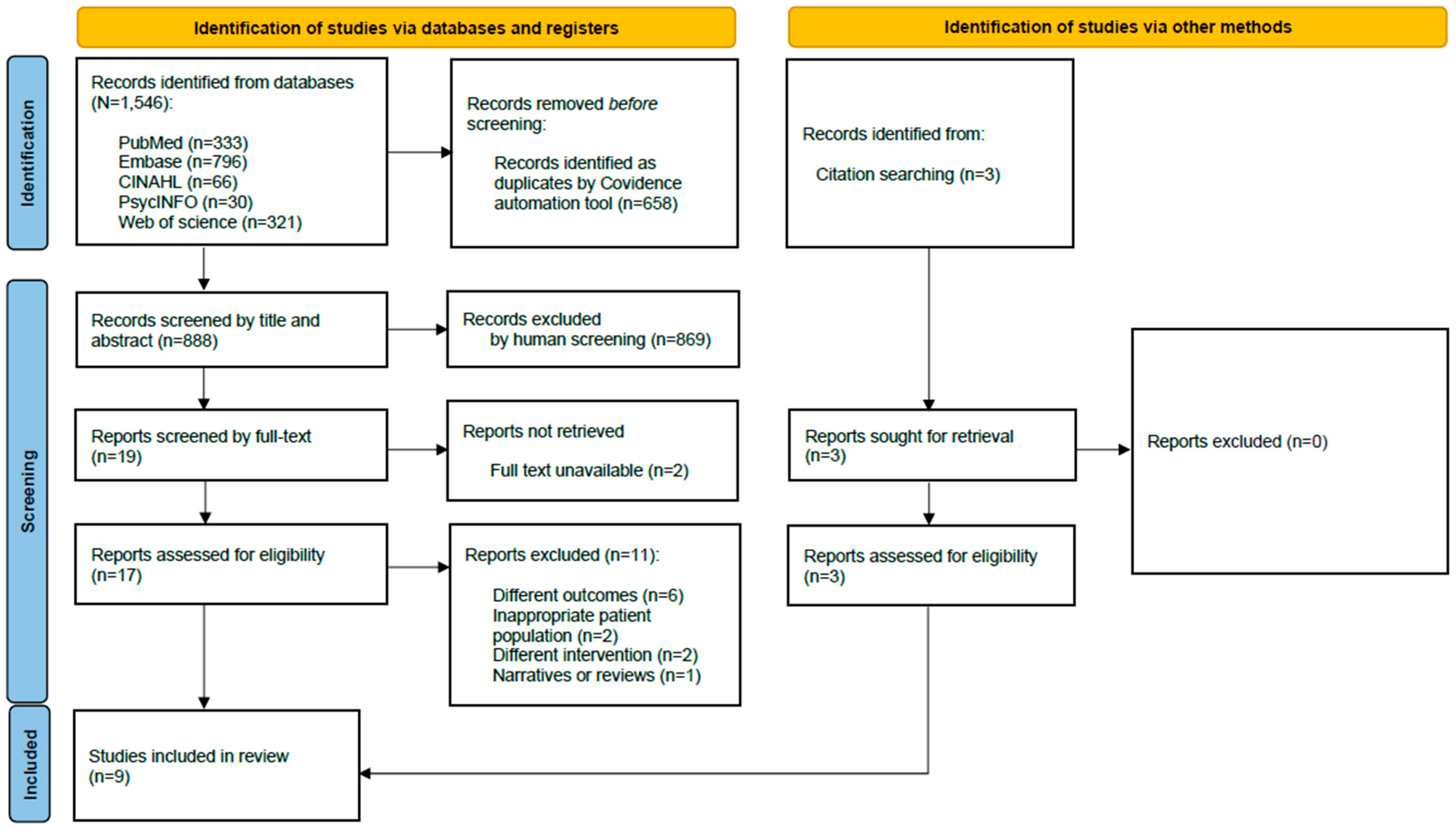
3.1. Literature Search
3.2. Study Characteristics
Risk of Bias

| Category | Human Studies | Animal Studies |
|---|---|---|
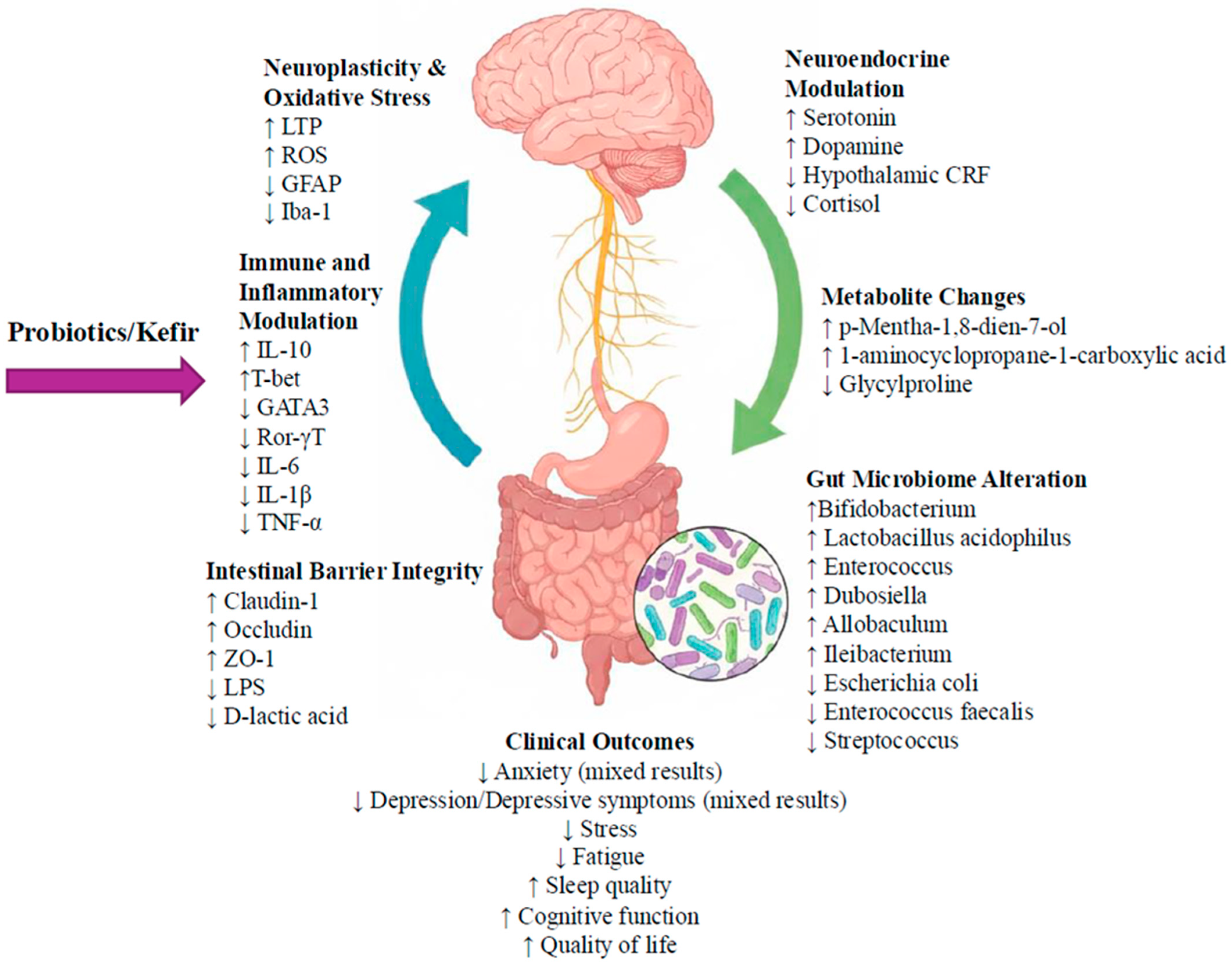
| Neurobiological & Neuroendocrine Markers | • Fitrikasari et al. (2024) [7]: Serum serotonin ↑ in probiotic group (NS, p = 0.38); control also ↑ (NS, p = 0.09); post-intervention serotonin higher in control vs. probiotic (p = 0.01). • Lu et al. (2025) [33]: Dopamine ↑, serotonin ↑, cortisol ↓ in probiotic + mirtazapine vs. mirtazapine alone (p < 0.05). • Yang et al. (2016) [32]: Placebo group ↑ CRF and ↑ heart rate (p < 0.05); probiotic group stable. Between groups: probiotic group had ↓ CRF and ↓ heart rate (p < 0.05). • Juan et al. (2022) [27]: No significant changes in estradiol or cortisol. | • Sun et al. (2024) [3]: ↓ hypothalamic CRF (p < 0.001); ↓ serum CORT; ↑ hippocampal GR/Nr3c1 (p < 0.001); MR unchanged; kefir restored serum 5-HT and 5-HTP. |
| Systemic Inflammatory & Immune Markers | • Smoak (2021) [35]: No significant changes in serum IL-6 or CRP; whole-blood LPS-stimulated IL-6 ↓ over time (p = 0.019); no TNF-α effects. ↑ circulating monocytes (p = 0.035), ↑ classical monocytes (p < 0.001), ↓ nonclassical monocytes (p = 0.040), ↑ total monocytes (p = 0.041), ↓ intermediate monocytes (p = 0.027). • Juan et al. (2022) [27]: No significant IL-1β, IL-6, or TNF-α changes. | • Sun et al. (2024) [3]: ↓ hippocampal & serum IL-6, IL-1β, TNF-α, IL-17 (all p < 0.001); ↑ IL-10 (p < 0.001 or p < 0.01). T-cell transcriptional markers: ↑ T-bet; ↓ GATA3 and ↓ Ror-γT (all p < 0.001). Colon: ↓ IL-6, ↓ IL-1β, ↓ TNF-α, ↓ IL-17A; ↑ IL-10 (p < 0.001 or p < 0.01). |
| Gut Barrier Integrity & Microbial Translocation | • Peng et al. (2021) [34]: ↓ D-lactic acid, ↓ PCT, ↓ endotoxin in probiotic and probiotic + paroxetine groups (p < 0.05); greater reductions with the combination (p < 0.05). • Smoak (2021) [35]: Serum LPS time–group interaction significant (p = 0.01) favoring kefir. | • Sun et al. (2024) [3]: ↓ serum LPS (p < 0.001). ↑ Claudin-1, ↑ Occludin, ↑ ZO-1 (p < 0.001 or p < 0.01). |
| Gut Microbiota Composition & Diversity | • Juan et al. (2022) [27]: No α- or β-diversity differences; ↓ Streptococcus (p = 0.023), ↓ Tyzzerella (p = 0.033), ↑ Enterococcus after chemotherapy. • Lu et al. (2025) [33]: ↑ L. acidophilus, ↑ Bifidobacterium; ↓ E. coli, ↓ E. faecalis; all changes greater in combination therapy (p < 0.05). | • Sun et al. (2024) [3]: Kefir shifted diversity toward healthy controls; ↑ α- and β-diversity vs. CRC + CUMS. ↑ Bifidobacterium, ↑ Dubosiella, ↑ Allobaculum, ↑ Ileibacterium; ↓ Desulfovibrio. • Juan et al. (2022) [27]: Probiotics ↑ Enterococcus, Bifidobacterium, and Helicobacter; reversed chemotherapy-induced α- and β-diversity disruption. |
| Metabolites & Nutritional Outcomes | • Juan et al. (2022) [27]: ↓ glucose (p = 0.02), ↓ LDL (p = 0.03); nine metabolites differed (e.g., p-Mentha-1,8-dien-7-ol, linoelaidyl carnitine, phenylalanyl-tryptophan). • Lu et al. (2025) [33]: ↑ Hb, ↑ albumin, ↑ prealbumin—all greater with probiotics + mirtazapine (p < 0.001). • Peng et al. (2021) [34]: ↑ TP, ↑ ALB, ↑ Hb, ↑ PA, ↑ TLC in both groups (p < 0.05); greater increases in combo group (p < 0.05). | • Juan et al. (2022) [27]: ↑ plasma p-Mentha-1,8-dien-7-ol in saline-treated (p = 0.0086) and chemotherapy-treated rats (p = 0.0017). |
| Oxidative Stress & Neural Plasticity | • No human studies reported oxidative stress or synaptic plasticity markers. | • Juan et al. (2022) [27]: ↓ hippocampal ROS (p < 0.05); ↓ Iba-1 (p = 0.0004); ↓ GFAP (p = 0.0012). ↑ LTP, ↑ PSD95, ↑ synaptophysin (all p < 0.001). |
| First author/ Year/Country | Population/Cancer Type | Probiotic Strain(s) /Dosage/Duration | Interventions | Outcomes | Behavioral Findings | Biomarkers Findings |
|---|---|---|---|---|---|---|
| Juan et al. /2022/China [27] | Animals/Rat model of chemotherapy-related cognitive impairment (CRCI) model | Bifidobacterium longum, Lactobacillus acidophilus, Enterococcus faecalis (≥1.0 × 10⁷ CFU/210 mg)/NR | Saline + Vehicle (Control); Saline + Probiotic; Chemotherapy + Vehicle (Chemo-brain model); Chemotherapy + Probiotic | Hippocampal LTP, synaptic plasticity (PSD95, synaptophysin), ROS and oxidative stress, glial activation (Iba-1, GFAP), plasma metabolites (including p-Mentha-1,8-dien-7-ol), gut microbiome diversity and composition (16S rRNA sequencing) | NR | Probiotics Biomarker Outcomes: ↑ plasma p-Mentha-1,8-dien-7-ol (p = 0.0086 and p = 0.0017) Reversal of chemotherapy-induced microbiome α/β dysbiosis (p < 0.01) ↑ Enterococcus, ↑ Bifidobacterium, ↑ Helicobacter, MDO Injection Mechanistic Biomarker Outcomes: Restored LTP (p < 0.001) ↑ PSD95 (p < 0.0001) Synaptophysin unchanged (p = 0.604) ↑ PSD95 + synaptophysin colocalization (p < 0.0001) ↓ ROS (p < 0.0001) ↓ Iba1 (p = 0.0004) ↓ GFAP (p = 0.0012) |
| Sun et al./2024/ China [3] | Animals/Colorectal cancer (CRC) induced by AOM + DSS with CUMS | Tibetan kefir goat milk (community dominated by Lactobacillus kefiranofaciens)/once daily for 120 days | CRC + CUMS; CRC + CUMS + Fluoxetine; CRC + CUMS + Tibetan kefir goat milk; CRC only; control group | Depressive- and anxiety-like behavior (FST, TST, SPT, open-field test, EPM), hypothalamic CRF, serum CORT, serum LPS, inflammatory cytokines (TNF-α, IL-1β, IL-6, IL-17) in serum/hippocampus/colon, serum 5-HT and colonic 5-HTP, hippocampal GR (Nr3c1) and MR (Nr3c2) expression, colonic tight junction markers (Claudin-1, ZO-1), and gut microbiome diversity/composition (16S rRNA sequencing) | CRC + CUMS vs. Control: ↑ immobility (FST/TST; p < 0.001), ↓ open-arm time (EPM; p < 0.001); CRC + CUMS vs. CRC: ↑ despair-like behavior (FST p < 0.001, TST p < 0.05); Kefir vs. CRC + CUMS: ↓ immobility (FST/TST; p < 0.001 or p < 0.05), ↑ sucrose preference/↓ anhedonia (SPT; p < 0.001), ↓ anxiety-like behavior (open-field/EPM; p < 0.001); Fluoxetine vs. CRC + CUMS: ↓ immobility (FST/TST; p < 0.001 or p < 0.05), ↑ sucrose preference/↓ anxiety-like behavior | CRC + CUMS (vs. control): ↑ serum & hippocampal cytokines: IL-6, IL-1β, TNF-α, IL-17 (p < 0.001) ↑ colonic pro-inflammatory cytokines: IL-6, IL-1β, TNF-α, IL-17A (p < 0.001) and ↓ IL-10 (p < 0.001) ↑ serum LPS (p < 0.001) ↓ tight junction proteins in colon: Claudin-1, ZO-1, Occludin (p < 0.001) ↓ serum 5-HT and ↓ colonic 5-HTP (p < 0.001), ↓ gut microbiome α-diversity; β-diversity separated from controls (PCoA discrete), ↑ Firmicutes, ↓ Bacteroidetes → ↑ Firmicutes:Bacteroidetes ratio; Genus shifts: ↑ Lactobacillus, Turicibacter, Desulfovibrio; ↓ Ileibacterium, Muribaculaceae, Clostridia, Lachnospiraceae; Kefir group (vs. CRC + CUMS): ↓ hypothalamic CRF (p < 0.001) and ↓ serum CORT,↑ hippocampal GR/Nr3c1 (p < 0.001), ↓/inhibited serum & hippocampal cytokines: IL-6, IL-1β, TNF-α, IL-17, Alleviated colonic inflammation imbalance (including ↑ IL-10) (p < 0.001 or p < 0.01) ↓ serum LPS, ↑ tight junction proteins: Claudin-1, ZO-1, Occludin (p < 0.001 or p < 0.01) ↑/restored serum 5-HT and colonic 5-HTP, Microbiome (implied vs. CRC + CUMS): ↑ Dubosiella, Bifidobacterium, Ileibacterium, Allobaculum and ↓ Lactobacillus, Bacillus, Desulfovibrio, Streptococcus; Fluoxetine group (vs. CRC + CUMS): ↓ hypothalamic CRF (p < 0.001) and ↓ serum CORT, ↑ hippocampal GR/Nr3c1 (p < 0.001), ↓/inhibited serum & hippocampal cytokines: IL-6, IL-1β, TNF-α, IL-17, alleviated colonic inflammation imbalance (including ↑ IL-10) (p < 0.001 or p < 0.01), ↓ serum LPS (described as reduced), ↑ tight junction proteins: Claudin-1, ZO-1, Occludin (p < 0.001 or p < 0.01) ↑/restored serum 5-HT and colonic 5-HTP, Microbiome: effect at the phylum level was described as greater than kefir |
| Fitrikasari et al./2024/ Indonesia [7] | Humans/Mixed cancer types undergoing chemotherapy | Lactobacillus rhamnosus Rosell-11 and Lactobacillus helveticus Rosell-52/2 × 109 CFU, twice daily, 8 weeks | Probiotics vs. Placebo | Depression, anxiety, and stress (DASS-42), serum serotonin | Within probiotic group: non-significant reductions in depression (p = 0.32), anxiety (p = 0.91), and stress (p = 0.58), but significant ↓ total DASS-42 (p = 0.001). Within placebo group: significant ↓ total DASS-42 (p = 0.002), ↓ depression (p = 0.01), ↓ anxiety (p = 0.02), ↓ stress (p = 0.007). Between groups: no significant differences in depression, anxiety, or stress scores; total DASS-42 significantly lower in probiotic vs. placebo (p = 0.048) | Within probiotic group: serum serotonin ↑ (NS; p = 0.38). Within placebo group: serum serotonin ↑ (NS; p = 0.09). Between groups: post-intervention serum serotonin higher in placebo vs. probiotic (p = 0.01) |
| Juan et al./2022/ China [27] | Humans/Breast cancer | Bifidobacterium longum (≥1.0 × 10⁷ CFU/210mg), Lactobacillus acidophilus (≥1.0 × 10⁷ CFU/210mg) and Enterococcus faecalis (≥1.0 × 10⁷ CFU/210mg)/twice daily, ~12–24 weeks (throughout chemotherapy) | Probiotics vs. Placebo | CRCI incidence (HVLT-R, BVMT-R, JoLO, VFT, DS, DST), anxiety & depression (SAS, SDS), biochemical & metabolic markers (GLU, LDL, IL-1β, IL-6, TNF-α, oestradiol, cortisol), gut microbiota composition (16S rRNA sequencing) | Between groups: ↓ total CRCI incidence (35% vs. 81%; p < 0.001); ↓ mild CRCI (p = 0.003); ↓ moderate CRCI (p < 0.001); ↑ cognitive performance on HVLT-R IR (p = 0.003), HVLT-R DR (p = 0.001), BVMT-R IR (p = 0.001), BVMT-R DR (p = 0.003), BVMT-R IF (p < 0.001), JoLO (p = 0.007), VFT (p < 0.001); no significant differences in anxiety or depression | Between groups: ↓ blood glucose (p = 0.02), ↓ LDL (p = 0.03) in probiotic vs. placebo at chemotherapy completion; no significant group differences in IL-1β, IL-6, TNF-α, estradiol, or cortisol. Gut microbiota: ↑ Enterococcus (p < 0.001), ↓ Streptococcus(p = 0.023), ↓ Tyzzerella_3 (p = 0.033) in probiotics; Between groups: significant differences in metabolite change for Linoelaidyl carnitine (p = 0.048), Glycylproline (p = 0.01), p-Mentha-1,8-dien-7-ol (p = 0.006), Carnosol (p = 0.009), 3,4,5-Trimethoxyphenyl glucoside (p = 0.007), 1,3-diazinane-2,4-dione (p = 0.02), Adamantan-1-amine (p = 0.02), Phenylalanyl-Tryptophan (p = 0.03), and 1-aminocyclopropane-1-carboxylic acid (p = 0.02) |
| Yang et al./2016/ China [32] | Humans/Laryngeal cancer (pre-surgery) | Clostridium butyricum, 420 mg per capsule/twice daily, 2 weeks | Probiotics vs. Placebo | Anxiety (HAMA), serum CRF, heart rate | Within probiotic group: ↓ HAMA scores before surgery (p < 0.05). Within placebo group: ↑ HAMA score. Between groups: lower pre-surgery HAMA in probiotic vs. placebo (p < 0.05) | Within probiotic group: CRF and heart rate remained stable pre-surgery. Within placebo group: ↑ serum CRF and ↑ heart rate before surgery (p < 0.05). Between groups: lower serum CRF (p < 0.05) and lower heart rate (p < 0.05) in probiotic vs. placebo |
| Tzikos et al./2025/ Greece [17] | Humans/Gastrointestinal cancers (gastric, bowel, rectal, pancreatic) | Bifidobacterium animalis subsp. lactis LMG P-21384 [BS01] [2.50 × 10¹⁰ cfu/dose], Bifidobacterium breve DSM 16604 [BR03] [1.00 × 10¹⁰ cfu/dose], Bifidobacterium longum DSM 16603 [BL04] [8.00 × 10⁹ cfu/dose], and Lacticaseibacillus rhamnosus ATCC 53103 [GG] [4.50 × 10¹⁰ cfu/sachet twice daily, 4 weeks (minimum viable count ≥1 × 10⁹ CFU at shelf-life end) | Probiotics vs. Placebo | Depression and anxiety (BDI-II, HDRS, GAD-7), stress (PSS-14), [3] quality (BDI-II [Q16] and HDRS [questions Q4, Q5, Q6]) | Within probiotic group: ↓ HDRS depression scores and ↓ proportion of depressed participants (p < 0.001); ↓ GAD-7 anxiety (p = 0.009 at T2; p = 0.002 at T3); ↓ perceived stress (PSS-14) (p = 0.001 to p < 0.001); ↑ proportion of non-depressed, non-anxious, and low-stress individuals; Improved sleep quality (significant improvements across HDRS/BDI-II sleep items). Within placebo group: ↑ depression (HDRS) (p = 0.002 to p < 0.001); ↑ anxiety (GAD-7) (p < 0.001); ↑ perceived stress (PSS-14) (p = 0.043 to p < 0.001); Deterioration in sleep measures. Between groups: ↓ risk of depression in probiotic vs. placebo (T2 RR = 0.18; T3 RR = 0.10; both p < 0.001); Lower risk of anxiety (T2 RR = 0.30; T3 RR = 0.13; p < 0.001); Greater reduction in stress (p = 0.016 at T2; p < 0.001 at T3); Better sleep quality in probiotic vs. placebo (significant across sleep-related HDRS/BDI-II items) | NR |
| Lee et al./2014/ Republic of Korea [31] | Humans/Colorectal cancer survivors | Lacidofil: L. rhamnosus R0011 + L. acidophilus R0052 (2 × 10⁹ CFU/capsule)/twice daily, 12 weeks | Probiotics vs. Placebo | Depression/anxiety (PHQ-9), CRC-related QoL (FACT-G, FACT-C), fatigue (FACT-F), neurologic symptoms (FACT-NTX), bowel symptoms (ROME III) | Within probiotic group: ↓ PHQ-9 (p = 0.01), ↓ IBS-like bowel symptoms (p = 0.03), ↑ FACT-C (p = 0.04), ↑ FACT-F (p = 0.02). Within placebo: no significant PHQ-9 change (p = 0.33). Between groups: ↓ bowel symptoms (p = 0.03), ↑ functional well-being (FWB; p = 0.04), ↑ FACT-C (p = 0.04) favoring probiotics. | NR |
| Lu et al./2025/ China [33] | Humans/Gastric cancer with depression after radical resection | Bifidobacterium triple viable bacteria capsules, 0.21 g/twice daily, 8 weeks | Probiotics + mirtazapine vs. mirtazapine alone | Depression (SDS, HAMD, BDI), QoL (European Organization for Cancer Research and Treatment of the Core Scale of Life Gastric Cancer Scale), neuroendocrine markers (dopamine, serotonin, cortisol), nutritional status (Hb, ALB, PA), intestinal flora (colony counts) | Within probiotic + mirtazapine group: ↓ SDS, ↓ HAMD, ↓ BDI (all p < 0.05); improved QoL domains (dysphagia, stomach pain, dietary restriction, hiccups, anxiety, total symptom burden; all p < 0.05). Between groups: greater reductions in SDS, HAMD, BDI and QoL symptom scores in probiotic + mirtazapine vs. mirtazapine alone (all p < 0.001) | Within probiotic + mirtazapine group: ↑ dopamine, ↑ serotonin, ↓ cortisol (all p < 0.05); ↑ Lactobacillus acidophilus and Bifidobacterium, ↓ Escherichia coli and Enterococcus faecalis (all p < 0.05); ↑ hemoglobin, ↑ serum albumin, ↑ prealbumin (all p < 0.05). Within mirtazapine-only group: same directions of change (↑ dopamine/serotonin, ↓ cortisol; ↑ Lactobacillus/Bifidobacterium, ↓ E. coli/E. faecalis; ↑ Hb/ALB/PA), but smaller improvements (all p < 0.05). Between groups: greater ↑ dopamine and serotonin and greater ↓ cortisol (all p < 0.001), larger ↑ L. acidophilus and Bifidobacterium and larger ↓ E. coli and E. faecalis (all p < 0.001), and greater ↑ Hb, ALB, PA (all p < 0.001) |
| Peng et al./2021/ China [34] | Humans/Liver cancer with type 2 diabetes mellitus and GI dysfunction | Capsules containing Bifidobacterium, Enterococcus, and Lactobacillus acidophilus/2 capsules, 3× daily, 4 weeks | Probiotics + paroxetine vs. Probiotics alone | Anxiety and depression (HAMA, HAMD), gut barrier markers (D-lactic acid, PCT, endotoxin), nutritional status (TP, ALB, Hb, PA, TLC) | Within probiotic + paroxetine group: ↓ HAMA and ↓ HAMD (both p < 0.05). Within probiotics-only group: ↓ HAMA and ↓ HAMD (both p < 0.05). Between groups: greater reductions in HAMA and HAMD in probiotic + paroxetine vs. probiotics alone (both p < 0.001) | Within probiotic + paroxetine group: ↓ D-lactic acid, ↓ PCT, ↓ endotoxin (all p < 0.05); ↑ TP, ↑ ALB, ↑ Hb, ↑ PA, ↑ TLC (all p < 0.05). Within probiotics-only group: similar directional changes (all p < 0.05). Between groups: greater ↓ D-lactic acid, ↓ PCT, ↓ endotoxin and greater ↑ TP, ALB, Hb, PA, TLC in probiotic + paroxetine vs. probiotics alone (all p < 0.05) |
| Smoak et al./2021/ USA[35] | Humans/Cancer survivors in an exercise program | Kefir containing 12 probiotic strains (Lactobacillus lactis, Lactobacillus rhamnosus, Streptococcus diacetylactis, Lactobacillus plantarum, Lactobacillus casei, Saccharomyces florentinus, Leuconostoc cremoris, Bifidobacterium longum, Bifidobacterium breve, Lactobacillus acidophilus, Bifidobacterium lactis, and Lactobacillus reuteri), ~15–20 billion CFU per 8 oz serving/3 times per week, 12 weeks | Kefir + exercise vs. Exercise alone | Depression (BDI), fatigue (Revised Piper Fatigue Scale), QOL (Ferrans and Powers Quality of Life Index III), gastric distress, serum LPS, plasma IL-6, CRP, monocyte subsets (total, classical CD14+CD16−; intermediate CD14+CD16++; nonclassical CD14++CD16+), whole blood LPS-stimulated IL-6 and TNF-α production | Within kefir + exercise (KEF): ↓ BDI: 51.4%, ↓ Fatigue: 39.3%, ↓ Gastric distress: 64.7%, Within exercise-only control (CON): ↓ BDI: 3.4%, ↓ Fatigue: 5.1%, ↓ Gastric distress: 23.6%, Between groups (KEF vs. CON; time×group interaction): KEF showed greater ↓ BDI (p = 0.046), greater ↓ Fatigue (p = 0.03), greater ↓ Gastric distress (p = 0.021), Overall (main effect of time, all participants): ↓ BDI (p = 0.032), ↓ Fatigue (p = 0.017), ↓ Gastric distress (p = 0.013) | Within kefir + exercise (KEF): ↓ Serum LPS: 35.4%, ↑ % immune cells that were monocytes: 47.3%, ↑ % classical monocytes: 18.0%, ↓ % nonclassical monocytes: 22.3%, Within exercise-only control (CON): ↑ Serum LPS: 13.6%, ↑ % immune cells that were monocytes: 3.8%, ↓ % classical monocytes: 4.4%, ↑ % nonclassical monocytes: 30.4%, Between groups (KEF vs. CON; time×group interaction): KEF showed greater ↓ Serum LPS (p = 0.01), greater ↑ % immune cells that were monocytes (p = 0.035), greater ↑ % classical monocytes (p < 0.001), greater ↓ % nonclassical monocytes (p = 0.040), Overall (main effect of time, all participants): ↑ total monocyte count (p = 0.041), ↓ % intermediate monocytes (p = 0.027), ↓ whole blood LPS-stimulated IL-6 production per monocyte (p = 0.019), ↓ whole blood LPS-stimulated TNF-α total production (p = 0.022), No main effects or interactions: resting/fasted serum CRP, resting/fasted serum IL-6, whole blood LPS-stimulated IL-6 total production (stim–unstim), TNF-α production per monocyte |
| Domain | Sun et al./2024 [3] | Juan et al./2022 [27] |
|---|---|---|
| Sequence generation | Some concerns | Some concerns |
| Baseline characteristics | Low risk | Some concerns |
| Allocation concealment | Some concerns | Some concerns |
| Random housing | Some concerns | Some concerns |
| Blinding (caregivers/researchers) | Some concerns | Some concerns |
| Random outcome assessment | Some concerns | Some concerns |
| Blinding (outcome assessors) | Some concerns | Some concerns |
| Incomplete outcome data | Low risk | Low risk |
| Selective outcome reporting | Some concerns | Some concerns |
| Other sources of bias | Low risk | High risk |
| Overall risk of bias | Moderate to high | Moderate to high |
| Study | Randomization Process | Deviations from Intended Interventions | Missing Outcome Data | Measurement of Outcomes | Selection of Reported Results | Overall Risk of Bias |
|---|---|---|---|---|---|---|
| Fitrikasari et al./2024 [7] | Low risk | Low risk | Low risk | Low risk | Low risk | Low risk |
| Lee et al./2014 [31] | Low risk | Low risk | Low risk | Low risk | Low risk | Low risk |
| Tzikos et al./2025 [17] | Low risk | Low risk | Low risk | Low risk | Low risk | Low risk |
| Yang et al./2016 [32] | Some concerns | Low risk | Low risk | Some concerns (self-reported scales) | Low risk | Some concerns |
| Juan et al./2022 [27] | Some concerns | Low risk | Low risk | Some concerns (self-reported scales) | Low risk | Some concerns |
| Lu et al./2025 [33] | Some concerns | Low risk | Low risk | Some concerns | Low risk | Some concerns |
| Peng et al./2021 [34] | Some concerns | Low risk | Low risk | Some concerns | Low risk | Some concerns |
| Smoak et al./2021 [35] | High risk (nonrandom allocation) | High risk (no placebo control) | Low risk | Some concerns | Some concerns | High risk |
3.3. Impact of Probiotics on Biomarkers/Metabolic/Gut Microbiome
3.4. Impact of Probiotics on Anxiety/Depression
3.5. Impact of Probiotics on Other Behavioral Outcomes
3.6. Safety and Tolerability
4. Discussion
4.1. Mechanisms of Probiotics Actions
4.2. Effects of Probiotics on Anxiety and Depression
4.3. Effects of Probiotics on Other Behavioral Outcomes
4.4. Limitations
4.5. Conclusions
Supplementary Materials
Author Contributions
Funding
Institutional Review Board Statement
Informed Consent Statement
Data Availability Statement
Conflicts of Interest
References
- Ostovar, S.; Modarresi Chahardehi, A.; Mohd Hashim, I.H.; Othman, A.; Kruk, J.; Griffiths, M.D. Prevalence of psychological distress among cancer patients in Southeast Asian countries: A systematic review. Eur. J. Cancer Care 2022, 31, e13669. [Google Scholar] [CrossRef]
- Dauchy, S.; Dolbeault, S.; Reich, M. Depression in cancer patients. EJC Suppl. 2013, 11, 205–215. [Google Scholar] [CrossRef] [PubMed]
- Sun, Y.H.; Chang, M.J.; Zhao, H.F.; Sun, R.; Yue, T.L.; Yuan, Y.H.; Shi, Y.H. Metagenome of Tibetan kefir grains and its alleviating effect on dysfunction of gut microbiome and depressive colorectal cancer comorbidity induced by chronic stress and AOM/DSS. Food Biosci. 2024, 59, 104265. [Google Scholar] [CrossRef]
- Caruso, R.; Nanni, M.G.; Riba, M.B.; Sabato, S.; Grassi, L. The burden of psychosocial morbidity related to cancer: Patient and family issues. Int. Rev. Psychiatry 2017, 29, 389–402. [Google Scholar] [CrossRef]
- Michalek, I.M.; Caetano Dos Santos, F.L.; Wojciechowska, U.; Didkowska, J. Suicide risk among adolescents and young adults after cancer diagnosis: Analysis of 34 cancer groups from 2009 to 2019. J. Cancer Surviv. 2023, 17, 657–662. [Google Scholar] [CrossRef]
- Niedzwiedz, C.L.; Knifton, L.; Robb, K.A.; Katikireddi, S.V.; Smith, D.J. Depression and anxiety among people living with and beyond cancer: A growing clinical and research priority. BMC Cancer 2019, 19, 943. [Google Scholar] [CrossRef] [PubMed]
- Fitrikasari, A.; Jusup, I.; Hadiati, T.; Sarjana, W.; Ardiningrum, S.I.; Chandra, C.K.; Santosa, D. Probiotic supplementation for reducing psychological symptoms in cancer patients on chemotherapy: A pilot trial. Ment. Health Prev. 2024, 36, 200368. [Google Scholar] [CrossRef]
- Fernandes, C.; Miranda, M.C.C.; Roque, C.R.; Paguada, A.L.P.; Mota, C.A.R.; Florêncio, K.G.D.; Pereira, A.F.; Wong, D.V.T.; Oriá, R.B.; Lima-Júnior, R.C.P. Is there an interplay between environmental factors, microbiota imbalance, and cancer chemotherapy-associated intestinal mucositis? Pharmaceuticals 2024, 17, 1020. [Google Scholar] [CrossRef]
- Maddern, A.S.; Coller, J.K.; Bowen, J.M.; Gibson, R.J. The association between the gut microbiome and development and progression of cancer treatment adverse effects. Cancers 2023, 15, 4301. [Google Scholar] [CrossRef]
- Deleemans, J.M.; Chleilat, F.; Reimer, R.A.; Henning, J.-W.; Baydoun, M.; Piedalue, K.-A.; McLennan, A.; Carlson, L.E. The chemo-gut study: Investigating the long-term effects of chemotherapy on gut microbiota, metabolic, immune, psychological and cognitive parameters in young adult Cancer survivors; study protocol. BMC Cancer 2019, 19, 1243. [Google Scholar] [CrossRef]
- Barandouzi, Z.A.; Eng, T.; Shelton, J.; Khanna, N.; Scott, I.; Meador, R.; Bruner, D.W. Associations of the gut microbiome with psychoneurological symptom cluster in women with gynecologic cancers: A longitudinal study. Support. Care Cancer 2023, 31, 626. [Google Scholar] [CrossRef] [PubMed]
- Barandouzi, Z.A.; Bruner, D.W.; Miller, A.H.; Paul, S.; Felger, J.C.; Wommack, E.C.; Higgins, K.A.; Shin, D.M.; Saba, N.F.; Xiao, C. Associations of inflammation with neuropsychological symptom cluster in patients with head and neck cancer: A longitudinal study. Brain Behav. Immun.-Health 2023, 30, 100649. [Google Scholar] [CrossRef] [PubMed]
- Grassi, L.; Caruso, R.; Riba, M.; Lloyd-Williams, M.; Kissane, D.; Rodin, G.; McFarland, D.; Campos-Ródenas, R.; Zachariae, R.; Santini, D. Anxiety and depression in adult cancer patients: ESMO Clinical Practice Guideline. ESMO Open 2023, 8, 101155. [Google Scholar] [CrossRef] [PubMed]
- Martínez, M.; Arantzamendi, M.; Belar, A.; Carrasco, J.M.; Carvajal, A.; Rullán, M.; Centeno, C. ‘Dignity therapy’, a promising intervention in palliative care: A comprehensive systematic literature review. Palliat. Med. 2017, 31, 492–509. [Google Scholar] [CrossRef]
- Breitbart, W.; Pessin, H.; Rosenfeld, B.; Applebaum, A.J.; Lichtenthal, W.G.; Li, Y.; Saracino, R.M.; Marziliano, A.M.; Masterson, M.; Tobias, K. Individual meaning-centered psychotherapy for the treatment of psychological and existential distress: A randomized controlled trial in patients with advanced cancer. Cancer 2018, 124, 3231–3239. [Google Scholar] [CrossRef]
- Andersen, B.L.; Lacchetti, C.; Ashing, K.; Berek, J.S.; Berman, B.S.; Bolte, S.; Dizon, D.S.; Given, B.; Nekhlyudov, L.; Pirl, W. Management of anxiety and depression in adult survivors of cancer: ASCO guideline update. J. Clin. Oncol. 2023, 41, 3426–3453. [Google Scholar] [CrossRef]
- Tzikos, G.; Chamalidou, E.; Christopoulou, D.; Apostolopoulou, A.; Gkarmiri, S.; Pertsikapa, M.; Menni, A.E.; Theodorou, I.M.; Stavrou, G.; Doutsini, N.D.; et al. Psychobiotics Ameliorate Depression and Anxiety Status in Surgical Oncology Patients: Results from the ProDeCa Study. Nutrients 2025, 17, 857. [Google Scholar] [CrossRef]
- Nikbakhsh, N.; Hasani, Z.; Azizi, A.; Zabihi, E.; Ghanbari, A.; Salehian, R.; Moudi, S. Efficacy of Escitalopram in Pain, Anxiety, and Depressive Symptoms of Patients with Breast Cancer: A Randomized Single-Blind Controlled Trial. Iran. Red Crescent Med. J. 2021, 23, e720. [Google Scholar]
- Liu, P.; Li, P.; Li, Q.; Yan, H.; Shi, X.; Liu, C.; Zhang, Y.; Peng, S. Effect of pretreatment of S-ketamine on postoperative depression for breast cancer patients. J. Investig. Surg. 2021, 34, 883–888. [Google Scholar] [CrossRef]
- Serfaty, M.; King, M.; Nazareth, I.; Moorey, S.; Aspden, T.; Mannix, K.; Davis, S.; Wood, J.; Jones, L. Effectiveness of cognitive–behavioural therapy for depression in advanced cancer: CanTalk randomised controlled trial. Br. J. Psychiatry 2020, 216, 213–221. [Google Scholar] [CrossRef]
- Serfaty, M.; King, M.; Nazareth, I.; Moorey, S.; Aspden, T.; Tookman, A.; Mannix, K.; Gola, A.; Davis, S.; Wood, J. Manualised cognitive-behavioural therapy in treating depression in advanced cancer: The CanTalk RCT. Health Technol. Assess. 2019, 23, 1. [Google Scholar] [CrossRef]
- Savard, J.; Simard, S.; Giguere, I.; Ivers, H.; Morin, C.M.; Maunsell, E.; Gagnon, P.; Robert, J.; Marceau, D. Randomized clinical trial on cognitive therapy for depression in women with metastatic breast cancer: Psychological and immunological effects. Palliat. Support. Care 2006, 4, 219–237. [Google Scholar] [CrossRef]
- Zhang, Q.; Chen, B.; Zhang, J.; Dong, J.; Ma, J.; Zhang, Y.; Jin, K.; Lu, J. Effect of prebiotics, probiotics, synbiotics on depression: Results from a meta-analysis. BMC Psychiatry 2023, 23, 477. [Google Scholar] [CrossRef] [PubMed]
- Misera, A.; Liśkiewicz, P.; Łoniewski, I.; Skonieczna-Żydecka, K.; Samochowiec, J. Effect of psychobiotics on psychometric tests and inflammatory markers in major depressive disorder: Meta-analysis of randomized controlled trials with meta-regression. Pharmaceuticals 2021, 14, 952. [Google Scholar] [CrossRef] [PubMed]
- Liang, S.; Wang, T.; Hu, X.; Luo, J.; Li, W.; Wu, X.; Duan, Y.; Jin, F. Administration of Lactobacillus helveticus NS8 improves behavioral, cognitive, and biochemical aberrations caused by chronic restraint stress. Neuroscience 2015, 310, 561–577. [Google Scholar] [CrossRef]
- Zhao, Y.; Kang, Y.; Zhao, Z.; Yang, G.; Gao, Y.; Gao, L.; Wang, C.; Li, S. Lacticaseibacillus rhamnosus TF318 prevents depressive behavior in rats by inhibiting HPA-axis hyperactivity and upregulating BDNF expression. Neurosci. Lett. 2023, 814, 137460. [Google Scholar] [CrossRef] [PubMed]
- Juan, Z.; Chen, J.; Ding, B.; Yongping, L.; Liu, K.; Wang, L.; Le, Y.; Liao, Q.; Shi, J.; Huang, J.; et al. Probiotic supplement attenuates chemotherapy-related cognitive impairment in patients with breast cancer: A randomised, double-blind, and placebo-controlled trial. Eur. J. Cancer 2022, 161, 10–22. [Google Scholar] [CrossRef]
- Hooijmans, C.R.; Rovers, M.M.; de Vries, R.B.; Leenaars, M.; Ritskes-Hoitinga, M.; Langendam, M.W. SYRCLE’s risk of bias tool for animal studies. BMC Med. Res. Methodol. 2014, 14, 43. [Google Scholar] [CrossRef]
- Sterne, J.A.; Savović, J.; Page, M.J.; Elbers, R.G.; Blencowe, N.S.; Boutron, I.; Cates, C.J.; Cheng, H.-Y.; Corbett, M.S.; Eldridge, S.M. RoB 2: A revised tool for assessing risk of bias in randomised trials. BMJ 2019, 366, l4898. [Google Scholar] [CrossRef]
- Minozzi, S.; Dwan, K.; Borrelli, F.; Filippini, G. Reliability of the revised Cochrane risk-of-bias tool for randomised trials (RoB2) improved with the use of implementation instruction. J. Clin. Epidemiol. 2022, 141, 99–105. [Google Scholar] [CrossRef]
- Lee, J.-Y.; Chu, S.-H.; Jeon, J.Y.; Lee, M.-K.; Park, J.-H.; Lee, D.-C.; Lee, J.-W.; Kim, N.-K. Effects of 12 weeks of probiotic supplementation on quality of life in colorectal cancer survivors: A double-blind, randomized, placebo-controlled trial. Dig. Liver Dis. 2014, 46, 1126–1132. [Google Scholar] [CrossRef]
- Yang, H.; Zhao, X.; Tang, S.; Huang, H.; Zhao, X.; Ning, Z.; Fu, X.; Zhang, C. Probiotics reduce psychological stress in patients before laryngeal cancer surgery. Asia Pac. J. Clin. Oncol. 2016, 12, e92–e96. [Google Scholar] [CrossRef] [PubMed]
- Lu, H.; Wu, W.D.; Ji, L.; Xu, X.Y. Effects of Bifidobacterium triple viable bacteria-assisted mirtazapine in managing depression in patients after radical surgery for gastric cancer. World J. Gastrointest. Surg. 2025, 17, 100821. [Google Scholar] [CrossRef] [PubMed]
- Peng, Y.; Yang, X.; Wang, Y. Effect of Paroxetine Combined with Probiotics in Patients with Type 2 Diabetes Mellitus Complicated with Gastrointestinal Dysfunction and Liver Cancer. J. Oncol. 2021, 2021, 4529915. [Google Scholar] [CrossRef] [PubMed]
- Smoak, P.; Harman, N.; Flores, V.; Kisiolek, J.; Pullen, N.A.; Lisano, J.; Hayward, R.; Stewart, L.K. Kefir Is a Viable Exercise Recovery Beverage for Cancer Survivors Enrolled in a Structured Exercise Program. Med. Sci. Sports Exerc. 2021, 53, 2045–2053. [Google Scholar] [CrossRef]
- Yang, M.; Wang, L.; Luo, C.; Shang, J.; Zheng, X.; Qian, J.; Yang, R. Efficacy and safety of probiotics in preventing chemotherapy-related diarrhea in patients with colorectal cancer: A systematic review and meta-analysis based on 18 randomized trials. Medicine 2025, 104, e43126. [Google Scholar] [CrossRef]
- Yang, R.; Liu, W.; Cai, S.; Feng, X.; Chen, Y.; Cheng, X.; Ma, J.; Ma, W.; Tian, Z.; Yang, W. Evaluation of the efficacy of probiotics in the chemoradiotherapy of colorectal cancer: A meta-analysis of Randomized Controlled Trials. BMC Gastroenterol. 2025, 25, 312. [Google Scholar] [CrossRef]
- Kwon, H.; Chae, S.H.; Jung, H.J.; Shin, H.M.; Ban, O.H.; Yang, J.; Kim, J.H.; Jeong, J.E.; Jeon, H.M.; Kang, Y.W.; et al. The effect of probiotics supplementation in postoperative cancer patients: A prospective pilot study. Ann. Surg. Treat. Res. 2021, 101, 281–290. [Google Scholar] [CrossRef]


Disclaimer/Publisher’s Note: The statements, opinions and data contained in all publications are solely those of the individual author(s) and contributor(s) and not of MDPI and/or the editor(s). MDPI and/or the editor(s) disclaim responsibility for any injury to people or property resulting from any ideas, methods, instructions or products referred to in the content. |
© 2025 by the authors. Licensee MDPI, Basel, Switzerland. This article is an open access article distributed under the terms and conditions of the Creative Commons Attribution (CC BY) license.
Share and Cite
Amirkhanzadeh Barandouzi, Z.; Bruner, D.W.; Lin, Y.; Choi, H.; Zeki, L.R.; Akangbe, T.; Epari, A.; Li, H. Probiotics for Anxiety and Depressive Symptoms in Cancer: A Systematic Review of Animal and Human Studies with Mechanistic Insights. Microorganisms 2026, 14, 51. https://doi.org/10.3390/microorganisms14010051
Amirkhanzadeh Barandouzi Z, Bruner DW, Lin Y, Choi H, Zeki LR, Akangbe T, Epari A, Li H. Probiotics for Anxiety and Depressive Symptoms in Cancer: A Systematic Review of Animal and Human Studies with Mechanistic Insights. Microorganisms. 2026; 14(1):51. https://doi.org/10.3390/microorganisms14010051
Chicago/Turabian StyleAmirkhanzadeh Barandouzi, Zahra, Deborah Watkins Bruner, Yufen Lin, Hannah Choi, Layla R. Zeki, Tobi Akangbe, Amruta Epari, and Hongjin Li. 2026. "Probiotics for Anxiety and Depressive Symptoms in Cancer: A Systematic Review of Animal and Human Studies with Mechanistic Insights" Microorganisms 14, no. 1: 51. https://doi.org/10.3390/microorganisms14010051
APA StyleAmirkhanzadeh Barandouzi, Z., Bruner, D. W., Lin, Y., Choi, H., Zeki, L. R., Akangbe, T., Epari, A., & Li, H. (2026). Probiotics for Anxiety and Depressive Symptoms in Cancer: A Systematic Review of Animal and Human Studies with Mechanistic Insights. Microorganisms, 14(1), 51. https://doi.org/10.3390/microorganisms14010051