Article

Bioprospecting Honey-Derived Microorganisms for the Biological Control of Phytopathogens

by
Patrícia Perina de Oliveira
1,
Giovanna Felette de Paula
1,
Katherine Bilsland Marchesan
2,
Luiza Rodrigues de Souza
2,
José Fhilipe de Miranda da Silva
1,
João Gabriel Elston
3,
Henrique Marques de Souza
3 and
Elizabeth Bilsland
1,*
1
Synthetic Biology Laboratory, Department of Structural and Functional Biology, Institute of Biology, Universidade Estadual de Campinas, Campinas 13084-864, SP, Brazil
2
Instituto Federal de Educação, Ciência e Tecnologia de São Paulo, Câmpus Campinas, Campinas 13059-581, SP, Brazil
3
Brazilian Laboratory on Silencing Technologies, Department of Biochemistry and Histology, Institute of Biology, Universidade Estadual de Campinas, Campinas 13083-864, SP, Brazil
*
Author to whom correspondence should be addressed.
Microorganisms 2026, 14(1), 224; https://doi.org/10.3390/microorganisms14010224 (registering DOI)
Submission received: 13 December 2025 / Revised: 9 January 2026 / Accepted: 13 January 2026 / Published: 18 January 2026
(This article belongs to the Special Issue Microbes at the Root of Solutions for Anthropocene Challenges)

Abstract

Microbial biological control agents are a sustainable alternative to synthetic pesticides, yet their widespread application is limited by a lack of environmental resilience of commercial products. To address this, we exploited honey—a stringent ecological niche—as a reservoir for stress-tolerant bacteria. In this study, the bioprospection utilizing five types of commercially available honeys yielded a collection of 53 bacteria and 10 fungi. All bacterial isolates were evaluated for antimicrobial activity against a laboratory-standard bacterium and yeast, and six economically relevant phytopathogenic microorganisms. Initial screening with standard laboratory organisms proved to be an efficient method to detect strains with antimicrobial potential, correlating significantly with further phytopathogen inhibition (Spearman’s r = 0.4512, p = 0.0005). Two promising strains, M2.7 and M3.18, were selected for quantitative dual-culture assays along with molecular identification using 16S rDNA and gyrA gene sequencing, classifying them as Bacillus velezensis. These strains exhibited high inhibitory effects against the pathogens (p > 0.001), often with equivalent efficacy to the commercial biocontrol strain, and also induced significant phytopathogen hyphal deformities, such as increased septation and swelling. These findings support honey as a viable source of robust biocontrol agents, offering a sustainable strategy to substitute or complement current agrochemicals.

1. Introduction

Agriculture is a cornerstone of human civilization, yet its capacity to ensure global food security is under unprecedented strain from bacterial and fungal infections exacerbated by climate change and antimicrobial resistance (AMR) [1,2,3,4]. The Food and Agriculture Organization (FAO) estimates that plant diseases cost the global economy around $220 billion annually, roughly 10% to 16% of worldwide agricultural output [2,5]. While agrochemicals and biotechnological advances such as the development of genetically modified organisms (GMOs) have been a key pillar in amplifying agricultural production and increasing the global food supply [1,6], the accelerated growth of the world population, which is expected to reach 9.7 billion people by 2050, requires even greater efficiency [1].
However, conventional systems relying on heavy chemical inputs face diminishing returns and rising regulatory pressure due to socio-environmental impacts [7,8]. In Brazil, a top global consumer of chemical pesticides in agriculture (337 kilotons in 2020), the excessive use of these products has been linked to ecosystem damage, soil and water pollution, and adverse health effects for rural populations [5,6,9]. This reliance on antibiotics and antifungals has greatly contributed to the rise of AMR, compromising treatments in both agriculture and medicine [8,10,11,12]. Evidence suggests a correlation between agricultural antibiotic use and the emergence of resistant human pathogens via horizontal gene transfer [3,4,11]. Although the volume of antibiotics used in plant protection is lower than in clinical settings, their impact is significant as they are frequently grouped with fungicides due to their broad-spectrum activity [3,11]. These resistance patterns complicate the management of key phytopathogens. Bacterial genera such as Xanthomonas, Erwinia, and Xylella contribute to annual crop losses of up to 5 billion euros [11,13,14,15]. A notable example is X. citrus, the agent of citrus canker, which drastically reduces the market value of citrus crops [15,16,17].
Similarly, invasive fungal infections are a major component of the AMR crisis, with resistance to systemic drugs often being traced to environmental exposure to agricultural fungicides [12,18,19]. Key fungal threats include Sclerotinia sclerotiorum (Lib.) de Bary, the agent of “white mold,” which can cause complete crop loss in economically important plants like soybeans and beans [20], and the ubiquitous soil pathogen Rhizoctonia solani JG Kühn [Teleomorph: Thanatephorus cucumeris (AB Frank) Donk], which causes “damping off” in crops like rice and potato [21,22]. The genus Fusarium is equally devastating, with species like F. verticillioides (Sacc.) and Nirenberg (syn. F. moniliforme, Sheldon) responsible for maize rot and the production of mycotoxins [23,24,25], and F. oxysporum, known for causing devastating “Fusarium wilt” in banana and tomato, capable of annihilating entire plantations [26,27,28]. Furthermore, in post-harvest storage, “gray mold,” caused by Botrytis cinerea Pers., leads to significant commercial losses in fruits like strawberries and grapes [29,30,31]. Together, these pathogens, coupled with climate change and growing AMR, create an escalating risk to global food security [4,32,33,34].
Given these concerns, current agricultural methods must be complemented by sustainable approaches [4,6,9,32]. An alternative to chemical pesticides that is gaining ground worldwide is biological control strategies, which are compatible with Integrated Pest Management (IPM) and organic farming. In this scenario, bioprospecting microorganisms is a pivotal strategy to address this global demand for sustainability [35,36]. Historically, soil-based bioprospecting has led to the identification of most known antibiotics, but the high rediscovery rate has shifted focus towards less conventional sources of microorganisms [33,35,36,37]. One promising avenue involves investigating microorganisms that live in symbiosis with insects, as these unique environments may harbor previously unexamined biosynthetic pathways capable of producing novel bioactive compounds [38,39,40].
Beyond agricultural productivity, the search for resilient biocontrol agents aligns with the One Health framework, which recognizes the fundamental link between environmental, animal, and human health. As highlighted in recent studies, adopting biopesticides is a vital strategy for promoting planetary health, as it reduces the chemical footprint in ecosystems and mitigates the risks associated with AMR [41,42]. Bacillus species are notable for their resilience, ability to enhance plant growth, and their suppression of phytopathogens through various mechanisms, including the production of specialized metabolites [35,36,43,44]. Identifying new strains with unique biocontrol properties is critical for addressing the intensification of agricultural practices [4,42,45]. Our study investigates honey as an unconventional, high-osmolarity source of microbial diversity, potentially harboring resilient biocontrol agents better suited for field stress than traditional soil isolates [46]. This work contributes to the growing body of research aimed at developing sustainable agricultural practices aligned with global food security goals.

2. Materials and Methods

2.1. Biological Materials

The biological material used was isolated from five types of commercial honey (Table 1). Each honey was diluted (1:3, v/v) in sterile water, followed by a 1:1000 (v/v) dilution. Isolation was performed by plating 100 µL of these dilutions on solid LB medium (tryptone 10 g·L−1, yeast extract 5 g·L−1, NaCl 10 g·L−1, agar 10 g·L−1), TMA (casein peptone 7.5 g·L−1, meat peptone 7.5 g·L−1, corn starch 1 g·L−1, K2HPO4 4 g·L−1, KH2PO4 1 g·L−1, NaCl 5 g·L−1, agar 12 g·L−1), TSA (soybean meal peptone 5 g·L−1, NaCl 5 g·L−1, agar 15 g·L−1), and HS medium (peptone 5 g·L−1, yeast extract 5 g·L−1, disodium phosphate 2.7 g·L−1, citric acid 1.5 g·L−1, glucose 20 g·L−1, agar 15 g·L−1), incubating at 30 °C for 2 to 5 days. The isolated colonies were subsequently transferred to fresh media for stock preparation and further testing. The 1:1000 dilution was used as a low-load plating control, with no colonies being detected at this dilution.

2.2. Disk Diffusion Assay

To assess whether bacteria isolated from commercial honey samples showed antimicrobial activity, inhibition tests were conducted with these microorganisms against Escherichia coli DH5α and Saccharomyces cerevisiae BY4741/yEP-GAP-mCherry [47] separately. Furthermore, six phytopathogens, namely Xanthomonas citri, Fusarium verticillioides, F. oxysporum, Sclerotinia sclerotiorum, Rhizoctonia solani, and Botrytis cinerea, were also used in disk diffusion assays to assess the inhibition capacity of the bacterial isolates. In these experiments, as the objective was to pre-select the bacterial isolates with antimicrobial production potential, standardized inoculum densities were not employed at this stage. Therefore, the purpose of this assay was to evaluate the inhibition potential of the isolates qualitatively.
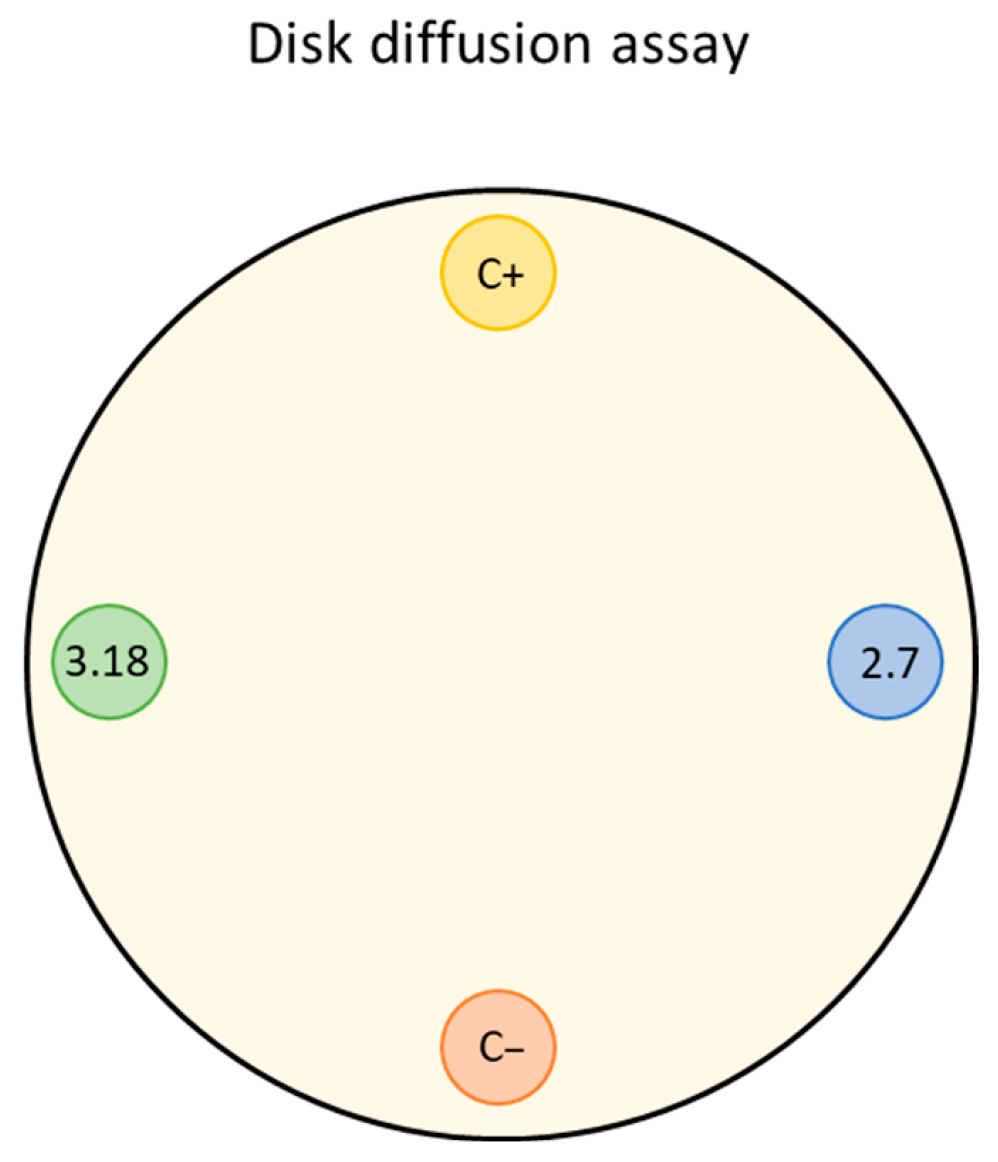
The isolated microorganisms, the phytopathogenic bacteria Xanthomonas citri and the strain Escherichia coli DH5α, were inoculated individually into liquid LB medium; the yeast Saccharomyces cerevisiae BY4741/yEP-GAP-mCherry was inoculated into YNB-URA (Yeast Nitrogen Base without amino acids 6.7 g·L−1, glucose 20 g·L−1, and dropout supplement without uracil) liquid medium. The samples were incubated at 30 °C for 24 h under constant agitation. A disk diffusion assay (Figure 1) was then performed on solid LB and YNB-URA media, and these plates were incubated for 2 days at 30 °C. After this period, the inhibition halos of bacterial and yeast growth were evaluated.
For the fungal inhibition assays, the phytopathogens Fusarium verticillioides, F. oxysporum, Sclerotinia sclerotiorum, Rhizoctonia solani, and Botrytis cinerea were tested using a method similar to an antibiogram. The phytopathogen was placed on the plate, with eight equidistant bacterial strains arranged around it, allowing for the observation of inhibition zones (halos) to assess qualitative inhibition. The phytopathogens were cultured on PDA medium (20 g·L−1 dextrose, 4 g·L−1 potato infusion, and 15 g·L−1 agar) for 7 days at their optimal growth temperature. Disks with a 10 mm diameter, or a sample taken with a loop, were collected from the outermost region of the fungal colonies and either placed in the center of a fresh PDA plate or spread across the entire surface. Then 1 µL of each bacterial overnight suspension was transferred to autoclaved filter paper discs surrounding the phytopathogen; these plates were incubated for 7 days at 30 °C. The evaluation was based on the presence of inhibition zones (halos) around the bacterial colonies.
Figure 1. Schematic representation of the disk diffusion assay used to assess qualitative antimicrobial activity of bacterial isolates.
Microorganisms 14 00224 g001

2.3. Fungal Inhibition and Morphological Analysis

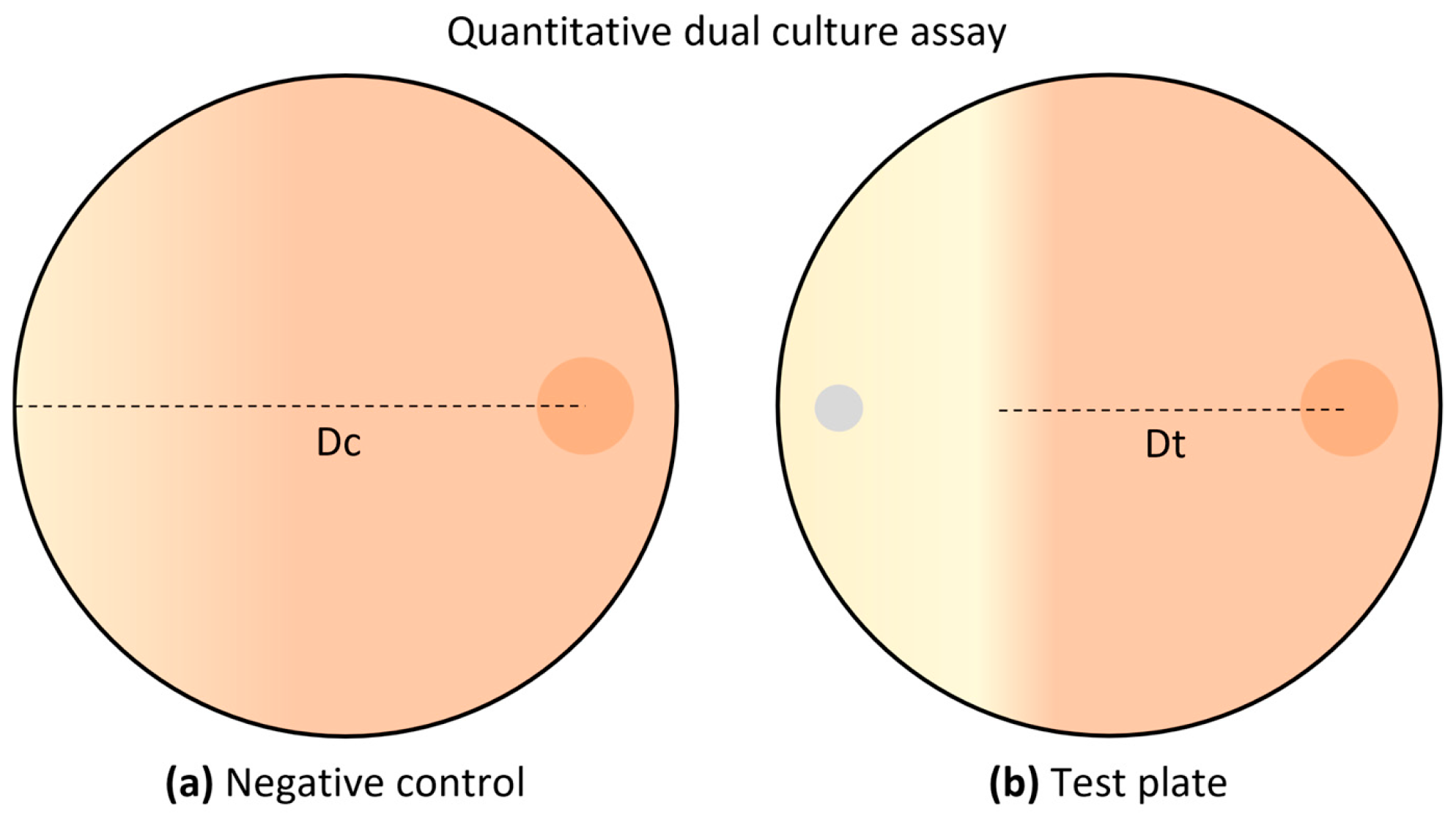
The two strains that showed the best results in the initial halo assays (M2.7 and M3.18) were selected for a quantitative disk diffusion test. The evaluation was based on comparing the radius of the fungal colonies on control plates (Dc), without the bacterial isolates, and on test plates (Dt), with the isolates, using the formula described by Edgington et al. [48]: I% = [(Dc − Dt)/Dc] × 100. The growth inhibition radius of the phytopathogenic fungi was measured using the program ImageJ version 1.54p.
For the test plates (Figure 2b), a 10 mm diameter disk containing the phytopathogenic fungi was positioned 1 cm from the edge of each plate, which had fresh PDA medium. On the same plate, 1 µL of each bacterial isolate at an optical density of 0.01 was inoculated on the opposite side, also 1 cm away from the edge of the Petri dish. Regarding the control plates (Figure 2a), no bacterial isolates were applied, and only the disk with the phytopathogenic fungi was positioned. All quantitative disk diffusion tests were performed in triplicate. These plates were incubated for 7 days at 25 °C, and photographs were taken periodically every 24 h.
Figure 2. Schematic representation of the dual culture assay used to assess fungal growth inhibition: (a) negative control plates involved plating the phytopathogenic fungi alone; (b) dual culture of the phytopathogenic fungi against bacterial strains. For the dual culture, the bacterial isolate (represented by a gray disk) was inoculated on one side of the plate, while the phytopathogenic fungi (represented by an orange disk) was added to the opposite side. Dc—distance of fungal growth in the control plate, which is considered as 100% growth; Dt—distance of fungal growth in the test plate, used to calculate the percentage of growth inhibition.
Microorganisms 14 00224 g002
The morphological analysis assay was performed using a dissection microscope (Singer Instruments, Watchet, UK) to visualize the morphology of the phytopathogenic fungi’s hyphal structures, indicating once again that the bacterial isolates had antibiosis activity against those pathogens. The plates utilized in this experiment were the same as the ones made to quantify the growth inhibition of the fungi, after 7 days of incubation for all fungi, except R. solani and S. sclerotiorum, which were analyzed after 2 and 3 days of incubation, respectively. The hyphal morphology on control plates was considered expected and naturally occurring, while the different hyphal morphology occurring on test plates was an indicator of the bacterial isolate’s antimicrobial action.

2.4. Statistical Analysis

All data processing and statistical analyses were performed using GraphPad Prism software (Version 10.1.2, GraphPad Software, San Diego, CA, USA). The significance level was set at p < 0.05. Statistical significance in all presented figures is denoted by asterisks (*). Differences were considered statistically significant when the p-value resulting from the respective tests fell below 0.05. The convention employed is as follows: a single asterisk (*) indicates significance (0.01 ≤ p < 0.05); two asterisks (**) denote high significance (0.001 ≤ p < 0.01); three asterisks (***) represent extreme significance (p < 0.001); and four asterisks (****) represent maximum statistical significance (p < 0.0001).

2.4.1. Proxy System Validation and Correlation Analysis

The predictive capacity of the proxy organisms (E. coli and S. cerevisiae) was validated using a combined statistical approach. The correlation between the proxy inhibition score (ranging from 0 to 2) and the total number of inhibited phytopathogens was assessed using Spearman’s Rank Correlation test, reporting the coefficient (rs) and the two-tailed p-value. To assess the median trend, the Kruskal–Wallis test, followed by a test for linear trend, was applied to confirm a monotonic increase in the median number of inhibited phytopathogens across the proxy score groups. Furthermore, the ability of the proxy score to discriminate between truly active and non-active isolates was evaluated by constructing a receiver operating characteristic (ROC) curve. Predictive power was quantified by the area under the curve (AUC).

2.4.2. Assessment of Antagonistic Activity

Raw measurements of hyphal length and percentage inhibition data were first assessed for normality. Given the nature of the data and non-normal distribution, the Kruskal–Wallis test was employed to compare the median antagonistic activities of the test isolates and the positive control (B. subtilis QST713) against the untreated control group, following a significant global result, the Mann–Whitney U test or Kruskal–Wallis followed by Dunn’s multiple-comparison test was utilized post hoc to determine the specific pairwise differences.

2.5. Sequencing and Molecular Identification

The selected strains from the halo inhibition assays were cultivated in liquid medium LB under constant agitation for 48 h at 30 °C. For molecular identification, genomic DNA (gDNA) was extracted using 750 µL of each culture, transferred to 1.5 mL tubes, and centrifuged at 15,000 rpm for 2 min. The resulting pellet was separated, and the supernatant was discarded. The pellet was then resuspended in 100 µL of a solution containing 200 mM lithium acetate (LiAc) and 1% sodium dodecyl sulfate (SDS), followed by incubation at 70 °C for 15 min. Afterward, 350 µL of 100% ethanol was added to precipitate the DNA, and the mixture was centrifuged at 15,000 rpm for 3 min. The supernatant was discarded, and the DNA pellet was washed with 200 µL of 70% ethanol to remove impurities. The tube was centrifuged at 15,000 rpm for 3 min. The supernatant was discarded, and the DNA pellets were allowed to air-dry. Once dried, the pellets were resuspended in 150 µL of ultrapure water. This extracted genomic DNA was used for the amplification and isolation of the 16S ribosomal RNA gene region and the gyrA gene region, which encodes the A subunit of DNA gyrase.
The amplification of the 16S rRNA and gyrA genes was carried out using the primers listed in Table 2. The amplification protocol used 0.5 µL of 10 µM primer solutions, 1.0 µL of gDNA from each strain, 10 µL of Taq polymerase buffer (PCRBiosystems, London, UK), and 0.25 µL of Taq polymerase (PCRBiosystems), and the final volume was adjusted to 50 µL with ultrapure water. The PCR reaction was performed using an thermocycler (Eppendorf, Hamburg, Germany) .
The amplification of the 16S rRNA was performed using the following cycles: 95 °C for 1 min, 95 °C for 15 s, 60 °C for 15 s, 72 °C for 30 s, repeated for 40 cycles, and a final hold at 4 °C. The amplification of the gyrA gene region with the primer gyrA1 was done at 95 °C for 2 min, 30 cycles of 95 °C for 15 s, 52 °C for 15 s, and 72 °C for 30 s, followed by a final extension of 72 °C for 1 min and a 4 °C final hold. The PCR reaction with the primer pair gyrA2 followed the protocol: 95 °C for 2 min; 35 cycles at 95 °C for 15 s, 50 °C for 30 s, and 72 °C for 30 s, and the final extension at 72 °C for 1 min.
After the reaction, a 1% agarose gel in TAE buffer (4.84 g·L−1 tris base, 1.14 mL·L−1 glacial acetic acid, 2 mL·L−1 0.5 M EDTA) was prepared and transferred to an electrophoresis chamber with TAE buffer. The amplified DNA was prepared with a loading buffer to increase density and blue dye, and this solution was loaded into the wells. The gel was run at 100 V for 30 min, and the results were photo-documented using a ultraviolet transilluminator (Bio-Rad Laboratories, Hercules, CA, USA).
The PCR products were purified using the GENECLEAN Turbo for PCR kit (MP Biomedicals, Irvine, CA, USA) and sent for Sanger sequencing at the Human Genome and Stem Cell Research Center (Institute of Biosciences—USP). The Sanger sequencing results were analyzed using the NCBI BLAST database using the BLASTn algorithm (https://blast.ncbi.nlm.nih.gov/Blast.cgi; accessed on 14 November 2024) [49] and the EZBioCloud 16S database (https://www.ezbiocloud.net/; accessed on 14 November 2024), generating a closeness percentage between the honey isolates and other strains deposited in the database.

3. Results

3.1. Bioprospecting

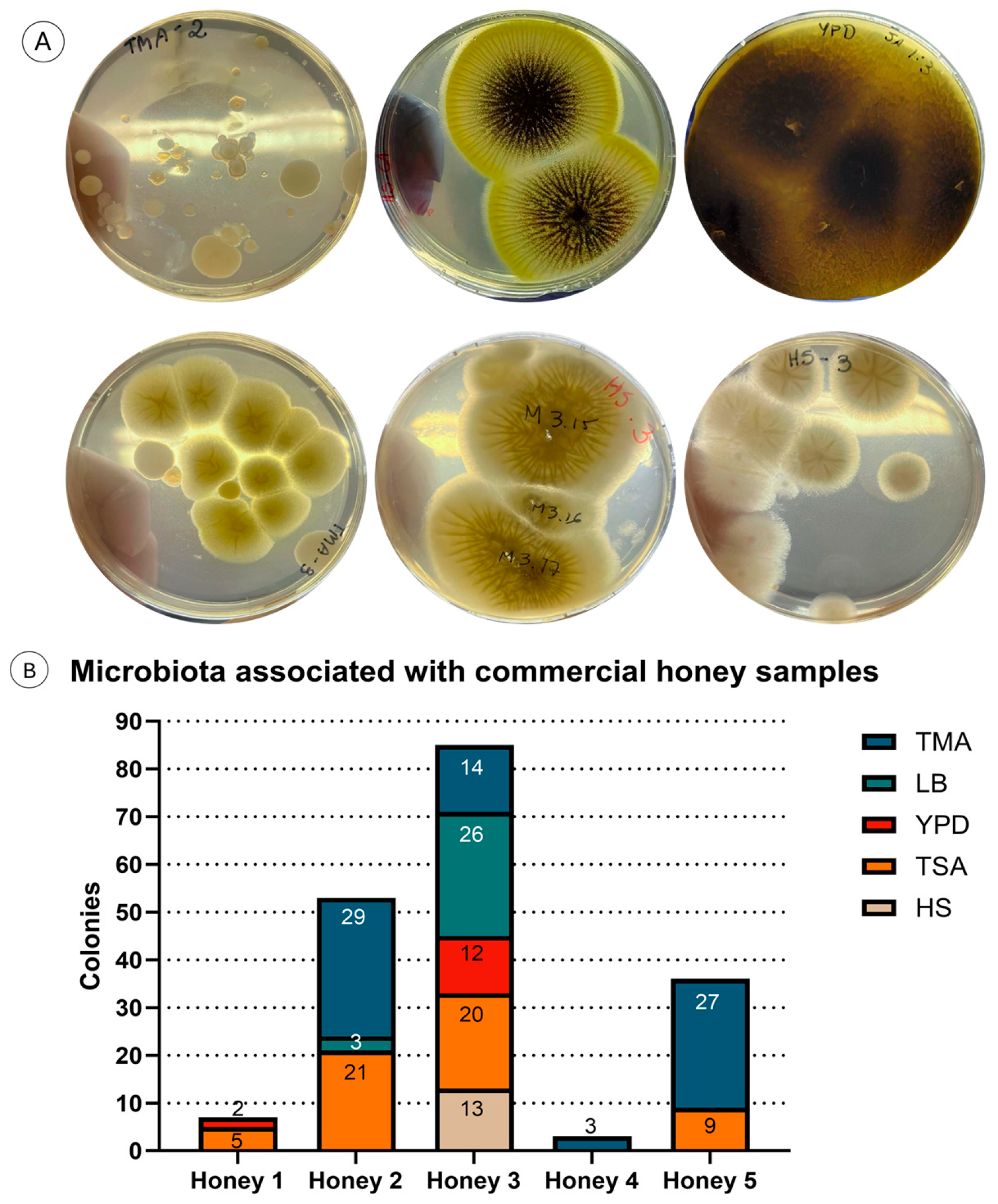
Honey is generally considered an inhospitable environment for microbial growth due to its high osmolarity; therefore, we plated honey samples onto different culture media with the expectation of encountering none or very few colony-forming units. Surprisingly, our experiments yielded a large variety of microorganisms.
Different commercial honey samples were used, with 100 μL of honey plated onto each media, resulting in growth of a variable number of microbial colonies, where samples derived from honey produced by the native Brazilian stingless bee Tetragonisca sp. (honey 2) and honey from Apis mellifera with comb fragments (honey 3) yielded a higher number of associated microorganisms (Figure 3). It is important to highlight the fact that the fungi or bacteria could have been present in the honey whilst in the hive, or they could have been acquired during harvesting or processing, with changes in the population during storage [50,51]; hence, we cannot draw conclusions on the bee-associated microbiota based on our results.
A total of 7 colonies were formed on plates inoculated with Honey 1, with 2 from YPD and 5 from TSA medium. Honey 2 yielded 53 colonies, including 29 from TMA, 3 from LB, and 21 from TSA. Honey 3 had the highest count, with 85 microorganisms forming colonies: 14 from TMA, 26 from LB, 12 from YPD, 20 from TSA, and 13 from HS medium. Honey 4 yielded only 3 colonies, all from TMA medium. Honey 5 yielded 36 colonies, with 27 from TMA and 9 from TSA (Figure 3B). Several colonies formed were phenotypically indistinguishable; therefore, we isolated all unique and up to 2 similar colonies from each honey–media combination, amounting to 53 bacterial and 10 fungal strains. At that moment, we focused our efforts on the potential of the bacterial strains.

3.2. Results of Disk Diffusion Assay

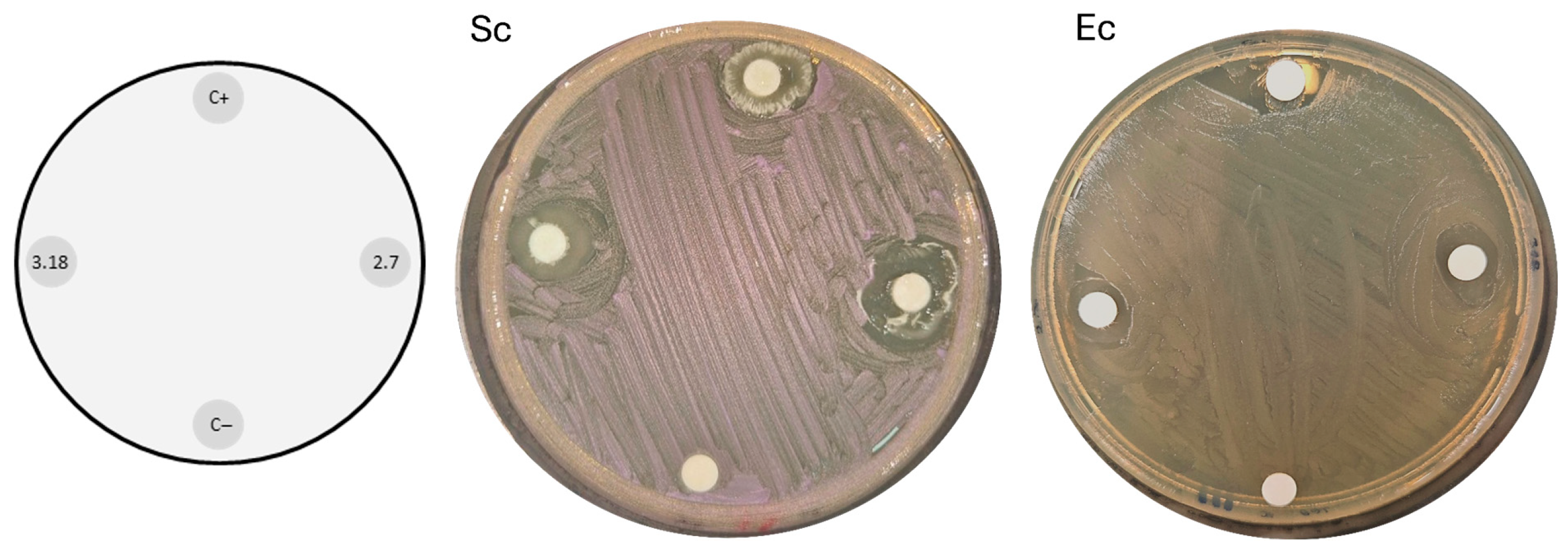
Plates derived from our bioprospecting showed that several organisms inhibited the growth of neighboring colonies; therefore, we performed disk diffusion assays of all of our isolates against the standard laboratory strains Escherichia coli DH5α (Gram-negative bacterium) and Saccharomyces cerevisiae BY4741/yEP-GAP-mCherry (Figure 4).
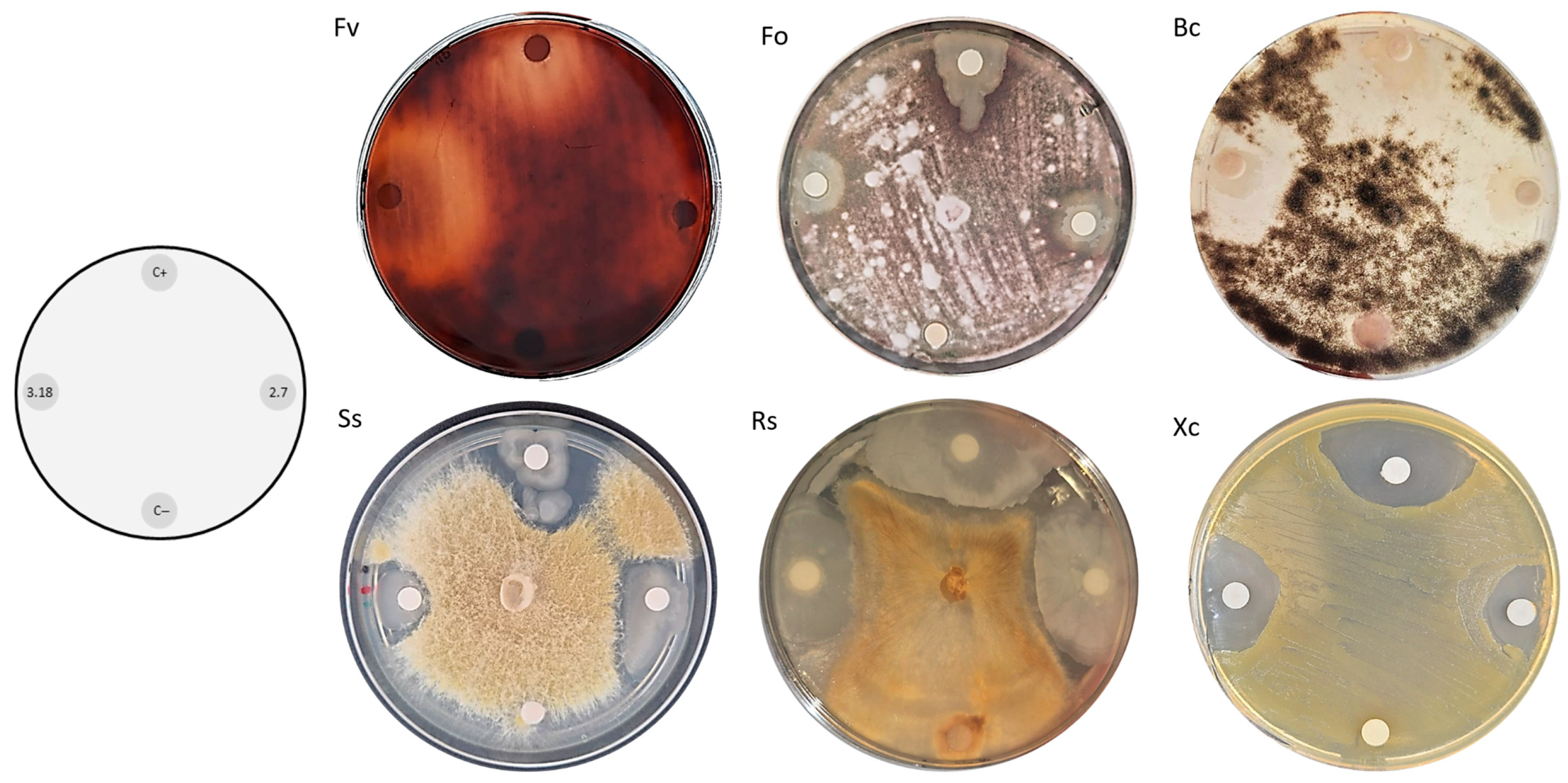
Encouraged by our preliminary results, we acquired 6 phytopathogens, namely the fungi Rhizoctonia solani, Sclerotinia sclerotiorum, Fusarium verticillioides, Fusarium oxysporum, and Botrytis cinerea, and the bacterium Xanthomonas citri, with the goal of investigating the potential of our isolates as biological control agents. We performed disk diffusion assays for all of our bacterial isolates against the above phytopathogens, using the standard Bacillus subtilis 168 strain as a negative control, and the Bacillus velezensis QST713 strain, commercialized as a biological control agent [52], as a positive control (Figure 5).
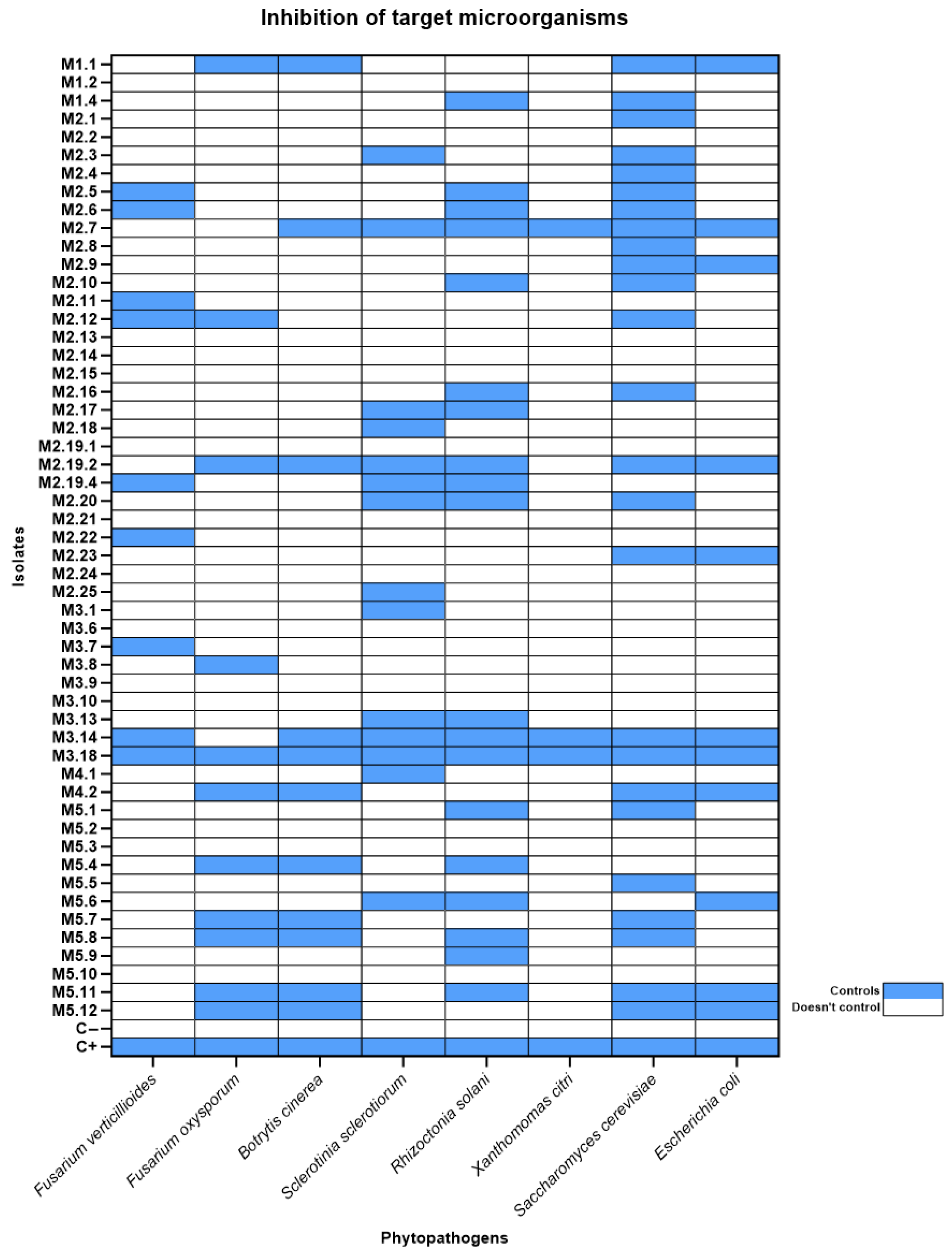
Initial screening using S. cerevisiae BY4741/yEP-GAP-mCherry and E. coli DH5α proved to be effective in identifying isolates with promising antagonistic properties (Figure 4 and Figure 5). A strong correlation was observed between isolates that inhibited S. cerevisiae or E. coli and those active against the tested phytopathogens. This finding underscores the utility of these model organisms as cost-effective and rapid initial screening tools for identifying bioactive strains (Figure 6).
The results strongly support the use of proxy organisms for preliminary screening. Specifically, the capacity of isolates to inhibit the proxy organisms was a statistically significant predictor of broader antagonistic activity against phytopathogens. The Spearman’s rank correlation test indicated a moderate positive relationship between the proxy screening score, ranging from 0 proxy inhibited to 2 proxies inhibited, and the total number of inhibited phytopathogens (rs = 0.4512, p = 0.0005). This confirms a robust monotonic association, where isolates inhibiting a higher number of proxies tend to control a greater number of phytopathogens. Furthermore, the Kruskal–Wallis test demonstrated a highly significant difference in the median number of inhibited phytopathogens across the three proxy score groups (H = 11.04, p = 0.004, Figure S1, Supplementary Materials). Subsequent Dunn’s post hoc test highlighted that the major difference lies between the extreme groups, isolates that inhibited both proxies controlled significantly a higher number of phytopathogens compared to those that did not inhibit both proxies (p = 0.0049). The linear trend confirms the moderate association found in Spearman’s correlation analysis.
Additionally, sensitivity and specificity metrics suggest that while the initial screening is useful, it requires optimization. The sensitivity (64.7%) and specificity (72.7%) values indicate that some true positives and true negatives are correctly identified, but a fraction of bioactive strains may be missed. To further evaluate predictive performance, a receiver operating characteristic (ROC) curve was generated (Figure S1, Supplementary Materials). The area under the curve (AUC = 0.6872) confirms the proxy’s capability for moderate discrimination between active and non-active isolates, though suggesting a potential for overlooking some bioactive strains (false negatives), highlighting the need for potential refinements.
These findings highlight the effectiveness of the current screening approach while emphasizing the need for refinement to maximize its applicability in microbial biocontrol discovery. Potential future enhancements may involve refining inhibition thresholds, incorporating additional model organisms, or integrating complementary assays to enhance predictive capability.

3.3. Fungal Inhibition and Morphological Analysis

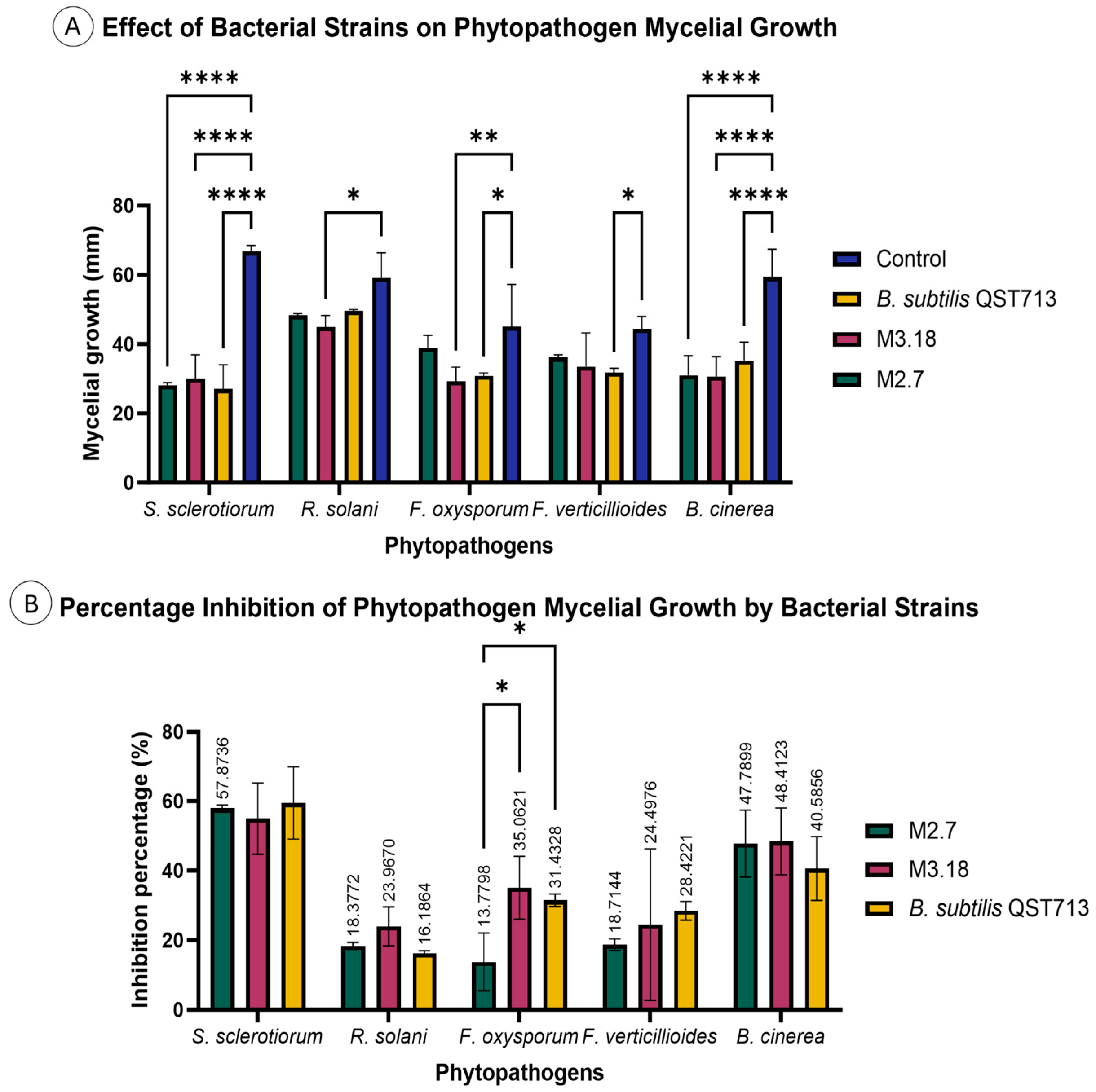
The two bacterial strains that had the strongest results in the qualitative tests, namely M3.18 and M2.7, were selected to be quantitatively tested. They demonstrated varying degrees of inhibitory activity against the selected phytopathogenic fungi in dual culture assays, in which inhibition zones were measured to quantify their antagonistic effect. The results for phytopathogen inhibition were evaluated by measuring fungal growth and calculating inhibition percentages (Figure 7), with all corresponding raw data provided in the Supplementary Material (Table S1). The results indicated significant differences in the growth rates of fungi in response to bacterial treatment.
Both bacterial strains M2.7 and M3.18 demonstrated a reduction in the growth radius of R. solani compared to the negative control, suggesting that these strains possess inhibitory effects on fungal growth. While the commercially available B. velezensis strain also reduced the growth radius of the fungus, the inhibitory effect was less pronounced than that of M3.18, indicating a potentially stronger biocontrol action by strain M3.18. Both M2.7 and M3.18 exhibited a strong inhibitory effect on S. sclerotiorum growth, with a significant reduction in growth radius compared to the negative control. However, the results between the novel bacterial strains and the commercially available strain were quite similar, indicating that M2.7 and M3.18 were comparably effective to the positive control.
The percentage of inhibition was calculated to quantify the extent to which the bacterial strains hindered fungal growth. The percentage of inhibition for both M2.7 and M3.18 was higher than that of the commercially available strain, indicating that the novel bacterial strains might offer superior biocontrol efficacy against R. solani. Of the two novel strains, M3.18 exhibited the highest inhibition, supporting its potential as a promising biocontrol agent for R. solani. Despite slight variations in the inhibition percentages, all three treatments exhibited strong antifungal effects, with inhibition percentages around 59%, underscoring the effectiveness of these strains in controlling S. sclerotiorum growth.
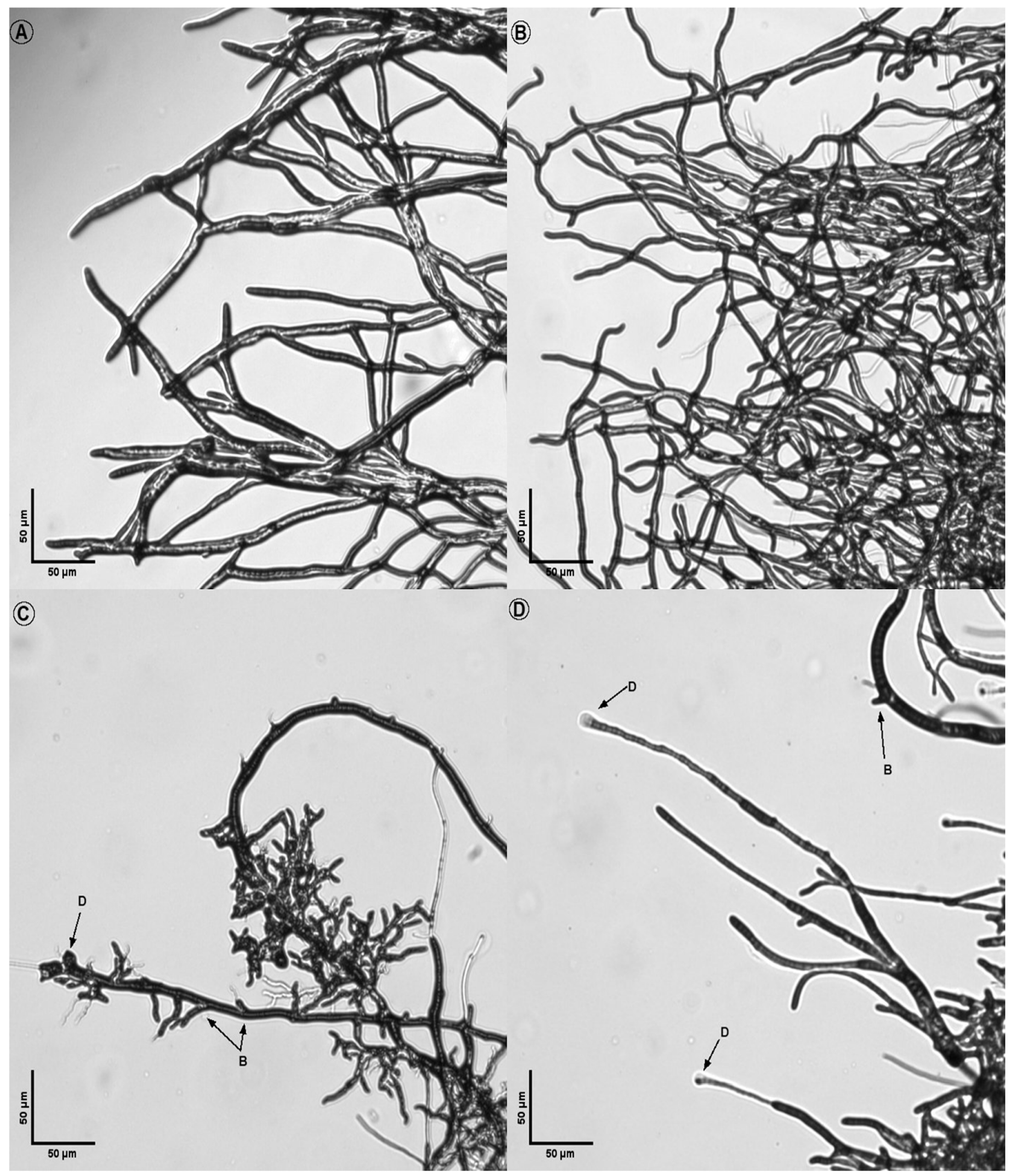
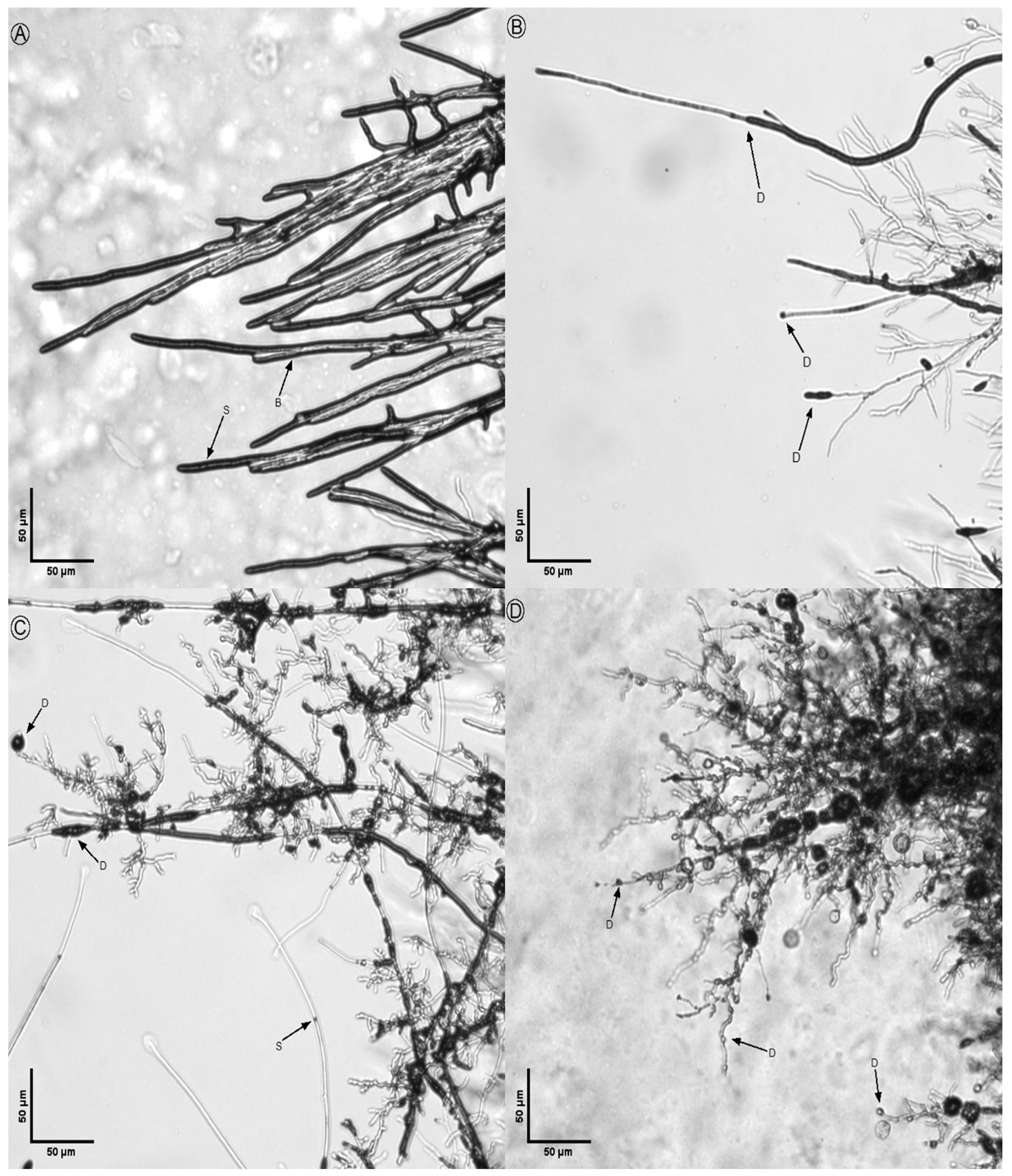
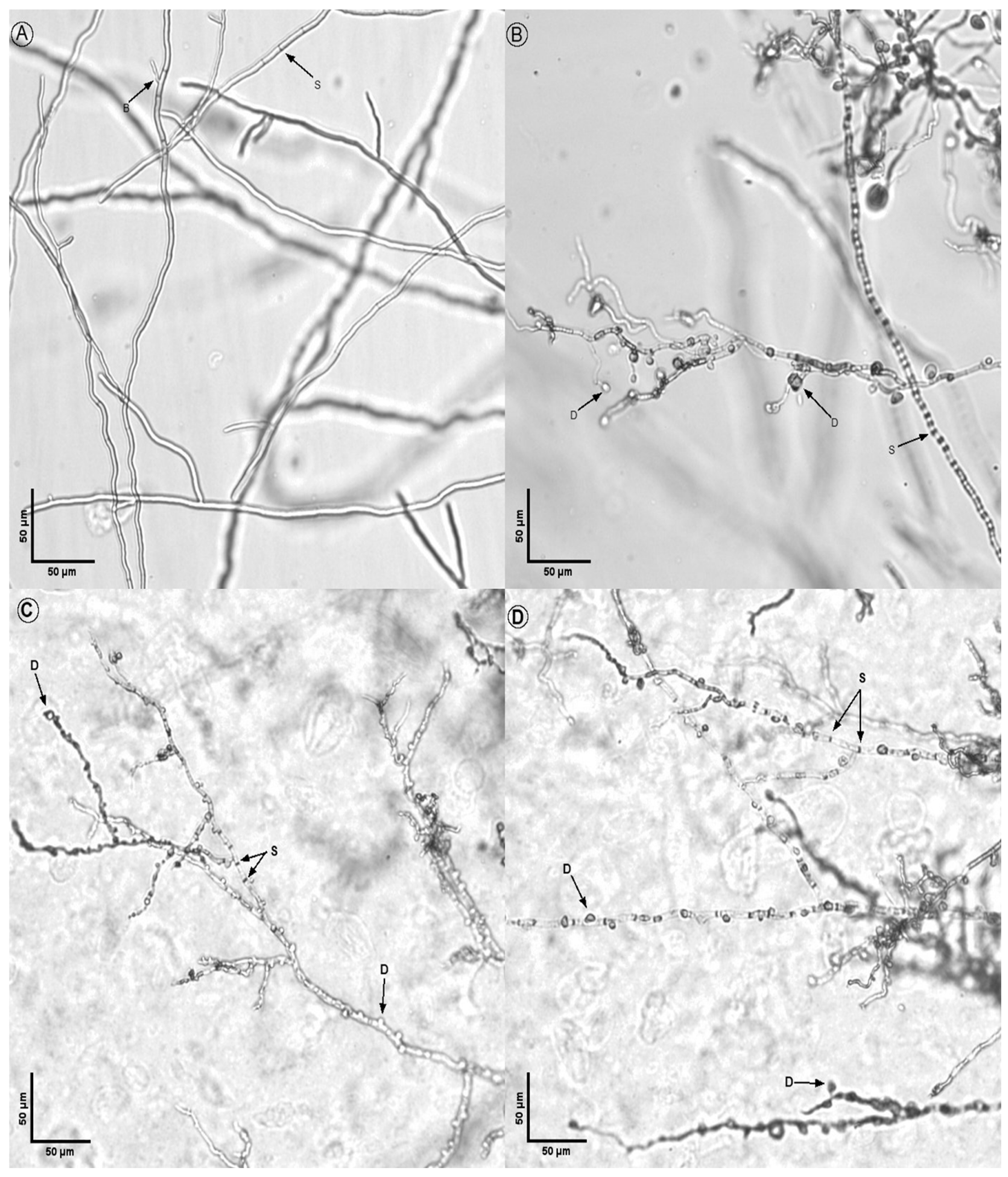
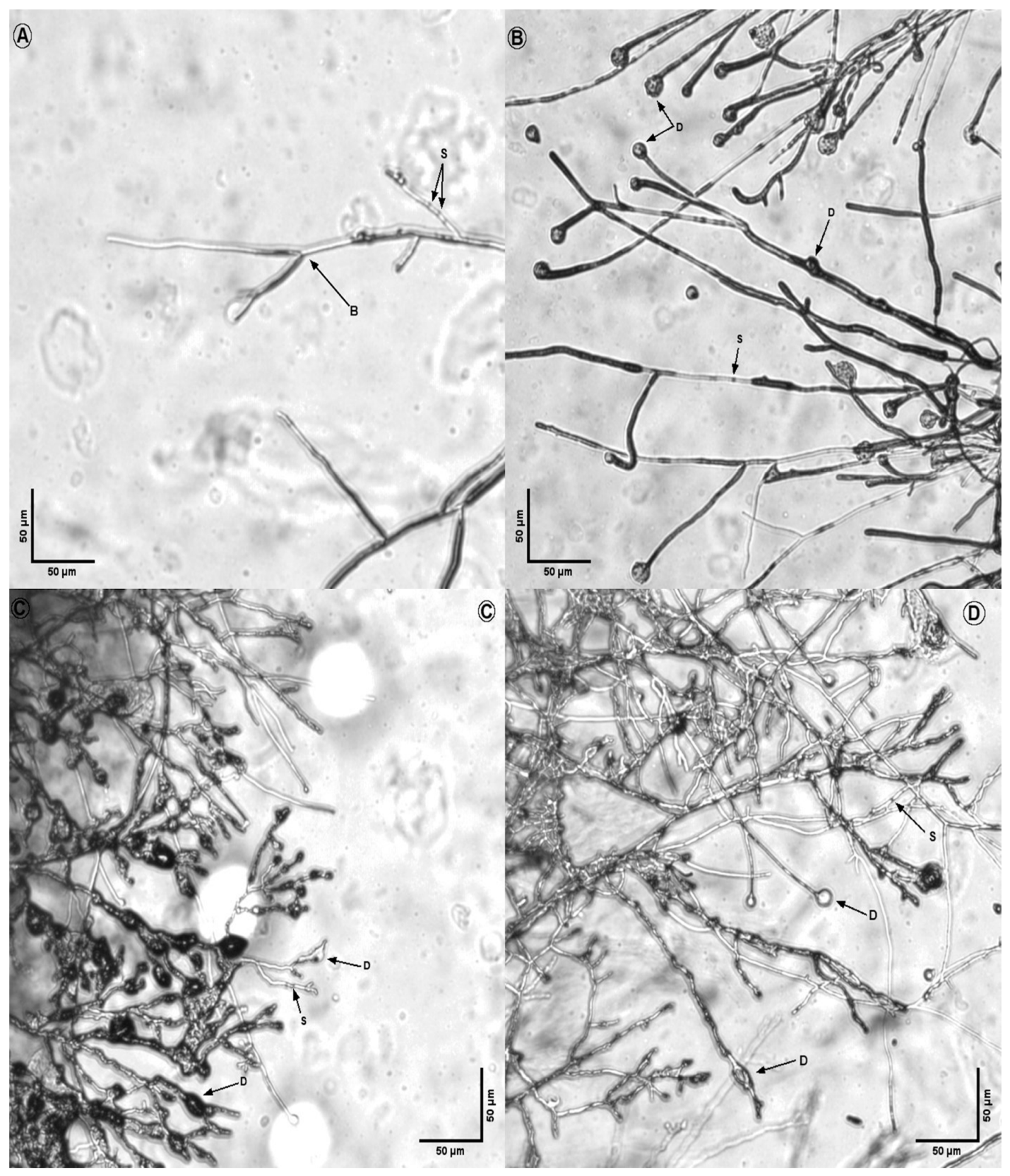
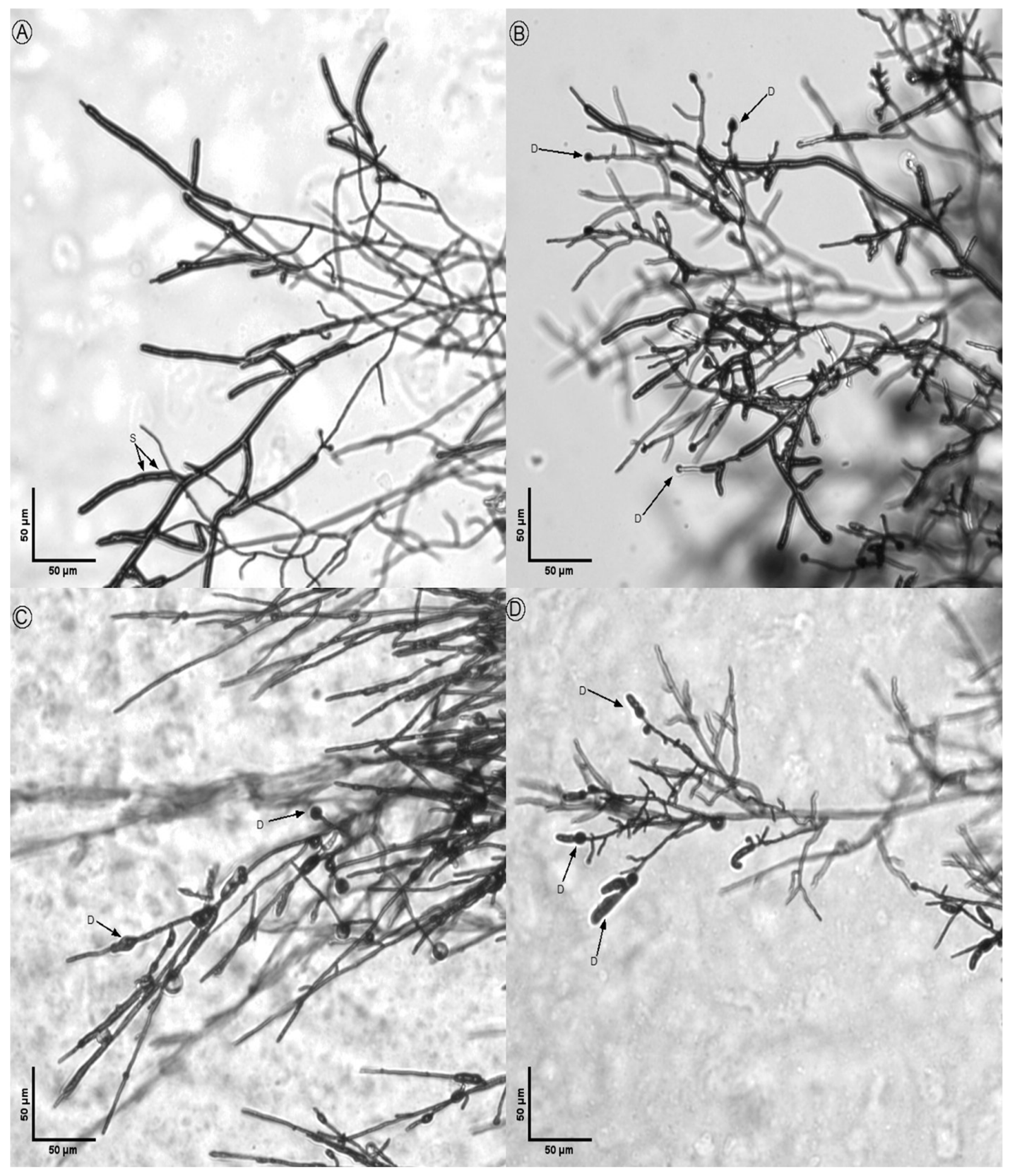
The morphological analysis of treated fungi revealed significant alterations in hyphal structures compared to untreated controls (Figure 8, Figure 9, Figure 10, Figure 11 and Figure 12). Under light microscopy, fungal hyphae in untreated cultures appeared typical for each fungal species. Fusarium verticillioides displayed thin, elongated hyphae with regular septation and moderate branching, typical of this species (Figure 8), whereas Fusarium oxysporum showed dense, moderately branched hyphae with slightly wider diameters and distinct septation, reflecting its characteristic morphology (Figure 9). For Botrytis cinerea, the hyphae were long, cylindrical, and relatively unbranched, with sparse septation characteristic of optimal growth conditions (Figure 10), Sclerotinia sclerotiorum hyphae were hyaline, branched, and multinucleated (Figure 11), and Rhizoctonia solani exhibited wide, ribbon-like hyphae with multinucleate cells, minimal septation, and branching at right angles, all consistent with its normal growth (Figure 12).
Upon exposure to the bacterial strains M2.7, M3.18, and the commercially available B. velezensis QST713, significant morphological changes were observed across all fungal species. In B. cinerea, the hyphae exhibited noticeable deformities, including swelling at the tips, increased septation, and the formation of rounded defensive structures, possibly resembling appressoria. In F. verticillioides, treated hyphae displayed irregular swelling, increased branching, and distortions in their normally elongated shape. F. oxysporum hyphae showed twisting, fragmentation, and thickened regions, suggesting a heightened stress response. Similarly, R. solani exhibited pronounced swelling and fragmentation, with abnormal branching angles and the formation of stress-related structures.
Across all fungi, the hyphal deformities included twisting, swelling, and structural disruptions, indicating stress induced by the bacterial treatments. Increased septation (S), heightened branching (B), and the formation of defense structures (D), such as thickened cell walls or melanized regions, were observed. These morphological alterations suggest that the bacterial strains induce strong defensive responses in the fungi, likely through the secretion of antimicrobial compounds or other inhibitory mechanisms. The observed changes highlight the potential of the bacterial strains M2.7 and M3.18, as well as the commercial strain, to act as effective biocontrol agents by disrupting fungal growth and inducing structural defenses.
These alterations are consistent with previously observed responses of the phytopathogens to certain antagonistic bacteria, where the fungus undergoes metabolic shifts in response to the microbial interaction, possibly as a defensive mechanism.

3.4. Sequencing and Molecular Identification of Bacterial Strains

The bacterial strains were subjected to molecular and taxonomic identification using 16S rDNA sequencing and subsequent comparison with two databases: EZBioCloud 16S and NCBI BLASTn (Table 3). The results revealed a high degree of variability in identification accuracy at the species level between the two platforms. Despite this, all isolates were consistently identified at the genus level as belonging to the genus Bacillus.
Among the strains analyzed, species-level identification was often ambiguous. For example, strain M2.1 was identified as B. altitudinis with a 99.02% match in EZBioCloud, while BLASTn yielded a lower confidence match of 97.77%. Similar discrepancies were observed for other strains. Strain M2.5, for instance, was associated with multiple potential species in both databases, each achieving above 99% similarity, reflecting the inherent challenges in confidently resolving species-level taxonomy solely through 16S rDNA sequencing.
Interestingly, certain strains achieved a slightly higher degree of resolution. For instance, M3.18 was consistently identified as B. velezensis with 99.85% similarity in EZBioCloud and 99.7% in BLASTn. However, alternative closely related species such as B. siamensis and B. amyloliquefaciens were also proposed, illustrating the difficulty in differentiating closely related members of the Bacillus subtilis group using 16S rDNA alone.
The strains exhibiting significant antagonistic activity against phytopathogens, M2.7 and M3.18, were also analyzed using the gene gyrA to achieve a better resolution of species identification within these Bacillus strains. The sequencing was performed using two primer pairs, “gyrA1” and “gyrA2”, and the results are presented in Table 4.
For strain M2.7, sequencing with the primer pair “gyrA1” revealed a 99.7% similarity to both Bacillus amyloliquefaciens and Bacillus velezensis, while sequencing with “gyrA2” resulted in slightly higher similarity values of 99.75% for both species. Similarly, strain M3.18 exhibited 99.83% similarity to Bacillus amyloliquefaciens and Bacillus velezensis with the “gyrA1” primer pair, whereas the “gyrA2” primer pair yielded slightly lower similarity values of 99.09% for both species.
These findings reinforce the difficulty in differentiating closely related members of the Bacillus subtilis group solely based on 16S rDNA sequencing. The gyrA gene analysis provided a higher resolution but still did not allow for definitive species-level distinction between Bacillus amyloliquefaciens and Bacillus velezensis, as both strains exhibited near-identical sequence similarities to both species across both primer sets.

4. Discussion

4.1. Honey as a Reservoir for Stress-Tolerant Microorganisms and Efficiency of Proxies

This research elucidates honey as an environment that has received little scientific attention concerning the bioprospecting of microorganisms with potential for biocontrol, even though its unique chemical, biological, and ecological features—such as high osmolarity, intraspecific competition, and antibiosis—favor a rich microbiota that is resistant to stress and capable of producing secondary metabolites.
The initial bioprospecting phase aimed to screen commercial honey samples for culturable microorganisms, directly challenging the prevailing view of commercial honey as a microbially inhospitable environment due to its high sugar content, antimicrobial properties, and low water activity [53,54,55,56]. Also, the samples analyzed were commercial honeys, meaning they had undergone standard industrial processing, such as pasteurization and filtration. These treatments are typically employed to improve clarity, prevent crystallization, and they also reduce the microbial load to extend shelf life [57,58,59,60]. The finding of a rather large variety of microorganisms across most samples directly contradicts the effectiveness of commercial processing against some highly resilient, spore-forming, and osmotolerant microbes. This persistent diversity highlights the extreme survival capacity of the honey-associated microbial communities, which is a key trait for potential biocontrol agents.
The bioprospecting results highlighted significant variability in microbial colonization based on the honey source. Specifically, honeys from Apis mellifera with comb fragments (Honey 3) and from Tetragonisca sp., a Brazilian stingless bee (Honey 2), yielded the highest colony count. The elevated count in Honey 3 can be attributed to the comb fragments, which serve as a known protected microbial reservoir within the hive structure [61]. Similarly, the higher load in stingless bee honey could be linked to the unique microbial inoculation and fermentation processes that occur in the storage pots within the hive, or even the differences in post-harvesting processing. In contrast, the low counts in the commercial sachet honey and honeydew may reflect a greater impact of commercial processing. While the origin of the isolated microbiota cannot be definitively determined from these results alone, the findings confirm the value of even commercially treated honey as a promising environment for bioprospecting for novel, stress-tolerant microbial candidates.
The use of S. cerevisiae and E. coli DH5α as initial test organisms is a practical approach for large-scale evaluation of microbial strains. Both organisms were highly sensitive to bioactive compounds; most isolates that inhibited phytopathogens also affected one or both models, with only 20% of microbial isolates missed. This suggests that these model organisms can serve as efficient proxies for detecting strains with antimicrobial potential before testing against more labor-intensive and time-expensive phytopathogens. The simplicity, low cost, and reproducibility of using S. cerevisiae and E. coli further streamline the screening process, making it feasible to quickly narrow down thousands of isolates to the most promising candidates for biocontrol applications.

4.2. Comparative Efficacy and Morphological Interpretations

The quantitative analysis of isolates M2.7 and M3.18 reveals a competitive edge, particularly when observing the inhibitory effect on the growth of R. solani and S. sclerotiorum compared to the commercial benchmark B. velezensis QST713 (C+). M3.18 (~24%) had higher antifungal activity against R. solani than M2.7 (~18%) and the positive control C+ (~15%). In the case of S. sclerotiorum, the inhibition rates (reaching ~59% for M3.18) were statistically equivalent to the commercial product. Beyond these pathogens, both novel strains also demonstrated varying degrees of inhibitory activity against B. cinerea, F. verticillioides, and F. oxysporum.
Quantitative assays indicated that M2.7 and M3.18 consistently possess broad-spectrum antagonistic effects. These findings were corroborated by the morphological analysis of the treated hyphae, which revealed structural changes across all tested fungal species, including distortions in shape and irregular septation. The deformities indicate a possible stress induced response in the fungi, likely due to the secretion of antimicrobial compounds, highlighting the generalized disruptive mechanism of the bacterial strains against diverse fungal growth patterns.
The structural changes observed across all tested fungal species (Figure 8, Figure 9, Figure 10, Figure 11 and Figure 12) provide some insights into the possible modes of action of M2.7 and M3.18. The deformities found indicate significant physiological stress, specifically “bulbing” and fragmentation, which are classic indicators of cell wall disruption and osmotic imbalance [61,62,63]. In Bacillus species, such alterations are frequently associated with the secretion of lipopeptides (like iturins and fengycins), which target fungal membranes, or lytic enzymes that degrade cell walls [61,62,63]. The formation of defensive structures, such as melanized regions or thickened walls, further suggests that the pathogens are undergoing a heightened stress response.

4.3. Taxonomic Identification and Ecological Origin

Molecular characterization through 16S rDNA and gyrA sequencing confirmed the identity of the strains, showing high genetic relatedness to microorganisms known for their capability to produce bioactive metabolites, such as Bacillus velezensis and B. amyloliquefaciens. The BLAST results pointed out that strains M2.7 and M3.18 are closely related to bacteria able to produce antimicrobial compounds, confirming their potential as promising biocontrol agents. B. velezensis is a well-known biocontrol species, and its isolation from commercial honey suggests a unique ecological resilience. These isolated strains show the capacity of surviving the extreme osmotic stress of honey, as well as industrial pasteurization, possessing a “pre-conditioning” that may make them resilient to environmental stressors in the field—such as desiccation and UV radiation—compared to the strains isolated from soil environments. Further studies are needed to identify the biosynthetic pathways responsible for their antimicrobial activities and also their efficacy and safety in a wide range of agricultural scenarios. Our findings suggest that bacteria isolated from food matrices can match or even exceed the performance of globally established commercial strains, underscoring their potential as high-performance candidates capable of competing in the current bio-input market. This study, therefore, contributes not only to biocontrol agent discovery but also underlines the potential of natural products—in this case, commercial honey—to be a valuable source of microbial diversity serving agricultural innovation.

Supplementary Materials

The following supporting information can be downloaded at: https://www.mdpi.com/article/10.3390/microorganisms14010224/s1, Figure S1: Validation of the proxy inhibition score as a predictor of antagonistic activity against phytopathogens; Table S1: Values of fungal inhibition of the dual culture assays.

Author Contributions

Conceptualization, K.B.M., L.R.d.S. and E.B.; methodology, P.P.d.O., G.F.d.P., K.B.M., L.R.d.S. and E.B.; validation, P.P.d.O. and E.B.; formal analysis, P.P.d.O.; investigation, P.P.d.O., G.F.d.P., K.B.M., L.R.d.S., J.F.d.M.d.S. and J.G.E.; resources, E.B.; writing—original draft preparation, P.P.d.O., G.F.d.P. and E.B.; writing—review and editing, P.P.d.O., G.F.d.P., K.B.M., H.M.d.S. and E.B.; visualization, P.P.d.O. and G.F.d.P.; supervision, E.B. and H.M.d.S.; project administration, P.P.d.O. and E.B.; funding acquisition, E.B. All authors have read and agreed to the published version of the manuscript.

Funding

This research was funded by the Fundação de Amparo à Pesquisa do Estado de São Paulo (regular grant 2023/02589-3 and scholarship 2025/02533-3 for G.F.P.), by the Coordenação de Aperfeiçoamento de Pessoal de Nível Superior (CAPES) through scholarship 88887.950158/2024-00, and by the Conselho Nacional de Desenvolvimento Científico e Tecnológico—Brasil (CNPq) through the Junior Scientific Research Scholarship (IC-Jr), process no. 171125/2023-1 for K.B.M. and 171127/2023-4 for L.R.S.

Institutional Review Board Statement

All laboratory work has been registered with the Institute of Biology Biosafety committee, and the bioprospection has been registered with SisGen (Sistema Nacional de Gestão do Patrimônio Genético e do Conhecimento Tradicional Associado) project nr. A50B148, in compliance with the Nagoya protocol. The work did not involve work on humans or animals; therefore, it did not require ethical review and approval.

Informed Consent Statement

Not applicable.

Data Availability Statement

The original contributions presented in this study are included in the article. Further inquiries can be directed to the corresponding author.

Acknowledgments

We thank Maria Carolina Quecine Verdi, from the Laboratory of Genetics of Microorganisms “Prof. João Lúcio de Azevedo”—Molecular Genetics Group, for the kind concession of the phytopathogenic fungi strains used in this study. We extend our thanks to Cristina Elisa Alvarez Martinez, from the Laboratory of Bacterial Genetics, for making the Xanthomonas citri strain available.

Conflicts of Interest

The authors declare no conflicts of interest.

References

  1. Maitra, S.; Brestic, M.; Bhadra, P.; Shankar, T.; Praharaj, S.; Palai, J.B.; Shah, M.M.R.; Barek, V.; Ondrisik, P.; Skalický, M.; et al. Bioinoculants—Natural Biological Resources for Sustainable Plant Production. Microorganisms 2022, 10, 51. [Google Scholar] [CrossRef]
  2. Chakraborty, S.; Newton, A.C. Climate Change, Plant Diseases and Food Security: An Overview. Plant Pathol. 2011, 60, 2–14. [Google Scholar] [CrossRef]
  3. Miller, S.A.; Ferreira, J.P.; LeJeune, J.T. Antimicrobial Use and Resistance in Plant Agriculture: A One Health Perspective. Agriculture 2022, 12, 289. [Google Scholar] [CrossRef]
  4. Kelbrick, M.; Hesse, E.; O’ Brien, S. Cultivating Antimicrobial Resistance: How Intensive Agriculture Ploughs the Way for Antibiotic Resistance. Microbiology 2023, 169, 001384. [Google Scholar] [CrossRef] [PubMed]
  5. FAO. Pesticides Use, Pesticides Trade and Pesticides Indicators; FAO: Rome, Italy, 2022; ISBN 978-92-5-136614-1. [Google Scholar]
  6. John, D.A.; Babu, G.R. Lessons from the Aftermaths of Green Revolution on Food System and Health. Front. Sustain. Food Syst. 2021, 5, 644559. [Google Scholar] [CrossRef]
  7. Brunelle, T.; Chakir, R.; Carpentier, A.; Dorin, B.; Goll, D.; Guilpart, N.; Maggi, F.; Makowski, D.; Nesme, T.; Roosen, J.; et al. Reducing Chemical Inputs in Agriculture Requires a System Change. Commun. Earth Environ. 2024, 5, 369. [Google Scholar] [CrossRef]
  8. Batuman, O.; Britt-Ugartemendia, K.; Kunwar, S.; Yilmaz, S.; Fessler, L.; Redondo, A.; Chumachenko, K.; Chakravarty, S.; Wade, T. The Use and Impact of Antibiotics in Plant Agriculture: A Review. Phytopathology 2024, 114, 885–909. [Google Scholar] [CrossRef]
  9. Pathak, V.M.; Verma, V.K.; Rawat, B.S.; Kaur, B.; Babu, N.; Sharma, A.; Dewali, S.; Yadav, M.; Kumari, R.; Singh, S.; et al. Current Status of Pesticide Effects on Environment, Human Health and It’s Eco-Friendly Management as Bioremediation: A Comprehensive Review. Front. Microbiol. 2022, 13, 962619. [Google Scholar] [CrossRef]
  10. McKernan, C.; Benson, T.; Farrell, S.; Dean, M. Antimicrobial Use in Agriculture: Critical Review of the Factors Influencing Behaviour. JAC-Antimicrob. Resist. 2021, 3, dlab178. [Google Scholar] [CrossRef]
  11. Verhaegen, M.; Bergot, T.; Liebana, E.; Stancanelli, G.; Streissl, F.; Mingeot-Leclercq, M.-P.; Mahillon, J.; Bragard, C. On the Use of Antibiotics to Control Plant Pathogenic Bacteria: A Genetic and Genomic Perspective. Front. Microbiol. 2023, 14, 1221478. [Google Scholar] [CrossRef]
  12. Fisher, M.C.; Alastruey-Izquierdo, A.; Berman, J.; Bicanic, T.; Bignell, E.M.; Bowyer, P.; Bromley, M.; Brüggemann, R.; Garber, G.; Cornely, O.A.; et al. Tackling the Emerging Threat of Antifungal Resistance to Human Health. Nat. Rev. Microbiol. 2022, 20, 557–571. [Google Scholar] [CrossRef] [PubMed]
  13. Mansfield, J.; Genin, S.; Magori, S.; Citovsky, V.; Sriariyanum, M.; Ronald, P.; Dow, M.; Verdier, V.; Beer, S.V.; Machado, M.A.; et al. Top 10 Plant Pathogenic Bacteria in Molecular Plant Pathology. Mol. Plant. Pathol. 2012, 13, 614–629. [Google Scholar] [CrossRef] [PubMed]
  14. Starr, M.P.; Chatterjee, A.K. The Genus Erwinia: Enterobacteria Pathogenic to Plants and Animals. Annu. Rev. Microbiol. 1972, 26, 389–426. [Google Scholar] [CrossRef] [PubMed]
  15. Timilsina, S.; Potnis, N.; Newberry, E.A.; Liyanapathiranage, P.; Iruegas-Bocardo, F.; White, F.F.; Goss, E.M.; Jones, J.B. Xanthomonas Diversity, Virulence and Plant–Pathogen Interactions. Nat. Rev. Microbiol. 2020, 18, 415–427. [Google Scholar] [CrossRef]
  16. Brunings, A.M.; Gabriel, D.W. Xanthomonas citri: Breaking the Surface. Mol. Plant. Pathol. 2003, 4, 141–157. [Google Scholar] [CrossRef]
  17. Volkers, R.J.M.; van Doorn, B.B.J.A.; Blom, N.I.; van de Bilt, J.L.J.; Gorkink-Smits, P.M.A.; Landman, M.N.M.; Teunissen, M.; Pel, M.J.C.; Raaymakers, T.M.; Bergsma-Vlami, M. Xanthomonas citri Pv. citri Findings in Citrus Fruits Imported in the Netherlands. Plant Health Prog. 2024, 25, 237–243. [Google Scholar] [CrossRef]
  18. National Academies of Sciences, Engineering, and Medicine; Health and Medicine Division; Board on Global Health; Forum on Microbial Threats. Fungicide Resistance in Plant Protection Use. In The Role of Plant Agricultural Practices on Development of Antimicrobial Resistant Fungi Affecting Human Health: Proceedings of a Workshop Series; Haag, T., Nicholson, A., Ashby, E., Eds.; National Academies Press (US): Washington, DC, USA, 2023. [Google Scholar]
  19. van Rhijn, N.; Storer, I.S.R.; Birch, M.; Oliver, J.D.; Bottery, M.J.; Bromley, M.J. Aspergillus Fumigatus Strains That Evolve Resistance to the Agrochemical Fungicide Ipflufenoquin in Vitro Are Also Resistant to Olorofim. Nat. Microbiol. 2024, 9, 29–34. [Google Scholar] [CrossRef]
  20. Hossain, M.M.; Sultana, F.; Li, W.; Tran, L.-S.P.; Mostofa, M.G. Sclerotinia sclerotiorum (Lib.) de Bary: Insights into the Pathogenomic Features of a Global Pathogen. Cells 2023, 12, 1063. [Google Scholar] [CrossRef]
  21. Akber, M.A.; Mubeen, M.; Sohail, M.A.; Khan, S.W.; Solanki, M.K.; Khalid, R.; Abbas, A.; Divvela, P.K.; Zhou, L. Global Distribution, Traditional and Modern Detection, Diagnostic, and Management Approaches of Rhizoctonia Solani Associated with Legume Crops. Front. Microbiol. 2023, 13, 1091288. [Google Scholar] [CrossRef]
  22. Ajayi-Oyetunde, O.O.; Bradley, C.A. Rhizoctonia solani: Taxonomy, Population Biology and Management of Rhizoctonia Seedling Disease of Soybean. Plant Pathol. 2018, 67, 3–17, Correction in Plant Pathol. 2022, 72, 406. [Google Scholar] [CrossRef]
  23. Blacutt, A.A.; Gold, S.E.; Voss, K.A.; Gao, M.; Glenn, A.E. Fusarium verticillioides: Advancements in Understanding the Toxicity, Virulence, and Niche Adaptations of a Model Mycotoxigenic Pathogen of Maize. Phytopathology 2018, 108, 312–326. [Google Scholar] [CrossRef] [PubMed]
  24. Dong, S.; Jiang, K.; Huai, B.; Ye, L.; You, J.; Ma, Y.; Tan, G. Genetic Variability and Pathogenicity of Fusarium verticillioides Isolates from the Summer-Sown Maize Regions in China. Plant Pathol. 2023, 72, 582–592. [Google Scholar] [CrossRef]
  25. Shah, D.A.; De Wolf, E.D.; Paul, P.A.; Madden, L.V. Functional Data Analysis of Weather Variables Linked to Fusarium Head Blight Epidemics in the United States. Phytopathology 2019, 109, 96–110. [Google Scholar] [CrossRef] [PubMed]
  26. Jackson, E.; Li, J.; Weerasinghe, T.; Li, X. The Ubiquitous Wilt-Inducing Pathogen Fusarium oxysporum—A Review of Genes Studied with Mutant Analysis. Pathogens 2024, 13, 823. [Google Scholar] [CrossRef]
  27. Dongzhen, F.; Xilin, L.; Xiaorong, C.; Wenwu, Y.; Yunlu, H.; Yi, C.; Jia, C.; Zhimin, L.; Litao, G.; Tuhong, W.; et al. Fusarium Species and Fusarium oxysporum Species Complex Genotypes Associated with Yam Wilt in South-Central China. Front. Microbiol. 2020, 11, 1964. [Google Scholar] [CrossRef]
  28. Kema, G.H.J.; Drenth, A.; Dita, M.; Jansen, K.; Vellema, S.; Stoorvogel, J.J. Editorial: Fusarium Wilt of Banana, a Recurring Threat to Global Banana Production. Front. Plant Sci. 2021, 11, 628888. [Google Scholar] [CrossRef]
  29. Bi, K.; Liang, Y.; Mengiste, T.; Sharon, A. Killing Softly: A Roadmap of Botrytis Cinerea Pathogenicity. Trends Plant Sci. 2023, 28, 211–222. [Google Scholar] [CrossRef]
  30. Chen, L. Complete Genome Sequence of Bacillus velezensis LM2303, a Biocontrol Strain Isolated from the Dung of Wild Yak Inhabited Qinghai-Tibet Plateau. J. Biotechnol. 2017, 251, 124–127. [Google Scholar] [CrossRef]
  31. Cheung, N.; Tian, L.; Liu, X.; Li, X. The Destructive Fungal Pathogen Botrytis Cinerea—Insights from Genes Studied with Mutant Analysis. Pathogens 2020, 9, 923. [Google Scholar] [CrossRef]
  32. Mann, A.; Nehra, K.; Rana, J.S.; Dahiya, T. Antibiotic Resistance in Agriculture: Perspectives on Upcoming Strategies to Overcome Upsurge in Resistance. Curr. Res. Microb. Sci. 2021, 2, 100030. [Google Scholar] [CrossRef]
  33. Saini, M.; Saharan, B.S.; Kumar, S.; Badoni, P.; Jabborova, D.; Duhan, J.S.; Kamal, N. Exploring Plant and Microbial Antimicrobials for Sustainable Public Health and Environmental Preservation. Discov. Public Health 2024, 21, 76. [Google Scholar] [CrossRef]
  34. Singh, B.K.; Delgado-Baquerizo, M.; Egidi, E.; Guirado, E.; Leach, J.E.; Liu, H.; Trivedi, P. Climate Change Impacts on Plant Pathogens, Food Security and Paths Forward. Nat. Rev. Microbiol. 2023, 21, 640–656. [Google Scholar] [CrossRef] [PubMed]
  35. Islam, T.; Rabbee, M.F.; Choi, J.; Baek, K.-H. Biosynthesis, Molecular Regulation, and Application of Bacilysin Produced by Bacillus Species. Metabolites 2022, 12, 397. [Google Scholar] [CrossRef] [PubMed]
  36. Rabbee, M.F.; Ali, M.S.; Choi, J.; Hwang, B.S.; Jeong, S.C.; Baek, K. Bacillus velezensis: A Valuable Member of Bioactive Molecules within Plant Microbiomes. Molecules 2019, 24, 1046. [Google Scholar] [CrossRef]
  37. Cars, O.; Chandy, S.J.; Mpundu, M.; Peralta, A.Q.; Zorzet, A.; So, A.D. Resetting the Agenda for Antibiotic Resistance through a Health Systems Perspective. Lancet Glob. Health 2021, 9, e1022–e1027. [Google Scholar] [CrossRef]
  38. de Oliveira, C.A.; de Paula, G.T.; Pupo, M.T. Produtos Naturais Bioativos a Partir da Associação Simbiótica de Abelhas e Bactérias: Bioactive Natural Products from the Symbiotic Association of Bees and Bacteria. Rev. Virtual Química 2023, 15, 1179–1190. [Google Scholar]
  39. Grundmann, C.O.; Guzman, J.; Vilcinskas, A.; Pupo, M.T. The Insect Microbiome Is a Vast Source of Bioactive Small Molecules. Nat. Prod. Rep. 2024, 41, 935–967. [Google Scholar] [CrossRef]
  40. Dharampal, P.S.; Diaz-Garcia, L.; Haase, M.A.B.; Zalapa, J.; Currie, C.R.; Hittinger, C.T.; Steffan, S.A. Microbial Diversity Associated with the Pollen Stores of Captive-Bred Bumble Bee Colonies. Insects 2020, 11, 250. [Google Scholar] [CrossRef]
  41. Shi, C.; Chen, T.; Lan, C.; Gan, R.; Yu, J.; Zhao, F.; Liu, Y. iMetaOmics: Advancing Human and Environmental Health through Integrated Meta-omics. iMetaOmics 2024, 1, e21. [Google Scholar] [CrossRef]
  42. Schaffner, U.; Heimpel, G.E.; Mills, N.J.; Muriithi, B.W.; Thomas, M.B.; Gc, Y.D.; Wyckhuys, K.A.G. Biological Control for One Health. Sci. Total Environ. 2024, 951, 175800. [Google Scholar] [CrossRef]
  43. Etesami, H.; Jeong, B.R.; Glick, B.R. Biocontrol of Plant Diseases by Bacillus spp. Physiol. Mol. Plant Pathol. 2023, 126, 102048. [Google Scholar] [CrossRef]
  44. Akinsemolu, A.A.; Onyeaka, H.; Odion, S.; Adebanjo, I. Exploring Bacillus Subtilis: Ecology, Biotechnological Applications, and Future Prospects. J. Basic Microbiol. 2024, 64, 2300614. [Google Scholar] [CrossRef]
  45. Roussin-Léveillée, C.; Rossi, C.A.M.; Castroverde, C.D.M.; Moffett, P. The Plant Disease Triangle Facing Climate Change: A Molecular Perspective. Trends Plant Sci. 2024, 29, 895–914. [Google Scholar] [CrossRef] [PubMed]
  46. Sinacori, M.; Francesca, N.; Alfonzo, A.; Cruciata, M.; Sannino, C.; Settanni, L.; Moschetti, G. Cultivable Microorganisms Associated with Honeys of Different Geographical and Botanical Origin. Food Microbiol. 2014, 38, 284–294. [Google Scholar] [CrossRef] [PubMed]
  47. Bilsland, E.; Sparkes, A.; Williams, K.; Moss, H.J.; de Clare, M.; Pir, P.; Rowland, J.; Aubrey, W.; Pateman, R.; Young, M.; et al. Yeast-Based Automated High-Throughput Screens to Identify Anti-Parasitic Lead Compounds. Open Biol. 2013, 3, 120158. [Google Scholar] [CrossRef] [PubMed]
  48. Edgington, L.V.; Khew, K.L.; Barron, G.L. Fungitoxic Spectrum of Benzimidazole Compounds. Phytopathology 1971, 61, 2. [Google Scholar] [CrossRef]
  49. Camacho, C.; Coulouris, G.; Avagyan, V.; Ma, N.; Papadopoulos, J.; Bealer, K.; Madden, T.L. BLAST+: Architecture and Applications. BMC Bioinform. 2009, 10, 421. [Google Scholar] [CrossRef]
  50. Stavropoulou, E.; Remmas, N.; Voidarou, C.; Vrioni, G.; Konstantinidis, T.; Ntougias, S.; Tsakris, A. Microbial Community Structure among Honey Samples of Different Pollen Origin. Antibiotics 2023, 12, 101. [Google Scholar] [CrossRef]
  51. Donkersley, P.; Rhodes, G.; Pickup, R.W.; Jones, K.C.; Wilson, K. Bacterial Communities Associated with Honeybee Food Stores Are Correlated with Land Use. Ecol. Evol. 2018, 8, 4743–4756. [Google Scholar] [CrossRef]
  52. European Food Safety Authority; Anastassiadou, M.; Arena, M.; Auteri, D.; Brancato, A.; Bura, L.; Carrasco Cabrera, L.; Chaideftou, E.; Chiusolo, A.; Crivellente, F.; et al. Peer Review of the Pesticide Risk Assessment of the Active Substance Bacillus amyloliquefaciens Strain QST 713 (Formerly Bacillus subtilis Strain QST 713). EFSA J. 2021, 19, e06381. [Google Scholar] [CrossRef]
  53. Almasaudi, S.B.; Al-Nahari, A.A.M.; Abd El-Ghany, E.S.M.; Barbour, E.; Al Muhayawi, S.M.; Al-Jaouni, S.; Azhar, E.; Qari, M.; Qari, Y.A.; Harakeh, S. Antimicrobial Effect of Different Types of Honey on Staphylococcus aureus. Saudi J. Biol. Sci. 2017, 24, 1255–1261. [Google Scholar] [CrossRef]
  54. Martinotti, S.; Laforenza, U.; Patrone, M.; Moccia, F.; Ranzato, E. Honey-Mediated Wound Healing: H2O2 Entry through AQP3 Determines Extracellular Ca2+ Influx. Int. J. Mol. Sci. 2019, 20, 764. [Google Scholar] [CrossRef] [PubMed]
  55. Alvarez-Suarez, J.M.; Gasparrini, M.; Forbes-Hernández, T.Y.; Mazzoni, L.; Giampieri, F. The Composition and Biological Activity of Honey: A Focus on Manuka Honey. Foods 2014, 3, 420–432. [Google Scholar] [CrossRef] [PubMed]
  56. Bonsignore, G.; Martinotti, S.; Ranzato, E. Honey Bioactive Molecules: There Is a World Beyond the Sugars. BioTech 2024, 13, 47. [Google Scholar] [CrossRef] [PubMed]
  57. Singh, I.; Singh, S. Honey Moisture Reduction and Its Quality. J. Food Sci. Technol. 2018, 55, 3861–3871. [Google Scholar] [CrossRef]
  58. Scepankova, H.; Pinto, C.A.; Paula, V.; Estevinho, L.M.; Saraiva, J.A. Conventional and Emergent Technologies for Honey Processing: A Perspective on Microbiological Safety, Bioactivity, and Quality. Compr. Rev. Food Sci. Food Saf. 2021, 20, 5393–5420. [Google Scholar] [CrossRef]
  59. Subramanian, R.; Umesh Hebbar, H.; Rastogi, N.K. Processing of Honey: A Review. Int. J. Food Prop. 2007, 10, 127–143. [Google Scholar] [CrossRef]
  60. Beux, M.R.; Ávila, S.; Surek, M.; Bordin, K.; Leobet, J.; Barbieri, F.; Ferreira, S.M.R.; Rosa, E.A.R. Microbial Biodiversity in Honey and Pollen Pots Produced by Tetragonisca angustula (Jataí). Braz. Arch. Biol. Technol. 2022, 65, e22210440. [Google Scholar] [CrossRef]
  61. Mantri, B.U.; Vahidinasab, M.; Berensmeier, S. Engineering Strategies for Fungal Cell Disruption in Biotechnological Applications. Eng. Life Sci. 2025, 25, e70061. [Google Scholar] [CrossRef]
  62. Chen, M.; Wang, H.; Zhang, C.; Zhang, Y.; Sun, H.; Yu, L.; Zhang, Q.; Chen, X.; Xiao, H. Recent Advances in Antimicrobial Lipopeptide Fengycin Secreted by Bacillus: Structure, Biosynthesis, Antifungal Mechanisms, and Potential Application in Food Preservation. Food Chem. 2025, 489, 144937. [Google Scholar] [CrossRef]
  63. Gao, Z.; Zhang, B.; Liu, H.; Han, J.; Zhang, Y. Identification of Endophytic Bacillus velezensis ZSY-1 Strain and Antifungal Activity of Its Volatile Compounds against Alternaria solani and Botrytis cinerea. Biol. Control 2017, 105, 27–39. [Google Scholar] [CrossRef]
Figure 3. Results of bioprospecting: (A) plates illustrating the diversity of microorganisms present in honey samples which were diluted, plated onto different media and incubated at 30 °C for 2–5 days; (B) quantification of fungal and bacterial colonies derived from 100 μL of 5 different honey samples (Honey 1–5) plated onto TMA, LB, YPD, TSA or HS media. Honey 1—Apis mellifera honey sachet; Honey 2—Tetragonisca sp.; Honey 3—Apis mellifera with comb; Honey 4—Apis mellifera honeydew; Honey 5—Apis mellifera.
Microorganisms 14 00224 g003
Figure 4. Disk diffusion assays with bacterial isolates against Escherichia coli DH5α (Ec) and Saccharomyces cerevisiae BY4741 (Sc) showing inhibition halos, indicating their antimicrobial activity. At the bottom of each plate, the negative control Bacillus subtilis 168 was inoculated; to the right, isolate M2.7; at the top, the positive control Bacillus velezensis QST713; and to the left, isolate M3.18. This experimental setup was reproduced for all 53 bacterial isolates.
Microorganisms 14 00224 g004
Figure 5. Disk diffusion assays with 2 bacterial isolates (M2.7 and M3.18) against different phytopathogens, showing clear inhibition halos, which indicates their antimicrobial activity. At the top of each plate, the positive control Bacillus velezensis QST713 was inoculated; to the right, isolate M2.7; at the bottom, the negative control Bacillus subtilis 168; and to the left, isolate M3.18. The tested phytopathogens include: Fv—Fusarium verticillioides; Fo—F. oxysporum; Bc—Botrytis cinerea; Ss—Sclerotinia sclerotiorum; Rs—Rhizoctonia solani; Xc—Xanthomonas citri.
Microorganisms 14 00224 g005
Figure 6. Inhibitory action of honey bacterial isolates against target organisms: Fusarium verticillioides; F. oxysporum; Botrytis cinerea; Sclerotinia sclerotiorum; Rhizoctonia solani; Xanthomonas citri; Escherichia coli DH5a; Saccharomyces cerevisiae BY4741/yEP-GAP-mCherry. The C+ indicates the commercial bacterial strain that was used as a positive control for the tests, and C− indicates the B. subtillis 168 strain used as a negative control.
Microorganisms 14 00224 g006
Figure 7. Antagonistic effect of selected bacterial strains on phytopathogen mycelial growth: (A) Raw measurements of mycelial hyphae. Bar graph illustrating the absolute mean length of phytopathogen hyphae (Y-axis, in mm) across the different treatments: untreated control, and confrontation with isolates M2.7, M3.18, and the commercial standard, Bacillus subtilis QST713. Error bars represent the standard error of the mean (SEM). Significant differences compared to the control are indicated by an asterisk (*). (B) Percentage inhibition of mycelial growth. Bar graph representing the antagonistic efficiency of the bacterial strains, calculated as the percentage reduction in mycelial growth relative to the untreated control. This panel effectively quantifies the inhibitory power of strains M2.7, M3.18, and B. subtilis QST713. Statistical significance compared to the untreated control is indicated by asterisks: (* p < 0.05), ** (p < 0.01), and **** (p < 0.0001). Error bars represent the standard error of the mean (SEM).
Microorganisms 14 00224 g007
Figure 8. Inhibitory action of bacterial strains on Fusarium verticillioides hyphae: (A) F. verticillioides alone; (B) fungal hyphae in the presence of M2.7; (C) fungal hyphae in the presence of M3.18; (D) fungal hyphae in the presence of the B. velezensis commercial strain. Legend: D indicates defense structures; B indicates points of hyphal branching.
Microorganisms 14 00224 g008
Figure 9. Inhibitory action of bacterial strains on Fusarium oxysporum hyphae: (A) F. oxysporum alone; (B) fungal hyphae in the presence of M2.7; (C) fungal hyphae in the presence of M3.18; (D) fungal hyphae in the presence of the B. velezensis commercial strain. Legend: D indicates defense structures; S indicates septa; B indicates points of hyphal branching.
Microorganisms 14 00224 g009
Figure 10. Inhibitory action of bacterial strains on Botrytis cinerea hyphae. (A) B. cinerea alone; (B) fungal hyphae in the presence of M2.7; (C) fungal hyphae in the presence of M3.18; (D) fungal hyphae in the presence of the B. velezensis commercial strain. Legend: D indicates defense structures; S indicates septa; B indicates points of hyphal branching.
Microorganisms 14 00224 g010
Figure 11. Inhibitory action of bacterial strains on Sclerotinia sclerotiorum hyphae: (A) S. sclerotiorum alone; (B) fungal hyphae in the presence of M2.7; (C) fungal hyphae in the presence of M3.18; (D) fungal hyphae in the presence of the B. velezensis commercial strain. Legend: D indicates defense structures; S indicates septa; B indicates points of hyphal branching.
Microorganisms 14 00224 g011
Figure 12. Inhibitory action of bacterial strains on Rhizoctonia solani hyphae: (A) R. solani alone; (B) fungal hyphae in the presence of M2.7; (C) fungal hyphae in the presence of M3.18; (D) fungal hyphae in the presence of the B. velezensis commercial strain. Legend: D indicates defense structures; S indicates septa.
Microorganisms 14 00224 g012
Table 1. Description of different types of honey and honeydew analyzed in the study.
CodeType of HoneyBee SpeciesFloral SourceRegion
Honey 1 Honey sachetApis melliferaWildflowersState of São Paulo
Honey 2HoneyTetragonisca angustulaWildflowersNot specified
Honey 3Honey with combApis melliferaWildflowersAtibaia, São Paulo (SP)
Honey 4HoneydewApis melliferaMimosa scabrella flowersSouthern Brazil
Honey 5HoneyApis melliferaWildflowersCampinas, São Paulo (SP)
Table 2. List of primers for sequencing the 16S DNA gene and gyrase subunitA gene.
CodeSequence
16S_Long FTAAGACTGGGATAACTCCGG
16S_Long RCCATTGTAGCACGTGTGTAG
gyrA1_FCAGTCAGGAAATGCGTACGTCCTT
gyrA1_RCAAGGTAATGCTCCAGGCATTGCT
gyrA2_FGCDGCHGCNATGCGTTAYAC
gyrA2_RACAAGMTCWGCKATTTTTTC
Table 3. Taxonomic identification results of the aligned 16S DNA gene sequences of the bacterial isolates that demonstrated antimicrobial activity using EZBioCloud 16S database (https://www.ezbiocloud.net/; accessed on 14 November 2024) and NCBI BLASTn database (https://blast.ncbi.nlm.nih.gov/Blast.cgi; accessed on 14 November 2024).
CodeEzbioCloudBlastn
Species%Species%
M2.1Bacillus altitudinis99.02Bacillus altitudinis97.77
M2.2Bacillus licheniformis99.21Bacillus licheniformis99.12
M2.3Bacillus altitudinis99.46Bacillus stratosphericus99.06
Bacillus xiamenensis99.32Bacillus altitudinis99.06
M2.5Bacillus zhangzhouensis99.71Bacillus zhangzhouensis99.43
Bacillus safensis99.71Bacillus safensis99.43
Bacillus pumilus99.57Bacillus pumilus99.43
Bacillus australimaris99.57Bacillus australimaris99.43
Bacillus altitudinis99.14Bacillus altitudinis99.43
M2.6Bacillus altitudinis100Bacillus altitudinis99.56
M2.7Bacillus altitudinis100Bacillus pumilus99.73
Bacillus pumilus99.86Bacillus altitudinis99.59
M2.8Bacillus altitudinis98.94Bacillus altitudinis99.54
Bacillus xiamenensis98.79Bacillus aerophilus99.54
M2.10Bacillus zhangzhouensis99.54Bacillus zhangzhouensis99.1
Bacillus safensis99.54Bacillus safensis99.1
Bacillus pumilus99.39Bacillus pumilus99.1
M2.16Bacillus pumilus99.58Bacillus pumilus99.02
Bacillus zhangzhouensis99.58Bacillus zhangzhouensis99.02
Bacillus safensis99.58Bacillus safensis99.02
Bacillus australimaris99.43Bacillus australimaris99.02
M2.20Bacillus zhangzhouensis98.82Bacillus zhangzhouensis98.55
Bacillus safensis98.82Bacillus safensis98.55
Bacillus pumilus98.67Bacillus pumilus98.55
Bacillus australimaris98.67Bacillus australimaris98.4
M2.23Bacillus altitudinis97.83Bacillus altitudinis99.84
M2.24Bacillus thuringiensis99.07Bacillus thuringiensis99.21
Bacillus toyonensis99.07Bacillus toyonensis99.08
Bacillus proteolyticus99.07Bacillus proteolyticus99.08
M3.6Bacillus toyonensis99.69Bacillus toyonensis99.54
Bacillus wiedmannii99.69Bacillus wiedmannii99.54
Bacillus cereus99.54Bacillus cereus99.69
M3.18Bacillus velezensis99.85Bacillus velezensis99.7
Bacillus siamensis99.85Bacillus siamensis99.55
Bacillus amyloliquefaciens99.7Bacillus amyloliquefaciens99.7
M5.1Bacillus zhangzhouensis100Bacillus zhangzhouensis99.7
Bacillus safensis100Bacillus safensis99.7
Bacillus pumilus99.85Bacillus pumilus99.7
Bacillus australimaris99.85Bacillus australimaris99.55
M5.3Bacillus toyonensis98.99Bacillus toyonensis99.42
Bacillus wiedmannii98.99Bacillus wiedmannii99.28
Bacillus albus98.99Bacillus albus99.28
Bacillus proteolyticus98.99Bacillus proteolyticus99.28
Bacillus cereus98.84Bacillus cereus99.42
Bacillus thuringiensis98.99Bacillus thuringiensis99.28
M5.8Lysinibacillus fusiformis97.56Lysinibacillus fusiformis96
M5.11Lysinibacillus fusiformis99.45Lysinibacillus fusiformis99.45
Lysinibacillus sphaericus99.32Lysinibacillus sphaericus99.46
Table 4. Taxonomic identification results of the gyrase subunitA gene sequences of the bacterial isolates M2.7 and M3.18 utilizing NCBI BLASTn.
CodePrimerSpecie
M2.7 gyrA1Bacillus amyloliquefaciens99.7
Bacillus velezensis99.7
gyrA2Bacillus amyloliquefaciens99.75
Bacillus velezensis99.75
M3.18gyrA1Bacillus amyloliquefaciens99.83
Bacillus velezensis99.83
gyrA2Bacillus amyloliquefaciens99.09
Bacillus velezensis99.09
Disclaimer/Publisher’s Note: The statements, opinions and data contained in all publications are solely those of the individual author(s) and contributor(s) and not of MDPI and/or the editor(s). MDPI and/or the editor(s) disclaim responsibility for any injury to people or property resulting from any ideas, methods, instructions or products referred to in the content.