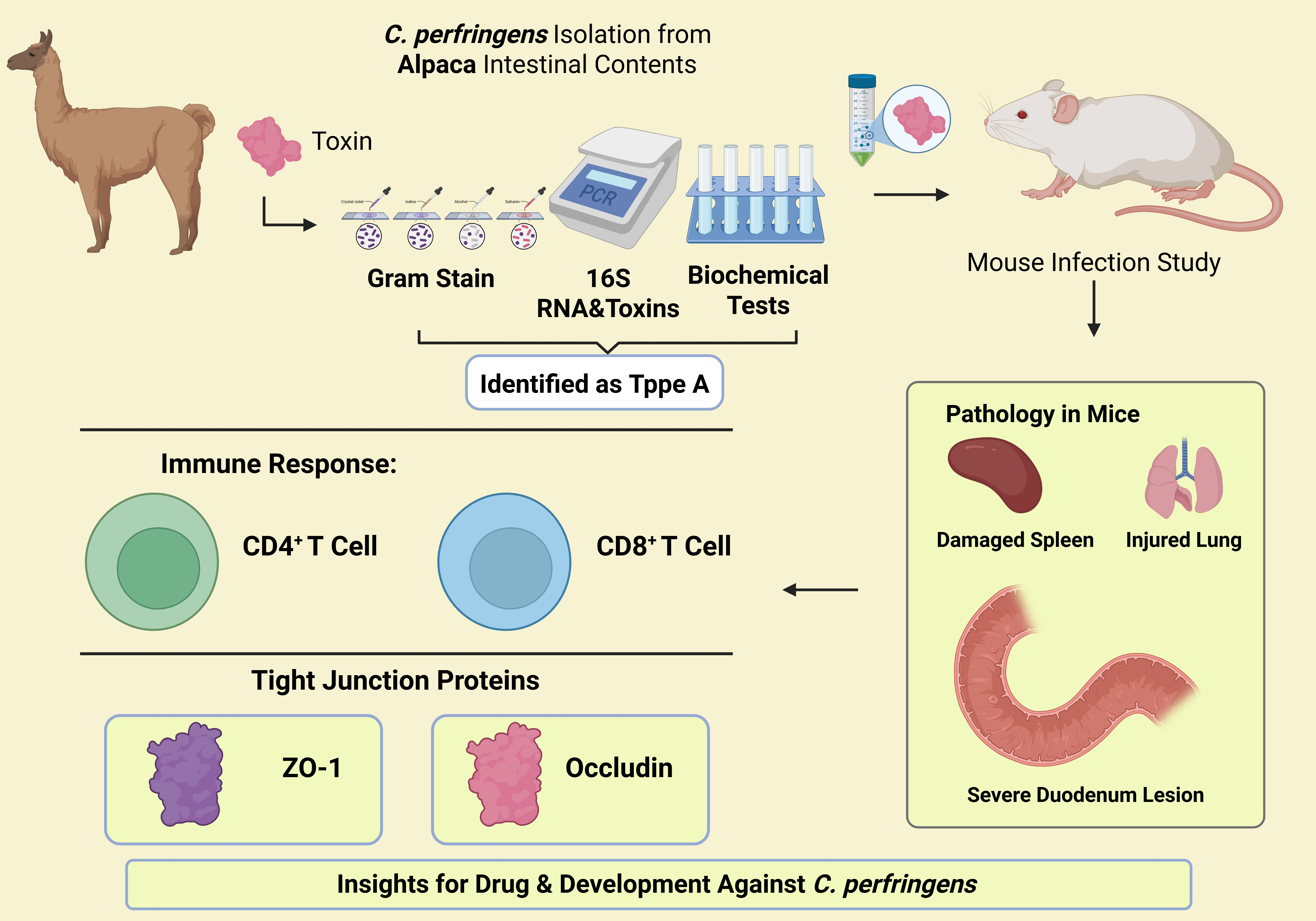
Clostridium perfringens Type A Isolated from Intestinal Contents of Alpaca


Simple Summary
Abstract
1. Introduction
2. Materials and Methods
2.1. Isolation and Purification of Strains
2.2. Gram Identification and Biochemical Testing
2.3. PCR Identification
2.4. Animal Pathogenicity
2.5. Immunofluorescence (IFC)
2.6. Immunohistochemistry (IHC)
2.7. Quantitative Real-Time PCR (qRT-PCR)
3. Results
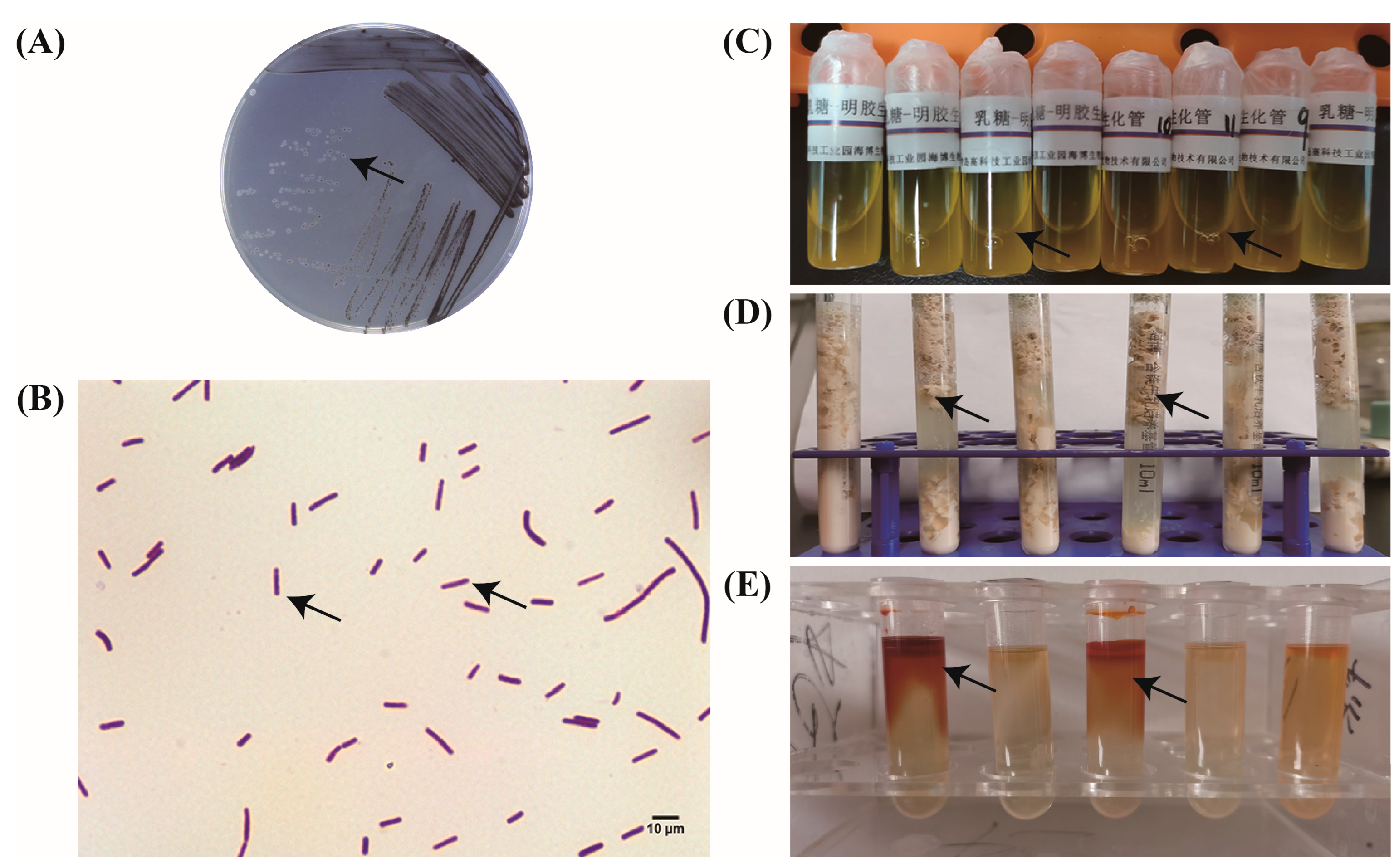
3.1. Identification of Morphology and Biochemistry of Strain
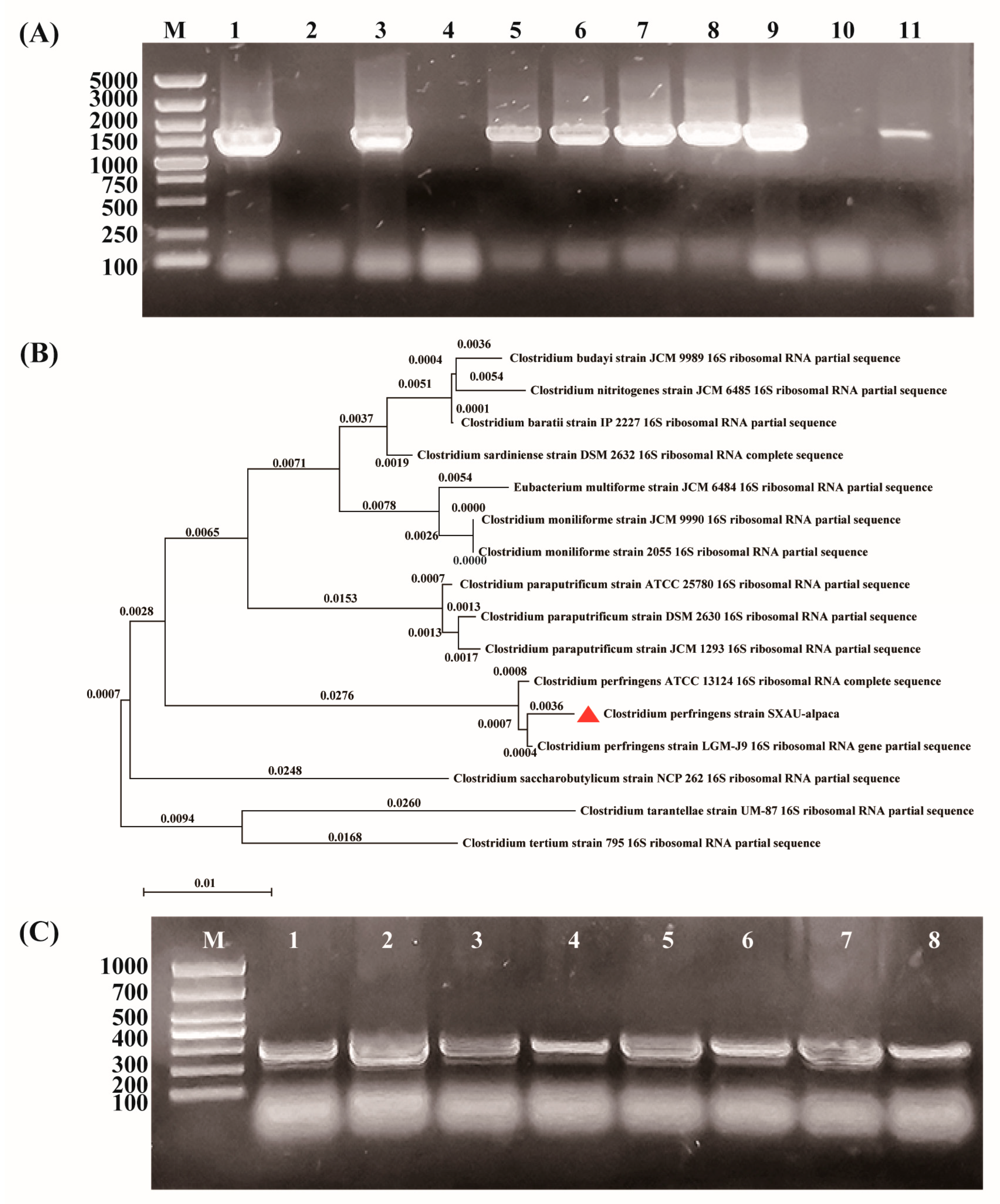
3.2. Identification of Strain by PCR
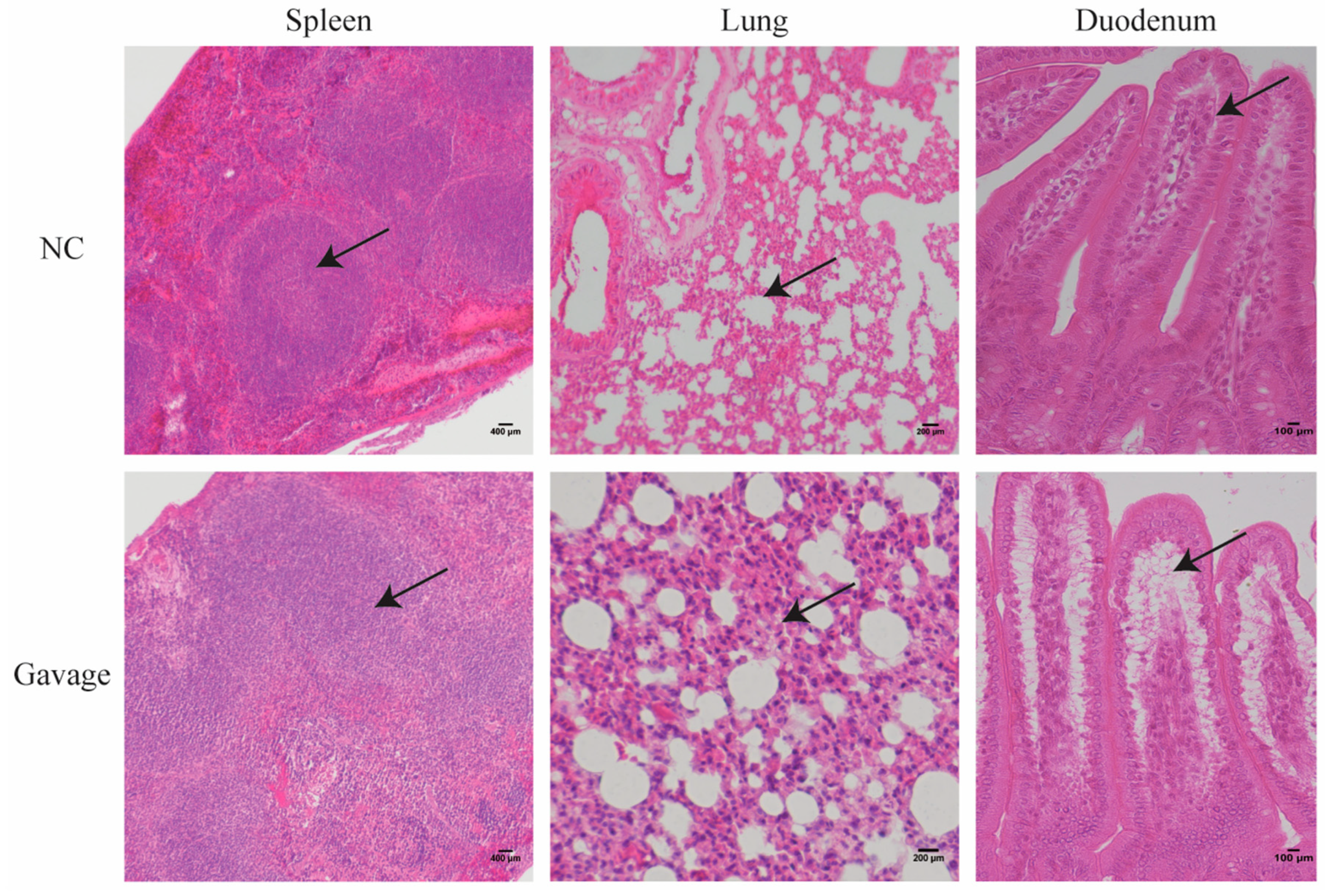
3.3. Pathogenicity of the Strain in Mice
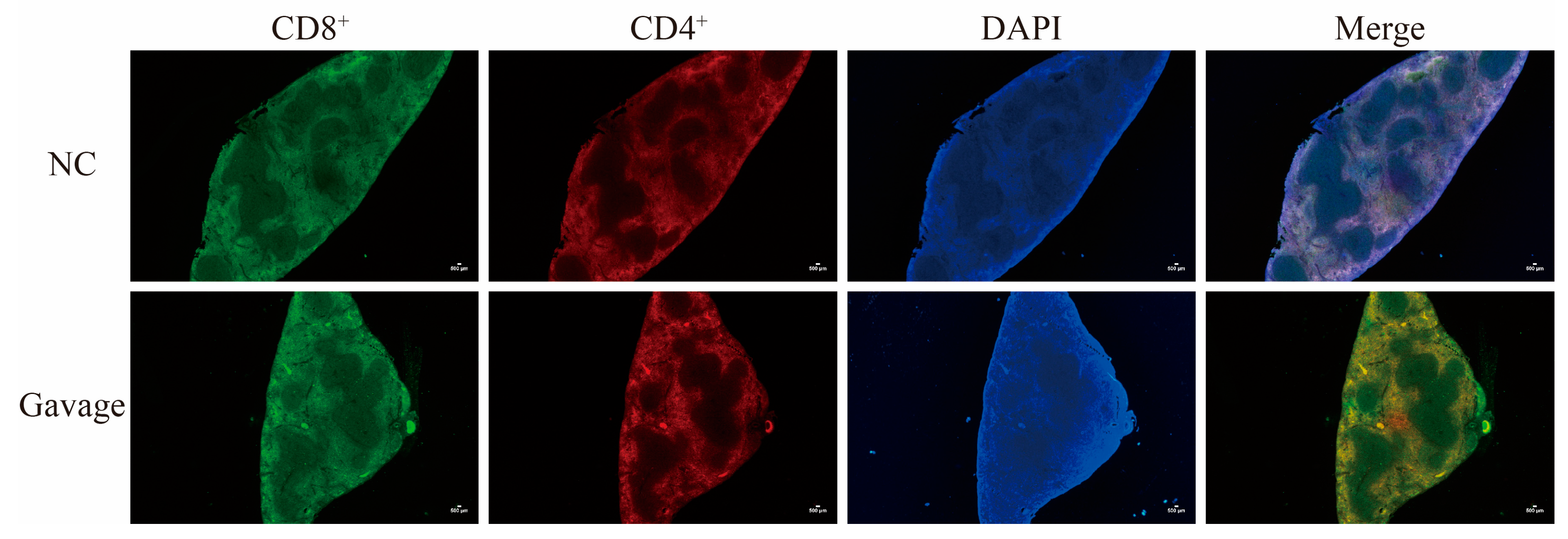
3.4. Distribution of CD4+ and CD8+ T Cells in Spleen
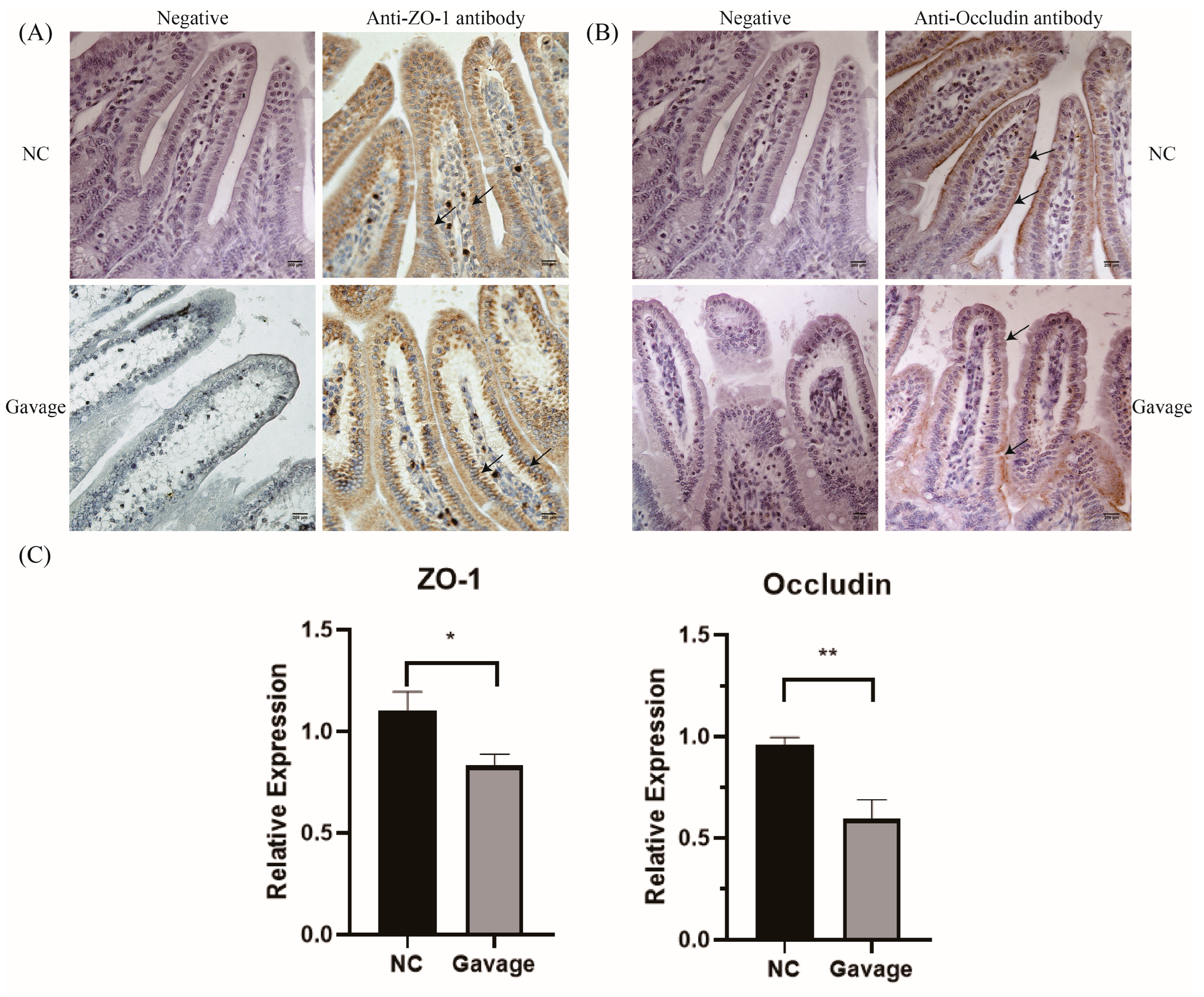
3.5. Effect of C. perfringens Type A Strain on the Localization and mRNA Expression of ZO-1 and Occludin in Duodenum Villus
4. Discussion
5. Conclusions
Author Contributions
Funding
Institutional Review Board Statement
Informed Consent Statement
Data Availability Statement
Conflicts of Interest
References
- Zhang, J.; Liu, S.; Xia, L.; Wen, Z.; Hu, N.; Wang, T.; Deng, X.; He, J.; Wang, J. Verbascoside Protects Mice from Clostridial Gas Gangrene by Inhibiting the Activity of Alpha Toxin and Perfringolysin O. Front. Microbiol. 2020, 11, 1504. [Google Scholar] [CrossRef] [Scilit]
- Goossens, E.; Verherstraeten, S.; Valgaeren, B.R.; Pardon, B.; Timbermont, L.; Schauvliege, S.; Rodrigo-Mocholí, D.; Haesebrouck, F.; Ducatelle, R.; Deprez, P.R.; et al. The C-terminal domain of Clostridium perfringens alpha toxin as a vaccine candidate against bovine necrohemorrhagic enteritis. Vet. Res. 2016, 47, 52. [Google Scholar] [CrossRef] [Scilit] [PubMed]
- Bokori-Brown, M.; Hall, C.A.; Vance, C.; da Costa, S.P.F.; Savva, C.G.; Naylor, C.E.; Cole, A.R.; Basak, A.K.; Moss, D.S.; Titball, R.W. Clostridium perfringens epsilon toxin mutant Y30A-Y196A as a recombinant vaccine candidate against enterotoxemia. Vaccine 2014, 32, 2682–2687. [Google Scholar] [CrossRef] [Scilit]
- Garcia, J.P.; Beingesser, J.; Fisher, D.; Sayeed, S.; McClane, B.; Posthaus, H.; Uzal, F. The effect of Clostridium perfringens type C strain CN3685 and its isogenic beta toxin null mutant in goats. Vet. Microbiol. 2012, 157, 412–419. [Google Scholar] [CrossRef] [Scilit]
- Garmendia, A.E.; Lopez, W.; Ortega, N.; Chamorro, M.J. Molecular characterization of rotavirus isolated from alpaca (Vicugna pacos) crias with diarrhea in the Andean Region of Cusco, Peru. Vet. Microbiol. 2015, 180, 109–112. [Google Scholar] [CrossRef] [Scilit]
- Dong, C.S. The Study of Alpaca; China Agriculture Press: Beijing, China, 2010. [Google Scholar]
- Meer, R.R.; Songer, J.G. Multiplex polymerase chain reaction assay for genotyping Clostridium perfringens. Am. J. Vet. Res. 1997, 58, 702–705. [Google Scholar] [CrossRef] [Scilit]
- Keyburn, A.L.; Bannam, T.L.; Moore, R.J.; Rood, J.I. NetB, a pore-forming toxin from necrotic enteritis strains of Clostridium perfringens. Toxins 2010, 2, 1913–1927. [Google Scholar] [CrossRef] [Scilit]
- Bai, J.-N.; Zhang, Y.; Zhao, B.-H. Cloning of alpha-beta fusion gene from Clostridium perfringens and its expression. World J. Gastroenterol. 2006, 12, 1229–1234. [Google Scholar] [CrossRef] [Scilit]
- Zeng, J.; Song, F.; Yang, Y.; Ma, C.; Deng, G.; Li, Y.; Wang, Y.; Liu, X. The Generation and Characterization of Recombinant Protein and Antibodies of Beta2 Toxin. J. Immunol. Res. 2016, 2016, 5708468. [Google Scholar] [CrossRef] [Scilit] [PubMed]
- Ohtani, K.; Hirakawa, H.; Paredes-Sabja, D.; Tashiro, K.; Kuhara, S.; Sarker, M.R.; Shimizu, T. Unique regulatory mechanism of sporulation and enterotoxin production in Clostridium perfringens. J. Bacteriol. 2013, 195, 2931–2936. [Google Scholar] [CrossRef] [Scilit]
- Wu, M.; Zha, Y.; Xiong, Y.; Zhang, Y.; Zhang, Y.; Liu, J.; Yan, J.; Li, P.; Li, C.; Guo, S. Lactobacillus reuteri postbiotics improved growth performance and intestinal health of broilers with necrotic enteritis. BMC Vet. Res. 2025. [Google Scholar] [CrossRef] [Scilit] [PubMed]
- Paredes-Sabja, D.; Setlow, P.; Sarker, M.R. SleC is essential for cortex peptidoglycan hydrolysis during germination of spores of the pathogenic bacterium Clostridium perfringens. J. Bacteriol. 2009, 191, 2711–2720. [Google Scholar] [CrossRef] [Scilit]
- Forti, K.; Ferroni, L.; Pellegrini, M.; Cruciani, D.; De Giuseppe, A.; Crotti, S.; Papa, P.; Maresca, C.; Severi, G.; Marenzoni, M.L.; et al. Molecular Characterization of Strains Isolated in Italy. Toxins 2020, 12, 650. [Google Scholar] [PubMed]
- Milton, A.A.P.; Agarwal, R.K.; Priya, G.B.; Saminathan, M.; Aravind, M.; Reddy, A.; Athira, C.; Ramees, T.; Sharma, A.K.; Kumar, A. Prevalence and molecular typing of Clostridium perfringens in captive wildlife in India. Anaerobe 2017, 44, 55–57. [Google Scholar] [CrossRef] [Scilit]
- Moustafa, S.; Zakaria, I.; Moustafa, A.; AboSakaya, R.; Selim, A. Molecular epidemiology and genetic characterization of Clostridium perfringens infections in lambs. Microb. Pathog. 2022, 173, 105822. [Google Scholar] [CrossRef] [Scilit]
- Zekun, W.; Wenxuan, M.; Bin, Y.; Yuetong, Y.; Zhiyuan, M.; Aiyun, Z.; Meng, Q.; Jing, L. Antimicrobial resistance profiling and molecular typing of beta-2 toxin-producing Clostridium perfringens from pig-derived isolates in Xinjiang, China. Vet. Microbiol. 2025, 312, 110785. [Google Scholar] [PubMed]
- Guan, P.; Yong, Y.; Huang, Z.; Chen, S.; Wang, H.; Liu, W. Isolation and identification of a Clostridium perfringens strain from alpaca. Shanghai Livest. Vet. News 2020, 22–23. (In Chinese) [Google Scholar]
- Kenzaka, T.; Ueshimo, T. Gram staining of blood cultures for Clostridium perfringens. QJM Int. J. Med. 2016, 109, 757. [Google Scholar] [CrossRef] [Scilit]
- Wu, D.; Luo, R.; Gong, G.; Zhang, L.; Huang, J.; Cai, C.; Li, Y.; Irshad, I.; Song, R.; Suolang, S. Antimicrobial susceptibility and multilocus sequence typing of Clostridium perfringens isolated from yaks in Qinghai-Tibet plateau, China. Front. Vet. Sci. 2022, 9, 1022215. [Google Scholar]
- Suzuki, T. Regulation of the intestinal barrier by nutrients: The role of tight junctions. Anim. Sci. J. 2020, 91, e13357. [Google Scholar] [CrossRef] [Scilit]
- Petrosino, J.F.; Highlander, S.; Luna, R.A.; Gibbs, R.A.; Versalovic, J. Metagenomic pyrosequencing and microbial identification. Clin. Chem. 2009, 55, 856–866. [Google Scholar] [CrossRef] [Scilit]
- Aijaz, S.; Balda, M.S.; Matter, K. Tight junctions: Molecular architecture and function. Int. Rev. Cytol. 2006, 248, 261–298. [Google Scholar] [PubMed]
- Furuse, M.; Hirase, T.; Itoh, M.; Nagafuchi, A.; Yonemura, S.; Tsukita, S.; Tsukita, S. Occludin: A novel integral membrane protein localizing at tight junctions. J. Cell Biol. 1993, 123, 1777–1788. [Google Scholar] [CrossRef] [Scilit] [PubMed]
- Costantini, T.W.; Deree, J.; Loomis, W.; Putnam, J.G.; Choi, S.; Baird, A.; Eliceiri, B.P.; Bansal, V.; Coimbra, R. Phosphodiesterase inhibition attenuates alterations to the tight junction proteins occludin and ZO-1 in immunostimulated Caco-2 intestinal monolayers. Life Sci. 2009, 84, 18–22. [Google Scholar] [CrossRef] [Scilit]



| Primers | Primer Sequence (5′-3′) | PCR Product (bp) |
|---|---|---|
| α-F | GCTAATGTTACTGCCGTTGA | 325 |
| α-R | CCTCTGATACATCGTGTAAG | |
| β-F | GCGAATATGCTGAATCATCTA | 196 |
| β-R | GCAGGAACATTAGTATATCTTC | |
| ε-F | GCGGTGATATCCATCTATTC | 656 |
| ε-R | CCACTTACTTGTCCTACTAAC | |
| ι-F | ACTACTCTCAGACAAGACAG | 446 |
| ι-R | CTTTCCTTCTATTACTATACG | |
| 16S-F | AGAGTTTGATCCTGGCTCAG | 1500 |
| 16S-R | TACGGCTACCTTGTTACGACTT | |
| CPE-F | TAACAATTTAAATCCAAT GG | 233 [7] |
| CPE-R | ATTGAATAAGGGTAATTTCC | |
| Net B-F | TTTTCTTTTAGACATGTCCATAGGC | 384 [8] |
| Net B-R | CCATCCCTTATTTCATCAGCATTTA |
| Primers | Primer Sequence (5′-3′) |
|---|---|
| ZO-1-F | GCCGCTAAGAGCACAGCAA |
| ZO-1-R | GCCCTCCTTTTAACACATCAGA |
| Occludin-F | TTGAAAGTCCACCTCCTTACAGA |
| Occludin-R | CCGGATAAAAAGAGTACGCTGG |
| β-actin-F | TTGCTGACAGGATGCAGAAG |
| β-actin-R | ACATCTGCTGGAAGGTGGAC |
Disclaimer/Publisher’s Note: The statements, opinions and data contained in all publications are solely those of the individual author(s) and contributor(s) and not of MDPI and/or the editor(s). MDPI and/or the editor(s) disclaim responsibility for any injury to people or property resulting from any ideas, methods, instructions or products referred to in the content. |
© 2026 by the authors. Licensee MDPI, Basel, Switzerland. This article is an open access article distributed under the terms and conditions of the Creative Commons Attribution (CC BY) license.
Share and Cite
Ren, H.; Jia, Q.; Gao, S.; Yang, H.; Zhang, S.; Fan, R. Clostridium perfringens Type A Isolated from Intestinal Contents of Alpaca. Microorganisms 2026, 14, 166. https://doi.org/10.3390/microorganisms14010166
Ren H, Jia Q, Gao S, Yang H, Zhang S, Fan R. Clostridium perfringens Type A Isolated from Intestinal Contents of Alpaca. Microorganisms. 2026; 14(1):166. https://doi.org/10.3390/microorganisms14010166
Chicago/Turabian StyleRen, Hongrui, Qiong Jia, Shuaipeng Gao, Haoyu Yang, Shuyin Zhang, and Ruiwen Fan. 2026. "Clostridium perfringens Type A Isolated from Intestinal Contents of Alpaca" Microorganisms 14, no. 1: 166. https://doi.org/10.3390/microorganisms14010166
APA StyleRen, H., Jia, Q., Gao, S., Yang, H., Zhang, S., & Fan, R. (2026). Clostridium perfringens Type A Isolated from Intestinal Contents of Alpaca. Microorganisms, 14(1), 166. https://doi.org/10.3390/microorganisms14010166