Article

Metagenome Insights into Armenian Acid Mine Drainage: A Novel Thermoacidophilic Iron-Oxidizing Bacterium with Perspectives for Copper Bioleaching


by
Anna Khachatryan
1,
Arevik Vardanyan
1,*,
Ruiyong Zhang
2,3,
Yimeng Zhang
2,
Xin Shi
2,
Sabine Willscher
4,
Nhung H. A. Nguyen
5 and
Narine Vardanyan
1
1
Department of Microbiology, SPC “Armbiotechnology” of the National Academy of Sciences of Armenia, 14 Gyurjyan Str., Yerevan 0056, Armenia
2
State Key Laboratory of Advanced Marine Materials, Key Laboratory of Marine Environmental Corrosion and Biofouling, Institute of Oceanology, Chinese Academy of Sciences, Qingdao 266071, China
3
Guangxi Key Laboratory of Marine Environmental Science, Institute of Marine Corrosion Protection, Guangxi Academy of Sciences, Nanning 530007, China
4
Faculty of Natural Sciences I, Martin Luther University Halle-Wittenberg, 06099 Halle, Germany
5
Institute for Nanomaterials, Advanced Technologies and Innovation, Technical University of Liberec, Bendlova 1409/7, 461 17 Liberec, Czech Republic
*
Author to whom correspondence should be addressed.
Microorganisms 2026, 14(1), 146; https://doi.org/10.3390/microorganisms14010146

Submission received: 5 December 2025 / Revised: 1 January 2026 / Accepted: 5 January 2026 / Published: 9 January 2026
(This article belongs to the Section Microbiomes)

Abstract

The microbial ecology of acid mine drainage (AMD) systems in Armenia, with a long mining history, remains unexplored. This study aimed to characterize the microbial diversity and functional potential of AMD in the Syunik region and to isolate novel microorganisms with biotechnological value. A comprehensive analysis of the microbial communities’ structure of Kavart abandoned, Kapan exploring mines effluent, and Artsvanik tailing was conducted. Metagenomics revealed bacterial-dominated communities, comprising Pseudomonadota (previously “Proteobacteria”) (68–72%), with site-specific variations in genus abundance. A high abundance and diversity of metal resistance genes (MRGs), particularly for copper and arsenic, were identified. Carbohydrate-active enzyme (CAZy) analysis showed a dominance of GT2 and GT4 genes, suggesting a high potential for extracellular polymeric substances (EPS) production and biofilm formation. A novel strain of iron-oxidizing bacteria Arm-12 was isolated that shares only ~90% similarity with known Leptospirillum type species, indicating it may represent a new genus without culturable representatives. The strain exhibits enhanced copper extraction from concentrate. This study provides the first metagenomic insights into Armenian AMD systems and tailing, revealing a unique community rich in metal resistance and biofilm-forming genes. The isolation of a novel highly effective iron-oxidizer Arm-12 highlights the potential of AMD environments as a source of novel taxa with significant applications in biomining and bioremediation processes.

1. Introduction

AMD refers to an acidic effluent rich in sulfates and metals. It forms through the microbial oxidation of pyrite and other sulfide minerals, leading to the generation of sulfuric acid and metal-rich solutions. AMD systems are common worldwide, although only a limited number of them have been microbiologically characterized [1,2]. It has recently been demonstrated that some of these AMD formations, such as the Los Rueldos mercury mine in northwestern Spain, appear to be populated by a wide range of prokaryotes, the majority of which are inhabited by a limited set of acidophilic bacteria and archaea, the variety and abundance of which are dependent on geochemical conditions [1,3,4,5,6].
The primary bacterial lineages identified in AMD systems belong to the phyla Pseudomonadota, including genera Acidithiobacillus, Acidiphilium, Acidocella, Ferrovum, Acidibacter, and Metallibacterium spp., Nitrospirae (Leptospirillum spp.), Firmicutes (Sulfobacillus spp., and Alicyclobacillus spp.), and Acidobacteria [7,8,9,10,11,12]. In addition, a large number of rare taxa constituting a “rare biosphere” may perform crucial functions in AMD ecosystems have been reported [13]. The Archaea include the phylum Euryarchaeota (Ferroplasma spp.) [14,15,16,17]. These microorganisms are expected to be reservoirs of enzymes adapted to resist acidic conditions [18,19,20], some of which might be of biotechnological relevance.
Detailed reports of processes contributing to AMD generation, including the role of iron- and/or sulfur-oxidizing microbes, are available in the literature [12,21,22,23]. In many AMD sites, oxidation is catalyzed by naturally occurring bacteria, Acidithiobacillus ferrooxidans [7,23,24], which accelerate the oxidation reactions for sulfides of most heavy metals. Leptospirilla detected in extremely acidic AMD sites are also an important contributor to the production of AMD [25,26,27,28].
The physicochemical factors influencing microbial community formation in AMD include pH, heavy metals, temperature, dissolved oxygen, total organic carbon (TOC), and solute concentrations. In general, pH is the main factor influencing bacterial diversity. The pH can indirectly impact microorganisms involved in biogeochemical cycles by altering various chemical and physical factors, such as the availability and solubility of metals. The amounts of toxic heavy metals or metalloids influence changes in community structure because heavy metals can bind to microbial proteins, enzymes, and nucleic acids, interfering with their normal functioning and resulting in toxicity [29]. A large number of AMD sites with microbial communities shaped by concentrations of heavy metals/metalloids have been reported [26,27,30]. High concentrations of heavy metals are typically thought to reduce microbial diversity and limit the thriving of microbial communities due to their toxicity [30,31]. However, some microbes demonstrated tolerance towards metals, such as Acidithiobacillus spp., Acidiphilium spp., and Leptospirillum spp. [5,8].
Certain microorganisms can prevent or circumvent the damage effects from heavy metals through the expression of specific metal resistance genes (MRGs). For example, heavy metals are primarily associated with Cu, Zn, Hg, Cr, and Cd in the Pearl River Estuary water [32]. Several studies have reported that heavy metal accumulation may enhance the abundance of resistance genes [33,34].
Bacterial community is also considered a key factor driving the distribution of resistance genes in the environment [35]. The mining activity and accumulation of tailings have led to serious environmental hazards. Despite the global distribution of AMD, its microbial ecology is shaped by local geochemistry [1,2,6]. The microbial ecology of AMD systems in the Caucasus region, particularly in Armenia, with its long history of base and precious metal mining, remains entirely unexplored. This represents a critical knowledge gap, as local geochemistry and mineralogy are key drivers of microbial community structure and function. Consequently, the potential of these unique environments to harbor novel microbial taxa and genetic determinants, such as new MRGs or acid-stable enzymes, is completely unknown. Furthermore, the discovery of novel, robust acidophiles is essential for advancing biomining technologies. Therefore, a comprehensive study of Armenian AMD sites is necessary to understand their specific microbial ecology and to tap into their biotechnological potential. The long-term exposure to heavy metals has affected the biodiversity and composition of microbial communities [36].
In this study, we used molecular analysis to investigate the bacterial community structures in AMD and tailing samples from Syunik Province, Armenia. For the first time, a metagenomic approach was used to investigate the microbial composition of KAM, KEM, and AT to reveal the main taxa and assess the potential of gene sources. Thus, it is critical to illuminate the distribution characteristics of heavy MRGs and their interactions with the bacterial community and environmental factors in AMD and tailing samples.

2. Materials and Methods

2.1. Collection and Physicochemical Analysis of the Samples

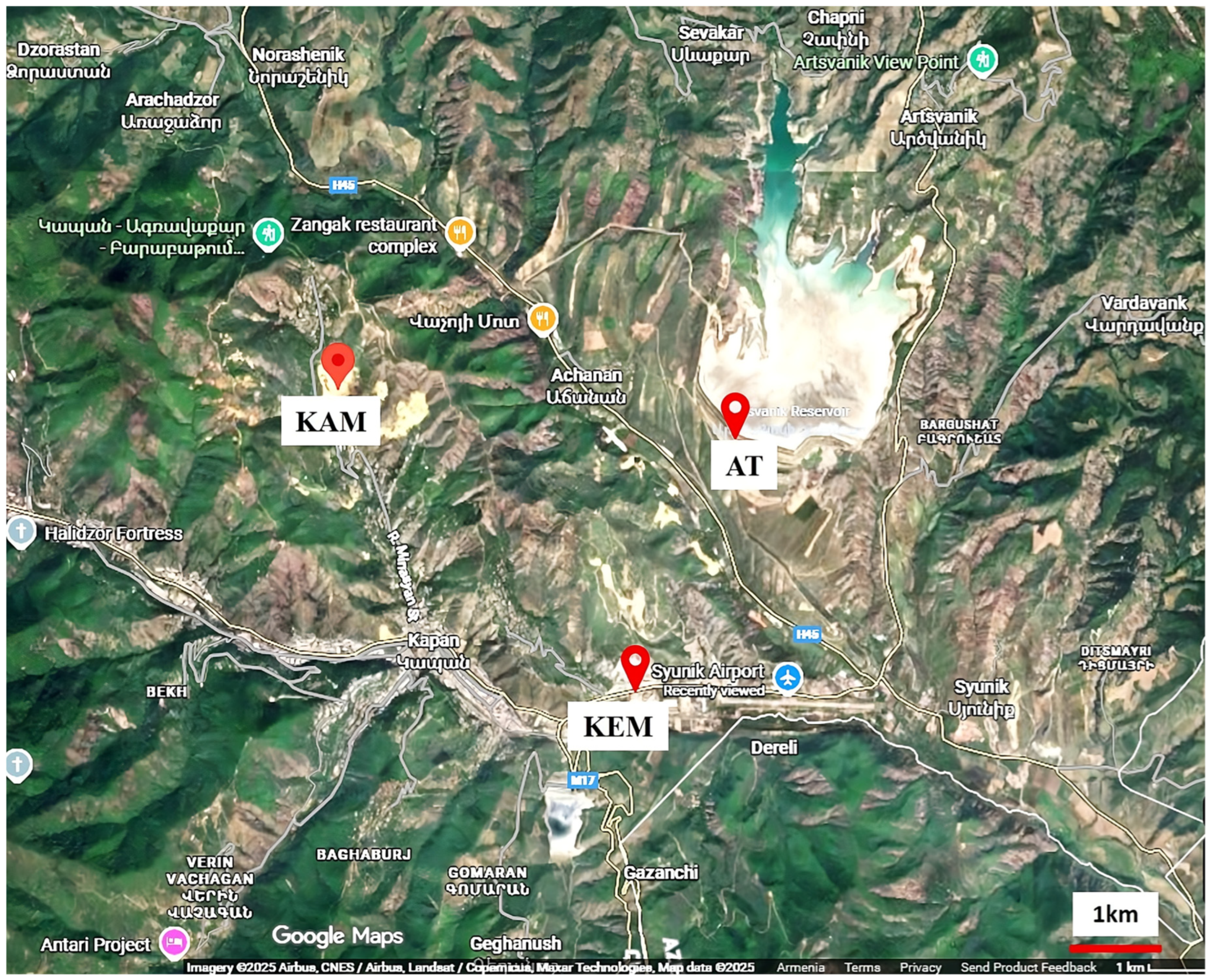
Kapan mine effluent and Kavart AMD samples, as well as a sample of AT (Syunik region, Armenia), served as subjects for metagenomic analysis. Kapan city is one of the basic industrial cities situated in the southeastern part of Armenia (Figure 1) between the lower streams of Rivers Voghchi and Artsvanik. Kavart is an abandoned mine in the Syunik region. The sampling was carried out in December. Samples of AMD were collected from the mainstream of the Kavart abandoned mine with sediment (KAM) (N39.234800, E46.394133) and from the Kapan exploring mine (mine effluent) (KEM) (N39.203833, E46.429233) (Syunik region, Armenia). The samples were taken into sterile glass bottles. Artsvanik is the largest exploiting tailing located near Kapan city. The sample from AT was collected aseptically from the surface and a 50-cm deep layer of black shale (N39.231433, E46.447067). A total of three samples were collected in July 2023 (summer) and three samples in December 2023 (winter), and were named as KAM, AMD of KEM, and AT. Sampling was performed to account for potential seasonal variation in microbial community composition and geochemical parameters, as AMD systems in continental climates may experience shifts in temperature, hydrology, and metal solubility between warm and cold seasons.
Collecting two time points provided complementary data while maintaining manageable sequencing and analytical effort. Each site was sampled once per season, resulting in a total of six samples, which ensured coverage of the main AMD sources in the region while allowing detailed metagenomic and physicochemical analysis of each sample.
Parameters including the pH, electrical conductivity, redox potential, and total dissolved solids were measured using the multiparameter YSI 556 MPS (Aqua TROLL 500 Multiparameter Sonde, In-Situ Inc., Fort Collins, CO, USA). The samples were analyzed for heavy metal content (Fe, K, Mg, Cu, As, Zn, Al, Co, Ca, Cr, Mn, Se, Ni, Sr, Pb, and Na) using the Agilent 5800 VDV ICP-OES (Inductively Coupled Plasma Optical Emission Spectrometry) (Agilent Technologies, Waldbronn, Germany). Standard solutions were used to make the appropriate calibration curves. Each sample was analyzed in triplicate, and the average absorbance was used to determine the heavy metal concentrations. All samples were kept at 4 ± 0.1 °C in the refrigerator for subsequent molecular biological studies.

2.2. DNA Extraction from AMD and Tailing Samples for Metagenomics and Statistical Analysis

The AMD samples of KAM, KEM, and tailing sample AT (each 2 L) were filtered for the metagenome sequencing through a 0.22-μm polycarbonate membrane by using a vacuum filtration system (Millipore Corporation, Billerica, MA, USA). The filtration was performed within 4~8 h, and the filter membranes were quick-frozen in liquid nitrogen and then stored at −80 °C until DNA extraction. DNA extraction for metagenomic studies was performed according to the Fast DNA TMSpin Kit for Soil protocol (MP Bio-Medicals, Santa Ana, CA, USA) according to the manufacturer‘s instructions. The integrity and purity of the DNA were evaluated using 1% agarose gel electrophoresis, while DNA concentration was measured using a Qubit 4.0 fluorometer and a NanoDrop One spectrophotometer (Thermo Fisher Scientific, Waltham, MA, USA). High-quality DNA samples were processed using the ALFA-SEQ DNA Library Prep Kit, following these steps: DNA fragmentation, end repair and 3′ adenylation, adapter ligation, fragment selection, purification, and PCR amplification. The library size distribution was assessed with the Qsep400 High-Throughput Nucleic Acid-Protein Analysis System, and concentrations were measured with Qubit 4.0. Sequencing was performed on an Illumina or MGI platform using paired-end 150 bp (PE150) reads. Raw sequencing reads were processed using Fastp V0.14.1 software to remove low-quality bases and adapters, generating clean reads for downstream analysis. MEGAHIT (v1.2.9) was used for assembly. Scaffolds were broken at N-connection sites to generate scaftigs. Unused reads were pooled and subjected to co-assembly using MEGAHIT, with scaftigs > 500 bp retained for further analysis. Open reading frames were predicted using Prodigal (v2.6.3). The resulting non-redundant gene catalog was clustered at 95% identity using MMseqs2 V16.747c6. Gene abundance was calculated by mapping clean reads to the gene catalog with BBMap. Taxonomic classification was performed using Diamond against the NCBI NR database. The Lowest Common Ancestor algorithm in MEGAN was applied for species annotation. Taxonomic abundance was computed at different levels (Kingdom to Species). For functional analyses, the unique genes were blasted against functional databases, including the CAZy database (Version 2018-012).

2.3. Isolation of Arm-12

Samples of AMD of KEM, KAM, and AT were used to establish an enrichment culture of iron-oxidizing bacteria. For this purpose, MAC medium [37] with FeSO4 × 7H2O as a source of energy at pH 1.85 was inoculated with an AMD sample and incubated at 37 °C and 45 °C for 5–7 days. After enrichment, the target strain was isolated using the serial dilution technique. The enrichment was serially diluted from 10−1 to 10−8, and all dilutions were subsequently used to inoculate MAC medium at 45 °C. Pure culture Arm-12 was isolated from enrichment culture diluted to 10−5 using Manning solid medium with FeSO4 × 7H2O as a source of energy [38].

2.4. Identification of Arm-12

The isolated strain Arm-12 was identified based on the nucleotide sequence analysis of the 16S rRNA gene. The pure culture of Arm-12 in the logarithmic growth phase (106–108) was centrifuged (SIGMA 1-14k, Osterode am Harz, Germany) to collect the bacterial biomass, which was subsequently frozen for DNA purification and taxonomic classification of the strain. DNA extraction was performed following the TIANamp Genomic DNA Kit-DP304 protocol. This DNA kit utilizes silica membrane technology and includes a specialized buffer system for extracting DNA from various sample types. DNA purity and concentration were assessed using a Thermo Scientific™ NanoDrop™ One Microvolume ND-1000 UV-Vis spectrophotometer (NanoDrop Technologies, Wilmington, DE, USA). PCR amplification was performed following the TransStart® FastPfu DNA Polymerase Protocol. The purified PCR products were sequenced using two universal primers: 27F (5′ AGAGTTTGATCCTGGCTCAG) and 1492R (5′ GGTTACCTTGTTACGACTT). The total volume of PCR products was measured using a Thermo Scientific™, NanoDrop™ One Microvolume ND-1000UV-Vis spectrophotometer. The sample was forwarded to Sangon Biotech Co., Ltd. (Shanghai, China) for 16S rRNA gene sequencing.

2.5. Phylogenetic Analysis of Arm-12

The initial analysis of the nucleotide sequence similarity of the 16S rRNA gene of the studied strain was conducted using the online NCBI BLAST tool (https://www.ncbi.nlm.nih.gov/blast). To identify phylogenetically related species of the studied bacterium, the nucleotide sequence of the 16S rRNA gene was submitted to the NCBI (National Center for Biotechnology Information) BLAST (https://www.ncbi.nlm.nih.gov/blast) online search system and compared with corresponding sequences in the GenBank database. The obtained 16S rRNA gene sequences of Arm-12 were compared with other 16S rRNA gene sequences available in the EZBioCloud database (https://www.ezbiocloud.net/), and the phylogenetic tree was constructed with MEGA 12 software [39].

2.6. Morphology and SEM Studies

Gram-staining of isolated bacteria was performed by the Hucker method [40] and was observed with a Leica DM500 trinocular (×1000) microscope (Leica Microsystems, Wetzlar, Germany). For Scanning Electron Microscope studies (SEM), the pure culture Arm-12 was grown in MAC medium containing 20 g/L of FeSO4 × 7H2O (analytical grade, VWR Chemicals, Radnor, PA, USA, GPR RECTAPUR®) as an energy source. Bacterial biomass was harvested onto a membrane with a pore size of 0.2 μm. The collected biomass was successively dehydrated with ethanol series 30%, 50%, 70%, 80%, 90%, and 96% at 25 °C (2 × 10 min) and stored overnight at 4 °C (1 × 10min) in 30%, 50%, and 100% acetone. The biomass was then dried using critical-point drying and coated with gold. SEM images of the strain were obtained using a Zeiss Sigma 300V P FEG (ZEISS, Oberkochen, Germany) operating at 5 kV.

2.7. Optimal Conditions for Growth

The influence of temperature and pH on the growth of the isolated strain Arm-12 was examined in 250 mL Erlenmeyer flasks containing 50 mL of sterile MAC medium with Fe2+ as a source of energy on the rotary shaker at 170 rpm (Biossan, Riga, Latvia).

2.8. Influence of Metal Ions

The influence of metal ions (Cu2+, Mo2+, Cr2+, Co2+, Ni2+, and Zn2+) on the oxidation of Fe2+ by Arm-12 was studied in MAC medium in the different concentration ranges from 5 to 100 mM. The following salfates were used: CuSO4 × 5H2O (Cu2+), Na2MoO4 × 2H2O (Mo2+), CrSO4 × 5H2O (Cr2+), CoSO4 × 7H2O (Co2+), NiSO4 × 6H2O (Ni2+), and ZnSO4 × 7H2O (Zn2+). Fe2+ and Fe3+ ions were determined by the titration method using EDTA [41].

2.9. Bioleaching of Copper Concentrate

Copper concentrate in particle size 45 μm produced in Armenia was subjected to research. Bioleaching of copper concentrate was performed using Arm-12 strain. Bioleaching experiments were carried out in 250 mL Erlenmeyer flasks containing 100 mL of MAC medium without iron ions at 45 °C, 150 rpm, 2.5 pulp density (PD). The amount of inoculum for the used cultures was 10%. All experiments were carried out in triplicate. For each bioleaching experiment, chemical controls with the same conditions and without inoculum were included. pH was determined with a pH/mV Meter SevenExcellence (Mettler Toledo, Riga, Latvia) equipped with an Ag/AgCl electrode. The redox potential was measured with a Redox Electrode (Pt/Ag/AgCl) of pH/mV Meter SevenExcellence. Copper and total iron were determined by ICP-OES (Agilent 5800 VDV). Concentrations of Fe2+ and Fe3+ ions were determined by the complexometric method with EDTA.

3. Results

3.1. Physicochemical Characteristics of AMD and Tailing Samples

The chemical composition and pH/Eh values of the AMD and tailing samples are shown in Table 1. As shown in Table 1, the samples of AMD (KAM, KEM) and AT were characterized by low pH values: pH 1.8–2.0 and pH 2.5, respectively. The oxidation-reduction potential in the tailing storage facility showed a positive value, indicating the occurrence of an oxidative condition. The results in mine water discharge with high acidity, elevated sulfate concentrations, and significant levels of heavy metals, including As, Pb, Se, Zn, Sr, Cr, Al, Co, Ca, Cu, Mg, Fe, K, Ni, Mn, and Na. Notably, the concentrations of Ca, Fe, Cu, Na, Al, Mg, Zn, and Ca were particularly higher (Table 1).
These conditions, namely low pH, high redox potential, and elevated concentrations of dissolved heavy metals, expedite the oxidation of mine wastes, leading to increased acidity levels [42,43].

3.2. Metagenomics Analysis and Microbial Community Composition

The microbial communities of the leakage from KEM, AMD of KAM, and AT samples were mainly dominated by bacteria and accounted for 79.4%, 71.4%, and 87.0%, respectively. The relative abundance (%) of Archaea and Eukaryota in sample KAM (1.4 and 2.0) was higher compared to samples KEM (0.04 and 0.2) and AT (0.01 and 0.005) (Table 2).
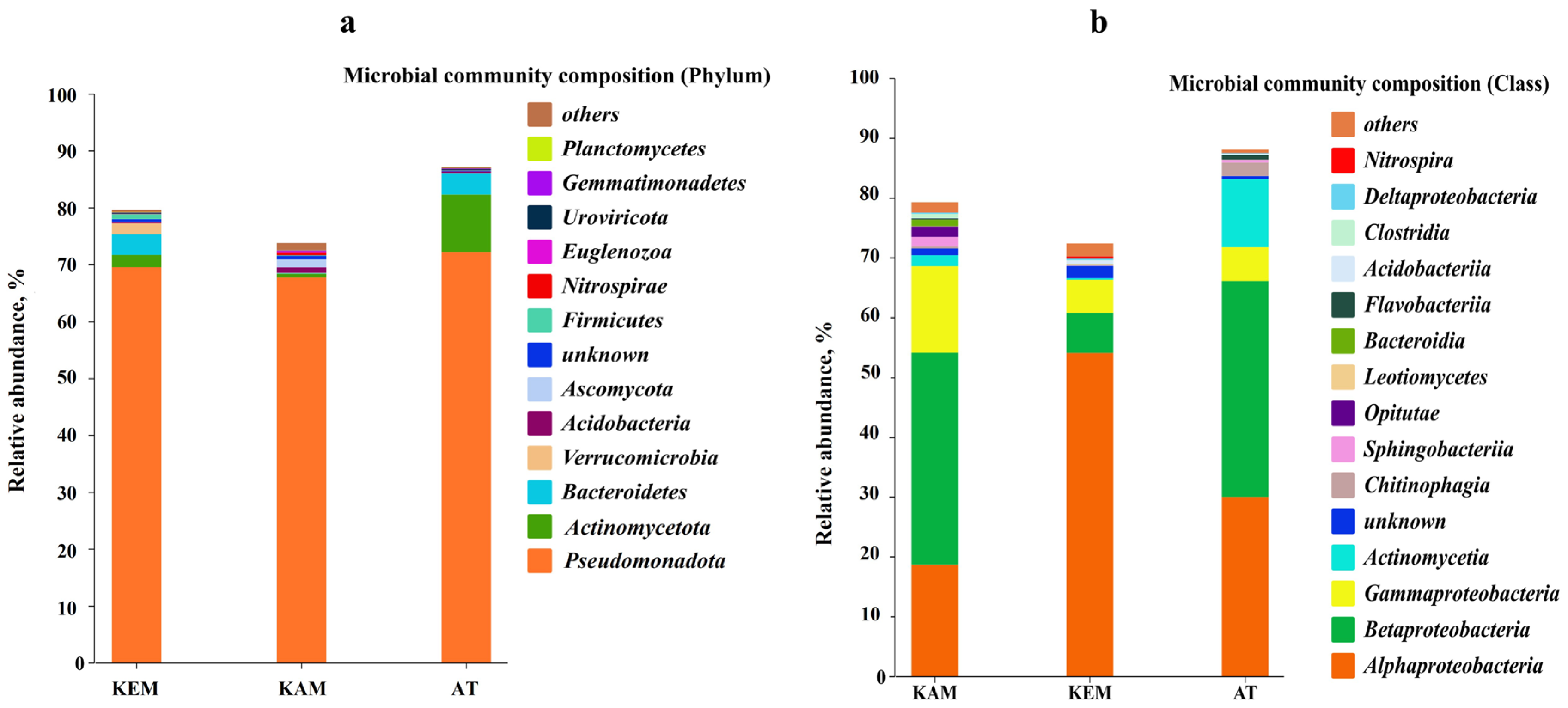
The most abundant phylum that dominated the microbial communities in all three samples was Pseudomonadota, accounting for 68–72% of the total taxa, followed by Actinomycetota (previously known as “Actinobacteria”) and Bacteroidetes as the minor phyla level (Figure 2a).
This is consistent with other reports that Pseudomonadota were dominant in AMD ecosystems [26,27]. The relative abundance of Actinomycetota was higher in sample AT compared to samples KAM and KEM. The most abundant class in KEM and AT was Betaproteobacteria (35% in KEM and 36% in AT), while Alphaproteobacteria was the most abundant class in the KAM sample with a relative abundance of 54% (Figure 2b). The red color indicates the class Nitrospira from which a new genus, Arm-12, was isolated.
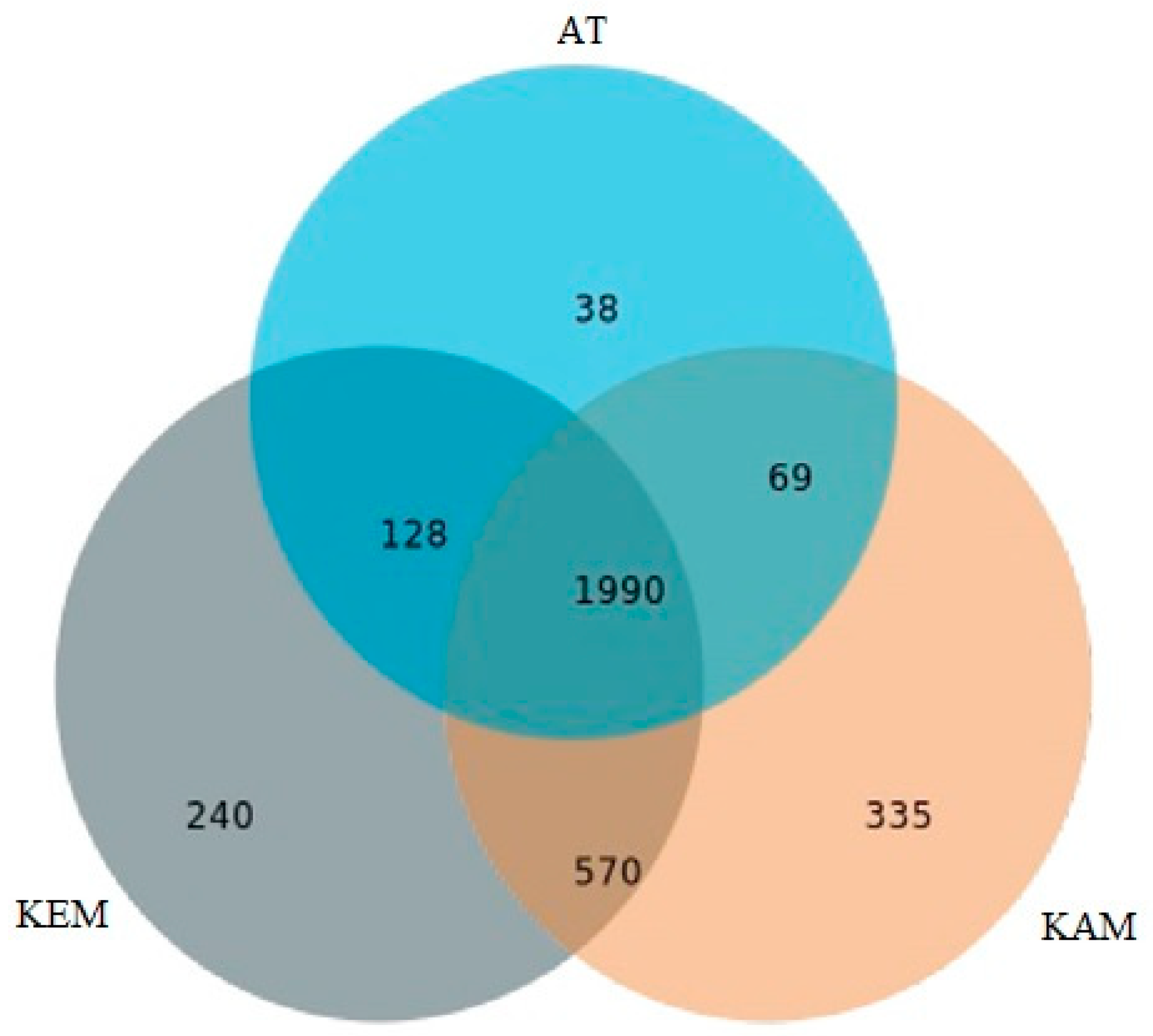
A high abundance of bacterial species (1990) is shared between the three samples. Following the sharing genera between KEM and KAM with 570, between KEM and AT with 128, and the least is between KAM and AT with only 69 (Figure 3).
The number of genera correlates with the environmental conditions of the sample locations in the order: KAM (335) > KEM (240) and AT (38) (Figure 3).
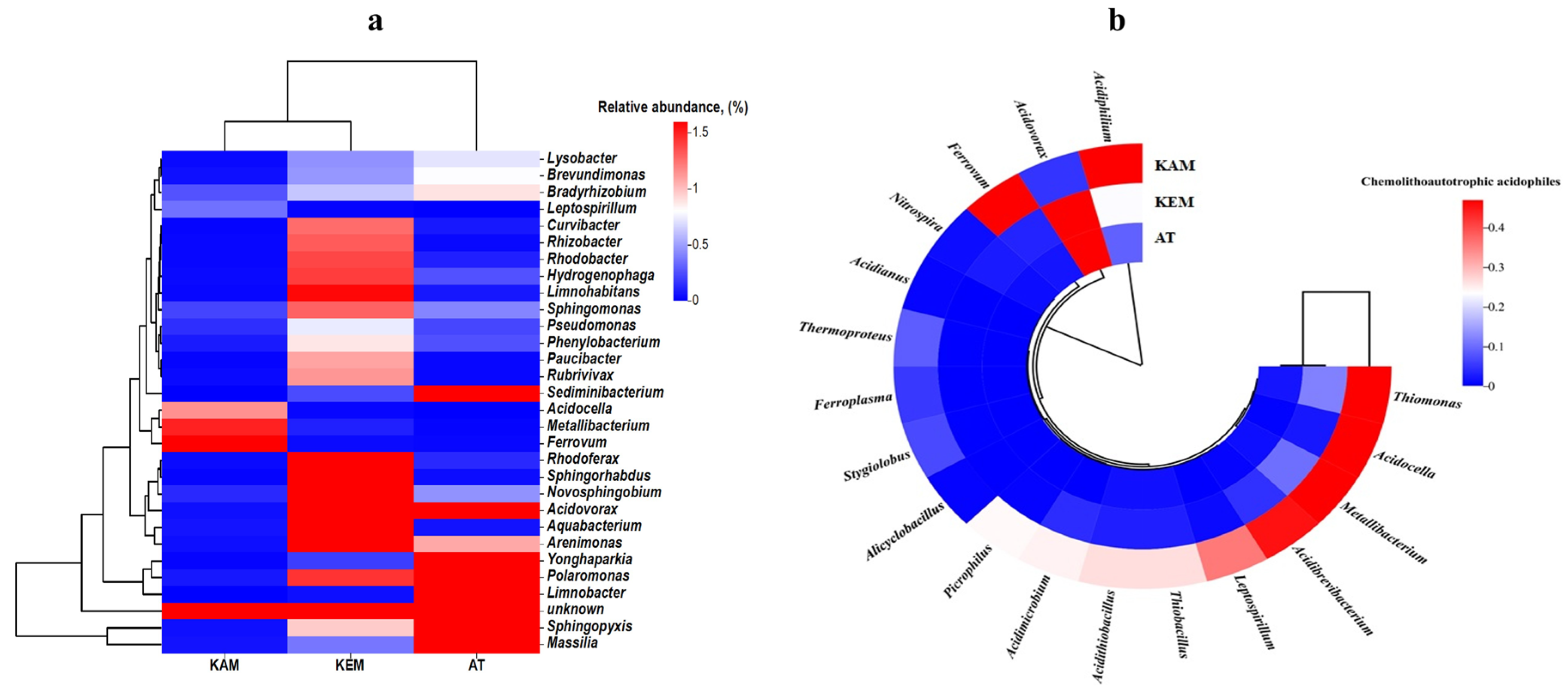
The most abundant genera in all three samples are presented in the heatmap (Figure 4a).
Sample KEM has the highest number of predominant genera (19), followed by AT (9) and KAM (4) (Figure 4a). However, the predominant genera in samples KAM, KEM, and AT were generally distinct. For instance, the unknown genera were the most abundant in KEM, followed by the Aquabacterium (4%) and Arenimonas (4%). In samples KEM and AT, the unknown genera were 6.2% and 3.2%, respectively. In sample AT, the predominant genus was Sphingopyxis with a relative abundance of 22%, followed by Massilia (14%) and Limnobacter (8%) (Figure 4a). In the KAM sample, the most abundant genera were Metallibacterium (1.5%) and Ferrovum (2.7%). Acidocella accounted for 1.2% of the total microbial taxa (Figure 4a).
As the most common chemolithoautotrophic acidophiles in the KEM sample, Leptospirillum species accounted for 0.01% of the total microbial community. In contrast, their relative abundance was 0.4% in the KAM sample and 0.002% in the AT sample. In the KAM sample, the most abundant genus overall was Acidiphilium, representing 46% of the total microbial taxa (Figure 4b). Iron-oxidizing acidophiles of Leptospirillum and Acidithiobacillus genera thriving in extreme environments are the key members of the microbial consortia that are exploited for the industrial recovery of valuable metals such as copper, zinc, and gold [10,30,44,45].
As mentioned above, the most important microbes involved in the bioleaching of minerals are those that are responsible for the production of ferric iron and sulfuric acid required for bioleaching reactions. These include the iron- and/or sulfur-oxidizing chemolithotrophic acidophiles (Figure 4b). Members of the Ferrovum genus were detected in abundance in different mining sites and were involved in the oxidation of ferrous iron [46,47,48]. The most abundant genus is Acidovorax, accounting for 3.0%, 0.1%, and 2.0% in samples KEM, KAM, and AT, respectively (Figure 4b).
In sample KAM, Metallibacterium and Acidocella accounted for 1.5% and 1.2% (Figure 4a,b).
Comparative analysis indicated that variations in microbial community composition across KAM, KEM, and AT samples were closely associated with differences in physicochemical conditions. For example, the higher abundance of Acidiphilium and Metallibacterium in KAM correlated with elevated concentrations of Fe, Cu, and Mn, while the dominance of Sphingopyxis and Massilia in AT corresponded with relatively higher Zn levels and slightly higher pH (2.5). Similarly, the prevalence of Aquabacterium and Arenimonas in KEM was associated with moderate Fe and Se levels. Overall, lower pH values (1.8–2.0) supported a higher diversity of acidophiles, whereas increased heavy metal concentrations appeared to shape the abundance of resistant taxa, consistent with observed distributions of metal resistance genes.
Acidiphilium and Acidocella represent heterotrophic acidophiles that usually share the extreme environment with iron-oxidizing bacteria and form sustainable associations with them. Bacteria showed the ability to reduce ferric ions to ferrous ions when organic substrates were used. Bacteria of the Acidibrevibacterium genus are heterotrophic acidophiles isolated from acidic mine drainage [49]. Metallibacterium abundant in sample KAM is considered a facultatively anaerobic, acid-tolerant bacterium that could reduce iron [50]. The genus Acidovorax is associated with nitrate-dependent Fe (II) oxidation, as four Acidovorax species within the class of β-Proteobacteria are capable of performing Fe (II)-driven denitrification [51]. These bacteria not only play an important role in biogeochemical iron cycles but also have valuable biotechnological potential applications, such as electronic waste recycling [52,53,54].
The biodiversity of genera could be explained by the chemical profile of samples (Table 1). The majority of bacterial species were found in sample KAM, which contained the highest concentrations of metals compared to samples KEM and AT. Location KAM is characterized by a high abundance of genera Metallibacterium, Acidocella, Acidiphilum, and Ferrovum, and contains high concentrations of various heavy metals such as Al, Cu, Cr, and Mn, as well as Ca and Mg (Table 3).
Acidophilic heterotrophic strain GS19h and Acidocella aminolytica in the genus Acidocella, exhibited high resistance to CdSO4, ZnSO4, NiSO4, and CuSO4 [55]. Other acidophiles resistant to Cd (II) include Acidiphilum spp. The above-mentioned species have also been found in other studies, as discussed in the genus-level part [21,46,48,50,56,57]. Genomic sequences of bacteria belonging to the genus Novosphingobium found in samples KAM (2%), KEM (0.2%), and AT (0.4%), reveal genes related to heavy-metal resistance [58]. Sphingomonas sp. strain DX-T3-03 and Ralstonia pickettii strain DX-T3-01 were isolated from the biggest tailing in Asia, located at the Dexing copper mine. The strain DX-T3-01 exhibited high tolerance to Cd2+, and the strain DX-T3-03 was highly resistant to Zn2+ [59].

3.3. Metal Resistance Genes (MRGs)

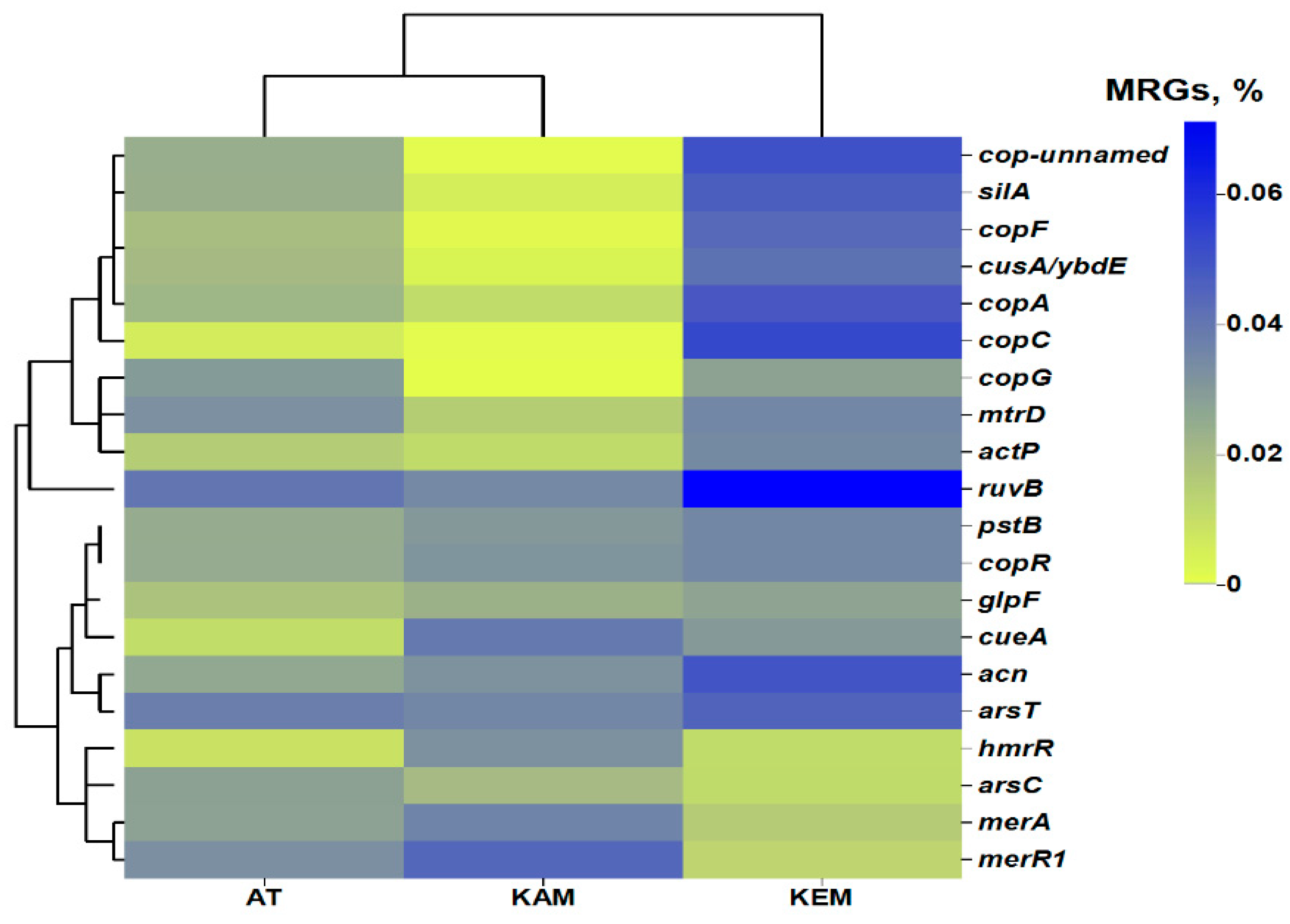
Metagenomics analysis allowed the description of the most abundant metal MRGs in AMD and tailings samples. The relative abundance of the most identified gene types in each sample was calculated based on the coverage of reads normalized by the total number of reads in metagenomes (±0.2% mean ± standard error of the mean). Thus, the most abundant MRGs were Cu resistance genes (cop-unnamed, copA, copF, copR, copC copG, and ruvB), the Fe resistance gene (acn), As resistance genes (arsC, arsT, pstB), Ag resistance genes (silA), and Hg (merA and merR1). All the detected MRGs subtypes (20 MRGs subtypes) were shared by all KAM, KEM, and AT samples (Figure 5). Cu resistance genes with a high relative abundance of MRGs were discovered, ranging 0.3, 0.1 and 0.2%, followed by MRGs with As resistance (0.1%), Fe resistance (acn) (0.05, 0.03 and 0.04%) and Hg (merA and merR1) (0.012%, 0.044% and 0.0328%) resistance genes in the all metagenomics samples. The mercury reductase enzyme, encoded by merA and merR1 genes, is responsible for the resistance of mercury in microbes.
It has been reported that the cop system can be involved in the transport of copper [60] and the removal and detoxification of excess copper from the cell via forming the major copper homeostasis system with other proteins [61]. Besides actP, various types of copper resistance genes were also found in the metagenome of samples, such as ruvB, cop-unnamed, copA, copF, copR, copC, copG, and all these genes were involved in the transport of copper. The actP encodes copper-transporting P-type ATPase, which is responsible for the efflux pump of copper and multicopper oxidase [62]. In addition, the ruvB (0.08%, 0.0344%, and 0.0406%) genes had the highest relative abundance in the sample of KEM, KAM, and AT, respectively (Figure 5). Moreover, ruvB is an ATP-dependent DNA helicase that is involved in repairing DNA damage caused by chromate or derivatives [63] and can confer resistance to chromate, tellurite, and selenite. Similar research on active nonferrous metals tailings also revealed that the genus Thiobacillus was the main contributor to MRG distributions [64]. The arsC and arsT genes, which code for an arsenate reductase, are essential for arsenate resistance and transform arsenate into arsenite, which is extruded from the samples. In addition, MRGs (hmrR, glpF, and pstB) related to the resistance of other metals were also observed. Our results show that Cu and As may be the main metals that induce heavy metal resistance genes. These results further support the idea that metals have formative influences on the bacterial community composition as well as metal resistance genes.

3.4. CAZy Analysis and Gene Diversity

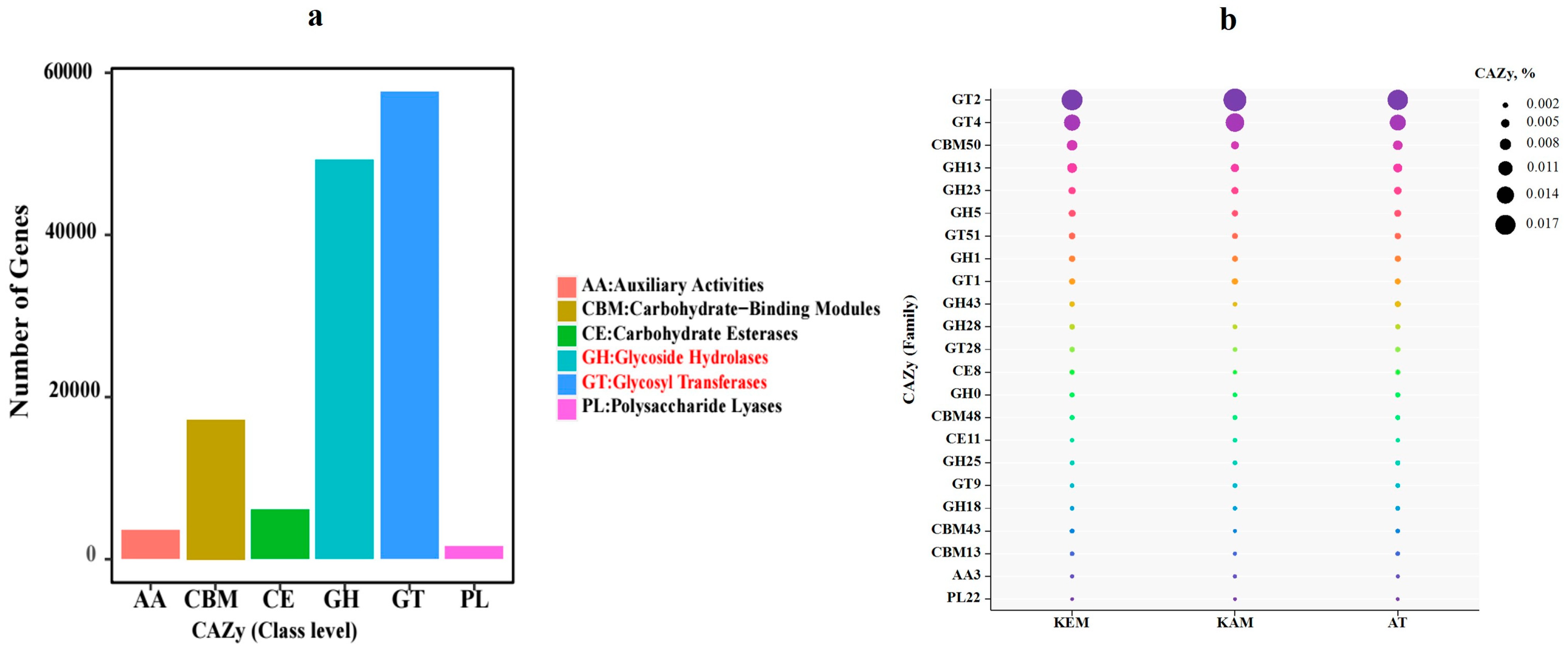
The metagenomics data revealed the most abundant CAZy in AMD (KAM, KEM) and tailing (AT) samples. According to the metagenomics results of total contigs against the CAZy database, combined with the hierarchy structure of the CAZy database. The data show the most abundant CAZy enzyme class (AA: Auxiliary Activities, CBM: Carbohydrate-Binding Modules, GT: Glycosyl Transferases) encoding genes identified in three metagenomics samples. Comparing the CAZy database revealed the GTs family had the most genes (57.656), followed by the family of GHs genes (49.224), CBMs family genes (17.207), CEs family genes (6.061), AAs family genes (3.572), and PLs family genes (1.532) (Figure 6a).
The most abundant enzyme families predicted in this genome were GT2, GT4, CBM50, GH13, GH23, GH5, GH38, GT51 and GH1 from the CAZymes database (Figure 6b). The most abundant enzymes in KEM, KAM, and AT samples are the GT2 and GT4 families, which account for 1.8, 2.0, 1.7% and 1.3, 1.5, and 1.3%, respectively. CBM50 family accounts for 0.72, 0.45, and AT 0.62% (±0.2% mean ± standard error of the mean), respectively (Figure 6b).
As mentioned above, the most abundant class is GT, which is involved in the biosynthesis of oligosaccharides, disaccharides, and polysaccharides by catalyzing the transfer of glycosylates from activated donor molecules to specific receptors to form glycosidic bonds. The most widely distributed GT2 family proteins have the activities of chitin, cellulose, hyaluronic acid, and glucan synthetase. Among the 42 CBM families found, the functions detected were cellulose, chitin, galactan, galactose, glycogen, pectin, starch, and xylan binding. The main role of EPS is the mediation of the initial attachment of cells to solid substrates and protection against harmful environmental factors. Acidophilic microorganisms have the capability to multiply, attach to solid and liquid surfaces, and produce a matrix of EPS, forming a biofilm that includes lipids, glycolipids, lipopolysaccharides, proteins, carbohydrates, uronic acids, and nucleic acids [10]. It is assumed that during their growth, bacterial cells form biofilm consisting of EPS, which significantly increases the resistance of bacteria to heavy metals. GT4, GT2, glycoside hydrolase responsible for the hydrolysis and/or regrouping of glycosidic bonds.
The GH family can hydrolyze the glycosidic bonds between two or more carbohydrates or between carbohydrate and non-carbohydrate components, and is essential in the red algae polysaccharide hydrolysis process [65]. In addition to GTs, GHs such as GH10, 13, and 23 that can degrade polysaccharides with alpha-1,4-glycosidic bonds into available carbon sources for bacteria in biofilms have also been identified. The identification of a high abundance of genes encoding GT2 and GT4 indicated their potential roles in constructing EPS by producing various polysaccharides to form biofilms.

3.5. Phylogenetic Analysis of 16S rRNA and Identification of a New Strain

The newly isolated iron-oxidizing Arm-12 was obtained from the KAM sample. The length of sequenced fragments of the gene encoding 16S rRNA is 1433 bp. The nucleotide sequence of the strain Arm-12 was phylogenetically compared with those of the 14 species.
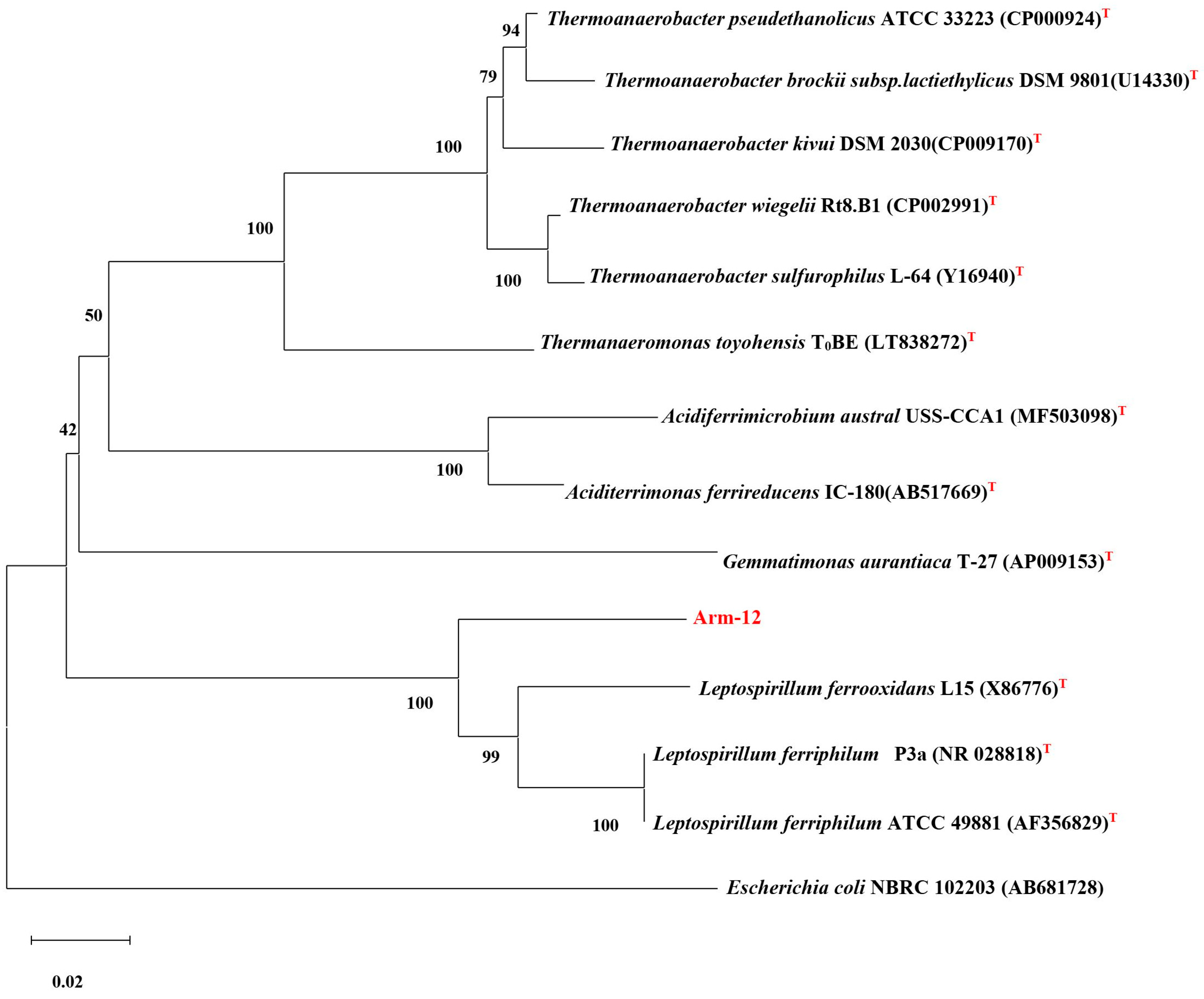
The screening of the NCBI and EZBioCloud database (https://www.ezbiocloud.net/) was performed using BLAST (Bioproject). Based on the homology of the 16S rRNA gene, the phylogenetic development tree was built (Figure 7). The sequences of the strain Arm-12 were phylogenetically compared with those of the Leptospirillum species. As shown in the dendrogram, the isolate Arm-12, compared to other strains Leptospirillum ferriphilum ATCC 49881 and P3a, exhibited 90.77% and Leptospirillum ferrooxidans L15—89.54% similarity, respectively (Figure 7).
The 16S rRNA gene sequence was submitted to GenBank, and the accession number PP389931 was assigned. Thus, a novel iron-oxidizing bacterium, Arm-12, which shares only 90% similarity with Leptospirillum spp., may represent a new genus without culturable representatives.
New isolate highlighted in red. The evolutionary history was inferred using the neighbor-joining method. The percentage of replicate trees in which the associated taxa clustered together in the bootstrap test (10,000 replicates) is shown next to the branches.

3.6. Cell Morphology and Growth Conditions

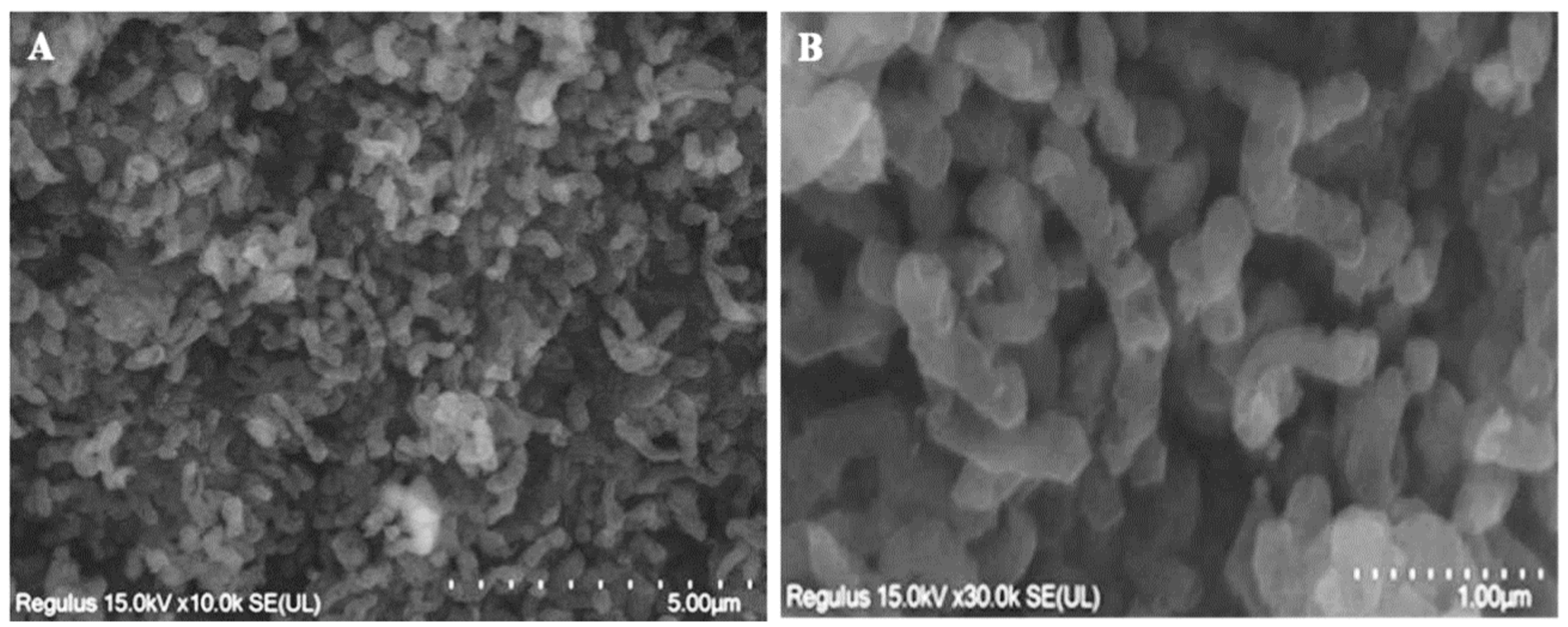
As depicted in Figure 8, the Arm-12 strain cells are motile and exhibit a vibrio- or spiral shape, with a diameter of 0.6 μm and a length ranging from 0.8 to 2.6 μm. In younger cultures, the cells are predominantly vibrio-shaped, while in older cultures (after 7 days), they become partially spiral-shaped with two to three turns. The cell wall of the Arm-12 strain was typical for Gram-negative bacteria.
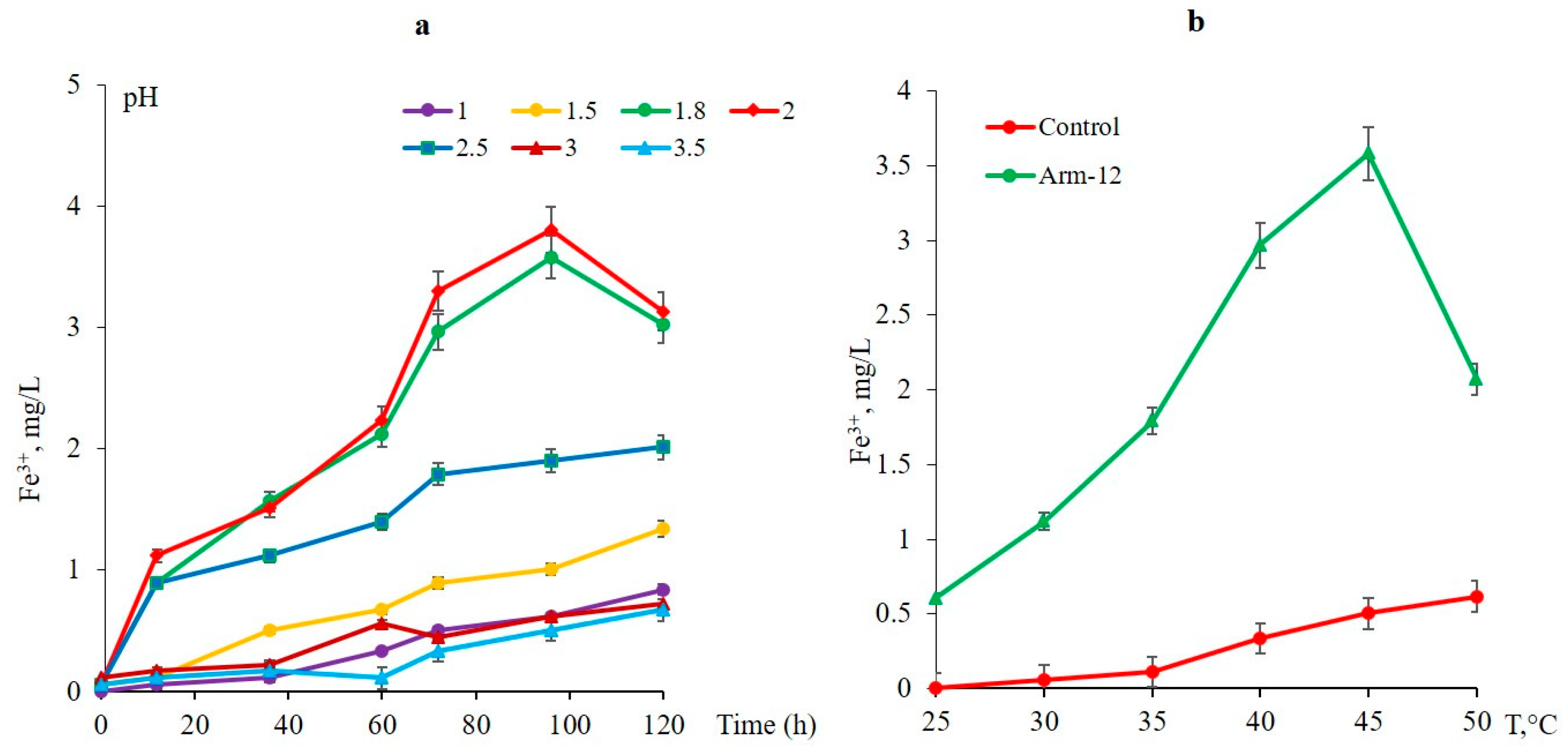
Figure 9a illustrates the effects of pH on the growth of Arm-12. The optimal pH range is 1.8–2.0, where the cell density reaches its peak, and Fe2+ oxidation is 3.0–3.5 mg/L. At lower pH levels, bacterial growth and Fe2+ are inhibited.
The growth of the isolated Arm-12 was studied in the temperature range of 25–50 °C. The maximum growth and Fe2+ oxidation rates of the new isolate were observed at 45 °C (Figure 9b). The obtained results, in general, were comparable with other strains available in the laboratory. However, the Arm-12 exhibits a higher temperature optimum in comparison with previous isolates [10,12].

3.7. Influence of Heavy Metal Ions of Leptospirillum sp. Arm-12

The influence of Cu2+, Mo2+, Cr2+, Co2+, Zn2+, and Ni2+ ions on the oxidation of Fe2+ by the new genus Arm-12 was studied. The metal ion concentration ranged from 5 to 100 mM. According to data presented in Table 4, the toxicity of the tested ions for isolated Leptospirillum sp. Arm-12 was found to be as follows: Mo ˃ Cr ˃ Co ˃ Ni ˃ Zn ˃ Cu. Minimum inhibitory concentrations (MICs) of the tested metals for Arm-12 were determined. MICs were 5 mM for Mo, Cr, Co, Zn, and Ni.
However, in the case of Ni and Zn, the isolated bacteria showed higher iron oxidation activity, 67% and 76%. It is worth mentioning that the MIS for Cu was 10 mM. Thus, isolated bacteria showed high tolerance for Cu2+, which gives the strain Arm-12 a definite advantage in bioleaching of copper minerals, including chalcopyrite.

3.8. Bioleaching of Copper Concentrate by Leptospirillum sp. Arm-12

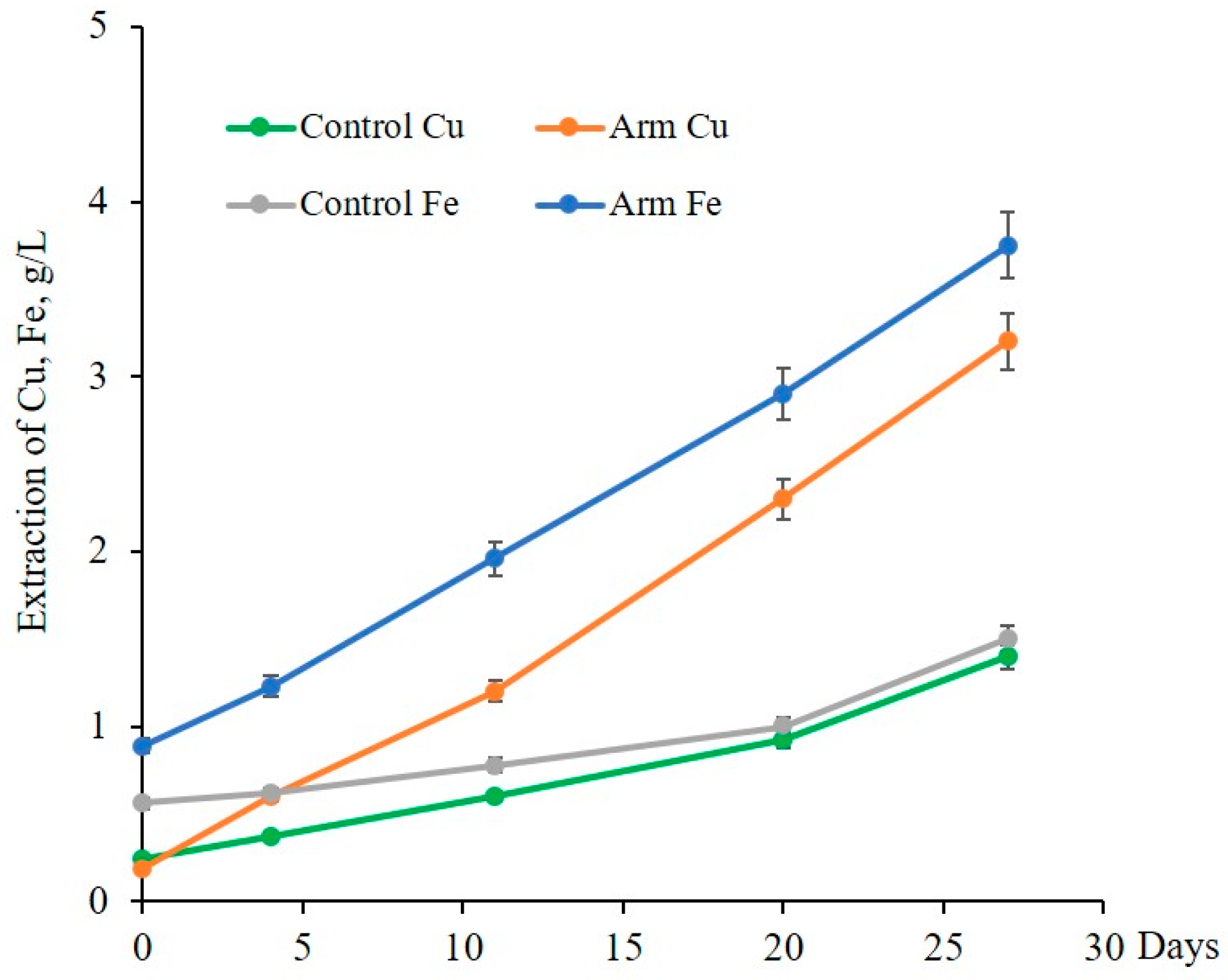
To assess the potential of isolated iron-oxidizing bacteria Leptospirillum sp. Arm-12 in the biotechnology of metals, it was tested for bioleaching of copper concentrate. It was revealed that, although with a long lag period, isolated bacteria were capable of recovering copper and iron from copper concentrate. Thus, the data presented in Figure 10 show that Arm-12 accelerated the extraction of copper and iron about 2.3–2.5 and 2.5–2.9 times, respectively, compared to the uninoculated control (Figure 10). At 45 °C, copper could be completely dissolved in 27 days. It is concluded that moderate thermophilic Leptospirillum sp. Arm-12 isolated from the KAM sample can be successfully used for sustainable copper extraction processes.

4. Discussion

Performed molecular biological analysis revealed that microbial communities in AMD and tailings samples (Syunik Region) were dominated by Pseudomonadota, with Actinomycetota and Bacteroidetes as minor contributors. This finding is consistent with literature data on AMD ecosystems in Spain, China, and South America [1,8,26]. However, the genus-level profiles showed unique features. Thus, the dominance of Sphingopyxis and Massilia in the AT contrasts with the prevalence of Leptospirillum and Acidithiobacillus typically reported in highly acidic AMD streams [2,5]. Similarly, the high abundance of Acidiphilium and Metallibacterium in KAM suggests adaptations to elevated Fe, Cu, and Mn concentrations, consistent with studies from polymetallic sites in Canada and China [27,64]. These comparisons indicate that the Armenian AMD communities are shaped strongly by local geochemical conditions, supporting the idea of site-specific ecological structuring.
Our findings demonstrate distinct genus-level variations across sites, likely influenced by differences in heavy metal concentrations, a pattern that has not been extensively documented in Armenian AMD environments. It is worth mentioning that bacteria discovered as predominant genera in tested AMD and tailing samples were reported to be involved in the transformation of elements in nature, including various metals. Most species, particularly acidophiles, exhibit the ability to both reduce ferric iron and oxidize ferrous iron depending on prevailing environmental conditions.
Representatives of the genus Metallibacterium abundant in sample KAM were also isolated from an acidic biofilm (pH 2.5) formed on pyrite surfaces and were considered as facultatively anaerobic, acid-tolerant bacteria. It was reported that Metallibacterium scheffleri strain DKE6 (T) could reduce iron but was not able to oxidize iron or thiosulfate [50]. Among iron-oxidizing bacteria playing a key role in the natural attenuation of arsenic in AMDs, members of the Ferrovum genus were also detected in abundance across different mining sites and identified in mine effluent and water treatment plants [46,47,48]. Fv. myxofaciens is less acidophilic than Acidithiobacillus spp. and appears to oxidize ferrous iron only. Fv. myxofaciens is widely distributed in acidic, iron-rich streams and rivers as macroscopic streamer growth [66]. It has also been identified as the major iron-oxidizing bacterium colonizing a pilot-scale mine water treatment plant designed to oxidize and precipitate iron from contaminated groundwater [67].
Acidophilic heterotrophs belonging to the Acidiphilium and Acidocella genera inhabit strongly acidic mineral environments and are frequently found in tight association with iron-oxidizing Acidithiobacillus spp. Bacteria reduced ferric ions to ferrous ions when organic substrates were used under both aerobic and anaerobic conditions. In addition, it has been found that heterotrophic acidophiles (Acidiphilium and Acidocella) can biodegrade organic compounds as well as cell lysis (CLs) products and alleviate the toxic effect of CLs products on autotrophic iron-oxidizing bacteria A. ferrooxidans. L. ferrooxidans [68]. Genus Yonghaparkia (Phylum Actinomycetota) found in the AT sample was isolated from microbial communities in a gold mine (Linglong, China) [69], and can contribute to the biogeochemical cycles of S and Fe. Sphingopyxis sp. QXT-31 was reported to reduce arsenate (As (V)) to arsenite (As (III)) and oxidize Mn (II) [70]. Sphingopyxis spp. were isolated from diverse niches, including agricultural soil, marine, and freshwater, caves, activated sludge, thermal springs, and metal-contaminated sites. Sphingopyxis species have drawn considerable attention for not only their ability to survive under extreme environments but also for their potential to degrade a number of environmental contaminants that impose a serious threat to human health. Genus Polaromonas was potentially responsible for VV reduction [71]. Gram-negative bacteria in the genus Aquabacterium are involved in iron metabolism and can couple iron oxidation and nitrate reduction in anaerobic environments [72].
A notable feature of the microbial communities across the studied AMD sites is the relatively high abundance of sequences assigned to unclassified or “unknown” genera, particularly in the KEM and AT samples. Rather than representing a methodological limitation alone, this pattern likely reflects the extreme and highly selective nature of AMD ecosystems. The combination of very low pH (1.8–2.5), elevated metal concentrations, and limited organic carbon availability creates strong evolutionary pressure favoring specialized metabolic strategies and niche adaptation.
Metagenomics analysis allowed the description of the most abundant MRGs in AMD and tailings samples. Cu resistance genes with a high relative abundance of MRGs were discovered, followed by MRGs with As resistance, Fe resistance, and Hg resistance genes in all metagenomics samples. Our results show that Cu and As may be the main metal elements that induce heavy metal resistance genes. The high relative abundance of Cu- and As-related resistance genes suggests that these metals are dominant selective pressures in our study sites. This is consistent with metal profiles of the samples and aligns with reports linking heavy metal exposure to enrichment of resistance determinants in AMD and contaminated soils [33,34].
The metagenomics data revealed the abundance of CAZy in AMD (KAM, KEM) and tailing (AT) samples. The data show the most abundant CAZy enzyme class (AAs, CBMs, GTs) encoding genes identified in all tested samples. Identification of a high abundance of genes encoding GT2 and GT4 indicated their potential roles in constructing EPS by producing various polysaccharides to form biofilms. The identification of GT2 and GT4 glycosyl transferases highlights the importance of EPS production, which facilitates both survival under metal stress and colonization of mineral surfaces—a prerequisite for bioleaching activity [10]. We focused our functional analysis on MRGs and CAZy because they represent two key adaptive strategies in AMD systems: (i) detoxification and homeostasis of toxic metals, and (ii) EPS biosynthesis, enabling biofilm formation and protection against stress.
Notably, a novel thermophilic iron-oxidizing Leptospirillum sp. Arm-12 (PP389931) was isolated, exhibiting a higher optimal growth temperature (45 °C) compared to previously described strains [12]. The isolate Arm-12, compared to Leptospirillum ferriphilum ATCC 49881 and Leptospirillum ferrooxidans L15, exhibited 90.77% and 89.54% similarity, respectively. Thus, a novel iron-oxidizing bacterium, Arm-12, which is only 90% similar to Leptospirillum spp., may belong to a new genus without culturable representatives. So far, most studies have identified Leptospirillum spp. bacteria as key contributors to iron oxidation in AMD environments [2,16,17,73]. Moreover, our studies demonstrated that Arm-12 possesses enhanced adaptability to extreme conditions (low pH, high temperature), suggesting its potential for bioleaching applications in elevated temperature, acidic environments. The isolation of the novel bacterium Arm-12 further emphasizes the untapped microbial diversity and biotechnological potential of these ecosystems.

5. Conclusions

This study provides the first molecular insight into the microbial communities of AMD ecosystems in Armenia. We have demonstrated that the unique geochemistry of the Syunik region supports distinct microbial assemblages, rich in MRGs and enzymes for biofilm formation, underscoring their adaptive strategies to extreme metal stress. It was revealed that the microbial communities of the leakage from the KEM, the AMD of KAM, and the AT samples were predominantly composed of bacteria. The three samples have a significant abundance of 1990 bacterial species in common, with additional genera shared by KAM and AT, KAM and KEM, and KAM and AT. The major taxa in samples KAM, KEM, and AT were generally distinct, which might be correlated to the chemical composition of the samples.
The high relative abundance and diversity of Cu- and As-related resistance genes across all samples indicate that these metals are major drivers influencing both the structure of microbial communities and the distribution of MRGs in metal-contaminated sites.
The metagenomics revealed CAZy in AMD and tailing samples. The most abundant enzymes in the samples are GT2 and GT4 families. The dominance of GT2 and GT4 glycosyl transferase genes across all samples highlights their central role in polysaccharide biosynthesis for EPS matrix formation, which supports microbial adhesion, biofilm development, and resistance to environmental stress in metal-contaminated ecosystems.
A significant finding of this work is the isolation and preliminary characterization of the novel bacterium Arm-12 (PP389931). Its low 16S rRNA gene sequence similarity (90% related to Leptospirillum) suggests it may represent a new genus without culturable representatives. The physiological characteristics of Arm-12, its thermophily, extreme acidophily, and high copper tolerance, coupled with its efficacy in enhancing copper recovery, position it as an extremely promising candidate for the development of more efficient and robust biomining processes.
The characterization of metal resistance determinants will not only contribute to our understanding of the mechanisms that acidophilic bioleaching and other microorganisms use to adapt to their extreme environments, but also to eventually improve biomining or metal bioremediation processes as well.
This study represents the innovative investigation of microbial communities in AMD and tailing samples from Armenia using the molecular biological approach, revealing unique site-specific microbial diversity influenced by heavy metal concentrations. These results provide new insights into the microbial ecology of AMD environments and contribute valuable data to the study of acidophilic metal-tolerant bacteria to expand the current understanding of AMD microbiomes. This research not only expands our understanding of microbial diversity in extreme environments but also opens new avenues for biotechnological applications as well as the development of new AMD remediation strategies by leveraging the untapped potential of unique geographical sites. The isolation and further understanding of anaerobic acidophiles will allow us to propose a methodology for selectively precipitating toxic metals from AMD, transforming this pollution problem into a potential source of metals.

Author Contributions

Conceptualization A.K., A.V., R.Z., Y.Z. and N.V.; methodology, A.K., A.V., R.Z., Y.Z., X.S., S.W., N.H.A.N. and N.V.; software, A.K., A.V., R.Z., Y.Z., X.S. and N.V.; validation, A.K., A.V., R.Z., Y.Z., X.S., S.W., N.H.A.N. and N.V.; formal analysis, A.K. and Y.Z.; investigation, A.K., A.V., R.Z., Y.Z., X.S., S.W., N.H.A.N. and N.V.; resources, A.V., R.Z., Y.Z. and N.V.; data curation, A.V., R.Z., Y.Z. and N.V.; writing—original draft preparation, A.K., A.V. and Y.Z.; writing—review and editing, A.K., A.V., R.Z., Y.Z., X.S., S.W., N.H.A.N. and N.V.; visualization, A.K., A.V., R.Z., Y.Z., X.S., S.W., N.H.A.N. and N.V.; supervision, A.V., R.Z., Y.Z. and N.V.; project administration, A.K., A.V., R.Z., Y.Z. and N.V.; funding acquisition, A.K., A.V. and R.Z. All authors have read and agreed to the published version of the manuscript.

Funding

This research was supported by the Higher Education and Science Committee of MESCS RA (Research projects Nos. 22rl-031 and 23-YSIP-012).

Institutional Review Board Statement

Not applicable.

Informed Consent Statement

Not applicable.

Data Availability Statement

The raw sequencing data have been deposited in the NCBI Short Read Archive (SRA) under BioProject accession number PRJNA1247771, with associated BioSample numbers (BioSample IDs: SAMN47967554; SAMN47967555; SAMN47967556). The 16S rRNA gene sequence of Arm-12 was submitted to GenBank and assigned the accession number PP389931.

Conflicts of Interest

The authors declare no conflicts of interest.

Abbreviations

The following abbreviations are used in this manuscript:
AAAuxiliary Activities
AMDAcid Mine Drainage
ATArtsvanik Tailing
CAZyCarbohydrate-Active Enzymes
CBMCarbohydrate-Binding Modules
CECarbohydrate Esterases
CLsCell Lysis
EDTAEthylenediaminetetraacetic acid
EPSExtracellular Polymeric Substances
GHGlycoside Hydrolases
GTGlycosyl Transferases
ICP-OESInductively Coupled Plasma Optical Emission Spectrometry
KAMKavart Abandoned Mine
KEMKapan Exploring Mine
MACMackintosh
MRGsMetal Resistance Genes
PDPulp density
PLPolysaccharide Transferases
SEMScanning Electron Microscope
TOCTotal Organic Carbon

References

  1. Méndez-García, C.; Peláez, A.I.; Mesa, V.; Sánchez, J.; Golyshina, O.V.; Ferrer, M. Microbial diversity and metabolic networks in acid mine drainage habitats. Front. Microbiol. 2015, 6, 475. [Google Scholar] [CrossRef]
  2. Johnson, D.B.; Quatrini, R. Acidophile microbiology in space and time. Curr. Issues Mol. Biol. 2020, 39, 63–76. [Google Scholar] [CrossRef]
  3. Méndez-García, C.; Mesa, V.; Sprenger, R.R.; Richter, M.; Diez, M.S.; Solano, J. Microbial stratification in low pH oxic and suboxic macroscopic growths along an acid mine drainage. ISME J. 2014, 8, 1259–1274. [Google Scholar] [CrossRef]
  4. Golyshina, O.V. Environmental, biogeographic, and biochemical patterns of archaea of the family Ferroplasmaceae. Appl. Environ. Microbiol. J. 2011, 77, 5071–5078. [Google Scholar] [CrossRef]
  5. Chen, L.-X.; Huang, L.-N.; Méndez-García, C.; Kuang, J.-L.; Hua, Z.-S.; Liu, J.; Shu, W.-S. Microbial communities, processes and functions in acid mine drainage ecosystems. Curr. Opin. Biotechnol. 2016, 38, 150–158. [Google Scholar] [CrossRef]
  6. Huang, L.-N.; Kuang, J.-L.; Shu, W.-S. Microbial ecology and evolution in the acid mine drainage model system. Trends Microbiol. 2016, 24, 581–593. [Google Scholar] [CrossRef] [PubMed]
  7. Kuang, J.-L.; Huang, L.-N.; Chen, L.-X.; Hua, Z.-S.; Li, S.-J.; Hu, M.; Li, J.-T.; Shu, W.-S. Contemporary environmental variation determines microbial diversity patterns in acid mine drainage. ISME J. 2013, 7, 1038–1050. [Google Scholar] [CrossRef]
  8. Mesa, V.; Gallego, J.; González-Gil, R.; Lauga, B.; Sánchez, J.; Méndez-García, C.; Peláez, A.I. Bacterial, archaeal, and eukaryotic diversity across distinct microhabitats in an acid mine drainage. Front. Microbiol. 2017, 8, 1756. [Google Scholar] [CrossRef] [PubMed]
  9. Lukhele, T.; Selvarajan, R.; Nyoni, H.; Mamba, B.; Msagati, T.A.M. Diversity and functional profile of bacterial communities at Lancaster acid mine drainage dam, South Africa as revealed by 16S rRNA gene high-throughput sequencing analysis. Extremophiles 2019, 23, 719–734. [Google Scholar] [CrossRef] [PubMed]
  10. Vardanyan, A.; Vardanyan, N.; Khachatryan, A.; Zhang, R.; Sand, W. Adhesion to mineral surfaces by cells of Leptospirillum, Acidithiobacillus and Sulfobacillus from Armenian sulfide ores. Minerals 2019, 9, 69. [Google Scholar] [CrossRef]
  11. Toshchakov, S.V.; Yakimov, M.M.; Jones, D.L.; Golyshin, P.N.; Golyshina, O.V. High representation of archaea across all depths in oxic and low-pH sediment layers underlying an acidic stream. Front. Microbiol. 2020, 11, 2871, Erratum in Front. Microbiol. 2021, 12, 633015. [Google Scholar]
  12. Khachatryan, A.; Vardanyan, N.; Willscher, S.; Sevoyan, G.; Zhang, R.; Vardanyan, A. Bioleaching of chalcopyrite by a new strain Leptospirillum ferrodiazotrophum Ksh-L isolated from a dump-bioleaching system of Kashen copper-molybdenum mine. Minerals 2024, 14, 26. [Google Scholar] [CrossRef]
  13. Luo, Z.-H.; Li, Q.; Lai, Y.; Chen, H.; Liao, B.; Huang, L.-N. Diversity and genomic characterization of a novel parvarchaeota family in acid mine drainage sediments. Front. Microbiol. 2020, 11, 3313. [Google Scholar] [CrossRef] [PubMed]
  14. Golyshina, O.V.; Lünsdorf, H.; Kublanov, I.V.; Goldenstein, N.I.; Hinrichs, K.-U.; Golyshin, P.N. The novel extremely acidophilic, cell-wall-deficient archaeon Cuniculiplasma divulgatum gen. nov., sp. nov. represents a new family, Cuniculiplasmataceae fam. nov., of the order Thermoplasmatales. Int. J. Syst. Evol. Microbiol. 2016, 66, 332–340. [Google Scholar] [CrossRef]
  15. Golyshina, O.V.; Pivovarova, T.A.; Karavaiko, G.I.; Kondratéva, T.F.; Moore, E.R.; Abraham, W.R.; Lünsdorf, H.; Timmis, K.N.; Yakimov, M.M.; Golyshin, P.N. Ferroplasma acidiphilum gen. nov., sp. nov., an acidophilic, autotrophic, ferrous-iron-oxidizing, cell-wall-lacking, mesophilic member of the Ferroplasmaceae fam. nov., comprising a distinct lineage of the Archaea. Int. J. Syst. Evol. Microbiol. 2020, 3, 997–1006. [Google Scholar] [CrossRef] [PubMed]
  16. Gavrilov, S.N.; Korzhenkov, A.A.; Kublanov, I.V.; Bargiela, R.; Zamana, L.V.; Popova, A.A.; Toshchakov, S.V.; Golyshin, P.N.; Golyshina, O.V. Microbial communities of polymetallic deposits’ acidic ecosystems of continental climatic zone with high temperature contrasts. Front. Microbiol. 2019, 10, 1573. [Google Scholar] [CrossRef]
  17. Korzhenkov, A.; Toshchakov, S.V.; Bargiela, R.; Gibbard, H.; Ferrer, M.; Teplyuk, A.V.; Jones, D.L.; Kublanov, I.V.; Golyshin, P.N.; Golyshina, O.V. Archaea dominate the microbial community in an ecosystem with low-to-moderate temperature and extreme acidity. Microbiome 2019, 7, 11. [Google Scholar] [CrossRef]
  18. Gomes, I.; Gomes, J.; Steiner, W. Highly thermostable amylase and pullulanase of the extreme thermophilic eubacterium Rhodothermus marinus: Production and partial characterization. Bioresour. Technol. 2003, 90, 207–214. [Google Scholar] [CrossRef] [PubMed]
  19. Sharma, A.; Kawarabayasi, Y.; Satyanarayana, T. Acidophilic bacteria and archaea: Acid stable biocatalysts and their potential applications. Extremophiles 2012, 16, 1–19. [Google Scholar] [CrossRef] [PubMed]
  20. Adrio, J.L.; Demain, A.L. Microbial enzymes: Tools for biotechnological processes. Biomolecules 2014, 4, 117–139. [Google Scholar] [CrossRef]
  21. Hallberg, K.B. New perspectives in acid mine drainage microbiology. Hydrometallurgy 2010, 104, 448–453. [Google Scholar] [CrossRef]
  22. Auld, R.R.; Myre, M.; Mykytczuk, N.C.; Leduc, L.G.; Merritt, T.J. Characterization of the microbial acid mine drainage microbial community using culturing and direct sequencing techniques. J. Microbiol. Methods 2013, 93, 108–115. [Google Scholar] [CrossRef]
  23. Chen, L.-X.; Hu, M.; Huang, L.-N.; Hua, Z.-S.; Kuang, J.-L.; Li, S.-J.; Shu, W.-S. Comparative metagenomic and metatranscriptomic analyses of microbial communities in acid mine drainage. ISME J. 2015, 9, 1579–1592. [Google Scholar] [CrossRef]
  24. Bomberg, M.; Mäkinen, J.; Salo, M.; Kinnunen, P. High diversity in iron cycling microbial communities in acidic, iron-rich water of the Pyhäsalmi mine, Finland. Geofluids 2019, 2019, 7401304. [Google Scholar] [CrossRef]
  25. Coram, N.J.; Rawlings, D.E. Molecular relationship between two groups of the genus Leptospirillum and the finding that Leptospirillum ferriphilum sp. nov. dominates South African commercial biooxidation tanks that operate at 40 °C. Appl. Environ. Microbiol. 2002, 68, 838–845. [Google Scholar] [CrossRef] [PubMed]
  26. Bonilla, J.O.; Kurth, D.G.; Cid, F.D.; Ulacco, J.H. Prokaryotic and eukaryotic community structure affected by the presence of an acid mine drainage from an abandoned gold mine. Extremophiles 2018, 22, 699–711. [Google Scholar] [CrossRef]
  27. Pakostova, E.; Johnson, D.B.; Bao, Z.; MacKenzie, P.M.; Ptacek, C.J.; Blowes, D.W. Bacterial and archaeal diversity in sulfide-bearing waste rock at Faro mine complex, Yukon territory, Canada. Geomicrobiol. J. 2020, 37, 511–519. [Google Scholar] [CrossRef]
  28. Huang, Y.; Li, X.-T.; Jiang, Z.; Liang, Z.-L.; Wang, P.; Liu, Z.-H.; Li, L.-Z.; Yin, H.-Q.; Jia, Y.; Huang, Z.-S.; et al. Key factors governing microbial community in extremely acidic mine drainage (pH < 3). Front. Microbiol. 2021, 12, 761579. [Google Scholar] [CrossRef]
  29. Fashola, M.O.; Ngole-Jeme, V.M.; Babalola, O.O. Heavy metal pollution from gold mines: Environmental effects and bacterial strategies for resistance. Int. J. Environ. Res. Public Health 2016, 13, 1047. [Google Scholar] [CrossRef] [PubMed]
  30. Zhang, S.; Yan, L.; Xing, W.; Chen, P.; Zhang, Y.; Wang, W. Acidithiobacillus ferrooxidans and its potential application. Extremophiles 2018, 22, 563–579. [Google Scholar] [CrossRef]
  31. Pan, Y.; Ye, H.; Li, X.; Yi, X.; Wen, Z.; Wang, H.; Lu, G.; Dang, Z. Spatial distribution characteristics of the microbial community and multi-phase distribution of toxic metals in the geochemical gradients caused by acid mine drainage, South China. Sci. Total Environ. 2021, 774, 145660. [Google Scholar] [CrossRef]
  32. Xie, X.; Yuan, K.; Chen, X.; Zhao, Z.; Huang, Y.; Hu, L.; Liu, H.; Luan, T.; Chen, B. Characterization of metal resistance genes carried by waterborne free-living and particle-attached bacteria in the Pearl River Estuary. Environ. Pollut. 2023, 327, 121547. [Google Scholar] [CrossRef]
  33. Di Cesare, A.; Pjevac, P.; Eckert, E.; Curkov, N.; Šparica, M.M.; Corno, G.; Orlić, S. The role of metal contamination in shaping microbial communities in heavily polluted marine sediments. Environ. Pollut. 2020, 265, 114823. [Google Scholar] [CrossRef]
  34. Jiang, X.; Liu, W.; Xu, H.; Cui, X.; Li, J.; Chen, J.; Zheng, B. Characterizations of heavy metal contamination, microbial community, and resistance genes in a tailing of the largest copper mine in China. Environ. Pollut. 2021, 280, 116947. [Google Scholar] [CrossRef] [PubMed]
  35. Liu, J.L.; Yao, J.; Zhu, X.; Zhou, D.L.; Duran, R.; Mihucz, V.G.; Bashir, S.; Hudson-Edwards, K.A. Metagenomic exploration of multi-resistance genes linked to microbial attributes in active nonferrous metal(loid) tailings. Environ. Pollut. 2021, 273, 115667. [Google Scholar] [CrossRef]
  36. Qiao, L.; Liu, X.; Zhang, S.; Zhang, L.; Li, X.; Hu, X.; Zhao, Q.; Wang, Q.; Yu, C. Distribution of the microbial community and antibiotic resistance genes in farmland surrounding gold tailings: A metagenomics approach. Sci. Total Environ. 2021, 779, 146502. [Google Scholar] [CrossRef]
  37. Zhao, X.; Huang, J.; Lu, J.; Sun, Y. Study on the influence of soil microbial community on the long-term heavy metal pollution of different land use types and depth layers in mine. Ecotoxicol. Environ. Saf. 2019, 170, 218–226. [Google Scholar] [CrossRef] [PubMed]
  38. Mackintosh, M.E. Nitrogen fixation by Thiobacillus ferrooxidans. J. Gen. Microbiol. 1978, 105, 215–218. [Google Scholar] [CrossRef]
  39. Manning, H. New medium for isolating iron-oxidizing and heterotrophic acidophilic bacteria from acid mine drainage. Appl. Microbiol. 1975, 6, 1010–1016. [Google Scholar] [CrossRef]
  40. Kumar, S.; Stecher, G.; Suleski, M.; Sanderford, M.; Sharma, S.; Tamura, K. Molecular evolutionary genetics analysis version 12 for adaptive and green computing. Mol. Biol. Evol. 2024, 41, msae263. [Google Scholar] [CrossRef]
  41. Gerhardt, P.; Murray, R.G.E.; Costilow, R.N.; Nester, E.W.; Wood, W.A.; Krieg, N.R.; Phillips, G.B. Manual of Methods for General Bacteriology; ASM: Washington, DC, USA, 1981. [Google Scholar]
  42. Lucchesi, C.A.; Hirn, C.F. EDTA titration of total iron in iron (II) and iron (III) mixtures. Application to iron driers. Anal. Chem. 1960, 32, 1191–1193. [Google Scholar] [CrossRef]
  43. Hao, C.; Wei, P.; Pei, L.; Du, Z.; Zhang, Y.; Lu, Y.; Dong, H. Significant seasonal variations of microbial community in an acid mine drainage lake in Anhui Province, China. Environ. Pollut. 2017, 223, 507–516. [Google Scholar] [CrossRef] [PubMed]
  44. Xin, R.; Banda, J.F.; Hao, C.; Dong, H.; Pei, L.; Guo, D.; Wei, P.; Du, Z.; Zhang, Y.; Dong, H. Contrasting seasonal variations of geochemistry and microbial community in two adjacent acid mine drainage lakes in Anhui province, China. Environ. Pollut. 2021, 268, 115826. [Google Scholar] [CrossRef]
  45. Roberto, F.F.; Schippers, A. Progress in bioleaching: Part B, applications of microbial processes by the minerals industries. Appl. Microbiol. Biotechnol. 2022, 106, 5913–5928. [Google Scholar] [CrossRef]
  46. Vera, M.; Schippers, A.; Hedrich, S.; Sand, W. Progress in bioleaching: Fundamentals and mechanisms of microbial metal sulfide oxidation—Part A. Appl. Microbiol. Biotechnol. 2022, 106, 6933–6952. [Google Scholar] [CrossRef] [PubMed]
  47. Plewniak, F.; Koechler, S.; Le Paslier, D.; Héry, M.; Bruneel, O.; Bertin, P.N. In situ metabolic activities of uncultivated Ferrovum sp. CARN8 evidenced by metatranscriptomic analysis. Res. Microbiol. 2020, 171, 37–43. [Google Scholar] [CrossRef]
  48. Tischler, J.S.; Jwair, R.J.; Gelhaar, N.; Drechsel, A.; Skirl, A.-M.; Wiacek, C.; Janneck, E.; Schlömann, M. New cultivation medium for “Ferrovum” and Gallionella-related strains. J. Microbiol. Methods 2013, 95, 138–144. [Google Scholar] [CrossRef]
  49. Moya-Beltrán, A.; Cárdenas, J.P.; Covarrubias, P.C.; Issotta, F.; Ossandon, F.J.; Grail, B.M.; Holmes, D.S.; Quatrini, R.; Johnson, D.B. Draft genome sequence of the nominated type strain of “Ferrovum myxofaciens,” an acidophilic, iron-oxidizing betaproteobacterium. Genome Announc. 2014, 4, e00834-14. [Google Scholar] [CrossRef]
  50. Muhadesi, J.-B.; Huang, Y.; Wang, B.-J.; Jiang, C.-Y.; Liu, S.-J. Acidibrevibacterium fodinaquatile gen. nov., sp. nov., isolated from acidic mine drainage. Int. J. Syst. Evol. Microbiol. 2019, 69, 3248–3255. [Google Scholar] [CrossRef]
  51. Ziegler, S.; Waidner, B.; Itoh, T.; Schumann, P.; Spring, S.; Gescher, J. Metallibacterium scheffleri gen. nov., sp. nov., an alkalinizing gammaproteobacterium isolated from an acidic biofilm. Int. J. Syst. Evol. Microbiol. 2013, 63, 1499–1504. [Google Scholar] [CrossRef]
  52. Pantke, C.; Obst, M.; Benzerara, K.; Morin, G.; Ona-Nguema, G.; Dippon, U.; Kappler, A. Green rust formation during Fe(II) oxidation by the nitrate-reducing Acidovorax sp. strain BoFeN1. Environ. Sci. Technol. 2012, 46, 1439–1446. [Google Scholar] [CrossRef]
  53. Ilyas, S.; Lee, J.; Chi, R. Bioleaching of metals from electronic scrap and its potential for commercial exploitation. Hydrometallurgy 2013, 131–132, 138–143. [Google Scholar] [CrossRef]
  54. Zhu, N.; Xiang, Y.; Zhang, T.; Wu, P.; Dang, Z.; Li, P.; Wu, J. Bioleaching of metal concentrates of waste printed circuit boards by mixed culture of acidophilic bacteria. J. Hazard. Mater. 2011, 192, 614–619. [Google Scholar] [CrossRef] [PubMed]
  55. Vardanyan, A.; Gaydardzhiev, S.; Vardanyan, N. Biological extraction of Cu and Ni from printed circuit boards via redoxolysis and concomitant substrate characterization. Hydrometallurgy 2023, 221, 106145. [Google Scholar] [CrossRef]
  56. Ghosh, S.; Mahapatra, N.R.; Banerjee, P.C. Metal resistance in Acidocella strains and plasmid-mediated transfer of this characteristic to Acidiphilium multivorum and Escherichia coli. Appl. Environ. Microbiol. 1997, 63, 4523–4527. [Google Scholar] [CrossRef] [PubMed]
  57. Dopson, M.; Baker-Austin, C.; Koppineedi, P.R.; Bond, P.L. Growth in sulfidic mineral environments: Metal resistance mechanisms in acidophilic microorganisms. Microbiology 2003, 149, 1959–1970. [Google Scholar] [CrossRef]
  58. Arce-Rodríguez, A.; Puente-Sánchez, F.; Avendaño, R.; Libby, E.; Rojas, L.; Cambronero, J.C.; Pieper, D.H.; Timmis, K.N.; Chavarría, M. Pristine but metal-rich Río Sucio (Dirty River) is dominated by Gallionella and other iron-sulfur oxidizing microbes. Extremophiles 2017, 21, 235–243. [Google Scholar] [CrossRef]
  59. Hu, W.; Li, Z.; Ou, H.; Wang, X.; Wang, Q.; Tao, Z.; Huang, S.; Huang, Y.; Wang, G.; Pan, X. Novosphingobium album sp. nov., Novosphingobium organovorum sp. nov. and Novosphingobium mangrovi sp. nov. with the organophosphorus pesticides degrading ability isolated from mangrove sediments. Int. J. Syst. Evol. Microbiol. 2023, 73, 005843. [Google Scholar] [CrossRef]
  60. Xie, X.; Fu, J.; Wang, H.; Liu, J. Heavy metal resistance by two bacteria strains isolated from a copper mine tailing in China. Afr. J. Biotechnol. 2010, 26, 4056–4066. [Google Scholar]
  61. Davila, C.J.S.; Kate, E.; Abate, C.M.; Amoroso, M.J. Unraveling the Amycolatopsis tucumanensis copper-resistome. Biometals 2012, 25, 905–917. [Google Scholar] [CrossRef]
  62. Hall, S.J.; Hitchcock, A.; Butler, C.S.; Kelly, D.J. A multicopper oxidase (Cj1516) and a CopA homologue (Cj1161) are major components of the copper homeostasis system of Campylobacter jejuni. J. Bacteriol. 2008, 190, 8075–8085. [Google Scholar] [CrossRef] [PubMed]
  63. Fagan, M.J.; Saier, M.H., Jr. P-type ATPases of eukaryotes and bacteria: Sequence analyses and construction of phylogenetic trees. J. Mol. Evol. 1994, 38, 57–99. [Google Scholar] [CrossRef] [PubMed]
  64. Li, J.; Tang, C.; Zhang, M.; Fan, C.; Guo, D.; An, Q.; Wang, G.; Xu, H.; Li, Y.; Zhang, W.; et al. Exploring the Cr(VI) removal mechanism of Sporosarcina saromensis M52 from a genomic perspective. Ecotoxicol. Environ. Saf. 2021, 225, 112767. [Google Scholar] [CrossRef] [PubMed]
  65. Egelund, J.; Ellis, M.; Doblin, M.; Qu, Y.; Bacic, A. Genes and enzymes of the GT31 family: Towards unravelling the function(s) of the plant glycosyltransferase family members. In Annual Plant Reviews: Plant Polysaccharides: Biosynthesis and Bioengineering; Ulvskov, P., Ed.; Wiley-Blackwell: Hoboken, NJ, USA, 2010; Volume 41, pp. 213–234. [Google Scholar]
  66. Hallberg, K.B.; Coupland, K.; Kimura, S.; Johnson, D.B. Macroscopic streamer growths in acidic, metal-rich mine waters in north Wales consist of novel and remarkably simple bacterial communities. Appl. Environ. Microbiol. 2006, 72, 2022–2030. [Google Scholar] [CrossRef]
  67. Heinzel, E.; Hedrich, S.; Janneck, E.; Glombitza, F.; Seifert, J.; Schlömann, M. Bacterial diversity in a mine water treatment plant. Appl. Environ. Microbiol. 2009, 75, 858–861. [Google Scholar] [CrossRef]
  68. Vardanyan, A.; Achilleos, P.; Kafa, N.; Papadopoulou, M.; Vardanyan, N.; Vyrides, I. Effect of cell lysis (CLs) products on acidophilic chemolithotrophic microorganisms and role of Acidocella species. Geomicrobiol. J. 2017, 34, 916–922. [Google Scholar] [CrossRef]
  69. Li, M.; Tian, H.; Wang, L.; Duan, J. Bacterial diversity in Linglong gold mine, China. Geomicrobiol. J. 2016, 3, 267–273. [Google Scholar] [CrossRef]
  70. Sharma, M.; Khurana, H.; Singh, D.N.; Negi, R.K. The genus Sphingopyxis: Systematics, ecology, and bioremediation potential. J. Environ. Manag. 2021, 280, 111744. [Google Scholar] [CrossRef]
  71. Sun, X.; Qiu, L.; Kolton, M.; Häggblom, M.; Xu, R.; Kong, T.; Gao, P.; Li, B.; Jiang, C.; Sun, W. VV reduction by Polaromonas spp. in vanadium mine tailings. Environ. Sci. Technol. 2020, 22, 14442–14454. [Google Scholar] [CrossRef]
  72. Hedrich, S.; Schlömann, M.; Johnson, D.B. The iron-oxidizing proteobacteria. Microbiology 2011, 157, 1551–1564. [Google Scholar] [CrossRef] [PubMed]
  73. Kaksonen, A.H.; Lakaniemi, A.-M.; Tuovinen, O.H. Acid and ferric sulfate bioleaching of uranium ores: A review. J. Clean. Prod. 2020, 264, 121586. [Google Scholar] [CrossRef]
Figure 1. Sites for the collection of AMD and tailing samples for characterization of bacterial communities, structure, and chemical elements.
Microorganisms 14 00146 g001
Figure 2. (a) The relative abundance of major phyla levels in the microbial communities. (b) The relative abundance of major class levels in the microbial communities.
Microorganisms 14 00146 g002
Figure 3. Venn diagram visualizes common genera between the samples (KEM, KAM, and AT).
Microorganisms 14 00146 g003
Figure 4. (a) A heatmap of the microbial genera in samples KAM, KEM, and AT created on unique gene assignments to the NCBI-NR database. (b) The most abundant chemolithoautotrophic acidophiles in samples KAM, KEM, and AT, based on unique gene assignments to the NCBI NR database.
Microorganisms 14 00146 g004
Figure 5. Heatmap of MRGs assigned with NCBI database in KAM, KEM, and AT samples. The value of the color scale represents the relative abundance of functional genes (%).
Microorganisms 14 00146 g005
Figure 6. (a) Statistical plot of annotated results of CAZy enzymes: AAs, CBMs, CEs, GHs, and PLs finding modules, (b) bubble plot of functional genes encoding CAZy enzymes relative (%) in KAM, KEM, and AT. The X-axis represents samples, and the Y-axis represents the most CAZy encoded family by identified functional genes.
Microorganisms 14 00146 g006
Figure 7. Phylogenetic position of the strain of Arm-12. The superscript “T” indicates a type strain.
Microorganisms 14 00146 g007
Figure 8. SEM micrograph of the pure culture of an Arm-12. Bar represents 5 μm (A), 1 μm (B).
Microorganisms 14 00146 g008
Figure 9. (a) Effect of different pH on the growth of the Arm-12 strain (45 °C, 170 rpm). (b) Effect of temperature on the growth of the Arm-12-strain (pH-1.9, 170 rpm).
Microorganisms 14 00146 g009
Figure 10. Extraction of copper and iron during bioleaching of copper concentrate by native association of iron-oxidizing bacteria Arm-12 (PD-2.5%, 150 rpm, 45 °C).
Microorganisms 14 00146 g010
Table 1. Physicochemical characteristics of the sampling area *.
Samplings SitesFirst Sampling
KEMKAMAT
Summer 2023Winter 2023
Sampling locations
(GPS)
N39.203833, E46.429233N39.234800, E46.394133N39.231433, E46.447067
pH/Eh2.0/6301.8/5802.5/430
Temperature (°C)15148
Chemical elementsChemical composition (=mg/kg = mg/L)
Al0.61 ± 0.03761.0 ± 4.5500.93 ± 0.004
Ca155.0 ± 1.030259.0 ± 5.1943.8 ± 0.111
Co0.02 ± 0.0090.14 ± 0.0010.01 ± 0.009
As0.02 ± 0.0090.01 ± 0.0090.01 ± 0.009
Cr0.01 ± 0.0010.09 ± 0.0090.01 ± 0.009
Cu0.03 ± 0.00111.6 ± 0.6940.1 ± 0.009
Fe0.9 ± 0.00552.0 ± 1.8880.6 ± 0.010
K7.2 ± 0.6202.8 ± 0.2761.2 ± 0.045
Mg27.4 ± 0.280129.6 ± 1.0872.9 ± 0.103
Mn0.27 ± 0.0205.82 ± 0.7270.11 ± 0.010
Na1.4 ± 0.0641.04 ± 0.0250.02 ± 0.009
Ni0.02 ± 0.0090.11 ± 0.0080.01 ± 0.009
Pb0.1 ± 0.0240.16 ± 0.0120.06 ± 0.009
Se0.12 ± 0.0050.04 ± 0.0080.05 ± 0.002
Sr0.62 ± 0.0490.71 ± 0.0340.8 ± 0.055
Zn17.2 ± 1.07030.1 ± 1.6439.7 ± 0.579
* Values are presented as mean ± standard deviation of triplicate measurements (n = 3).
Table 2. The relative abundance of the microbial kingdoms in samples KAM, KEM, and AT was determined based on unique gene assignments to the NCBI-NR database (%).
KingdomKEMKAMAT
Unknown 0.20.080.2
Archaea0.041.40.01
Bacteria79.471.487.0
Eukaryota0.22.00.005
Table 3. Summary of the correlation of selected significant species in three sample locations (KAM, KEM, and AT). The metal concentration is ≥0.1 mg/kg (details in Table 1).
KEM (Al, Fe, Mg, Mn, Se, Pd)AT (Al. Fe, Mg, Mn)KAM (Al, Cu, Fe, Mg, Mn, Ni, Pb)
GenusSpeciesGenusSpeciesGenusSpecies
ArenimonasArenimonas metallicLimnobacterLimnobacter sp. MED105AcidiphilumAcidiphilium angustum
AquabacteriumAquabacterium pictumLimnobacter sp. 130Acidiphilium iwatense
BetaproteobacteriaRhodoferax sp. AJA081-3 Limnobacter alexandrii Acidiphilium multivorum
FluviicoccusFluviicoccus keumensisMassiliaMassilia sp. BSC 265 Acidiphilium rubrum
NovosphingobiumNovosphingobium
ginsenosidimutans
SediminibateriumSediminibacterium
goheungense
Acidiphilium sp. 37-64-53
OptutusOptitus sp. GAS368PolaromonasPolaromonas sp. AER18D-145Acidiphilium sp. 21-60-14
PrevotellaPrevotella copriSphingopyxisSphinogopyxis bauzanensisMetallibacteriumMetallibacterium
scheffleri
SphingomonasSphingomonas lacunae  FerrovumFerrovum myxofaciens
SphingopyxisSphingopyxis sp. L1A2A
Table 4. The influence of metal ions on Fe2+ oxidation by Leptospirillum sp. Arm-12.
NMetal
Ions,
mM
Fe, Oxidized, 3–5 Days
Cu2+
(CuSO4 × 5H2O)
Mo2+
(Na2MoO4 × 2H2O)
Cr2+
(CrSO4 × 5H2O)
Co2+
(CoSO4 × 7H2O)
Zn2+
(ZnSO4 × 7H2O)
Ni2+
(NiSO4 × 6H2O)
  g/L%g/L%g/L%g/L%g/L%g/L%
1 Control4.21004.21004.21004.21004.21004.2100
253.992.81.229.00.8019.01.633.02.867.03.276.1
3103.276.10.819.00.512.01.225.02.150.02.867.0
4252.560.00.512.0--0.816.31.633.02.048.0
5501.536.00.512.0--0.512.01.024.01.225.0
61000.816.3------0.512.00.816.3
Disclaimer/Publisher’s Note: The statements, opinions and data contained in all publications are solely those of the individual author(s) and contributor(s) and not of MDPI and/or the editor(s). MDPI and/or the editor(s) disclaim responsibility for any injury to people or property resulting from any ideas, methods, instructions or products referred to in the content.