
The Unique Roles of Microbial Abundant and Rare Taxa in Regulating Pathogen Dynamics in Wastewater Bioaerosols
 ,
, 
Abstract
1. Introduction
2. Materials and Methods
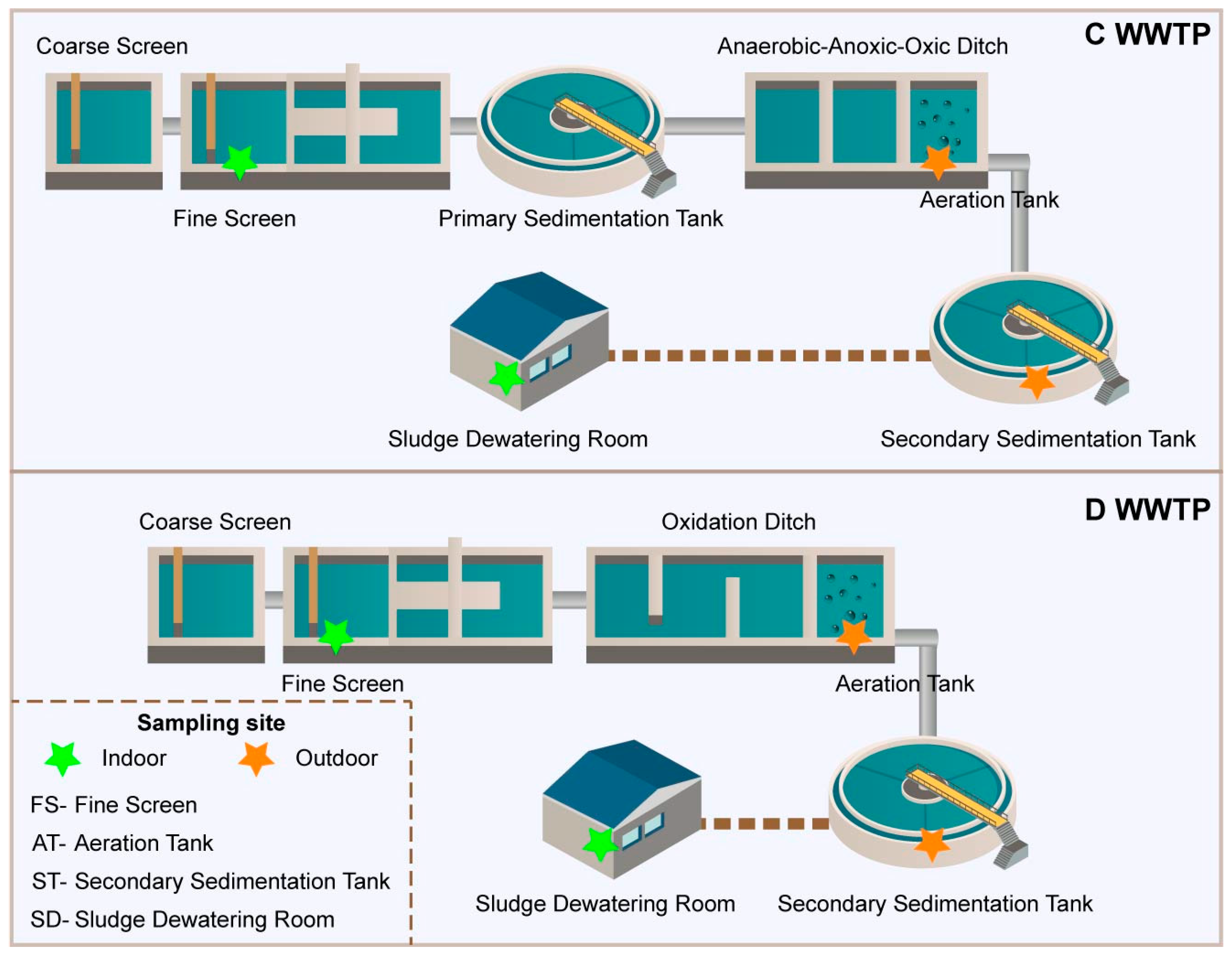
2.1. Study Sites and the Sampling Campaign
2.2. Samples Pretreatment and DNA Extraction
2.3. High-Throughput Sequencing and Bioinformatics Analysis
2.4. Identification of Abundant and Rare Taxa
2.5. Statistical Analysis
3. Results and Discussion
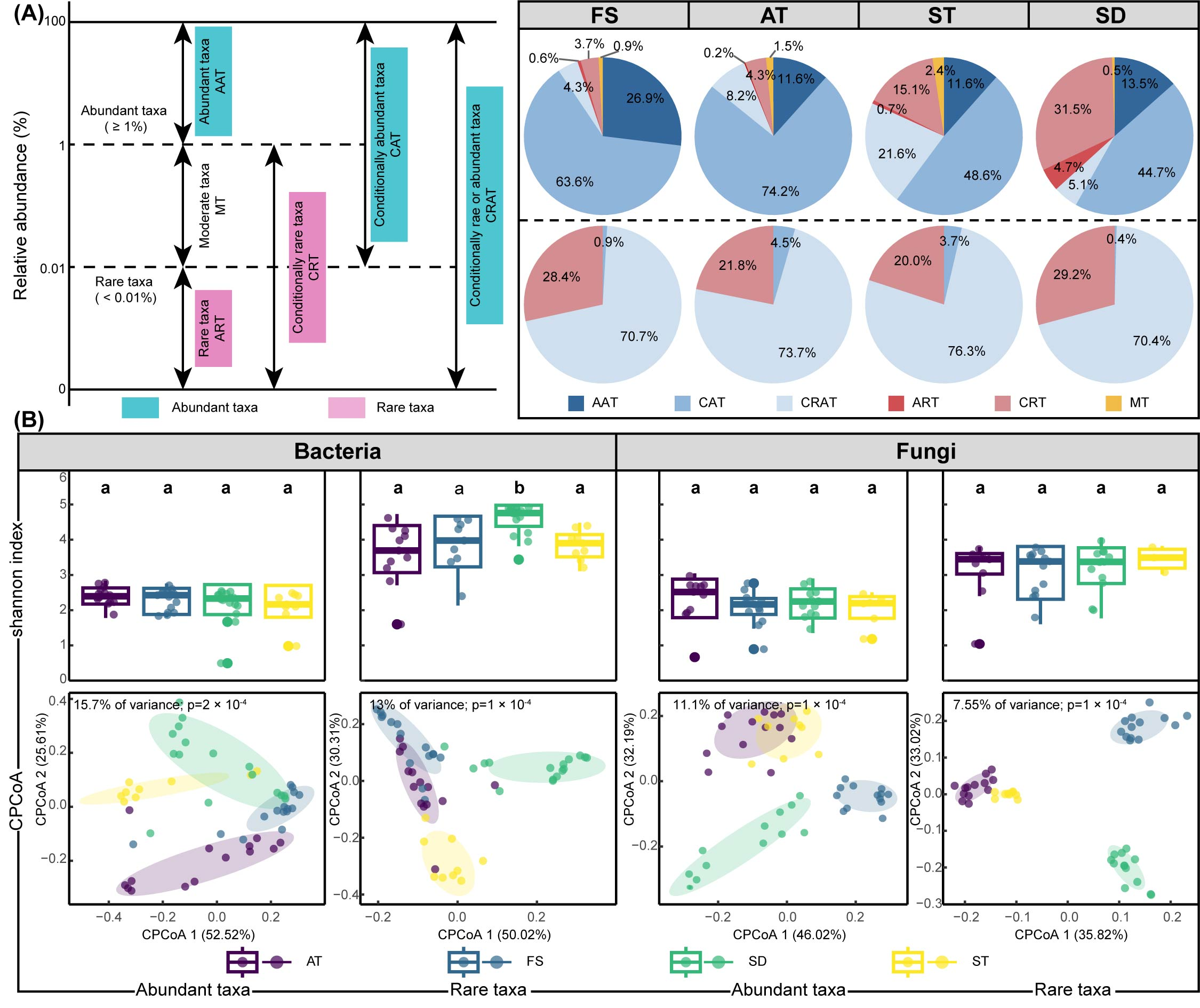
3.1. Abundant and Rare Taxa in the Aerosol Microbial Communities
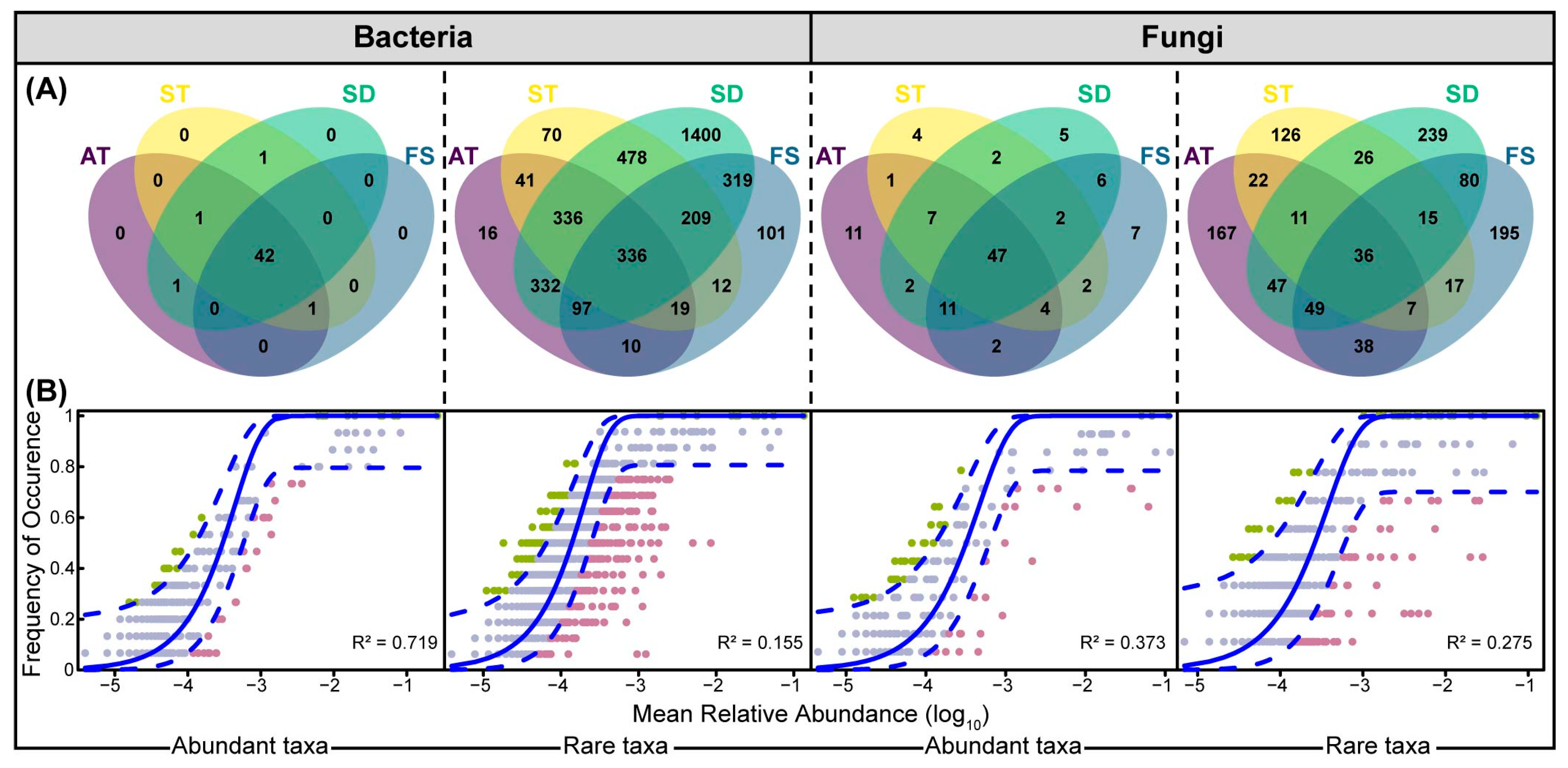
3.2. Community Assembly Mechanism of Abundant and Rare Taxa
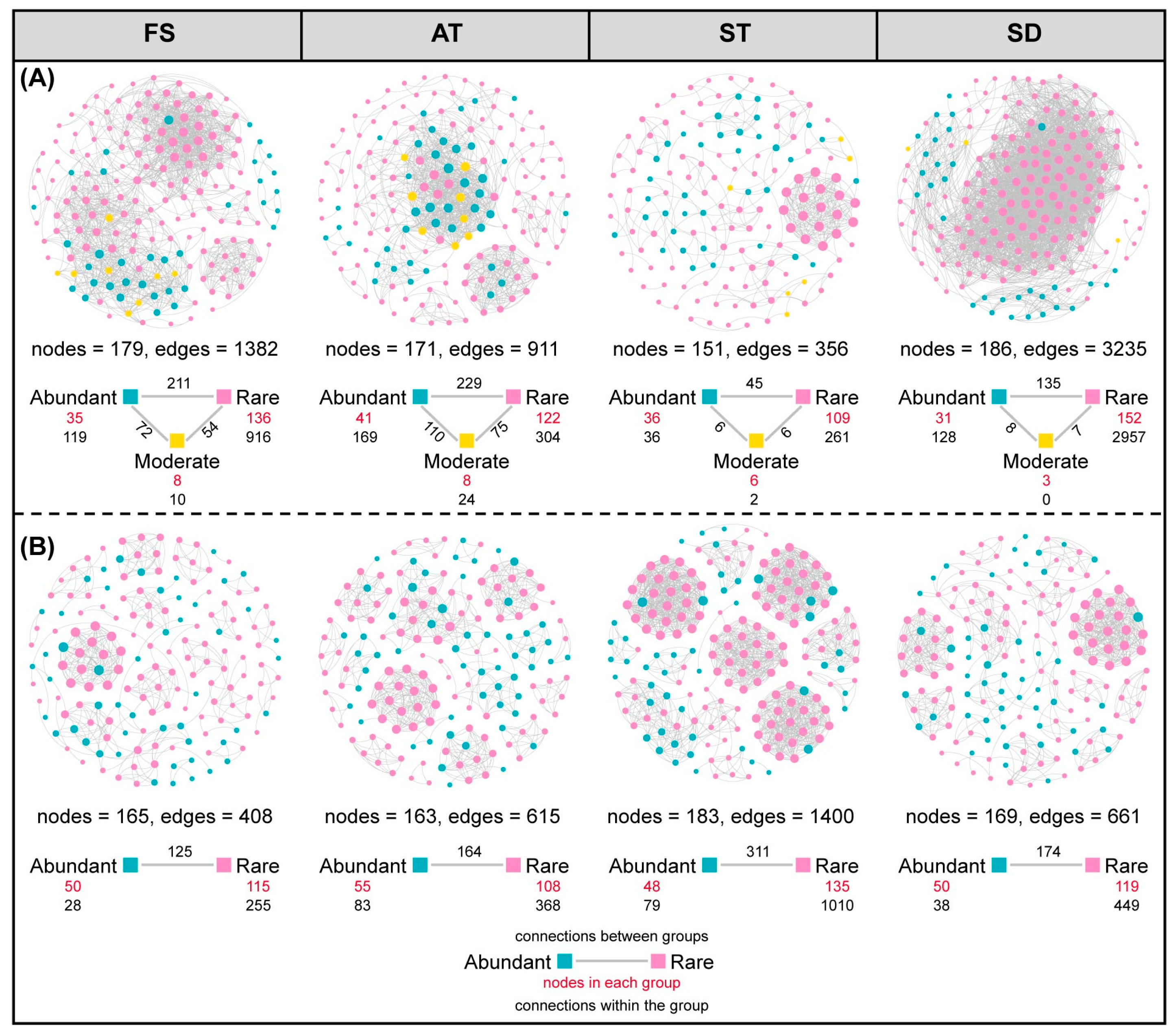
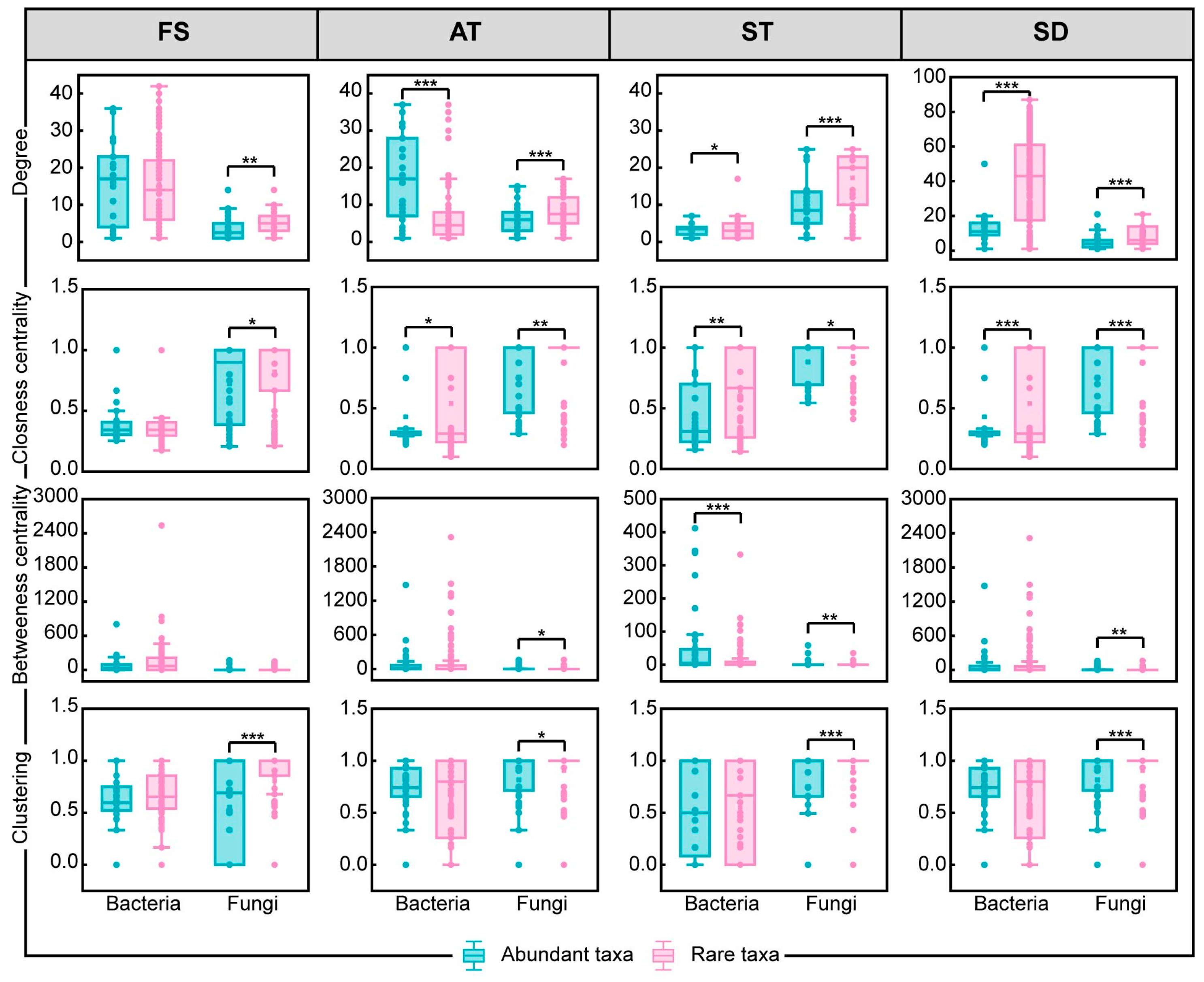
3.3. Co-Occurrence Network Analysis of Microbial Abundant and Rare Taxa
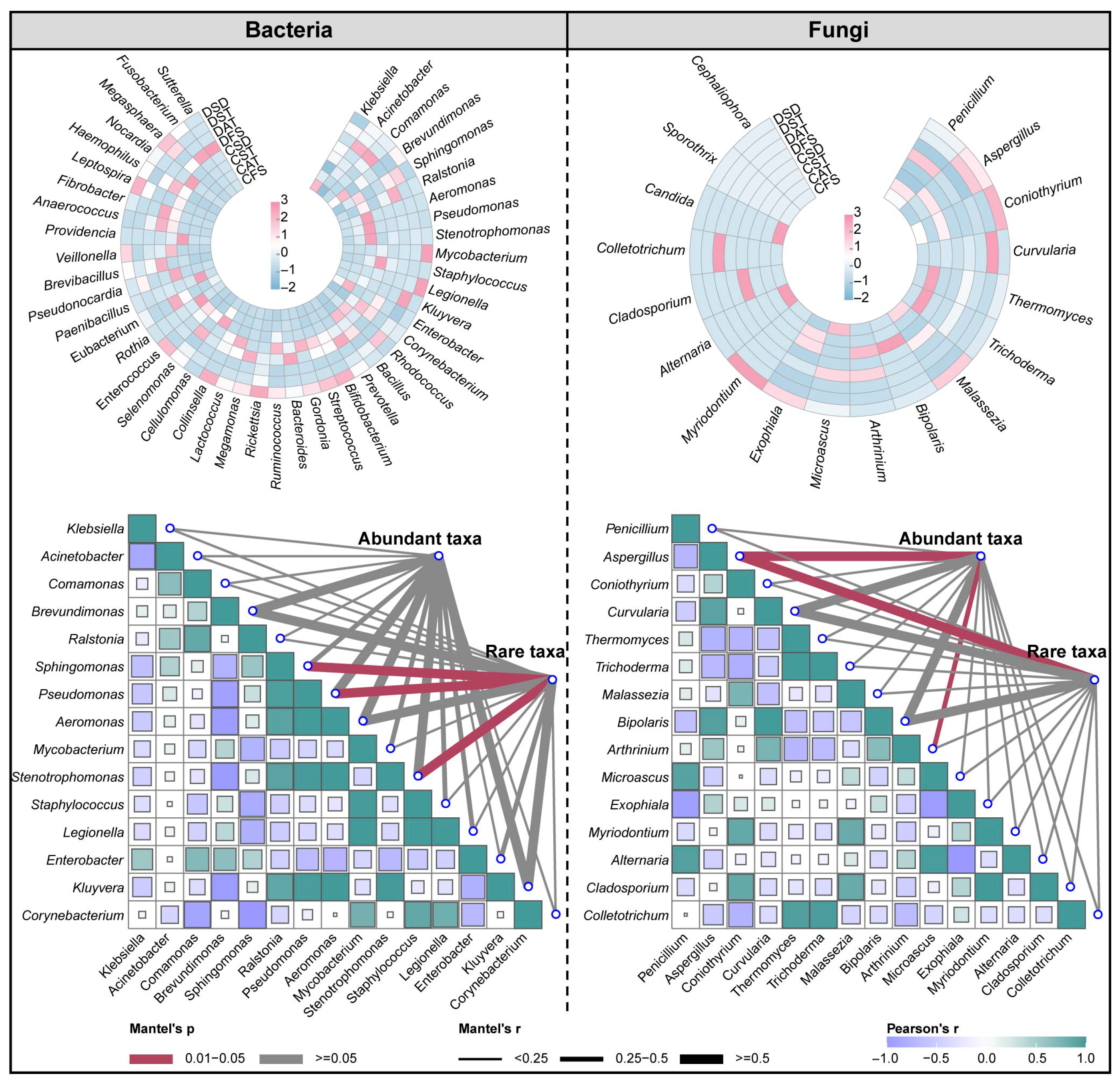
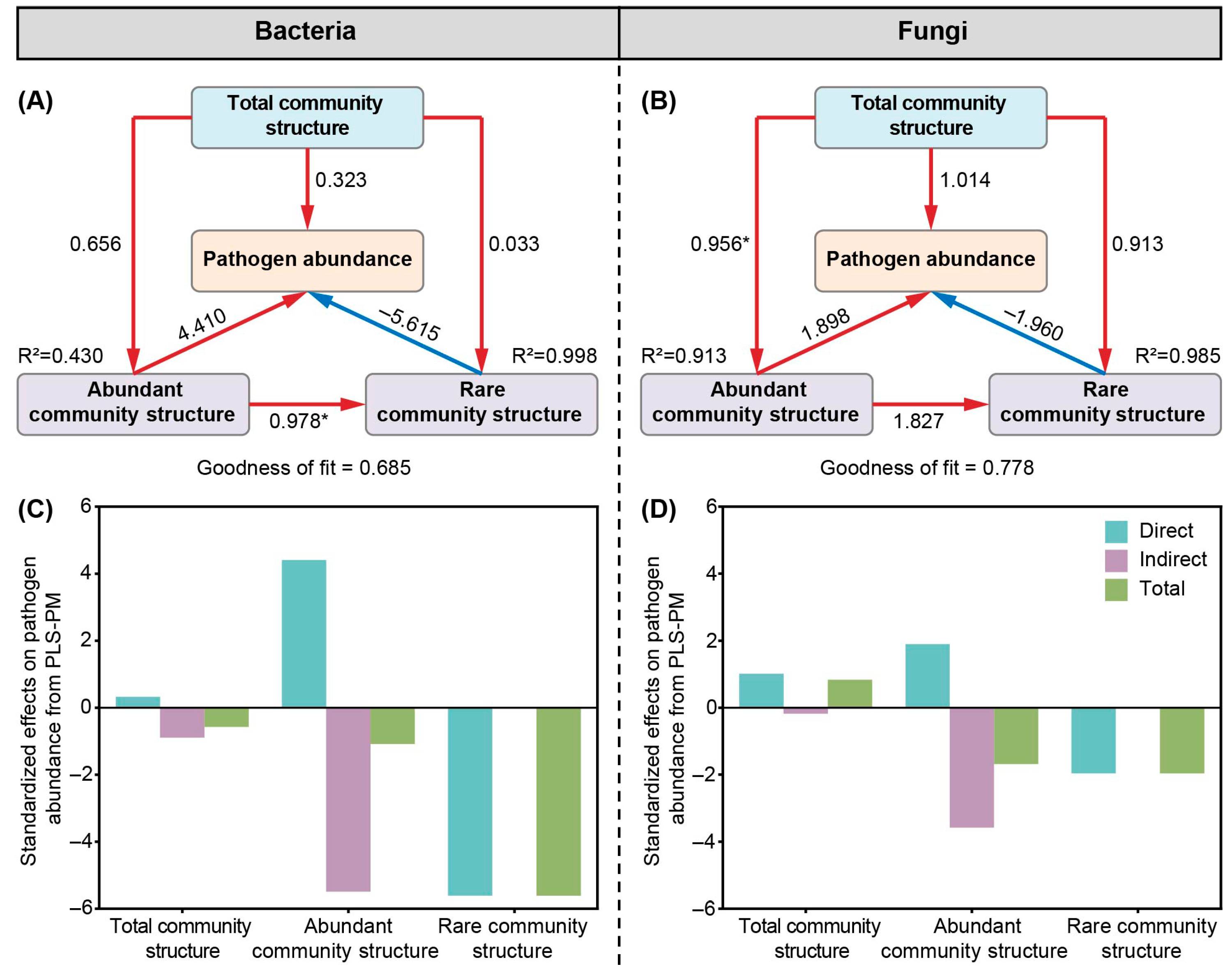
3.4. The Impact of Abundant and Rare Taxa on Pathogen Abundance
4. Conclusions
Author Contributions
Funding
Institutional Review Board Statement
Informed Consent Statement
Data Availability Statement
Conflicts of Interest
References
- Qu, J.; Wang, H.; Wang, K.; Yu, G.; Ke, B.; Yu, H.; Ren, H.; Zheng, X.; Li, J.; Li, W.; et al. Municipal wastewater treatment in China: Development history and future perspectives. Front. Environ. Sci. Eng. 2019, 13, 88. [Google Scholar] [CrossRef]
- Yang, T.; Han, Y.; Liu, J.; Li, L. Aerosols from a wastewater treatment plant using oxidation ditch process: Characteristics, source apportionment, and exposure risks. Environ. Pollut. 2019, 250, 627–638. [Google Scholar] [CrossRef]
- Han, Y.; Yang, K.; Yang, T.; Zhang, M.; Li, L. Bioaerosols emission and exposure risk of a wastewater treatment plant with A2O treatment process. Ecotoxicol. Environ. Saf. 2019, 169, 161–168. [Google Scholar] [CrossRef] [PubMed]
- Núñez, A.; García, A.M. Effect of the passive natural ventilation on the bioaerosol in a small room. Build. Environ. 2022, 207, 108438. [Google Scholar] [CrossRef]
- Zhan, J.; Xu, S.; Zhu, Y.; Han, Y.; Li, L.; Liu, J.; Guo, X. Potential pathogenic microorganisms in rural wastewater treatment process: Succession characteristics, concentration variation, source exploration, and risk assessment. Water Res. 2024, 254, 121359. [Google Scholar] [CrossRef] [PubMed]
- Brisebois, E.; Veillette, M.; Dion-Dupont, V.; Lavoie, J.; Corbeil, J.; Culley, A.; Duchaine, C. Human viral pathogens are pervasive in wastewater treatment center aerosols. J. Environ. Sci. 2018, 67, 45–53. [Google Scholar] [CrossRef]
- Gholipour, S.; Mohammadi, F.; Nikaeen, M.; Shamsizadeh, Z.; Khazeni, A.; Sahbaei, Z.; Mousavi, S.M.; Ghobadian, M.; Mirhendi, H. COVID-19 infection risk from exposure to aerosols of wastewater treatment plants. Chemosphere 2021, 273, 129701. [Google Scholar] [CrossRef]
- Singh, N.K.; Sanghvi, G.; Yadav, M.; Padhiyar, H.; Thanki, A. A state-of-the-art review on WWTP associated bioaerosols: Microbial diversity, potential emission stages, dispersion factors, and control strategies. J. Hazard. Mater. 2021, 410, 124686. [Google Scholar] [CrossRef]
- Yan, C.; Wang, R.N.; Zhao, X.Y. Emission characteristics of bioaerosol and quantitative microbiological risk assessment for equipping individuals with various personal protective equipment in a WWTP. Chemosphere 2020, 265, 129117. [Google Scholar] [CrossRef]
- Al-Gheethi, A.; Noman, E.A.; Alsahari, M.; Al-Maqtari, Q.; Vo, D.-V.N. Potential of complex microbial community in aerobic granular sludge as a bio-startup approach for next-generation wastewater treatment. Appl. Water Sci. 2024, 14, 215. [Google Scholar] [CrossRef]
- Pedros-Alio, C. The rare bacterial biosphere. Annu. Rev. Mar. Sci. 2012, 4, 449–466. [Google Scholar] [CrossRef]
- Jousset, A.; Bienhold, C.; Chatzinotas, A.; Gallien, L.; Gobet, A.; Kurm, V.; Küsel, K.; Rillig, M.C.; Rivett, D.W.; Salles, J.F.; et al. Where less may be more: How the rare biosphere pulls ecosystems strings. ISME J. 2017, 11, 853–862. [Google Scholar] [CrossRef] [PubMed]
- Riedo, J.; Dueñas, J.F.; Mbedi, S.; Sparmann, S.; Rillig, M.C. Abrupt versus gradual application of pesticides: Effects on soil bacterial and fungal communities. Environ. Pollut. 2025, 383, 126859. [Google Scholar] [CrossRef] [PubMed]
- Chen, W.; Ren, K.; Isabwe, A.; Chen, H.; Liu, M.; Yang, J. Stochastic processes shape microeukaryotic community assembly in a subtropical river across wet and dry seasons. Microbiome 2019, 7, 138. [Google Scholar] [CrossRef] [PubMed]
- Ferreira, C.M.; de Affonseca, D.B.; Barbosa, F.A.S.; Campos, A.B.; Menezes, R.; Brait, L.; Viana, P.A.B.; Trindade-Silva, A.E.; Loiola, M.; Azevedo, A.R.; et al. Rare Phyla, Such as CPR and DPANN, Shape Ecosystem-Level Microbial Community Structure Dissimilarities. Microb. Ecol. 2025, 88, 135. [Google Scholar] [CrossRef]
- Ray, M.; Ganguly, N.; Mondal, A.; Umapathy, G. Spatially structured bacterial assemblages in Eastern Ghats aquatic ecosystems highlight the ecological significance of rare taxa. Glob. Ecol. Conserv. 2025, 64, e03997. [Google Scholar] [CrossRef]
- Zhou, J.; Ning, D. Stochastic community assembly: Does it matter in microbial ecology? Microbiol. Mol. Biol. Rev. 2017, 81, e00002-17. [Google Scholar] [CrossRef]
- Zhu, M.; Qi, X.; Yuan, Y.; Zhou, H.; Rong, X.; Dang, Z.; Yin, H. Deciphering the distinct successional patterns and potential roles of abundant and rare microbial taxa of urban riverine plastisphere. J. Hazard. Mater. 2023, 450, 131080. [Google Scholar] [CrossRef]
- Banerjee, S.; Schlaeppi, K.; van der Heijden, M.G.A. Keystone taxa as drivers of microbiome structure and functioning. Nat. Rev. Microbiol. 2018, 16, 567–576. [Google Scholar] [CrossRef]
- Wang, Y.; Lv, Y.; Wang, C.; Deng, Y.; Lin, Y.; Jiang, G.; Hu, X.; Crittenden, J.C. Stochastic processes shape microbial community assembly in biofilters: Hidden role of rare taxa. Bioresour. Technol. 2024, 402, 130838. [Google Scholar] [CrossRef]
- Zhang, X.; Xia, S.; Zhao, R.; Wang, H. Effect of temperature on opportunistic pathogen gene markers and microbial communities in long-term stored roof-harvested rainwater. Environ. Res. 2020, 181, 108917. [Google Scholar] [CrossRef]
- Wan, J.; Zhang, Z.; Huo, Y.; Wang, X.; Wang, Y.; Wu, J.; Huo, M. Particle size matters: Distribution, source, and seasonality characteristics of airborne and pathogenic bacteria in wastewater treatment plants. Atmosphere 2023, 14, 465. [Google Scholar] [CrossRef]
- Shade, A.; Peter, H.; Allison, S.D.; Baho, D.L.; Berga, M.; Bürgmann, H.; Huber, D.H.; Langenheder, S.; Lennon, J.T.; Martiny, J.B.H.; et al. Fundamentals of microbial community resistance and resilience. Front. Microbiol. 2012, 3, 417. [Google Scholar] [CrossRef] [PubMed]
- Jiang, W.; Liang, P.; Wang, B.; Fang, J.; Lang, J.; Tian, G.; Jiang, J.; Zhu, T.F. Optimized DNA extraction and metagenomic sequencing of airborne microbial communities. Nat. Protoc. 2015, 10, 768–779. [Google Scholar] [CrossRef]
- Schiebelhut, L.M.; Abboud, S.S.; Gómez Daglio, L.E.; Swift, H.F.; Dawson, M.N. A comparison of DNA extraction methods for high-throughput DNA analyses. Mol. Ecol. Resour. 2016, 17, 721–729. [Google Scholar] [CrossRef] [PubMed]
- Caporaso, J.G.; Lauber, C.L.; Walters, W.A.; Berg-Lyons, D.; Lozupone, C.A.; Turnbaugh, P.J.; Fierer, N.; Knight, R. Global patterns of 16S rRNA diversity at a depth of millions of sequences per sample. Proc. Natl. Acad. Sci. USA 2010, 108, 4516–4522. [Google Scholar] [CrossRef]
- Caporaso, J.G.; Lauber, C.L.; Walters, W.A.; Berg-Lyons, D.; Huntley, J.; Fierer, N.; Owens, S.M.; Betley, J.; Fraser, L.; Bauer, M.; et al. Ultra-high-throughput microbial community analysis on the Illumina HiSeq and MiSeq platforms. ISME J. 2012, 6, 1621–1624. [Google Scholar] [CrossRef]
- Zhang, Y.; Huo, Y.; Zhang, Z.; Zhu, S.; Fan, W.; Wang, X.; Huo, M. Deciphering the influence of multiple anthropogenic inputs on taxonomic and functional profiles of the microbial communities in Yitong River, Northeast China. Environ. Sci. Pollut. Res. 2022, 29, 39973–39984. [Google Scholar] [CrossRef]
- Quast, C.; Pruesse, E.; Yilmaz, P.; Gerken, J.; Schweer, T.; Yarza, P.; Peplies, J.; Glockner, F.O. The SILVA ribosomal RNA gene database project: Improved data processing and web-based tools. Nucleic Acids Res. 2013, 41, D590–D596. [Google Scholar] [CrossRef]
- Yilmaz, P.; Parfrey, L.W.; Yarza, P.; Gerken, J.; Pruesse, E.; Quast, C.; Schweer, T.; Peplies, J.; Ludwig, W.; Glockner, F.O. The SILVA and “All-species Living Tree Project (LTP)” taxonomic frameworks. Nucleic Acids Res. 2014, 42, D643–D648. [Google Scholar] [CrossRef]
- Glockner, F.O.; Yilmaz, P.; Quast, C.; Gerken, J.; Beccati, A.; Ciuprina, A.; Bruns, G.; Yarza, P.; Peplies, J.; Westram, R.; et al. 25 years of serving the community with ribosomal RNA gene reference databases and tools. J. Biotechnol. 2017, 261, 169–176. [Google Scholar] [CrossRef]
- Kõljalg, U.; Larsson, K.H.; Abarenkov, K.; Nilsson, R.H.; Alexander, I.J.; Eberhardt, U.; Erland, S.; Høiland, K.; Kjøller, R.; Larsson, E.; et al. UNITE: A database providing web-based methods for the molecular identification of ectomycorrhizal fungi. New Phytol. 2005, 166, 1063–1068. [Google Scholar] [CrossRef] [PubMed]
- Galand, P.E.; Casamayor, E.O.; Kirchman, D.L.; Lovejoy, C. Ecology of the rare microbial biosphere of the Arctic Ocean. Proc. Natl. Acad. Sci. USA 2009, 106, 22427–22432. [Google Scholar] [CrossRef] [PubMed]
- Qiu, Z.; He, S.; Lian, C.; Qiao, X.; Zhang, Q.; Yao, C.; Mu, R.; Wang, L.; Cao, X.; Yan, Y.; et al. Large scale exploration reveals rare taxa crucially shape microbial assembly in alkaline lake sediments. npj Biofilms Microbiomes 2024, 10, 62. [Google Scholar] [CrossRef] [PubMed]
- Sloan, W.T.; Lunn, M.; Woodcock, S.; Head, I.M.; Nee, S.; Curtis, T.P. Quantifying the roles of immigration and chance in shaping prokaryote community structure. Environ. Microbiol. 2006, 8, 732–740. [Google Scholar] [CrossRef]
- Wen, T.; Xie, P.; Yang, S.; Niu, G.; Liu, X.; Ding, Z.; Xue, C.; Liu, Y.; Shen, Q.; Yuan, J. ggClusterNet: An R package for microbiome network analysis and modularity-based multiple network layouts. iMeta 2022, 1, e32. [Google Scholar] [CrossRef]
- Jiao, S.; Lu, Y. Abundant fungi adapt to broader environmental gradients than rare fungi in agricultural fields. Glob. Change Biol. 2020, 26, 4506–4520. [Google Scholar] [CrossRef]
- Mo, Y.; Zhang, W.; Yang, J.; Lin, Y.; Yu, Z.; Lin, S. Biogeographic patterns of abundant and rare bacterioplankton in three subtropical bays resulting from selective and neutral processes. ISME J. 2018, 12, 2198–2210. [Google Scholar] [CrossRef]
- Jiao, S.; Yang, Y.; Xu, Y.; Zhang, J.; Lu, Y. Balance between community assembly processes mediates species coexistence in agricultural soil microbiomes across eastern China. ISME J. 2020, 14, 202–216. [Google Scholar] [CrossRef]
- Li, C.; Jin, L.; Zhang, C.; Li, S.; Zhou, T.; Hua, Z.; Wang, L.; Ji, S.; Wang, Y.; Gan, Y.; et al. Destabilized microbial networks with distinct performances of abundant and rare biospheres in maintaining networks under increasing salinity stress. iMeta 2023, 2, e79. [Google Scholar] [CrossRef]
- Shade, A.; Jones, S.E.; Caporaso, J.G.; Handelsman, J.; Knight, R.; Fierer, N.; Gilbert, J.A. Conditionally rare taxa disproportionately contribute to temporal changes in microbial diversity. mBio 2014, 5, e01371-14. [Google Scholar] [CrossRef] [PubMed]
- Xu, L.; Cao, H.; Li, C.; Wang, C.; He, N.; Hu, S.; Yao, M.; Wang, C.; Wang, J.; Zhou, S.; et al. The importance of rare versus abundant phoD-harboring subcommunities in driving soil alkaline phosphatase activity and available P content in Chinese steppe ecosystems. Soil Biol. Biochem. 2022, 164, 108491. [Google Scholar] [CrossRef]
- Chen, W.; Wei, J.; Su, Z.; Wu, L.; Liu, M.; Huang, X.; Yao, P.; Wen, D. Deterministic mechanisms drive bacterial communities assembly in industrial wastewater treatment system. Environ. Int. 2022, 168, 107486. [Google Scholar] [CrossRef] [PubMed]
- Wang, X.; Wang, H.; Liang, Y.; McMinn, A.; Wang, M. Community organization and network complexity and stability: Contrasting strategies of prokaryotic versus eukaryotic microbiomes in the Bohai Sea and Yellow Sea. mSphere 2024, 9, e00395-24. [Google Scholar] [CrossRef]
- Matchado, M.S.; Lauber, M.; Reitmeier, S.; Kacprowski, T.; Baumbach, J.; Haller, D.; List, M. Network analysis methods for studying microbial communities: A mini review. Comput. Struct. Biotechnol. J. 2021, 19, 2687–2698. [Google Scholar] [CrossRef]
- Wu, H.; Gao, T.; Hu, A.; Wang, J. Network complexity and stability of microbes enhanced by microplastic diversity. Environ. Sci. Technol. 2024, 58, 4334–4345. [Google Scholar] [CrossRef]
- Dong, S.; Yan, P.-F.; Mezzari, M.P.; Abriola, L.M.; Pennell, K.D.; Cápiro, N.L. Using network analysis and predictive functional analysis to explore the fluorotelomer biotransformation potential of soil microbial communities. Environ. Sci. Technol. 2024, 58, 7480–7492. [Google Scholar] [CrossRef]
- Faust, K.; Raes, J. Microbial interactions: From networks to models. Nat. Rev. Microbiol. 2012, 10, 538–550. [Google Scholar] [CrossRef]
- Berry, D.; Widder, S. Deciphering microbial interactions and detecting keystone species with co-occurrence networks. Front. Microbiol. 2014, 5, 219. [Google Scholar] [CrossRef]
- Zhang, Z.; Lu, Y.; Wei, G.; Jiao, S. Rare species-driven diversity–ecosystem multifunctionality relationships are promoted by stochastic community assembly. mBio 2022, 13, e00002-17. [Google Scholar] [CrossRef]
- Chen, Y.; Yan, C.; Yang, Y.; Ma, J. Quantitative microbial risk assessment and sensitivity analysis for workers exposed to pathogenic bacterial bioaerosols under various aeration modes in two wastewater treatment plants. Sci. Total Environ. 2021, 755, 142615. [Google Scholar] [CrossRef]
- Ning, D.; Yuan, M.; Wu, L.; Zhang, Y.; Guo, X.; Zhou, X.; Yang, Y.; Arkin, A.P.; Firestone, M.K.; Zhou, J. A quantitative framework reveals ecological drivers of grassland microbial community assembly in response to warming. Nat. Commun. 2020, 11, 4717. [Google Scholar] [CrossRef]


Disclaimer/Publisher’s Note: The statements, opinions and data contained in all publications are solely those of the individual author(s) and contributor(s) and not of MDPI and/or the editor(s). MDPI and/or the editor(s) disclaim responsibility for any injury to people or property resulting from any ideas, methods, instructions or products referred to in the content. |
© 2026 by the authors. Licensee MDPI, Basel, Switzerland. This article is an open access article distributed under the terms and conditions of the Creative Commons Attribution (CC BY) license.
Share and Cite
Zhang, Z.; Zhang, Y.; Zhu, Q.; Qian, B.; Ge, F.; Huo, Y. The Unique Roles of Microbial Abundant and Rare Taxa in Regulating Pathogen Dynamics in Wastewater Bioaerosols. Microorganisms 2026, 14, 100. https://doi.org/10.3390/microorganisms14010100
Zhang Z, Zhang Y, Zhu Q, Qian B, Ge F, Huo Y. The Unique Roles of Microbial Abundant and Rare Taxa in Regulating Pathogen Dynamics in Wastewater Bioaerosols. Microorganisms. 2026; 14(1):100. https://doi.org/10.3390/microorganisms14010100
Chicago/Turabian StyleZhang, Zhiruo, Ying Zhang, Qiyu Zhu, Baiheng Qian, Fanyu Ge, and Yang Huo. 2026. "The Unique Roles of Microbial Abundant and Rare Taxa in Regulating Pathogen Dynamics in Wastewater Bioaerosols" Microorganisms 14, no. 1: 100. https://doi.org/10.3390/microorganisms14010100
APA StyleZhang, Z., Zhang, Y., Zhu, Q., Qian, B., Ge, F., & Huo, Y. (2026). The Unique Roles of Microbial Abundant and Rare Taxa in Regulating Pathogen Dynamics in Wastewater Bioaerosols. Microorganisms, 14(1), 100. https://doi.org/10.3390/microorganisms14010100