Serratia nevei in Nigeria: First Report and Global Distribution

 ,
,  , and
, and
Abstract
1. Introduction
2. Materials and Methods
2.1. Strain Isolation, Preliminary Identification, and Antibiotic Suceptibility Tests
2.2. Whole Genome Sequencing and Bioinformatics Analysis
2.3. Genomic Species Identification
2.4. Phylogenetic Analysis
2.5. Data Availability
3. Results
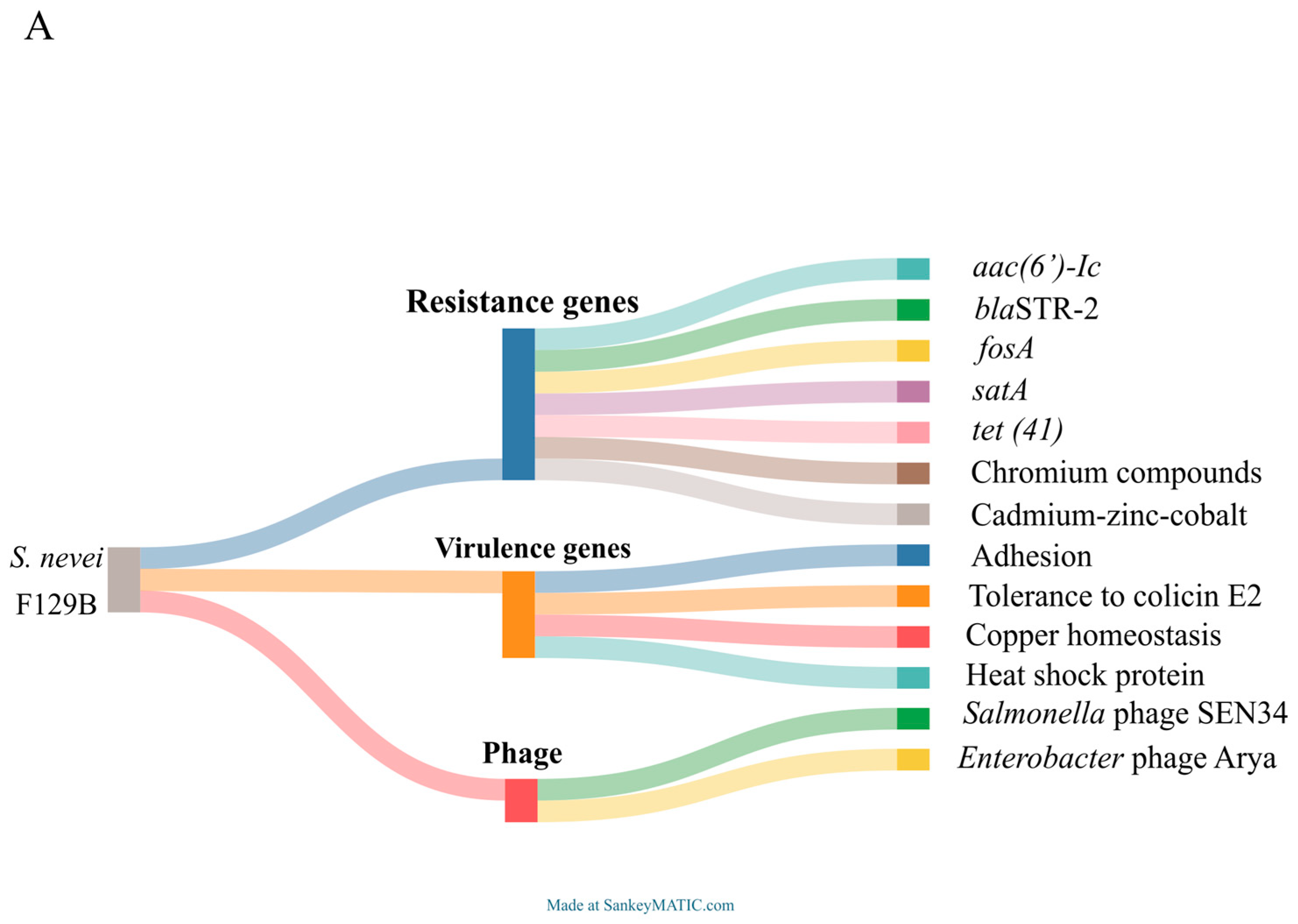
3.1. WGS and In Silico Analysis
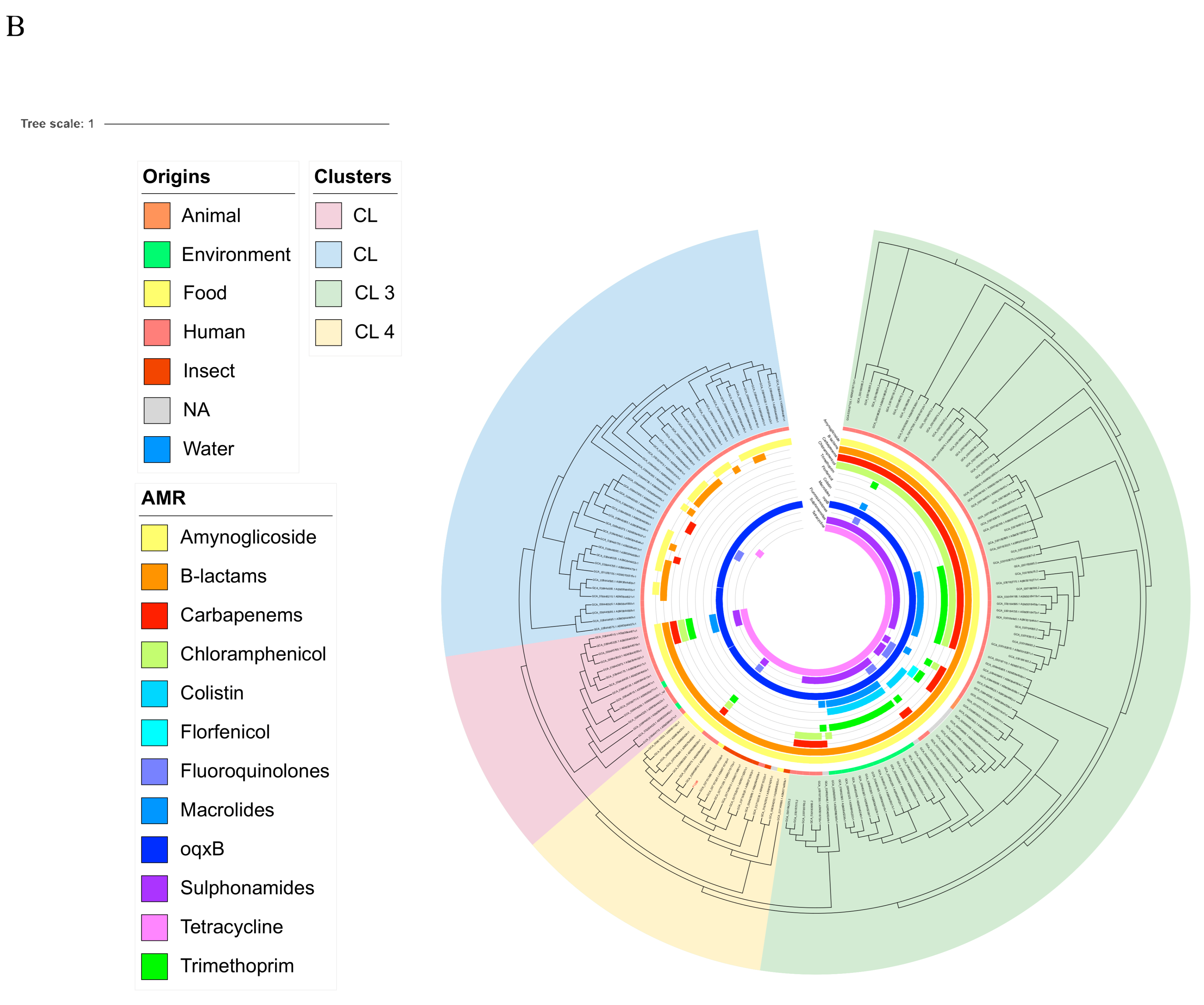
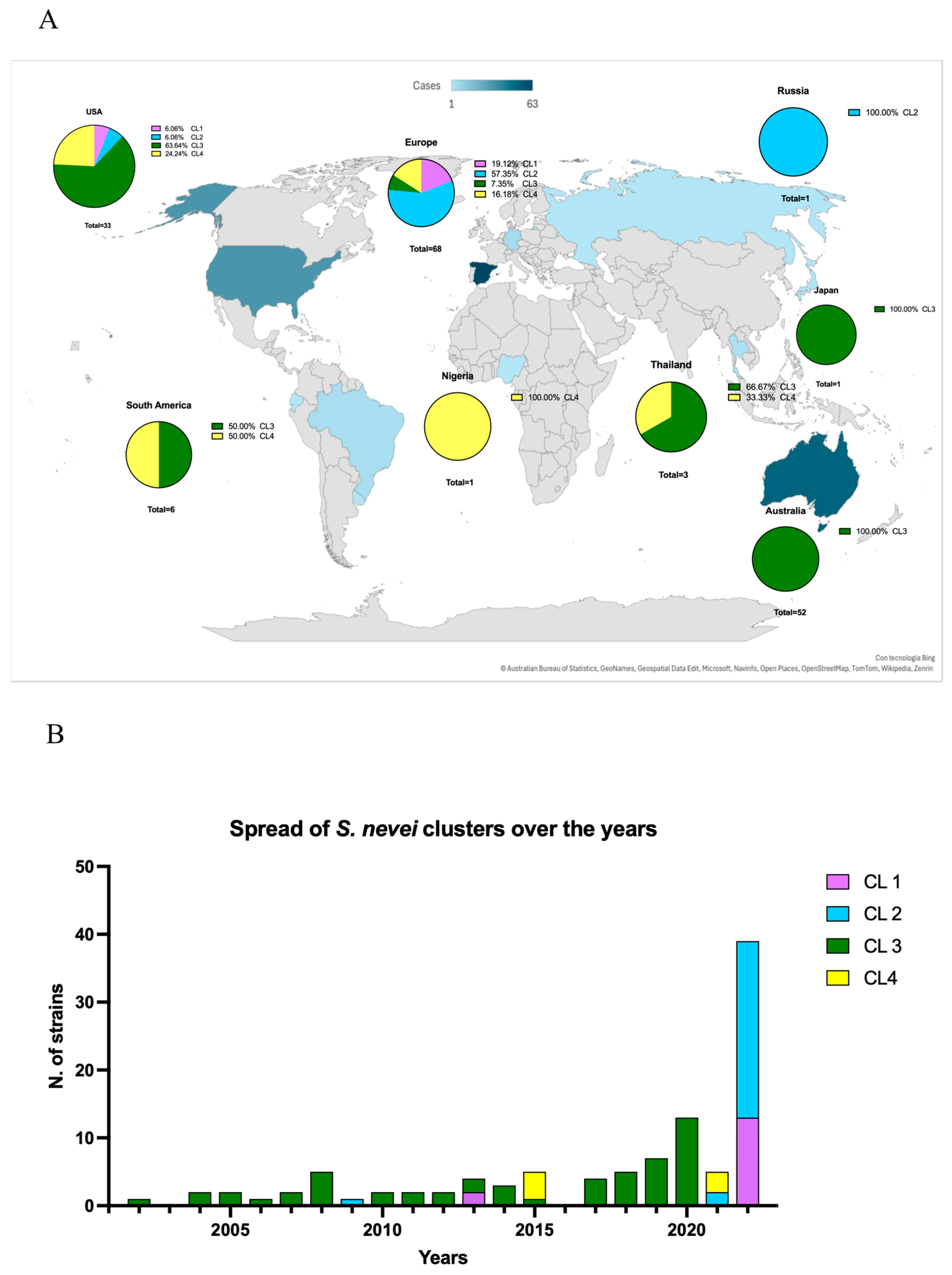
3.2. Genomic Relatedness


4. Discussion
5. Conclusions
Supplementary Materials
Author Contributions
Funding
Institutional Review Board Statement
Informed Consent Statement
Data Availability Statement
Conflicts of Interest
References
- Zhu, W.; Chen, X.; Shen, H.; Wei, M.; Yang, C.; Gu, L. Genomic diversity, antimicrobial resistance and dissemination of Serratia marcescens complex in patients admitted to ICUs. Front. Cell. Infect. Microbiol. 2025, 15, 1672468. [Google Scholar] [CrossRef] [Scilit] [PubMed]
- Matilla, M.A.; Udaondo, Z.; Salmond, G.P. Genome sequence of the Oocydin A-producing rhizobacterium Serratia plymuthica 4Rx5. Microbiol. Resour. Announc. 2018, 7, e00997-18. [Google Scholar] [CrossRef] [Scilit]
- Chen, S.; Blom, J.; Walker, E.D. Genomic, physiologic, and symbiotic characterization of Serratia marcescens strains isolated from the mosquito Anopheles stephensi. Front. Microbiol. 2017, 8, 1483. [Google Scholar] [CrossRef] [Scilit]
- Williams, D.J.; Grimont, P.A.; Cazares, A.; Grimont, F.; Ageron, E.; Pettigrew, K.A.; Cazares, D.; Njamkepo, E.; Weill, F.X.; Heinz, E.; et al. The genus Serratia revisited by genomics. Nat. Commun. 2022, 13, 5195. [Google Scholar] [CrossRef] [Scilit] [PubMed]
- Tavares-Carreon, F.; De Anda-Mora, K.; Rojas-Barrera, I.C.; Andrade, A. Serratia marcescens antibiotic resistance mechanisms of an opportunistic pathogen: A literature review. PeerJ 2023, 11, e14399. [Google Scholar] [CrossRef] [Scilit]
- Cho, G.S.; Stein, M.; Brinks, E.; Rathje, J.; Lee, W.; Suh, S.H.; Franz, C.M.A.P. Serratia nevei sp. nov. and Serratia bockelmannii sp. nov., isolated from fresh produce in Germany and reclassification of Serratia marcescens subsp. sakuensis Ajith Kumar et al. 2003 as a later heterotypic synonym of Serratia marcescens subsp. marcescens. Syst. Appl. Microbiol. 2020, 43, 126055, Erratum in Syst. Appl. Microbiol. 2020, 43, 126082. [Google Scholar] [CrossRef] [Scilit]
- Leelapsawas, C.; Sroithongkham, P.; Payungporn, S.; Nimsamer, P.; Yindee, J.; Collaud, A.; Perreten, V.; Chanchaithong, P. First report of blaOXA-181-carrying IncX3 plasmids in multidrug-resistant Enterobacter hormaechei and Serratia nevei recovered from canine and feline opportunistic infections. Microbiol. Spectr. 2024, 12, e0358923. [Google Scholar] [CrossRef] [Scilit]
- Aracil-Gisbert, S.; Fernández-De-Bobadilla, M.D.; Guerra-Pinto, N.; Serrano-Calleja, S.; Pérez-Cobas, A.E.; Soriano, C.; de Pablo, R.; Lanza, V.F.; Pérez-Viso, B.; Reuters, S.; et al. The ICU environment contributes to the endemicity of the “Serratia marcescens complex” in the hospital setting. mBio 2024, 15, e0305423. [Google Scholar] [CrossRef] [Scilit]
- Pérez-Viso, B.; Hernández-García, M.; Rodríguez, C.M.; Fernández-de-Bobadilla, M.D.; Serrano-Tomás, M.I.; Sánchez-Díaz, A.M.; Avendaño-Ortiz, J.; Coque, T.M.; Ruiz-Garbajosa, P.; Del Campo, R.; et al. A long-term survey of Serratia spp. bloodstream infections revealed an increase of antimicrobial resistance involving adult population. Microbiol. Spectr. 2024, 12, e02762-23, Erratum in Microbiol. Spectr. 2024, 12, e02425-24. [Google Scholar] [CrossRef] [Scilit]
- Harch, S.A.; Jenkins, F.; Farhat, R.; van Hal, S.J. Complexities in species identification for Serratia marcescens complex for the modern microbiology laboratory. Microbiol. Spectr. 2025, 13, e01361-24. [Google Scholar] [CrossRef] [Scilit] [PubMed]
- Uzeh, R.E.; Imafidon, S. The occurrence of antibiotic-resistant enteric bacteria in Selected Nigerian traditional dairy products. Afr. Health Sci. 2022, 22, 619–626. [Google Scholar] [CrossRef] [Scilit]
- Adesoji, A.T.; Marchetti, V.M.; Cortimiglia, C.; Piscopiello, F.; Petrizzi, I.; Piazza, A.; Alabi, E.D.; Cocconcelli, P.S.; Migliavacca, R. Antibiotic resistance and novel Sequence Types of Klebsiella spp. in human, animal, and food sources: A One Health perspective from Northern Nigeria. Curr. Res. Microb. Sci. 2025, 9, 100458. [Google Scholar] [CrossRef] [Scilit]
- Aziz, R.K.; Bartels, D.; Best, A.A.; DeJongh, M.; Disz, T.; Edwards, R.A.; Formsma, K.; Gerdes, S.; Glass, E.M.; Kubal, M.; et al. The RAST Server: Rapid annotations using subsystems technology. BMC Genom. 2008, 9, 75. [Google Scholar] [CrossRef] [Scilit]
- Arndt, D.; Grant, J.; Marcu, A.; Sajed, T.; Pon, A.; Liang, Y.; Wishart, D.S. PHASTER: A better, faster version of the PHAST phage search tool. Nucleic Acids Res. 2016, 44, W16–W21. [Google Scholar] [CrossRef] [Scilit]
- Zhou, Y.; Liang, Y.; Lynch, K.H.; Dennis, J.J.; Wishart, D.S. PHAST: A fast phage search tool. Nucleic Acids Res. 2011, 39, W347–W352. [Google Scholar] [CrossRef] [Scilit] [PubMed]
- Shang, J.; Peng, C.; Liao, H.; Tang, X.; Sun, Y. PhaBOX: A web server for identifying and characterizing phage contigs in metagenomic data. Bioinform. Adv. 2023, 3, vbad101. [Google Scholar] [CrossRef] [Scilit] [PubMed]
- Jain, C.; Rodriguez-R, L.M.; Phillippy, A.M.; Konstantinidis, K.T.; Aluru, S. High throughput ANI analysis of 90K prokaryotic genomes reveals clear species boundaries. Nat. Commun. 2018, 9, 5114. [Google Scholar] [CrossRef] [Scilit]
- Treangen, T.J.; Ondov, B.D.; Koren, S.; Phillippy, A.M. The Harvest suite for rapid core-genome alignment and visualization of thousands of intraspecific microbial genomes. Genome Biol. 2014, 15, 524. [Google Scholar] [CrossRef] [Scilit] [PubMed]
- Tonkin-Hill, G.; Lees, J.A.; Bentley, S.D.; Frost, S.D.W.; Corander, J. Fast hierarchical Bayesian analysis of population structure. Nucleic Acids Res. 2019, 47, 5539–5549. [Google Scholar] [CrossRef] [Scilit]
- Coll, F.; Raven, K.E.; Knight, G.M.; Blane, B.; Harrison, E.M.; Leek, D.; Enoch, D.A.; Brown, N.M.; Parkhill, J.; Peacock, S.J. Definition of a genetic relatedness cutoff to exclude recent transmission of meticillin-resistant Staphylococcus aureus: A genomic epidemiology analysis. Lancet Microbe 2020, 1, e328–e335. [Google Scholar] [CrossRef] [Scilit]
- Guo, C.; Wu, J.Y. Pathogen Discovery in the Post-COVID Era. Pathogens 2024, 13, 51. [Google Scholar] [CrossRef] [Scilit]
- Thompson, S.A.; Maani, E.V.; Lindell, A.H.; King, C.J.; McArthur, J.V. Novel tetracycline resistance determinant isolated from an environmental strain of Serratia marcescens. Appl. Environ. Microbiol. 2007, 73, 2199–2206. [Google Scholar] [CrossRef] [Scilit]
- Gummalla, V.S.; Zhang, Y.; Liao, Y.T.; Wu, V.C.H. The Role of Temperate Phages in Bacterial Pathogenicity. Microorganisms 2023, 11, 541. [Google Scholar] [CrossRef] [Scilit]
- Wu, L.T.; Tsou, M.F.; Wu, H.J.; Chen, H.E.; Chuang, Y.C.; Yu, W.L. Survey of CTX-M-3 extended-spectrum β-lactamase (ESBL) among cefotaxime-resistant Serratia marcescens at a medical center in middle Taiwan. Diagn. Microbiol. Infect. Dis. 2004, 49, 125–129. [Google Scholar] [CrossRef] [Scilit]
- Yu, W.L.; Ko, W.C.; Cheng, K.C.; Chen, H.E.; Lee, C.C.; Chuang, Y.C. Institutional spread of clonally related Serratia marcescens isolates with a novel AmpC cephalosporinase (S4): A 4-year experience in Taiwan. Diagn. Microbiol. Infect. Dis. 2008, 61, 460–467. [Google Scholar] [CrossRef] [Scilit] [PubMed]
- Srinivasan, V.B.; Rajamohan, G. Genome analysis of urease positive Serratia marcescens, co-producing SRT-2 and AAC (6′)-Ic with multidrug efflux pumps for antimicrobial resistance. Genomics 2019, 111, 653–660. [Google Scholar] [CrossRef] [Scilit] [PubMed]
- Hassan, J.; Osman, M.; Xu, T.; Naas, T.; Schiff, S.J.; Mann, D.; Esseili, M.A.; Deng, X.; Kassem, I.I. Monitoring sewage and effluent water is an effective approach for the detection of the mobile colistin resistance genes (mcr) and associated bacterial hosts in the human population and environment in the USA. Environ. Pollut. 2025, 366, 125515. [Google Scholar] [CrossRef] [Scilit]
- Abreo, E.; Valle, D.; González, A.; Altier, N. Control of damping-off in tomato seedlings exerted by Serratia spp. strains and identification of inhibitory bacterial volatiles in vitro. Syst. Appl. Microbiol. 2021, 44, 126177. [Google Scholar] [CrossRef] [Scilit]
- Yaikhan, T.; Suwannasin, S.; Singkhamanan, K.; Chusri, S.; Pomwised, R.; Wonglapsuwan, M.; Surachat, K. Genomic Characterization of Multidrug-Resistant Enterobacteriaceae Clinical Isolates from Southern Thailand Hospitals: Unraveling Antimicrobial Resistance and Virulence Mechanisms. Antibiotics 2024, 13, 531. [Google Scholar] [CrossRef] [Scilit] [PubMed]
- Ota, Y.; Chen, F.; Prah, I.; Mahazu, S.; Watanabe, K.; Kinoshita, T.; Gu, Y.; Nukui, Y.; Saito, R. Metatranscriptomic Analysis Reveals Actively Expressed Antimicrobial-Resistant Genes and Their Hosts in Hospital Wastewater. Antibiotics 2024, 13, 1122. [Google Scholar] [CrossRef] [Scilit]
- Kang, M.; Harjadi, D.; Hoover, E.; Dan, H.; Adam, B.; Huang, H. Complete genome sequences of six Serratia strains with multiple resistance genes isolated from food products in Canada. Microbiol. Resour. Announc. 2025, 14, e0030125. [Google Scholar] [CrossRef] [Scilit] [PubMed]
- Liu, X.; Liu, Z.; Yu, K.; Huang, Z.; Gao, H.; Bai, X.; Sun, Z.; Wei, Q.; Wang, D. Global genomic epidemiology and plasmid-mediated dissemination of blaKPC and blaNDM in the Serratia marcescens complex. Curr. Res. Microb. Sci. 2025, 9, 100436. [Google Scholar] [CrossRef] [Scilit]
- Zhu, W.; Chen, X.; Shen, H.; Wei, M.; Gu, L.; Liu, Q. Genomic evolution, antimicrobial resistance, and dissemination of global Serratia spp. unveil increasing species diversity and carbapenemae-resistance: A retrospective and genomic epidemiology study. Curr. Res. Microb. Sci. 2025, 9, 100456. [Google Scholar] [CrossRef] [Scilit]
- Peirano, G.; Matsumura, Y.; Pitout, J.D.D. Molecular epidemiology of global carbapenemase-producing Serratia spp. (2015–2017). Eur. J. Clin. Microbiol. Infect. Dis. 2025; Epub ahead of print. [CrossRef] [Scilit] [PubMed]
- Furlan, J.P.R.; Bueno, G.C.; Sousa-Carmo, R.R.; Silva, R.L.O.; Barbosa, M.R.F.; Sato, M.I.Z.; Lincopan, N.; Schenkman, S. Emergence of Serratia nevei co-producing NDM-1 and CTX-M-15 in urban wastewater. Microbiol Spectr. 2025, e0137825. [Google Scholar] [CrossRef] [Scilit] [PubMed]

| Author | Source of Isolation | Country | Identification Method | DOI |
|---|---|---|---|---|
| Cho et al., 2020 [6] | Cucumber | Germany | 16S rRNA, DNA-DNA hybridization | https://doi.org/10.1016/j.syapm.2020.126055 |
| Abreo et al., 2021 [28] | Locusts | Uruguay | gyrB and ANI | https://doi.org/10.1016/j.syapm.2020.126177 |
| Pérez-Viso et al., 2024 [9] | Bloodstream infections | Spain | Taxonomic Sequence Classification System Kraken and PATO package in R, calculating the MASH distance | https://doi.org/10.1128/spectrum.02762-23 |
| Leelapsawas et al., 2024 [7] | Canine infection | Thailand | ANI | https://doi.org/10.1128/spectrum.03589-23 |
| Aracil-Gisbert et al., 2024 [8] | ICU sink and clinical samples | Spain | 16S rRNA and DNA-DNA hybridization | https://doi.org/10.1128/mbio.03054-23 |
| Yaikhan et al., 2024 [29] | Clinical samples | Thailand | ANI | https://doi.org/10.3390/antibiotics13060531 |
| Hassan et al., 2025 [27] | Raw sewage and water | USA | WGS | https://doi.org/10.1016/j.envpol.2024.125515 |
| Ota et al., 2024 [30] | Hospital wastewater | Japan | GTDB Toolkit Classify v2.1.0 | https://doi.org/10.3390/antibiotics13121122 |
| Kang et al., 2025 [31] | Food | Canada | VITEK MS system (bioMérieux) and WGS | https://doi.org/10.1128/mra.00301-25 |
| Liu et al., 2025 [32] | Clinical samples | USA, Canada, Romania, China, South Africa, Bulgaria | MALDI (as S. marcescens) and TYGS platform | https://doi.org/10.1016/j.crmicr.2025.100436 |
| Zhu et al., 2025 [33] | Clinical samples from tertiary teaching hospital | China | dDDH and FastANI v1.34 | https://doi.org/10.1016/j.crmicr.2025.100456 |
| Peirano et al., 2025 [34] | Clinical samples | South Africa, Romania | TYGS and ANI | https://doi.org/10.1007/s10096-025-05254-x |
| Furlan et al., 2025 [35] | Wastewater | Brazil | ANI and dDDH | https://doi.org/10.1128/spectrum.01378-25 |
| Zhu et al., 2025 [1] | Intensive Unit Care patients | China | Genome Database Taxonomy (GTDB) | https://doi.org/10.3389/fcimb.2025.1672468 |
Disclaimer/Publisher’s Note: The statements, opinions and data contained in all publications are solely those of the individual author(s) and contributor(s) and not of MDPI and/or the editor(s). MDPI and/or the editor(s) disclaim responsibility for any injury to people or property resulting from any ideas, methods, instructions or products referred to in the content. |
© 2025 by the authors. Licensee MDPI, Basel, Switzerland. This article is an open access article distributed under the terms and conditions of the Creative Commons Attribution (CC BY) license (https://creativecommons.org/licenses/by/4.0/).
Share and Cite
Adesoji, A.T.; Alabi, E.D.; Mattioni Marchetti, V.; Migliavacca, R. Serratia nevei in Nigeria: First Report and Global Distribution. Microorganisms 2025, 13, 2732. https://doi.org/10.3390/microorganisms13122732
Adesoji AT, Alabi ED, Mattioni Marchetti V, Migliavacca R. Serratia nevei in Nigeria: First Report and Global Distribution. Microorganisms. 2025; 13(12):2732. https://doi.org/10.3390/microorganisms13122732
Chicago/Turabian StyleAdesoji, Ayodele Timilehin, Emmanuel Dayo Alabi, Vittoria Mattioni Marchetti, and Roberta Migliavacca. 2025. "Serratia nevei in Nigeria: First Report and Global Distribution" Microorganisms 13, no. 12: 2732. https://doi.org/10.3390/microorganisms13122732
APA StyleAdesoji, A. T., Alabi, E. D., Mattioni Marchetti, V., & Migliavacca, R. (2025). Serratia nevei in Nigeria: First Report and Global Distribution. Microorganisms, 13(12), 2732. https://doi.org/10.3390/microorganisms13122732