Optimizing Diagnosis and Management of Ventilator-Associated Pneumonia: A Systematic Evaluation of Biofilm Detection Methods and Bacterial Colonization on Endotracheal Tubes
 , ,
, ,  ,
, 
Abstract
1. Introduction
2. Materials and Methods
3. Results
4. Discussion
5. Conclusions
Author Contributions
Funding
Data Availability Statement
Conflicts of Interest
Abbreviations
| BF | biofilm |
| CAMPs | cationic antimicrobial peptides |
| CIP/CHX | Ciprofloxacin/Chlorhexidine |
| Cryo-SEM | cryo-scanning electron microscopy |
| DRI | device-related infections |
| DTT | dithiothetriol |
| EPS | extracellular polymeric substances |
| ESKAPE | Enterococcus faecium, Staphylococcus aureus, Klebsiella pneumoniae, Acinetobacter baumannii, Pseudomonas aeruginosa, Enterobacter species |
| ETT | endotracheal tube |
| FT-IR | Fourier Transform InfraRed |
| ICU | intensive care unit |
| OCT | optical coherence tomography |
| TiO2 | titanium dioxide |
| TST | tracheostomy tube |
| VAP | ventilator-associated pneumonia |
References
- Boicean, A.; Neamtu, B.; Birsan, S.; Batar, F.; Tanasescu, C.; Dura, H.; Roman, M.D.; Hașegan, A.; Bratu, D.; Mihetiu, A.; et al. Fecal Microbiota Transplantation in Patients Co-Infected with SARS-CoV2 and Clostridioides Difficile. Biomedicines 2022, 11, 7. [Google Scholar] [CrossRef]
- Vintila, B.I.; Arseniu, A.M.; Morgovan, C.; Butuca, A.; Sava, M.; Bîrluțiu, V.; Rus, L.L.; Ghibu, S.; Bereanu, A.S.; Roxana Codru, I.; et al. A Pharmacovigilance Study Regarding the Risk of Antibiotic-Associated Clostridioides Difficile Infection Based on Reports from the EudraVigilance Database: Analysis of Some of the Most Used Antibiotics in Intensive Care Units. Pharmaceuticals 2023, 16, 1585. [Google Scholar] [CrossRef] [PubMed]
- Bereanu, A.S.; Bereanu, R.; Mohor, C.; Vintilă, B.I.; Codru, I.R.; Olteanu, C.; Sava, M. Prevalence of Infections and Antimicrobial Resistance of ESKAPE Group Bacteria Isolated from Patients Admitted to the Intensive Care Unit of a County Emergency Hospital in Romania. Antibiotics 2024, 13, 400. [Google Scholar] [CrossRef] [PubMed]
- Papazian, L.; Klompas, M.; Luyt, C.-E. Ventilator-Associated Pneumonia in Adults: A Narrative Review. Intensiv. Care Med. 2020, 46, 888–906. [Google Scholar] [CrossRef] [PubMed]
- Thorarinsdottir, H.R.; Kander, T.; Holmberg, A.; Petronis, S.; Klarin, B. Biofilm Formation on Three Different Endotracheal Tube s: A Prospective Clinical Trial. Crit. Care 2020, 24, 382. [Google Scholar] [CrossRef] [PubMed]
- Diaconu, O.; Siriopol, I.; Polosanu, L.I.; Grigoras, I. Endotracheal Tube Biofilm and Its Impact on the Pathogenesis of Ventilator-Associated Pneumonia. J. Crit. Care Med. 2018, 4, 50–55. [Google Scholar] [CrossRef]
- Zimlichman, E.; Henderson, D.; Tamir, O.; Franz, C.; Song, P.; Yamin, C.K.; Keohane, C.; Denham, C.R.; Bates, D.W. Health Care–Associated Infections. JAMA Intern. Med. 2013, 173, 2039–2046. [Google Scholar] [CrossRef]
- Codru, I.R.; Sava, M.; Vintilă, B.I.; Bereanu, A.S.; Bîrluțiu, V. A Study on the Contributions of Sonication to the Identification of Bacteria Associated with Intubation Cannula Biofilm and the Risk of Ventilator-Associated Pneumonia. Medicina 2023, 59, 1058. [Google Scholar] [CrossRef]
- Marcut, L.; Manescu, V.; Antoniac, A.; Paltanea, G.; Robu, A.; Mohan, A.G.; Grosu, E.; Corneschi, I.; Bodog, A.D. Antimicrobial Solutions for Endotracheal Tubes in Prevention of Ventilator-Associated Pneumonia. Materials 2023, 16, 5034. [Google Scholar] [CrossRef]
- Kang, X.; Yang, X.; He, Y.; Guo, C.; Li, Y.; Ji, H.; Qin, Y.; Wu, L. Strategies and Materials for the Prevention and Treatment of Biofilms. Mater. Today Bio 2023, 23, 100827. [Google Scholar] [CrossRef]
- Sharma, S.; Mohler, J.; Mahajan, S.D.; Schwartz, S.A.; Bruggemann, L.; Aalinkeel, R. Microbial Biofilm: A Review on Formation, Infection, Antibiotic Resistance, Control Measures, and Innovative Treatment. Microorganisms 2023, 11, 1614. [Google Scholar] [CrossRef] [PubMed]
- Birlutiu, V.; Birlutiu, R.M. Endocarditis Due to Abiotrophia Defectiva, a Biofilm-Related Infection Associated with the Presence of Fixed Braces: A Case Report. Medicine 2017, 96, e8756. [Google Scholar] [CrossRef] [PubMed]
- Rather, M.A.; Gupta, K.; Mandal, M. Microbial Biofilm: Formation, Architecture, Antibiotic Resistance, and Control Strategies. Braz. J. Microbiol. 2021, 52, 1701–1718. [Google Scholar] [CrossRef] [PubMed]
- Bjerkan, G.; Witso, E.; Bergh, K. Sonication Is Superior to Scraping for Retrieval of Bacteria in Biofilm on Titanium and Steel Surfaces in Vitro. Acta Orthop. 2009, 80, 245–250. [Google Scholar] [CrossRef] [PubMed]
- Azeredo, J.; Azevedo, N.F.; Briandet, R.; Cerca, N.; Coenye, T.; Costa, A.R.; Desvaux, M.; Di Bonaventura, G.; Hébraud, M.; Jaglic, Z.; et al. Critical Review on Biofilm Methods. Crit. Rev. Microbiol. 2017, 43, 313–351. [Google Scholar] [CrossRef]
- Birlutiu, R.M.; Roman, M.D.; Cismasiu, R.S.; Fleaca, S.R.; Popa, C.M.; Mihalache, M.; Birlutiu, V. Sonication Contribution to Identifying Prosthetic Joint Infection with Ralstonia Pickettii: A Case Report and Review of the Literature. BMC Musculoskelet. Disord. 2017, 18, 311. [Google Scholar] [CrossRef]
- Maurice, N.M.; Bedi, B.; Sadikot, R.T. Pseudomonas Aeruginosa Biofilms: Host Response and Clinical Implications in Lung Infections. Am. J. Respir. Cell Mol. Biol. 2018, 58, 428–439. [Google Scholar] [CrossRef]
- Alves, D.; Lopes, H.; Machado, I.; Pereira, M.O. Colistin Conditioning Surfaces Combined with Antimicrobial Treatment to Prevent Ventilator-Associated Infections. Biofouling 2022, 38, 547–557. [Google Scholar] [CrossRef]
- Amar, A.K.; Ramakrishnan, K.; Sawant, A.R.; Karamveer, K.; Menon, J.; Tiwary, B.K.; Prashanth, K. Investigations on Microbiome of the Used Clinical Device Revealed Many Uncultivable Newer Bacterial Species Associated with Persistent Chronic Infections. Microbes Infect. Chemother. 2022, 2, e1542. [Google Scholar] [CrossRef]
- Azmi, A.; Mojtabavi, S.; Fakhrmousavi, S.A.A.; Faizi, M.; Forootanfar, H.; Samadi, N.; Faramarzi, M.A. Surface Functionalization of Endotracheal Tubes Coated with Laccase–Gadolinium Phosphate Hybrid Nanoparticles for Antibiofilm Activity and Contrasting Properties. Biomater. Sci. 2024, 12, 674–690. [Google Scholar] [CrossRef]
- Bereanu, A.S.; Vintilă, B.I.; Bereanu, R.; Codru, I.R.; Hașegan, A.; Olteanu, C.; Săceleanu, V.; Sava, M. TiO2 Nanocomposite Coatings and Inactivation of Carbapenemase-Producing Klebsiella Pneumoniae Biofilm—Opportunities and Challenges. Microorganisms 2024, 12, 684. [Google Scholar] [CrossRef] [PubMed]
- Cifuentes, E.A.; Sierra, M.A.; Yepes, A.F.; Baldión, A.M.; Rojas, J.A.; Álvarez-Moreno, C.A.; Anzola, J.M.; Zambrano, M.M.; Huertas, M.G. Endotracheal Tube Microbiome in Hospitalized Patients Defined Largely by Hospital Environment. Respir. Res. 2022, 23, 168. [Google Scholar] [CrossRef] [PubMed]
- Daengngam, C.; Lethongkam, S.; Srisamran, P.; Paosen, S.; Wintachai, P.; Anantravanit, B.; Vattanavanit, V.; Voravuthikunchai, S. Green Fabrication of Anti-Bacterial Biofilm Layer on Endotracheal Tubing Using Silver Nanoparticles Embedded in Polyelectrolyte Multilayered Film. Mater. Sci. Eng. C 2019, 101, 53–63. [Google Scholar] [CrossRef] [PubMed]
- Dewi, F.H.; Purwanto, B.; Wasita, B. Quantitative Biofilm for Bacterial Pathogens of Ventilator-Associated Pneumonia. Anaesthesia Pain Intensiv. Care 2021, 25, 132–137. [Google Scholar] [CrossRef]
- Drago, L.; Fidanza, A.; Giannetti, A.; Ciuffoletti, A.; Logroscino, G.; Romanò, C.L. Bacteria Living in Biofilms in Fluids: Could Chemical Antibiofilm Pretreatment of Culture Represent a Paradigm Shift in Diagnostics? Microorganisms 2024, 12, 259. [Google Scholar] [CrossRef]
- Dsouza, R.; Spillman, D.R.; Barkalifa, R.; Monroy, G.L.; Chaney, E.J.; White, K.C.; Boppart, S.A. In Vivo Detection of Endotracheal Tube Biofilms in Intubated Critical Care Patients Using Catheter-Based Optical Coherence Tomography. J. Biophotonics 2019, 12, e201800307. [Google Scholar] [CrossRef]
- Dsouza, R.; Spillman, D.R.; Barkalifa, R.; Monroy, G.L.; Chaney, E.J.; Johnson, M.A.; White, K.C.; Boppart, S.A. Efficacy of Endotracheal Tube Suctioning in Intubated Intensive Care Unit Patients Determined by In Vivo Catheter-Based Optical Coherence Tomography—A Pilot Study. Quant. Imaging Med. Surg. 2021, 11, 1–8. [Google Scholar] [CrossRef]
- Fady, M.; Rizwana, H.; Alarjani, K.M.; Alghamdi, M.A.; Ibrahim, S.S.; Geyer, J.; Abbas, A. Evaluation of Antibiofilm and Cytotoxicity Effect of Rumex Vesicarius Methanol Extract. Open Chem. 2023, 21, 20220286. [Google Scholar] [CrossRef]
- Fernández-Barat, L.; Ciofu, O.; Kragh, K.N.; Pressler, T.; Johansen, U.; Motos, A.; Torres, A.; Hoiby, N. Phenotypic Shift in Pseudomonas Aeruginosa Populations from Cystic Fibrosis Lungs after 2-Week Antipseudomonal Treatment. J. Cyst. Fibros. 2017, 16, 222–229. [Google Scholar] [CrossRef]
- Fernández-Barat, L.; Motos, A.; Panigada, M.; Álvarez-Lerma, F.; Viña, L.; Lopez-Aladid, R.; Ceccato, A.; Bassi, G.L.; Nicolau, D.P.; Lopez, Y.; et al. Comparative Efficacy of Linezolid and Vancomycin for Endotracheal Tube MRSA Biofilms from ICU Patients. Crit. Care 2019, 23, 251. [Google Scholar] [CrossRef]
- Fernández-Barat, L.; López-Aladid, R.; Vázquez, N.; Cabrera, R.; Vila, J.; Ferrer, M.; Torres, A. Bacterial Adaptive Memory in Methicillin-Resistant Staphylococcus Aureus from Endotracheal Tubes. Pathogens 2024, 13, 144. [Google Scholar] [CrossRef] [PubMed]
- Gasparetto, J.; Jurkonis, L.B.; Dantas, L.R.; Suss, P.H.; Tuon, F.F. Antiseptic-Impregnated Tracheostomy Tube for the Prevention of Ventilator-Associated Pneumonia Caused by Multidrug-Resistant Bacteria: In-Vitro and Pilot Study in Humans. Authorea Preprints 2022. [Google Scholar] [CrossRef]
- Silveira, G.G.O.S.; Torres, M.D.T.; Ribeiro, C.F.A.; Meneguetti, B.T.; Carvalho, C.M.E.; De La Fuente-Nunez, C.; Franco, O.L.; Cardoso, M.H. Antibiofilm Peptides: Relevant Preclinical Animal Infection Models and Translational Potential. ACS Pharmacol. Transl. Sci. 2021, 4, 55–73. [Google Scholar] [CrossRef] [PubMed]
- Jones, C.J.; Grotewold, N.; Wozniak, D.J.; Gloag, E.S. Pseudomonas Aeruginosa Initiates a Rapid and Specific Transcriptional Response during Surface Attachment. J. Bacteriol. 2022, 204, e0008622. [Google Scholar] [CrossRef] [PubMed]
- Khazaal, S.S.; Al-Saryi, N.; Ibrahim, S.A. Immunomodulation by Acinetobacter Baumannii of Endotracheal Tube Biofilm in Ventilator-Associated Pneumonia. Meta Gene 2020, 24, 100672. [Google Scholar] [CrossRef]
- Kiarostami, K.; Fernández-Barat, L.; Battaglini, D.; Motos, A.; Bueno-Freire, L.; Soler-Comas, A.; Bassi, G.L.; Torres, A. The Efficacy of Telavancin in Comparison with Linezolid on Endotracheal Tube Biofilm in Pigs with Methicillin-Resistant Staphylococcus Aureus Pneumonia. Int. J. Antimicrob. Agents 2024, 63, 107052. [Google Scholar] [CrossRef]
- Latorre, M.C.; Pérez-Granda, M.J.; Savage, P.B.; Alonso, B.; Martín-Rabadán, P.; Samaniego, R.; Bouza, E.; Muñoz, P.; Guembe, M. Endotracheal Tubes Coated with a Broad-Spectrum Antibacterial Ceragenin Reduce Bacterial Biofilm in an In Vitro Bench Top Model. J. Antimicrob. Chemother. 2021, 76, 1168–1173. [Google Scholar] [CrossRef]
- Lethongkam, S.; Sunghan, J.; Wangdee, C.; Durongphongtorn, S.; Siri, R.; Wunnoo, S.; Paosen, S.; Voravuthikunchai, S.P.; Dejyong, K.; Daengngam, C. Biogenic Nanosilver-Fabricated Endotracheal Tube to Prevent Microbial Colonization in a Veterinary Hospital. Appl. Microbiol. Biotechnol. 2023, 107, 623–638. [Google Scholar] [CrossRef]
- Luo, Y.; McAuley, D.F.; Fulton, C.R.; Pessoa, J.S.; McMullan, R.; Lundy, F.T. Targeting Candida Albicans in Dual-Species Biofilms with Antifungal Treatment Reduces Staphylococcus Aureus and MRSA In Vitro. PLoS ONE 2021, 16, e0249547. [Google Scholar] [CrossRef]
- Maldiney, T.; Pineau, V.; Neuwirth, C.; Ouzen, L.; Eberl, I.; Jeudy, G.; Dalac, S.; Piroth, L.; Blot, M.; Sautour, M.; et al. Endotracheal Tube Biofilm in Critically Ill Patients during the COVID-19 Pandemic: Description of an Underestimated Microbiological Compartment. Sci. Rep. 2022, 12, 1–13. [Google Scholar] [CrossRef]
- Mazzolini, R.; Rodríguez-Arce, I.; Fernández-Barat, L.; Piñero-Lambea, C.; Garrido, V.; Rebollada-Merino, A.; Motos, A.; Torres, A.; Grilló, M.J.; Serrano, L.; et al. Engineered Live Bacteria Suppress Pseudomonas Aeruginosa Infection in Mouse Lung and Dissolve Endotracheal-Tube Biofilms. Nat. Biotechnol. 2023, 41, 1089–1098. [Google Scholar] [CrossRef] [PubMed]
- Mishra, S.K.; Baidya, S.; Bhattarai, A.; Shrestha, S.; Homagain, S.; Rayamajhee, B.; Hui, A.; Willcox, M. Bacteriology of Endotracheal Tube Biofilms and Antibiotic Resistance: A Systematic Review. J. Hosp. Infect. 2024, 147, 146–157. [Google Scholar] [CrossRef] [PubMed]
- Oliveira, V.C.; Bim, F.L.; Monteiro, R.M.; Macedo, A.P.; Santos, E.S.; Silva-Lovato, C.H.; Paranhos, H.F.O.; Melo, L.D.R.; Santos, S.B.; Watanabe, E. Identification and Characterization of New Bacteriophages to Control Multidrug-Resistant Pseudomonas Aeruginosa Biofilm on Endotracheal Tubes. Front. Microbiol. 2020, 11, 580779. [Google Scholar] [CrossRef] [PubMed]
- Oliveira, V.C.; Macedo, A.P.; Melo, L.D.R.; Santos, S.B.; Hermann, P.R.S.; Silva-Lovato, C.H.; Paranhos, H.F.O.; Andrade, D.; Watanabe, E. Bacteriophage Cocktail-Mediated Inhibition of Pseudomonas Aeruginosa Biofilm on Endotracheal Tube Surface. Antibiotics 2021, 10, 78. [Google Scholar] [CrossRef]
- Ozcelik, B.; Pasic, P.; Sangwan, P.; Be, C.L.; Glattauer, V.; Thissen, H.; Boulos, R.A. Evaluation of the Novel Antimicrobial BCP3 in a Coating for Endotracheal Tubes. ACS Omega 2020, 5, 10288–10296. [Google Scholar] [CrossRef]
- Pérez-Granda, M.J.; Alonso, B.; Zavala, R.; Latorre, M.C.; Hortal, J.; Samaniego, R.; Bouza, E.; Muñoz, P.; Guembe, M. Selective Digestive Decontamination Solution Used as “Lock Therapy” Prevents and Eradicates Bacterial Biofilm in an In Vitro Bench-Top Model. Ann. Clin. Microbiol. Antimicrob. 2020, 19, 44. [Google Scholar] [CrossRef]
- Rangel, K.; De-Simone, S.G. Treatment and Management of Acinetobacter Pneumonia: Lessons Learned from Recent World Event. Infect. Drug Resist. 2024, 17, 507–529. [Google Scholar] [CrossRef]
- Rao, H.; Choo, S.; Mahalingam, S.R.R.; Adisuri, D.S.; Madhavan, P.; Akim, A.M.; Chong, P.P. Approaches for Mitigating Microbial Biofilm-Related Drug Resistance: A Focus on Micro- and Nanotechnologies. Molecules 2021, 26, 1870. [Google Scholar] [CrossRef]
- Roy, S.; Chowdhury, G.; Mukhopadhyay, A.K.; Dutta, S.; Basu, S. Convergence of Biofilm Formation and Antibiotic Resistance in Acinetobacter Baumannii Infection. Front. Med. 2022, 9, 793615. [Google Scholar] [CrossRef]
- Shaqour, B.; Aizawa, J.; Guarch-Pérez, C.; Górecka, Ż.; Christophersen, L.; Martinet, W.; Choińska, E.; Riool, M.; Verleije, B.; Beyers, K.; et al. Coupling Additive Manufacturing with Hot Melt Extrusion Technologies to Validate a Ventilator-Associated Pneumonia Mouse Model. Pharmaceutics 2021, 13, 772. [Google Scholar] [CrossRef]
- Soares, R.B.; Costa, D.H.; Miyakawa, W.; Delgado, M.G.T.; Garcez, A.S.; Yoshimura, T.M.; Ribeiro, M.S.; Nunez, S.C. Photodynamic Activity on Biofilm in Endotracheal Tubes of Patients Admitted to an Intensive Care Unit. Photochem. Photobiol. 2020, 96, 618–624. [Google Scholar] [CrossRef] [PubMed]
- van Charante, F.; Wieme, A.; Rigole, P.; De Canck, E.; Ostyn, L.; Grassi, L.; Deforce, D.; Crabbé, A.; Vandamme, P.; Joossens, M.; et al. Microbial Diversity and Antimicrobial Susceptibility in Endotracheal Tube Biofilms Recovered from Mechanically Ventilated COVID-19 Patients. Biofilm 2022, 4, 100079. [Google Scholar] [CrossRef] [PubMed]
- Alves, D.; Grainha, T.; Pereira, M.O.; Lopes, S.P. Antimicrobial Materials for Endotracheal Tubes: A Review on the Last Two Decades of Technological Progress. Acta Biomater. 2023, 158, 32–55. [Google Scholar] [CrossRef] [PubMed]
- Zangirolami, A.C.; Dias, L.D.; Blanco, K.C.; Vinagreiro, C.S.; Inada, N.M.; Arnaut, L.G.; Pereira, M.M.; Bagnato, V.S. Avoiding Ventilator-Associated Pneumonia: Curcumin-Functionalized Endotracheal Tube and Photodynamic Action. Proc. Natl. Acad. Sci. USA 2020, 117, 22967–22973. [Google Scholar] [CrossRef] [PubMed]
- Hashemi, M.M.; Holden, B.S.; DurnaAA, B.; Buck, R.; Savage, P.B. Ceragenins as Mimics of Endogenous Antimicrobial Peptides. J. Antimicrob. Agents 2017, 3. [Google Scholar] [CrossRef]
- Mitchell, G.; Silvis, M.R.; Talkington, K.C.; Budzik, J.M.; Dodd, C.E.; Paluba, J.M.; Oki, E.A.; Trotta, K.L.; Licht, D.J.; Jimenez-Morales, D.; et al. Ceragenins and Antimicrobial Peptides Kill Bacteria through Distinct Mechanisms. mBio 2022, 13, e0272621. [Google Scholar] [CrossRef]
- Li, C.; Peters, A.S.; Meredith, E.L.; Allman, G.W.; Savage, P.B. Design and Synthesis of Potent Sensitizers of Gram-Negative Bacteria Based on a Cholic Acid Scaffolwding. J. Am. Chem. Soc. 1998, 120, 2961–2962. [Google Scholar] [CrossRef]
- Malacarne, P.; Corini, M.; Maremmani, P.; Viaggi, B.; Verdigi, S. Diagnostic Characteristics of Routine Surveillance Cultures of Endotracheal Aspirate Samples in Cases of Late-Onset Ventilator-Associated Pneumonia Due to Acinetobacter Baumannii. Infect. Control Hosp. Epidemiol. 2007, 28, 867–869. [Google Scholar] [CrossRef]
- Costa-Orlandi, C.; Sardi, J.; Pitangui, N.; De Oliveira, H.; Scorzoni, L.; Galeane, M.; Medina-Alarcón, K.; Melo, W.; Marcelino, M.; Braz, J.; et al. Fungal Biofilms and Polymicrobial Diseases. J. Fungi 2017, 3, 22. [Google Scholar] [CrossRef]
- Silva, N.B.S.; Marques, L.A.; Röder, D.D.B. Diagnosis of Biofilm Infections: Current Methods Used, Challenges and Perspectives for the Future. J. Appl. Microbiol. 2021, 131, 2148–2160. [Google Scholar] [CrossRef]
- Schlafer, S.; Meyer, R.L. Confocal Microscopy Imaging of the Biofilm Matrix. J. Microbiol. Methods 2017, 138, 50–59. [Google Scholar] [CrossRef] [PubMed]
- Garcia-Vaquero, M.; Rajauria, G.; O’Doherty, J.V.; Sweeney, T. Polysaccharides from Macroalgae: Recent Advances, Innovative Technologies and Challenges in Extraction and Purification. Food Res. Int. 2017, 99, 1011–1020. [Google Scholar] [CrossRef] [PubMed]
- Rondaan, C.; Maso, A.; Birlutiu, R.M.; Fernandez Sampedro, M.; Soriano, A.; Diaz de Brito, V.; Gómez Junyent, J.; Del Toro, M.D.; Hofstaetter, J.G.; Salles, M.J.; et al. Is an Isolated Positive Sonication Fluid Culture in Revision Arthroplasties Clinically Relevant? Clin. Microbiol. Infect. 2023, 29, 1431–1436. [Google Scholar] [CrossRef]
- Roman, M.D.; Bocea, B.A.; Ion, N.I.C.; Vorovenci, A.E.; Dragomirescu, D.; Birlutiu, R.M.; Birlutiu, V.; Fleaca, S.R. Are There Any Changes in the Causative Microorganisms Isolated in the Last Years from Hip and Knee Periprosthetic Joint Infections? Antimicrobial Susceptibility Test Results Analysis. Microorganisms 2023, 11, 116. [Google Scholar] [CrossRef]
- Moncada, M.; Aryana, K.J. Influence of “Mild” Sonication Conditions on the Characteristics of Streptococcus Thermophilus ST-M5. Adv. Microbiol. 2012, 2, 8–16. [Google Scholar] [CrossRef]
- Riesz, P.; Kondo, T. Free Radical Formation Induced by Ultrasound and Its Biological Implications. Free Radic. Biol. Med. 1992, 13, 247–270. [Google Scholar] [CrossRef]
- Birlutiu, R.M.; Birlutiu, V.; Cismasiu, R.S.; Mihalache, M. BbFISH-Ing in the Sonication Fluid. Medicine 2019, 98, e16501. [Google Scholar] [CrossRef]
- Sauer, K.; Stoodley, P.; Goeres, D.M.; Hall-Stoodley, L.; Burmølle, M.; Stewart, P.S.; Bjarnsholt, T. The Biofilm Life Cycle– Expanding the Conceptual Model of Biofilm Formation. Nat. Rev. Microbiol. 2022, 20, 608–620. [Google Scholar] [CrossRef]
- Nair, G.B.; Niederman, M.S. Ventilator-Associated Pneumonia: Present Understanding and Ongoing Debates. Intensiv. Care Med. 2015, 41, 34–48. [Google Scholar] [CrossRef]

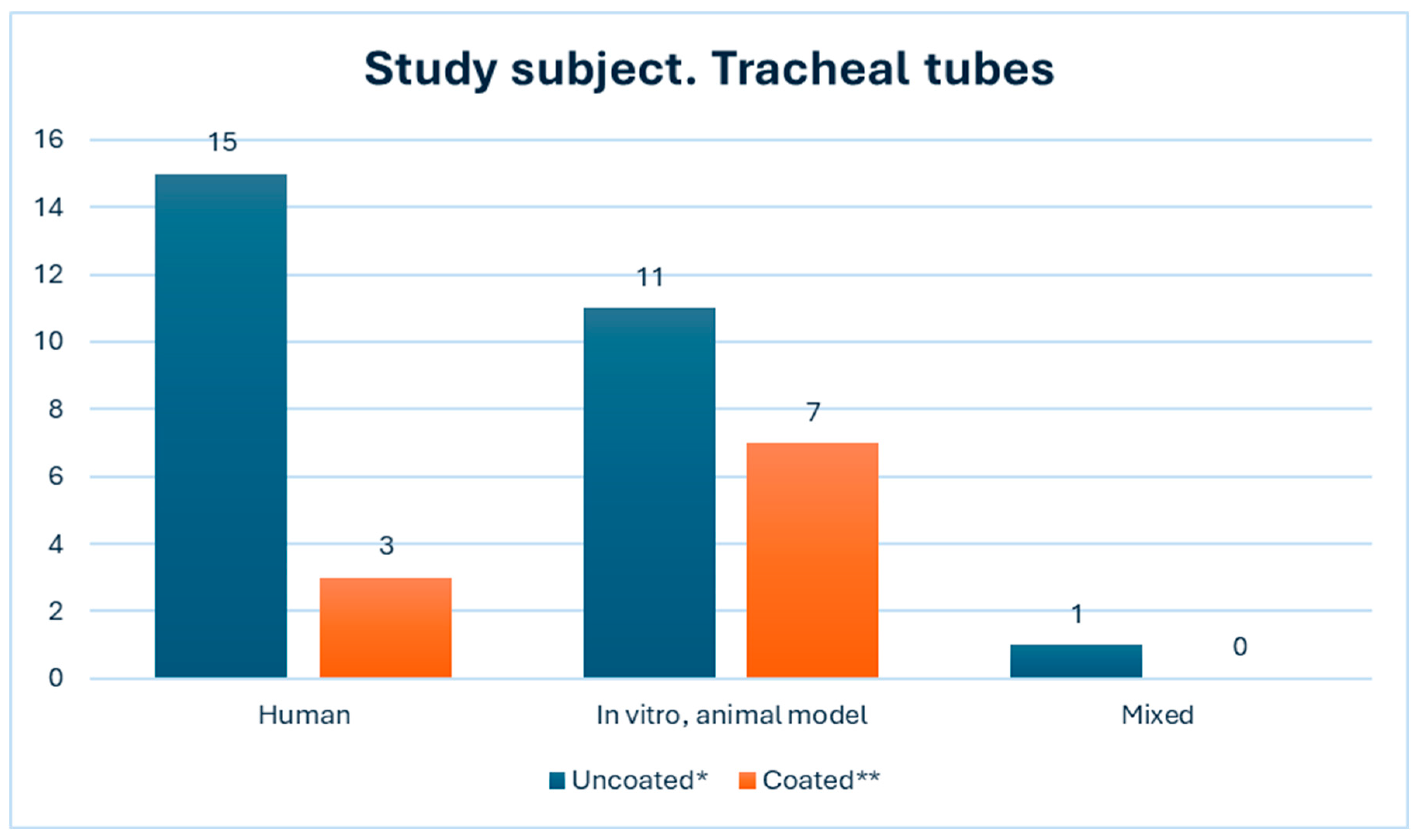

| Authors | Biofilm Identification Method | Human | In Vitro | Animals | ETT | Microorganisms |
|---|---|---|---|---|---|---|
| Alves D. et al., 2023 [18] | Infrared spectroscopy | • | Double-coated ETT (ciprofloxacin and chlorhexidine) | Ps. Aeruginosa, A. baumanii, K. pneumoniae, S. aureus, S. epidermidis | ||
| Amar A.K. et al., 2022 [19] | 16SrRNA gene amplification followed by Sanger sequencing; NGS of the device metagenome | • | Invasive medical devices | S. infantis, Gemella haemolysans, Meiothermus silvanus, Schlegelella aquatica, Rothia mucilaginosa, Serratia nematodiphila, and Enterobacter asburiae, along with some known common nosocomial pathogens | ||
| Azmi A. et al., 2023 [20] | Computed tomography | • | Laccase@GdPO4 * HNP, Enzyme mediator (antibiofilm property) | E. coli S. aureus P. aeruginosa | ||
| Bereanu A.S. et al., 2024 [21] | Not the case | • | Medical devices, including ETT–TiO2 photocatalytic | K. pneumoniae | ||
| Cifuentes E.A. et al., 2022 [22] | Sonication Powersoil Kit for DNA extraction | • | Usual ETT | Proteobacteria (p = 0.01), Firmicutes, Bacteroidetes, Fusobacteria (p = 0.01), Actinobacteria (p = 0.02)—bacteria species with statistical significance difference between the 2 ICUs Biofilm bacteria, patients with VAP *: K. pneumoniae, E. coli, P. aeruginosa, A. baumanii, S. aureus | ||
| Daengngam C. et al., 2019 [23] | Scanning electron microscopy | • | Coated ETT ** | S. aureus, P. aeruginosa | ||
| Dewi F.H. et al., 2021 [24] | Quantitative biofilm measurement using a microtiter plate method, optical density | • | Usual PVC | 48 specimens were obtained; Gram–negative bacteria were more common cause of VAP than Gram–positive bacteria (81% vs. 17%). There was one unidentified microorganism (2%) | ||
| Drago L. et al., 2024 [25] | Sonication DTT | Not the case | A. baumanii, S. aureus, P. aeruginosa, Enterobacteriaceae, Citrobacter koseri, P. mirabilis, P. fluorescence | |||
| Dsouza et al., 2019 [26] | Catheter-based OCT | • | Usual PVC | |||
| Dsouza R. et al., 2021 [27] | OCT * | • | Usual PVC | Klebsiella spp. (mainly) | ||
| Fady M. et al., 2023 [28] | Scanning electron microscopy | • | Usual PVC | S. aureus, S. epidermidis, P. vulgaris, K. pneumoniae, and P. aeruginosa | ||
| Fernandez-Barat L. et al., 2017 [29] | Sonication | • | Not the case | P. aeruginosa, MRSA | ||
| Fernandez-Barat L. et al., 2019 [30] | Scanning electron microscopy | • | Usual PVC | MRSA | ||
| Fernandez-Barat L. et al., 2024 [31] | Real-time PCR for the assessment of genes in the biofilm | • | Usual PVC | MRSA | ||
| Gasparetto J. et al., 2022 [32] | No method for biofilm detection | • | • | Chlorhexidine-impregnated TST and violet-crystal-coated TST | Standard strains of S. aureus, P. aeruginosa, E. coli, and MDR bacteria (MRSA, carbapenem-resistant A. baumannii, P. aeruginosa, K. pneumoniae | |
| Guilhen C. et al., 2019 [33] | Confocal Microscopy Sonication Flow cytometry | • | • | Not the case | K. pneumoniae | |
| Jones C.J. et al., 2022 [34] | RNA-sequencing analysis | • | Usual PVC (and 2 other abiotic surfaces) | P. aeruginosa | ||
| Khazaal S.S. et al., 2020 [35] | No description of biofilm data collection | • | Usual PVC (bacteria was initially grown) | A. baumannii | ||
| Kiarostami K. et al., 2024 [36] | Scanning electron microscopy | • | Usual PVC | MRSA | ||
| Latorre M.C. et al., 2021 [37] | Cfu count by culture of sonicate and the total number of cells by confocal laser scanning microscopy | • | Ceragenin CSA-131 coated ETT and uncoated PVC ETT | P. aeruginosa, S. aureus, E. coli | ||
| Lethongkam S. et al., 2023 [38] | Energy dispersive X-ray spectroscopy | • | Eucalyptus-mediated synthesized silver nanoparticles (AgNPs) | P. aeruginosa | ||
| Luo Y. et al., 2021 [39] | Total internal reflection fluorescence microscopy | • | Usual PVC | P. aeruginosa, E. coli, S. aureus | ||
| Maldiney T. et al., 2022 [40] | Confocal microscopy MALDI-TOF MS * | • | Usual PVC | Mushroom-shaped BF *: S. aureus, S. haemolitycus, S. epidermidis, E. coli, K. oxytoca, P. aeruginosa, Serratia marcescens, E. cloacae (p = 0.002), E. xiangfangensis (p = 0.02), E. faecalis, E. faecium, S. pneumoniae (p = 0.009), S. oralis (p = 0.004), Hafnia alvei (p = 0.02) Ribbon-shaped BF *: S. aureus, S. haemolitycus, S. epidermidis, E. coli, K. oxytoca, P. aeruginosa, Serratia marcescens, E. cloacae, E. faecalis, E. faecium | ||
| Marcut L. et al., 2023 [9] | Scanning electron microscopy | • | • | Modified ETT *** | E. coli, P. aeruginosa, S. aureus (including MRSA), and B. subtilis, K. pneumoniae, A. baumannii | |
| Mazzolini R. et al., 2022 [41] | Crystal-violet assay, Alcian Blue | • | • | • | - | P. aeruginosa |
| Mishra S. et al., 2024 [42] | Multiple methods | • | Usual PVC | Specific bacteria from the EKAPE group | ||
| Oliveira V.C. et al., 2020 [43] | - | • | ETT with bacteriophages on the surface | P. aeruginosa | ||
| Oliveira V.C. et al., 2021 [44] | Sonication, Scanning Electron Microscopy | • | Phage cocktail adsorbed to ETT | P. aeruginosa | ||
| Ozcelik B. et al., 2020 [45] | No description | • | A novel styryl benzene-based antimicrobial (BCP3) coating | S. aureus, P. aeruginosa | ||
| Perez-Granda M.J. et al., 2020 [46] | Sonication Confocal laser scanning microscopy | • | Usual PVC | P. aeruginosa, S. aureus, E. coli | ||
| Rangel K. et al., 2024 [47] | Rapid molecular testing | • | Usual PVC | A. baumannii | ||
| Rao H. et al., 2021 [48] | - | • | Usual PVC (also venous catheter, urinary catheters) | ESKAPE group bacteria | ||
| Roy S. et al., 2022 [49] | Not the case | • | Usual PVC, coated ETT | A. baumannii | ||
| Shaqour B. et al., 2021 [50] | Scanning electron microscopy | • | TPU polymeric matrix with incorporated ciprofloxacin | S. aureus | ||
| Soares R.B. et al., 2020 [51] | Crystal violet absorbance | • | Methylene blue associated with external illumination | P. aeruginosa | ||
| Thorarinsdottir H.R. et al., 2020 [5] | Electron microscopy | • | Uncoated PVC Silicon-coated PVC PVC coated with noble metals | E. faecalis, E. faecium, S. aureus, Klebsiella spp., Stenotrophomonas maltophilia, P. aeruginosa | ||
| van Charante F. et al., 2022 [52] | Culture-dependent (MALDI-TOF mass spectrometry and biochemical tests) and culture-independent (16S and ITS1 rRNA amplicon sequencing) | • | Usual PVC | S. epidermidis, E. faecalis, P. aeruginosa | ||
| Walsh D. et al., 2024 [53] | Matrix-degrading enzymes and cryo-SEM | • | PVC ETT segments in the presence of synthetic ventilator airway mucus | P. aeruginosa, K. pneumoniae | ||
| Zangirolami A.C. et al., 2020 [54] | FT-IR* spectroscopy | • | PVC coated with curcumin-photosensitizer | P. aeruginosa, S. aureus, E. coli |
Disclaimer/Publisher’s Note: The statements, opinions and data contained in all publications are solely those of the individual author(s) and contributor(s) and not of MDPI and/or the editor(s). MDPI and/or the editor(s) disclaim responsibility for any injury to people or property resulting from any ideas, methods, instructions or products referred to in the content. |
© 2024 by the authors. Licensee MDPI, Basel, Switzerland. This article is an open access article distributed under the terms and conditions of the Creative Commons Attribution (CC BY) license (https://creativecommons.org/licenses/by/4.0/).
Share and Cite
Codru, I.R.; Vintilă, B.I.; Sava, M.; Bereanu, A.S.; Neamțu, S.I.; Bădilă, R.M.; Bîrluțiu, V. Optimizing Diagnosis and Management of Ventilator-Associated Pneumonia: A Systematic Evaluation of Biofilm Detection Methods and Bacterial Colonization on Endotracheal Tubes. Microorganisms 2024, 12, 1966. https://doi.org/10.3390/microorganisms12101966
Codru IR, Vintilă BI, Sava M, Bereanu AS, Neamțu SI, Bădilă RM, Bîrluțiu V. Optimizing Diagnosis and Management of Ventilator-Associated Pneumonia: A Systematic Evaluation of Biofilm Detection Methods and Bacterial Colonization on Endotracheal Tubes. Microorganisms. 2024; 12(10):1966. https://doi.org/10.3390/microorganisms12101966
Chicago/Turabian StyleCodru, Ioana Roxana, Bogdan Ioan Vintilă, Mihai Sava, Alina Simona Bereanu, Sandra Ioana Neamțu, Raluca Maria Bădilă, and Victoria Bîrluțiu. 2024. "Optimizing Diagnosis and Management of Ventilator-Associated Pneumonia: A Systematic Evaluation of Biofilm Detection Methods and Bacterial Colonization on Endotracheal Tubes" Microorganisms 12, no. 10: 1966. https://doi.org/10.3390/microorganisms12101966
APA StyleCodru, I. R., Vintilă, B. I., Sava, M., Bereanu, A. S., Neamțu, S. I., Bădilă, R. M., & Bîrluțiu, V. (2024). Optimizing Diagnosis and Management of Ventilator-Associated Pneumonia: A Systematic Evaluation of Biofilm Detection Methods and Bacterial Colonization on Endotracheal Tubes. Microorganisms, 12(10), 1966. https://doi.org/10.3390/microorganisms12101966