Article

Composite Interventions on Outcomes of Severely and Critically Ill Patients with COVID-19 in Shanghai, China

1
Department of Immunology and Rheumatology, Jiading District Central Hospital Affiliated Shanghai University of Medicine & Health Sciences, Shanghai 201899, China
2
Tulane National Primate Research Center, Tulane University School of Medicine, 18703 Three Rivers Road, Covington, LA 70433, USA
3
Genomics, Biotechnology Center, Center for Molecular and Cellular Bioengineering, Technische Universität, 01307 Dresden, Germany
4
Shanghai Institute of Infectious Disease and Biosecurity, School of Public Health, Fudan University, Shanghai 200032, China
5
Department of Urology, Renji Hospital, Shanghai JiaoTong University, Shanghai 200127, China
6
Department of General Surgery, Jiading District Central Hospital Affiliated Shanghai University of Medicine & Health Sciences, Shanghai 201899, China
7
Department of Infectious Disease, Shanghai East Hospital, Tongji University School of Medicine, Shanghai 200120, China
8
Department of Respiratory Medicine, Jiading District Central Hospital Affiliated Shanghai University of Medicine & Health Sciences, Shanghai 201899, China
9
Shanghai Key Laboratory of Molecular Imaging, Shanghai University of Medicine and Health Sciences, Shanghai 201318, China
10
Department of Nephrology, Molecular Cell Lab for Kidney Disease, Shanghai Peritoneal Dialysis Research Center, Ren Ji Hospital, Uremia Diagnosis and Treatment Center, Shanghai Jiao Tong University School of Medicine, Shanghai 200127, China
*
Authors to whom correspondence should be addressed.
These authors contributed equally to this work.
Microorganisms 2023, 11(7), 1859; https://doi.org/10.3390/microorganisms11071859

Submission received: 25 June 2023 / Revised: 17 July 2023 / Accepted: 19 July 2023 / Published: 23 July 2023
(This article belongs to the Special Issue Advances in Public Health Microbiology 2023)

Abstract

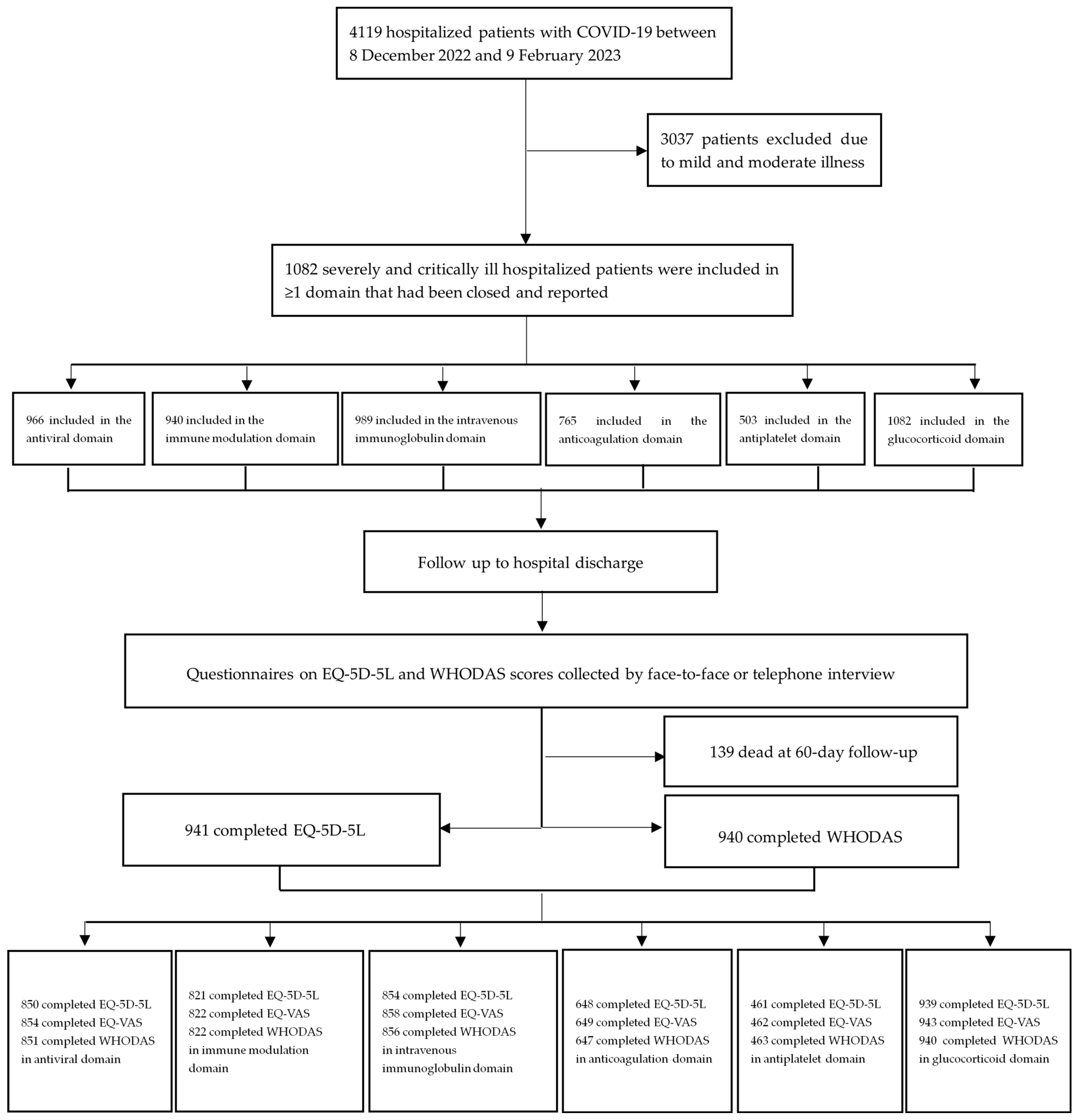
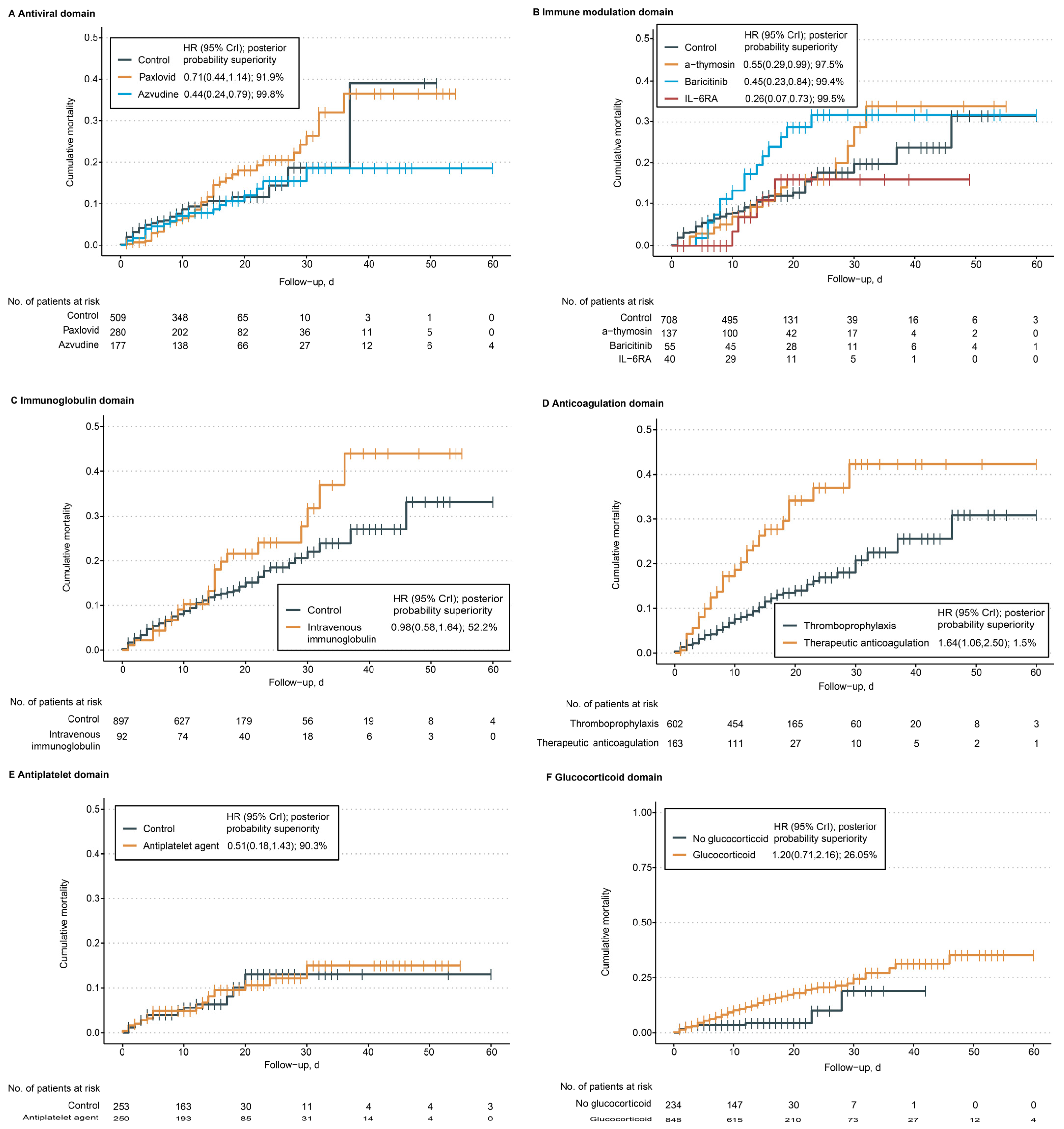
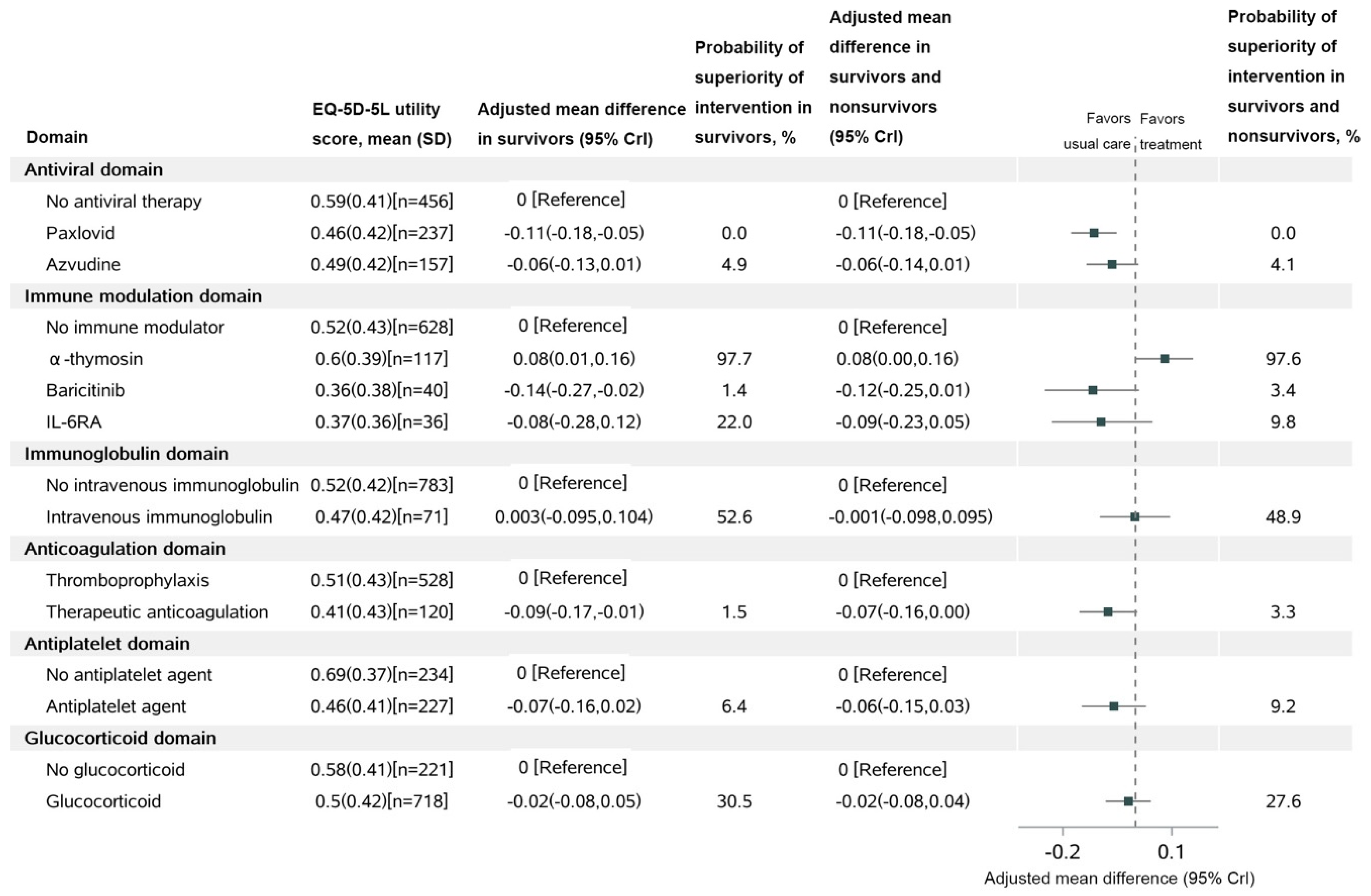
Background: The sixty-day effects of initial composite interventions for the treatment of severely and critically ill patients with COVID-19 are not fully assessed. Methods: Using a Bayesian piecewise exponential model, we analyzed the 60-day mortality, health-related quality of life (HRQoL), and disability in 1082 severely and critically ill patients with COVID-19 between 8 December 2022 and 9 February 2023 in Shanghai, China. The final 60-day follow-up was completed on 10 April 2023. Results: Among 1082 patients (mean age, 78.0 years, 421 [38.9%] women), 139 patients (12.9%) died within 60 days. Azvudine had a 99.8% probability of improving 2-month survival (adjusted HR, 0.44 [95% credible interval, 0.24–0.79]), and Paxlovid had a 91.9% probability of improving 2-month survival (adjusted HR, 0.71 [95% credible interval, 0.44–1.14]) compared with the control. IL-6 receptor antagonist, baricitinib and a-thymosin each had a high probability of benefit (99.5%, 99.4%, and 97.5%, respectively) compared to their controls, while the probability of trail-defined statistical futility (HR > 0.83) was high for therapeutic anticoagulation (99.8%; HR, 1.64 [95% CrI, 1.06–2.50]) and glucocorticoid (91.4%; HR, 1.20 [95% CrI, 0.71–2.16]). Paxlovid, Azvudine, and therapeutic anticoagulation showed a significant reduction in disability (p < 0.05) Conclusions: Among severely and critically ill patients with COVID-19 who received 1 or more therapeutic interventions, treatment with Azvudine had a high probability of improved 60-day mortality compared with the control, indicating its potential in a resource-limited scenario. Treatment with an IL-6 receptor antagonist, baricitinib, and a-thymosin also had high probabilities of benefit in improving 2-month survival, among which a-thymosin could improve HRQoL. Treatment with Paxlovid, Azvudine, and therapeutic anticoagulation could significantly reduce disability at day 60.
Keywords: COVID-19; Azvudine; Paxlovid; interleukin-6 receptor antagonist; baricitinib; α-thymosin; intravenous immunoglobulin COVID-19; Azvudine; Paxlovid; interleukin-6 receptor antagonist; baricitinib; α-thymosin; intravenous immunoglobulin