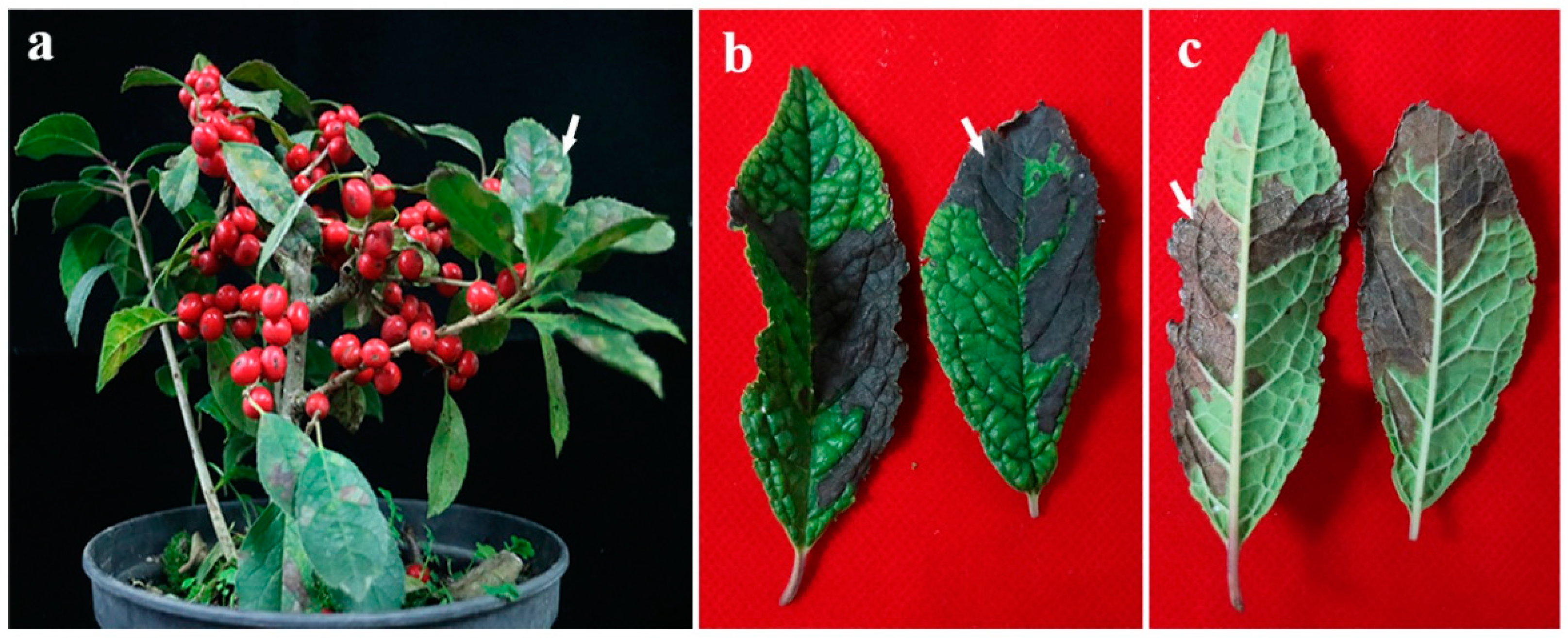
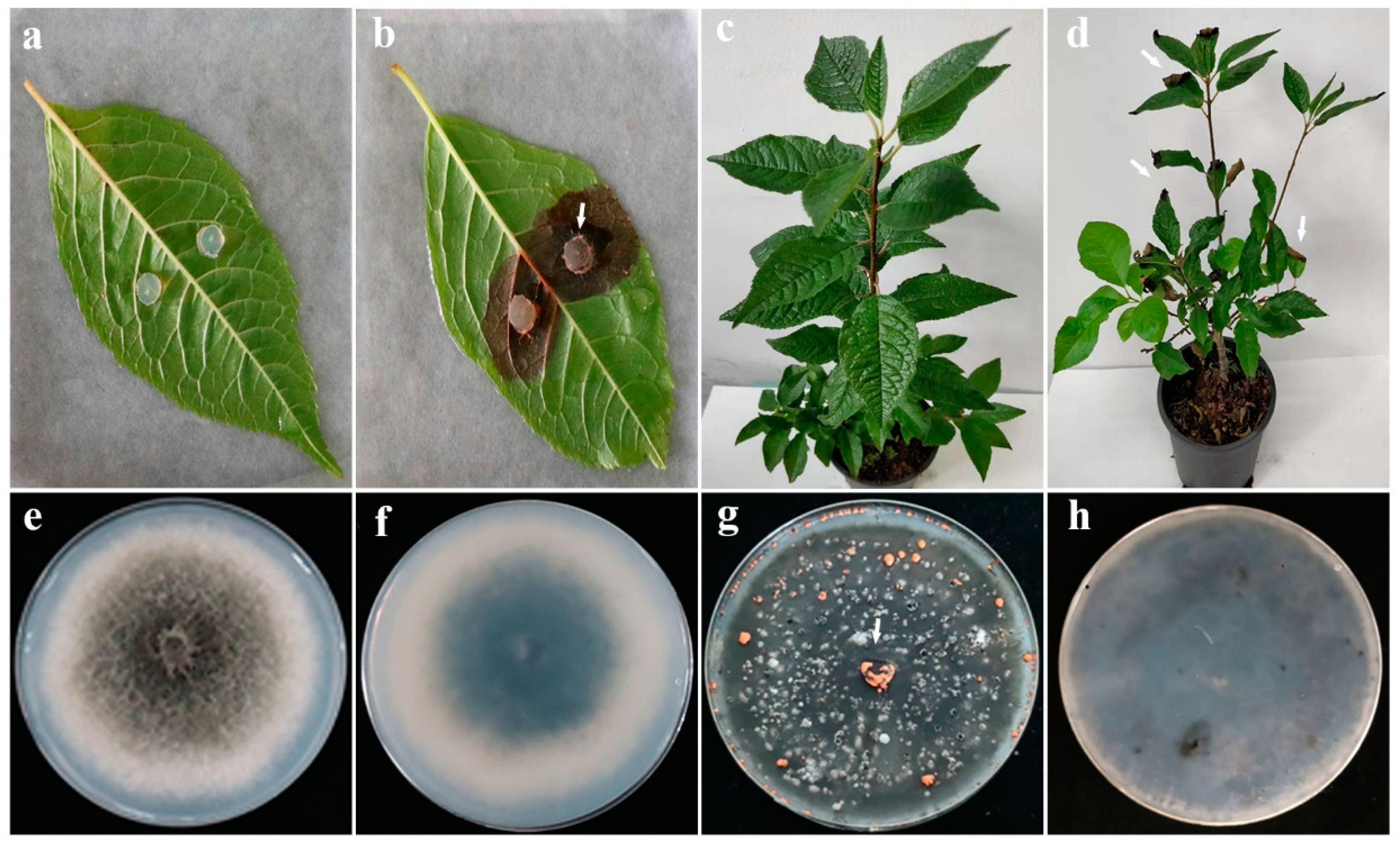
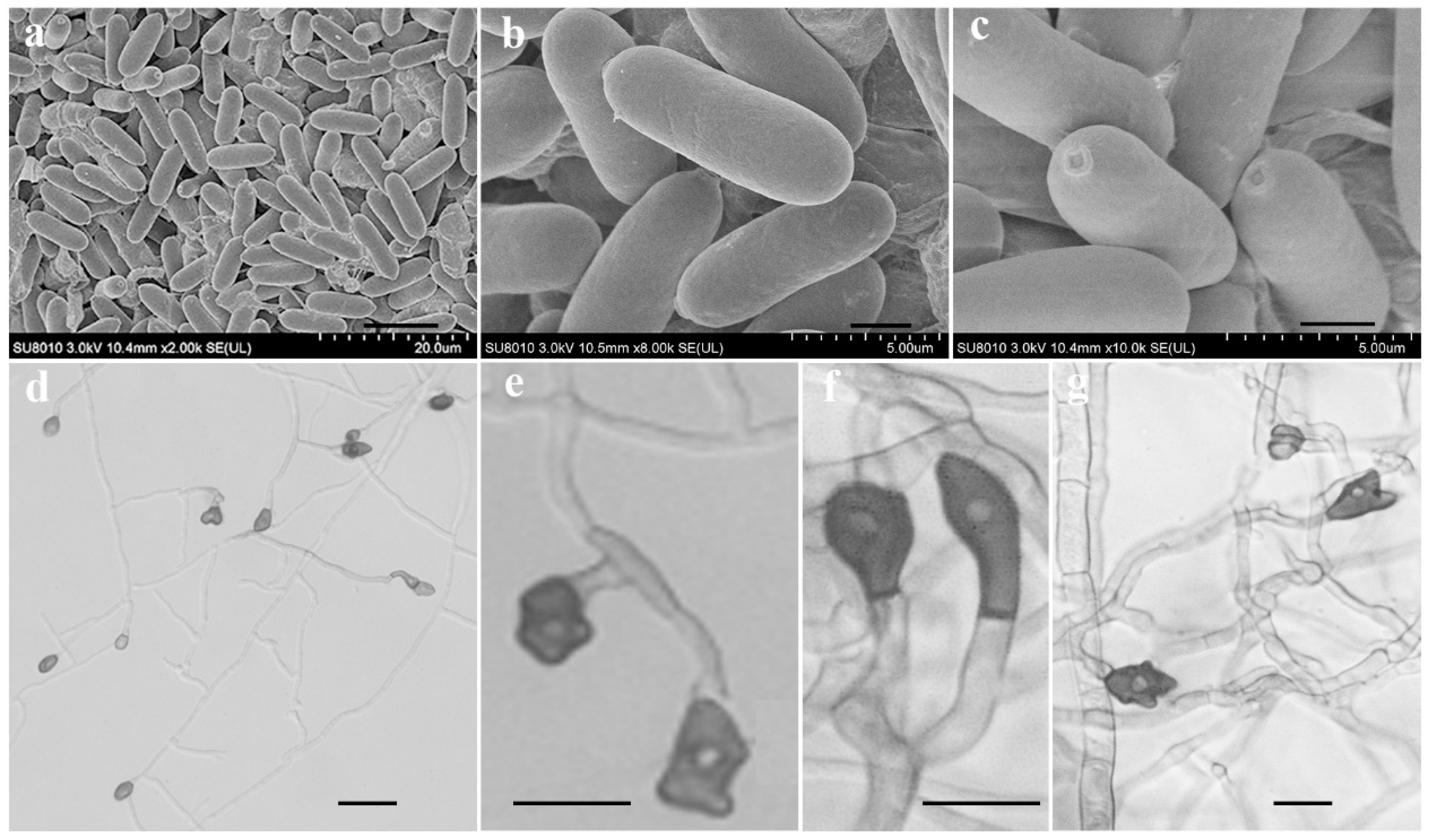
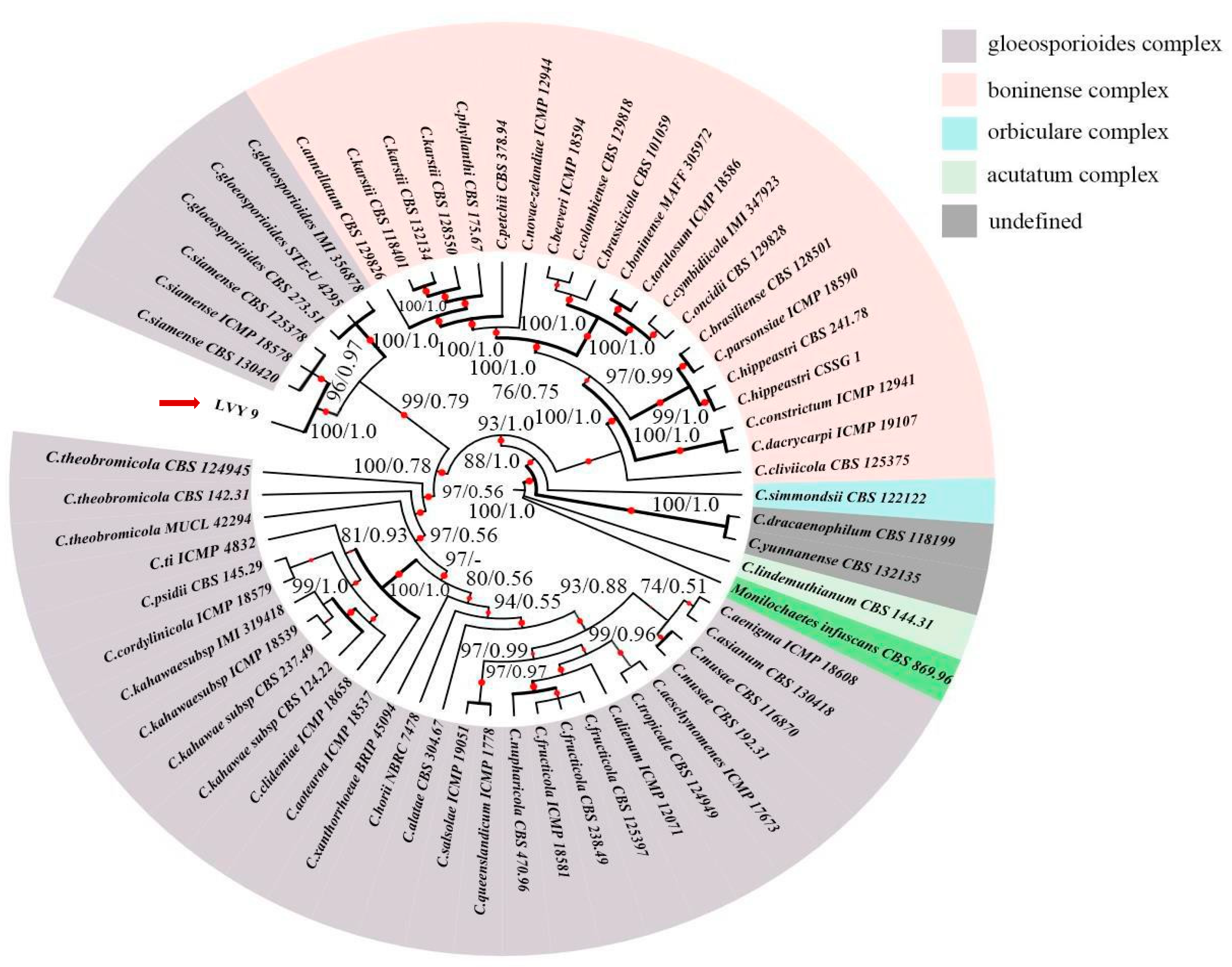
Colletotrichum siamense Strain LVY 9 Causing Spot Anthracnose on Winterberry Holly in China

Abstract
Share and Cite
Feng, L.; Zhang, Y.; Chen, W.; Mao, B. Colletotrichum siamense Strain LVY 9 Causing Spot Anthracnose on Winterberry Holly in China. Microorganisms 2023, 11, 976. https://doi.org/10.3390/microorganisms11040976
Feng L, Zhang Y, Chen W, Mao B. Colletotrichum siamense Strain LVY 9 Causing Spot Anthracnose on Winterberry Holly in China. Microorganisms. 2023; 11(4):976. https://doi.org/10.3390/microorganisms11040976
Chicago/Turabian StyleFeng, Lin, Yahui Zhang, Weiliang Chen, and Bizeng Mao. 2023. "Colletotrichum siamense Strain LVY 9 Causing Spot Anthracnose on Winterberry Holly in China" Microorganisms 11, no. 4: 976. https://doi.org/10.3390/microorganisms11040976
APA StyleFeng, L., Zhang, Y., Chen, W., & Mao, B. (2023). Colletotrichum siamense Strain LVY 9 Causing Spot Anthracnose on Winterberry Holly in China. Microorganisms, 11(4), 976. https://doi.org/10.3390/microorganisms11040976