Article

Predicting the Postmortem Interval Based on Gravesoil Microbiome Data and a Random Forest Model

1
College of Life Sciences, Nanjing Agricultural University, Nanjing 210095, China
2
College of Resource and Environment, Nanjing Agricultural University, Nanjing 210095, China
3
Institute of Forensic Science, Ministry of Public Security, Beijing 100038, China
4
Key Laboratory of Forensic Genetics of Ministry of Public Security, Beijing 100038, China
5
College of Horticulture, Nanjing Agricultural University, Nanjing 210095, China
*
Authors to whom correspondence should be addressed.
These authors contributed equally to this work.
Microorganisms 2023, 11(1), 56; https://doi.org/10.3390/microorganisms11010056

Submission received: 31 October 2022 / Revised: 11 December 2022 / Accepted: 20 December 2022 / Published: 24 December 2022
(This article belongs to the Collection Biodegradation and Environmental Microbiomes)

Abstract

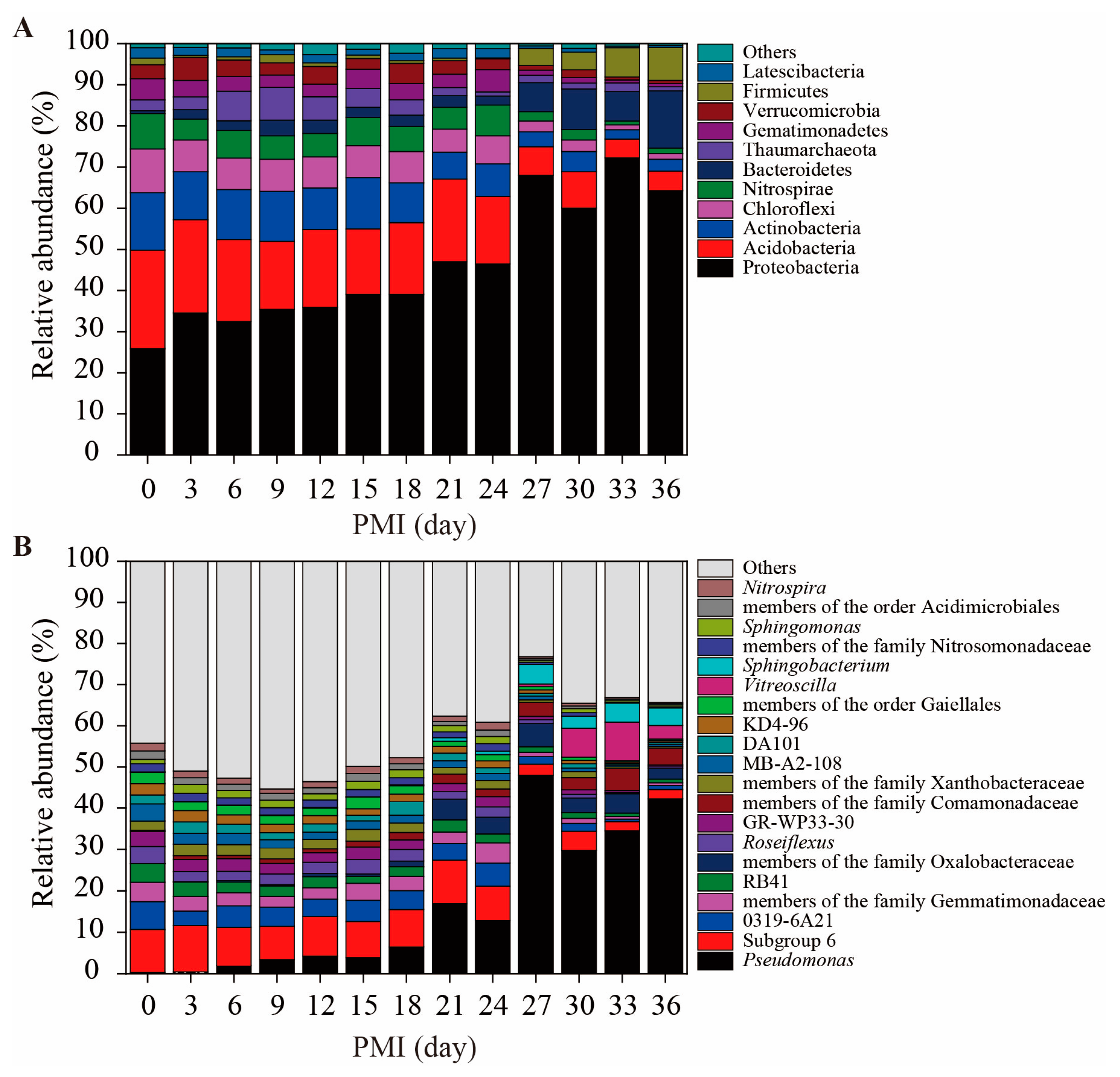
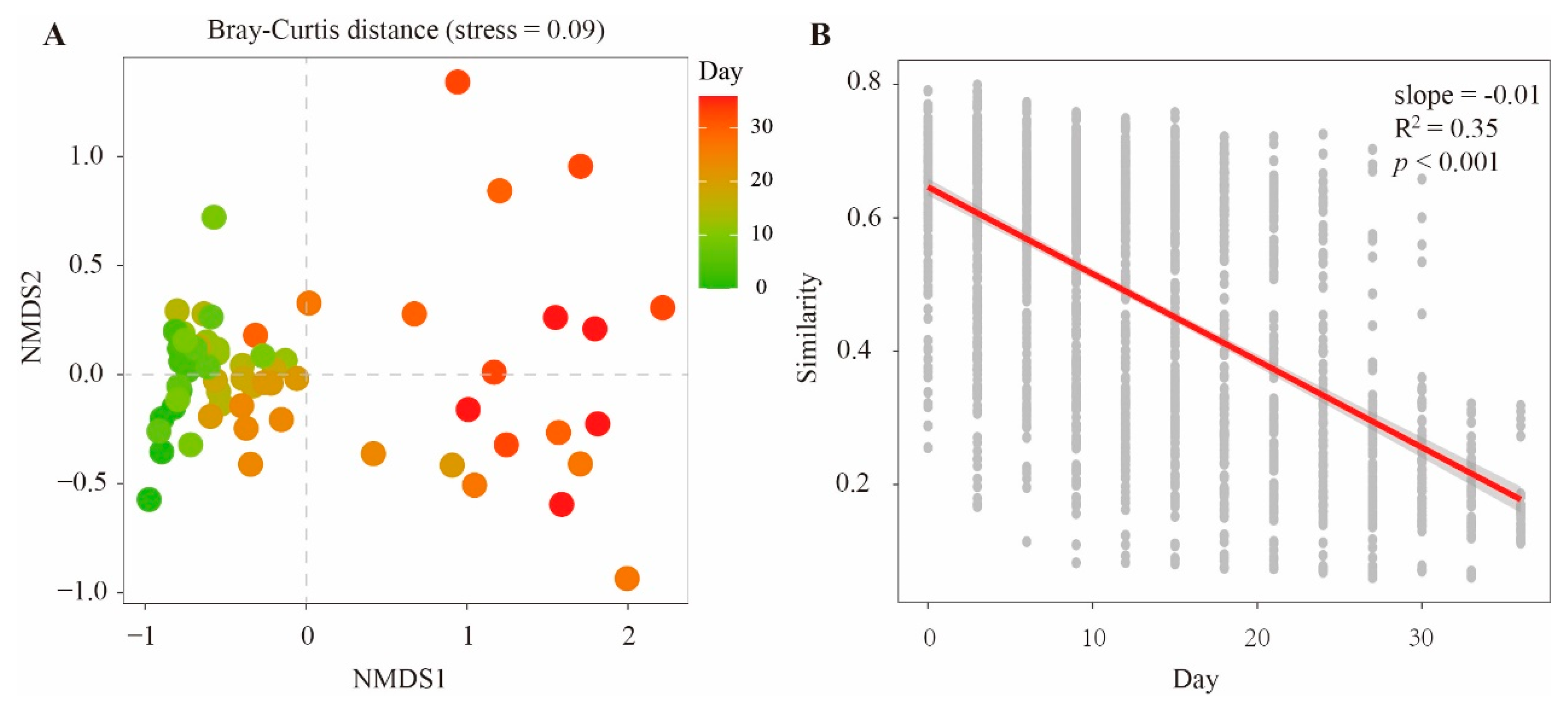
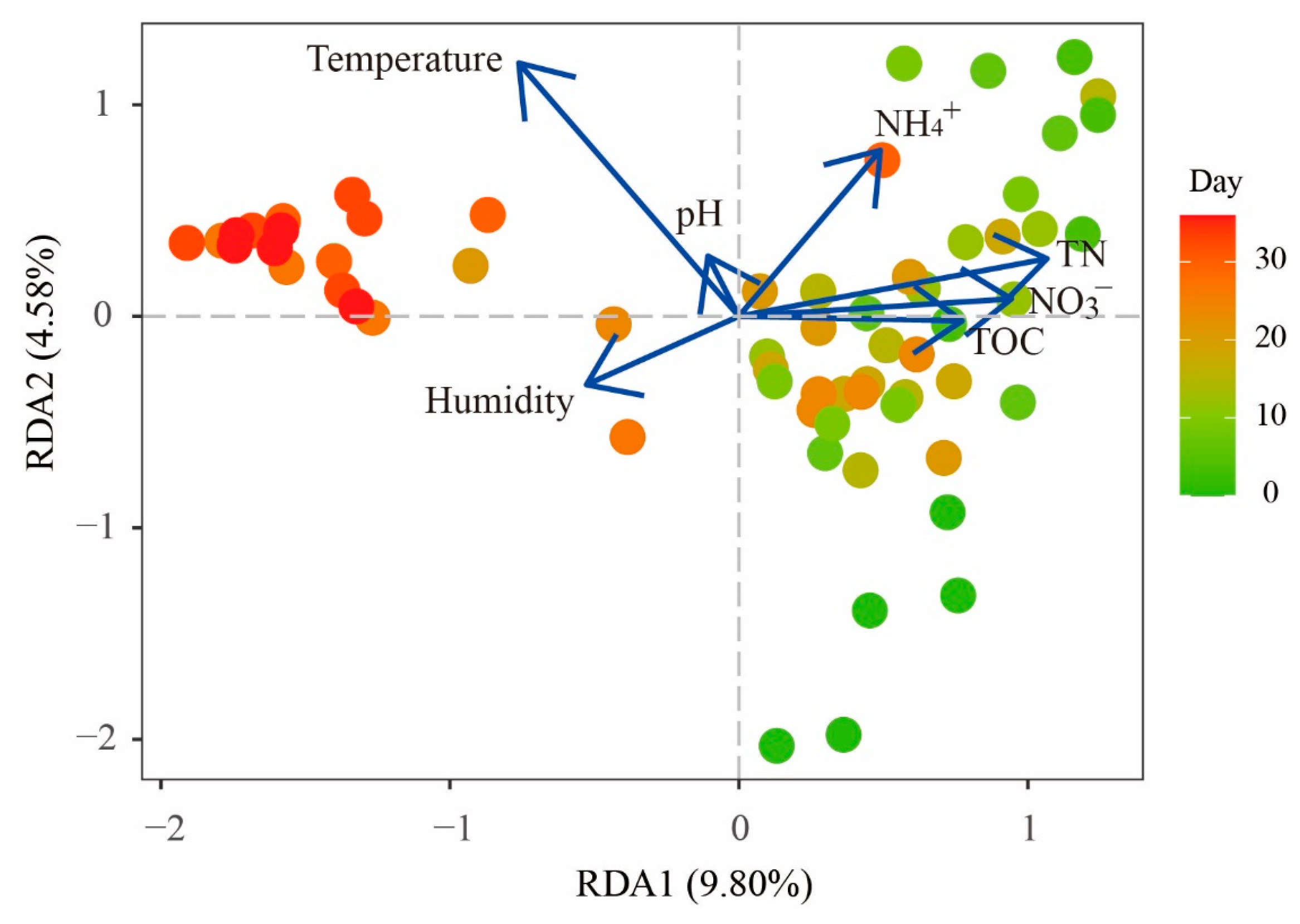
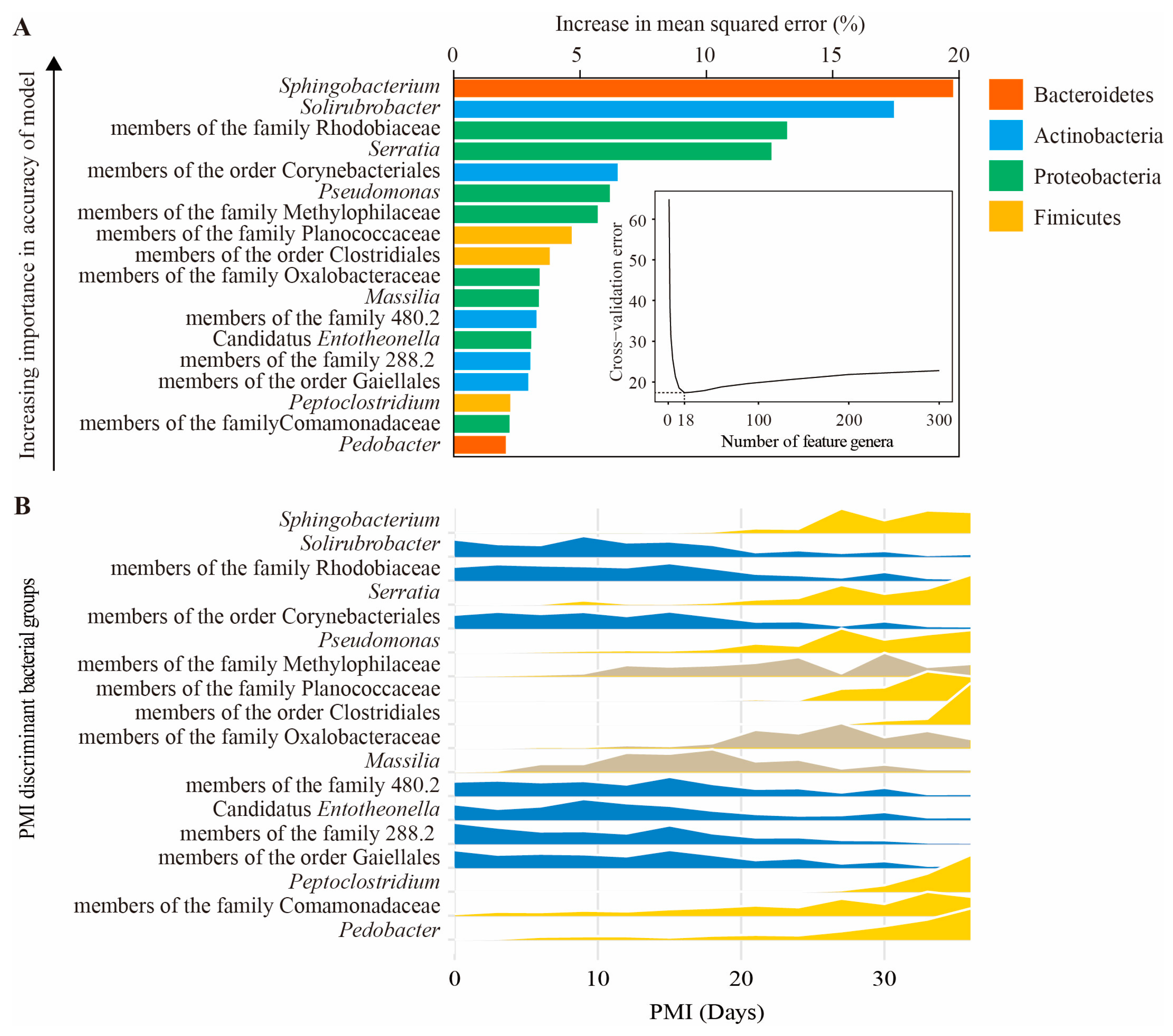
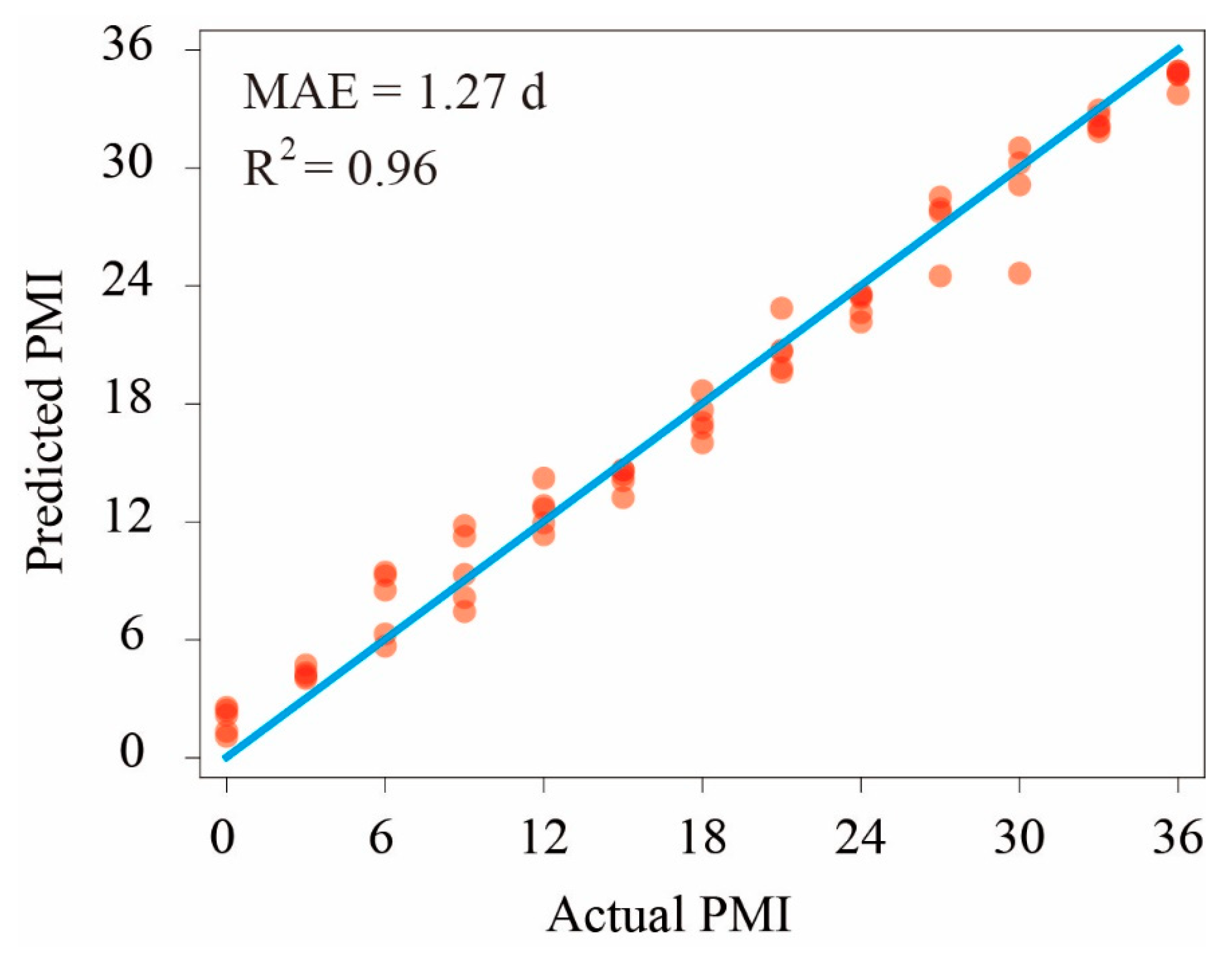
The estimation of a postmortem interval (PMI) is particularly important for forensic investigations. The aim of this study was to assess the succession of bacterial communities associated with the decomposition of mouse cadavers and determine the most important biomarker taxa for estimating PMIs. High-throughput sequencing was used to investigate the bacterial communities of gravesoil samples with different PMIs, and a random forest model was used to identify biomarker taxa. Redundancy analysis was used to determine the significance of environmental factors that were related to bacterial communities. Our data showed that the relative abundance of Proteobacteria, Bacteroidetes and Firmicutes showed an increasing trend during decomposition, but that of Acidobacteria, Actinobacteria and Chloroflexi decreased. At the genus level, Pseudomonas was the most abundant bacterial group, showing a trend similar to that of Proteobacteria. Soil temperature, total nitrogen, NH4+-N and NO3-N levels were significantly related to the relative abundance of bacterial communities. Random forest models could predict PMIs with a mean absolute error of 1.27 days within 36 days of decomposition and identified 18 important biomarker taxa, such as Sphingobacterium, Solirubrobacter and Pseudomonas. Our results highlighted that microbiome data combined with machine learning algorithms could provide accurate models for predicting PMIs in forensic science and provide a better understanding of decomposition processes.
Keywords: postmortem interval; decomposition; bacterial community; machine learning algorithm postmortem interval; decomposition; bacterial community; machine learning algorithm