Article

Comparative Genomic Analyses of New and Old World Viscerotropic Leishmanine Parasites: Further Insights into the Origins of Visceral Leishmaniasis Agents


by
Fernando Tobias Silveira
1,2,*,†,
Edivaldo Costa Sousa Junior
1,
Rodrigo Vellasco Duarte Silvestre
3,
Thiago Vasconcelos dos Santos
1,
Wilfredo Sosa-Ochoa
4,
Concepción Zúniga Valeriano
5,
Patrícia Karla Santos Ramos
1,
Samir Mansour Moraes Casseb
6,
Luciana Vieira do Rêgo Lima
1,
Marliane Batista Campos
1,
Vania Lucia da Matta
7,
Claudia Maria Gomes
7,
Gabriela V. Araujo Flores
7,
Carmen M. Sandoval Pacheco
7,
Carlos Eduardo Corbett
7 and
Márcia Dalastra Laurenti
7,†
1
Parasitology Department, Evandro Chagas Institute, Ananindeua 67030-000, Pará State, Brazil
2
Tropical Medicine Nucleus, Federal University of Pará, Belém 66055-240, Pará State, Brazil
3
Virology Department, Evandro Chagas Institute, Ananindeua 67030-000, Pará State, Brazil
4
Microbiology School, National Autonomous University of Honduras, Tegucigalpa 11101, Honduras
5
Health Surveillance Department, School Hospital, Autonomous University of Honduras, Tegucigalpa 11101, Honduras
6
Arbovirology Department, Evandro Chagas Institute, Ananindeua 67030-000, Pará State, Brazil
7
Pathology Laboratory of Infectious Diseases (LIM50), Pathology Department, Medical School, São Paulo University, São Paulo 1246-903, São Paulo State, Brazil
*
Author to whom correspondence should be addressed.
These authors contributed equally to this work.
Microorganisms 2023, 11(1), 25; https://doi.org/10.3390/microorganisms11010025

Submission received: 27 October 2022 / Revised: 5 December 2022 / Accepted: 16 December 2022 / Published: 21 December 2022

Abstract

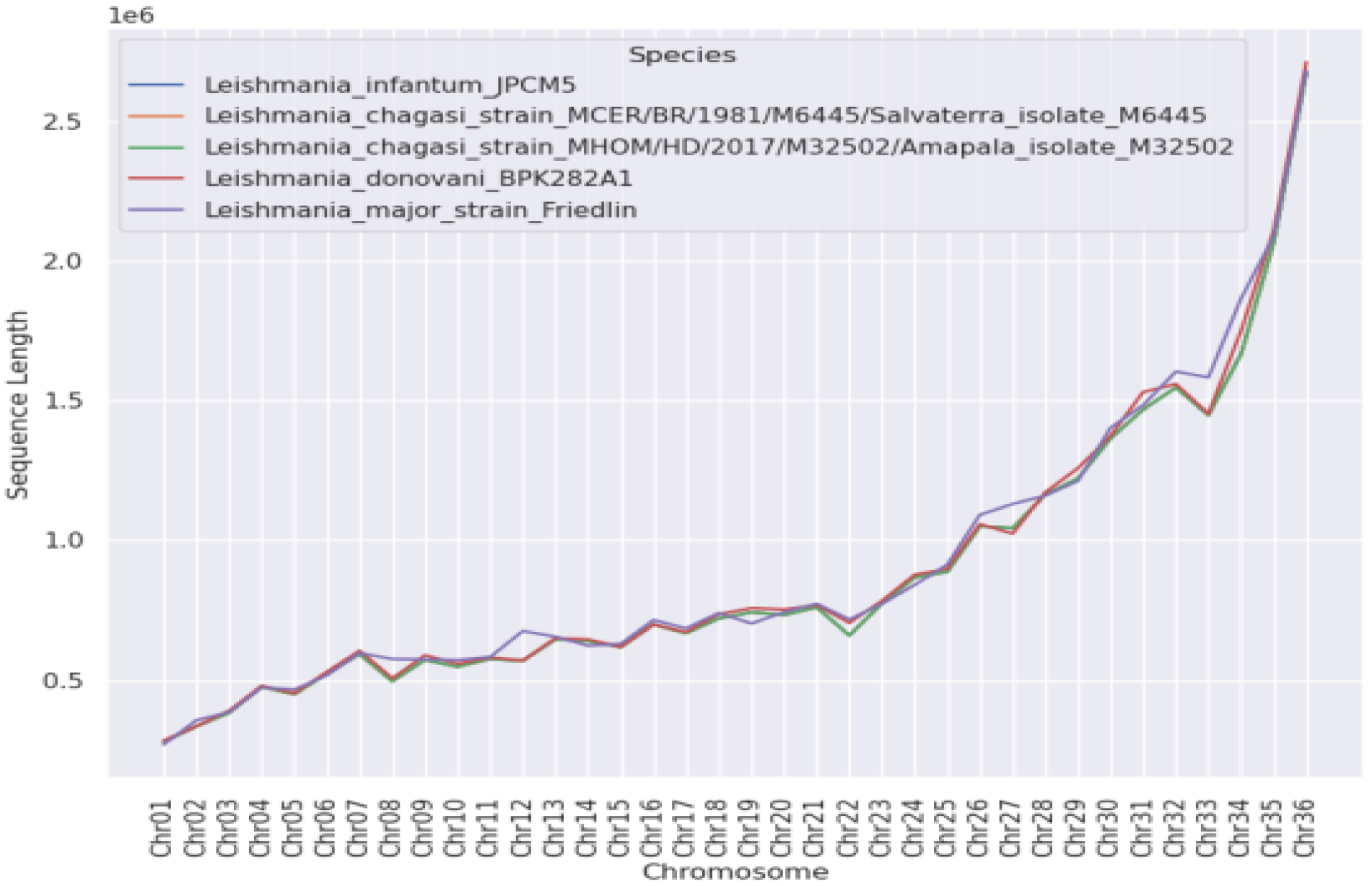
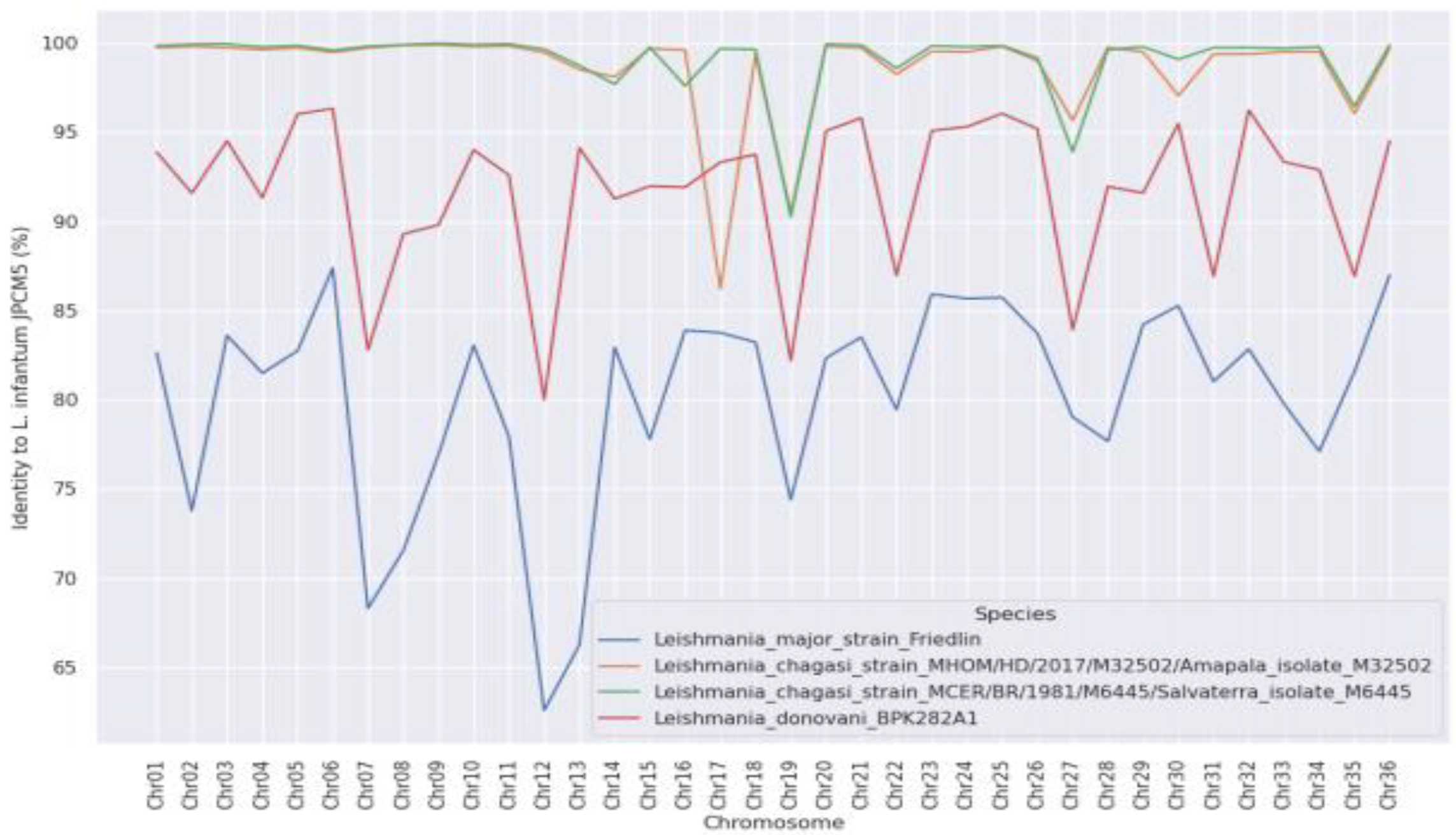
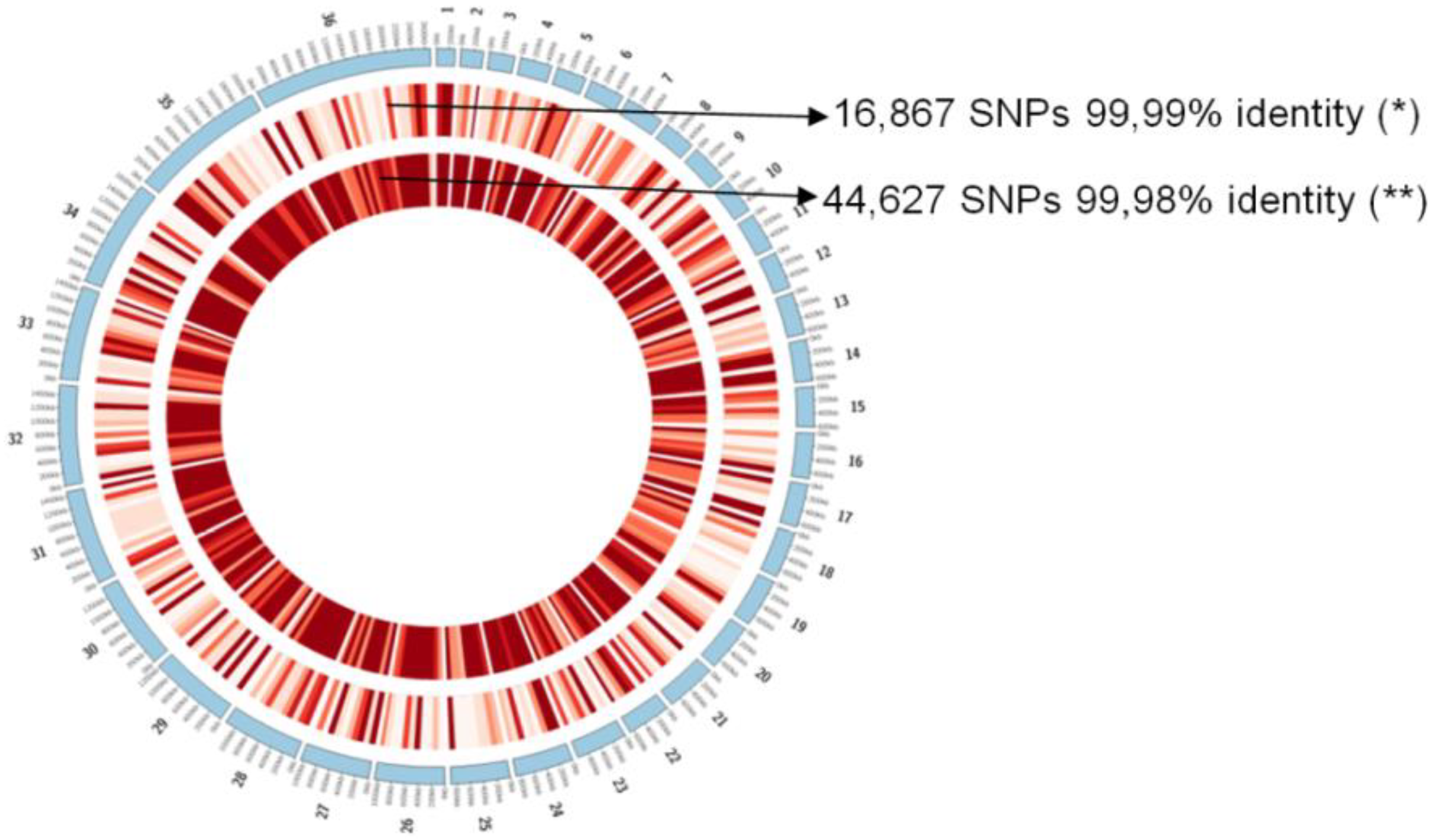
Visceral leishmaniasis (VL), also known as kala-azar, is an anthropozoonotic disease affecting human populations on five continents. Aetiologic agents belong to the Leishmania (L.) donovani complex. Until the 1990s, three leishmanine parasites comprised this complex: L. (L.) donovani Laveran & Mesnil 1903, L. (L.) infantum Nicolle 1908, and L. (L.) chagasi Lainson & Shaw 1987 (=L. chagasi Cunha & Chagas 1937). The VL causal agent in the New World (NW) was previously identified as L. (L.) chagasi. After the development of molecular characterization, however, comparisons between L. (L.) chagasi and L. (L.) infantum showed high similarity, and L. (L.) chagasi was then regarded as synonymous with L. (L.) infantum. It was, therefore, suggested that L. (L.) chagasi was not native to the NW but had been introduced from the Old World by Iberian colonizers. However, in light of ecological evidence from the NW parasite’s enzootic cycle involving a wild phlebotomine vector (Lutzomyia longipalpis) and a wild mammal reservoir (the fox, Cerdocyon thous), we have recently analyzed by molecular clock comparisons of the DNA polymerase alpha subunit gene the whole-genome sequence of L. (L.) infantum chagasi of the most prevalent clinical form, atypical dermal leishmaniasis (ADL), from Honduras (Central America) with that of the same parasite from Brazil (South America), as well as those of L. (L.) donovani (India) and L. (L.) infantum (Europe), which revealed that the Honduran parasite is older ancestry (382,800 ya) than the parasite from Brazil (143,300 ya), L. (L.) donovani (33,776 ya), or L. (L.) infantum (13,000 ya). In the present work, we have now amplified the genomic comparisons among these leishmanine parasites, exploring mainly the variations in the genome for each chromosome, and the number of genomic SNPs for each chromosome. Although the results of this new analysis have confirmed a high genomic similarity (~99%) among these parasites [except L. (L.) donovani], the Honduran parasite revealed a single structural variation on chromosome 17, and the highest frequency of genomic SNPs (more than twice the number seen in the Brazilian one), which together to its extraordinary ancestry (382,800 ya) represent strong evidence that L. (L.) chagasi/L. (L.) infantum chagasi is, in fact, native to the NW, and therefore with valid taxonomic status. Furthermore, the Honduran parasite, the most ancestral viscerotropic leishmanine parasite, showed genomic and clinical taxonomic characteristics compatible with a new Leishmania species causing ADL in Central America.
Keywords: New and Old World; visceral leishmaniasis agents; Leishmania (L.) donovani; Leishmania (L.) infantum; Leishmania (L.) infantum chagasi; comparative genomic analyses New and Old World; visceral leishmaniasis agents; Leishmania (L.) donovani; Leishmania (L.) infantum; Leishmania (L.) infantum chagasi; comparative genomic analyses