Article

The Gill Microbiota of Argopecten purpuratus Scallop Is Dominated by Symbiotic Campylobacterota and Upwelling Intensification Differentially Affects Their Abundance


by
Roxana González
1,†,
Carlos Henríquez-Castillo
1,2,†,
Karin B. Lohrmann
3,
María Soledad Romero
3,
Laura Ramajo
2,3,4,
Paulina Schmitt
5 and
Katherina Brokordt
1,2,6,*
1
Laboratorio de Fisiología y Genética Marina (FIGEMA), Departamento de Acuicultura, Facultad de Ciencias del Mar, Universidad Católica del Norte, Larrondo 1281, Coquimbo 1781421, Chile
2
Centro de Estudios Avanzados en Zonas Áridas (CEAZA), Larrondo 1281, Coquimbo 1781421, Chile
3
Departamento de Biología Marina, Facultad de Ciencias del Mar, Universidad Católica del Norte (UCN), Coquimbo 1781421, Chile
4
Center for Climate and Resilience Research (CR)2, Santiago 8370449, Chile
5
Grupo de Marcadores Inmunológicos, Laboratorio de Genética e Inmunología Molecular, Instituto de Biología, Pontificia Universidad Católica de Valparaíso, Valparaíso 2340000, Chile
6
Centro de Innovación Acuícola (AquaPacífico), Universidad Católica del Norte, Larrondo 1281, Coquimbo 1781421, Chile
*
Author to whom correspondence should be addressed.
These authors contributed equally to this work.
Microorganisms 2022, 10(12), 2330; https://doi.org/10.3390/microorganisms10122330

Submission received: 17 October 2022 / Revised: 18 November 2022 / Accepted: 19 November 2022 / Published: 25 November 2022
(This article belongs to the Special Issue Host–Bacteria Interactions in Aquaculture Systems)

Abstract

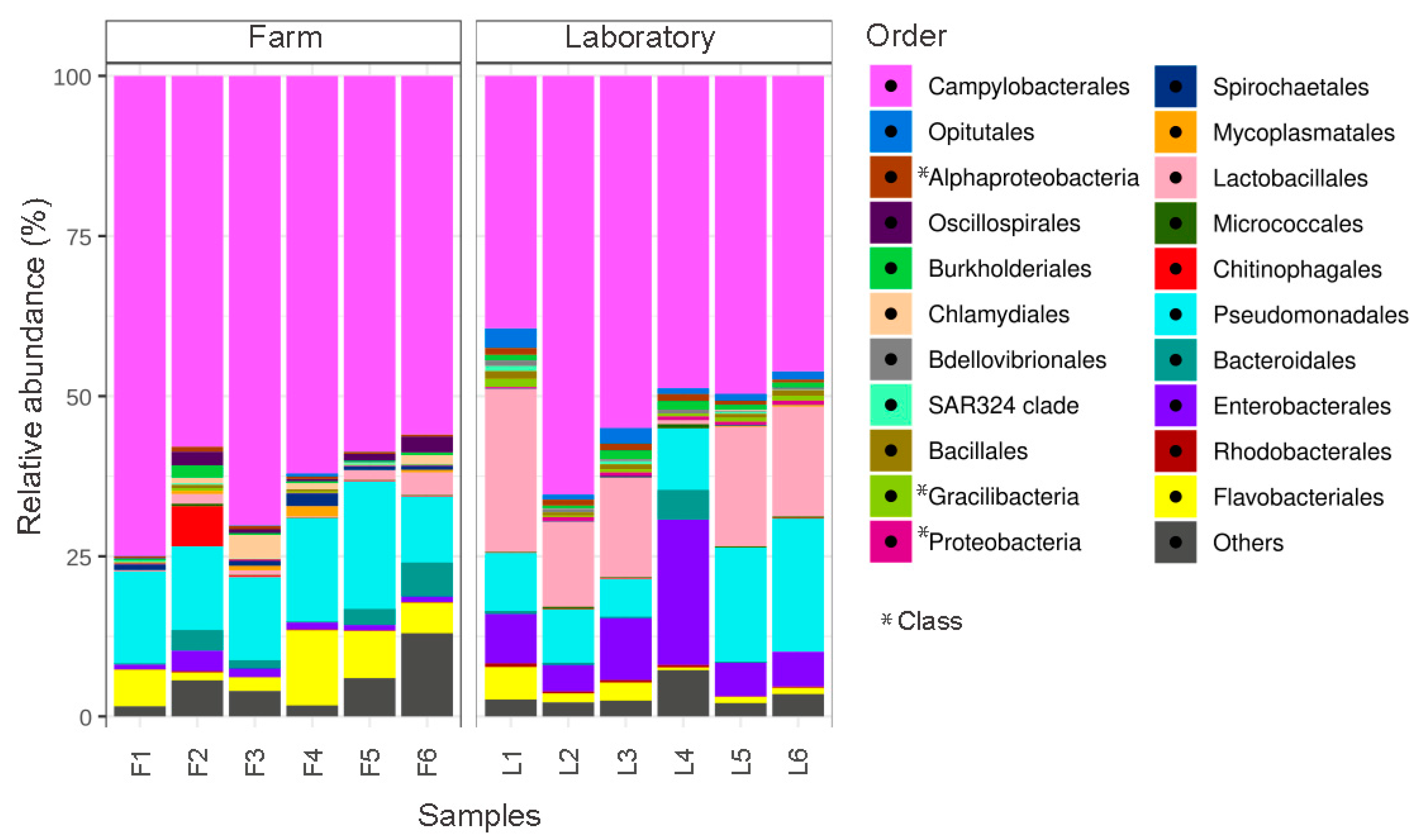
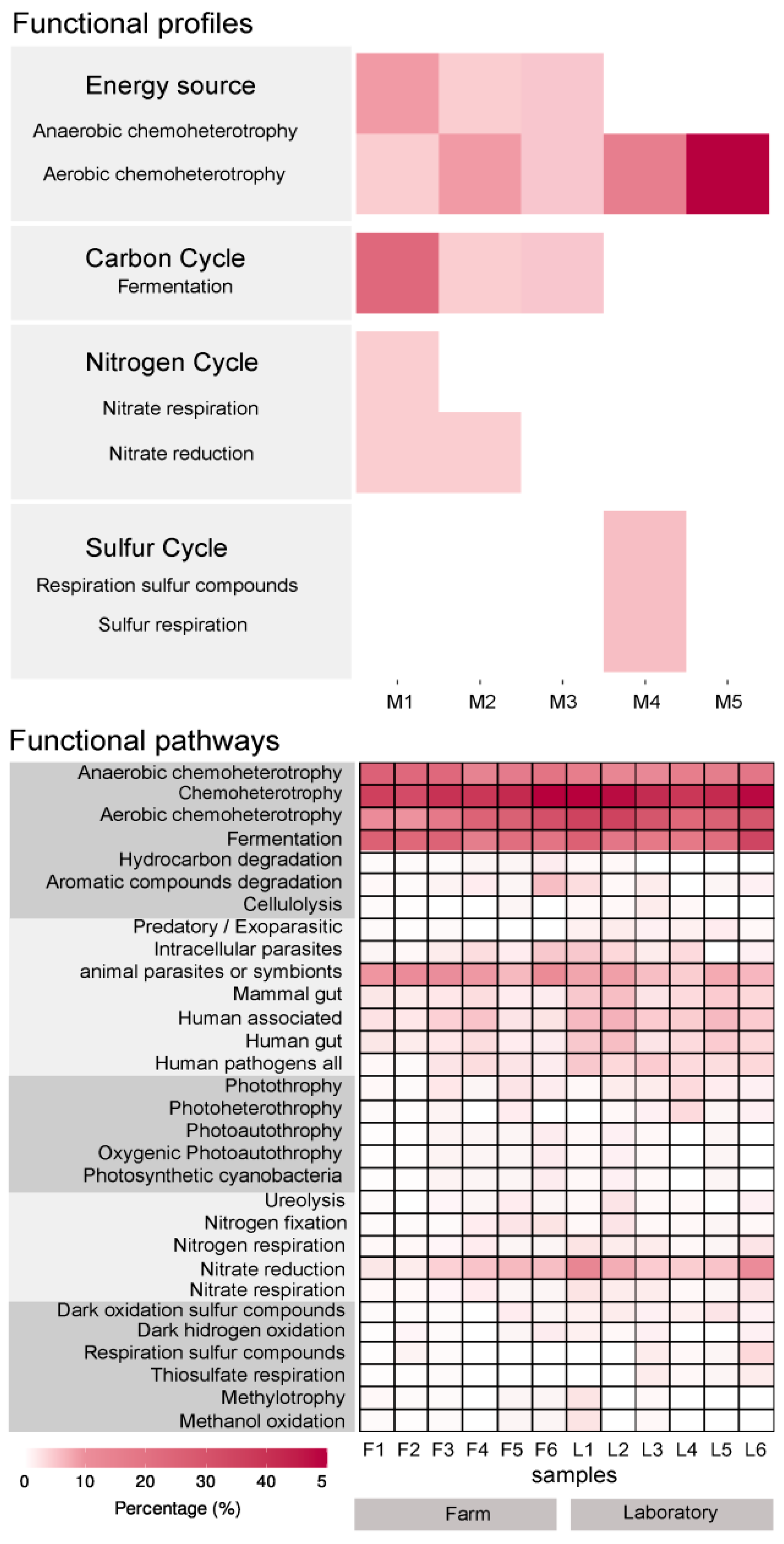
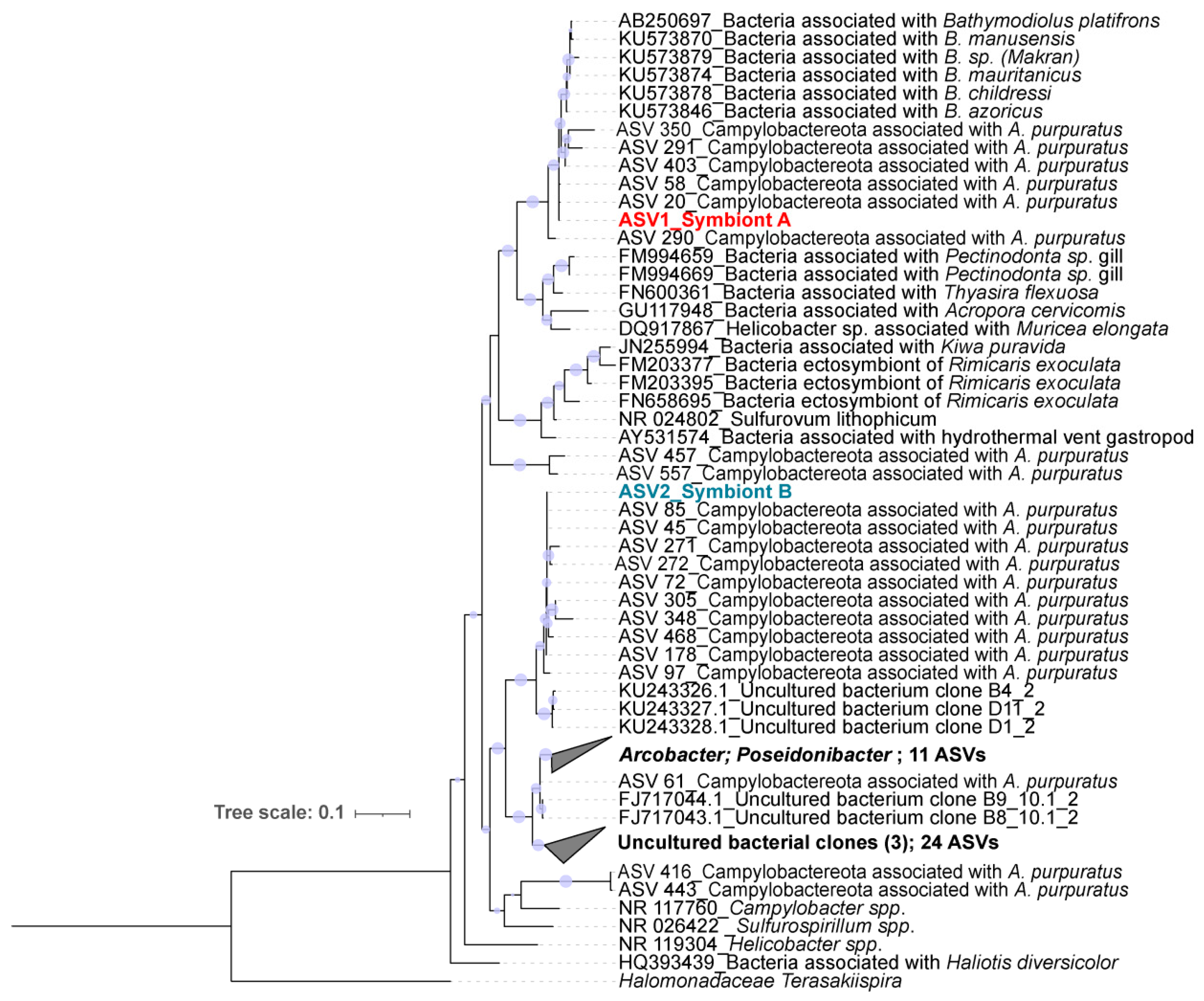
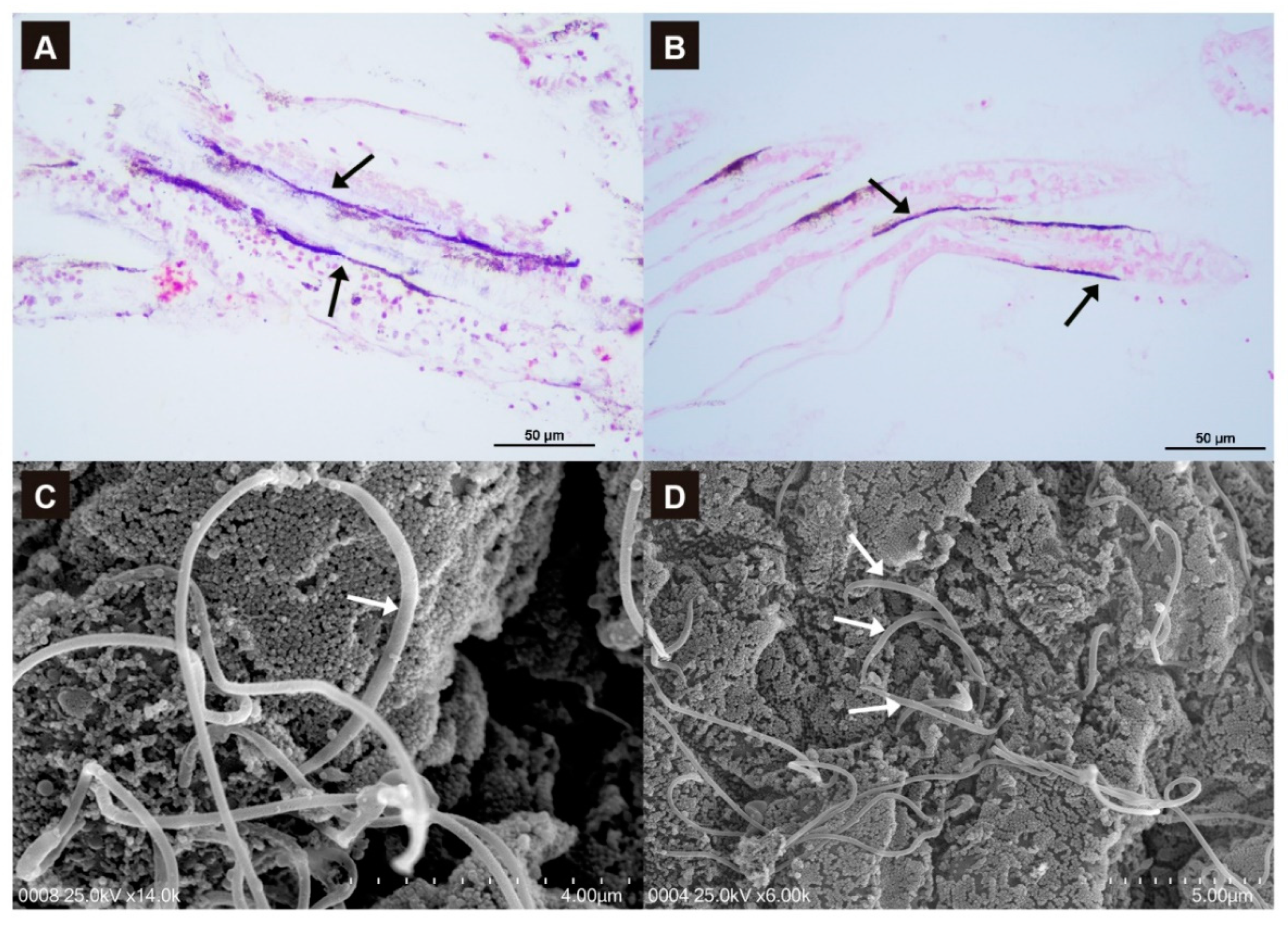
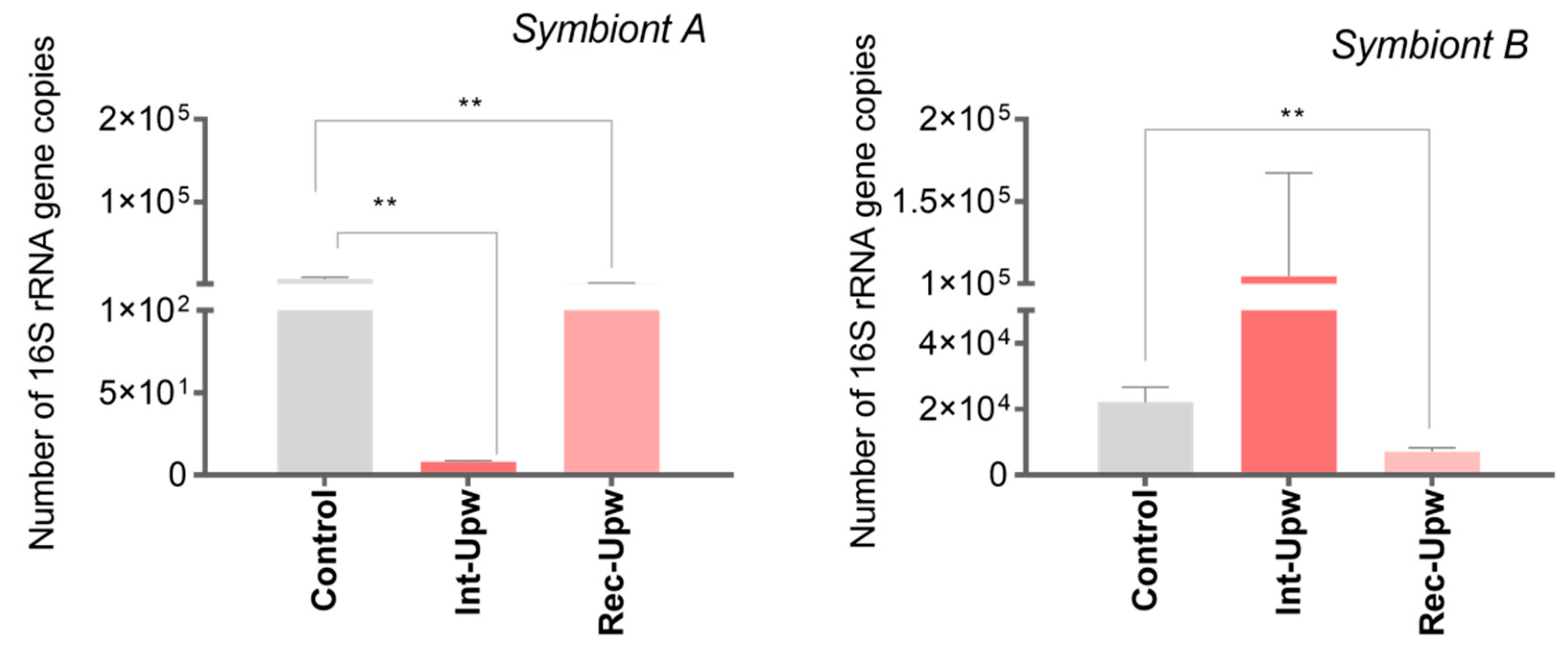
Despite the great importance of gills for bivalve mollusks (respiration, feeding, immunity), the microbiota associated with this tissue has barely been characterized in scallops. The scallop Argopecten purpuratus is an important economic resource that is cultivated in areas where coastal upwelling is intensifying by climate change, potentially affecting host-microbiota interactions. Thus, we first characterized the bacterial community present in gills from cultivated scallops (by 16S rRNA gene amplicon sequencing) and assessed their stability and functional potential in animals under farm and laboratory conditions. Results showed that under both conditions the gill bacterial community is dominated by the phylum Campylobacterota (57%), which displays a chemoautotrophic potential that could contribute to scallop nutrition. Within this phylum, two phylotypes, namely symbionts A and B, were the most abundant; being, respectively, taxonomically affiliated to symbionts with nutritional functions in mussel gills, and to uncultured bacteria present in coral mucus. Additionally, in situ hybridization and scanning electron microscopy analyses allowed us to detect these symbionts in the gills of A. purpuratus. Given that shifts in upwelling phenology can cause disturbances to ecosystems, affecting bacteria that provide beneficial functions to the host, we further assessed the changes in the abundance of the two symbionts (via qPCR) in response to a simulated upwelling intensification. The exposure to combined decreasing values in the temperature, pH, and oxygen levels (upwelling conditions) favored the dominance of symbiont B over symbiont A; suggesting that symbiont abundances are modulated by these environmental changes. Overall, results showed that changes in the main Campylobacterota phylotypes in response to upwelling intensification could affect its symbiotic function in A. purpuratus under future climate change scenarios. These results provide the first insight into understanding how scallop gill-microbial systems adapt and respond to climate change stressors, which could be critical for managing health, nutrition, and scallop aquaculture productivity.
Keywords: microbiota; mollusks; Campylobacterota; symbiont; upwelling; climate change; scallop aquaculture microbiota; mollusks; Campylobacterota; symbiont; upwelling; climate change; scallop aquaculture