Article

Terrain-Adaptive Global Path Planning Method Based on Bidirectional Variable Neighborhood Search A*


1
National Key Laboratory of Automotive Chassis Integration and Bionics, Jilin University, Changchun 130022, China
2
College of Automotive Engineering, Jilin University, Changchun 130012, China
*
Author to whom correspondence should be addressed.
Actuators 2026, 15(7), 393; https://doi.org/10.3390/act15070393
Submission received: 29 May 2026 / Revised: 8 July 2026 / Accepted: 10 July 2026 / Published: 12 July 2026
(This article belongs to the Section Actuators for Robotics)

Abstract

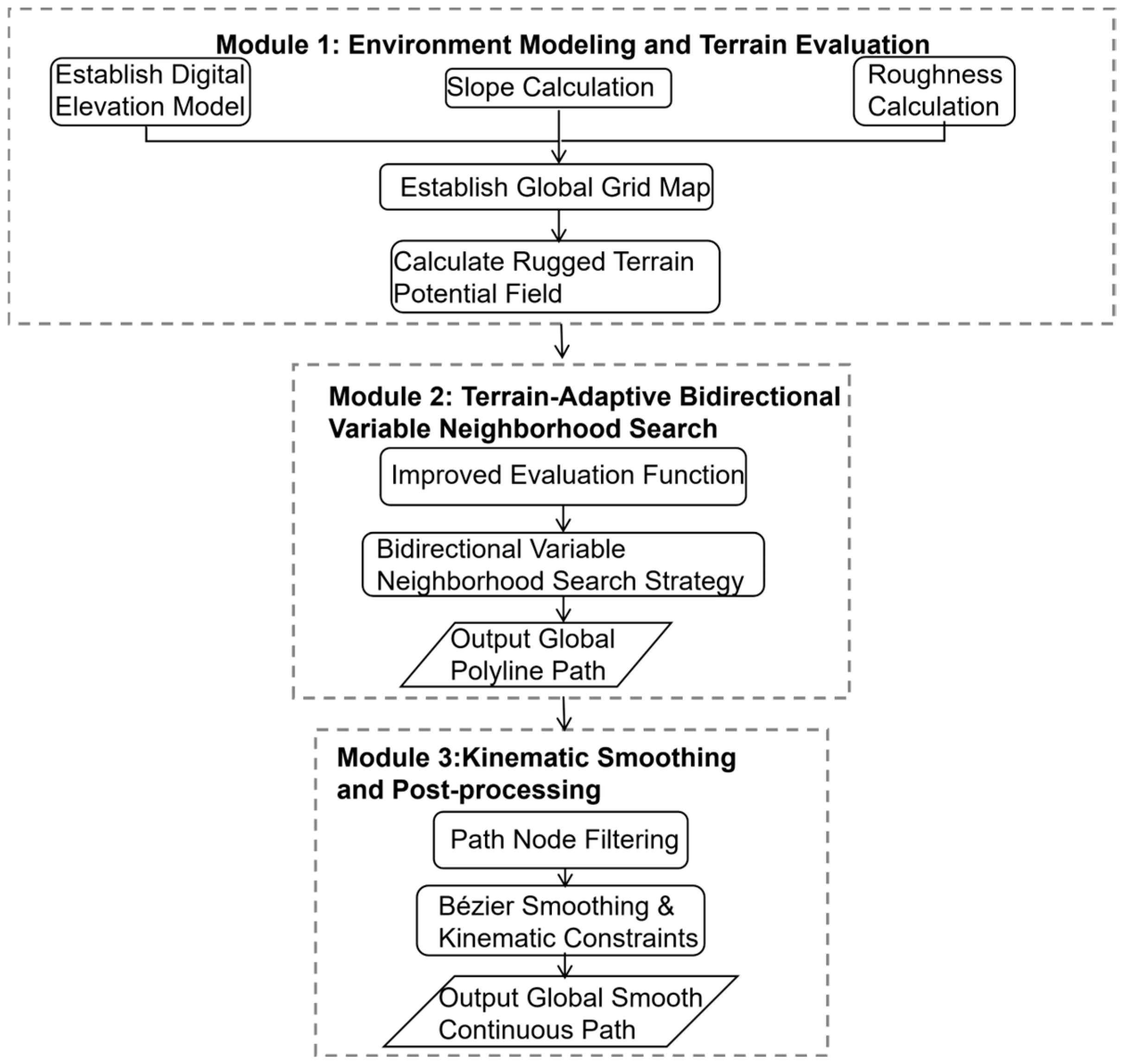
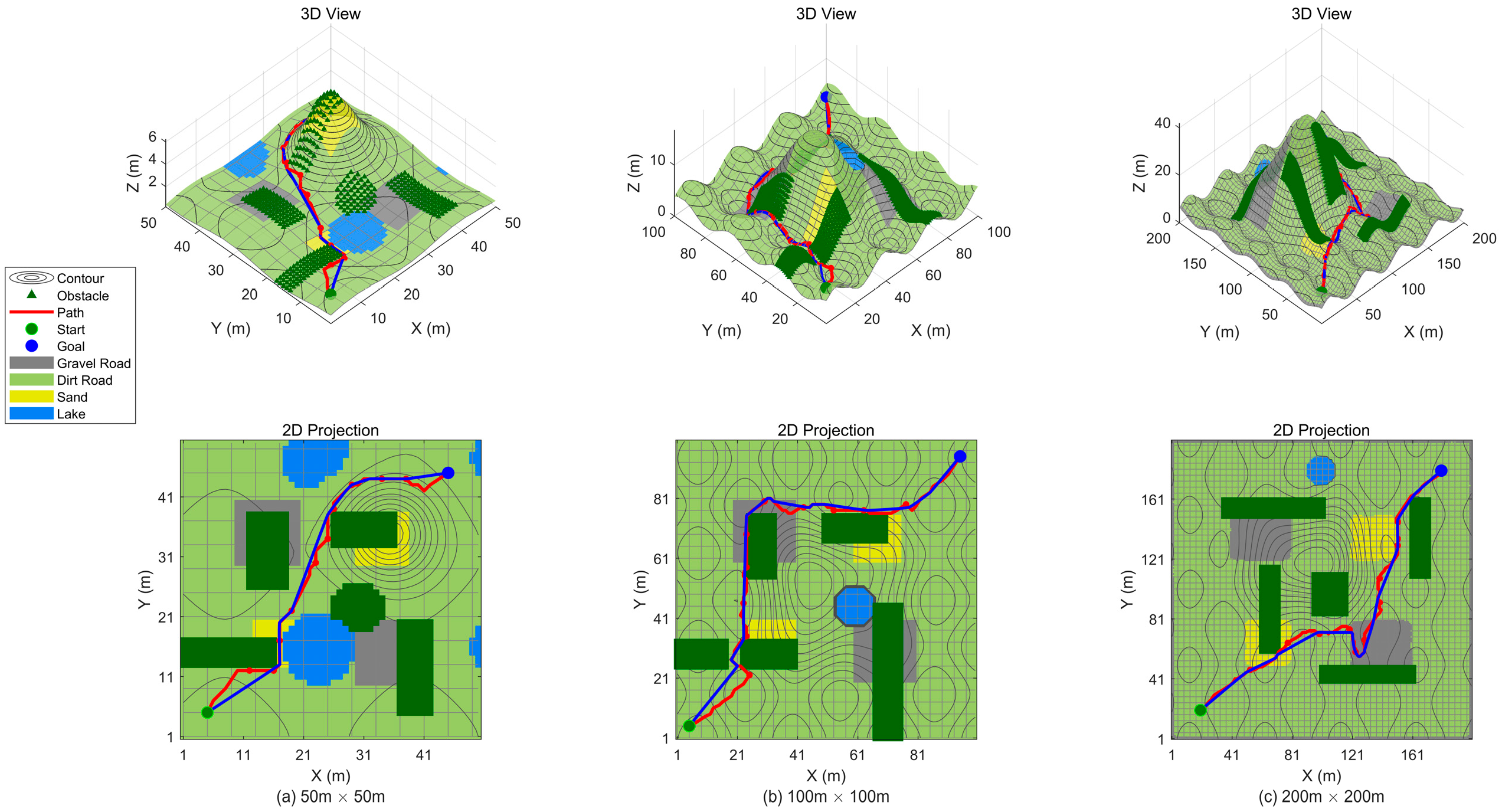
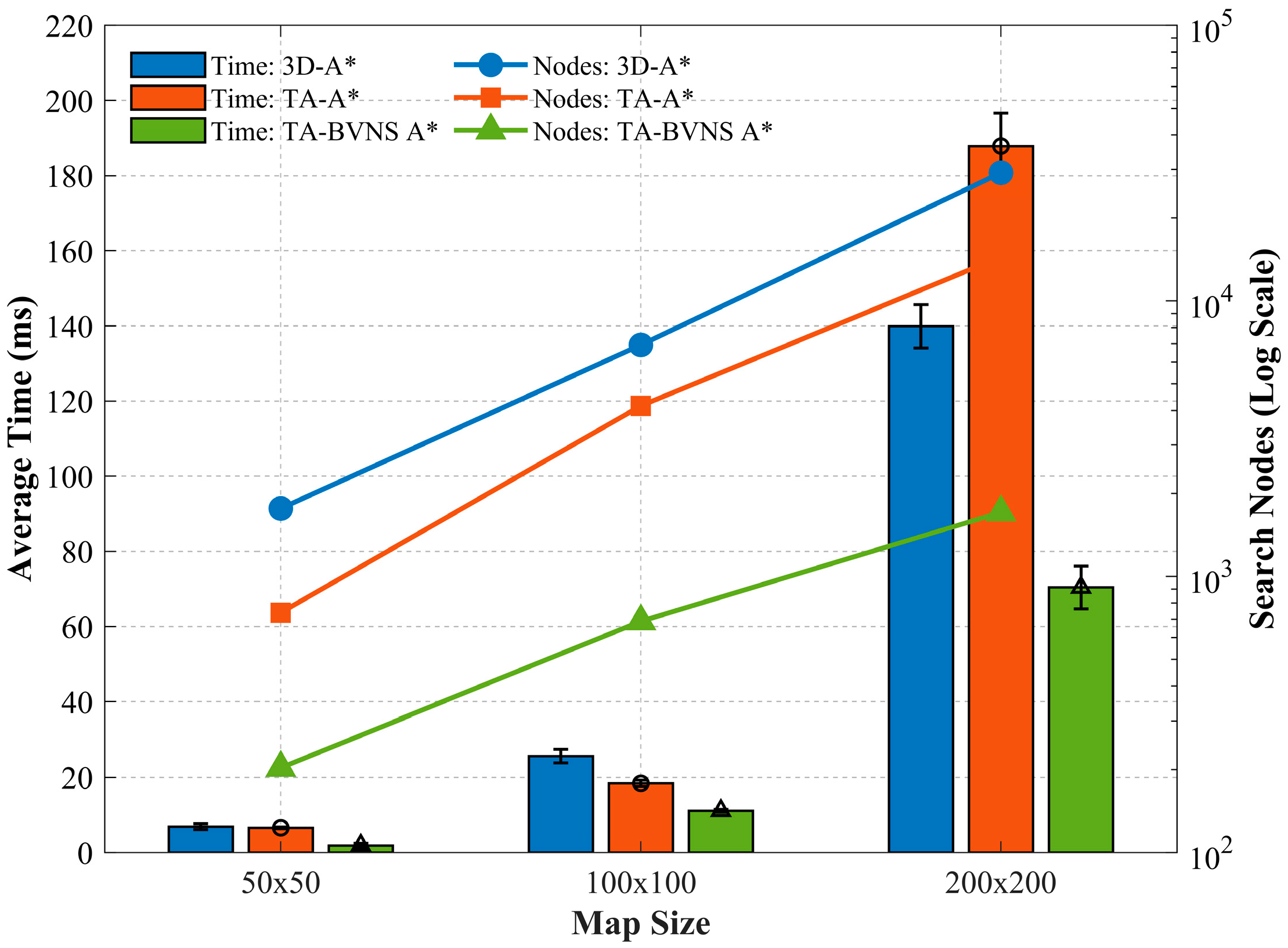
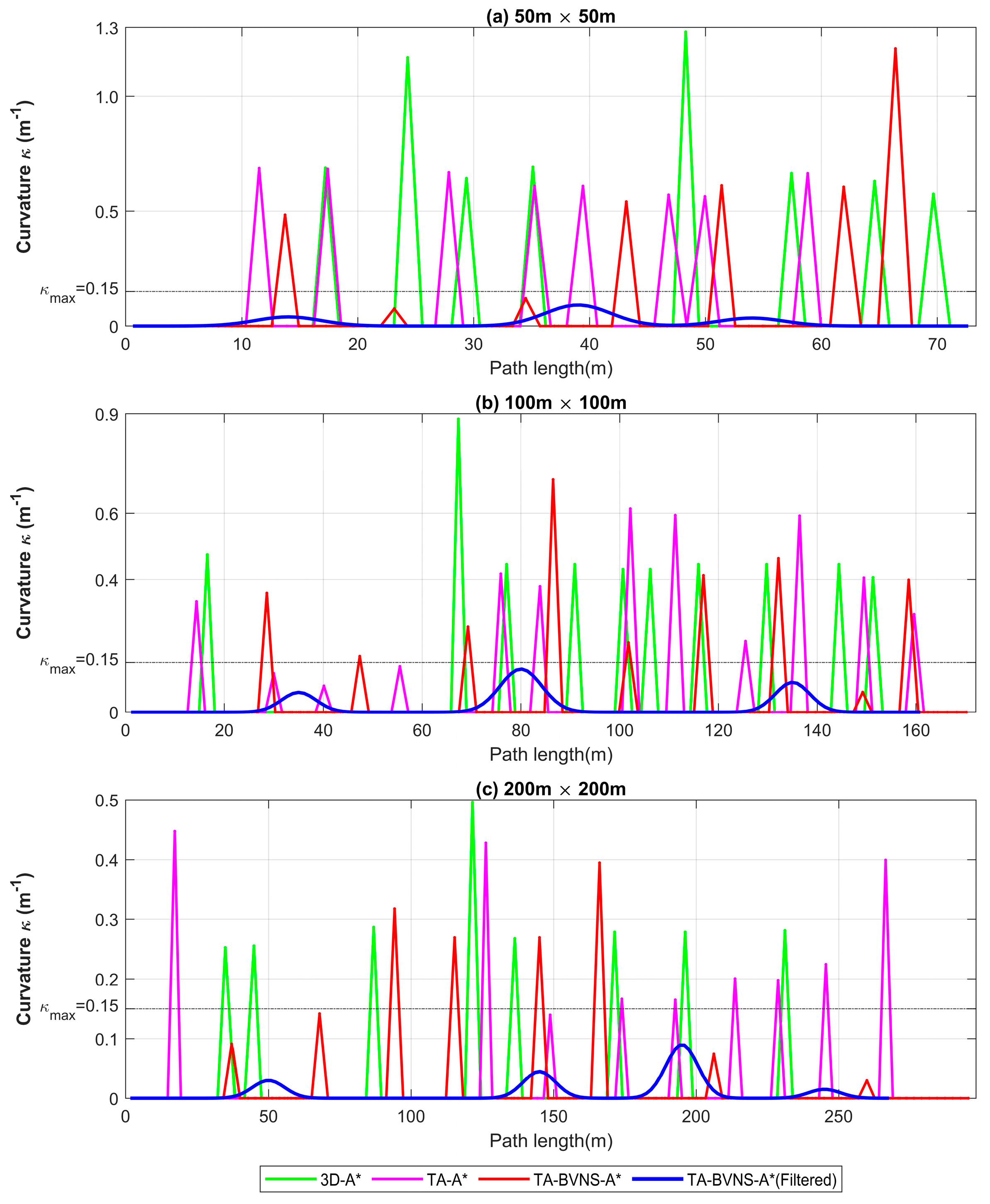
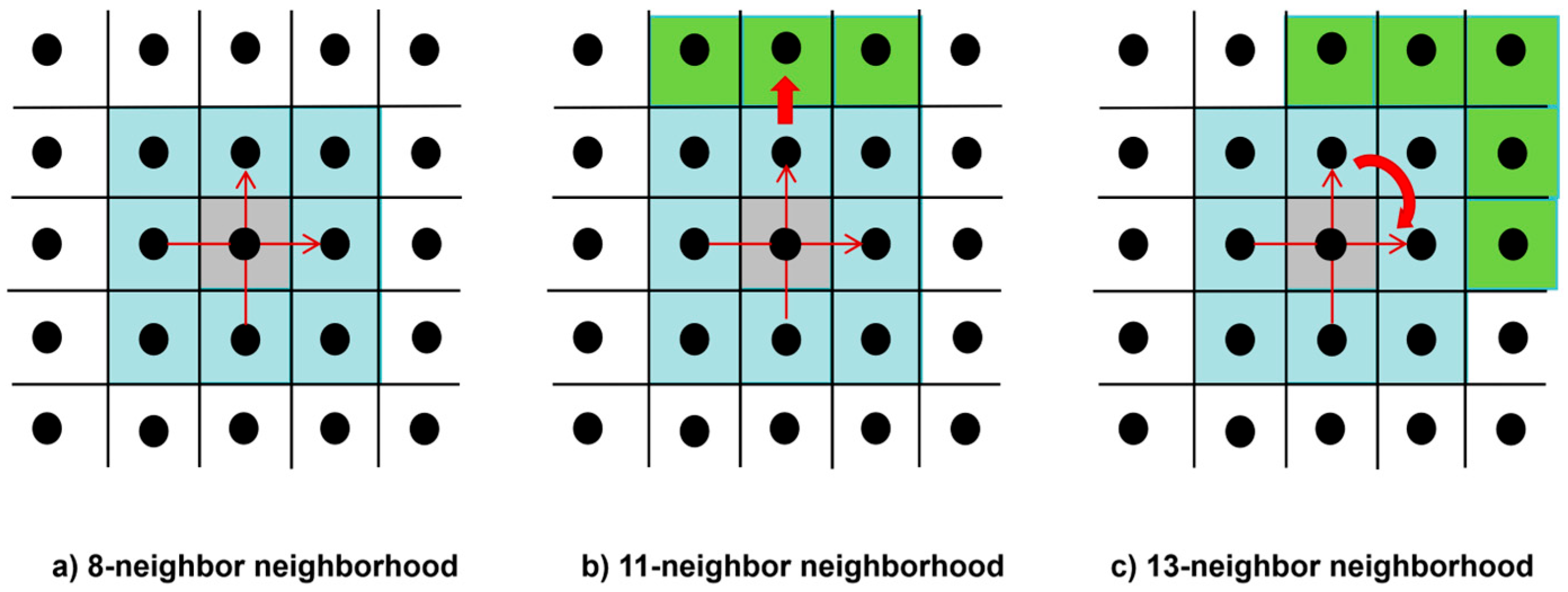
To address the issues of low efficiency and non-smooth paths of the A* algorithm in large-scale environments, a terrain-adaptive global path planning method based on Bidirectional Variable Neighborhood Search A* (Terrain-Adaptive Bidirectional Variable Neighborhood Search A*, TA-BVNS-A*) is proposed. Based on the Digital Elevation Model (DEM), the slope resistance and obstacle repulsive potential field are calculated to guide the path to circumvent high-risk areas. Bidirectional alternating search, exponential weighting, and variable neighborhood mechanisms are introduced into the heuristic search to prevent blind expansion. Furthermore, a “node filtering + Bezier smoothing constraint” strategy is employed for post-processing optimization. Multi-scale terrain simulations demonstrate that, after smoothing, the maximum front-wheel steering angle is reduced by over 60% on average, specifically reaching 65.16% in the 100 m × 100 m large-scale map, satisfying vehicle kinematic constraints. This method significantly reduces the number of search nodes, eliminates jagged polylines and redundant nodes, and outputs an efficient and smooth global path that conforms to kinematic constraints.
Keywords: off-road environment; path planning; bidirectional alternating search; terrain cost; variable neighborhood mechanism off-road environment; path planning; bidirectional alternating search; terrain cost; variable neighborhood mechanism