1. Introduction
As one of the world’s major fruits, apples are widely cultivated globally [
1]. With the continuous advancement of technology, harvesting robots have gradually become the optimal choice for mechanized apple harvesting in the agricultural sector [
2,
3,
4]. Among these, the six-degree-of-freedom (6-DOF) robotic arm serves as the core mechanism for executing harvesting, obstacle avoidance, and posture adjustment. Its motion efficiency and operational safety highly depend on high-quality three-dimensional (3D) spatial path-planning algorithms. However, due to the dense branches and leaves, the irregular distribution of obstacles, and the complicated distribution of target points within orchards, the path planning of the robotic arm faces significant challenges such as high-dimensional nonlinearity, strong constraints, and real-time processing requirements [
2]. Therefore, generating collision-free, safe, and smooth executable trajectories for robotic arms in complicated scenarios has become a crucial scientific problem in the research of intelligent harvesting robots.
At present, trajectory-planning strategies for robotic arms primarily fall into three categories: traditional approaches [
5], graph-based search techniques [
6], and sampling-based methods [
7]. Among them, the artificial potential field (APF) method, proposed by Khatib, is representative of traditional methods [
8]. This method is computationally efficient, but it is highly susceptible to falling into local minima or experiencing target unreachability when obstacles exist near the target point [
9]. To address such issues, numerous scholars have conducted corresponding improvement studies. For instance, Zhuang et al. [
10] proposed an obstacle avoidance path-planning method integrating APF and the A* algorithm, which improved obstacle avoidance efficiency and path smoothness by incorporating the IRRT (Improved Rapidly Exploring Random Tree) algorithm for path replanning and optimizing the potential field function. Wang et al. [
11] proposed the DAPF-RRT path-planning method, combining dynamic step sizes with APF, which effectively resolved the randomness problem of node expansion and improved planning accuracy by using attractive and repulsive functions to constrain the node growth direction.
To overcome the inherent tendency of conventional techniques to become trapped in local optima, researchers have increasingly adopted globally optimal graph-based search strategies, including the A*, Dijkstra, and D* algorithms. These frameworks are highly valued for their adaptable and predictable trajectory generation [
12]. For instance, Gu et al. [
13] engineered an upgraded Dijkstra approach for mobile robot navigation, leveraging ultrasonic sensing to enable real-time path updates. Similarly, Ji et al. [
14] implemented a modified Dijkstra strategy to establish preliminary routes for apple-picking robots, which were subsequently refined through an advanced ant colony optimization. Furthermore, a customized hybrid D* Lite framework introduced by Jiang et al. [
15] for orchard harvesters notably augmented both the stability of global routes and the success rates of collision avoidance. Nevertheless, as the dimensionality of the map expands or the orchard environment becomes increasingly cluttered, the computational overhead of these graph-search techniques grows exponentially. Consequently, they struggle to satisfy the strict real-time execution constraints required for the online control of robotic manipulators.
In the motion planning of multi-DOF robotic arms in high-dimensional spaces, sampling-based methods are widely adopted [
16,
17]. Among them, sampling-based path-planning methods represented by Rapidly-exploring Random Trees (RRTs) [
18,
19] have become a research hotspot due to their simple structural formulation and ability to rapidly generate feasible paths. These methods can obtain feasible solutions relatively quickly in low-dimensional spaces. However, when confronting the high-dimensional complicated configuration space of a robotic arm, the search space grows exponentially, leading to a sharp decline in planning efficiency [
20]. Pure random sampling not only struggles to balance search efficiency and path quality, but its high randomness also increases search blindness, often resulting in tortuous paths that deviate from the optimal solution [
21,
22,
23]. Consequently, how to balance search efficiency and optimality while maintaining the probabilistic completeness of RRT has emerged as the focal point of current research.
In recent years, scholars have proposed various improvement strategies addressing the sampling efficiency and path optimization problems of the RRT algorithm, primarily focusing on two aspects: heuristic spatial restriction and goal-oriented expansion. In terms of spatial restriction, Gammell et al. [
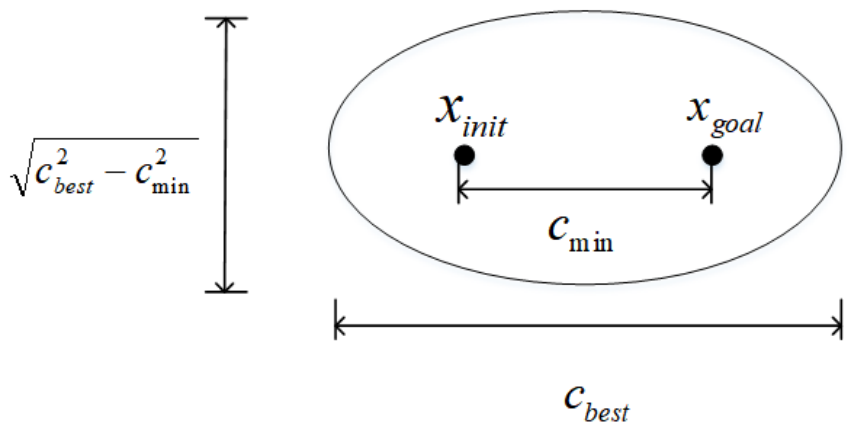
24] proposed the Informed-RRT* algorithm, which significantly accelerates convergence speed by constructing an admissible ellipsoidal sampling region after finding an initial path. The EP-RRT* proposed by Ding et al. [
25] further improves search efficiency by utilizing extended region heuristic sampling. Regarding goal-oriented expansion, numerous studies have introduced multi-tree growth and adaptive mechanisms. Li et al. [
26] and Chen et al. [
27], respectively, proposed improved RRT-Connect algorithms based on the simultaneous expansion of multiple random trees, significantly reducing the number of iterations by incorporating a goal-biasing strategy. The BPFPS-RRT algorithm proposed by Liu et al. [
28] introduced a high-probability goal bias coupled with a dynamic step-size exploration strategy, demonstrating excellent performance in search time.
Nevertheless, although the aforementioned optimization algorithms have achieved significant success in conventional industrial or structured scenarios, substantial limitations remain when they are directly applied to orchard harvesting environments. The unstructured environment of an orchard is characterized by a highly uneven distribution of obstacles (such as branches, leaves, and fruits) and severely restricted local spaces. Existing ellipsoidal sampling domains or global goal-biasing strategies are highly prone to generating numerous invalid collision detections when encountering dense overlapping branches due to the lack of fine guidance for local obstacle avoidance [
29]. Concurrently, fixed or simplistic step-size adjustment mechanisms struggle to switch flexibly between open rows and crowded canopies, causing the algorithm to easily stall during expansion within narrow passages [
30].
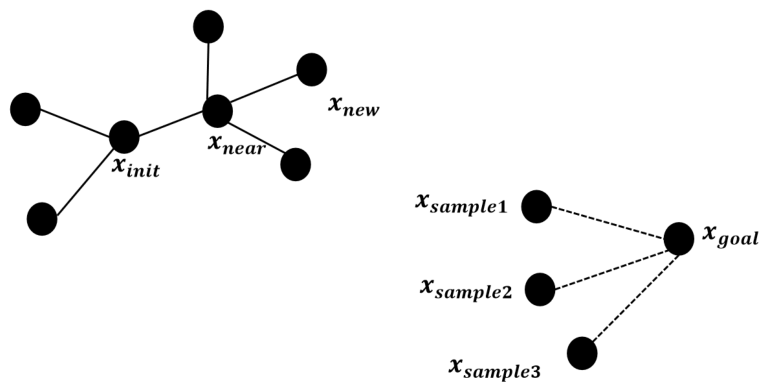
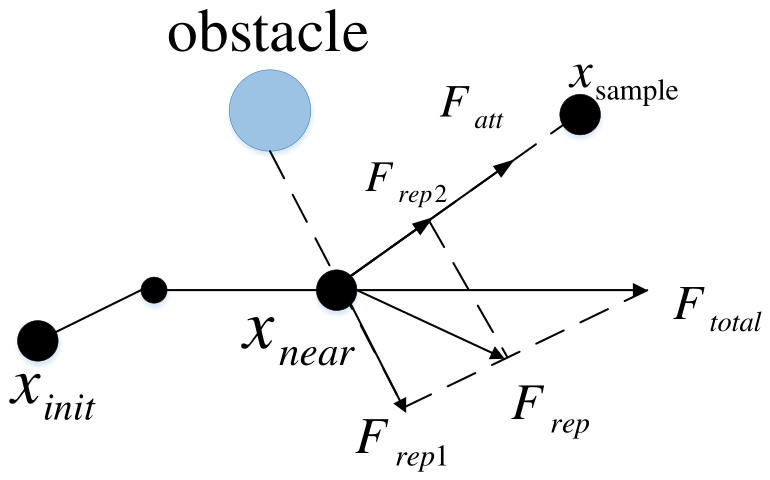
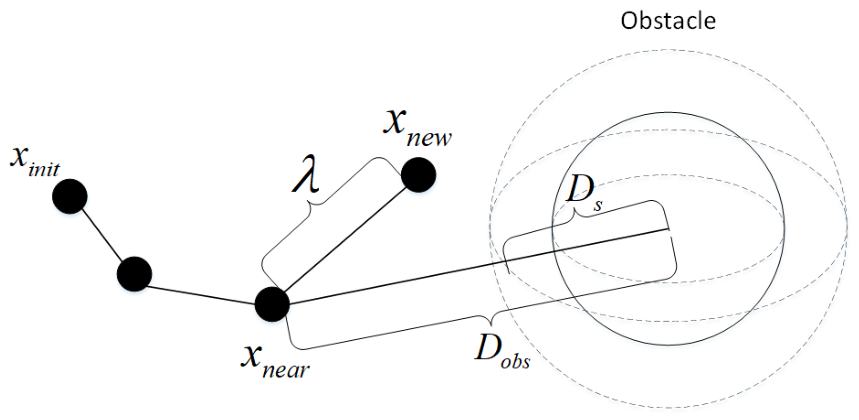
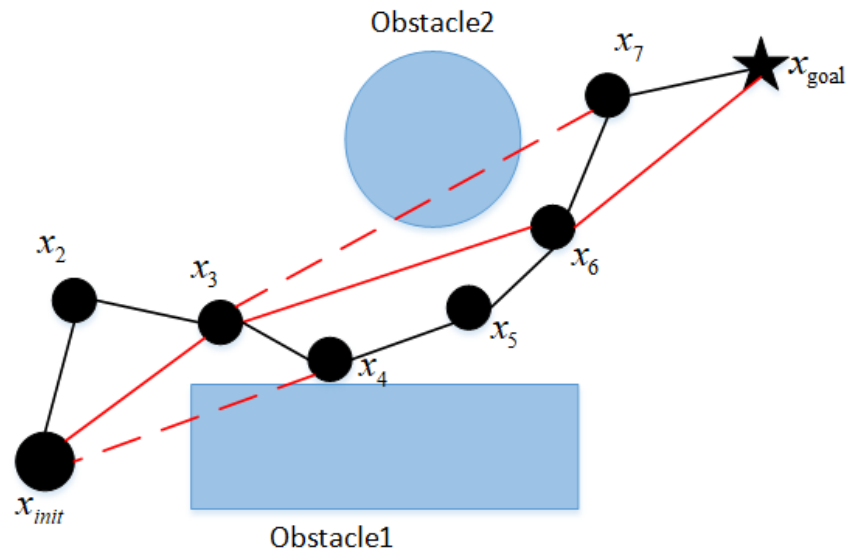
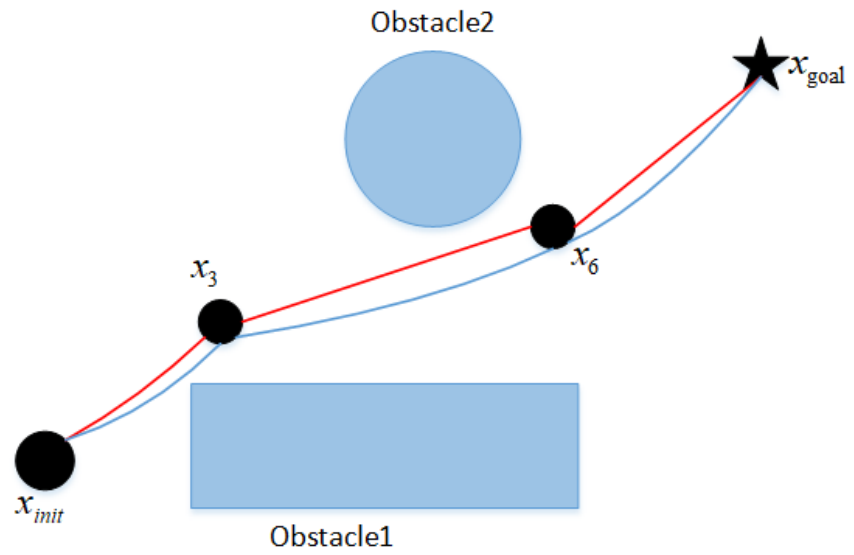
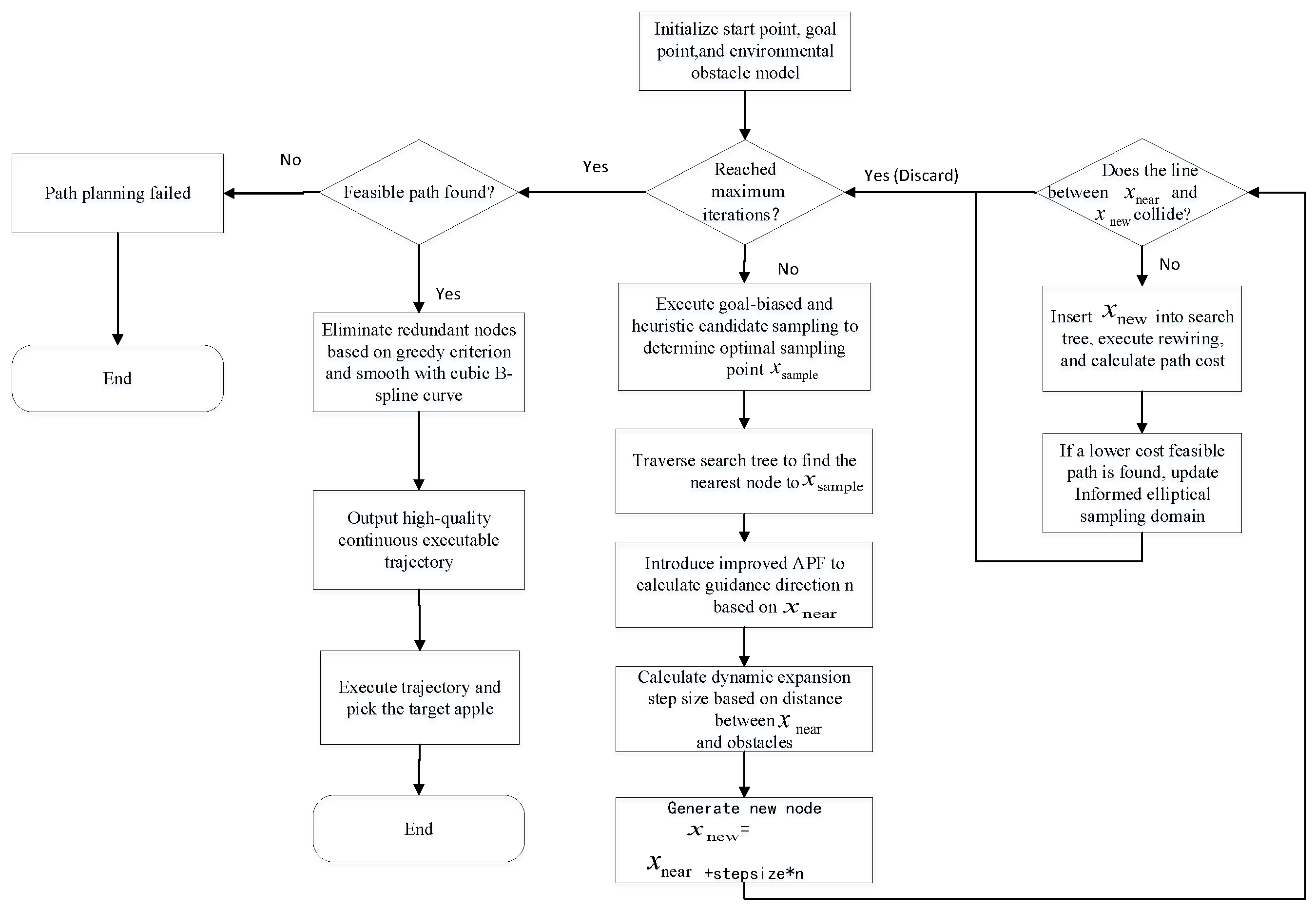
To overcome these limitations, we introduce the Canopy-Adaptive TAD-IRRT* (Target-biased, APF-guided, Dynamic step-size Informed-RRT*) algorithm, a multi-faceted 3D trajectory-planning framework tailored for 6-DOF apple-harvesting manipulators. Building upon the foundational Informed-RRT* architecture, our approach fuses a target-oriented sampling heuristic with a refined artificial potential field (APF) to effectively guide the growth of the random tree while bypassing local minima. Furthermore, the integration of an obstacle-aware dynamic step-size controller optimizes the trade-off between rapid exploration in open spaces and precise maneuvering in cluttered zones. To yield executable motions, the raw routes undergo greedy pruning followed by cubic B-spline smoothing, ultimately delivering seamless trajectories fully compliant with the robot’s physical constraints.
The remainder of this paper is organized as follows:
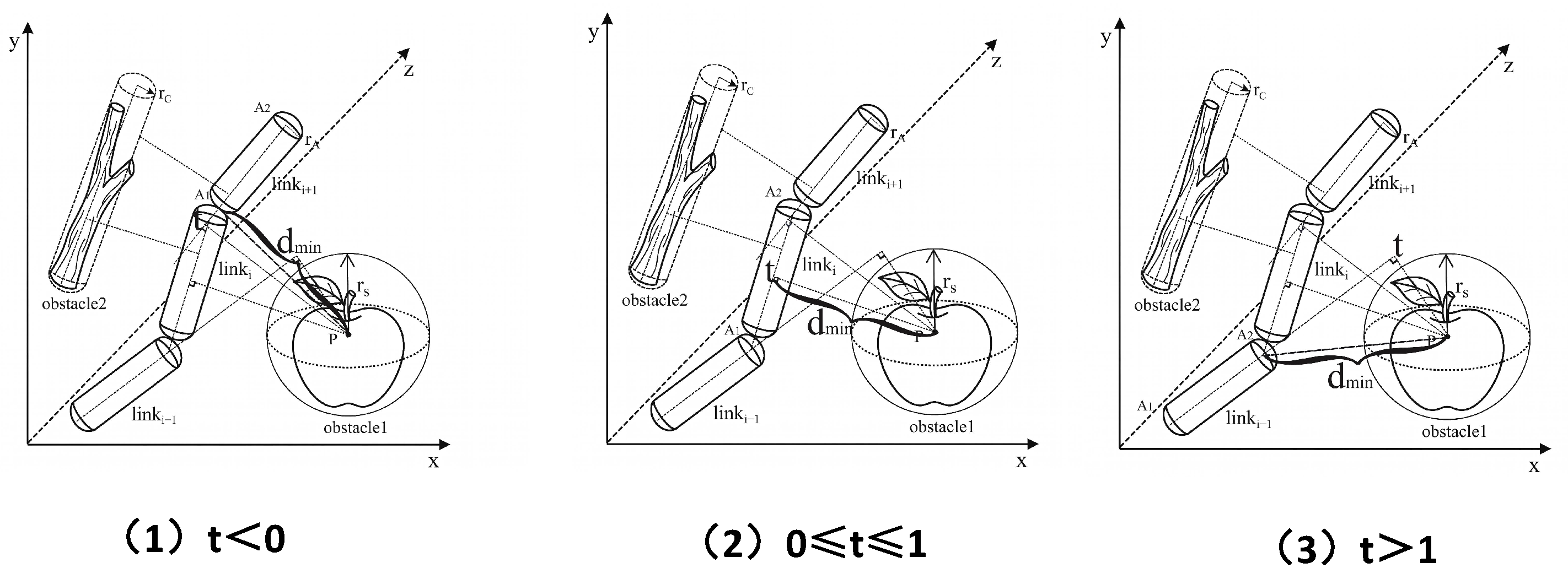
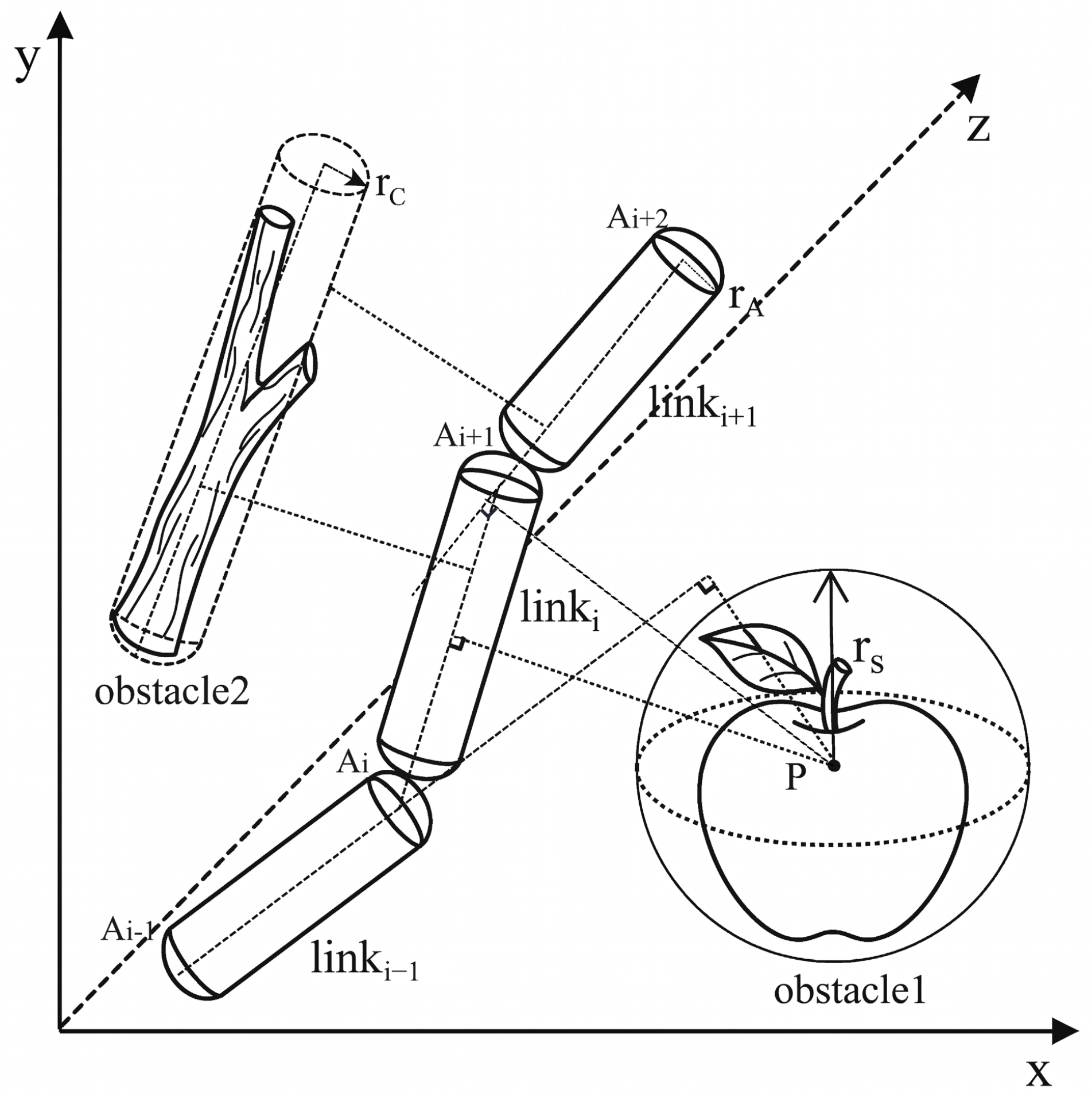
Section 2 details the materials and methods, including the kinematic modeling, collision detection strategy, and the optimization components of the Canopy-Adaptive TAD-IRRT* algorithm.
Section 3 presents the 2D and 3D simulation results, simulation obstacle avoidance path-planning experiment, joint space continuity analysis and physical obstacle avoidance verification experiments.
Section 4 discusses the algorithm’s performance advantages and outlines directions for future research. Finally,
Section 5 concludes this study.
3. Results
3.1. Simulation Results of the TAD-IRRT* Algorithm
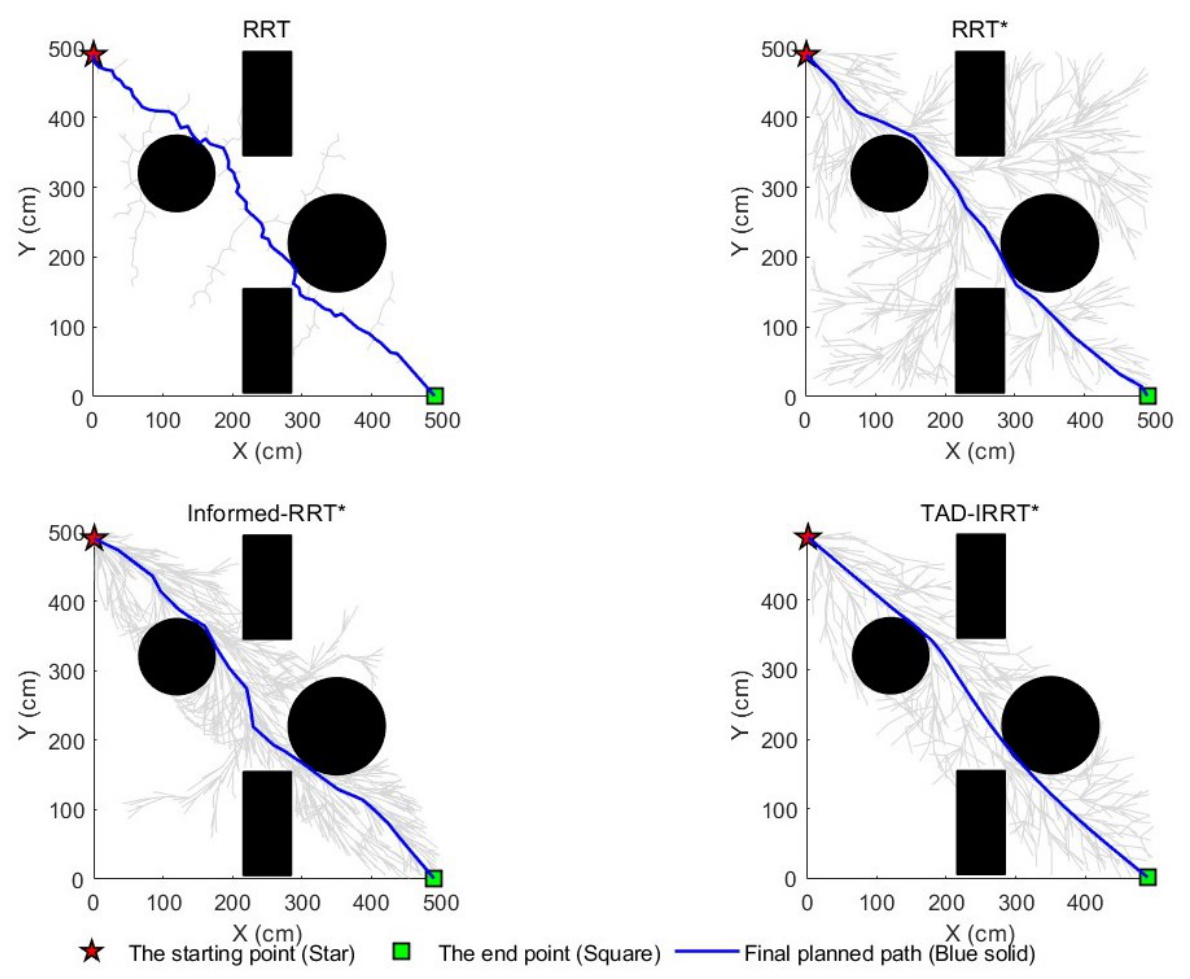
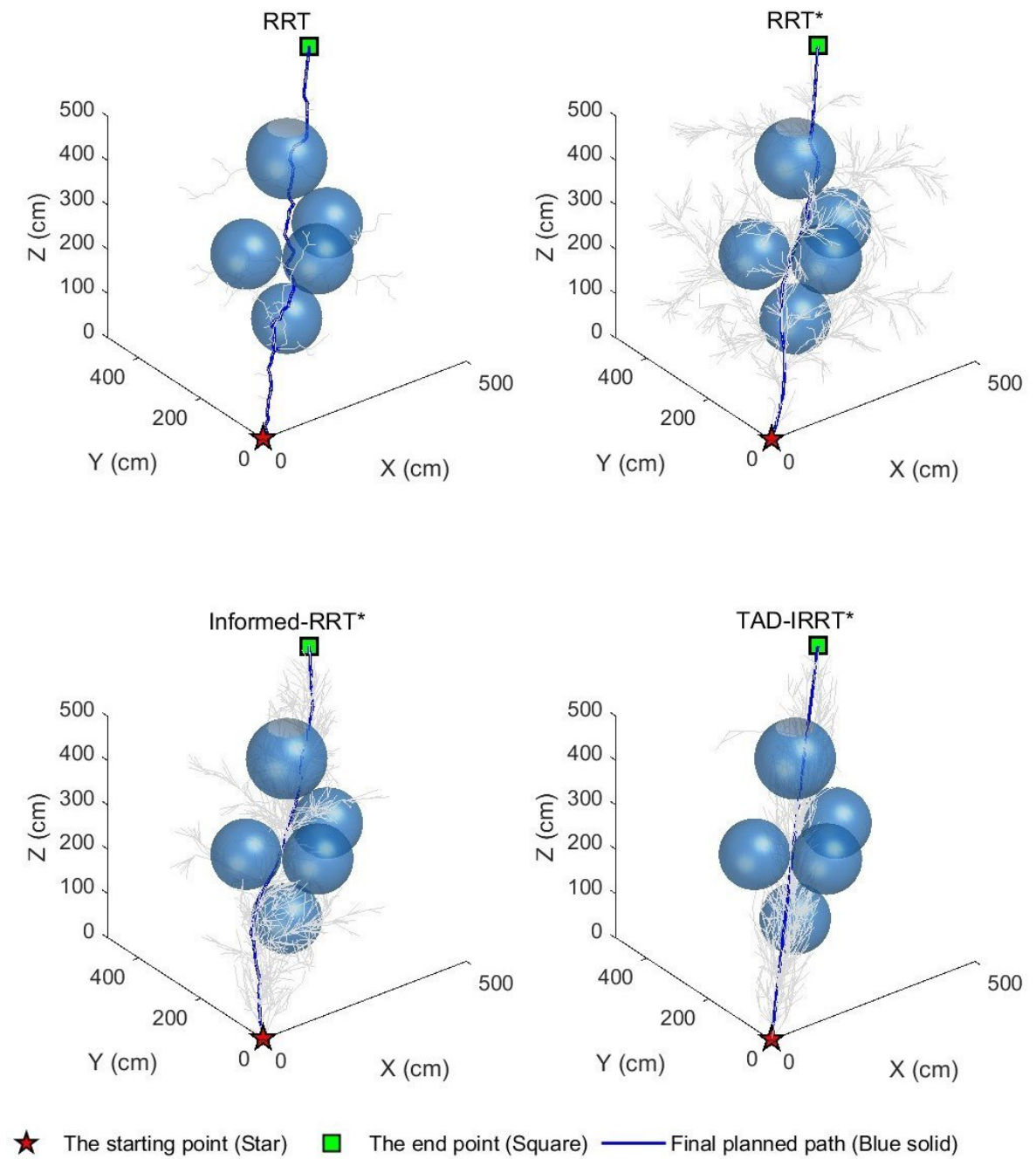
To verify the effectiveness of the TAD-IRRT* algorithm, 2D and 3D simulation environments with dimensions of 500 × 500 cm and 500 × 500 × 500 cm were constructed in MATLAB 2023a, respectively. The simulation results, which compare the path-searching performance of the RRT, RRT*, standard Informed-RRT*, and TAD-IRRT* algorithms in both 2D and 3D spaces, are illustrated in
Figure 11 and
Figure 12. In the 2D configuration (
Figure 11), the starting and target points are defined at coordinates (1, 490) and (490, 1), with black rectangles and circles representing obstacles. Similarly, the 3D environment (
Figure 12) initializes the starting point at (1, 1, 1) and the target at (490, 490, 490), where spheres denote obstacles. In these figures, the blue solid lines indicate the final trajectories planned by the respective algorithms.
As illustrated in
Figure 11 and
Figure 12, in both 2D and 3D environments, the RRT algorithm exhibits distinct characteristics of global random expansion; the extensive and unstructured gray search trees spread throughout the free space, leading to numerous invalid detours in the generated paths. The RRT* algorithm improves the overall path quality to a certain extent, but the dense distribution of gray branches indicates that it still generates a large number of redundant, invalid sampling branches in the vicinity of obstacles. The standard Informed-RRT* algorithm effectively constrains the diffusion range of the sampling tree through an elliptical boundary, which reduces the overall path length; however, due to the lack of directional guidance during its internal expansion, unnecessary local path deviations still occur in regions with unevenly distributed obstacles. In contrast, under the guidance of the target bias and the improved artificial potential field (APF) method, the gray search branches of the TAD-IRRT* algorithm are highly compressed and concentrated within the effective obstacle-avoidance channels, significantly eliminating invalid expansions. Simultaneously, the blue solid line of TAD-IRRT* algorithm in the figures intuitively demonstrate that, after path post-processing, this algorithm generates smoother and more direct collision-free trajectories in both 2D and 3D environments. The number of path turning points is greatly reduced, which better satisfies the actual kinematic and dynamic requirements of the 6-DOF apple-harvesting robotic arm in complicated orchard environments.
To mitigate the influence of inherent algorithmic randomness on the generated paths, every method was independently tested 30 times, with an upper limit of 1500 iterations per run. The mean success rate is calculated as the frequency of successfully navigating from the initial state to the target destination across these 30 attempts. Detailed quantitative outcomes are summarized in
Table 2.
As shown in
Table 2, in the 2D environment, the average path length of the TAD-IRRT* algorithm is 7.08 m, which is approximately 16.3%, 5.2%, and 5.1% shorter than that of RRT, RRT*, and standard Informed-RRT*, respectively. In the 3D environment, its average path length is 8.51 m, representing reductions of approximately 20.8%, 7.1%, and 8.0% compared to the aforementioned three algorithms, respectively. Although the overall path lengths for all algorithms increase as the spatial dimensionality expands from 2D to 3D, the TAD-IRRT* algorithm maintains the shortest path length in both environments, indicating its strong adaptability to spatial dimensionality changes.
Regarding planning time, similar trends are observed in both 2D and 3D environments: RRT requires less planning time but yields limited path quality due to the lack of heuristic guidance; RRT* experiences a surge in sampling nodes and significantly prolonged computation time owing to its global blind search and rewiring mechanism; the standard Informed-RRT* requires relatively more planning time because of the calculation of the elliptical sampling domain. In comparison, the average planning times of the TAD-IRRT* in 2D and 3D environments are 0.46 s and 0.28 s, respectively, both of which are lower than those of the standard Informed-RRT*. It is worth noting that in this experiment, the average planning time of the TAD-IRRT* algorithm in the 3D environment is lower than that in the 2D environment. This phenomenon indicates that when facing obstacle layouts in a 2D plane that easily form local minima, the proposed algorithm can fully utilize the increased degrees of freedom in 3D space. Combined with the improved APF guidance and dynamic step size mechanism, it leverages the height dimension (Z-axis) to bypass obstacles, effectively mitigating invalid sampling and iteration stagnation in constrained, lower-dimensional areas.
Based on the comprehensive 2D and 3D experimental results, it can be concluded that the TAD-IRRT* algorithm demonstrates consistent superiority in key performance metrics, such as path length and computation time, across different spatial dimensions corresponding to orchard operations. Under conditions of rising dimensionality and dense obstacles, the proposed algorithm can still efficiently generate stable, high-quality collision-free paths, providing a reliable foundation for subsequent robotic arm path-planning experiments in complicated orchard harvesting scenarios.
3.2. Simulation Obstacle Avoidance Path-Planning Experiment
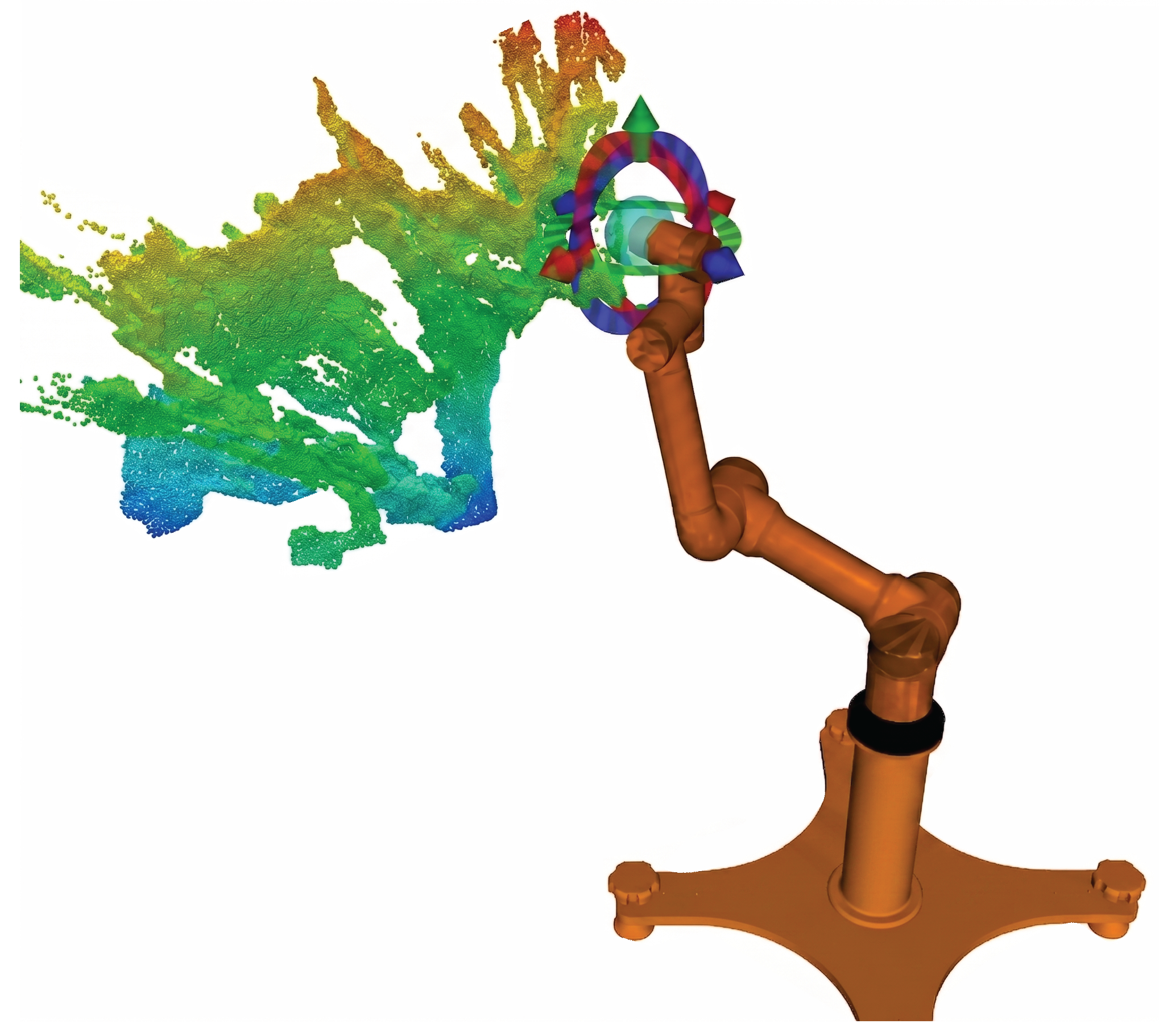
To evaluate the obstacle avoidance performance of the algorithm in realistic unstructured orchard environments, a complicated harvesting scenario accurately replicating the spatial constraints of an actual orchard was constructed in the RViz visual simulation platform and MoveIt motion planning framework under ROS (Robot Operating System). The scenario focuses on simulating the main trunk and multi-layered crossing branches of fruit trees, which are characterized by irregular distributions and overlapping occlusions. Such a highly constrained motion space imposes stringent requirements on the computational efficiency and heuristic directional guidance of the planning algorithm. In this simulation, the initial joint angles of the robotic arm were configured as
radians, and the target joint angles were set to
radians.
Figure 13 shows the initial position of the robotic arm in the harvesting scenario.
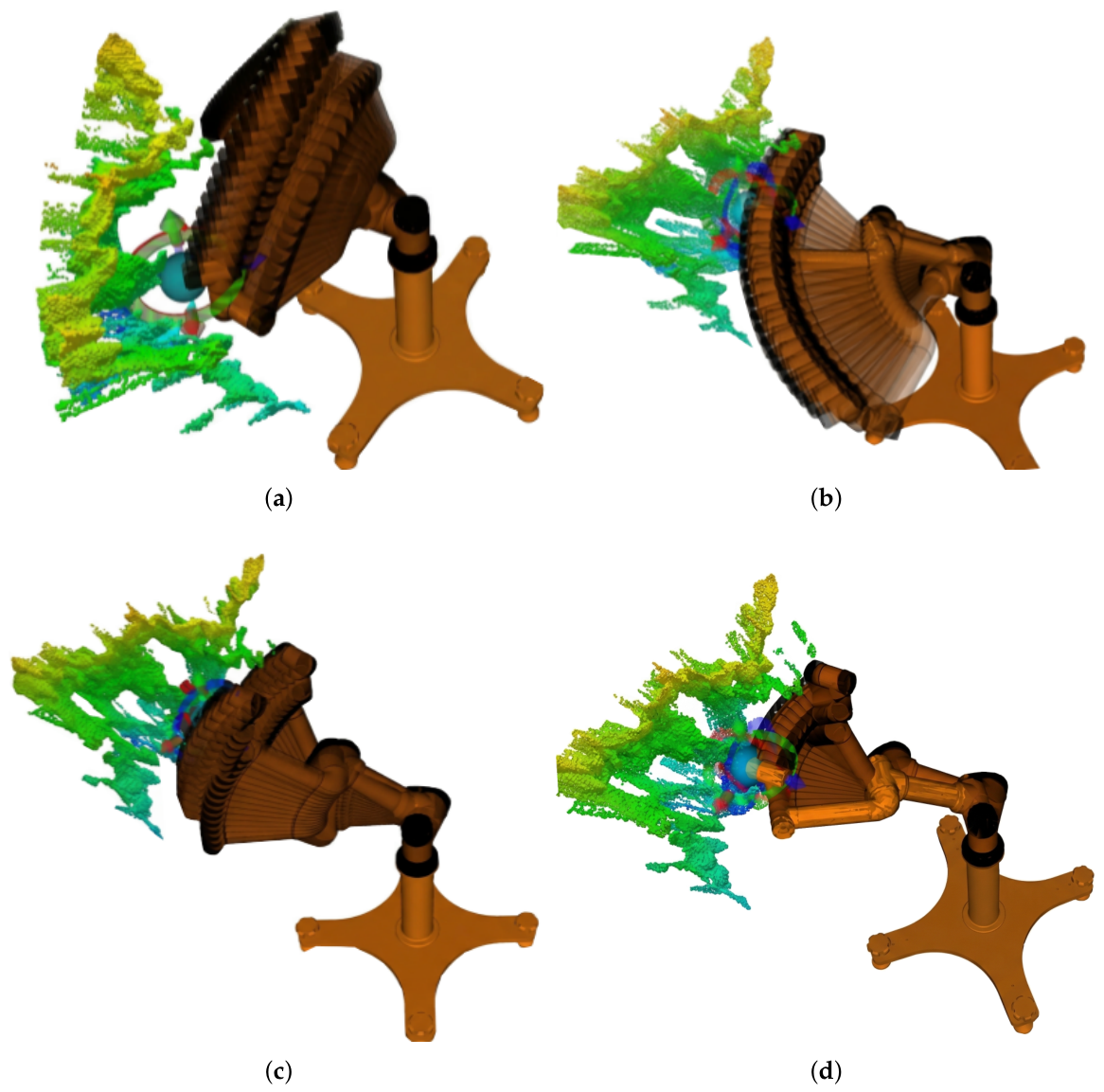
Under the same initial conditions, this study compared the planning effects of four algorithms: RRT, RRT*, standard Informed-RRT*, and the proposed TAD-IRRT*. To ensure the comparability of the experimental results and meet the real-time requirements of actual agricultural harvesting, a maximum time constraint (5 s) was set for a single planning attempt in the path-planning experiment. When the time limit is reached, if the algorithm fails to generate a feasible path, it is forced to terminate and judged as a failure. The intuitive trajectory performance of the simulation results is shown in
Figure 14.
As illustrated in
Figure 14, due to its global random sampling characteristic, the standard RRT algorithm generates a highly tortuous and rigid path, characterized by numerous inefficient detours, backtracks, and irregular sharp angles. The RRT* algorithm exhibits noticeable improvement over RRT; its overall trajectory is more logical, and non-target-directed explorations are significantly reduced. However, local segments of the path still display distinct sharp bends, indicating insufficient smoothness. By introducing an elliptical sampling heuristic, the standard Informed-RRT* algorithm successfully restricts the search space, effectively bounding the path between the start and goal configurations to produce a more compact trajectory than RRT*. Nevertheless, when navigating through densely obstructed regions, local detours persist, leading to trajectory redundancy and extraneous folds. In stark contrast, empowered by target biasing, improved artificial potential field (APF) guidance, and a dynamic step-size mechanism, the proposed Canopy-Adaptive TAD-IRRT* algorithm generates the shortest path among the four algorithms. It achieves the lowest path curvature—yielding the highest visual smoothness—and demonstrates the capability to proactively and cleanly circumvent fine branches and foliage, ultimately presenting an optimal geometric morphology.
An evaluation of the four algorithms in challenging scenarios demonstrates that the TAD-IRRT* method substantially outperforms the alternatives regarding both trajectory length and computational speed. To ensure a robust quantitative assessment, each approach underwent 30 distinct motion planning trials within this complicated environment. Here, the success rate denotes the frequency with which a planner successfully navigates from the origin to the destination under a strict 5 s limit across these iterations. The corresponding statistical outcomes are detailed in
Table 3.
As can be seen from
Table 3, the average joint space path length of the TAD-IRRT* algorithm is only 5.58 rad, which is about 15.6% lower than that of the standard Informed-RRT* and 43.4% lower than that of the traditional RRT. The significant reduction in the joint space path length directly reflects the reduction in invalid detours and redundant pose switches of the robotic arm in the complicated 3D space, which is mainly attributed to the deep simplification of the trajectory by the greedy pruning strategy and the effective guidance of the search direction by the APF.
In terms of planning time and success rate, the experimental data reveals a highly typical calculation bottleneck phenomenon in complicated restricted spaces: since standard RRT does not require node rewiring optimization, it can quickly find a sub-optimal path through random walks within 5 s, thus achieving a 100% success rate. However, to optimize path quality, RRT* and standard Informed-RRT* frequently perform nearest-neighbor searches and collision detection in the dense fruit tree point cloud/mesh environment, leading to a surge in computational load, with average times reaching 5.01 s and 3.36 s, respectively. This massive computational overhead frequently triggers the 5 s timeout mechanism, causing their planning success rates to drop to 90% and 70%, respectively.
Addressing this pain point, the TAD-IRRT* demonstrates an overwhelming advantage. Its average planning time is only 1.34 s, which is significantly shortened by about 60.1% compared to the standard Informed-RRT*, and the success rate is firmly stabilized at 100%. This fully proves that the dynamic step size mechanism (utilizing larger expansion steps in obstacle-free regions and finer resolution near obstacles) and the potential field guidance strategy introduced in this paper effectively eliminate the massive invalid collision detection calculations caused by blind sampling in traditional algorithms. When facing high-difficulty, high-density orchard obstacle avoidance tasks, the TAD-IRRT* algorithm exhibits extremely strong environmental adaptability and robustness.
3.3. Continuity Analysis of Joint Space Trajectories
Based on the simulation results in
Section 3.1 and
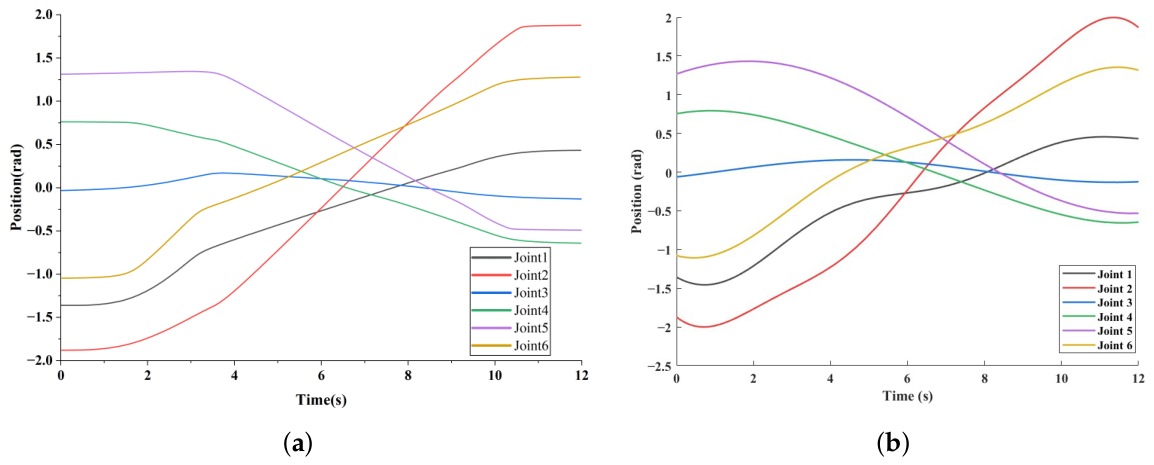
Section 3.2, the proposed TAD-IRRT* algorithm demonstrates superior performance across all evaluated spatial planning metrics. However, deploying the algorithm in the physical workspace of the manipulator necessitates strict operational safety and stability, particularly during continuous motion execution. To verify that the TAD-IRRT* algorithm can ensure the stable operation of the harvesting manipulator, real-time kinematic monitoring was conducted on the obstacle-avoidance trajectory generated within the complicated scenario from
Section 3.2. In the MoveIt and RViz co-simulation environment, the motion state of the manipulator was continuously published to the
joint_states topic. A custom ROS node was developed to subscribe to this topic and record the temporal angular displacements of the six joints, yielding the position-time curves plotted in
Figure 15a.
To rigorously extract the underlying kinematic characteristics from the recorded data, a Fourier curve-fitting method was employed to model the mathematical relationship between joint displacement and time.
Figure 15b illustrates the fitted curves for each joint. The position-time fitting functions for the six joints are shown in Equations (
29)–(
34).
To quantitatively evaluate the precision of the Fourier fitting, the coefficient of determination (
) and the Root Mean Square Error (RMSE) were calculated for each joint’s fitted curve, with the results summarized in
Table 4.
As shown in
Table 4, the average
value reaches 0.9849, and the RMSE remains at an extremely low level, indicating that the Fourier mathematical model can reconstruct the actual motion trajectory of the manipulator with exceptionally high fidelity. To quantitatively evaluate the trajectory-tracking fidelity, the final Cartesian positioning error of the end-effector was analyzed. Specifically, by substituting the terminal joint angles derived from the fitted functions at
into the forward kinematics model of the manipulator, the actual coordinates reached by the end-effector were determined as
. Compared with the ideally planned target coordinates of
, the final absolute error in the 3D operational space is merely
. This sub-centimeter level deviation thoroughly demonstrates that the proposed curve-fitting strategy preserves high terminal accuracy while smoothing the joint motions. Furthermore, observing
Figure 15a, it is evident that the manipulator initiates movement at approximately
s, gradually decelerating to a stop around
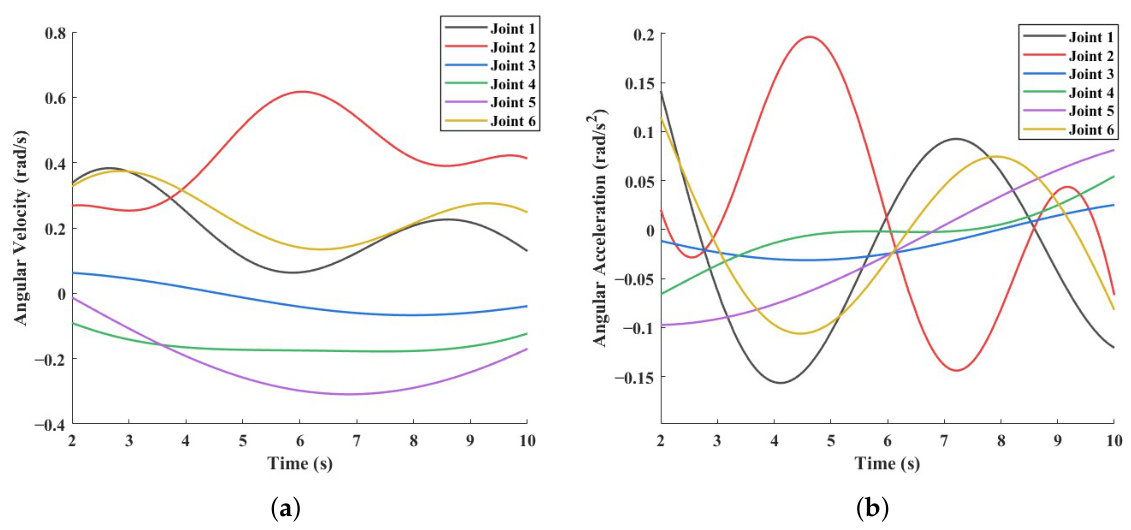
s. To accurately evaluate the smoothness of this motion, this study isolated the core execution interval (2–10 s). The first and second derivatives of the fitted joint displacement functions were computed to derive the time-varying curves for angular velocity and angular acceleration, respectively, as presented in
Figure 16.
An analysis of
Figure 16 clearly reveals that both the angular velocity and angular acceleration of the manipulator maintain smooth and continuous trends throughout the entire execution period, without any pronounced abrupt changes or chattering phenomena. This indicates that the manipulator moves at a coordinated and stable pace when executing the planned path. These results verify that the TAD-IRRT* algorithm effectively guarantees the kinematic feasibility and operational stability of the manipulator, which is crucial for reducing mechanical wear and extending the service life of agricultural robotic systems.
3.4. Physical Obstacle Avoidance Verification Experiment
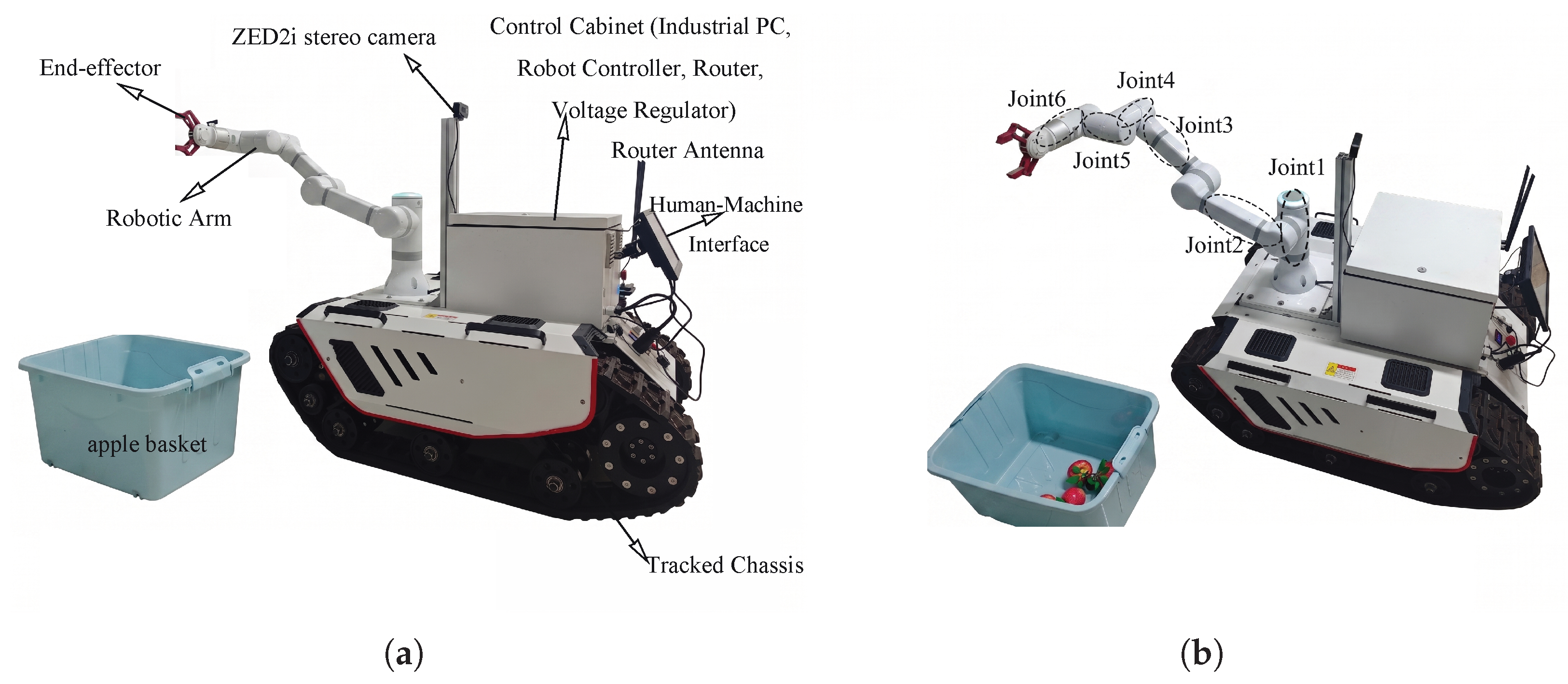
To further verify the practical obstacle avoidance efficiency and operational robustness of the proposed TAD-IRRT* algorithm in complicated unstructured environments, verification experiments were conducted in a real physical space utilizing the apple-harvesting robot prototype. Three operating scenarios with distinct obstacle densities—sparse, medium, and dense—were manually constructed. In these three scenarios, the initial pose of the manipulator and the spatial position of the target fruit remained completely identical, with the sole control variable being the occlusion degree of obstacles (such as branches) in front of the target fruit. This experimental design aims to highly replicate the variable and severely restricted 3D spatial constraints within the orchard canopy.
Since the paths generated by the baseline RRT and RRT* algorithms are highly unsmooth, direct execution on the hardware platform would lead to severe mechanical jitter and hardware wear. Therefore, the real-world experiments in this section only compare the standard Informed-RRT*, which inherently possesses path-smoothing characteristics, with the proposed TAD-IRRT* algorithm. For each density scenario, both algorithms initiated 30 independent planning and execution tests from the same initial pose toward the target fruit to comprehensively evaluate their performance in terms of key metrics, including the path-planning success rate, average real execution time, and average path length. It is worth noting that the low-level servo control system of the 6-DOF harvesting manipulator used in this experiment integrates an overload protection mechanism based on current-loop feedback and a soft collision detection mechanism. In an unstructured orchard environment, if the manipulator makes unexpected contact with branches during motion and generates external resistance exceeding the safety threshold, the system immediately triggers an emergency stop strategy to prevent physical damage. Such cases are explicitly determined as path-planning failures. The specific experimental comparison data are summarized in
Table 5.
As shown in
Table 5, the physical experimental results indicate that in the dense-obstacle scenario (Task 3), where the spatial restriction is most severe, the standard Informed-RRT* algorithm easily causes physical scratching and triggers emergency stops when traversing narrow gaps between branches and leaves. This is primarily because its generated paths are excessively tortuous and lack fine local potential field guidance, resulting in a path-planning success rate of only 53.3% and a high average real execution time of 18.32 s. In contrast, the TAD-IRRT* algorithm proposed in this study demonstrates a significant competitive advantage in robustness. In the identical dense occlusion scenario, the path-planning success rate of the proposed algorithm is substantially increased to 90.0%. Benefiting from the deep integration of the greedy pruning strategy and the cubic B-spline smoothing technology, TAD-IRRT* effectively eliminates redundant via-points and high-frequency mechanical jitter during physical execution. This feature not only renders the manipulator’s motion more coherent but also significantly shortens the average real execution time in the dense scenario to 10.79 s.
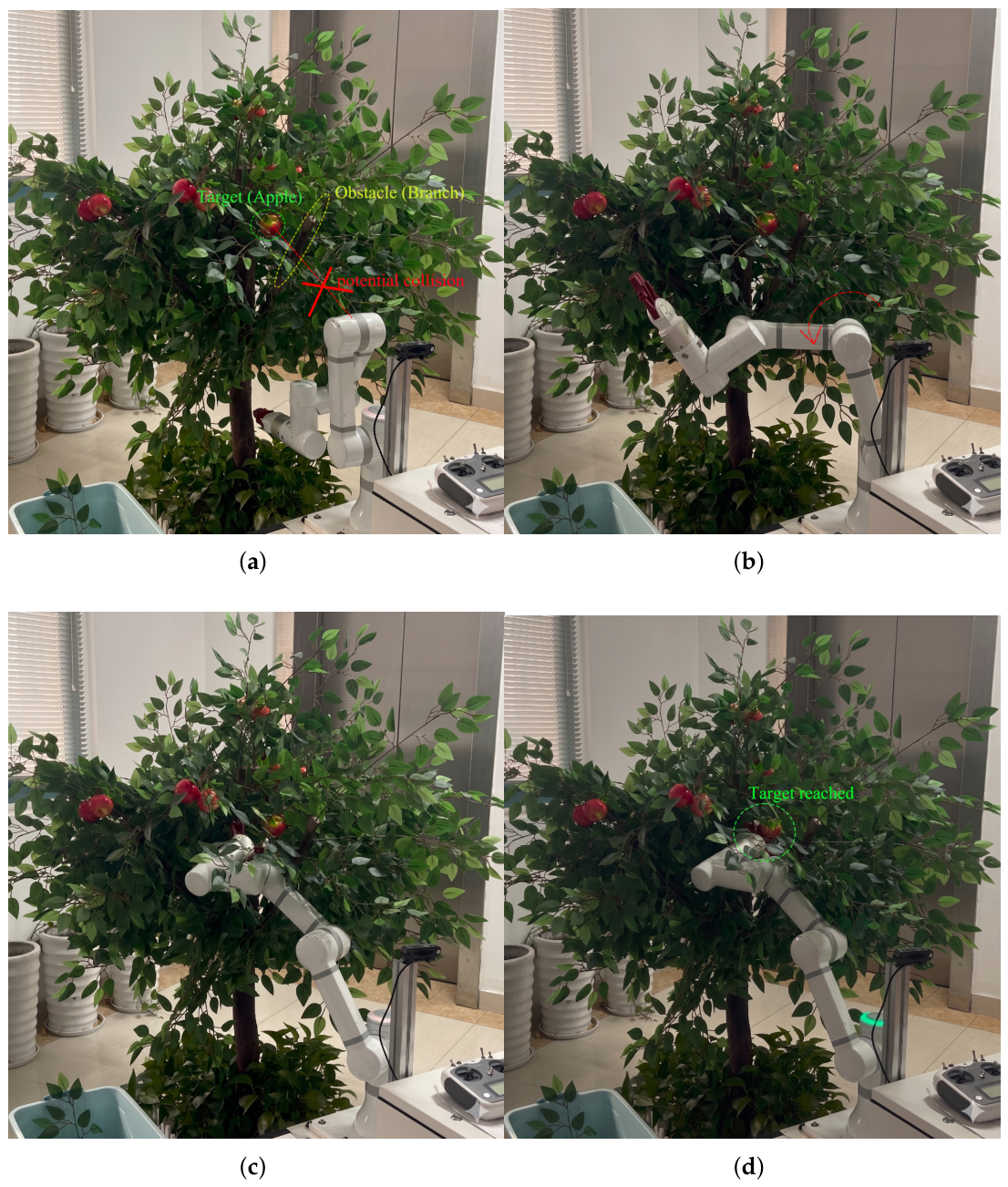
This fully proves that the proposed algorithm not only improves searching and convergence efficiency at the theoretical level but also effectively guarantees the smoothness of the manipulator trajectory at the physical engineering level, thereby greatly enhancing its reliability and safety during practical deployment. To intuitively demonstrate this process, the sequential obstacle avoidance workflow of the TAD-IRRT* algorithm in a dense scenario is illustrated in
Figure 17.
4. Discussion
To address the aforementioned shortcomings of existing algorithms in complicated, unstructured orchard environments, this paper proposes the TAD-IRRT* algorithm, a 3D obstacle avoidance path-planning method for a 6-DOF apple-harvesting manipulator that incorporates multi-strategy optimization into the Informed-RRT* framework. In recent years, although cutting-edge algorithms such as heuristic goal biasing or bidirectional tree growth have demonstrated certain potential in narrow space planning [
35], they remain prone to expansion stagnation when confronted with the extremely dense and unstructured canopies of orchards. To address this, this paper integrates an improved artificial potential field (APF) deeply within the standard Informed-RRT* framework. This strategy not only endows the random tree with more acute obstacle penetration and directional perception capabilities at the micro-level, but also effectively resolves the persistent issue wherein current mainstream adaptive exploration mechanisms [
36] easily fall into local optimal deadlocks among intersecting 3D branches by combining goal biasing with dynamic anti-collision repulsive forces. Meanwhile, whereas most existing variable step-size planning algorithms are often restricted to a single distance threshold or macroscopic environmental complexity [
37], the dynamic expansion mechanism based on obstacle distance perception constructed in this study achieves a seamless transition between large-stride efficient exploration in sparse spaces and small-stride precise obstacle avoidance in crowded regions. Finally, addressing the problem that many current efficient sampling algorithms tend to overlook physical feasibility, thereby causing high-frequency chattering during robotic arm execution [
38], this paper introduces greedy criterion-based path-pruning and cubic B-spline curve techniques for deep post-processing. This series of optimization strategies successfully transforms the theoretical geometric path into a high-quality, smooth, and continuous trajectory that strictly adheres to the underlying kinematic and dynamic constraints of the 6-DOF apple-harvesting robotic arm.
The experimental results comprehensively demonstrate the superiority of the proposed algorithm in both simulated and physical environments. The simulation results in complicated ROS-based scenarios demonstrate that the proposed algorithm achieves a 100% planning success rate. Compared to the standard Informed-RRT* algorithm, its average computational time and joint-space path length are reduced by approximately 60.1% and 15.6%, respectively. Concurrently, kinematic analysis via Fourier curve fitting () confirms that the angular velocity and acceleration of each joint remain smooth and continuous, successfully eliminating high-frequency chattering. Crucially, these theoretical advantages successfully translated to real-world engineering applications. Physical verification experiments revealed that in the dense-obstacle scenarios, the TAD-IRRT* algorithm reduces the average execution time by 41% and increases the path execution success rate by 36.7% compared to the standard Informed-RRT*. This demonstrates that the TAD-IRRT* algorithm not only enhances spatial search efficiency but also ensures trajectory smoothness at the physical control level, thereby greatly improving operational reliability and safety in complicated orchards.
Despite this excellent performance, certain limitations remain regarding the transition to real-world agricultural applications. The current collision detection approach utilizes a rigid geometric bounding volume method (sphere and capsule models), which may overestimate or underestimate collision risks when encountering highly irregular physical boundaries. Future research will focus on exploring flexible collision detection mechanisms integrated with real-time 3D visual perception to adapt to highly irregular branch and leaf boundaries. Furthermore, regarding the physical deployment, this study currently assumes a decoupled ‘stop-and-pick’ operational paradigm. Specifically, the mobile base is responsible for macroscopic navigation between tree rows and remains strictly stationary during the harvesting execution. Consequently, the proposed TAD-IRRT* algorithm focuses exclusively on the high-dimensional, fine-grained obstacle avoidance of the 6-DOF manipulator within the canopy, excluding the motion planning of the mobile base. Although this static-base assumption ensures operational stability and effectively reduces the planning dimensionality, integrating the mobile base and the manipulator into a coupled whole-body motion planning framework remains a promising direction for future research to further enhance continuous harvesting efficiency.