1. Introduction
In recent decades, the field of piezoelectric materials has seen significant advances, leading to the development of numerous innovative actuators and motors that exploit the principles of piezoelectricity. These piezoelectric motors offer several unique advantages over traditional electromagnetic motors. They are typically smaller in size, exhibit lower response delay, generate minimal electromagnetic interference, and can operate reliably in strong magnetic fields. One of their most important advantages is exceptional positioning precision. Piezoelectric motors can achieve microscopic positioning accuracy, and in some cases, nanoscopic positioning [
1]. Previous studies on piezo-based hybrid actuators have also emphasized their high stiffness, fast response, reduced electromagnetic compatibility problems, and suitability for precise control applications, while noting that nonlinear effects such as hysteresis, creep, and saturation must be considered in control system design [
2,
3]. As a result, they are widely used in high-precision applications such as medical imaging, optical instrumentation, and robotics. Due to their favorable characteristics, particularly low electromagnetic interference, high precision, self-locking ability, and direct drive of load, piezoelectric motors are also increasingly employed in space applications [
4,
5].
Despite their numerous advantages, piezoelectric motors also have some limitations. Motors that operate according to stick–slip principles, for example, often exhibit undesirable backward motion during the rapid retraction phase of the stator [
6]. In passively preloaded systems, this issue is sometimes addressed by increasing the preload force. However, doing so also leads to significantly higher friction losses, which reduce overall motor speed, accuracy, and efficiency [
7]. On the other hand, undesirable backward motion of such motors can be notably mitigated by introducing a dual stator system that reduces the backward motion effect [
8,
9]. However, in demanding environments such as space missions, external factors such as temperature variation, pressure fluctuation, and changes in surface friction can significantly affect motor behavior [
10]. These variations make it essential to develop methods that allow for the dynamic control of the rotor preload force rather than relying on static pre-set mechanical configurations.
A stable and adaptable preload system is vital for ensuring the reliable operation of piezoelectric motors. Motors that lack the ability to dynamically adjust preload may be unsuitable for critical applications, particularly those in which remote or automated adjustments are necessary, such as in spacecraft or autonomous systems. Preload is most commonly applied using passive mechanical components such as wedges [
11,
12], bolts [
13], springs [
14,
15], or a combination of these components. Although these methods are simple and effective in some applications, they offer limited control and adaptability. In extreme environments, these limitations can result in performance degradation or system failure.
A study by Yang et al. identified common mechanical failure modes in piezoelectric motors, including stator wear, degradation of the friction layer, insufficient preload, and PZT cracking [
16]. Many of these failure modes are due to static preload conditions and could be mitigated by implementing actively controlled systems. Active preload mechanisms enable remote adjustment by incorporating dynamic elements such as secondary piezoelectric stacks or electromagnets. Some approaches use a continuously adjusted preload to improve energy efficiency [
17], while others utilize periodic actuation to both increase performance and reduce mechanical wear [
18,
19].
In recent years, several preload solutions have been developed to address the shortcomings of the piezoelectric motors mentioned above. These methods generally fall into two categories: passively applied and actively controlled preload mechanisms. One type of solution employs magnetic force to apply preload. For example, studies [
20,
21] describe a design in which a permanent magnet attracts a ferromagnetic rotor, with the stator positioned in between, thus creating a preload force. This setup can be modified into an actively controlled system by replacing the permanent magnet with a controllable electromagnet [
22,
23]. By modulating the electromagnetic field, it is possible to achieve intermittent clamping of the rotor. However, these systems may introduce issues such as electromagnetic interference and increased power consumption.
Another promising approach involves the use of piezoelectric stacks in combination with mechanical amplifiers and flexures. In such systems, additional piezoelectric stacks are periodically activated to generate the preload force. These stacks may be integrated into mechanical amplifiers or used directly in a compact configuration [
24]. This enables high-frequency actuation and precise control of the preload forces. However, these systems present their own challenges. They can be difficult to implement due to manufacturing complexity, size constraints, and integration limitations, particularly in miniaturized or space-constrained designs.
This study explores a simple solution for a fine preload force control in a piezoelectric traveling wave motor by employing a ring-shaped piezoelectric actuator to continuously apply a contact force between the stator and rotor. Controlling the preload force in a time-dependent manner, the proposed system seeks to improve operational performance and maintain performance under severe temperature and pressure fluctuations. This strategy is especially suited to critical applications where reliability, adaptability, and remote adjustability are essential, such as in aerospace or autonomous systems. The primary objective of this research is to evaluate the feasibility and effectiveness of this preload system under thermal vacuum conditions relevant to low Earth orbit operation. The results contribute to the development of more robust, adaptive, and long-life piezoelectric motor systems.
2. Design and Operation Principle of Active Preload Force Control System
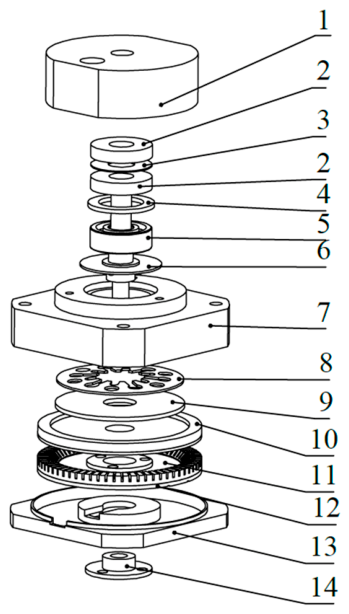
The active preload system is integrated into a traveling wave ultrasonic motor, in which rotational motion is generated through the interaction between a vibrating stator and a frictionally coupled rotor. The stator consists of a lead zirconate titanate (PZT) ring bonded to a brass ring. When the motor is driven at its out-of-plane bending resonance using two excitation signals with a phase difference of π/2, a traveling wave is generated. The stator vibration is transferred to the rotor through frictional contact, which is maintained by a conical spring located above the rotor. The compression level of this spring determines the rotor preload force and directly affects the output characteristics, operational stability, and reliability of the motor. In the modified traveling wave motor, active preload force adjustment is achieved through quasi-static axial displacement of a piezoelectric stack composed of two PZT rings. The stack is located above the conical spring and acts through the ball bearing. The axial position of the ball bearing controls the compression level of the spring. The remaining structure of the traveling wave motor follows the conventional design principles of such motors. The design of a modified ultrasonic traveling wave motor is given in
Figure 1.
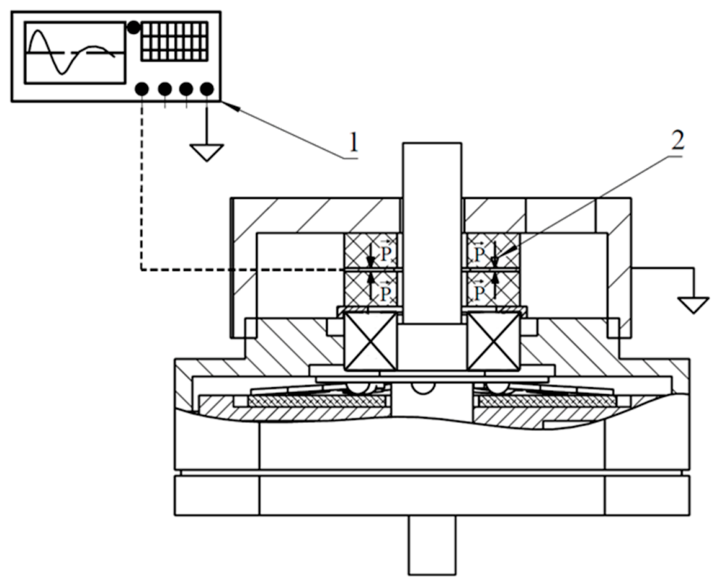
The preload force control system is grounded through the motor cap and outside ring of the ball bearing which is in contact with housing of the motor. The control voltage terminal, which is based on a thin copper electrode, is pasted between the piezoelectric rings and as a result forms a stack of two piezoceramic rings with
d33 polarization pointed to the control terminal. The top side of the stack is glued to the internal surface of the motor cap, while at the bottom side is a glued grooved ring that acts as an interface between the stack and the outside ring of the ball bearing. A detailed design of the preload control system, its electrical connections and interaction with the ultrasonic motor is given in
Figure 2, while the geometrical parameters of piezoelectric rings used to compose the stack are given in
Table 1.
The practical implementation and theoretical motivation of the proposed preload-adjustment system are based on the frictional energy transfer mechanism of traveling wave ultrasonic motors. In such motors, the tangential force transmitted from the vibrating stator to the rotor depends on the normal contact force and the friction coefficient at the stator–rotor interface. If the preload force is insufficient, partial slip or unstable rotor contact may occur, reducing torque transfer. Conversely, an excessive preload can suppress stator vibration amplitude, increase frictional losses, and reduce motor efficiency. Therefore, motor performance depends on maintaining the preload within an appropriate range, which may shift under thermal vacuum conditions due to thermal expansion, temperature-dependent material properties, resonance frequency drift, and vacuum-related changes in frictional behavior. In the proposed system, the nominal preload force is first mechanically established during assembly by axial positioning of the motor cap through the threaded interface between the motor cap and the motor housing, while the nominal initial rotor preload force is set to approximately 2.2 N at room temperature. As shown in
Figure 1, axial adjustment of the motor cap (
Figure 1-1) transfers the load through the piezoelectric ring stack (
Figure 1-2), the grooved ring-shaped interface (
Figure 1-4), and the ball bearing (
Figure 1-5) to the conical spring (
Figure 1-8). Compression of the conical spring generates the baseline static preload force that presses the rotor (
Figure 1-10) against the stator (
Figure 1-11). During motor operation, the preload can be adjusted by applying positive or negative DC voltage to the piezoelectric ring stack. The resulting axial deformation of the stack changes the position of the ball bearing and modifies the compression of the conical spring, thereby increasing or decreasing the normal contact force between the stator and rotor without mechanical disassembly of the motor. In the present study, this procedure was implemented as an open-loop voltage-controlled active preload adjustment mechanism using prescribed DC voltage levels. The passive conical spring is therefore not replaced but is combined with the piezoelectric ring stack, which provides a compact remote fine adjustment of the contact force. In future closed-loop implementation, the applied voltage could be regulated automatically using feedback from contact temperature and preload force sensors.
3. Numerical Investigation of Active Preload System at Low Earth Orbit Thermal Conditions
Numerical investigations of the active preload system were performed with the goal to investigate the electromechanical characteristics of the system while it is affected by thermal conditions typical of a low Earth orbit. For this purpose, the finite element model was built using COMSOL Multiphysics 6.1 software. The active preload system consists of two staked piezoceramic rings that are positioned concentrically on top of a conical spring. A layer of rubber padding is inserted beneath the spring to represent support. The material characteristics were also included in the model, i.e., the piezoelectric rings were made of PZT-8, while the conical spring was made of A36 steel. Finally, rubber characteristics were assigned to the pad. The configuration of the active preload system is shown in
Figure 1 and
Figure 2, while the corresponding material properties, which were used in the model, are summarized in
Table 2. The thermal effect was included in the model, along with structural mechanics and electrostatics, which were applied to the model via piezoelectric and thermal physics. The initial temperature was set at 20 °C and was applied to all bodies in the model, while a fixed constraint was applied to the free end of the piezoelectric ring and as a result simulated clamping of the preload system. On the other hand, a roller constraint was applied to the bottom surface of the rubber padding, restricting normal displacement while permitting radial motion, which simulated contact between the rubber pad and the rotor. Finally, an electric potential condition was applied to the contact surface between two piezoelectric rings, while the outer surfaces of the rings were set as neutral (
Figure 2).
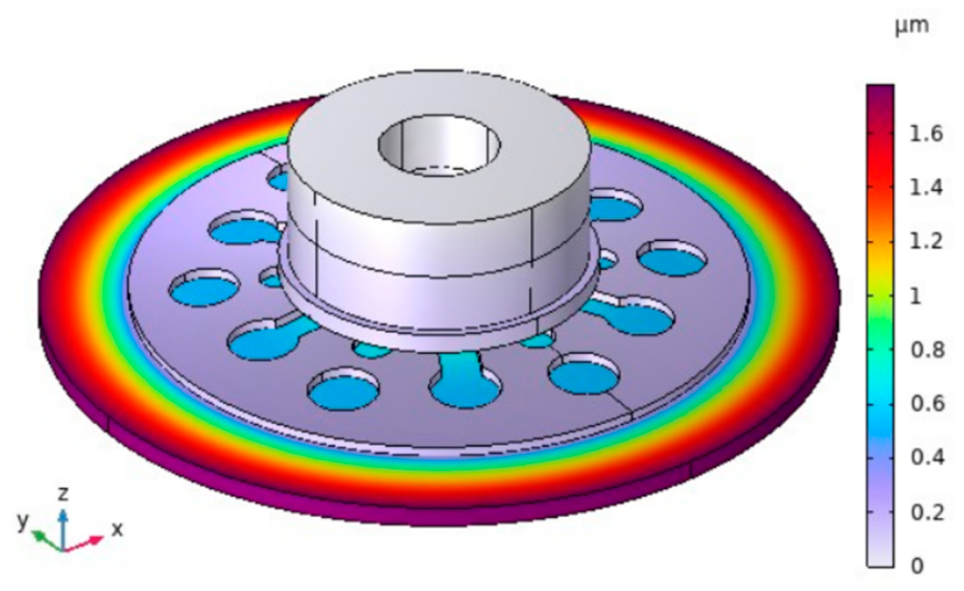
The first step of the numerical investigation was focused on the calculation of the output force of the preload system at a temperature of 20 °C. The voltage applied to the preload system was set at 300 V
DC. The generated output force of the preload system was calculated by integrating reaction forces to the lower surface of the rubber domain. The finite element model of the selected active preload system components, together with the calculated displacement field at 300 V
DC and 20 °C, is shown in
Figure 3.
Therefore, based on the analysis of
Figure 3, it was indicated that the value of displacements generated by the piezoelectric rings was about 0.2 µm. However, the radial displacement of the rubber pad reached 1.71 µm. Under these conditions, the active preload force variation reached 0.47 N.
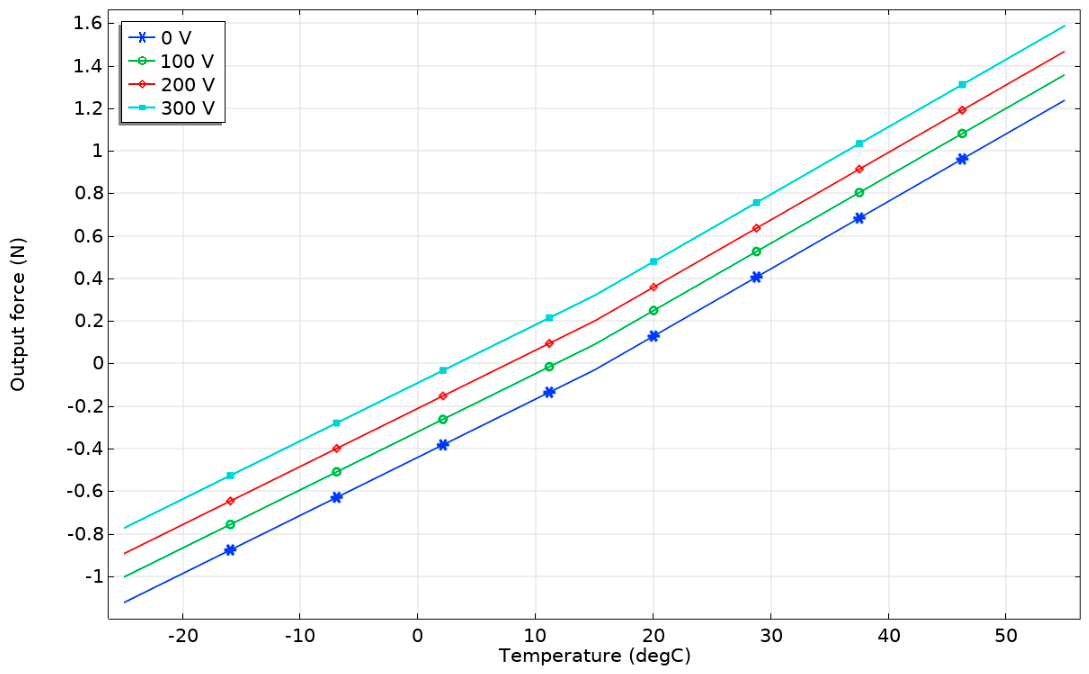
The next step of numerical investigation was dedicated to the analysis of output forces generated by the preload system, as well as their stability while different temperatures and driving voltages were applied to it. The investigation was conducted at a temperature range from −25 °C to 55 °C, with a step size of 10 °C. At each of these temperatures, calculations were performed in the range of 0 V
DC to 300 V
DC, with a step size of 100 V
DC. The results of the calculations are shown in
Figure 4.
The results shown in
Figure 4 indicate that the FEM-estimated preload force variation is affected by both ambient temperature and the applied DC voltage. At 0 V
DC, the calculated force changes from approximately −1.1 N at −25 °C to approximately 1.28 N at 55 °C. This variation is mainly caused by thermally induced contraction and expansion of the piezoelectric rings, conical spring, and supporting components. Therefore, the numerical model shows that temperature has a significant influence on the baseline preload state of the system. At the same time, increasing the DC voltage from 0 to 300 V
DC produces an additional active preload force variation from approximately 0.13 N at 100 V
DC to approximately 0.47 N at 300 V
DC. This voltage-dependent force increment is almost linear, which is important for practical preload adjustment because it indicates that the contact force can be modified in a predictable manner. Considering that the nominal initial rotor preload force was approximately 2.2 N at room temperature, the maximum FEM-estimated active preload force variation of 0.47 N corresponds to approximately 21.4% of the nominal preload. Thus, the results indicate that the proposed system should be interpreted as a fine adjustment mechanism rather than as a mechanism for completely compensating all thermally induced preload changes.
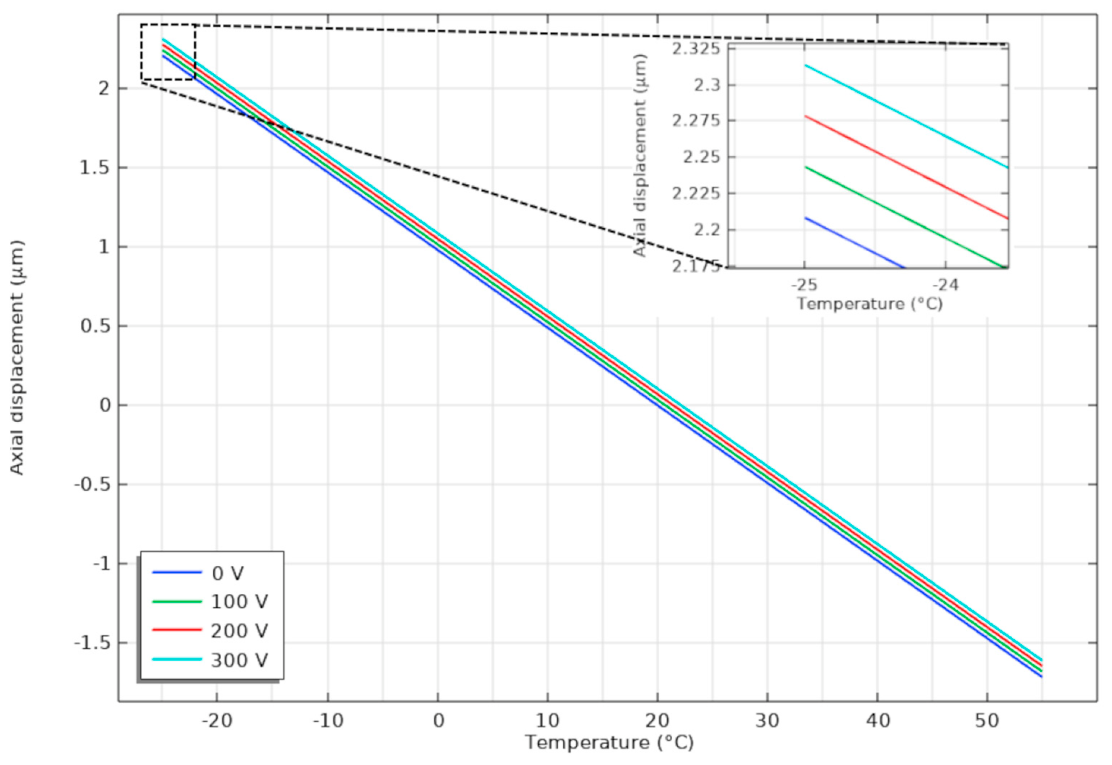
The next stage of numerical investigation was dedicated to the calculation of displacement amplitudes of the active preload system at different thermal conditions, as well as while the active preload system is driven by DC voltages in the range of 0 to 300 V
DC with an increment step of 100 V
DC. The results of the calculations are shown in
Figure 5.
The displacement characteristics shown in
Figure 5 confirm that the axial response of the active preload system is strongly temperature-dependent. At 0 V
DC, the calculated displacement changes from approximately 2.3 µm at −25 °C to approximately −1.5 µm at 55 °C. This result indicates that thermal contraction at lower temperatures and thermal expansion at higher temperatures modify the axial position of the preload path even without electrical activation of the piezoelectric stack. When DC voltage is applied, the piezoelectric stack generates an additional controllable axial displacement. Although the voltage-induced displacement is smaller than the total thermally induced displacement over the full temperature range, it changes almost linearly with voltage and therefore can be used for predictable fine correction of the preload state. The calculated displacement range is sufficient to modify the compression of the conical spring and the stator–rotor contact state, which is important for maintaining stable frictional coupling in a traveling wave ultrasonic motor.
4. Experimental Investigation of Active Preload System Under Low Earth Orbit Thermal Conditions
To investigate changes in performance of the ultrasonic traveling wave motor with an actively controlled preload system, a prototype was made according to the design shown previously (
Figure 1 and
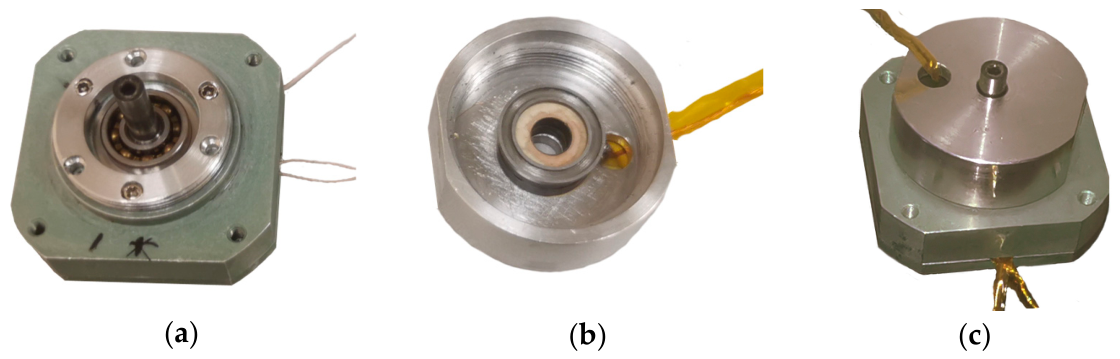
Figure 2). The two PZT rings are bonded with copper electrodes using epoxy resin. The same epoxy resin has been used to bond the PZT ring stack to the motor cap. The individual parts of the motor, before and after assembly, are shown in
Figure 6.
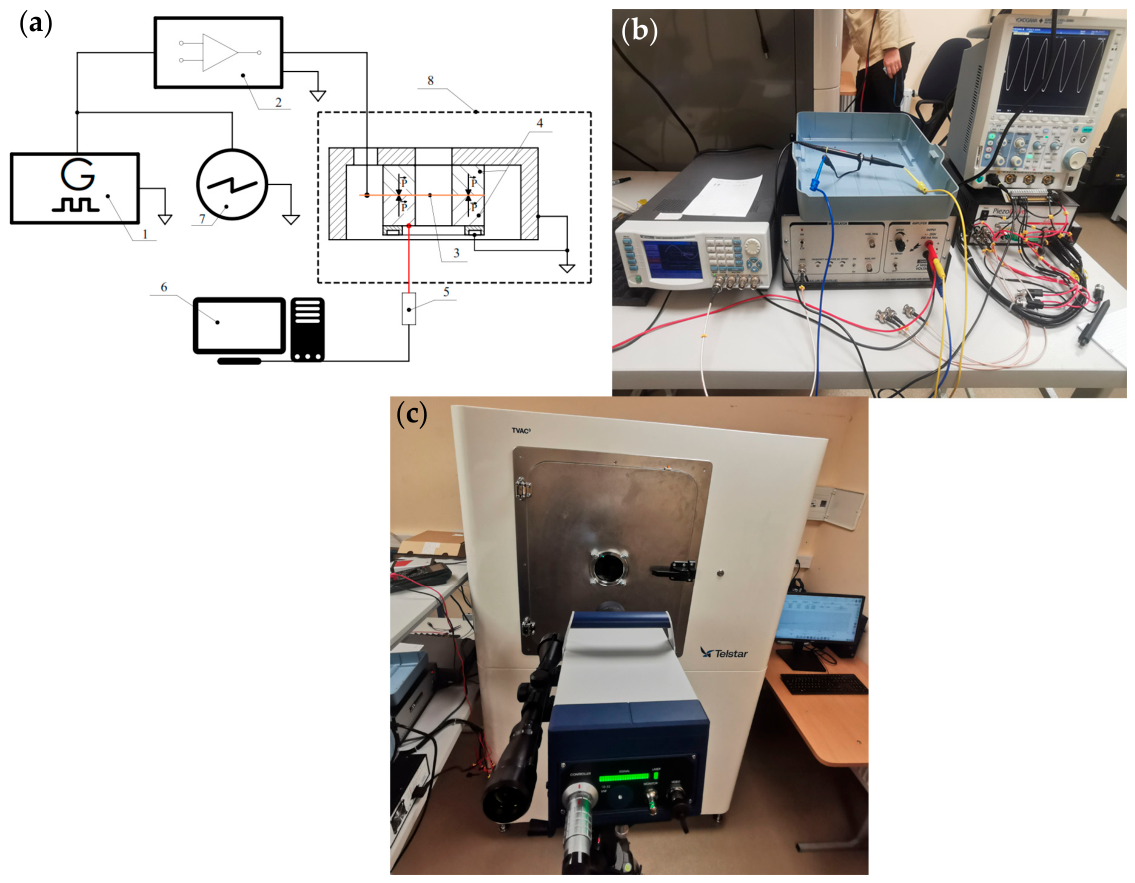
The first stage of experimental investigations was focused on evaluating displacements of the preload system under vacuum in the temperature range from −25 °C to 55 °C with an increment step of 10 °C. For this purpose, an experimental setup was built, which included a computer, Tabor Electronics WW5064 (Tabor Electronics, Nesher, Israel) function generator, PiezoDrive PD200x4 (Piezo Drive, Shortland, Australia) power amplifier, and a Yokogawa DLM2024 (Yokogawa, Tokyo, Japan) four channel oscilloscope. The displacement measurements were carried out with a single point Polytec VibroFlex (Polytec, Waldbronn, Germany) vibrometer. The experiments were conducted inside a Telstar TVAC
3 (Syntegon Telstar, Barcelona, Spain) thermal vacuum chamber, at a pressure of 5.6 × 10
−6 mbar. The experimental setup is shown in
Figure 7.
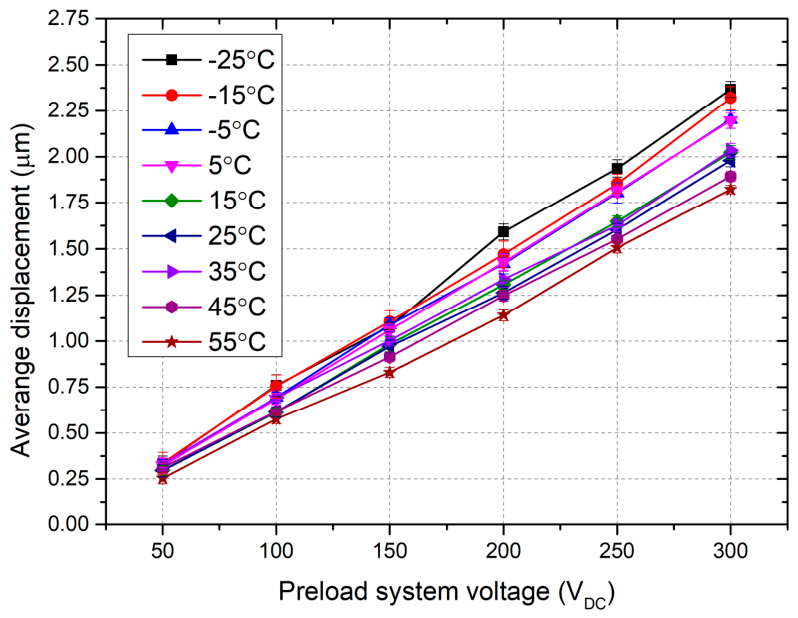
The results of the measured displacement values for PZT rings, at different voltages and ambient temperatures, are shown in
Figure 8. The measurements inside a thermal vacuum chamber were conducted with temperatures ranging from −25 °C to 55 °C, and excitation voltages from 50 to 300 V
DC.
The results show that the displacement amplitudes of the PZT ring stack depend on both the applied DC voltage and ambient temperature. As expected, the displacement increased with increasing control voltage, while at a fixed voltage the displacement generally decreased at higher temperatures. This tendency may be related to temperature-dependent changes in the stiffness and electromechanical properties of the piezoceramic material, as well as to thermal deformation of the preload system. The minimum measured displacement was approximately 0.33 µm at 50 V
DC, whereas the maximum displacement reached 2.36 µm at 300 V
DC. To verify the finite element model, the numerically calculated displacement results shown in
Figure 5 were compared with the experimentally measured displacement values shown in
Figure 8 under the same control voltage and thermal conditions. The comparison showed that both numerical and experimental results follow the same tendency, namely that the displacement increases with increasing DC voltage and varies with ambient temperature. The maximum experimentally measured displacement was 2.36 µm, while the corresponding FEM result was approximately 2.32 µm, giving an absolute difference of 0.04 µm and a relative error of approximately 1.7%. Therefore, the FEM model can be considered verified with respect to the displacement response of the active preload system under the investigated thermal vacuum conditions.
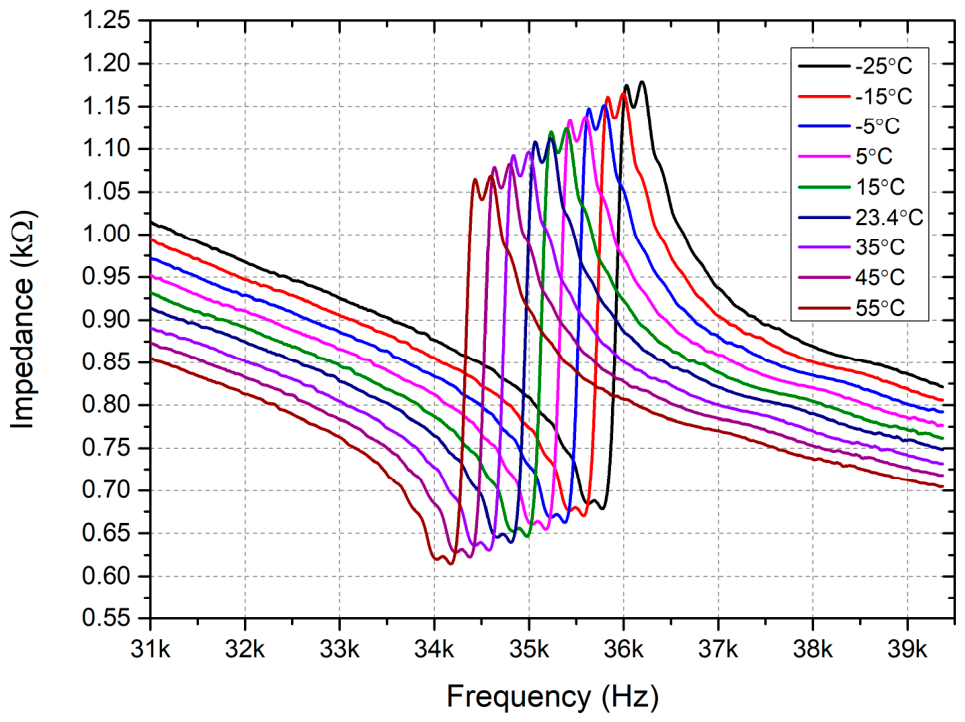
Before testing the performance of the fully assembled modified motor, its impedance-frequency characteristics were evaluated using a SinPhase 16667k (SinePhase Instruments GmbH, Hinterbruehl, Austria) impedance analyzer over the investigated temperature range from −25 °C to 55 °C. The resonance frequency was determined from the minimum value of the impedance curve (
Figure 9). The results showed that the resonance frequency decreases with increasing temperature, indicating a temperature-dependent softening of the motor structure and variation of the electromechanical properties of the piezoelectric elements. At the reference temperature close to room conditions, the resonance frequency was approximately 34.85 kHz. Over the full temperature range, the resonance frequency drift was approximately 4.6%, changing from about 35.82 kHz at −25 °C to about 34.22 kHz at 55 °C.
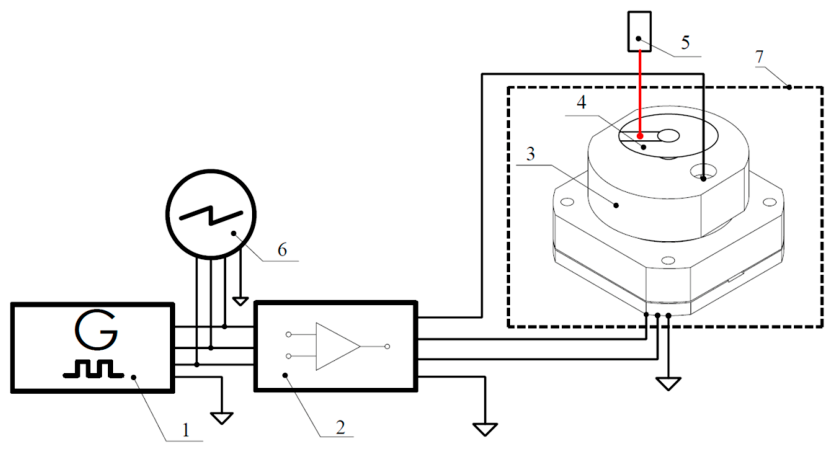
Finally, the rotational speed of the modified motor was measured together with the working preload system. The experimental setup was similar to the setup used for displacement measurement; however, this setup utilized a Uni-T UT-372 contactless tachometer. Measurements of motor rotational speed were conducted under the same temperature and preload system voltage conditions. The driving voltage of the traveling wave ultrasonic motor was set at 200 V
p-p. The schematic for this experiment setup is shown in
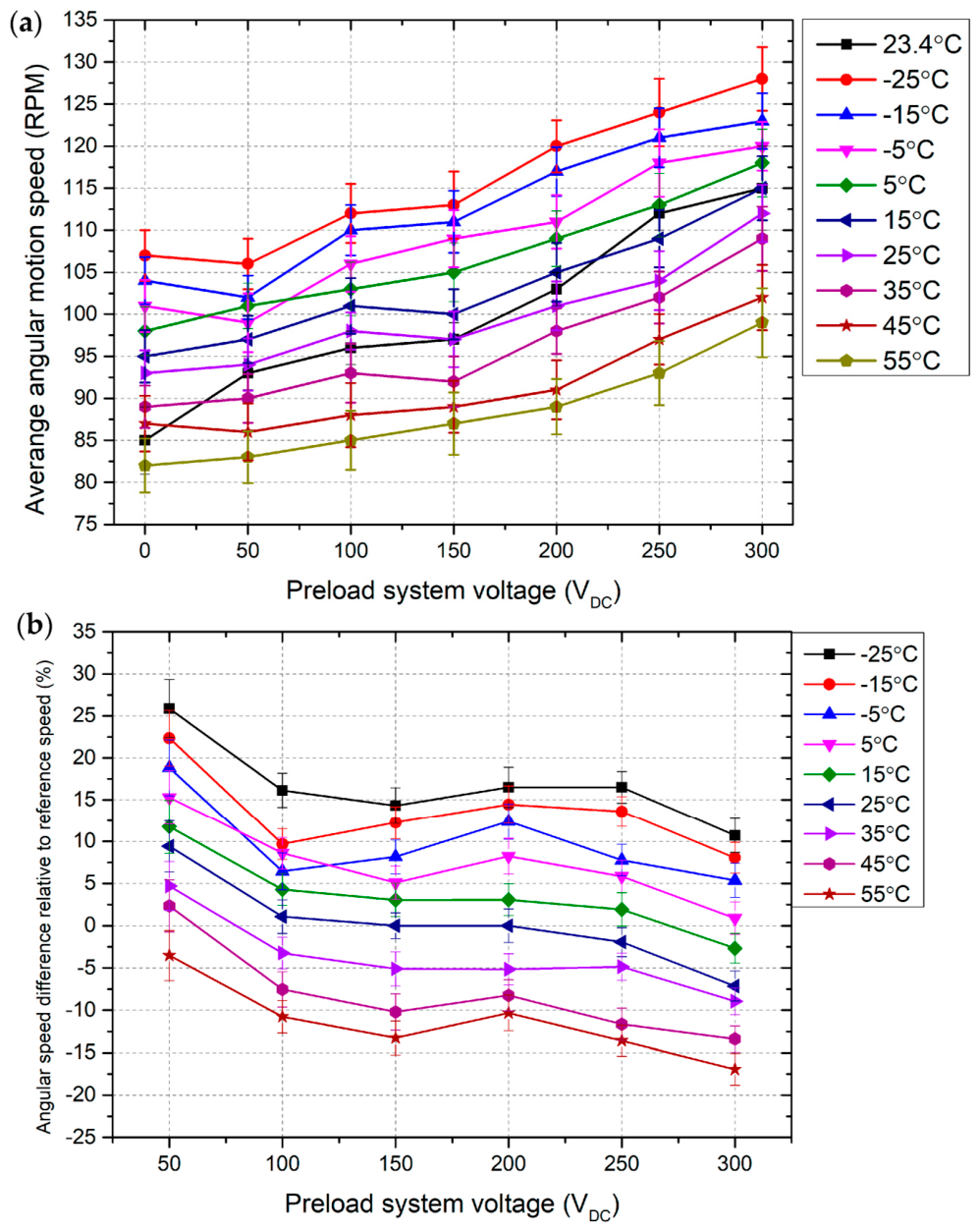
Figure 10. The results of rotational speed measurements are given in
Figure 11.
The results shown in
Figure 11 indicate that the angular speed of the modified ultrasonic motor is affected by both ambient temperature and the voltage applied to the active preload system. At temperatures below the reference value of 23.4 °C, the motor speed was higher, whereas at elevated temperatures the speed decreased. The highest positive speed difference was obtained at −25 °C, while at 55 °C the speed was lower than the reference value. This tendency can be attributed to the combined influence of temperature-dependent resonance frequency drift, changes in the electromechanical properties and mechanical quality factor of the piezoelectric stator, thermal deformation of the preload system, and variation of the stator–rotor frictional contact. In addition to the temperature effect, increasing the preload system voltage from 0 to 300 V
DC resulted in an increase in angular speed at all investigated temperatures. The total speed increase over this voltage range was approximately 17–20 RPM, depending on temperature. This voltage-dependent trend indicates that the axial deformation of the piezoelectric preload stack modifies the compression of the conical spring and changes the stator–rotor contact state.
It should be emphasized that the preload force was not directly measured during the motor speed experiments. Therefore, the observed angular speed variation cannot be attributed solely to preload force modulation. In the present study, the relationship between preload adjustment and motor performance was established indirectly by correlating FEM-estimated preload force variation, experimentally measured piezoelectric stack displacement, and experimentally measured motor speed. The numerical model indicated that increasing the control voltage from 0 to 300 V
DC increased the active preload force variation up to approximately 0.47 N. Under the same voltage range, the measured stack displacement increased up to 2.36 µm, while the motor speed measurements showed an average increase of approximately 17–20 RPM, depending on temperature. This consistent voltage-dependent trend indicates that the applied voltage modifies the axial deformation of the preload system and is correlated with changes in the stator–rotor contact state and motor speed. However, because the contact force was not measured directly, the preload-force contribution should be interpreted as an FEM-supported explanation rather than as a directly measured experimental quantity. The correlation between FEM-estimated preload force variation, experimentally measured stack displacement, and experimentally measured motor speed response under voltage-controlled preload adjustment is summarized in
Table 3.
The obtained results can be compared to previously reported active preload mechanisms used in ultrasonic motors. Electromagnetic preload systems can provide controllable normal force and intermittent clamping. However, they usually require coils, magnetic circuits, and additional power supply components, which increase structural complexity and may introduce electromagnetic interference. Piezoelectric stack-based preload systems with mechanical amplifiers can provide fast response and larger displacement or force ranges, but they often require flexure mechanisms, additional guiding elements, and more complex assembly procedures. In contrast, the preload system proposed in this work uses two ring-shaped piezoceramic elements integrated directly into the existing axial preload path of the motor. Therefore, the structure remains relatively simple and compact, while the passive conical spring is retained to generate the baseline preload force. Thus, the proposed system is not intended to replace high-force or fully closed-loop preload mechanisms. Instead, it provides a compact voltage-controlled solution for fine adjustment of the stator–rotor contact state under thermal vacuum conditions.
The experimental results should therefore be interpreted in the context of open-loop preload adjustment. The applied DC voltage does not represent a feedback-controlled preload command. Rather, it acts as an external control input that modifies the axial deformation of the piezoelectric stack and the compression of the conical spring. The measured change in rotational speed demonstrates that, even without real-time force or temperature feedback, the voltage-controlled preload actuator can modify the stator–rotor contact conditions. However, because the contact force and contact temperature were not directly measured during motor operation, the present results cannot be used to derive a closed-loop control law. Instead, they demonstrate the feasibility of active preload modulation and provide a basis for future integration of NTC temperature sensors and strain gauge or pressure sensor feedback.
It should also be noted that the observed changes in angular speed cannot be attributed only to the electromechanical response of the preload actuator or to thermal expansion of the motor components. In vacuum, the stator–rotor contact of an ultrasonic traveling wave motor can become tribologically unstable because the friction coefficient may be affected by the removal of adsorbed surface layers, absence of humidity and gas molecules at the interface, local contact heating, wear particle accumulation, and changes in adhesion between the polymeric friction layer and the stator. Therefore, the friction coefficient under thermal vacuum conditions should not be considered constant. Instead, the contact interface may transition between different frictional states, which can modify the efficiency of tangential force transfer from the stator to the rotor. In the present experiments, this effect is reflected by the fact that relatively small FEM-estimated active preload force variations were correlated with measurable changes in angular speed. Thus, the proposed preload system should be interpreted not only as a mechanism for compensating thermally induced preload changes but also as a means for partially compensating vacuum-related instability of the stator–rotor contact interface.
A limitation of the present study is that the tribological state of the stator–rotor contact was not directly characterized. The coefficient of friction, wear rate, surface roughness evolution, and debris formation were not measured during or after thermal vacuum operation. Therefore, the influence of vacuum-related tribological instability is inferred from the motor speed response and from the known sensitivity of ultrasonic motors to friction pair behavior. Future work will include dedicated tribological tests of the stator–rotor material pair under representative vacuum and temperature conditions, as well as post-test surface analysis, in order to quantify the relationship between preload force, friction coefficient, wear, and angular speed stability.
5. Conclusions
An open-loop voltage-controlled active preload adjustment system was designed and investigated for a modified ultrasonic traveling wave motor. The proposed system combines a passive conical spring, which generates the nominal baseline preload, with a piezoelectric ring stack that enables remote fine adjustment of the stator–rotor contact state. The nominal initial preload force between the rotor and stator was approximately 2.2 N at room temperature. Numerical investigations showed that the preload system is sensitive to thermal deformation over the investigated temperature range from −25 °C to 55 °C. At the same time, the FEM results indicated that the applied DC voltage can generate a predictable active preload force variation, reaching approximately 0.47 N at 300 VDC. This value corresponds to approximately 21.4% of the nominal preload force, indicating that the system is suitable for fine adjustment rather than complete replacement of the passive preload mechanism.
The prototype was experimentally investigated in a thermal vacuum chamber at a pressure of 5.6 × 10⁻⁶ mbar and at temperatures from −25 °C to 55 °C. The experimentally measured displacement of the piezoelectric preload stack increased with applied DC voltage and reached a maximum value of 2.36 µm at 300 VDC. The numerical displacement result under the corresponding condition was approximately 2.32 µm, giving an absolute difference of 0.04 µm and a relative error of approximately 1.7%. Therefore, the FEM model was experimentally verified with respect to the displacement response of the preload system. However, the preload force values reported in this work should be interpreted as FEM-estimated quantities because direct preload force measurement was not performed during motor operation.
The impedance frequency characteristics of the modified motor were measured over the same temperature range. The results showed that the resonance frequency decreased with increasing temperature, changing from approximately 35.82 kHz at −25 °C to approximately 34.22 kHz at 55 °C. The total resonance frequency drift over the investigated temperature range was approximately 4.6%. Therefore, the measured motor speed variation cannot be attributed only to preload adjustment; instead, it should be interpreted as the combined result of temperature-dependent resonance frequency drift, thermal deformation, electromechanical property variation, and changes in the stator–rotor frictional contact state. The motor speed measurements showed that increasing the preload control voltage from 0 to 300 VDC resulted in an average speed increase of approximately 17–20 RPM, depending on temperature. This trend demonstrates a consistent correlation between the applied voltage, experimentally measured stack displacement, FEM-estimated preload force variation, and motor speed response. However, because the preload force and contact temperature were not directly measured, the results should be interpreted as evidence of voltage-controlled modification of the stator–rotor contact state rather than direct experimental proof of preload force modulation alone. Therefore, the proposed system should be considered a compact open-loop preload fine adjustment mechanism validated under thermal vacuum conditions but not yet a fully qualified space-ready system. Further work should include direct preload force measurement, closed-loop force and temperature control, and additional environmental and lifetime testing.