


Abstract
This study proposes a printed circuit board (PCB) stator pattern for alleviating the trade-off between DC copper loss and AC winding loss in a slotless axial flux permanent magnet motor (AFPM). The proposed pattern has a structure in which the width of the effective conductor region directly exposed to time-varying magnetic flux is reduced, and two additional conductors with the same width are placed within the available axial space and then connected in parallel through vias. Three-dimensional finite element analysis was performed while varying the effective conductor width ratio from 0.3 to 0.8, and an additional refined sweep was conducted in the range of = 0.5–0.6, where the minimum total winding loss appeared in the initial sweep. Under the rated operating condition, the minimum total winding loss was obtained at based on the refined sweep results. Under this condition, the phase resistance, DC copper loss, AC winding loss, and total winding loss were reduced by 11.82%, 12.1%, 15.09%, and 12.48%, respectively. As a result, the efficiency increased from 81.53% to 83.5%, while the back electromotive force (BEMF), torque, and output were nearly unchanged. In addition, the AC winding loss distribution decreased in both the coil region closest to the magnets and the coil region farthest from the magnets. These results demonstrate that the proposed pattern is an effective design method for improving the winding loss characteristics of slotless PCB AFPM without meaningful degradation of the fundamental electromagnetic performance.
1. Introduction
Motors for robot joint actuation are required to generate high torque within limited volume and structural constraints, and therefore a motor structure capable of simultaneously satisfying high torque density and miniaturization is required. Under such conditions, a motor structure capable of securing high torque while maintaining a short axial length is advantageous, and accordingly, axial flux permanent magnet motors (AFPMs) have continuously attracted attention. AFPMs have been regarded as suitable structures for compact systems because they can simultaneously realize a shorter axial length and higher torque density than radial flux permanent magnet motors, and various review studies have also reported them as promising machines for high power density and compact drive applications [1,2,3,4].
Among these AFPM structures, slotless AFPMs employing printed circuit board (PCB) windings are recognized as promising structures in that they can secure high pattern design freedom and repetitive precision, while simplifying the forming and insertion processes of conventional windings [3,5,6,7,8]. Accordingly, recent studies on PCB stator AFPMs have regarded winding patterns, conductor shapes, conductor widths, and winding structures based on pattern flexibility as important design factors that directly influence electromagnetic performance [6,9,10,11,12].
Recent studies have further expanded the design scope of PCB AFPM machines by considering high-speed PCB stator design, eddy-current and circulating-current loss mechanisms, and unequal-width or optimized winding patterns. These studies indicate that the PCB trace width, conductor arrangement, interlayer connection, and available axial space are closely related to both electromagnetic performance and winding loss characteristics [12,13,14,15,16].
In particular, when a PCB stator is applied to a slotless AFPM, winding losses account for a significant portion of the total loss [3,11,17]. Winding losses can be broadly divided into DC copper loss and AC winding loss. PCB windings tend to exhibit increased phase resistance because of their generally long current paths and limited conductor’s cross-sectional area, and, accordingly, DC copper loss may increase when current is applied to satisfy the target torque [6,7,11]. At the same time, in a slotless structure, the conductors are directly exposed to the air-gap flux, and thus eddy currents may be induced inside the conductors by the time-varying magnetic flux, which may increase the AC winding loss [13,14,15,16,18,19]. To reduce such losses, increasing the width of the effective conductor can reduce DC copper loss through a decrease in phase resistance, but the AC winding loss may increase as the conductor width exposed to the magnetic flux becomes wider [10,11,15,16,18]. Conversely, reducing the conductor width or applying slits can decrease AC winding loss, but an opposing relationship arises in which DC copper loss increases because of the increase in electrical resistance, as reported in previous studies [10,20]. In other words, in slotless AFPMs employing PCB windings, the shape and width of the effective conductor act as key design variables that simultaneously govern both DC copper loss and AC winding loss.
To mitigate these winding-loss issues, previous studies on PCB AFPM windings have proposed various structural approaches, including winding-topology comparison, arc- or wave-winding optimization, effective conductor width adjustment, slit application, and analytical/FEA-based evaluation of eddy-current and circulating-current losses [9,10,11,12,13,14,15,16,20]. These studies demonstrated that the winding shape, conductor width, conductor division, and conductor arrangement directly affect the loss characteristics of PCB windings. In particular, reducing or dividing the effective conductor width is an effective approach for suppressing AC winding loss. However, such approaches mainly focus on reducing AC winding loss and may increase DC copper loss because the conductor’s cross-sectional area is reduced or the current path resistance is increased. Therefore, although previous studies have contributed to the reduction in individual loss components, the trade-off between DC copper loss and AC winding loss remains an important design limitation in slotless PCB AFPMs.
The novelty of the proposed approach lies in combining effective conductor width reduction with additional parallel current paths formed in the available axial space of the PCB stator. Unlike previous approaches that mainly reduce AC winding loss by narrowing or dividing the conductor, the proposed pattern reduces the effective conductor region directly exposed to time-varying magnetic flux while compensating for the increase in phase resistance through additional parallel-branch conductors. Therefore, the proposed method is not intended to reduce only one loss component, but to alleviate the trade-off between DC copper loss and AC winding loss through structural space utilization.
Accordingly, this study proposes a PCB stator pattern in which the width of the effective conductor region directly exposed to magnetic flux is reduced, while additional conductors having the same width are arranged in the structurally available axial space to form parallel current paths through vias. The effective conductor width ratio is analyzed as a key design variable, and its influence on phase resistance, DC copper loss, AC winding loss, total winding loss, and efficiency is quantitatively evaluated. Through this analysis, the effect of the effective conductor width ratio on the loss characteristics of the proposed structure is investigated.
This paper is organized as follows. Section 2 describes the fundamental characteristics of AFPM and PCB concentrated winding patterns, as well as the winding loss mechanisms in slotless PCB AFPMs and the trade-off between DC copper loss and AC winding loss. Section 3 presents the structural differences and design concept of the conventional and proposed models, together with the analysis conditions and loss evaluation method. Section 4 compares the variations in phase resistance, DC copper loss, AC winding loss, total winding loss, and efficiency according to the effective conductor width ratio, and analyzes the AC winding loss distribution under the optimal condition. Finally, Section 5 summarizes the conclusions of this study.
2. Structural Characteristics of AFPMs with a Slotless PCB Stator and Winding Loss Mechanisms
2.1. Fundamental Characteristics of AFPM and PCB Concentrated Winding Patterns
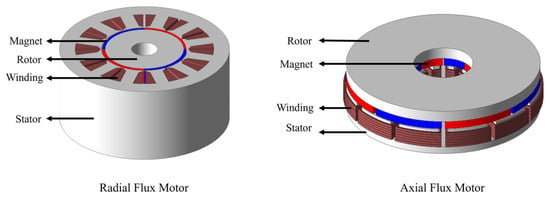
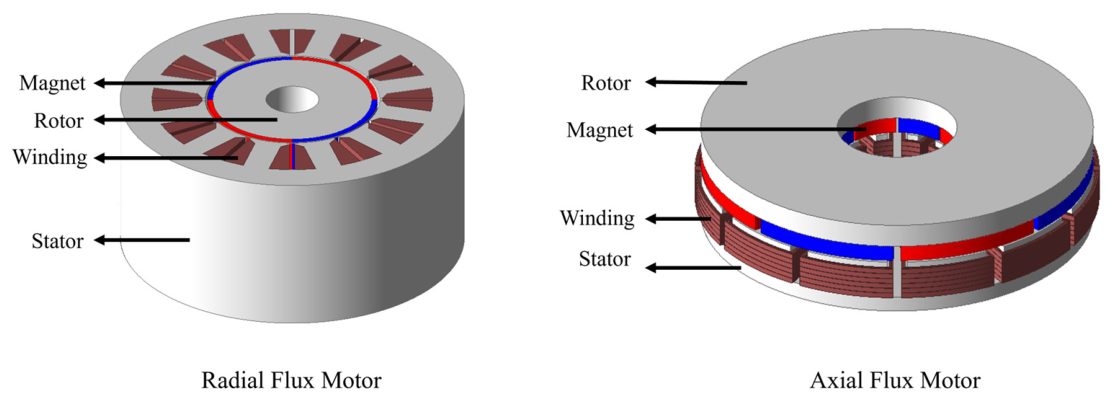
Figure 1 shows the configurations of a radial flux permanent magnet motor (RFPM) and an axial flux permanent magnet motor (AFPM).
Figure 1.
Configurations of the radial flux motor and axial flux motor.
In the RFPM, the magnetic flux produced by the permanent magnets mainly flows in the radial direction, whereas in the AFPM, it flows in the axial direction. This difference in the flux path leads to different geometric scaling characteristics in torque production. Previous studies have expressed the torque or power capability of RFPM and AFPM machines using electric loading, air-gap flux density, and dominant machine dimensions [2,21,22]. Based on these relationships, the following simplified torque-scaling expressions are used to compare the main geometric dependence of RFPM and AFPM topologies:
Equations (1) and (2) represent the simplified torque-scaling expressions of the RFPM and AFPM, respectively. In (1), denotes the electromagnetic torque of the RFPM, is the winding factor, is the fundamental component of the air-gap flux density, is the specific electric loading, and β is the electrical angle associated with the torque-producing current component. The geometric variables and denote the air-gap diameter and effective axial stack length, respectively. In (2), denotes the electromagnetic torque of the AFPM, is the ratio of the inner diameter to the outer diameter, and is the rotor outer diameter. These equations show that the RFPM torque is mainly scaled by , whereas the AFPM torque is mainly scaled by together with the diameter-ratio term.
From (1) and (2), it can be seen that the torque of the RFPM is generally proportional to , whereas the torque of the AFPM is proportional to . That is, the torque of the RFPM is strongly influenced by both the air-gap diameter and the axial stack length, whereas the torque of the AFPM is more strongly governed by the outer diameter. Therefore, the AFPM is advantageous for applications requiring high torque within a short axial length. Owing to these characteristics, the AFPM can be regarded as a suitable structure for thin-profile robot joint motors, where torque should be secured through the effective air-gap area rather than by increasing the axial stack length.
In addition, unlike general AFPM structures having teeth, PCB winding-based slotless AFPMs have a structure in which slots and teeth are removed, and therefore axial space for accommodating teeth is not required. Accordingly, even within the same AFPM family, the stack length can be further reduced, making such structures more advantageous for realizing thin-profile configurations.
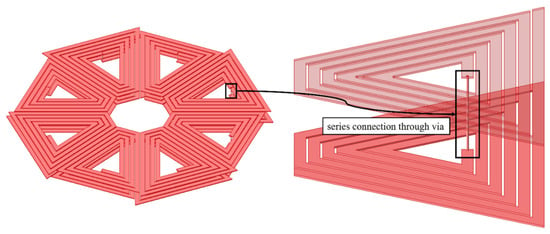
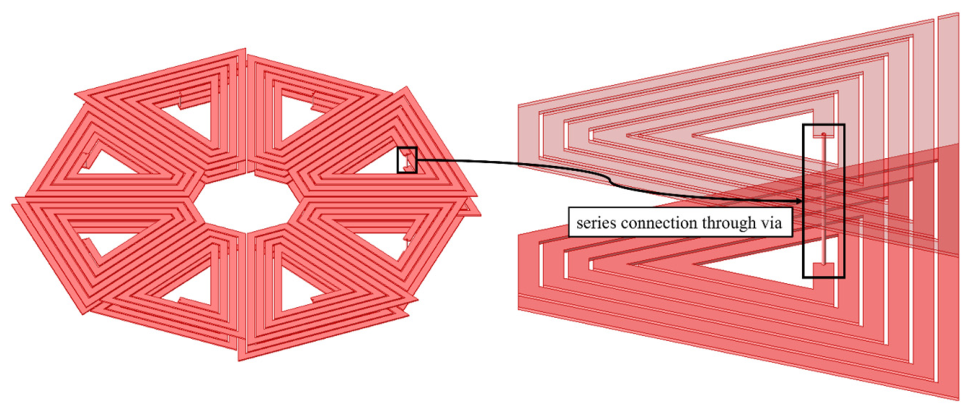
Figure 2 shows the configuration and current path of a PCB concentrated winding stator pattern having these structural characteristics.
Figure 2.
Current path of the PCB concentrated winding pattern.
In the PCB concentrated winding pattern, the current flows from the outer side to the inner side, moves to a pattern on another layer through a via, and then flows out again from the inner side to the outer side. Owing to this structure, the PCB concentrated winding pattern has a long continuous current path, and the pattern shape and conductor arrangement directly affect the electrical characteristics and loss characteristics.
2.2. Winding Loss Mechanisms and the Trade-Off Between Loss Components
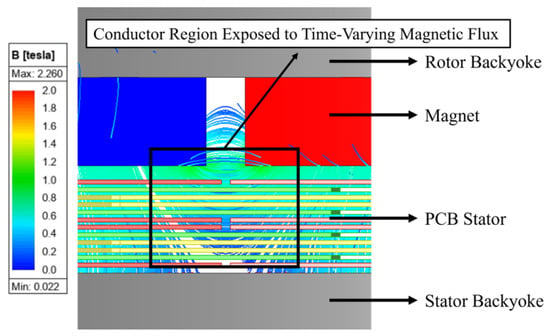
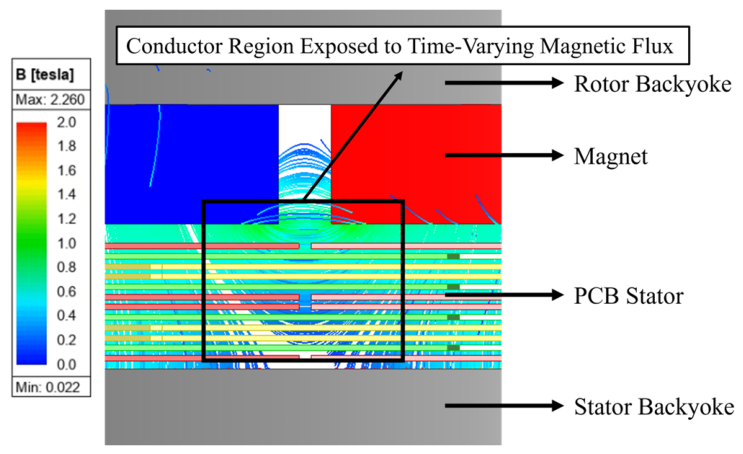
In slotless PCB AFPMs, winding losses can be broadly classified into DC copper loss and AC winding loss. Among these, AC winding loss is mainly caused by the eddy current component generated in the effective conductors. That is, due to the time-varying magnetic flux formed by the magnets, an electromotive force is induced inside the winding, and induced current flows inside the conductor due to this induced electromotive force. This induced current is referred to as eddy current, and the eddy current is dissipated as heat by the resistance of the winding. The loss generated in this process is the eddy current loss. In particular, as the magnet pole passing over the upper side of the conductor changes from the N pole to the S pole, or vice versa, a strong time-varying magnetic flux density is formed near the inter-pole boundary and directly affects the effective conductor region, as shown in Figure 3. Figure 3 was obtained from the three-dimensional finite element analysis; the color scale represents the magnetic flux density in tesla, and the magnet, air-gap, PCB conductor, and effective conductor regions are labeled to clarify the region exposed to the time-varying magnetic field.
Figure 3.
Magnetic flux density distribution near the pole-transition region and conductor region exposed to time-varying magnetic flux.
Eddy-current loss in a conductor can be derived from the Joule loss caused by the induced current density. For a simplified rectangular conductor exposed to a sinusoidally varying magnetic flux density, the time-averaged eddy-current loss per unit volume can be expressed as follows [15]:
where c is the conductor width in the direction in which the eddy-current loop is formed, ρ is the electrical resistivity, f is the electrical frequency, , and is the peak magnetic flux density. This expression indicates that the eddy-current loss increases with the square of the conductor width, frequency, and magnetic flux density. Therefore, reducing or dividing the effective conductor width is an effective approach for reducing the alternating-current winding loss, as shown in Figure 4.
Figure 4.
Effect of conductor width on eddy-current tendency. The dashed arrows schematically represent the tendency of eddy-current paths.
Meanwhile, DC copper loss is determined by the resistance of the PCB winding and the current required to achieve the target torque, and can be expressed as follows.
Here, m is the number of phases, is the phase current, and is the phase resistance. The phase resistance can also be expressed as follows.
Here, l is the conductor length, σ is the electrical conductivity of the conductor, and S is the conductor’s cross-sectional area. Since the electrical conductivity of the conductor is determined by the material and the conductor length is determined by the motor size, number of turns, pattern shape, and so on, the most direct method for reducing the phase resistance is to increase the conductor’s cross-sectional area. Therefore, from the perspective of DC loss, it is advantageous to increase the conductor’s cross-sectional area.
As described above, both AC winding loss and DC copper loss are strongly affected by the conductor’s cross-sectional area. In particular, the AC winding loss considered here mainly reflects the eddy current component generated in the effective conductor, and therefore tends to decrease as the conductor’s cross-sectional area decreases. In contrast, DC copper loss decreases as the conductor’s cross-sectional area increases. In other words, the two losses show opposite tendencies with respect to the conductor’s cross-sectional area, resulting in a trade-off between the two losses. Therefore, it is difficult to satisfactorily reduce both losses simultaneously by simply increasing or decreasing the conductor’s cross-sectional area. Accordingly, a structural design method that can alleviate the trade-off between the two losses is required.
3. Proposed PCB Stator Pattern and Analysis Conditions
3.1. Proposed PCB Pattern Structure and Design Concept
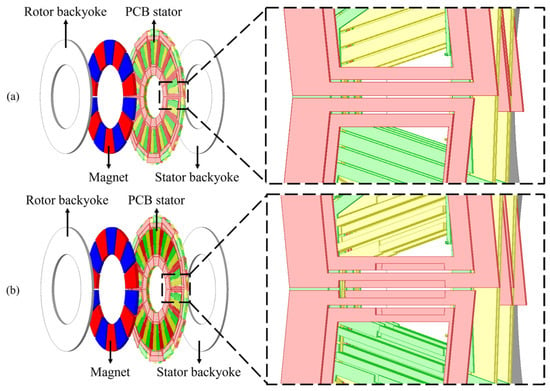
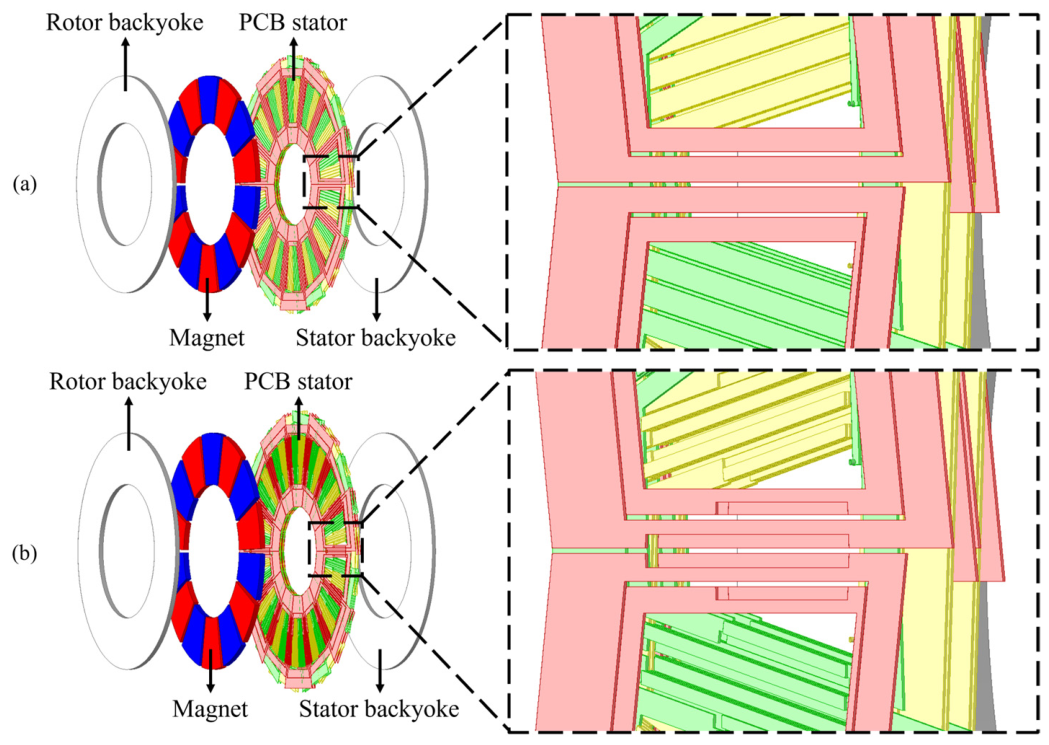
Figure 5 shows the overall configurations of the conventional model and the proposed model.
Figure 5.
Configurations of the (a) conventional model and (b) proposed model.
The two models have the same rotor, magnet, and basic stator structure, and the difference lies in the shape of the PCB stator pattern. That is, the proposed model changes only the PCB stator pattern while maintaining the basic electromagnetic structure of the conventional model.
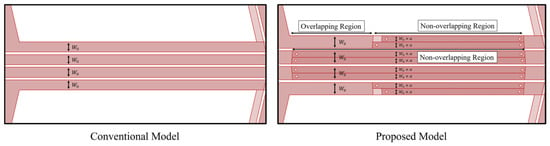
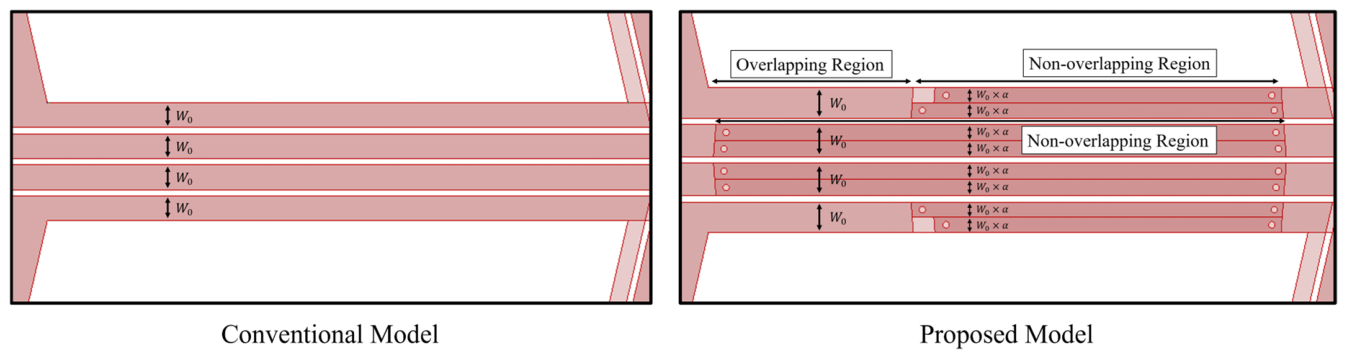
Figure 6 shows the difference in effective conductor width between the conventional model and the proposed model.
Figure 6.
Conductor width of the conventional model and the proposed model.
In the proposed model, the width of the effective conductor region was reduced based on the effective conductor width of the conventional model, and this reduction was defined using the ratio α. The effective conductor width of the proposed model is denoted as , where the subscript e represents the effective conductor region. Therefore, can be expressed as follows.
Here, α has a value between 0 and 1. For example, when , the effective conductor width of the proposed model becomes half of the effective conductor width of the conventional model.
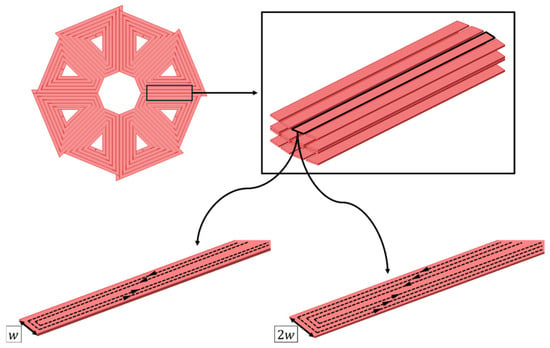
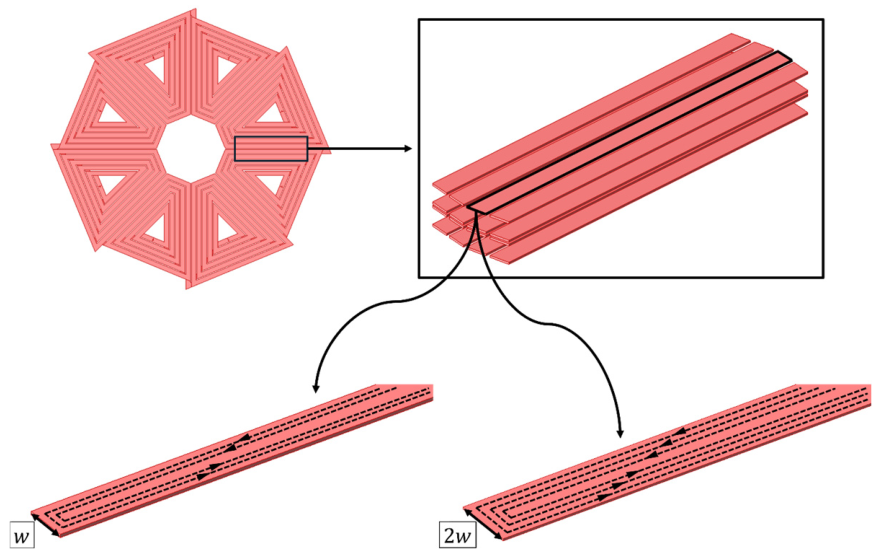
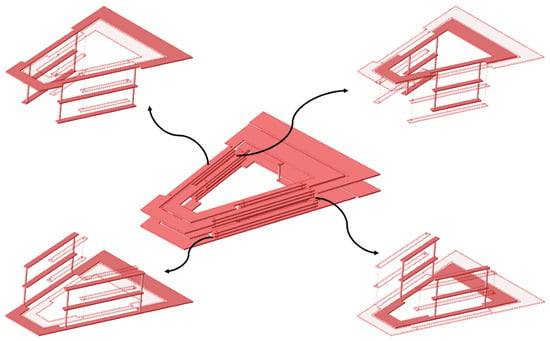
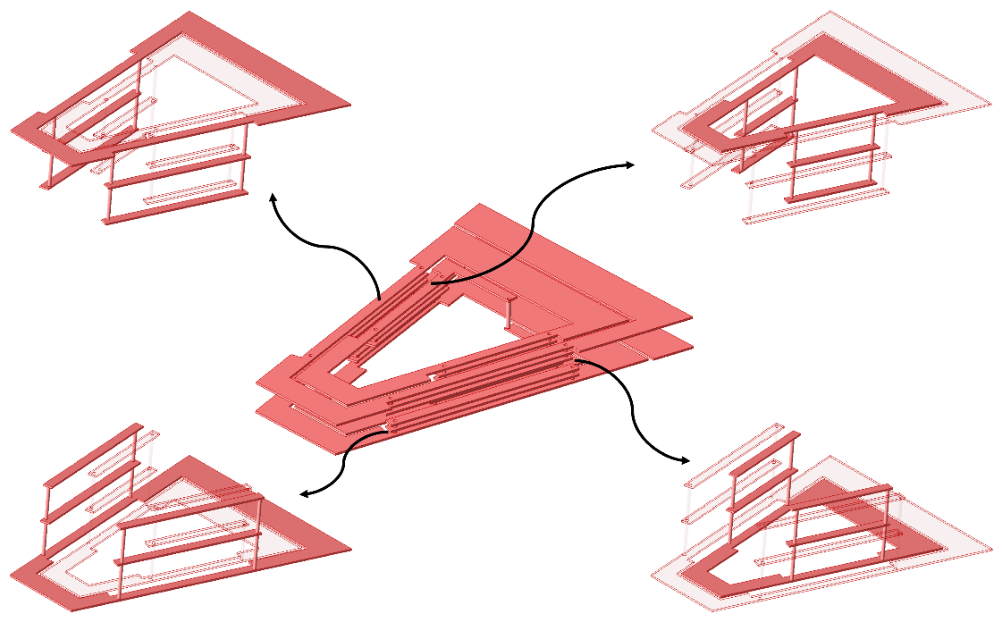
In addition, the proposed model is not simply a structure in which only the effective conductor width is reduced. Rather, two additional conductors having the same width as are stacked in the axial direction and connected in parallel through vias. Figure 7 shows the detailed configuration of the proposed pattern.
Figure 7.
Proposed pattern connected in parallel through vias.
In other words, the proposed structure can be regarded as a structure designed to suppress the increase in AC winding loss while reducing the phase resistance by adding parallel current paths, even as the width of the effective conductor region directly exposed to magnetic flux is reduced. To form these additional parallel current paths within the actual PCB pattern, axial space is required where additional conductors can be placed without interfering with the existing conductors.
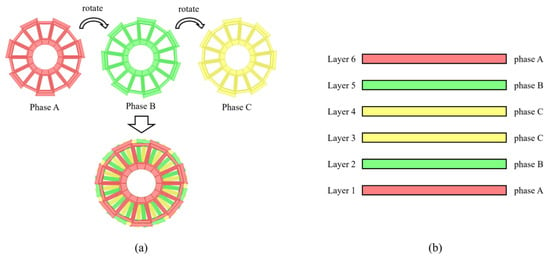
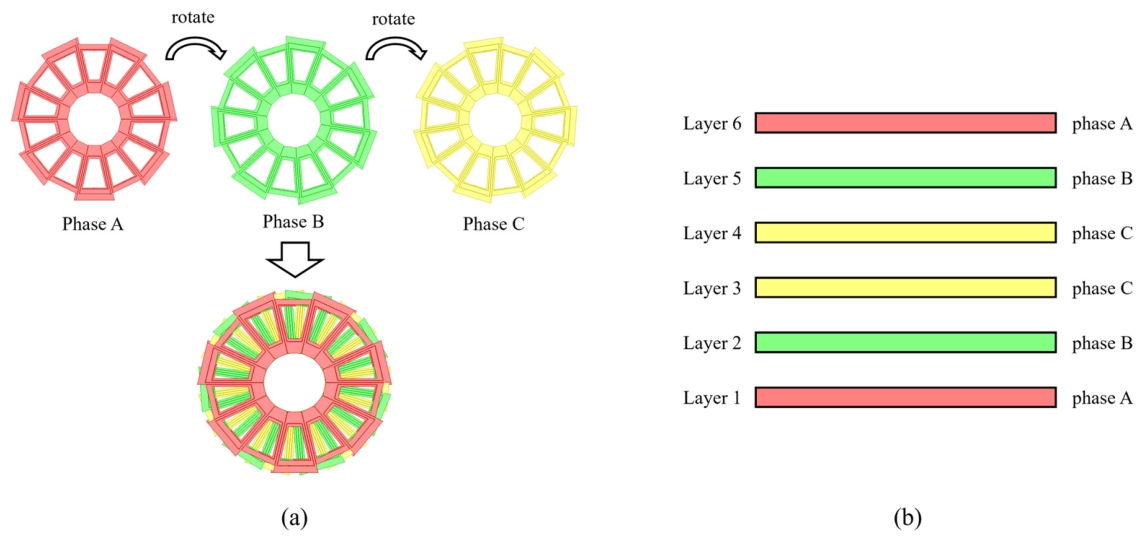
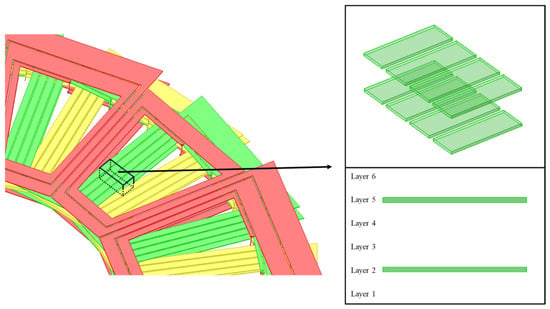
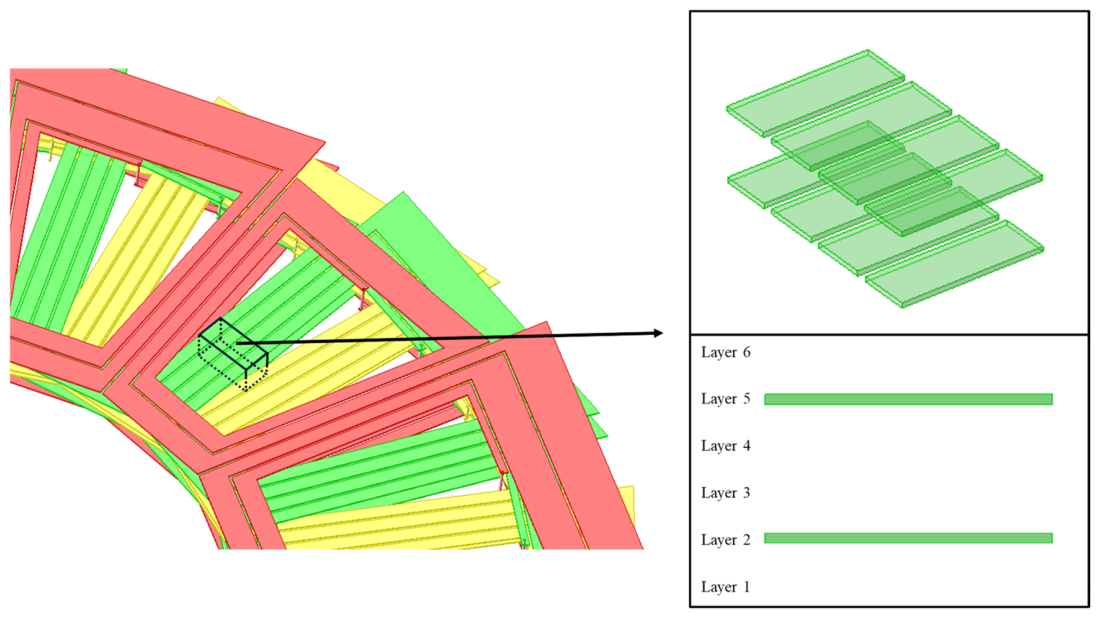
As shown in Figure 8a, in the three-phase PCB concentrated winding pattern, each phase winding is circumferentially shifted with respect to the others. In addition, as shown in Figure 8b, the conductors of each phase are not uniformly distributed across all layers but are instead placed in phase-specific layers. Owing to these structural characteristics, when viewed in the axial direction, non-overlapping spaces can be formed at certain locations where conductors of other phases are absent in some layers.
Figure 8.
(a) Circumferential arrangement of each phase pattern; (b) Example of layer distribution for each phase.
Figure 9 illustrates an example of the non-overlapping space formed by these structural characteristics. As shown in the enlarged view, sufficient space can be secured in some unoccupied layers to place additional parallel conductors. In this study, such space was utilized to place additional conductors and form parallel current paths through vias.
Figure 9.
Formation of a non-overlapping space at a selected location.
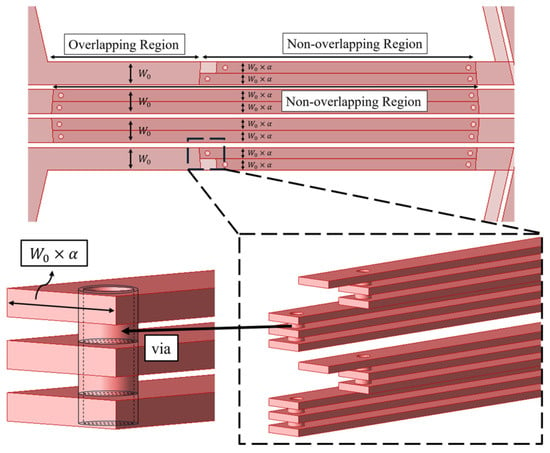
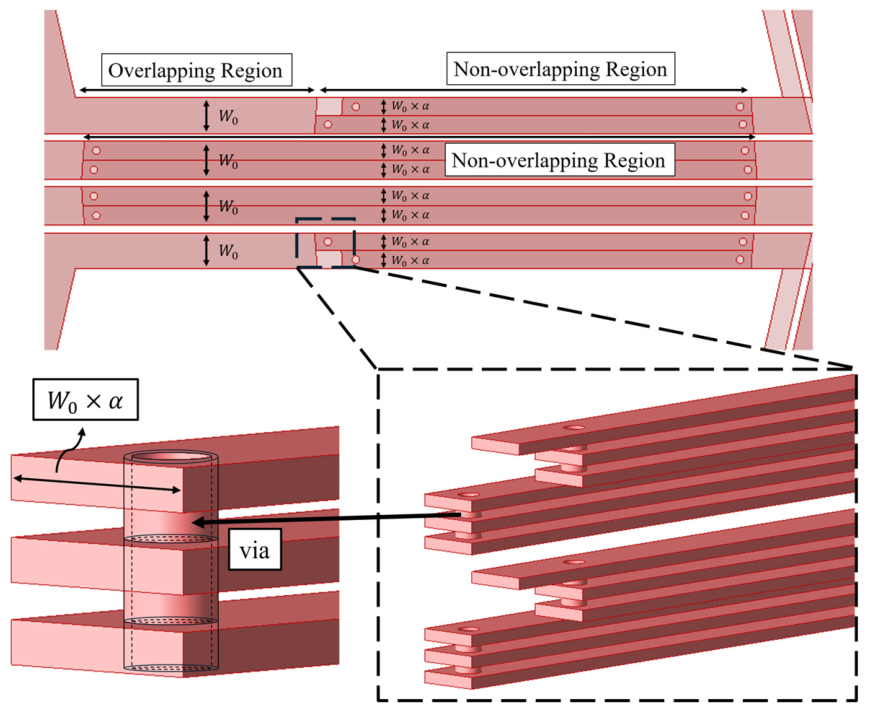
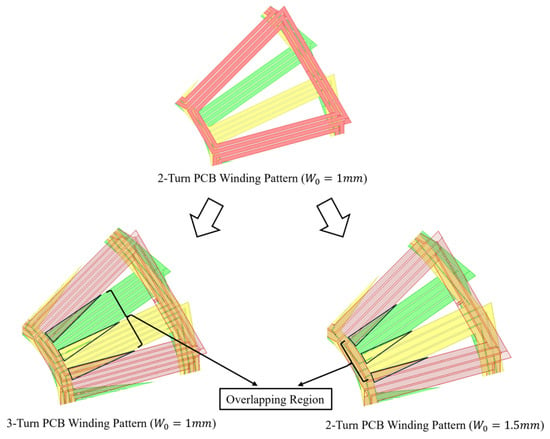
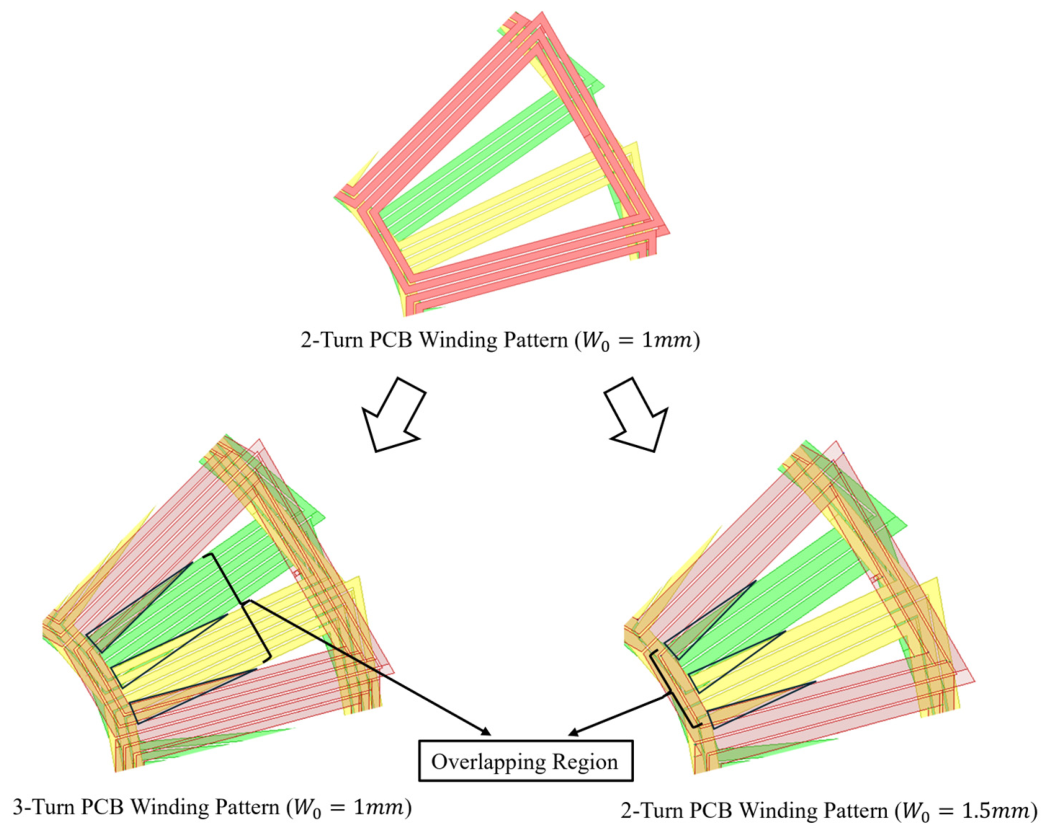
However, these non-overlapping spaces are not available throughout the entire conductor path. As shown in Figure 10, as the number of turns increases or the effective conductor width becomes larger, the structural tendency for conductors of different phases to be vertically stacked in the axial direction becomes more pronounced, particularly in the inner region, which may cause interference between conductors of different phases. Accordingly, the conventional pattern was divided into an overlapping region, where axial adjacency between conductors of different phases exists, and a non-overlapping region, where such adjacency is absent. In this study, to avoid inter-phase interference, the effective conductor width reduction and parallel-branch structure were selectively applied only to the non-overlapping region.
Figure 10.
Inter-phase interference region according to the number of turns and conductor width.
Figure 11 shows in detail the final configuration derived through this design process.
Figure 11.
Detailed configuration of the proposed model.
3.2. Analysis Conditions and Loss Evaluation Method
In this study, the characteristics of the conventional model and the proposed model were comparatively analyzed by modifying only the PCB stator pattern while keeping the rotor structure, magnet shape, air-gap length, material properties, and major stator dimensions identical. Therefore, the difference between the two models was limited to the width of the effective conductor region and the presence or absence of the additional parallel current paths. The effective conductor width ratio α of the proposed pattern was selected as the main design variable, and its influence on the phase resistance, DC copper loss, AC winding loss, total winding loss, and efficiency was evaluated. Although a wider range of α can be considered in the design stage, preliminary analysis showed that the conditions of and exhibited unfavorable loss and efficiency characteristics compared with the conventional model, whereas relatively superior characteristics appeared in the range of = 0.4–0.7. Accordingly, the analysis was mainly performed within the range of = 0.3–0.8 to compare the performance difference with the conventional model and identify the optimal condition.
For the loss evaluation, the winding loss was divided into DC copper loss and AC winding loss. The phase resistance and AC winding loss were obtained from the three-dimensional transient finite-element analysis. The DC copper loss was then calculated using the obtained phase resistance and the phase current determined for each α model to satisfy the same target torque and output condition. In this process, the phase current was not treated as an independent sweep variable but was adjusted only to ensure that each model satisfied the same operating condition. Therefore, the purpose of this comparison was not to optimize α under different current or load conditions, but to evaluate the loss variation caused by the proposed conductor pattern under the same performance condition.
In this paper, the AC winding loss mainly reflects the eddy-current component generated in the effective conductor. However, because the proposed pattern includes additional parallel current paths, the calculated AC winding loss may also include a circulating-current component caused by the induced voltage difference between the parallel paths. Therefore, the term AC winding loss is used as a practical finite-element-analysis-based loss quantity rather than as a quantity representing only the pure eddy-current component. The total winding loss was defined as the sum of the DC copper loss and AC winding loss, and the efficiency was calculated based on the output power and total winding loss under the target torque condition.
To obtain these electromagnetic and loss characteristics, a three-dimensional transient finite-element model was constructed for both the conventional and proposed models using the transient solver of Ansys Maxwell 2025 R1 3D. Since the analysis includes rotational motion, the numerical electromagnetic formulation was described based on the T-Ω formulation, which is suitable for three-dimensional transient electromagnetic problems with rigid motion. According to the Ansys Maxwell documentation, the default Maxwell 3D transient solver is based on the T-Ω formulation [23]. In the T-Ω formulation, the magnetic field intensity can be expressed as follows [24,25]:
where is the magnetic field intensity, is the source-field component associated with known current excitations, is the current vector potential, Ω is the magnetic scalar potential, is the current of the k-th voltage-driven coil, and is the corresponding source-field basis function. The magnetic scalar potential Ω is represented by nodal shape functions in the entire solution domain, whereas the current vector potential is represented by edge-based shape functions in the conducting regions. The corresponding transient electromagnetic field solution was numerically obtained using the finite-element method in Ansys Maxwell 3D.
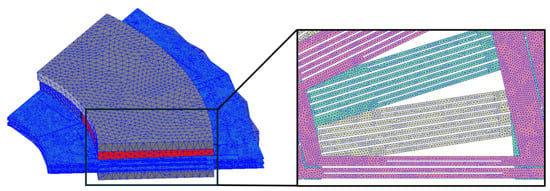
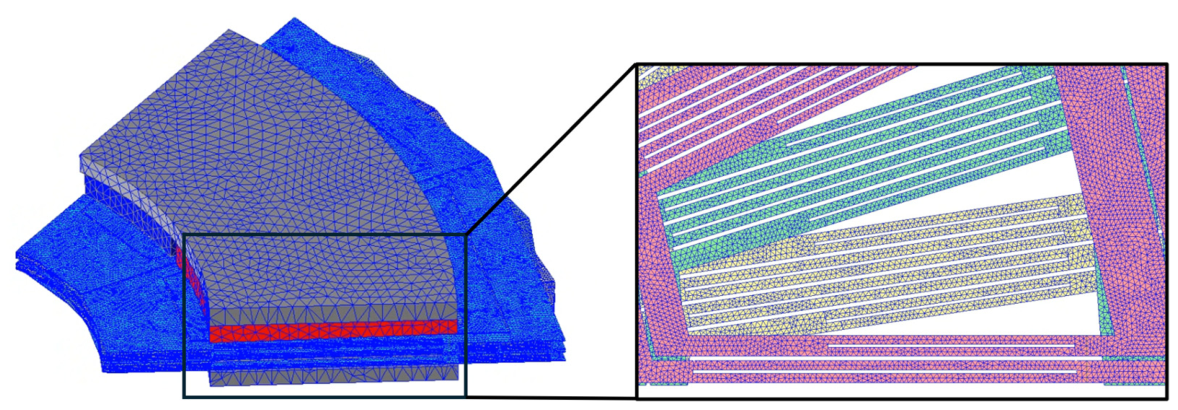
To improve the accuracy of the field and loss calculations, mesh refinement was applied to the regions where large field variations or local loss concentrations were expected. As shown in Figure 12, the finite-element mesh was locally refined in the PCB conductor, via, air-gap, and permanent magnet regions. The final mesh consisted of approximately 5,422,670 elements, and the same meshing strategy was applied to all analyzed models to ensure a consistent comparison. In addition, a mesh sensitivity analysis was conducted by comparing the AC winding loss under different mesh densities, and the variation in the calculated AC winding loss became sufficiently small after mesh refinement.
Figure 12.
Finite element mesh of the proposed PCB AFPM model.
4. Performance Comparison According to the Effective Conductor Width Ratio
4.1. Loss and Efficiency Characteristics According to the Effective Conductor Width Ratio
The material and electrical properties and the geometric specifications of the analyzed PCB AFPM are summarized in Table 1 and Table 2, respectively. These specifications were determined based on a baseline slotless PCB AFPM model previously designed for a compact robot-joint actuator application. The conventional model was selected to satisfy the requirements of a thin axial structure, compact motor size, and target torque/output level. In this study, the rotor structure, magnet geometry, stator dimensions, air-gap length, and material properties were kept identical to those of the baseline model so that the influence of only the PCB stator pattern could be isolated. Therefore, the values listed in Table 1 and Table 2 were used as fixed conventional design parameters for a fair comparison between the conventional and proposed winding patterns, rather than as newly optimized parameters in the present study. In Table 2, the trace copper thickness is given as 4 oz, which corresponds to approximately 0.14 mm per PCB layer.
Table 1.
Material and electrical properties of the analyzed PCB AFPM.
Table 2.
Geometric specifications of the analyzed PCB AFPM.
In this study, the characteristics of the conventional model and the proposed model were compared by varying only the PCB stator pattern while maintaining the same rotor structure, magnet geometry, and principal stator dimensions. Therefore, the difference between the two models was limited to the width of the effective conductor region and the presence or absence of the parallel structure. In the proposed model, the effective conductor width ratio, α, was varied from 0.3 to 0.8, and the resulting phase resistance, DC copper loss, AC winding loss, total winding loss, and efficiency characteristics were evaluated.
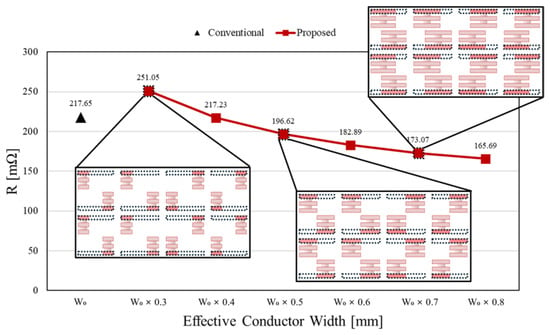
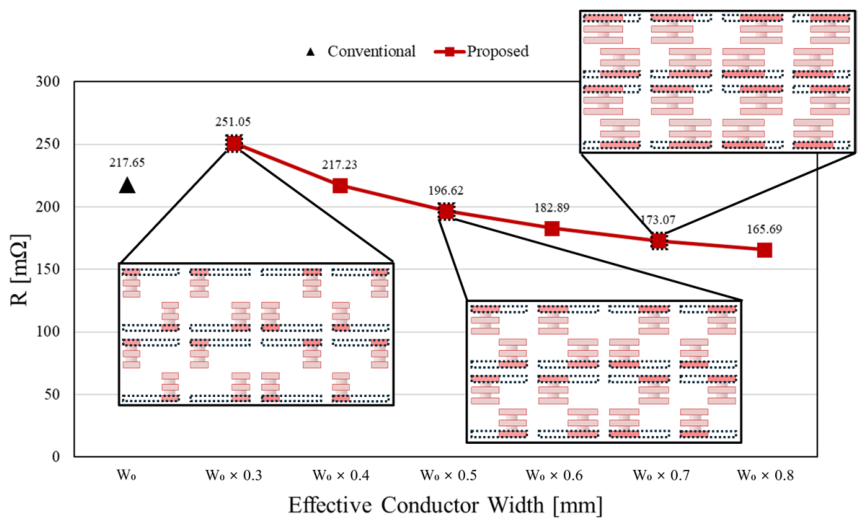
Figure 13 shows the change in phase resistance according to the variation in the effective conductor width ratio. The phase resistance of the conventional model was 217.65 mΩ, whereas the proposed model exhibited the highest value of 251.05 mΩ at . Thereafter, as α increased, the phase resistance gradually decreased to 217.23 mΩ at , 196.62 mΩ at , 182.89 mΩ at , 173.07 mΩ at , and 165.69 mΩ at . This is interpreted as a consequence of the increased conductor’s cross-sectional area with increasing effective conductor width, together with the effect of the additional parallel paths, which reduced the electrical resistance.
Figure 13.
Comparison of resistance according to conductor width variation.
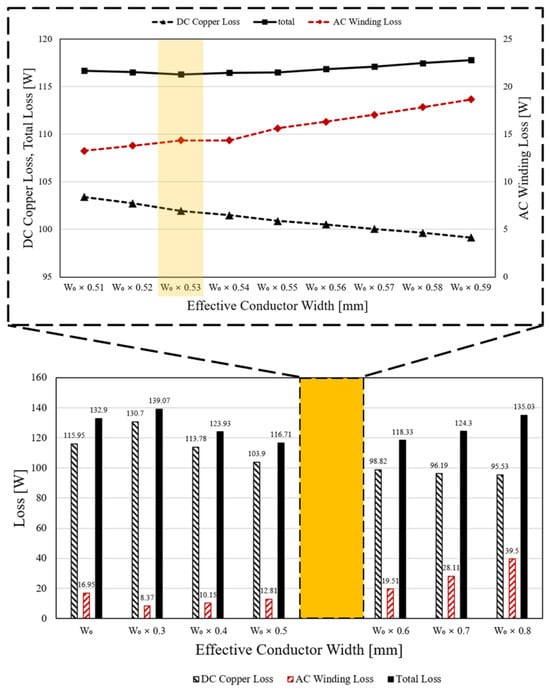
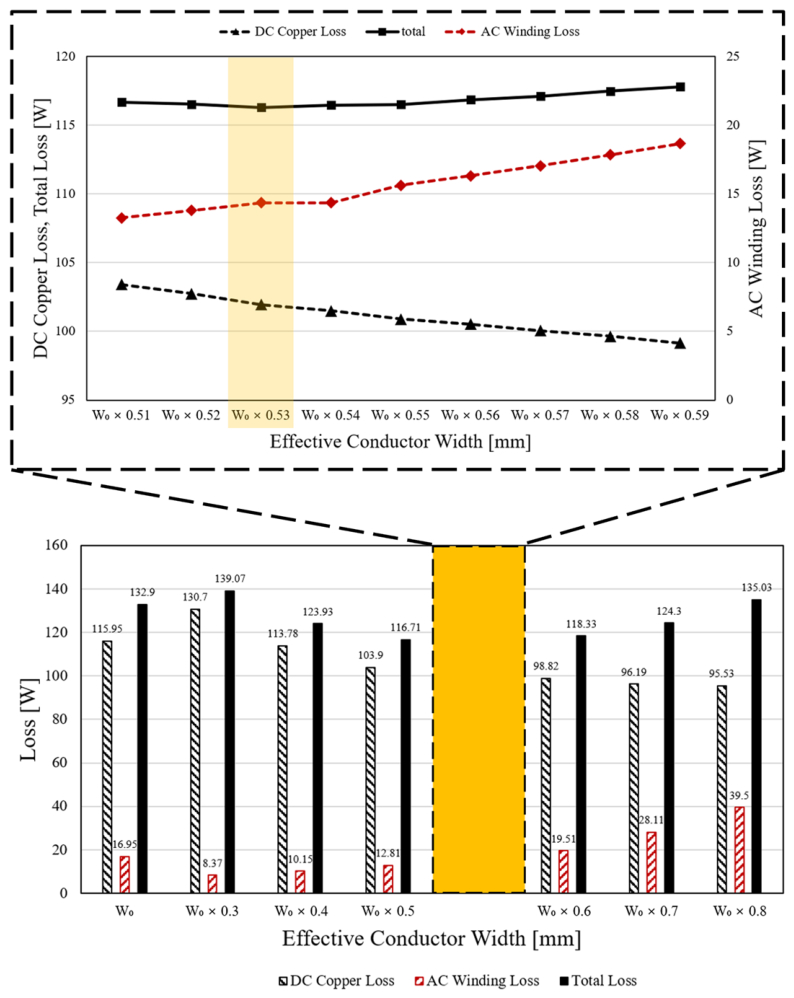
Figure 14 compares the DC copper loss calculated from the phase resistance, the AC winding loss obtained from the three-dimensional finite element analysis, and the total winding loss defined as the sum of the two. For the conventional model, the DC copper loss, AC winding loss, and total winding loss were 115.98 W, 16.9 W, and 132.9 W, respectively. In contrast, the proposed model exhibited opposite trends in DC copper loss and AC winding loss as α varied. At , the effective conductor width was substantially reduced, which increased the phase resistance and thereby raised the DC copper loss to 130.70 W. However, because the conductor area directly exposed to the magnetic flux decreased, the AC winding loss was reduced to 8.37 W. Under this condition, however, the increase in DC copper loss had a greater effect, resulting in an increase in the total winding loss to 139.07 W. As α increased, the DC copper loss gradually decreased, whereas the AC winding loss increased again because the conductor area exposed to the magnetic flux increased. To more accurately identify the optimum effective conductor width ratio, an additional refined sweep was conducted in the range of = 0.51–0.59. The refined results confirmed that the total winding loss reached its minimum at . At this condition, the DC copper loss, AC winding loss, and total winding loss were 101.95 W, 14.35 W, and 116.3 W, respectively. After , the total winding loss gradually increased because the reduction in DC copper loss was outweighed by the increase in AC winding loss. Thereafter, at , although the DC copper loss further decreased to 98.82 W, the AC winding loss increased to 19.51 W, and thus the total winding loss increased again to 118.33 W. At and 0.8, the increase in AC winding loss became more pronounced, resulting in an increase in the total winding loss to 124.30 W and 135.03 W, respectively. These results indicate that, in the proposed structure, an excessively small effective conductor width is unfavorable for DC copper loss because of the increase in phase resistance, whereas an excessively large effective conductor width is unfavorable for AC winding loss because of the increase in conductor area exposed to the time-varying magnetic flux. In other words, the total winding loss is minimized in an intermediate region where the opposing tendencies of the two loss components are balanced, and was selected as the optimum effective conductor width ratio under the rated operating condition.
Figure 14.
DC copper loss, AC winding loss, and total loss according to conductor width variation.
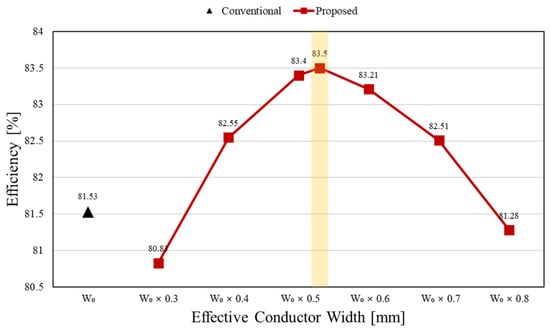
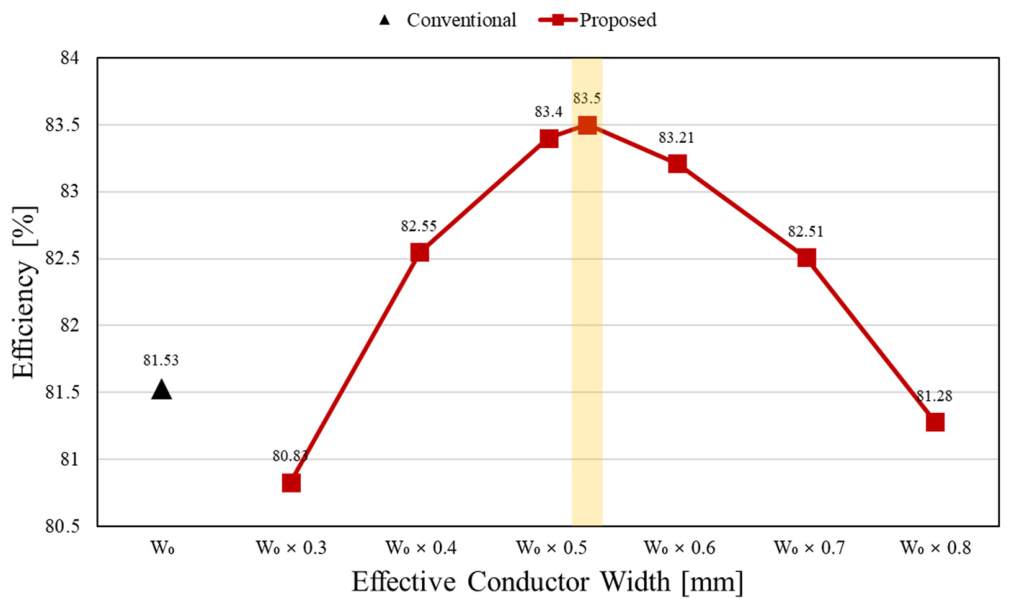
In addition, the iron loss and permanent-magnet eddy-current loss were checked under the rated operating condition and were found to be much smaller than the winding loss. Therefore, the efficiency variation in this study is mainly governed by the change in total winding loss caused by the proposed PCB stator pattern. To confirm this loss tendency, the efficiency characteristics according to the conductor width variation are shown in Figure 15.
Figure 15.
Comparison of efficiency according to conductor width variation.
As shown in Figure 15, the proposed model exhibited higher efficiency than the conventional model over the range of α = 0.4 to 0.7 and achieved the maximum efficiency of 83.5% at . This represents an improvement over the conventional model efficiency of 81.53% under the same operating condition and is consistent with the condition where the total winding loss is minimized. Therefore, the proposed PCB stator pattern can alleviate the trade-off between DC copper loss and AC winding loss through appropriate adjustment of the effective conductor width ratio, and under the present analysis conditions, is considered to provide the most favorable loss and efficiency characteristics.
However, this optimum value should not be interpreted as a universal constant. Since the relative contributions of DC copper loss and AC winding loss can vary with operating conditions such as speed, phase current and temperature, the effective conductor width ratio that minimizes the total winding loss may also change under different operating points. Therefore, the selected value of represents the optimum condition under the rated operating condition considered in this study.
Ultimately, the significance of the width ratio sweep is not simply the comparison of several geometric variants, but the identification of the loss balance point at which the proposed parallel-branch structure most effectively alleviates the DC/AC winding loss trade-off.
4.2. AC Winding Loss Distribution and Performance Analysis Under the Optimal Condition
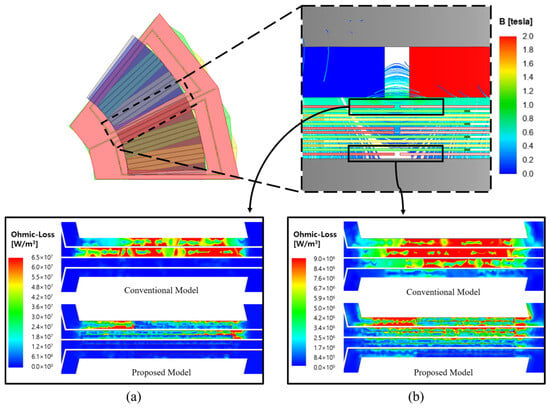
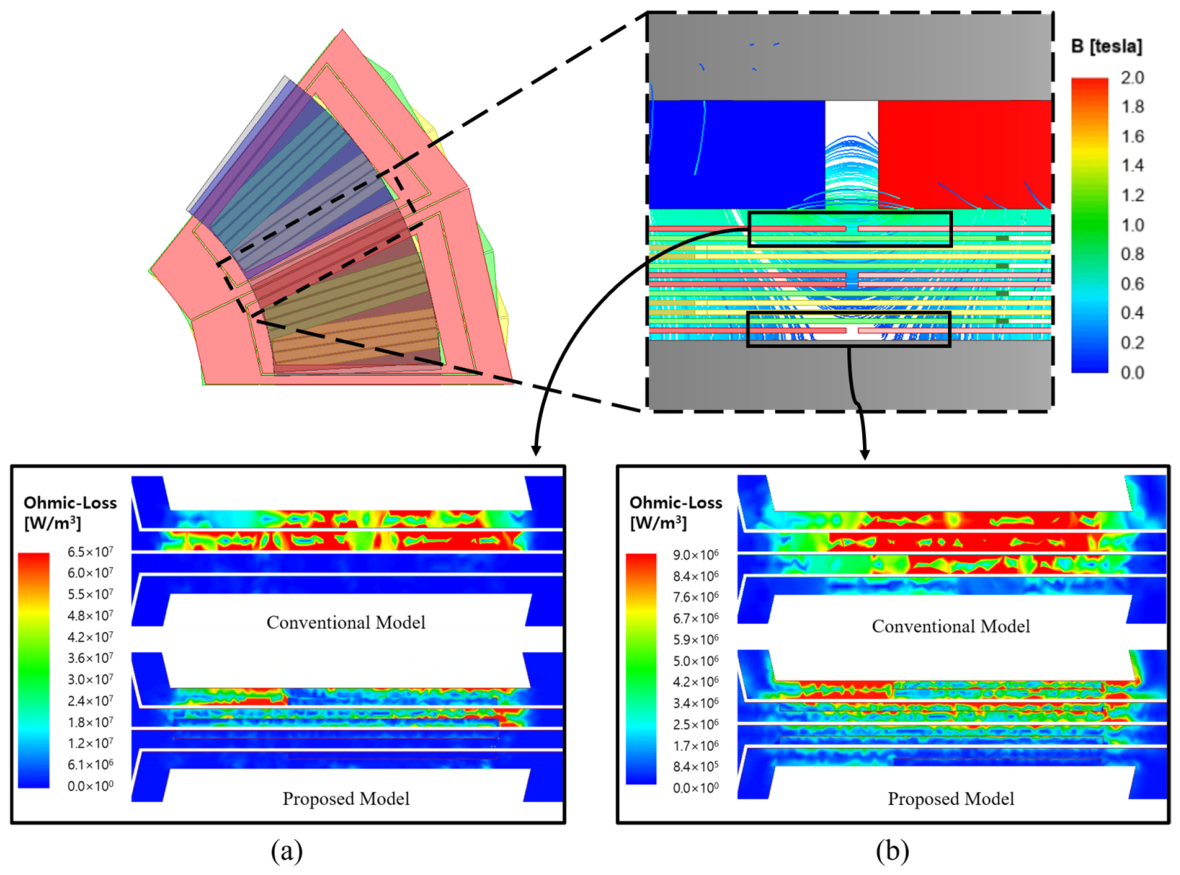
From the results of Section 4.1, the optimal condition corresponding to the minimum total winding loss and maximum efficiency was identified as α = 0.53. Accordingly, this section compares the AC winding loss distributions of the conventional model and the proposed model under the condition of α = 0.53, as shown in Figure 16. Figure 16a,b show the AC winding loss distributions in the coil regions closest to and farthest from the magnets, respectively. When compared using the same color scale within each region, the proposed model exhibited a significant reduction in AC winding loss distribution relative to the conventional model in the regions where the effective conductor width was reduced. Here, the AC winding loss mainly reflects the eddy-current component generated in the effective conductors, while it may also include a circulating-current component caused by the induced voltage difference between parallel paths. However, the proposed stator pattern does not uniformly connect all winding layers in parallel. Instead, two additional conductors having the same width are placed only in selected regions based on the original conductor path in axially adjacent layers and are connected as parallel paths. Therefore, the circulating currents that may arise from potential differences between parallel paths are expected to be more spatially limited, and their influence is also expected to be relatively small compared with a structure in which all layers are connected in parallel. Accordingly, the reduction in AC winding loss distribution observed in this study can be interpreted mainly as an effect of the reduction in the effective conductor area directly exposed to the magnetic flux.
Figure 16.
AC winding loss distributions in the coil regions: (a) coil region closest to the magnets and (b) coil region farthest from the magnets.
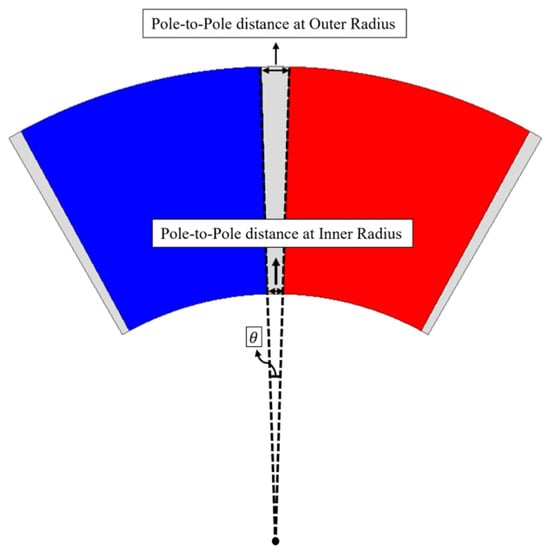
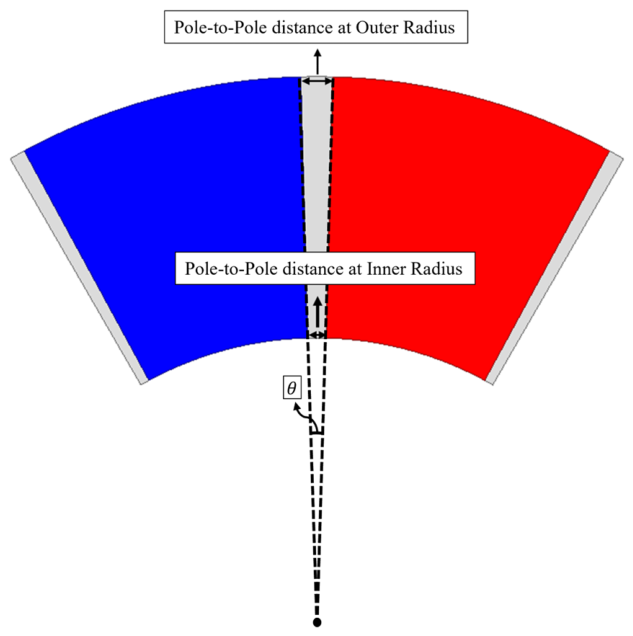
In addition, as shown in Figure 17, the magnets in AFPMs generally have a sector shape. Although the inner and outer regions experience the same electrical period during one mechanical revolution, the circumferential pole-to-pole spacing increases with radius in an AFPM. Therefore, the physical length of the pole-transition region is larger at the outer radius than at the inner radius. Since the time-varying magnetic flux responsible for AC winding loss is strongly associated with this pole-transition region, the outer effective conductors can be affected over a wider circumferential interval. This geometric difference may contribute to the relatively higher AC winding loss observed in the outer region. As described in Section 3.1, the proposed pattern cannot be applied uniformly to the entire conductor path because inter-phase overlap occurs from the inner region. Therefore, the reduced effective conductor width and parallel connection structure were applied only to the non-overlapping region where no inter-phase interference occurs. However, because the outer region can contribute more significantly to AC winding loss than the inner region, the proposed pattern can still provide a meaningful reduction in AC winding loss even though its applicable region is limited. Accordingly, meaningful loss reduction was confirmed in both the coil region closest to the magnets and the coil region farthest from the magnets. This demonstrates that the proposed structure can practically improve AC winding loss even under the structural limitation caused by inter-phase overlap.
Figure 17.
Difference between the inner and outer sides of the motor.
Table 3 compares the main analysis results of the conventional model and the proposed model (). The conventional model in Table 3 refers to the baseline slotless PCB AFPM model previously designed for a compact robot-joint actuator application. It was not adopted from a previously published motor but was used as the conventional model in this study to evaluate the effect of the proposed PCB stator pattern. The rotor structure, magnet geometry, stator back-yoke dimensions, air-gap length, and material properties were kept identical in both models, and only the PCB stator pattern was modified.
Table 3.
Comparison of analysis results between the conventional and proposed models.
The BEMF of the proposed model was 15.05 Vrms, which is only 0.04 Vrms lower than that of the conventional model, 15.09 Vrms. This slight decrease is considered to originate from the difference in winding pattern geometry caused by the change in effective conductor width, and the magnitude of the difference is very small. In addition, under the target torque condition, the developed torque and output power were maintained at 2.8 N·m and 586 W, respectively, identical to those of the conventional model. These results indicate that the proposed structure does not significantly degrade the fundamental electromagnetic performance of the motor despite the change in winding pattern. Therefore, the proposed structure can be regarded as a design approach capable of improving the winding loss characteristics while maintaining the target torque and output performance. Overall, by combining reduced effective conductor width with a parallel structure, the proposed design improved both AC winding loss and DC copper loss. As a result, it was confirmed that an optimal design condition exists at which the minimum total winding loss and the maximum efficiency coincide, demonstrating that the proposed structure is an effective design approach for improving the loss characteristics of slotless PCB AFPMs.
5. Conclusions
In this study, a novel PCB stator pattern structure was proposed to alleviate the trade-off between DC copper loss and AC winding loss in a slotless PCB AFPM. The proposed structure reduces the width of the effective conductor region directly exposed to magnetic flux, adds two parallel conductors connected through vias in the available axial space, and is applied only to the non-overlapping region in order to avoid inter-phase interference. Finite element analysis results showed that the proposed structure exhibited the most favorable loss characteristics at an effective conductor width ratio of 0.53. Under this condition, the phase resistance decreased by 11.82%, from 217.65 mΩ to 191.93 mΩ, and the DC copper loss decreased by 12.1%, from 115.98 W to 101.95 W. In addition, the AC winding loss decreased by 15.09%, from 16.9 W to 14.35 W, and accordingly, the total winding loss decreased by 12.48%, from 132.88 W to 116.3 W. As a result, the efficiency increased from 81.53% to 83.5%. Furthermore, the BEMF decreased only slightly from 15.09 Vrms to 15.05 Vrms, while the torque and output were maintained at 2.8 N·m and 586 W, respectively. Comparison of the AC winding loss distribution also confirmed that the proposed structure reduces local losses in both the coil region closest to the magnets and the coil region farthest from the magnets. Therefore, the proposed PCB stator pattern is considered an effective design method for improving the winding loss characteristics of slotless PCB AFPMs while maintaining the fundamental electromagnetic performance.
Author Contributions
Conceptualization and design, W.-H.K. (including study concept, critical revision, and final approval); methodology development and data curation, J.-W.M. (including experimental design, data management, drafting of the initial manuscript, and approval of the final version); software development and resource provision, J.-H.L. (including technical implementation, critical review, and final accountability for the software components); validation and overall research oversight, H.-S.H. (ensuring data integrity and accountability throughout the study); formal analysis and investigation, D.-H.C. (performing comprehensive data analysis, interpretation, and figure visualization); writing—original draft preparation, J.-W.M. (responsible for drafting the manuscript followed by critical revision by all authors); writing—review and editing, J.-W.M. and H.-S.H. (providing in-depth manuscript reviews, revisions, and final manuscript approval); visualization, J.-H.L. and D.-H.C. (developing data visualizations and ensuring clarity in presentation); supervision and project management, W.-H.K. (overseeing the entire research process and endorsing the final submission). All authors have read and agreed to the published version of the manuscript.
Funding
This work was supported by a Korean Institute for Advancement of Technology (KIAT) grant funded by the Korea Government (MOTIE) (RS-2024-00436216, Human Resource Development Program for Industrial Innovation (Global)) and in part by the Technology Innovation Program funded by the Ministry of Trade, Industry & Energy (MOTIE, Korea) (No. RS-2024-00441774).
Institutional Review Board Statement
Not applicable.
Informed Consent Statement
Not applicable.
Data Availability Statement
The original contributions presented in the study are included in the article; further inquiries can be directed to the corresponding author.
Conflicts of Interest
The authors declare no conflicts of interest.
References
- Kahourzade, S.; Mahmoudi, A.; Ping, H.W.; Uddin, M.N. A Comprehensive Review of Axial-Flux Permanent-Magnet Machines. Can. J. Electr. Comput. Eng. 2014, 37, 19–33. [Google Scholar]
- Gadiyar, N.; Van Verdeghem, J.; Severson, E.L. A Review of Axial Flux Permanent Magnet Machine Technology. IEEE Trans. Ind. Appl. 2023, 59, 3920–3933. [Google Scholar] [CrossRef] [Scilit]
- Habib, A.; Zainuri, M.A.A.M.; Che, H.S.; Ibrahim, A.A.; Rahim, N.A.; Alaas, Z.M.; Ahmed, M.M.R. A systematic review on current research and developments on coreless axial-flux permanent-magnet machines. IET Electr. Power Appl. 2022, 16, 1095–1116. [Google Scholar]
- Hao, Z.; Ma, Y.; Wang, P.; Luo, G.; Chen, Y. A Review of Axial-Flux Permanent-Magnet Motors: Topological Structures, Design, Optimization and Control Techniques. Machines 2022, 10, 1178. [Google Scholar] [CrossRef] [Scilit]
- Chen, X.; Liu, S. Review of Research on Axial Flux Printed Circuit Board Motor Development. IEEE Trans. Transp. Electrif. 2026, 12, 4092–4111. [Google Scholar] [CrossRef] [Scilit]
- Taqavi, O.; Mirimani, S.M. Design aspects, winding arrangements and applications of printed circuit board motors: A comprehensive review. IET Electr. Power Appl. 2020, 14, 1505–1518. [Google Scholar] [CrossRef] [Scilit]
- Neethu, S.; Nikam, S.P.; Singh, S.; Pal, S.; Wankhede, A.K.; Fernandes, B.G. High-Speed Coreless Axial-Flux Permanent-Magnet Motor with Printed Circuit Board Winding. IEEE Trans. Ind. Appl. 2019, 55, 1954–1962. [Google Scholar]
- Wang, J.; Han, J.; Gupta, A.; Pathak, D.; Zhang, Y. High Torque Density PCB Axial Flux Permanent Magnet Motor for Micro Robots. In Proceedings of the IEEE Energy Conversion Congress and Exposition (ECCE), Philadelphia, PA, USA, 19–23 October 2025. [Google Scholar]
- Tokgöz, F.; Çakal, G.; Keysan, O. Comparison of PCB winding topologies for axial-flux permanent magnet synchronous machines. IET Electr. Power Appl. 2020, 14, 2577–2586. [Google Scholar]
- Gao, B.; Cheng, Y.; Wang, Y.; Zhao, T.; Ding, L.; Cui, S.; Liu, X.; Shi, Y. Optimal Design of PCB Coreless Axial Flux Permanent Magnet Synchronous Motor with Arc Windings. IEEE Trans. Energy Convers. 2024, 39, 567–577. [Google Scholar]
- Wang, X.; Gao, P.; Li, T.; Zhao, X. Design and Loss Analysis of Axial Flux Permanent Magnet Synchronous Motor with PCB Distributed Winding. In Proceedings of the 2021 24th International Conference on Electrical Machines and Systems (ICEMS), Gyeongju, Republic of Korea, 31 October–3 November 2021; pp. 1112–1117. [Google Scholar]
- Ye, F.; Chen, J.; Wang, D.; Zhang, C.; Huang, W.; Xiang, Y. A novel three-segment unequal-width radial wave winding for coreless disk motor. J. Phys. Conf. Ser. 2026, 3204, 012002. [Google Scholar]
- Chulaee, Y.; Lewis, D.; Mohammadi, A.; Heins, G.; Patterson, D.; Ionel, D.M. Circulating and Eddy Current Losses in Coreless Axial Flux PM Machine Stators with PCB Windings. IEEE Trans. Ind. Appl. 2023, 59, 4010–4020. [Google Scholar] [CrossRef] [Scilit]
- Chulaee, Y.; Heins, G.; Robinson, B.; Mohammadi, A.; Thiele, M.; Patterson, D.; Ionel, D.M. Design and Optimization of High-Efficiency Coreless PCB Stator Axial Flux PM Machines with Minimal Eddy and Circulating Current Losses. IEEE Trans. Ind. Appl. 2024, 60, 8722–8735. [Google Scholar] [CrossRef] [Scilit]
- Marcolini, F.; De Donato, G.; Giulii Capponi, F.; Caricchi, F. Design of a Printed Circuit Board Axial Flux Permanent Magnet Machine for High Speed Applications. IEEE Trans. Ind. Appl. 2024, 60, 5919–5930. [Google Scholar] [CrossRef] [Scilit]
- Bauer, A.; Dieterich, D.; Urschel, S. Comparison of Eddy Current Loss Calculation Techniques for Axial Flux Motors with Printed Circuit Board Windings. Energies 2025, 18, 2603. [Google Scholar] [CrossRef] [Scilit]
- Neethu, S.; Nikam, S.P.; Pal, S.; Wankhede, A.K.; Fernandes, B.G. Performance Comparison Between PCB-Stator and Laminated-Core-Stator-Based Designs of Axial Flux Permanent Magnet Motors for High-Speed Low-Power Applications. IEEE Trans. Ind. Electron. 2020, 67, 5269–5277. [Google Scholar]
- Wang, R.-J.; Kamper, M.J. Calculation of Eddy Current Loss in Axial Field Permanent-Magnet Machine with Coreless Stator. IEEE Trans. Energy Convers. 2004, 19, 532–538. [Google Scholar] [CrossRef]
- Xiao, T.; Li, J.; Yang, K.; Lai, J.; Lu, Y. Study on AC Copper Losses in an Air-Cored Axial Flux Permanent Magnet Electrical Machine with Flat Wires. IEEE Trans. Ind. Electron. 2022, 69, 13255–13264. [Google Scholar] [CrossRef] [Scilit]
- François, G.; Dehez, B. Impact of Slit Configuration on Eddy Current and Supply Current Losses in PCB Winding of Slotless PM Machines. IEEE Trans. Ind. Appl. 2022, 58, 6035–6044. [Google Scholar] [CrossRef] [Scilit]
- Huang, S.; Luo, J.; Leonardi, F.; Lipo, T.A. A Comparison of Power Density for Axial Flux Machines Based on General Purpose Sizing Equations. IEEE Trans. Energy Convers. 1999, 14, 185–192. [Google Scholar] [CrossRef] [Scilit]
- Shao, L.; Navaratne, R.; Popescu, M.; Liu, G. Design and Construction of Axial-Flux Permanent Magnet Motors for Electric Propulsion Applications—A Review. IEEE Access 2021, 9, 158998–159017. [Google Scholar] [CrossRef] [Scilit]
- ANSYS, Inc. Maxwell® Help, Release 2026 R1; ANSYS, Inc.: Canonsburg, PA, USA, 2026.
- Zhou, P.; Badics, Z.; Lin, D.; Cendes, Z.J. Nonlinear T-Ω Formulation Including Motion for Multiply Connected 3-D Problems. IEEE Trans. Magn. 2008, 44, 718–721. [Google Scholar] [CrossRef]
- Lu, C.; Zhou, P.; Lin, D.; He, B.; Sun, D. Multiply Connected 3-D Transient Problem with Rigid Motion Associated with T-Ω Formulation. IEEE Trans. Magn. 2014, 50, 7011004. [Google Scholar]

Disclaimer/Publisher’s Note: The statements, opinions and data contained in all publications are solely those of the individual author(s) and contributor(s) and not of MDPI and/or the editor(s). MDPI and/or the editor(s) disclaim responsibility for any injury to people or property resulting from any ideas, methods, instructions or products referred to in the content. |
© 2026 by the authors. Licensee MDPI, Basel, Switzerland. This article is an open access article distributed under the terms and conditions of the Creative Commons Attribution (CC BY) license.