Article

Theoretical Analysis of IGAO-Fuzzy PID Fault-Tolerant Control and Performance Optimization for Electro-Hydraulic Active Suspensions Under Internal Leakage Faults


1
School of Mechanical Engineering, Yanshan University, Qinhuangdao 066004, China
2
Yanshan University Science Park, Qinhuangdao 066004, China
3
Key Laboratory of Special Transport Equipment of Hebei Province, Yanshan University, Qinhuangdao 066004, China
*
Author to whom correspondence should be addressed.
Actuators 2026, 15(3), 149; https://doi.org/10.3390/act15030149
Submission received: 6 January 2026 / Revised: 27 January 2026 / Accepted: 26 February 2026 / Published: 4 March 2026

Abstract

To address performance degradation and control instability in electro-hydraulic servo active suspension systems due to internal leakage faults arising from wear and aging of hydraulic components, this paper proposes an innovative fuzzy PID fault-tolerant controller based on the Improved Giant Armadillo Optimization (IGAO) algorithm. Specifically, to overcome the limitations of the standard Giant Armadillo Optimization (GAO), which is prone to local optima and exhibits poor convergence performance when handling multi-constraint parameter optimization problems, this study introduces a nonlinear dynamic inertia weight mechanism and a random reflection strategy for out-of-bounds particles to improve the original algorithm’s performance. These enhancements significantly enhance its ability to balance global exploration and local exploitation. Furthermore, this research develops a comprehensive performance evaluation fitness function by quantifying key performance indicators such as body acceleration, suspension dynamic deflection, and tire dynamic load. A quarter-car model incorporating an internal leakage fault was established as a simulation validation platform to demonstrate the reliability of the proposed method. Simulation results indicate that under various road excitation conditions, the proposed IGAO algorithm can rapidly and stably converge to superior parameters for the fuzzy PID controller. Compared to the Particle Swarm Optimization (PSO) and standard GAO algorithm, the control system optimized by IGAO not only significantly more effectively suppresses body vibration and reduces shock amplitude but also exhibits stronger dynamic recovery performance and control robustness under varying degrees of internal leakage faults. This research provides a robust control approach for addressing internal parameter uncertainties in hydraulic systems and offers a new approach to theoretical modeling for enhancing the reliability of design and fault-tolerant control capabilities of active suspension systems.

1. Introduction

The vehicle suspension system serves as a vital link between the body and the wheels, significantly influencing ride comfort, handling stability, and driving safety [1,2]. Among various suspension systems, electro-hydraulic servo active suspension exhibits considerable potential for high-performance vehicles and specialized equipment, owing to its high output power, rapid response speed, and exceptional dynamic adjustment capabilities [3,4,5]. By generating active control forces in real time to counteract road and body vibrations, this system theoretically addresses the performance limitations of passive suspension, resulting in a synergistic enhancement of both comfort and stability [6,7,8,9].
Electro-hydraulic servo systems encounter challenges in reliability and robustness over extended periods, mainly due to internal leakage faults resulting from wear and aging in critical components like hydraulic cylinders and servo valves [10,11]. Internal leakage not only escalates energy consumption and response delays but also fundamentally changes the actuator’s dynamic characteristics, leading to decreased actuator gain and diminished control precision, ultimately impacting the suspension system’s overall performance [12]. Moreover, internal leakage can lead to inadequate output force, introduce significant parameter uncertainty and disturbances, and complicate controller parameter tuning [13]. Therefore, investigating methods to sustain and enhance the comprehensive performance of active suspension systems under internal leakage fault conditions has become imperative for improving vehicle reliability and intelligence.
Notably, internal leakage faults in electro-hydraulic servo actuators exhibit strong time-varying and nonlinear characteristics. The leakage rate is not a fixed value but fluctuates dynamically with factors such as system operating pressure, temperature, and the degree of component wear [14]. This dynamic variation renders the fault mechanism more complex, as it introduces time-varying parameters and unmodeled dynamics into the suspension system, further exacerbating the mismatch between the actual system state and the pre-designed control model [11]. Existing fault-tolerant control strategies for electro-hydraulic systems often adopt fixed compensation logic or linear approximation methods, which struggle to adapt to the dynamic evolution of internal leakage faults and thus fail to maintain consistent control performance across the entire fault spectrum [12,13]. This gap highlights the urgent need for a flexible and adaptive fault-tolerant control scheme that can cope with the dynamic and nonlinear nature of internal leakage.
In controlled systems characterized by parameter uncertainty, traditional control methods, such as model predictive control [15,16] and sliding mode control [17,18], often depend on precise system models. This dependence limits their effectiveness in fault conditions [19]. The fuzzy PID controller integrates the robustness of fuzzy logic with the simplicity of PID control, making it widely applicable for nonlinear systems [20]. However, its control performance is significantly influenced by the accurate tuning of three parameters: proportional, integral, and derivative [21,22]. When addressing various internal leakage faults, traditional manual tuning methods prove inefficient and lack systematic approaches, complicating the achievement of optimal adjustments across multiple objectives.
Intelligent control and optimization algorithms offer innovative approaches to address the fault-tolerant control challenges inherent in complex systems [23,24,25,26]. When considering multiple performance indicators, the parameter tuning issue can be characterized as a high-dimensional, non-convex optimization problem that is susceptible to local optima [27]. Conventional optimization methods, including Particle Swarm Optimization (PSO) and Giant Armadillo Optimization (GAO), frequently demonstrate limitations such as premature convergence, low search efficiency, and inadequate handling of boundary constraints. These shortcomings hinder their ability to satisfy the stringent demands of engineering practice regarding algorithm convergence performance and robustness [28,29].
This article suggests a fuzzy PID fault-tolerant control approach utilizing an enhanced giant armadillo optimization (IGAO) algorithm for electro-hydraulic servo active suspension systems affected by internal leakage faults. Key contributions of this research are:
  • Enhance the optimization algorithm for giant armadillos by incorporating nonlinear dynamic inertia weights that adaptively adjust global exploration and local development capabilities. Additionally, implement a random reflection strategy for out-of-bounds particles to effectively circumvent boundary optimal traps. These modifications aim to improve the optimization efficacy and convergence performance of the algorithm under multiple constraints.
  • Develop suspension models for 1/4 of vehicles with active, passive, and internal leakage fault characteristics, quantify key performance indicators of the suspension, and create a multi-objective fitness function to comprehensively evaluate ride comfort, handling stability, and driving safety.
  • Simulation experiments conducted under various road surface excitations compare the proposed algorithm with the particle swarm optimization algorithm regarding optimization effectiveness, convergence speed, robustness, and the system’s dynamic performance recovery. These comparisons validate the superiority and engineering applicability of the proposed control strategy.

2. System Modeling and Problem Description

2.1. 1/4 Vehicle Active Suspension Dynamics Model

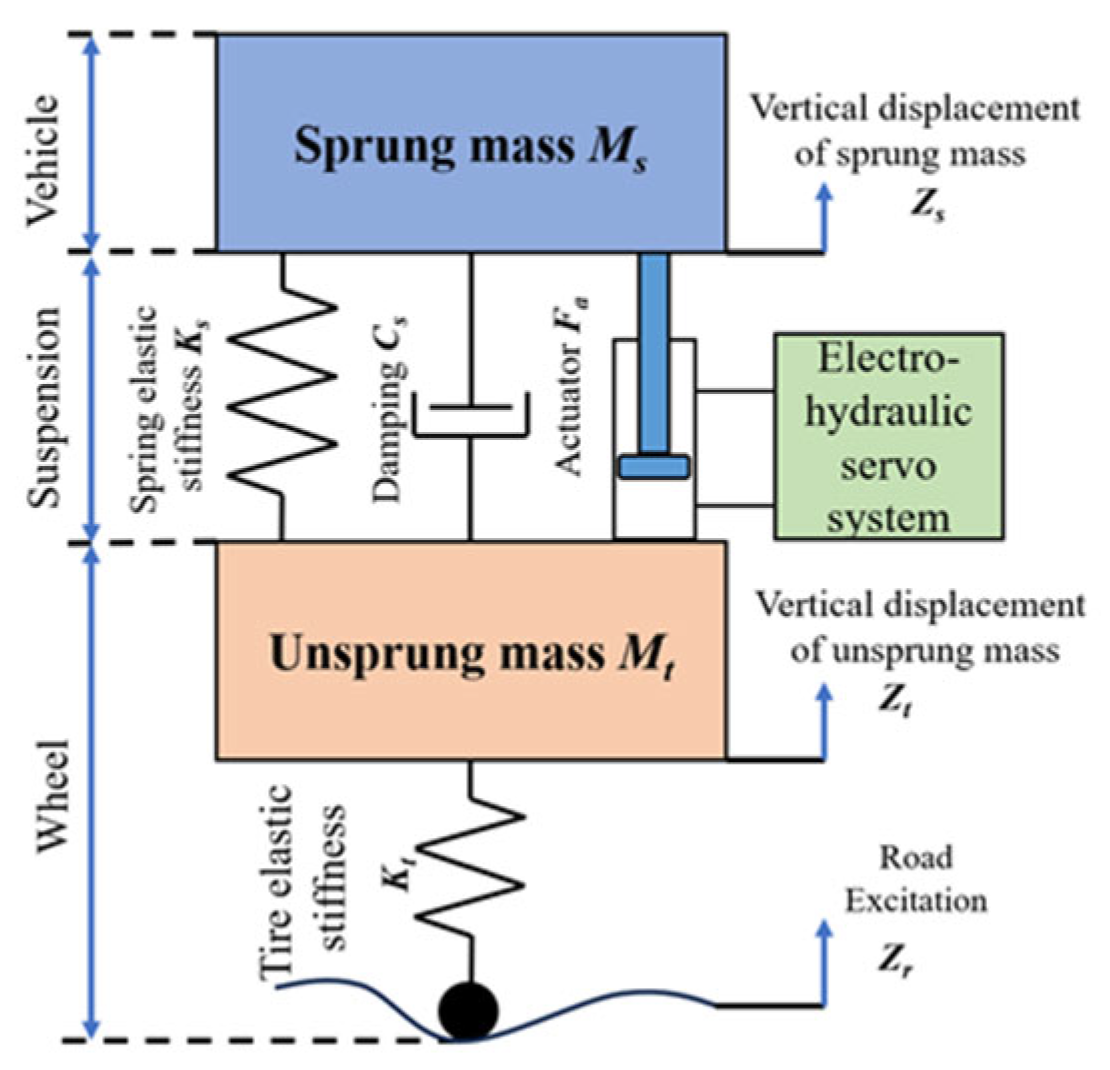
The quarter-car active suspension system is modelled as a two-degree-of-freedom dynamic system, as depicted in Figure 1. The hydraulic cylinder in this model is regulated by an electro-hydraulic servo valve. The dynamic equation of the quarter-car active suspension system is derived as follows:
M s Z s ¨ + C s Z s ˙ Z t ˙ + K s Z s Z t + F a = 0 M t Z t ¨ C s Z s ˙ Z t ˙ K s Z s Z t F a + K t Z t Z r = 0
In the equation, M s denotes the sprung mass, M t represents the unsprung mass, K s is the elastic stiffness of the suspension spring, C s is the damping coefficient of the suspension, and K t is the elastic stiffness of the tire. The vertical control force output by the actuator is denoted by F a , while Z s , Z s ˙ and Z s ¨   denote the vertical displacement, velocity, and acceleration of the sprung mass, respectively. Z t , Z t ˙ and Z t ¨   represent the vertical displacement, velocity, and acceleration of the unsprung mass, respectively. Lastly, Z r symbolizes the road surface excitation. The vehicle parameters are shown in Table 1. These parameters correspond to a representative mid-sized bus quarter car model, and their selection should ensure that they are consistent with the rated force and dynamic response capability of the electro-hydraulic actuator.
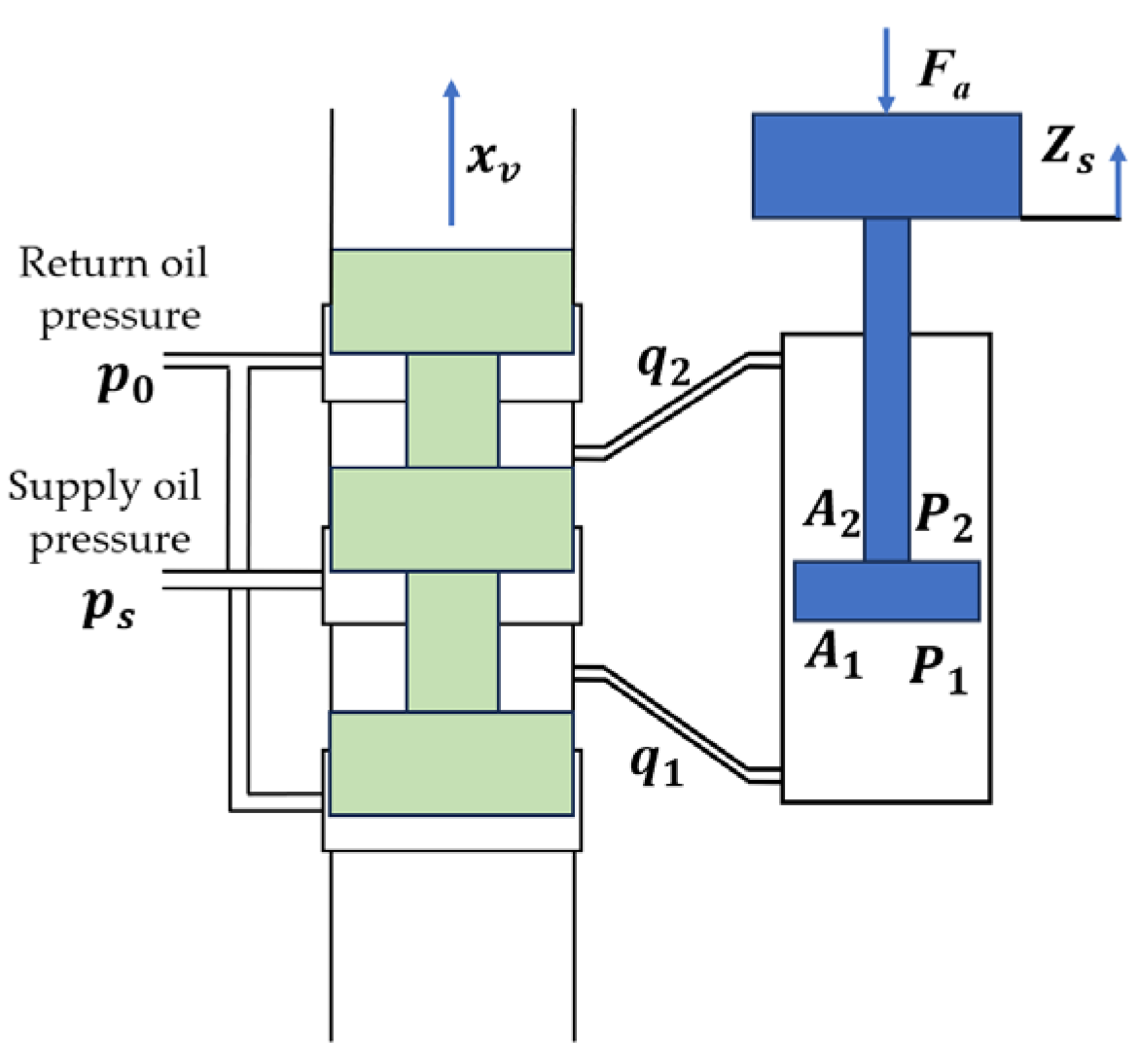
The schematic diagram of the principle of using a three-position four-way servo valve to control an asymmetric hydraulic actuator is shown in Figure 2. p s is the input pressure, p 0 is the output pressure. q 1 and q 2 indicate the flow rates entering or exiting the chamber without a rod and the chamber with a rod, respectively. The driving force F a of the hydraulic cylinder is expressed as
p 1 A 1 p 2 A 2 = F a
Hydraulic cylinder load flow equation:
q 1 = A 1 Z s ˙ + C e p 1 p 2 + β e 1 V 1 p 1 ˙ q 2 = A 2 Z s ˙ C e p 1 p 2 β e 1 V 2 p 2 ˙
Here, C e represents the hydraulic cylinder’s internal leakage coefficient, and β e the effective bulk modulus of the oil. V 1 = V 01 + A 1 Z s , with V 01 being its initial volume. V 2 = V 02 A 2 Z s , where V 02 is the initial volume of the rod chamber in the hydraulic cylinder.
Leakage arises in the hydraulic cylinder due to fluid seepage in the annular space between the cylinder body and the piston. Here, the Reynolds number of the fluid is notably lower than the critical value, leading to laminar flow in this region. The volume of leakage, accounting solely for the pressure-driven flow, is mathematically described as
q e = π d h 3 12 μ l p 1 p 2 = C e p 1 p 2
In the equation, d stands for the piston diameter, h represents the concentric annular gap between the piston and the body, μ signifies the dynamic viscosity of the hydraulic oil, and l indicates the length of the gap for sealing. It should be noted that the internal parameter uncertainty considered in this study originates primarily from the material wear, manufacturing tolerance, and long-term degradation of hydraulic components, especially the piston–cylinder pair. As the actuator operates over extended periods, abrasive wear and surface fatigue of the piston and cylinder bore lead to an increase in the annular clearance h . Since the internal leakage coefficient C e is explicitly determined by geometric and material-related parameters, including the annular gap, piston diameter, oil viscosity, and sealing length, variations in these material parameters directly result in uncertainty in C e . Consequently, the uncertainty of internal parameters in the electro-hydraulic servo actuator is essentially a manifestation of material- and structure-induced variations, which further propagate into time-varying changes in actuator gain, equivalent damping, and dynamic response characteristics.
In servo valves, q 1 and q 2 can also be expressed as
q 1 = c d w x v 2 ρ p s p 1 q 2 = c d w x v 2 ρ ( p 2 p 0 )
In the equation, c d is the flow coefficient of the servo valve, w is the valve port area gradient, and ρ is the hydraulic oil density, p s is the supply oil pressure of the system, p 0 is the return oil pressure of the system. In this study, the oil is directly returned to the tank, so the return oil pressure is 0.
Since the natural frequency of the servo valve is significantly higher than the operating frequency of the system, the transient delay can be rendered negligible in the overall system response. The displacement of the servo valve spool and the input current are considered to be in a proportional relationship:
x v = K a K x v I g
In the equation, K a is the gain coefficient for the conversion of the servo valve electrical signal (A/V), K x v is the gain coefficient for the displacement of the servo valve spool (m/A), and I g is the control input current of the servo valve (A).

2.2. Construction of AMEsim-Simulink Joint Model

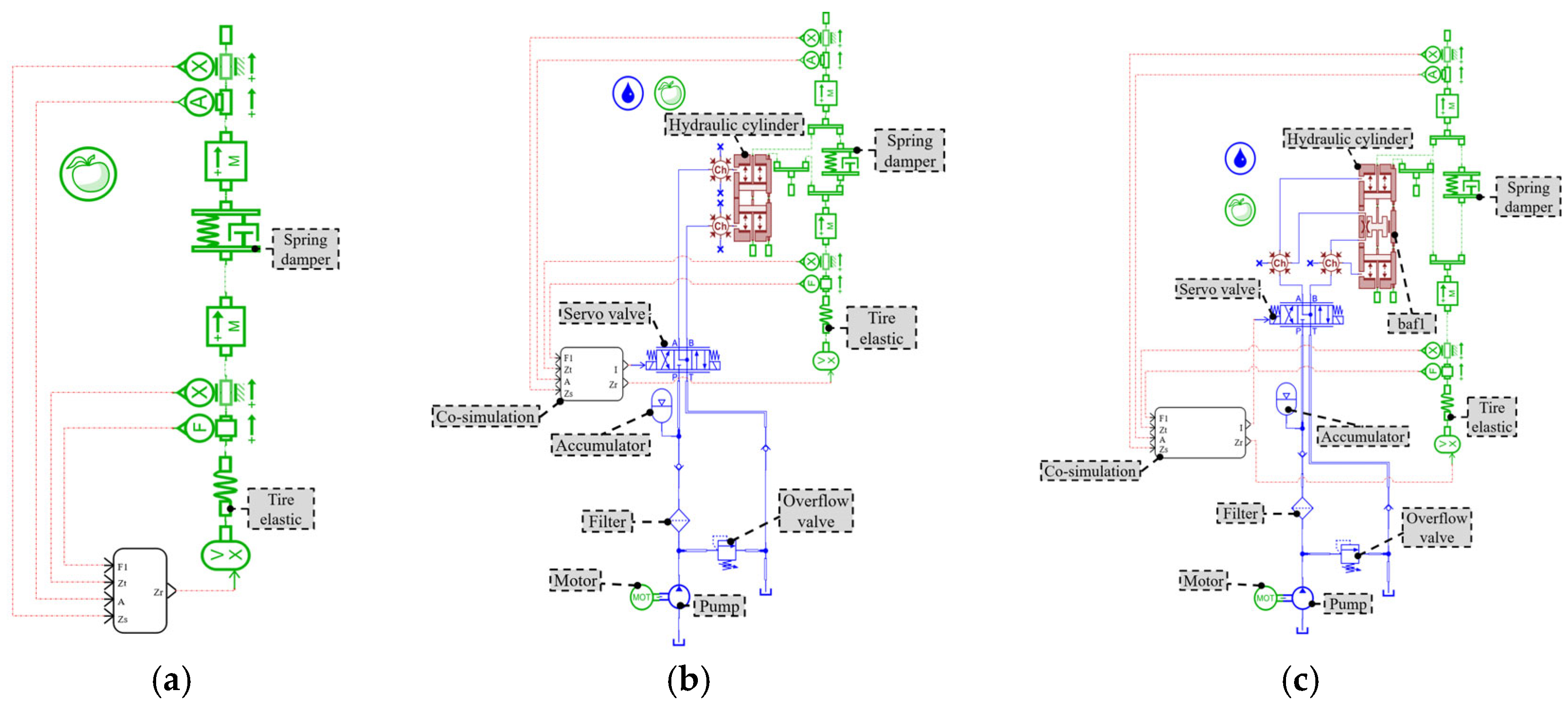
Figure 3 presents the simulation models of a quarter-vehicle suspension system developed in AMESim. Specifically, Figure 3a shows the passive suspension model, while Figure 3b illustrates the active suspension model without internal leakage faults. To simulate internal leakage resulting from the annular clearance between the piston and cylinder, the “baf1” module was introduced, leading to the active suspension model with an internal leakage fault depicted in Figure 3c. It should be noted that the models do not include end-stops working in parallel with the suspension spring, as the study focuses on the suspension’s dynamic behavior within its linear operating range, where the impact of end-stops is negligible. The mechanical parameters of the suspension system are listed in Table 1, and the hydraulic component parameters are provided in Table 2. Within the simulation framework, the controller was implemented in Simulink. Data exchange between AMESim and Simulink was achieved through a co-simulation interface. Simulink supplies the control signal I g and the road excitation displacement Z r to AMESim, while AMESim outputs the sprung mass acceleration, sprung mass displacement, unsprung mass displacement, and wheel load to Simulink, thereby enabling validation of the control algorithm.

3. Fuzzy PID Controller and IGAO Optimization

3.1. Design of Fuzzy PID Controller Structure

3.1.1. Fuzzy Reasoning Rules and PID Control

The output signal of the PID controller is expressed as follows:
u 0 t = k p 0 e t + k i 0 0 t e t d t + k d 0 d e t d t
In this equation, e t   represents the deviation between the target value r ( t ) of the controlled object and the output value c ( t ) , defined as e t = r t c t . Here, the sprung mass acceleration is used as the feedback variable. Equation (7) indicates that in PID control, fixed proportional, integral, and differential coefficients limit the dynamic adjustment of the controller based on signal changes, reducing the generality of the controller. In contrast, fuzzy control utilizes fuzzy logic to adaptively adjust outputs based on control rules and expert knowledge, making it suitable for handling complex systems with uncertain models. However, the absence of precise mathematical formulations in fuzzy control can introduce control biases. Fuzzy PID control combines the strengths of both approaches by integrating the PID mathematical framework with adaptive tuning of gain coefficients k p 0 , k i 0 and k d 0 using fuzzy logic:
k p = k p 0 + Δ k p   *   q p k i = k i 0 + Δ k i   *   q i k d = k d 0 + Δ k d   *   q d
u t = k p 0 + Δ k p   *   q p e t + k i 0 + Δ k i   *   q i 0 t e t d t + k d 0 + Δ k d   *   q d d e t d t
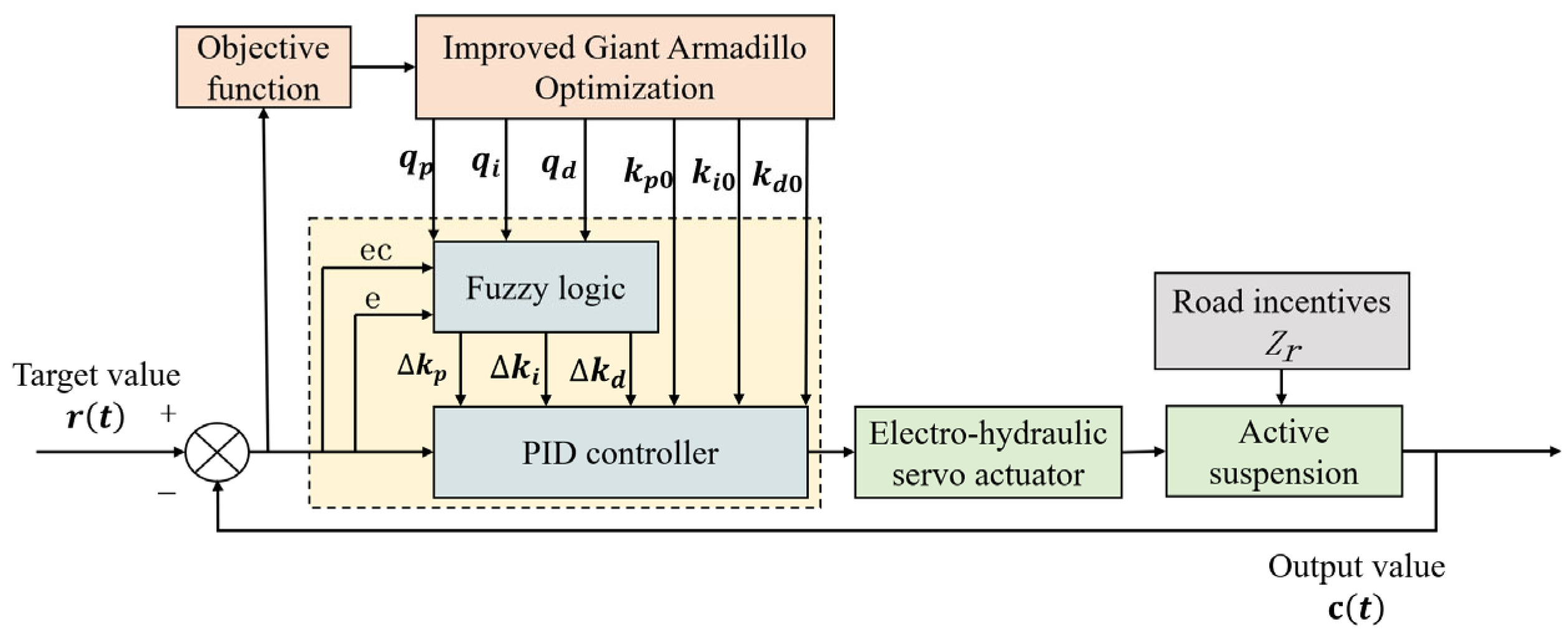
The fuzzy PID controller developed in this research utilizes the deviation e t between the vertical acceleration Z s ¨ of the sprung mass and the reference value r ( t ) , along with its time derivative e t ˙ , as inputs (abbreviated as e and e c ) for the fuzzy control. The output consists of the variations in the gain coefficients Δ k p , Δ k i , Δ k d , which are adjusted by coefficients q p , q i , and q d . To account for the road excitation amplitude input by the active suspension, the deviation e is constrained within [−1, 1], while the deviation change rate e c is limited to [−10, 10]. The output ranges for Δ k p and Δ k i are both defined as [−10, 10], and for Δ k d , it is [−1, 1]. The input and output intervals are divided into seven fuzzy sets: NB, NM, NS, ZO, PS, PM, and PB, using Gaussian membership functions. The fuzzy control rules can be found in Table 3.

3.1.2. Gain Adaptive Adjustment Mechanism

The PID controller processes error signals to generate control signals, while the fuzzy controller considers both the error and its rate of change to determine the three PID controller gain parameters using predefined fuzzy rules. It should be noted that directly optimizing the PID gains k p , k i , and k d using the IGAO algorithm would result in a static PID controller with fixed parameters after offline optimization. Such a controller would lack online adaptability and be insufficient for electro-hydraulic servo active suspension systems that experience time-varying nonlinearities and parameter uncertainties due to internal leakage faults. To address this limitation, we adopt a fuzzy PID structure to enable real-time gain adjustment, while IGAO is used to provide globally optimized baseline parameters.
Figure 4 illustrates the architecture of the proposed IGAO-optimized fuzzy PID control framework. The IGAO algorithm performs offline global optimization of the initial PID gains and fuzzy scaling factors, while the fuzzy controller dynamically adjusts the PID gains online based on real-time error information. This combined architecture allows the controller to maintain high performance under internal leakage faults and parameter uncertainties, effectively blending global optimality with adaptive regulation capabilities. The intelligence and adaptability of the system rely on the IGAO, which optimizes by mimicking the fundamental biological behaviors of giant armadillos:
(1)
The algorithm simulates armadillos utilizing their acute sense of smell to locate food sources. Individuals within the algorithm learn from historical best and elite individuals while incorporating Lévy flight for global exploration, thereby ensuring that potential areas are not overlooked in the extensive parameter space.
(2)
The algorithm also mimics the deep digging behavior of armadillos, which is driven by their strong front paws, and is based on the parameter of an individual’s “digging ability.” This approach facilitates fine local development near the current high-quality solution, enabling precise parameter tuning.
(3)
Furthermore, the algorithm replicates the jumping defense behaviors of armadillos in response to threats. When an individual is detected to be trapped in a local optimum, significant positional jumps are generated through Cauchy mutation, effectively preventing premature convergence.
The IGAO algorithm generates a population of armadillos, with each individual representing a set of six candidate controller parameters. By substituting these parameters into the complete simulation model, the performance of the system is calculated, yielding the corresponding objective function value for each individual. The IGAO algorithm updates the positions of all individuals in the population based on their objective function values and intelligently balances global exploration with local development through an adaptive adjustment mechanism of shell hardness, continuously searching for the parameter set that minimizes the objective function value. Upon completion of the optimization process, IGAO outputs a set of globally optimal parameters. This parameter set is then fixed and integrated into the fuzzy PID controller for final real-time control.

3.2. Improving the Optimization Algorithm for Giant Armadillo

3.2.1. Adaptive Adjustment Mechanism for Shell Hardness

Shi Y. highlighted in their study the significance of weight parameters in balancing global and local search efforts. Greater weights enhance global search by facilitating the exploration of new regions, while lesser weights promote local exploration and fine-tuning of local areas [30,31]. Drawing inspiration from the inertia weight adjustment mechanism in optimization algorithms used for giant armadillos, where higher shell hardness encourages deep mining and precise development at the current location, mirroring the algorithm’s local search capability. Conversely, lower shell hardness prompts armadillos to favor long-distance movement and extensive exploration, aligning with the algorithm’s global search ability. To dynamically maintain a balance between exploration and exploitation throughout the optimization process, this study introduces an adaptive mechanism for adjusting shell hardness as follows:
S H t = S H m a x S H m i n 1 e k t T + S H m a x + α tanh β S t + γ 1 D t

3.2.2. Boundary Mining Turning Strategy

Inspired by the adaptive behavior of giant armadillos, which alter their paths by digging or turning when faced with obstacles, this study posits that merely “pulling” individuals back to the boundary represents a rigid strategy that constrains the potential for exploration in boundary areas. Consequently, this research simulates the boundary mining and turning behavior of armadillos by randomly “mining” and “turning” the positions of individuals who cross the boundary. This adjustment is made in the corresponding dimension to a viable new position, determined by their velocity direction prior to crossing the boundary. The aim is to sustain the exploratory vitality of the population within the boundary area and effectively prevent entrapment at the optimal boundary. Therefore, when the individual position x i d   exceeds the d-dimensional boundary, i.e., x i d   <   L b d   o r   x i d   >   U b d , this paper introduces the following boundary mining turning strategy:
x i d n e w = L b d + θ · δ · U b d L b d ,   i f   x i d   <   l b d U b d θ · δ · U b d L b d , i f   x i d >   U b d
In the equation, L b d and U b d represent the lower and upper bounds of the d-th dimension search, respectively. The parameter δ , known as the mining turning coefficient, regulates the proximity of individuals’ “rebirth” near the boundary. This coefficient ensures that individuals do not emerge near the boundary but initiate a new exploration randomly within the boundary, guaranteeing that the new position x i d n e w consistently meets L b d   x i d n e w   U b d . The essence of this approach lies in not merely pushing individuals back once they cross the boundary but actively enabling them to “mine” a fresh starting point within a reasonable range inside the boundary based on their original movement trajectory. This process mimics the adaptive behavior of armadillos in responding flexibly to environmental constraints, leading to a notable enhancement in population diversity and a decreased likelihood of getting trapped at the optimal boundary.

3.3. Fuzzy PID Parameter Tuning Process Based on IGAO

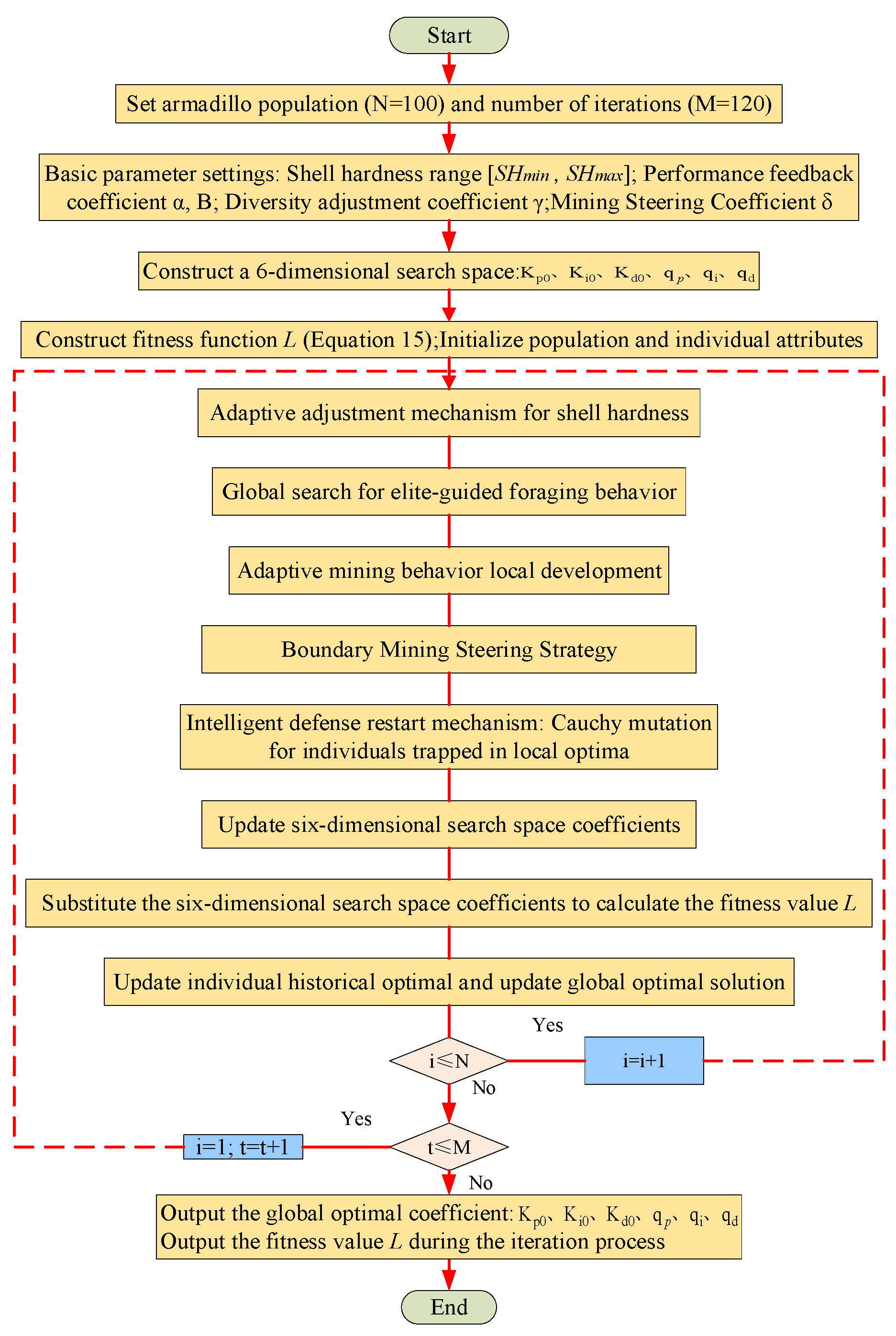
The primary objective of the suspension system is to minimise the vertical acceleration of the sprung mass, thereby attenuating vehicle vibrations induced by road surface irregularities. The ideal control target is to reduce this acceleration to zero. The IGAO algorithm is then employed iteratively to calculate the optimal parameter set by finding the objective function’s minimum. The process of using IGAO to optimize fuzzy PID is shown in Figure 5, and its key steps are divided into the following five steps:
Step 1: Basic parameter settings for controllers and optimization algorithms
The search space is defined by the gain coefficients k p 0 , k i 0 , k d 0   and the correction coefficients q p , q i and   q d . The position of the i-th armadillo is denoted as x i = x i 1 , x i 2 , x i 3 , x i 4 , x i 5 , x i 6 , with each dimension corresponding sequentially to k p 0 , k i 0 , k d 0 , q p , q i , q d . The position constraints are as follows: 0 k p 0 40 , 0 k i 0 30 , 0 k d 0 0.5 , 1 q p 1 , 1 q i 1 , 0.5 q d 0.5 . The population size of armadillos is set to N = 100 . Set the iteration termination number to M = 120 . The maximum shell hardness value to S H m a x = 0.9 , and the minimum shell hardness value to S H m i n = 0.4 . Additionally, the performance feedback amplitude coefficient is α = 0.1 , the performance sensitivity coefficient is β = 1.0 , the diversity regulation coefficient is γ = 0.15 , and the excavation turning coefficient is δ = 0.2 .
Step 2: Establishment of fitness function
The position of individuals in the armadillo population is evaluated by the fitness function. In this study, the fitness function is directly selected as the objective function L .
Step 3: Initialization of Armadillo Population
The initialization of the Armadillo population employs chaotic logistic mapping to establish the positions of the individuals, thereby ensuring an even distribution and promoting diversity within the search space. The fitness values for each individual armadillo are calculated to identify both the optimal position of the entire population and the historical optimal position for each individual, based on the individual position associated with the minimum fitness value. Concurrently, biological characteristic parameters, such as shell hardness ( S H ) and digging ability, are initialized for each individual.
Step 4: Iterative optimization
For each generation of armadillo population, perform the following actions:
The current shell hardness of each individual is determined using the adaptive adjustment Equation (10) for shell hardness. Fine local development is conducted near the current area, based on the individual mining ability. For individuals positioned outside the designated boundaries, a random adjustment is made to bring them into the feasible region, following their movement trend as specified in Equation (11). Additionally, Cauchy variation is applied to individuals that are trapped in local optima. The fitness values for all new positions of the armadillos are calculated, and both the historical optimal positions of individuals and the global optimal positions of the population are updated accordingly.
Step 5: Output the optimal calculation result of the iterative process
Compare the numerical value of the current iteration count m with the maximum iteration count M. If   m M , jump to step 4 and continue running until m > M is satisfied, output the optimal individual position, and the operation ends.

3.4. Objective Function Construction and Performance Evaluation Indicators

Sprung mass acceleration (SMA) represents the vertical acceleration of the vehicle body, and its numerical results can directly evaluate ride comfort. Suspension working stroke (SWS) represents the variation in distance between the unsprung mass and sprung mass, which can reflect the changes in motion stroke during the suspension working state. Dynamic Tire Load (DTL) characterizes the dynamic changes in tire load-bearing capacity during vehicle motion. The corresponding mathematical expressions are as follows:
Q S M A = z s t ¨
Q S W S = z s t z t t
Q D T L = k t z t t z r t
The suspension system’s performance improves as the absolute values of sprung mass acceleration ( Q S M A ), suspension dynamic stroke ( Q S W S ), and tire dynamic load ( Q D T L ) decrease. The rate of change of sprung mass acceleration directly influences ride comfort and suspension stability. The absolute-value-based integral is adopted to characterize the cumulative response magnitude and to avoid excessive sensitivity to transient peaks. Therefore, an objective function incorporating these indicators and the rate of change of sprung mass acceleration can be formulated. Due to the diverse units and orders of magnitude of these indicators, dimensionality reduction is necessary. In this study, the performance indicators of the active suspension were normalized against those of the passive suspension under identical parameters to create the following objective function (fitness function):
L = 0 t Q S M A O d t 0 t Q S M A P d t + 0 t Q S W S O d t 0 t Q S W S P d t + 0 t Q D T L O d t 0 t Q D T L P d t + 0 t Q S M A ˙ O d t 0 t Q S M A ˙ P d t
In the equation, Q S M A O , Q S W S O   and Q D T L O represent the absolute values of the active suspension sprung mass acceleration, suspension dynamic stroke, tire dynamic load, and sprung mass acceleration change rate, respectively, as determined using optimization algorithms. Conversely, Q S M A P , Q S W S P , Q D T L P and Q S M A ˙ P denote the absolute values of the passive suspension sprung mass acceleration, suspension dynamic stroke, tire dynamic load, and sprung mass acceleration change rate. To achieve a balanced optimization among ride comfort, handling stability, and driving safety, and to ensure that no single objective dominates the optimization process, the weighting coefficients for SMA, SWS, DTL, and the rate of change of acceleration are all set to be equal.

4. Simulation Results and Analysis

4.1. Performance Analysis of Semi-Sinusoidal Impact Road Surface

4.1.1. Comparison of Control Effects Under Different Leakage Gaps

The mathematical model of a half sine impact road surface is:
Z r = 0.03 sin 2 π v λ t 1     ,       1 t < 2                 0                                                                     ,                     o t h e r
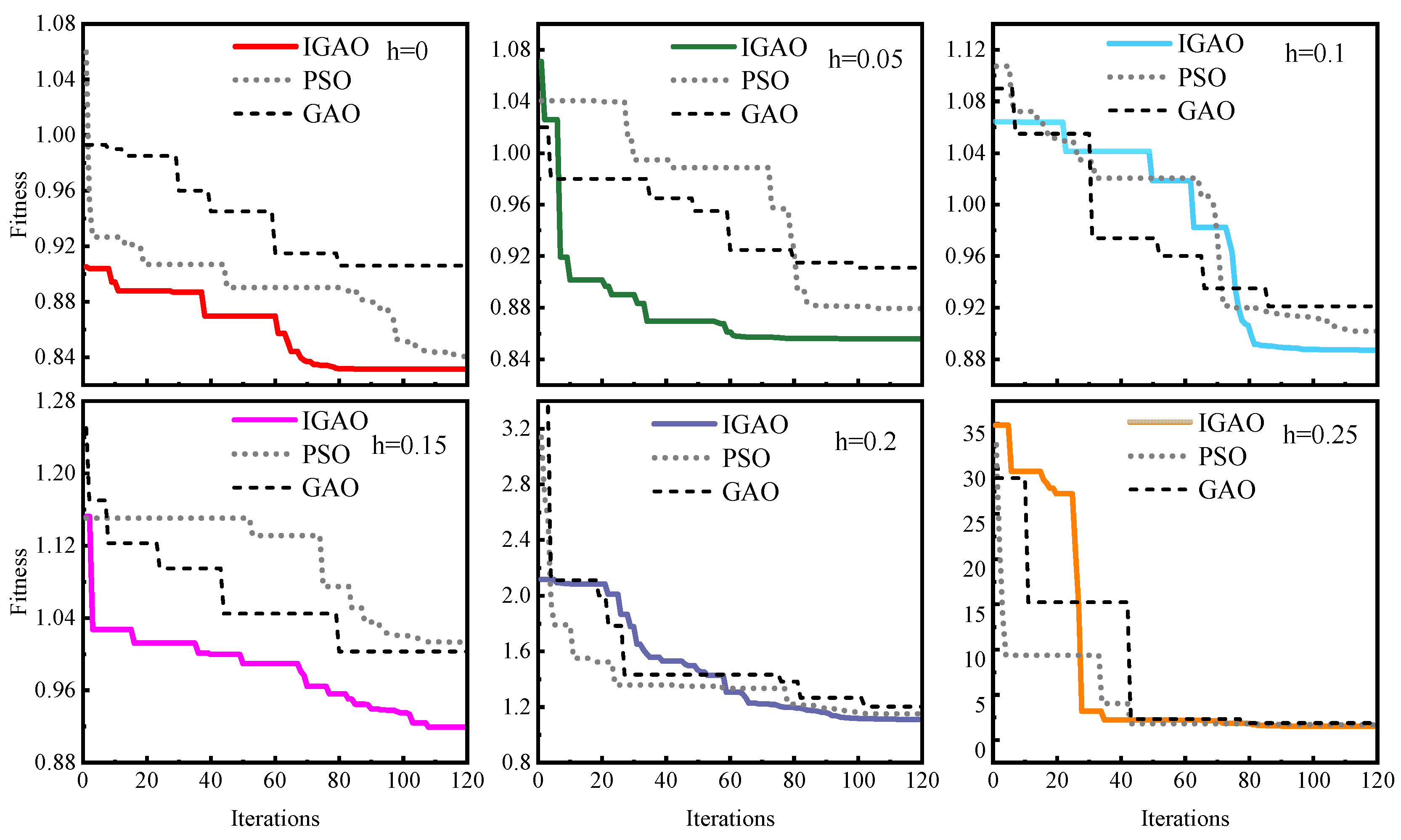
In the equation, λ = 20 m represents the amplitude; v denotes the vehicle’s speed, set at 10 m/s. The IGAO optimization outcomes are detailed in Table 4, while the fitness curve is depicted in Figure 6.
The analysis of Table 4 and Figure 6 indicates that larger hydraulic cylinder annular clearances correspond to higher initial fitness values. As the number of iterations of the IGAO algorithm increases, the fitness values corresponding to different annular gaps gradually decrease. Ultimately, all systems converge to a stable minimum fitness value, with minimal fitness values for different annular clearances closely aligned. The large leakage gap between the piston and the cylinder body will weaken the adaptability of the active suspension to the controller, making the optimization process of the control coefficient more complex. Nevertheless, the IGAO showcases remarkable optimization capabilities for diverse annular clearances in active suspension systems, underscoring its potential for real-world engineering applications.
Furthermore, in comparison to the PSO and GAO algorithms, the IGAO algorithm not only achieves earlier convergence to the minimum fitness value but also attains a superior minimum fitness value. In the same internal leakage gap conditions, the minimum fitness values of IGAO, PSO, and GAO increase sequentially. Specifically, compared to the GAO algorithm, the minimum fitness values of IGAO are reduced by 8.5%, 6.48%, 3.69%, 8.77%, 3.16%, and 19.58% under different leakage gap conditions (h = 0, 0.05, 0.1, 0.15, 0.2, 0.25, respectively). This further demonstrates the effectiveness of the improvements in the IGAO algorithm. On average, the minimum fitness value of IGAO is 8.5% lower than GAO and 5.5% lower than PSO across different leakage conditions. These results validate the exceptional optimization performance of IGAO, showing that it consistently outperforms both PSO and GAO in terms of achieving the lowest fitness value and faster convergence under various leakage conditions.
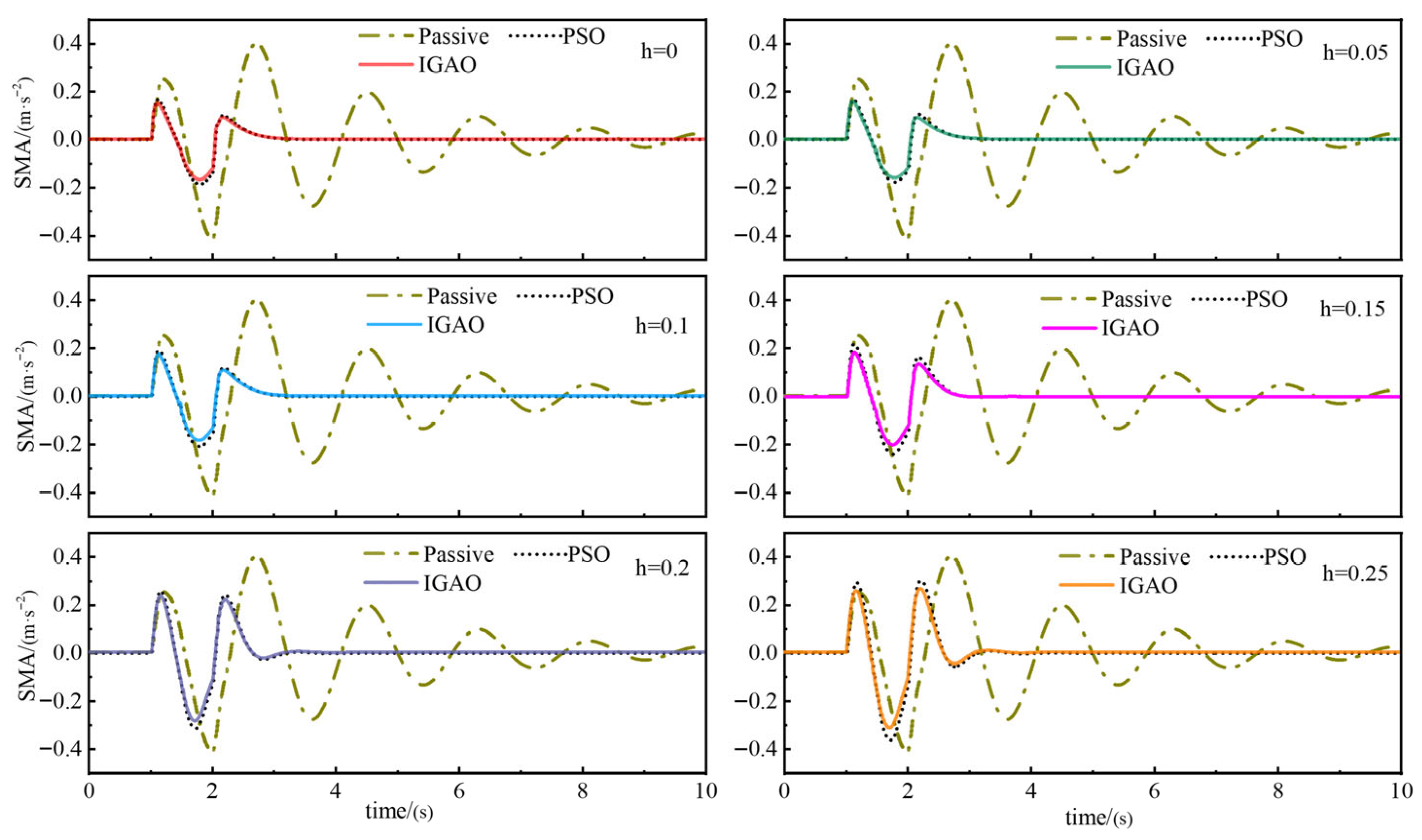
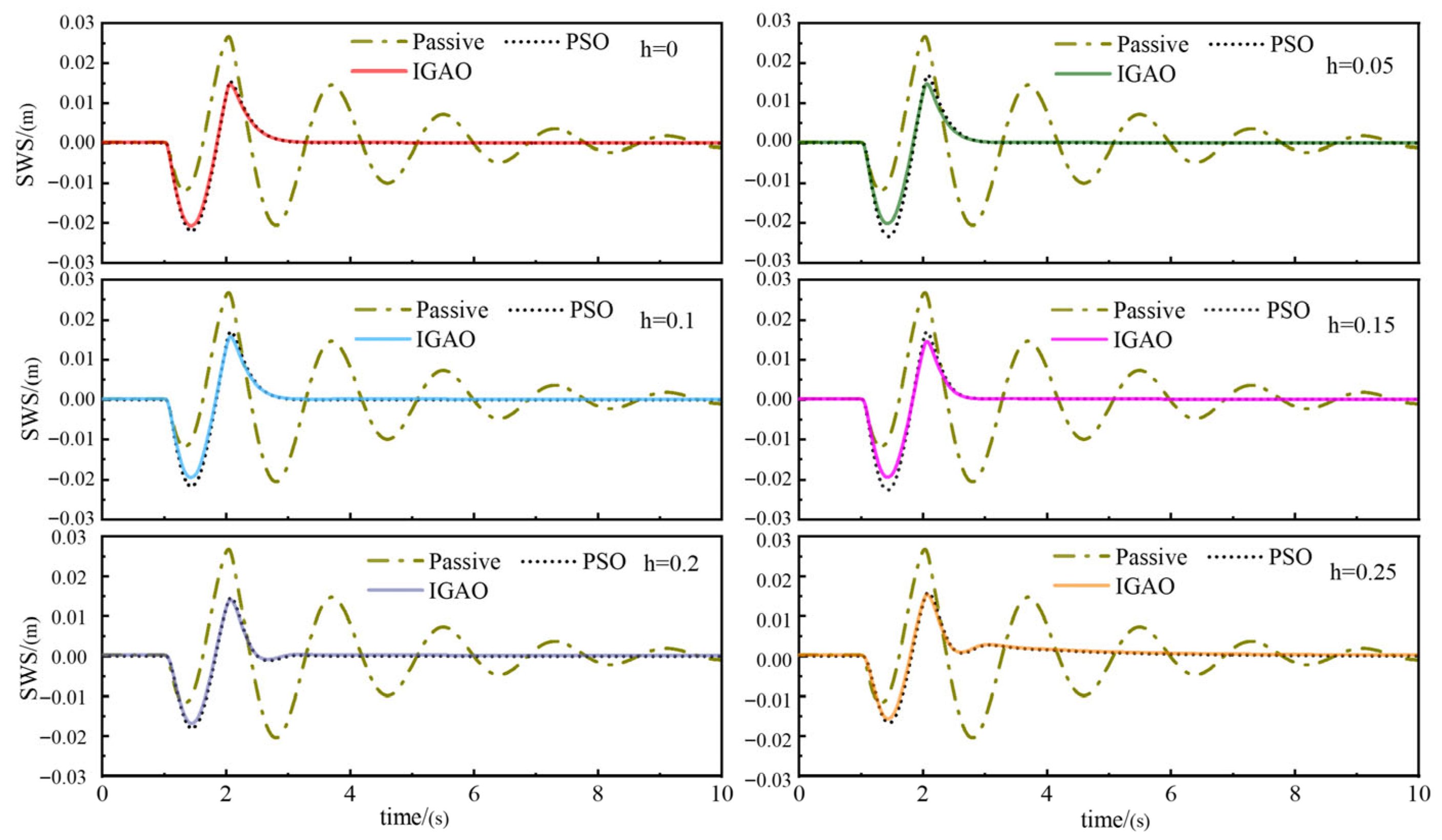
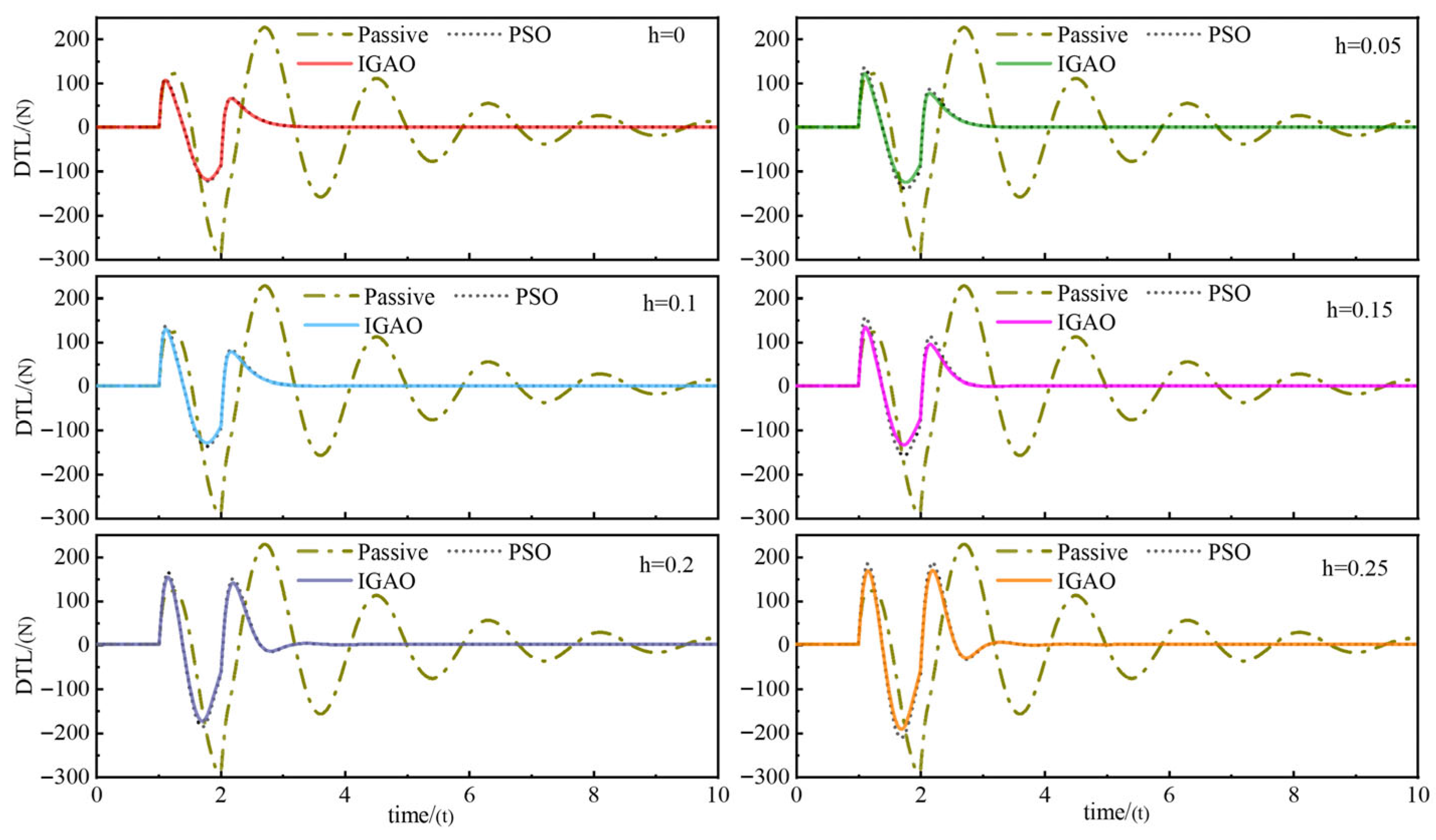
Figure 7 displays the vehicle’s acceleration curve under half-sine road excitation. The optimization range of overshoot in comparison to passive suspension is 58.61%, 55.99%, 53.71%, 51.38%, 41.27%, and 24.53%, respectively. Figure 8 illustrates the dynamic stroke curve of the suspension under half-sine road excitation, with the optimization range of overshoot compared to passive suspension being 25.18%, 24.43%, 26.32%, 26.32%, 36.09%, and 39.85%, respectively. Figure 9 presents the dynamic load curve of the tire under half-sine road excitation, with the optimization range of overshoot reaching 59.49%, 58.26%, 55.30%, 54.08%, 40.31%, and 35.15%, respectively. Increasing the annular clearance of the hydraulic cylinder leads to a gradual decrease in the optimization effect of vehicle acceleration overshoot and tire dynamic load. Beyond 0.15 mm of annular clearance, a significant decline in optimization effect is observed. Conversely, the optimization effect of suspension dynamic stroke overshoot exhibits an opposite trend. The optimization outcomes of all performance indicators indicate a substantial decrease in the overall performance of the active suspension system when the annular clearance exceeds 0.15 mm. This provides a reference for selecting the clearance value between the piston and cylinder body in the actual design process.
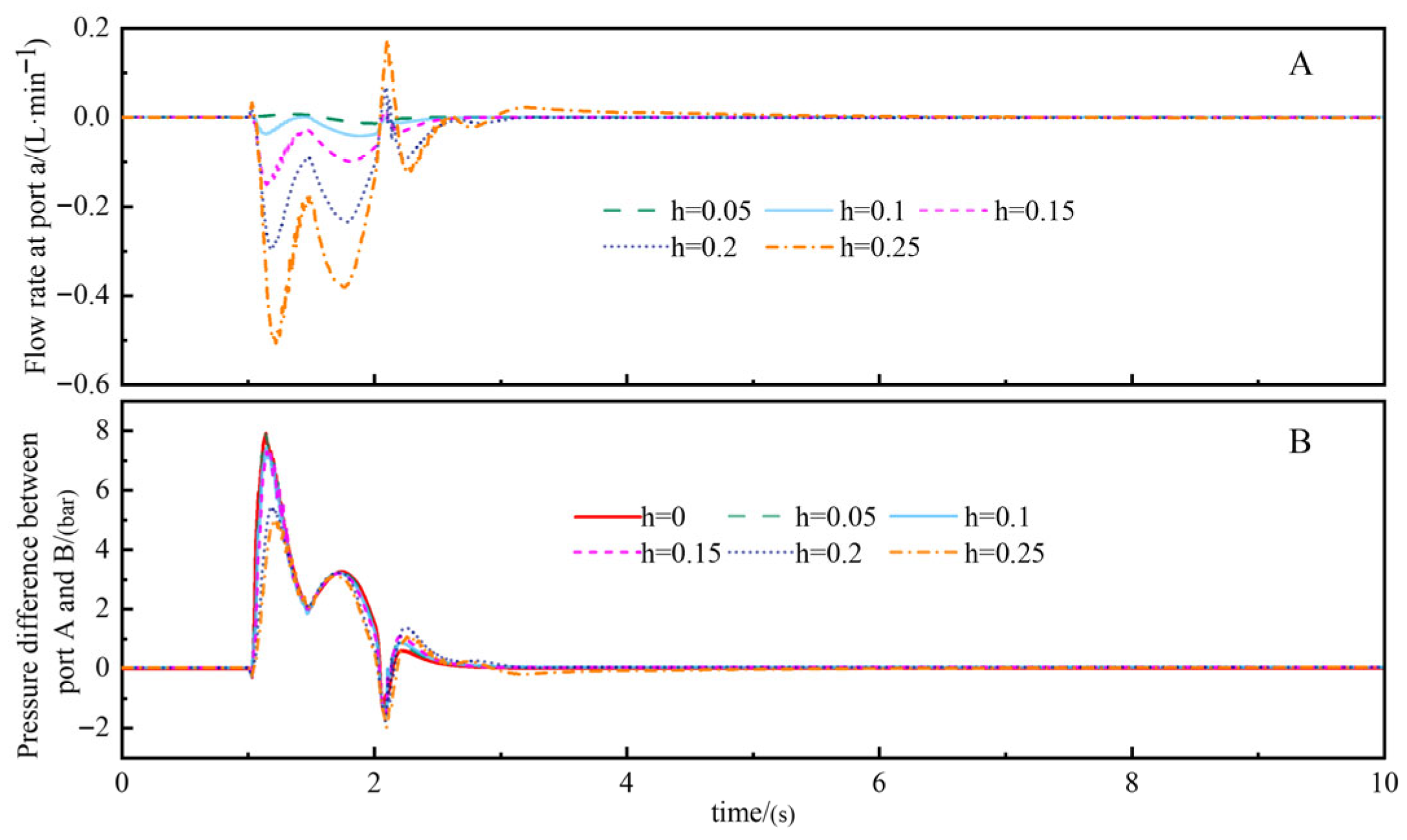
Figure 10A illustrates the leakage flow curve within port A. It is evident that a larger annular gap results in increased internal leakage flow. Figure 10B shows the pressure difference curves of ports A and B. However, the peak pressure difference diminishes with larger annular clearances, leading to a decreased hydraulic cylinder response speed to pressure fluctuations, consequently diminishing the optimization of vehicle acceleration and tire dynamic load. The slowed response speed reduces the hydraulic cylinder stroke but enhances the optimization of the suspension stroke. Nonetheless, active suspensions with larger annular clearances exhibit notable optimization effects compared to passive suspensions. IGAO has good optimization performance for control coefficients under different annular clearances, which is conducive to improving vehicle safety performance and extending the reliable working time of the system.

4.1.2. Analysis of Overshoot

Table 5, Table 6 and Table 7 present the overshoot of various performance indicators for the suspension system under semi-sinusoidal impact road conditions. Using the body acceleration (SMA) index as an example, the data in Table 5 demonstrate that, across all leakage conditions, the overshoot of the active suspension optimized by IGAO is significantly lower than that of the passive suspension. This finding robustly supports the effectiveness of the proposed control strategy. In leak-free conditions, the overshoot of the IGAO optimization system is reduced by 57.4% compared to the passive suspension and by 8.13% relative to the PSO algorithm optimization system. Under severe leakage conditions (h = 0.25), the optimization effects remain notable, with reductions of 24.52% and 12.61%, respectively. Although the overshoot increases with the annular gap h, the IGAO optimization system consistently exhibits lower overshoot than the PSO optimization system. This outcome indicates that the parameters adjusted by IGAO not only diminish the impact amplitude but also enhance the dynamic convergence performance of the system, thereby ensuring rapid recovery under varying degrees of faults.
The fuzzy PID control strategy based on IGAO presented in this article synchronously optimizes multiple dynamic performance indicators of the suspension system. It significantly reduces the vibration amplitude resulting from impacts and accelerates the stability process of the system. This strategy demonstrates strong adaptability to internal leakage faults, with a performance degradation rate that is considerably lower than that of traditional control methods as faults worsen. Consequently, it effectively achieves the fault-tolerant control objective of the suspension system in the presence of hydraulic actuator faults.

4.2. Performance Analysis Under C-Level Road Surface

The time-domain model of C-level pavement is as follows:
Z r ˙ t + 2 π υ n m i n Z r t = 2 π G r n 0 υ W t
In the equation, n m i n = 0.01   m 1 represents the frequency value of the road spectrum; υ denotes the vehicle speed, set at 20 m/s; G r n 0 stands for the road surface’s roughness coefficient, set at 256 × 10 6   m 3 ; W t represents the standard form of Gaussian white noise.
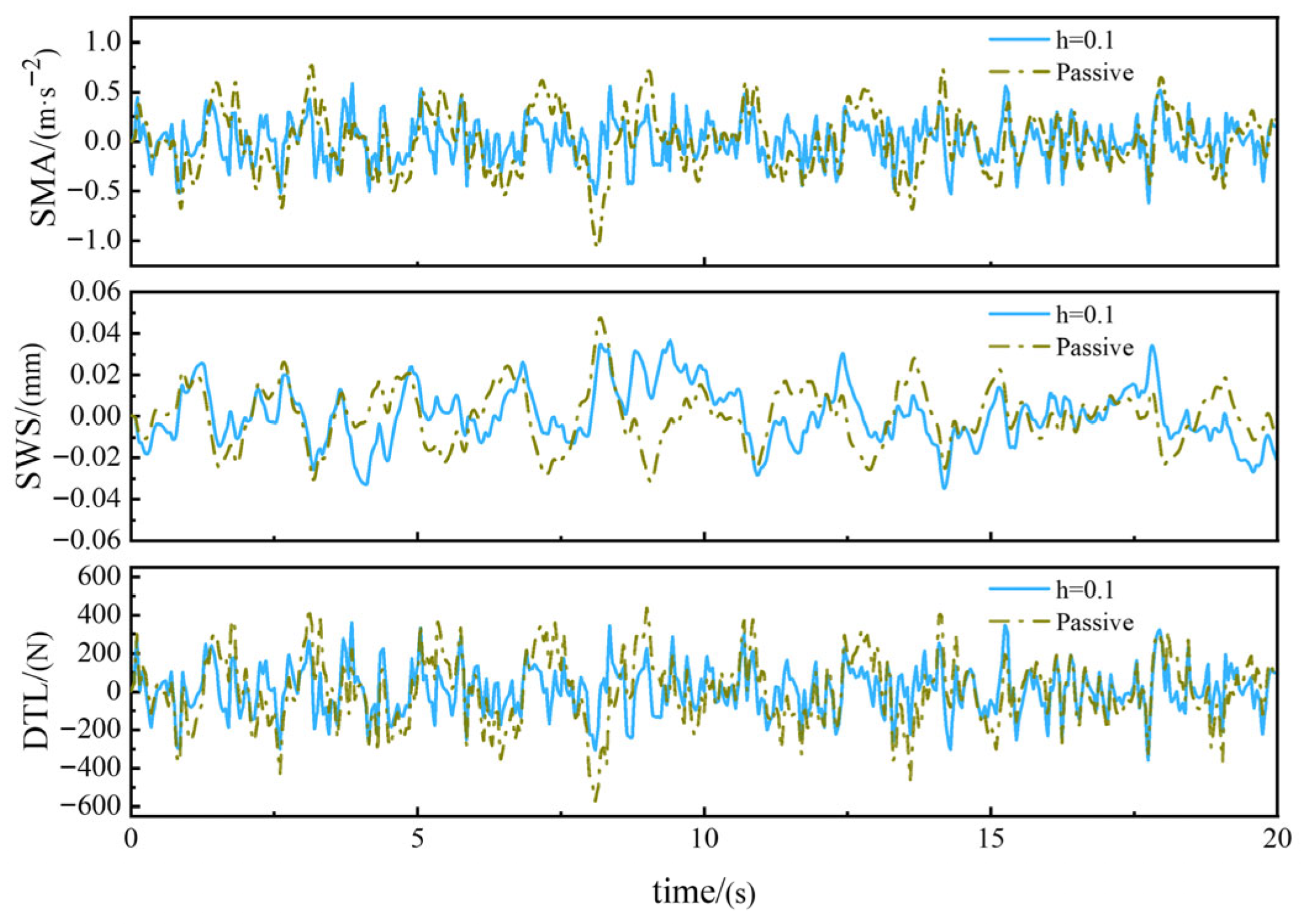
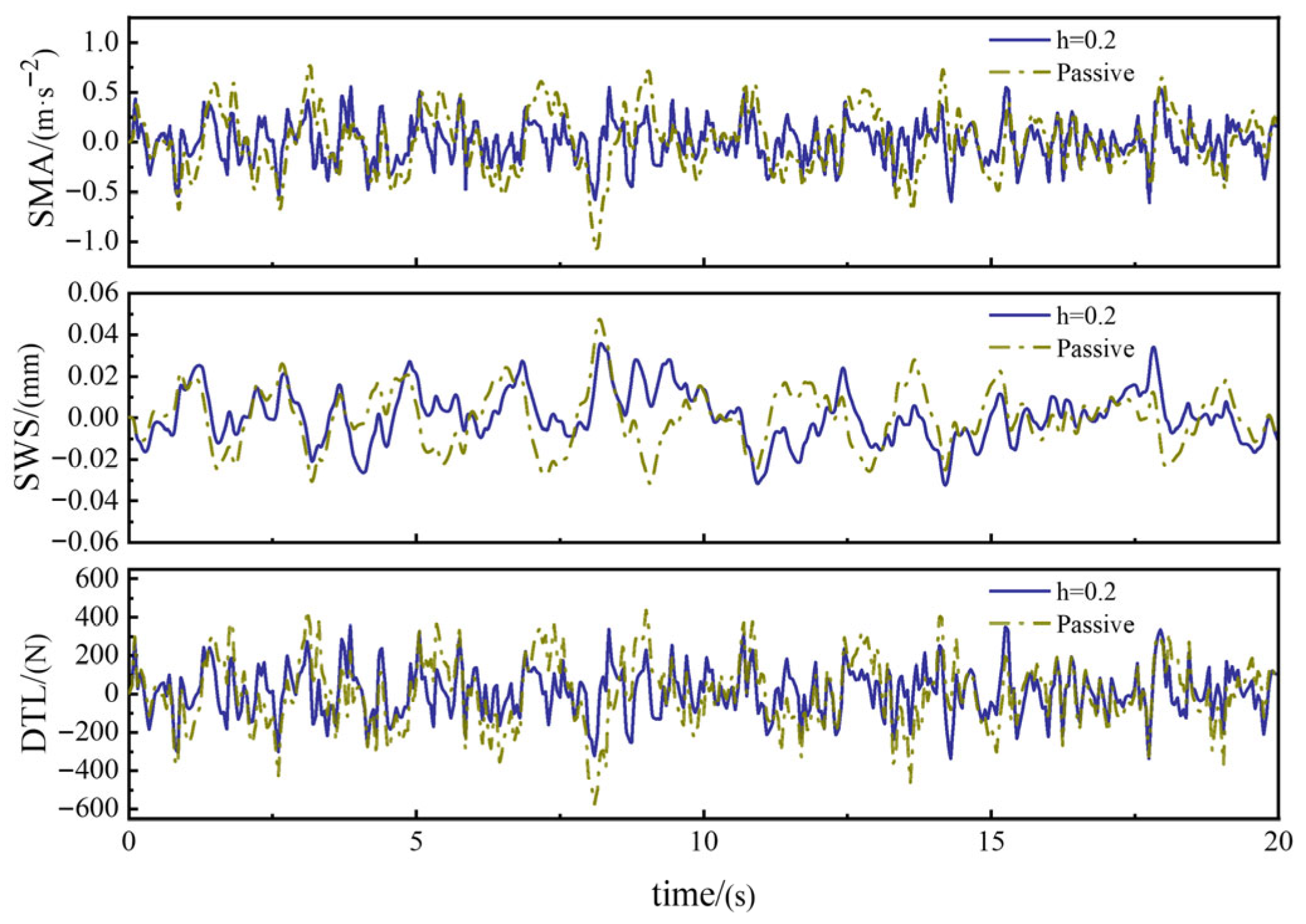
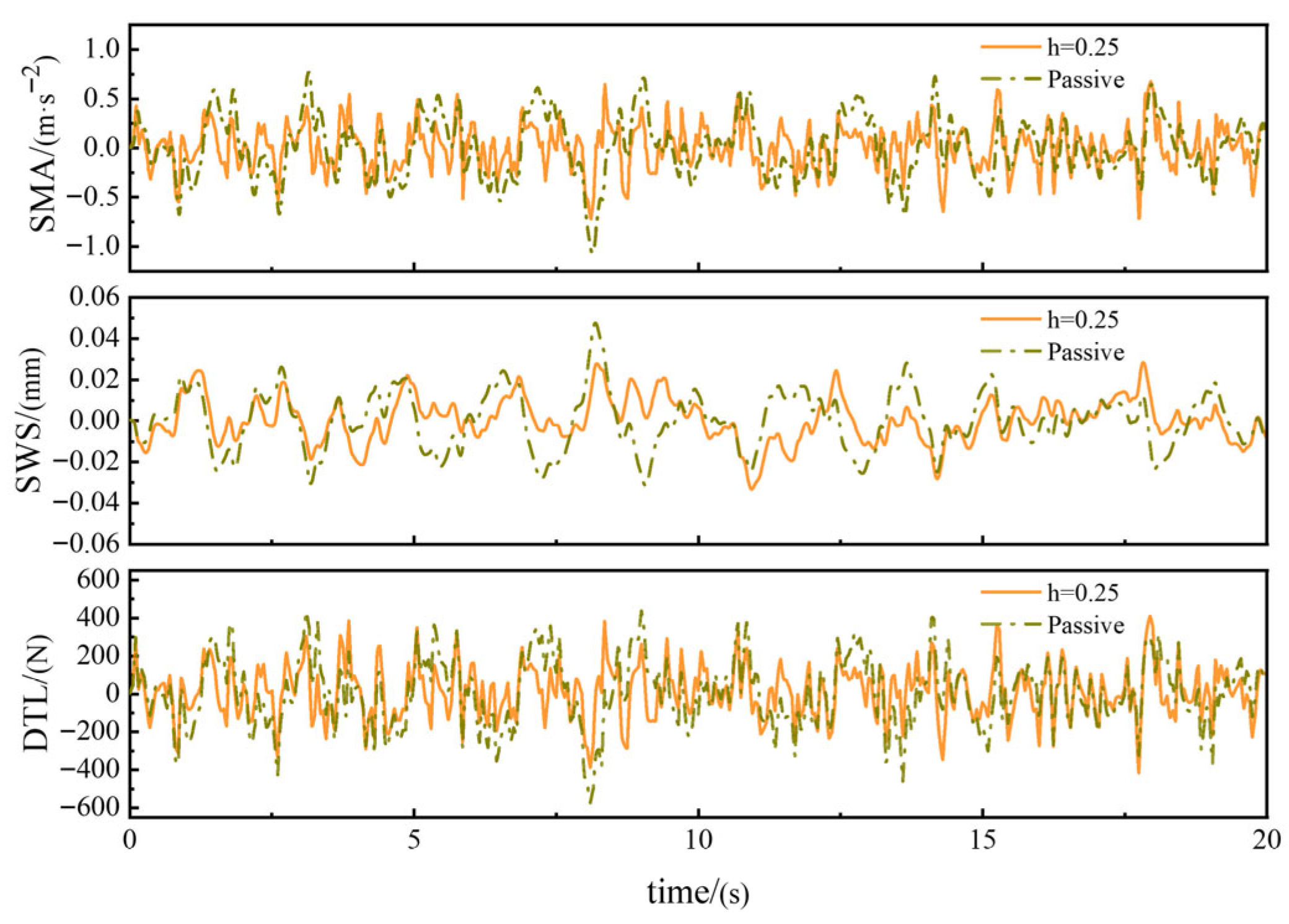
On the above road surface, IGAO is used to optimize the control coefficients of the active suspension system under different annular clearances. The coefficient results are shown in Table 8, the fitness value optimization results are shown in Figure 11, and the suspension performance index curves are shown in Figure 12, Figure 13, Figure 14 and Figure 15.

4.2.1. Analysis of Fitness Convergence Curve

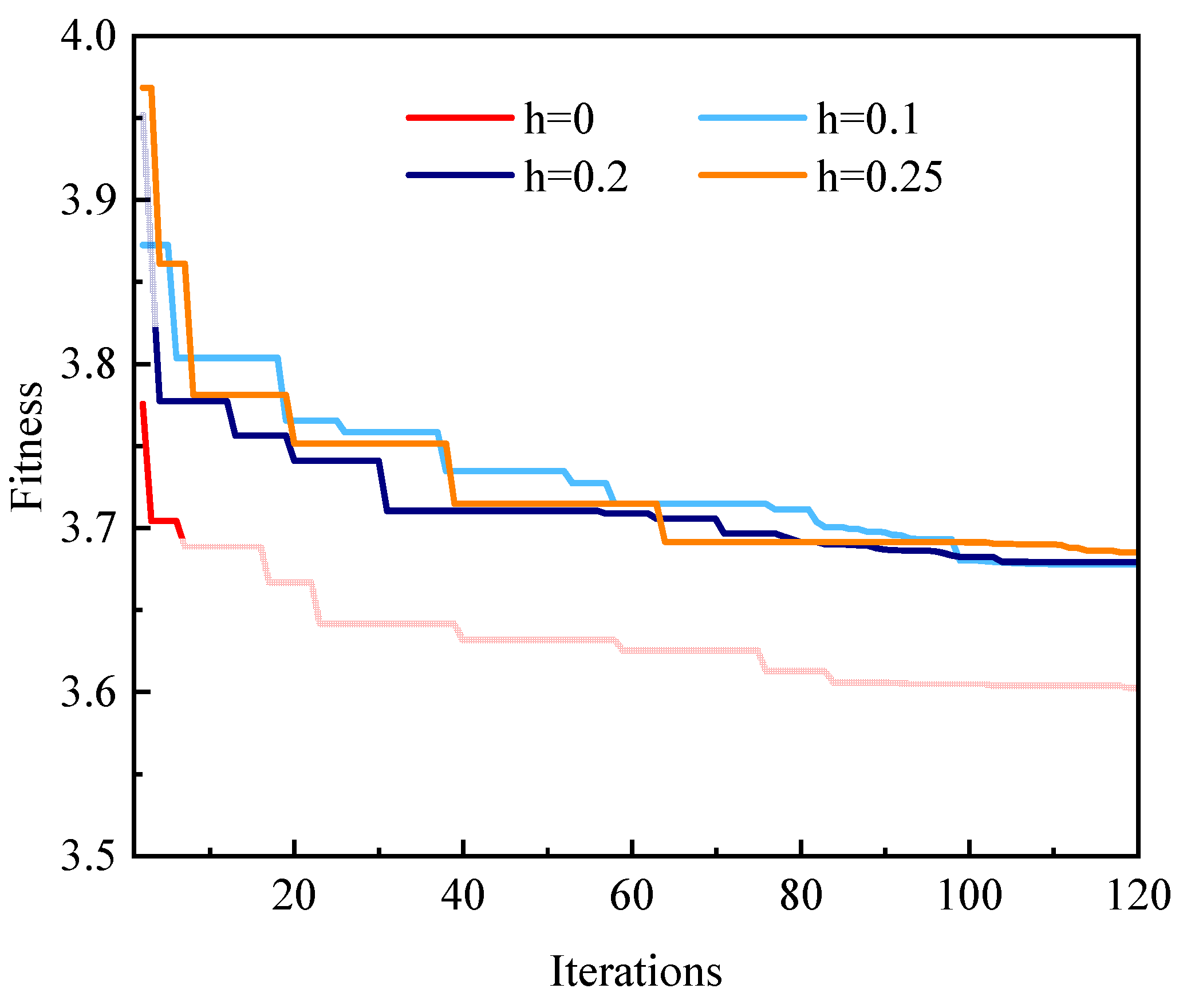
The convergence process of the fitness function serves as an intuitive indicator of the optimization performance and efficiency of the IGAO algorithm. Figure 11 illustrates the variation in fitness values across iterations under different annular clearances. By examining Figure 11 in conjunction with Table 8, it is evident that the fitness convergence curves for all operating conditions display characteristic optimization patterns. Initially, as the giant armadillo navigates the solution space, the fitness value experiences a rapid decline. During the middle phase of the iteration, the rate of descent diminishes, leading the algorithm into a local development stage. In the later stages of iteration, the fitness value stabilizes, and the algorithm converges toward the optimal solution.
A larger annular gap corresponds to a higher initial fitness value, suggesting that greater internal leakage leads to poorer initial performance of the active suspension system. Following optimization with the IGAO algorithm, the final convergence values under different leakage conditions closely approach the fitness values for non-internal leakage scenarios. This suggests that the overall performance of the optimized active suspension system has significantly improved, effectively compensating for internal leakage faults and indirectly validating the optimization effectiveness of the IGAO algorithm. Furthermore, all curves exhibit stable trends in the later iteration stages without oscillations, indicating the IGAO algorithm’s robust stability across various fault conditions and its ability to offer dependable parameter solutions for the controller.

4.2.2. Performance Indicator Analysis

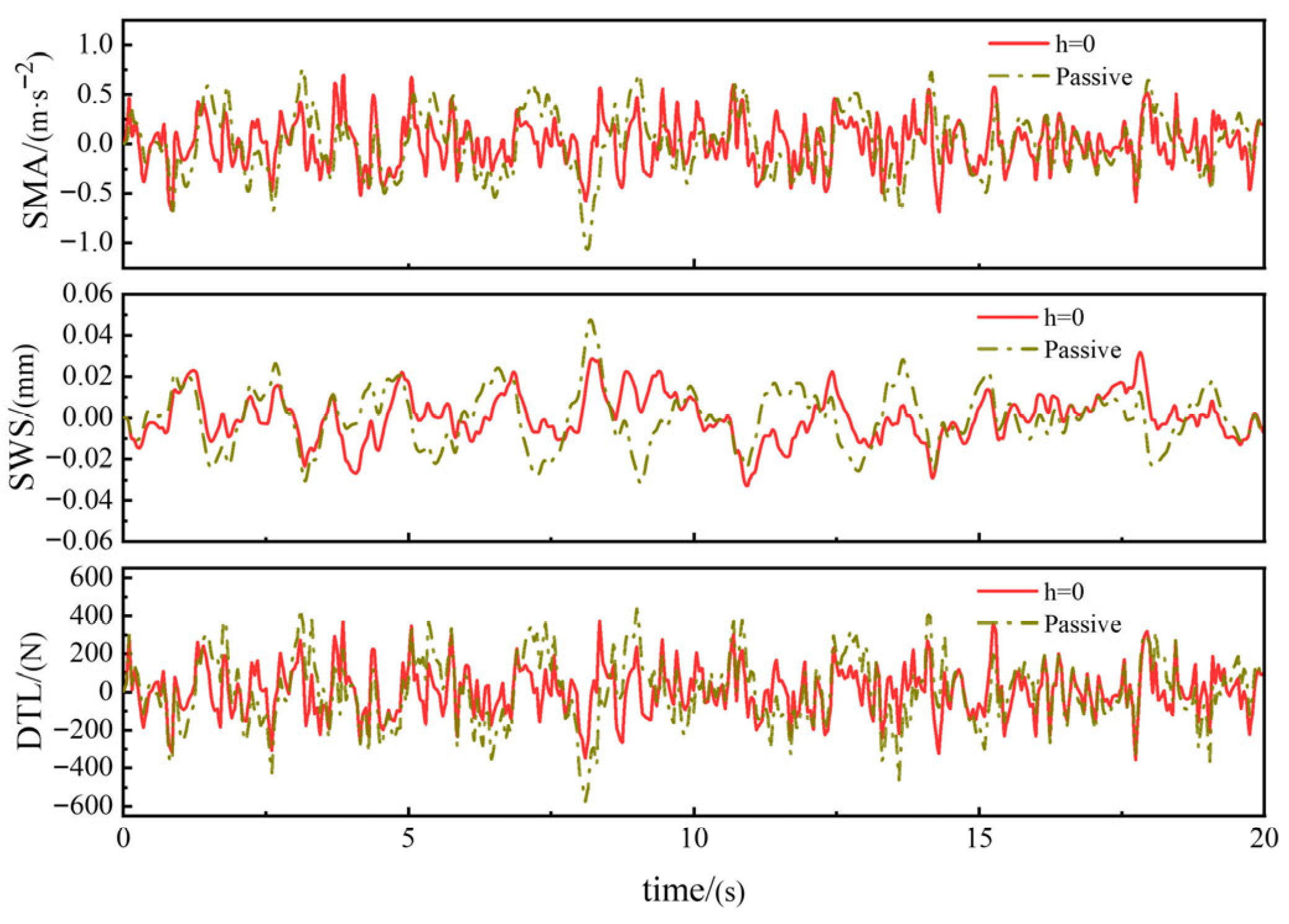
The quantitative data from Figure 12, Figure 13, Figure 14 and Figure 15 and Table 9 unequivocally demonstrate that, under identical hydraulic cylinder leakage conditions, the active suspension optimized by the IGAO algorithm outperforms the passive suspension in terms of SMA, SWS, and DTL core performance indicators. Specifically, the optimization of SMA root mean square values compared to the passive suspension shows a substantial improvement of 36.36%, 31.98%, 26.94%, and 25.92%, effectively reducing the transmission of road excitation to the vehicle body and enhancing driving smoothness. The optimized root mean square values of DTL exhibit enhancements of 34.98%, 28.53%, 25.53%, and 24.13%, ensuring superior tire-ground adhesion and confirming the exceptional handling stability of the system. Furthermore, the root mean square values of SWS are decreased by 17.86%, 20.71%, 23.57%, and 23.57%, respectively, to mitigate mechanical losses caused by excessive suspension extension. These results conclusively illustrate that the IGAO algorithm adeptly manages the three conflicting performance indicators of ride comfort, handling stability, and driving safety in the suspension system, accurately optimizing their optimal balance point, and comprehensively enhancing the overall performance of the suspension system.
Increasing the annular clearance of the hydraulic cylinder to h = 0.2 mm and h = 0.25 mm results in higher root mean square values for SMA and DTL compared to smaller clearances of h = 0 mm and 0.1 mm, while SWS displays an increasing trend. This trend aligns with findings under semi-sinusoidal road conditions. Conversely, there is no notable disparity in the root mean square values of diverse performance metrics among different suspension systems on C-level road surfaces. This can be attributed to the C-class road surface excitation signal comprising numerous high-frequency components, coupled with inherent response delays in the electro-hydraulic servo actuator. The actuator’s dynamic response speed struggles to synchronize with the rapid changes in high-frequency road surface input, thereby mitigating the impact of hydraulic cylinder annular clearance discrepancies on suspension performance to some extent, ultimately reducing the performance gap across varying operational scenarios. Even in suspension systems with pronounced internal leakage, overall performance significantly improves post-optimization using the IGAO algorithm. This outcome underscores the IGAO algorithm’s efficacy in mitigating performance degradation stemming from internal leakage issues and underscores its robust adaptability in fault scenarios.

4.3. Analysis of the Impact Mechanism of Internal Leakage on System Dynamic Response

The impact of internal leakage on the dynamic response of the system is rooted in its modification of the inherent characteristics of the electro-hydraulic servo actuator. From a physical perspective, this effect can be directly attributed to the degradation of material properties and geometric accuracy of hydraulic components, where the increase in the annular clearance h serves as a macroscopic indicator of internal parameter uncertainty induced by material wear, manufacturing tolerance accumulation, and long-term operation. An increase in the leakage gap h results in the formation of a significant bypass leakage flow within the actuator, giving rise to two primary effects. Firstly, there is a reduction in the effective gain of the actuator. The diversion of control flow output by the servo valve leads to a decrease in the actuator’s output force and a slower response rate, directly causing a degradation in the control performance of the vehicle acceleration (SMA). Secondly, the system’s equivalent damping experiences a notable increase. The leakage flow characteristic that impedes the establishment of a pressure difference can dampen system oscillations, resulting in a smoother change in suspension dynamic stroke (SWS). However, it also diminishes the actuator’s responsiveness to high-frequency forces, leading to a decline in the control performance of tire dynamic load (DTL). These material- and structure-induced variations introduce time-varying and nonlinear uncertainties into the actuator parameters, which cannot be accurately captured by controllers designed based on fixed nominal models. Furthermore, internal leakage exacerbates the pressure coupling effect between the two chambers of the hydraulic cylinder, enhances the system’s nonlinear characteristics, and complicates the ability of traditional controllers designed based on nominal models to meet control requirements.
The effectiveness of the IGAO-optimized fuzzy PID strategy proposed in this article stems from its nature as a data-driven fault-tolerant control approach. Rather than relying on precise material parameters or invariant actuator models, the proposed method directly utilizes system performance feedback to guide controller parameter optimization. By optimizing specific controller parameters, this strategy can dynamically compensate for gain reduction and adjust to enhanced damping characteristics. Consequently, it can identify the optimal equilibrium point for overall performance in a changing dynamic environment, rather than merely reacting to or counteracting these alterations.

5. Conclusions

This article examines internal leakage faults in electro-hydraulic servo active suspension systems. To enhance the efficiency of optimizing controller parameters during faults, the standard GAO algorithm was enhanced by incorporating a nonlinear dynamic inertia weight adjustment search feature. This enhancement, along with the out-of-bounds particle random reflection strategy to prevent boundary optimal traps, effectively addresses the issue of fuzzy PID parameter optimization easily getting stuck in local optima under various constraints. These modifications substantially improve the algorithm’s convergence performance and robustness, rendering it more applicable to engineering optimization scenarios.
A comprehensive evaluation fitness function L is established by quantifying suspension performance indicators, and a 1/4 vehicle suspension model is developed. Simulation results on a half sine road demonstrate that both IGAO, GAO and PSO algorithms can optimize core indicators such as vehicle acceleration (SMA), tire dynamic load (DTL), and suspension dynamic stroke (SWS) effectively. The IGAO algorithm exhibits more significant advantages by reducing impact amplitude, demonstrating better dynamic convergence performance, ensuring rapid system recovery under varying fault degrees, converging to the minimum fitness value earlier in the iteration process, and achieving a superior minimum value, resulting in enhanced suspension performance post-optimization. C-level road simulation further validates that the IGAO algorithm can effectively offset performance losses due to internal leakage faults, enhancing the overall performance of the suspension system by precisely balancing ride comfort, handling stability, and driving safety indicators. In conclusion, this research offers a practical data-driven solution for addressing uncertain control of internal parameters in hydraulic systems and provides essential theoretical underpinning and practical guidance for enhancing the reliability design of active suspension systems.

Author Contributions

Conceptualization, H.Z. and H.X.; methodology, H.X.; software, H.X.; validation, H.X., Y.R. and Y.Z.; formal analysis, H.X. and Y.X.; investigation, H.X. and Y.R.; resources, H.X. and D.Z.; data curation, H.X. and Y.Z.; writing—original draft preparation, H.X. and Y.R.; writing—review and editing, H.X. and H.Z.; visualization, H.X. and Y.X.; supervision, H.X. and Y.H.; project administration, D.Z.; funding acquisition, D.Z. All authors have read and agreed to the published version of the manuscript.

Funding

The authors disclosed receipt of the following financial support for the research, authorship, and/or publication of this article: “This research was funded by Project supported by the Joint Funds of the National Natural Science Foundation of China, grant number U24A6008”, “This study is supported by the Qinhuangdao Municipal Science and Technology Research and Development Plan, grant number 202501A284”, “This study is supported by the Hebei Province Central Guiding Local Science and Technology Development Fund Project, grant number 254Z0801G” and “This study is supported by the Special Tasks for Scientific Research in Higher Education Institutions in Hebei Province in 2026, grant number CXZX2026005”.

Institutional Review Board Statement

Not applicable.

Informed Consent Statement

Not applicable.

Data Availability Statement

Data are contained within the article.

Conflicts of Interest

Author Haiwu Zheng was employed by the Yanshan University Science Park. The remaining authors declare that the research was conducted in the absence of any commercial or financial relationships that could be construed as a potential conflict of interest.

References

  1. Pan, H.; Jing, X.; Sun, W.; Gao, H. A Bioinspired Dynamics-Based Adaptive Tracking Control for Nonlinear Suspension Systems. IEEE Trans. Control Syst. Technol. 2018, 26, 903–914. [Google Scholar] [CrossRef]
  2. Zheng, H.; Xiong, H.; Huang, Z.; Zhao, D. Research on LQR Control of Nonlinear Active Suspension Cooperatively Optimized by Differential Geometry and Genetic Algorithms. Meas. Control 2025. [Google Scholar] [CrossRef]
  3. Theunissen, J.; Tota, A.; Gruber, P.; Dhaens, M.; Sorniotti, A. Preview-Based Techniques for Vehicle Suspension Control: A State-of-the-Art Review. Annu. Rev. Control 2021, 51, 206–235. [Google Scholar] [CrossRef]
  4. Streiter, R. Active Preview Suspension System. ATZ Worldw. 2008, 110, 4–11. [Google Scholar] [CrossRef]
  5. Zheng, H.; Xiong, H.; Zhao, D.; Ren, Y.; Cao, S.; Huang, Z.; Hu, Z.; Zhou, Z.; Zhao, L.; Li, L. Model-Free Multi-Parameter Optimization Control for Electro-Hydraulic Servo Actuators with Time Delay Compensation. Actuators 2025, 14, 617. [Google Scholar] [CrossRef]
  6. Hu, Y.; Chen, M.Z.Q.; Hou, Z. Multiplexed Model Predictive Control for Active Vehicle Suspensions. Int. J. Control 2015, 88, 347–363. [Google Scholar] [CrossRef]
  7. Poussot-Vassal, C.; Spelta, C.; Sename, O.; Savaresi, S.M.; Dugard, L. Survey and Performance Evaluation on Some Automotive Semi-Active Suspension Control Methods: A Comparative Study on a Single-Corner Model. Annu. Rev. Control 2012, 36, 148–160. [Google Scholar] [CrossRef]
  8. Sun, W.; Pan, H.; Zhang, Y.; Gao, H. Multi-Objective Control for Uncertain Nonlinear Active Suspension Systems. Mechatronics 2014, 24, 318–327. [Google Scholar] [CrossRef]
  9. Huang, Z.; Hu, Z.; Zhao, D.; Zhou, Z.; Xiong, H.; Li, Y. Research on the Hybrid Redundancy Leveling Strategy for Emergency Rescue Vehicles. Meas. Control 2025, 00202940251407964. [Google Scholar] [CrossRef]
  10. Shanbhag, V.V.; Meyer, T.J.J.; Caspers, L.W.; Schlanbusch, R. Failure Monitoring and Predictive Maintenance of Hydraulic Cylinder—State-of-the-Art Review. IEEE/ASME Trans. Mechatron. 2021, 26, 3087–3103. [Google Scholar] [CrossRef]
  11. Xiong, H.; Zheng, H.; Zhao, D.; Feng, Y. Optimized Control Strategy for Electro-Hydraulic Servo Active Suspension System with Internal Leakage Faults. Int. J. Control Autom. Syst. 2025, 23, 1893–1907. [Google Scholar] [CrossRef]
  12. Guo, Y.; Zeng, Y.; Fu, L.; Chen, X. Modeling and Experimental Study for Online Measurement of Hydraulic Cylinder Micro Leakage Based on Convolutional Neural Network. Sensors 2019, 19, 2159. [Google Scholar] [CrossRef]
  13. Yao, Z.; Tang, J.; Rui, T.; Duan, J. A Time–Frequency Analysis Based Internal Leakage Detection Method for Hydraulic Actuators. Adv. Mech. Eng. 2017, 9, 168781401668505. [Google Scholar] [CrossRef]
  14. Phan, V.D.; Phan, Q.C.; Ahn, K.K. Observer-Based Adaptive Fuzzy Tracking Control for a Valve-Controlled Electro-Hydraulic System in Presence of Input Dead Zone and Internal Leakage Fault. Int. J. Fuzzy Syst. 2025. [Google Scholar] [CrossRef]
  15. Li, L.; Lu, Y.; Wang, R.; Chen, J. A Three-Dimensional Dynamics Control Framework of Vehicle Lateral Stability and Rollover Prevention via Active Braking With MPC. IEEE Trans. Ind. Electron. 2017, 64, 3389–3401. [Google Scholar] [CrossRef]
  16. Liu, Z.; Si, Y.; Sun, W. Ride Comfort Oriented Integrated Design of Preview Active Suspension Control and Longitudinal Velocity Planning. Mech. Syst. Signal Process. 2024, 208, 110992. [Google Scholar] [CrossRef]
  17. Pan, H.; Sun, W.; Gao, H.; Yu, J. Finite-Time Stabilization for Vehicle Active Suspension Systems With Hard Constraints. IEEE Trans. Intell. Transp. Syst. 2015, 16, 2663–2672. [Google Scholar] [CrossRef]
  18. Chen, H.; Liu, Y.-J.; Liu, L.; Tong, S.; Gao, Z. Anti-Saturation-Based Adaptive Sliding-Mode Control for Active Suspension Systems With Time-Varying Vertical Displacement and Speed Constraints. IEEE Trans. Cybern. 2022, 52, 6244–6254. [Google Scholar] [CrossRef] [PubMed]
  19. Wang, J.; Jin, F.; Zhou, L.; Li, P. Implementation of Model-Free Motion Control for Active Suspension Systems. Mech. Syst. Signal Process. 2019, 119, 589–602. [Google Scholar] [CrossRef]
  20. Han, S.-Y.; Dong, J.-F.; Zhou, J.; Chen, Y.-H. Adaptive Fuzzy PID Control Strategy for Vehicle Active Suspension Based on Road Evaluation. Electronics 2022, 11, 921. [Google Scholar] [CrossRef]
  21. Joseph, S.B.; Dada, E.G.; Abidemi, A.; Oyewola, D.O.; Khammas, B.M. Metaheuristic Algorithms for PID Controller Parameters Tuning: Review, Approaches and Open Problems. Heliyon 2022, 8, e09399. [Google Scholar] [CrossRef] [PubMed]
  22. Mohindru, P. Review on PID, Fuzzy and Hybrid Fuzzy PID Controllers for Controlling Non-Linear Dynamic Behaviour of Chemical Plants. Artif. Intell. Rev. 2024, 57, 97. [Google Scholar] [CrossRef]
  23. Ambroziak, A.; Chojecki, A. The PID Controller Optimisation Module Using Fuzzy Self-Tuning PSO for Air Handling Unit in Continuous Operation. Eng. Appl. Artif. Intell. 2023, 117, 105485. [Google Scholar] [CrossRef]
  24. Feng, H.; Ma, W.; Yin, C.; Cao, D. Trajectory Control of Electro-Hydraulic Position Servo System Using Improved PSO-PID Controller. Autom. Constr. 2021, 127, 103722. [Google Scholar] [CrossRef]
  25. Li, F.; Bai, X.; Su, Z.; Tang, S.; Wang, Z.; Li, F.; Yu, H. Development of a Control System for Double-Pendulum Active Spray Boom Suspension Based on PSO and Fuzzy PID. Agriculture 2023, 13, 1660. [Google Scholar] [CrossRef]
  26. Liu, Y.; Jiang, D.; Yun, J.; Sun, Y.; Li, C.; Jiang, G.; Kong, J.; Tao, B.; Fang, Z. Self-Tuning Control of Manipulator Positioning Based on Fuzzy PID and PSO Algorithm. Front. Bioeng. Biotechnol. 2022, 9, 817723. [Google Scholar] [CrossRef] [PubMed]
  27. Zhang, Y.; Wang, S.; Ji, G. A Comprehensive Survey on Particle Swarm Optimization Algorithm and Its Applications. Math. Probl. Eng. 2015, 2015, 931256. [Google Scholar] [CrossRef]
  28. Chiou, J.-S.; Tsai, S.-H.; Liu, M.-T. A PSO-Based Adaptive Fuzzy PID-Controllers. Simul. Model. Pract. Theory 2012, 26, 49–59. [Google Scholar] [CrossRef]
  29. Bingül, Z.; Karahan, O. A Fuzzy Logic Controller Tuned with PSO for 2 DOF Robot Trajectory Control. Expert Syst. Appl. 2011, 38, 1017–1031. [Google Scholar] [CrossRef]
  30. Shi, Y.; Eberhart, R. A Modified Particle Swarm Optimizer. In Proceedings of the 1998 IEEE International Conference on Evolutionary Computation Proceedings; IEEE World Congress on Computational Intelligence (Cat. No.98TH8360); IEEE: Anchorage, AK, USA, 1998; pp. 69–73. [Google Scholar]
  31. Shi, Y.; Eberhart, R.C. Empirical Study of Particle Swarm Optimization. In Proceedings of the 1999 Congress on Evolutionary Computation-CEC99 (Cat. No. 99TH8406); IEEE: Washington, DC, USA, 1999; pp. 1945–1950. [Google Scholar]
Figure 1. The 1/4 Vehicle Front Suspension Model.
Actuators 15 00149 g001
Figure 2. Schematic Diagram of Valve-Controlled Asymmetric Cylinder.
Actuators 15 00149 g002
Figure 3. The 1/4 vehicle suspension system AMEsim collaborative simulation model: (a) traditional passive suspension; (b) no internal leakage active suspension; (c) consider internal leakage active suspension.
Actuators 15 00149 g003
Figure 4. Improved Giant Armadillo Optimized Fuzzy PID.
Actuators 15 00149 g004
Figure 5. IGAO Optimized Fuzzy PID Flowchart.
Actuators 15 00149 g005
Figure 6. Fitness curve under half sine impact road surface.
Actuators 15 00149 g006
Figure 7. Vehicle acceleration curve under half sine impact road surface.
Actuators 15 00149 g007
Figure 8. Suspension dynamic stroke curve under half sine impact road surface.
Actuators 15 00149 g008
Figure 9. Tire dynamic load curve under half sine impact road surface.
Actuators 15 00149 g009
Figure 10. Leakage Flow Curve (A) of Port A and Pressure Difference Curve (B) of Ports A and B.
Actuators 15 00149 g010
Figure 11. Fitness curve under C-class pavement.
Actuators 15 00149 g011
Figure 12. Suspension performance simulation curve when the annular gap is 0.
Actuators 15 00149 g012
Figure 13. Suspension performance simulation curve with a circular gap of 0.1.
Actuators 15 00149 g013
Figure 14. Suspension performance simulation curve with a circular gap of 0.2.
Actuators 15 00149 g014
Figure 15. Suspension performance simulation curve with a circular gap of 0.25.
Actuators 15 00149 g015
Table 1. Mechanical structural data of suspension system.
NameSymbolNumerical Value
Spring-mass M s 550 (kg)
Unsprung mass M t 50 (kg)
Elastic coefficient of suspension spring K s 10,000 (N/m)
Suspension Damping C s 1000 (N·s/m)
Elastic stiffness of vehicle tire K t 20,000 (N/m)
Table 2. Servo actuation System Parameters.
Hydraulic ComponentsParameterNumerical Value
Hydraulic cylinderPiston diameter40 (mm)
Piston rod diameter20 (mm)
Piston Thickness24 (mm)
Three-position four-way servo valveRated current10 (mA)
Natural frequency100 (Hz)
Damping ratio0.8
Pressure drop 1 × 10 5 P a
Overflow valveOverflow Pressure 1 × 10 7 P a
Hydraulic oilDensity883 (kg/m3)
Bladder accumulatorVolume4 (L)
Pre-charged gas pressure 8 × 10 7 P a
Quantitative pumpRotational speed1500 (rev/min)
Engine displacement40 (cc/rev)
Table 3. Fuzzy rules of Δ k p , Δ k i , Δ k d .
eceNBNMNSZOPSPMPB
Δkp\Δki\Δkd
NBNB\NB\PBNB\NB\PBNM\NB\PMNM\NM\PMNS\NM\PSZO\ZO\PSZO\ZO\ZO
NMNB\NB\PBNB\NB\PBNM\NM\PMNS\NM\PMNS\NS\PSZO\ZO\ZOZO\ZO\ZO
NSNB\NM\PMNM\NM\PMNS\NS\PMNS\NS\PSZO\ZO\ZOPS\PS\NSPS\PS\NM
ZONM\NM\PMNM\NS\PSNS\NS\PSZO\ZO\ZOPS\PS\NSPM\PS\NMPM\PM\NM
PSNM\NS\PSNS\NS\PSZO\ZO\ZOPS\PS\NSPS\PS\NSPM\PM\NMPB\PM\NM
PMZO\ZO\ZOZO\ZO\ZOPS\PS\NSPS\PM\NMPM\PM\NMPB\PB\NMPB\PB\NB
PBZO\ZO\ZOZO\ZO\NSPS\PS\NSPM\PM\NMPM\PB\NMPB\PB\NBPB\PB\NB
Table 4. Optimization control coefficient of IGAO under half sine road surface.
Annular Gap Height (mm)Minimum Fitness ValueFuzzy PID Control Coefficients Optimized by IGAO
IGAOGAOPSO
h = 0 0.8290.9060.838 26.455, 19.565 , 2.254 × 10 5 , 1.997 , 0.1823 , 0.1665
h = 0.05 0.8520.9110.879 24.319, 19.251 , 0.00178 , 1.733 , 1.546 , 0.0496
h = 0.1 0.8870.9210.902 23.085, 13.930 , 4.189 × 10 5 , 1.457 , 1.969 , 0.005
h = 0.15 0.9151.0031.013 20.575, 22.035 , 3.959 × 10 6 , 1.613 , 1.963 , 0.151
h = 0.2 1.1651.2031.151 13.326, 19.502 , 0.0021 , 0.935 , 1.802 , 0.0857
h = 0.25 1.5111.8791.711 11.396, 20.047 , 1.796 × 10 4 , 0.655 , 0.277 , 0.0842
Table 5. Suspension SMA overshoot under half sine impact road surface.
System Status h = 0 h = 0.05 h = 0.1 h = 0.15 h = 0.2 h = 0.25
passive suspension0.41220.41220.41220.41220.41220.4122
PSO optimized active suspension0.18570.19620.20360.22340.26580.3631
IGAO optimized active suspension0.17060.18140.19080.20040.24210.3111
Table 6. Suspension SWS overshoot under half sine impact road surface.
System Status h = 0 h = 0.05 h = 0.1 h = 0.15 h = 0.2 h = 0.25
passive suspension0.02660.02660.02660.02660.02660.0266
PSO optimized active suspension0.02040.02030.02010.01990.01870.0181
IGAO optimized active suspension0.01990.02010.01960.01960.01700.0160
Table 7. Suspension DTL overshoot under half sine impact road surface.
System Status h = 0 h = 0.05 h = 0.1 h = 0.15 h = 0.2 h = 0.25
passive suspension293.344293.344293.344293.344293.344293.344
PSO optimized active suspension135.22144.64145.05156.68194.82214.53
IGAO optimized active suspension119.10122.43131.12134.66175.10190.23
Table 8. The optimal control coefficient result of the C-level road active suspension system.
Circular Gap Height (mm)Minimum Fitness ValueFuzzy PID Control Coefficient
h = 0 3.602 21.043, 9.122, 0.178 , 0.961 , 1.265 , 0.334
h = 0.1 3.677 22.041, 13.983, 0.178 , 0.299 , 1.303, 0.189
h = 0.2 3.679 20.877, 15.95, 0.069 , 1.18, 1.99 , 0.0161
h = 0.25 3.683 21.857, 6.751, 0.0497 , 1.418, 1.989 , 0.12
Table 9. Root Mean Square Values of Suspension Performance Indicators on C-Class Road Surface.
Passive h = 0 h = 0.1 h = 0.2 h = 0.25
S M A / m · s 2 0.2970.1890.2020.2170.220
S W S / m m 0.01400.01150.01110.01070.0107
D T L / N 172.771112.335123.478128.657131.087
Disclaimer/Publisher’s Note: The statements, opinions and data contained in all publications are solely those of the individual author(s) and contributor(s) and not of MDPI and/or the editor(s). MDPI and/or the editor(s) disclaim responsibility for any injury to people or property resulting from any ideas, methods, instructions or products referred to in the content.