Article

In-Plane Vibration-Driven Miniature Piezoelectric Motor: Design, Modeling, and Experimental Characterization


State Key Laboratory of Mechanics and Control for Aerospace Structures, Nanjing University of Aeronautics and Astronautics (NUAA), Nanjing 210016, China
*
Authors to whom correspondence should be addressed.
Actuators 2026, 15(2), 103; https://doi.org/10.3390/act15020103
Submission received: 13 January 2026 / Revised: 30 January 2026 / Accepted: 3 February 2026 / Published: 5 February 2026
(This article belongs to the Section Actuator Materials)

Abstract

High-speed miniature rotary actuators are critical components in compact, high-performance systems. However, conventional electromagnetic micromotors face a prominent trade-off between miniaturization and output performance, which restricts their applicability in highly integrated devices. To address this challenge, a novel high-speed rotary piezoelectric ultrasonic motor is proposed. The proposed motor consists of a titanium alloy metal body with offset driving teeth, piezoelectric ceramic plates, two conical rotors, a compression spring, an output shaft, and a fastening sleeve. Four PZT-8 plates are bonded to the periphery of the metal body and excited to generate in-plane bending vibration modes; these vibrations are then transformed into unidirectional rotary motion through the periodic contraction and expansion of the offset driving teeth and frictional contact with the rotors. The operating principle and structural parameters of the proposed motor were analyzed and optimized using finite element analysis (FEA), including modal, harmonic response, and transient analyses. A prototype was fabricated to evaluate its mechanical properties. The stator has a compact size of 12 mm × 12 mm × 4 mm and a mass of 2.3 g. Experimental results demonstrate that under an excitation voltage of 350 Vp-p at the resonant frequency of 28.6 kHz, the motor achieves a maximum rotational speed of 4720 rpm and a maximum stall torque of 0.36 mN·m. With its simple structure, compact size, lightweight design, and excellent output performance, the proposed ultrasonic motor provides a solution for compact high-speed rotary actuation.

1. Introduction

Ultrasonic motors (USMs) are non-electromagnetic actuators that operate based on the inverse piezoelectric effect of piezoelectric ceramics. When appropriate voltage signals are applied, the stator is excited to vibrate in the ultrasonic frequency range with submicrometer amplitudes. These microscopic vibrations are converted into macroscopic motion and mechanical output through frictional coupling between the stator and the mover [1,2,3,4]. Owing to their compact structure, fast response, self-locking capability under power-off conditions, high positioning resolution, and strong immunity to electromagnetic interference, USMs have attracted considerable research interest [5,6,7,8]. As a result, they have been successfully applied in digital cameras [9], life science instruments [10], aerospace equipment [11,12], semiconductor manufacturing facilities [13], and robotic platforms [14].
With rapid progress in micro- and nano-fabrication technologies, the demand for miniature actuators has increased in high-end equipment, such as microelectronics, microrobots, and precision instruments [15]. As electromagnetic micromotors are scaled down, they often exhibit lower efficiency, higher thermal losses, and increased assembly complexity. In contrast, electrostatic motors typically provide limited output force and low energy density. These limitations have driven the development of piezoelectric miniature rotary actuators, whose output performance is generally less sensitive to size reduction. From the perspective of vibration characteristics, USMs are commonly classified as traveling-wave, standing-wave, and hybrid types [16,17,18].
In traveling-wave ultrasonic motors (TWUMs), a traveling wave is generated on the stator by superimposing two orthogonal standing-wave modes. This mechanism produces relatively smooth rotary motion, and TWUMs are therefore widely used in rotary USM designs. Morita [19] developed a compact rod-type traveling-wave piezoelectric motor (maximum speed of 680 rpm at 20 Vp-p), while Mashimo [20] reported a miniature motor based on in-plane vibration (maximum speed of 5000 rpm at 80 Vp-p), although both motors exhibited insufficient load capability. Borodinas et al. [21] further optimized a symmetric coplanar trimorph actuator and reported a ring-based TWUM achieving 3850 rpm with an excitation voltage of 80 Vp-p. Recently, Li et al. [22] proposed a rigid ring-shaped actuator inspired by hard-shelled animals. Four phase-shifted signals were applied to excite a third-order axial traveling-wave mode. The motor achieved stable rotation with a payload of 200 g, which is about 30 times its self-weight. This result substantially alleviates the payload limitation in miniature designs. Nevertheless, stable traveling-wave generation usually requires precise phase control between two excitation signals. It also relies on strict modal frequency matching (modal degeneracy) between the coupled vibration modes. These requirements complicate the driving electronics and increase the difficulty of structural design and fabrication.
In standing-wave ultrasonic motors (SWUMs), a single-phase sinusoidal signal is typically used to excite a standing-wave mode of the stator. At the contact interface, the vibration of the driving tips forms an oblique elliptical trajectory. Through frictional coupling, this trajectory is converted into macroscopic rotor motion. Zhang et al. [23] developed an in-plane thin-plate ultrasonic motor for aerospace filter-wheel actuation by exciting an L1B2 longitudinal–bending hybrid mode, achieving a no-load speed of 0.25 m/s at 200 Vp-p (45.7 kHz) and a maximum thrust of 3.4 N. Zhao et al. [24] designed and validated a flat-structured ultrasonic micromotor, achieving a speed of 2100 rpm at 20 Vp-p, yet with relatively weak load performance. Wang et al. [25] proposed a simple inertial-type piezoelectric motor; a hollow tubular inner ring was introduced to improve operational stability, and a sawtooth waveform was employed as the driving signal. With a preload of 0.5 N and an excitation voltage of 150 Vp-p, the motor reached a maximum speed of 2200 rpm and a stall torque of 0.5 mN·m. Compared with TWUM-based designs, SWUMs usually allow simpler excitation schemes and more flexible stator geometries, which is advantageous for miniaturization and integration.
Although piezoelectric motors have made rapid progress toward high-speed and miniaturized applications in recent years, a key trade-off persists. As the motor size decreases, high rotational speed is often comes at the cost of reduced torque. To address this issue, we propose an in-plane vibration-driven miniature high-speed piezoelectric rotary motor. The design combines a compact standing-wave stator with offset driving teeth and dual conical rotors to improve torque transmission under strict size constraints. The proposed motor is driven by a single-phase sinusoidal signal. This approach simplifies the driving electronics compared with traveling-wave designs, which typically require dual-phase excitation and strict modal degeneracy. Experiments show that the prototype motor achieves a maximum speed of 4720 rpm and a maximum stall torque of 0.36 mN·m. These results were obtained at 350 Vp-p with an optimal preload of 0.15 N, demonstrating a practical balance between miniaturization and output performance.
The remainder of this paper is organized as follows. Section 2 describes the motor structure, material selection, operating principle, and the finite element analysis (FEA) procedures, including modal, harmonic response, and transient analyses. Section 3 presents prototype fabrication and experimental validation, including vibration measurement, impedance analysis, and output performance tests. Section 4 examines the discrepancy between the simulated and measured resonance frequencies and discusses key factors affecting performance stability, such as bonding-layer effects and contact conditions. It also outlines directions for further optimization. Section 5 concludes the paper by summarizing the main contributions, achieved performance, and key advantages of the proposed motor.

2. Materials and Methods

2.1. Construction of the Motor

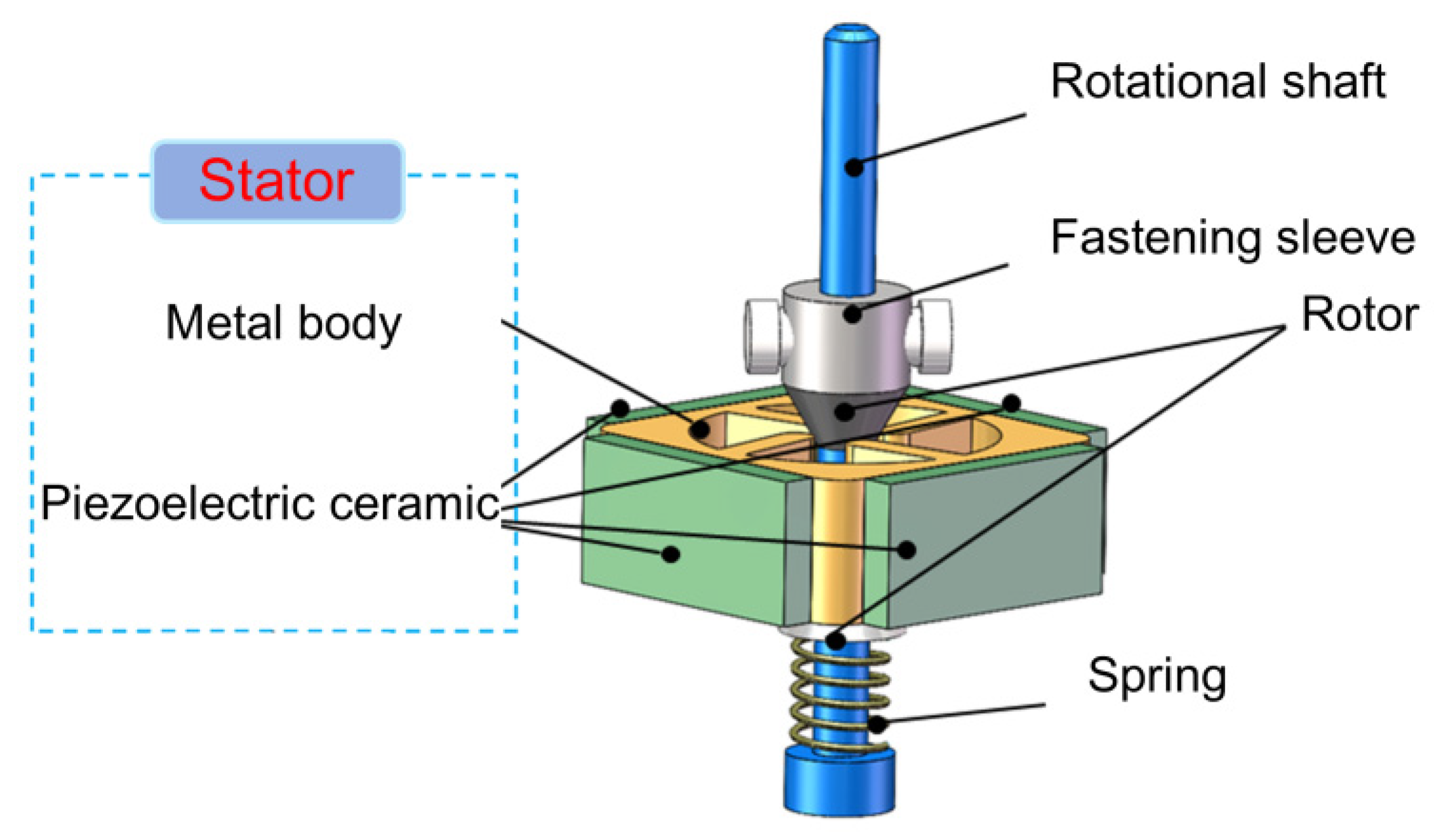
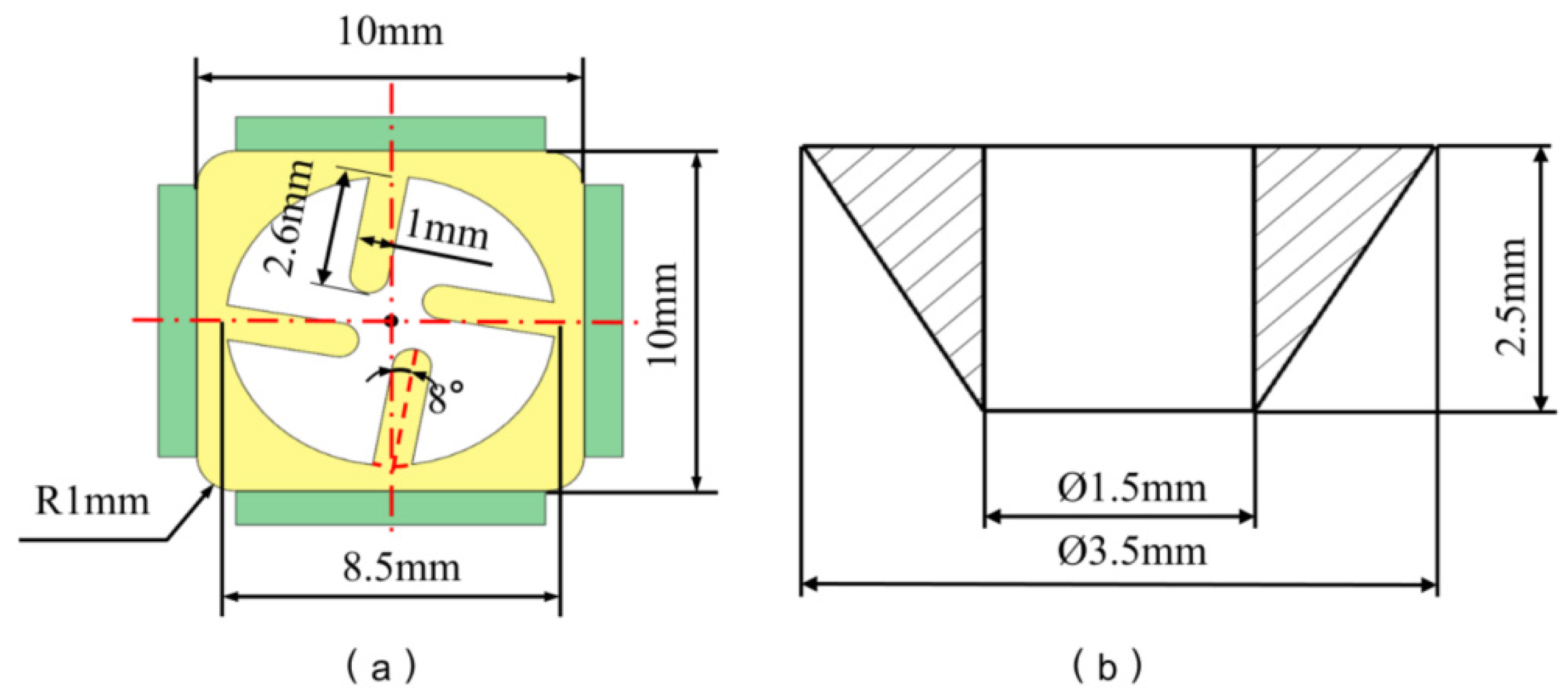
The overall structure of the miniature high-speed piezoelectric motor is illustrated in Figure 1. It primarily consists of a metal body, piezoelectric ceramic plates, two conical rotors, a compression spring, a shaft, and a fastening sleeve. The metal body is fabricated by electrical discharge machining (EDM). Four driving teeth are uniformly distributed around its central bore. To improve driving performance, these teeth are located at the antinodes of the bending vibration mode of the metal body. In addition, the surface of the metal body is finely polished to improve smoothness and ensure reliable bonding of the piezoelectric ceramic plates. Four rectangular piezoelectric ceramic plates with identical dimensions are bonded to the outer surface of the metal body using epoxy adhesive, forming the stator. The conical rotors are made of wear-resistant alumina ceramic to extend service life. Each rotor can slide freely along the shaft and is axially constrained by the fastening sleeve. A compression spring is installed between the shaft and the lower rotor to provide an adjustable preload. Tightening or loosening the fastening sleeve increases or decreases the spring compression, thereby generating a tunable axial preload that determines the normal contact force. This axial force is transmitted through the shaft–rotor assembly and presses the two rotors against the driving teeth, ensuring stable frictional contact during operation. The spring-based preload mechanism is compact and well suited to the dual-rotor configuration. It also eliminates the need for conventional bearings and improves the stability of torque transmission [26]. In addition, the tips of the driving teeth are symmetrically arched to ensure efficient frictional contact with the rotors. The detailed geometries of the stator and rotors are shown in Figure 2.

2.2. Materials

The physical and mechanical properties of the PZT-8 piezoelectric ceramic plates are listed in Table 1, and the other materials used in the prototype are described as follows:
Metal body: The metal body is fabricated from TC4 (Ti-6Al-4V) titanium alloy, with a density of 4450 kg/m3, Poisson’s ratio of 0.34, and Young’s modulus of 11.8 × 10¹⁰ N/m2. It is processed via electrical discharge machining, and its surface is finely polished to facilitate the adhesion of piezoelectric ceramic plates.
Piezoelectric ceramic plates: Rectangular PZT-8 ceramics (size: 8 mm × 4 mm × 1 mm) are used, with a density of 7600 kg/m3, Poisson’s ratio of 0.31, Young’s modulus of 8.6 × 10¹⁰ N/m2, as well as elastic stiffness coefficient, piezoelectric constant, and relative permittivity as specified in Table 1.
Rotors: The rotors are made of wear-resistant 99% alumina ceramic to ensure a long service life.
Adhesive: SL3356 single-component high-temperature epoxy adhesive (Zhuzhou Shilin Polymer Co., Ltd., Zhuzhou, China) is used to bond the piezoelectric ceramic plates to the metal body.
Preload mechanism: The axial preload is generated by a SUS304 stainless-steel compression spring.

2.3. Methods

2.3.1. Operation Principle

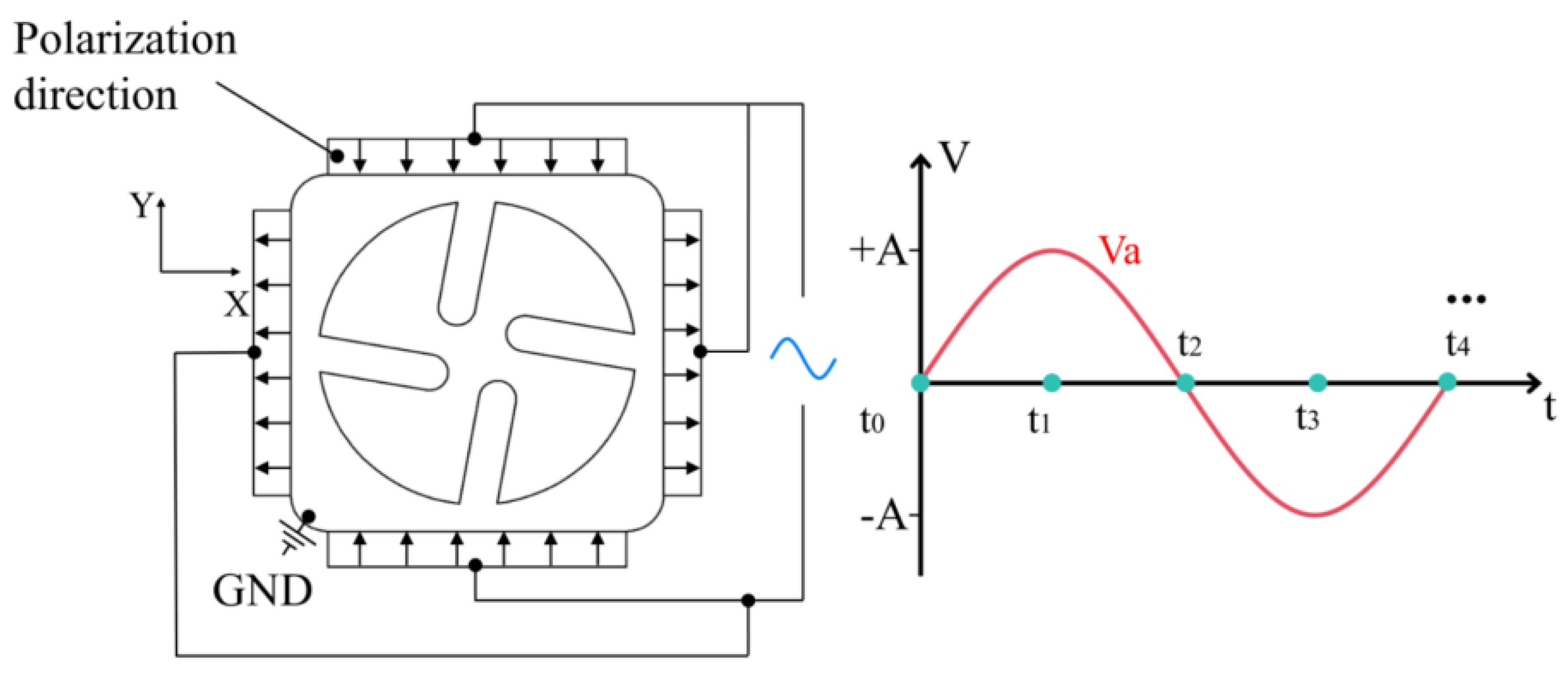
To drive the rotor efficiently, the stator excitation method is shown in Figure 3. The stator consists of a metal body and four piezoelectric ceramic plates. The plates are arranged as two symmetric pairs along the X- and Y-axes. They are labeled A11 and A12, and A21 and A22, respectively. The plates are alternately bonded around the metal body, and their polarization is along the thickness direction.
A sinusoidal voltage Va is applied to all four plates, while the metal body is grounded. Under the alternating electric field, the plates periodically expand and contract. This motion excites two mutually orthogonal bending vibrations of the metal body. The stator operating sequence over one cycle is shown in Figure 4.
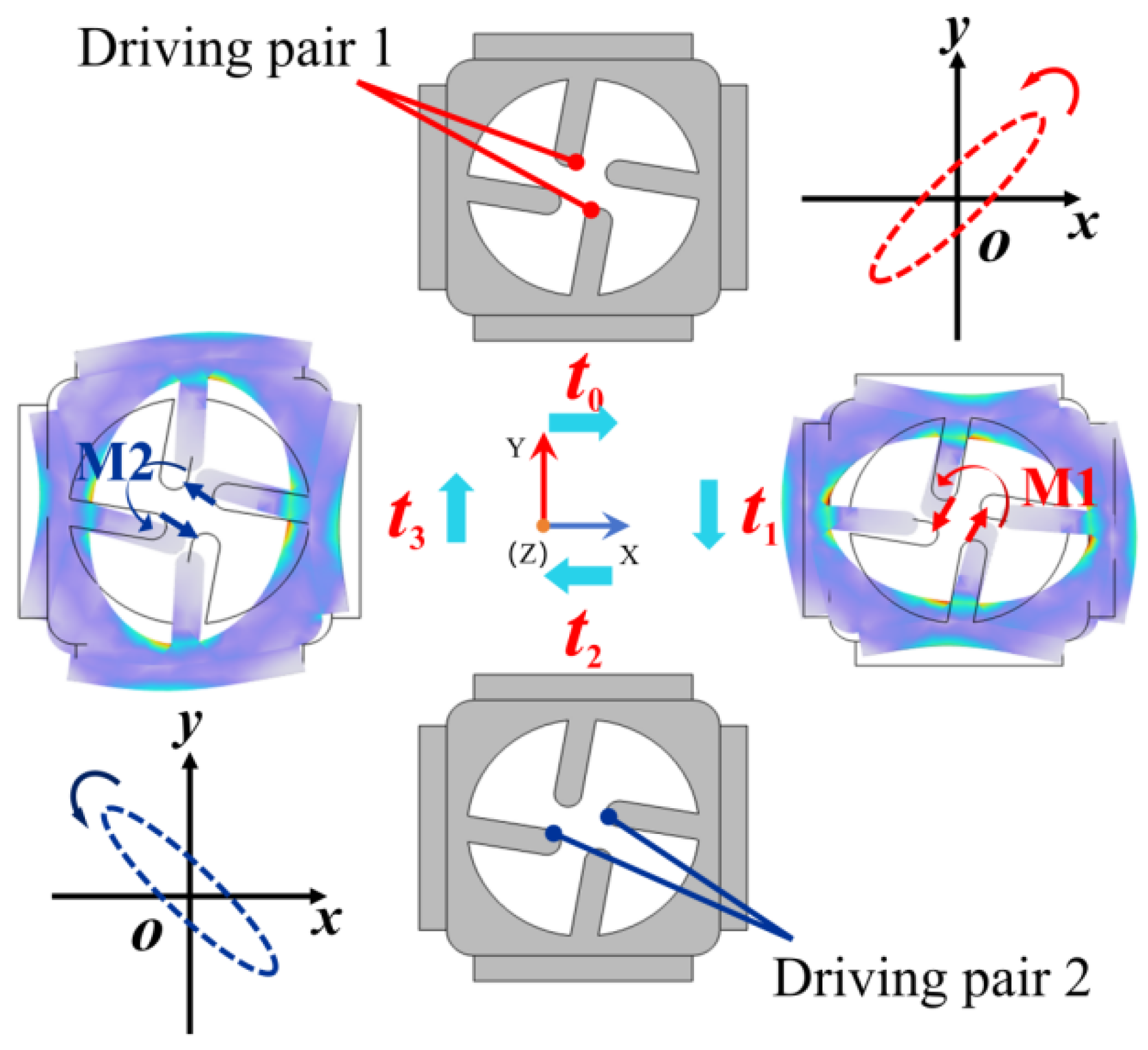
During one actuation cycle (from t0 to t3), two driving pairs (pair 1 and pair 2) operate alternately. Each pair follows the sequence of contact, frictional driving, separation, and resetting. Overall, the motion resembles the alternating leg movement during animal locomotion.
At t1, driving pair 1 contracts and causes the metal body to bend inward. The driving teeth then contact the rotor surface firmly. A counterclockwise torque M1 is generated through tangential friction, and the rotor starts to rotate. At the same time, driving pair 2 is in the expansion phase. As the excitation phase changes, driving pair 2 enters contraction at t3 and produces the second effective driving action, which continues the rotor motion. Because the contact forces are directionally asymmetric during tooth engagement, the periodic deformation of the stator produces two opposite torques on the rotor. The driving torque is larger than the reverse torque, resulting in a net rotational output in each cycle. The alternating operation of the two pairs, together with the asymmetric friction between the stator and the rotors, enables smooth, continuous, and unidirectional rotation.

2.3.2. Modal Analysis

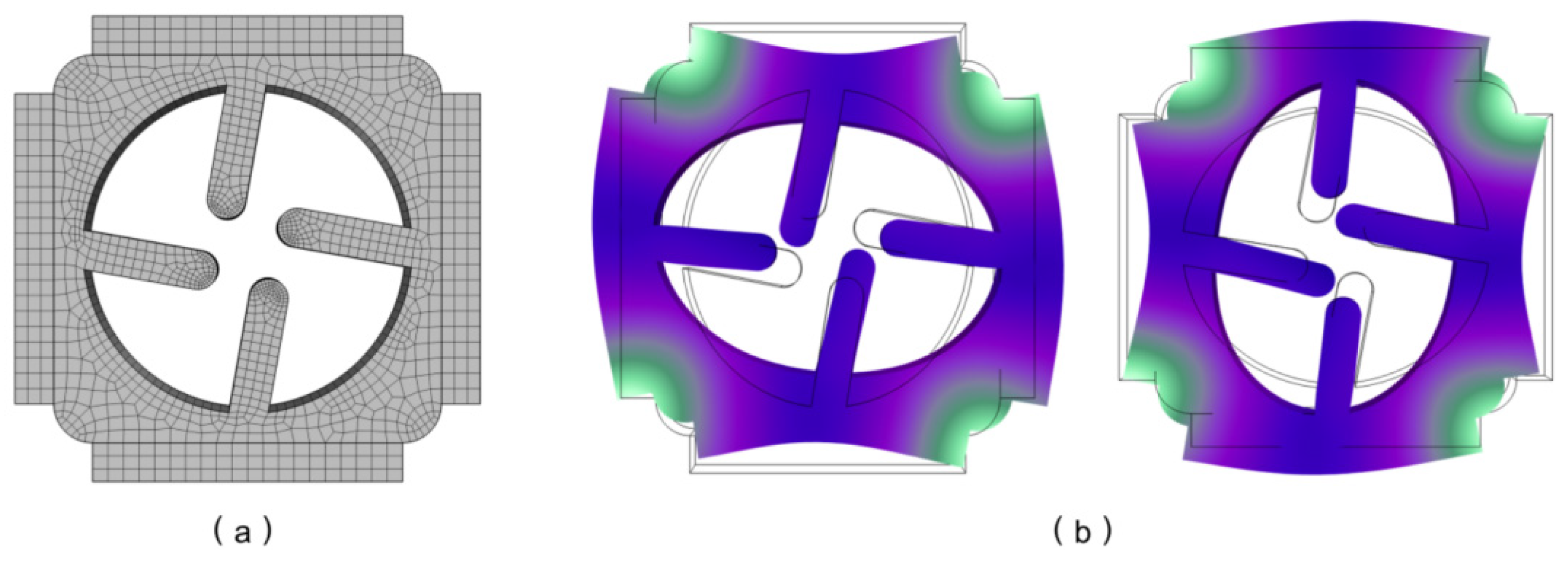
In this section, finite element simulations were conducted in COMSOL Multiphysics 6.2 to identify the target vibration modes and validate the proposed operating principle. As shown in Figure 5a, the model includes the metal body and four piezoelectric ceramic plates. The material properties are listed in Table 1. To simplify the model, the thin adhesive layers between the metal body and the ceramic plates were neglected.
Based on the predefined dimensions of the piezoelectric ceramic plates (8 mm × 4 mm × 1 mm), the initial dimensions of the metal body were set to 10 mm × 10 mm × 4 mm (length × width × height). The driving teeth were initially set to 3 mm in length, 1 mm in width, and an inclination angle of 8°. The stator was meshed using standard 3D tetrahedral elements with a mesh size of 0.2 mm, resulting in 2316 vertices and 8649 domain elements. Figure 5b shows the operating mode shape of the stator. The results indicate a working frequency of 32.2 kHz and pronounced radial vibration in the X–Y plane.
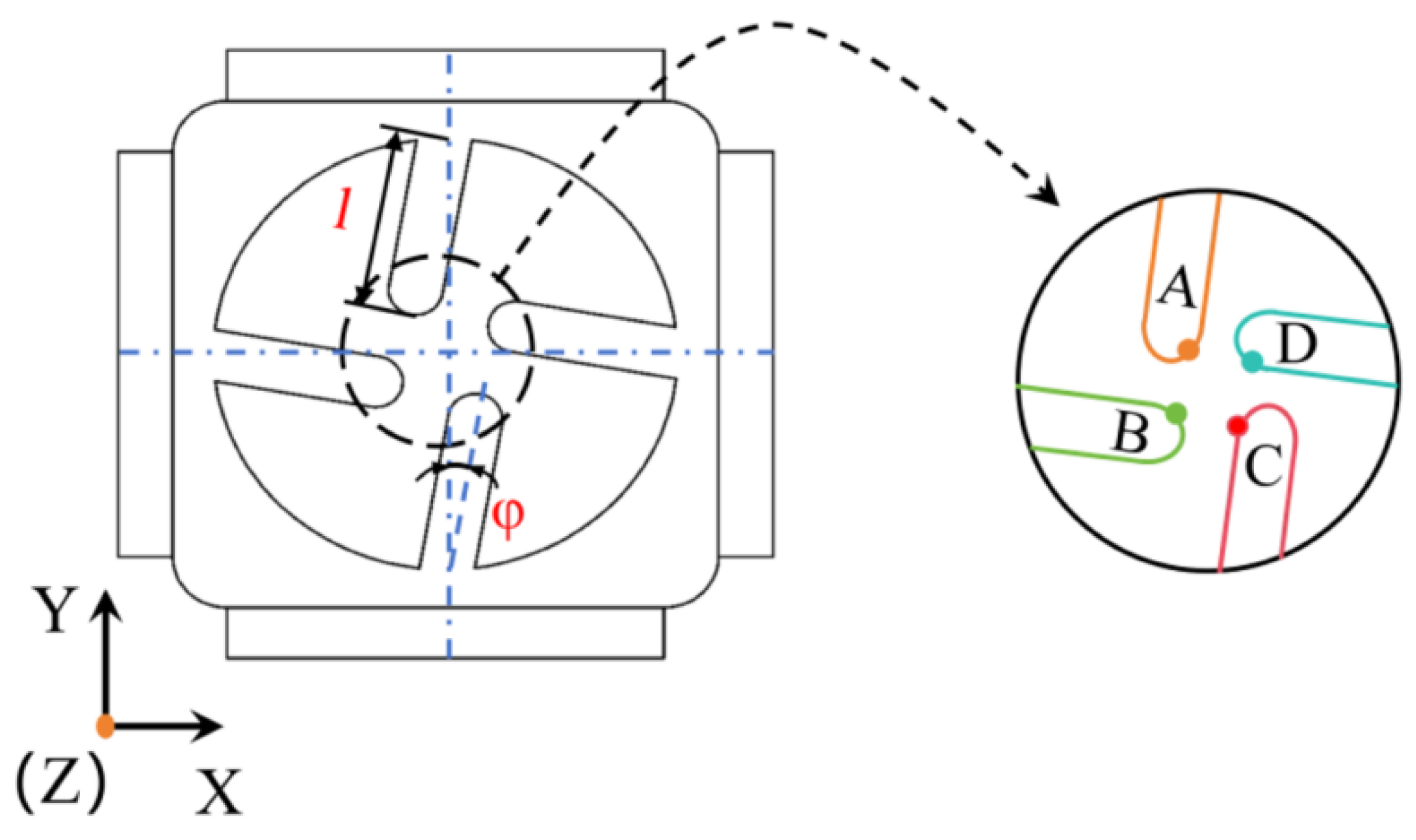
After identifying the operating mode of the stator, we optimized its geometric parameters. The objective was to tune the length and offset angle of the driving teeth to maximize the displacement at the driving points A, B, C, and D (Figure 6). This improvement is expected to enhance the output performance of the prototype. The optimization problem is formulated as follows:
u m a x = u x 2 ( l , φ ) + u y 2 ( l , φ )
l m i n l l m a x
φ m i n φ φ m a x
where u m a x denotes the total vibration displacement at the driving point, u x and u y denote the vibration displacements in the X- and Y-directions, respectively; l m i n and l m a x are the lower and upper bounds of the tooth length, and φ m i n and φ m a x are the lower and upper bounds of the offset angle.
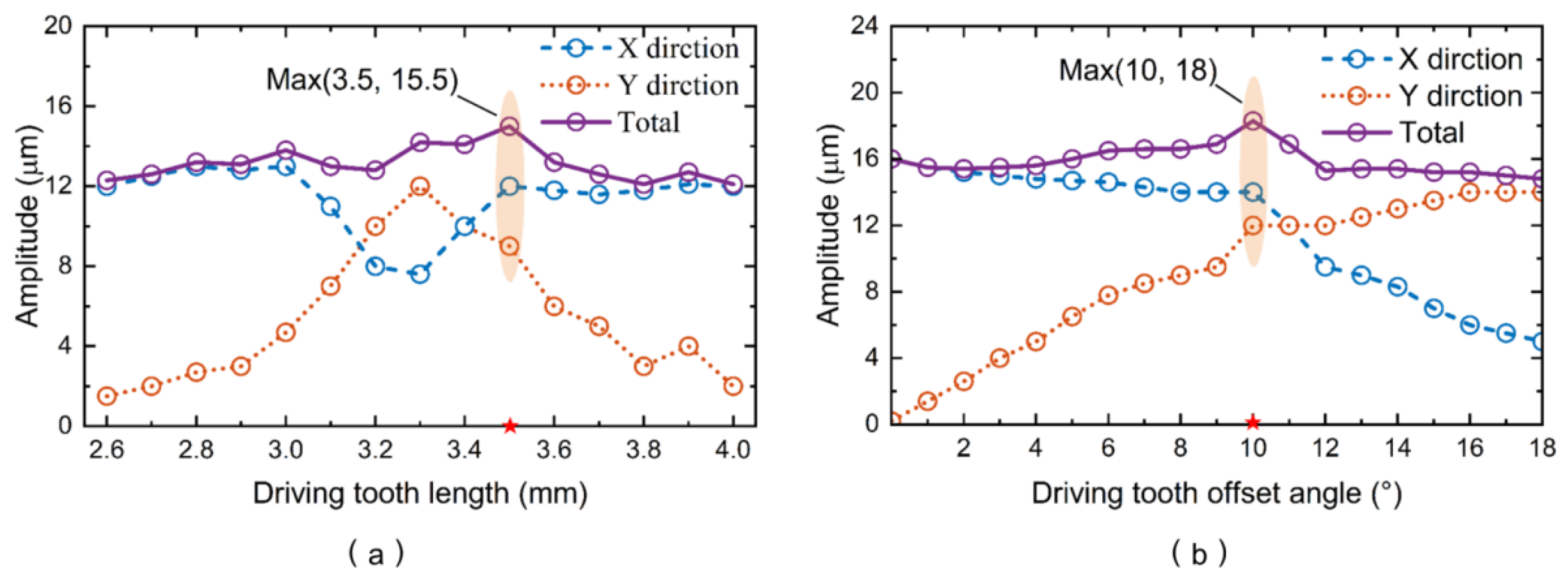
The initial offset angle was set to 8°. The tooth length was varied from 2.6 mm to 4.0 mm with a step of 0.1 mm. For each tooth length, a frequency response analysis was conducted. The X- and Y-direction displacements were then vectorially synthesized to obtain the total displacement at the driving point (Figure 7a). The results show that the total displacement reaches a maximum of 15.5 μm at a tooth length of 3.5 mm.
Based on this result, the tooth length was fixed at 3.5 mm, and the offset angle was increased from 0° to 18° in 1° steps. The same frequency response analysis was performed for each offset angle. The displacement components were again synthesized to compute the total displacement (Figure 7b). The results indicate that when the offset angle (φ) is 10°, the total displacement at the driving point reaches its maximum value of 18 μm. Thus, the stator’s tooth length (l) and offset angle (φ) are determined as 3.5 mm and 10°, respectively.

2.3.3. Harmonic Response Analysis

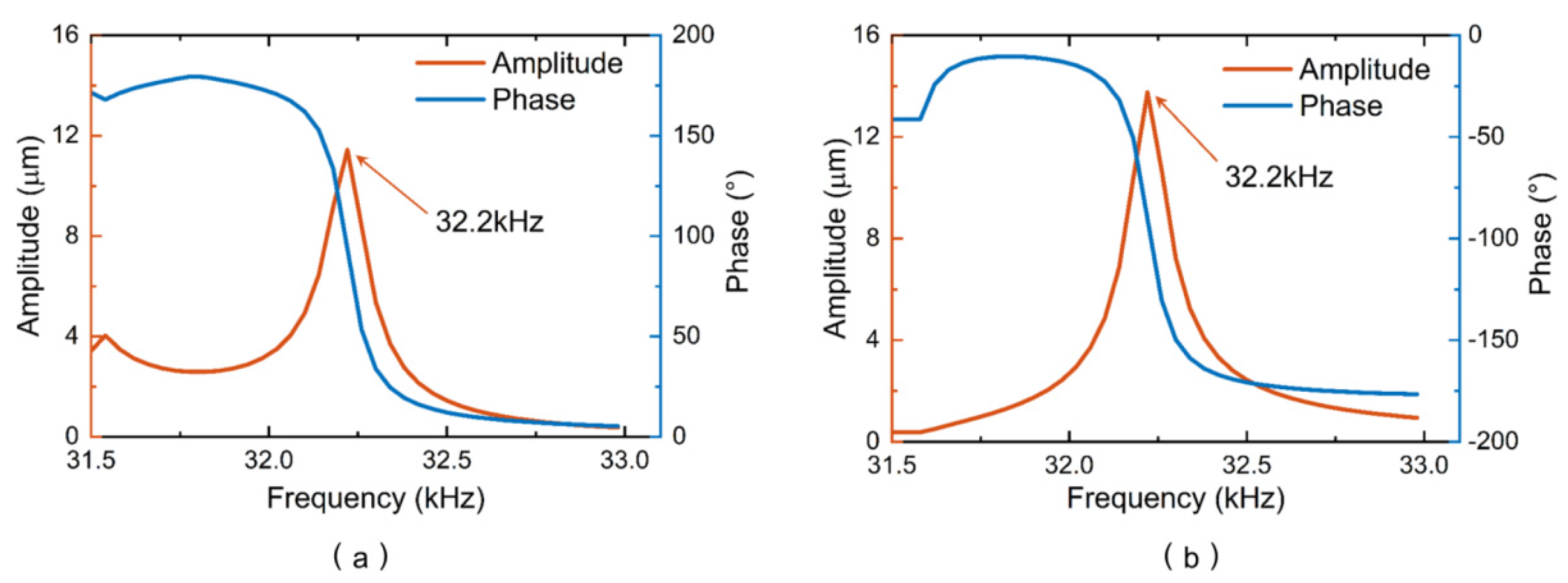
A harmonic response analysis was conducted on the optimized finite element model to obtain the vibration characteristics of the stator and examine the relationship between vibration amplitude and excitation frequency. In the simulation, a voltage of 100 Vp-p was applied to the PZT elements. The excitation frequency was swept from 31.5 kHz to 33.5 kHz with a step of 50 Hz. A damping coefficient of 0.003 was assigned to the stator. The response was evaluated at a surface point on the driving tooth. The steady-state amplitudes of the driving tooth in the X- and Y-directions are shown in Figure 8a and Figure 8b, respectively. At the resonant frequency of 32.2 kHz, the steady-state amplitudes of the driving tooth’s surface point in the X- and Y-directions reach their peaks at 11.8 μm and 14 μm, respectively. These results provide a reference range for selecting the excitation frequency during motor operation.

2.3.4. Transient Analysis

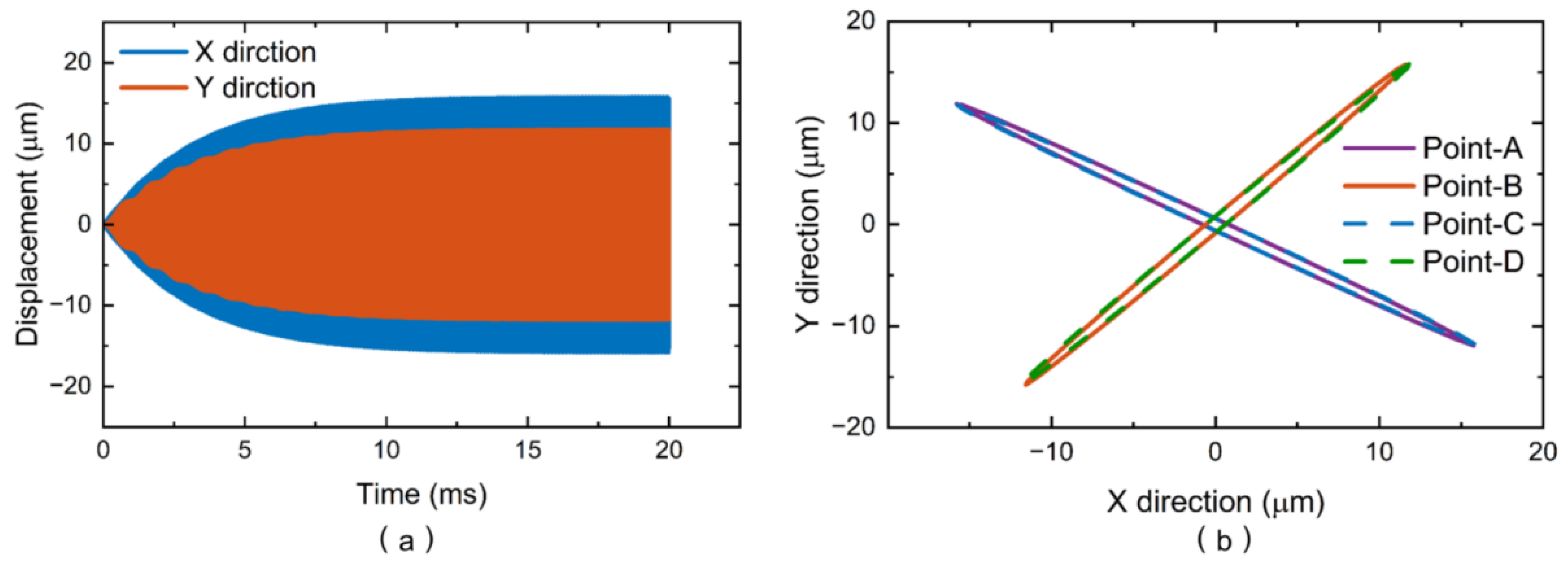
To further investigate the working mechanism of the piezoelectric motor, a transient analysis was performed to verify the peak amplitudes and motion trajectories of the four driving points. Based on the harmonic response results, sinusoidal voltages at 32.2 kHz were applied to the stator electrodes. The driving voltage was set to 100 Vp-p, and the damping coefficient was set to 0.003. The displacement responses at the driving teeth were then extracted.
As shown in Figure 9a, the X- and Y-direction displacements exhibit a short transient stage and then converge to stable periodic vibrations. For driving point A, the peak amplitudes are 15 μm in the X-direction and approximately 11.5 μm in the Y-direction. Figure 9b shows that the displacement trajectories of all driving points in the X-Y plane form tilted elliptical paths. This behavior results from the superposition of the vibration components in the X and Y directions. During the periodic contraction and expansion of the driving teeth, alternating normal forces (which maintain the preload) and tangential forces are generated at the contact interface. The tangential forces produce a frictional driving torque on the conical rotor, enabling unidirectional rotation. Overall, these results further support the proposed operating principle of the stator.

3. Results

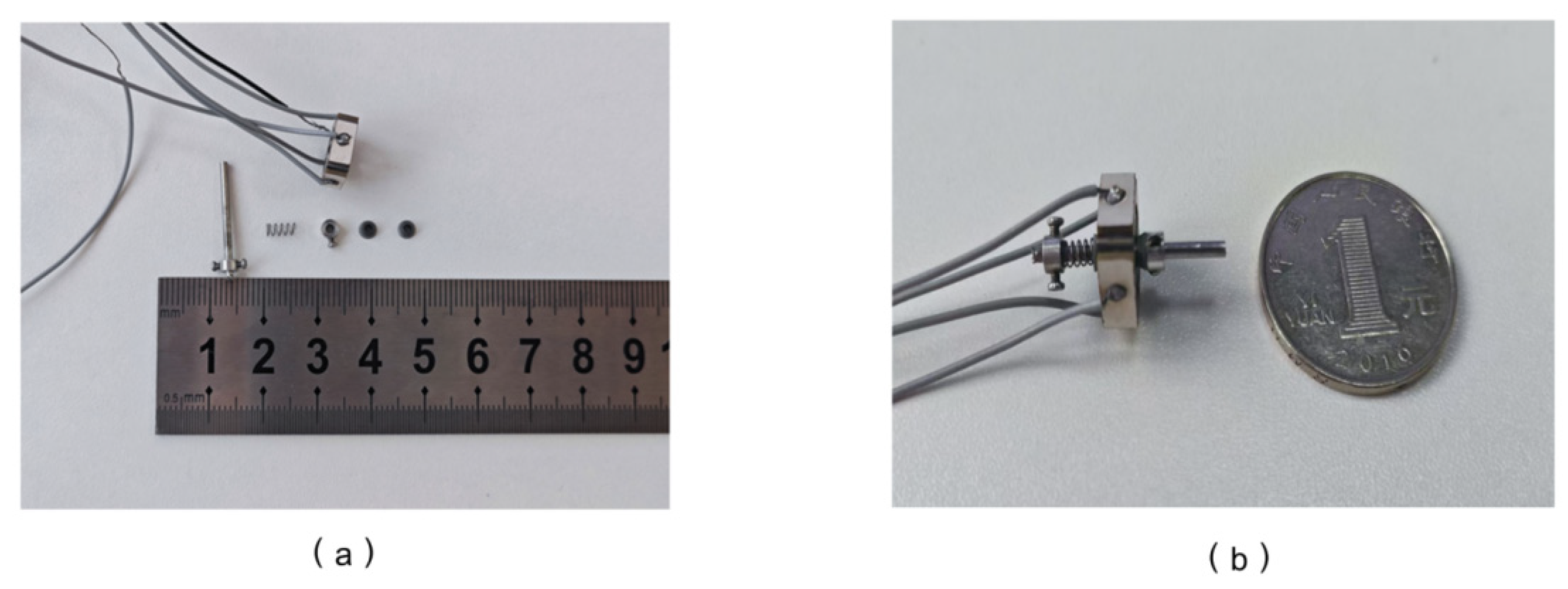
The motor prototype was fabricated as shown in Figure 10. The stator has overall dimensions of 12 mm × 12 mm × 4 mm and a mass of approximately 2.3 g.

3.1. Vibration Mode Test

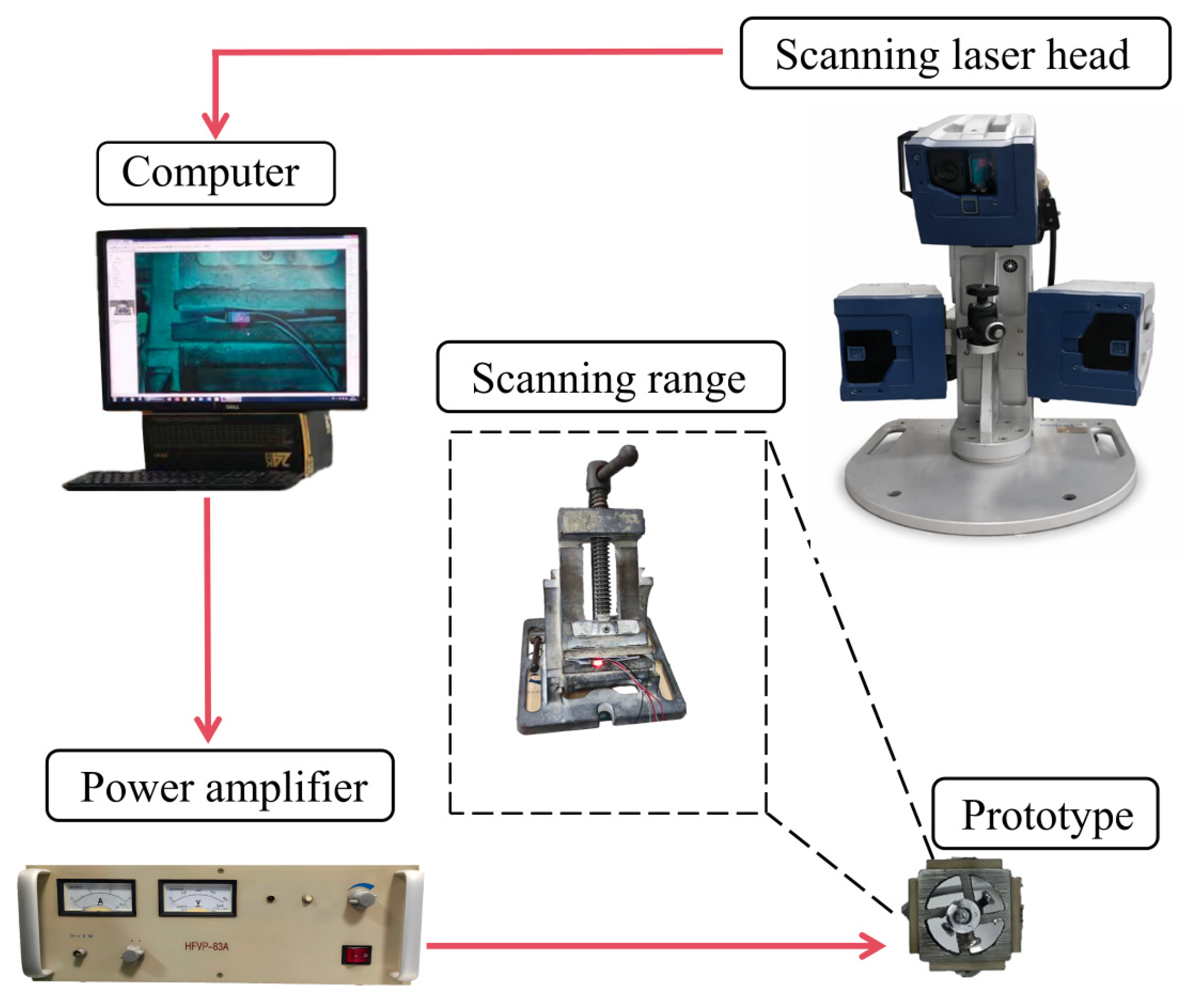
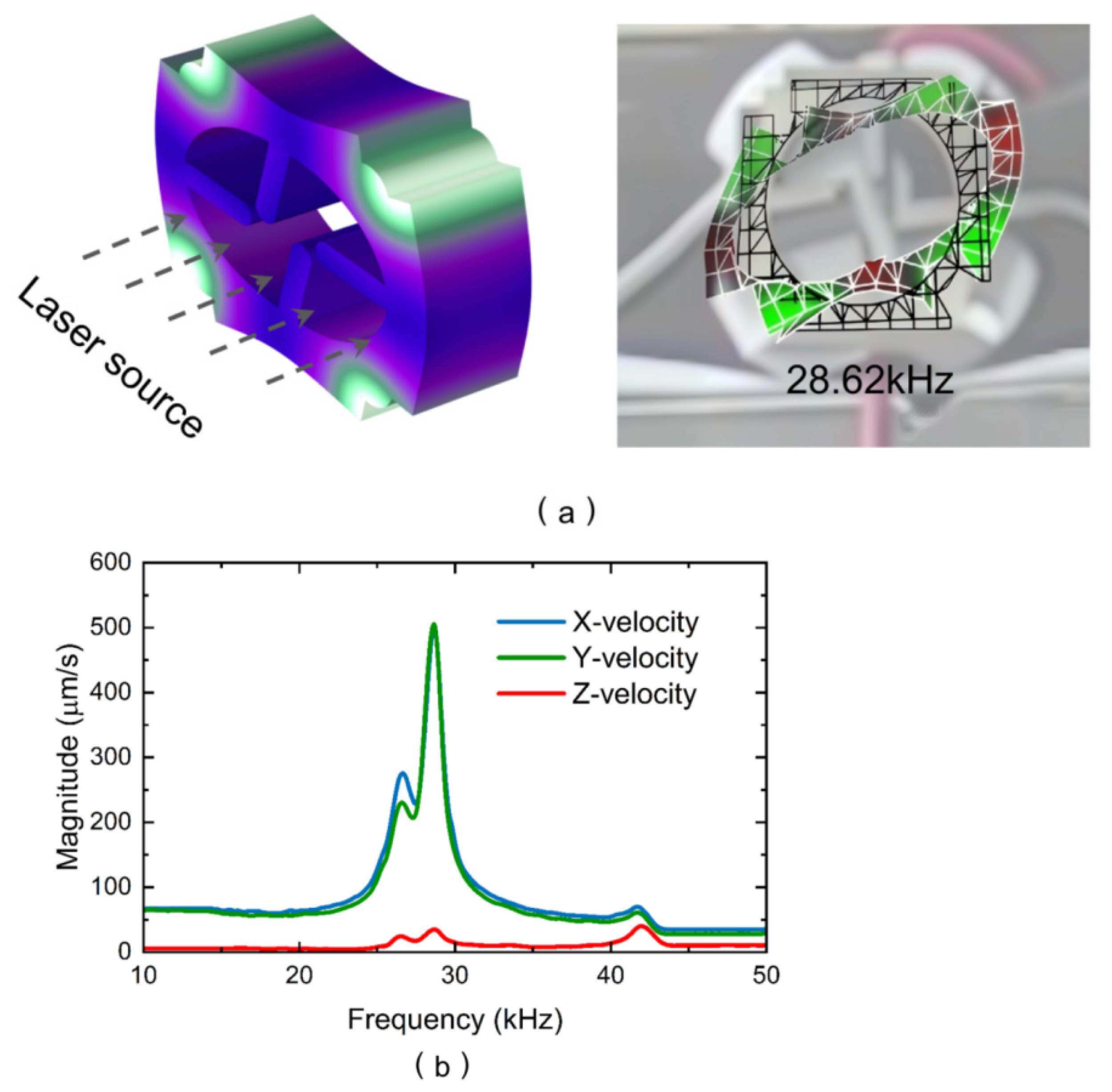
A three-dimensional scanning laser Doppler vibrometer (PSV-500-3-D, POLYTEC Inc., Waldbronn, Germany) was used to characterize the vibration behavior of the prototype, with a focus on the harmonic response. The experimental setup is shown in Figure 11. Under a driving voltage of 100 Vp-p, the excitation frequency was swept from 10 to 50 kHz. The motor surface was selected as the measurement area. The scanning region, measured mode shape, and frequency response are shown in Figure 12a and Figure 12b, respectively. A clear peak appears in the frequency response curve, indicating resonance at 28.62 kHz. This value is slightly lower than the FEA prediction. The difference is likely caused by the bonding-layer stiffness and manufacturing tolerances that are not fully included in the numerical model, which can change the vibration characteristics and shift the resonant frequency. Moreover, the measured mode shape in Figure 12a agrees well with the simulated in-plane working mode, supporting the accuracy of the finite-element analysis and confirming the feasibility of the proposed design.

3.2. Impedance Analysis Test

To validate the finite element analysis and identify the prototype motor’s resonant frequency, an impedance analyzer (PV520A, FEDERAL) was used to measure the impedance–frequency response.
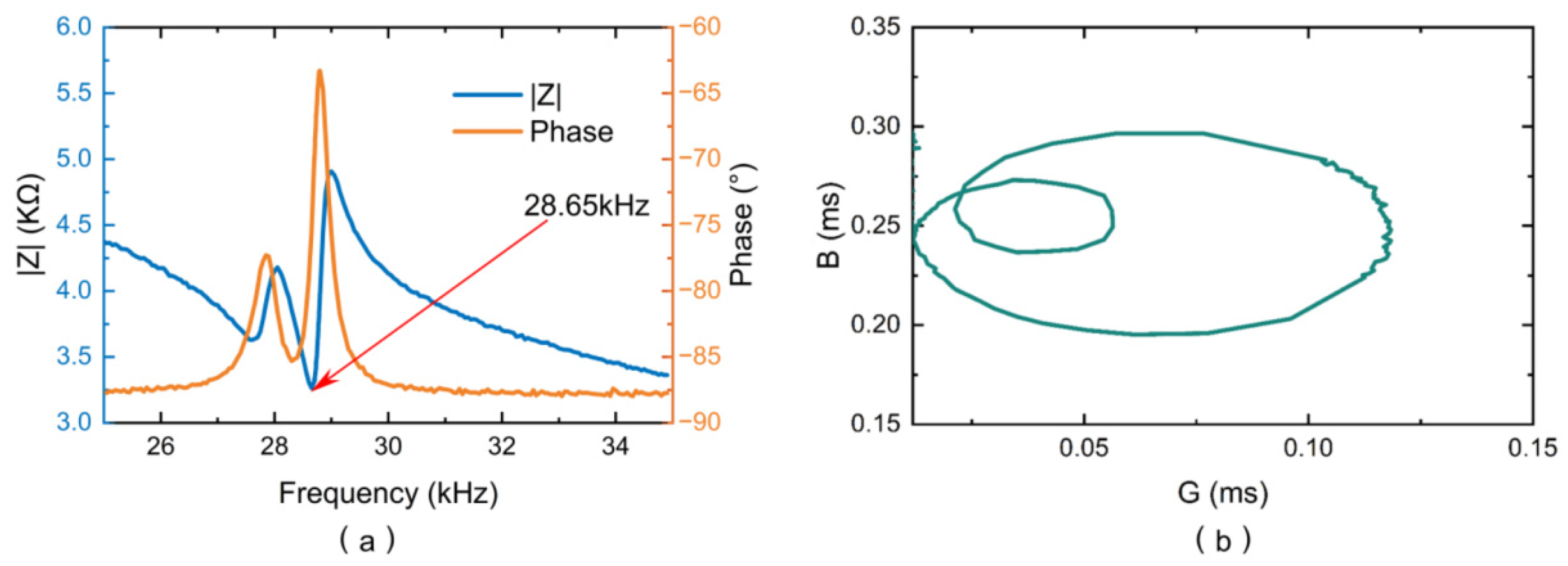
The frequency sweep was initially set from 25 to 35 kHz. During testing, the four electrodes of the piezoelectric ceramic plates were connected to the positive terminal of the impedance analyzer, and the grounded metal base was connected to the negative terminal. Figure 13a shows the impedance–frequency response of the prototype stator. The measured resonant frequency was 28.65 kHz, which deviates by approximately 3.5 kHz from the simulated value of 32.2 kHz. This difference may result from fabrication tolerances and the simplified boundary conditions used in the simulation. The admittance circle in Figure 13b is nearly closed, indicating favorable intrinsic properties of the prototype stator.

3.3. Motor Performance Test

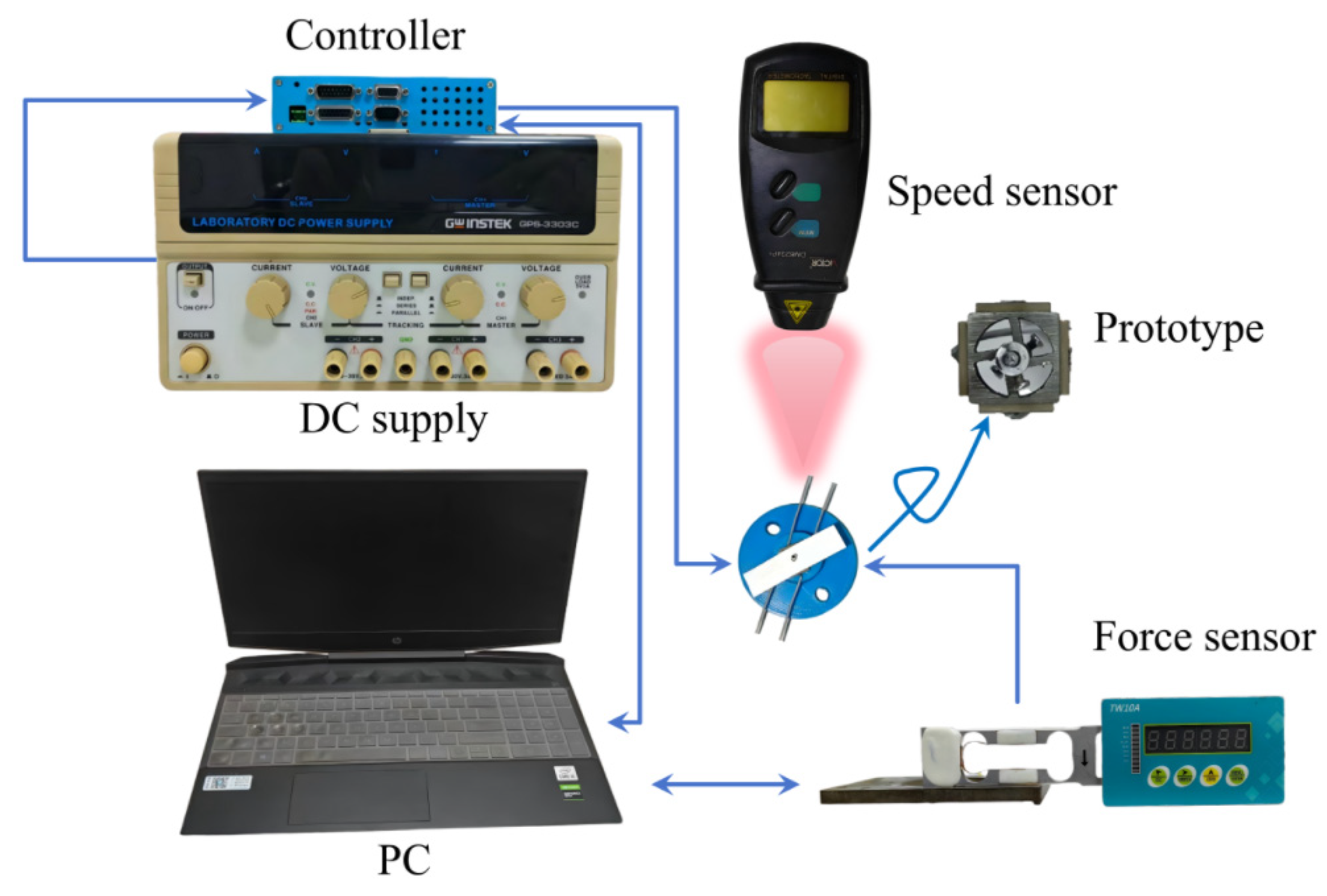
Figure 14 shows the experimental setup used to evaluate the output performance of the prototype motor. A DC power supply (24 V) provides power to the driver controller, which adjusts the motor input parameters, including the voltage amplitude, excitation frequency, and phase difference, to achieve stable and precise operation. The rotational speed is monitored in real time using a speed sensor, and the output torque is obtained from a force sensor. All data are collected through a data acquisition card and transferred to a computer for recording, processing, and analysis.
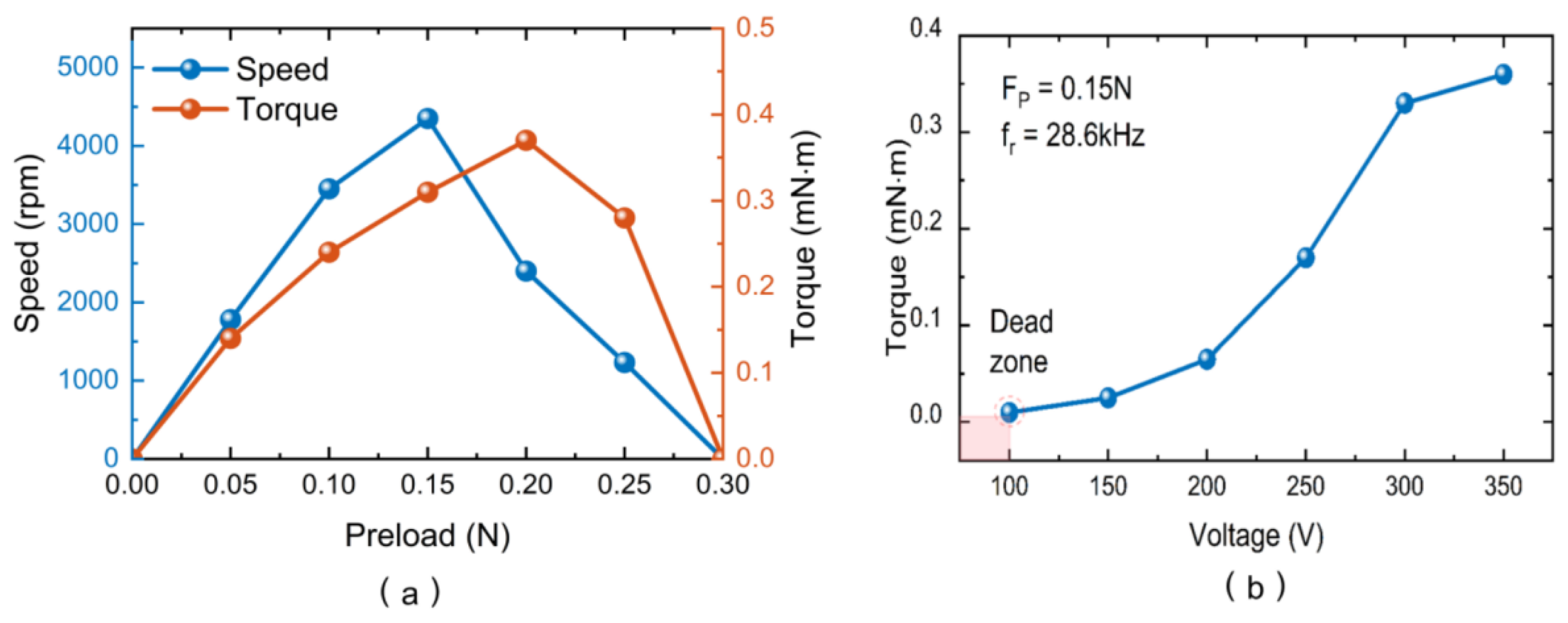
To investigate the effect of preload on motor performance, the rotational speed and output torque were measured under different preload forces at a fixed driving frequency of 28.6 kHz and a driving voltage of 300 Vp-p. As shown in Figure 15a, when the preload increased from 0 to 0.15 N, the rotational speed rose markedly and reached a maximum of approximately 4300 rpm at 0.15 N. At this preload, the corresponding output torque was about 0.31 mN·m. When the preload was further increased to 0.2 N, the rotational speed decreased significantly. This trend indicates that excessive preload increases frictional losses, which degrades the motor output. Therefore, 0.15 N was selected as the optimal preload for this motor.
Under the optimal preload of 0.15 N, additional tests were conducted to measure the output torque at different driving voltages, as shown in Figure 15b. The results show that the output torque increases overall as the driving voltage rises from 100 to 350 Vp-p. When the voltage reaches 350 Vp-p, the output torque is approximately 0.36 mN·m. Notably, a dead zone is observed at low voltages (around 100 V), where the output torque remains close to zero, indicating that the motor cannot be effectively driven below this threshold.
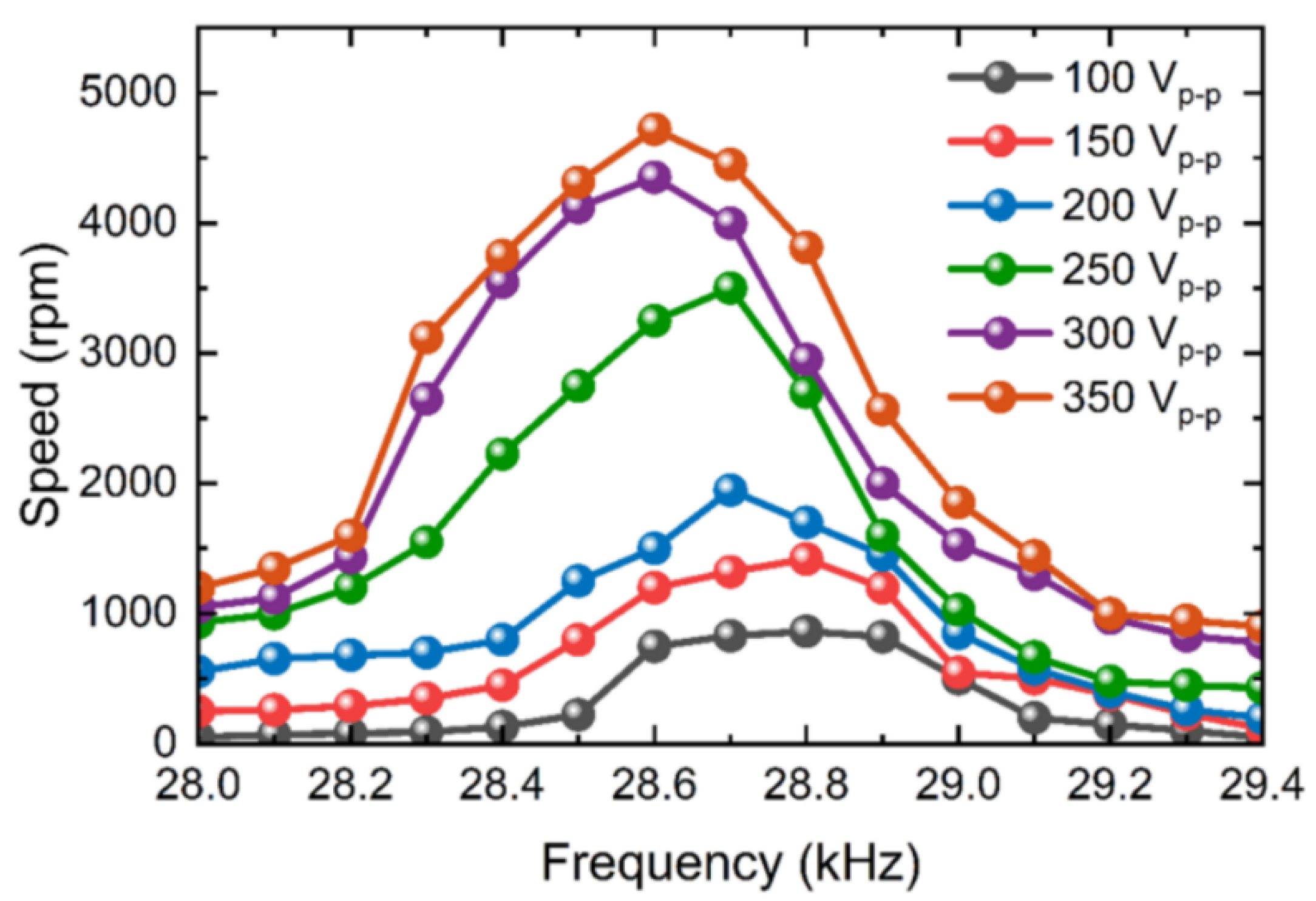
Figure 16 shows the relationship between driving frequency and rotational speed under different input voltages. Notably, the rotational speed increases as the input voltage increases, and this trend is consistent across all tested conditions. Within the tested frequency range, the rotational speed first increases and then decreases with driving frequency, forming a clear peak in the frequency response. The peak speed is obtained in the frequency region close to resonance. As the frequency approaches this region, the speed rises rapidly; when the frequency deviates from it, the speed decreases noticeably. In addition, higher input voltages lead to a larger temperature rise of the stator and bonding layers, causing thermal drift and a downward shift of the resonance frequency. At an input voltage of 350 Vp-p, the motor achieves a maximum rotational speed of approximately 4720 rpm.
After completing the experimental evaluation, we performed a comparative analysis to further demonstrate the advantages of the proposed high-speed miniature ultrasonic motor. The motor was compared with three representative miniature rotary ultrasonic motors, and the results are summarized in Table 2. For each motor, comparisons were made at its operating frequency and excitation voltage amplitude that produced the maximum speed and the maximum output torque. The evaluated metrics include the number of driving signals, stator size, operating frequency, maximum speed, and maximum output torque.
It can be seen that Mashimo’s cubic-stator motor [27] has the smallest size. However, it requires two driving signals and operates at a high frequency of up to 935 kHz. These factors increase the driving demands and result in a relatively low output torque. The dual-ring motor proposed by Borodinas et al. [28] and the single-mode miniature standing-wave motor proposed by Panet et al. [29] adopt distinctive structural designs and driving schemes. Nevertheless, their maximum speeds are only about 2500 rpm and 320 rpm, respectively, which indicates limited speed capability. In contrast, the proposed motor achieves a maximum speed of 4720 rpm and a maximum output torque of 0.36 mN·m. Moreover, it can be stably driven using a single signal source. This reduces implementation complexity while maintaining driving stability, which is beneficial for further miniaturization of miniature rotary ultrasonic motors.

4. Discussion

The miniature rotary piezoelectric motor proposed in this work addresses the trade-off between miniaturization and output performance, which is a major limitation of conventional electromagnetic motors and many existing piezoelectric motors. The stator adopts a design in which four piezoelectric ceramic plates are bonded to a titanium alloy body to excite in-plane bending vibrations, enabling a compact size of 12 mm × 12 mm × 4 mm and a mass of 2.3 g, while the dual-rotor configuration and the optimized offset-tooth design improve the output torque and rotational speed.
The discrepancy between the simulated resonant frequency (32.2 kHz) and the measured resonant frequency (28.6 kHz) may be attributed to two factors: (1) fabrication tolerances in the dimensions of the metal body (e.g., the length/angle of the driving teeth) or the bonding quality of the piezoelectric ceramic plates; (2) simplifications in the finite element analysis model (e.g., omission of adhesive layers that may affect vibration propagation), which may alter the stiffness distribution and vibration transmission. Despite this discrepancy, the motor still achieved a maximum rotational speed of 4720 rpm (350 Vp-p, 28.6 kHz), outperforming many existing miniature piezoelectric motors (e.g., 2500 rpm [28] and 320 rpm [29] under corresponding test conditions; see Table 2 for details).
Future research should focus on: (1) improving long-term stability and efficiency by optimizing the friction pair (e.g., selecting more suitable contact materials, surface hardening, or wear-resistant coatings) and refining the preload mechanism toward a more compact and integrated structure, thereby reducing assembly sensitivity; (2) further miniaturization and structural integration (e.g., reducing the thickness below 4 mm and simplifying the fastening components) while maintaining the quality of the resonant mode and output performance; (3) establishing a coupled stator–rotor dynamic model that incorporates frictional contact and experimentally calibrated contact parameters, so that the output speed and torque can be predicted.

5. Conclusions

In this study, we propose and validate a miniature high-speed piezoelectric motor based on in-plane vibration to enhance the output performance of compact rotary actuators under miniaturized conditions. The stator is formed by bonding four piezoelectric ceramic plates onto a metal substrate. This configuration excites two mutually orthogonal radial vibration modes, enabling high-speed rotation. An optimized offset structure is further introduced to ensure unidirectional rotor motion.
A prototype motor was designed and fabricated. Its mechanical structure and performance were first evaluated by simulation and then verified through experiments. To confirm the operating principle, finite element analysis was used to identify the vibration modes and the motion trajectories of the driving points. With an input voltage of 350 Vp-p and an optimal preload of 0.15 N, the motor achieved a maximum rotational speed of 4720 rpm and a maximum stall torque of 0.36 mN·m.
Owing to its compact footprint, low mass, simple structure, and strong immunity to electromagnetic interference, the proposed motor is suitable for compact high-speed rotary actuation in highly integrated systems, such as microrobotics, optical instruments, and precision positioning devices. Future work will focus on reducing the motor size and improving the preload mechanism to meet more demanding application requirements.

Author Contributions

Conceptualization, Y.S.; methodology, J.W. and Y.S.; software, J.W. and C.T.; validation, Y.S. and C.T.; formal analysis, Y.S. and J.W.; resources, Y.S.; writing—original draft preparation, C.T.; writing—review and editing, Y.S. and C.T.; visualization, C.T. and R.W.; supervision, Y.S.; project administration, Y.S.; funding acquisition, Y.S. All authors have read and agreed to the published version of the manuscript.

Funding

This research was funded by the National Natural Science Foundation of China (grant number 52577059) and the Research Fund of the State Key Laboratory of Mechanics and Control for Aerospace Structures, Nanjing University of Aeronautics and Astronautics (grant No. MCAS-I-0425G03).

Institutional Review Board Statement

Not applicable.

Informed Consent Statement

Not applicable.

Data Availability Statement

The data that support the findings of this study are available from the corresponding author upon reasonable request.

Conflicts of Interest

The authors declare no conflict of interest.

References

  1. Delibas, B.; Koc, B. Single crystal piezoelectric motor operating with both inertia and ultrasonic resonance drives. Ultrasonics 2024, 136, 107140. [Google Scholar] [CrossRef]
  2. Liu, Y.; Li, J.; Deng, J.; Zhang, S.; Chen, W.; Xie, H.; Zhao, J. Arthropod-metamerism-inspired resonant piezoelectric millirobot. Adv. Intell. Syst. 2021, 3, 2100015. [Google Scholar] [CrossRef]
  3. Hao, B.; Wang, L.; Wang, R.; Sun, Y.; Jin, J.; Xu, Q. Numerical analysis and experimental investigation on a novel piezoelectric-actuated rail-type mobile platform. IEEE/ASME Trans. Mechatron. 2022, 27, 744–752. [Google Scholar] [CrossRef]
  4. Ma, X.; Liu, Y.; Liu, J.; Deng, J. Crabbot: A pole-climbing robot driven by piezoelectric stack. IEEE Trans. Robot. 2022, 38, 765–778. [Google Scholar] [CrossRef]
  5. Jafferis, N.T.; Smith, M.J.; Wood, R.J. Design and manufacturing rules for maximizing the performance of polycrystalline piezoelectric bending actuators. Smart Mater. Struct. 2015, 24, 065023. [Google Scholar] [CrossRef]
  6. Wu, J.; Mizuno, Y.; Nakamura, K. Piezoelectric motor utilizing an alumina/PZT transducer. IEEE Trans. Ind. Electron. 2020, 67, 6762–6772. [Google Scholar] [CrossRef]
  7. Wang, C.; Li, H.; Zhang, Z.; Yu, P.; Yang, L.; Du, J.; Niu, Y.; Jiang, J. Review of bionic crawling micro-robots. J. Intell. Rob. Syst. 2022, 105, 56. [Google Scholar] [CrossRef]
  8. Li, X.; Wen, Z.; Jia, B.; Cao, T.; Yu, D.; Wu, D. A review of application and development trends in ultrasonic motors. ES Mater. Manuf. 2020, 12, 3–16. [Google Scholar] [CrossRef]
  9. He, S.; Chiarot, P.R.; Park, S. A single vibration mode tubular piezoelectric ultrasonic motor. IEEE Trans. Ultrason. Ferroelectr. Freq. Control 2011, 58, 1049–1061. [Google Scholar] [CrossRef]
  10. Zhang, J.; Lu, S.; Liao, X.; Feng, Z. Construction of an intravascular ultrasound catheter with a micro piezoelectric motor internally installed. Rev. Sci. Instrum. 2021, 92, 15005. [Google Scholar] [CrossRef]
  11. Elahi, H.; Eugeni, M.; Gaudenzi, P.; Qayyum, F.; Swati, R.F.; Khan, H.M. Response of piezoelectric materials on thermomechanical shocking and electrical shocking for aerospace applications. Microsyst. Technol. 2018, 24, 3791–3798. [Google Scholar] [CrossRef]
  12. Nishimura, T.; Hosaka, H.; Morita, T. Resonant-type smooth impact drive mechanism (SIDM) actuator using a bolt-clamped Langevin transducer. Ultrasonics 2012, 52, 75–80. [Google Scholar] [CrossRef] [PubMed]
  13. Li, Z.-H.; Wu, Y.-X.; Deng, X.-S. Modeling and compensating of piezoelectric actuator hysteresis in photolithography. In Proceedings of the 2007 International Symposium on High Density packaging and Microsystem Integration, Shanghai, China, 26–28 June 2007; IEEE: New York, NY, USA, 2007; pp. 1–3. [Google Scholar] [CrossRef]
  14. Li, J.; Deng, J.; Zhang, S.; Liu, Y. Development of a miniature quadrupedal piezoelectric robot combining fast speed and nano-resolution. Int. J. Mech. Sci. 2023, 250, 108276. [Google Scholar] [CrossRef]
  15. Liu, D.K.-C.; Friend, J.; Yeo, L. A brief review of actuation at the micro-scale using electrostatics, electromagnetics and piezoelectric ultrasonics. Acoust. Sci. Technol. 2010, 31, 115–123. [Google Scholar] [CrossRef]
  16. Zhang, Q.; Chen, W.; Liu, Y.; Liu, J.; Jiang, Q. A frog-shaped linear piezoelectric actuator using first-order longitudinal vibration mode. IEEE Trans. Ind. Electron. 2017, 64, 2188–2195. [Google Scholar] [CrossRef]
  17. Peled, G.; Yasinov, R.; Karasikov, N. Performance and applications of L1B2 ultrasonic motors. Actuators 2016, 5, 15. [Google Scholar] [CrossRef]
  18. Wang, J.; Shi, Y.; Guo, J.; He, Z. A miniature rod-type rotational piezoelectric motor. In Proceedings of the Third International Conference on New Materials, Machinery, and Vehicle Engineering (NMMVE 2024), Dalian, China, 19–21 July 2024; Xu, J., Davim, J.P., Eds.; SPIE: Dalian, China, 2024; p. 33. [Google Scholar] [CrossRef]
  19. Morita, T. Miniature piezoelectric motors. Sens. Actuators A 2003, 103, 291–300. [Google Scholar] [CrossRef]
  20. Mashimo, T. Miniature preload mechanisms for a micro ultrasonic motor. Sens. Actuators A 2017, 257, 106–112. [Google Scholar] [CrossRef]
  21. Borodinas, S.; Vasiljev, P.; Mazeika, D. The optimization of a symmetrical coplanar trimorph piezoelectric actuator. Sens. Actuators A 2013, 200, 133–137. [Google Scholar] [CrossRef]
  22. Zhu, B.; Wang, Y.Q. An eyeball-movement-inspired multi-DOF miniature piezoelectric actuator with strong load-driving capability. Adv. Intell. Syst. 2025, 7, 2401042. [Google Scholar] [CrossRef]
  23. Zhang, Y.; Chen, Z.; Zheng, Y.; Fan, J.; Ma, Y.; Zhou, Y.; Zhang, Z.; Zhou, J.; Yang, Z. Ultra-thin flattened piezoelectric drivers for aerospace filter wheel. Thin Walled Struct. 2025, 209, 112913. [Google Scholar] [CrossRef]
  24. Zhao, Y.; Chu, X.; Yuan, S. Ultrasonic micro-motor with multilayer piezoelectric ceramic and chamfered driving tips. Rev. Sci. Instrum. 2016, 87, 095108. [Google Scholar] [CrossRef] [PubMed]
  25. Wang, L.; Hou, Y.; Zhao, K.; Shen, H.; Wang, Z.; Zhao, C.; Lu, X. A novel piezoelectric inertial rotary motor for actuating micro underwater vehicles. Sens. Actuators A Phys. 2019, 295, 428–438. [Google Scholar] [CrossRef]
  26. Yang, X.; Liu, Y.; Chen, W.; Liu, J. A cylindrical traveling wave ultrasonic motor using bonded-type composite beam. Ultrasonics 2016, 65, 277–281. [Google Scholar] [CrossRef]
  27. Mashimo, T. Micro ultrasonic motor using a one cubic millimeter stator. Sens. Actuators A 2014, 213, 102–107. [Google Scholar] [CrossRef]
  28. Borodinas, S.; Vasiljev, P.; Mazeika, D.; Bareikis, R.; Yang, Y. Design optimization of double ring rotary type ultrasonic motor. Sens. Actuators A 2019, 293, 160–166. [Google Scholar] [CrossRef]
  29. Pan, Q.; Wang, Y.; Wan, A.; Li, C.; Zhao, M.; Li, R. Development of a novel single-mode miniature standing wave ultrasonic motor. Smart Mater. Struct. 2023, 32, 125015. [Google Scholar] [CrossRef]
Figure 1. Schematic of the motor.
Actuators 15 00103 g001
Figure 2. Initial structural parameters of the stator; (a) Stator size. (b) Rotor size.
Actuators 15 00103 g002
Figure 3. Excitation scheme of the stator.
Actuators 15 00103 g003
Figure 4. Phases of the stator operation.
Actuators 15 00103 g004
Figure 5. (a) Finite element model of the stator; (b) Mode shape of the stator.
Actuators 15 00103 g005
Figure 6. Contact points between stator and rotor.
Actuators 15 00103 g006
Figure 7. (a) Amplitude of driving points under different tooth lengths; (b) Amplitude of driving points under different tooth offset angles.
Actuators 15 00103 g007
Figure 8. (a) Frequency response of the driving point in the X-direction; (b) Frequency response of the driving point in the Y-direction.
Actuators 15 00103 g008
Figure 9. Transient simulation results: (a) Displacement-time curve of point-A. (b) X-Y displacement trajectory simulation curves.
Actuators 15 00103 g009
Figure 10. Prototype of the motor. (a) Components for the piezoelectric motor; (b) Assembly results.
Actuators 15 00103 g010
Figure 11. Experimental setup for vibration characteristics.
Actuators 15 00103 g011
Figure 12. Vibration test results of the prototype. (a) The schematic diagram for the test; (b) Vibration shape and vibration velocity response spectrum.
Actuators 15 00103 g012
Figure 13. (a) Impedance-frequency characteristics of the stator; (b) Admittance circle diagram.
Actuators 15 00103 g013
Figure 14. Schematic diagram of the motor performance test setup.
Actuators 15 00103 g014
Figure 15. (a) Preload vs. maximum rotational speed and maximum output torque; (b) Driving voltage vs. output torque.
Actuators 15 00103 g015
Figure 16. Relationship between driving frequency and rotation speed under different input voltages.
Actuators 15 00103 g016
Table 1. Material properties of piezoelectric ceramic PZT-8.
MaterialsPZT-8
Elastic stiffness coefficient ( 10 10   N /m2) 12.1 5.35 5.15 0 0 0 0 12.1 5.15 0 0 0 0 0 10.45 0 0 0 0 0 0 3.13 0 0 0 0 0 0 3.13 0 0 0 0 0 0 3.46
Piezoelectric constant (C/m2) 0 0 5.2 0 0 5.2 0 0 15.1 0 0 0 0 12.7 0 12.7 0 0
Relative permittivity 904 0 0 0 904 0 0 0 562
Table 2. Comparisons between this work and some rotational miniature piezoelectric actuators.
Parameters Mashimo et al. [27]Borodinas et al. [28]Pan et al. [29]This Work
Signal number2111
Stator size (mm)1.4 × 1.4 × 120 × 20 × 0.65 × 8.6 × 16 12 × 12 × 4
Frequency (kHz)93591.330.928.6
Speed (rpm)250025003204720
Torque (mN·m)0.00020.30.1750.36
Disclaimer/Publisher’s Note: The statements, opinions and data contained in all publications are solely those of the individual author(s) and contributor(s) and not of MDPI and/or the editor(s). MDPI and/or the editor(s) disclaim responsibility for any injury to people or property resulting from any ideas, methods, instructions or products referred to in the content.