1. Introduction
As a core component of metal sheet stamping equipment [
1], the servo stretching pad has a hydraulic system that ensures uniform material flow through high-precision blank holder force control, which is key to avoiding forming defects such as wrinkling and cracking [
2]. The pressure control of hydraulic stretching pads mainly relies on complex valve-controlled systems. However, such systems suffer from significant heat loss due to overflow and leakage, and additionally require the configuration of cooling devices, which increases production costs. To address these issues, the closed-loop pump-controlled servo hydraulic stretching pad system has emerged as a solution. With advantages including a smaller size, high energy efficiency, and strong reliability, this closed-loop pump-controlled system holds broader development prospects in the sheet metal forming industry. Currently, the surge in manufacturing demand for lightweight vehicle bodies of intelligent electric vehicles (e.g., aluminum alloy panels), difficult-to-form materials in aerospace (e.g., titanium alloy wall panels), and large components of energy equipment (e.g., wind turbine blades) has posed stringent challenges to servo stretching pads: the automotive industry requires blank holder force control accuracy of ±0.1 MPa to meet high-strength design requirements [
3]; the aerospace sector needs rapid dynamic response under high temperature and high pressure conditions [
4]; and the energy equipment field demands long-term reliable operation.
The working cycle of the stretching pad is divided into five stages: pre-acceleration, pressure buildup, blank holder force control, locking, and return stroke: The upper die moves downward, the locking valve opens, and the lower die performs pre-acceleration and moves downward in advance; The upper and lower dies come into contact, build up pressure in a short time, and maintain pressure stability; An appropriate blank holder force is controlled and pressure maintaining is performed to achieve reasonable material flow; The locking valve closes, the lower die locks and maintains its position, and the upper die separates; The locking valve opens, the upper and lower dies return to their initial positions, and the locking valve closes. Among these stages, the pressure stability during the pressure buildup and blank holder force control stages, as well as the safety and controllability under emergency conditions, directly determine the forming quality and equipment safety—and these two core requirements are both fulfilled by the locking valve. In high-pressure and large-flow servo pad systems (with a stretching pressure > 40 MPa and a maximum flow rate up to 2000 L/min), the cartridge structure has become the only choice due to its high integration. As the “last line of defense” for system safety and precision control [
5], the performance of the safety locking valve directly determines equipment integrity and product quality under extreme conditions. However, the hydraulic system of the servo stretching pad is inherently susceptible to multi-dimensional nonlinear disturbances in the electro-hydraulic-mechanical (EHM) coupling system [
6,
7]. When these disturbances are combined with the performance limitations of the locking valve itself, they will directly lead to blank holder force fluctuations, not only reducing the precision of formed components but also increasing the risk of equipment damage under extreme operating conditions.
To improve the performance of the cartridge safety locking valve, many researchers have conducted explorations [
8]. Xie et al. [
9] studied the influence of different parameters on the dynamic response of the valve using AMESim, determined the appropriate parameters to manufacture the prototype valve, and conducted experiments to verify the effectiveness of this method. Wu et al. [
10] conducted research on cartridge valves using the CFD method to reduce cavitation noise. Liu et al. [
11] proposed a hybrid voltage control method and studied its dynamic characteristics using AMESim, which significantly improved the dynamic response speed of the electromagnetic screw-in cartridge valve. Yue et al. [
12] studied the influence of pulse voltage duration on the opening and closing dynamic characteristics of electromagnetic screw-in cartridge valves using the AMESim simulation method, identified the optimal pulse voltage duration, and accelerated the opening and closing response. Filo et al. [
13] studied the influence of the internal hole and flow channel shapes of the cartridge valve body on flow resistance through CFD simulation, and successfully reduced the flow resistance of the valve. Zardin et al. [
14] improved the flow resistance loss and dynamic response performance of cartridge valves using an optimization method based on multidisciplinary simulation. Song et al. [
15] analyzed the flow rate and force of direct-acting safety relief valves via CFD. Liu et al. [
16] conducted an analysis of deformation, stress, and flow of two-way cartridge valves under different working conditions through simulation. Zhang et al. [
17] conducted a study on the influence of nozzle structural parameters on the flow field upstream of the valve using the finite volume method. Hong et al. [
18] studied the effect of oil temperature on valve core force based on the CFD method, providing a reference for improving valve control accuracy. Zhang et al. [
19] reduced the energy loss of the valve through multi-objective optimization.
The aforementioned studies cover the influences of factors such as structural parameters, oil temperature, and control methods on the valve’s dynamic response and flow characteristics, which is of certain significance for improving the valve’s response speed and optimizing the internal flow field. However, there is a crucial yet easily overlooked issue during its opening and closing processes: in a closed system, the opening and closing of the locking valve are achieved through spool movement, and the rapid movement of the spool induces changes in the oil volume within the closed system. These oil volume changes have three key impacts: firstly, they cause the pressure control during the “pressure buildup stage” to fail to meet the specifications of material forming and process requirements, leading to workpiece damage; secondly, they affect the hydraulic pad’s precise control of the blank holder force during the “blank holder force control stage”; thirdly, they interfere with the hydraulic pad’s locking position during the “locking stage”. This issue has not been effectively addressed in existing research and has become a key obstacle restricting the development of servo stretching pads toward higher precision.
To address the aforementioned research gap, this paper proposes a novel cartridge-type safety locking valve. By adding a variable-volume buffer chamber and connecting flow channels to the spool design, the valve achieves compensation and regulation of transient oil volume changes, thereby eliminating the impacts caused by oil volume variations during the opening and closing processes. Then, based on the CFD method, a dynamic calculation framework for unsteady flow and structural motion is constructed, and the motion and dynamic models of the spool of the safety locking valve are established to analyze the fluid regulation characteristics and flow field distribution laws of the safety locking valve during the opening and closing process. In addition, to improve the flow capacity of the cartridge valve and the pressure conditions at the spool top, a surface groove structure is proposed, and the influence of the surface groove structure on fluid regulation characteristics and flow field characteristics is studied. This work provides a new idea for improving the control accuracy of hydraulic systems by eliminating oil volume changes during valve movement, and offers an important theoretical basis for the subsequent engineering applications of locking valves.
2. Structure and Working Principle of the Cartridge-Type Safety Locking Valve
2.1. Three-Dimensional Model and Working Principle
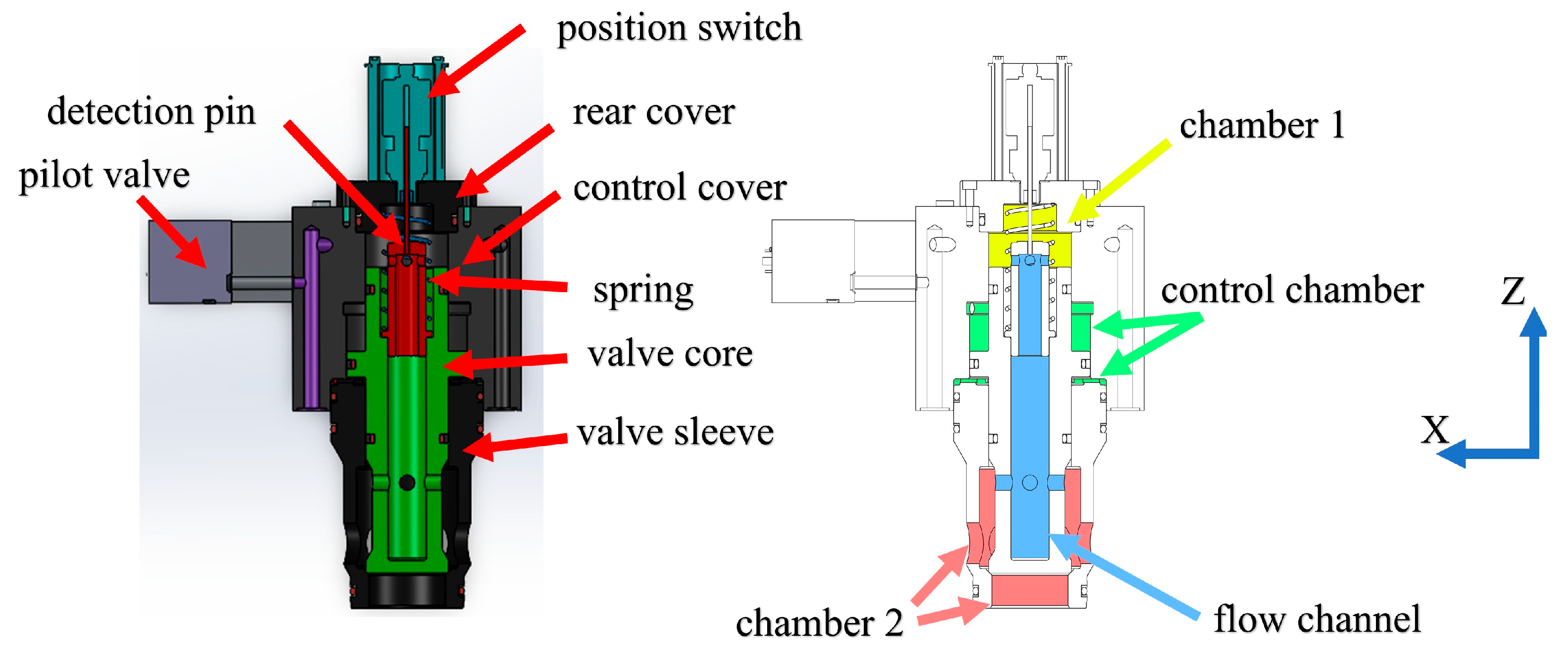
Figure 1 shows the 3D model of the cartridge-type safety locking valve. Its main components include the control cover, valve core, valve sleeve, spring, rear cover, pilot valve, position switch, detection pin and others.
This valve is a normally closed valve, which maintains its normally closed state by means of a spring when there is no driving force. The pilot valve changes the hydraulic oil pressure on both sides inside the control chamber; the hydraulic oil pressure difference then alters the force state of the valve core, thereby driving the valve core to move and achieving rapid opening or closing of the valve core. The movement of the valve core drives the detection pin to move, which is detected by the position switch to obtain the on–off state of the valve.
In the structural design, a preset flow chamber (Chamber 1) is arranged between the top of the valve core, the control cover, and the rear cover; a main flow path chamber (Chamber 2) is formed between the bottom of the valve core and the valve sleeve. By providing a flow channel in the middle of the valve core, the communication between Chamber 1 and Chamber 2 is realized, thereby maintaining the total volume of Chamber 1, the flow channel, and Chamber 2 at the set value. This avoids oil circuit volume fluctuation during the valve core movement, which in turn reduces the hydraulic oil flow caused by volume changes. As a result, the hydraulic cylinder can achieve more accurate positioning and movement, improving the machining accuracy and operational stability of the equipment.
2.2. Working Scenarios and Boundary Conditions
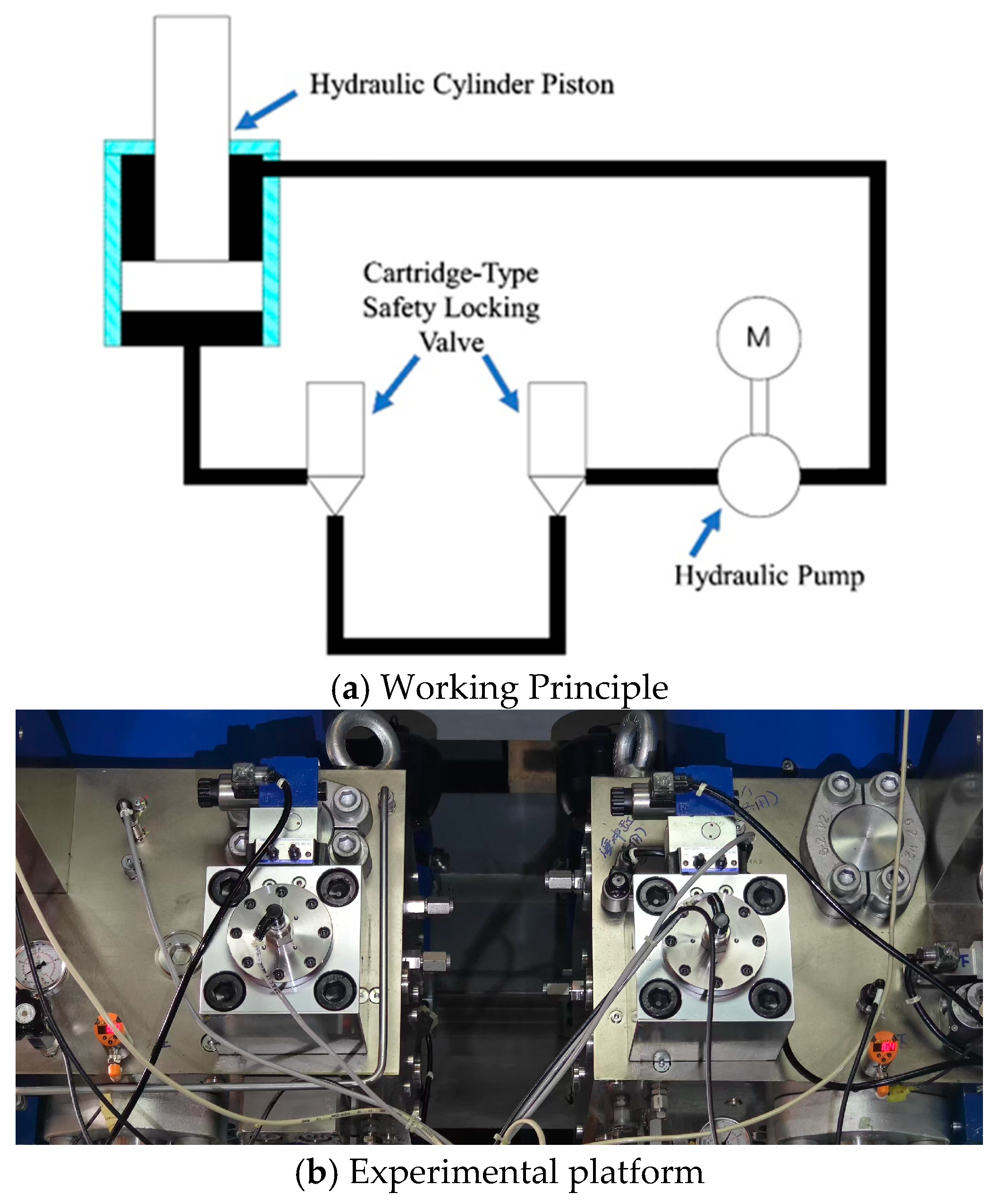
To achieve functions such as locking the piston displacement of the hydraulic cylinder in a closed hydraulic system, it is necessary to install a locking valve in the pipeline between the hydraulic pump and the hydraulic cylinder. Two safety locking valves are used in series to ensure the effect of bidirectional locking, as shown in
Figure 2.
During the operation of the hydraulic cylinder, the maximum pressure in the lower chamber can reach up to 28 MPa; therefore, the hydraulic oil pressure passing through the safety locking valve can reach 28 MPa.
The maximum upward speed of the hydraulic cylinder is 650 mm/s, and the maximum downward speed is 500 mm/s. The piston diameter is 250 mm, the inlet and outlet diameter of the safety locking valve seat is 63 mm, and the valve core stroke is 27.5 mm. Since the compression effect of hydraulic oil is relatively small and can be neglected, the flow rate through the safety locking valve is
The flow velocity through the inlet and outlet of the safety locking valve is
Hydraulic oil pressure, operating speed of the hydraulic cylinder, and dimensions of the lock valve in this section are all derived from actual operating conditions.
In the locking valve performance study conducted in this paper, the main research parameters include: pressure drop , relative opening , flow coefficient (where is the density of the fluid medium in the valve relative to water), valve core displacement, valve core movement velocity, and other parameters.
3. Valve Core Motion Control Equation and Simulation Method
3.1. Simplifying Assumptions and Valve Core Motion Control Equation
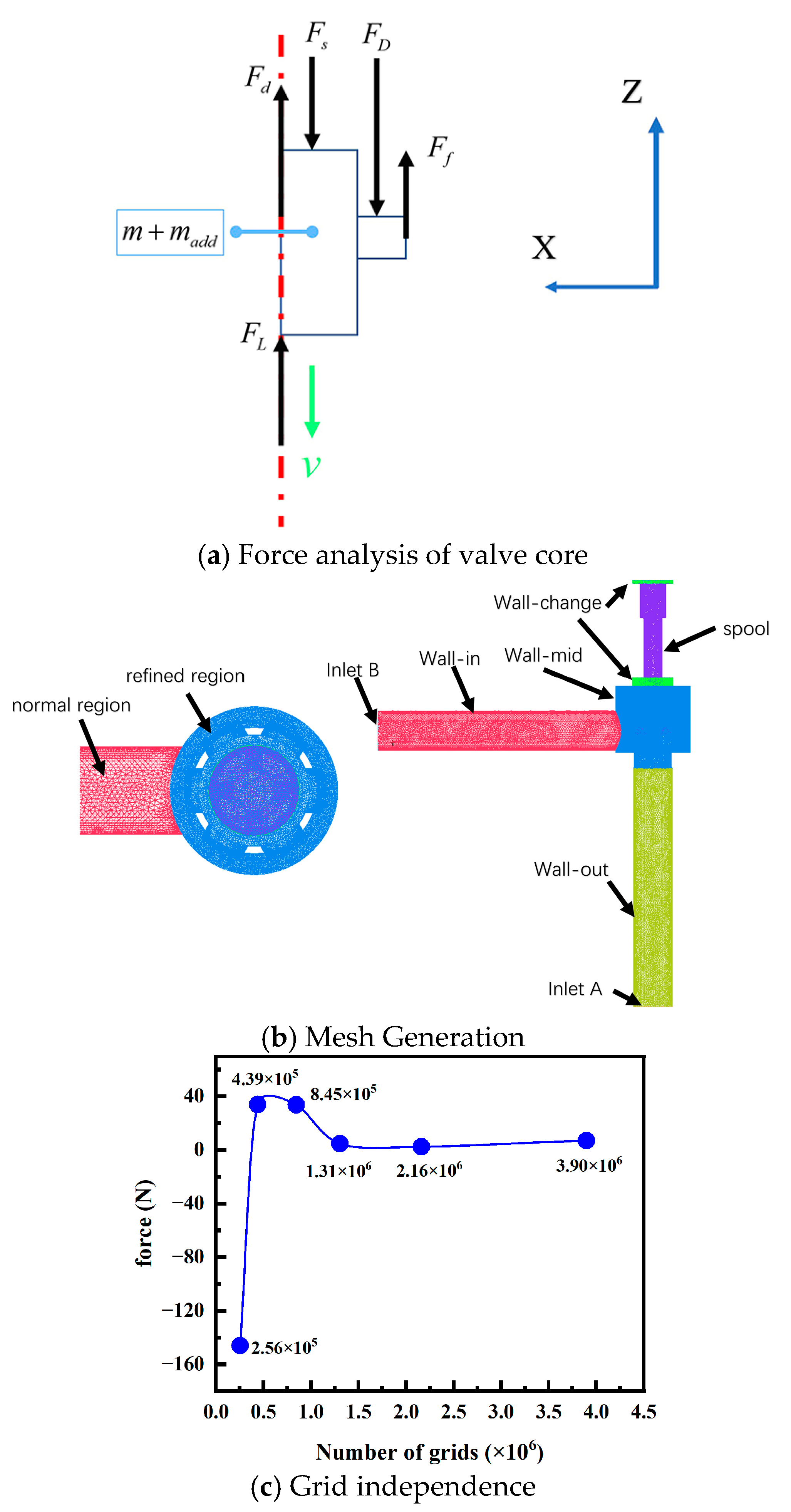
Assume that the mass of the valve core is m, and the valve core moves along the z-axis (as shown in
Figure 1 and
Figure 3a). The forces on the valve core in other directions are neglected, and only the forces on the valve core in the z-axis direction need to be considered. It is assumed that the opening direction of the valve core (upward along the z-axis) is defined as positive, and the closing direction of the valve core (downward along the z-axis) is defined as negative.
The forces on the valve core are as shown in
Figure 3a.
First, the valve core is subjected to a driving pressure difference force from the control circuit, which serves as the main power for changing the valve core state and is determined by the power source. However, during the power source output process, affected by factors such as motion velocity and transmission loss, the valve core is additionally subjected to a reverse damping force acting against the driving force.
Next, during its movement, the valve core is also subjected to a spring force , and this spring force is always directed toward the valve closing direction.
Then, due to the valve core sealing, the valve core is also subjected to a frictional force from the sealing surface during its movement, and the direction of this frictional force is always opposite to the movement direction of the valve core.
Fourthly, the valve core is subjected to a force from the controlled fluid (hydraulic oil) in the main driving circuit of the hydraulic cylinder, and this force is affected by the state of the hydraulic oil in the main driving circuit as well as the motion state of the valve core.
Finally, when the valve core undergoes variable-speed motion in the fluid, it drives the surrounding fluid to undergo variable-speed motion together, and thus is affected by the added mass from the fluid [
20,
21]. Let the added mass be denoted as
.
Combining with Newton’s Second Law, it can be derived that,
Therefore, the motion acceleration of the valve core (denoted as
) can be expressed as
3.2. Geometric Model Simplification and Mesh Generation
During the simulation process, since the locking valve has minimal deformation (which is negligible), it can be treated as a rigid body. The primary focus is on the influence of the valve core’s motion on the distribution of the internal flow field, as well as the influence of the acting force generated by the internal flow field on the valve core’s motion.
Since it is necessary to ensure fully developed flow during the simulation process, the length of the inlet and outlet was extended to approximately six times the pipe diameter. Meanwhile, after the original model structure was reasonably simplified, mesh generation was conducted. During the mesh generation stage, all regions were divided into a total of eight parts (Inlet A, Inlet B, spool, wall-in, wall-out, wall-mid, wall-change, body), and the mesh results are shown in
Figure 3b.
While ensuring the accuracy of model calculations, it is necessary to minimize computation time as much as possible, so mesh independence verification needs to be performed. First, the mesh is divided into 6 quantities, which are 0.25 million, 0.43 million, 0.84 million, 1.30 million, 2.16 million, and 3.89 million, respectively. Then, exactly the same boundary conditions are applied for calculation to obtain the valve core force, and the results are shown in
Figure 3c. It can be seen that when the mesh quantity reaches 1.30 million, accuracy can be ensured while reducing computation time; therefore, the total number of meshes is set to 1.30 million.
To ensure a balance between computation time and calculation accuracy, the mesh size is divided into two main parts: for the outlet pipes and inlet pipes—as shown in the red areas and yellow-green areas in the figure—normal mesh size is used, while the mesh in areas near the valve core (excluding the red and yellow-green areas) is refined. The mesh type adopts Tetra/Mixed, and the generation method uses the Robust (Octree) method, which is suitable for complex geometric models.
3.3. Turbulence Model and CFD Settings
The SST k-omega model combines the k-epsilon model and the k-omega model. It considers the influence of turbulent shear stress when defining turbulent viscosity and can capture microflows in the viscous layer [
22]. The SST k-omega turbulence model has high accuracy in predicting the pressure attenuation of transient flows, which meets the requirement of accurately calculating the shear force acting on the valve core in this study, thereby enabling the acquisition of more accurate valve core force parameters [
23,
24]. Therefore, this paper adopts the SST k-omega model as the turbulence model.
CFD simulation is based on the FLUENT.
The inlet is set as a velocity inlet, and the outlet is set as a pressure outlet, with values referenced to
Section 2.2. The fluid is 46# hydraulic oil, with an operating temperature of 25 °C, a density of approximately 870 kg/m
3, and a kinematic viscosity of 125.5 cSt, which converts to a dynamic viscosity of approximately 0.109185 kg/(m·s).
The motion of the valve core is handled using dynamic mesh, and the motion is controlled via UDF (User-Defined Function). During dynamic mesh processing, the bottom wall of the valve core is not allowed to contact the bottom of the channel—once contact occurs, a negative volume error will be reported immediately. Therefore, a 0.5 mm gap is retained to maintain the calculation. For mesh update methods, Smoothing and Remeshing are selected: the Diffusion method is chosen for Smoothing, with the maximum number of iterations set to 350 to ensure the quality of mesh updates; the Unified Remeshing method is adopted for Remeshing.
The pressure-velocity coupling adopts the SIMPLE algorithm. For the discretization schemes of the governing equations, the second-order upwind scheme is used for the pressure equation, momentum equation, turbulent kinetic energy equation, and dissipation rate equation. In addition, the size of the time step is set to 0.0001 s, with the maximum number of iterations per time step being 300. The convergence criteria for all residuals are set to 1 × 10⁻⁵.
3.4. Experimental Verification and Comparison
According to the operating conditions and boundary conditions of the experimental platform in
Figure 2b, the values of relevant parameters are as follows.
is simplified to the product of the constant acting pressure difference and the acting area 3.7699 × 10⁻³ m2;
is simplified to the product of the damping coefficient c = 100 N·s/m and the valve core motion velocity v;
is simplified to the product of a constant acting pressure difference and the acting area 3.7699 × 10⁻³ m2;
is simplified to a constant acting force of 150 N.
Mass m is 4.81 kg, and additional mass is 17,100 kg.
Based on the experimental platform in
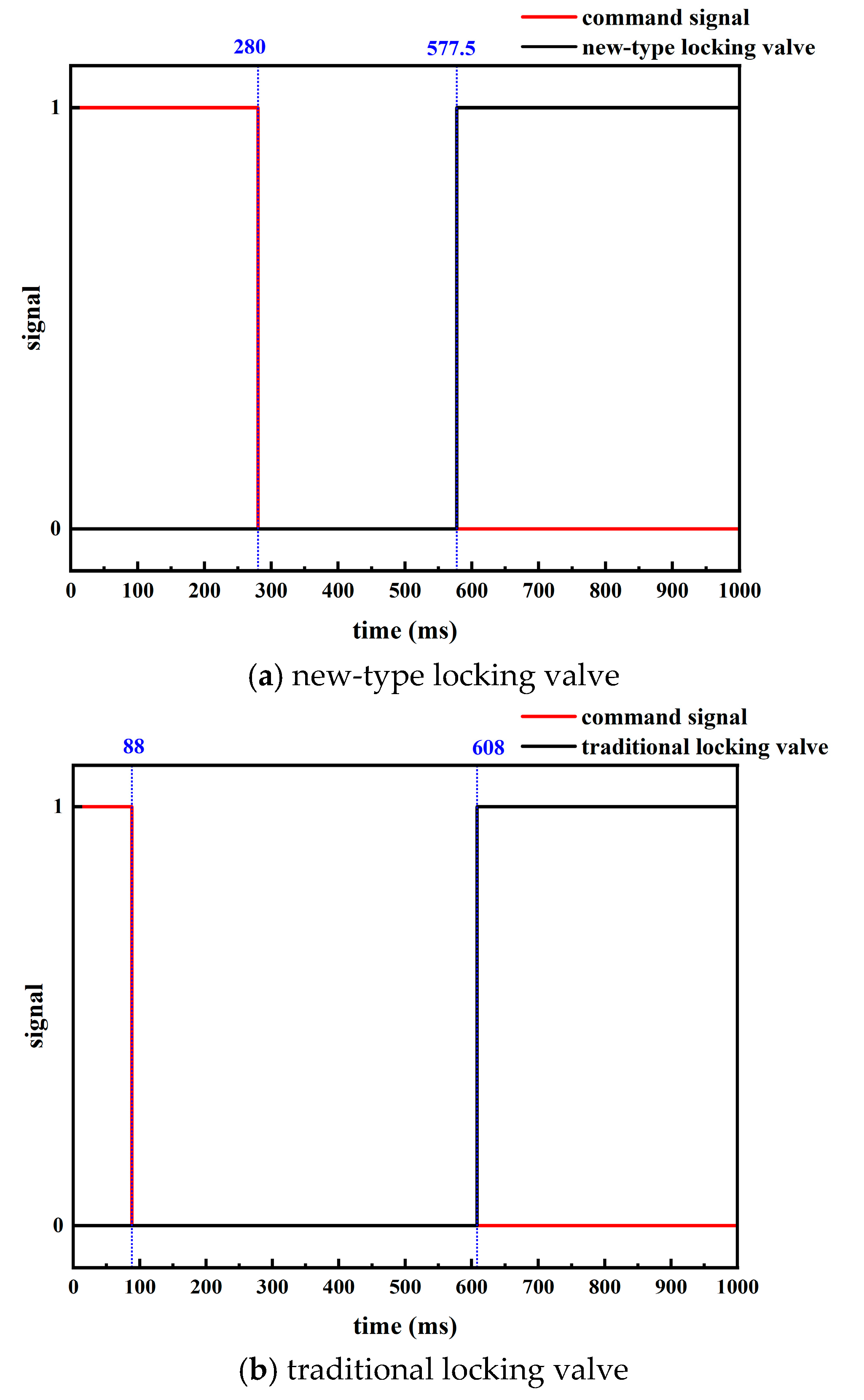
Figure 2b, the locking response experiment of the new-type locking valve was conducted, with the results as shown in
Figure 4a. The response of the traditional locking valve is presented in
Figure 4b.
The command is issued at 280 ms, and the new-type locking valve completes the action at 577.5 ms. The new-type locking valve takes approximately 297.5 ms from the issuance of the command signal to the end of locking. Compared with the simulation result of a closing time of about 280 ms in
Section 4.2, the difference between the two is 6%, and the error is within an acceptable range, indicating that the simulation is valid.
The command is issued at 88 ms, and the traditional locking valve completes the action at 608 ms. The closing response time of the traditional locking valve is about 520 ms, which is significantly longer than that of the new-type one. The new-type locking valve not only solves the problem of volume change during the opening and closing process but also improves the locking response speed.
4. Simulation Results and Analysis
To study the fluid regulation characteristics and flow field characteristics of the locking valve under various conditions, this section will be divided into four subsections based on different scenarios to conduct the research. The corresponding scenarios and parameter values for each subsection are shown in
Table 1.
Since the locking valve allows for bidirectional flow, the inlet and outlet can be interchanged. To facilitate the distinction between the two inlet scenarios, in the subsequent research, Inlet A is used to denote the inlet where the fluid flow direction is parallel to the valve core axis, and Inlet B to denote the inlet where the fluid flow direction is perpendicular to the valve core axis, as shown in
Figure 3b.
4.1. Valve Fully Open, Inlet Velocity Variation
In this case, the inlet velocity is set as a linear function of time, with the inlet velocity V = 1 × t (the units of time t and velocity V are s and m/s, respectively).
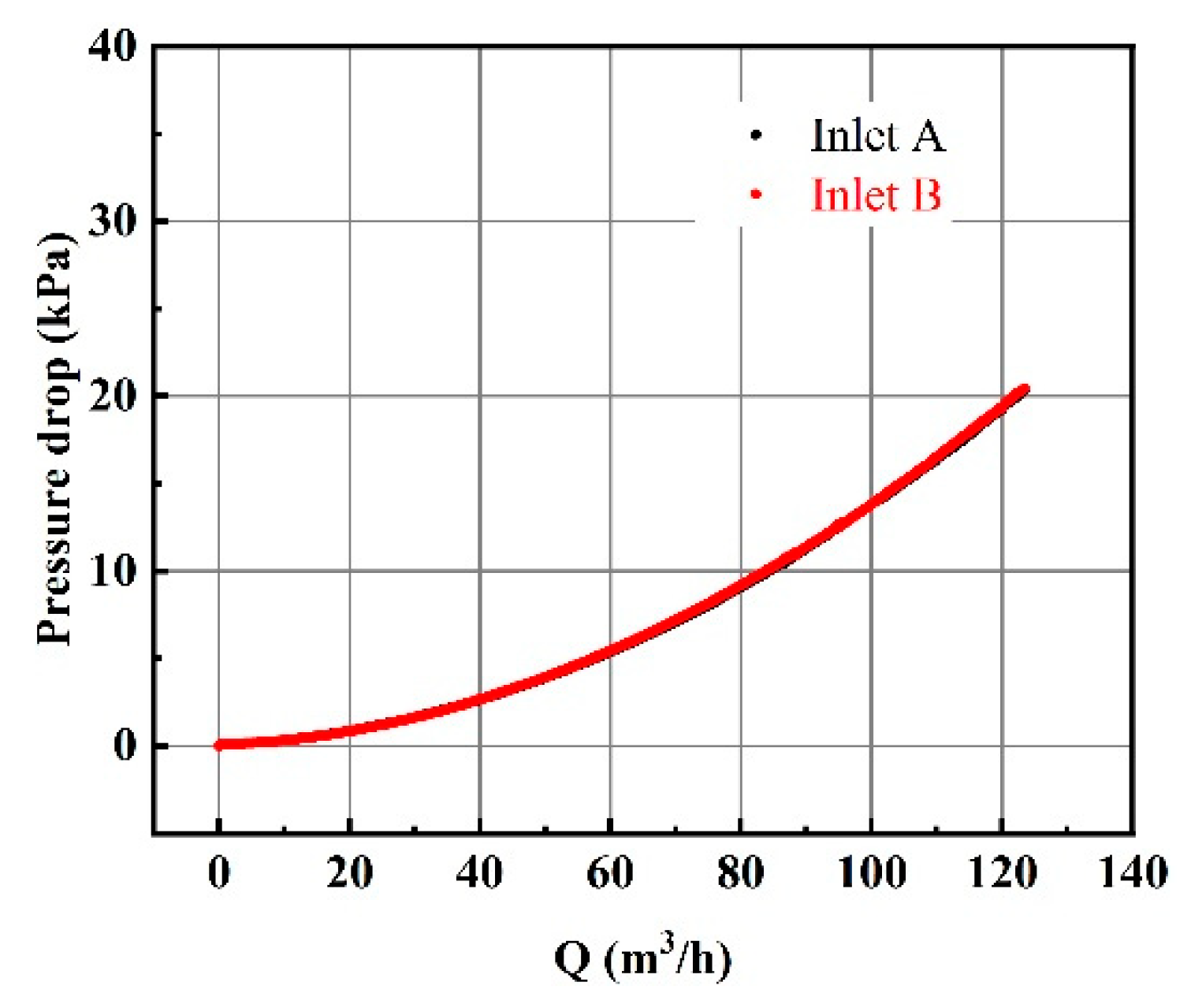
Figure 5 shows the relationship between fluid pressure drop and flow rate for the two inlets. As can be seen from the figure, the relationship between pressure drop and flow rate variation is almost identical in both cases. As the flow rate at the valve core inlet gradually increases, the fluid pressure drop loss also increases accordingly. The increase in pressure drop is not linear; instead, it shows an increasingly rapid upward trend. When the flow rate reaches approximately 120 m
3/h, the pressure drop of the valve is around 20 kPa.
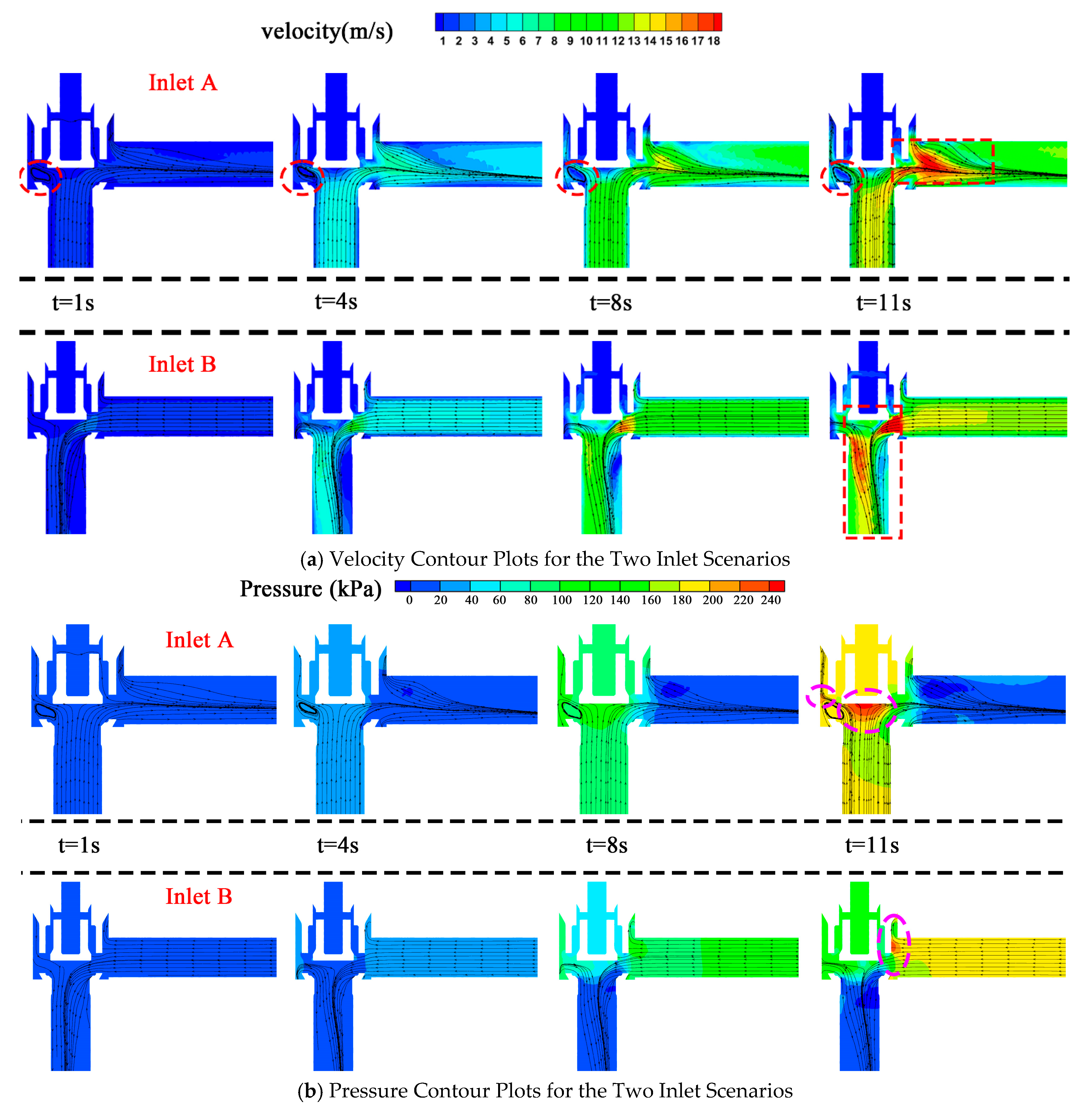
To clarify the reason for this trend, the internal flow field diagrams of the locking valve under different flow rate conditions were plotted, as shown in
Figure 6.
Figure 6a shows the internal velocity distribution of the locking valve corresponding to four time instants of t = 1 s, 4 s, 8 s, and 11 s, in which the black arrow lines indicate the flow direction of the fluid.
For Inlet A, when t = 1 s, the inlet velocity is low, and the overall velocity distribution is relatively uniform and stable, with a vortex phenomenon appearing on the side of the valve core. As the inlet velocity gradually increases, a significant velocity difference is generated near the fluid inlet and outlet, which intensifies the vortex phenomenon on the side of the valve core. Since the vortex phenomenon causes head loss—which manifests as a larger pressure drop—the pressure drop increases accordingly. At the same time, as the velocity increases, a more intense jet-like phenomenon emerges at the fluid outlet. This phenomenon leads to an increase in turbulence intensity, thereby resulting in higher flow resistance loss.
For Inlet B, after the fluid passes through the valve core, a jet-like phenomenon is formed near the bottom of the valve core, and this phenomenon becomes more pronounced as the velocity increases. However, no obvious vortex phenomenon is formed on the side of the valve core.
Figure 6b shows the internal pressure distribution of the locking valve corresponding to four time instants of t = 1 s, 4 s, 8 s, and 11 s. As is easily seen from the figure, as the inlet velocity increases, the pressure at the inlet gradually increases.
For Inlet A, local high-pressure zones are generated at the bottom of the valve core and on the side of the valve seat adjacent to the bottom. This is because the fluid impacts the wall of the valve core, causing the kinetic energy of the fluid to be converted into pressure potential energy, thermal energy, etc., thus generating flow resistance loss and leading to an increase in pressure drop.
For Inlet B, the outer valve wall of the locking valve needs to directly withstand the fluid impact force, resulting in the formation of a local high-pressure zone on the outer wall of the locking valve. Meanwhile, as most of the fluid impacts and diverges, it then impacts the inner wall of the valve seat. However, compared with the case of Inlet A, the local impact pressure on the inner wall of the locking valve’s seat is relatively smaller.
4.2. Fixed Inlet Velocity, Valve Closed
This section mainly analyzes the process of the valve core transitioning from the full opening state to the closed state, which is divided into three main cases: the first case is Inlet B with an inlet velocity of 10.3 m/s; the second case is Inlet A with an inlet velocity of 10.3 m/s; the third case is the fluid in a static state, that is, the pressures at the inlet and outlet are both the same constant value.
4.2.1. Valve Characteristic Curve During Closure
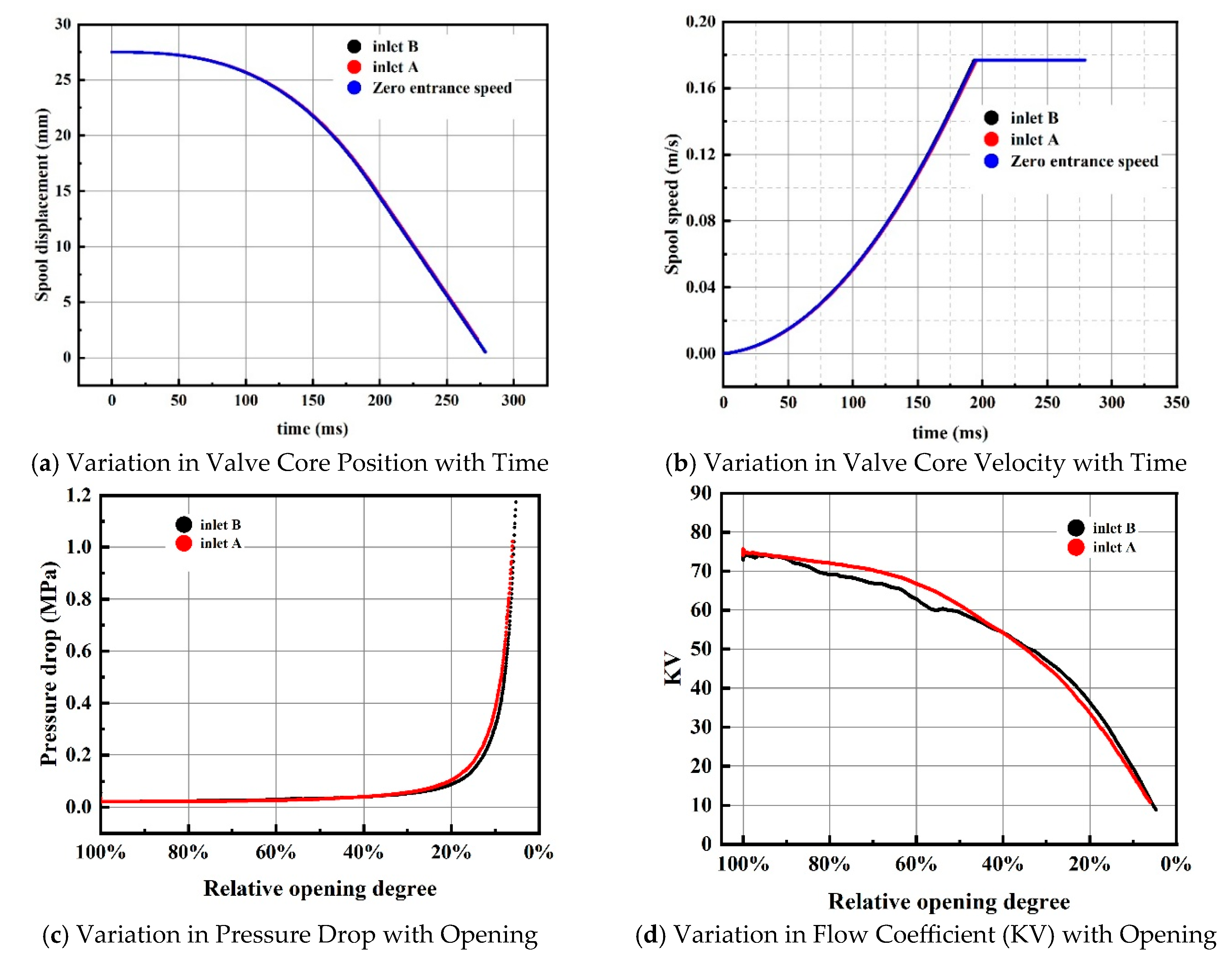
Figure 7 shows the characteristic curves of displacement, velocity, pressure drop, and flow coefficient during valve closure under the three scenarios. Among them, the variation trends of valve core displacement and valve core velocity with time are presented in
Figure 7a,b. As can be seen from the figures, the motion of the valve core is similar under the three scenarios, and its movement process can be roughly divided into two stages. First, before approximately 180 ms, the valve core accelerates with a trajectory similar to a parabola, and its velocity gradually increases. After 180 ms of movement, the valve core begins to move at a uniform speed. The time for the valve core to transition from the full opening state to the closed state is approximately 280 ms.
The variation in the pressure drop with the relative opening during the valve core’s movement from full opening to closure is shown in
Figure 7c. For Inlet A and Inlet B, respectively, the variation trend of the valve core’s pressure drop curves is the same: as the relative opening decreases, the pressure drop increases gradually. However, the pressure drop changes slightly in the range of K = 20–100%. When the relative opening is between 10% and 20%, the pressure drop increases relatively quickly; when the relative opening is below 10%, the pressure drop increases rapidly. The difference lies in two intervals: in the range of 50–90% relative opening, the pressure drop is slightly higher for Inlet B; after the relative opening decreases to 40%, the pressure drop is slightly higher for Inlet A.
The variation in the flow coefficient KV with the relative opening during the valve core’s movement from full opening to closure is shown in
Figure 7d. For Inlet A and Inlet B, respectively, the variation trend of the valve core’s flow coefficient curves is the same: as the relative opening decreases, the flow coefficient KV also gradually decreases. The overall trend is a gradual decrease, with the rate of decrease accelerating. The difference lies in two intervals: in the range of 50–90% relative opening, the flow coefficient is slightly higher for Inlet A; after the relative opening decreases to 40%, the flow coefficient is slightly higher for Inlet B.
4.2.2. Valve Flow Field Characteristics During Closure
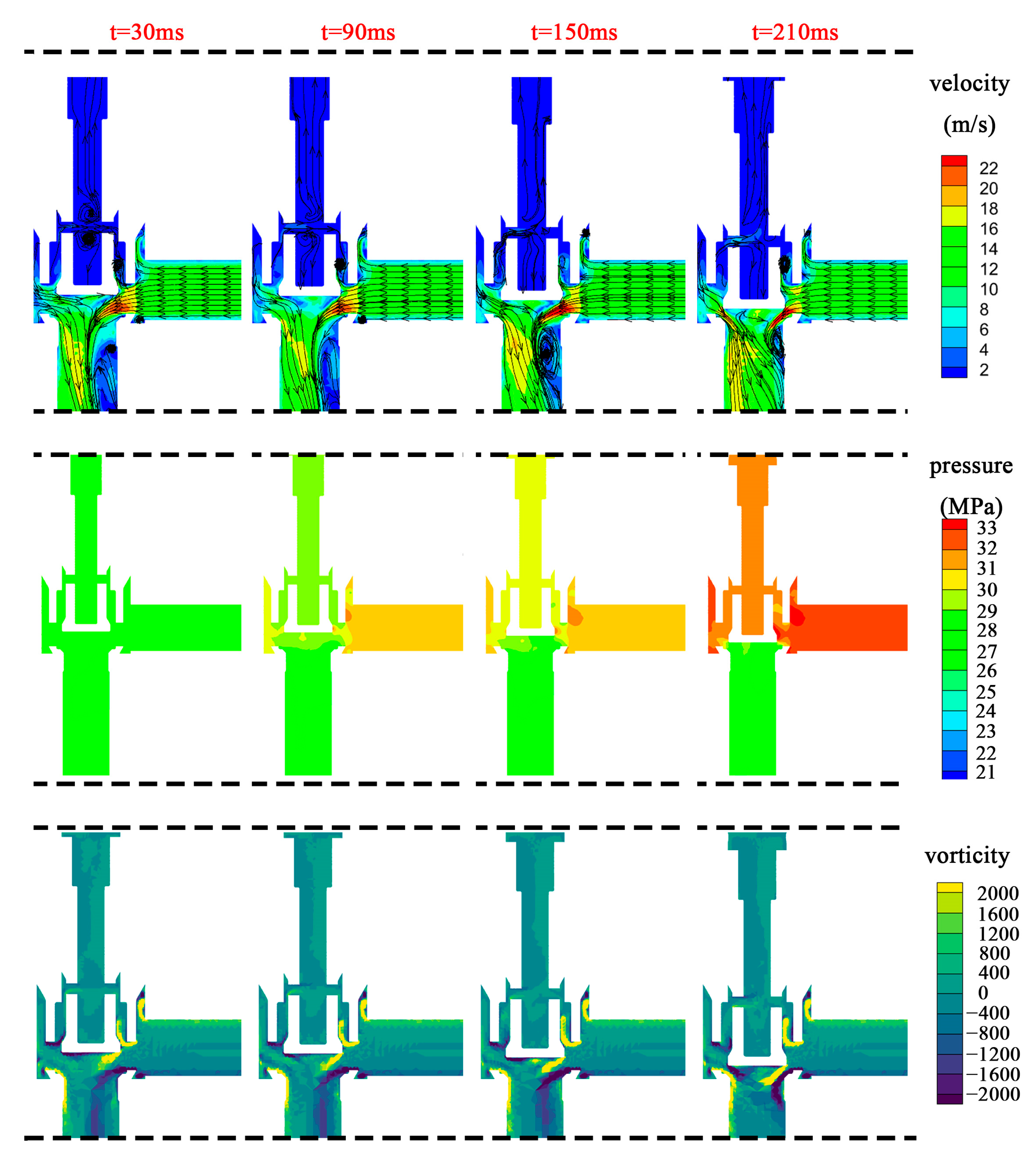
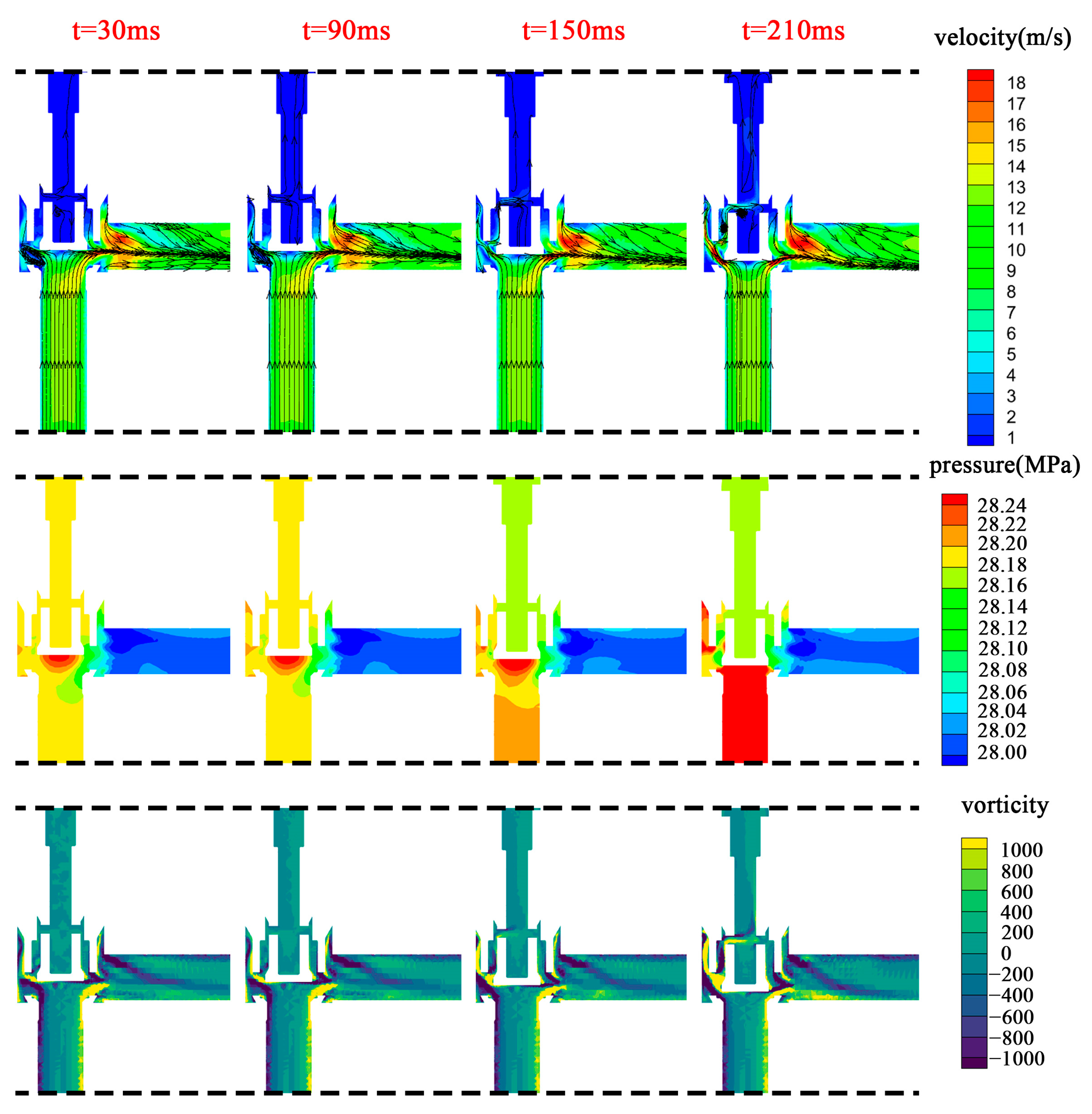
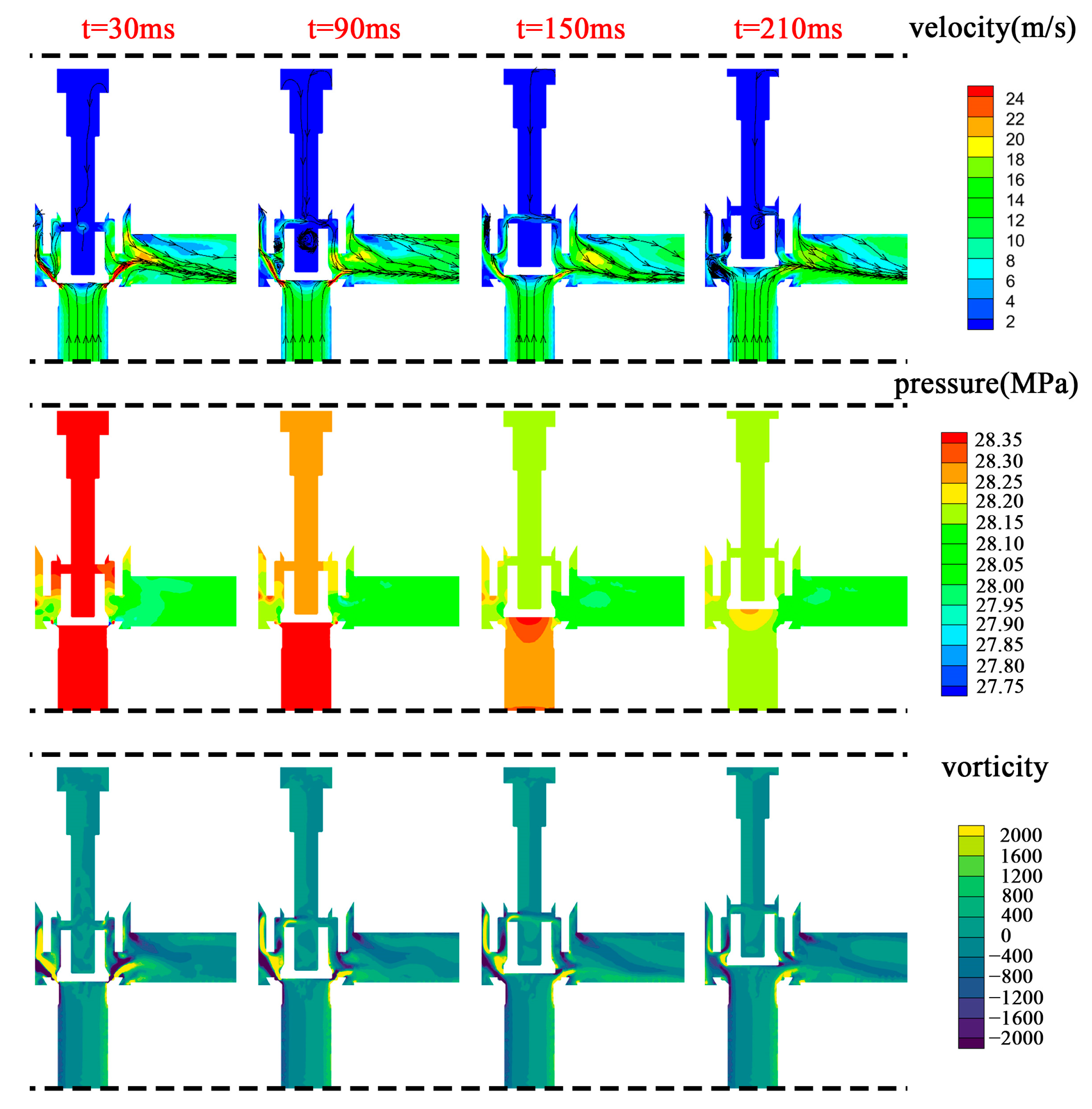
When Inlet B is used, the internal flow field distribution of the locking valve during the closure process is shown in
Figure 8. The figure presents the valve core positions at four time instants and their corresponding internal flow field distributions.
As can be seen from the figure, at any time instant, the flow velocity remains at a relatively high level at the internal opening of the valve core and at the junction where the valve core connects to the inlet and outlet. Additionally, a flow separation phenomenon occurs at the right wall of the outlet below the valve core. As the valve core gradually closes, the flow separation zone at the right wall of the outlet below the valve core gradually shrinks, while a flow separation zone gradually forms on the left side.
During the closure process of the locking valve, the pressure difference between the inlet and outlet is small in the first few instants, transitioning uniformly. However, at t = 210 ms, a significant difference emerges between the inlet and outlet pressures. This is consistent with the quantitative performance of pressure drop mentioned earlier. During the movement of the valve core, relatively intense vortices appear at the bottom and sides of the valve core. As the valve core closes, the intensity of the vortex core gradually increases, while its diffusion decreases.
The flow field distribution of the locking valve when Inlet A is used is shown in
Figure 9. Overall, the velocity distribution and pressure distribution are similar to those in the scenario of Inlet B. As the valve core closes, the flow velocity at the bottom side of the valve core gradually increases, and a jet-like shape gradually forms at this location. The valve core pressure mainly concentrates on the bottom of the valve core, and as the valve core closes, the pressure at the bottom of the valve core gradually increases. During the movement of the valve core, relatively intense vortices appear at the bottom and sides of the valve core. As the valve core closes, the intensity of the vortex cores on the sides gradually increases, and their scope expands.
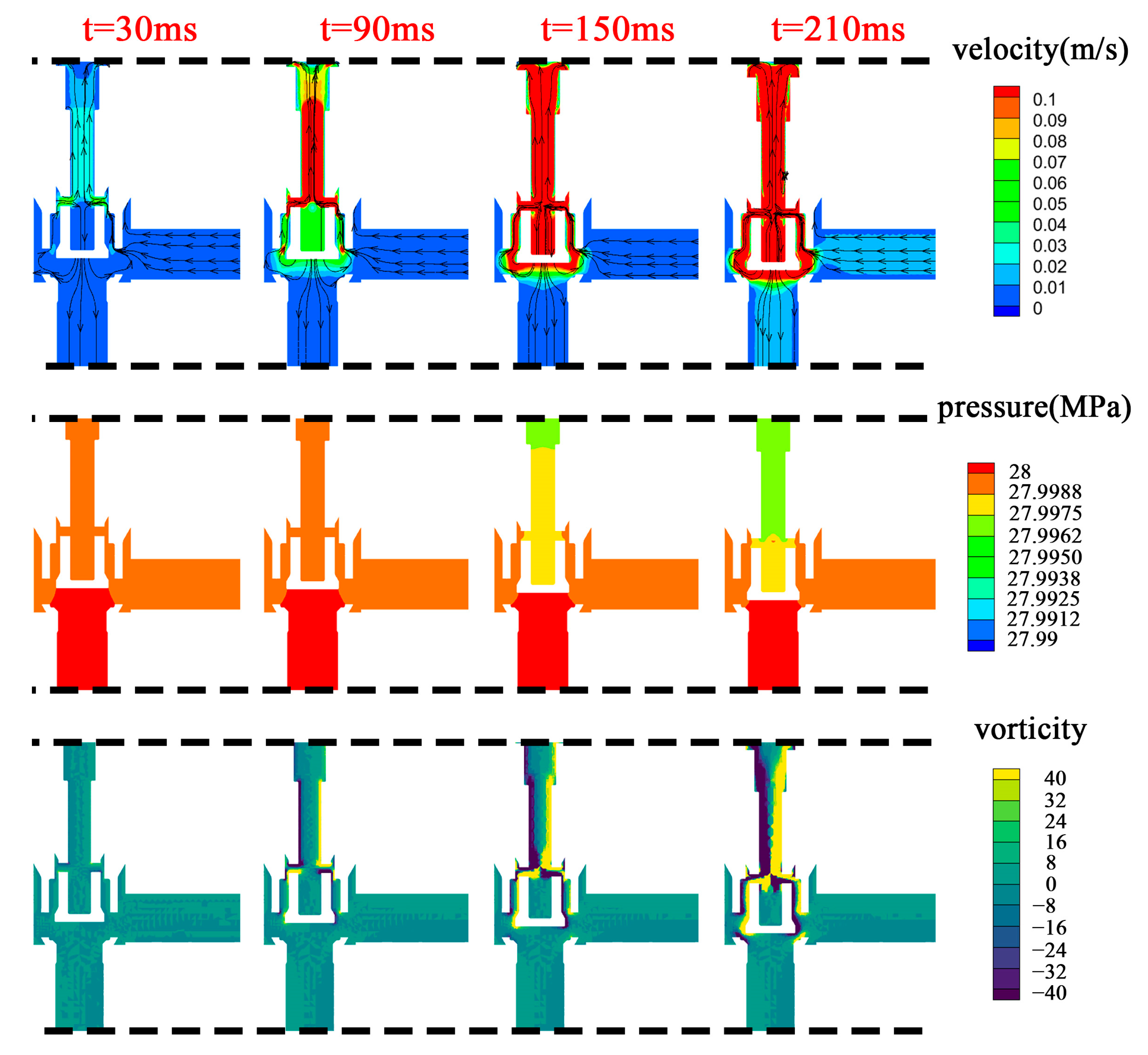
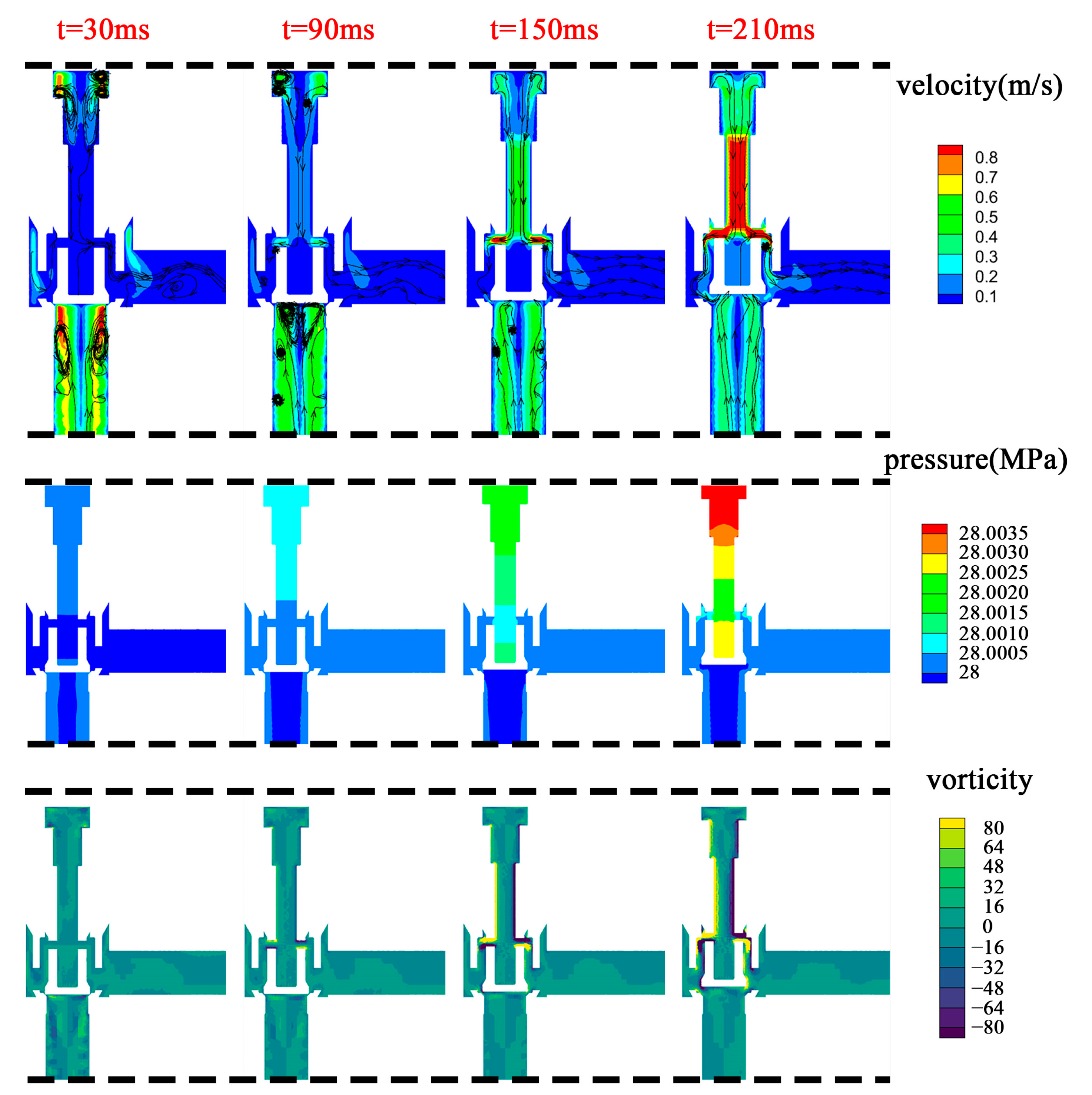
The flow field distribution of the locking valve when the inlet velocity is 0 is shown in
Figure 10. Obviously, as the valve core closes, the fluid inside the locking valve generates movement, and the main movement trend of the fluid is to flow in through Inlet B, either replenishing the interior of the valve core or flowing toward Inlet A. Of the fluid at the bottom of the valve core, part is pushed toward Inlet A, while the other part flows back to replenish the interior of the valve core. The fluid velocity inside the valve core is relatively high, reaching above 0.1 m/s, but the overall flow velocity remains at a relatively low level. Throughout the process, the pressure variation is relatively small. As the valve core moves gradually, a low-pressure zone appears inside the valve core, accompanied by the generation of vortices, which are distributed throughout the upper part of the valve core’s interior. The faster the valve core moves, the more obvious the pressure difference becomes, and the more pronounced the vortex intensity is.
4.3. Fixed Inlet Velocity, Valve Opening
This section mainly analyzes the process of the valve core transitioning from the closed state to the full opening state. The other conditions are the same as those in
Section 4.2.
4.3.1. Valve Characteristic Curve During Opening
When the velocity inlet is Inlet B, the impact resistance received by the safety valve under a driving force of 7 MPa in the initial state is greater than the valve core’s driving force. Thus, it cannot complete the opening action, and the driving force must be increased to 10.5 MPa to enable opening. Therefore, the operation for Inlet B is conducted under a driving force of 10.5 MPa, while the driving force is set to 7 MPa for all other scenarios.
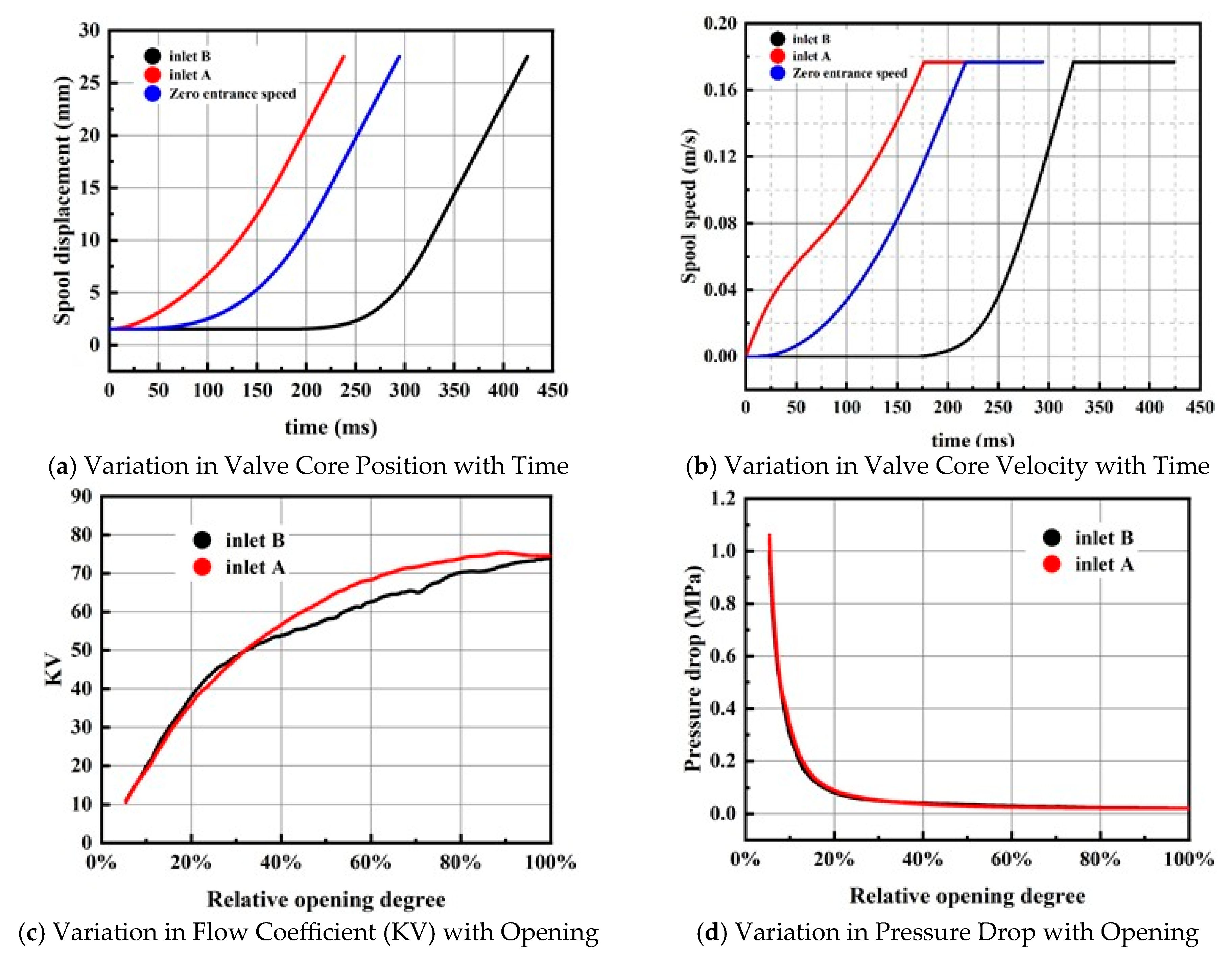
Figure 11a and
Figure 11b respectively, show the displacement and velocity characteristic curves of the valve during opening under the three scenarios.
For Inlet B with an inlet velocity of 10.3 m/s, the displacement curve of the valve core can be roughly divided into two stages: first, before approximately 180 ms, the valve core has no displacement; around 180 ms, the driving force exceeds the resistance, and the valve core starts to move; when the valve core moves to around 320 ms, it begins to move at a uniform speed. The time for the valve core to transition from the fully closed state to the fully open state is approximately 425 ms.
For Inlet A with an inlet velocity of 10.3 m/s, the displacement curve of the valve core can be roughly divided into two stages: first, before approximately 170 ms, the valve core undergoes accelerated motion, and the acceleration occurs in two phases—during the first phase, the acceleration gradually decreases; during the second phase, the acceleration gradually increases again, and around 110 ms, the acceleration begins to stabilize gradually; after the valve core moves to 170 ms, it starts to move at a uniform speed. The time for the valve core to transition from the fully closed state to the fully open state is approximately 240 ms.
When the fluid is static, the displacement curve of the valve core can be roughly divided into three stages: first, before approximately 50 ms, the driving force of the valve core is less than the resistance, so the valve core remains stationary; subsequently, its movement speed gradually increases; when the valve core moves to 210 ms, it begins to move at a uniform speed. The time for the valve core to transition from the fully closed state to the fully open state is approximately 290 ms.
Overall, the opening speed is the fastest and the opening resistance is the smallest in the Inlet A scenario; the scenario with an inlet velocity of 0 ranks second, with relatively larger opening resistance; the Inlet B scenario has the slowest opening speed and the largest opening resistance.
Figure 11c and
Figure 11d respectively, show the flow coefficient KV and pressure drop characteristic curves during valve opening under the two scenarios.
As the relative opening increases, the pressure drop decreases gradually. The pressure drop changes slightly in the range of K = 20–100%. When the relative opening is between 10% and 20%, the pressure drop decreases relatively quickly; when the relative opening is below 10%, the pressure drop decreases rapidly. The pressure drop for Inlet B is slightly lower, but the pressure drops under the two scenarios do not differ significantly and are generally close.
The variation trends of the flow coefficient KV under the two scenarios are similar: as the relative opening increases, KV first increases rapidly, then increases slowly. However, the difference is that in the range of 0–30% relative opening, the KV value is slightly larger for Inlet B, meaning that the flow capacity is slightly stronger in this case; when the relative opening is greater than 30%, the KV value is larger for Inlet A, indicating that the flow capacity is stronger in this case.
4.3.2. Valve Flow Field Characteristics During Opening
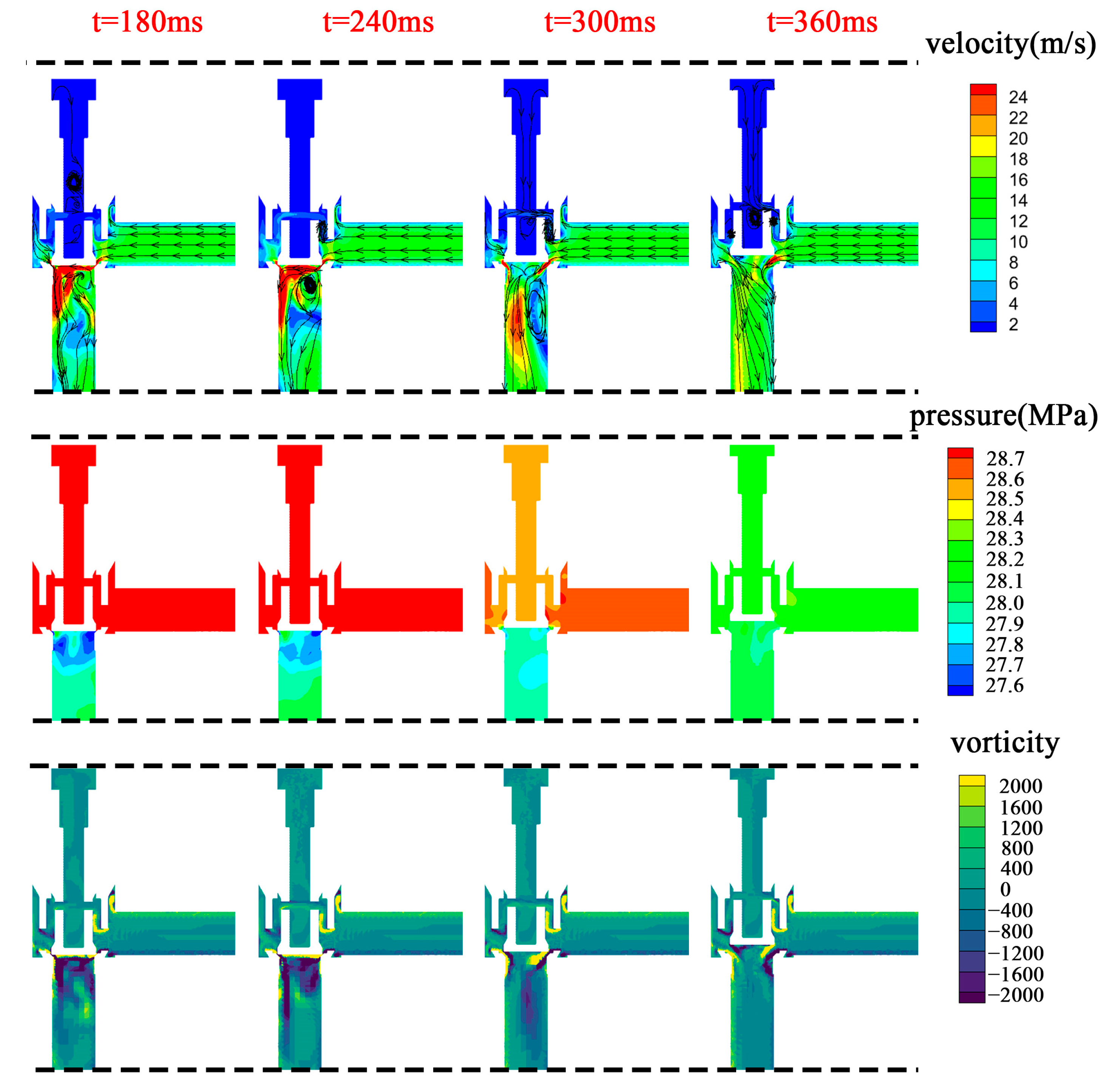
When Inlet B is used, the internal flow field distribution of the locking valve during the opening process is shown in
Figure 12. The figure presents the valve core positions at four time instants and their corresponding internal flow field distributions.
As can be seen from the figure, the flow velocity below the valve core remains at a relatively high level; as the opening increases, the high-velocity regions shrink. Additionally, a flow separation phenomenon occurs at the right wall of the outlet below the valve core. As the valve core gradually opens, the flow separation zone at the right wall of the outlet below the valve core gradually decreases.
During the opening process of the locking valve, the pressure difference between the inlet and outlet is relatively large in the first few instants; as the valve opens, the pressure difference transitions gradually becomes uniform. High-pressure zones appear below the valve core and in the upper part of the valve core’s interior.
During the movement of the valve core, relatively intense vortices appear at the bottom and sides of the valve core. As the valve core opens, the influence area of the vortices gradually decreases.
When Inlet A is used, the internal flow field distribution of the locking valve during the opening process is shown in
Figure 13. As can be seen from the figure, at any time instant, the flow velocity below the valve core remains at a relatively high level; additionally, a flow separation phenomenon occurs at the right wall of the outlet below the valve core. As the valve core gradually opens, the flow separation zone at the right wall of the outlet below the valve core gradually decreases.
During the opening process of the locking valve, the pressure difference between the inlet and outlet is relatively large in the first few instants; as the valve opens, the pressure difference transitions gradually becomes uniform. High-pressure zones appear below the valve core and in the upper part of the valve core’s interior.
During the opening process of the locking valve, in the first few instants, the vortex intensity at the valve core is relatively high. As the valve opens, the vortex intensity gradually decreases, and the influence range also gradually shrinks.
The flow field distribution of the locking valve when the inlet velocity is 0 is shown in
Figure 14. Obviously, as the valve core opens, the fluid inside the valve core is pressurized and generates movement. The main movement tendency of the fluid is to flow out from the internal opening of the valve core toward Inlet B, while driving part of the fluid at Inlet A to develop a movement tendency toward the valve core. The fluid velocity at the opening of the valve core is relatively high, reaching above 0.8 m/s. Throughout the process, the pressure variation is relatively small. As the valve core moves gradually, a high-pressure zone appears inside the valve core, accompanied by the generation of vortices, which are distributed throughout the upper part of the valve core’s interior. The faster the valve core moves, the more obvious the pressure difference becomes, the stronger the effect of the vortices is, and the larger their scope.
4.4. Valve Surface Groove Structure and Its Effects
Studies have shown that adding groove structures on the surface of an object is beneficial to improving flow field distribution and reducing flow resistance [
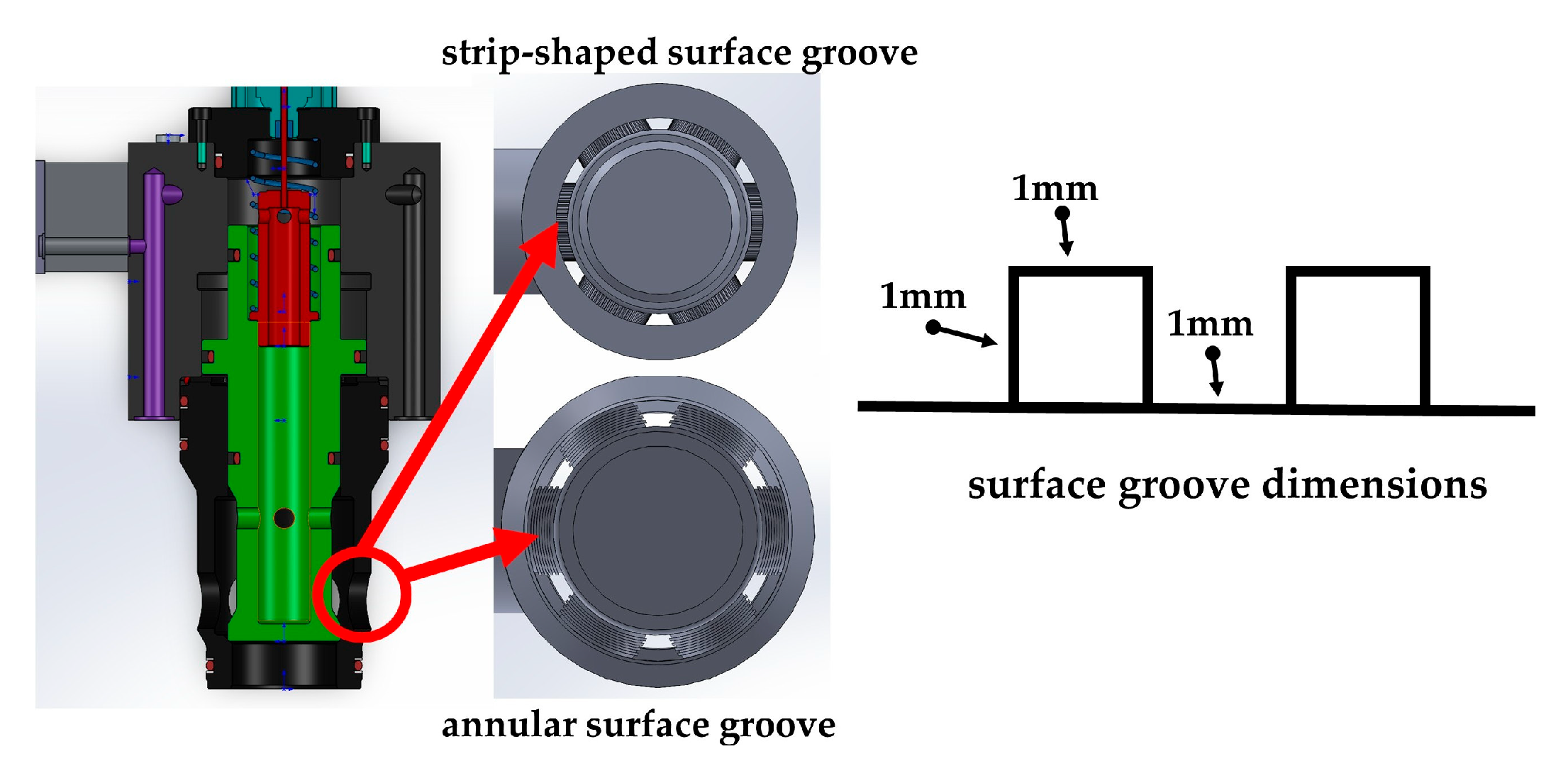
25]. To improve the flow capacity of the cartridge valve and the pressure condition at the top of the valve core, this section proposes adding surface groove structures to the side channel of the valve core. As shown in
Figure 15, two types of structures are presented: strip-shaped surface groove structures and annular surface groove structures. This section will explore the influence mechanism of surface groove structures on the characteristic curves and flow field characteristics of the cartridge valve.
4.4.1. Valve Characteristic Curves Under Different Structures
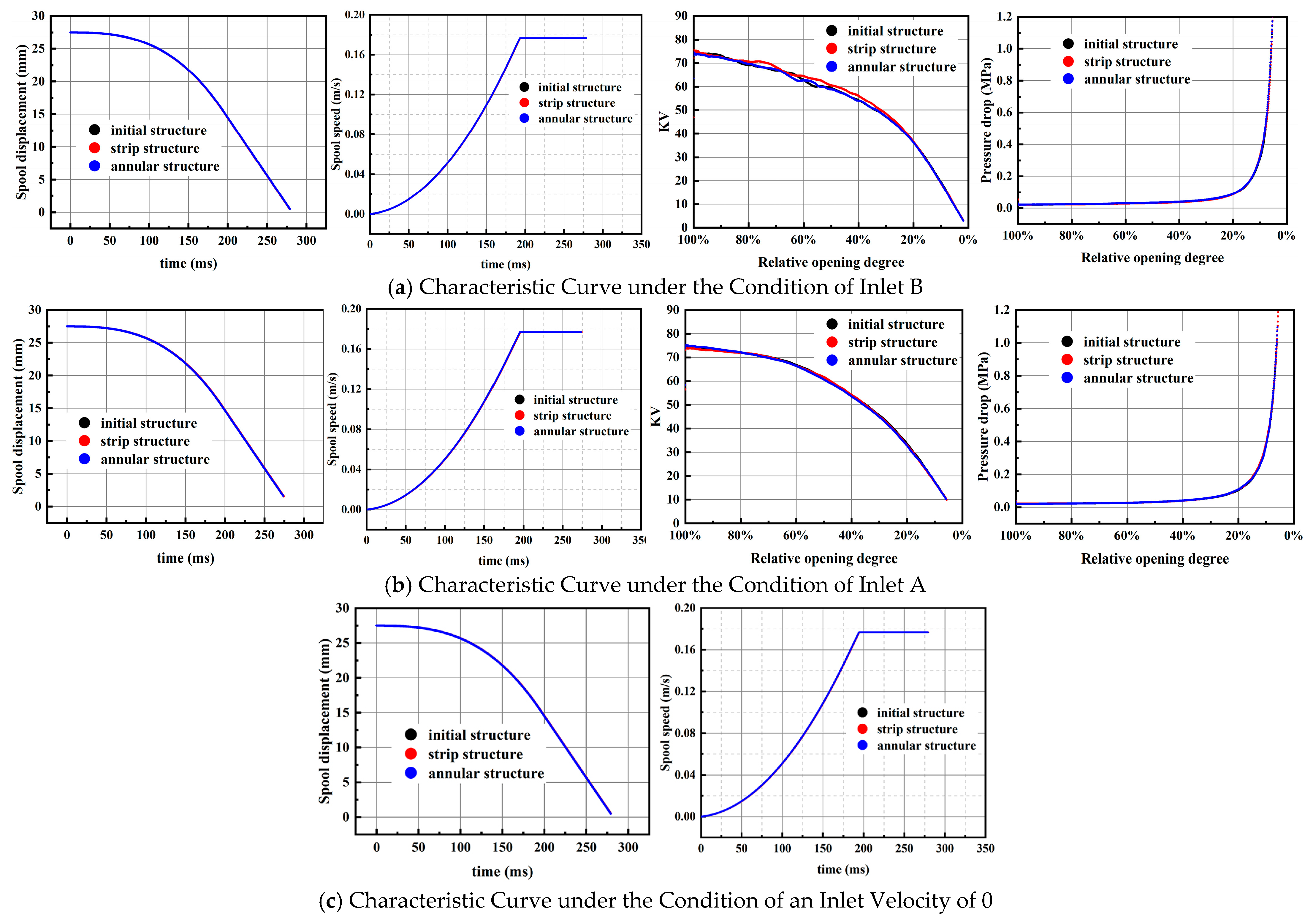
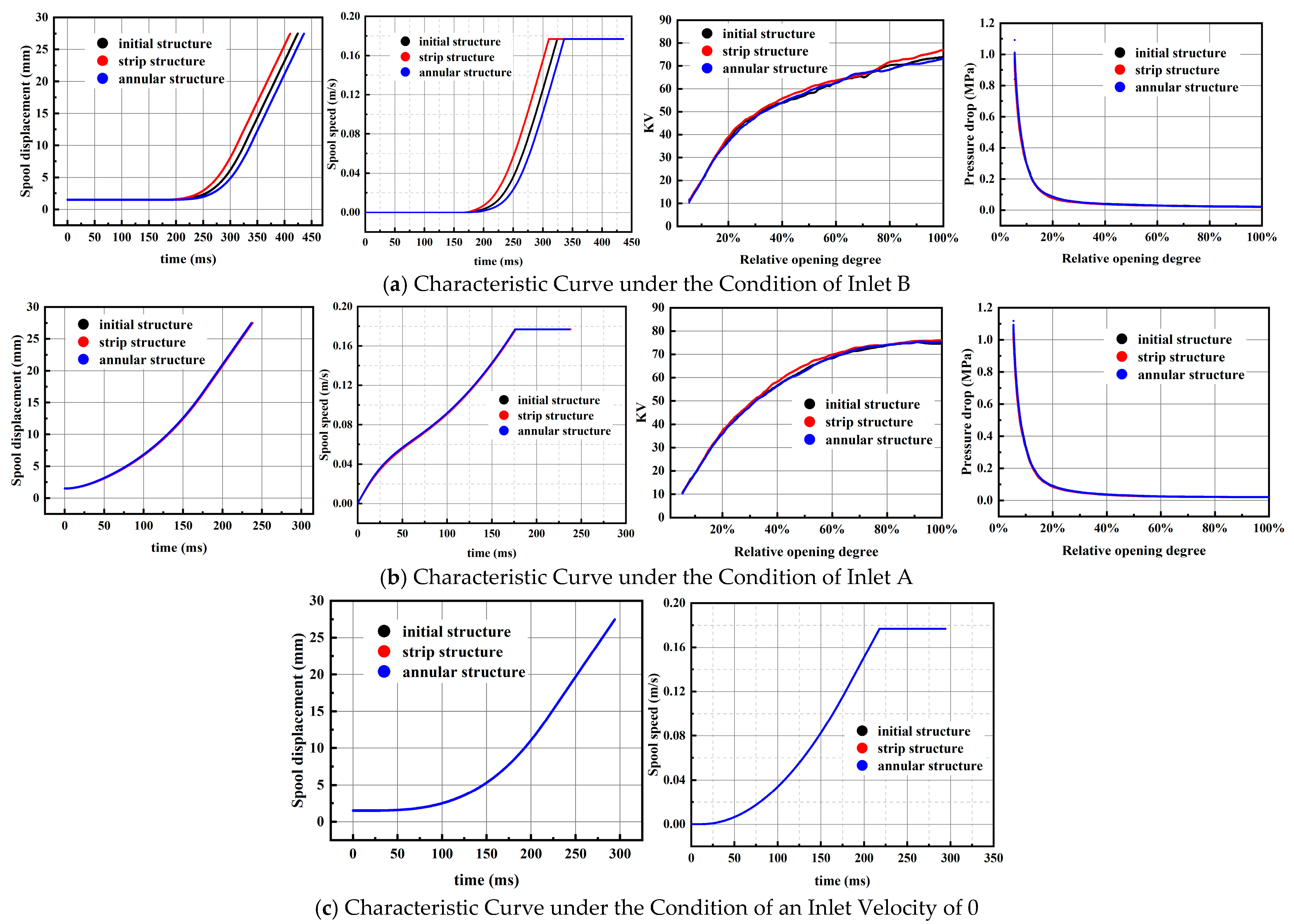
Figure 16 shows the characteristic curves of valve core displacement, velocity, flow coefficient KV, and pressure drop during valve closure under three structures, where the black color represents the initial structure, the red color represents the strip-shaped groove structure, and the blue color represents the annular groove structure.
During the valve closure process, regardless of the inlet conditions, the valve core displacement, velocity, and pressure drop curves under the three structures are almost overlapping. However, the flow coefficient KV is affected by the groove structures on the valve core surface.
When Inlet B is used, the initial structure and the annular groove structure show little difference. In contrast, the KV value of the locking valve with the strip-shaped groove structure is slightly higher than that of the other two structures in the range of 30–80% relative opening, increasing by approximately 1.9% to 5.1%. This indicates that the strip-shaped groove structure has better flow performance.
Figure 17 shows the characteristic curves of valve core displacement, velocity, flow coefficient KV, and pressure drop during valve opening under three structures. As can be seen from the figure, during the valve opening process, when Inlet A is used or the inlet velocity is 0, the displacement and velocity curves of the valve core under the three structures are almost overlapping.
However, when Inlet B is used, the development trends of valve core displacement and velocity are the same, but the change times differ: the strip-shaped groove structure has the fastest opening speed, followed by the initial structure, and the annular groove structure is the slowest. For the pressure drop curves, those under the three structures are almost overlapping.
For the flow coefficient KV, the KV value of the strip-shaped groove structure is slightly higher than that of the other two structures: when Inlet B is used, the KV value is slightly higher in the relative opening ranges of 40–60% and 80–100%, increasing by approximately 2.2% to 5.2%; when Inlet A is used, the KV value is slightly higher only in the relative opening range of 40–60%, increasing by approximately 1.5% to 3.4%.
4.4.2. Valve Flow Field Characteristics Under Different Structures
Based on the analysis results in
Section 4.4.1, this paper will select the flow fields under three scenarios—valve closure with Inlet B, valve opening with Inlet A, and valve opening with Inlet B—to conduct a comparison, and analyze the flow field distribution laws and their effects under different structures.
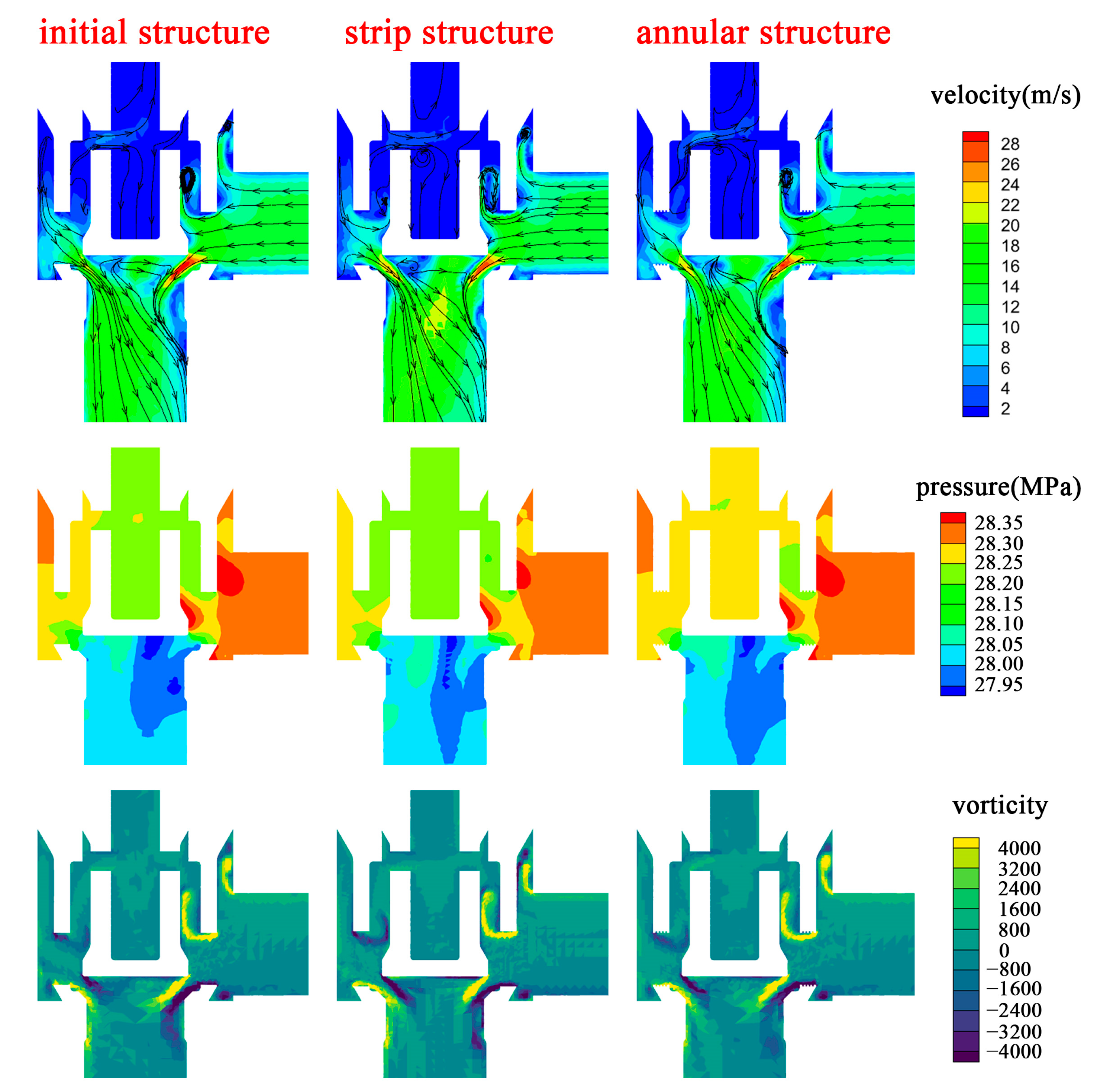
Figure 18 shows the flow field distribution of the three structures under the conditions of valve closure with Inlet B when t = 210 ms and the relative opening is approximately 46%. At this moment, the valve core positions under the three structures are almost the same.
As can be seen from the figure, influenced by the strip-shaped groove structure, the valve’s flow capacity is enhanced: the downward velocity of the fluid after passing through the valve core is significantly higher than that of the other two structures, and the intensity of the vortex at the bottom is also lower. Therefore, under the strip-shaped groove structure, the pressure at the valve core diffuses less toward the top of the valve core, and the pressure at the top remains at a relatively low level, which has a better improving effect on the pressure bearing at the top of the valve core.
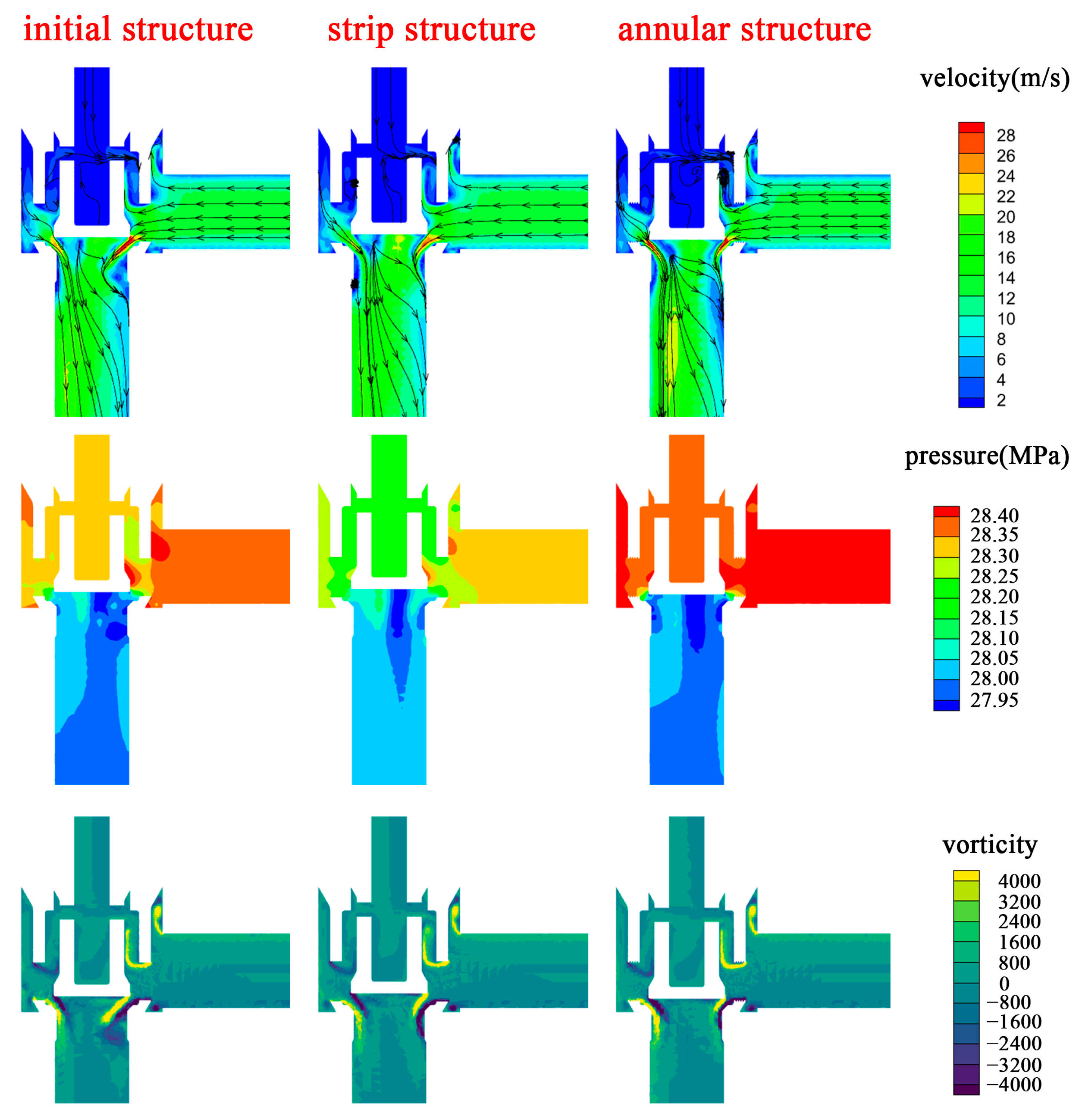
Figure 19 shows the flow field distribution of the three structures under the conditions of valve opening with Inlet B when t = 330 ms and the relative opening is approximately 48%. Regarding the opening speed, the strip-shaped groove structure > the initial structure > the annular groove structure; thus, at the same time instant, the valve core opening of the strip-shaped groove structure is the largest.
This leads to the following results at the same time instant: the strip-shaped groove structure has the strongest flow capacity, the pressure load at the top of the valve core decreases faster (the pressure is approximately 0.1 MPa lower than that of the initial structure), the jet intensity at the bottom of the valve core is weaker, and the vortex phenomenon caused by the bottom jet is simultaneously weakened—thereby reducing the fluid energy loss.
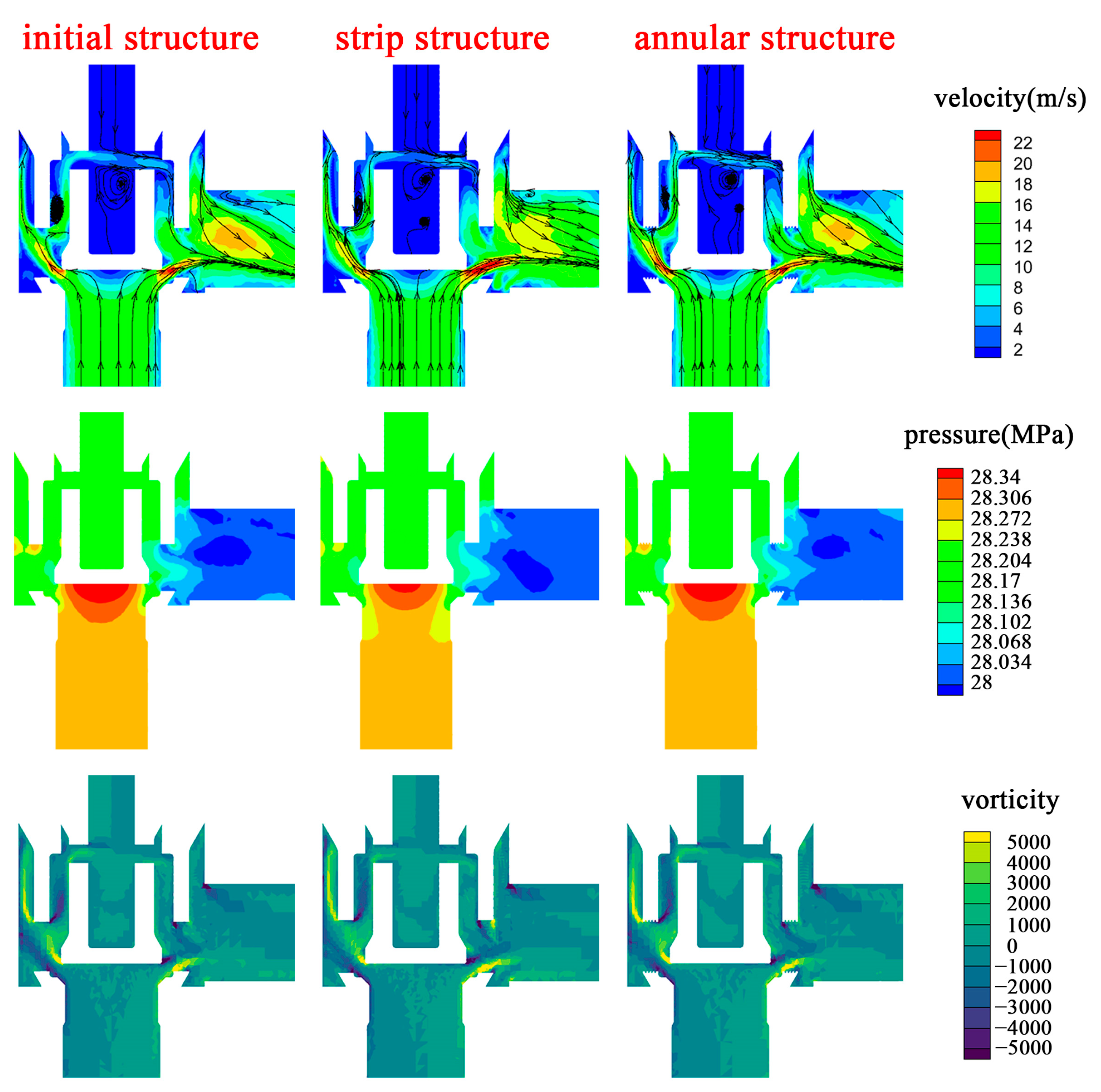
Figure 20 shows the flow field distribution of the three structures under the conditions of valve opening with Inlet A when t = 150 ms and the relative opening is approximately 45%. At this moment, the valve core positions under the three structures are almost the same.
As can be easily seen from the figure, the vortex distribution under the three structures is almost identical. However, the velocity distribution and pressure distribution show certain differences. In the valve core outlet area, both the initial structure and the annular groove structure have a certain high-velocity zone in the middle part of the outlet, while a low-velocity zone of a certain area appears at the top part of the outlet; in contrast, the outlet velocity distribution of the strip-shaped groove structure is relatively uniform with small variations.
In terms of pressure distribution, the high-pressure zone at the bottom of the valve core for the strip-shaped groove structure has a smaller area and lower magnitude. Therefore, the strip-shaped groove structure enables the bottom of the valve core to bear lower pressure, which is conducive to reducing the valve core pressure load.
5. Conclusions
This paper establishes a dynamic computational framework considering unsteady flow and structural motion, thereby realizing the simulation analysis of the fluid regulation characteristics of the safety locking valve. Based on the simulation results, the internal flow field during the transient opening and closing processes of the locking valve under multiple surface groove structures and inlet/outlet conditions is studied and analyzed. This research reveals the flow field distribution mechanism in the transient process, obtains the transient flow characteristics and dynamic characteristics of the safety locking valve, and draws the following main conclusions.
(1) For the safety locking valve, the two scenarios where Inlet A or Inlet B is used have no significant impact on the pressure drop trend of the valve. The pressure drop increases with the increase in flow velocity, and the relationship between pressure drop and flow velocity is nonlinear. As the flow velocity increases, the rate of increase in pressure drop will become increasingly higher.
(2) During the opening and closing processes of the safety locking valve under the two inlet scenarios, the variation in the flow coefficient exhibits a similar trend, both of which are approximately parabolic, and the maximum KV value is around 75.
(3) During the movement of the safety locking valve, influenced by the internal port connection structure of the valve core, it balances the internal fluid volume and, unlike ordinary locking valves, does not affect the fluid volume. However, it is noteworthy that during the movement of the valve core, the valve core exerts an impact on fluid motion, which will result in an internal flow velocity of the valve core ranging from 0.1 m/s to 0.8 m/s (under the boundary condition where the fluid at both ports is stationary).
(4) The strip-shaped surface groove structure accelerates the opening speed of the valve core when Inlet B is used, but has no impact on the valve core speed under other conditions. This structure increases the flow coefficient KV of the locking valve within the relative opening range of 40–60% by approximately 1.5% to 5.2%, thereby enhancing the valve’s flow capacity, reducing the vortex intensity near the valve core, and improving the dynamic force-bearing condition at the top of the valve.
(5) Under all conditions, when the valve core opening decreases, intense vortex phenomena will occur near the valve core, which will exert a certain impact on the fluid temperature. In practical applications, the impact of temperature on the oil fluid must be considered to ensure control accuracy and repeatability.
Research Limitations: This paper does not consider the impact of oil temperature on the valve.





 ,
,