1. Introduction
With the rapid evolution of high-voltage and high-current applications in fields such as new energy vehicles and rail transportation, there is an accelerated demand for the development of third-generation semiconductor technologies represented by SiC [
1]. As a critical step in the preparation of power semiconductor devices, packaging technology directly influences their final application performance and plays a decisive role in achieving high integration and multifunctionality [
2]. Given the high-power density and elevated service temperatures required by third-generation power semiconductors, these devices must possess excellent heat dissipation capability and high-temperature resistance [
3], imposing stringent requirements on both packaging materials and equipment performance [
4].
Nano-silver sintering packaging has emerged as a promising solution for high-temperature and high-power applications due to its superior thermal conductivity and high melting point [
5]. Silver sintering is categorized into pressureless and pressure-assisted techniques. The application of pressure during sintering significantly enhances densification and reduces porosity in the silver layer [
6]. Experimental results show that increasing the sintering pressure from 5 MPa to 30 MPa decreases porosity from 1.39% to 1.14%. This improved densification leads to a 66% increase in shear strength [
7]. The resulting low porosity and high shear strength collectively enhance the performance of power semiconductor modules: the dense structure improves thermal conductivity, while the robust mechanical properties extend thermal cycling lifetime and overall reliability [
8]. Silver sintering packaging equipment enhances the bonding strength and reduces the void fraction of nano-silver sintered layers by providing precise auxiliary sintering pressure and temperature during the process [
9]. However, the simultaneous sintering of power semiconductors with different specifications necessitates the application of varying pressures, which can generate eccentric loads on the substrate. These loads disrupt the horizontal alignment of the chip-loading mold, impair sintering quality, and in severe cases, may lead to chip fracture [
10].
Current pressure sintering systems commonly employ pneumatic or hydraulic mechanisms to supply auxiliary pressure [
11,
12,
13]. Considerable research has been conducted to achieve high-precision pressure control in silver sintering equipment. In the field of pneumatic control, Yang L. developed a nonlinear model accounting for fluid pressure drop, oil-gas nonlinearity, and damper effects, and introduced a two-stage hierarchical model predictive control (MPC) strategy for output force regulation [
14]. Gaheen, O.A. investigated the influence of pulsating airflow on pneumatic cylinder control and devised a frequency-based pressure regulation method [
15]. Chen, B. presented an adaptive MPC approach with a switching unscented Kalman filter to improve the accuracy and stability of electro-hydraulic brake pressure control under temperature variations [
16]. In hydraulic control, Yan, G. proposed a dynamic load torque compensation active disturbance rejection strategy for an electro-hydraulic servo pump control system, which enhanced output force stability by addressing system nonlinearities [
17]. To enhance the real-time tracking performance of an electro-hydraulic servo valve force control system, a method combining an offline-designed feedback controller and an online adaptive compensator was proposed, resulting in significantly improved force tracking performance [
18]. A combined feed-forward force controller, including a modified force inverse model compensator and a velocity feed-forward compensator with internal model control, was proposed to compensate surplus force disturbance caused by active motion of an electro-hydraulic shaking table and yield a high-fidelity force loading tracking performance [
19]. Although high-precision control of auxiliary sintering pressure has seen technological advances, it still cannot fully mitigate the adverse effects of eccentric loading on the substrate on the quality of sintered products. To address this, current silver sintering processes often employ cushioning materials (such as Teflon tape or silicone rubber) placed between the chips and the loading head to compensate for height variations among multiple chips, improve pressure distribution uniformity, and thereby enhancing sintering quality [
20]. However, this approach represents a passive compensation mechanism with limited adjustment capability. Therefore, it is necessary to introduce an active leveling system to fundamentally correct horizontal reference deviations caused by eccentric loading, ensuring high shear strength of the silver sintered layer while effectively preventing chip fracture.
High-performance control of the leveling system is critical to equipment performance [
21], numerous studies have addressed leveling system design and control. Wang, R. developed a hydraulically interconnected omnidirectional leveling system for crawler machinery, improving leveling accuracy [
22]. Xu, F. designed a model predictive-based synchronous leveling strategy with variable load constraints for cranes, enabling synchronized leveling and optimal load distribution [
23]. Liu, K. implemented an electro-hydraulic leveling system with independent adjustment capability and applied human-simulated intelligent control (HSIC) for precise platform angle and cylinder force regulation [
24]. Dai, J. proposed a robust control method utilizing deep reinforcement learning within a maximum entropy framework, significantly enhancing leveling control accuracy and system robustness in multi-cylinder hydraulic presses [
25]. Geranmehr, B. developed a hybrid robust control strategy that integrated feedback from cylinder position sensors, pressure sensors, and platform roll/pitch angle sensors, effectively mitigating coupling effects in multi-cylinder systems [
26]. To meet development needs for large stroke, strong anti-eccentric load capability, and high leveling torque in hydraulic press leveling systems, Sun, C. proposed a four-axis average synchronization control strategy that effectively minimizes synchronization errors among the axes [
27]. However, the micron-level flatness required in third-generation power semiconductor silver sintering—where positional deviations are difficult to detect—demands further research into optimized leveling system design and advanced control strategies.
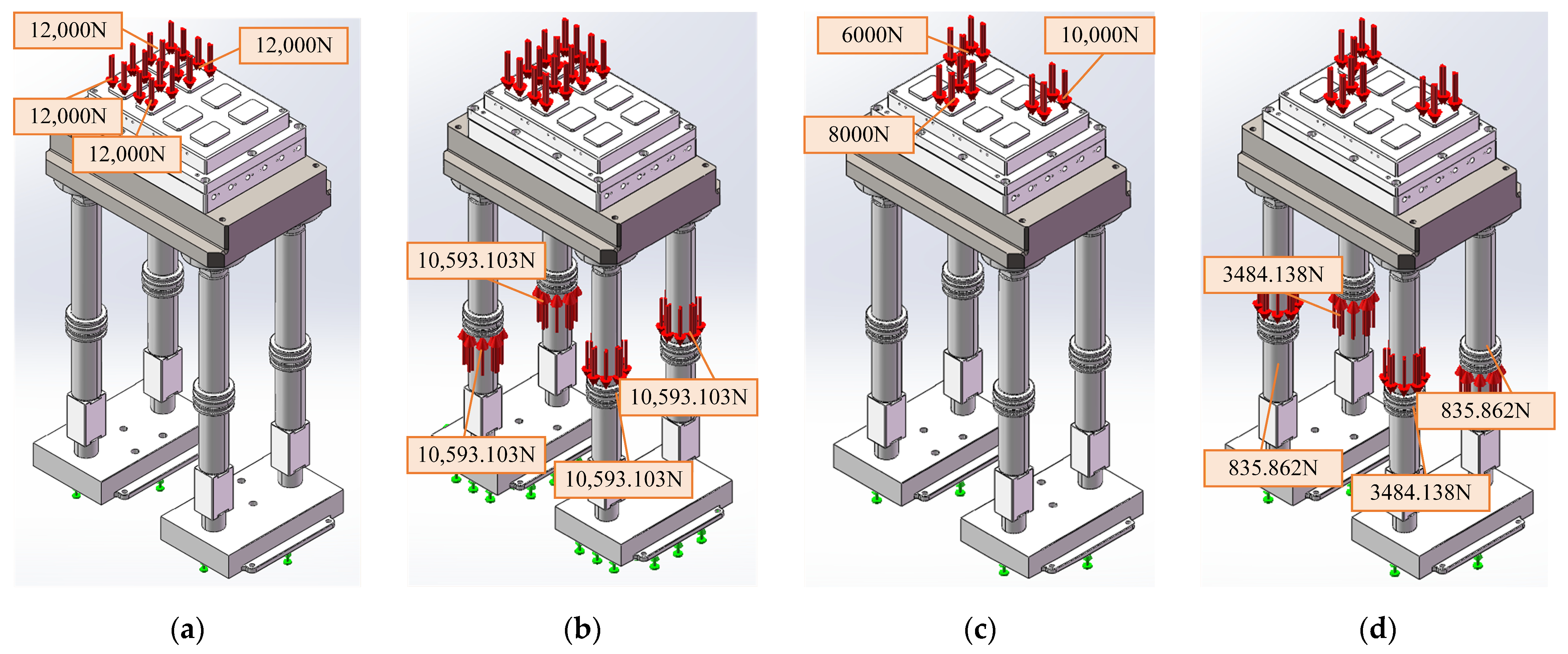
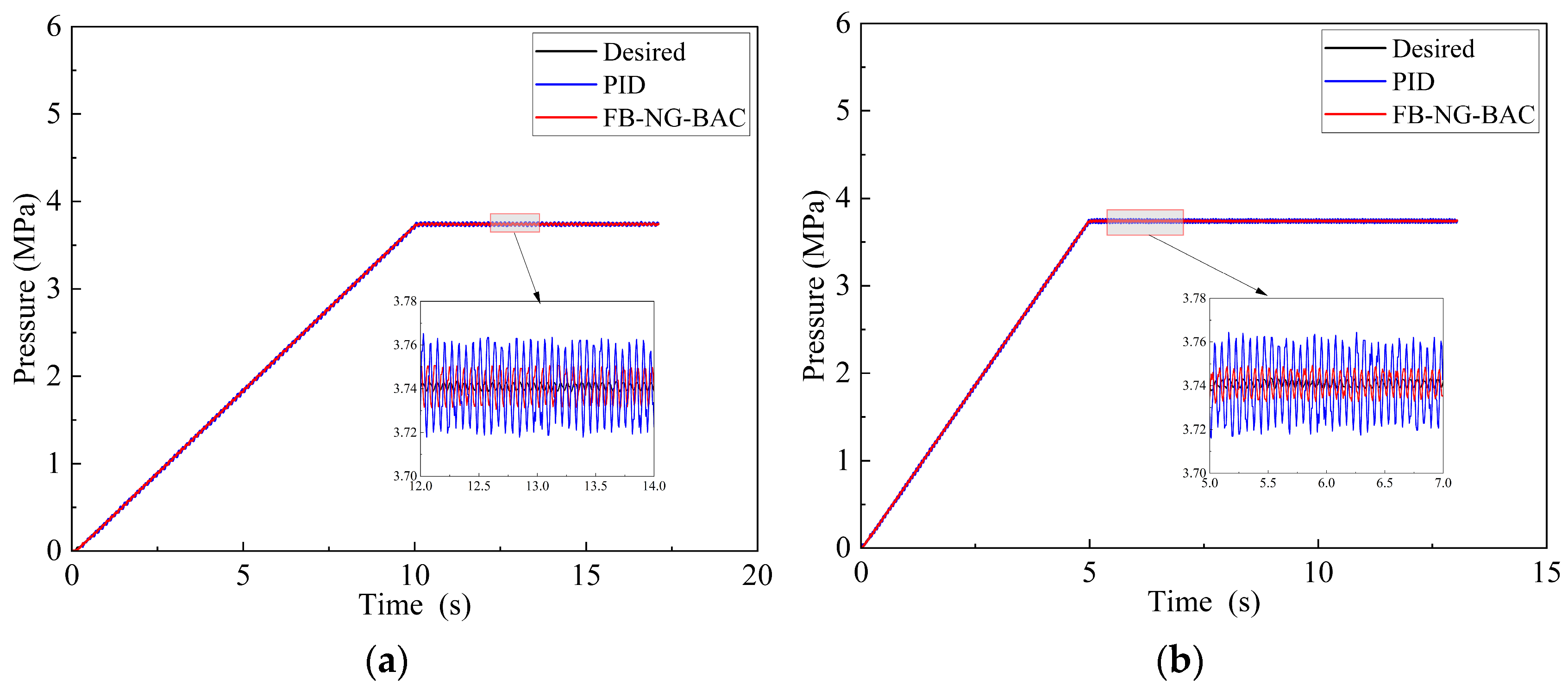
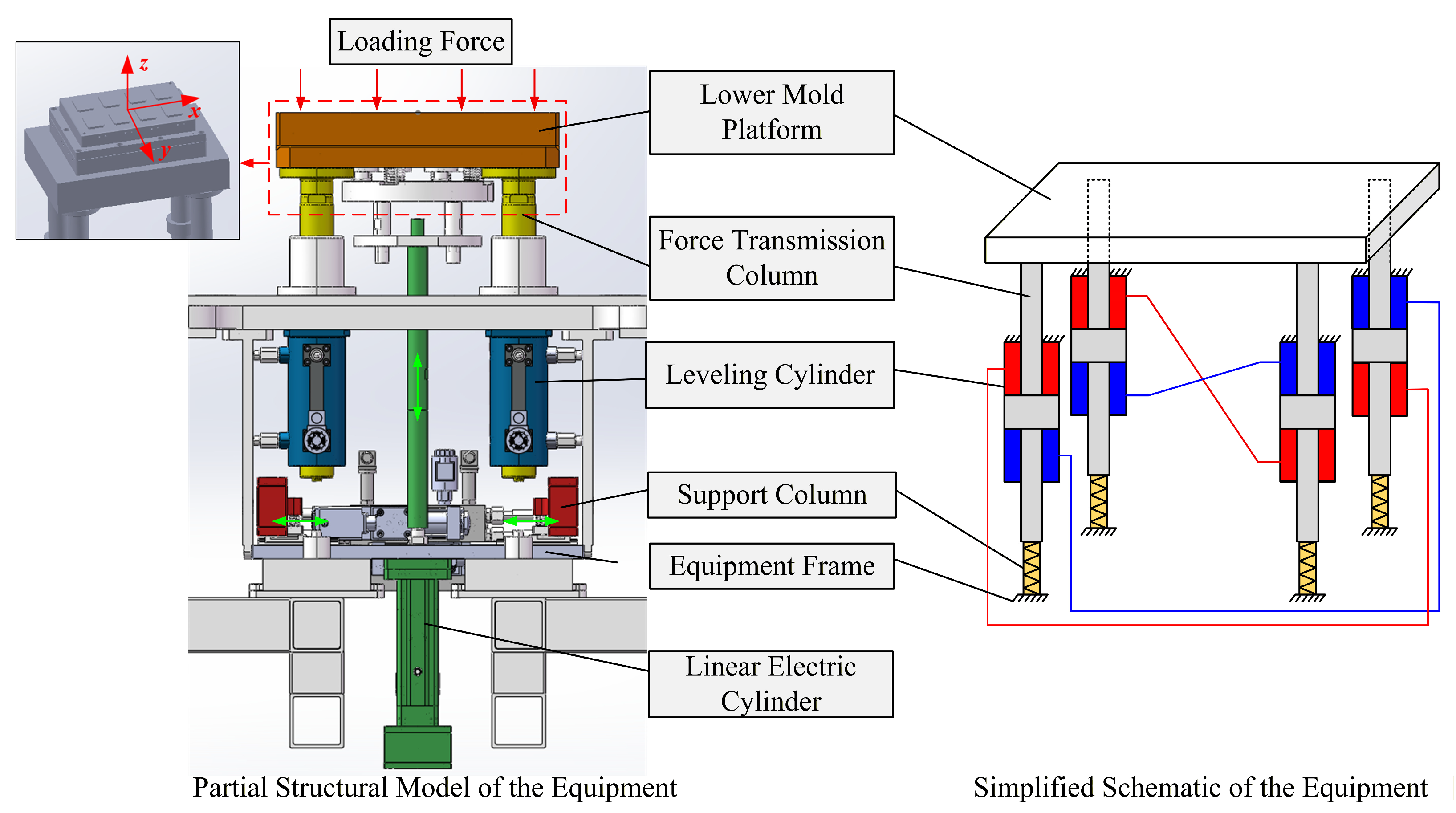
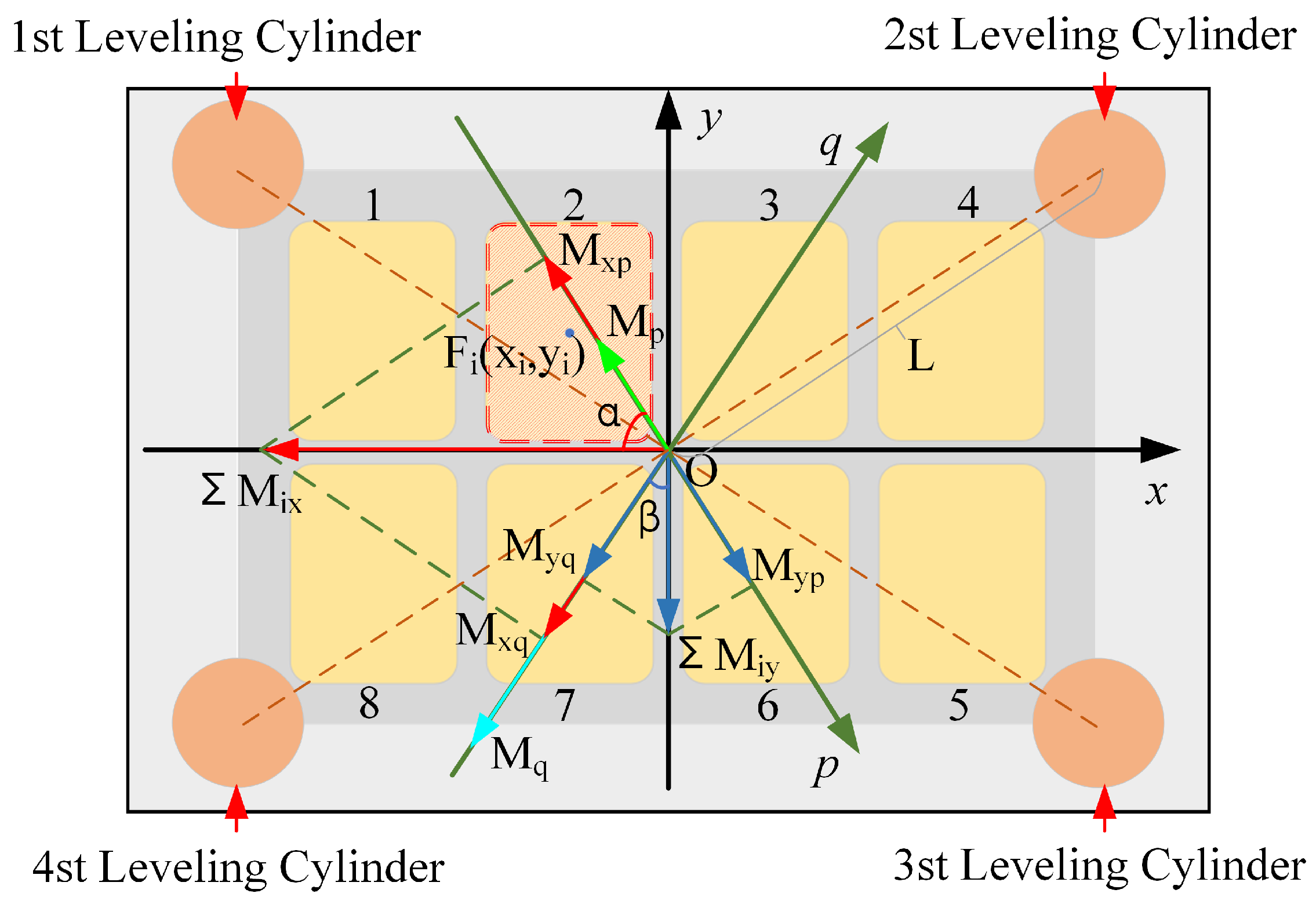
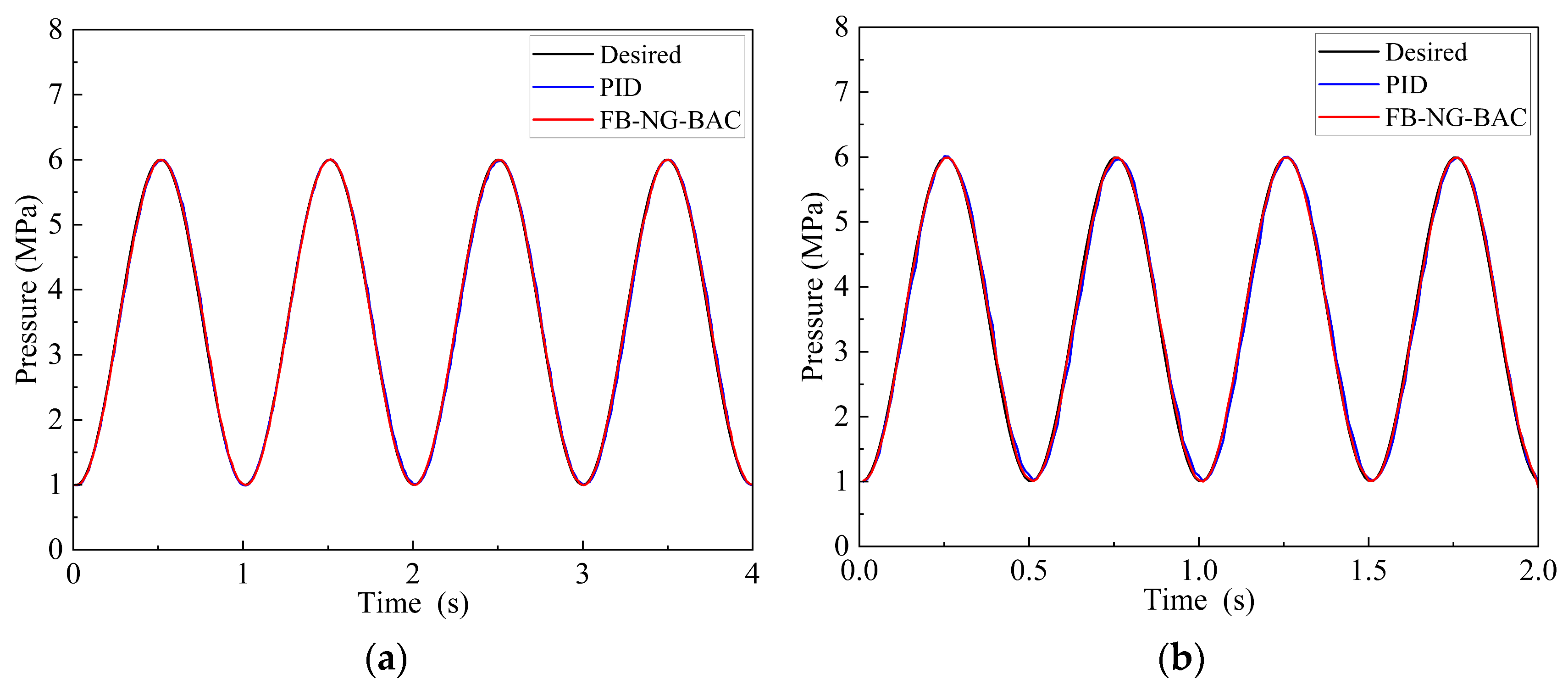
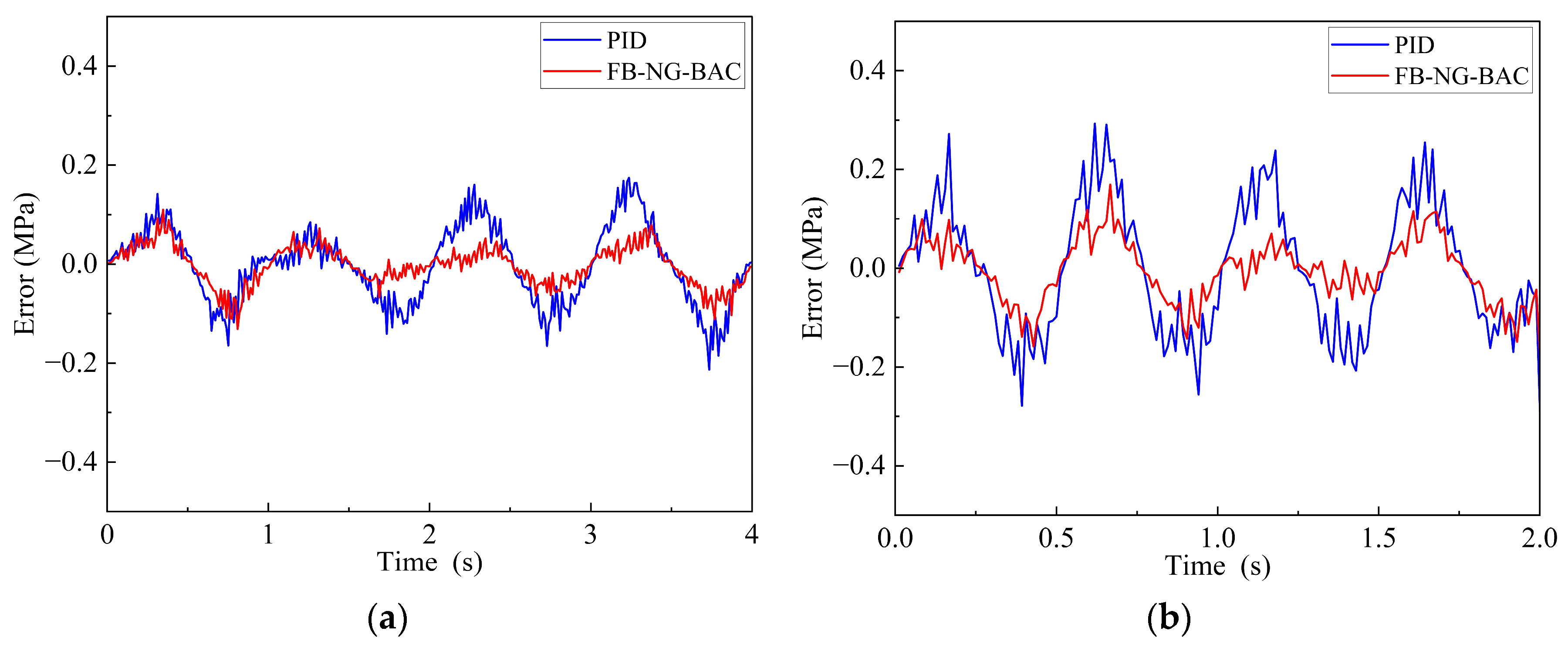
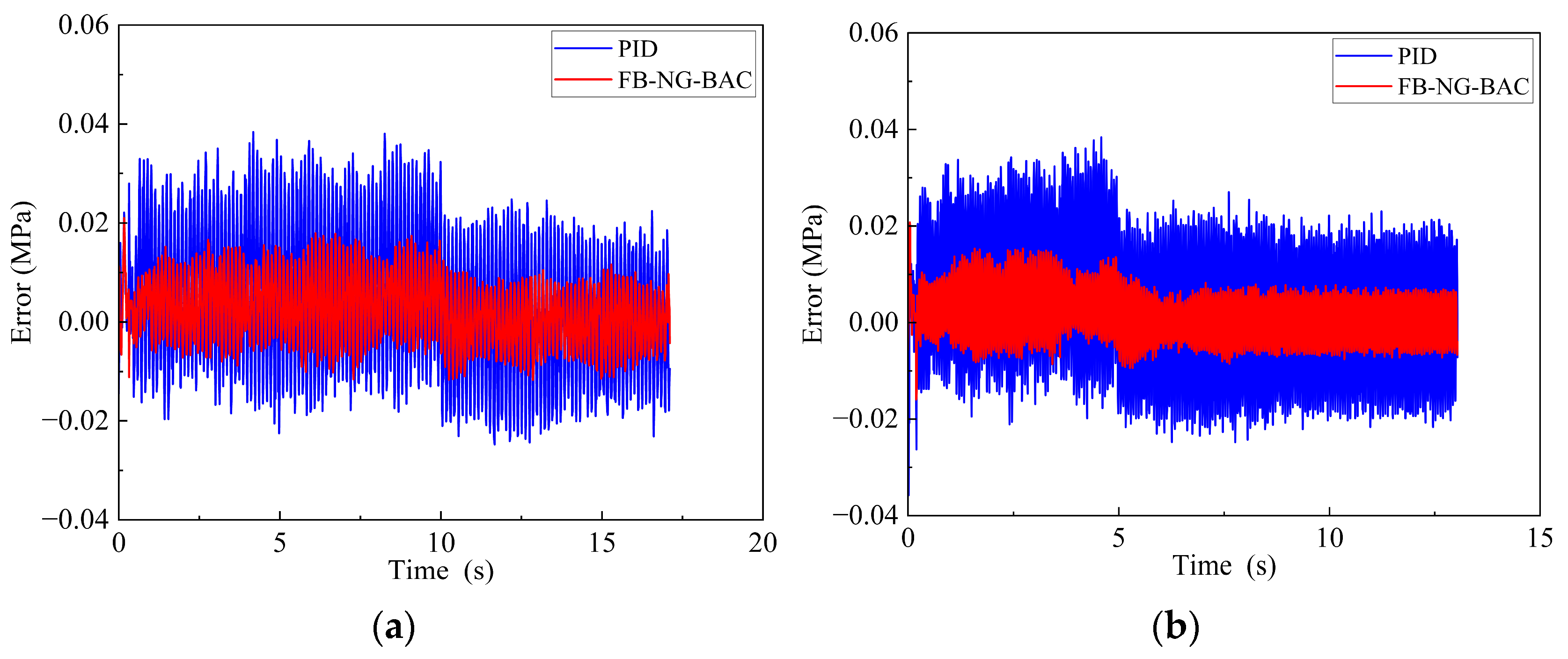
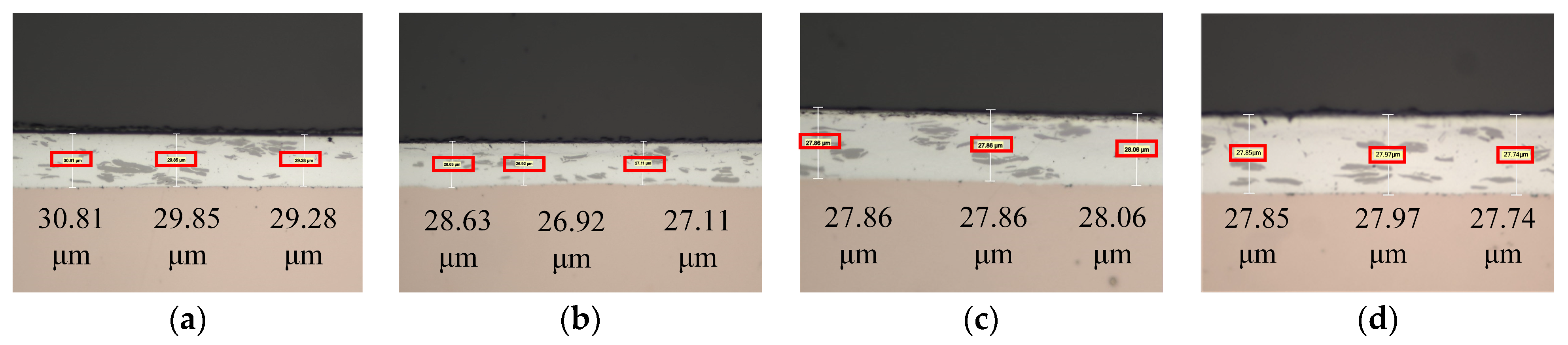
This work presents a comprehensive investigation into third-generation power semiconductor silver sintering packaging systems. To address the challenges associated with simultaneous sintering of multi-specification chips and achieve high-precision substrate leveling, an electro-hydraulic servo moment compensation leveling system (MCLS) integrated with an adaptive pressure control strategy is developed. The research methodology encompasses three main aspects: First, static analysis is employed to characterize the force distribution across the substrate plane during concurrent chip sintering, providing the theoretical foundation for MCLS design. Second, a feedforward-based Nussbaum gain backstepping adaptive controller (FB-NG-BAC) is formulated to compensate for uncertainties in hydraulic parameters and enhance the leveling system’s dynamic response characteristics. The control strategy’s efficacy is quantitatively assessed through comparative analysis of output pressure tracking performance against conventional methods. Furthermore, system validation is conducted under maintained auxiliary sintering pressure conditions, with sintering quality evaluated through shear strength testing and thickness uniformity measurements. The experimental results conclusively demonstrate the effectiveness of both the proposed leveling system architecture and its associated high-precision pressure control framework.
3. Mathematical Model of MCLS
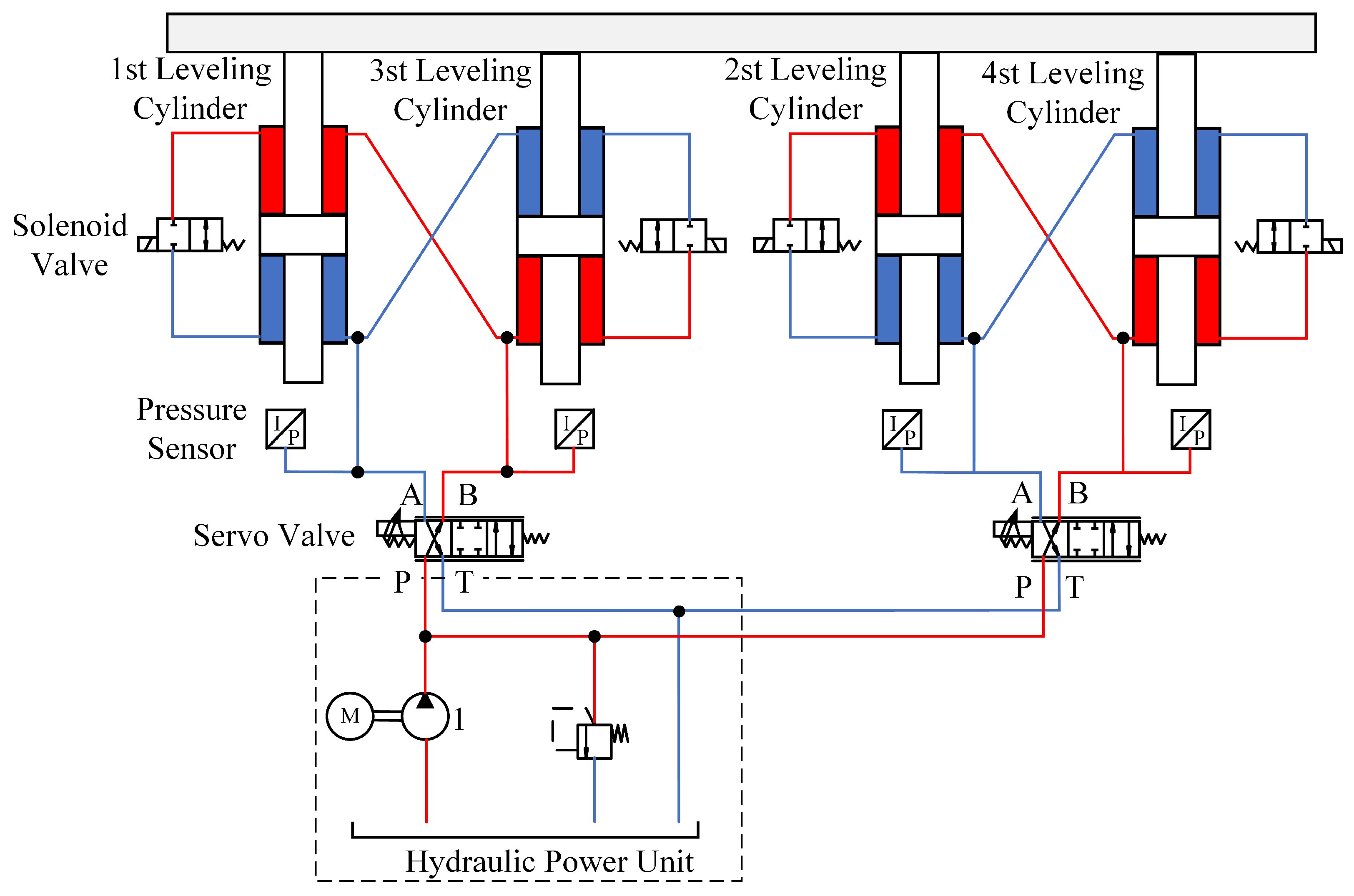
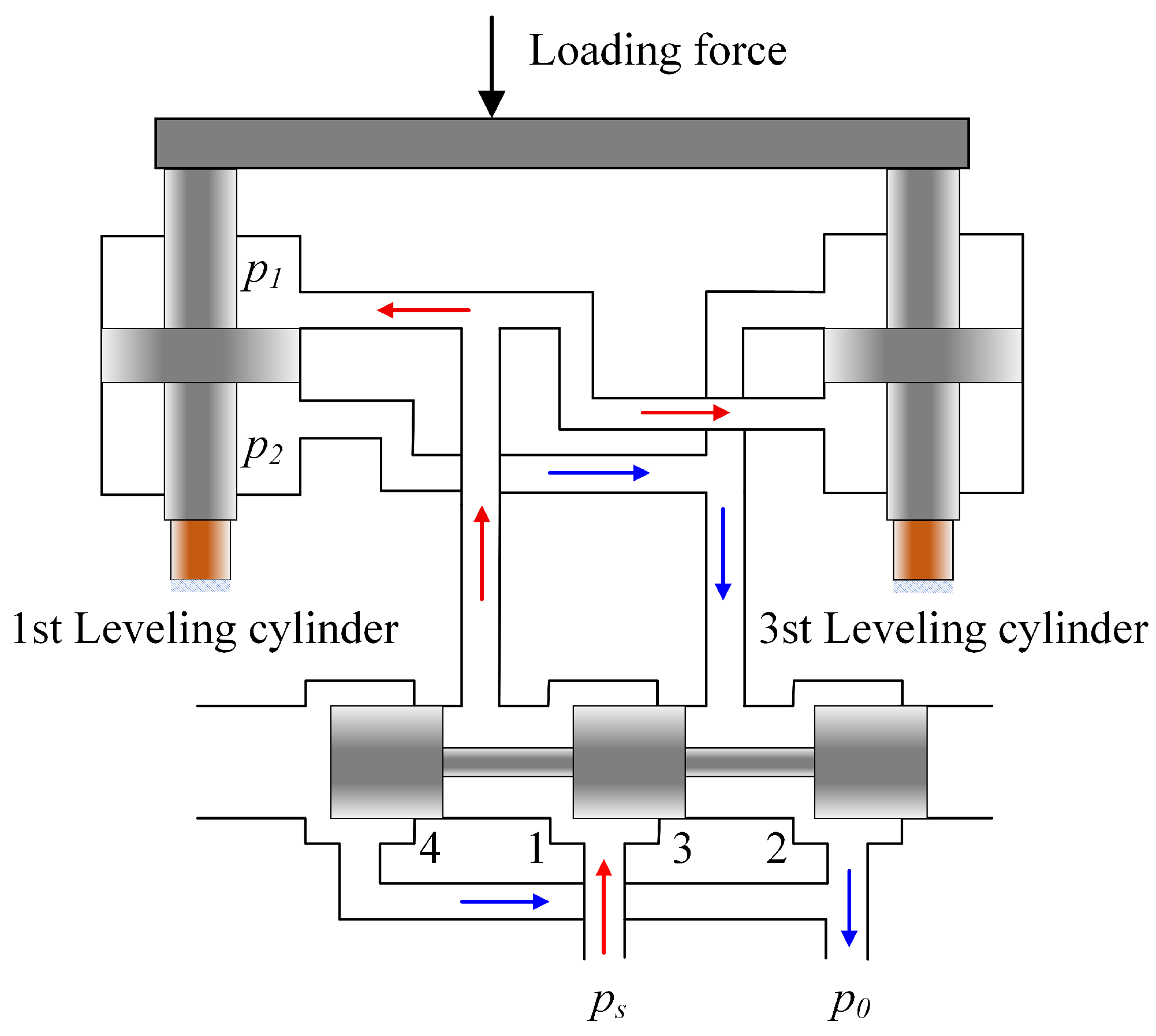
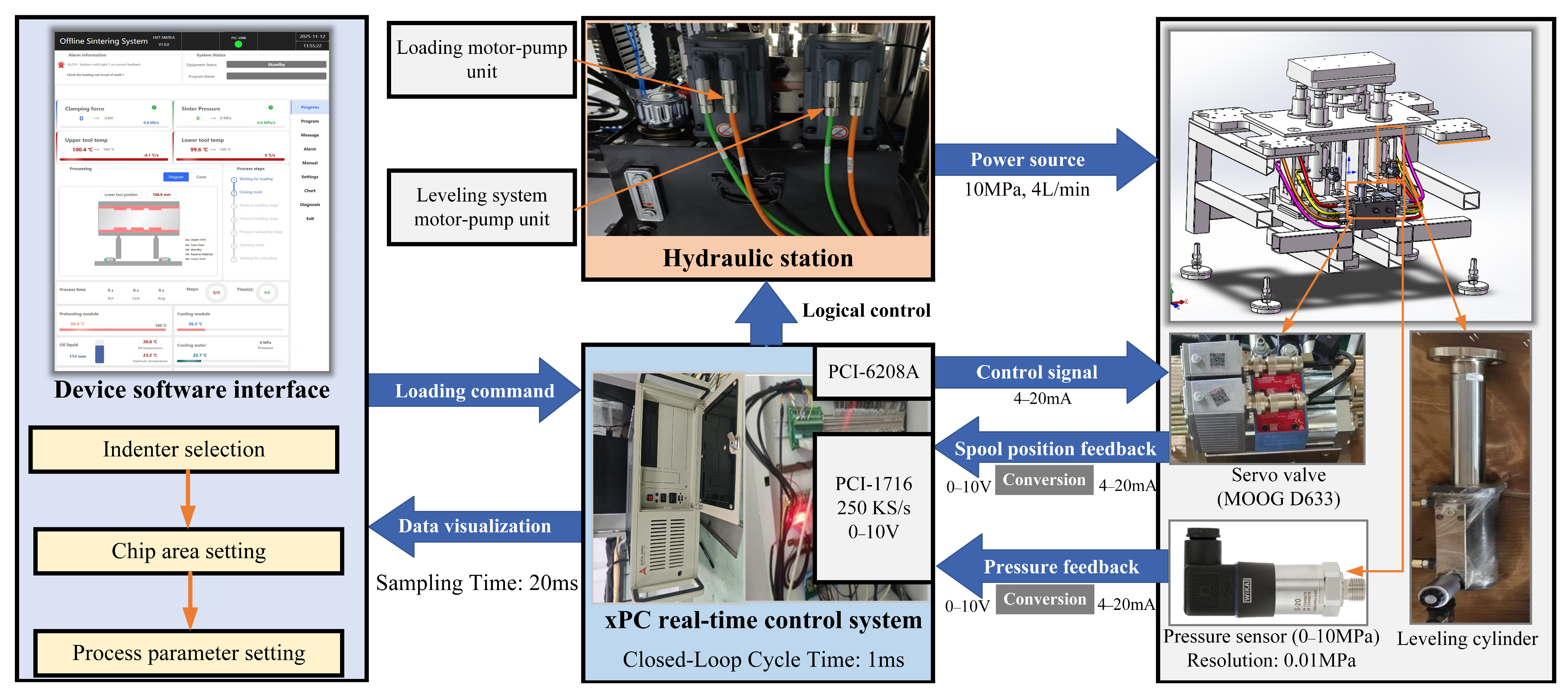
The actuation unit of the moment compensation leveling system in silver sintering equipment employs a valve-controlled symmetric cylinder configuration for pressure control. Given the structural symmetry of the two leveling cylinder groups under different working conditions, the modeling in this study focuses on a single set of leveling cylinders. The schematic diagram of the pressure control system is provided in
Figure 6, and the corresponding system parameters are listed in
Table 3.
The linearized flow equation governing the servo valve is expressed as
- 2.
Proportional Amplifier Model
Given the proportional amplifier’s inherent frequency substantially exceeds that of the valve-controlled cylinder system, its dynamics are negligible and thus modeled as a proportional gain:
- 3.
Flow Continuity Equation for Leveling Cylinders
With the leveling cylinders operating at mid-stroke positions, their upper and lower chamber volumes
and piston displacements
are equal, while internal leakage coefficients
remain identical. Consequently, the interconnected chambers of cylinder 1 and cylinder 3 are equivalenced as a single volume, yielding the following flow continuity equation:
- 4.
Load Kinematics Equation
The load is equivalenced as a spring–damper system, neglecting nonlinearities such as Coulomb friction. Per Newton’s second law, the force balance equation for the leveling cylinder is derived:
The output equation of the leveling pressure control system is transformed to the frequency domain:
The system represents a third-order dynamic system, with the input voltage to the servo valve designated
as the control input and the load pressure of the leveling cylinder
established as the control output. Defining the load pressure, its first derivative, and its second derivative of the leveling cylinder as the system state variables, i.e.,
,
,
, the new state-space equation is obtained as
where
,
,
,
,
.
4. The Pressure Control Algorithm Research
The MCLS serves as a critical actuation unit in silver sintering packaging equipment, with its core objective being to ensure the output pressure of the leveling cylinders accurately tracks dynamic compensation pressure commands. This requirement places stringent demands on the control system’s dynamic response speed and disturbance rejection capability. However, control accuracy is often compromised by parametric uncertainties, time-varying dynamics, and external disturbances. While existing adaptive control methods primarily rely on feedback mechanisms to compensate for slowly varying parameters, they exhibit limitations in handling fast dynamic processes and multi-source disturbances [
28,
29,
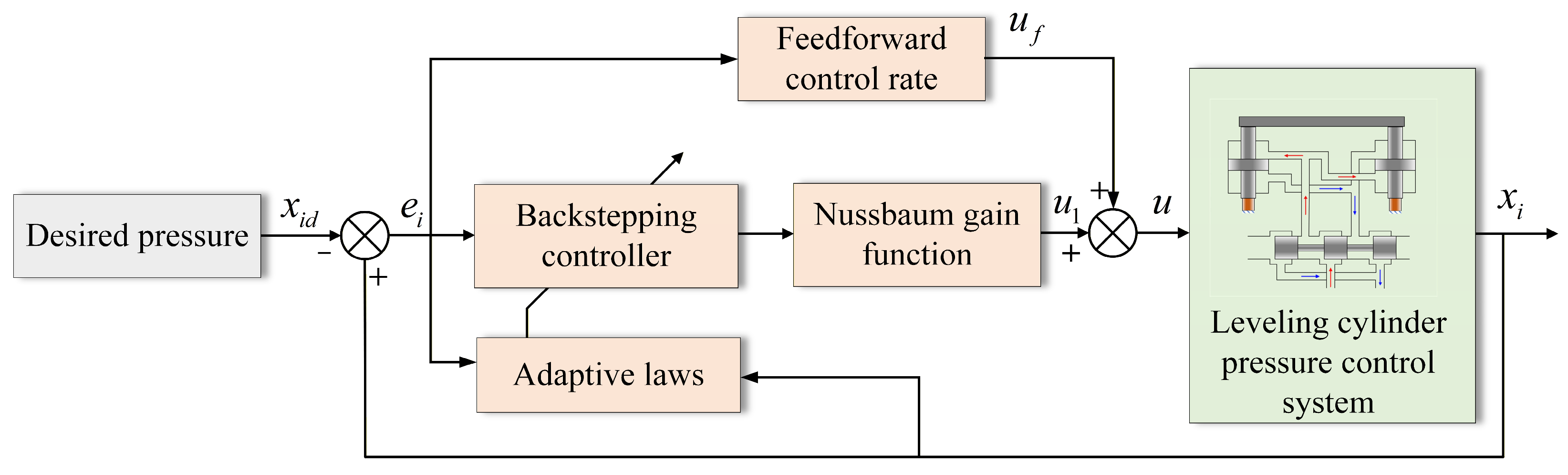
30]. To address these challenges in achieving both rapid response and strong disturbance rejection, this paper proposes a FB-NG-BAC, with the control structure depicted in
Figure 7.
The proposed controller integrates three key functional components into a cohesive architecture. A command feedforward unit enhances dynamic response by establishing a nonlinear mapping between control input and pressure output, calculating feedforward signals in real time based on desired pressure commands. The backstepping adaptive controller, grounded in Lyapunov stability theory, ensures global system stability through progressive construction of virtual control variables while employing adaptive laws to estimate and compensate for parametric uncertainties online. Furthermore, a Nussbaum function module enhances robustness under complex operating conditions by automatically adjusting the controller’s equivalent gain to accommodate unmodeled dynamics and sudden disturbances. This control architecture effectively combines feedforward and feedback actions, providing a comprehensive solution for MCLS in silver sintering equipment. It significantly improves the dynamic performance of pressure control while maintaining guaranteed system stability.
The feedforward control law is defined based on the servo valve pressure gain:
where
denotes the feedforward command input,
represents the servo valve pressure gain coefficient, and
denotes the desired pressure value of the leveling force control system.
The feedforward command is obtained by polynomial fitting of the measured servo valve pressure gain curve under actual system pressure:
where
are polynomial coefficients and
is the hydraulic supply pressure.
- 2.
Backstepping Adaptive Control Law
The control objective of this study is to design a control law
such that the system state
tracks the desired state
. The system tracking errors are defined as follows:
where
represents the first derivative of the desired pressure and
indicates the second derivative of the desired pressure.
The Lyapunov function for the first subsystem is selected as
Differentiating
yields
The virtual control input
is designed as
The Lyapunov function for the second subsystem is selected as
Differentiating
yields
The virtual control input
is designed as
The Lyapunov function for the third subsystem is selected as
Differentiating
yields
To address parameter uncertainty in the control term, the Nussbaum gain method is employed with the following function:
The actual control law
is designed as
Thus, the actual control term is decomposed into two components, as the control gain compensation term and as the auxiliary control term, where denotes the estimated values of system parameters.
The adaptive laws are given by [
28]:
From Equations (11) and (22), the final control law
consists of the feedforward control term
and the backstepping control term
:
The stability proof of the FB-NG-BAC is provided in
Appendix A.




 ,
,