Article

Biofilm-Formation in Clonally Unrelated Multidrug-Resistant Acinetobacter baumannii Isolates

by
Aisha M. Alamri
1,*,
Afnan A. Alsultan
1,
Mohammad A. Ansari
2,* and
Amani M. Alnimr
3
1
Department of Clinical Laboratory Sciences, College of Applied Medical Sciences, Imam Abdulrahman Bin Faisal University, Dammam 34212, Saudi Arabia
2
Department of Epidemic Disease Research, Institute of Research and Medical Consultations (IRMC), Imam Abdulrahman Bin Faisal University, Dammam 31441, Saudi Arabia
3
Department of Microbiology, College of Medicine, Imam Abdulrahman Bin Faisal University, Dammam 34212, Saudi Arabia
*
Authors to whom correspondence should be addressed.
Pathogens 2020, 9(8), 630; https://doi.org/10.3390/pathogens9080630

Submission received: 18 June 2020 / Revised: 25 July 2020 / Accepted: 29 July 2020 / Published: 2 August 2020
(This article belongs to the Section Human Pathogens)

Abstract

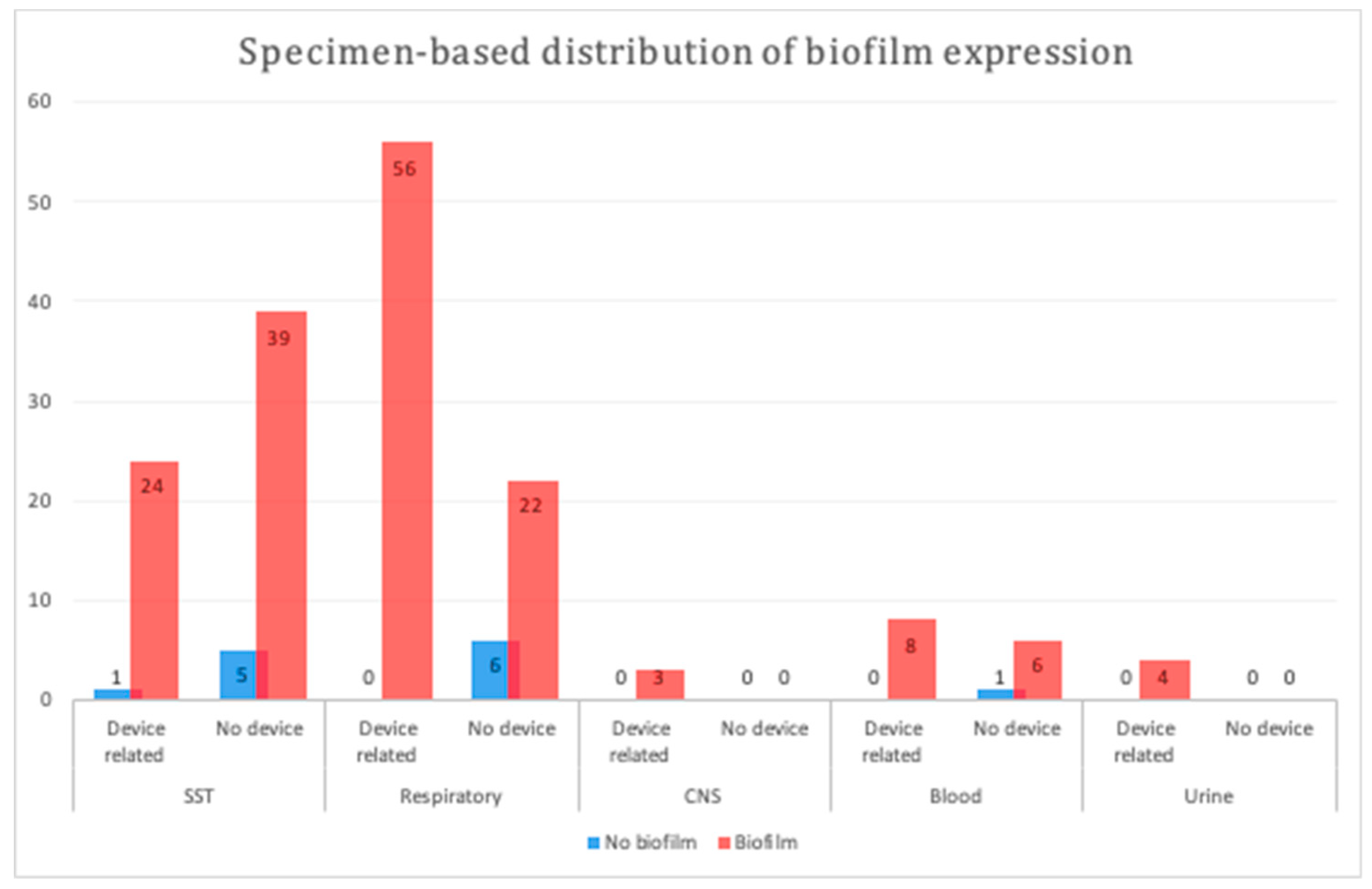
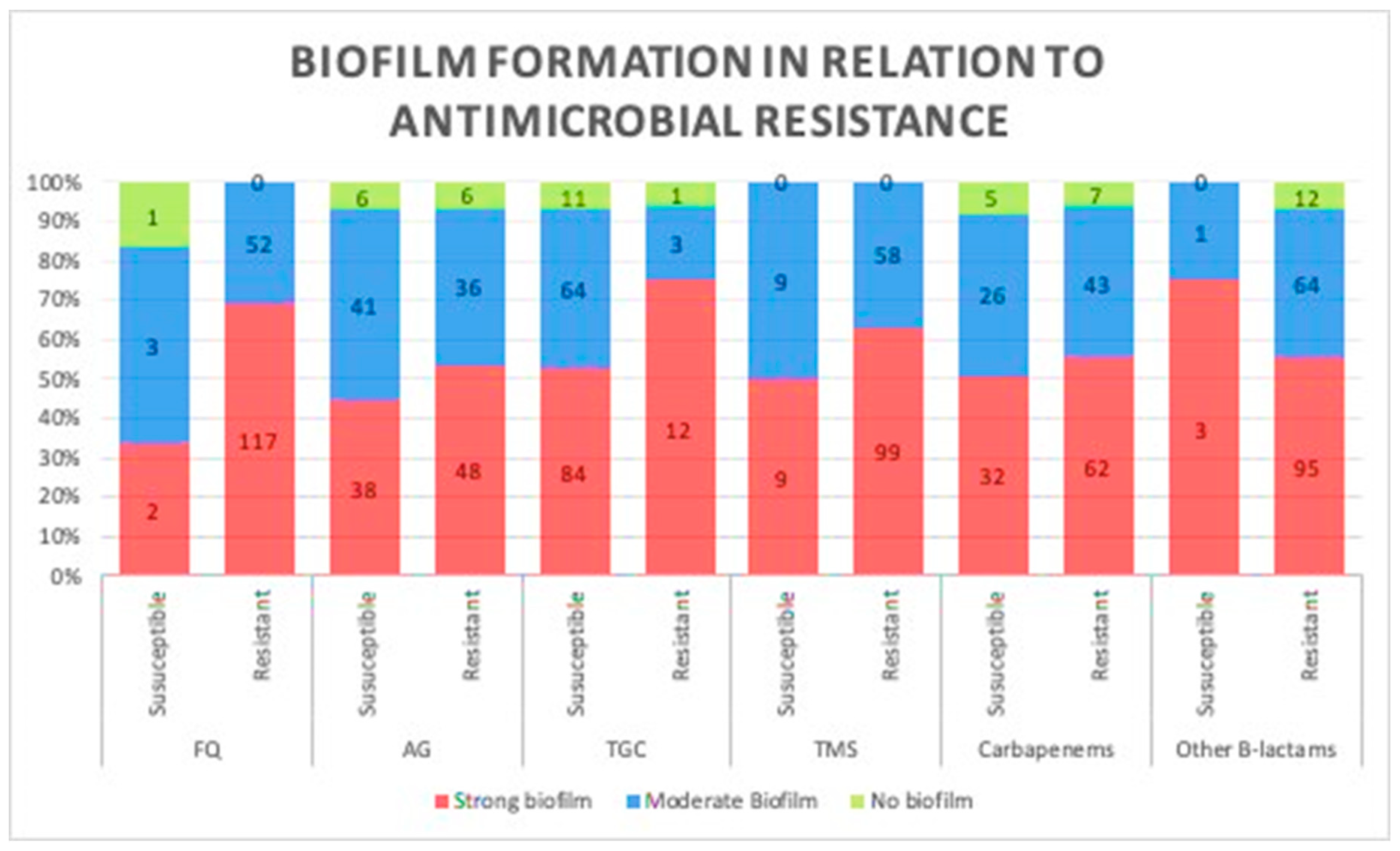
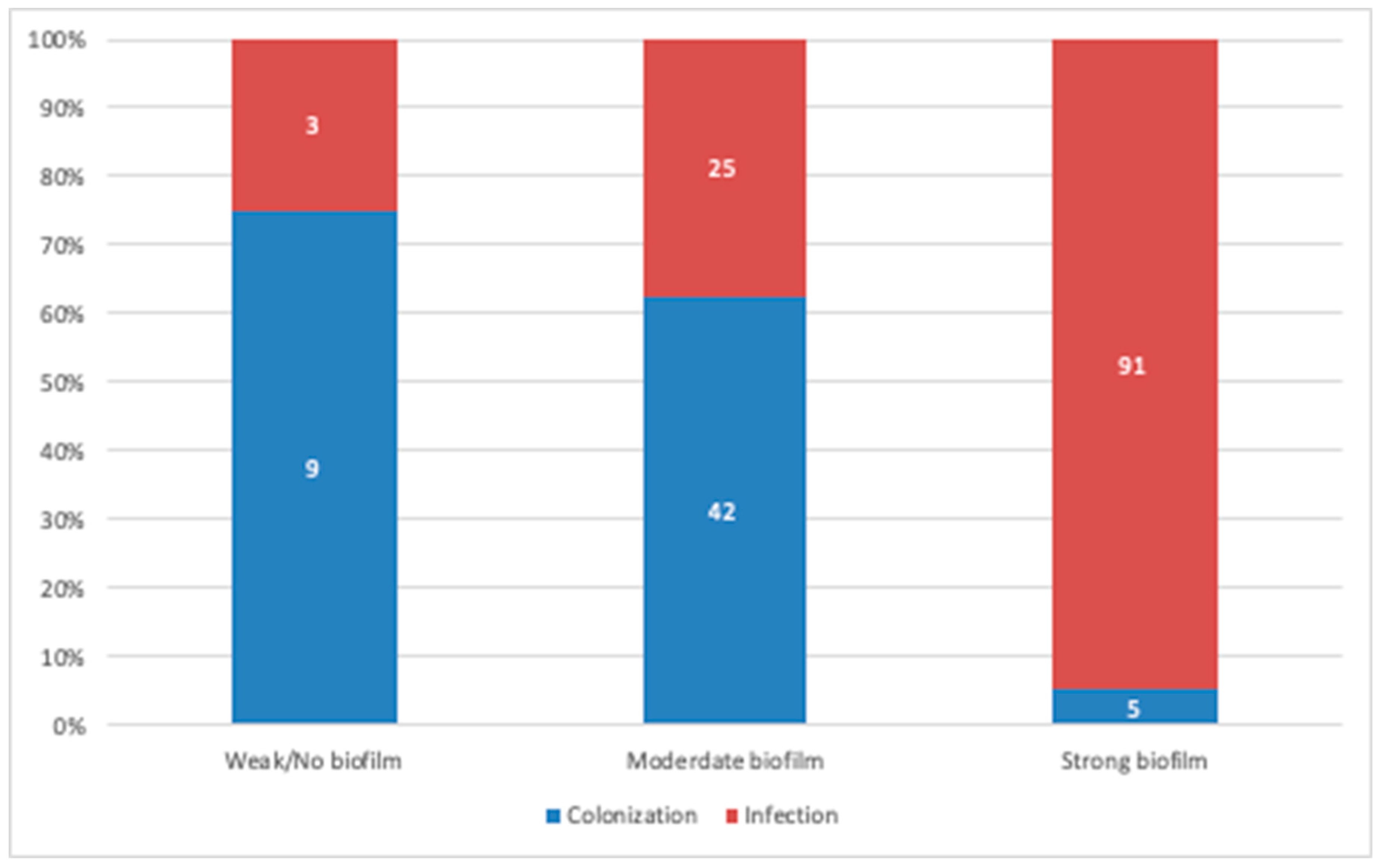
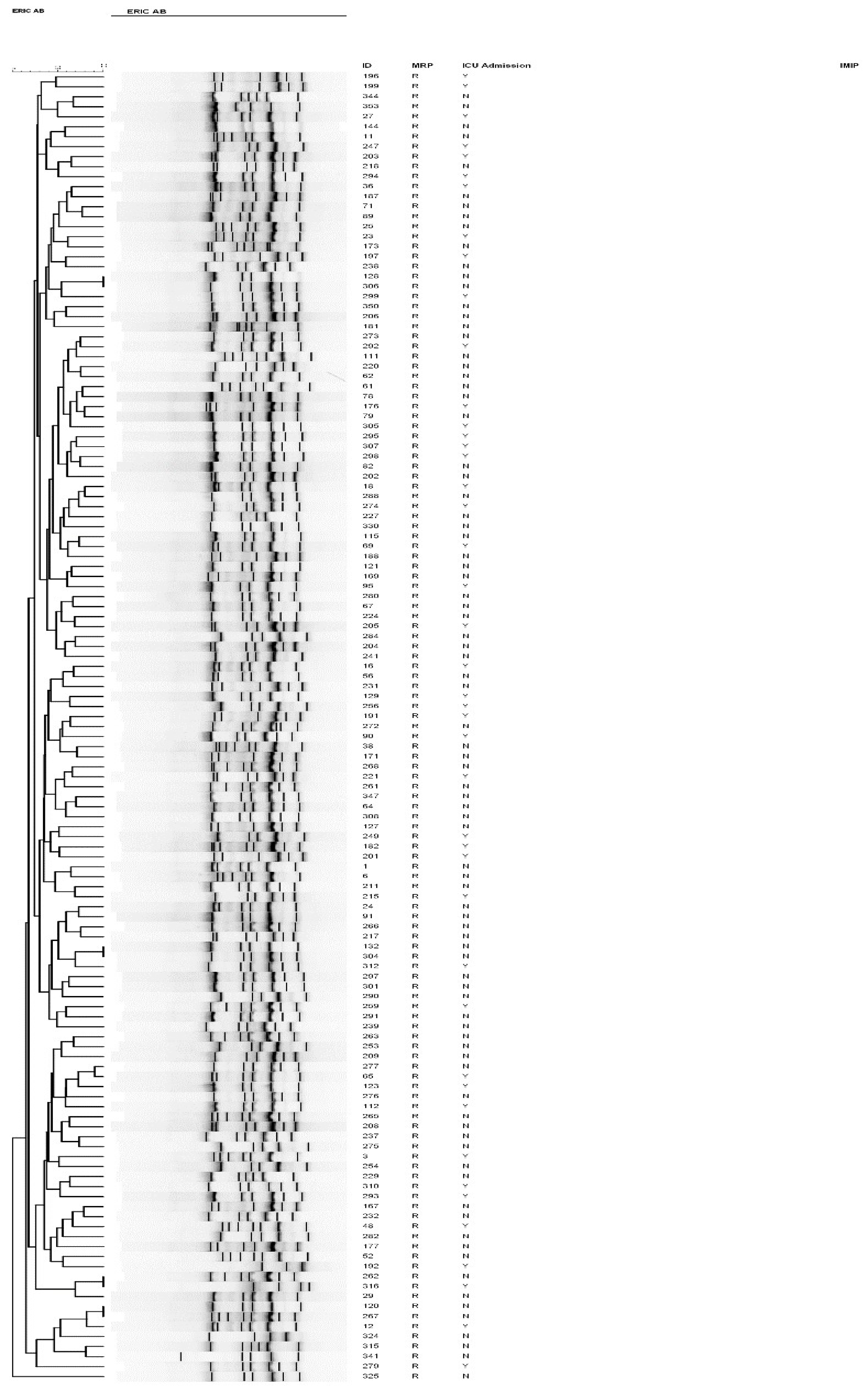
This study analyzed the genotype, antibiotic resistance, and biofilm formation of Acinetobacter baumannii strains and assessed the correlation between biofilm formation, antibiotic resistance, and biofilm-related risk factors. A total of 207 non-replicate multi-drug-resistant A. baumannii strains were prospectively isolated. Phenotypic identification and antimicrobial susceptibility testing were carried out. Isolate biofilm formation ability was evaluated using the tissue culture plate (TCP), Congo red agar, and tube methods. Clonal relatedness between the strains was assessed by enterobacterial repetitive intergenic consensus-PCR genotyping. Of the 207 isolates, 52.5% originated from an intensive care unit setting, and pan resistance was observed against ceftazidime and cefepime, with elevated resistance (99–94%) to piperacillin/tazobactam, imipenem, levofloxacin, and ciprofloxacin. alongside high susceptibility to tigecycline (97.8%). The Tissue culture plate, Tube method, and Congo red agar methods revealed that 53.6%, 20.8%, and 2.7% of the strains were strong biofilm producers, respectively, while a significant correlation was observed between biofilm formation and device-originating respiratory isolates (p = 0.0009) and between biofilm formation in colonized vs. true infection isolates (p = 0.0001). No correlation was detected between antibiotic resistance and biofilm formation capacity, and the majority of isolates were clonally unrelated. These findings highlight the urgent need for implementing strict infection control measures in clinical settings.
Keywords: enterobacterial repetitive intergenic consensus-PCR genotyping; risk factors; antimicrobial susceptibility; nosocomial pathogen enterobacterial repetitive intergenic consensus-PCR genotyping; risk factors; antimicrobial susceptibility; nosocomial pathogen