Article

Molecular Detection of Coxiella-like Endosymbionts in Ticks in Hebei, China

1
College of Basic Medicine, Chengde Medical University, Chengde 067000, China
2
Key Laboratory of Public Health Molecular Biology, Yancheng Center for Disease Control and Prevention, Yancheng 224001, China
*
Authors to whom correspondence should be addressed.
These authors have contributed equally to this work.
Pathogens 2026, 15(6), 647; https://doi.org/10.3390/pathogens15060647 (registering DOI)
Submission received: 20 April 2026 / Revised: 4 June 2026 / Accepted: 15 June 2026 / Published: 18 June 2026

Abstract

Ticks are widely distributed in China and can carry and transmit a variety of pathogens that potential to cause serious impacts on public health and the economy. Little is known about the broader spectrum of Coxiella-like endosymbiont (CLE) in ticks under natural conditions in China. The aim of this study was to detect, analyze, and characterize phylogenetically CLE found in ticks in Hebei Province, China. A total of 947 ticks collected from Hebei Province were identified as Haemaphysalis longicornis based on morphological characteristics and cytochrome c oxidase gene PCR analysis of extracted DNA. Subsequently, DNA was analyzed via PCR for the IS1111 gene (frequently associated with Coxiella burnetii), and the amplified DNA was then sequenced and analyzed phylogenetically using a set of primers targeting the 16S rRNA, groEL, and rpoB genes. A total of 8.24% (78/947) of ticks from the Chengde, Baoding, and Cangzhou regions were positive in the IS1111 PCR. Phylogenetic analysis using the 16S rRNA, groEL, and rpoB genes revealed the presence of CLE in Ha. longicornis ticks from these regions and the formation of two distinct clades, suggesting horizontal gene transfer events. Our results strengthen the growing evidence that CLE, not Coxiella burnetii, is ubiquitously associated with ticks across diverse geographic locations—a distinction critical for accurately interpreting tick microbiome surveys and avoiding false assumptions of zoonotic risk.

1. Introduction

Coxiella is a monotypic genus of obligate intracellular Gammaproteobacteria belonging to the family Coxiellaceae, order Legionellales [1]. Members of the Coxiella genus are globally distributed bacteria with a diversity of hosts, including mammals, birds, reptiles, amphibians, and arthropods [2]. Within this genus, Coxiella burnetii—a Gram-negative, intracellular, parasitic bacterium [3]—is the established causative agent of the global zoonotic disease Q fever [1]. Coxiella burnetii, commonly found in small domestic ruminants, such as sheep, goats, and cattle, is considered to be a major source of human infection [4,5].
However, there are also other bacteria called Coxiella-like or Coxiella sp., which are considered to be endosymbionts of ticks [6]. A recent hypothesis suggests that both C. burnetii and the aforementioned endosymbionts evolved from a single, virulent common ancestor, with some lineages subsequently losing the ability to infect vertebrate hosts [7]. Phylogenetic analyses based on multi-locus sequencing and whole genomes indicate that all known strains of C. burnetii form a distinct lineage within the broader diversity of Coxiella-like bacteria and share a common ancestor with tick-associated Coxiella-like endosymbionts (CLEs) [8]. Furthermore, an increasing number of studies, primarily using 16S rRNA gene sequencing, have identified diverse novel Coxiella-like organisms in ticks. Many of these act as commensal or mutualistic symbionts for their tick hosts [2]. Based on 16S rRNA phylogenies, CLEs form a monophyletic clade with the pathogen C. burnetii, indicating their close evolutionary relationship. Compared to C. burnetii, however, these endosymbionts typically possess a reduced genome [9].
Ticks are obligate ectoparasites that must feed on host blood during some or all stages of their life cycle. Pathogens transmitted by ticks constitute an emerging global public health concern, posing a threat to both humans and animals [10]. Several studies suggest that ticks play a crucial role in the maintenance of the natural cycle and in the transmission of C. burnetii [8,11] and CLEs, as well as a variety of other pathogens [9]. To date, a variety of hard and soft tick species have been documented as hosts for C. burnetii, including Haemaphysalis, Amblyomma, Rhipicephalus, Hyalomma, and Dermacentor [12,13,14]. CLEs—the most common symbionts of ticks—have been reported in diverse hard and soft tick genera (e.g., Haemaphysalis, Amblyomma, Rhipicephalus, Ixodes, and Ornithodoros [15]); moreover, strains closely related to C. burnetii have been isolated from ticks, with growing evidence suggesting their association with human bacteremia [2]. Coxiella burnetii can cause human bacteremia, with potential clinical consequences including chronic Q fever, endocarditis, and hepatitis [2]; meanwhile, the potential role of CLE in bacteremia remains a topic of growing concern.
Human cases of Q fever have been documented in Hebei Province of China, whereas no published data concerning the detection of Coxiella burnetii in local tick populations is available to date. Therefore, understanding the local tick-borne presence of C. burnetii and CLE is critical to prevent Q fever. In this study, ticks from Hebei Province were screened for CLEs. This study aimed to update the information on the presence of CLEs and to identify and genetically characterize Coxiella in ticks collected from several prefecture-level city areas in Hebei Province, China.

2. Methods

2.1. Collection and Identification of Ticks and DNA Extraction

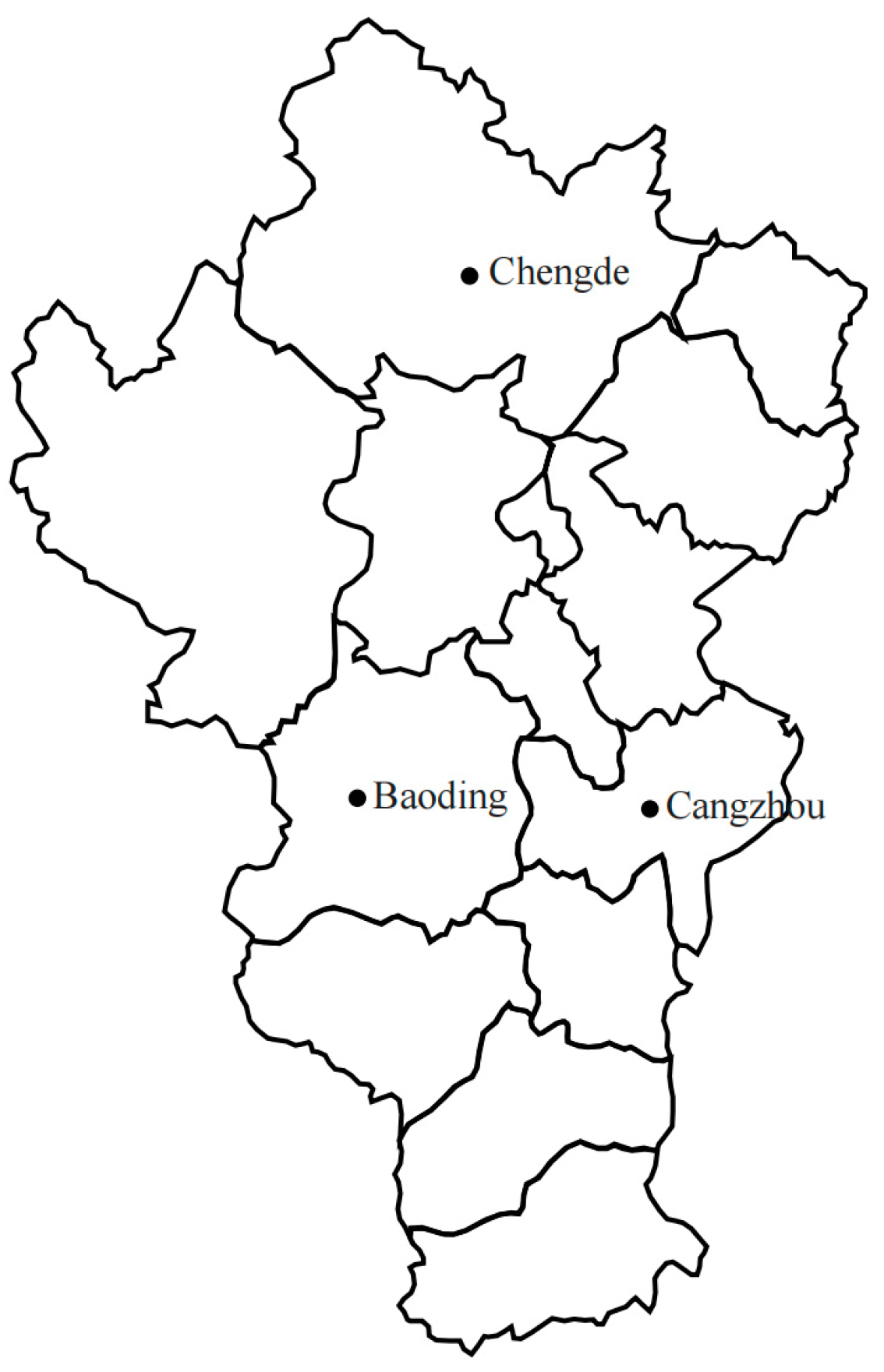
A total of 947 ticks were collected in the natural environments of Chengde City (n = 623), Baoding City (n = 204), and Cangzhou City (n = 120), Hebei Province (Figure 1), by the artificial cloth flagging method [10], identified morphologically according to their appearance, and stored at −80 °C. Initially, morphological characteristics were used to identify ticks at the species level. In addition, the tick species was further identified by polymerase chain reaction (PCR) analysis of the cytochrome c oxidase I (COI) gene sequence [16].
All collected tick specimens were washed three times with 75% alcohol and then twice with phosphate-buffered saline (PBS) solution. Total DNA was extracted from each tick with the Tissue DNA Extraction Kit (Omega, Norcross, GA, USA) following the manufacturer’s protocol. The extracted DNA was eluted in 80 μL double-distilled water (ddH2O) and stored at −80 °C. Table 1 lists all primers used in this study.

2.2. Molecular Identification of Coxiella by the IS1111 Gene

The tick DNA samples were examined for C. burnetii by nested PCR (nPCR) and by sequencing the IS1111 gene with C. burnetii-specific primers. The first round of nPCR utilized primer pair QBT1/QBT2 [17], while the second round employed QBTN3/QBTN4 [18].

2.3. Molecular Characterization of Coxiella of 16S rRNA, groEL, and rpoB Gene

To obtain additional DNA sequences for phylogenetic analyses, additional nPCR assays for the 16S rRNA, groEL, and rpoB genes were performed on all of the IS1111-positive tick DNA.
To better understand the genetic characteristics, a partial 16S rRNA gene was amplified by nPCR from IS1111-positive samples. The first round of nPCR used primer pair Cox16S-F1/16S-R, and the second round used primer pair 16S-F/16S-R [19].
For genetic characterization, a partial groEL gene was amplified by nPCR from IS1111-positive samples using primer pairs CoxGrF1/CoxGrR2 (first round) and CoxGrF2/CoxGrR1 (second round) [20].
A partial rpoB gene was amplified by nPCR from IS1111-positive samples for genetic characterization using primer pairs CoxrpoBF2/CoxrpoBR1 (first round) and CoxrpoBF3/CoxrpoBR3 (second round) [20].
To avoid contamination, DNA extraction, PCR mix preparation, template addition, PCR amplification, and electrophoresis were carried out in separate rooms under fume hoods, and all operations used dedicated pipettes and filter tips. In addition, ddH2O replaced DNA in the negative control assays.

2.4. Sequencing and Nucleotide Sequence Analysis

PCR products were analyzed by electrophoresis on 1% agarose gels for IS1111, 16S rRNA, groEL, and rpoB genes. All PCR products of the expected size were selected, purified, and cloned into pMD19-T vectors (Takara, Dalian, China). All DNA sequences obtained in this study were determined by Sanger sequencing using the ABI-PRISM Dye Terminator Sequencing Kit and the ABI 3730 Genetic Analyzer, with the universal primer pair M13-47 (forward) and RV-M (reverse) of T-vector (Sangon, Beijing, China).
BioEdit version 7.1.11 was used to edit all newly generated sequences in this study [21]. The obtained IS1111 gene, 16S rRNA, groEL ,and rpoB gene sequences were analyzed using BLASTn on the NCBI website. Similarity analyses were performed with CLUSTAL W. The IS1111 gene, 16S rRNA, groEL, and rpoB gene sequences of the most closely related species were retrieved from GenBank and aligned.
Nucleotide sequence similarities were calculated with the MegAlign program within the Lasergene software suite [22]. To further explore the phylogenetic relationship between the CLEs obtained in this study and other known strains, a maximum likelihood (ML) tree was constructed based on the 16S rRNA, groEL, and rpoB gene sequences using MEGA version 6.0.6 [23]. Using the same software, the general time-reversible (GTR) model was selected as the best-fit nucleotide substitution model, incorporating a gamma distribution (G) and a proportion of invariable sites (I), i.e., GTR + G + I [23]. Bootstrap support was assessed with 1000 replicates, and the resulting phylogenetic trees were midpoint-rooted for better interpretation.

3. Results

We have compiled the PCR-positive results for 16S rRNA, groEL, and rpoB genes of CLE (Table 2).

3.1. Identification of Ticks

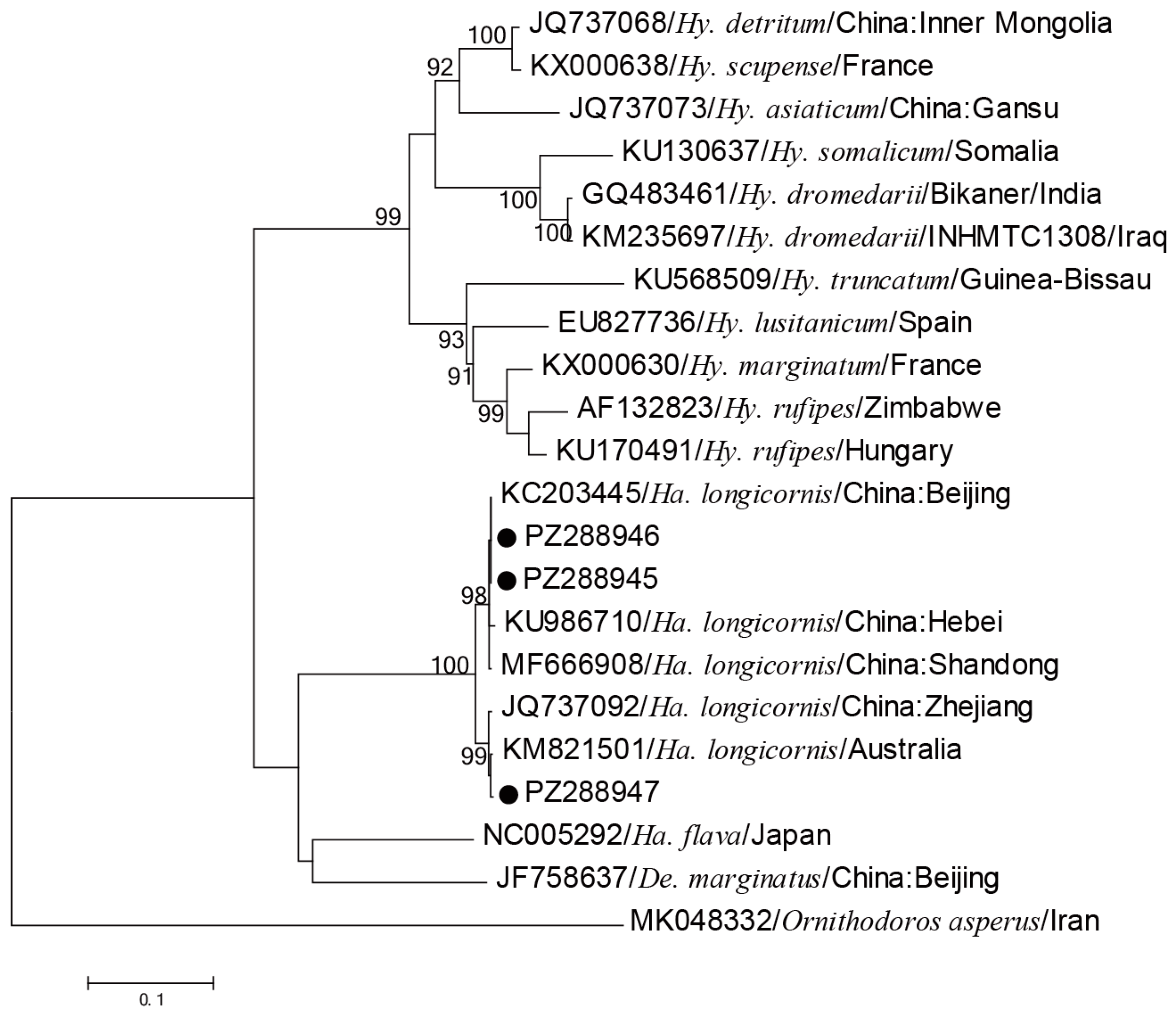
The COI phylogenetic tree illustrates the genetic relationships among COI genes in different tick species. The COI genes of tick species from the three locations studied in this research all clustered together with those of the known tick species Ha. longicornis (KC203445, KU986710, MF666908, JQ737092, KM821501). The sequence identity between the COI genes from these locations and those of Ha. longicornis is 97.6–100%. All ticks collected in this study were identified as Ha. longicornis (Figure 2) based on the cytochrome c oxidase I (COI) gene sequences obtained by polymerase chain reaction (PCR) [16].

3.2. Molecular Characterization of the IS1111 Gene of Coxiella

Out of 947 tick specimens, 78 were found to carry the IS1111 gene with a positivity rate of 8.24% (78/947), and it was identified that the tick-borne Coxiella showed 99.74–100% homology with the IS1111 sequences retrieved from the Genbank database (GenBank numbers: OM654093, MT900501, PX422556). Homology results were between 99.7 and 100% in 78 positive specimen sequences, and all the IS1111 gene sequences obtained in this study were submitted to GenBank under the accession numbers PZ276418-PZ276495.

3.3. Molecular Characterization of the 16S rRNA Gene of Coxiella

Furthermore, 16S rRNA was successfully amplified in 56 out of 78 IS1111-positive specimens, and it was determined that the tick-borne CLE showed 95.99–100% homology to the 16S rRNA sequence retrieved from the Genbank database (GenBank numbers: LC635187, MZ047981, KP994813). The homology results of the 56 positive specimen sequences ranged from 96.2 to 100. The 16S rRNA gene sequences obtained in this study were submitted to GenBank under the accession numbers PZ269377-PZ269432.
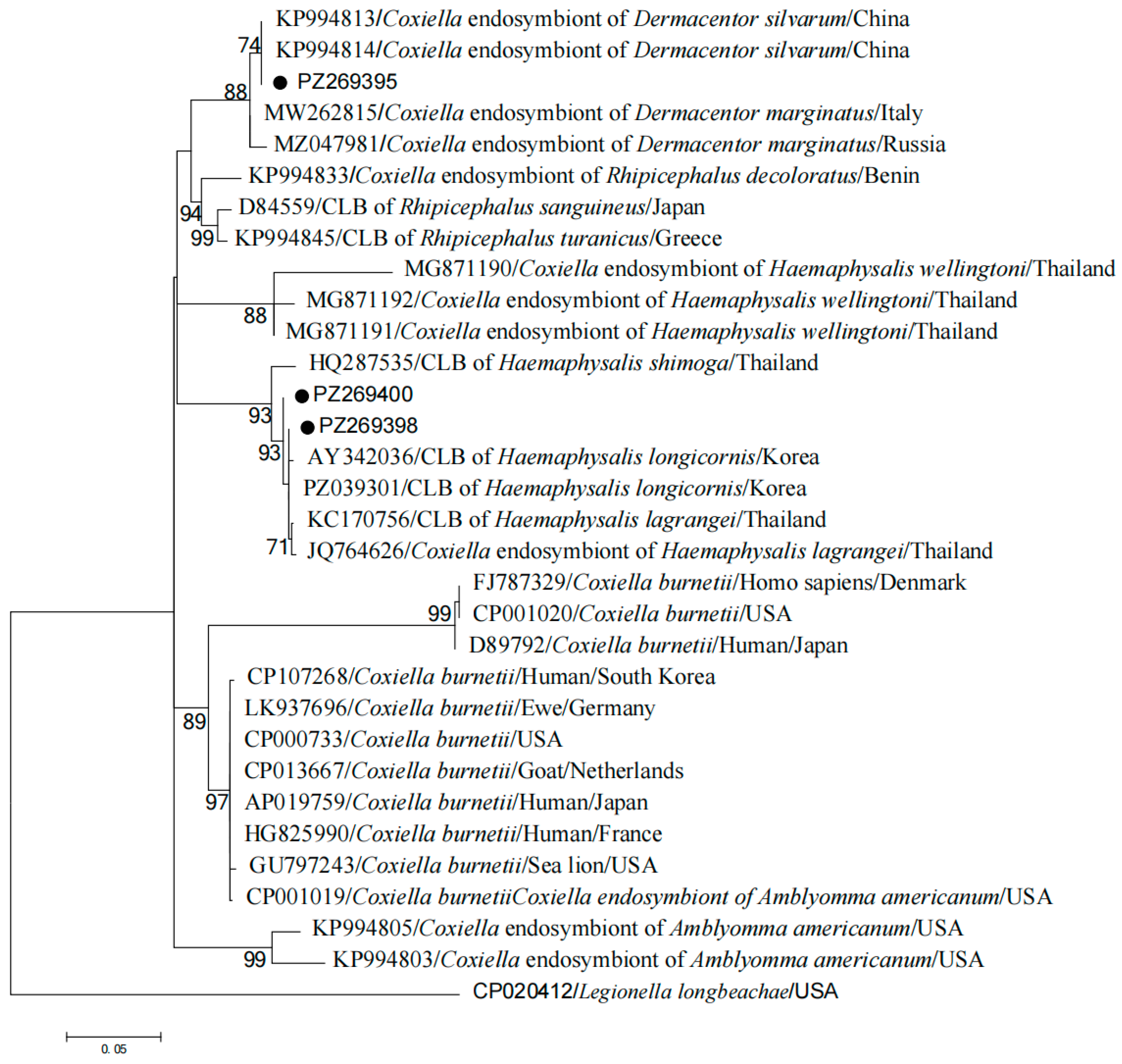
The 16S rRNA gene tree showed genetic evolutionary relationships among different strains of CLE. The 16S rRNA gene tree showed that the 16S rRNA gene of CLE in ticks obtained in this study clustered together with other known CLE strains and were separated from two other classes of CLE strains (Figure 3). All characterized sequences detected in this study belonged to two endosymbiotic groups. PZ269395 clustered with the CLE of Der. silvarum found in China (KP994813, KP994814) and the CLE of Der. marginatus found in Italy (MW262815) and Russia (MZ047981). In addition, PZ269398 and PZ269400 clustered with the CLE of Ha. lagrangei isolated in Thailand (KC170756) and the CLE of Ha. longicornis isolated in Korea (PZ039301 and AY342036) (Figure 3). Consistently, PZ269395 shared a 98.6–100% nucleotide identity with KP994813, MW262815, and MZ047981 for the partial 16S rRNA gene; PZ269398 and PZ269400 shared a 99.5–100% nucleotide identity with KC170756, PZ039301, and AY342036.

3.4. Molecular Characterization of the groEL Gene of Coxiella

The groEL gene was successfully amplified in 53 out of 78 IS1111-positive specimens, and it was determined that the tick-borne CLE showed 78.15–100% homology to the groEL gene sequence retrieved from the Genbank database (GenBank numbers: KY678195, KP985496, OR060696). The homology results of the 53 positive specimen sequences ranged from 76.9 to 100. The groEL gene sequences obtained in this study were submitted to GenBank under the accession numbers PZ276496-PZ276548.
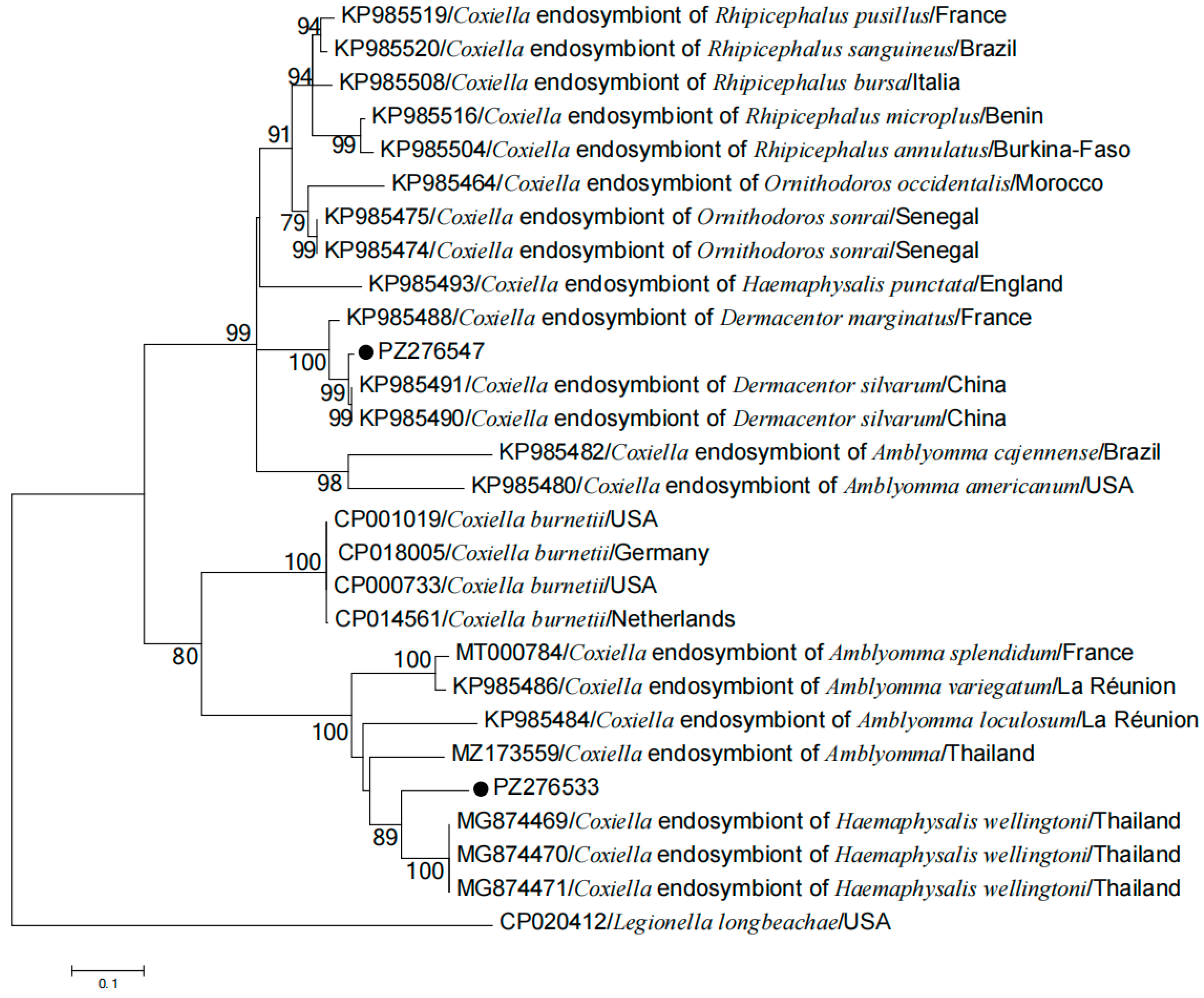
The groEL gene tree showed genetic evolutionary relationships among different strains of CLE. The groEL gene tree showed that the groEL gene of CLE in ticks obtained in this study clustered together with other known CLE strains and separated from two classes of CLE strains (Figure 4). PZ276547 clustered with the CLE of Der. Silvarum was found in China (KP985490 and KP985491), and the genetic similarity between them is 98.9–100%; PZ276533 clustered with the CLE of Ha. wellingtoni (MG874471, MG874469, MG874470) found in Thailand, and they shared 89.1% nucleotide identity with each other.

3.5. Molecular Characterization of the rpoB Gene of Coxiella

The rpoB gene was successfully amplified in 58 out of 78 IS1111-positive specimens, and it was determined that the tick-borne CLE showed 82.54–99.79% homology to the rpoB gene sequence retrieved from the Genbank database (GenBank numbers: KP985328, OU015521, PQ295825). The homology results of the 58 positive specimen sequences ranged from 74.9 to 100. The rpoB gene sequences obtained in this study have been submitted to GenBank under the accession numbers PZ276549-PZ276606.
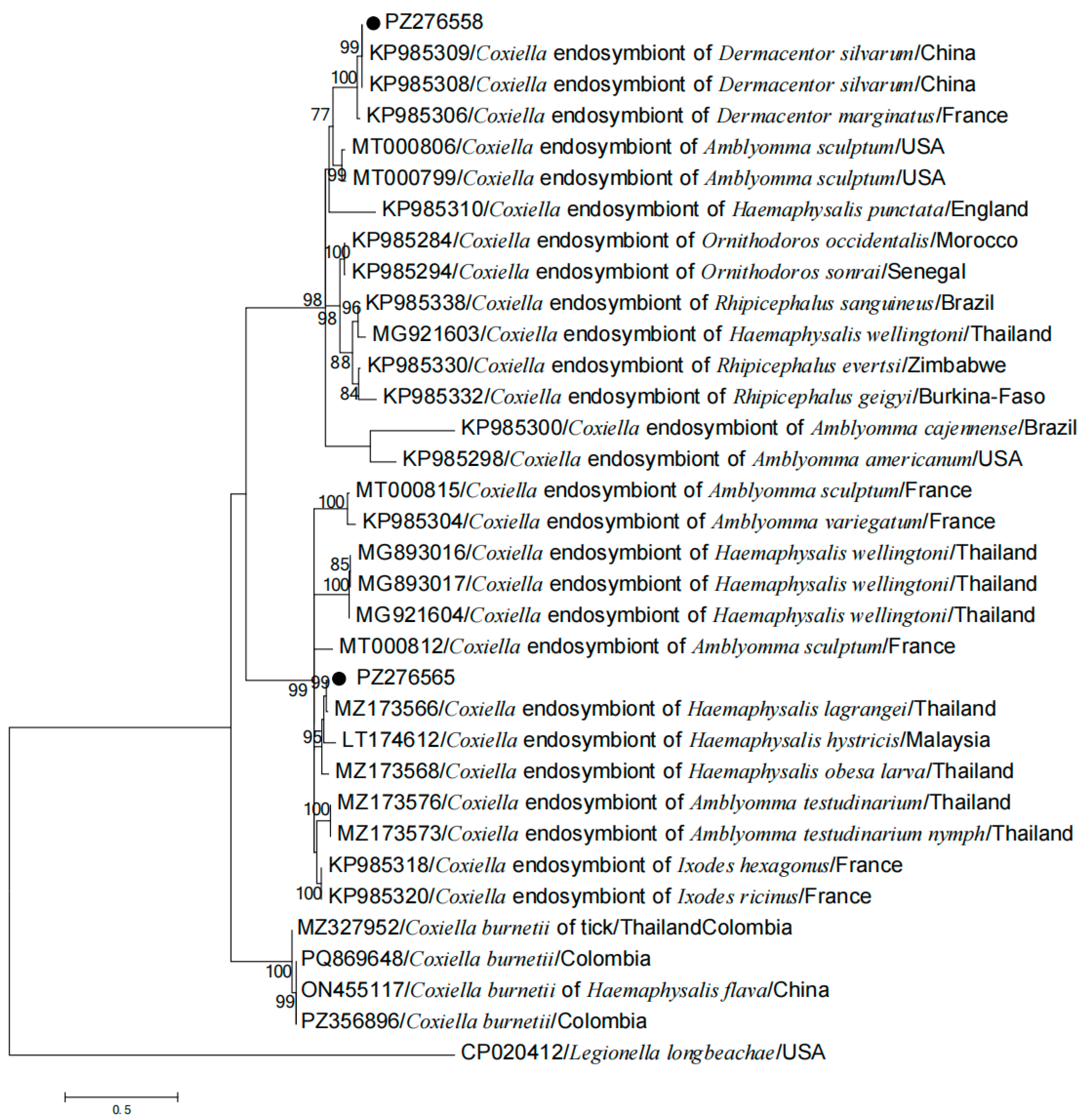
The rpoB gene tree showed genetic evolutionary relationships among different strains of CLE. The rpoB gene tree showed that the rpoB gene of CLE in ticks obtained in this study clustered together with other known CLE strains and separated from two classes of CLE strains (Figure 5). PZ276558 clustered with the CLE of Der. silvarum (KP985308, KP985309) found in China, and the genetic similarity between them is 100%; PZ276565 clustered with the CLE of Ha. lagrangei (MZ173566) found in Thailand, and they shared 98.7% nucleotide identity with each other.
As shown in Figure 3, Figure 4 and Figure 5, the CLE strains identified in the present study fell into two distinct groups. In the phylogenetic trees of the 16S rRNA, groEL, and rpoB genes, all the CLEs recovered from ticks in Cangzhou clustered together with previously reported CLEs found in Der. silvarum from other regions of China, indicating the closest genetic relationship among them, although identified from different tick species. However, another group of CLE strains clustered together with different reference strains across the three gene trees. This topological discrepancy results from the fact that the reference strains in GenBank lack sequence data for all three target genes.

4. Discussion

The genus Coxiella comprises obligate intracellular bacteria that share biological characteristics with members of the order Rickettsiales [7]. The genus contains two recognized species (C. burnetii and C. cheraxi), one Candidatus species (Candidatus Coxiella mudrowiae), and several unrecognized Coxiella symbionts [24]. Coxiella burnetii is the only recognized pathogenic species, responsible for the global zoonotic disease Q fever [25]. People infected with C. burnetii typically present with flu-like symptoms (e.g., high fever, severe headache, fatigue, and night sweats) one to three weeks after exposure, along with possible diarrhea, abdominal pain, or chest pain [4]. Some Coxiella-like bacteria have also been identified as human pathogens; these infections are associated with a scalp eschar and cervical lymphadenopathy and can lead to various systemic complications [26,27]. Furthermore, infection with CLEs can be fatal in some animals, including birds [28]. Pathological findings in such cases include multifocal hepatic necrosis with infiltration by mixed inflammatory cells [28] as well as myocardial degeneration and necrosis [29].
Symbionts are found in a wide range of insect hosts, where they provide essential benefits such as aiding in development, feeding, and reproduction, as well as enhancing defense against natural enemies, environmental stress, and improving immunity [30]. Ticks are widely distributed throughout the world and, after mosquitoes, are one of the most important vectors of human disease and the main carriers of pathogens in wildlife and domestic animals [31]. Coxiella burnetii can be carried by various hosts, including wild and domesticated mammals, birds, and ticks. Ticks, in particular, play an essential role in transmitting the pathogen between animals and are important vectors of Q fever [32,33]. The presence of CLE in arthropods, especially ticks, has been reported in related studies, and CLE may be specific endosymbionts of several tick genera, including Ixodes, Amblyomma, Ornithodoros, and Rhipicephalus [34]. In addition, in several regions of Thailand, CLEs have been reported from various tick species [9,35,36]. CLEs were found in at least 10 tick species collected from both vegetation and animals, including Ha. lagrangei, Ha. shimoga, Der. atrosignatus, A. testudinarium, Ha. hystricis, Ha. bispinosa, Ha. obesa, Der. auratus, Ha. wellingtoni and Rh. microplus [35,36,37,38,39]. Moreover, on the African continent, CLEs have been reported in a number of tick species, which include Rh. maculatus, A. cohaerens, A. gemma, Hyalomma truncatum, A. personatum, A. tholloni, Rh. pravus, A. variegatum, Ha. leachi, Haemaphysalis sp., Rh. carnivoralis, Rh. appendiculatus, Rh. evertsi, Rh. praetextatus, Rh. compositus, A. lepidum, Rh. sanguineus, and Rhipicephalus sp. [40,41]. However, little is known about the broader array of CLE in ticks under natural conditions in China. In China, CLE has been identified as Ha. flava. (2.37%, 5/211); Ha. longicornis (20%,3/15), collected from Shanghai [42]; Ha. flava (61.1%, 107/175) from Jiangsu [43]; Der. nuttalli (53.69%, 109/203) from Inner Mongolia [44]; and Rh. microplus (27%, 54/200) from Guizhou [45].
At the time of the original description, IS1111 had only been found in C. burnetii. However, in this study, we have found that when screened with primers initially thought to be C. burnetii-specific, some Coxiella-like bacteria give positive PCR results. Not only the present work but also the earlier study by Vilcins et al. show that IS1111 copies exist in other bacteria, specifically the CLEs of ticks [46]. In addition, our results of the IS1111 gene are similar to the findings described by Duron et al., who previously reported that the IS1111 gene shows a high degree of genetic diversity in C. burnetii and CLE [20]. The IS1111 transposable element, which is routinely targeted in epidemiologic studies of C. burnetii prevalence in ticks, was the most frequently detected marker in ticks infected with CLEs [47], as demonstrated in this study. IS1111 is widely distributed within the genus Coxiella and is not unique to C. burnetii [48]. Variant copies of this element have been identified in CLEs inhabiting distantly related tick species, including both soft ticks (e.g., Ornithodoros, Argas) and hard ticks (e.g., Rhipicephalus, Haemaphysalis) [48]. Thus, our findings demonstrated that diagnostic assays to detect C. burnetii based on IS1111 alone can lead to the misidentification of CLEs. To confirm identity and enable phylogenetic analysis, a subset of samples that tested positive in the IS1111 assay was further characterized by nested PCR targeting the 16S rRNA, groEL, and rpoB genes.
The main limitation of this study is that ticks were collected from only three regions within Hebei Province, making it impossible to fully characterize the overall prevalence of CLE among ticks in China. Furthermore, CLE was only detected in Ha. longicornis ticks in Hebei; no other tick species were collected. Therefore, further research is needed to determine whether other tick species in Hebei carry CLE, which will require expanding the collection area and increasing tick species diversity.

5. Conclusions

In this study, CLE in Ha. longicornis from Hebei Province, China, was identified, reinforcing their widespread association with ticks globally. Phylogenetic analysis revealed two distinct CLE clades. Whether CLE poses a public or veterinary health risk remains unknown; given the lack of evidence for pathogenicity or zoonotic potential, further research—particularly on their ability to infect humans and livestock—is essential to determine whether these bacteria pose a threat to public health.

Author Contributions

Z.-Y.X.: Conceptualization, data curation, formal analysis, funding acquisition, investigation, methodology, project administration, resources, software, supervision, validation, visualization, writing—original draft, writing—review and editing. G.-Q.C.: Conceptualization, data curation, formal analysis, funding acquisition, investigation, methodology, project administration, resources, software, supervision, validation, visualization, writing—original draft, writing—review and editing. J.X.: Conceptualization, data curation, formal analysis, funding acquisition, investigation, methodology, project administration, resources, software, supervision, validation, visualization, writing—original draft, writing—review and editing. Y.-X.C.: Conceptualization, data curation, formal analysis, funding acquisition, investigation, methodology, project administration, resources, software, supervision, validation, visualization, writing—original draft, writing—review and editing. R.J.: Conceptualization, data curation, formal analysis, funding acquisition, investigation, methodology, project administration, resources, software, supervision, validation, visualization, writing—original draft, writing—review and editing. W.-P.G.: Conceptualization, data curation, formal analysis, funding acquisition, investigation, methodology, project administration, resources, software, supervision, validation, visualization, writing—original draft, writing—review and editing. All authors have read and agreed to the published version of the manuscript.

Funding

This study was supported by the Hebei Natural Science Foundation (No. C2022406003), the Science Research Project of Hebei Education Department (No. QN2025382), the Scientific Research Foundation for High-level Talents of Chengde Medical University (No. 202001), and the Key Research and Development Program of Hebei Province (No. 213777109D).

Institutional Review Board Statement

Not applicable.

Informed Consent Statement

Not applicable.

Data Availability Statement

Databases supporting the conclusions of this article are included in the article. All the IS1111 gene sequences obtained in this study have been submitted to GenBank under the accession numbers PZ276418-PZ276495. All the 16S rRNA gene sequences obtained in this study have been submitted to GenBank under the accession numbers PZ269377-PZ269432. All the rpoB gene sequences obtained in this study have been submitted to GenBank under the accession numbers PZ276549-PZ276606. All the groEL gene sequences obtained in this study have been submitted to GenBank under the accession numbers PZ276496-PZ276548.

Conflicts of Interest

The authors declare no conflicts of interest.

References

  1. Grostieta, E. Molecular Detection of Coxiella-like Endosymbionts and Absence of Coxiella burnetii in Amblyomma mixtum from Veracruz, Mexico. Exp. Appl. Acarol. 2022, 88, 113–125. [Google Scholar] [CrossRef] [PubMed]
  2. Chisu, V. Coxiellaceae in Ticks from Human, Domestic and Wild Hosts from Sardinia, Italy: High Diversity of Coxiella-like Endosymbionts. Acta Parasitol. 2013, 62, 654–663. [Google Scholar]
  3. Yessinou, R.E.; Katja, M.-S.; Heinrich, N.; Farougou, S. Prevalence of Coxiella-Infections in Ticks—Review and Meta-Analysis. Ticks Tick-Borne Dis. 2022, 13, 10192. [Google Scholar]
  4. Truong, A.-T.; Youn, S.Y.; Yoo, M.-S.; Lim, J.-Y.; Yoon, S.-S.; Cho, Y.S. Genotyping of Coxiella burnetii from Cattle by Multispacer Sequence Typing and Multiple Locus Variable Number of Tandem Repeat Analysis in the Republic of Korea. Genes 2022, 13, 1927. [Google Scholar] [CrossRef] [PubMed]
  5. Chochlakis, D.; Santos, A.S.; Giadinis, N.D.; Papadopoulos, D.; Boubaris, L.; Kalaitzakis, E.; Psaroulaki, A.; Kritas, S.K.; Petridou, E.I. Genotyping of Coxiella burnetii in Sheep and Goat Abortion Samples. BMC Microbiol. 2018, 18, 204. [Google Scholar] [CrossRef] [PubMed]
  6. Seo, M.-G.; Lee, S.-H.; VanBik, D.; Ouh, I.-O.; Yun, S.-H.; Choi, E.; Park, Y.-S.; Lee, S.-E.; Kim, J.W.; Cho, G.-J.; et al. Detection and Genotyping of Coxiella burnetii and Coxiella-Like Bacteria in Horses in South Korea. PLoS ONE 2016, 11, e0156710. [Google Scholar] [CrossRef] [PubMed]
  7. Brenner, A.E. Coxiella burnetii and Related Tick Endosymbionts Evolved from Pathogenic Ancestors. Genome Biol. Evol. 2021, 13, evab108. [Google Scholar] [CrossRef] [PubMed]
  8. Duron, O.; Sidi-Boumedine, K.; Rousset, E.; Moutailler, S.; Jourdain, E. The Importance of Ticks in Q Fever Transmission: What Has (and Has Not) Been Demonstrated? Trends Parasitol. 2015, 31, 536–552. [Google Scholar] [CrossRef] [PubMed]
  9. Usananan, P.; Kaenkan, W.; Sudsangiem, R.; Baimai, V.; Trinachartvanit, W.; Ahantarig, A. Phylogenetic Studies of Coxiella-Like Bacteria and Spotted Fever Group Rickettsiae in Ticks Collected from Vegetation in Chaiyaphum Province, Thailand. Front. Vet. Sci. 2022, 9, 849893. [Google Scholar] [CrossRef] [PubMed]
  10. Kobayashi, T.; Chatanga, E.; Qiu, Y.; Simuunza, M.; Kajihara, M.; Hang’ombe, B.M.; Eto, Y.; Saasa, N.; Mori-Kajihara, A.; Simulundu, E.; et al. Molecular Detection and Genotyping of Coxiella-Like Endosymbionts in Ticks Collected from Animals and Vegetation in Zambia. Pathogens 2021, 10, 779. [Google Scholar] [CrossRef] [PubMed]
  11. Muhammad, K.A.; Gadzama, U.N.; Onyiche, T.E. Distribution and Prevalence of Coxiella burnetii in Animals, Humans, and Ticks in Nigeria: A Systematic Review. Infect. Dis. Rep. 2023, 15, 576–588. [Google Scholar] [CrossRef] [PubMed]
  12. Cooper, A.; Stephens, J.; Ketheesan, N.; Govan, B. Detection of Coxiella burnetii DNA in Wildlife and Ticks in Northern Queensland, Australia. Vector-Borne Zoonotic Dis. 2013, 13, 12–16. [Google Scholar] [CrossRef] [PubMed]
  13. Castro-Scholten, S.; Caballero-Gómez, J.; Martínez, R.; Nadales-Martín, B.J.; Cano-Terriza, D.; Jiménez-Martín, D.; Remesar, S.; Jiménez-Ruiz, S.; Gómez-Guillamón, F.; García-Bocanegra, I. Occurrence of Coxiella burnetii in wild lagomorphs and their ticks in Spanish Mediterranean ecosystems. Zoonoses Public Health 2024, 71, 549–559. [Google Scholar] [CrossRef] [PubMed]
  14. Špitalská, E.; Kocianová, E. Detection of Coxiella burnetii in Ticks Collected in Slovakia and Hungary. Eur. J. Epidemiol. 2002, 18, 263–266. [Google Scholar]
  15. Zhong, J. Coxiella-like endosymbionts. Adv. Exp. Med. Biol. 2012, 984, 365–379. [Google Scholar] [CrossRef] [PubMed]
  16. Folmer, O.; Black, M.; Hoeh, W.; Lutz, R.; Vrijenhoek, R. DNA primers for amplification of mitochondrial cytochrome c oxidase subunit I from diverse metazoan invertebrates. Mol. Mar. Biol. Biotechnol. 1994, 3, 294–299. [Google Scholar] [PubMed]
  17. Hoover, T.A.; Vodkin, M.H.; Williams, J.C. A Coxiella burnetii Repeated DNA Element Resembling a Bacterial Insertion Sequence. J. Bacteriol. 1992, 174, 5540–5548. [Google Scholar] [CrossRef] [PubMed]
  18. Mares-Guia, M.A.M.M.; Guterres, A.; Rozental, T.; Ferreira, M.d.S.; Lemos, E.R.S. Clinical and Epidemiological Use of Nested PCR Targeting the Repetitive Element IS 1111 Associated with the Transposase Gene from Coxiella burnetii. Braz. J. Microbiol. 2018, 49, 138–143. [Google Scholar] [CrossRef] [PubMed]
  19. Seo, M.-G.; Lee, S.-H.; Ouh, I.-O.; Lee, G.H.; Goo, Y.-K.; Kim, S.; Kwon, O.-D.; Kwak, D. Molecular Detection and Genotyping of Coxiella-Like Endosymbionts in Ticks That Infest Horses in South Korea. PLoS ONE 2016, 11, e0165784. [Google Scholar] [CrossRef] [PubMed]
  20. Duron, O.; Noël, V.; McCoy, K.D.; Bonazzi, M.; Sidi-Boumedine, K.; Morel, O.; Vavre, F.; Zenner, L.; Jourdain, E.; Durand, P.; et al. The Recent Evolution of a Maternally-Inherited Endosymbiont of Ticks Led to the Emergence of the Q Fever Pathogen, Coxiella burnetii. PLoS Pathog. 2015, 11, e1004892. [Google Scholar] [CrossRef] [PubMed]
  21. Hall, T.A. BioEdit: A user-friendly biological sequence alignment editor and analysis. Nucleic Acids Symp. 1999, 41, 95–98. [Google Scholar]
  22. Liu, Z.; Wang, F.; Yuan, L.; Zhang, X.; Ying, Q.; Yu, L.; Zhang, L.; Cheng, L.; Zhang, F.; Lu, J.; et al. Development of a SYBR-Green I Quantitative PCR Assay for the Detection and Genotyping of Different Hantaviruses. Int. J. Mol. Med. 2016, 38, 951–960. [Google Scholar] [CrossRef] [PubMed]
  23. Tamura, K.; Stecher, G.; Peterson, D.; Filipski, A.; Kumar, S. MEGA6: Molecular Evolutionary Genetics Analysis Version 6.0. Mol. Biol. Evol. 2013, 30, 2725–2729. [Google Scholar] [CrossRef] [PubMed]
  24. Lu, M.; Tian, J.; Zhao, H.; Jiang, H.; Qin, X.; Wang, W.; Li, K. Molecular Survey of Vector-Borne Pathogens in Ticks, Sheep Keds, and Domestic Animals from Ngawa, Southwest China. Pathogens 2022, 11, 606. [Google Scholar] [CrossRef] [PubMed]
  25. Angelakis, E.; Raoult, D. Q Fever. Vet. Microbiol. 2010, 140, 297–309. [Google Scholar] [CrossRef] [PubMed]
  26. Angelakis, E.; Mediannikov, O.; Jos, S.-L.; Berenger, J.-M.; Parola, P.; Raoult, D. Candidatus Coxiella massiliensis Infection. Emerg. Infect. Dis. 2016, 22, 285–288. [Google Scholar] [CrossRef] [PubMed]
  27. Prudent, E.; El Karkouri, K.; Raoult, D.; Angelakis, E.; Guimard, T.; Amrane, S. Case Report: Scalp Eschar and Neck Lymphadenopathy Associated with Bacteremia Due to Coxiella-Like Bacteria. Am. J. Trop. Med. Hyg. 2017, 97, 1319–1322. [Google Scholar] [CrossRef] [PubMed]
  28. Shivaprasad, H.L.; Cadenas, M.B.; Diab, S.S.; Nordhausen, R.; Bradway, D.; Crespo, R.; Breitschwerdt, E.B. Coxiella-Like Infection in Psittacines and a Toucan. Avian Dis. 2008, 52, 426–432. [Google Scholar] [CrossRef] [PubMed]
  29. Vapniarsky, N.; Barr, B.C.; Murphy, B. Systemic Coxiella-like Infection with Myocarditis and Hepatitis in an Eclectus Parrot (Eclectus Roratus). Vet. Pathol. 2012, 49, 717–722. [Google Scholar] [PubMed]
  30. Liu, L.; Li, L.; Liu, J.; Hu, Y.; Liu, Z.; Guo, L.; Liu, J. Coinfection of Dermacentor silvarum Olenev (Acari: Ixodidae) by Coxiella-Like, Arsenophonus-Like, and Rickettsia-Like Symbionts. Appl. Environ. Microbiol. 2013, 79, 2450–2454. [Google Scholar] [PubMed]
  31. Mansfield, K.L.; Jizhou, L.; Phipps, L.P.; Johnson, N. Emerging Tick-Borne Viruses in the Twenty-First Century. Front. Cell. Infect. Microbiol. 2017, 7, 298. [Google Scholar] [PubMed]
  32. Celina, S.S.; Cerný, J. Coxiella burnetii in Ticks, Livestock, Pets and Wildlife: A Mini-Review. Front. Vet. Sci. 2022, 9, 1068129. [Google Scholar] [CrossRef] [PubMed]
  33. Varela-Castro, L.; Zuddas, C.; Ortega, N.; Serrano, E.; Salinas, J.; Castellà, J.; Castillo-Contreras, R.; Carvalho, J.; Lavín, S.; Mentaberre, G. On the Possible Role of Ticks in the Eco-Epidemiology of Coxiella burnetii in a Mediterranean Ecosystem. Ticks Tick-Borne Dis. 2018, 9, 687–694. [Google Scholar] [CrossRef] [PubMed]
  34. Raele, D.A.; Galante, D.; Pugliese, N.; De Simone, E.; Cafiero, M.A. Coxiella-like Endosymbiont Associated to the “Anatolian Brown Tick” Rhipicephalus bursa in Southern Italy. Microbes Infect. 2015, 17, 799–805. [Google Scholar] [CrossRef] [PubMed]
  35. Arthan, W.; Sumrandee, C.; Hirunkanokpun, S.; Kitthawee, S.; Baimai, V.; Trinachartvanit, W.; Ahantarig, A. Detection of Coxiella-like Endosymbiont in Haemaphysalis Tick in Thailand. Ticks Tick-Borne Dis. 2015, 6, 63–68. [Google Scholar] [CrossRef] [PubMed]
  36. Trinachartvanit, W.; Maneewong, S.; Kaenkan, W.; Usananan, P.; Baimai, V.; Ahantarig, A. Coxiella-like Bacteria in Fowl Ticks from Thailand. Parasites Vectors 2018, 11, 670. [Google Scholar] [CrossRef] [PubMed]
  37. Nooroong, P.; Trinachartvanit, W.; Baimai, V.; Ahantarig, A. Phylogenetic Studies of Bacteria (Rickettsia, Coxiella, and Anaplasma) in Amblyomma and Dermacentor Ticks in Thailand and Their Co-Infection. Ticks Tick-Borne Dis. 2018, 9, 963–971. [Google Scholar] [CrossRef] [PubMed]
  38. Sumrandee, C.; Baimai, V.; Trinachartvanit, W.; Ahantarig, A. Molecular Detection of Rickettsia, Anaplasma, Coxiella and Francisella Bacteria in Ticks Collected from Artiodactyla in Thailand. Ticks Tick-Borne Dis. 2016, 7, 678–689. [Google Scholar] [CrossRef] [PubMed]
  39. Hirunkanokpun, S.; Ahantarig, A.; Baimai, V.; Pramual, P.; Rakthong, P.; Trinachartvanit, W. Spotted fever group Rickettsia, Anaplasma and Coxiella-like endosymbiont in Haemaphysalis ticks from mammals in Thailand. Vet. Res. Commun. 2022, 46, 1209–1219. [Google Scholar] [CrossRef] [PubMed]
  40. Oundo, J.W.; Villinger, J.; Jeneby, M.; Ong’amo, G.; Otiende, M.Y.; Makhulu, E.E.; Musa, A.A.; Ouso, D.O.; Wambua, L. Pathogens, Endosymbionts, and Blood-Meal Sources of Host-Seeking Ticks in the Fast-Changing Maasai Mara Wildlife Ecosystem. PLoS ONE 2020, 15, e0228366. [Google Scholar] [CrossRef] [PubMed]
  41. Olivieri, E.; Kariuki, E.; Floriano, A.M.; Castelli, M.; Tafesse, Y.M.; Magoga, G.; Kumsa, B.; Montagna, M.; Sassera, D. Multi-country Investigation of the Diversity and Associated Microorganisms Isolated from Tick Species from Domestic Animals, Wildlife and Vegetation in Selected African Countries. Exp. Appl. Acarol. 2021, 83, 427–448. [Google Scholar] [PubMed]
  42. Zeng, W.; Li, Z.; Jiang, T.; Cheng, D.; Yang, L.; Hang, T.; Duan, L.; Zhu, D.; Fang, Y.; Zhang, Y. Identification of Bacterial Communities and Tick-Borne Pathogens in Haemaphysalis spp. Collected from Shanghai, China. Trop. Med. Infect. Dis. 2022, 7, 413. [Google Scholar] [CrossRef] [PubMed]
  43. Qi, Y.; Ai, L.; Zhu, C.; Ye, F.; Lv, R.; Wang, J.; Mao, Y.; Lu, N.; Tan, W. Wild Hedgehogs and Their Parasitic Ticks Coinfected with Multiple Tick-Borne Pathogens in Jiangsu Province, Eastern China. Microbiol. Spectr. 2022, 10, e02138-22. [Google Scholar] [CrossRef] [PubMed]
  44. Jiao, J.; Lu, Z.; Yu, Y.; Ou, Y.; Fu, M.; Zhao, Y.; Wu, N.; Zhao, M.; Liu, Y.; Sun, Y.; et al. Identification of Tick-Borne Pathogens by Metagenomic next-Generation Sequencing in Dermacentor nuttalli and Ixodes persulcatus in Inner Mongolia, China. Parasites Vectors 2021, 14, 287. [Google Scholar] [PubMed]
  45. Li, D.; Li, Y.; Yu, Y.; Ouyang, X.; Xiong, X.; Jin, S.; Jiao, J. Investigation of tick-borne Rickettsia in selected areas of Liupanshui City, Guizhou Province in 2023. Zhongguo Xue Xi Chong Bing Fang Zhi Za Zhi Chin. J. Schistosomiasis Control. 2024, 36, 154–158. [Google Scholar]
  46. Vilcins, I.-M.E.; Old, J.M.; Deane, E. Molecular Detection of Rickettsia, Coxiella and Rickettsiella DNA in Three Native Australian Tick Species. Exp. Appl. Acarol. 2009, 49, 229–242. [Google Scholar] [CrossRef] [PubMed]
  47. Jourdain, E.; Duron, O.; Barry, S.; González-Acuña, D.; Sidi-Boumedine, K. Molecular Methods Routinely Used to Detect Coxiella burnetii in Ticks Cross-React with Coxiella-like Bacteria. Infect. Ecol. Epidemiol. 2015, 5, 29230. [Google Scholar]
  48. Duron, O. The IS1111 Insertion Sequence Used for Detection of Coxiella burnetii Is Widespread in Coxiella-like Endosymbionts of Ticks. FEMS Microbiol. Lett. 2015, 362, fnv132. [Google Scholar] [PubMed]
Figure 1. Map with the location of the collection site of ticks (●) in Chengde, Baoding, and Cangzhou City of Hebei Province, China.
Pathogens 15 00647 g001
Figure 2. Molecular identification of ticks based on the phylogenetic analysis of the COI gene. The maximum likelihood (ML) tree was reconstructed using MEGA 6.0.6 under the GTR + G + I model with 1000 replicates. The numbers at each node indicate bootstrap values, and only bootstrap values > 70% are shown at appropriate nodes. Taxa marked by a circle depict the representative sequence obtained in this study. Sequence from Ornithodoras asperus (MK048332) was included as the outgroup.
Pathogens 15 00647 g002
Figure 3. Phylogenetic tree of CLE based on partial 16s rRNA sequences. The numbers at each node indicate bootstrap values, and only bootstrap values > 70% are shown at appropriate nodes. Taxa marked by a circle depict the representative sequence obtained in this study. The sequence from Rickettsia melolonthae (CP020412) was included as the outgroup.
Pathogens 15 00647 g003
Figure 4. Phylogenetic tree of CLE based on the partial groEL sequences. The numbers at each node indicate bootstrap values, and only bootstrap values > 70% are shown at appropriate nodes. Taxa marked by a circle depict the representative sequence obtained in this study. The sequence from Legionella longbeachae (CP020412) was included as the outgroup.
Pathogens 15 00647 g004
Figure 5. Phylogenetic tree of CLE based on partial rpoB sequences. The numbers at each node indicate bootstrap values, and only bootstrap values > 70% are shown at appropriate nodes. Taxa marked by a circle depict the representative sequence obtained in this study. The sequence from Legionella longbeachae (CP020412) was included as the outgroup.
Pathogens 15 00647 g005
Table 1. Primer sequences used in this study.
Target
Gene
PrimerOligonucleotide Sequences
(5′–3′)
Reference
IS1111QBT1TATGTATCCACCGTAGCCAGTC[17]
QBT2CCCAACAACACCTCCTTATTC
QBTN3AAGCGTGTGGAGGAGCGAACC[18]
QBTN4CTCGTAATCACCAATCGCTTCGTC
16S rRNA16S-F1CGTAGGAATCTACCTTRTAGWGG[19]
16S-FTGAGAACTAGCTGTTGGRRAGT
16S-RGCCTACCCGCTTCTGGTACAATT
groEL CoxGrF1 TTTGAAAAYATGGGCGCKCAAATGGT[20]
CoxGrR2 CGRTCRCCAAARCCAGGTGC
CoxGrF2 GAAGTGGCTTCGCRTACWTCAGACG
CoxGrFR1 CCAAARCCAGGTGCTTTYAC
rpoBCoxrpoBF2 GGGCGNCAYGGWAAYAAAGGSGT
CoxrpoBR1 CACCRAAHCGTTGACCRCCAAATTG
CoxrpoBF3 TCGAAGAYATGCCYTATTTAGAAG
CoxrpoBR3 AGCTTTMCCACCSARGGGTTGCTG
Table 2. Positive results for Coxiella-like endosymbiont.
GeneCollecting Area
ChengdeBaodingCangzhou
IS111159/623 (9.47%)5/204 (2.45%)14/120 (11.67%)
16S rRNA48/59 (81.36%)2/5 (40%)6/14 (42.86%)
groEL45/59 (76.27%)3/5 (60%)5/14 (35.71%)
rpoB52/59 (88.14%)2/5 (40%)4/14 (28.57%)
Disclaimer/Publisher’s Note: The statements, opinions and data contained in all publications are solely those of the individual author(s) and contributor(s) and not of MDPI and/or the editor(s). MDPI and/or the editor(s) disclaim responsibility for any injury to people or property resulting from any ideas, methods, instructions or products referred to in the content.