



Prophages in Skin Pathogens: From Virulence to Therapy
 , , , , , ,
  and
and 
Abstract
1. Introduction
2. Prophage-Driven Virulence: Mechanisms and Clinical Consequences
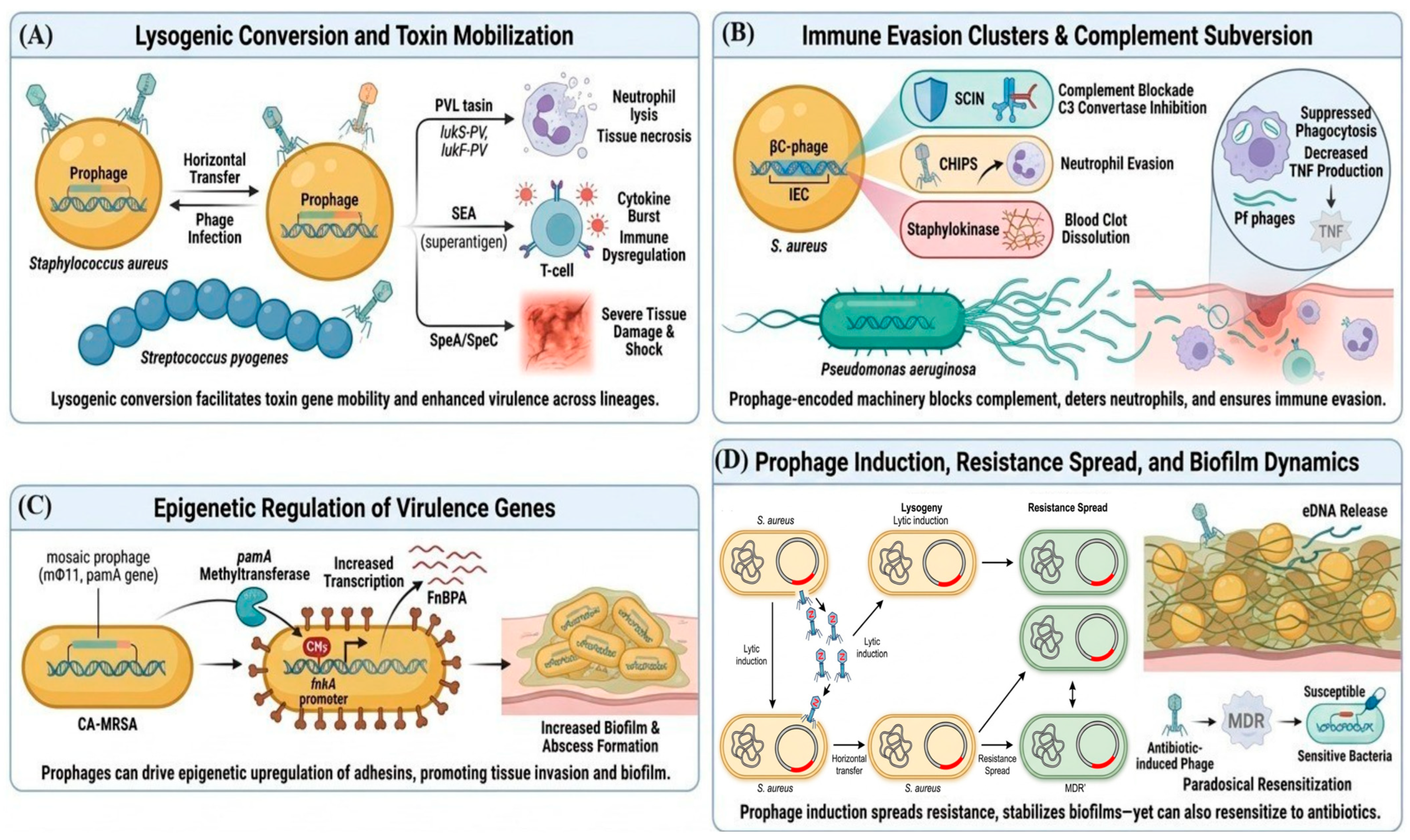
2.1. Toxin Genes and Lysogenic Conversion
2.2. Immune Evasion Clusters and Complement Subversion
2.3. Epigenetic Regulation of Virulence: The Methyltransferase Paradigm
2.4. Prophage Induction, Biofilm, and Resistance Dissemination

| Pathogen | Prophage/ Element | Encoded Factor | Mechanism of Virulence | Clinical Significance in Skin Infections | References |
|---|---|---|---|---|---|
| S. aureus (CA-MRSA USA300) | mΦ11 (mosaic prophage) | pamA (adenine methyltransferase) | Epigenetic upregulation of FnBPA via DNA methylation promotes in vivo biofilm formation and adhesion | Increased skin abscess size and severity; drove outbreak dissemination of CA-MRSA USA300-BKV variant | [27] |
| S. aureus | φSLT and related PVL phages | Panton–Valentine leukocidin (LukS-PV, LukF-PV) | Bicomponent pore-forming cytotoxin; lyses leukocytes and induces tissue necrosis | Furunculosis, skin abscesses, necrotizing fasciitis; a marker of CA-MRSA virulence | [18] |
| S. aureus | β-haemolysin-converting phages (βC-φs) | IEC (SCIN, CHIPS, staphylokinase, SEA) | Complement inhibition, neutrophil chemotaxis blockade, fibrin dissolution, superantigen-mediated T-cell activation | Immune escape in skin/soft tissue infections; elevated disease severity in chronic skin conditions | [10,21] |
| S. aureus | φETA and related phages | Exfoliative toxins A and B (ETA, ETB) | Serine protease activity targeting desmoglein-1 disrupts epidermal intercellular adhesion, causing superficial blistering without bacterial invasion of deeper tissue | Staphylococcal scalded skin syndrome (SSSS) and bullous impetigo; predominantly affects neonates and immunocompromised patients; ETA encoded on prophage, ETB on plasmid in most strains | [34] |
| S. aureus | SaPI1 (Staphylococcal pathogenicity island; phage-mobilized element) | Toxic shock syndrome toxin-1 (TSST-1) | Superantigen; binds MHC class II outside peptide-binding groove; activates up to 20% of T-cell pool, causing massive cytokine storm and systemic vasodilation | Staphylococcal toxic shock syndrome presenting with diffuse macular erythroderma and skin desquamation; SaPI1 is mobilized and transferred by helper phages, driving inter-strain spread | [35] |
| S. pyogenes | Phage T12 and related elements | Streptococcal pyrogenic exotoxins SpeA, SpeC | Superantigen activity; massive polyclonal T-cell activation; systemic cytokine storm | Streptococcal toxic shock syndrome, necrotizing fasciitis, scarlet fever; strain-level virulence variability | [20] |
| S. pyogenes | Prophage-encoded DNases (Sda1/SpnA) | Streptococcal DNase Sda1; SpnA streptodornase | Degradation of neutrophil extracellular traps (NETs) prevents NET-mediated bacterial killing, enabling bacteremia and systemic spread from the initial skin entry site | Essential for invasive progression from superficial skin infection to necrotizing fasciitis and bacteremia; elevated Sda1 carriage in invasive M1T1 lineages | [36] |
| S. pyogenes | Phage-encoded hyaluronidase locus (hylP) | Phage hyaluronidase HylP | Depolymerizes hyaluronic acid capsule and host connective tissue extracellular matrix; facilitates bacterial dissemination through dermis and subcutaneous tissue | Promotes spread of streptococcal cellulitis and impetigo beyond the primary infection site; higher hyaluronidase activity correlates with increased invasiveness in clinical S. pyogenes isolates | [37] |
| P. aeruginosa | Pf phage (Pf4; filamentous prophage) | Immunomodulatory phage coat proteins | Internalization by host immune cells; TLR3-TRIF-mediated antiviral response suppresses phagocytosis and TNF; promotes biofilm formation | Chronic wound infection persistence; Pf detected in ~65% of Pa-positive non-healing wounds; correlates with treatment failure | [24] |
3. Prophage-Derived Molecules as Antimicrobials
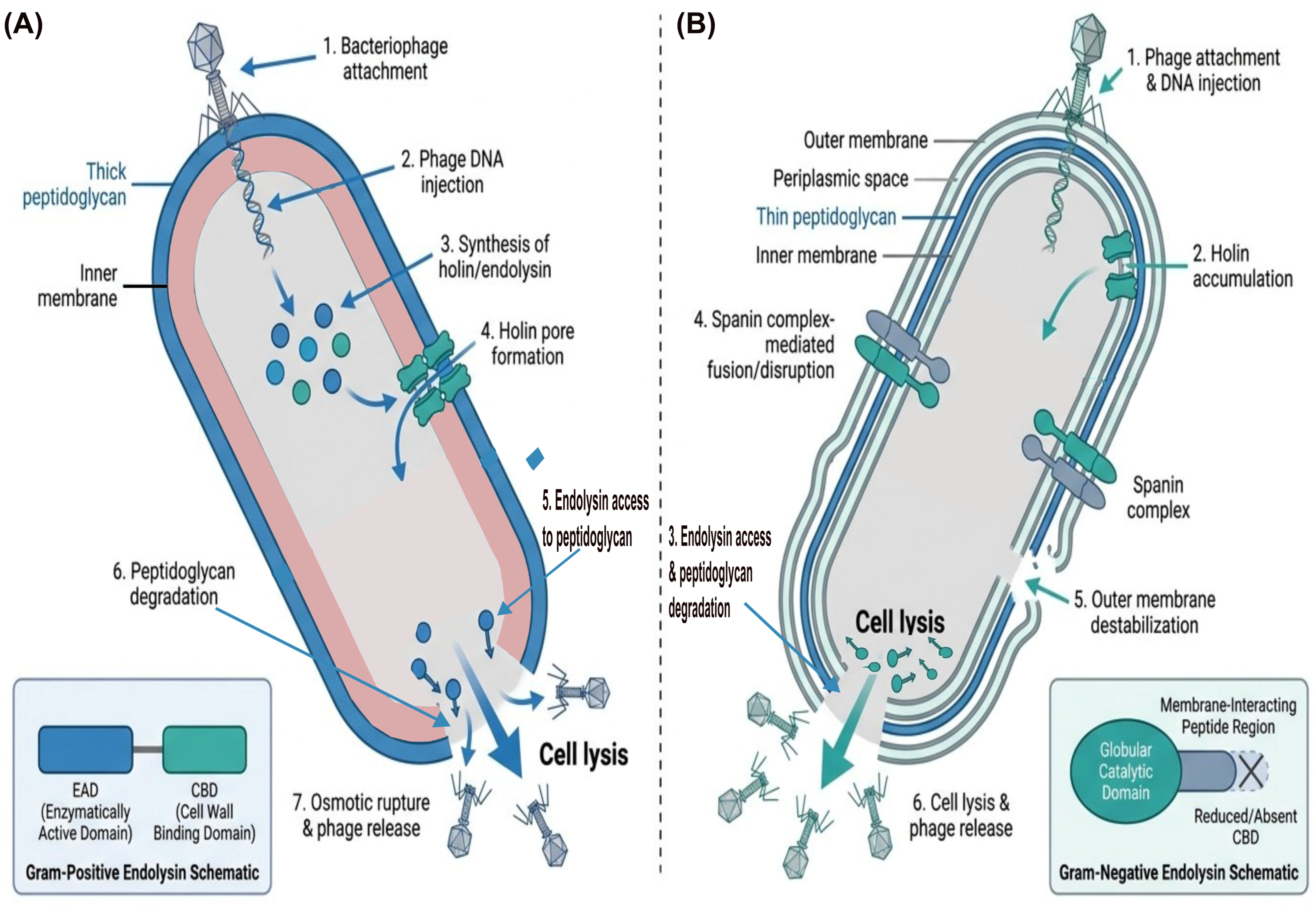
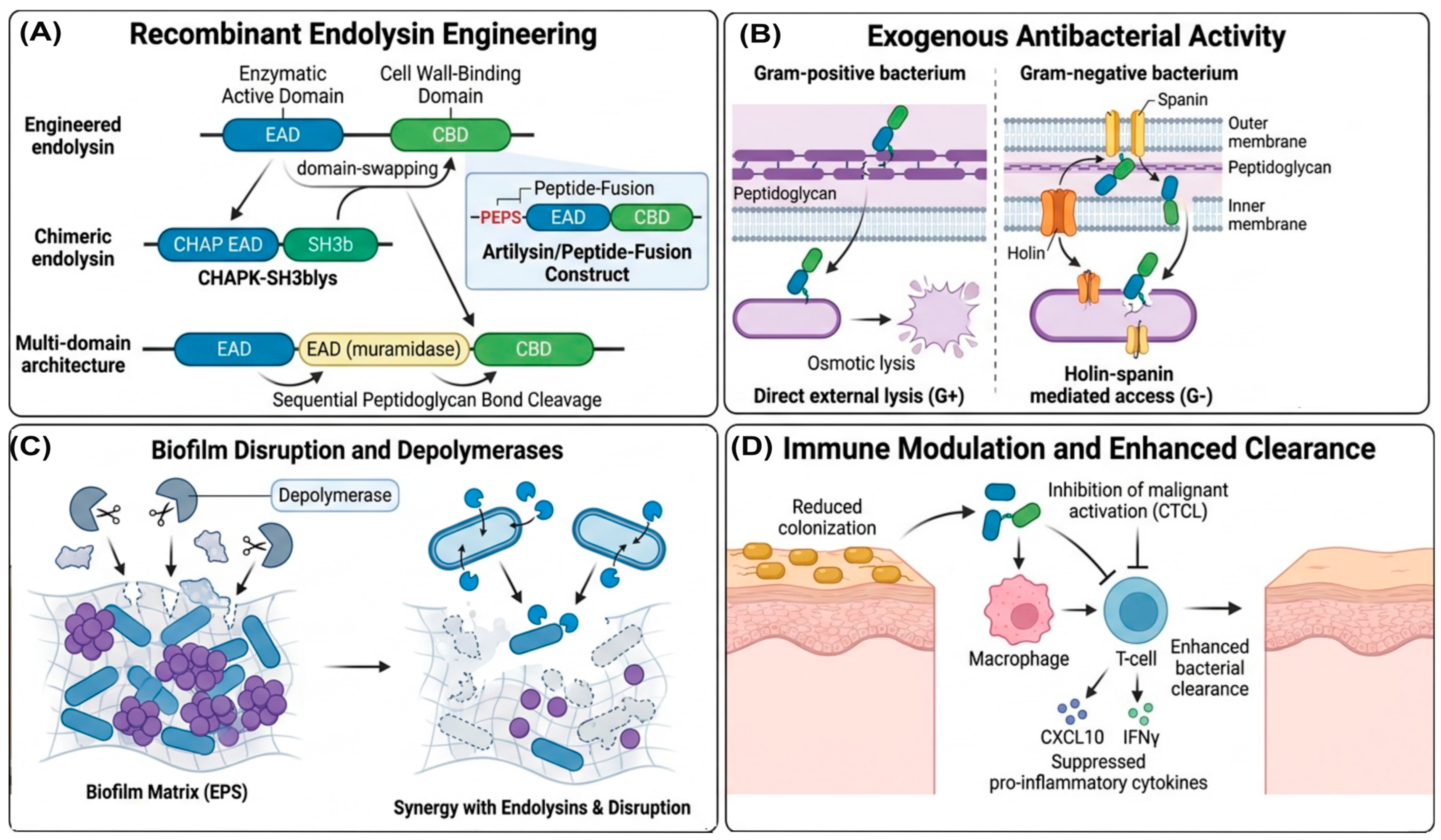
3.1. Endolysins: The Frontline Therapeutic Class
3.2. Holins, Spanins, and Depolymerases: An Underexplored Arsenal
| Molecule | Class | Origin | Target Pathogen | Clinical Findings | Antimicrobial Activity | Stage | References |
|---|---|---|---|---|---|---|---|
| XZ.700 | Recombinant endolysin | Staphylococcal phage | S. aureus, MRSA | Eliminates S. aureus on human skin explant model (cream/gel); suppresses cytokine production; blocks malignant T-cell activation in CTCL ex vivo | >4 log10 reduction in CFU at ≥1 µg/mL | Preclinical/early clinical | [40] |
| Staphefekt SA.100 | Recombinant endolysin | Staphylococcal phage | S. aureus | Demonstrated skin infection activity as a topical formulation; selective staphylococcal killing; well-tolerated in early evaluation | ND | Clinical evaluation | [16] |
| SAL200 | Endolysin (CHAP-amidase) | Phage SAL-1 | S. aureus, MRSA | Phase I: IV administration in healthy volunteers; favorable PK and tolerability; rapid bactericidal activity; no reported resistance induction | 0.078 µg/mL (MBC) | Phase I completed | [41] |
| CHAPK-SH3blys | Chimeric endolysin | Domain-swapped staphylococcal phage lysins | S. aureus, MRSA | Biocompatible with human cell lines; no resistance after prolonged sub-MIC exposure | 3.9 µg/mL (MIC) | Preclinical | [15] |
| Hol-4086 | Holin | Staphylococcal phage | S. aureus, E. faecalis | Direct bactericidal membrane disruption; broader host range than endolysins alone; synergistic with endolysins against polymicrobial targets | ND | Preclinical | [45] |
| Skin phageome-derived AMPs (37 novel peptides) | Antimicrobial peptides (AMP) | Human skin microbiome prophages | S. epidermidis, MDR pathogens | In silico screening of 96 endolysin genes from skin commensal staphylococci; 7 peptides with structural stability in MD simulations; docking activity vs autolysin and VIM-2 beta-lactamase; predicted antifungal and antiviral properties | ND | Discovery phase | [42] |
| LysK | Endolysin (CHAP-amidase-SH3b, three-domain) | Staphylococcal phage φK | S. aureus, MRSA, coagulase-negative staphylococci | Prototype tri-domain anti-staphylococcal endolysin; rapid lysis of MRSA at low concentrations; active against diverse clinical MRSA isolates, including livestock-associated strains; synergistic killing with lysostaphin; founding scaffold for most chimeric lysin designs, including CHAPK-SH3blys | 99% CFU reduction within 1 h (500 μL) | Preclinical | [52] |
| PlySs2 | Endolysin (CHAP-SH3b) | Streptococcal prophage | S. pyogenes, S. aureus, MRSA | Broad Gram-positive spectrum; active against S. pyogenes and MRSA at low concentrations; efficacy in murine bacteremia model; protease-resistant at physiological pH; maintains activity in wound fluid; candidate for skin and wound infection | MIC: S. pyogenes: 128–256 µg/mL MRSA: 16–32 µg/mL, S. aureus: 16 µg/mL. | Preclinical | [53] |
4. Engineering Prophage Biology for Precision Skin Therapeutics
4.1. Chimeric Lysins and Host Range Expansion
4.2. CRISPR-Encoded Prophage Delivery Systems
4.3. Mining the Skin Phageome and Topical Delivery Challenges
5. Conclusions and Future Perspectives
Author Contributions
Funding
Institutional Review Board Statement
Informed Consent Statement
Data Availability Statement
Acknowledgments
Conflicts of Interest
Abbreviations
| AMP | Antimicrobial peptide |
| βC-φ | Beta-haemolysin-converting bacteriophage |
| CA-MRSA | Community-associated methicillin-resistant Staphylococcus aureus |
| CBD | Cell wall-binding domain |
| CFU | Colony-forming unit |
| CHIPS | Chemotaxis inhibitory protein of S. aureus |
| CTCL | Cutaneous T-cell lymphoma |
| CRISPR | Clustered Regularly Interspaced Short Palindromic Repeats |
| EAD | Enzymatically active domain |
| eDNA | Extracellular DNA |
| ETA | Exfoliative toxin A |
| ETB | Exfoliative toxin B |
| FnBPA | Fibronectin-binding protein A |
| HA-MRSA | Healthcare-associated methicillin-resistant Staphylococcus aureus |
| IEC | Immune evasion cluster |
| KKP | Kinase–kinase–phosphatase |
| MDR | Multidrug resistance |
| MBC | Minimum bactericidal concentration |
| MIC | Minimum inhibitory concentration |
| PBS | Phosphate-buffered saline |
| PVL | Panton–Valentine leukocidin |
| SEA | Staphylococcal enterotoxin A |
| SCIN | Staphylococcal complement inhibitor |
| SSSS | Staphylococcal scalded skin syndrome |
| TLR3 | Toll-like receptor 3 |
| TRIF | TIR-domain-containing adapter-inducing interferon-β |
| TNF | Tumor necrosis factor |
| TSST-1 | Toxic shock syndrome toxin-1 |
References
- Jin, Y.; Li, W.; Zhang, H.; Ba, X.; Li, Z.; Zhou, J. The Post-Antibiotic Era: A New Dawn for Bacteriophages. Biology 2023, 12, 681. [Google Scholar] [CrossRef] [PubMed]
- Elois, M.A.; Silva, R.D.; Pilati, G.V.T.; Rodríguez-Lázaro, D.; Fongaro, G. Bacteriophages as Biotechnological Tools. Viruses 2023, 15, 349. [Google Scholar] [CrossRef]
- Huang, D.; Xia, R.; Chen, C.; Liao, J.; Chen, L.; Wang, D.; Alvarez, P.J.J.; Yu, P. Adaptive strategies and ecological roles of phages in habitats under physicochemical stress. Trends Microbiol. 2024, 32, 902–916. [Google Scholar] [CrossRef]
- Böhning, J.; Tarafder, A.K.; Bharat, T.A.M. The role of filamentous matrix molecules in shaping the architecture and emergent properties of bacterial biofilms. Biochem. J. 2024, 481, 245–263. [Google Scholar] [CrossRef] [PubMed]
- Azeem, K.; Fatima, S.; Ali, A.; Ubaid, A.; Husain, F.M.; Abid, M. Biochemistry of Bacterial Biofilm: Insights into Antibiotic Resistance Mechanisms and Therapeutic Intervention. Life 2025, 15, 49. [Google Scholar] [CrossRef] [PubMed]
- Cavallo, I.; Sivori, F.; Mastrofrancesco, A.; Abril, E.; Pontone, M.; Di Domenico, E.G.; Pimpinelli, F. Bacterial Biofilm in Chronic Wounds and Possible Therapeutic Approaches. Biology 2024, 13, 109. [Google Scholar] [CrossRef]
- Hurlow, J.; Wolcott, R.D.; Bowler, P.G. Clinical management of chronic wound infections: The battle against biofilm. Wound Repair Regen. 2025, 33, e13241. [Google Scholar] [CrossRef]
- Durham, P.G.; Sidders, A.E.; Beam, J.E.; Kedziora, K.M.; Dayton, P.A.; Conlon, B.P.; Papadopoulou, V.; Rowe, S.E. Harnessing ultrasound-stimulated phase change contrast agents to improve antibiotic efficacy against methicillin-resistant Staphylococcus aureus biofilms. Biofilm 2021, 3, 100049. [Google Scholar] [CrossRef]
- Mazhari, B.B.Z. Rising Drug Resistance in Skin and Soft Tissue Infecting Pathogens: An Integrative Analysis. J. Pure Appl. Microbiol. 2026. [Google Scholar] [CrossRef]
- Nepal, R.; Houtak, G.; Wormald, P.-J.; Psaltis, A.J.; Vreugde, S. Prophage: A crucial catalyst in infectious disease modulation. Lancet Microbe 2022, 3, e162–e163. [Google Scholar] [CrossRef]
- Goerke, C.; Wirtz, C.; Flückiger, U.; Wolz, C. Extensive phage dynamics in Staphylococcus aureus contributes to adaptation to the human host during infection. Mol. Microbiol. 2006, 61, 1673–1685. [Google Scholar] [CrossRef]
- Nepal, R.; Houtak, G.; Shaghayegh, G.; Bouras, G.; Shearwin, K.; Psaltis, A.J.; Wormald, P.-J.; Vreugde, S. Prophages encoding human immune evasion cluster genes are enriched in Staphylococcus aureus isolated from chronic rhinosinusitis patients with nasal polyps. Microb. Genom. 2021, 7, 000726. [Google Scholar] [CrossRef] [PubMed]
- Natarelli, N.; Gahoonia, N.; Sivamani, R.K. Bacteriophages and the Microbiome in Dermatology: The Role of the Phageome and a Potential Therapeutic Strategy. Int. J. Mol. Sci. 2023, 24, 2695. [Google Scholar] [CrossRef]
- Patel, P.H.; Maxwell, K.L. Prophages provide a rich source of antiphage defense systems. Curr. Opin. Microbiol. 2023, 73, 102321. [Google Scholar] [CrossRef]
- Shahrour, H.; Ferreira, D.A.; Fitzgerald-Hughes, D.; O’Gara, J.P.; Coffey, A.; O’Neill, E. Use of the bacteriophage-derived endolysin CHAPK-SH3blys as a potent novel treatment for biofilm-associated Staphylococcus aureus wound infections. Microbiol. Spectr. 2025, 13, e00716-25. [Google Scholar] [CrossRef]
- Golban, M.; Charostad, J.; Kazemian, H.; Heidari, H. Phage-Derived Endolysins Against Resistant Staphylococcus spp.: A Review of Features, Antibacterial Activities, and Recent Applications. Infect. Dis. Ther. 2025, 14, 13–57. [Google Scholar] [CrossRef] [PubMed]
- Najafi Olya, Z.; Najar-Peerayeh, S.; Yadegar, A.; Bakhshi, B. Clonal diversity and genomic characterization of Panton-valentine Leukocidin (PVL)-positive Staphylococcus aureus in Tehran, Iran. BMC Infect. Dis. 2021, 21, 372. [Google Scholar] [CrossRef]
- Vandenesch, F.; Naimi, T.; Enright, M.C.; Lina, G.; Nimmo, G.R.; Heffernan, H.; Liassine, N.; Bes, M.; Greenland, T.; Reverdy, M.E.; et al. Community-acquired methicillin-resistant Staphylococcus aureus carrying Panton-Valentine leukocidin genes: Worldwide emergence. Emerg. Infect. Dis. 2003, 9, 978–984. [Google Scholar] [CrossRef]
- Brüssow, H.; Canchaya, C.; Hardt, W.-D. Phages and the Evolution of Bacterial Pathogens: From Genomic Rearrangements to Lysogenic Conversion. Microbiol. Mol. Biol. Rev. 2004, 68, 560–602. [Google Scholar] [CrossRef]
- Weeks, C.R.; Ferretti, J.J. The gene for type A streptococcal exotoxin (erythrogenic toxin) is located in bacteriophage T12. Infect. Immun. 1984, 46, 531–536. [Google Scholar] [CrossRef] [PubMed]
- van Wamel, W.J.; Rooijakkers, S.H.; Ruyken, M.; van Kessel, K.P.; van Strijp, J.A. The innate immune modulators staphylococcal complement inhibitor and chemotaxis inhibitory protein of Staphylococcus aureus are located on beta-hemolysin-converting bacteriophages. J. Bacteriol. 2006, 188, 1310–1315. [Google Scholar] [CrossRef] [PubMed]
- Hau, S.J.; Sun, J.; Davies, P.R.; Frana, T.S.; Nicholson, T.L. Comparative Prevalence of Immune Evasion Complex Genes Associated with β-Hemolysin Converting Bacteriophages in MRSA ST5 Isolates from Swine, Swine Facilities, Humans with Swine Contact, and Humans with No Swine Contact. PLoS ONE 2015, 10, e0142832. [Google Scholar] [CrossRef]
- Chaguza, C.; Smith, J.T.; Bruce, S.A.; Gibson, R.; Martin, I.W.; Andam, C.P. Prophage-encoded immune evasion factors are critical for Staphylococcus aureus host infection, switching, and adaptation. Cell Genom. 2022, 2, 100194. [Google Scholar] [CrossRef]
- Sweere, J.M.; Van Belleghem, J.D.; Ishak, H.; Bach, M.S.; Popescu, M.; Sunkari, V.; Kaber, G.; Manasherob, R.; Suh, G.A.; Cao, X.; et al. Bacteriophage trigger antiviral immunity and prevent clearance of bacterial infection. Science 2019, 363, eaat9691. [Google Scholar] [CrossRef] [PubMed]
- Pennetzdorfer, N.; Popescu, M.C.; Haddock, N.L.; Dupuy, F.; Kaber, G.; Hargil, A.; Johansson, P.K.; Enejder, A.; Bollyky, P.L. Bacterial outer membrane vesicles bound to bacteriophages modulate neutrophil responses to bacterial infection. Front. Cell. Infect. Microbiol. 2023, 13, 1250339. [Google Scholar] [CrossRef]
- Bach, M.S.; de Vries, C.R.; Khosravi, A.; Sweere, J.M.; Popescu, M.C.; Chen, Q.; Demirdjian, S.; Hargil, A.; Van Belleghem, J.D.; Kaber, G.; et al. Filamentous bacteriophage delays healing of Pseudomonas-infected wounds. Cell Rep. Med. 2022, 3, 100656. [Google Scholar] [CrossRef]
- Ulrich, R.J.; Podkowik, M.; Tierce, R.; Irnov, I.; Putzel, G.; Samhadaneh, N.; Lacey, K.A.; Boff, D.; Morales, S.M.; Makita, S.; et al. Prophage-encoded methyltransferase drives adaptation of community-acquired methicillin-resistant Staphylococcus aureus. bioRxiv 2024, preprint. [Google Scholar] [CrossRef]
- Ulrich, R.J.; Irnov, I.; Sause, W.; Podkowik, M.; Torres, V.; Shopsin, B. 4165 Mechanisms of Prophage-Mediated Virulence Driving Community-Acquired MRSA Contagion. J. Clin. Transl. Sci. 2020, 4, 11–12. [Google Scholar] [CrossRef]
- Gries, C.M.; Biddle, T.; Bose, J.L.; Kielian, T.; Lo, D.D. Staphylococcus aureus Fibronectin Binding Protein A Mediates Biofilm Development and Infection. Infect. Immun. 2020, 88, e00859-19. [Google Scholar] [CrossRef]
- Maiques, E.; Úbeda, C.; Campoy, S.; Salvador, N.; Lasa, Í.; Novick, R.P.; Barbé, J.; Penadés, J.R. β-Lactam Antibiotics Induce the SOS Response and Horizontal Transfer of Virulence Factors in Staphylococcus aureus. J. Bacteriol. 2006, 188, 2726–2729. [Google Scholar] [CrossRef] [PubMed]
- Stanczak-Mrozek, K.I.; Laing, K.G.; Lindsay, J.A. Resistance gene transfer: Induction of transducing phage by sub-inhibitory concentrations of antimicrobials is not correlated to induction of lytic phage. J. Antimicrob. Chemother. 2017, 72, 1624–1631. [Google Scholar] [CrossRef]
- Rice, K.C.; Mann, E.E.; Endres, J.L.; Weiss, E.C.; Cassat, J.E.; Smeltzer, M.S.; Bayles, K.W. The cidA murein hydrolase regulator contributes to DNA release and biofilm development in Staphylococcus aureus. Proc. Natl. Acad. Sci. USA 2007, 104, 8113–8118. [Google Scholar] [CrossRef] [PubMed]
- Tran, M.; Hernandez Viera, A.J.; Tran, P.Q.; Nilsen, E.D.; Tran, L.; Mo, C.Y. Bacteriophage infection drives loss of β-lactam resistance in methicillin-resistant Staphylococcus aureus. eLife 2025, 13, RP102743. [Google Scholar] [CrossRef]
- Yamaguchi, T.; Hayashi, T.; Takami, H.; Nakasone, K.; Ohnishi, M.; Nakayama, K.; Yamada, S.; Komatsuzawa, H.; Sugai, M. Phage conversion of exfoliative toxin A production in Staphylococcus aureus. Mol. Microbiol. 2000, 38, 694–705. [Google Scholar] [CrossRef]
- Dinges, M.M.; Orwin, P.M.; Schlievert, P.M. Exotoxins of Staphylococcus aureus. Clin. Microbiol. Rev. 2000, 13, 16–34. [Google Scholar] [CrossRef] [PubMed]
- Walker, M.J.; Barnett, T.C.; McArthur, J.D.; Cole, J.N.; Gillen, C.M.; Henningham, A.; Sriprakash, K.S.; Sanderson-Smith, M.L.; Nizet, V. Disease Manifestations and Pathogenic Mechanisms of Group A Streptococcus. Clin. Microbiol. Rev. 2014, 27, 264–301. [Google Scholar] [CrossRef]
- Starr, C.R.; Engleberg, N.C. Role of hyaluronidase in subcutaneous spread and growth of group A streptococcus. Infect. Immun. 2006, 74, 40–48. [Google Scholar] [CrossRef] [PubMed]
- Liu, H.; Hu, Z.; Li, M.; Yang, Y.; Lu, S.; Rao, X. Therapeutic potential of bacteriophage endolysins for infections caused by Gram-positive bacteria. J. Biomed. Sci. 2023, 30, 29. [Google Scholar] [CrossRef]
- Eichenseher, F.; Herpers, B.L.; Badoux, P.; Leyva-Castillo, J.M.; Geha, R.S.; van der Zwart, M.; McKellar, J.; Janssen, F.; de Rooij, B.; Selvakumar, L.; et al. Linker-Improved Chimeric Endolysin Selectively Kills Staphylococcus aureus In Vitro, on Reconstituted Human Epidermis, and in a Murine Model of Skin Infection. Antimicrob. Agents Chemother. 2022, 66, e02273-21. [Google Scholar] [CrossRef]
- Pallesen, E.M.H.; Gluud, M.; Vadivel, C.K.; Buus, T.B.; de Rooij, B.; Zeng, Z.; Ahmad, S.; Willerslev-Olsen, A.; Röhrig, C.; Kamstrup, M.R.; et al. Endolysin Inhibits Skin Colonization by Patient-Derived Staphylococcus Aureus and Malignant T-Cell Activation in Cutaneous T-Cell Lymphoma. J. Investig. Dermatol. 2023, 143, 1757–1768. [Google Scholar] [CrossRef]
- Jun, S.Y.; Jang, I.J.; Yoon, S.; Jang, K.; Yu, K.S.; Cho, J.Y.; Seong, M.W.; Jung, G.M.; Yoon, S.J.; Kang, S.H. Pharmacokinetics and Tolerance of the Phage Endolysin-Based Candidate Drug SAL200 after a Single Intravenous Administration among Healthy Volunteers. Antimicrob. Agents Chemother. 2017, 61, e02629-16. [Google Scholar] [CrossRef] [PubMed]
- Paul, J.K.; Akter, A.; Jewel, N.A.; Rolin, M.H.; Karim, D.; Niloy, R.K.; Mondal, S.I. Exploration of Human Skin Phageome to Reveal Endolysins and Novel Antimicrobial Peptides for Therapeutic Applications. MicrobiologyOpen 2025, 14, e70115. [Google Scholar] [CrossRef] [PubMed]
- Pollenz, R.S.; Bland, J.; Pope, W.H. Bioinformatic characterization of endolysins and holin-like membrane proteins in the lysis cassette of phages that infect Gordonia rubripertincta. PLoS ONE 2022, 17, e0276603. [Google Scholar] [CrossRef]
- Bavda, V.R.; Yadav, A.; Jain, V. Decoding the Molecular Properties of Mycobacteriophage D29 Holin Provides Insights into Holin Engineering. J. Virol. 2021, 95, e02173-20. [Google Scholar] [CrossRef]
- Nasiri Shoeibi, Z.; Kianian, F.; Jahanbin, B.; Abtahi, H.; Feizabadi, M.M. Phage-Encoded Lysis Proteins (Holins and Spanins): Mechanisms and Emerging Applications. PHAGE Ther. Appl. Res. 2025, 7, 62–79. [Google Scholar] [CrossRef] [PubMed]
- Saier, M.H.; Reddy, B.L. Holins in Bacteria, Eukaryotes, and Archaea: Multifunctional Xenologues with Potential Biotechnological and Biomedical Applications. J. Bacteriol. 2015, 197, 7–17. [Google Scholar] [CrossRef]
- Khan, F.M.; Rasheed, F.; Yang, Y.; Liu, B.; Zhang, R. Endolysins: A new antimicrobial agent against antimicrobial resistance. Strategies and opportunities in overcoming the challenges of endolysins against Gram-negative bacteria. Front. Pharmacol. 2024, 15, 1385261. [Google Scholar] [CrossRef]
- Yamashita, W.; Ojima, S.; Tamura, A.; Azam, A.H.; Kondo, K.; Yuancheng, Z.; Cui, L.; Shintani, M.; Suzuki, M.; Takahashi, Y.; et al. Harnessing a T1 Phage-Derived Spanin for Developing Phage-Based Antimicrobial Development. BioDesign Res. 2024, 6, 0028. [Google Scholar] [CrossRef]
- Guliy, O.I.; Evstigneeva, S.S. Bacteria- and Phage-Derived Proteins in Phage Infection. Front. Biosci. 2025, 30, 24478. [Google Scholar] [CrossRef]
- Topka-Bielecka, G.; Dydecka, A.; Necel, A.; Bloch, S.; Nejman-Faleńczyk, B.; Węgrzyn, G.; Węgrzyn, A. Bacteriophage-Derived Depolymerases against Bacterial Biofilm. Antibiotics 2021, 10, 175. [Google Scholar] [CrossRef]
- Islam, M.M.; Mahbub, N.U.; Shin, W.S.; Oh, M.H. Phage-encoded depolymerases as a strategy for combating multidrug-resistant Acinetobacter baumannii. Front. Cell. Infect. Microbiol. 2024, 14, 1462620. [Google Scholar] [CrossRef]
- O’Flaherty, S.; Coffey, A.; Meaney, W.; Fitzgerald, G.F.; Ross, R.P. The recombinant phage lysin LysK has a broad spectrum of lytic activity against clinically relevant staphylococci, including methicillin-resistant Staphylococcus aureus. J. Bacteriol. 2005, 187, 7161–7164. [Google Scholar] [CrossRef]
- Gilmer, D.B.; Schmitz, J.E.; Euler, C.W.; Fischetti, V.A. Novel bacteriophage lysin with broad lytic activity protects against mixed infection by Streptococcus pyogenes and methicillin-resistant Staphylococcus aureus. Antimicrob. Agents Chemother. 2013, 57, 2743–2750. [Google Scholar] [CrossRef] [PubMed]
- Behera, M.; Singh, P.; Verma, A.K.; De, S.; Ghorai, S.M. Activity of GS-linked chimeric endolysin CHAPk-SH3bk against methicillin-resistant Staphylococcus aureus biofilms: An in-vitro, ex-vivo and in-vivo study. npj Biofilms Microbiomes 2025, 11, 94. [Google Scholar] [CrossRef]
- Roehrig, C.; Huemer, M.; Lorgé, D.; Arn, F.; Heinrich, N.; Selvakumar, L.; Gasser, L.; Hauswirth, P.; Chang, C.-C.; Schweizer, T.A.; et al. MEndoB, a chimeric lysin featuring a novel domain architecture and superior activity for the treatment of staphylococcal infections. mBio 2024, 15, e02540-23. [Google Scholar] [CrossRef]
- Lee, C.; Kim, J.; Son, B.; Ryu, S. Development of Advanced Chimeric Endolysin to Control Multidrug-Resistant Staphylococcus aureus through Domain Shuffling. ACS Infect. Dis. 2021, 7, 2081–2092. [Google Scholar] [CrossRef]
- Park, J.Y.; Moon, B.Y.; Park, J.W.; Thornton, J.A.; Park, Y.H.; Seo, K.S. Genetic engineering of a temperate phage-based delivery system for CRISPR/Cas9 antimicrobials against Staphylococcus aureus. Sci. Rep. 2017, 7, 44929. [Google Scholar] [CrossRef]
- Li, F.-Y.; Tan, X.-E.; Shimamori, Y.; Kiga, K.; Veeranarayanan, S.; Watanabe, S.; Nishikawa, Y.; Aiba, Y.; Sato’o, Y.; Miyanaga, K.; et al. Phagemid-based capsid system for CRISPR-Cas13a antimicrobials targeting methicillin-resistant Staphylococcus aureus. Commun. Biol. 2024, 7, 1129. [Google Scholar] [CrossRef]
- Ram, G.; Ross, H.F.; Novick, R.P.; Rodriguez-Pagan, I.; Jiang, D. Conversion of staphylococcal pathogenicity islands to CRISPR-carrying antibacterial agents that cure infections in mice. Nat. Biotechnol. 2018, 36, 971–976. [Google Scholar] [CrossRef] [PubMed]
- Liu, H.; Li, H.; Liang, Y.; Du, X.; Yang, C.; Yang, L.; Xie, J.; Zhao, R.; Tong, Y.; Qiu, S.; et al. Phage-delivered sensitisation with subsequent antibiotic treatment reveals sustained effect against antimicrobial resistant bacteria. Theranostics 2020, 10, 6310–6321. [Google Scholar] [CrossRef]
- Wielscher, M.; Pfisterer, K.; Samardzic, D.; Balsini, P.; Bangert, C.; Jäger, K.; Buchberger, M.; Selitsch, B.; Pjevac, P.; Willinger, B.; et al. The phageome in normal and inflamed human skin. Sci. Adv. 2023, 9, eadg4015. [Google Scholar] [CrossRef] [PubMed]
- Yoda, T.; Matsuhashi, A.; Matsushita, A.; Shibagaki, S.; Sasakura, Y.; Aoki, K.; Hosokawa, M.; Tsuda, S. Uncovering Endolysins against Methicillin-Resistant Staphylococcus aureus Using a Microbial Single-Cell Genome Database. ACS Infect. Dis. 2024, 10, 2679–2689. [Google Scholar] [CrossRef] [PubMed]
- King, A.M.; Zhang, Z.; Glassey, E.; Siuti, P.; Clardy, J.; Voigt, C.A. Systematic mining of the human microbiome identifies antimicrobial peptides with diverse activity spectra. Nat. Microbiol. 2023, 8, 2420–2434. [Google Scholar] [CrossRef]
- Upare, M.M.; Thorawade, K.M.; Mishra, A.P.; Nigam, M.; Waranuch, N. Lipid-based nanocarriers in topical applications for skin infections. Curr. Opin. Pharmacol. 2025, 83, 102541. [Google Scholar] [CrossRef]
- Guo, Y.; Tang, K.; Sit, B.; Gu, J.; Chen, R.; Shao, X.; Lin, S.; Huang, Z.; Nie, Z.; Lin, J.; et al. Control of lysogeny and antiphage defense by a prophage-encoded kinase-phosphatase module. Nat. Commun. 2024, 15, 7244. [Google Scholar] [CrossRef] [PubMed]
Disclaimer/Publisher’s Note: The statements, opinions and data contained in all publications are solely those of the individual author(s) and contributor(s) and not of MDPI and/or the editor(s). MDPI and/or the editor(s) disclaim responsibility for any injury to people or property resulting from any ideas, methods, instructions or products referred to in the content. |
© 2026 by the authors. Licensee MDPI, Basel, Switzerland. This article is an open access article distributed under the terms and conditions of the Creative Commons Attribution (CC BY) license.
Share and Cite
Karthikeyan, A.; Javaid, A.; Charway, G.N.A.; Tabassum, N.; Kim, T.-H.; Kim, Y.-M.; Jung, W.-K.; Khan, F. Prophages in Skin Pathogens: From Virulence to Therapy. Pathogens 2026, 15, 599. https://doi.org/10.3390/pathogens15060599
Karthikeyan A, Javaid A, Charway GNA, Tabassum N, Kim T-H, Kim Y-M, Jung W-K, Khan F. Prophages in Skin Pathogens: From Virulence to Therapy. Pathogens. 2026; 15(6):599. https://doi.org/10.3390/pathogens15060599
Chicago/Turabian StyleKarthikeyan, Abirami, Aqib Javaid, Grace Naa Ayorkor Charway, Nazia Tabassum, Tae-Hee Kim, Young-Mog Kim, Won-Kyo Jung, and Fazlurrahman Khan. 2026. "Prophages in Skin Pathogens: From Virulence to Therapy" Pathogens 15, no. 6: 599. https://doi.org/10.3390/pathogens15060599
APA StyleKarthikeyan, A., Javaid, A., Charway, G. N. A., Tabassum, N., Kim, T.-H., Kim, Y.-M., Jung, W.-K., & Khan, F. (2026). Prophages in Skin Pathogens: From Virulence to Therapy. Pathogens, 15(6), 599. https://doi.org/10.3390/pathogens15060599

