1. Introduction
Cytomegalovirus (CMV) is a ubiquitous β-herpesvirus that establishes lifelong latency in the host after primary infection. Although CMV primarily causes severe symptoms in immunocompromised individuals, growing evidence suggests that it can also lead to clinically significant anterior segment disease in immunocompetent patients [
1,
2,
3,
4]. Multiple anterior segment structures can be infected, with evidence of viral presence in the corneal endothelium, iris, and trabecular meshwork (TM) [
5].
Among the diverse ocular manifestations of CMV infection, corneal endotheliitis represents a distinct clinical entity characterized by inflammation and dysfunction of corneal endothelial cells, which are essential for maintaining corneal clarity through regulation of fluid balance [
6,
7,
8,
9]. Clinically, CMV corneal endotheliitis typically presents with characteristic keratic precipitates (KPs) of linear or coin-shaped morphology, accompanied by anterior chamber inflammation and recurrent episodes of elevated intraocular pressure (IOP) [
3,
6].
A critical complication of CMV corneal endotheliitis is secondary glaucoma, which is driven by direct viral cytopathic effects, host immune-mediated and inflammatory mechanisms leading to aqueous outflow dysfunction, sustained IOP elevation, and potential irreversible optic nerve damage [
10,
11,
12,
13,
14]. This condition is frequently misdiagnosed or underrecognized, posing a considerable diagnostic and therapeutic challenge for ophthalmologists worldwide [
15,
16]. The insidious nature of CMV infection, together with its recurrence and progressive tissue damage, underscores the importance of early and accurate diagnosis followed by timely and appropriate therapeutic intervention to prevent irreversible corneal decompensation and glaucomatous optic neuropathy [
17,
18]. Unlike primary glaucoma, secondary glaucoma may be preventable if the underlying cause is identified and treated at an early stage. In contrast, delayed diagnosis or inadequate therapy can result in progressive glaucomatous optic neuropathy and, ultimately, irreversible vision loss [
19].
Therefore, this review not only summarizes CMV corneal endotheliitis and its associated secondary glaucoma, but also specifically focuses on the clinical and mechanistic continuum linking endothelial infection to progressive outflow dysfunction and glaucomatous damage. Unlike prior broad reviews on CMV anterior segment infection, this review emphasizes unresolved diagnostic challenges, heterogeneity across published cohorts, limitations of current therapeutic evidence, and the pathogenic mechanisms underlying progression to secondary glaucoma.
2. Clinical Features
CMV infection of the anterior segment presents with a spectrum of clinical features that are often subtle but clinically meaningful. Clinical manifestations range from mild anterior segment inflammation to severe endothelial dysfunction and vision-threatening secondary glaucoma. Recognizing these features is essential for distinguishing CMV-related disease from other inflammatory or infectious conditions affecting the anterior segment. Key clinical features reported across representative studies are summarized in
Table 1.
2.1. Clinical Features of CMV Infection
CMV infection is highly prevalent worldwide, with seroprevalence rates varying across populations, often reaching 60–90% in adults globally and up to 80% in certain regions [
20,
21]. In 2006, Koizumi et al. first identified CMV DNA in the aqueous humor of a patient with corneal endotheliitis, providing direct evidence of CMV involvement in anterior segment disease [
22].
In immunocompetent individuals, CMV infection is usually asymptomatic, whereas in immunocompromised patients—such as transplant recipients, individuals with HIV/AIDS, patients with hematologic malignancies, or those receiving cancer chemotherapy—it may cause substantial morbidity and mortality [
23,
24,
25,
26,
27,
28,
29,
30,
31]. However, accumulating evidence has established CMV as an important cause of anterior segment disease, including corneal endotheliitis, even in immunocompetent hosts. This condition predominantly affects middle-aged to elderly men, and the majority of reported cases originate from East Asia, particularly China and Japan [
5,
6,
32,
33,
34,
35,
36,
37]. This broader clinical context is also relevant to other virus-associated uveitic entities in East Asia, where ophthalmic presentation may provide an important clue to adult-acquired systemic viral infection [
38,
39,
40].
2.2. Clinical Features of CMV Corneal Endotheliitis
CMV corneal endotheliitis exhibits a set of recognizable clinical features that can aid diagnosis when carefully assessed. These features are primarily observed through clinical examination and imaging modalities and are indicative of endothelial dysfunction and inflammation (
Table 1).
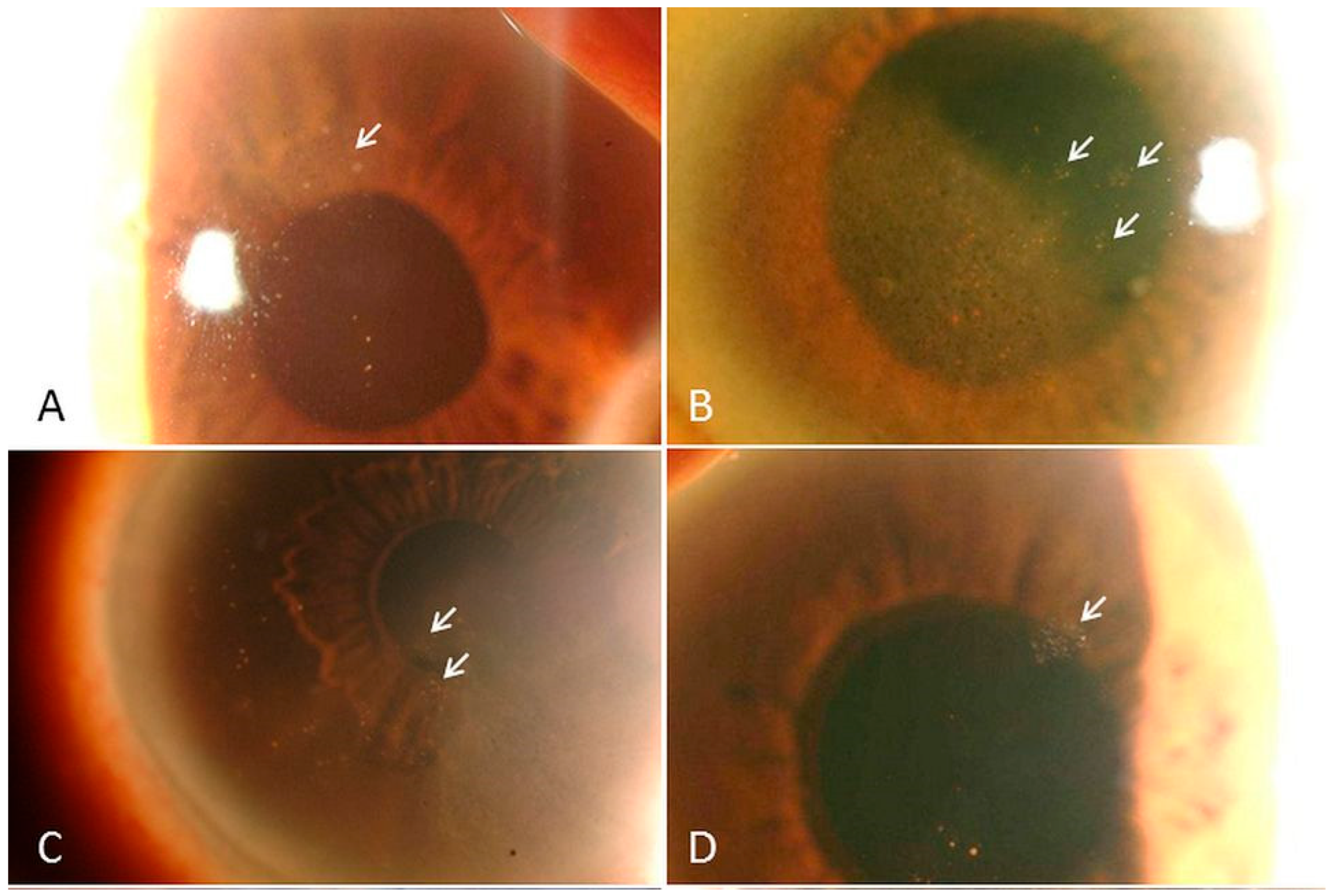
2.2.1. KPs
KPs, representing inflammatory cell deposits on the corneal endothelium, are a consistent finding in CMV corneal endotheliitis and have been reported in nearly all cases in some series [
41]. They can manifest in distinct morphological patterns that provide important diagnostic clues (
Figure 1). Coin-shaped KPs are particularly suggestive of CMV infection and typically appear as round, relatively large deposits that are often pigmented. They may be diffusely distributed or confined to localized areas of the endothelium [
6,
34,
42,
43].
Linear KPs have also been noted in a substantial proportion of cases, sometimes associated with localized stromal edema [
22,
34,
36,
44,
45]. Pigmented KPs are especially common in patients who develop CMV endotheliitis following endothelial keratoplasty, such as Descemet Membrane Endothelial Keratoplasty (DMEK) or Descemet Stripping Endothelial Keratoplasty (DSAEK) [
15,
46]. Taken together, the presence and pattern of KPs represent important clinical indicators of CMV corneal endotheliitis.
2.2.2. Corneal Edema
Corneal edema results from endothelial barrier dysfunction and impaired pump activity, ultimately leading to corneal decompensation and reduced visual acuity [
9,
32,
34]. It is a prominent clinical feature of CMV corneal endotheliitis and is observed in the majority of patients [
6,
8,
35]. In a large Japanese case series involving 106 patients, corneal edema was present in 73.4% of eyes at the time of diagnosis [
34].
The distribution of edema may be localized, presenting as disciform or sectoral involvement, or diffuse in more advanced or chronic cases, sometimes progressing to generalized bullous keratopathy [
6,
36,
47]. Improvement or resolution of corneal edema is commonly used as a clinical marker of treatment response [
41]. Conversely, persistent edema is associated with poorer visual outcomes and may necessitate surgical intervention, particularly when involving more than 75% of the corneal surface prior to treatment [
48]. Corneal edema thus reflects the severity of endothelial damage and may coexist with trabecular dysfunction, contributing to ocular hypertension and secondary glaucoma.
2.2.3. Mild Anterior Chamber Inflammation
CMV corneal endotheliitis generally shows milder inflammatory signs than other forms of viral uveitis; however, anterior chamber inflammation is almost invariably present [
32]. In the majority of cases, it appears as low-grade anterior chamber cells and flare. Notably, the degree of inflammation is often modest when compared with the extent of endothelial dysfunction or the level of IOP elevation [
6,
15]. The subtle inflammatory profile of CMV infection may obscure the viral etiology, leading to the progression of secondary disease [
35].
2.2.4. IOP Elevation
Elevated IOP is a hallmark feature of CMV anterior segment infection and a major contributor to the development of secondary glaucoma [
8,
11]. Patients frequently experience intermittent IOP spikes during periods of active inflammation [
49]. These hypertensive episodes may be associated with blurred vision, ocular discomfort, mild ocular pain, photophobia, and conjunctival hyperemia.
Persistent or recurrent IOP elevation is of clinical concern, as it can lead to irreversible glaucomatous optic neuropathy if not promptly and adequately controlled [
11,
50]. Clinical studies have demonstrated that a substantial proportion of patients with CMV corneal endotheliitis ultimately develop glaucoma, with many requiring surgical interventions for IOP control [
11,
33]. Early diagnosis and timely initiation of antiviral and IOP-lowering therapy are therefore critical to reducing the risk of advanced glaucoma and the need for surgical management [
18].
2.3. Clinical Features of Secondary Glaucoma
With progression to secondary glaucoma, IOP elevation often becomes persistent or frequently recurrent, representing a severe complication that can culminate in progressive visual deterioration [
51]. Clinically, secondary glaucoma associated with CMV corneal endotheliitis exhibits a broad spectrum of manifestations, ranging from asymptomatic IOP elevation in early stages to advanced disease characterized by optic disk cupping and reproducible visual field loss [
11].
Beyond these manifestations, acute hypertensive episodes may cause ocular pain, redness, and blurred vision, whereas chronic IOP elevation is often clinically silent until substantial optic nerve damage has occurred. Functional impairment typically manifests as progressive visual field defects, including scotoma enlargement and peripheral field constriction, with possible central vision involvement in advanced stages, reflecting irreversible glaucomatous optic neuropathy. Sustained or recurrent IOP elevation is also associated with characteristic structural changes, including optic nerve head remodeling and thinning of the retinal nerve fiber layer (RNFL) [
49]. Mori et al. reported that 52.9% of patients with CMV corneal endotheliitis complicated by glaucoma exhibited moderate-to-advanced visual field defects, highlighting the severe impact on visual function [
11].
The mechanisms underlying secondary glaucoma in CMV corneal endotheliitis are likely multifactorial and remain incompletely defined. Current evidence suggests that inflammatory responses and direct viral involvement of the TM synergistically impair aqueous humor outflow, leading to sustained IOP elevation [
12,
13,
52]. Consequently, CMV-associated secondary glaucoma is often difficult to control, frequently requiring multiple IOP-lowering medications and, in a substantial proportion of cases, surgical intervention [
11,
50,
53]. In a representative case series, Mori and colleagues reported secondary glaucoma in 32 of 34 eyes (94.1%) with CMV corneal endotheliitis; despite antiviral-centered therapy including topical 0.5% ganciclovir, approximately half of the patients ultimately required glaucoma surgery [
11]. These observations highlight the need for early recognition, close monitoring of IOP, and timely intervention to preserve visual function in affected individuals [
49].
3. Diagnosis
Accurate and timely diagnosis of CMV corneal endotheliitis and associated secondary glaucoma is essential for effective management and prevention of irreversible vision loss. Given the often subtle and non-specific presentation, diagnosis typically requires integration of characteristic clinical findings with laboratory confirmation. Additionally, distinguishing CMV corneal endotheliitis from other conditions is crucial, as misdiagnosis may lead to the malignant progression of the disease.
3.1. Clinical Tests
Clinical examinations form the basis of both initial evaluation and longitudinal follow-up in patients with CMV corneal endotheliitis and secondary glaucoma. They guide diagnostic suspicion and allow assessment of disease activity, progression, and response to treatment.
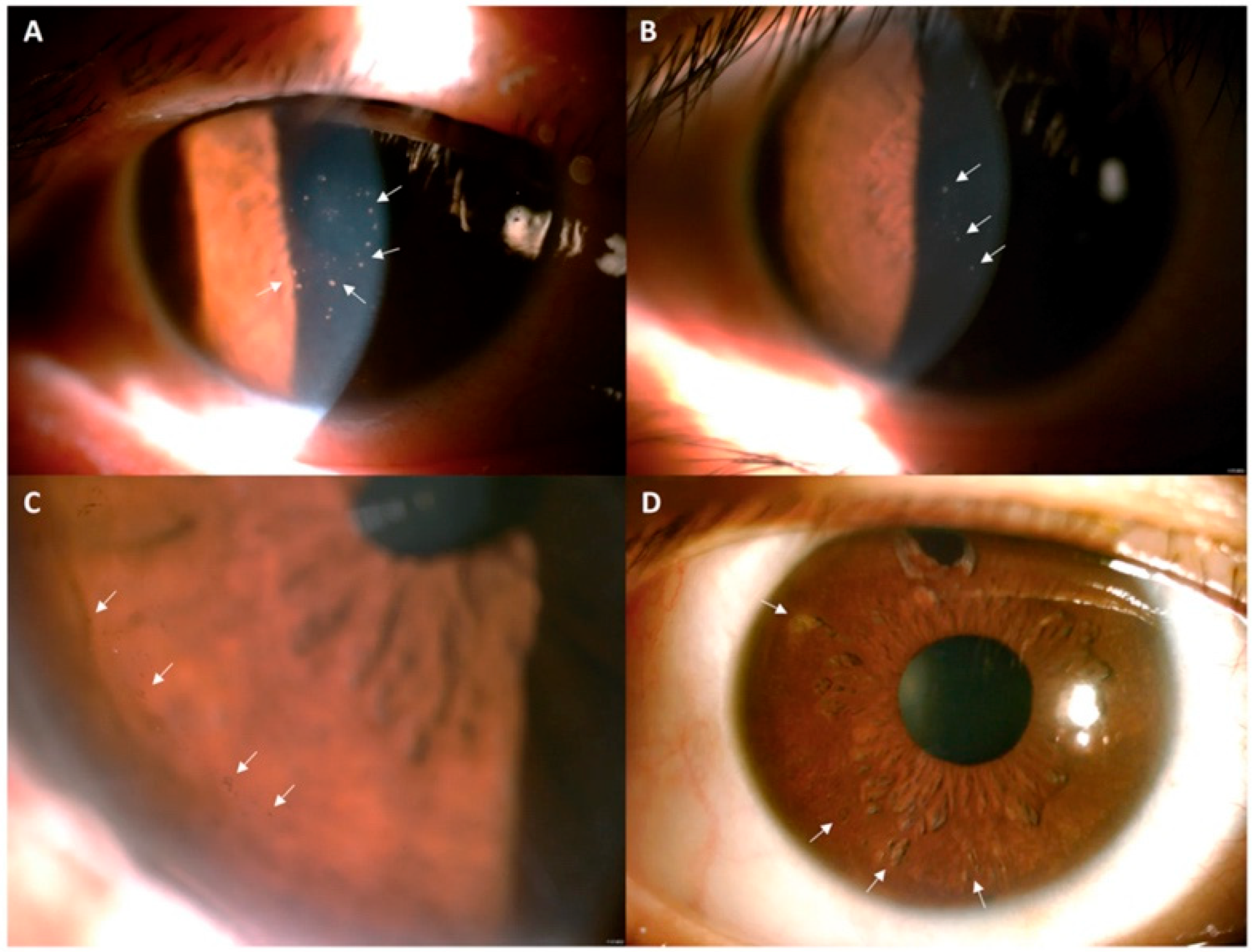
3.1.1. Slit-Lamp Biomicroscopy
Slit-lamp biomicroscopy allows for a detailed assessment of the cornea, anterior chamber, and iris, and is essential for identifying potential characteristic signs of CMV corneal endotheliitis; however, caution should be exercised when interpreting certain imaging findings, as their specificity may vary (
Figure 2). Key findings include corneal edema (localized, disciform, or diffuse) and KPs, particularly coin-shaped KPs, as well as linear or diffusely distributed pigmented KPs [
6,
8,
34,
42]. Mild anterior chamber inflammation (cells and flare) and iris abnormalities such as “moth-eaten” iris atrophy may also be observed [
6,
32,
41].
Combined with Goldmann applanation tonometry, slit-lamp examination facilitates IOP assessment, which is frequently elevated in CMV anterior segment infection and is central to diagnosing and monitoring secondary glaucoma [
11]. Given the dynamic nature of these signs and their evolution with therapy, repeated slit-lamp examinations are essential for monitoring treatment response [
54].
3.1.2. AS-OCT
Anterior segment optical coherence tomography (AS-OCT) is a non-invasive imaging modality that provides high-resolution cross-sectional visualization of anterior segment structures. In CMV corneal endotheliitis, AS-OCT may reveal hyperreflective protrusions on the posterior corneal surface with variable morphologies, including dendritic, dome-shaped, quadrangular, or saw-tooth patterns [
55]. These findings are thought to correspond to inflammatory deposits and/or structurally altered endothelial cells. Importantly, reduction or resolution of posterior corneal hyperreflectivity following antiviral therapy highlights the potential utility of AS-OCT for both diagnosis and longitudinal monitoring of treatment response [
55].
3.1.3. Specular Microscopy
Specular microscopy is a key tool for evaluating the corneal endothelium, providing quantitative and qualitative assessment of endothelial cell density (ECD), morphology, and polymegethism/pleomorphism. In CMV corneal endotheliitis, reduced ECD is commonly observed and reflects virus-associated endothelial injury [
18,
49].
A particularly distinctive finding is the presence of enlarged endothelial cells containing viral inclusion bodies, commonly referred to as “owl’s eye” cells, which are characteristic manifestations often considered suggestive of CMV infection [
16,
56]. Supporting this observation, recent in vitro studies have demonstrated markedly enlarged endothelial cells with a hyperreflective nucleus surrounded by a hyporeflective halo, corresponding to the “owl’s eye” appearance seen clinically [
3,
16]. The emergence and subsequent resolution of these cells during treatment may provide a non-invasive means of assessing disease activity and therapeutic response [
16,
54].
3.1.4. IVCM
In vivo confocal microscopy (IVCM) is a non-invasive, high-resolution imaging modality that enables cellular-level visualization of the corneal endothelium and associated inflammatory changes [
57,
58]. Its ability to track microstructural changes over time makes it useful for supporting diagnosis and monitoring treatment response, particularly through longitudinal assessment of endothelial cells and KPs [
58].
IVCM may also aid etiologic differentiation in viral endotheliitis. Comparative analyses have reported distinct endothelial patterns among herpesviruses, and CMV endotheliitis is notably associated with “owl’s eye”-like morphology [
59,
60].
3.1.5. Assessment for Secondary Glaucoma
Regular assessment for secondary glaucoma is integral to preventing irreversible glaucomatous damage in CMV corneal endotheliitis. This involves serial IOP measurements, gonioscopy, and structural and functional evaluation of the optic nerve. Elevated IOP is a frequent complication, and its control is critical to prevent glaucomatous optic neuropathy [
11]. Gonioscopy may evaluate the anterior chamber angle and reveal signs of inflammation in the angle or peripheral anterior synechiae, which can contribute to IOP elevation [
18].
Optic disk assessment for progressive cupping and RNFL thickness measurements, typically obtained by optical coherence tomography (OCT), are essential for detecting and monitoring glaucomatous damage. However, fundus evaluation may be limited in eyes with marked corneal edema, necessitating repeat posterior-segment assessment after corneal clarity improves [
61]. Objective morphologic evidence of glaucomatous progression, including RNFL thinning, further highlights the need for standardized structural monitoring to guide therapy [
49].
3.2. Laboratory Tests
Laboratory tests on aqueous humor samples are indispensable for confirming the diagnosis of CMV anterior segment infection and guiding treatment. Among the available modalities, emerging diagnostic techniques are becoming more effective in establishing viral etiology.
3.2.1. Aqueous Humor PCR and qPCR
Polymerase chain reaction (PCR) and quantitative PCR (qPCR) are the gold standard for diagnosing active CMV infection in the anterior segment and for differentiating CMV from other herpesviruses such as HSV and VZV that have similar clinical presentations with CMV corneal endotheliitis [
22,
32,
62,
63,
64,
65,
66].
Higher CMV DNA copy numbers in aqueous humor have been associated with active inflammation, more frequent recurrences, and IOP elevation [
67]. Multicenter studies have reported high diagnostic performance of qPCR for ocular CMV infection, with sensitivities of approximately 90% [
67]. Beyond diagnosis, qPCR may provide value for monitoring treatment response, as declining viral loads are consistent with effective antiviral suppression. Conversely, persistently elevated or rising CMV DNA levels may suggest inadequate viral control, increased risk of recurrence, or unfavorable surgical outcomes [
18,
68].
Nevertheless, aqueous humor PCR has inherent limitations. Anterior chamber paracentesis is an invasive procedure that carries risks such as IOP spikes, wound leaks, and potential infection or hemorrhage [
69]. In addition, CMV DNA may not be detectable during the initial visit, and multiple tests may be required for a conclusive diagnosis, particularly in cases with less severe inflammation or those undergoing antiviral treatment [
64]. Furthermore, false-negative results can also occur, particularly in settings of low viral load, localized endothelial infection, or sampling outside the active phase. In refractory cases, CMV DNA has been detected in surgically excised Descemet’s membrane and corneal endothelium despite negative aqueous PCR, highlighting the potential role of tissue analysis when clinical suspicion remains high [
45]. In addition, while PCR confirms the presence of CMV, it may not always differentiate between active infection and latent viral presence, especially with low copy numbers. However, a standardized threshold for CMV DNA load in aqueous humor for clinical diagnosis may not have been clearly established [
70]. Additionally, the variation in CMV DNA copy numbers across institutions, sometimes differing by up to fourfold for the same sample, can likely be attributed to differences in primers, reagents, equipment, and target amplification protocols, as well as variations in DNA standards [
64,
68].
3.2.2. IgG and IgM Antibodies
Serological testing for CMV-specific IgG and IgM antibodies can provide information about past or recent systemic CMV exposure. CMV IgG positivity reflects prior infection and latent viral carriage, which is common in the general population [
53,
61], and, therefore, does not establish active intraocular infection. CMV IgM antibodies typically indicate recent or primary systemic infection; however, ocular CMV disease in immunocompetent individuals often represents localized viral reactivation without systemic viremia or a detectable IgM response [
22].
As a result, while serologic testing may offer supportive contextual information, it is generally insufficient for confirming active CMV anterior segment infection. Detection of CMV DNA in aqueous humor by PCR remains the principal diagnostic approach in this setting.
3.2.3. Emerging Diagnostic Technologies
Beyond these, emerging diagnostic technologies are being explored. Metagenomic Next-Generation Sequencing (mNGS) of aqueous humor has shown promise as a comprehensive diagnostic tool, particularly in cases where routine qPCR may yield negative or inconclusive results, or when differentiating between multiple potential viral etiologies is challenging [
71]. In one comparative study of patients with suspected CMV endotheliitis, qPCR detected CMV in 36.4% of cases, whereas mNGS identified CMV in all confirmed cases, suggesting a potentially higher diagnostic yield and the added advantage of detecting alternative or co-infecting pathogens [
71]. Nevertheless, clinical laboratory operations for mNGS, in the absence of full automation, may require significant hands-on time and highly trained personnel. Repetitive tasks, such as pipetting, increase the risk of procedural errors. While mature automation of sample handling with robotic systems can improve efficiency, it also significantly increases costs. Additionally, due to high reagent expenses, manual library preparation, bioinformatics analysis, and the need for regulatory oversight, mNGS remains costly and is associated with longer overall turnaround times. Together, these factors limit its widespread clinical adoption, and future technological advancements are necessary to overcome these challenges [
71,
72].
3.3. Differential Diagnosis
Differentiating CMV corneal endotheliitis from Posner–Schlossman syndrome (PSS) remains clinically challenging due to overlapping features. A study involving 18 patients with CMV corneal endotheliitis found that nearly half of the cases were initially diagnosed as PSS [
11]. CMV corneal endotheliitis typically presents with coin-shaped or linear KPs and is commonly associated with progressive severe corneal edema. As the corneal edema worsens, IOP generally increases gradually. The disease tends to follow a chronic or recurrent course. In contrast, PSS often presents with medium-sized, mutton-fat-like KPs, less frequent corneal edema, and recurrent acute episodes of markedly elevated IOP, often reaching 40–70 mmHg during an attack [
73]. Recent studies have shown that a significant subset of PSS patients also test positive for CMV. A meta-analysis of 21 studies found that approximately 44.5% of PSS patients were CMV-positive, with these eyes exhibiting lower corneal endothelial cell density [
33].
Furthermore, CMV endotheliitis is associated with secondary glaucoma, which typically manifests in the mid-to-late stages of disease progression, often after irreversible damage has occurred. In contrast, chronic hypertensive anterior uveitis is characterized by persistent intraocular inflammation lasting for at least 3 months. Research has shown that among CMV-positive patients with hypertensive anterior uveitis, 66.7% required glaucoma surgery despite treatment, due to ongoing uncontrolled IOP elevation [
74].
These findings suggest that some other anterior ocular diseases may indeed be closely associated with CMV infection. However, the distinction between them is currently primarily based on clinical symptom differences, CMV DNA detection, response to antiviral treatment, and anti-glaucoma therapies. The exact relationship between them, including whether CMV endotheliitis is a primary etiological factor, a coexisting infection, or a secondary complication, remains unclear and warrants further investigation.
4. Treatment
Management of CMV corneal endotheliitis complicated by secondary glaucoma requires integrated control of viral activity, intraocular inflammation, and IOP. Antiviral therapy remains the cornerstone of treatment. Anti-inflammatory agents and IOP-lowering strategies are essential adjuncts. Surgical intervention is reserved for cases refractory to medical therapy or complicated by corneal decompensation or uncontrolled glaucoma (
Table S1).
4.1. Medical Therapy
4.1.1. Antiviral
Antiviral therapy is fundamental in CMV corneal endotheliitis, aiming to suppress viral replication, mitigate inflammation, and prevent further endothelial injury and IOP elevation. Ganciclovir and valganciclovir are the preferred first-line agents.
Topical Ganciclovir
Topical ganciclovir, typically in 0.15% or 2.0% formulations, is widely used and offers a local approach with fewer side effects. The efficacy of 0.15% ganciclovir gel has been proved to be safe and effective for CMV corneal endotheliitis patients [
75]. In the study by Koizumi et al., intensive dosing (six times daily for 12 weeks) was associated with reduced aqueous CMV DNA copy numbers, and six of seven eyes achieved corneal clarity with preserved endothelial function [
68].
However, concerns have been raised regarding low intraocular drug penetration and suboptimal efficacy with the 0.15% gel formulation [
76,
77]. To address this limitation, higher-concentration formulations have been investigated. Topical 2.0% ganciclovir achieves markedly higher aqueous humor concentrations (approximately 1200 ng/mL), exceeding the inhibitory dose for CMV replication, and results in higher rates of undetectable CMV titers compared with the 0.15% gel (approximately 17 ng/mL) [
17,
76]. Long-term use of 2.0% ganciclovir has also been associated with reduced KPs, improved IOP control, and lower recurrence rates [
78]. Nevertheless, 2.0% ganciclovir drops are not commercially available in all regions, and adherence may be challenging due to frequent dosing requirements [
77].
Systemic Valganciclovir
Oral valganciclovir is often used for severe cases, bilateral involvement, or when topical therapy alone is insufficient [
42,
44,
53]. Some studies suggest that continuous low-dose oral valganciclovir may be effective as maintenance therapy to prevent recurrences [
44]. In addition, intravitreal injections of ganciclovir are an option for severe or refractory cases, or when rapid intraocular drug levels are required. This approach, often combined with oral valganciclovir, has shown a reduction in long-term recurrence and improvement in corneal endothelial cell counts and visual acuity [
79].
However, systemic therapy is costly and carries a higher risk of adverse effects, including myelosuppression, neutropenia, and thrombocytopenia [
80]. In addition, systemic antiviral therapy may be associated with higher recurrence rates. A retrospective clinical study of oral valganciclovir for CMV anterior segment inflammation, including endotheliitis, found that while oral valganciclovir was effective in controlling inflammation, 38.5% of treated eyes experienced recurrence after treatment cessation and required retreatment [
81]. Additionally, another large cohort study noted that approximately 72% of patients still experienced recurrence after completing antiviral treatment with oral valganciclovir followed by topical therapy [
81]. Furthermore, in solid organ transplant recipients undergoing CMV prophylaxis, valganciclovir can also be associated with toxicity and breakthrough CMV DNAemia [
82].
Although different treatment approaches offer advantages, such as improved clinical outcomes or fewer side effects, the existing evidence is largely derived from retrospective cohorts and case series. Currently, there is a lack of prospective randomized controlled trials directly comparing various topical concentrations (e.g., 0.15% vs. 2%) or treatment regimens (e.g., topical vs. systemic) in CMV endotheliitis, and further investigation is needed. Therefore, the selection of topical therapy, systemic therapy, or a combination thereof should be based on a comprehensive assessment of disease severity, patient tolerance, treatment response, and the presence of secondary complications, including glaucoma, and other factors [
35,
83,
84,
85].
4.1.2. Anti-Inflammatory
Topical corticosteroids are frequently used in combination with antivirals to control inflammation in CMV corneal endotheliitis. In clinical practice, treatment often combines antiviral therapy with topical corticosteroids (1% prednisolone acetate eye drops) to reduce corneal edema and anterior chamber inflammation [
56]. In some cases, systemic corticosteroids may be used for severe inflammation.
Nevertheless, corticosteroid use requires caution [
86,
87,
88,
89]. Steroids may induce reactivation of latent CMV infection and exacerbation of viral replication, especially in cases of underlying viral etiology [
53,
90]. In addition, prolonged corticosteroid exposure may induce cytoskeletal remodeling of TM cells, thereby contributing to steroid-induced glaucoma [
91]. Optimal management, therefore, requires minimizing steroid exposure while ensuring adequate viral suppression and close monitoring for IOP elevation [
18].
4.1.3. IOP Control
Control of CMV-associated IOP elevation is critical to prevent secondary glaucoma and preserve visual function [
92]. First-line management typically includes topical anti-glaucoma medications such as prostaglandin analogs, β-blockers, α-agonists, and carbonic anhydrase inhibitors [
11,
93,
94,
95]. However, IOP elevation in CMV anterior segment infection can be difficult to control, often requiring combination therapy and frequent monitoring [
18,
96].
Rho kinase (ROCK) inhibitors have recently attracted interest as adjunctive therapy. Experimental data suggest that ROCK inhibition may support corneal endothelial function and reduce apoptosis while also lowering IOP [
97,
98]. Although these findings are promising, clinical evidence remains limited, and further studies are required to define their role in CMV-associated disease. Despite maximal medical therapy, a substantial proportion of patients ultimately require surgical intervention for refractory IOP elevation.
4.2. Surgical Therapy
4.2.1. Corneal Transplantation
Advanced CMV corneal endotheliitis may progress to irreversible endothelial failure and bullous keratopathy, necessitating corneal transplantation. Endothelial keratoplasty, including Descemet’s stripping automated endothelial DSAEK and DMEK, has become the preferred surgical approach, providing faster visual recovery and fewer complications than penetrating keratoplasty [
90,
99].
However, CMV infection poses specific challenges in the keratoplasty setting. CMV corneal endotheliitis can occur after endothelial transplantation and frequently mimics immunologic graft rejection, potentially leading to graft failure if mismanaged [
42,
100,
101,
102,
103]. Accordingly, preoperative aqueous humor PCR testing for CMV is strongly recommended when clinical suspicion exists. In CMV-positive patients, perioperative and prolonged postoperative antiviral therapy is often required to reduce recurrence risk and improve graft survival [
104,
105,
106,
107,
108]. Despite prophylaxis, recurrence remains clinically relevant, underscoring the need for long-term postoperative surveillance [
104].
4.2.2. Glaucoma Surgery
In refractory CMV-associated secondary glaucoma, surgical IOP-lowering procedures may be required. Trabeculectomy remains a commonly performed filtration surgery and has been reported in a substantial proportion of patients with CMV corneal endotheliitis complicated by glaucoma [
11,
49,
53]. However, trabeculectomy carries risks, including accelerated corneal endothelial cell loss and bullous keratopathy, particularly in eyes with pre-existing endothelial compromise [
109].
Glaucoma drainage devices (GDDs) are often considered in eyes with extensive conjunctival scarring, prior failed filtration surgery, or when trabeculectomy is less likely to succeed. However, they may carry the risk of intraocular infection and device exposure. A meta-analysis of 38 studies involving 3255 eyes found that the incidence of exposure to GDDs ranged from 0% to 12%. Additionally, a nine-year retrospective study reported an endophthalmitis rate of 1.7% following the implantation of Ahmed drainage devices in 542 eyes [
7].
Minimally invasive glaucoma surgery (MIGS) has emerged as a safer alternative to traditional incisional glaucoma surgery, particularly for patients with mild to moderate disease. MIGS procedures are designed to minimize tissue trauma, reduce recovery time, and lower the risk of serious complications relative to trabeculectomy and glaucoma drainage implants, mainly through ab interno approaches and conjunctival sparing techniques. However, although short-term outcomes show promising reductions in intraocular pressure and medication burden, long-term efficacy data are limited, and comparative evidence against other approaches remains to be further explored [
50,
110,
111].
In addition, MicroPulse transscleral laser therapy (MP-TLT) has been investigated as an alternative, non-invasive approach for refractory glaucoma, potentially reducing IOP via enhanced uveoscleral outflow [
112]. Unlike conventional surgical procedures, it is a laser treatment targeting the uveoscleral outflow pathway to reduce IOP. MP-TLT is often considered for cases of refractory glaucoma or in patients who are at high risk for more invasive surgery. This treatment is associated with a lower risk of infection and surgical failure and is repeatable. However, it is less effective than traditional surgical treatments in achieving the target IOP levels, and its long-term efficacy requires further investigation [
113,
114]. Surgical choice should be individualized based on the extent of endothelial damage, inflammatory activity, angle status, and surgical history.
Although some clinical articles have outlined current treatment regimens, there is still no consensus or standardized guidelines regarding specific medication timing, dosage, and administration protocols. Furthermore, in cases of worsening corneal pathology or secondary glaucoma, surgical intervention may be necessary. However, the indications for surgery remain unclear, and there is a notable absence of standardized surgical guidelines.
4.3. Long-Term Management and Follow-Up
CMV corneal endotheliitis is a chronic and relapsing condition. Long-term management and rigorous follow-up are therefore critical. Continuous low-dose antiviral maintenance therapy, particularly with topical ganciclovir, has been shown to reduce relapse frequency significantly [
76,
78]. For instance, topical 2.0% ganciclovir solution can reduce recurrence rates to as low as 0.13 relapses per year [
78]. Low-dose oral valganciclovir may also be effective in selected patients [
44].
Regular follow-up examinations should include slit-lamp biomicroscopy to monitor for KPs, corneal edema, and anterior chamber inflammation; IOP measurements to detect and manage ocular hypertension; specular microscopy to assess ECD and morphology, including the presence of owl’s eye cells; and visual field testing and OCT of the optic nerve head and RNFL to monitor for glaucomatous progression [
16,
49]. The duration of antiviral treatment, especially systemic therapy, should be individualized based on clinical response, viral load, and the patient’s immune status, balancing efficacy with potential side effects [
90,
115]. Early diagnosis and adherence to a standardized follow-up protocol are paramount to reducing recurrence rates, preventing glaucomatous damage, and ultimately improving both visual acuity and IOP outcomes [
8,
18].
5. Risk Factors
Identifying risk factors for CMV corneal endotheliitis and its progression to secondary glaucoma is crucial for early detection and targeted preventive strategies. Multiple factors have been associated with disease development and severity.
5.1. Age and Gender
A prominent demographic pattern in CMV corneal endotheliitis and subsequent secondary glaucoma is its predominance in middle-aged to elderly men [
36,
74].
Multiple studies, particularly from East Asia, report a marked male predominance and a mean age typically in the sixth to seventh decade. In the Japan Corneal Endotheliitis Study of 106 patients, the mean age was 66.9 years, with 85 males and 21 females [
34]. Similarly, a study focusing on glaucoma associated with CMV corneal endotheliitis reported a mean age of 69.1 years, with 31 of 34 patients being male [
11]. Furthermore, the data presented in
Table 1 are highly relevant to the epidemiological trends discussed.
This demographic distribution suggests that age-related immune senescence and hormonal influences may contribute to CMV reactivation and ocular involvement in this group. Consistently, a recent study examining predictors of CMV corneal endotheliitis after corneal transplantation identified male sex as a significant risk factor [
116]. Moreover, PSS, which are frequently linked to CMV infection and secondary glaucoma, also tend to occur in similar demographic groups [
33]. The mechanisms underlying this predilection are not fully understood but may involve differences in immune responses or exposure patterns.
5.2. Host Immune Status
Immunosuppression, such as immunosuppressive medications, can also influence the risk of CMV reactivation and CMV-related anterior segment disease.
In a reported case series, irreversible ocular damage was observed in three patients receiving long-term topical tacrolimus and corticosteroid therapy, which may have promoted reactivation of latent CMV and precipitated CMV corneal endotheliitis. Although topical 0.5% ganciclovir improved endothelial inflammation, final outcomes remained poor so all patients required cataract surgery, and two required glaucoma surgery [
90]. Patients undergoing keratoplasty who require systemic immunosuppressants are also at increased risk of CMV reactivation and subsequent endotheliitis [
42,
104]. More broadly, CMV remains a major concern in immunocompromised hosts, such as solid organ and hematopoietic stem cell transplant recipients, in whom CMV can cause severe systemic and ocular complications [
23,
24,
25,
117]. Furthermore, immune reconstitution inflammatory syndrome (IRIS) occurs in HIV-infected individuals shortly after the initiation of antiretroviral therapy, triggering the reactivation of latent CMV infections. This reactivation can lead to tissue-destructive inflammation and potentially severe complications, including the coinfection of tuberculosis in ocular tissues [
118,
119]. These observations underscore the importance of vigilant monitoring and proactive antiviral strategies in immunosuppressed patients.
5.3. Prolonged and Recurrent CMV Infection
A prolonged disease course, misdiagnosis or delayed recognition, inadequate viral suppression, and frequent recurrences have been associated with increased risk of corneal endothelial damage and progression to secondary glaucoma [
120,
121,
122].
Studies suggest that higher aqueous CMV DNA levels and longer disease duration correlate with more substantial endothelial cell loss [
120,
123]. Furthermore, frequent recurrences are often observed when antiviral treatment is discontinued or inadequate, with reported relapse rates reaching 60–70% after cessation in some series, underscoring the need for individualized maintenance strategies in selected patients [
76]. In addition, misdiagnosis or delayed recognition, often due to clinical manifestations overlapping with other uveitic entities or graft rejection, may lead to inappropriate corticosteroid escalation without adequate antiviral coverage, thereby exacerbating viral activity and accelerating ocular damage, including secondary glaucoma [
101]. Even low-level persistent viral activity may contribute to cumulative endothelial injury, increasing the likelihood of corneal decompensation and repeat graft failure after keratoplasty [
124].
5.4. Pre-Existing Ocular Conditions
Pre-existing ocular diseases and prior intraocular surgery appear to predispose eyes to CMV corneal endotheliitis and secondary glaucoma [
125,
126]. In a case series of CMV corneal endotheliitis complicated by glaucoma (n = 34), 94.1% of eyes had a pre-existing diagnosis of glaucoma and had been treated for a mean of 10.0 ± 10.1 years before CMV endotheliitis was definitively diagnosed. Additionally, 47.1% had glaucoma in the fellow eye and 38.2% had a history of PSS, suggesting a predisposition to hypertensive anterior segment inflammation and limited optic nerve reserve [
11].
Despite IOP reduction with medical therapy (mean 22.4 ± 10.6 mmHg to 14.9 ± 7.9 mmHg,
p < 0.01), 47.1% of eyes still required glaucoma surgery during follow-up, indicating that cumulative trabecular damage can render IOP increasingly difficult to control [
11]. Furthermore, multivariable analyses have identified that a previous history of anterior uveitis (OR 25.31, 95% CI 8.22–95.19) and a previous history of glaucoma (OR 6.25, 95% CI 1.17–115.90) were each significantly associated with postoperative CMV corneal endotheliitis [
116].
In addition, long-term cohort studies of PCR-confirmed CMV anterior segment infection have shown that prior corneal transplantation before CMV diagnosis is an independent predictor of molecular recurrence (hazard ratio 6.81, 95% CI 1.21–38.23,
p = 0.029) [
79,
127]. Surgical disruption of the ocular immune environment, combined with recurrent viral activity, may accelerate endothelial loss and chronic anterior segment dysfunction, thereby increasing the risk of secondary glaucoma.
5.5. Other Risk Factors
Metabolic disorders such as diabetes mellitus (DM), hyperlipidemia, and hypertension have been associated with CMV infection and the progression of CMV-related secondary glaucoma.
Research indicates that individuals with DM experience a significantly higher incidence of endotheliitis compared to those without diabetes. This difference may be attributed to abnormalities in cell-mediated immunity due to hyperglycemia, as well as the impairment of the blood–aqueous barrier, which may facilitate the infiltration of virus-infected cells into the corneal endothelium [
125,
128]. Additionally, diabetes can lead to retinal ischemia, triggering the release of vascular endothelial growth factor (VEGF), which promotes neovascularization within the anterior chamber angle. This process obstructs trabecular outflow, resulting in increased IOP and ultimately contributing to the development of secondary glaucoma [
129].
Hypertension, on the other hand, may increase the risk of CMV infection in the eye by inducing microvascular damage, which impairs the eye’s immune defenses [
130]. Additionally, high blood pressure may exacerbate ocular blood flow insufficiency, accelerating CMV-induced corneal endothelial cell damage [
131]. Elevated intraocular pressure, a common consequence of hypertension, further worsens disease progression [
132].
Dyslipidemia can suppress immune responses, which may allow CMV to persist within the eye without being effectively cleared, thereby promoting continuous ocular inflammation [
133]. Moreover, the combined effects of oxidative stress and inflammation can disrupt TM function, impair aqueous humor drainage and increase IOP, which exacerbates the development of secondary glaucoma [
134,
135].
Therefore, although many risk factors have already been identified as important contributors to the disease, further studies are needed to better understand the role of CMV in the development of ocular pathologies and secondary glaucoma, as well as to explore potential additional risk factors.
6. Pathogenesis
CMV corneal endotheliitis and its secondary glaucoma reflects a complex interplay among direct viral cytopathic effects, inflammatory mediators and host immune responses. These processes converge on progressive endothelial dysfunction, impaired aqueous humor outflow, and irreversible optic nerve damage.
6.1. Pathogenesis of CMV Corneal Endotheliitis
Following primary infection, CMV establishes lifelong latency in multiple host tissues, including ocular tissues such as the corneal endothelium, ciliary body, and TM [
136,
137]. Within the eye, viral persistence may be facilitated by the immune-privileged anterior chamber environment, where anterior chamber-associated immune deviation (ACAID) occurs as viruses such as CMV exploit TGF-β to promote the generation of regulatory T cells and suppress the responses of CD4
+ TH1 and TH2 cells [
138]. This immune modulation creates a low-immune surveillance environment, allowing the virus to persist without being cleared [
139,
140,
141,
142].
Under conditions that disrupt host–virus equilibrium, such as systemic immunosuppression, local or systemic corticosteroid exposure, intraocular surgery, trauma, or other stressors, latent CMV may reactivate. Reactivation is characterized by immediate-early viral gene expression and induction of pro-inflammatory cytokines such as TNF-α, which can further enhance viral replication and sustain a self-amplifying inflammatory loop [
95,
97]. Experimental evidence further indicates that MEK-ERK signaling is critical for CMV reactivation and suggests that targeting this pathway may help limit viral reactivation and downstream pathogenesis [
143]. In addition, studies have shown that the EGFR-AKT-PI3K signaling axis, along with related Rho and MAPK pathways, also plays a crucial role in reactivation [
137]. Furthermore, recent research has found that viral factors such as UL8-mediated receptor degradation and miR-UL36’s post-transcriptional regulation further enhance viral reactivation by suppressing Notch signaling. These factors accomplish this by degrading Notch3 and downregulating the downstream transcriptional regulator RBPJ [
144,
145]. Despite these insights, the precise mechanisms underlying CMV’s dormancy and reactivation remain elusive. Moreover, repeated latency–reactivation cycles are thought to drive recurrent or chronic CMV corneal endotheliitis and provide a mechanistic basis for subsequent ocular hypertension and glaucomatous damage [
85,
146].
After reactivation, CMV corneal endotheliitis appears to involve both direct viral cytopathic injury and host immune inflammation [
5,
16]. Active viral replication within corneal endothelial cells disrupts cellular metabolism and ultrastructure, resulting in cellular swelling, cytoplasmic degeneration, and impaired endothelial function [
7]. Viral antigen expression also provokes a cellular immune response. Lymphocytes, predominantly CD8
+ T cells, together with monocytes accumulate at the endothelial surface and adhere to injured cells, further exacerbating tissue damage [
120]. Cytokines released at the endothelial surface further amplify local inflammation and tissue injury [
147].
Meanwhile, corneal endothelial cells are active participants in the immune response. Following CMV infection, they activate both innate and adaptive immune pathways. This response includes upregulation of type I interferon signaling, activation of pattern-recognition receptors, and secretion of chemokines such as CXCL10 [
67]. These cells can also directly stimulate CD8
+ T cell proliferation and interferon-γ secretion, indicating their role in activating acquired immunity [
67].
Both direct viral injury and immune-mediated inflammation can culminate in endothelial pump failure. Experimental and clinical evidence suggests that viral proteins and the inflammatory microenvironment may induce mitochondrial dysfunction and reduce Na
+/K
+-ATPase activity, which is essential for maintaining corneal deturgescence. As pump capacity declines, aqueous fluid accumulates within the corneal stroma, producing the characteristic focal corneal edema observed in CMV endotheliitis. Progressive endothelial cell loss and persistent pump dysfunction, therefore, constitute the immediate basis for corneal decompensation and loss of transparency [
5].
6.2. Pathogenesis of Secondary Glaucoma Induced by CMV Corneal Endotheliitis
Elevated IOP is a central feature of CMV corneal endotheliitis and a major contributor to secondary glaucoma. IOP elevation likely results from a combination of acute aqueous outflow obstruction and chronic TM damage [
148].
As endothelial injury progresses, cellular debris, inflammatory cells, and viral particles are released into the anterior chamber [
6,
46,
74,
123,
149]. These materials may accumulate within the TM, physically obstructing aqueous outflow and increasing outflow resistance. Pigmented inflammatory deposits may further exacerbate this process, contributing to acute IOP spikes [
74]. Animal experiments have also shown that swelling of the trabecular lamellae and reduction in the intertrabecular spaces may block the outflow pathway. Over time, chronic inflammatory injury and debris accumulation may promote irreversible TM scarring and dysfunction, contributing to persistent secondary glaucoma [
109].
In addition, CMV exhibits tropism for multiple ocular anterior segment tissues, and infection of TM cells has been proposed as a direct mechanism for outflow impairment [
13,
150]. In vitro studies have shown that CMV infection of human TM cells activates interferon signaling and upregulates inflammatory cytokines and chemokines, including IL-8 and CCL2 [
13]. This infection-induced cellular activation can alter the dynamics of TM cells, leading to increased cell motility and contraction, which are dependent on CXCR2 and CCR2 signaling pathways, respectively [
13]. Furthermore, emerging evidence suggests that HCMV-induced elevation in IL-8 triggers pathological remodeling of the TM actin cytoskeleton via the Rac1/Cdc42 GTPase pathways, reducing the effective pore size of the trabecular lamellae and acutely escalating aqueous humor outflow resistance [
13]. Direct viral infection may also induce TM cell dysfunction, apoptosis, or necrosis, further compromising the structural integrity and filtering capacity of the outflow pathway [
147,
151]. In the chronic phase, persistent inflammation co-opts the TGF-β1/Smad signaling axis to drive excessive extracellular matrix deposition and TM stiffening. Recent studies also highlight viral-mediated suppression of TEAD1 transcriptional activity, which impairs the mechanical stress-sensing capabilities of TM cells, ultimately culminating in refractory secondary glaucoma [
152].
Persistent or recurrent IOP elevation ultimately drives optic nerve damage. When IOP exceeds the compensatory capacity of the lamina cribrosa and its vascular support, axoplasmic transport in retinal ganglion cell axons becomes impaired, apoptotic loss accelerates, and glaucomatous optic neuropathy ensues. Clinically, this manifests as progressive optic disk cupping with neuroretinal rim thinning and corresponding visual field loss. Thus, recurrent CMV endotheliitis can initiate a pathogenic cascade from viral activity to outflow dysfunction and end-organ optic nerve damage, and the resulting secondary glaucoma is often difficult to control medically. These observations underscore the importance of early and sufficiently potent antiviral suppression, appropriately balanced anti-inflammatory therapy, and proactive IOP management to interrupt disease progression and prevent irreversible visual impairment [
153].
In summary, the pathogenesis of CMV corneal endotheliitis and secondary glaucoma is multifactorial and remains incompletely understood. A deeper mechanistic understanding will be essential for developing improved diagnosis and therapies.
7. Conclusions
CMV infection of the anterior segment, predominantly manifesting as corneal endotheliitis, represents a clinically significant and often challenging ocular condition with a high propensity for progression to secondary glaucoma. This review has summarized key clinical features, diagnosis, therapeutic strategies, risk factors and putative pathogenic mechanisms.
The clinical hallmarks of CMV corneal endotheliitis, including coin-shaped or linear keratic precipitates, corneal edema, mild anterior chamber inflammation, and recurrent IOP spikes, provide important diagnostic clues [
6,
34]. However, the definitive diagnosis mainly relies on laboratory confirmation, with aqueous humor qPCR testing serving as the gold standard for detecting CMV DNA and quantifying viral load [
11,
34]. Adjunctive imaging modalities, including specular microscopy, anterior segment OCT, and in vivo confocal microscopy, offer valuable insights into endothelial pathology, assist in differentiating CMV endotheliitis from other conditions, and facilitate monitoring of treatment response [
58,
154].
Effective management necessitates a prompt and appropriate therapeutic approach. Antiviral therapy, primarily with topical ganciclovir or systemic valganciclovir, is essential to suppress viral replication and inflammation [
44,
78,
83]. Equally important is timely IOP management. Although medical therapy may provide initial IOP control, a considerable proportion of patients ultimately require surgical intervention. Surgical planning must be cautious, given the elevated risks of endothelial cell loss, surgical failure, and postoperative corneal decompensation [
149]. Because recurrence is common after treatment discontinuation, long-term maintenance antiviral therapy is often necessary to limit cumulative endothelial and optic nerve damage [
44].
Several risk factors contribute to the development and severity of CMV-associated secondary glaucoma, including demographic predisposition, host immune status, prolonged and recurrent CMV infection and a history of pre-existing ocular disease or intraocular surgery [
48]. These factors interact to promote viral reactivation, sustained inflammation, aqueous outflow dysfunction, and glaucomatous optic nerve injury [
155].
Currently, a significant challenge is that randomized controlled trials evaluating treatment efficacy for CMV endotheliitis and its associated secondary glaucoma are still lacking. Consequently, standardized treatment guidelines for both conditions have yet to be established, and the diagnostic criteria for secondary glaucoma remain undefined. Furthermore, there is a scarcity of studies comparing diagnostic results and various treatment approaches, while existing research reveals significant individual variability across patient populations. The risk factors for these conditions are highly variable, and the underlying pathogenic mechanisms remain unclear. These gaps underscore the critical need for further research.
In conclusion, CMV infection of the anterior segment, particularly when complicated by secondary glaucoma, poses a formidable challenge to ophthalmology. Early recognition, accurate diagnosis and a comprehensive, individualized treatment plan combining antiviral therapy with aggressive IOP management are paramount. Continued efforts to refine diagnostic tools, improve antiviral and anti-glaucoma therapies, and clarify pathogenic mechanisms will be crucial for improving corneal endotheliitis and preventing the devastating consequences of secondary glaucoma.
8. Methods
The narrative review was conducted using PubMed, Web of Science, and Google Scholar databases, and included studies such as clinical cohort studies, case–control studies, observational studies, randomized controlled trials, and other relevant study types. Additionally, through relevant title and keyword searches, approximately 1176 articles were selected, including clinical studies, basic studies and reviews. Only English language reports during the years 1969–2026 were reviewed. Our article selection criteria were primarily based on the guidelines established by the Japan Corneal Endotheliitis Study Group in 2015 [
34]. The inclusion criteria excluded studies involving diseases caused by HSV, VZV, CMV-induced uveitis, PSS, iridokeratitis, and primary glaucoma. The search strategy incorporated combinations of keywords related to CMV (e.g., “Cytomegalovirus,” “HHV-5,” “HCMV,” “Human betaherpesvirus 5,”) and terms related to corneal endotheliitis (e.g., “Corneal Endothelial Cell,” “Corneal Endothelium,” “inflammation,” “anterior segment”) and secondary glaucoma (e.g., “glaucoma,” “secondary”).
The novelty of this review lies in its thorough exploration of CMV endotheliitis and its associated secondary diseases, providing a detailed overview of the progression of both closely related diseases, including their clinical features, diagnostic approaches, management strategies, risk factors, and potential pathogenic mechanisms, with the hope of offering valuable clinical insights for future research.
Author Contributions
Conceptualization: K.K.; writing—original draft preparation: F.L.; writing—review and editing: K.K., Y.Z., M.Y., J.Z., and K.O.-M.; funding acquisition: K.K. All authors have read and agreed to the published version of the manuscript.
Funding
This work was supported by JSPS KAKENHI (grants JP25K02864); a grant on rare and intractable diseases from the Ministry of Health, Labor, and Welfare of Japan (grant 22FC0201); a research program grant on emerging and re-emerging infectious diseases from the Japan Agency for Medical Research and Development, AMED (grants 23fk0108671h0001, 23fk0108672h0001); and a high-risk emerging infectious diseases research grant from the Takeda Science Foundation (FY2023).
Institutional Review Board Statement
Not applicable.
Informed Consent Statement
Not applicable.
Data Availability Statement
No new data were created or analyzed in this study.
Conflicts of Interest
The authors declare no conflicts of interest.
References
- Kobayashi, R.; Hashida, N. Overview of Cytomegalovirus Ocular Diseases: Retinitis, Corneal Endotheliitis, and Iridocyclitis. Viruses 2024, 16, 1110. [Google Scholar] [CrossRef] [PubMed]
- Liu, X.; Liu, C.; Zhang, T. The immunoregulatory mechanisms of human cytomegalovirus from primary infection to reactivation. Pathogens 2025, 14, 998. [Google Scholar] [CrossRef] [PubMed]
- Lu, Q.; Sun, B.-J.; Zhou, Y.-P.; Jiang, X.; Peng, R.-M.; Zhang, S.; Luo, M.-H.; Hong, J. Pathogenic effects and pathogenesis processes in vitro & in vivo in murine cytomegalovirus infected rat corneal endothelial cells. Ocul. Immunol. Inflamm. 2022, 30, 809–820. [Google Scholar] [CrossRef]
- Kao, T.-E.; Chang, Y.-C.; Lee, P.-Y. An uncommon concurrence of cytomegalovirus retinitis and corneal endotheliitis in an immunocompromised HIV-negative patient. Ocul. Immunol. Inflamm. 2021, 29, 555–557. [Google Scholar] [CrossRef]
- Zhang, S.; Zang, Y.; Lu, Q.; Ma, J.; Jiang, X.; Qu, J.; Zhang, J.; Peng, R.; Luo, M.; Hong, J. Establishing an animal model of cytomegalovirus keratouveitis in rats: Broad infection of anterior segment tissue by cytomegalovirus. Investig. Opthalmology Vis. Sci. 2021, 62, 22. [Google Scholar] [CrossRef]
- Chee, S.-P.; Bacsal, K.; Jap, A.; Se-Thoe, S.-Y.; Cheng, C.L.; Tan, B.H. Corneal endotheliitis associated with evidence of cytomegalovirus infection. Ophthalmology 2007, 114, 798–803. [Google Scholar] [CrossRef]
- Ye, Z.; Yang, Y.; Ke, W.; Li, Y.; Wang, K.; Chen, M. Overview and update on cytomegalovirus-associated anterior uveitis and glaucoma. Front. Public Health 2023, 11, 1117412. [Google Scholar] [CrossRef]
- Yoo, W.-S.; Kwon, L.-H.; Eom, Y.; Thng, Z.X.; Or, C.; Nguyen, Q.D.; Kim, S.-J. Cytomegalovirus Corneal Endotheliitis: A Comprehensive Review. Ocul. Immunol. Inflamm. 2024, 32, 2228–2237. [Google Scholar] [CrossRef] [PubMed]
- Moshirfar, M.; Murri, M.S.; Shah, T.J.; Skanchy, D.F.; Tuckfield, J.Q.; Ronquillo, Y.C.; Birdsong, O.C.; Hofstedt, D.; Hoopes, P.C. A Review of Corneal Endotheliitis and Endotheliopathy: Differential Diagnosis, Evaluation, and Treatment. Ophthalmol. Ther. 2019, 8, 195–213. [Google Scholar] [CrossRef]
- Aldaas, K.; Challa, P.; Weber, D.J.; Fleischman, D. Infections and glaucoma. Surv. Ophthalmol. 2022, 67, 637–658. [Google Scholar] [CrossRef]
- Mori, K.; Ye, Y.; Yokogawa, H.; Nishino, T.; Kobayashi, A.; Mori, N.; Takemoto, Y.; Sugiyama, K. Clinical features of glaucoma associated with cytomegalovirus corneal endotheliitis. Clin. Ophthalmol. 2022, 16, 2705–2711. [Google Scholar] [CrossRef]
- Shimizu, D.; Miyazaki, D.; Shimizu, Y.; Hosogai, M.; Kosugi, I.; Inoue, Y. Infection of endotheliotropic human cytomegalovirus of trabecular meshwork cells. Jpn. J. Ophthalmol. 2018, 62, 667–676. [Google Scholar] [CrossRef] [PubMed]
- Ehara, F.; Nagase, D.; Kai, M.; Adachi, K.; Miyake, H.; Shimizu, Y.; Inoue, Y.; Miyazaki, D. Roles played by IL-8 in altering dynamics of trabecular meshwork cells after human cytomegalovirus infection. Front. Cell. Infect. Microbiol. 2025, 15, 1550509. [Google Scholar] [CrossRef]
- Li, J.; Ji, Y.; Yang, W.; Yao, Y.; Wang, S.; Zhang, Z.; Yao, J.; Li, K. Analysis of risk factors associated with secondary open-angle glaucoma in posner-schlossman syndrome: A retrospective case-control study. Front. Med. 2023, 9, 1064449. [Google Scholar] [CrossRef]
- Tan, T.-E.; Tan, D.T.H. Cytomegalovirus Corneal Endotheliitis After Descemet Membrane Endothelial Keratoplasty. Cornea 2019, 38, 413–418. [Google Scholar] [CrossRef]
- Kobayashi, R.; Hashida, N.; Maruyama, K.; Nishida, K. Clinical findings of specular microscopy images in cytomegalovirus corneal endotheliitis. Asia-Pac. J. Ophthalmol. 2022, 11, 273–278. [Google Scholar] [CrossRef]
- Waduthantri, S.; Zhou, L.; Chee, S.P. Aqueous humour concentration of topically applied 2.0% ganciclovir eye drops in eyes with cytomegalovirus anterior uveitis and endotheliitis. Clin. Exp. Ophthalmol. 2025, 53, 384–390. [Google Scholar] [CrossRef] [PubMed]
- Su, C.-C.; Hu, F.-R.; Wang, T.-H.; Huang, J.-Y.; Yeh, P.-T.; Lin, C.-P.; Wang, I.-J. Clinical outcomes in cytomegalovirus-positive posner-schlossman syndrome patients treated with topical ganciclovir therapy. Am. J. Ophthalmol. 2014, 158, 1024–1031.e2. [Google Scholar] [CrossRef] [PubMed]
- Liu, Q.; Liu, C.; Cheng, W.; Feng, X.; Li, H.; Yang, X.; Dong, Y. Clinical analysis of secondary glaucoma in central china. Sci. Rep. 2023, 13, 8439. [Google Scholar] [CrossRef]
- Ma, C.; Chen, P.; Du, J.; Wang, L.; Lu, N.; Sun, J.; Qilong, X.; Wang, Y.; Dou, L.; Liu, D.-H. Adoptive transfer of CMV-specific TCR-T cells for the treatment of CMV infection after haploidentical hematopoietic stem cell transplantation. J. Immunother. Cancer 2024, 12, e007735. [Google Scholar] [CrossRef]
- Zuhair, M.; Smit, G.S.A.; Wallis, G.; Jabbar, F.; Smith, C.; Devleesschauwer, B.; Griffiths, P. Estimation of the worldwide seroprevalence of cytomegalovirus: A systematic review and meta-analysis. Rev. Med. Virol. 2019, 29, e2034. [Google Scholar] [CrossRef]
- Koizumi, N.; Yamasaki, K.; Kawasaki, S.; Sotozono, C.; Inatomi, T.; Mochida, C.; Kinoshita, S. Cytomegalovirus in aqueous humor from an eye with corneal endotheliitis. Am. J. Ophthalmol. 2006, 141, 564–565. [Google Scholar] [CrossRef]
- Alonso-Álvarez, S.; Colado, E.; Moro-García, M.A.; Alonso-Arias, R. Cytomegalovirus in haematological tumours. Front. Immunol. 2021, 12, 703256. [Google Scholar] [CrossRef]
- Ljungman, P.; Chemaly, R.F.; Khawaya, F.; Alain, S.; Avery, R.; Badshah, C.; Boeckh, M.; Fournier, M.; Hodowanec, A.; Komatsu, T.; et al. Consensus definitions of cytomegalovirus (CMV) infection and disease in transplant patients including resistant and refractory CMV for use in clinical trials: 2024 update from the transplant associated virus infections forum. Clin. Infect. Dis. 2024, 79, 787–794. [Google Scholar] [CrossRef]
- Westall, G.P.; Gottlieb, D.; Hughes, P.; Marinelli, T.; Rawlinson, W.D.; Ritchie, D.; Sasadeusz, J.; Yong, M.K. Emerging concepts of CMV in transplantation. Intern. Med. J. 2025, 55, 12–19. [Google Scholar] [CrossRef]
- Kamoi, K.; Okayama, A.; Izumo, S.; Hamaguchi, I.; Uchimaru, K.; Tojo, A.; Ohno-Matsui, K. Adult T-cell leukemia/lymphoma-related ocular manifestations: Analysis of the first large-scale nationwide survey. Front. Microbiol. 2018, 9, 3240. [Google Scholar] [CrossRef]
- Kamoi, K. HTLV-1 in ophthalmology. Front. Microbiol. 2020, 11, 388. [Google Scholar] [CrossRef] [PubMed]
- Kamoi, K.; Watanabe, T.; Uchimaru, K.; Okayama, A.; Kato, S.; Kawamata, T.; Kurozumi-Karube, H.; Horiguchi, N.; Zong, Y.; Yamano, Y.; et al. Updates on HTLV-1 uveitis. Viruses 2022, 14, 794. [Google Scholar] [CrossRef] [PubMed]
- Yang, M.; Kamoi, K.; Zong, Y.; Zhang, J.; Ohno-Matsui, K. Human immunodeficiency virus and uveitis. Viruses 2023, 15, 444. [Google Scholar] [CrossRef]
- Yang, M.; Kamoi, K.; Zong, Y.; Zhang, J.; Zou, Y.; Ohno-Matsui, K. Ocular manifestations of human immunodeficiency virus infection in the combination antiretroviral therapy era. Pathogens 2023, 12, 1417. [Google Scholar] [CrossRef]
- Zong, Y.; Kamoi, K.; Zhang, J.; Yang, M.; Yaru, Z.; Miyagaki, M.; Ohno-Matsui, K. The silent epidemic: Unveiling herpetic uveitis in the elderly. J. Med. Virol. 2025, 97, e70286. [Google Scholar] [CrossRef] [PubMed]
- Wang, J.; Rabiee, B.; Patel, C.; Jafri, M.; Hussain, H.; Chaudhry, A.; Chaudhry, I.; Kamoun, L.; Chaudhry, I.; Oh, L.; et al. Herpesvirus infections of the corneal endothelium. Microorganisms 2025, 13, 778. [Google Scholar] [CrossRef]
- Lee, S.-H.; Ho, Y.-R.; Li, H.; Tu, Y.-K.; Bowman, K.; Chou, E.H.; Lee, Y.-C.; Tsai, H.-R.; Tsai, T.-Y. Prevalence and clinical manifestations of cytomegalovirus infection in patients with Posner-Schlossman syndrome: A systematic review and meta-analysis. Surv. Ophthalmol. 2025, 70, 1252–1260. [Google Scholar] [CrossRef]
- Koizumi, N.; Inatomi, T.; Suzuki, T.; Shiraishi, A.; Ohashi, Y.; Kandori, M.; Miyazaki, D.; Inoue, Y.; Soma, T.; Nishida, K.; et al. Clinical features and management of cytomegalovirus corneal endotheliitis: Analysis of 106 cases from the Japan corneal endotheliitis study. Br. J. Ophthalmol. 2015, 99, 54–58. [Google Scholar] [CrossRef]
- Kam, K.W.; Leung, K.S.; Kwok, R.P.W.; Yu, M.; Li, F.C.H.; Young, A.L.; Jhanji, V. Clinical features, diagnosis and treatment outcomes of cytomegalovirus endotheliitis in Hong Kong. Acta Ophthalmol. 2018, 96, e541–e542. [Google Scholar] [CrossRef]
- Koizumi, N.; Suzuki, T.; Uno, T.; Chihara, H.; Shiraishi, A.; Hara, Y.; Inatomi, T.; Sotozono, C.; Kawasaki, S.; Yamasaki, K.; et al. Cytomegalovirus as an Etiologic Factor in Corneal Endotheliitis. Ophthalmology 2008, 115, 292–297.e3. [Google Scholar] [CrossRef]
- Labetoulle, M.; Boutolleau, D.; Burrel, S.; Haigh, O.; Rousseau, A. Herpes simplex virus, varicella-zoster virus and cytomegalovirus keratitis: Facts for the clinician. Ocul. Surf. 2023, 28, 336–350. [Google Scholar] [CrossRef]
- Kamoi, K.; Horiguchi, N.; Kurozumi-Karube, H.; Hamaguchi, I.; Yamano, Y.; Uchimaru, K.; Tojo, A.; Watanabe, T.; Ohno-Matsui, K. Horizontal transmission of HTLV-1 causing uveitis. Lancet Infect. Dis. 2021, 21, 578. [Google Scholar] [CrossRef]
- Kamoi, K.; Uchimaru, K.; Tojo, A.; Watanabe, T.; Ohno-Matsui, K. HTLV-1 uveitis and graves’ disease presenting with sudden onset of blurred vision. Lancet 2022, 399, 60. [Google Scholar] [CrossRef] [PubMed]
- Kamoi, K.; Uchimaru, K.; Nannya, Y.; Tojo, A.; Watanabe, T.; Ohno-Matsui, K. Sexual transmission of HTLV-1 resulting in uveitis with short-term latency and low proviral load. J. Med. Virol. 2024, 96, e70000. [Google Scholar] [CrossRef] [PubMed]
- Kuo, Y.-W.; Chang, E.-C.; Lee, C.-Y.; Lee, S.-H.; Liang, I.-C.; Chen, Y.-C.; Hou, Y.-C. Effectiveness of Topical Ganciclovir 2% Monotherapy Versus Combined Steroid Therapy in Cytomegalovirus Endotheliitis. J. Clin. Med. 2022, 11, 5811. [Google Scholar] [CrossRef] [PubMed]
- Büyüktepe, T.Ç.; Yalçındağ, N. Cytomegalovirus Endotheliitis After Penetrating Keratoplasty. Turk. J. Ophthalmol. 2020, 50, 304–307. [Google Scholar] [CrossRef] [PubMed]
- La Distia Nora, R.; Putera, I.; Mayasari, Y.D.; Hikmahwati, W.; Pertiwi, A.M.; Ridwan, A.S.; Sitompul, R.; Westcott, M.; Chee, S.-P.; Pavesio, C.; et al. Clinical characteristics and treatment outcomes of cytomegalovirus anterior uveitis and endotheliitis: A systematic review and meta-analysis. Surv. Ophthalmol. 2022, 67, 1014–1030. [Google Scholar] [CrossRef] [PubMed]
- Bhamra, J.; Trask, W.; Lagrou, L.; Ford, B.; Kherani, A.; Wong, J.; Al-Ghoul, A.; Crichton, A. Cytomegalovirus as a cause of recurrent corneal endotheliitis in the Canadian population. Can. J. Ophthalmol. 2023, 58, 417–421. [Google Scholar] [CrossRef]
- Nakagawa, S.; Ishii, H.; Takamoto, M.; Kaburaki, T.; Ishii, K.; Miyai, T. Diagnosis of cytomegalovirus corneal endotheliitis using surgically removed descemet’s membrane and endothelium despite negative results with aqueous humor PCR: A case report. BMC Ophthalmol. 2021, 21, 194. [Google Scholar] [CrossRef]
- Anshu, A.; Chee, S.-P.; Mehta, J.S.; Tan, D.T.H. Cytomegalovirus endotheliitis in descemet’s stripping endothelial keratoplasty. Ophthalmology 2009, 116, 624–630. [Google Scholar] [CrossRef]
- Sakamoto, K.; Fukuoka, H.; Otsuki, Y.; Sotozono, C. Cytomegalovirus Corneal Endotheliitis Presenting As Bullous Keratopathy: Resolution with Antiviral Therapy Alone. Cureus 2025, 17, e84175. [Google Scholar] [CrossRef]
- Chee, S.-P.; Jap, A. Treatment outcome and risk factors for visual loss in cytomegalovirus endotheliitis. Graefe’s Arch. Clin. Exp. Ophthalmol. 2012, 250, 383–389. [Google Scholar] [CrossRef]
- Lenglinger, M.; Schick, T.; Pohlmann, D.; Pleyer, U. Cytomegalovirus-positive posner-schlossman syndrome: Impact on corneal endothelial cell loss and retinal nerve fiber layer thinning. Am. J. Ophthalmol. 2022, 237, 290–298. [Google Scholar] [CrossRef]
- Pohlmann, D.; Pahlitzsch, M.; Schlickeiser, S.; Metzner, S.; Lenglinger, M.; Bertelmann, E.; Maier, A.-K.B.; Winterhalter, S.; Pleyer, U. Virus-associated anterior uveitis and secondary glaucoma: Diagnostics, clinical characteristics, and surgical options. PLoS ONE 2020, 15, e0229260. [Google Scholar] [CrossRef]
- Sulak, R.; Liu, X.; Smedowski, A. The concept of gene therapy for glaucoma: The dream that has not come true yet. Neural Regen. Res. 2024, 19, 92–99. [Google Scholar] [CrossRef]
- Zong, Y.; Kamoi, K.; Ando, N.; Kurozumi-Karube, H.; Ohno-Matsui, K. Mechanism of secondary glaucoma development in HTLV-1 uveitis. Front. Microbiol. 2022, 13, 738742. [Google Scholar] [CrossRef]
- Su, C.-C.; Wang, I.-J.; Chen, W.-L.; Lin, C.-P.; His, B.; Hu, F.-R. Topical ganciclovir treatment in patients with cytomegalovirus endotheliitis receiving penetrating keratoplasty. Clin. Exp. Ophthalmol. 2013, 41, 339–347. [Google Scholar] [CrossRef]
- Yokogawa, H.; Kobayashi, A.; Yamazaki, N.; Sugiyama, K. Identification of cytomegalovirus and human herpesvirus-6 DNA in a patient with corneal endotheliitis. Jpn. J. Ophthalmol. 2013, 57, 185–190. [Google Scholar] [CrossRef]
- Kobayashi, R.; Hashida, N.; Soma, T.; Koh, S.; Miki, A.; Usui, S.; Maeda, N.; Nishida, K. Clinical Findings of Anterior Segment Spectral Domain Optical Coherence Tomography Images in Cytomegalovirus Corneal Endotheliitis. Cornea 2017, 36, 411–414. [Google Scholar] [CrossRef]
- Hwang, J.-H.; Ha, M.; Park, Y.; Chung, S.-H. The effect of topical ganciclovir and corticosteroid on cytomegalovirus corneal endotheliitis in korean patients. Ocul. Immunol. Inflamm. 2019, 27, 338–344. [Google Scholar] [CrossRef]
- Avila, M.Y.; Gallego-Suarez, L.J. Confocal microscopy, anterior segment optical coherence tomography and clinical findings in a non-granulomatous uveitis case for mpox infection. Ocul. Immunol. Inflamm. 2024, 32, 1901–1903. [Google Scholar] [CrossRef] [PubMed]
- Janiszewska-Bil, D.; Kijonka, M.; Kokot-Lesiuk, J.; Derhartunian, V.; Lyssek-Boroń, A.; Dobrowolski, D.; Wylęgała, E.; Grabarek, B.O.; Krysik, K. Enhancing safety in refractive surgery: A pilot evaluation of In vivo confocal microscopy. J. Clin. Med. 2025, 14, 7714. [Google Scholar] [CrossRef] [PubMed]
- Peng, R.-M.; Guo, Y.-X.; Xiao, G.-G.; Li, C.-D.; Hong, J. Characteristics of Corneal Endotheliitis among Different Viruses by in Vivo Confocal Microscopy. Ocul. Immunol. Inflamm. 2021, 29, 324–332. [Google Scholar] [CrossRef] [PubMed]
- Shiraishi, A.; Hara, Y.; Takahashi, M.; Oka, N.; Yamaguchi, M.; Suzuki, T.; Uno, T.; Ohashi, Y. Demonstration of “Owl’s Eye” Morphology by Confocal Microscopy in a Patient with Presumed Cytomegalovirus Corneal Endotheliitis. Am. J. Ophthalmol. 2007, 143, 715–717. [Google Scholar] [CrossRef]
- Sims, J.L.; Chee, S.P. Cytomegalovirus endotheliitis following fluocinolone acetonide (retisert) implant. Eye 2010, 24, 197–198. [Google Scholar] [CrossRef]
- Rabiee, B.; Patel, C.; Jafri, M.; Hussain, H.; Gaspari, M.; Festok, M.; Chaudhry, I.; Chaudhry, I.; Farooq, A. Herpesviriae infection of the corneal endothelium. In Proceedings of the 27th Annual Research Day, Stratford, NJ, USA, 4 May 2023. [Google Scholar] [CrossRef]
- Terada, Y.; Kaburaki, T.; Takase, H.; Goto, H.; Nakano, S.; Inoue, Y.; Maruyama, K.; Miyata, K.; Namba, K.; Sonoda, K.-H.; et al. Distinguishing features of anterior uveitis caused by herpes simplex virus, varicella-zoster virus, and cytomegalovirus. Am. J. Ophthalmol. 2021, 227, 191–200. [Google Scholar] [CrossRef]
- Miyazaki, D.; Shimizu, D.; Shimizu, Y.; Inoue, Y.; Inoue, T.; Higaki, S.; Ueta, M.; Sugita, S. Real-time PCR for ocular cytomegalovirus infection study group. Diagnostic efficacy of real-time PCR for ocular cytomegalovirus infections. Graefe’s Arch. Clin. Exp. Ophthalmol. 2018, 256, 2413–2420. [Google Scholar] [CrossRef]
- Al Somali, A.I.; Otaif, W. Concomitant Varicella Zoster Virus and Cytomegalovirus Corneal Endotheliitis in an Immunocompetent Patient. Ocul. Immunol. Inflamm. 2022, 30, 638–640. [Google Scholar] [CrossRef] [PubMed]
- Mochizuki, M.; Sugita, S.; Kamoi, K.; Takase, H. A new era of uveitis: Impact of polymerase chain reaction in intraocular inflammatory diseases. Jpn. J. Ophthalmol. 2017, 61, 1–20. [Google Scholar] [CrossRef] [PubMed]
- Miyazaki, D.; Uotani, R.; Inoue, M.; Haruki, T.; Shimizu, Y.; Yakura, K.; Yamagami, S.; Suzutani, T.; Hosogai, M.; Isomura, H.; et al. Corneal endothelial cells activate innate and acquired arm of anti-viral responses after cytomegalovirus infection. Exp. Eye Res. 2017, 161, 143–152. [Google Scholar] [CrossRef]
- Koizumi, N.; Miyazaki, D.; Inoue, T.; Ohtani, F.; Kandori-Inoue, M.; Inatomi, T.; Sotozono, C.; Nakagawa, H.; Horikiri, T.; Ueta, M.; et al. The effect of topical application of 0.15% ganciclovir gel on cytomegalovirus corneal endotheliitis. Br. J. Ophthalmol. 2017, 101, 114–119. [Google Scholar] [CrossRef]
- Cheung, C.M.G.; Durrani, O.M.; Murray, P.I. The safety of anterior chamber paracentesis in patients with uveitis. Br. J. Ophthalmol. 2004, 88, 582–583. [Google Scholar] [CrossRef]
- Yoshimura, A.; Araki-Sasaki, K.; Toyokawa, N.; Fujiwara, R.; Jho, N.; Gomi, F. Relationships between the clinical characteristics and copy numbers of DNA of cytomegalovirus determined by real-time PCR. Int. Ophthalmol. 2020, 40, 2297–2305. [Google Scholar] [CrossRef] [PubMed]
- Wu, W.; Jiang, H.; Zhang, Y.; Zhou, Y.; Bai, G.; Shen, L.; Zhou, H.; Chen, X.; Hu, L. Clinical Metagenomic Next-Generation Sequencing for Diagnosis of Secondary Glaucoma in Patients with Cytomegalovirus-Induced Corneal Endotheliitis. Front. Microbiol. 2022, 13, 940818. [Google Scholar] [CrossRef]
- Chiu, C.Y.; Miller, S.A. Clinical metagenomics. Nat. Rev. Genet. 2019, 20, 341–355. [Google Scholar] [CrossRef]
- Maruyama, K.; Maruyama, Y.; Sugita, S.; Mori, K.; Yokoyama, Y.; Sanuki-Kunimatsu, S.; Nakagawa, H.; Kinoshita, S.; Mochizuki, M.; Nakazawa, T. Characteristics of cases needing advanced treatment for intractable posner–schlossman syndrome. BMC Ophthalmol. 2017, 17, 45. [Google Scholar] [CrossRef]
- Choi, J.A.; Kim, K.S.; Jung, Y.; Park, H.Y.L.; Park, C.K. Cytomegalovirus as a cause of hypertensive anterior uveitis in immunocompetent patients. J. Ophthalmic Inflamm. Infect. 2016, 6, 32. [Google Scholar] [CrossRef] [PubMed]
- Koizumi, N.; Miyazaki, D.; Sugita, S.; Sotozono, C.; Inatomi, T.; Goto, H.; Shiraishi, A.; Eguchi, S.; Ito, S.-i.; Hori, Y.; et al. Efficacy and safety of ROH-101 (0.15% ganciclovir gel) for cytomegalovirus corneal endotheliitis: An open-label, uncontrolled, phase 3 study in Japan. Jpn. J. Ophthalmol. 2025, 69, 296–307. [Google Scholar] [CrossRef] [PubMed]
- Cao, H.; Zhang, Y.; Ma, X. Aqueous humour concentration of topically applied 2.0% ganciclovir eye drops in eyes with cytomegalovirus anterior uveitis and endotheliitis: Comment. Clin. Exp. Ophthalmol. 2025, 53, 1063–1064. [Google Scholar] [CrossRef]
- Chehade, L.K.; Lin, M.L. Cytomegalovirus anterior uveitis and endotheliitis: Searching for the therapeutic holy grail. Clin. Exp. Ophthalmol. 2025, 53, 339–341. [Google Scholar] [CrossRef]
- Chen, P.-J.; Lin, I.-H.; Chi, Y.-C.; Lai, C.-C.; Hung, J.-H.; Tseng, S.-H.; Huang, Y.-H. Long-Term Outcome of Treatment with 2% Topical Ganciclovir Solution in Cytomegalovirus Anterior Uveitis and Corneal Endotheliitis. Infect. Drug Resist. 2022, 15, 3395–3403. [Google Scholar] [CrossRef]
- Cheng, Y.-C.; Kang, E.Y.-C.; Hwang, Y.-S.; Hsiao, C.-H. Treatment of cytomegalovirus anterior segment infection with intravitreal injection of ganciclovir in adjunction with or without oral valganciclovir: A long-term results. Sci. Rep. 2021, 11, 3105. [Google Scholar] [CrossRef] [PubMed]
- Zhang, J.; Kamoi, K.; Zong, Y.; Yang, M.; Zou, Y.; Miyagaki, M.; Ohno-Matsui, K. Cytomegalovirus Retinitis: Clinical Manifestations, Diagnosis and Treatment. Viruses 2024, 16, 1427. [Google Scholar] [CrossRef]
- Wong, V.; Chan, C.; Leung, D.; Lai, T. Long-term results of oral valganciclovir for treatment of anterior segment inflammation secondary to cytomegalovirus infection. Clin. Ophthalmol. 2012, 6, 595–600. [Google Scholar] [CrossRef]
- Foca, M. Multicenter analysis of valganciclovir prophylaxis in pediatric solid organ transplant recipients. Open Forum Infect. Dis. 2024, 11, ofae353. [Google Scholar] [CrossRef]
- Waduthantri, S.; Chee, S.P. Aqueous humour concentration of topically applied 2.0% ganciclovir eye drops in eyes with cytomegalovirus anterior uveitis and endotheliitis: Response. Clin. Exp. Ophthalmol. 2025, 53, 1065–1066. [Google Scholar] [CrossRef]
- Boonhaijaroen, T.; Choopong, P.; Tungsattayathitthan, U.; Tesavibul, N.; Sanphan, W.; Boonsopon, S. Treatment outcomes in cytomegalovirus anterior uveitis. Sci. Rep. 2024, 14, 15210. [Google Scholar] [CrossRef]
- Wong, A.H.Y.; Kua, W.N.; Young, A.L.; Wan, K.H. Management of cytomegalovirus corneal endotheliitis. Eye Vis. 2021, 8, 3–16. [Google Scholar] [CrossRef] [PubMed]
- Zou, Y.; Kamoi, K.; Zong, Y.; Zhang, J.; Yang, M.; Ohno-Matsui, K. Ocular inflammation post-vaccination. Vaccines 2023, 11, 1626. [Google Scholar] [CrossRef] [PubMed]
- Zou, Y.; Kamoi, K.; Zong, Y.; Zhang, J.; Yang, M.; Ohno-Matsui, K. Vaccines and the eye: Current understanding of the molecular and immunological effects of vaccination on the eye. Int. J. Mol. Sci. 2024, 25, 4755. [Google Scholar] [CrossRef]
- Zong, Y.; Kamoi, K.; Miyagaki, M.; Zhang, J.; Yang, M.; Zou, Y.; Ohno-Matsui, K. Applications of biological therapy for latent infections: Benefits and risks. Int. J. Mol. Sci. 2024, 25, 9184. [Google Scholar] [CrossRef] [PubMed]
- Kamoi, K.; Ohno-Matsui, K. Long vax in the eye: Long post-COVID vaccination syndrome presenting with frosted branch angiitis. Diseases 2024, 12, 36. [Google Scholar] [CrossRef]
- Yokogawa, H.; Kobayashi, A.; Takemoto, Y.; Mori, N.; Wajima, R.; Nishino, T.; Sugiyama, K. Development of cytomegalovirus corneal endotheliitis during long-term topical tacrolimus and steroid treatment for chronic ocular surface inflammatory diseases. Cornea 2021, 40, 1491–1497. [Google Scholar] [CrossRef]
- Li, S.; Liu, Z.; Deng, S.; Zhang, Y.; Jie, Y. The ROCK inhibitor netarsudil in the treatment of corneal endothelial decompensation caused by corneal endotheliitis: A case report and literature review. Int. Immunopharmacol. 2024, 136, 112195. [Google Scholar] [CrossRef]
- Huang, L.; Hong, Y.; Fu, X.; Tan, H.; Chen, Y.; Wang, Y.; Chen, D. The role of the microbiota in glaucoma. Mol. Asp. Med. 2023, 94, 101221. [Google Scholar] [CrossRef]
- Siddique, S.S.; Suelves, A.M.; Baheti, U.; Foster, C.S. Glaucoma and uveitis. Surv. Ophthalmol. 2013, 58, 1–10. [Google Scholar] [CrossRef]
- O’Callaghan, J.; Delaney, C.; O’Connor, M.; Van Batenburg-Sherwood, J.; Schicht, M.; Lütjen-Drecoll, E.; Hudson, N.; Ni Dhubhghaill, S.; Humphries, P.; Stanley, C.; et al. Matrix metalloproteinase-3 (MMP-3)–mediated gene therapy for glaucoma. Sci. Adv. 2023, 9, eadf6537. [Google Scholar] [CrossRef] [PubMed]
- Lo, J.; Mehta, K.; Dhillon, A.; Huang, Y.-K.; Luo, Z.; Nam, M.-H.; Al Diri, I.; Chang, K.-C. Therapeutic strategies for glaucoma and optic neuropathies. Mol. Asp. Med. 2023, 94, 101219. [Google Scholar] [CrossRef] [PubMed]
- Tendolkar, S.; Murthy, S.I.; Chandran, K.; Joseph, J. Acute interface fluid syndrome after laser in situ keratomileusis in a case of cytomegalovirus (CMV) endotheliitis and secondary glaucoma. BMJ Case Rep. 2021, 14, e236742. [Google Scholar] [CrossRef] [PubMed]
- Igarashi, N.; Honjo, M.; Kaburaki, T.; Aihara, M. Effects of ROCK Inhibitors on Apoptosis of Corneal Endothelial Cells in CMV-Positive Posner–Schlossman Syndrome Patients. Investig. Opthalmology Vis. Sci. 2020, 61, 5. [Google Scholar] [CrossRef]
- Yang, M.; Kamoi, K.; Zong, Y.; Zhang, J.; Zou, Y.; Ohno-Matsui, K. Ripasudil as a potential therapeutic agent in treating secondary glaucoma in HTLV-1-uveitis: An In vitro analysis. Int. J. Mol. Sci. 2024, 25, 3229. [Google Scholar] [CrossRef]
- Price, M.O.; Mehta, J.S.; Jurkunas, U.V.; Price, F.W. Corneal endothelial dysfunction: Evolving understanding and treatment options. Prog. Retin. Eye Res. 2021, 82, 100904. [Google Scholar] [CrossRef]
- Gandhi, N.; Lalitha, P.; Radhakrishnan, N.; Kumar, A.; Siva Ganesa Karthikeyan, R.; Rameshkumar, G.; Prajna, N.V. Cytomegalovirus corneal endotheliitis after penetrating keratoplasty. Cornea 2022, 41, e13–e14. [Google Scholar] [CrossRef]
- Lekhanont, K.; Vongthongsri, P.; Kaewkorn, P.; Udomwong, W.; Jongkhajornpong, P. Cytomegalovirus corneal endotheliitis mimicking graft rejection after corneal transplantation. Ocul. Immunol. Inflamm. 2025, 33, 2097–2108. [Google Scholar] [CrossRef]
- Kandori, M.; Inoue, T.; Takamatsu, F.; Kojima, Y.; Hori, Y.; Maeda, N.; Tano, Y. Prevalence and features of keratitis with quantitative polymerase chain reaction positive for cytomegalovirus. Ophthalmology 2010, 117, 216–222. [Google Scholar] [CrossRef]
- da Costa Paula, C.A.; Gore, D.M.; Shah, K.; Kuit, G.; Angunawela, R.I.; Barnett, J.P.; Tuft, S.J. Cytomegalovirus infection is not a major cause of corneal graft failure in the United Kingdom. Eye 2019, 33, 833–837. [Google Scholar] [CrossRef]
- Ang, M.; Sng, C.C.A.; Chee, S.-P.; Tan, D.T.H.; Mehta, J.S. Outcomes of corneal transplantation for irreversible corneal decompensation secondary to corneal endotheliitis in asian eyes. Am. J. Ophthalmol. 2013, 156, 260–266.e2. [Google Scholar] [CrossRef]
- Chew, M.C.; Tan, D.T.; Chee, S.-P.; Li, L. Optimising graft survival in endothelial keratoplasty for endothelial failure secondary to cytomegalovirus endotheliitis. J. Ophthalmic Inflamm. Infect. 2019, 9, 15. [Google Scholar] [CrossRef]
- Kitazawa, K.; Jongkhajornpong, P.; Inatomi, T.; Koizumi, N.; Kayukawa, K.; Wakimasu, K.; Sotozono, C.; Kinoshita, S. Topical ganciclovir treatment post-Descemet’s stripping automated endothelial keratoplasty for patients with bullous keratopathy induced by cytomegalovirus. Br. J. Ophthalmol. 2018, 102, 1293–1297. [Google Scholar] [CrossRef] [PubMed]
- Dockery, P.W.; Joubert, K.P.; Parker, J.S.; Parker, J.S. Comment on: “Cytomegalovirus corneal endotheliitis after descemet membrane endothelial keratoplasty”. Cornea 2019, 38, e48. [Google Scholar] [CrossRef]
- Chan, A.S.; Mehta, J.S.; Al Jajeh, I.; Iqbal, J.; Anshu, A.; Tan, D.T. Histological features of Cytomegalovirus -related corneal graft infections, its associated features and clinical significance. Br. J. Ophthalmol. 2016, 100, 601–606. [Google Scholar] [CrossRef] [PubMed]
- Yoshida, M.; Yokokura, S.; Hariya, T.; Kobayashi, W.; Hashimoto, K.; Nakazawa, T. Ripasudil eyedrops ameliorated bullous keratopathy complicated with cytomegalovirus corneal endotheliitis: A case report. Ocul. Immunol. Inflamm. 2023, 31, 207–210. [Google Scholar] [CrossRef] [PubMed]
- Chan, P.P.M.; Larson, M.D.; Dickerson, J.E.; Mercieca, K.; Koh, V.T.C.; Lim, R.; Leung, E.H.Y.; Samuelson, T.W.; Larsen, C.L.; Harvey, A.; et al. Minimally invasive glaucoma surgery: Latest developments and future challenges. Asia-Pac. J. Ophthalmol. 2023, 12, 537–564. [Google Scholar] [CrossRef]
- Bicket, A.K.; Le, J.T.; Azuara-Blanco, A.; Gazzard, G.; Wormald, R.; Bunce, C.; Hu, K.; Jayaram, H.; King, A.; Otárola, F.; et al. Minimally invasive glaucoma surgical techniques for open-angle glaucoma. JAMA Ophthalmol. 2021, 139, 983–989. [Google Scholar] [CrossRef]
- Agnifili, L.; Palamini, A.; Brescia, L.; Porreca, A.; Oddone, F.; Tanga, L.; Ruggeri, M.L.; Quarta, A.; Mastropasqua, R.; Di Nicola, M.; et al. Uveoscleral outflow routes after MicroPulse laser therapy for refractory glaucoma: An optical coherence tomography study of the sclera. Int. J. Mol. Sci. 2024, 25, 5913. [Google Scholar] [CrossRef]
- Grippo, T.M.; Töteberg-Harms, M.; Giovingo, M.; Francis, B.A.; De Crom, R.M.; Jerkins, B.; Brubaker, J.W.; An, J.; Radcliffe, N.; Noecker, R. Evidence-based consensus guidelines series for MicroPulse transscleral laser therapy—Surgical technique, post-operative care, expected outcomes and retreatment/enhancements. Clin. Ophthalmol. 2023, 17, 71–83. [Google Scholar] [CrossRef] [PubMed]
- Dervos, T.; Fortuna, L.L.; Gugleta, K.; Scholl, H.P.N.; Gatzioufas, Z.; Hasler, P.W.; Arabin, V.; Enz, T.J. Real-world outcomes of micropulse transscleral laser therapy in glaucoma patients: Efficacy of initial and repeated treatment, transient intraocular pressure spikes. Heliyon 2024, 10, e36019. [Google Scholar] [CrossRef] [PubMed]
- Shimazaki, J.; Harashima, A.; Tanaka, Y. Corneal endotheliitis with cytomegalovirus infection of corneal stroma. Eye 2010, 24, 1105–1107. [Google Scholar] [CrossRef]
- Watanabe, M.; Kitazawa, K.; Fukuoka, H.; Wakimasu, K.; Inatomi, T.; Yoshii, K.; Koizumi, N.; Kinoshita, S.; Sotozono, C. Predictors of cytomegalovirus corneal endotheliitis postcorneal transplantation. Br. J. Ophthalmol. 2025, 109, 638–644. [Google Scholar] [CrossRef]
- Meesing, A.; Razonable, R.R. New developments in the management of cytomegalovirus infection after transplantation. Drugs 2018, 78, 1085–1103. [Google Scholar] [CrossRef]
- Urban, B.; Bakunowicz-Łazarczyk, A.; Michalczuk, M. Immune recovery uveitis: Pathogenesis, clinical symptoms, and treatment. Mediat. Inflamm. 2014, 2014, 971417. [Google Scholar] [CrossRef]
- Bruchfeld, J.; Correia-Neves, M.; Källenius, G. Tuberculosis and HIV coinfection. Cold Spring Harb. Perspect. Med. 2015, 5, a017871. [Google Scholar] [CrossRef]
- Uotani, R.; Miyazaki, D.; Shimizu, Y.; Ohtani, F.; Haruki, T.; Sasaki, S.-i.; Koyama, A.; Inoue, Y.; Suzutani, T. Antiviral cytotoxic T lymphocyte responses for long term prognosis of corneal infection by cytomegalovirus in immunocompetent subjects. Sci. Rep. 2022, 12, 5419. [Google Scholar] [CrossRef] [PubMed]
- Zhang, J.; Kamoi, K.; Zong, Y.; Yang, M.; Ohno-Matsui, K. Cytomegalovirus anterior uveitis: Clinical manifestations, diagnosis, treatment, and immunological mechanisms. Viruses 2023, 15, 185. [Google Scholar] [CrossRef]
- Horstmann, M.E.; Al Hariri, M.; Grabitz, S.D.; Bu, J.B.; Apel, M.; Pfeiffer, N.; Wasielica-Poslednik, J. Prevalence of Herpes Simplex and Varicella-Zoster Virus DNA in Corneal Grafts Is Higher than Expected. Microorganisms 2023, 11, 2405. [Google Scholar] [CrossRef] [PubMed]
- Zamir, E.; Stawell, R.; Jhanji, V.; Vajpayee, R.B. Corneal endotheliitis triggered by cataract surgery in a chinese patient with cytomegalovirus anterior uveitis. Clin. Exp. Ophthalmol. 2011, 39, 913–915. [Google Scholar] [CrossRef] [PubMed]
- Zang, Y.; Zhao, Y.; Peng, R.; Xiao, G.; Liu, X.; Qu, Y.; Zhang, X.; Zhang, J.; Hong, J. Incidence of cytomegalovirus infection after repeat keratoplasty and associated rate of graft failure. Ophthalmol. Ther. 2024, 13, 1967–1980. [Google Scholar] [CrossRef]
- Wang, H.; Zheng, J.; Zheng, Q.; Yang, F.; Ye, C.; Woo, D.M.-d.; Jhanji, V.; Chen, W. Incidence and risk factors of new onset endotheliitis after cataract surgery. Investig. Opthalmology Vis. Sci. 2018, 59, 5210. [Google Scholar] [CrossRef]
- Vajpayee, R.B.; Sharma, N.; Verma, K.; Saxena, T.; Tandon, R. Presumed herpetic endotheliitis following phacoemulsification surgery. Clin. Exp. Ophthalmol. 2006, 34, 617–621. [Google Scholar] [CrossRef]
- Park, M.H.; Ahn, Y.S.; Jeon, S.; Kim, S.E.; Lim, S.J.; Lee, J.Y.; Choi, J.A.; Kim, M.H. Impact of glaucoma surgery on recurrence rate in cytomegalovirus anterior uveitis. Br. J. Ophthalmol. 2025, 110, 275–280. [Google Scholar] [CrossRef]
- Ramanarao, S.; Jain, D. A clinical study of secondary glaucoma. Indian J. Clin. Exp. Ophthalmol. 2020, 6, 5–8. [Google Scholar] [CrossRef]
- Tang, Y.; Shi, Y.; Fan, Z. The mechanism and therapeutic strategies for neovascular glaucoma secondary to diabetic retinopathy. Front. Endocrinol. 2023, 14, 1102361. [Google Scholar] [CrossRef]
- Gallo, G.; Volpe, M.; Savoia, C. Endothelial dysfunction in hypertension: Current concepts and clinical implications. Front. Med. 2022, 8, 798958. [Google Scholar] [CrossRef] [PubMed]
- Katsi, V.; Marketou, M.; Vlachopoulos, C.; Tousoulis, D.; Souretis, G.; Papageorgiou, N.; Stefanadis, C.; Vardas, P.; Kallikazaros, I. Impact of arterial hypertension on the eye. Curr. Hypertens. Rep. 2012, 14, 581–590. [Google Scholar] [CrossRef] [PubMed]
- Hennis, A.; Wu, S.-Y.; Nemesure, B.; Leske, M.C. Hypertension, diabetes, and longitudinal changes in intraocular pressure. Ophthalmology 2003, 110, 908–914. [Google Scholar] [CrossRef] [PubMed]
- Tall, A.R.; Yvan-Charvet, L. Cholesterol, inflammation and innate immunity. Nat. Rev. Immunol. 2015, 15, 104–116. [Google Scholar] [CrossRef]
- Hong, N.; Lin, Y.; Ye, Z.; Yang, C.; Huang, Y.; Duan, Q.; Xie, S. The relationship between dyslipidemia and inflammation among adults in east coast china: A cross-sectional study. Front. Immunol. 2022, 13, 937201. [Google Scholar] [CrossRef]
- Wang, M.; Zheng, Y. Oxidative stress and antioxidants in the trabecular meshwork. PeerJ 2019, 7, e8121. [Google Scholar] [CrossRef]
- Forte, E.; Zhang, Z.; Thorp, E.B.; Hummel, M. Cytomegalovirus latency and reactivation: An intricate interplay with the host immune response. Front. Cell. Infect. Microbiol. 2020, 10, 130. [Google Scholar] [CrossRef] [PubMed]
- Hancock, M.H.; Caposio, P.; Collins-McMillen, D.; Diggins, N.L.; Lee, B.-J.; Medica, S.; Streblow, D.N.; White, T.; Yurochko, A.D.; Goodrum, F. Cytomegalovirus latency—The sum of subtleties. J. Virol. 2025, 99, e00664-25. [Google Scholar] [CrossRef]
- Keino, H.; Horie, S.; Sugita, S. Immune privilege and eye-derived T-regulatory cells. J. Immunol. Res. 2018, 2018, 1679197. [Google Scholar] [CrossRef] [PubMed]
- Takase, H.; Futagami, Y.; Yoshida, T.; Kamoi, K.; Sugita, S.; Imai, Y.; Mochizuki, M. Cytokine profile in aqueous humor and sera of patients with infectious or noninfectious uveitis. Investig. Opthalmology Vis. Sci. 2006, 47, 1557. [Google Scholar] [CrossRef]
- Horie, S.; Sugita, S.; Futagami, Y.; Kawaguchi, T.; Kamoi, K.; Shirato, S.; Mochizuki, M. Human iris pigment epithelium suppresses activation of bystander T cells via TGFβ–TGFβ receptor interaction. Exp. Eye Res. 2009, 88, 1033–1042. [Google Scholar] [CrossRef]
- Mochizuki, M.; Sugita, S.; Kamoi, K. Immunological homeostasis of the eye. Prog. Retin. Eye Res. 2013, 33, 11–27. [Google Scholar] [CrossRef]
- Zhang, J.; Kamoi, K.; Zong, Y.; Yang, M.; Zou, Y.; Ohno-Matsui, K. Inflammation and immune pathways in myopia: An overview on pathomechanisms and treatment prospects. Clin. Rev. Allergy Immunol. 2025, 68, 98. [Google Scholar] [CrossRef] [PubMed]
- Baruah, V.; Krishna, B.A.; Kelly, M.C.; Qi, X.; O’Connor, C.M. Inhibition of MAPK signaling suppresses cytomegalovirus reactivation in CD34+ kasumi-3 cells. Antivir. Res. 2025, 238, 106169. [Google Scholar] [CrossRef]
- Yi, X.; Liu, L.; Tao, R.; Li, W.; Li, H.; He, L.; Liu, Y.; Shang, S. The effect of T cells on the lncRNA4.9-TGF-β1 axis in HCMV latently infected cells. Medicine 2025, 104, e42400. [Google Scholar] [CrossRef]
- Dirck, A.; Diggins, N.; Perez, W.; Parkins, C.; Daily, M.; Turner, R.L.; Slind, L.; Nguyen, L.; Malouli, D.; Wu, G.; et al. HCMV promotes viral reactivation through the coordinated regulation of notch signaling by UL8 and miR-UL36. mBio 2026, 17, e03377-25. [Google Scholar] [CrossRef]
- Qu, J.-H.; Peng, R.-M.; Xiao, G.-G.; Qu, H.-Q.; Yu, T.; Zhang, S.; Hong, J. Loss of endothelial cells in viral DNA-positive grafts after keratoplasty: A 2-year follow-up study. Br. J. Ophthalmol. 2022, 106, 26–31. [Google Scholar] [CrossRef]
- Zhang, X.-J.; Zhang, J.-X.; Qu, Y.; Peng, R.-M.; Zhang, P.; Hong, J. Cytokine analysis of aqueous humor in patients with cytomegalovirus corneal endotheliitis. Graefe’s Arch. Clin. Exp. Ophthalmol. 2024, 262, 2593–2600. [Google Scholar] [CrossRef]
- Yao, M.; Zeng, Z.; Li, S.; Zou, Z.; Chen, Z.; Chen, X.; Gao, Q.; Zhao, G.; Chen, A.; Li, Z.; et al. CRISPR-CasRx-mediated disruption of Aqp1/Adrb2/Rock1/Rock2 genes reduces intraocular pressure and retinal ganglion cell damage in mice. Nat. Commun. 2024, 15, 6395. [Google Scholar] [CrossRef] [PubMed]
- Yoshida, M.; Yokoyama, Y.; Kokubun, T.; Tsuda, S.; Himori, N.; Maekawa, S.; Yokokura, S.; Hariya, T.; Kobayashi, W.; Hashimoto, K.; et al. Long-term surgical outcomes and possible postoperative complication with severe corneal endothelial cell loss after trabeculectomy for cytomegalovirus-associated anterior uveitis with secondary glaucoma. Ocul. Immunol. Inflamm. 2024, 32, 690–698. [Google Scholar] [CrossRef]
- Ju, H.H.; Lee, J.; Kim, S.-K.; Kim, S.-Y.; Ahn, J.-H.; Skiba, N.P.; Rao, P.V.; Choi, J.A. Physiological activation of liver X receptor provides protection against ocular inflammation in uveitic glaucoma. Biochim. Biophys. Acta (BBA)-Mol. Basis Dis. 2025, 1871, 167573. [Google Scholar] [CrossRef]
- Choi, J.A.; Kim, J.-E.; Noh, S.-J.; Kyoung Kim, E.; Park, C.K.; Paik, S.-Y. Enhanced cytomegalovirus infection in human trabecular meshwork cells and its implication in glaucoma pathogenesis. Sci. Rep. 2017, 7, 43349. [Google Scholar] [CrossRef] [PubMed]
- Sayeed, K.; Parameswaran, S.; Beucler, M.J.; Edsall, L.E.; VonHandorf, A.; Crowther, A.; Donmez, O.A.; Hass, M.R.; Richards, S.; Forney, C.R.; et al. Human cytomegalovirus infection coopts chromatin organization to diminish TEAD1 transcription factor activity. eLife 2025, 13, RP101578. [Google Scholar] [CrossRef] [PubMed]
- Li, S.; Kim, E.; Ogando, D.G.; Bonanno, J.A. Corneal endothelial pump coupling to lactic acid efflux in the rabbit and mouse. Investig. Opthalmology Vis. Sci. 2020, 61, 7–15. [Google Scholar] [CrossRef]
- McCarron, M.E.; Weinberg, R.L.; Izzi, J.M.; Queen, S.E.; Tarwater, P.M.; Misra, S.L.; Russakoff, D.B.; Oakley, J.D.; Mankowski, J.L. Combining In vivo corneal confocal microscopy with deep learning–based analysis reveals sensory nerve fiber loss in acute simian immunodeficiency virus infection. Cornea 2021, 40, 635. [Google Scholar] [CrossRef] [PubMed]
- Ahmad, F.; Deshmukh, N.; Webel, A.; Johnson, S.; Suleiman, A.; Mohan, R.R.; Fraunfelder, F.; Singh, P.K. Viral infections and pathogenesis of glaucoma: A comprehensive review. Clin. Microbiol. Rev. 2023, 36, e00057-23. [Google Scholar] [CrossRef] [PubMed]
| Disclaimer/Publisher’s Note: The statements, opinions and data contained in all publications are solely those of the individual author(s) and contributor(s) and not of MDPI and/or the editor(s). MDPI and/or the editor(s) disclaim responsibility for any injury to people or property resulting from any ideas, methods, instructions or products referred to in the content. |