
Article

Identification of Neopestalotiopsis spp. from Strawberry Leaf, Fruit, and Crown Tissues in North Carolina


1
Department of Entomology and Plant Pathology, North Carolina State University, Raleigh, NC 27695, USA
2
Department of Horticultural Science, North Carolina State University, Raleigh, NC 27695, USA
3
Departamento de Protección Vegetal, Universidad de El Salvador, San Salvador 1101, El Salvador
4
Departamento de Fitopatologia, Universidad Nacional Agraria La Molina, Lima 15024, Peru
*
Author to whom correspondence should be addressed.
Pathogens 2026, 15(1), 10; https://doi.org/10.3390/pathogens15010010
Submission received: 26 November 2025 / Revised: 17 December 2025 / Accepted: 19 December 2025 / Published: 21 December 2025

Abstract

North Carolina is a leading fresh-market strawberry producer in the southeastern United States, with increasing cultivation driven by consumer demand. In recent years, Neopestalotiopsis-associated diseases have emerged as a major threat to strawberry production, yet limited information is available on their distribution, species diversity, and pathogenic variation in the region. This study investigated the occurrence and characterization of Neopestalotiopsis species associated with strawberry crown rot samples submitted to the North Carolina State University Plant Disease and Insect Clinic during 2023–2024. Crowns of diseased plants collected from 27 counties, representing 17 cultivars, were cultured. Neopestalotiopsis was the predominant genus (n = 114), represented by N. hispanica (n = 67), species from the N. rosae complex (n = 44), N. clavispora (n = 1), N. scalabiensis (n = 1), and N. longiappendiculata (n = 1). Greenhouse pathogenicity assays confirmed that the tested Neopestalotiopsis isolates were able to cause disease on the strawberry cultivar ‘Fresca’. These findings provide the first comprehensive overview of Neopestalotiopsis species associated with strawberry crown rot in North Carolina and highlight their genetic and pathogenic diversity, contributing to improved understanding and management of this emerging disease.

1. Introduction

Strawberries (Fragaria × ananassa Duchesne ex Weston) are herbaceous perennial plants in the family Rosaceae, widely cultivated for their sweet, flavorful, and nutrient-rich fruits [1]. They provide an excellent source of vitamin C, dietary fiber, and antioxidants such as anthocyanins and ellagic acid [2]. Although perennial by nature, strawberries are commonly grown as annual crops in the United States, particularly in regions using plasticulture systems [3]. Successful cultivation requires well-drained soils, moderate temperatures, and careful irrigation management to maintain fruit quality and yield [4]. Because of their high perishability, strawberries demand intensive management and rapid postharvest handling to preserve market quality [5]. In addition, strawberries are sensitive to abiotic stresses such as frost, drought, and heat, which can significantly affect flowering, fruit set and overall productivity [6]. Historically, the cultivated strawberry originated in Europe in the 18th century as an accidental hybrid between the North and South American wild strawberry [7,8]. Since then, it has been widely adapted for global cultivation and has become an economically important crop [9].
In 2023, the United States produced approximately 1.25 million tons of strawberries, making it the second-largest producer globally after China [10]. Within the U.S., California dominates production, contributing more than 85–90% of the total supply [11], while other important states include Florida, Oregon, North Carolina, and Washington [12]. In North Carolina, the majority of the crop is sold directly to consumers through “U-pick” farms and local markets, enhancing its value as a specialty crop [12]. Production relies largely on short-day cultivars such as ‘Chandler’ and ‘Camarosa,’ which are well adapted to the southeastern U.S. [13]. The harvest season typically extends from April through early June. The economic significance of strawberry production in North Carolina is increasing, with expanding local and regional markets driving the adoption of improved cultivation practices and pest management strategies [12].
Strawberry production is impacted by several major pathogens that can significantly reduce yield and fruit quality. These include Colletotrichum species [14], Botrytis cinerea [15], Phytophthora species [16], Macrophomina phaseolina [17], Fusarium oxysporum f. sp. fragariae [18], Verticillium dahliae [19] and Gnomonia species [20]. Soilborne pathogens, such as Fusarium oxysporum f. sp. fragariae, Macrophomina phaseolina or Verticillium dahliae can persist in the soil for multiple seasons, making management particularly challenging [21]. Environmental conditions, especially prolonged humidity and rainfall, can facilitate pathogen spread and increase disease pressure [22]. Moreover, interactions between pathogens and abiotic stressors can further influence disease severity, emphasizing the need for integrated management strategies [23].
In recent years, aggressive Neopestalotiopsis species have emerged as a major threat to strawberry production in the southeastern U.S. These pathogens were first confirmed in Florida during the 2018–2019 season and linked to planting material from a North Carolina strawberry nursery [24]. However, in North Carolina fruiting fields, Neopestalotiopsis species were first reported in 2022, causing leaf spots, fruit lesions, crown rot, and plant decline resulting in significant yield losses. The most likely route of introduction is through infected planting stock obtained from the nurseries. These plants often appear healthy at the time of planting, allowing the pathogen to spread unnoticed. In North Carolina’s annual plasticulture system, rooted tips (plug plants) are typically planted in late September or early October, creating a window for early pathogen establishment [25]. This has important implications for other strawberry-producing regions, emphasizing the need for vigilant monitoring of nursery stock and early symptom detection.
In addition, the host range of Neopestalotiopsis spp. extends beyond strawberry; with recent reports identifying apple [26], mango [27], blueberry [28], avocado [29], grapevine [30], and other horticultural crops as new hosts. This expanding host range highlights the potential threat of Neopestalotiopsis spp. to diverse crops and suggests a need for broader surveillance and management practices. The ability of Neopestalotiopsis isolates to infect multiple hosts, such as both blueberry and strawberry, increases the potential risk of pathogen establishment in new areas and emphasizes the importance of disease awareness beyond strawberry production [28].
The rapid emergence and aggressive nature of Neopestalotiopsis spp. have raised serious concerns among growers, extension personnel, and researchers. Using symptomatic strawberry plants submitted to the North Carolina State University’s Plant Disease and Insect Clinic, the current study was conducted to (i) isolate Neopestalotiopsis species from leaves, crowns, and fruits, (ii) speciate the recovered isolates using morphological and molecular methods, (iii) determine the aggressiveness of the recovered isolates using the RFLP method and High-resolution melting (HRM) analysis, and (iv) determine the pathogenicity of selected isolates on strawberry in the greenhouse. Understanding the diversity, distribution, and aggressiveness of these pathogens is essential for developing effective management strategies and informing growers about potential risks to crop productivity.

2. Materials and Methods

2.1. Pathogen Isolation and Morphological Characterization

Strawberry plants exhibiting stunting, leaf reddening, and wilting were submitted by growers from 27 counties (Figure 1) across North Carolina in 2023 and 2024 and represented 17 different varieties. No field survey was conducted; all samples were received directly from growers, extension agents or consultants. In the laboratory, roots and crowns were washed with tap water, surface sterilized with 0.6% sodium hypochlorite solution for thirty minutes, rinsed twice with sterile water, and placed on sterile blotting paper in a laminar flow hood. Crown tissue sections were excised from the margins of healthy and symptomatic tissue using a sterile scalpel, and plated onto acidified one-quarter strength potato dextrose agar. This ¼-strength potato dextrose agar (PDA) contained one-quarter of the standard concentration of potato extract and dextrose, with agar added separately for solidification. The medium was prepared by dissolving 9.75 g of PDA powder (MP Biomedicals, Santa Ana, CA, USA) and 11.25 g of granulated agar (Alpha Biosciences Inc., Baltimore, MD, USA) in 1 L of deionized water. After sterilization and cooling to approximately 50 °C, one ml of 50% lactic acid (Thermo Fisher Scientific, Waltham, MA, USA) was added prior to pouring the medium into Petri plates (Fisher Scientific, Suwanee, GA, USA). Quarter-strength agar was used to encourage spore production of Neopestalotiopsis species, as regular PDA is high in nutrients. In addition, leaf and fruit samples were incubated in a moist chamber for 2 to 3 days to encourage sporulation. Individual spores were aseptically picked using a needle and placed onto ¼-acidPDA (aPDA). Cultures were then incubated at room temperature (22 °C with minor daily fluctuations) for two to three days. Microscopic examinations involved either placing a culture plate inverted under the microscope or placing conidia on a slide with a drop of distilled water. Plates were incubated at 22 °C for three–five days. Pure cultures were obtained by transferring hyphal tips from colony margins twice onto fresh ¼-aPDA plates.

2.2. Genomic DNA Isolation and Amplification

A total of 160 fungal isolates were obtained from strawberry tissues. For each isolate, mycelium (~1–3 mg fresh weight) was collected with a sterile toothpick and transferred into a 2 mL screw-cap extraction tube containing 10 to 20 tiny glass beads (approximately 0.2–0.3 mm in diameter, Thermo Fisher Scientific, Waltham, MA, USA). The samples were vortexed for 30 s to disrupt the mycelium. Genomic DNA was extracted using the PrepMan Ultra kit (Applied Biosystems, Foster City, CA, USA) following the manufacturer’s instructions. DNA concentration and purity were determined using a NanoDrop 2000c spectrophotometer (Thermo Fisher Scientific, Waltham, MA, USA) at 260 nm. The extracted DNA samples were stored at −20 °C until further use. Polymerase chain reactions (PCR) were performed in a thermal cycler (Bio-Rad Laboratories, Hercules, CA, USA) to amplify partial sequences of the translation elongation factor 1-alpha (TEF1-α) gene using EF1-728F and EF2 primers [31], β-tubulin gene [32] using Bt2a and Bt2b primers, and internal transcribed spacer (ITS) region using ITS 1 and 4 primers by White et al. [33]. Each 25 µL reaction mixture contained 12.5 µL DreamTaq Green PCR Master Mix (Thermo Fisher Scientific, Waltham, MA, USA), 0.5 µL each of 10 µM forward and reverse primer (IDT primers, Coralville, IA, USA), 9.5 µL nuclease-free water, and 2 µL of template DNA (25 ng/µL). PCR amplification of the ITS region was carried out with an initial denaturation at 94 °C for 4 min, followed by 34 cycles of 94 °C for 45 s, 52 °C for 45 s, and 72 °C for 1 min, with a final extension at 72 °C for 5 min. Amplification of the β-tubulin and TEF1-α genes was performed under the same cycling conditions, except that the annealing temperatures were set to 50 °C and 56 °C, respectively. PCR products were visualized on a 1% agarose gel in 1× Tris-acetate-EDTA buffer (AMRESCO, Solon, OH, USA), stained with GelRed™ (Biotium, Fremont, CA, USA), and subsequently sent to Genewiz Inc. (South Plainfield, NJ, USA) for purification and sequencing. Sequences obtained in this study were compared with those in the NCBI GenBank database using BLASTn searches. The sequences were submitted to the GenBank to obtain the accession numbers.

2.3. Phylogenetic Analysis

Single-locus phylogenetic trees were constructed from the ITS, β-tubulin and TEF1-α regions (Supplementary Figures S1–S3) as well as a concatenated tree (Supplementary Figure S4) of all the sequences in the current study. A concatenated reference tree containing only the six unique Neopestalotiopsis genotypes was generated. Taxa were chosen based on the study by Van der Vyver et al. [34]. Sequences were aligned and edited using MUSCLE in MEGA11: Molecular Evolutionary Genetics Analysis Version 11 [35]. A GTR + G + I evolutionary model was used for phylogenetic analyses as it is the most inclusive model of evolution and includes all other evolutionary models [36]. The phylogeny was inferred using Bayesian analysis of the combined loci using a Yule tree prior [37] and a strict molecular clock, in the program BEAST version 1.10.4 [38]. A single MCMC chain of 107 steps was run, with a burn-in of 25%. Posterior probabilities were calculated from the remaining 7500 sampled trees. A maximum clade credibility tree was produced using TreeAnnotator version 1.10.4 (part of the BEAST package). Stationarity was confirmed by running the analysis multiple times, which revealed convergence between runs. The resulting tree was visualized using FigTree ver. 1.3.1 [39]. A maximum likelihood analysis was accomplished using raxmlGUI ver.1.3 [40] under the default settings with a GTR + G + I evolutionary model. Bootstrap analyses were conducted using 1000 replications [41].

2.4. Restriction Enzyme Digestion Assay

The DNA region amplified using the primers Bt2a and Bt2b was digested with the restriction enzyme BsaWI (New England Biolabs, Beverly, MA, USA), following the protocol described by Kaur et al. [42]. To facilitate comparison with the North Carolina isolates, an aggressive N. hispanica isolate (19-02) obtained from the University of Florida was included as a positive control.

2.5. High-Resolution Melting (HRM) Analysis

HRM analysis was performed on a few selected isolates (SNrJl01, SNccd02, SNcco03, SNsuj 26, SNsuj46, SNcnd53, SNccrr57, SNsnn60, SNccrl62, SNcrjp63, SNnn78, SNccrw80, SNcm93, SNccm94, SNccm95, SNccr112, SNcrjr114, SNYh127, and SNsp129) following the method described by Rebello et al. [43] for rapid detection and differentiation of Neopestalotiopsis species associated with strawberry. The assay targeted polymorphisms within the partial β-tubulin (β-tub)gene region using the primer sets Neo_Tub2_A1F/Neo_Tub2_A1R and Neo_Tub2_B1F/Neo_Tub2_B1R. Quantitative PCR was performed on a QuantStudio 6 Flex Real-Time PCR System (Thermo Fisher Scientific, Applied Biosystems, Waltham, MA, USA), under conditions optimized by Rebello et al. [41]. Representative isolates of Neopestalotiopsis rosae (13-481) and N. hispanica (19-02) obtained from the University of Florida were included as references. Distinct melting profiles were analyzed to determine species-level differentiation among isolates. All HRM assays were performed in triplicate.

2.6. Whole-Plant Pathogenicity Studies in the Greenhouse

A subset of 10 isolates, representing all Neopestalotiopsis species identified in this study, was selected for pathogenicity testing. The tests were conducted in a greenhouse using strawberry cv. ‘Fresca’, a seed-propagated cultivar chosen due to the limited availability of commercial cultivars at the time of the experiment. The seedlings were obtained from Ball ColorLink (Ball Horticultural Company, Chicago, IL, USA). Plastic pots (0.5 gallon) were pretreated with 10% sodium hypochlorite (NaOCl) solution and thoroughly rinsed. The pots were then filled with a soil mixture to 5 cm below the rim, and a single seedling was planted in each pot. The growth medium consisted of a 1:1 mixture of peat and Sunshine Mix 1 (Sun Gro Horticulture Inc., Bellevue, WA, USA). Selected Neopestalotiopsis isolates (Supplementary Table S1) were cultured on ¼-strength aPDA to prepare inoculum plugs for the greenhouse pathogenicity tests. Agar plugs, 4.5 mm in diameter, were cut from the colony margins of 7-day-old cultures using a cork borer. Two plugs were placed on either side of each seedling in a “sandwich” configuration and covered with Sunshine Mix 1. Agar plugs without fungus served as the negative control. Each treatment consisted of six replicates, with one plant per replicate, arranged in a randomized complete block design. The entire experiment was repeated once. Plants were watered daily and grown on greenhouse benches without supplemental nutrition, maintained at 22 °C during the day and 18 °C at night, under 16:8 h light-dark cycles and ~75% relative humidity. Strawberry plants were harvested 30 days post inoculation, and roots were washed under low-pressure running water. The roots and crowns were then examined for the presence or absence of rot.

2.7. Detached-Leaf Pathogenicity Tests

Neopesalotiopsis hispanica isolate SNsuj32 and N. scalabiensis isolate SNYh127 were grown on ¼-aPDA for 15 days at 20 °C with a 12 h light/12 h dark cycle. The isolates were tested for their ability to cause lesions on leaves of the commercial strawberry cultivars ‘Chandler,’ and ‘Merced.’ Each cultivar was tested in a separate experiment. Leaf inoculation was conducted as mentioned by Baggio et al. [24] except that instead of using an atomizer, inoculum was delivered by pipetting 10 µL of conidial suspension (1 × 10⁵ mL−1) onto the adaxial surface of the leaflet. Control leaflets received 10 µL of sterile distilled water. Six leaflets were used in the inoculation per isolate. The leaflets were placed in a moist chamber and incubated at 21 °C with a 12 h photoperiod. The leaflets were observed daily for symptom development.

3. Results

3.1. Prevalence of Neopestalotiopsis Species and Morphological Characteristics

Of the 160 isolates recovered during the 2023–2024 season, 114 were Neopestalotiopsis spp. (71.3% of the total). Other taxa were also detected, including Fusarium spp. (8.1%), Colletotrichum spp. (5.6%), and several oomycetes (8.8%), with Phytophthora spp. being the most frequently recovered. Among the Neopestalotiopsis isolates, the highest number were recovered from crowns (82 isolates), followed by leaves (33 isolates) and fruits (18 isolates). Phylogenetic analysis resolved the Neopestalotiopsis isolates into five species. Neopestalotiopsis hispanica was the predominant species (n = 67; 59%), followed by N. rosae (n = 44; 39%), with single isolates of N. scalabiensis, N. longiappendiculata, and N. clavispora (Supplementary Table S1). The accession numbers for ITS and partial sequences of the β-tubulin and TEF1-α genes were obtained from GenBank and are provided in Table 1.
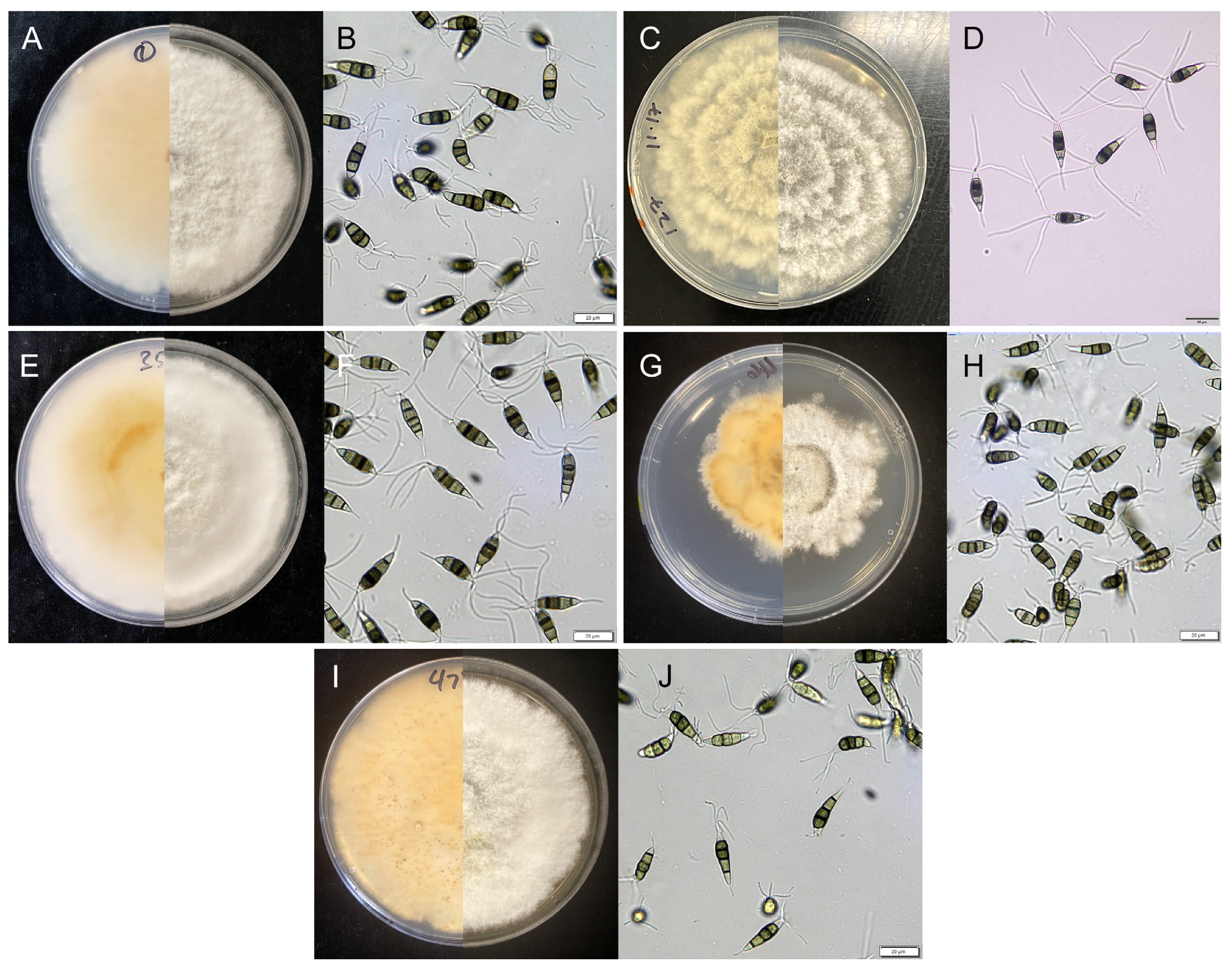
For Neopestalotiopsis isolates, conidia were produced within six days after transferring to ¼-aPDA. In all five species, conidiomata were pycnidial, globose, to subglobose, solitary or aggregated, producing dark brown to black conidia in a globose mass. The conidiomata were visible to the naked eye as circular spots on the agar surface (Figure 2). The conidia in all five species were ellipsoid, straight to slightly curved, typically four-septate, though some of the N. hispanica isolates have five septa in some of the conidia. The color of the median cells were darker in all five species. All conidia had a single basal appendage and three apical appendages. The apical appendages of N. hispanica, N. longiappendiculata and N. scalabiensis were longer compared to the other two species. The conidial measurements of the five species (n = 20) were as follows: N. clavispora conidia measured 20 (24) 30 × 5.2 (6.1) 7.7 µm; N. hispanica conidia measured 22.7 (27) 31.3 × 5.5 (6.6) 7.9 µm; N. longiappendiculata conidia measured 29 (24) 20 × 5.3 (6.5) 8.2 µm; N. rosae conidia measured 20 (24) 32 × 5.6 (7.1) 9.1 µm; N. scalabiensis conidia measured 22 (25) 29 × 6.4 (7.1) 8.0 µm.

3.2. Restriction Fragment Length Polymorphism

RFLP analysis using BsaWI generated a distinct double-band pattern (~290 bp and ~130 bp) only for N. hispanica isolates and the single isolate of N. longiappendicualta. In contrast, N. rosae, N. clavispora, and N. scalabiensis isolates produced an undigested single-band of 420 bp.

3.3. High-Resolution Melting Analysis

HRM analysis produced distinct melting-curves for N. rosae (primer A: 78.5 °C; primer B: 82.7 °C) and N. hispanica (primer A: 79.7 °C; primer B: 81.5 °C). All isolates of these two species from North Carolina showed melting curves consistent with the corresponding positive controls from the University of Florida. For N. clavispora, the melting curve generated with primer pair A matched the profile of N. hispanica, while the curve produced with primer pair B aligned with that of N. rosae. In addition, the melting curve of N. scalabiensis was indistinguishable from that of N. rosae, and N. longiappendiculata showed melting curve similar to N. hispanica. The results were consistent across replicates.

3.4. Phylogenetic Analysis

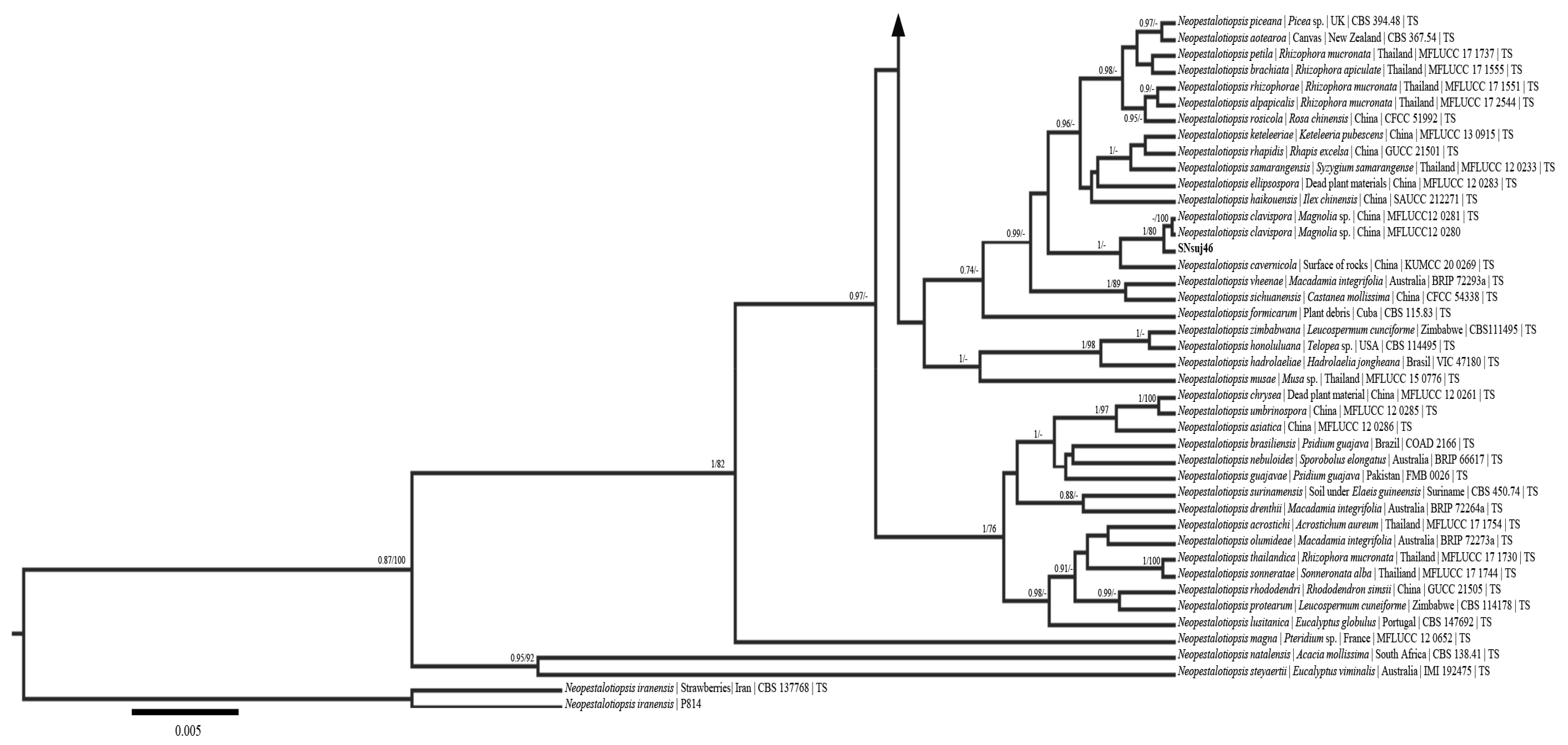
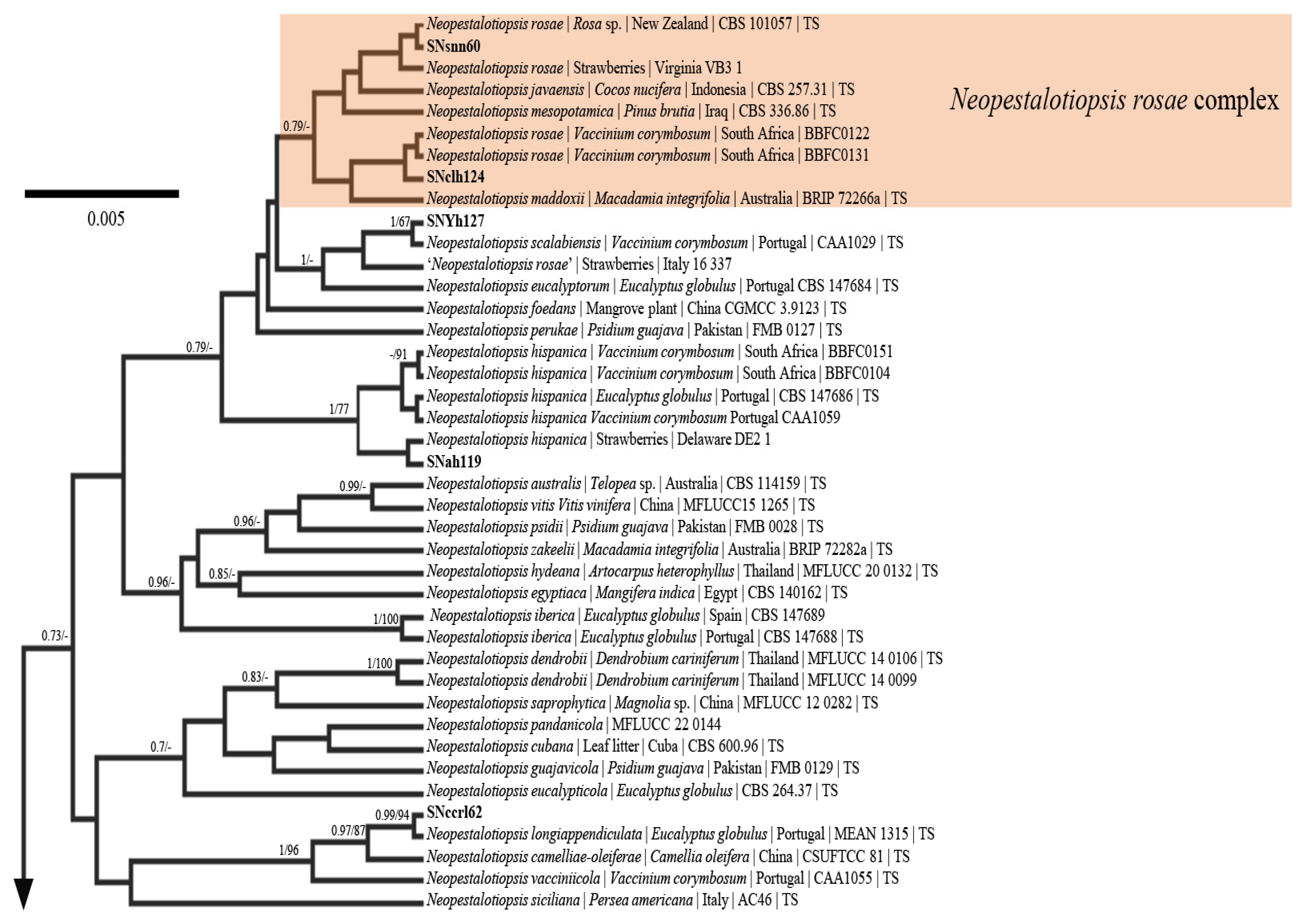
The phylogenetic analyses presented (Figure 3, Supplementary Figures S1–S4) revealed that 6 different genotypes belonging to 5 different species were found to be infecting strawberries in North Carolina. Sequence data included ITS, partial regions of TEF1-α + TUB2, which were concatenated to resolve relationship among the isolates. There was no support to differentiate N. rosae, N. javaensis, N. mesopotamica, and N. maddoxii and, these species were therefore grouped together as the ‘N. rosae complex.’ The majority of isolates sequenced were identified as N. hispanica followed by isolates within the N. rosae complex. Single isolates were identified as belonging to N. scalabiensis, N. longiappendiculata, and N. clavispora. Across all phylogenetic trees, isolates clustered according to species, with N. hispanica forming a distinct branch separate from the N. rosae complex and the other single-isolate species. The branching patterns were consistent across all three regions analyzed, and sequences from the concatenated dataset reinforced the species-level clustering observed in the individual gene trees.

3.5. Pathogenicity Tests

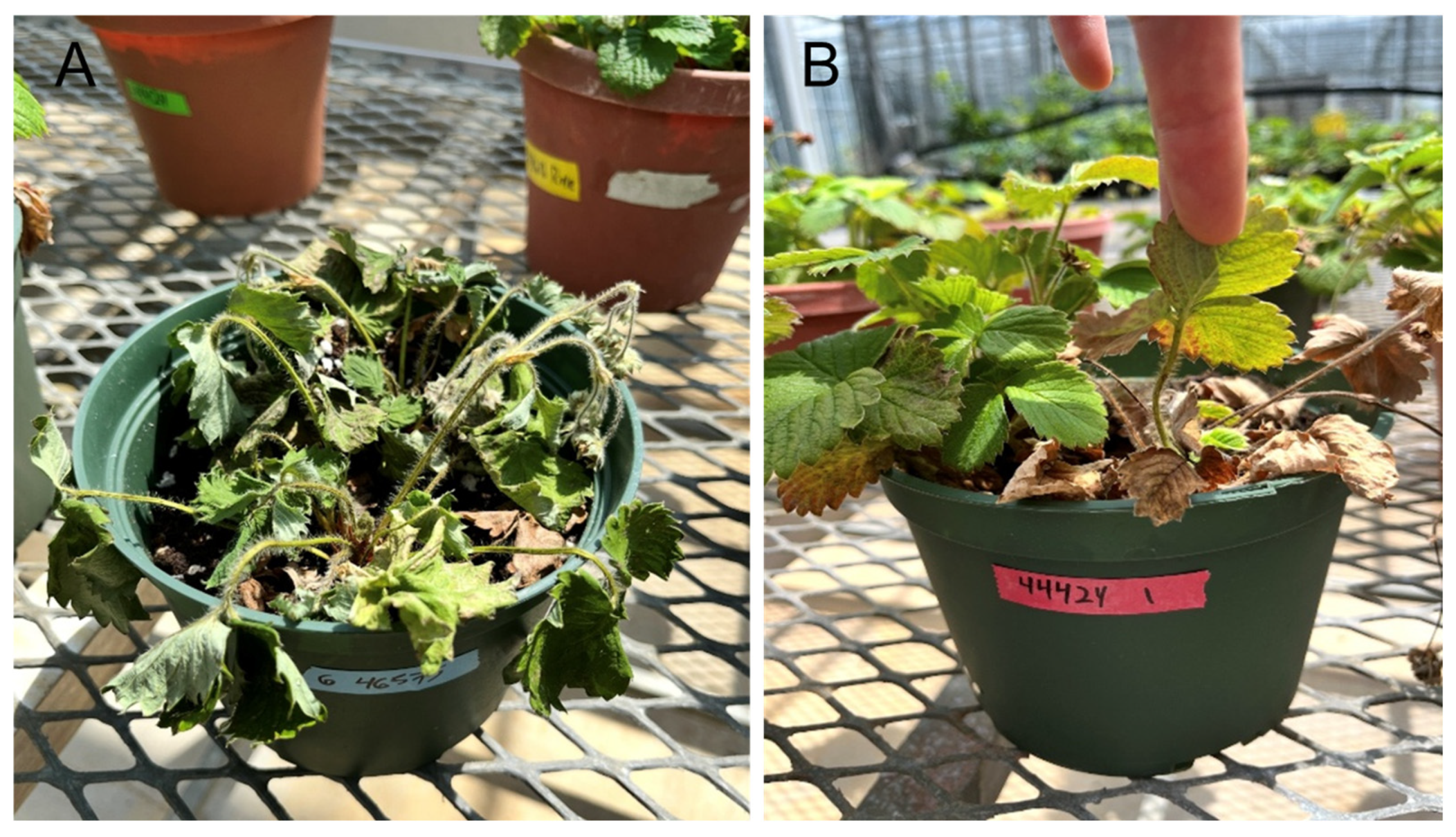
Root and crown rot symptoms were evident on greenhouse-inoculated strawberry plants 30 days after inoculation. Infected plants exhibited varying degrees of symptom severity, ranging from mild root browning to extensive crown tissue decay and wilting (Figure 4). In several cases, the crowns were discolored and softened, and the root systems were noticeably reduced compared to non-inoculated controls. A few plants appeared healthy and showed no visible signs of rot, but overall, the incidence of inoculated asymptomatic plants was low. Infection was observed in multiple plants within each replicate, indicating successful establishment of disease under greenhouse conditions. Neopestalotiopsis spp. were successfully recovered from these tissues, and the colony morphology and microscopic characteristics were consistent with those of the inoculated Neopestalotiopsis isolates, confirming that the observed symptoms were caused by the species being tested.
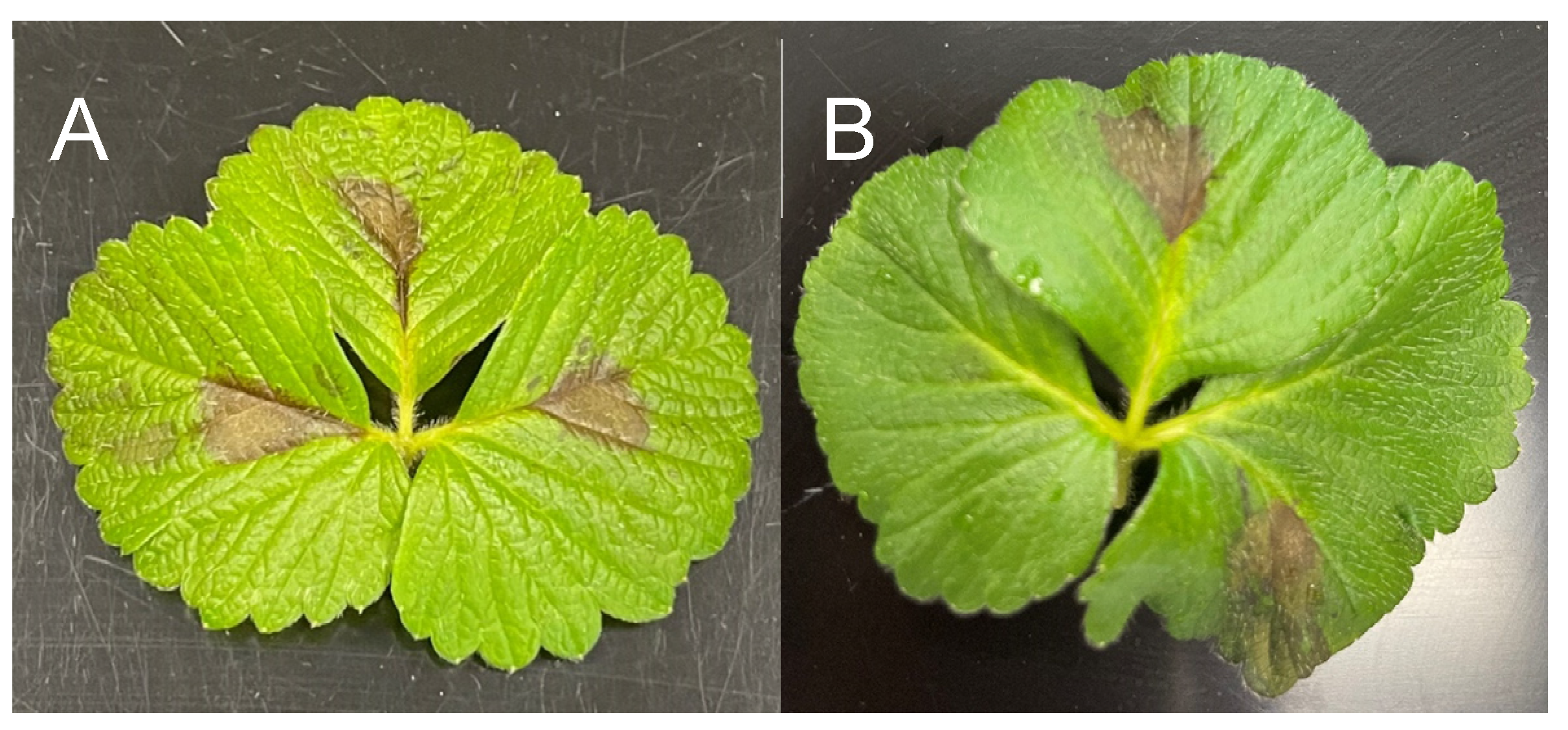
In the detached leaf assays, leaves inoculated with spore suspensions of N. hispanica and N. scalabiensis developed characteristic lesions within six days. The lesions initially appeared as small, light-brown to purple spots on the adaxial surface within two days after inoculation and gradually expanded, coalesced, and became necrotic over time (Figure 5). Symptom development was consistent among replicated leaflets and followed a similar progression for both species. Control leaflets, which received sterile water, remained free of symptoms throughout the observation period, confirming that lesion development was attributable to fungal infection. Pycnidia developed within the lesions in concentric rings approximately two weeks after inoculation, indicating active sporulation on infected tissue. Collectively, these results confirmed that the isolates tested were capable of infecting leaf tissue and inducing disease symptoms under controlled conditions without the need for wounding.

4. Discussion

The current study demonstrates that five phylogenetically distinct species of Neopestalotiopsis are associated with strawberries in North Carolina. Among these, N. hispanica was detected at a notably higher frequency than the other species followed by isolates from the N. rosae complex. In the current study we introduced the term N. rosae complex because there was minimal support to separate the nominate species from closely related species in all of our analyses (Supplementary Figures S1–S3, Figure 3). These results are similar to those of Vand der Vyer et al. [34] whose analyses also exhibited minimal support for these species. Future research will need to apply additional markers and analyze the morphology of the specimens concerned to determine if this is indeed a complex of species, or a single, morphologically similar species with a wide host range.
Similar to our study, a recent work from Florida reported a high diversity of Neopestalotiopsis species from strawberry leaves and fruits [24]. These species have since been reported from multiple U.S. states, including South Carolina [42], Georgia [44], and Delaware [45]. In contrast, N. rosae has been documented causing disease on strawberries in California [46] and Italy [47] but those isolates could not be confirmed to fall in the N. rosae complex in the current paper.
The higher number of isolates recovered from crown tissues reflects the type of samples received by the diagnostic clinic rather than the true distribution of Neopestalotiopsis infections in the field. Whole plants are more commonly submitted than individual leaf or fruit samples, which naturally results in more crown-associated isolates being recovered. Nevertheless, the predominance of N. hispanica across the submissions indicates that this species is frequently associated with symptomatic strawberry plants in North Carolina and continues to be the most commonly encountered species in diagnostic samples. These findings highlight areas of higher pathogen prevalence, providing a basis for targeted surveillance. Knowledge of which species predominate in specific counties (or from specific nursery source) can inform growers about potential risk factors, such as cultivar susceptibility, planting density, or cultural practices, and guide implementation of integrated disease management strategies.
Neopestalotiopsis vaccinii was recently reported from Delaware as a pathogen of strawberry [45]; however, Van der Vyer et al. [34] have synonymized this species with N. hispanica. Isolates from the N. rosae complex, although less frequent, were also recovered from multiple submissions, suggesting that it may play a less frequent but notable role in disease expression. In contrast, N. clavispora, N. scalabiensis, and N. longiappendiculata were detected only once each. While N. clavispora has been reported previously on strawberry, from Spain [48], India [49], Italy [50], and China [51], to date, there are no published reports of N. longiappendiculata or N. scalabiensis associated with disease in strawberry. This suggests that these species may be rare or under-recognized pathogens in this crop.
The morphological features observed in culture are consistent with species descriptions by Baggio et al. [24], including rapid conidial production on artificial media and the formation of dark, globose pycnidial conidiomata. Interestingly, some of our N. hispanica isolates produced conidia with five septa, a feature not reported in the standard descriptions of this species; to date, N. hispanica has been consistently described as having four-septate conidia. Our observations may represent a novel morphological variant. To verify this, further work is needed, including sporulation under varied culture conditions, quantifying septation frequency, and extended phylogenetic analysis using additional loci. Morphological traits, such as conidial length and width, apical appendage length, the presence or absence of knobbed appendages, and the position of the apical appendage on the conidial body vary among Neopestalotiopsis species [52]. However, conidial dimensions and morphology often overlap and so are not sufficient for reliable species-level identification; molecular phylogenetic analysis is indispensable [52,53].
The RFLP analysis using BsaWI proved effective for identifying N. hispanica and N. longiappendiculata, as both species produced the same distinct double-band pattern consistent with previous reports [42]. However, this method did not allow discrimination between these two species, nor did the method differentiate aggressive from non-aggressive isolates of N. rosae, N. clavispora, and N. scalabiensis, highlighting a key limitation of this approach. The HRM assay was able to reliably differentiate N. rosae, N. clavispora, and N. hispanica based on their melting-curve profiles. When N. scalabiensis and N. longiappendiculata were included, the assay could not distinguish these species from the others, reflecting sequence similarities in the region targeted by the primers. Previous work by Rebello et al. [43] likely focused on separating N. rosae and N. hispanica and would not have included the additional Neopestalotiopsis species, as our study is the first to report three additional species associated with strawberry. Our results indicate that both RFLP and HRM methods, which rely on the beta-tubulin gene, are unable to distinguish some closely related or newly described species, because sequences such as those of N. longiappendiculata and N. hispanica share identical base pairs in this region. Future experiments should incorporate these newly identified species and other Neopestalotiopsis species to fully assess the utility of HRM for differentiating all strawberry-associated Neopestalotiopsis species.
The successful infection of plants from the cultivar ‘Fresca’ in the greenhouse and leaves of the cultivars ‘Chandler’ and ‘Merced’ under controlled conditions, demonstrates that the Neopestalotiopsis isolates recovered from North Carolina strawberries are highly aggressive across plant tissues. We recognize that susceptibility of a seed-propagated cultivar like ‘Fresca’ may differ from that of vegetatively propagated commercial cultivars, but the latter were unavailable when the whole-plant inoculations were performed. It is notable that our leaf- and fruit- recovered Neopestalotiopsis isolates caused crown symptoms. This observation is consistent with recent reports showing that N. rosae can infect various parts of the strawberry plant, highlighting the pathogen’s potential to cause widespread damage within the plant. These findings underscore the need for comprehensive monitoring of all plant parts in current production and suggest that future research should focus on understanding tissue-specific susceptibility and developing targeted management strategies. For instance, Fernández-Ozuna et al. [54] mentioned N. rosae causing both leaf spot and crown rot on strawberry in Paraguay. Integrating these pathogenicity data with species prevalence information can help growers better understand the overall disease risk, prioritize regular monitoring, and implement management practices aimed at reducing pathogen spread, ultimately supporting more effective and sustainable crop protection.
For better disease management, future cross-inoculation trials should include all Neopestalotiopsis species to assess their aggressiveness across different strawberry parts and evaluate their potential for systemic infection. Importantly, the isolates tested originated from multiple commercial cultivars, suggesting that these Neopestalotiopsis species can infect a broad range of genetic backgrounds and are not limited to a specific cultivar. Ongoing field and greenhouse studies aim to quantify aggressiveness across commercial cultivars, which will be critical for identifying cultivar-specific resistance and for developing effective disease management strategies. This information will also allow breeders to screen cultivars against multiple Neopestalotiopsis species and enable fungicide efficacy testing against all aggressive species.

5. Conclusions

This study provides the first comprehensive investigation of Neopestalotiopsis disease of strawberry in North Carolina. Over a two-year sampling period, we recovered 114 Neopestalotiopsis isolates from symptomatic crown, leaf, and fruit tissues, confirming that this pathogen is the predominant cause of strawberry disease across the state’s major production regions. This study reports N. clavispora, and N. scalabiensis and N. longiappendiculata associated with strawberry in the USA for the first time. The findings underscore the aggressiveness of these pathogens across multiple cultivars, emphasizing the need for effective management strategies. Globally, Neopestalotiopsis species have been reported as emerging threats to strawberry production in multiple countries, including Italy, Spain, China and Paraguay, highlighting the international relevance of understanding their diversity, host range, and pathogenicity. Future research should focus on evaluating the sensitivity of different Neopestalotiopsis species to commonly used fungicides, determining cultivar-specific susceptibility, and investigating how environmental conditions and cultural practices influence disease development and epidemic dynamics. Such work will be critical for developing integrated disease management practices and mitigating losses in commercial strawberry production.

Supplementary Materials

The following supporting information can be downloaded at: https://www.mdpi.com/article/10.3390/pathogens15010010/s1, Figure S1: Bayesian maximum clade credibility tree of the ITS region of all the isolates sequenced in the current study as well as select Neopestalotiopsis species.; Figure S2: Bayesian maximum clade credibility tree of the TEF1-α region of all the isolates sequenced in the current study as well as select Neopestalotiopsis species. Figure S3: Bayesian maximum clade credibility tree of the TUB2 region of all the isolates sequenced in the current study as well as select Neopestalotiopsis species. Figure S4: Bayesian maximum clade credibility tree of the concatenated ITS + TEF1-α + TUB2 regions of all the isolates sequenced in the current study as well as select Neopestalotiopsis species. Table S1: Neopestalotiopsis isolates associated with strawberry disease in North Carolina.

Author Contributions

Conceptualization, S.M. and M.J.B.; methodology, S.M., M.J.M., M.J.B., U.C., M.A.B., C.L., C.A. and J.S.; investigation, S.M., M.A.B., D.R.S., J.S. and C.L., resources, S.M., M.J.B. and M.A.B.; data curation, S.M.; writing—original draft preparation, S.M.; supervision, M.A.B., W.C. and M.A.B.; project administration, S.M. and M.J.B.; funding acquisition, S.M., M.H., W.C. and M.A.B. All authors have read and agreed to the published version of the manuscript.

Funding

This work was funded by the North Carolina Strawberry Growers association (Award project no. 536015-11152).

Institutional Review Board Statement

Not applicable.

Informed Consent Statement

Not applicable.

Data Availability Statement

The sequences (ITS, partial regions of TEF1-α, and TUB2) used in the study were deposited in the GenBank and the accession numbers are shown in the manuscript.

Acknowledgments

We would like to thank Kory Yarbrough, Teresa Layola and Norma Hernandez-Cruz for assisting in making media and taking pictures of the cultures. We also thank Marcus Marin of University of Florida for providing the Neopestalotiopsis species for conducting the HRM and RE digestion studies. We gratefully acknowledge Tim Sit for allowing us to use his laboratory facilities to conduct the qPCR experiments.

Conflicts of Interest

The authors declare no conflicts of interest.

References

  1. Rusková, M.; Opálková Šišková, A.; Mosnáčková, K.; Gago, C.; Guerreiro, A.; Bučková, M.; Puškárová, A.; Pangallo, D.; Antunes, M.D. Biodegradable active packaging enriched with essential oils for enhancing the shelf life of strawberries. Antioxidants 2023, 12, 755. [Google Scholar] [CrossRef] [PubMed]
  2. Milosavljević, D.M.; Maksimović, V.M.; Milivojević, J.M.; Nakarada, Đ.J.; Mojović, M.D.; Dragišić Maksimović, J.J. Rich in Phenolics—Strong Antioxidant Fruit? Comparative Study of 25 Strawberry Cultivars. Plants 2022, 11, 3566. [Google Scholar] [CrossRef]
  3. Hodgdon, E.A.; Conner, D.S.; McDermott, L.G.; Pritts, M.P.; Handley, D.T.; Orde, K.M.; Sideman, R.G. A current view on strawberry production practices and trends in the Northeastern United States and Canada. HortTechnology 2024, 34, 574–584. [Google Scholar] [CrossRef]
  4. Trejo-Téllez, L.I.; Gómez-Merino, F.C. Nutrient management in strawberry: Effects on yield, quality and plant health. In Strawberries: Cultivation, Antioxidant Properties and Health Benefits; Nova Science Publishers: Hauppauge, NY, USA, 2014; pp. 239–267. [Google Scholar]
  5. Priyadarshi, R.; Jayakumar, A.; de Souza, C.K.; Rhim, J.W.; Kim, J.T. Advances in strawberry postharvest preservation and packaging: A comprehensive review. Compr. Rev. Food Sci. Food Saf. 2024, 23, e13417. [Google Scholar] [CrossRef]
  6. Şener, S. Abiotic stress factors and strawberry cultivation. In Impact of Climate Change on Agriculture; Holistence Publications: Çanakkale, Turkey, 2021; pp. 111–125. [Google Scholar]
  7. Staudt, G. Taxonomic studies in the genus Fragaria: Typification of Fragaria species known at the time of Linnaeus. Can. J. Bot. 1962, 40, 869–886. [Google Scholar] [CrossRef]
  8. Liston, A.; Cronn, R.; Ashman, T.L. Fragaria: A genus with deep historical roots and ripe for evolutionary and ecological insights. Am. J. Bot. 2014, 101, 1686–1699. [Google Scholar] [CrossRef] [PubMed]
  9. Simpson, D. The economic importance of strawberry crops. In The Genomes of Rosaceous Berries and Their Wild Relatives; Springer International Publishing: Cham, Switzerland, 2018; pp. 1–7. [Google Scholar] [CrossRef]
  10. FAOSTAT. Crops and livestock products. In FAOSTAT Statistical Database; Food and Agriculture Organization of the United Nations (FAO): Rome, Italy, 2023; Available online: https://www.fao.org/faostat/en/#data (accessed on 7 July 2025).
  11. Holmes, G.J. The California strawberry industry: Current trends and future prospects. Int. J. Fruit Sci. 2024, 24, 115–129. [Google Scholar] [CrossRef]
  12. Bandara, S.J.H. Understanding the economic sustainability of strawberry farming in North Carolina. Int. J. Food Agric. Econ. (IJFAEC) 2021, 9, 191–202. [Google Scholar] [CrossRef]
  13. Johnson, J. Evaluation of Yield, Fruit Chemistry, and Firmness of Seven Strawberry (Fragaria × ananassa) Cultivars and Four NCSU Advanced Strawberry Selections in an Eastern North Carolina Greenhouse; North Carolina State University: Raleigh, NC, USA, 2024. [Google Scholar] [CrossRef]
  14. Adhikari, T.B.; Muzhinji, N.; Philbrick, A.N.; Louws, F.J. Genomic insights and comparative analysis of Colletotrichum species associated with anthracnose fruit rot and crown rot of strawberry in North Carolina. Front. Microbiol. 2025, 16, 1515894. [Google Scholar] [CrossRef]
  15. Adhikari, T.B.; Muzhinji, N.; Philbrick, A.N.; Schnabel, G.; Louws, F.J. Genome Sequence Resource of Four Botrytis cinerea Isolates from North Carolina. PhytoFrontiers™ 2025, 5, PHYTOFR-05. [Google Scholar] [CrossRef]
  16. Marin, M.V.; Taylor, J.B.; Rebello, C.S.; Peres, N.A. Targeted Chemical Strategies in Planting Holes: A Proactive Approach to Managing Phytophthora Crown Rot of Strawberry. Plant Health Prog. 2024, 25, 454–459. [Google Scholar] [CrossRef]
  17. Baggio, J.S.; Cordova, L.G.; Seijo, T.E.; Noling, J.W.; Whitaker, V.M.; Peres, N.A. Cultivar selection is an effective and economic strategy for managing charcoal rot of strawberry in Florida. Plant Dis. 2021, 105, 2071–2077. [Google Scholar] [CrossRef] [PubMed]
  18. Burkhardt, A.; Henry, P.M.; Koike, S.T.; Gordon, T.R.; Martin, F. Detection of Fusarium oxysporum f. sp. fragariae from infected strawberry plants. Plant Dis. 2019, 103, 1006–1013. [Google Scholar] [CrossRef]
  19. Gordon, T.R.; Kirkpatrick, S.C.; Hansen, J.; Shaw, D.V. Response of strawberry genotypes to inoculation with isolates of Verticillium dahliae differing in host origin. Plant Pathol. 2006, 55, 766–769. [Google Scholar] [CrossRef]
  20. Kaur, H.; Wesche, J.; Gelain, J.; Minzheng, C.; Luo, C.X.; Schnabel, G. Characterization and fungicide sensitivity of Gnomoniopsis fructicola causing Gnomonia Leaf Blotch of strawberry in the Carolinas. Plant Dis. 2025, 109, 107–114. [Google Scholar] [CrossRef]
  21. Koike, S.T.; Gordon, T.R.; Daugovish, O.; Ajwa, H.; Bolda, M.; Subbarao, K. Recent developments on strawberry plant collapse problems in California caused by Fusarium and Macrophomina. Int. J. Fruit Sci. 2013, 13, 76–83. [Google Scholar] [CrossRef]
  22. Husaini, A.M.; Xu, Y.W. Challenges of climate change to strawberry cultivation: Uncertainty and beyond. In Strawberry: Growth, Development and Diseases; CABI: Wallingford, UK, 2016; pp. 262–287. [Google Scholar]
  23. Fang, X.; Phillips, D.; Verheyen, G.; Li, H.; Sivasithamparam, K.; Barbetti, M.J. Yields and resistance of strawberry cultivars to crown and root diseases in the field, and cultivar responses to pathogens under controlled environment conditions. Phytopathol. Mediterr. 2012, 51, 69–84. [Google Scholar]
  24. Baggio, J.S.; Forcelini, B.B.; Wang, N.Y.; Ruschel, R.G.; Mertely, J.C.; Peres, N.A. Outbreak of leaf spot and fruit rot in Florida strawberry caused by Neopestalotiopsis spp. Plant Dis. 2021, 105, 305–315. [Google Scholar] [CrossRef]
  25. Cline, W.; Moparthi, S.; Hoffmann, M. Neopestalotiopsis Leaf, Fruit, and Crown Rot of Strawberry. North Carolina State University Extension. Available online: https://content.ces.ncsu.edu/neopestalotiopsis-leaf-fruit-and-crown-rot-of-strawberry (accessed on 5 December 2025).
  26. Shi, J.; Li, B.; Wang, S.; Zhang, W.; Shang, M.; Wang, Y.; Liu, B. Occurrence of Neopestalotiopsis clavispora causing apple leaf spot in China. Agronomy 2024, 14, 1658. [Google Scholar] [CrossRef]
  27. Gerardo-Lugo, S.S.; Tovar-Pedraza, J.M.; Maharachchikumbura, S.S.N.; Apodaca-Sánchez, M.A.; Correia, K.C.; Sauceda-Acosta, C.P.; Camacho-Tapia, M.; Hyde, K.D.; Marraiki, N.; Elgorban, A.M.; et al. Characterization of Neopestalotiopsis species associated with mango grey leaf spot disease in Sinaloa, Mexico. Pathogens 2020, 9, 788. [Google Scholar] [CrossRef] [PubMed]
  28. Beg, M.A.; Oliver, J.E. Georgia blueberry Neopestalotiopsis isolates, which are phylogenetically indistinguishable from the emerging novel strawberry Neopestalotiopsis sp., are pathogenic to both blueberry and strawberry. Plant Dis. 2025. [Google Scholar] [CrossRef]
  29. Fiorenza, A.; Gusella, G.; Aiello, D.; Polizzi, G.; Voglmayr, H. Neopestalotiopsis siciliana sp. nov. and N. rosae causing stem lesion and dieback on avocado plants in Italy. J. Fungi 2022, 8, 562. [Google Scholar] [CrossRef]
  30. Di Francesco, A.; Gallo, G.; Lanzarini, M.; Cignola, R. First report of Neopestalotiopsis clavispora, causal agent of grape trunk disease in grapevine in Northeastern Italy. Plant Dis. 2025, 109, PDIS-05. [Google Scholar] [CrossRef]
  31. O’Donnell, K.; Cigelnik, E.; Nirenberg, H.I. Molecular systematics and phylogeography of Gibberella fujikuroi species complex. Proc. Natl. Acad. Sci. USA 1998, 95, 2044–2049. [Google Scholar] [CrossRef] [PubMed]
  32. Glass, N.L.; Donaldson, G.C. Development of primer sets designed for use with the PCR to amplify conserved genes from filamentous ascomycetes. Appl. Environ. Microbiol. 1995, 61, 1323–1330. [Google Scholar] [CrossRef]
  33. White, T.J.; Bruns, T.; Lee, S.; Taylor, J. Amplification and direct sequencing of fungal ribosomal RNA genes for phylogenetics. In PCR Protocols: A Guide to Methods and Applications; Academic Press: San Diego, CA, USA, 1990; pp. 315–322. [Google Scholar] [CrossRef]
  34. Van der Vyver, L.S.; De Bruin, W.; Siyoum, N.; Nsibo, D.L.; Groenewald, J.Z.; Crous, P.W.; Korsten, L. Exploring Neopestalotiopsis diversity associated with blueberry leaf and twig blight in South African nurseries. Fungal Syst. Evol. 2025, 16, 41–53. [Google Scholar] [CrossRef]
  35. Tamura, K.; Stecher, G.; Kumar, S. MEGA11: Molecular evolutionary genetics analysis version 11. Mol. Biol. Evol. 2021, 38, 3022–3027. [Google Scholar] [CrossRef]
  36. Abadi, S.; Azouri, D.; Mayrose, I.; Pupko, T. Model selection may not be a mandatory step for phylogeny reconstruction. Nat. Commun. 2019, 10, 934. [Google Scholar] [CrossRef] [PubMed]
  37. Gernhard, T. The conditioned reconstructed process. J. Theor. Biol. 2008, 253, 769–778. [Google Scholar] [CrossRef]
  38. Suchard, M.A.; Lemey, P.; Baele, G.; Ayres, D.L.; Drummond, A.J.; Rambaut, A. Bayesian phylogenetic and phylodynamic data integration using BEAST 1.10. Virus Evol. 2018, 4, Vey016. [Google Scholar] [CrossRef] [PubMed]
  39. Rambaut, A. Fig Tree Ver. 1.3.1. Available online: http://tree.bio.ed.ac.uk/software/figtree (accessed on 2 November 2025).
  40. Silvestro, D.; Michalak, I. RaxmlGUI: A graphical front-end for RAxML. Org. Divers. Evol. 2012, 12, 335–337. [Google Scholar] [CrossRef]
  41. Felsenstein, J. Confidence limits on phylogenies: An approach using the bootstrap. Evolution 1985, 39, 783–791. [Google Scholar] [CrossRef]
  42. Kaur, H.; Gelain, J.; Marin, M.V.; Peres, N.A.; Schnabel, G. Development of a molecular tool for identification of a new Neopestalotiopsis sp. associated with disease outbreaks on strawberry. Plant Dis. 2023, 107, 1544–1549. [Google Scholar] [CrossRef]
  43. Rebello, C.S.; Wang, N.Y.; Marin, M.V.; Baggio, J.S.; Peres, N.A. Detection and species differentiation of Neopestalotiopsis spp. from strawberry (Fragaria × ananassa) in Florida using a high-resolution melting analysis. PhytoFrontiers™ 2023, 3, 156–163. [Google Scholar] [CrossRef]
  44. Madrid, A.J.; Munoz, G.; Collins, C.; Brannen, P. First report of the new Neopestalotiopsis species causing strawberry leaf spot and fruit rot in Georgia. Plant Dis. 2024, 108, 2574. [Google Scholar] [CrossRef]
  45. Gangwar, P.; Xu, X.; Pollok, J.; Sedghi, N.; Flanagan, R.D.; Zeng, Y. First report of Neopestalotiopsis vaccinii in Delaware and Neopestalotiopsis rosae in Virginia associated with similar disease symptoms in strawberry (Fragaria × ananassa). Plant Dis. 2025, 109. [Google Scholar] [CrossRef]
  46. Lawrence, D.P.; Brittain, G.D.; Aglave, B.; Sances, F.V. First Report of Neopestalotiopsis rosae causing crown and root rot of strawberry in California. Plant Dis. 2023, 107, 566. [Google Scholar] [CrossRef]
  47. Dardani, G.; Martino, I.; Aloi, F.; Carli, C.; Giordano, R.; Spadaro, D.; Guarnaccia, V. Characterization of Neopestalotiopsis species associated with strawberry crown rot in Italy. Agronomy 2025, 15, 422. [Google Scholar] [CrossRef]
  48. Chamorro, M.; Aguado, A.; De los Santos, B. First report of root and crown rot caused by Pestalotiopsis clavispora (Neopestalotiopsis clavispora) on strawberry in Spain. Plant Dis. 2016, 100, 1495. [Google Scholar] [CrossRef]
  49. Mahapatra, S.; Banerjee, J.; Kumar, K.; Pramanik, S.; Pramanik, K.; Islam, S.; Das, S. Leaf spot and fruit rot of strawberry caused by Neopestalotiopsis clavispora in Indo-Gangetic plains of India. Indian Phytopathol. 2018, 71, 279–283. [Google Scholar] [CrossRef]
  50. Gilardi, G.; Bergeretti, F.; Gullino, M.L.; Garibaldi, A. First report of Neopestalotiopsis clavispora causing root and crown rot on strawberry in Italy. Plant Dis. 2019, 103, 2959. [Google Scholar] [CrossRef]
  51. Shi, J.; Zhang, X.; Liu, Y.; Zhang, Z.; Wang, Z.; Xue, C.; Ma, Y.; Wang, F. First report of Neopestalotiopsis clavispora causing calyx and receptacle blight on strawberry in China. Plant Dis. 2022, 106, 1307. [Google Scholar] [CrossRef] [PubMed]
  52. Maharachchikumbura, S.S.N.; Hyde, K.D.; Groenewald, J.Z.; Xu, J.; Crous, P.W. Pestalotiopsis revisited. Stud. Mycol. 2014, 79, 121–186. [Google Scholar] [CrossRef]
  53. Yang, Q.; Zeng, X.Y.; Yuan, J.; Zhang, Q.; He, Y.K.; Wang, Y. Two new species of Neopestalotiopsis from southern China. Biodivers. Data J. 2021, 9, e70446. [Google Scholar] [CrossRef]
  54. Fernández-Ozuna, Y.A.; Álvarez, A.G.; Lopez-Nicora, H.D.; Alvarenga, A.A.; Colmán, A.A. First report of Neopestalotiopsis rosae causing leaf spot and crown rot on strawberry (Fragaria × ananassa) in Paraguay. New Dis. Rep. 2023, 48, 2. [Google Scholar] [CrossRef]
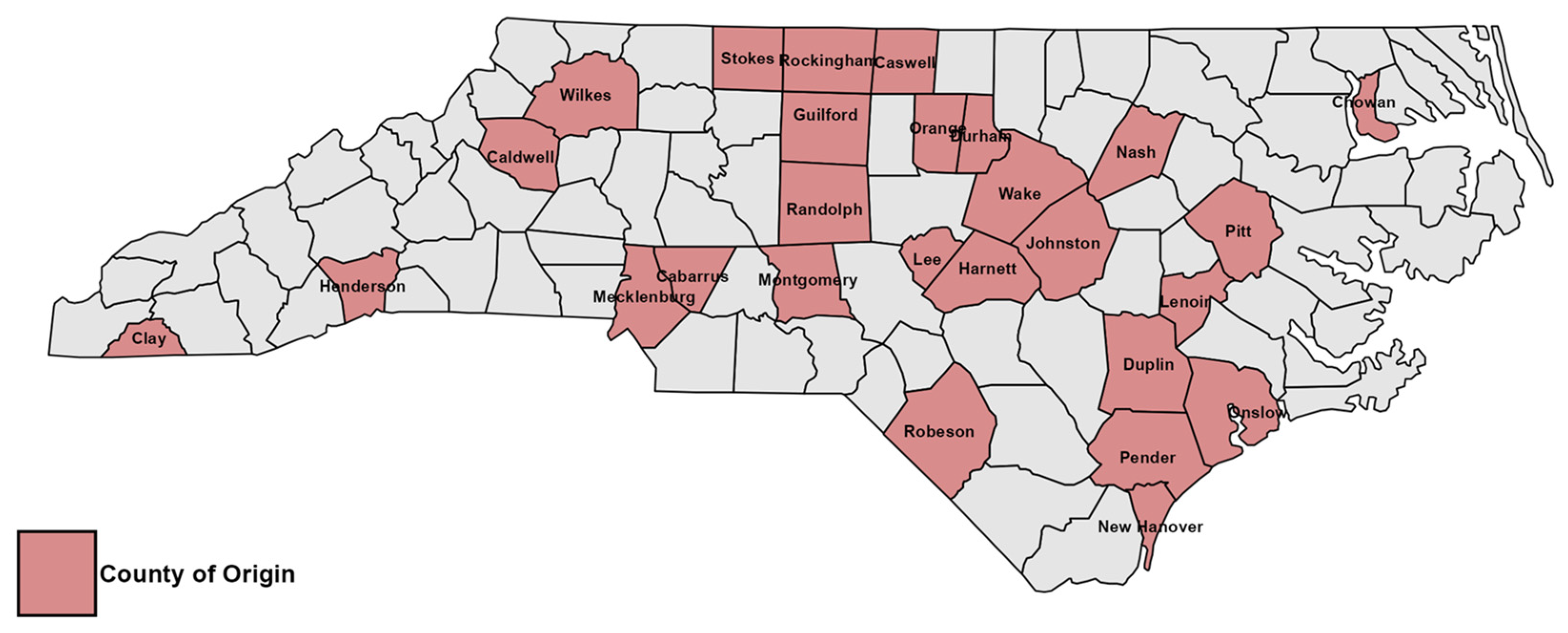
Figure 1. Map of North Carolina showing counties from which Neopestalotiopsis-infected strawberry samples were received during the period of this study.
Pathogens 15 00010 g001
Figure 2. Neopestalotiopsis rosae isolate SNrjl01 morphological characteristics on ¼-aPDA (A) conidial morphology (B). N. scalabiensis isolate SNYh127 (C) conidial morphology (D). N. hispanica isolate SNsfj35 (E) conidial morphology (F). N. clavispora isolate SNsuj46 (G) conidial morphology (H). N. longiappendiculata isolate SNccrl62 (I) conidial morphology (J). Scale bars = 20 µm.
Pathogens 15 00010 g002
Figure 3. Bayesian maximum clade credibility tree of the concatenated ITS + TEF1-α + TUB2 regions of select Neopestalotiopsis species. Only the six unique Neopestalotiopsis genotypes was generated and is shown. There is no support to differentiate N. rosae, N. javaensis, N. mesopotamica, and N. maddoxii. Posterior probabilities ≥ 0.70 are displayed followed by bootstrap values greater than 70% for the maximum likelihood (ML) analyses. Taxa in bold were sequenced for the current study. Type specimens are signified with a ‘TS’.
Pathogens 15 00010 g003aPathogens 15 00010 g003b
Figure 4. Symptoms observed on strawberry cultivar ‘Fresca’ during greenhouse inoculation experiments. (A) Strawberry cultivar ‘Fresca’ displaying wilting symptoms 25 days after inoculation with N. hispanica isolate SNsfj35 (B) Strawberry cultivar ‘Fresca’ displaying symptoms 25 days after inoculation with N. rosae isolate SNrjl01.
Pathogens 15 00010 g004
Figure 5. Symptoms in detached leaf assays six days post-inoculation with N. hispanica SNsfj35 on strawberry cultivars ‘Chandler’ (A) and ‘Merced’ (B).
Pathogens 15 00010 g005
Table 1. List of Neopestalotiopsis species, isolate identifiers, and GenBank accessions for ITS, TEF1-α, and β-tubulin loci.
GenBank Accession Number
Neopestalotiopsis spp.IsolateITSTEF1-αβ-tubulin
N. rosaeSNcah118PX563605PX711530PX711490
N. rosaeSNcc08PX563606PX711531PX711491
N. rosaeSNcc09PX563607PX711532PX711492
N. rosaeSNcc10PX563608PX711533PX711493
N. rosaeSNcc11PX563609PX711534PX711494
N. rosaeSNcc117PX563610PX711535PX711495
N. rosaeSNccd02PX563611PX711536PX711496
N. rosaeSNccd16PX563612PX711537PX711497
N. rosaeSNccg04PX563613PX711538PX711498
N. rosaeSNccm94PX563614PX711539PX711499
N. rosaeSNccm95PX563615PX711540PX711500
N. rosaeSNcco03PX563616PX711541PX711501
N. rosaeSNcco72PX563617PX711542PX711502
N. rosaeSNccr112PX563618PX711543PX711503
N. rosaeSNccrr57PX563619PX711544PX711504
N. rosaeSNclh124PX563620PX711545NA 1
N. rosaeSNcm93PX563621PX711546PX711505
N. rosaeSNcnc100PX563622PX711547PX711506
N. rosaeSNcnc99PX563623PX711548PX711507
N. rosaeSNcnd17PX563624PX711549PX711508
N. rosaeSNcnd53PX563625PX711550PX711509
N. rosaeSNcnd54PX563626PX711551PX711510
N. rosaeSNcnd55PX563627PX711552PX711511
N. rosaeSNcnd56PX563628PX711553PX711512
N. rosaeSNcnh86PX563629PX711554PX711513
N. rosaeSNcnn81PX563630PX711555PX711514
N. rosaeSNcnrjl52PX563631PX711556PX711515
N. rosaeSNco73PX563632PX711557PX711516
N. rosaeSNcph125PX563633PX711558NA 1
N. rosaeSNcrj108PX563634PX711559PX711517
N. rosaeSNcrj109PX563635PX711560PX711518
N. rosaeSNcrjp63PX563636PX711561PX711519
N. rosaeSNcrjp64PX563637PX711562PX711520
N. rosaeSNcrjr114PX563638PX711563PX711521
N. rosaeSNcscr58PX563639PX711564PX711522
N. rosaeSNcscr59PX563640PX711565PX711523
N. rosaeSNcw12PX563641PX711566PX711524
N. rosaeSNcw13PX563642PX711567PX711525
N. rosaeSNar79PX563643PX711568PX711526
N. rosaeSNsnn60PX563644PX711569PX711527
N. rosaeSNsrjp65PX563645PX711570PX711528
N. rosaeSNrjl01PX563646PX711571PX711529
N. clavisporaSNsuj46PX586188PX699155PX699157
N. hispanicaSNah119PX619695PX699089PX711486
N. hispanicaSNah120PX619696PX699090PX711485
N. hispanicaSNas104PX619697PX699091PX711484
N. hispanicaSNcno51PX619698PX699092PX711487
N. hispanicaSNcrh69PX619699PX699093PX711489
N. hispanicaSNcrp06PX619700PX699094PX711483
N. hispanicaSNcrp07PX619701PX699095PX711482
N. hispanicaSNht14PX619702PX699154PX711481
N. hispanicaSNmh122PX619703PX699096PX711480
N. hispanicaSNmh123PX619704PX699097PX711479
N. hispanicaSNnac19PX619705PX699098PX711478
N. hispanicaSNnc18PX619706PX699099PX711477
N. hispanicaSNnh15PX619707PX699100PX711476
N. hispanicaSNnh85PX619708PX699101PX711475
N. hispanicaSNnh88PX619709PX699102PX711474
N. hispanicaSNnl98PX619710PX699103PX711473
N. hispanicaSNnn78PX619711PX699104PX711472
N. hispanicaSNnn90PX619712PX699105PX711471
N. hispanicaSNnn91PX619713PX699106PX711470
N. hispanicaSNnn92PX619714PX699107PX711469
N. hispanicaSNnn101PX619715PX699108PX711468
N. hispanicaSNnnh83PX619716PX699109PX711467
N. hispanicaSNnnh84PX619717PX699110PX711466
N. hispanicaSNp132PX619718PX699111PX711465
N. hispanicaSNrjh121PX619719PX699112PX711464
N. hispanicaSNrn134PX619720PX699113PX711463
N. hispanicaSNsajj36PX619721PX699114PX711462
N. hispanicaSNsc82PX619722PX699115PX711461
N. hispanicaSNscc20PX619723PX699116PX711460
N. hispanicaSNscc21PX619724PX699117PX711459
N. hispanicaSNscm67PX619725PX699118PX711458
N. hispanicaSNscm68PX619726PX699119PX711457
N. hispanicaSNscr61PX619727PX699120PX711456
N. hispanicaSNscrh70PX619728PX699121PX711455
N. hispanicaSNscrh71PX619729PX699122PX711454
N. hispanicaSNscrj28PX619730PX699123PX711453
N. hispanicaSNscrj34PX619731PX699124PX711452
N. hispanicaSNscrj45PX619732PX699125PX711451
N. hispanicaSNsfj24PX619733PX699126PX711450
N. hispanicaSNsfj35PX619734PX699127PX711449
N. hispanicaSNsmjj37PX619735PX699128PX711448
N. hispanicaSNsn135PX619736PX699129PX711447
N. hispanicaSNsnh87PX619737PX699130PX711446
N. hispanicaSNsnj22PX619738PX699131PX711445
N. hispanicaSNsnj23PX619739PX699132PX711444
N. hispanicaSNso50PX619740PX699133PX711443
N. hispanicaSNsp129PX619741PX699134PX711442
N. hispanicaSNssj25PX619742PX699135PX711441
N. hispanicaSNssn133PX619743PX699136PX711440
N. hispanicaSNssuj38PX619744PX699137PX711439
N. hispanicaSNssuj39PX619745PX699138PX711438
N. hispanicaSNsuj26PX619746PX699139PX711437
N. hispanicaSNsuj27PX619747PX699140PX711436
N. hispanicaSNsuj29PX619748PX699141PX711435
N. hispanicaSNsuj30PX619749PX699142PX711434
N. hispanicaSNsuj31PX619750PX699143PX711433
N. hispanicaSNsuj32PX619751PX699144PX711432
N. hispanicaSNsuj33PX619752PX699145PX711431
N. hispanicaSNsuj40PX619753PX699146PX711430
N. hispanicaSNsuj41PX619754PX699147PX711429
N. hispanicaSNsuj42PX619755PX699148PX711428
N. hispanicaSNsuj43PX619756PX699149PX711427
N. hispanicaSNsuj44PX619757PX699150PX711426
N. hispanicaSNsuj47PX619758PX699151PX711425
N. hispanicaSNsuj48PX619759PX699152PX711424
N. hispanicaSNucnh05PX619760PX699153PX711486
N. longiappendiculataSNccrl62PX643237PX699156PX699159
N. scalabiensisSNYh127PX643238NA 1PX699158
1 Accession number not available.
Disclaimer/Publisher’s Note: The statements, opinions and data contained in all publications are solely those of the individual author(s) and contributor(s) and not of MDPI and/or the editor(s). MDPI and/or the editor(s) disclaim responsibility for any injury to people or property resulting from any ideas, methods, instructions or products referred to in the content.