Article

Genome Mining of Cronobacter sakazakii in Bangladesh Reveals the Occurrence of High-Risk ST83 and Rare ST789 Lineages


by
Sutapa Bhowmik
1,2,
Supantha Rivu
2,3,
Md. Latiful Bari
4 and
Sangita Ahmed
2,*
1
Department of Microbiology, Noakhali Science and Technology University, Noakhali 3814, Bangladesh
2
Department of Microbiology, University of Dhaka, Dhaka 1000, Bangladesh
3
Department of Microbiology, Notre Dame University Bangladesh, 2/A, Arambagh, Motijheel, Dhaka 1000, Bangladesh
4
Food, Nutrition and Agriculture Research Division, Centre for Advanced Research in Sciences, University of Dhaka, Dhaka 1000, Bangladesh
*
Author to whom correspondence should be addressed.
Pathogens 2025, 14(12), 1220; https://doi.org/10.3390/pathogens14121220
Submission received: 28 September 2025 / Revised: 20 October 2025 / Accepted: 28 October 2025 / Published: 30 November 2025

Abstract

Cronobacter sakazakii is a foodborne pathogen of major concern due to its link with severe neonatal infections through powdered infant formula (PIF). However, its genomic epidemiology in Bangladesh remains uncharacterized. We report the first whole-genome analysis of three isolates from PIF. Two isolates (S41_PIFM and S44_RUTF) belonged to ST83, a lineage repeatedly associated with neonatal meningitis, septicemia, and persistence in PIF production environments, while the third (S43_TF) represented ST789, a recently described and rare lineage of unknown pathogenic potential. Pan-genome and comparative analyses identified 39 virulence determinants, 19 antimicrobial-resistance genes, and diverse mobile genetic elements. ST83 isolates harbored plasmid replicons IncFII(pCTU2) and pESA2, while the ST789 isolate carried insertion sequence ISKpn34, indicating horizontal gene transfer potential. All strains encoded I-E CRISPR-Cas systems. The detection of globally recognized high-risk ST83 clones alongside the novel ST789 lineage highlights emerging public health risks. This study provides the first genomic insights into C. sakazakii in Bangladesh and underscores the urgent need for genomic surveillance and strengthened food safety monitoring to protect infant health in low- and middle-income countries.

1. Introduction

The genus Cronobacter is a group of opportunistic Gram-negative pathogens belonging to the Enterobacteriaceae family that consists of seven species: C. sakazakii, C. malonaticus, C. turicensis, C. universalis, C. condiment, C. dublinensis, and C. muytjensii [1,2]. Among them, C. sakazakii (previously known as Enterobacter sakazakii) and C. malonaticus cases are associated with human infections in all age groups, with some rare instances of C. turicensis and C. universalis [3,4]. Cronobacter-mediated infections are more frequent in the younger (<14 years) and older populations (>65 years) than the adults (15–65 years), with the highest incidence rate in infants [5]. The mortality rate of this pathogen ranges from 15 to 80%, and the clinical profile is primarily meningitis, septicemia, or necrotizing enterocolitis [6,7].
Several virulence factors have been linked to this pathogen’s ability to cause infection. These virulence factors are linked to motility, cell adhesion and invasion, survival in macrophages, sialic acid utilization, capsule formation, and endotoxin production. The primary virulence genes associated with these features include ompA, cpa, fliC, hly, sip, aut, plas, and inv [8]. Moreover, persistence of C. sakazakii across various physicochemical parameters, ability to form biofilms, and resistance to antibiotics all add to its pathogenicity potential.
Although C. sakazakii has been isolated from various food products such as mixed salad vegetables, meat, milk, and cheese, contaminated powdered infant formula (PIF) stands out as a major source of infection in infants [9,10]. The contamination of the PIF could be either intrinsic or extrinsic contamination of utensils and processing equipment [11]. In addition, Cronobacter spp. have been found up to 24 months after the PIF was packaged, implying that they survive in this food product and pose a risk to infant health [12]. However, the incidence of C. sakazakii in PIF varies significantly by region, with North America reporting the highest levels (38.77%), followed by South America (18.12%), Africa (13.00%), Asia (7.59%), and Europe (5.45%) [13]. Furthermore, whole genome sequencing (WGS)-based characterization of C. sakazakii from multiple sources revealed a diverse genetic profile. The most frequently identified C. sakazakii in PIF sold in various nations’ PIF manufacturing facilities include ST4, ST1, and, to a lesser extent, ST83. These sequence types are also common in invasive clinical conditions, including septicemia and meningitis. As a result, an in-depth WGS study of C. sakazakii can aid in determining its virulence potential, pathogenicity, and potential treatment approaches.
In Bangladesh, one Cronobacter sp. was first identified in 36 PIF samples, and later six C. sakazakii isolates were found, three from powdered milk samples, one from Horlicks, biscuits, and spices samples [14,15]. These studies identified antimicrobial resistance, biofilm formation, stress tolerance, and virulence genes (ompA and zpx) in C. sakazakii isolates. However, no genome characterization data for any C. sakazakii isolate from Bangladesh are available, which could shed light on the pathogen’s circulating genotypes, transmission, or epidemiological relationship in the country. Therefore, this study performs a comprehensive analysis of the whole genome sequences of three C. sakazakii isolates obtained from PIF in Bangladesh, with a particular emphasis on pathogenicity, persistence, antibiotic resistance, phages, and mobile genetic elements. Furthermore, all research isolates were compared with worldwide isolates to identify potential epidemiological linkages.

2. Materials and Methods

2.1. Isolation and Identification of the C. sakazakii Isolates

A total of 65 samples were collected, including powdered infant formula milk (61), ready-to-use therapeutic food (2), and therapeutic food (2). For the isolation of C. sakazakii, 25 g of each sample was enriched in sterile 225 mL buffered peptone water (BPW). Following overnight incubation at 37 °C, 10 mL of the enriched sample was inoculated into 90 mL of Enterobacteria Enrichment (EE) broth and was incubated at 37 °C for 24 h. A loopful of the culture from EE broth was inoculated on Enterobacter sakazakii agar (ESA), followed by incubation at 37 °C for 48 h. The C. sakazakii isolates were presumptively identified based on their morphology on ESA. Presumptive isolates were identified as Cronobacter spp. by detection of the genus-specific gluA gene (EsAgf 5′-TGA AAG CAA TCG ACA AGA AG-3′ and EsAgr 5′-ACT CAT TAC CCC TCC TGA TG-3′), and amplification of the Cronobacter-specific 16S rRNA gene (Esak2 5′-CCC GCA TCT CTG CAG GAT TCT C-3′ and Esak3 5′-CTA ATA CCG CAT AAC GTC TAC G-3′) [16,17].

2.2. DNA Extraction and Whole Genome Sequencing

Using the Qiagen DNeasy Blood and Tissue Kit (250) (Qiagen, #69504, Hilden, Germany), genomic DNA of each isolate was extracted from Luria broth (Oxoid, Basingstoke, Hampshire, UK). After checking the quality of the extracted DNA using Nanodrop (Thermo Fisher Scientific, ND-1000, Waltham, MA, USA) and Qubit (Thermo Fisher Scientific, Q33238, Waltham, MA, USA), DNA samples were sent to the International Center for Diarrheal Disease Research, Dhaka, Bangladesh (ICDDR, B) for whole genome sequencing utilizing the Illumina NextSeq 2000 platform (Illumina, San Diego, CA, USA). For library preparation, the Illumina DNA Prep Reagent Kit (20060059) (Illumina, San Diego, CA, USA) was used alongside an automated liquid handler (epMotion 5075). Post-pooling, the library concentration was quantified using a Qubit 4.0 fluorometer, ensuring it was adequate for sequencing. The sequencing process involved the use of fluorescently labeled nucleotides to decode the DNA sequence from the prepared libraries, utilizing paired-end 2 × 150 bp reads to capture detailed genetic data.

2.3. Genome Sequence Assembly, Identification, and Annotation

For each isolate, two fastq files were uploaded to the Galaxy server, and the FastQC software (version 0.74) was used to check their quality. Followed by adapter trimming by Trim Galore v0.6.10, the fastq files were assembled into a single fasta file using SPAdes (version 4.2.0) [18]. The assembled genomes’ quality was determined by QUAST (version 5.3.0) [19]. Contigs ≥ 500 bp were selected for further analysis. Identification of the isolates was performed by utilizing public databases for molecular typing and microbial genome diversity (PubMLST) [20]. The sequence type of the isolates was determined using MLST 2.0.9 on the Center for Genomic Epidemiology [21]. The gnd and galF loci gene clusters, specific for the O-serotype region, were identified from the BLAST gDNA sequences by the BIGSdb pipeline tools in the PubMLST typing database (pubmlst.org/organisms/cronobacter-spp (15 August 2025)) [22,23]. Rapid Annotation using Subsystem Technology (RAST) web server and Prokaryotic genome annotation (Prokka) (Galaxy version 1.14.6) were utilized for genome annotation [24,25].

2.4. Phylogenetic and Pan-Genome Analysis

To compare the study isolates with different species of Cronobacter and a few species from other closely related genera, a phylogenetic tree was constructed in Type Strain Genome Server (TYGS) [26]. The tree was inferred with FastME 2.1.6.1 [27] from Genome BLAST Distance Phylogeny (GBDP) distances calculated from genome sequences. The branch lengths were scaled in terms of GBDP distance formula d5. The tree was rooted at the midpoint. Later, the BLAST Ring Image Generator (BRIG) tool v0.95 was used to compare the genomes. C. sakazakii NBRC 102416 (NCBI accession NZ_BAWU00000000) was used as a reference genome for this purpose [28].
For pan-genome analysis, all the complete genomes of C. sakazakii with proper assembly accession (n = 18) available in the Bacterial and Viral Bioinformatics Resource Center (BV-BRC) were downloaded (Supplementary Table S1). The pan-genome analysis was performed on the study sequences (n = 3) and the downloaded sequences with Integrated Prokaryotes Genome and pan-genome Analysis (IPGA) v1.09 [29]. Roary was chosen for genome clustering and pan-genome analysis processes [30].

2.5. Detection of Antimicrobial Resistance (AMR) and Virulence Genes, Mobile Genetic Elements, and Other Characterization

The Resistance Gene Identifier (RGI, v6.0.5) in Comprehensive Antibiotic Resistance Database (CARD, v4.0.1) was used to detect AMR genes, with the default “perfect” and “strict” settings [31]. PathogenFinder 1.1 was utilized to determine the pathogenic potential of the isolates towards humans [32]. ABRicate tool (version 1.0.1) was used to identify virulence genes against the virulence factor database (VFDB) [33]. For VFDB, the %coverage and %identity were set to 80 and 70, respectively. Enterobacteriales (database version 2023-01-18) on PlasmidFinder (software version 2.0.1, 2020-07-01) on the Center for Genomic Epidemiology was applied to detect plasmid replicons [34]. To find CRISPR arrays and their associated Cas proteins, CRISPRCasFinder v4.2.20 was utilized, while PHAge Search Tool with Enhanced Sequence Translation (PHASTEST) was used to identify prophage sequences in the genomes [35,36]. The prophage region was considered intact when the score was above 90, questionable if the score was between 70 and 90, and incomplete if the score was below 70. MobileElementFinder software (version 1.0.3) and ISfinder database (version 1.0.2) on the Center for Genomic Epidemiology platform were applied to determine the presence of mobile genetic elements (MGEs) [37]. In addition, antiSMASH 8.0 was applied to detect secondary metabolite biosynthesis gene clusters in our isolates [38]. Default parameters were used for all software unless otherwise specified.

3. Results

3.1. General Features of the Isolated C. sakazakii Strains

The draft assembly sizes of the three isolates varied from 4,366,115 to 4,444,405 bp, and the GC contents ranged from 56.84 to 56.98% (Table 1). While the L50 ranged from 5 to 23, the N50 value varied from 60,688 to 272,134 bp (Table 1).

3.2. Identification and Genome Annotation

PubMLST confirmed all three isolates as C. sakazakii with 100% confidence. Annotation revealed the presence of almost similar numbers of protein-coding sequences (CDS) ranging from 4037 to 4076, 3–5 rRNA, and 1 tmRNA in the genomes (Table 2). Proteins with functional assignments also varied between 3596 and 3713. RAST showed that all the genomes had almost the same number of subsystems (Table 2). The highest number of features observed in the subsystems of every genome was related to amino acids and derivatives, followed by carbohydrates and protein metabolism. The features in the subsystems did not vary that much (Figure 1).
MLST identified one isolate, S43_TF, as ST789, and the other two, S41_PIFM and S44_RUTF, were designated as ST83. The complete MLST profiling is summarized in Table 3. Additionally, the S43_TF displayed a different clonal complex, CC13, while the other two belonged to CC83. The O-serotype analysis revealed that the ST83 C. sakazakii isolates (S41_PIFM and S44_RUTF) from ready-to-use therapeutic food and powdered infant formula milk, respectively, were representatives of O-antigen serotype (Csak_O3) gene clusters located between the gnd and galF, whose loci were galF 21 and gnd 65. The S43_TF isolate from therapeutic food represented an unknown serotype, whose loci were galF 235 and gnd 236.

3.3. Phylogenetic and Pan-Genome Analysis

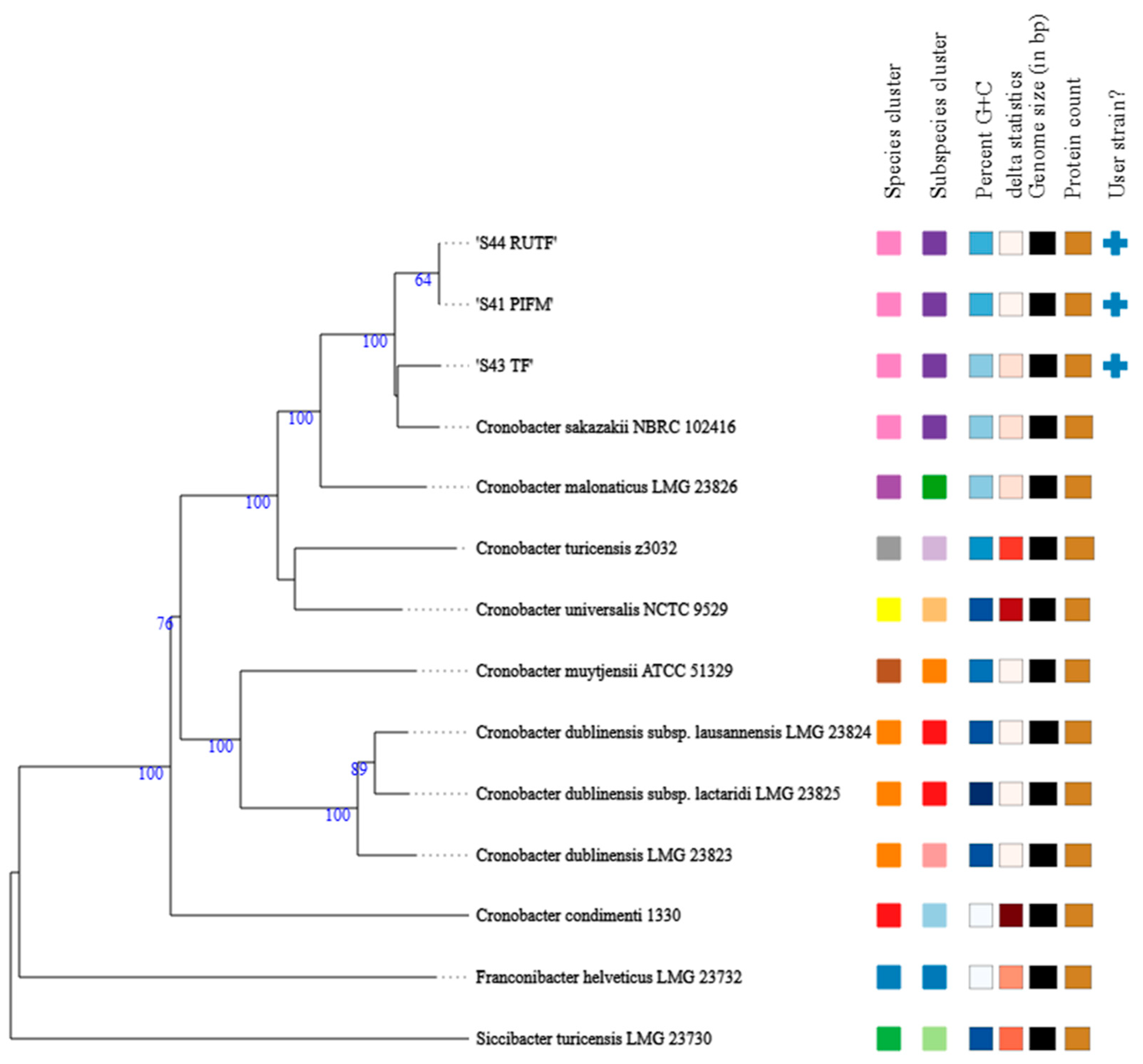
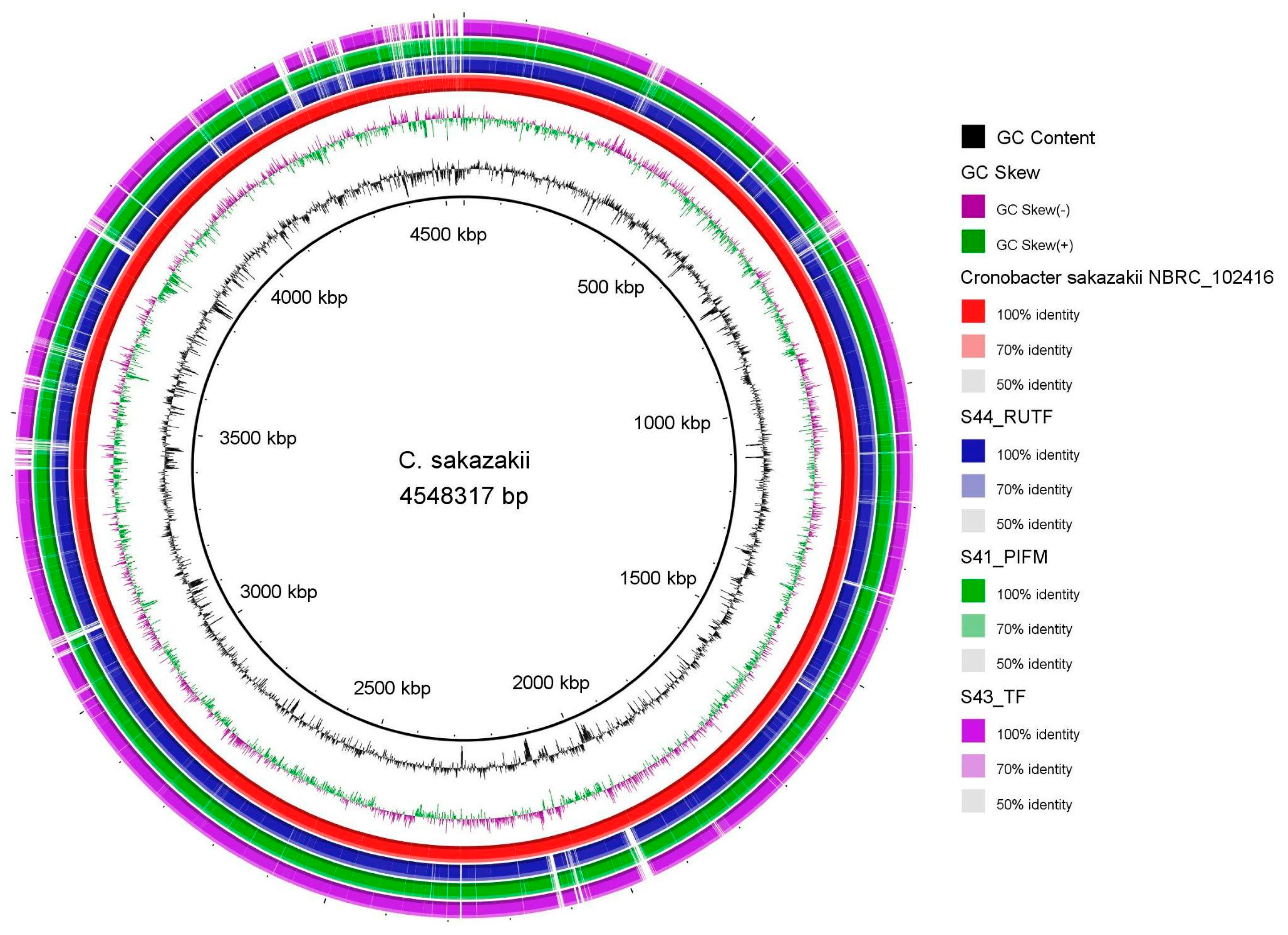
Based on TYGS analysis, all the study isolates were in the same group and had the closest relationship with C. sakazakii NBRC 102416, a type strain for C. sakazakii (Figure 2). A genome comparison among the three isolates, using BRIG and C. sakazakii NBRC 102416 as a reference, demonstrated some variations. While the isolates S41_PIFM and S44_RUTF were very similar, with only a few variations between them, S43_TF displayed different genomic features from the other two isolates (Figure 3).
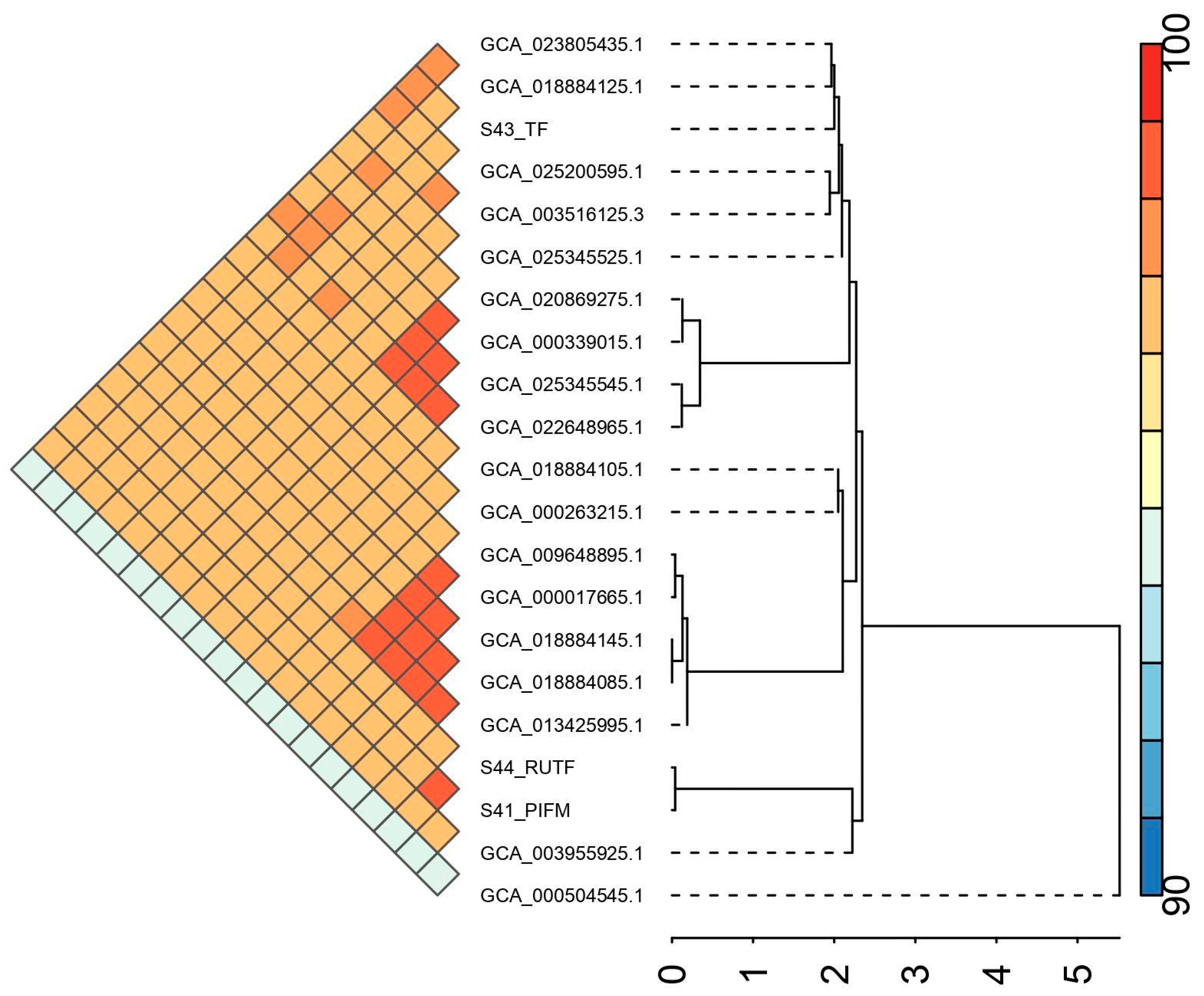
Average nucleotide identity (ANI) based analysis showed that the study isolates and downloaded complete genomes from BV-BRC (n = 18) were similar to each other with ANI values ranging from 94.48 to 99.96 (Supplementary Table S2). Phylogenetic analysis revealed that S44_RUTF and S41_PIFM were closest to C. sakazakii GZcsf_1 (GCA_003955925.1) obtained from brain abscess fluid in China, while S43_TF was closely related to Cronobacter sakazakii C105731 (GCA_018884125.1, alfalfa sprouts, Mexico) and Cronobacter sakazakii JXES_28 (GCA_023805435.1, infant food, China) (Figure 4).
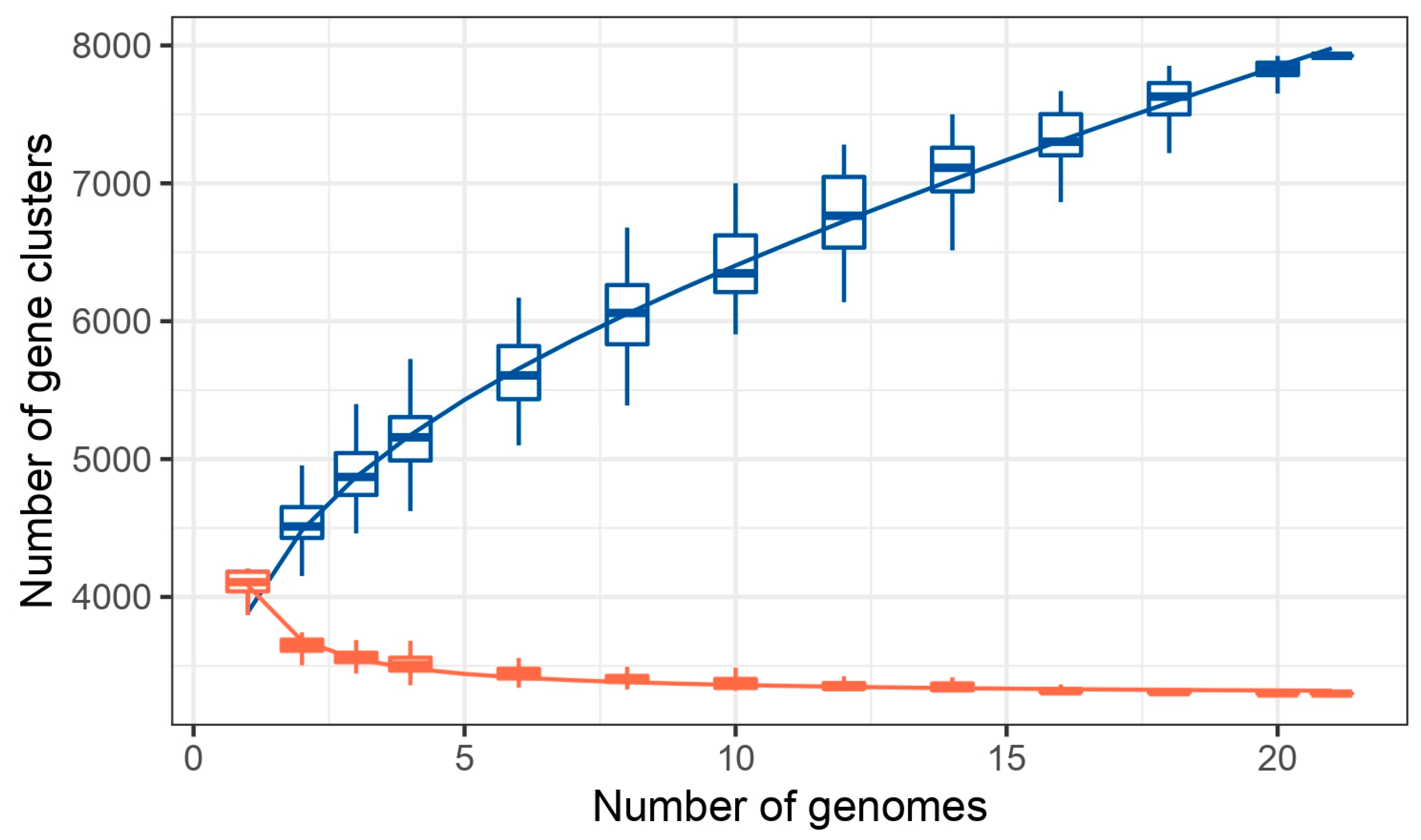
Pan-genome analysis of the study isolates, along with C. sakazakii strains available in the NCBI database (n = 18), showed that these genomes share 3317 core genomes and a total of 7903 genes. Based on this analysis, 20, 84, and 9 unique genes have been identified in the isolates from the current study, S41_PIFM, S43_TF, and S44_RUTF, respectively (Table 4). Some of the identified unique genes play diverse roles in the survival and adaptability of the organism. Metabolism-related genes in S44_RUTF, astE (succinylglutamate desuccinylase), and curA (curcumin reductase) aid nitrogen metabolism and protect against oxidative stress, respectively. Another gene found in the same genome, nasR, helps adapt to low-oxygen conditions via nitrate regulation. There were four genes in S41_PIFM, aplIM, xerC_4, hin, and jefA, which have a role in the defense mechanism of the bacterium. aplIM (restriction-modification methylase), xerC_4 (tyrosine recombinase), and hin (DNA-invertase) have a role in phage protection, chromosome segregation, and plasmid stability, and phase variation, respectively, which enhance immune evasion. In addition, the jefA gene plays a role as a drug efflux pump. Moreover, in S43_TF, two genes, fdhF_5 and pepP, were found. fdhF_5 aids anaerobic energy generation through formate oxidation, and pepP facilitates protein degradation for nutrient acquisition (Table 5). The core/pan rarefaction curve demonstrated that the number of pan-genome genes increased steadily with the addition of new strains, whereas the core genome exhibited the opposite trend (Figure 5). Since there was no obvious plateau in the core/pan-genome ratio, it indicates that the C. sakazakii pan-genome was in an open state.

3.4. Antimicrobial Resistance Genes

CARD detected a total of 19 distinct AMR genes in the three isolates, including acrA, adeF, cRP, emrB, emrR, H-NS, kpnE, kpnF, msbA, qacG, qacJ, rsmA, marA, csa1, fosA8, vanG, eF-Tu, pbp3, and acrAB-tolC. Except for qacG, qacJ, and csa1, all genes were shared by S41_PIFM, S44_RUTF (both ST83), and S43_TF (ST789). S43_TF lacked the previously mentioned genes. Among these, the csa1, and fosA8 gene products inactivate antibiotics, while the vanG, eF-Tu, and pbp3 genes are associated with alterations of the target molecule. acrAB-tolC can both alter the antibiotic target and perform antibiotic efflux. The rest of the detected genes encode proteins that are associated with efflux mechanisms to confer antibiotic resistance (Table 6). Among the genes, a few confer resistance against a single class of antibiotics. For instance, emrB and emrR (fluoroquinolones), eF-Tu (elfamycins), pbp3 (beta-lactams), msbA (nitroimidazoles), csa1 (cephalosporins), fosA8 (phosphonic acids), vanG (glycopeptides). On the contrary, acrA, adeF, cRP, H-NS, kpnE, kpnF, rsmA, and marA function against diverse classes of antibiotics, including fluoroquinolones, cephalosporins, glycylcyclines, penicillin beta-lactams, tetracyclines, rifamycins, phenicols, marcolids, disinfecting agents, and antiseptics. In particular, the qacG and qacJ genes are specifically involved in resistance towards disinfecting agents and antiseptics (Table 6, Supplementary Table S3).

3.5. Virulence Factors

All three isolates were predicted as human pathogens with a probability from 0.799 to 0.802 by PathogenFinder (Supplementary Table S4).
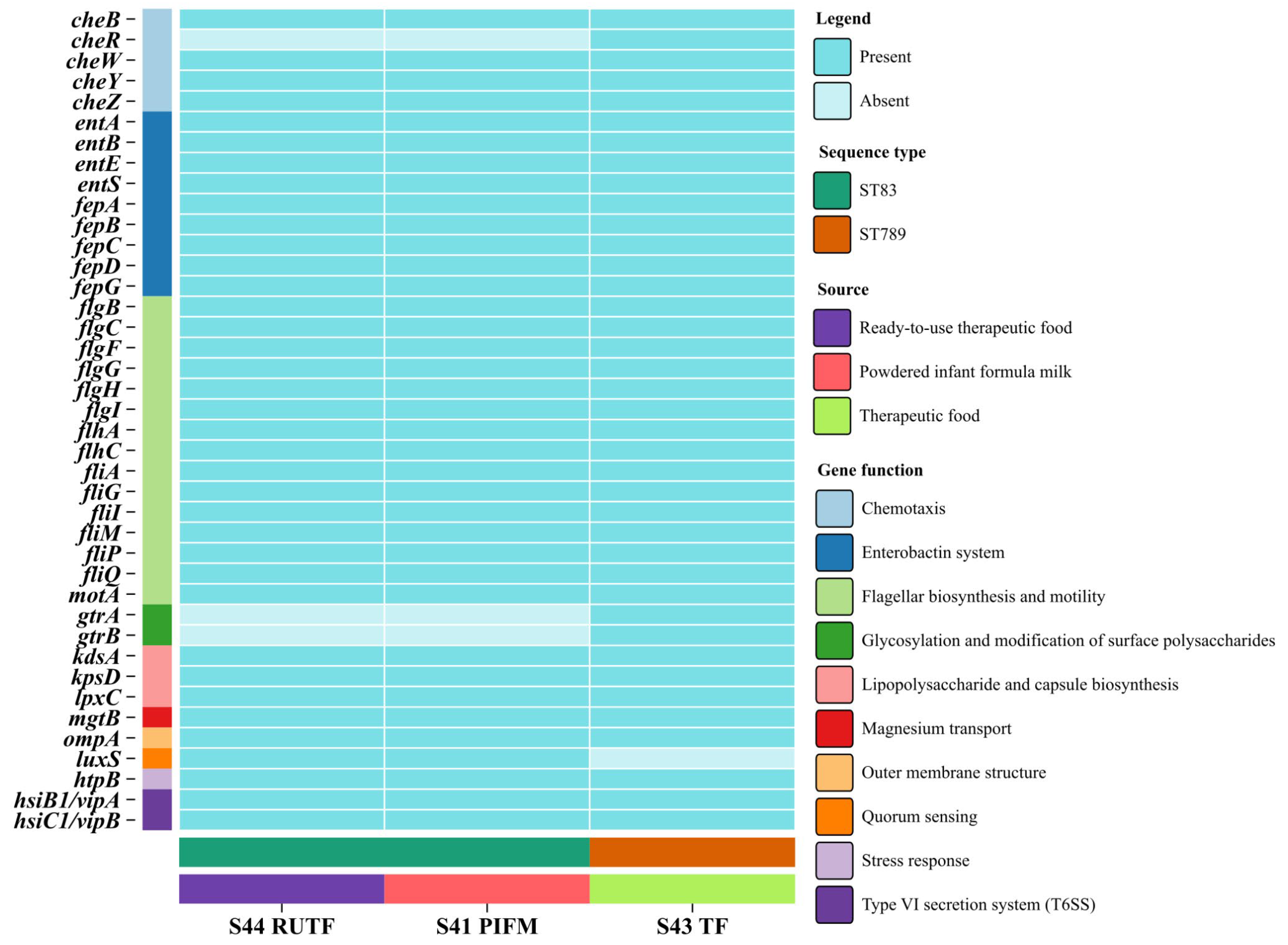
The three isolates S44_RUTF, S41_PIFM, and S43_TF exhibited a largely similar pattern of virulence genes, with some variations. Isolates S44_RUTF and S41_PIFM each carried 37 virulence genes, while S43_TF had 39 genes (Figure 6). The largest group of genes (15) was associated with flagellar biosynthesis and motility, including: flgB, flgC, flgF, flgG, flgH, flgI, flhA, flhC, fliA, fliG, fliI, fliM, fliP, fliQ, and motA. Among the others, nine genes were related to the enterobactin system (entA, entB, entE, entS, fepA, fepB, fepC, fepD, and fepG), three genes involved in lipopolysaccharide and capsule biosynthesis (kdsA, kpsD, and lpxC), two genes associated with the Type VI secretion system (hsiB1/vipA, and hsiC1/vipB), one gene for magnesium transport (mgtB), one stress response gene (htpB), and one gene encoding an outer membrane protein (ompA).
For several virulence genes, variation was observed among the three isolates. Isolate S43_TF carried five chemotaxis-related genes: cheB, cheR, cheW, cheY, and cheZ. All these genes, responsible for catalyzing the methylation of the cytosolic signaling domain of chemoreceptors, were present in the other two isolates (S44_RUTF and S41_PIFM), except for cheR. In addition to that, the gtrA and gtrB genes, involved in the glycosylation and modification of surface polysaccharides, were absent in these two genomes but present in S43_TF. In contrast, the luxS gene, associated with quorum sensing, was detected in S44_RUTF and S41_PIFM, while absent in isolate S43_TF.
Additionally, antiSMASH detected in all three isolates the presence of aerobactin, a siderophore that chelates iron, and aids in bacterial virulence, and carotenoid, which can protect bacteria from oxidative immune defense in hosts.

3.6. Prophages, Plasmids, and Other Mobile Genetic Elements

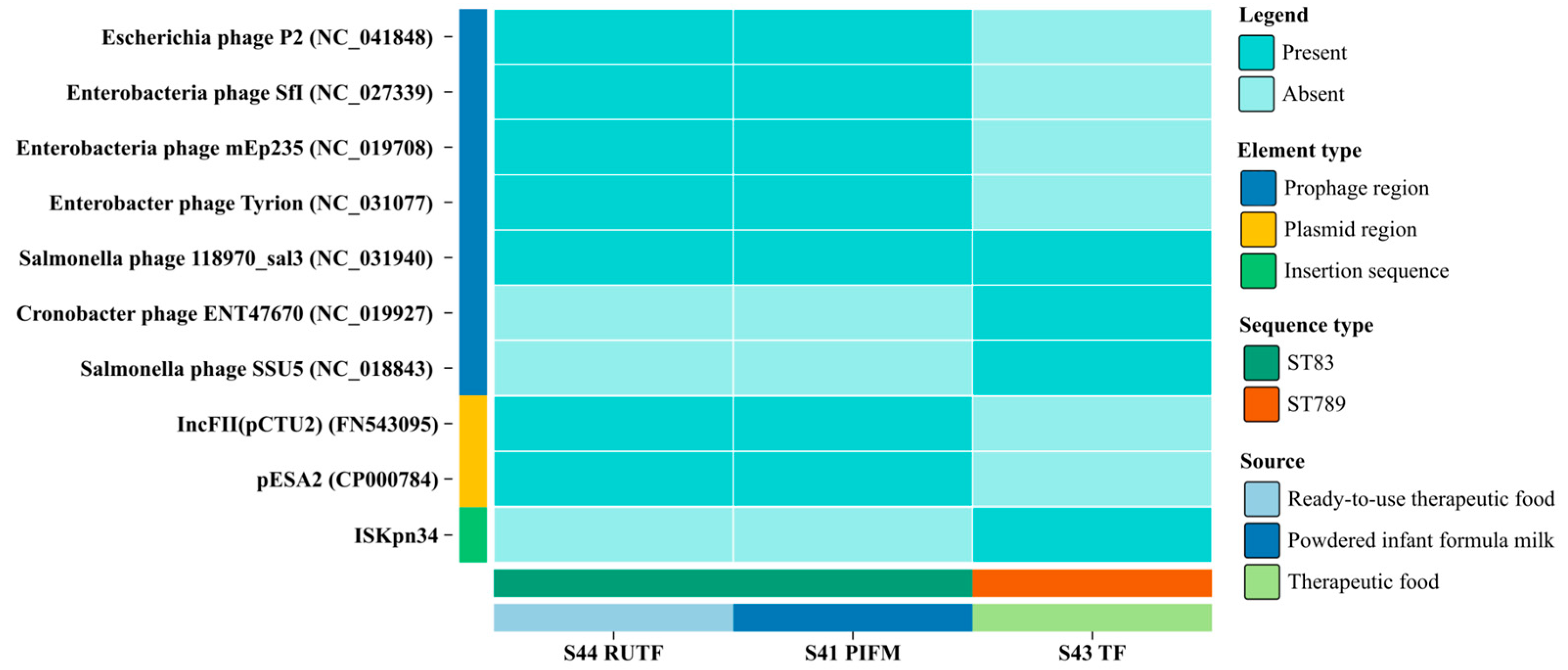
Seven different types of prophages were identified in these three isolates. The two isolates S44_RUTF and S41_PIFM contained five prophages, named Enterobacteria phage SfI (NC_027339), Enterobacter phage Tyrion (NC_031077), Salmonella phage 118970_sal3 (NC_031940), Escherichia phage P2 (NC_041848), and Enterobacteria phage mEp235 (NC_019708). While the first three of them were intact, Escherichia phage P2 was incomplete, and Enterobacteria phage mEp235 (NC_019708) was questionable. The Salmonella phage 118970_sal3 (NC_031940) was present in all of the isolates in this investigation, with the length of the prophage ranging from 26.4 to 60.3 kbp. The isolate S43_TF only harbored two types of prophages, the Cronobacter phage ENT47670 (NC_019927) and Salmonella phage SSU5 (NC_018843). Both of them were incomplete (Figure 7, Supplementary Table S5). None of the phage sequences carried any AMR gene.
Similarly to the prophage regions, C. sakazakii isolates had a clear pattern of plasmid replicons. PlasmidFinder detected a total of 2 distinct plasmid replicons in these genomes. S44_RUTF and S41_PIFM contained two plasmid replicons, IncFII (pCTU2) (FN543095) and pESA2 (CP000784), which were absent in S43_TF (Figure 7, Supplementary Table S6). Moreover, MobileElementFinder detected an insertion sequence from the IS3 family, ISKpn34 (CP008932), in S43_TF (Supplementary Table S7).

3.7. Detection of CRSIPR

All the study isolates contained Type I-E CRISPR systems in their genomes. Some CAS-putative and CRISPRs without cas were also detected. CRISPR numbers varied from 20 to 25, while one to three CAS-putatives were found in the genomes (Supplementary Table S8).

4. Discussion

It is well known that Cronobacter spp. can cause severe infections in neonates and infants through ingestion of contaminated infant formula [39,40,41,42]. In the current study, we isolated two C. sakazakii isolates belonging to ST83 (S44_RUTF and S41_PIFM) and one isolate of ST789 (S43_TF), isolated from ready-to-use therapeutic food, powdered infant formula milk, and therapeutic food, respectively. To our knowledge, this is the first report of whole genome analysis of C. sakazakii from Bangladesh.
The whole genome analysis revealed that the isolates S44_RUTF, S41_PIFM belong to ST83, one of the most common sequence types associated with disease in infants and children [43]. The ST83 pathovar, along with ST4, ST1, ST8, and ST12, is most frequently found in powdered infant formula marketed in different countries, in powdered infant formula production plants, and in invasive clinical cases such as fatal meningitis and septicemia [1,44,45,46,47]. In particular, C. sakazakii ST83 isolates exhibited specific adaptations to persist in powdered infant formula manufacturing facilities and stress-tolerance conditions [48]. This sequence type of C. sakazakii has been from environmental and infant formula samples, and was associated with septicemia in infants [40]. In Bangladesh, there is no study on clinical isolates of C. sakazakii so far, and therefore, it is not clear which sequence type might be circulating in the country. Detection of C. sakazakii ST83 isolates, which are frequently linked to infant and children infection, poses a great threat to infant health. This data suggests further study on clinical cases of infant meningitis and septicemia for the presence of C. sakazakii.
In contrast, the C. sakazakii isolate S43_TF belongs to a very new sequence type ST789, which has been reported for the first time in 2023 in powdered infant formula and processing environments in China [49]. The current study is the first comprehensive genome analysis of this rare sequence type for the first time. Although until now there is no report of any clinical cases associated with ST789, the presence of an array of virulence genes, with some unique ones, indicates its virulence potential and emphasizes on more comprehensive investigations on this type in infant food products. In particular, the genes gtrA and gtrB, involved in surface polysaccharide modification, were unique to S43_TF, possibly altering antigenic properties and immune recognition [50]. Five chemotaxis-related genes (cheB, cheR, cheW, cheY, and cheZ), which may enhance its ability to detect and move toward favorable niches, are a factor linked to increased colonization efficiency [51].
In addition to the unique virulence genes, this ST789 isolate, S43_TF, along with the other two ST83 isolates, revealed a repertoire of virulence-associated genes. All of them possessed multiple genes linked to motility, adhesion, iron acquisition, and stress tolerance. Collectively, these virulence determinants suggest that these C. sakazakii isolates have the potential to cause severe infections, particularly in neonates and immunocompromised individuals, in line with previous reports on C. sakazakii pathogenesis [1].
Antibiotic resistance in C. sakazakii is diverse and depends on the source and geographic location of the strain [52,53,54]. The three C. sakazakii isolates from the current study also displayed the presence of a diverse collection of antibiotic resistance genes conferring resistance to cephalosporin, phosphonic acid, glycopeptide, and elfamycin. A few of the genes belonged to antibiotic efflux pumps. While some of the genes were related to resistance to a specific class of antibiotics, the others were linked with resistance to multiple antibiotics. These genes were frequently found in earlier studies [3,8,55,56,57]. Antibiotic overuse in food environments and the presence of several antibiotic resistance operons (marA) can favor the development of resistance to different antibiotics in Cronobacter spp. [55,58,59]. Another gene, EF-Tu, was detected, which is a member of the elfamycin family and resists antibiotics through target alteration. This gene has evolved to be a multifunctional protein in a wide variety of pathogenic bacteria [60]. However, glpT, a commonly found AMR gene in Cronobacter spp. that confers resistance to fosfomycin, was not found in any of our study isolates. Additionally, blaCTX genes, commonly found in cephalosporin-resistant strains, were also not detected in this study [61,62].
In our study, the ST83 isolates contained two plasmid replicons, IncFIB(pCTU2) and pESA2, both of which are conjugative plasmids [63]. Conjugation in bacteria is very common, and plasmids like pESA2 and pCTU2 in Cronobacter spp. generally carry gene clusters responsible for T4SS secretion and pilus assembly [63,64]. In addition, pCTU2 has been observed to carry AMR genes in Salmonella enterica [65]. Although both of these plasmids have been reported in C. sakazakii strains in previous studies [56,66,67], unlike Salmonella enterica, no AMR genes were found to be carried by these plasmids. Two commonly found plasmids related to antibiotic resistance, IncFIB(pCTU1) and IncFIB(pCTU3), were absent in our study. The insertion sequence ISKpn34, detected in the C. sakazakii S43_TF strain, is also linked to antibiotic resistance, and commonly reported in Klebsiella pneumoniae and other Enterobacteriaceae. There are very few reports of this insertion sequence in C. sakazakii isolates [68]. Therefore, the presence of this insertion sequence is noteworthy.
The presence of prophages in bacterial genomes can also confer antibiotic and environmental stress resistance, and additionally, aid in bacterial attachment to their host cells, facilitating their virulence potential as pathogens [69]. Investigation of the genome sequences of the three C. sakazakii isolates revealed that each isolate harbored at least one intact phage. Except for Enterobacteria phage SfI (NC_027339) and Escherichia phage P2 (NC_041848), all other prophages detected in this study were reported in C. sakazakii isolates obtained from different filth flies [70]. In particular, this is the first report of the detection of Enterobacteria phage SfI (NC_027339) and Escherichia phage P2 (NC_041848) in any C. sakazakii isolate. Although the Escherichia phage P2 (NC_041848) is also reported for the first time, it was incomplete in nature. The Salmonella phage 118970_sal3 (NC_031940), the only prophage present in all the study isolates, was intact in nature, and its length was quite small compared to an earlier study [70]. However, this prophage with almost a similar length was also detected in a few studies [8,56]. These studies also showed that Enterobacter phage Tyrion (NC_031077), another intact prophage identified in our ST83 isolates, had almost similar length to the isolates in these studies. Notably, this prophage was identified in C. sakazakii isolates collected from PIF manufacturing facilities [8]. Salmonella phage SSU5 (NC_018843), which was found in only S43_TF, was observed in ST1 and ST4 in an earlier study [8]. This phage was also discovered in Pseudomonas strains that were found in Michigan State’s coastal waters in the United States. It has been shown to produce siderophores and increase resistance to the heavy metals copper and mercury [71].
Investigating the diversity of CRISPR genes in bacteria is important since these systems can be used to type different microbes. CRISPR and cas genes can be horizontally transferred between strains of the same species as well as across species and genera that are far apart [72]. Additionally, studies on Pseudomonas aeruginosa also suggest that Type I and Type II CRISPR-cas systems in bacteria help in escaping mammalian immune systems efficiently [73]. The C. sakazakii isolates from the current study contained Type I-E CRISPR systems, frequently found in C. sakazakii [74,75,76]. Whether this CRISPR system plays any role in immune evasion is worth investigating. However, another CRISPR system I-F was also found in earlier studies, which was absent in ours [57].

5. Conclusions

This study underscores the critical public health relevance of monitoring C. sakazakii in PIF. The detection of ST83, a sequence type linked to severe neonatal infections, highlights the persistence of established pathogenic strains in Bangladesh. Genomic insights into virulence factors, antibiotic resistance genes, plasmid diversity, and prophages emphasize the capacity of these bacteria to survive, adapt, and potentially cause severe infections in vulnerable populations. The findings also illustrate the role of MGEs in disseminating resistance, underscoring the need for stringent quality control and surveillance in formula production. Overall, this study provides valuable knowledge for risk assessment, informs targeted preventive strategies, and strengthens efforts to safeguard infant health against C. sakazakii contamination.

Supplementary Materials

The following supporting information can be downloaded at: https://www.mdpi.com/article/10.3390/pathogens14121220/s1, Table S1: Metadata of the genomes (n = 18) downloaded from BV-BRC for pan-genome analysis; Table S2: Average nucleotide identity (ANI) among the study isolates (n = 3) and the isolates downloaded from BV-BRC (n = 18) for pan-genome analysis; Table S3: Antimicrobial resistance (AMR) genes identified in the study genomes using CARD; Table S4: Overview of the outcome of the study isolates using PathogenFinder; Table S5: Prophage regions identified in the study genomes using PHASTEST; Table S6: Plasmid replicons identified in the study genomes using PlasmidFinder; Table S7: Mobile genetic element (MGE) detected in S43_TF; Table S8: CRISPR systems identified in the study genomes using CRISPRCasFinder.

Author Contributions

Conceptualization: M.L.B. and S.A.; methodology: S.B.; software: S.B. and S.R.; validation: M.L.B. and S.A.; formal analysis: S.B. and S.R.; investigation: S.B. and S.R.; data curation: S.B.; writing—original draft preparation: S.B. and S.R.; writing—review and editing: M.L.B. and S.A.; visualization: S.B. and S.R.; supervision: M.L.B. and S.A.; project administration: M.L.B. and S.A.; funding acquisition: M.L.B. and S.A. All authors have read and agreed to the published version of the manuscript.

Funding

This work was funded by the University Grants Commission, Bangladesh (Grant number: Bio-34/2023-24). The APC was partially funded by the International Publication Grant from the University of Dhaka, Bangladesh.

Institutional Review Board Statement

The present study is focused on bacteria isolated from food sample and does not contain any human subjects. Therefore, it did not require any ethical approval.

Informed Consent Statement

The present study did not contain any sensitive personal information, and, therefore, did not require any informed consent.

Data Availability Statement

Data available in a publicly accessible repository, National Center for Biotechnology Information (NCBI). Accession numbers are NZ_JBNUPD000000000 (S44_RUTF), NZ_JBNPBD000000000 (S41_PIFM), and NZ_JBNUPC000000000 (S43_TF).

Conflicts of Interest

The authors declare no conflicts of interest.

References

  1. Joseph, S.; Forsythe, S. Insights into the Emergent Bacterial Pathogen Cronobacter spp., Generated by Multilocus Sequence Typing and Analysis. Front. Microbiol. 2012, 3, 397. [Google Scholar] [CrossRef] [PubMed]
  2. Kucerova, E.; Joseph, S.; Forsythe, S. The Cronobacter Genus: Ubiquity and Diversity. Qual. Assur. Saf. Crops Foods 2011, 3, 104–122. [Google Scholar] [CrossRef]
  3. Forsythe, S.J. Updates on the Cronobacter Genus. Annu. Rev. Food Sci. Technol. 2018, 9, 23–44. [Google Scholar] [CrossRef] [PubMed]
  4. Lepuschitz, S.; Ruppitsch, W.; Pekard-Amenitsch, S.; Forsythe, S.J.; Cormican, M.; Mach, R.L.; Piérard, D.; Allerberger, F. Multicenter Study of Cronobacter sakazakii Infections in Humans, Europe, 2017. Emerg. Infect. Dis. J. 2019, 25, 515. [Google Scholar] [CrossRef]
  5. Holý, O.; Petrželová, J.; Hanulík, V.; Chromá, M.; Matoušková, I.; Forsythe, S.J. Epidemiology of Cronobacter spp. Isolates from Patients Admitted to the Olomouc University Hospital (Czech Republic). Epidemiol. Mikrobiol. Imunol. 2014, 63, 69–72. [Google Scholar]
  6. Holý, O.; Forsythe, S. Cronobacter spp. as Emerging Causes of Healthcare-Associated Infection. J. Hosp. Infect. 2014, 86, 169–177. [Google Scholar] [CrossRef]
  7. Kleiman, M.B.; Allen, S.D.; Neal, P.; Reynolds, J. Meningoencephalitis and Compartmentalization of the Cerebral Ventricles Caused by Enterobacter sakazakii. J. Clin. Microbiol. 1981, 14, 352–354. [Google Scholar] [CrossRef]
  8. Mousavi, Z.E.; Koolman, L.; Macori, G.; Fanning, S.; Butler, F. Comprehensive Genomic Characterization of Cronobacter sakazakii Isolates from Infant Formula Processing Facilities Using Whole-Genome Sequencing. Microorganisms 2023, 11, 2749. [Google Scholar] [CrossRef] [PubMed]
  9. Beuchat, L.R.; Kim, H.; Gurtler, J.B.; Lin, L.-C.; Ryu, J.-H.; Richards, G.M. Cronobacter sakazakii in Foods and Factors Affecting Its Survival, Growth, and Inactivation. Int. J. Food Microbiol. 2009, 136, 204–213. [Google Scholar] [CrossRef]
  10. Shaker, R.; Osaili, T.; Al-Omary, W.; Jaradat, Z.; Al-Zuby, M. Isolation of Enterobacter sakazakii and Other Enterobacter sp. from Food and Food Production Environments. Food Control 2007, 18, 1241–1245. [Google Scholar] [CrossRef]
  11. World Health Organization; Food and Agriculture Organization of the United Nations. Enterobacter sakazakii (Cronobacter spp.) in Powdered Follow-Up Formula: Meeting Report; World Health Organization: Geneva, Switzerland; Food and Agriculture Organization of the United Nations: Rome, Italy, 2008; Available online: https://openknowledge.fao.org/server/api/core/bitstreams/9860acca-855b-4960-8b79-74ccf01c16d7/content (accessed on 27 October 2025).
  12. Barron, J.C.; Forsythe, S.J. Dry Stress and Survival Time of Enterobacter sakazakii and Other Enterobacteriaceae in Dehydrated Powdered Infant Formula. J. Food Prot. 2007, 70, 2111–2117. [Google Scholar] [CrossRef] [PubMed]
  13. Ekundayo, T.C.; Ijabadeniyi, O.A. Global and Regional Prevalence of Cronobacter sakazakii in Powdered Milk and Flour. Sci. Rep. 2024, 14, 6865. [Google Scholar] [CrossRef] [PubMed]
  14. Hoque, A.; Ahmed, T.; Shahidullah, M.; Hossain, A.; Mannan, A.; Noor, K.; Nahar, K.; Ilias, M.; Ahmed, D. Isolation and Molecular Identification of Cronobacter spp. from Powdered Infant Formula (PIF) in Bangladesh. Int. J. Food Microbiol. 2010, 142, 375–378. [Google Scholar] [CrossRef] [PubMed]
  15. Fakruddin, M.; Rahaman, M.; Ahmed, M.M.; Hoque, M.M. Stress Tolerant Virulent Strains of Cronobacter sakazakii from Food. Biol. Res. 2014, 47, 63. [Google Scholar] [CrossRef]
  16. Keyser, M.; Witthuhn, R.C.; Ronquest, L.-C.; Britz, T.J. Treatment of Winery Effluent with Upflow Anaerobic Sludge Blanket (UASB)—Granular Sludges Enriched with Enterobacter sakazakii. Biotechnol. Lett. 2003, 25, 1893–1898. [Google Scholar] [CrossRef]
  17. Lehner, A.; Nitzsche, S.; Breeuwer, P.; Diep, B.; Thelen, K.; Stephan, R. Comparison of Two Chromogenic Media and Evaluation of Two Molecular Based Identification Systems for Enterobacter sakazakii Detection. BMC Microbiol. 2006, 6, 15. [Google Scholar] [CrossRef]
  18. Bankevich, A.; Nurk, S.; Antipov, D.; Gurevich, A.A.; Dvorkin, M.; Kulikov, A.S.; Lesin, V.M.; Nikolenko, S.I.; Pham, S.; Prjibelski, A.D.; et al. SPAdes: A New Genome Assembly Algorithm and Its Applications to Single-Cell Sequencing. J. Comput. Biol. 2012, 19, 455–477. [Google Scholar] [CrossRef]
  19. Gurevich, A.; Saveliev, V.; Vyahhi, N.; Tesler, G. QUAST: Quality Assessment Tool for Genome Assemblies. Bioinformatics 2013, 29, 1072–1075. [Google Scholar] [CrossRef]
  20. Jolley, K.A.; Bray, J.E.; Maiden, M.C.J. Open-Access Bacterial Population Genomics: BIGSdb Software, the PubMLST.Org Website and Their Applications. Wellcome Open Res. 2018, 3, 124. [Google Scholar] [CrossRef]
  21. Larsen, M.V.; Cosentino, S.; Rasmussen, S.; Friis, C.; Hasman, H.; Marvig, R.L.; Jelsbak, L.; Sicheritz-Pontén, T.; Ussery, D.W.; Aarestrup, F.M.; et al. Multilocus Sequence Typing of Total-Genome-Sequenced Bacteria. J. Clin. Microbiol. 2012, 50, 1355–1361. [Google Scholar] [CrossRef]
  22. Jolley, K.A.; Maiden, M.C. BIGSdb: Scalable Analysis of Bacterial Genome Variation at the Population Level. BMC Bioinform. 2010, 11, 595. [Google Scholar] [CrossRef]
  23. Ogrodzki, P.; Forsythe, S. Capsular Profiling of the Cronobacter Genus and the Association of Specific Cronobacter sakazakii and C. malonaticus Capsule Types with Neonatal Meningitis and Necrotizing Enterocolitis. BMC Genom. 2015, 16, 758. [Google Scholar] [CrossRef]
  24. Aziz, R.K.; Bartels, D.; Best, A.A.; DeJongh, M.; Disz, T.; Edwards, R.A.; Formsma, K.; Gerdes, S.; Glass, E.M.; Kubal, M.; et al. The RAST Server: Rapid Annotations Using Subsystems Technology. BMC Genom. 2008, 9, 75. [Google Scholar] [CrossRef]
  25. Seemann, T. Prokka: Rapid Prokaryotic Genome Annotation. Bioinformatics 2014, 30, 2068–2069. [Google Scholar] [CrossRef]
  26. Meier-Kolthoff, J.P.; Göker, M. TYGS is an Automated High-Throughput Platform for State-of-the-Art Genome-Based Taxonomy. Nat. Commun. 2019, 10, 2182. [Google Scholar] [CrossRef]
  27. Lefort, V.; Desper, R.; Gascuel, O. FastME 2.0: A Comprehensive, Accurate, and Fast Distance-Based Phylogeny Inference Program. Mol. Biol. Evol. 2015, 32, 2798–2800. [Google Scholar] [CrossRef] [PubMed]
  28. Alikhan, N.-F.; Petty, N.K.; Ben Zakour, N.L.; Beatson, S.A. BLAST Ring Image Generator (BRIG): Simple Prokaryote Genome Comparisons. BMC Genom. 2011, 12, 402. [Google Scholar] [CrossRef] [PubMed]
  29. Liu, D.; Zhang, Y.; Fan, G.; Sun, D.; Zhang, X.; Yu, Z.; Wang, J.; Wu, L.; Shi, W.; Ma, J. IPGA: A Handy Integrated Prokaryotes Genome and Pan-Genome Analysis Web Service. IMeta 2022, 1, e55. [Google Scholar] [CrossRef]
  30. Page, A.J.; Cummins, C.A.; Hunt, M.; Wong, V.K.; Reuter, S.; Holden, M.T.G.; Fookes, M.; Falush, D.; Keane, J.A.; Parkhill, J. Roary: Rapid Large-Scale Prokaryote Pan Genome Analysis. Bioinformatics 2015, 31, 3691–3693. [Google Scholar] [CrossRef] [PubMed]
  31. Jia, B.; Raphenya, A.R.; Alcock, B.; Waglechner, N.; Guo, P.; Tsang, K.K.; Lago, B.A.; Dave, B.M.; Pereira, S.; Sharma, A.N.; et al. CARD 2017: Expansion and Model-Centric Curation of the Comprehensive Antibiotic Resistance Database. Nucleic Acids Res. 2017, 45, D566–D573. [Google Scholar] [CrossRef]
  32. Cosentino, S.; Larsen, M.V.; Aarestrup, F.M.; Lund, O. PathogenFinder—Distinguishing Friend from Foe Using Bacterial Whole Genome Sequence Data. PLoS ONE 2013, 8, e77302. [Google Scholar] [CrossRef]
  33. Chen, L.; Zheng, D.; Liu, B.; Yang, J.; Jin, Q. VFDB 2016: Hierarchical and Refined Dataset for Big Data Analysis—10 Years On. Nucleic Acids Res. 2016, 44, D694–D697. [Google Scholar] [CrossRef] [PubMed]
  34. Carattoli, A.; Zankari, E.; García-Fernández, A.; Voldby Larsen, M.; Lund, O.; Villa, L.; Møller Aarestrup, F.; Hasman, H. In Silico Detection and Typing of Plasmids Using PlasmidFinder and Plasmid Multilocus Sequence Typing. Antimicrob. Agents Chemother. 2014, 58, 3895–3903. [Google Scholar] [CrossRef]
  35. Couvin, D.; Bernheim, A.; Toffano-Nioche, C.; Touchon, M.; Michalik, J.; Néron, B.; Rocha, E.P.C.; Vergnaud, G.; Gautheret, D.; Pourcel, C. CRISPRCasFinder, an Update of CRISRFinder, Includes a Portable Version, Enhanced Performance and Integrates Search for Cas Proteins. Nucleic Acids Res. 2018, 46, W246–W251. [Google Scholar] [CrossRef]
  36. Wishart, D.S.; Han, S.; Saha, S.; Oler, E.; Peters, H.; Grant, J.R.; Stothard, P.; Gautam, V. PHASTEST: Faster than PHASTER, Better than PHAST. Nucleic Acids Res. 2023, 51, W443–W450. [Google Scholar] [CrossRef]
  37. Siguier, P.; Perochon, J.; Lestrade, L.; Mahillon, J.; Chandler, M. ISfinder: The Reference Centre for Bacterial Insertion Sequences. Nucleic Acids Res. 2006, 34, D32–D36. [Google Scholar] [CrossRef]
  38. Blin, K.; Shaw, S.; Vader, L.; Szenei, J.; Reitz, Z.L.; Augustijn, H.E.; Cediel-Becerra, J.D.D.; de Crécy-Lagard, V.; Koetsier, R.A.; Williams, S.E.; et al. antiSMASH 8.0: Extended Gene Cluster Detection Capabilities and Analyses of Chemistry, Enzymology, and Regulation. Nucleic Acids Res. 2025, 53, gkaf334. [Google Scholar] [CrossRef] [PubMed]
  39. Centers for Disease Control and Prevention (CDC). Enterobacter sakazakii Infections Associated with the Use of Powdered Infant Formula—Tennessee, 2001. MMWR Morb. Mortal. Wkly. Rep. 2002, 51, 297–300. [Google Scholar]
  40. Forsythe, S.J.; Dickins, B.; Jolley, K.A. Cronobacter, the Emergent Bacterial Pathogen Enterobacter sakazakii Comes of Age; MLST and Whole Genome Sequence Analysis. BMC Genom. 2014, 15, 1121. [Google Scholar] [CrossRef] [PubMed]
  41. Iversen, C.; Forsythe, S. Isolation of Enterobacter sakazakii and Other Enterobacteriaceae from Powdered Infant Formula Milk and Related Products. Food Microbiol. 2004, 21, 771–777. [Google Scholar] [CrossRef]
  42. Yan, Q.Q.; Condell, O.; Power, K.; Butler, F.; Tall, B.D.; Fanning, S. Cronobacter Species (Formerly Known as Enterobacter sakazakii) in Powdered Infant Formula: A Review of Our Current Understanding of the Biology of This Bacterium. J. Appl. Microbiol. 2012, 113, 1–15. [Google Scholar] [CrossRef]
  43. Lang, E.; Rhee, M.S.; Gonçalves, M.P.M.B.B.; Sant’Ana, A.S. Desiccation Strategies of Cronobacter sakazakii to Survive in Low Moisture Foods and Environment. Trends Food Sci. Technol. 2024, 143, 104241. [Google Scholar] [CrossRef]
  44. Csorba, C.; Pajić, M.; Blagojević, B.; Forsythe, S.; Radinović, M.; Velebit, B. Prevalence, Characterization, and Antibiotic Susceptibility of Cronobacter spp. in a Milk Powder Processing Environment: The First Reported Case in Serbia. Food Sci. Nutr. 2022, 10, 554–563. [Google Scholar] [CrossRef] [PubMed]
  45. Fei, P.; Jiang, Y.; Jiang, Y.; Yuan, X.; Yang, T.; Chen, J.; Wang, Z.; Kang, H.; Forsythe, S.J. Prevalence, Molecular Characterization, and Antibiotic Susceptibility of Cronobacter sakazakii Isolates from Powdered Infant Formula Collected from Chinese Retail Markets. Front. Microbiol. 2017, 8, 2026. [Google Scholar] [CrossRef]
  46. Grim, C.J.; Gopinath, G.R.; Jarvis, K.G.; Sathyamoorthy, V.; Trach, L.H.; Chase, H.R.; Tall, B.D. Genome Sequence of Cronobacter sakazakii Serogroup O:4, Sequence Type 4 Strain CDC 2009-03746, Isolated from a Fatal Case of Infantile Meningitis. Genome Announc. 2015, 3, e00492-15. [Google Scholar] [CrossRef]
  47. Hariri, S.; Joseph, S.; Forsythe, S.J. Cronobacter sakazakii ST4 Strains and Neonatal Meningitis, United States. Emerg. Infect. Dis. 2013, 19, 175–177. [Google Scholar] [CrossRef]
  48. Chase, H.R.; Gopinath, G.R.; Eshwar, A.K.; Stoller, A.; Fricker-Feer, C.; Gangiredla, J.; Patel, I.R.; Cinar, H.N.; Jeong, H.; Lee, C.; et al. Comparative Genomic Characterization of the Highly Persistent and Potentially Virulent Cronobacter sakazakii ST83, CC65 Strain H322 and Other ST83 Strains. Front. Microbiol. 2017, 8, 1136. [Google Scholar] [CrossRef] [PubMed]
  49. Li, H.; Fu, S.; Song, D.; Qin, X.; Zhang, W.; Man, C.; Yang, X.; Jiang, Y. Identification, Typing and Drug Resistance of Cronobacter spp. in Powdered Infant Formula and Processing Environment. Foods 2023, 12, 1084. [Google Scholar] [CrossRef]
  50. Allison, G.E.; Verma, N.K. Serotype-Converting Bacteriophages and O-Antigen Modification in Shigella flexneri. Trends Microbiol. 2000, 8, 17–23. [Google Scholar] [CrossRef]
  51. Porter, S.L.; Wadhams, G.H.; Armitage, J.P. Signal Processing in Complex Chemotaxis Pathways. Nat. Rev. Microbiol. 2011, 9, 153–165. [Google Scholar] [CrossRef]
  52. Fei, P.; Jiang, Y.; Feng, J.; Forsythe, S.J.; Li, R.; Zhou, Y.; Man, C. Antibiotic and Desiccation Resistance of Cronobacter sakazakii and C. malonaticus Isolates from Powdered Infant Formula and Processing Environments. Front. Microbiol. 2017, 8, 316. [Google Scholar] [CrossRef]
  53. Kilonzo-nthenge, A.; Rotich, E.; Godwin, S.; Nahashon, S.; Chen, F. Prevalence and Antimicrobial Resistance of Cronobacter sakazakii Isolated from Domestic Kitchens in Middle Tennessee, United States. J. Food Prot. 2012, 75, 1512–1517. [Google Scholar] [CrossRef]
  54. Pakbin, B.; Brück, W.M.; Allahyari, S.; Rossen, J.W.A.; Mahmoudi, R. Antibiotic Resistance and Molecular Characterization of Cronobacter sakazakii Strains Isolated from Powdered Infant Formula Milk. Foods 2022, 11, 1093. [Google Scholar] [CrossRef]
  55. Holý, O.; Parra-Flores, J.; Lepuschitz, S.; Alarcón-Lavín, M.P.; Cruz-Córdova, A.; Xicohtencatl-Cortes, J.; Mancilla-Rojano, J.; Ruppitsch, W.; Forsythe, S. Molecular Characterization of Cronobacter sakazakii Strains Isolated from Powdered Milk. Foods 2021, 10, 20. [Google Scholar] [CrossRef] [PubMed]
  56. Aly, M.A.; Domig, K.J.; Kneifel, W.; Reimhult, E. Whole Genome Sequencing-Based Comparison of Food Isolates of Cronobacter sakazakii. Front. Microbiol. 2019, 10, 1464. [Google Scholar] [CrossRef] [PubMed]
  57. Parra-Flores, J.; Holý, O.; Riffo, F.; Lepuschitz, S.; Maury-Sintjago, E.; Rodríguez-Fernández, A.; Cruz-Córdova, A.; Xicohtencatl-Cortes, J.; Mancilla-Rojano, J.; Troncoso, M.; et al. Profiling the Virulence and Antibiotic Resistance Genes of Cronobacter sakazakii Strains Isolated from Powdered and Dairy Formulas by Whole-Genome Sequencing. Front. Microbiol. 2021, 12, 694922. [Google Scholar] [CrossRef] [PubMed]
  58. Holý, O.; Parra-Flores, J.; Bzdil, J.; Cabal-Rosel, A.; Daza-Prieto, B.; Cruz-Córdova, A.; Xicohtencatl-Cortes, J.; Rodríguez-Martínez, R.; Acuña, S.; Forsythe, S.; et al. Screening of Antibiotic and Virulence Genes from Whole Genome Sequenced Cronobacter sakazakii Isolated from Food and Milk-Producing Environments. Antibiotics 2023, 12, 851. [Google Scholar] [CrossRef]
  59. Chon, J.-W.; Song, K.-Y.; Kim, S.-Y.; Hyeon, J.-Y.; Seo, K.-H. Isolation and Characterization of Cronobacter from Desiccated Foods in Korea. J. Food Sci. 2012, 77, M354–M358. [Google Scholar] [CrossRef]
  60. Kim, K.; Jang, S.S.; Kim, S.K.; Park, J.-H.; Heu, S.; Ryu, S. Prevalence and Genetic Diversity of Enterobacter sakazakii in Ingredients of Infant Foods. Int. J. Food Microbiol. 2008, 122, 196–203. [Google Scholar] [CrossRef]
  61. Harvey, K.L.; Jarocki, V.M.; Charles, I.G.; Djordjevic, S.P. The Diverse Functional Roles of Elongation Factor Tu (EF-Tu) in Microbial Pathogenesis. Front. Microbiol. 2019, 10, 2351. [Google Scholar] [CrossRef]
  62. Holý, O.; Alsonosi, A.; Hochel, I.; Röderová, M.; Zatloukalová, S.; Mlynárčik, P.; Kolář, M.; Petrželová, J.; Alazraq, A.; Chmelař, D.; et al. Antibiotic Susceptibility of Cronobacter spp. Isolated from Clinical Samples. Pol. J. Microbiol. 2019, 68, 5–14. [Google Scholar] [CrossRef] [PubMed]
  63. Zurfluh, K.; Nüesch-Inderbinen, M.; Morach, M.; Zihler Berner, A.; Hächler, H.; Stephan, R. Extended-Spectrum-β-Lactamase-Producing Enterobacteriaceae Isolated from Vegetables Imported from the Dominican Republic, India, Thailand, and Vietnam. Appl. Environ. Microbiol. 2015, 81, 3115–3120. [Google Scholar] [CrossRef]
  64. Jang, H.; Gopinath, G.R.; Eshwar, A.; Srikumar, S.; Nguyen, S.; Gangiredla, J.; Patel, I.R.; Finkelstein, S.B.; Negrete, F.; Woo, J.; et al. The Secretion of Toxins and Other Exoproteins of Cronobacter: Role in Virulence, Adaption, and Persistence. Microorganisms 2020, 8, 229. [Google Scholar] [CrossRef]
  65. Franco, A.A.; Hu, L.; Grim, C.J.; Gopinath, G.; Sathyamoorthy, V.; Jarvis, K.G.; Lee, C.; Sadowski, J.; Kim, J.; Kothary, M.H.; et al. Characterization of Putative Virulence Genes on the Related RepFIB Plasmids Harbored by Cronobacter spp. Appl. Environ. Microbiol. 2011, 77, 3255–3267. [Google Scholar] [CrossRef]
  66. Li, I.-C.; Wu, H.-H.; Chen, Z.-W.; Chou, C.-H. Prevalence of IncFIB Plasmids Found among Salmonella enterica Serovar Schwarzengrund Isolates from Animal Sources in Taiwan Using Whole-Genome Sequencing. Pathogens 2021, 10, 1024. [Google Scholar] [CrossRef]
  67. Kucerova, E.; Clifton, S.W.; Xia, X.-Q.; Long, F.; Porwollik, S.; Fulton, L.; Fronick, C.; Minx, P.; Kyung, K.; Warren, W.; et al. Genome Sequence of Cronobacter sakazakii BAA-894 and Comparative Genomic Hybridization Analysis with Other Cronobacter Species. PLoS ONE 2010, 5, e9556. [Google Scholar] [CrossRef]
  68. Zhang, L.; Bu, K.; Yang, H.; Li, P.; He, Z.; Wu, T.; Li, X.; Nong, H.; Wu, S.; Qin, J.; et al. Genomic Profiling and Virulence Characterization of Cronobacter sakazakii Strains Isolated from Powdered Spices and Instant Cereals in Nanning, China. Foodborne Pathog. Dis. 2025. [Google Scholar] [CrossRef]
  69. Torrez Lamberti, M.F.; Terán, L.C.; Lopez, F.E.; de las Mercedes Pescaretti, M.; Delgado, M.A. Genomic and Proteomic Characterization of Two Strains of Shigella Flexneri 2 Isolated from Infants’ Stool Samples in Argentina. BMC Genom. 2022, 23, 495. [Google Scholar] [CrossRef] [PubMed]
  70. Jang, H.; Chase, H.R.; Gangiredla, J.; Grim, C.J.; Patel, I.R.; Kothary, M.H.; Jackson, S.A.; Mammel, M.K.; Carter, L.; Negrete, F.; et al. Analysis of the Molecular Diversity Among Cronobacter Species Isolated from Filth Flies Using Targeted PCR, Pan Genomic DNA Microarray, and Whole Genome Sequencing Analyses. Front. Microbiol. 2020, 11, 561204. [Google Scholar] [CrossRef] [PubMed]
  71. Yu, Y.; Xie, Z.; Yang, J.; Yang, R.; Li, Y.; Zhu, Y.; Zhao, Y.; Yang, Q.; Chen, J.; Alwathnani, H.A.; et al. Citrobacter portucalensis Sb-2 Contains a Metalloid Resistance Determinant Transmitted by Citrobacter Phage Chris1. J. Hazard. Mater. 2023, 443, 130184. [Google Scholar] [CrossRef]
  72. Li, R.; Fang, L.; Tan, S.; Yu, M.; Li, X.; He, S.; Wei, Y.; Li, G.; Jiang, J.; Wu, M. Type I CRISPR-Cas Targets Endogenous Genes and Regulates Virulence to Evade Mammalian Host Immunity. Cell Res. 2016, 26, 1273–1287. [Google Scholar] [CrossRef] [PubMed]
  73. Makarova, K.S.; Wolf, Y.I.; Alkhnbashi, O.S.; Costa, F.; Shah, S.A.; Saunders, S.J.; Barrangou, R.; Brouns, S.J.J.; Charpentier, E.; Haft, D.H.; et al. An Updated Evolutionary Classification of CRISPR–Cas Systems. Nat. Rev. Microbiol. 2015, 13, 722–736. [Google Scholar] [CrossRef] [PubMed]
  74. Ogrodzki, P.; Forsythe, S.J. CRISPR–Cas Loci Profiling of Cronobacter sakazakii Pathovars. Future Microbiol. 2016, 11, 1507–1519. [Google Scholar] [CrossRef]
  75. Ogrodzki, P.; Forsythe, S.J. DNA-Sequence Based Typing of the Cronobacter Genus Using MLST, CRISPR-Cas Array and Capsular Profiling. Front. Microbiol. 2017, 8, 1875. [Google Scholar] [CrossRef]
  76. Zeng, H.; Zhang, J.; Li, C.; Xie, T.; Ling, N.; Wu, Q.; Ye, Y. The Driving Force of Prophages and CRISPR-Cas System in the Evolution of Cronobacter sakazakii. Sci. Rep. 2017, 7, 40206. [Google Scholar] [CrossRef] [PubMed]
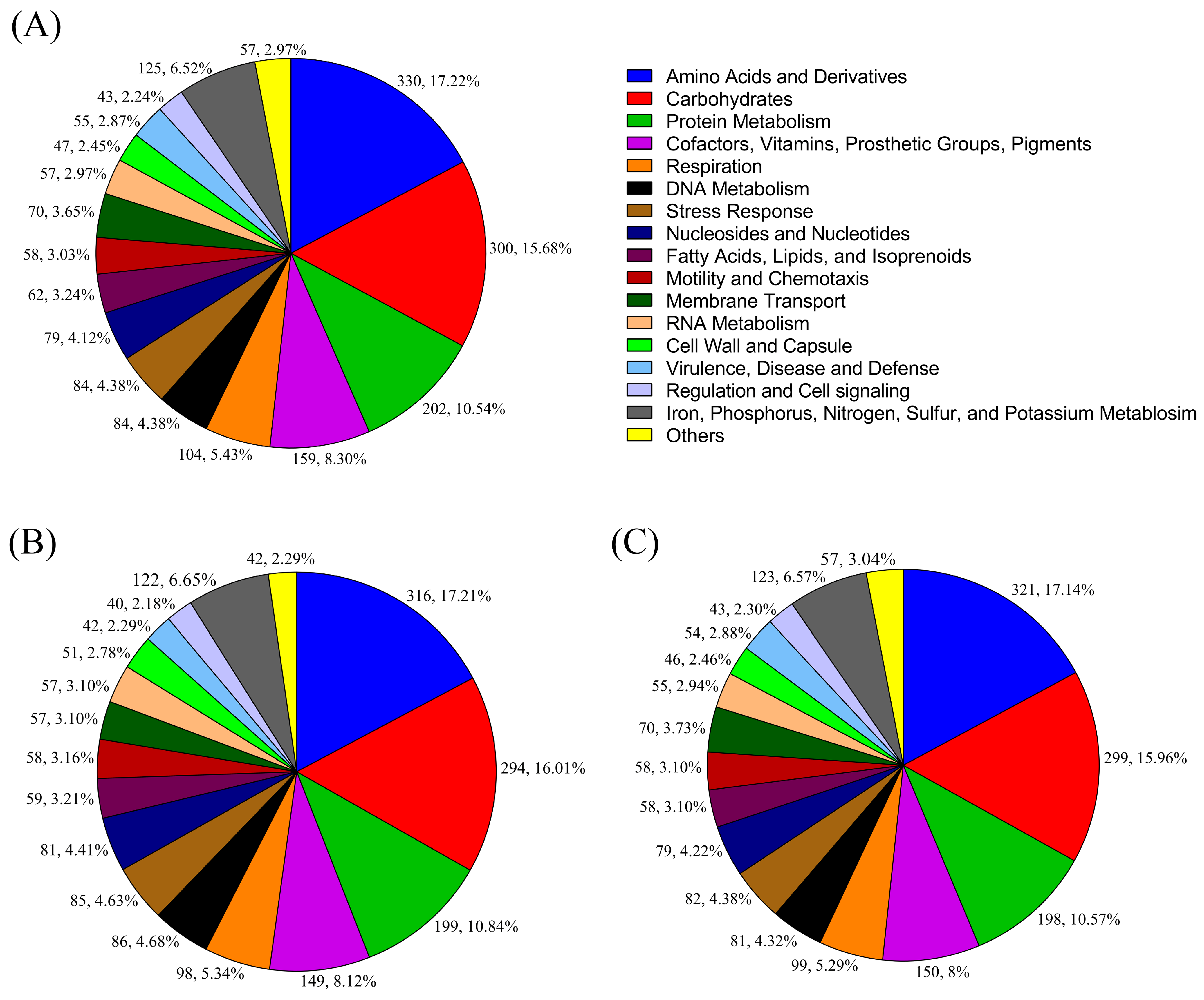
Figure 1. Distribution of the features in subsystems in the C. sakazakii genomes by RAST; (A) S41_PIFM, (B) S43_TF, and (C) S44_RUTF.
Pathogens 14 01220 g001
Figure 2. The phylogenetic tree shows the closest relation of the study isolates to C. sakazakii. The numbers above those branches are GBDP pseudo-bootstrap support values > 60% from 100 replications, with an average branch support of 85.3%.
Pathogens 14 01220 g002
Figure 3. BRIG shows a comparison among the genomes. Here, C. sakazakii NBRC 102416 was used as a reference genome.
Pathogens 14 01220 g003
Figure 4. ANI-based relationship among the isolates in pan-genome analysis.
Pathogens 14 01220 g004
Figure 5. Distribution of core (orange) and accessory genes (blue) in pan-genome analysis.
Pathogens 14 01220 g005
Figure 6. Overview of the virulence factors in the study genomes. Here, the color strip on the y-axis (left) represents the gene function, while on the x-axis, the upper strip represents sequence type and the lower strip represents the source of the isolate.
Pathogens 14 01220 g006
Figure 7. Overview of all the mobile genetic elements in the C. sakazakii isolates. Here, the color strip on the y-axis (left) represents the mobile genetic element type, while on the x-axis, the upper strip represents sequence type and the lower strip represents the source of the isolate.
Pathogens 14 01220 g007
Table 1. Assembly statistics of the C. sakazakii isolates obtained from infant formula samples in Bangladesh.
FeatureDetails
Isolate IDS44_RUTFS41_PIFMS43_TF
Sample sourceReady-to-use therapeutic foodPowdered infant formula milkTherapeutic food
Year of isolation202420242024
Genome length (bp)4,366,1154,371,1454,444,405
No. of contigs10615338
GC content (%)56.9856.9756.84
N50 (bp)86,18560,688272,134
L5017235
Coverage (X)23.2219.39123.1
NCBI accessionNZ_JBNUPD000000000NZ_JBNPBD000000000NZ_JBNUPC000000000
Table 2. Overview of the features of the annotated genomes.
FeatureDetails
Isolate IDS44_RUTFS41_PIFMS43_TF
CDS403740664076
Partial CDS000
rRNA353
tRNA626468
tmRNA111
Miscellaneous RNA000
Repeat Regions222
Subsystems351351350
Hypothetical proteins629642700
Proteins with functional assignments365837133596
Proteins with EC number assignments114011571135
Proteins with GO assignments929944928
Proteins with Pathway assignments807820805
Table 3. MLST profiling of the C. sakazakii isolates.
Isolate IDSequence TypeLocusIdentityCoverageAlignment LengthAllele LengthGapsAllele
S44_RUTF and S41_PIFMST83atpD1001003903900atpD_19
fusA1001004384380fusA_16
glnS1001003633630glnS_19
gltB1001005075070gltB_41
gyrB1001004024020gyrB_19
infB1001004414410infB_15
pps1001004954950pps_23
S43_TFST789atpD1001003903900atpD_15
fusA1001004384380fusA_14
glnS1001003633630glnS_15
gltB1001005075070gltB_13
gyrB1001004024020gyrB_22
infB1001004414410infB_5
pps1001004954950pps_347
Table 4. Number of core, accessory, and unique genes taken from the pan-genome analysis of 21 C. sakazakii strains.
Isolate IDAssembly AccessionNo. of Core GeneNo. of Accessory GenesNo. of Unique Genes
Cronobacter sakazakii ATCC BAA_894GCA_000017665.1331774986
Cronobacter sakazakii ES15GCA_000263215.1331752744
Cronobacter sakazakii SP291GCA_000339015.1331773595
Cronobacter sakazakii CMCC 45402GCA_000504545.13317626270
Cronobacter sakazakii CS_931GCA_003516125.3331765296
Cronobacter sakazakii GZcsf_1GCA_003955925.13317725476
Cronobacter sakazakii CFSAN068773GCA_009648895.1331776095
Cronobacter sakazakii 5563_17GCA_013425995.1331752549
Cronobacter sakazakii C767GCA_018884085.133178960
Cronobacter sakazakii C79GCA_018884105.13317668138
Cronobacter sakazakii C105731GCA_018884125.1331765196
Cronobacter sakazakii C757GCA_018884145.133178965
Cronobacter sakazakii G4023GCA_020869275.13317855280
Cronobacter sakazakii 70402496GCA_022648965.1331769799
Cronobacter sakazakii JXES_28GCA_023805435.1331765784
Cronobacter sakazakii USDA_ARS_USMARC_54664GCA_025200595.1331757160
Cronobacter sakazakii Crono_589GCA_025345525.13317642166
Cronobacter sakazakii Crono_684GCA_025345545.13317735146
Cronobacter sakazakii S41_PIFMGCF_050311875.1331772020
Cronobacter sakazakii S43_TFGCF_050409185.1331765684
Cronobacter sakazakii S44_RUTFGCF_050409205.133177169
Table 5. Overview of the unique genes found in the study isolates after pan-genome analysis.
Isolate IDGeneFunction
S44_RUTFastESuccinylglutamate desuccinylase
curANADPH-dependent curcumin reductase
nasRNitrate regulatory protein
S41_PIFMfdhF_5Formate dehydrogenase H
pepPXaa-Pro aminopeptidase
S43_TFaplIMModification methylase AplI
hinDNA-invertase hin
jefADrug efflux pump JefA
xerC_4Tyrosine recombinase XerC
Table 6. Overview of the antimicrobial resistance genes in the C. sakazakii isolates.
Antibiotic Resistance Ontology (ARO) TermSNPDrug ClassResistance MechanismS44_RUTFS41_PIFMS43_TF
acrA Fluoroquinolone antibiotic, cephalosporin, glycylcycline, penicillin beta-lactam, tetracycline antibiotic, rifamycin antibiotic, phenicol antibiotic, disinfecting agents, and antisepticsAntibiotic efflux+++
adeF Fluoroquinolone antibiotic, tetracycline antibioticAntibiotic efflux+++
cRP Macrolide antibiotic, fluoroquinolone antibiotic, penicillin beta-lactamAntibiotic efflux+++
emrB Fluoroquinolone antibioticAntibiotic efflux+++
emrR Fluoroquinolone antibioticAntibiotic efflux+++
H-NS Macrolide antibiotic, fluoroquinolone antibiotic, cephalosporin, penicillin beta-lactam, tetracycline antibioticAntibiotic efflux+++
kpnE Macrolide antibiotic, aminoglycoside antibiotic, cephalosporin, tetracycline antibiotic, peptide antibiotic, rifamycin antibiotic, disinfecting agents, and antisepticsAntibiotic efflux+++
kpnF Macrolide antibiotic, aminoglycoside antibiotic, cephalosporin, tetracycline antibiotic, peptide antibiotic, rifamycin antibiotic, disinfecting agents, and antisepticsAntibiotic efflux+++
msbA Nitroimidazole antibioticAntibiotic efflux+++
qacG Disinfecting agents and antisepticsAntibiotic efflux+
qacJ Disinfecting agents and antisepticsAntibiotic efflux++
rsmA Fluoroquinolone antibiotic, diaminopyrimidine antibiotic, phenicol antibioticAntibiotic efflux+++
marA Fluoroquinolone antibiotic, monobactam, carbapenem, cephalosporin, glycylcycline, penicillin beta-lactam, tetracycline antibiotic, rifamycin antibiotic, phenicol antibiotic, disinfecting agents, and antisepticsAntibiotic efflux, reduced permeability to antibiotics+++
csa1 CephalosporinAntibiotic inactivation++
fosA8 Phosphonic acid antibioticAntibiotic inactivation+++
vanG Glycopeptide antibioticAntibiotic target alteration+++
eF-TuR234FElfamycin antibioticAntibiotic target alteration+++
pbp3D350N, S357NPenicillin-binding protein mutations conferring resistance to beta-lactam antibioticsAntibiotic target alteration+++
acrAB-tolC with marR mutationsS3NFluoroquinolone antibiotic, cephalosporin, glycylcycline, penicillin beta-lactam, tetracycline antibiotic, rifamycin antibiotic, phenicol antibiotic, disinfecting agents, and antisepticsAntibiotic target alteration, antibiotic efflux+++
Here, + = Present, − = Absent.
Disclaimer/Publisher’s Note: The statements, opinions and data contained in all publications are solely those of the individual author(s) and contributor(s) and not of MDPI and/or the editor(s). MDPI and/or the editor(s) disclaim responsibility for any injury to people or property resulting from any ideas, methods, instructions or products referred to in the content.