Article

The Shapes of Cinderella: Emotional Architecture and the Language of Moral Difference

Integrated Program in Humane Studies, Kenyon College, Gambier, OH 43022, USA
Humanities 2025, 14(10), 198; https://doi.org/10.3390/h14100198
Submission received: 21 August 2025 / Revised: 3 October 2025 / Accepted: 5 October 2025 / Published: 14 October 2025
(This article belongs to the Special Issue Depiction of Good and Evil in Fairytales)

Abstract

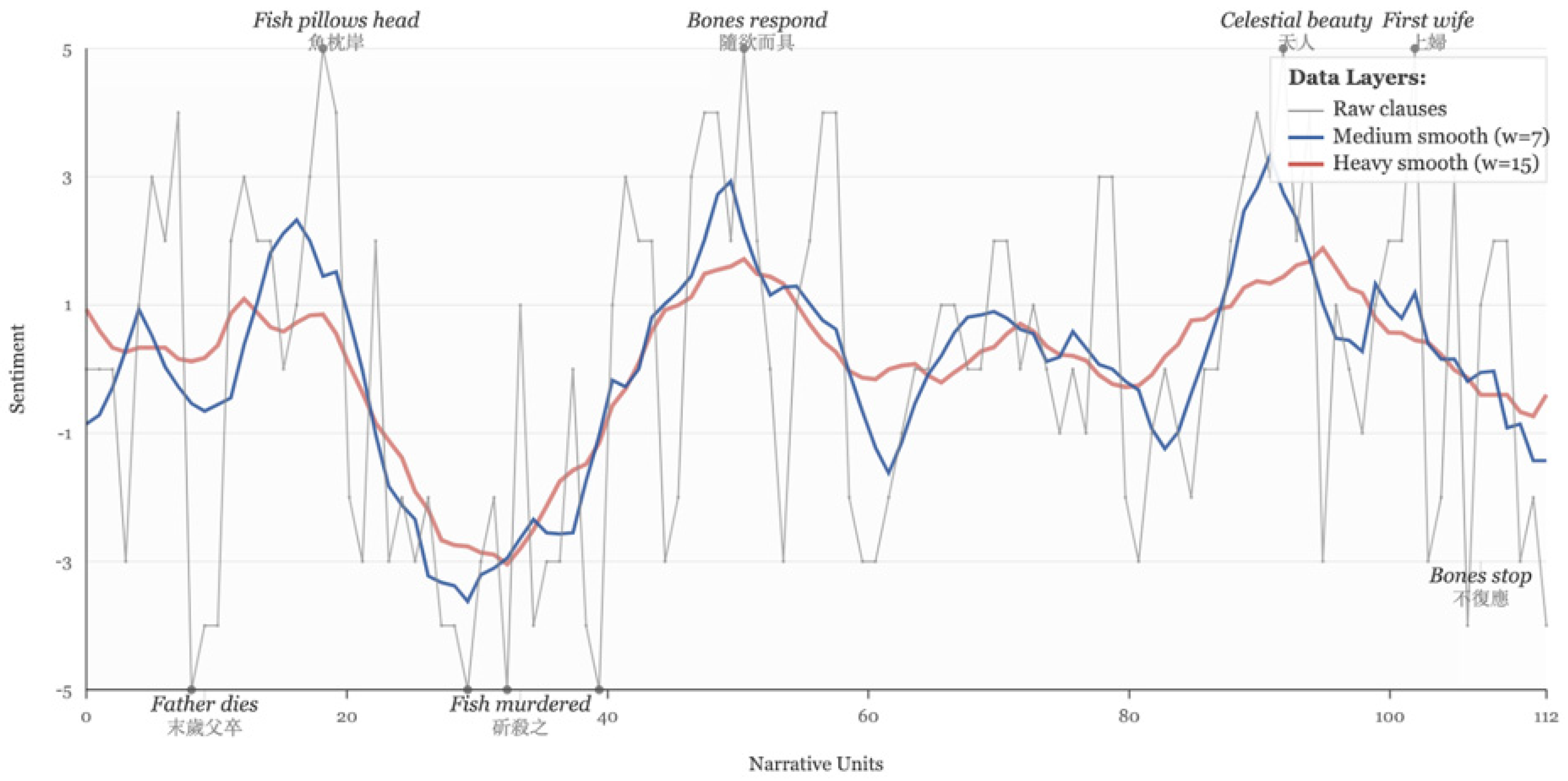
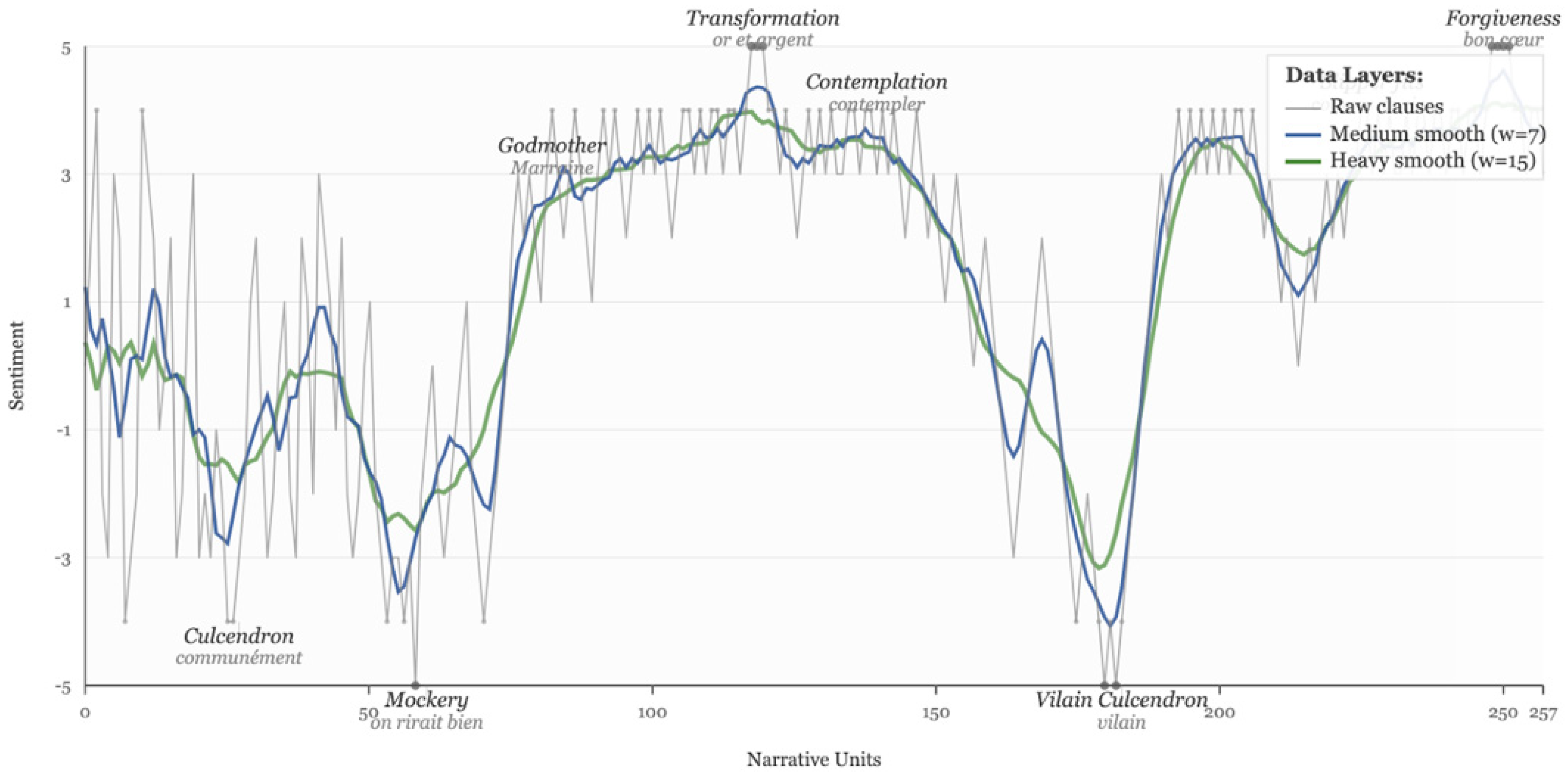
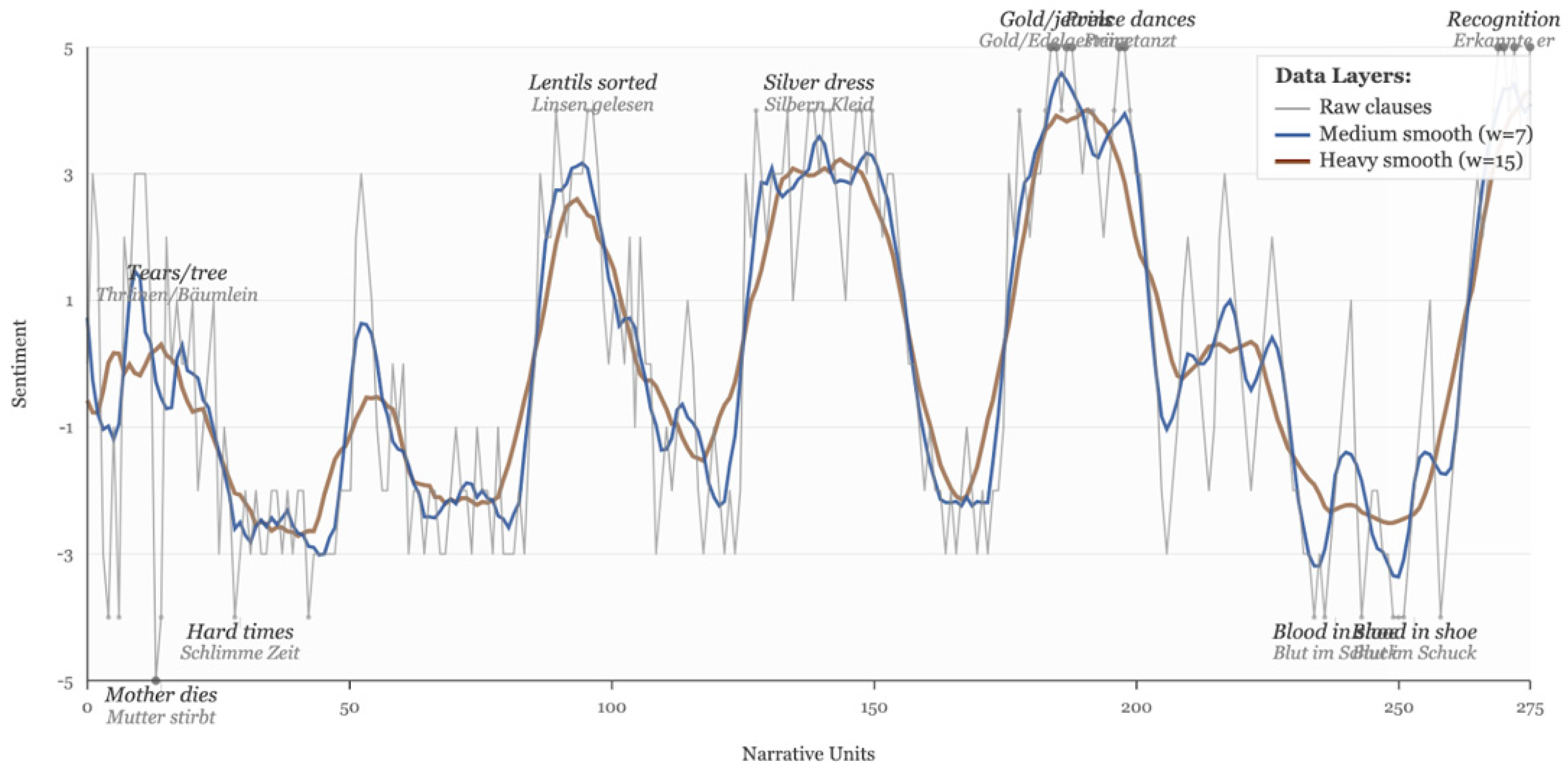
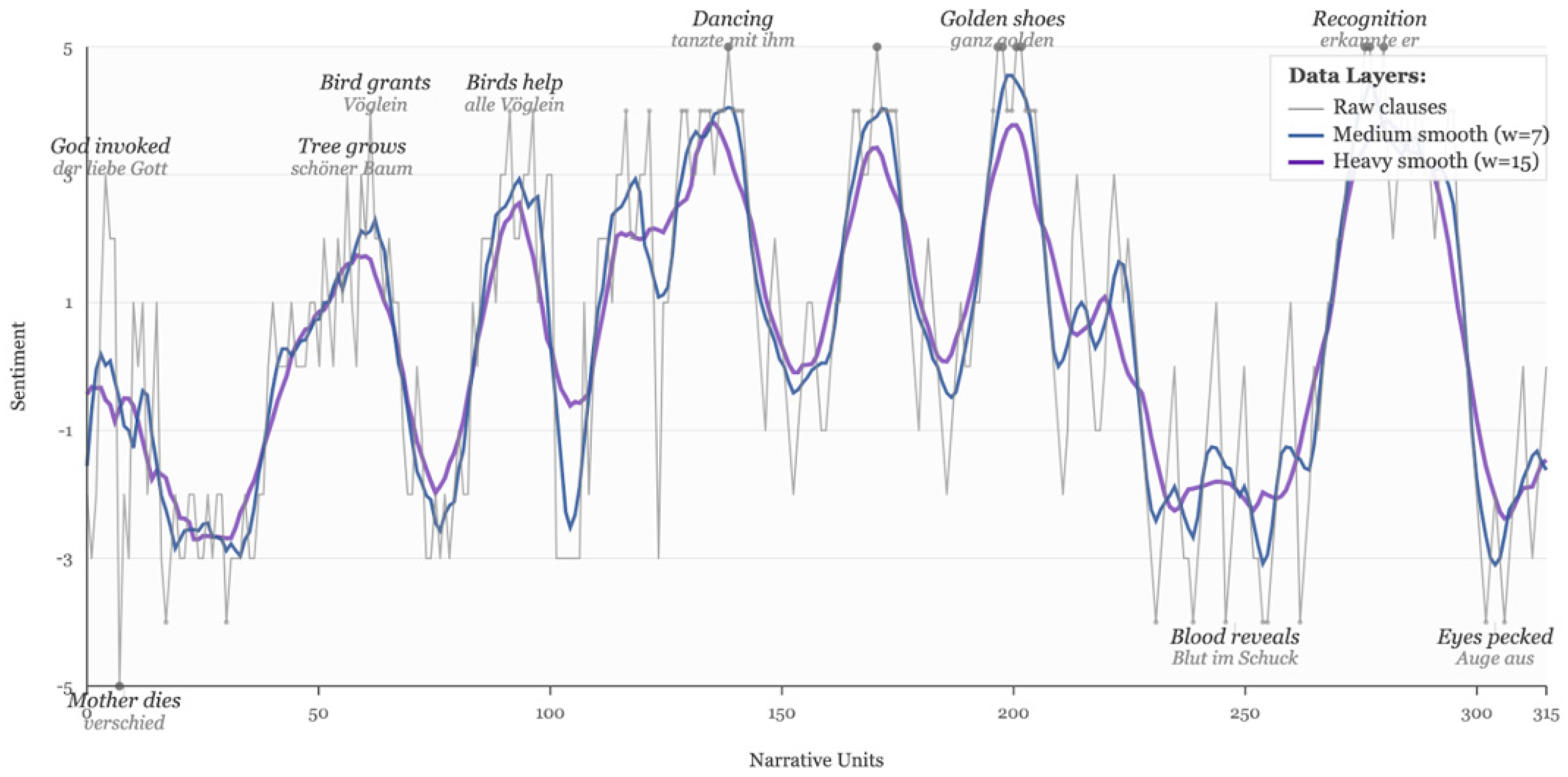
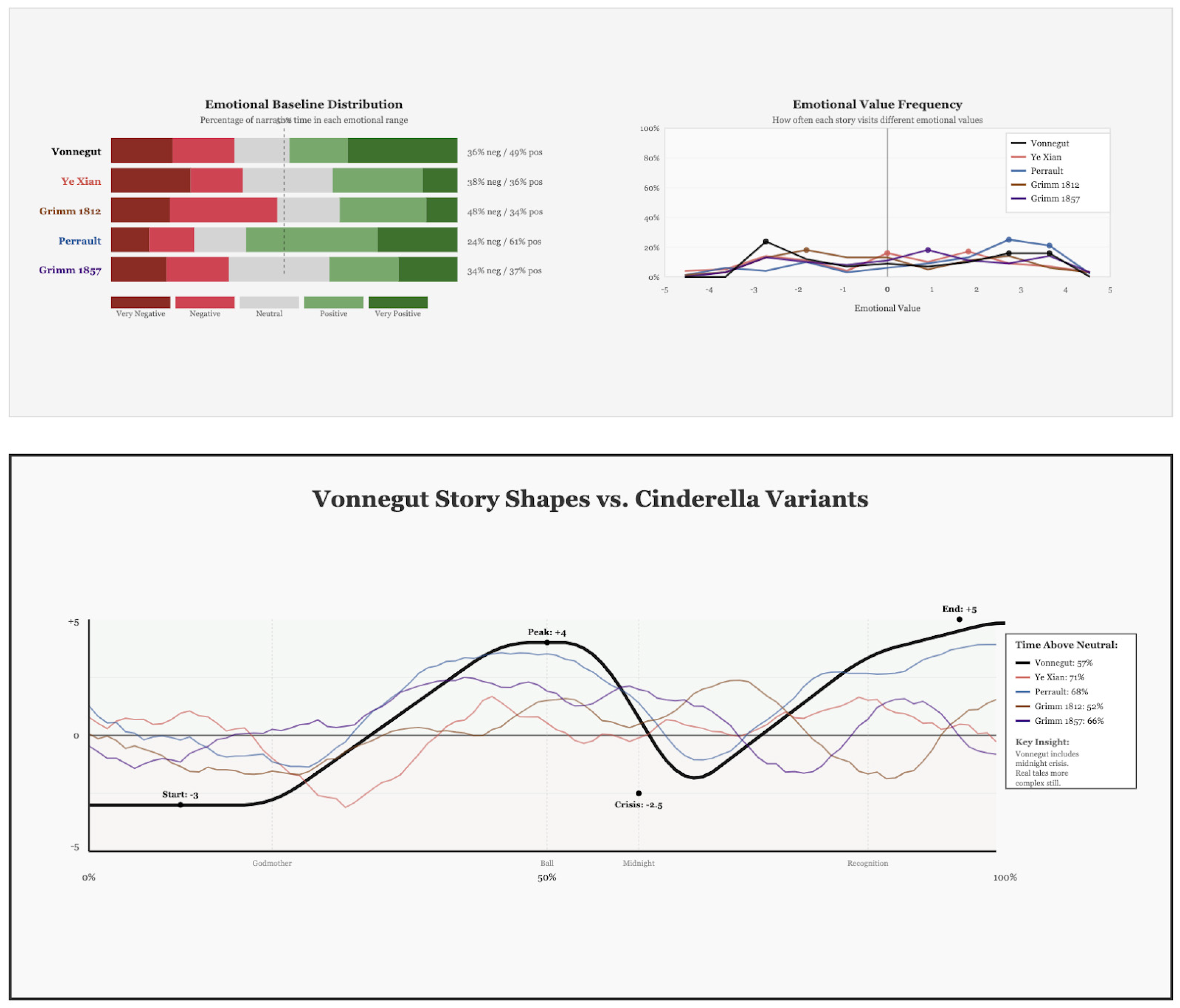
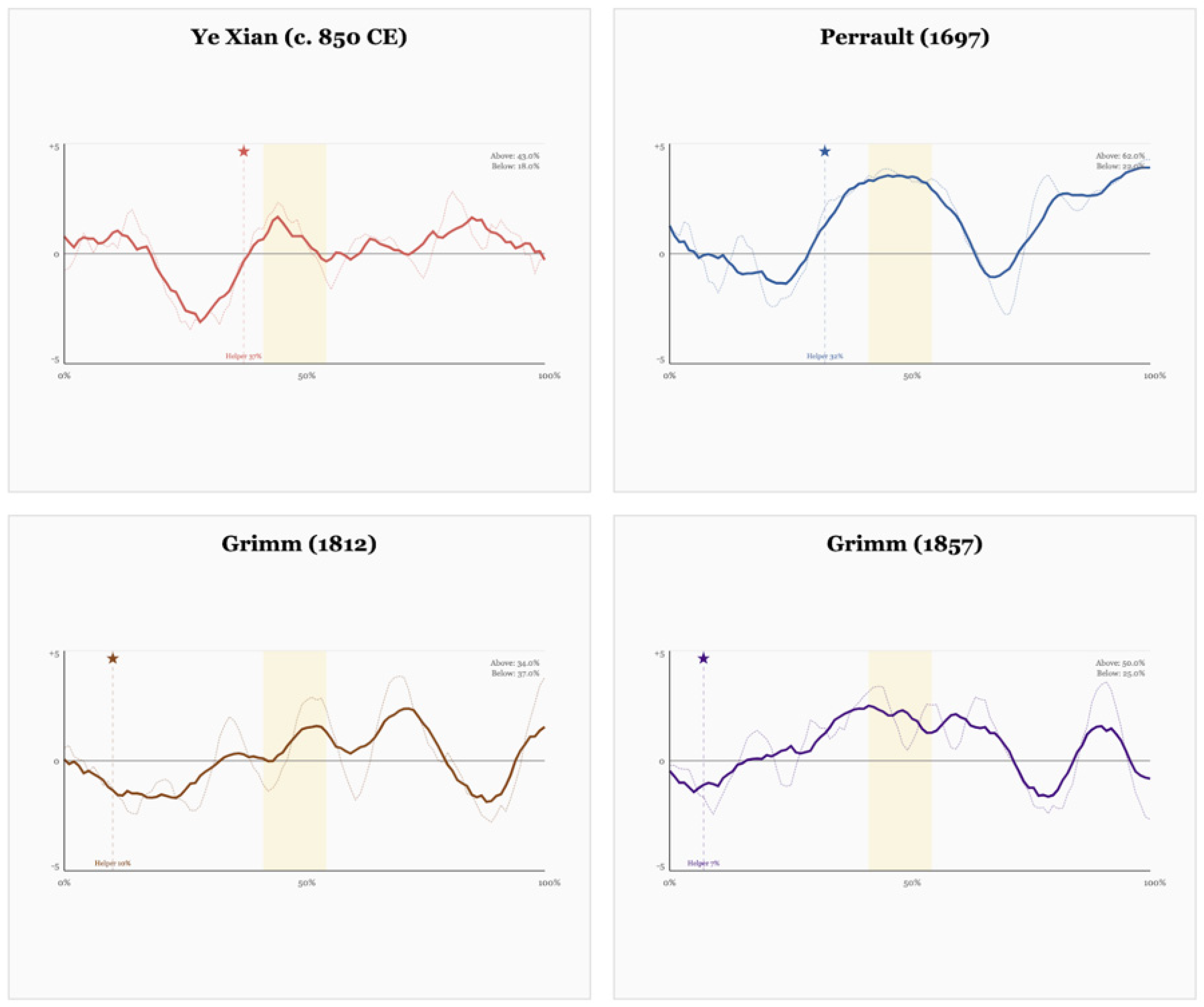
This study leverages emotional arc modeling along with close reading to examine the Chinese Ye Xian, Perrault’s Cendrillon, and two Grimm versions. While computational modeling suggests that Cinderella tales share similar “recognition scaffolds,” their emotional architectures reflect distinct moral universes. Story peaks and valleys vary according to individual narrative resolutions to a universal problem of virtue unrecognized. Ye Xian descends to maximum negative sentiment when sacred bonds rupture, aligning with Buddhist-Daoist ethics in which divine-human reciprocity supersedes other bonds. Perrault’s arc offers surprising asymmetry: linguistic violence (Culcendron) defines every valley, while material transformation marks every peak. The 1812 Grimm tale oscillates between degradation and elevation with peaks and valleys suggestive of a syncretism between folk magic and Protestant theology. The 1857 version flattens into a rough semblance of Perrault’s emotional architecture, but peaks and valleys reflect Protestant, rather than aristocratic, values. These many shapes of Cinderella suggest fairy tales may serve as a flexible emotional technology. Themes of good and evil are key features of these emotional architectures, but how they are expressed vary from tale to tale.
Keywords: fairy tales; Cinderella; sentiment analysis; computational narratology; moral categories; story shapes; Grimm brothers; Perrault; Ye Xian; narrative structure; affect theory fairy tales; Cinderella; sentiment analysis; computational narratology; moral categories; story shapes; Grimm brothers; Perrault; Ye Xian; narrative structure; affect theory