1. Introduction
The 2024 European Parliament elections represented a systemic challenge to democratic integrity, owing to the increasing sophistication of information disorders since the previous elections held in the region in 2019. At the time, within a climate shaped by Brexit (
Tuñón Navarro et al. 2019), numerous initiatives emerged—promoted by international organisations, governments, researchers, media outlets, and fact-checking agencies—to counter anti-European discourse and the manipulation of public opinion (
Casero-Ripollés et al. 2023). These efforts yielded findings that warned of the real danger of disinformation: although false information accounted for less than 4% of traffic on X (then Twitter) in 2019, such content achieved an alarming level of virality on platforms like Facebook, garnering between 1.2 and 4 times more interactions than news from traditional media outlets. Furthermore, they moved beyond Eurosceptic rhetoric to co-opt polarising and populist narratives linked to racism and xenophobia (
Marchal et al. 2019).
The phenomenon of information disorders—encompassing misinformation, understood as false information without harmful intent that stems from biases or propaganda (
Floridi 2011); disinformation, defined as intentional falsehood for ideological or economic purposes (
Ireton and Posetti 2018); and malinformation, the harmful use of decontextualised truthful data (
Baines and Elliott 2020)—finds an ideal ecosystem in contemporary media fragmentation and the rise of digital platforms. This conceptual distinction between types of disinformative phenomena is crucial (
Wardle and Derakhshan 2017) for understanding how distrust in traditional media and political institutions (
Bennett and Livingston 2018)—which in Spain reaches levels where only 32% of the population trusts the news (
Nielsen 2025) and 19% openly rejects it (
Statista 2025)—drives citizens towards social networks where the search for veracity, paradoxically, culminates in heightened mistrust (
Park et al. 2020).
Within these digital spaces, the attention economy rewards sensationalism and virality, consolidating echo chambers that limit debate (
Ross Arguedas et al. 2022) and enabling the free circulation of emotional narratives and fake profiles that are difficult to detect, even with the use of artificial intelligence (
Aïmeur et al. 2023). This scenario reinforces power asymmetries in favour of actors with the resources to execute targeted campaigns vis-à-vis a citizenry that struggles with critical analysis (
Hobolt et al. 2024)—a vulnerability evidenced in the 2024 US electoral context, where over half of the users exposed to inaccurate political content (52%) were unable to identify it (
Shearer et al. 2024), demonstrating that all these manifestations share the objective of ‘distorting information, altering public discourse, and influencing public opinion decisions’ (
Morejón-Llamas and Tarín Sanz 2025).
Since the 2019 European elections, the landscape has shifted, marked by the coexistence of military conflicts and the aftermath of the COVID-19 pandemic—factors that have further eroded public trust in institutions and the media (
Casero-Ripollés 2020) and driven the growth of information disorders (
Magallón-Rosa et al. 2023). As
Gattermann et al. (
2026, pp. 653–54) state of the 2024 European elections, ‘They were held in an unstable geopolitical period, with high stakes, European policymakers in the Commission and the Parliament on alert (e.g., European Parliament 2024), and explicit popularity of parties and candidates prone to both disseminate disinformation and make disinformation a theme in itself, if not a discursive argument’.
Disinformation in Europe is characterised as a complex, multidimensional, and constantly evolving phenomenon that has shifted from being viewed as a problem of informational veracity to a strategic and national security threat. This turn towards the concept of FIMI (Foreign Information Manipulation and Interference) focuses on coordinated manipulative behaviour directed especially against democratic values and EU institutions, articulated by external actors—principally Russia and China (
Morejón-Llamas 2026). FIMI not only directly erodes the integrity of information flows but also subverts the epistemic legitimacy of content distributed by political actors and media institutions. This phenomenon triggers a cascade effect that culminates in the devaluation of citizen trust placed in institutional pillars and the guarantees of electoral processes. Driven by the European External Action Service (EEAS), this paradigm shift entails a securitisation of disinformation by framing it as an external security threat comparable to cyberattacks (
Proto et al. 2025). To articulate this destabilisation within Western democracies, exogenous agents deploy orchestrated tactics, techniques, and procedures (TTPs). Prominent among these strategies is the vectorisation and viralisation of information disorders: a strategic design oriented towards fracturing macrosocial cohesion and exacerbating ideological polarisation in the contemporary geopolitical arena (
International IDEA 2025).
As documented in the third report by the European External Action Service (
EEAS 2025), throughout 2024, more than 80 States and 200 international organisations were targets of these interference operations. These offensives instrumentalise armies of cyber-volunteers and automated profiles (bots), synthetic narratives optimised through generative artificial intelligence (AI), and digital censorship mechanisms. The impact of these dynamics substantially influences the security architecture of the European Union, insofar as it penetrates its axiological matrices and public policy lines, with the deliberate purpose of diverting both Member States and accession countries from their respective trajectories of democratic consolidation. The empirical dimension of these threats materialises in high-intensity campaigns such as
Doppelgänger, which has evolved into a complex FIMI architecture based on thousands of spoofed domains, ad micro-targeting, and coordinated behaviour to influence European electoral processes. Likewise, operations like
Fake Facade (Storm-1516) and
Portal Kombat evidence the sophistication of information laundering through artificial ecosystems that mimic legitimate media outlets targeting Europe and Africa. Finally, the
Overload and
Matryoshka campaigns mark a qualitative tactical shift by hybridising manipulated content with harassment strategies on social networks and encrypted messaging; a technical sophistication that no longer merely seeks to inoculate false narratives, but to deliberately saturate and degrade the operational capacities of newsrooms and fact-checking agencies—the defensive bulwark of the European information ecosystem (
EUvsDisinfo 2025).
Consequently, protecting democratic processes within the European Union has ceased to be a merely technical issue, becoming a top-tier political priority. For the 2024 European elections, the institutional response was structured around two fundamental pillars: strengthening citizen resilience and actively monitoring the actors operating in the digital space. This commitment was consolidated in February 2023, when the European Parliament adopted the mandate of the Special Committee on Foreign Interference (INGE 2): ‘(e) to contribute to overall institutional resilience against foreign interference, hybrid threats and disinformation in the run-up to the 2024 European elections’ (2023/2566(RSO)). To achieve this, the European strategy focused on social pillars such as media literacy, the defence of pluralism, and support for independent journalism.
In June 2023, the Parliament underlined the importance of anticipating false narratives (prebunking) and promoting cooperation between Member States and multilateralism (2022/2075(INI)). This line of defence was reinforced in its Recommendation of December 2023, wherein the European Commission (EC) addressed both Member States and major political actors (at European and national levels) to promote the establishment of high democratic standards in view of the EU elections, aiming to strengthen the European character and the efficient conduct of the European Parliament elections. Furthermore, in response to Information Integrity and Countering Foreign Information Manipulation & Interference (FIMI) strategies, the Resolution of April 2024 was issued, detailing the dismantling of the pro-Russian network ‘Voice of Europe’. This platform, linked to Kremlin interests, operated from Prague to erode European support for Ukraine and influence citizens’ votes by disseminating a distorted image of the Union (as belligerent) and Ukraine (as corrupt). Alongside these actions, the EU focused on monitoring tech giants in their fight against the dissemination of disinformation. In late April 2024, the EC opened formal infringement proceedings against Meta (Facebook and Instagram) under the new Digital Services Act, warning of a lack of transparency in political advertising and deficiencies in tracking civic electoral discourse following the decommissioning of its CrowdTangle tool (
European Commission 2024)—an issue that has directly impacted the work of fact-checking agencies, which constitute the core focus of this paper.
It is within this framework of institutional resilience that the transnational cooperation of fact-checkers is situated; in times of crisis, they combine forces to confront the amalgam of information disorders prevailing on social networks.
1.1. The Rise of Collaborative Fact-Checking in Crisis Situations
Fact-checking does not constitute an emerging phenomenon; rather, it stands as a fundamental praxis inherent to the practice of journalism since its genesis. During the twentieth century, benchmarks of the American press such as
The New Yorker and
Time institutionalised this work, aiming not only to detect inaccuracies but also to safeguard professional integrity and the excellence of the final product (
López-Pan and Rodríguez-Rodríguez 2020), given that fact-checking transcends the mere correction of data. As
Rodríguez-Pérez (
2020) notes, this discipline is structured around three strategic pillars: the monitoring of content on social platforms, the scrutiny of institutional discourse, and the transfer of useful, digestible knowledge to the citizenry.
Within the Spanish context, fact-checking has undergone an accelerated process of maturation and expansion over the last decade. Indeed, this consolidation is evidenced by the emergence of pioneering entities such as Maldita and Newtral (2018), followed by the establishment of others like EFE Verifica, Verificat, and AFP Factual España (2019), as well as the incorporation of Verifica RTVE (2020) and INFOVERITAS (2021). The robustness of the sector in Spain is further endorsed by the affiliation of most of these organisations to the International Fact-Checking Network (IFCN)—an institution that oversees quality standards in this practice, advocating for transparency and rigour in their methodological processes. Furthermore, this ecosystem has demonstrated a remarkable capacity for resilience and cooperation, establishing collaborative networks with European and Latin American counterparts to address critical information challenges, such as public health crises, electoral contests, and contemporary geopolitical conflicts (
Morejón-Llamas 2026).
The evolution of fact-checking has shifted from individual activities to a collaborative dimension. This associational movement began in the period between 2016 and 2019, reflecting the consolidation of a collective response model to disinformation in electoral processes, even though its execution manifested significant methodological asymmetries. The first project was launched during the 2016 US presidential election and comprised 1100 journalists working jointly to scrutinise political discourse in the midst of the election (
Klein 2017). According to
Palau-Sampio’s (
2024) analysis, initiatives such as CrossCheck in France (2017) or Verificado in Mexico (2018), both set within presidential campaigns, challenged traditional competition among media outlets to safeguard information integrity. Nonetheless, it was noted that the effectiveness of these consortia depended on the professional culture of each country. For instance, in Comprobado (Spain 2019), the limited participation of newsrooms suggested either a resistance to collaboration or an ideological association with the practice, demonstrating that media systems directly influence the monitoring, transparency, and credibility of these support networks. This resistance or aloofness on the part of mainstream newsrooms is deeply rooted in the political economy of fact-checking organisations. There is a structural contradiction within the sector: a significant share of the funding that sustains independent fact-checking agencies comes from grant programmes run by big tech corporations, such as the Google News Initiative or Meta’s fact-checking funds. Paradoxically, these very platforms operate under business models based on the attention economy, whose algorithms optimise engagement through emotional and polarising content that facilitates the rapid circulation of falsehoods. For traditional journalism, this dynamic creates a dual friction: on the one hand, an economic tension, given that tech giants have monopolised digital advertising revenue, leaving traditional media increasingly precarious; and on the other hand, an epistemic and corporate tension, as fact-checkers are perceived as actors subservient to the regulatory and corporate-cleanup agenda of the very platforms that cause the problem. This fuels suspicions of bias and hinders cross-cutting schemes of interprofessional collaboration.
Likewise, the research highlighted a tension between verifying viral content and fulfilling the watchdog function of scrutinising power; while Latin American projects—most notably Verificado México—prioritised the scrutiny of candidates’ statements, European initiatives such as FactCheckEU (2019) displayed a greater tendency to debunk hoaxes on social networks, occasionally relaxing their oversight of political actors. In this regard, FactCheckEU was established as the pioneering collaborative fact-checking consortium within the European sphere, serving as the direct predecessor to the current Elections24Check project. This initiative, which integrated 19 organisations from 13 countries under the IFCN transparency standards, moved beyond the traditional debunking of viral content by incorporating the need to investigate cross-border dissemination mechanisms of disinformation and to scrutinise political discourse. Its methodology was distinguished by the implementation of a direct response section for the public (CheckNews), aimed at strengthening media trust and mitigating polarisation. This initiative was funded by the Google News Initiative and the Open Society Initiative for Europe.
From 2020 onwards, cross-border collaboration transcended the electoral sphere to address global crises of a scientific and geopolitical nature. The health emergency prompted LatamChequea Coronavirus, led by Chequeado (Argentina), which coordinated 27 organisations to mitigate the COVID-19 infodemic (
Sánchez-Duarte and Magallón-Rosa 2020), followed by its branch LatamChequea Vacunas in 2021 (
Morejón-Llamas 2023). Another prominent project linked to the health pandemic was the CoronaVirusFacts Alliance (
Dafonte-Gómez et al. 2022;
Sánchez-González et al. 2022), led by the Poynter Institute’s IFCN from 2020 to 2023. Concurrently, the Russian invasion of Ukraine in 2022 catalysed the #UkraineFacts project—a global database that enabled fact-checkers worldwide to track the replication of wartime narratives across different languages and contexts (
Dierickx and Lindén 2024;
Morejón-Llamas et al. 2022). These milestones laid the technological foundations for highly specialised contemporary initiatives such as FactCRICIS in 2024 (also termed EuroClimateCheck), a project by the European Fact-Checking Standards Network (EFCSN) designed to enhance the response of European fact-checkers to climate disinformation. Its purpose was to foster transnational coordination through a comprehensive package of resources comprising artificial intelligence tools and specialised scientific climate knowledge. The initiative, which brought together 30 entities, processed 80,000 data points and analysed over 1100 environment-themed fact-checks, thereby mapping the landscape of climate disinformation in Europe and detecting 20 international discursive strands along with 52 specific narrative variants (
EFCSN 2026).
Recently, in 2025, the ATAFIMI (Analysis of Trends and Adversarial Foreign Information Manipulation and Interference) project was launched, coordinated by the Maldita Foundation and funded by the National Endowment for Democracy (NED). This initiative represents a transnational collaboration infrastructure designed to counteract information manipulation between Europe and Latin America. In its second phase (2025–2027), the network integrates eleven organisations from countries such as Ukraine, Lithuania, Serbia, Argentina, and Mexico, focusing its activities on the early detection of foreign interference narratives (FIMIs). To this end, it utilises a centralised repository system and chatbot technology (Botalite) across WhatsApp, Telegram, and Messenger, allowing fact-checkers to track the circulation of hoaxes from their origin in one region to their adaptation in another. This initiative moves beyond isolated debunking to delve into investigations regarding institutional delegitimation campaigns, such as those detected during its first stage concerning disinformation about the conflict in Ukraine and international aid (
Fundación Maldita 2025).
Also in 2025, the Prebunking at Scale programme was operationalised, developed by the EFCSN under the methodological leadership of CRTA (Serbia) and the technological development of Maldita (Spain) and Full Fact (UK). This prevention-centred initiative applies inoculation theory, combining AI tools for the early detection of narratives in over 20 languages. It monitors short-form video content from platforms such as YouTube Shorts, TikTok, and Instagram Reels, extracting claims through speech recognition and on-screen text tools (
Full Fact and Fundación Maldita 2025).
1.2. Elections24Check: The New Transnational Action in the Face of the 2024 European Elections
On the occasion of the 2024 European Parliament elections, the collaborative fact-checking initiative Elections24Check (EE24 Check)—the object of study of this research—emerged with the purpose of unifying and streamlining the activities of European fact-checking agencies within a climate of political tension and democratic risk, as well as providing citizens with access to reliable, accurate, and independent information to make informed decisions. This project, designed and coordinated by the EFCSN, is supported by the Google News Initiative.
The project—involving more than 30 countries, both EU and non-EU members, as they considered it crucial to contain the domino effect that information disorders can exert on countries neighbouring member states, as expressed in the internal guidebook of the EFCSN to which the researchers have had access—centralises the content of the 52 participating European fact-checking organisations into an open database. These fact-checkers comprise: Faktoje (Albania); Correctiv and DPA (Germany); APA (Austria); deCheckers VZW (Bélgica); Istinomjer and Raskrinkavanje/Zasto ne (Bosnia and Herzegovina); AEJ LTD/factcheck.bg (Bulgaria); Faktograf (Croatia); Tjekdet (Denmark); Ostro (Slovenia); EFE Verifica, Infoveritas Verifica, Maldita.es, Newtral, and Verificat (Spain); AFP, France Télévision, Les Surligneurs, and Science Feedback (France); GRASS, Myth Detector (Georgia); Ellinika Hoaxes, and Greece Fact Check (Greece); Lakmusz (Hungary); Facta.news, Pagella Politica (Italy); Hibrid.info (Kosovo); Re:Baltica (Latvia); 15 min and Delfi Lithuania (Lithuania); Metamorphosis Foundation and Vistinomer (North Macedonia); StopFals (Moldova); Center for Democratic Transition (Montenegro); Faktisk.no (Norway); Demagog, Pravda Association (Poland); Polígrafo (Portugal); Full Fact, Logically Facts, and Reuters (United Kingdom); Belarusian Investigative Center and Demogago.cz (Czech Republic); Eurocomunicare, Factual, and Funky Citizens (Romania); BasKRIKavanje, Istinomer, and AFFakeNews Tragač (Serbia); and Drogula.org and Teyit Medya Anonim Sirketi (Turkey).
EFCSN members participating in EE24 Check are requested to share their political fact-checks, debunking articles, pre-bunking articles, and narrative reports related to the dissemination of disinformation in these elections (classified as ‘narrative’). When a member organisation publishes any such content, it must assess whether it is directly or indirectly related to the European elections, subsequently adding it to this database by completing both general and specific fields. The technical infrastructure of the project relies on a data harmonisation system that integrates partner content through three ingest methods: an Application Programming Interface (API), a specialised WordPress content management system (CMS) plugin, and manual record entry. Given that technical and development capacities, as well as internal workflows and publishing systems, vary across these organisations, project leaders designed a data harmonisation survey to ensure methodological, ethical, and editorial standardisation. This enables researchers and institutions to conduct evidence-based interventions.
This objective of facilitating the task for researchers has motivated various studies emerging over the last two years. The work of
Rodríguez-Pérez et al. (
2025), focusing strictly on the campaign period (May–June 2024), warns of a shift in the axis of action of these agencies: the loss of centrality in scrutinising public discourse in favour of debunking viral content. The authors attribute this trend to factors such as the mass consumption of information on social networks, the technical difficulty of monitoring political discourse in real time, and the influence of digital platforms (such as Meta), which restrict the verification of political speeches within their collaboration programmes. According to the authors, this turn poses an ethical and professional dilemma: ‘this shift highlights the importance of considering whether fact-checking will continue to play a watchdog or monitoring role, or if it will take on an intermediary or even subsidiary role for tech platforms, focusing on cleaning up problematic information’ (
Rodríguez-Pérez et al. 2025, p. 12).
Similarly, research by
Morejón-Llamas and Tarín Sanz (
2025), focused on the coverage of the conflicts in Ukraine and Gaza within the framework of the European initiative, corroborates this predominance of reactive activity (debunking) over the scrutiny of public figures. Nonetheless, these authors argue for the need to enhance preventive actions, such as prebunking or the drafting of explanatory reports, which provide the audience with a critical interpretive framework to counter disinformation.
In line with these studies,
Casero-Ripollés et al. (
2025) note that a significant fraction of fact-checking activity did not directly impinge on strictly electoral issues with an immediate impact on Europe. On the contrary, efforts were concentrated on counteracting transversal narratives designed to polarise the citizenry, erode institutional trust, and propagate hate speech or xenophobia—most notably linked to the migratory phenomenon—in addition to addressing environmental issues and armed conflicts.
2. Materials and Methods
Within this collaborative framework among fact-checkers, the primary objective of this research is to specifically analyse the activity, strategies, and editorial behaviour of the Spanish verification agencies integrated into the Elections24Check initiative, in order to evaluate their contribution to the fight against disinformation during the 2024 European Parliament election cycle. Although previous studies, such as those by
Rodríguez-Pérez et al. (
2025) and
Morejón-Llamas and Tarín Sanz (
2025), analyse the issue, they do not focus comprehensively on Spain, despite it being the European Union country that has paid the greatest attention to the phenomenon of disinformation from an academic standpoint in recent years (
García-Marín 2021). Likewise, studies such as that by
Casero-Ripollés et al. (
2025) emphasise that the temporal scope of research analysing disinformation during electoral campaigns should not be confined solely to the period of electoral debates and election day itself, but can extend over time. Therefore, it is pertinent to understand whether the durability of this project—spanning one year—is justified.
In addition, although the original purpose of fact-checking agencies’ activity was to scrutinise the discourse of public figures, their development over the last decade denotes a paradigm shift that places the focus on debunking viral content on social networks (
Palau-Sampio 2024). For this reason, even though studies such as that by
Rodríguez-Pérez et al. (
2025) focus on analysing the debunk and fact-check content within the Elections24Check project, the previous literature underscores the potential of fact-checkers to contextualise and curate content (
Morejón-Llamas et al. 2022) through prebunking, explanatory reports/narratives, or media and digital literacy activities, with the ultimate goal of increasing critical thinking (
Jones-Jang et al. 2021).
Likewise, the previous literature contends that, although disinformation can span the entire ideological spectrum (
Cano-Orón et al. 2021), there is a preeminence of far-right or ultra-conservative parties (
Córdoba-Cabús et al. 2026;
García Hípola and Pérez Castaños 2021), who employ information disorders as amplifiers of hate (
Pérez-Escolar et al. 2025). As well, the context in which these elections took place—characterised by armed conflicts, the post-health crisis, the energy crisis, economic destabilisation, and ideological polarisation—has meant that the work of these fact-checking agencies does not focus directly on issues appealing to the EU (
Casero-Ripollés et al. 2025). This is due to these elections being considered ‘second-order contests, where parties prioritize national narratives and adapt their discourse according to their governmental role’ (
Sánchez-Marañón and Rodríguez-Virgili 2026, p. 117). In light of this background, the following specific objectives have been established:
In line with this general objective and the underlying research questions, the following specific objectives are set out:
SO1. To quantify the content production of each Spanish agency and determine their relative weight within the national project to define the level of commitment of each organisation.
SO2. To conduct a longitudinal analysis of the temporal evolution of publications to evaluate the relevance of the project’s extended coverage throughout 2024.
SO3. To classify the typologies of content produced by the organisations, to define their strategy when facing information disorders.
SO4. To analyse the political figures and parties that have been subject to fact-checking, and to consider their contribution to the ideological polarisation of society.
SO5. To identify the predominant thematic axes within the debunks and contextualise them within the current socio-economic and cultural landscape.
2.1. Sample
Within this project, the specific Spanish fact-checking agencies under study are EFE Verifica, INFOVERITAS, Maldita, Newtral, Verificat, and AFP Factual Spain (
Table 1).
The integration of Spanish production into the project’s centralised repository is structured around three technical protocols. On the one hand, Maldita.es and Verificat employ an automated synchronisation path via an API, directly connecting their programming interfaces to the European backend for systematic data transfer. At an intermediate level of automation, EFE Verifica utilises a specific WordPress plugin that allows the integration of the project’s coding within its own editor. Finally, Newtral, AFP Factual, and INFOVERITAS have opted for a manual upload procedure.
The temporal scope of the study encompasses the full duration of the project, from 1 January to 31 December 2024, yielding a total sample size of n = 3256 items.
2.2. Procedure
This research adopts a mixed-methods approach that integrates quantitative and qualitative procedures to obtain a structural overview of the object of study, balancing statistical precision with interpretive analysis (
Creswell and Plano Clark 2017). Content analysis is employed as the core technique, defined by
Krippendorff (
1990) as a tool for generating valid and reproducible inferences. According to authors such as
Muñoz-Rocha (
2016) and
Neuendorf (
2017), this method is fundamental for the scientific study of communicative and social dynamics. To this end, a coding sheet was developed based on the project’s own cataloguing system—to which access was granted on a nominative basis—and further enriched by a coding sheet validated in previous studies (
Morejón-Llamas and Tarín Sanz 2025). Once the database was downloaded and filtered to include only the content published by Spanish agencies, duplicate items were removed, and fields containing cataloguing errors were reviewed. This task was undertaken by a single researcher so as not to require a statistical test of inter-rater reliability (Cohen’s Kappa). Nevertheless, the participation of a single coder is a limitation that should be acknowledged. The variables and dimensions studied are as follows:
1. Registration Variables:
Verification date (DD/MM/YY): Recorded for the purpose of measuring temporality.
Identification (URL): Includes the hyperlink to the verified content.
Fact-checking agency (specify agency): Facilitates cross-agency comparison.
Headline (state headline): Provides insight into the framing and focus of the verification notes.
2. Organisational Activity Variables:
Activity classification: Four distinct types of content are identified: narrative reports (‘narrative’), which analyse, investigate, and report in depth on trends, narratives, or events related to disinformation; prebunking articles (‘prebunk’), which contextualise and delve into the background, development, and consequences of the themes analysed as a preventive tactic; political fact-checking (‘factcheck’), including assessments of statements made by political figures, specifying the type of figure and, where applicable, their European Parliament political group; and debunking articles (‘debunk’), tasked with the verification of disinformation that has gone viral on social networks and in the media.
Thematic areas: migration; national and regional context; security and defence; climate; terrorism; COVID-19; election integrity; EU-related policies; economy; EU institutions; religion; Agenda 2030; gender; legislation; EU funds; Ukraine war; Israel–Gaza; energy; other topics.
Keywords: Classify and label content to facilitate the dissemination and communication of results by journalists and researchers; these are directly related to the thematic areas.
3. Results
The present study analyses the contribution of Spanish fact-checkers to the collaborative Elections24Check project, aiming to examine the activity of these organisations in terms of publication frequency, temporal distribution, the nature of their content, and their prioritised thematic areas. In this regard, Spain consolidates its position as one of the leading European contributors to the Elections24Check initiative. Of the total volume of data collected within the project (n = 3256), 32.8% corresponds to content of Spanish origin (n = 1068), demonstrating significant participation in the European fact-checking ecosystem.
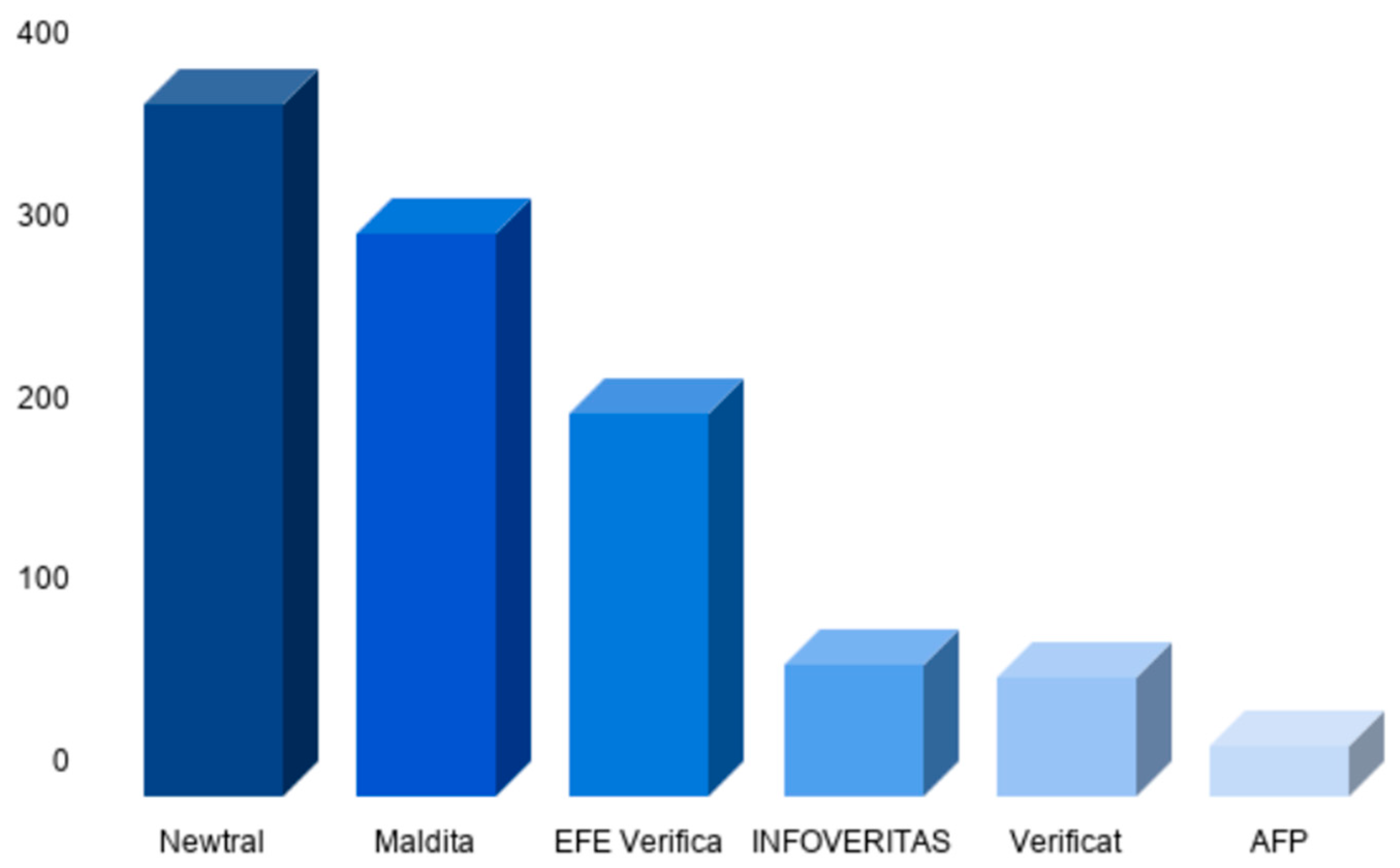
Regarding the total volume of content generated by these Spanish fact-checking agencies—which include Newtral, Maldita, EFE Verifica, INFOVERITAS, Verificat, and AFP Factual Spain (
Figure 1)—a clear hegemony of Newtral is observed, leading production with 35.6%, followed by Maldita with 28.9%. Both organisations account for the bulk of the activity, jointly accounting for 64.5% of the sample. For its part, EFE Verifica occupies the third position with 211 pieces (19.8%), whilst the participation of INFOVERITAS (6.8%), Verificat (6.2%), and AFP Factual Spain (2.7%) is significantly lower in quantitative terms.
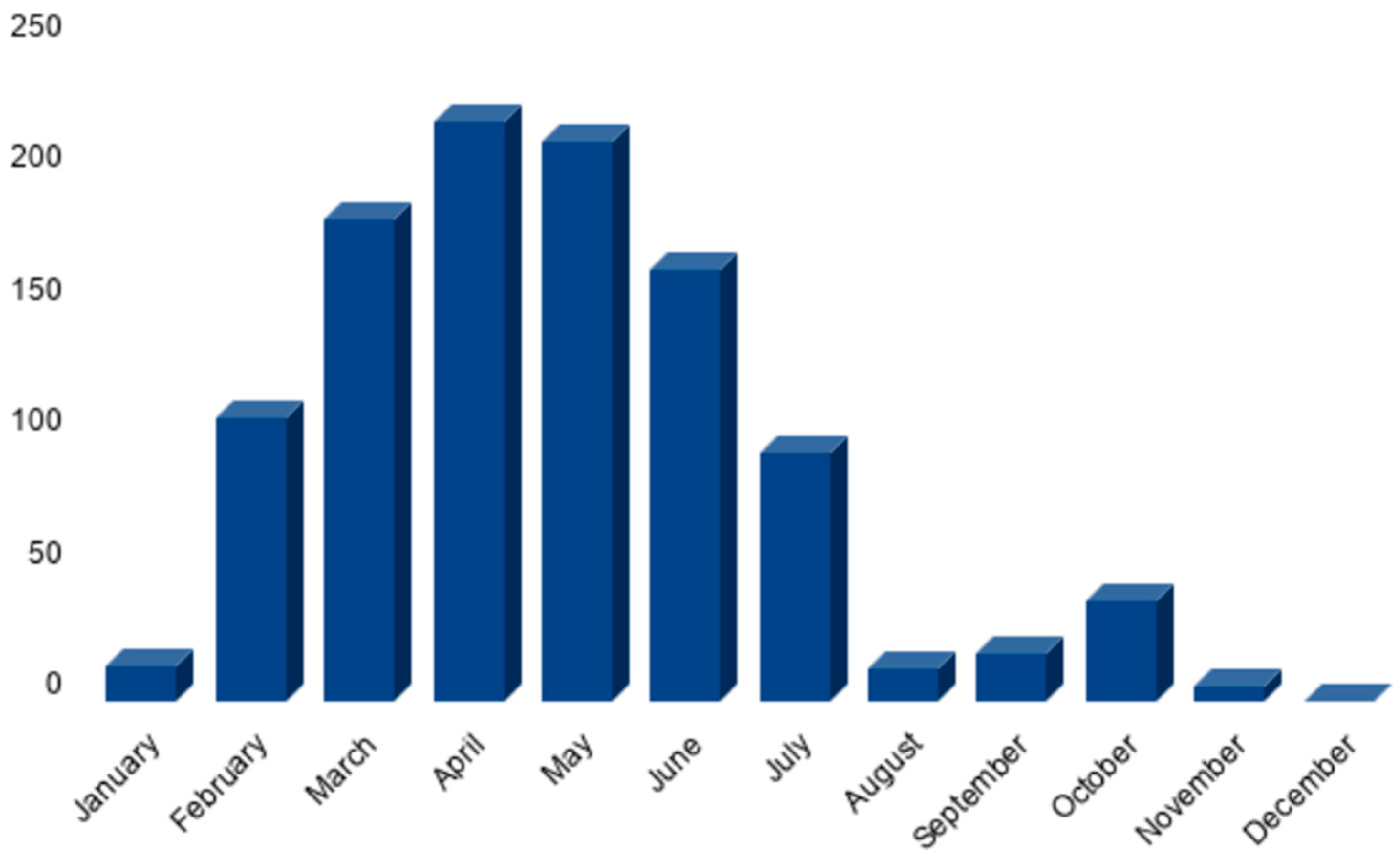
During the development of the collaborative Elections24Check project (January–December 2024), a temporal evolution is observed (
Figure 2) that is closely linked to the milestones of the electoral process and the directives of the European Commission. Following an initial preparation phase in January (1.2%) and February (10.1%), content production experienced sustained growth, reaching its zenith in April (20.6%) and May (19.9%). This surge coincides with the call from European institutions to digital platforms to tighten measures against disinformation and to promote prebunking and media literacy strategies.
The maximum peak of daily activity was recorded on 15 April (
n = 13), focused predominantly on countering geopolitical narratives. In this context, a massive use of decontextualised audiovisual content was detected, aimed at simulating real-time crises linked to the conflict between Iran and Israel, replicating patterns previously observed during the Russian invasion of Ukraine (
Morejón-Llamas et al. 2022). Alongside the conflict-related dimension, fact-checkers addressed ideologically driven disinformation—debunking false jihadist threats—and scrutinised Spanish public management, integrating critical macroeconomic data regarding recovery funds and foreign direct investment to inject rigour into the European electoral debate.
The upward trend was maintained throughout May, with a notable peak on the 29th (n = 10), a day on which published content was directed towards dismantling narratives of resistance to sustainability policies and scrutinising European governance. This frequently involved debunking the false attribution of technical incidents—such as bus or vehicle fires—to electric mobility. Within the institutional sphere, fact-checking functioned as a tool for legal and political pedagogy to counter hoaxes regarding alleged privileges of European civil servants (such as non-existent early retirements) and dystopian restrictions by the European Commission on water consumption or dietary habits. Furthermore, a persistence of electoral and social disinformation was detected, ranging from the recycling of previous content to fuel migratory and partisan tensions to the manipulation of public health and humanitarian aid. Consequently, agencies had to clarify international law concepts, such as genocide, and refute false causal links between vaccines and deaths.
During the critical election period, activity on 6 June (n = 8) was structured around three main axes: the dismantling of hate speech and the criminalisation of migrants (such as the hoax regarding the ‘Verano Joven’ programme or the erroneous attribution of sexual offences to individuals of Maghrebi origin); electoral transparency through vote-counting guides (vote comparisons between the majority parties, PP and PSOE, and the clarification of disinformation narratives about specific candidacies such as Volt); and the verification of international and health-related content.
Following the election day, on 10 June (n = 10), the focus shifted towards the management of results. Fact-checking centred on debunking satirical or degrading content (such as images of voters engaging in inappropriate behaviour) and counteracting the actions of troll accounts that disseminated fictitious social programmes for migrants to polarise public opinion. In the sphere of election interpretation, efforts were directed at clarifying statistical anomalies in local electoral maps and correcting the premature attribution of victories based on parallel processes. Furthermore, verification took on a dimension of public service and politico-administrative analysis, addressing everything from the legal implications of parliamentary immunity and the simulation of electoral barriers, to communicating real political milestones—such as the resignation of party officials—and analysing the accuracy of polling data, thereby facilitating public understanding of the transition towards the new constitution of the European Parliament and the European Commission.
Finally, following the high production levels of March (17.1%) and June (15.4%), the volume of publications began a sharp decline from July (8.8%), decreasing considerably in August (1.1%), September (1.7%), and November (0.6%), despite a slight rebound in October (3.6%).
Within the framework of the Elections24Check project, four strategic content typologies were defined to mitigate the impact of disinformation during the 2024 European Parliament elections. According to the activity analysis, explanatory reports (narrative) constituted the least frequent category with 13 articles (1.2%), focusing on the exhaustive analysis of trends and complex narratives related to the phenomenon of disinformation. Conversely, debunking positioned itself as the predominant practice with 608 articles, representing 57% of the total output. This modality proved essential in countering fallacious narratives that went viral on digital platforms and mass media. In second place, prebunking articles, with 376 publications (35.2%), performed a preventive function by contextualising and warning about potential disinformation flows, thereby empowering the audience to identify deceptions before their widespread propagation.
For its part, the verification of public figures—with a total of 71 evaluated statements—was fundamental in scrutinising political discourse, providing rigour and veracity to the claims made by European political actors and parliamentary groups, which accounted for 6.6% of the total volume. It is pertinent to note that ten of these verifications were discarded as they did not involve political personalities. In institutional terms, scrutiny was concentrated primarily on the two majority forces within the European Parliament. The European People’s Party (EPP) leads the sample with 27.87% of the interventions, followed by the Party of European Socialists (PES), which registers 22.95%. This hegemony of the traditional bipartisan axis is complemented by significant activity surrounding the Greens/European Free Alliance (Greens/EFA) bloc at 18.03% and the European Conservatives and Reformists (ECR) at 16.39%. Positioned last are forces such as The Left (6.56%), ALDE (3.28%), and the Non-Inscrits (1.64%).
At an individual level, Pedro Sánchez and Ignacio Garriga stand out as the most evaluated leaders, each accumulating 8.20% of the total recorded activity. They are followed in frequency of mentions by Alberto Núñez Feijóo and Oriol Junqueras, both with an incidence of 6.56%, demonstrating a balanced interest in scrutinising both the national leaders of the majority parties and key figures from the regionalist and independence spheres. Finally, Isabel Díaz Ayuso completes the group of profiles with the highest visibility at 4.92%, closing a core of five figures that aggregate more than a third of the verification efforts directed at specific individuals during this period.
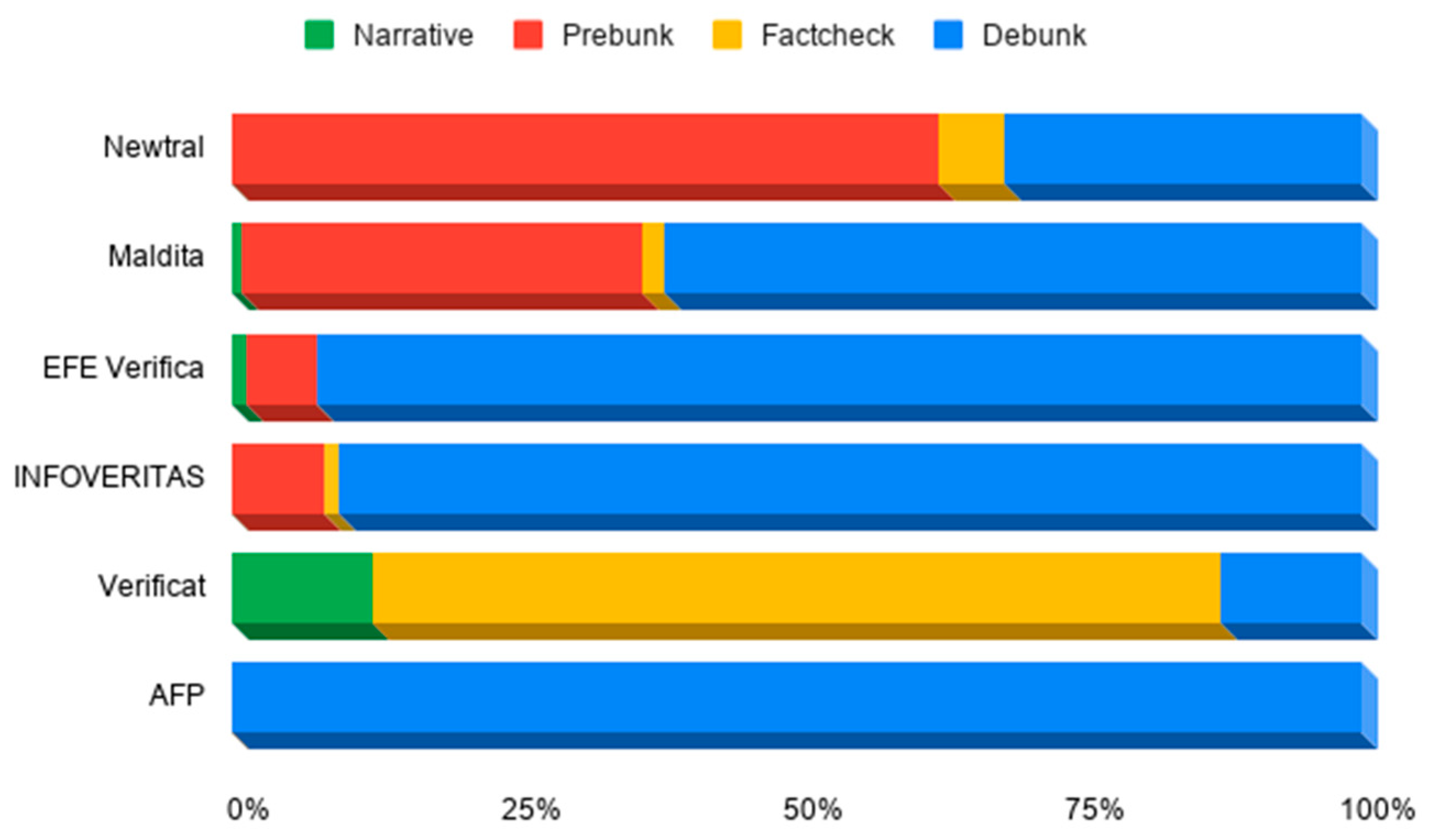
The distribution of verification efforts among these agencies (
Figure 3) reveals markedly differentiated editorial strategies depending on the nature of the content and the objectives of each organisation. EFE Verifica leads debunking in absolute terms with 195 records, followed closely by Maldita with 191 and Newtral with 120. In percentage terms relative to their own output, this category represents an almost exclusive practice for AFP Factual Spain (100%), EFE Verifica (92.4%), and INFOVERITAS (90.4%). Conversely, prebunking shows a very specific concentration: Newtral records 238 pieces of this type, which accounts for 62.6% of its activity, followed by Maldita with 109 records (35.3%), whereas for the rest of the analysed organisations, this practice is marginal or below 10%. Fact-checking (the verification of political figures) and explanatory reports or narratives present a much lower incidence within the overall Spanish production. The fact-check category is quantitatively dominated by Verificat, with 42 records representing 75% of its total activity—a figure that contrasts with Newtral’s 22 records or Maldita’s 6. Finally, the narrative category is the least frequent in the national ecosystem; only 13 records were identified, distributed evenly between Maldita and EFE Verifica (3 each), with Verificat once again being the entity that places the greatest emphasis on this format, with a total of 7 records accounting for 12.5% of its production.
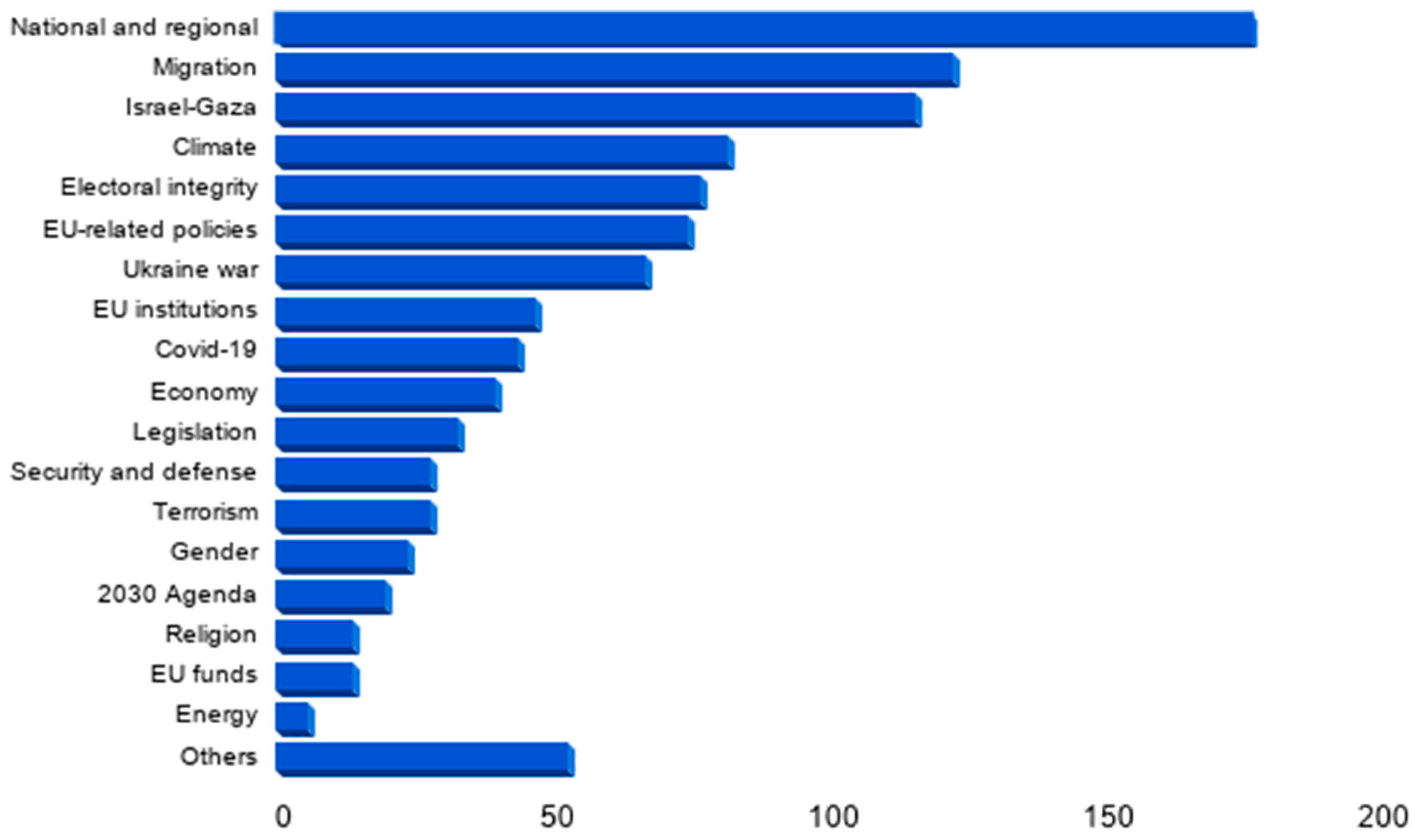
The thematic analysis (
Figure 4) reflects the main areas of interest and concern in the work and contribution of Spanish fact-checking agencies to the Elections24Check project. In this regard, the most recurrent themes include ‘national and regional contexts’, which represent 16.57% of the cases, followed by the themes ‘migration’ (11.52%) and ‘Israel–Gaza’ (10.86%). Other predominant topics are ‘climate’ (7.68%), ‘electoral integrity’ (7.21%), and ‘EU-related policies’ (7.02%). ‘Ukraine war’ accounts for 6.27%, whilst ‘EU institutions’ and ‘COVID-19’ represent 4.40% and 4.12%, respectively. Themes such as ‘economy’ (3.75%), ‘legislation’ (3.09%), and ‘security and defence’ (2.62%) also have a significant presence. Furthermore, topics like ‘terrorism’ (2.62%), ‘gender’ (2.25%), ‘Agenda 2030’ (1.87%), ‘religion’ (1.31%), and ‘EU funds’ (1.31%) manifest within the sample. Issues like ‘energy’ are addressed to a lesser extent (0.56%), and the category ‘other topics’, which tackles disparate matters that do not fit within these macro-themes, reaches 4.96%.
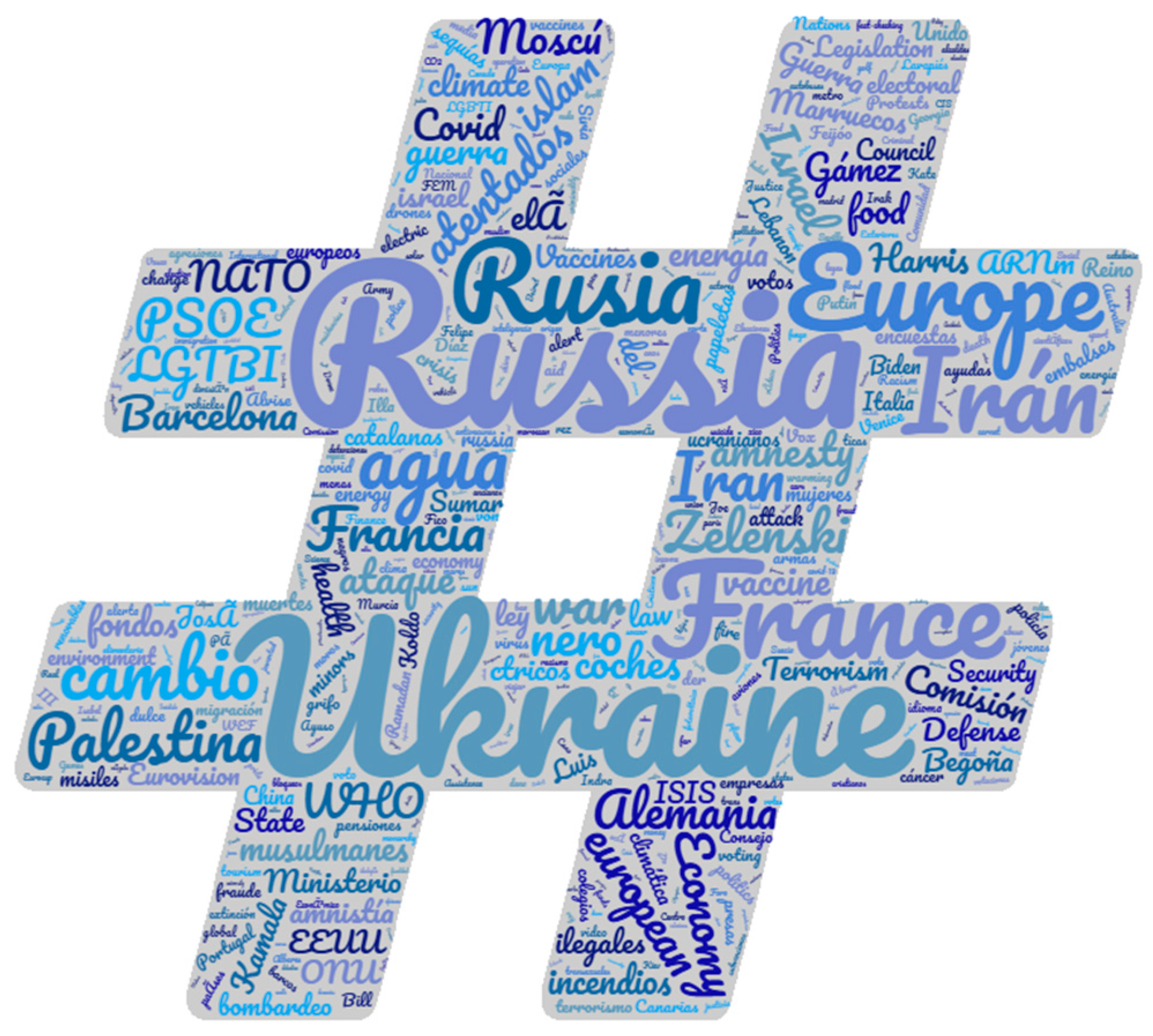
The review of the keywords (
Figure 5) used by Spanish fact-checking agencies to categorise the themes reveals a clear concentration on political and geopolitical issues, with a prominent focus on the European Union and the international conflicts of Russia–Ukraine and Gaza–Israel (‘Israel–Palestina’, 21; ‘Israel’, 98; ‘Gaza’, 37; ‘conflicto’, 21; ‘Russia’, 47; ‘Ukraine’, 45; ‘war’, 32; ‘Zelenski’, 12), which demonstrate the international tensions surrounding these elections. Other enclaves such as ‘Irán’ (24) are directly linked to terrorism (‘terrorism’, 17 mentions). The terminology relating to migration (‘migration’, 49; ‘migrantes’, 19; ‘Morocco’, 16) underlines the importance of this theme within the disinformation narrative in 2024, particularly in a context of migratory crises and asylum policies, which, at times, appeal to hate speech against migrant groups (mostly Muslims). A similar pattern occurs with issues related to ‘COVID-19’ (17), ‘vacunas’ (26), and ‘health’ (20), indicating the persistence of disinformation about the pandemic and the durability of conspiracies at a European level. Furthermore, environmental matters tied to terms such as ‘climate’ (27 mentions), ‘agriculture’ (17), and ‘water’ (19) highlight the attention of these agencies within a context that necessitates defending global sustainability. It transpires that terms alluding to Spain, such as ‘Spain’ (96 mentions), ‘España’ (24), ‘Catalonia’ (26), and amnesty’ (10), indicate that Spanish fact-checkers concentrated their activity on the national context, particularly on political and social events directly affecting their citizens. Other terms linked to Spanish national politics are also mentioned, such as ‘Pedro’ (25) and ‘Sánchez’ (24), in reference to the Prime Minister, and ‘PSOE’ (10), which identifies the political party currently in government in Spain.
4. Discussion
The surge of disinformation in electoral processes, intensified by polarisation and the current global systemic crisis, has established fact-checking as a strategic priority for the European Union. In this context, the European Commission emphasises that strengthening democratic resilience is an urgent and shared responsibility. The necessity for initiatives such as Elections24Check becomes evident given the vulnerability of the electorate: according to European Commission data (
Comisión Europea 2026), 52% of citizens claim to be exposed to information manipulation attempts every week. Furthermore, distrust is palpable: 45% doubt that their countries are exempt from foreign interference in their electoral processes, and 40% express dissatisfaction with media pluralism and independence within the EU. In Spain, national institutions reinforce this stance, warning that disinformation not only ‘poses a risk to national security’ (
La Moncloa 2025), but has also become a central concern for the public: 69% state this explicitly, placing the country third among EU member states according to the 2025 Digital News Report (
Sierra-Iso et al. 2025).
The primary objective of this article is to analyse the activity, temporality, strategies, and editorial behaviour of the Spanish fact-checking agencies integrated into the Elections24Check initiative, to evaluate their contribution and to the fight against disinformation during the 2024 European Parliament electoral cycle. This collaborative project, orchestrated by the EFCSN—which brings together European fact-checking organisations—operated throughout 2024 thanks to the joint efforts of 52 entities working to combat false narratives that could influence the European elections, as has previously occurred in other electoral processes across Europe, the US, and Latin America (
Palau-Sampio 2024).
The results obtained confirm that the 2024 European Parliament elections marked a milestone in the coordinated response to information disorders, given that the contribution of these agencies reached 3256 published pieces of content. This reflects a similar stance to that demonstrated in parallel initiatives arising from the COVID-19 pandemic (
Dafonte-Gómez et al. 2022;
Sánchez-Duarte and Magallón-Rosa 2020) or the Russian invasion of Ukraine (
Dierickx and Lindén 2024), which show that transnational fact-checking is an effective measure when acting in contexts of high social vulnerability (
Morejón-Llamas and Tarín Sanz 2025).
The study confirms the robustness of the verification ecosystem in Spain. The notable Spanish contribution to the Elections24Check repository (32.8%) ratifies the maturity of a sector that has moved beyond its embryonic stages to consolidate a solid trajectory in the scrutiny of public discourse. This evolution, which overcomes the shortage of agencies previously reported by
López-Pan and Rodríguez-Rodríguez (
2020), aligns with the growing scientific literature on the matter (
García-Marín 2021). When analysing the distribution by entity, a clear hegemony of Newtral (35.6%) and Maldita (28.9%) is observed; both excel in content production, replicating the collaborative leadership pattern already observed in previous projects such as #UkraineFacts (
Morejón-Llamas et al. 2022). Together, both organisations account for 64.5% of the total activity, certifying a high concentration of the verification effort, whilst not diminishing the contribution of another doyen of fact-checking, such as EFE Verifica, and the incorporation of newer entities like INFOVERITAS, Verificat, or AFP Factual in Spanish.
Secondly, the findings indicate that Spanish fact-checking organisations notably increased their activity during the key months leading up to the elections, particularly in April and May. Although they continued their activity after the electoral event, as also argued by
Casero-Ripollés et al. (
2025), the widespread decline in the subsequent months (July–December) reflects a natural deceleration that calls into question the necessity of extending a project of this calibre over time. Crucially, during the critical moments of the European electoral process, the results highlight the importance of collaboration between fact-checking organisations and European authorities to safeguard the integrity of democratic processes.
Thirdly, evidence regarding the type of published content indicates that debunking continues to represent more than half of the global activity; nevertheless, the Spanish contribution (57%) is significantly below the European average, which reaches 68.3% (
Casero-Ripollés et al. 2025). This divergence highlights the consolidation of prebunking within the national ecosystem (35.2%), an exponential trend led by Newtral (62.6%) and Maldita that reveals a paradigm shift towards resilience and prevention strategies. In this way, the leading and longest-standing organisations in these collaborative projects are distancing themselves from traditional refutation to attempt to equip citizens with a critical framework prior to exposure to hoaxes (
Jones-Jang et al. 2021). Spanish agencies also align with the rest of the European organisations in shifting verification towards social media disinformation and reducing the scrutiny of political discourse (
Rodríguez-Pérez et al. 2025). Only in the case of Verificat is there a commitment to fact-checks (75%), which grants this entity that traditional vision of fact-checkers as watchdogs.
The scrutiny of politicians, although minoritarian (6.6%), reflects a verification pattern that prioritises monitoring major coalitions and forces with the greatest capacity to influence the European agenda. Only the two majority parties (EPP and PES) account for more than half of these publications. Furthermore, five personalities from Spanish politics aggregate more than a third of this activity (Pedro Sánchez, Alberto Núñez Feijóo, Oriol Junqueras, Isabel Díaz Ayuso, and Ignacio Garriga). It is paradoxical to note that none of these five leaders was formally listed as a candidate on the ballot papers for the 2024 European elections. This finding reveals that the agencies barely subjected the public discourse of the actual candidates competing for a seat in Strasbourg (such as Teresa Ribera, Dolors Montserrat, Jorge Buxadé, or Estrella Galán) to fact-checking, shifting the focus of attention towards party leaders or regional presidents. This phenomenon confirms that, in the Spanish context, elections to the European Parliament are approached as second-order contests. In this framework, political parties and the media systematically prioritise domestic narratives over community-wide ones. As the campaign turned into an indirect plebiscite on the central government and the country’s territorial tensions, the influx of viral statements amenable to verification came primarily from the front lines of national politics. Consequently, fact-checkers operated reactively in the face of an agenda that was heavily ‘nationalised’ and distorted by local public opinion. This prevented rigorous scrutiny of the manifestos and promises of the representatives who were genuinely standing for the European Parliament, reinforcing the points made by
Rodríguez-Pérez et al. (
2025) regarding the alarming absence of a pan-European approach in the coverage of these elections.
Whilst the debunked statements concerning Ignacio Garriga (Vox) or Sílvia Orriols (Aliança Catalana) leverage the emotional dimension—predominantly anger and fear—to activate prejudices and polarise the electorate in consolidated democracies (
Córdoba-Cabús et al. 2026), the scrutiny of national leaders such as Pedro Sánchez or Alberto Núñez Feijóo typically focuses on political management and macroeconomic data. The discourse of leaderships situated at the extremes of the spectrum in Spain and Catalonia shifts towards an identity-based perspective that promotes hate speech (
Pérez-Escolar et al. 2025). Thus, the instrumentalisation of false narratives regarding the alleged displacement of the Spanish language by Arabic, the existence of privileges such as halal menus, or the criminalisation of unaccompanied migrant minors seeks to generate an atmosphere of social unrest and institutional distrust. This strategy not only reinforces the link between radical populism and emotional disinformation for electoral gain but also, as
Gutiérrez-Coba and Rodríguez-Pérez (
2023) warn, fosters messages of incivility that delegitimise the adversary and contaminate the sphere of public deliberation, encouraging fragmentation and the radicalisation of social behaviours. As Pira emphasises, ‘estamos asistiendo al paso de la política mediatizada a la política social que se mueve cada vez más en el nivel de enfrentamiento para obtener consenso y, por lo tanto, poder’ (
Pira 2019, p. 79).
Spanish agencies have centred their publications on issues linked to warfare; in fact, the combination of the conflicts in Ukraine and Gaza exceeds 17.13%, surpassing national and regional affairs, which reach 16.57%, as previously highlighted by prior studies (
Morejón-Llamas and Tarín Sanz 2025). National and regional issues deal with taxation matters, territorial fragmentation, political resignations, political pacts, and the instrumentalisation of official figures—aimed at generating a perception of crisis regarding school dropout rates, public health, crime, illegal squatting, and public debt—as well as refutations of Spanish political figures or hoaxes spread about them. Three other themes that exploit social vulnerabilities and collective fears are migration, which is linked to hate speech and religious prejudice (
Pérez-Escolar et al. 2025); conspiracy theories related to the COVID-19 health pandemic and the consequences of vaccination; and climate disinformation, which weaponises environmental concerns and tensions within the primary sector to hinder or question global sustainability policies. These matters resonate directly with Spanish citizens but do not bear a direct relationship to either the electoral process or Euro-electoral issues (
Sánchez-Marañón and Rodríguez-Virgili 2026).
5. Conclusions
In conclusion, this study demonstrates that Spain has established itself as a fundamental pillar within the European verification ecosystem, contributing nearly a third of the total content to the Elections24Check project. This high level of participation reflects the maturity and professionalisation of Spanish fact-checkers and, notably, their evolution towards a preventive strategy (prebunking) aimed at strengthening public resilience against disinformation. It is precisely at this point that the findings of this article acquire their greatest theoretical relevance. The notable transition within the Spanish ecosystem towards prebunking formulas does not constitute a mere change in format, but rather a comprehensive strategic response to bypass the trap
Lakoff (
2004) outlined in his work
Don’t Think of an Elephant: Know Your Values and Frame the Debate. If reactive fact-checking explicitly evokes the hoax to debunk it, the verifier risks reactivating and embedding the lie’s mental framework in the recipient’s mind, thereby inadvertently amplifying the reach of the disinformative narrative itself. As they point out (
Gattermann et al. 2026, p. 655), ‘Policymakers, journalists, and researchers also bear a responsibility in discussing disinformation (both its scope and consequences) in thoughtful ways. Too alarmistic discourses about disinformation can contribute to citizens’ concerns about disinformation and it may also contribute to certain political entrepreneurs’ exploitation of this theme’. Conversely, prebunking cognitively empowers the audience by revealing the abstract mechanisms of manipulation (such as the use of decontextualised images or the appeal to fear) before the user is exposed to the specific content.
Nevertheless, the total duration of the project does not appear justified, as agencies concentrate their efforts during the pre-campaign, campaign, and post-campaign months. Projects with more condensed timeframes would allow for the inclusion of other contexts that do require specific, ad hoc efforts. It is also observed that the debate remains anchored to contexts of high vulnerability, such as warfare, alongside health and climate crises. This would explain the EU’s focus on collaborative projects following Elections24Check, such as EuroClimateCheck (2025) However, maintaining hyper-activated, cooperative fact-checking structures outside electoral dynamics risks proving counterproductive, as it may cognitively oversaturate citizens, chronify the perception of constant crisis, and grant disproportionate visibility to marginal hate narratives that would otherwise have had a residual impact on the public sphere. Therefore, the scientific literature must begin to advocate for intermittent and preventive verification frameworks, restricting debunking to critical windows of high democratic risk.
Furthermore, national and regional frameworks—where disinformation is utilised as a tool for emotional polarisation, especially regarding migration and political management—remain prominent, shifting the activity of these agencies away from verifying issues that directly address the European electoral process itself. This demonstrates that, despite transnational coordination, a strategic fragmentation still prevails, hindering the construction of a fully pan-European public sphere.
This research presents limitations, as it focuses primarily on a quantitative and descriptive analysis of the agencies’ activity within a specific platform, which might omit other verification actions carried out outside the Elections24Check repository, in addition to the inherent limitation that this involves voluntary activity by the agencies. Furthermore, the study does not delve into the actual impact or reach that these publications have had on electorate behaviour or on reducing the perception of disinformation among citizens, especially those based on psychological inoculation. Therefore, it is advisable to direct future studies towards analyses that explore the effectiveness of prebunking versus debunking in terms of user engagement and the correction of misconceptions—ultimately, regarding the stimulation of critical thinking. Finally, it would be convenient to carry out longitudinal comparative studies to evaluate whether the transnational collaboration observed in 2024 is maintained in future electoral processes or periods of public uncertainty.