1. Introduction
Diasporic communities represent complex social formations that develop organizational structures and social networks across different national environments. Rather than functioning solely as cultural extensions of a homeland, diaspora populations increasingly operate as socially embedded communities whose internal organizational capacity shapes both collective identity and patterns of integration within host societies. Contemporary scholarship emphasizes that the sustainability of immigrant and refugee communities depends not only on individual integration outcomes but also on the ability of community institutions to mobilize resources, reproduce leadership, and sustain participation across generations (
Barth 1969;
Tölölyan 2007;
Bokser Liwerant 2021). Within this perspective, community organization becomes a key mechanism through which ethnic groups maintain cohesion while adapting to diverse political, economic, and cultural environments.
Research on immigrant integration has traditionally focused on individual socio-economic indicators such as employment, education, and language acquisition. While these factors remain important, recent sociological approaches increasingly emphasize the collective dimensions of integration, particularly the role of community organizations, social networks, and institutional infrastructures (
Chan et al. 2006;
Leininger et al. 2021). Community participation can function simultaneously as a mechanism of internal solidarity and as a bridge connecting diaspora populations to broader host society institutions. In this sense, ethnic organizations, cultural associations, religious institutions, and community leadership structures may facilitate both bonding social capital within immigrant groups and bridging interactions with wider social environments. Importantly, diaspora participation does not occur within a single institutional domain. Armenian community life is typically organized through multiple overlapping organizational structures, including religious institutions, educational organizations, cultural associations, charitable networks, youth groups, and professional organizations. These institutional domains may generate different forms of participation and leadership recruitment depending on the broader political and social environment of the host society. Religious institutions, for example, often provide long-term organizational continuity and intergenerational cohesion, whereas professional and cultural organizations may rely more heavily on highly educated and socio-economically active participants. Consequently, patterns of community leadership may differ not only between diaspora settings but also across different types of community organizations operating within the same diaspora environment.
The Armenian diaspora provides an illustrative case for examining these dynamics. Armenian communities represent one of the most historically dispersed diasporas, formed through multiple waves of displacement, migration, and resettlement. The contemporary Armenian diaspora includes long-established communities in the Middle East as well as newer migrant populations in Europe and North America. These communities differ significantly in terms of demographic composition, migration history, and institutional development, producing diverse forms of community organization and participation (
Karapetyan 2018;
Tanajyan 2020;
Mezhlumyan 2023). Such variation provides an opportunity to examine how different institutional environments shape patterns of collective engagement and integration. At the same time, diaspora organizations may differ not only in their institutional structure but also in their collective missions and transnational orientations. Some organizations primarily emphasize the preservation of cultural identity, language, religion, and intergenerational continuity within host societies, whereas others function more actively as transnational actors engaged in homeland-oriented activities, professional networking, advocacy, philanthropy, or cross-border community mobilization. The relative prominence of these functions may influence patterns of leadership formation, organizational participation, and the broader social role of diaspora institutions within different migration environments.
Contemporary Diaspora Studies further emphasizes that diaspora communities should not be understood solely as dispersed ethnic populations, but rather as transnational social formations sustained through institutional networks, symbolic attachments, and forms of political and cultural coordination across multiple territorial settings. Foundational scholarship has highlighted the importance of homeland orientation, collective memory, boundary maintenance, and transnational connectivity in shaping diaspora organization and identity formation (
Safran 1991;
Vertovec 1999;
Bauböck 2010). Within this perspective, diaspora institutions function not merely as cultural associations, but as organizational mechanisms through which dispersed populations maintain social cohesion, coordinate collective action, reproduce leadership structures, and negotiate relationships with both host societies and homeland institutions. These approaches are particularly relevant for understanding Armenian diaspora communities, whose institutional development reflects both historically embedded communal continuity and evolving forms of transnational organization across different migration environments.
Within migration scholarship, earlier assimilation-oriented perspectives sometimes interpreted strong ethnic institutional participation as potentially limiting incorporation into broader host society structures (
Kymlicka 1995). However, more recent scholarship increasingly emphasizes that immigrant and diaspora organizations frequently facilitate integration by providing social support, civic engagement opportunities, leadership development, access to institutional resources, and mechanisms of collective adaptation within host societies (
Koinova 2021;
Özveren and Faist 2020;
Gamlen et al. 2019;
Frazier and Fritzsche 2024). Contemporary research therefore increasingly conceptualizes diaspora institutions not as indicators of social isolation, but as important mediating structures connecting immigrant populations to broader political, economic, and social environments.
In this context, the concept of community capacity becomes particularly relevant. Related sociological perspectives on immigrant incorporation additionally emphasize the concept of institutional completeness, referring to the extent to which immigrant communities develop internal institutional infrastructures capable of supporting social, cultural, educational, religious, and economic life within the host society. Communities characterized by higher levels of institutional completeness may demonstrate stronger organizational continuity, denser social networks, and greater capacity for collective participation and leadership reproduction (
Zhou and Lee 2013). This perspective may be particularly relevant for understanding historically organized diaspora communities with extensive institutional infrastructures.
Community capacity can be understood as the collective ability of a community to mobilize institutional, social, and organizational resources in support of participation, leadership formation, collective representation, and long-term social sustainability. Research traditions within community development and urban sociology have emphasized that community capacity emerges not only from individual participation, but also from the density of institutional infrastructures, the strength of social networks, and the ability of communities to coordinate collective action across multiple organizational domains (
Chaskin 2001). Within diaspora settings, community capacity additionally depends on migration history, demographic continuity, socio-economic composition, and the broader political and cultural environments of host societies (
Der Sarkissian 2024;
Gevorkyan 2021). Where institutional infrastructures are historically embedded and socially integrated, participation may become widely distributed across community life. In more heterogeneous migration settings, organizational sustainability may rely more heavily on professional leadership and resource mobilization.
This study examines these dynamics through a comparative analysis of Armenian communities in two major diaspora centers: Tehran and Los Angeles. These settings represent contrasting historical and social contexts of diaspora development. Both cities additionally represent influential hubs of Armenian institutional and community life within different regional segments of the global diaspora. The Armenian community in Tehran represents a long-established diaspora with deep historical roots and well-developed institutional infrastructures, including schools, churches, cultural associations, and social organizations. In contrast, the Armenian community in Los Angeles largely reflects more recent migration waves and exhibits a more heterogeneous social structure, shaped by professional migration and diverse settlement trajectories.
By comparing these two contexts, the study aims to explore how migration history, demographic composition, and socio-professional structure influence patterns of community participation and organizational leadership. Rather than treating community engagement as a simple indicator of ethnic attachment or assimilation, the analysis approaches it as a relational social process embedded within broader systems of social cohesion and diaspora organization (
Chan et al. 2006;
Valeeva 2022). Particular attention is given to how community institutions support participation and leadership formation within different diaspora environments.
Drawing on sociological survey data and expert interviews conducted among Armenian populations in Tehran and Los Angeles, the study investigates how community participation is distributed across demographic groups and how organizational leadership emerges within different institutional contexts. By examining participation patterns among organizers, community members, and non-participants, the research seeks to identify how different forms of diaspora organization shape the capacity of immigrant communities to sustain collective engagement.
Through this analysis, the article contributes to broader discussions on immigrant integration, diaspora governance, and community-level social cohesion. In the present study, diaspora governance refers to the institutional processes through which diaspora communities organize collective participation, reproduce leadership structures, coordinate communal activities, and maintain relationships both within diaspora settings and across broader transnational networks. By highlighting the role of institutional environments in shaping participation patterns, the study suggests that diaspora communities should be understood not merely as cultural entities but as adaptive social systems that organize collective life across diverse host society contexts.
To guide the empirical analysis, the study addresses three principal research questions. First, how do patterns of community participation differ between Armenian diaspora communities in Tehran and Los Angeles? Second, how do socio-demographic characteristics, migration histories, and occupational structures influence participation and leadership formation within these diaspora settings? Third, how do different institutional environments shape the organizational capacity and governance structures of Armenian diaspora communities across distinct migration contexts? These questions provide the analytical framework linking the theoretical discussion of diaspora organization and community capacity with the comparative mixed-methods design of the study.
The study employs a comparative mixed-methods approach in order to examine how institutional contexts, migration histories, and socio-professional structures shape patterns of participation and leadership formation within Armenian diaspora communities in Tehran and Los Angeles.
2. Materials and Methods
2.1. Research Design
This study employs a comparative quantitatively driven mixed-methods design combining survey-based analysis with qualitative contextual interpretation derived from expert interviews. Such an approach follows established sociological perspectives that conceptualize ethnic communities as forms of social organization sustained through institutional reproduction and collective participation (
Barth 1969;
Der Sarkissian 2024;
Gevorkyan 2021).
Rather than focusing solely on individual-level integration outcomes, the study examines community participation as an indicator of organizational capacity within diaspora settings. This perspective is consistent with research traditions in migration and community studies that emphasize leadership formation, institutional infrastructure, and civic engagement as key dimensions of immigrant community sustainability (
Chan et al. 2006;
Leininger et al. 2021).
2.2. Study Context
The empirical analysis focuses on Armenian diaspora communities in Tehran and Los Angeles, two settings representing contrasting historical and institutional contexts of diaspora development. The Armenian community in Tehran represents a long-established diaspora population formed through early twentieth-century displacement and characterized by dense institutional infrastructures, including schools, churches, and cultural organizations. In contrast, the Armenian community in Los Angeles reflects more recent migration processes and exhibits a more heterogeneous social structure shaped by professional migration and multiple waves of settlement. The selection of Tehran and Los Angeles was based on their significance as major centers of Armenian diaspora settlement representing different historical phases of diaspora development. Tehran constitutes one of the oldest and most institutionally continuous Armenian diaspora communities in the Middle East, while Los Angeles has emerged as one of the largest contemporary Armenian population centers outside Armenia. Although the demographic scale and migration histories of the two communities are not identical, both occupy important positions within the global Armenian diaspora and provide analytically valuable cases for examining how distinct historical and institutional environments shape patterns of community participation and leadership formation.
The comparison of these two contexts allows for the examination of how migration history, demographic composition, and socio-professional structures influence patterns of community participation and leadership formation within diaspora communities (
Karapetyan 2018;
Tanajyan 2020;
Mezhlumyan 2023).
2.3. Data Collection
The study draws on sociological field research conducted among Armenian diaspora populations between 2018 and 2023. Quantitative data were collected through standardized survey interviews administered to Armenian respondents residing in the two study locations. The survey instrument was developed within a broader ethnosociological research program examining contemporary Armenian diaspora communities. Fieldwork was conducted through collaboration with local Armenian community networks and institutional contacts in both cities. Initial access to participants was facilitated through Armenian community organizations, educational institutions, cultural associations, and informal community networks, after which additional respondents were recruited through interpersonal referrals and community-based outreach. This approach was particularly important given the absence of comprehensive population registers and the varying levels of accessibility within diaspora populations.
The fieldwork process differed somewhat between the two settings. In Tehran, access depended more heavily on established community institutions and long-standing interpersonal trust networks within historically embedded Armenian communal structures. In Los Angeles, recruitment involved a broader range of organizational and social networks reflecting the more heterogeneous and geographically dispersed character of the Armenian population. Across both sites, some respondents demonstrated initial hesitation regarding participation in sociological research, particularly when discussing issues related to community leadership and organizational involvement. These concerns were addressed through assurances of anonymity, voluntary participation, and the use of anonymized data collection procedures.
Given the absence of comprehensive population registers for Armenian communities in several diaspora contexts, respondents were recruited using a quota-based sampling strategy designed to reflect key socio-demographic dimensions relevant to migration research. Quotas were constructed across gender, age group, migration status, and period of arrival in order to capture variation in demographic composition and migration trajectories.
To complement the survey data, in-depth expert interviews were conducted with community leaders, educators, clergy, and representatives of Armenian community organizations. These interviews provided contextual information about local institutional infrastructures, leadership structures, and patterns of organizational participation. The integration of survey and expert data follows established principles of qualitative triangulation in community-based social research (
Guest et al. 2021;
Jull et al. 2021).
The quantitative survey included 1600 respondents in total, with 800 participants recruited in Tehran and 800 in Los Angeles. The sample was constructed to reflect key socio-demographic characteristics of Armenian diaspora populations in the two locations, including gender, age groups, migration status, and occupational structure. In addition to the survey data, 24 semi-structured expert interviews were conducted with community leaders, educators, clergy, and representatives of Armenian community organizations. These interviews provided contextual insights into institutional structures, patterns of community participation, and leadership formation within the two diaspora settings. Interviews lasted approximately 45–60 min on average and were conducted in person or online depending on respondent availability.
2.4. Measures
Community participation constitutes the central analytical variable of the study. Participation was operationalized through self-reported engagement in Armenian community organizations and categorized into three forms of involvement: organizers, active members, and non-participants. This classification captures both leadership roles and levels of engagement within community structures, providing an empirical indicator of diaspora organizational capacity (
Fenn et al. 2024;
Tchilingirian 2020).
In addition to participation status, the survey collected information on several socio-demographic and migration-related characteristics commonly used in immigrant integration research. These variables include gender, age group, migration status (locally born or migrant), period of arrival, and occupational status. Such indicators reflect both access to socio-economic resources and patterns of social integration within host societies (
Koinova 2021).
2.5. Analytical Approach
The analysis proceeds in three stages. First, descriptive statistics are used to outline the demographic composition of Armenian communities in the two study settings. Second, comparative analysis examines differences in participation patterns across migration cohorts and socio-demographic groups. Third, multinomial logistic regression analysis is employed to assess the relationship between participation status and individual characteristics while accounting for the broader community context.
Multinomial regression is appropriate given the categorical nature of the dependent variable, which distinguishes between different forms of community engagement rather than a simple ordinal scale of participation. The analysis estimates the likelihood of individuals occupying organizer or active member roles relative to non-participation. A pooled multinomial logistic regression model was estimated using the combined dataset from Tehran and Los Angeles (N = 1600). Participation status served as the dependent variable with three outcome categories: organizers, active members, and non-participants (reference category). Independent variables included city of residence, age group, migration status, and occupational position. The inclusion of city as a contextual predictor allowed the analysis to examine comparative differences between the two diaspora settings while maintaining a unified analytical framework. The model was designed to identify associative relationships between socio-demographic characteristics and participation status rather than to estimate separate city-specific predictive models or formal interaction effects between contextual variables. Accordingly, the comparative differences observed between Tehran and Los Angeles in the occupational composition of organizer roles are interpreted as contextually situated and descriptively derived patterns rather than as statistically verified moderation effects. The pooled multinomial regression framework employed in the present study was not designed to formally evaluate whether the association between occupational status and organizer participation differs significantly across the two diaspora settings through interaction-based estimation. Consequently, interpretations concerning the greater concentration of professionals among organizer roles in Los Angeles should be understood as analytically informed contextual observations emerging from the combined consideration of descriptive participation distributions, pooled regression tendencies, and qualitative interview evidence, rather than as formally estimated interaction effects within the regression model itself.
Missing data levels across variables included in the regression analysis were minimal (<2%), and cases with incomplete responses were excluded through listwise deletion procedures. Results are interpreted as associative relationships rather than causal effects due to the cross-sectional design of the study. Qualitative interview material was used to contextualize and interpret quantitative participation patterns through targeted thematic interpretation of institutional continuity, leadership formation, participation norms, and organizational dynamics within the two diaspora settings. The interviews were not analyzed as a fully independent qualitative dataset intended for stand-alone thematic theory generation, but rather served as an interpretive component integrated into the comparative quantitative analysis.
Although the qualitative component was not intended to constitute a fully independent qualitative analysis, interview material was systematically reviewed using a targeted thematic interpretation procedure aligned with the principal analytical categories of the study. All interviews were transcribed from field notes and audio recordings where available, anonymized, and reviewed repeatedly during the interpretive phase of analysis. Thematic content was organized around recurrent dimensions relevant to the comparative framework of the study, including institutional continuity, leadership formation, participation norms, organizational specialization, and patterns of diaspora governance. Rather than applying formal grounded theory or inductive coding procedures, the qualitative material was analyzed through theoretically informed thematic reading intended to contextualize and interpret quantitative participation patterns observed across the two diaspora settings. Illustrative quotations included in the manuscript were selected because they reflected recurrent themes identified across multiple interviews rather than isolated individual perspectives.
2.6. Ethics Approval and Consent to Participate
This study was conducted in accordance with the ethical principles of the Declaration of Helsinki. Ethical review and approval were provided by the Ethics Committee of xx. Given the non-interventional design of the study and the use of anonymous, survey-based data collection, the research was classified as minimal risk.
All participants were informed about the purpose of the study and provided voluntary informed consent prior to participation. No personally identifiable information was collected, and all data were processed and stored in anonymized form to ensure confidentiality.
2.7. Methodological Limitations
Several limitations should be noted. First, the use of quota-based and snowball sampling may have resulted in the overrepresentation of individuals who are more socially active within community networks. Second, participation measures rely on self-reported data and may therefore be influenced by social desirability bias. The reliance on community-based access networks may have limited participation among individuals less connected to established Armenian institutional structures. Third, the cross-sectional design does not allow for the assessment of changes in community participation over time. In addition, the regression analysis was based on a pooled comparative model and did not estimate formal interaction effects or fully separate predictive models for each city. Consequently, contextual differences between Tehran and Los Angeles should be interpreted within a comparative and descriptively grounded analytical framework rather than as statistically isolated causal relationships or formally estimated interaction effects. Although the combined descriptive and qualitative evidence suggests variation in the occupational composition of leadership participation across the two diaspora settings, the present analytical design was not intended to formally evaluate whether the association between occupational status and organizer participation differs significantly between cities through interaction-based modeling procedures. Accordingly, these comparative patterns should be understood as contextually informed interpretive observations derived from the integration of descriptive distributions, pooled regression tendencies, and qualitative interview material. These limitations are mitigated through cautious interpretation and triangulation with qualitative interview evidence.
3. Results
3.1. Demographic Composition of Armenian Communities
The demographic composition of Armenian respondents differs substantially between Tehran and Los Angeles, reflecting distinct migration histories and patterns of settlement.
Table 1 presents the distribution of respondents by place of birth.
Table 1 summarizes the principal socio-demographic characteristics of respondents in the two study locations. The survey sample includes 1600 participants in total, with 800 respondents from Tehran and 800 from Los Angeles. The table presents the distribution of participants by gender, age group, educational attainment, occupational status, and migration background. These variables provide a general profile of the Armenian diaspora populations included in the study and allow for an initial comparison of the demographic composition of the two communities before examining patterns of community participation.
The Armenian community in Tehran is predominantly locally born, reflecting its long-established historical presence. In contrast, the Los Angeles sample contains a substantially higher proportion of migrants originating from the Republic of Armenia and other regions of the Armenian diaspora (
Table 2). This difference illustrates the contrasting character of the two communities: Tehran represents an intergenerational diaspora community, while Los Angeles is shaped largely by post-Soviet and transnational migration.
These differences highlight the institutional continuity of the Tehran community and the more heterogeneous migration profile of Armenians in Los Angeles.
3.2. Migration Chronology
Migration timing further differentiates the two communities.
Table 3 shows the distribution of respondents by period of arrival.
The Tehran community demonstrates high levels of historical continuity with relatively limited recent migration. In contrast, the Armenian population in Los Angeles reflects several waves of migration during the late twentieth and early twenty-first centuries.
These patterns suggest that community institutions in Tehran have evolved over a longer historical period, while the Armenian community in Los Angeles has developed in a more recent and dynamic migration environment.
3.3. Participation in Community Organizations
Community participation represents a key empirical indicator of diaspora organizational capacity. Respondents were classified into three categories of engagement: organizers, active members, and non-participants (
Table 4).
For analytical purposes, the three participation categories were operationalized using respondents’ self-reported involvement in Armenian community organizations during the preceding 12-month period. Organizers were defined as individuals who held formal or recognized leadership roles within community institutions, such as membership in organizational boards or committees, coordination of cultural or community events, or leadership responsibilities in churches, schools, cultural associations, or charitable organizations. Respondents who reported regularly organizing or coordinating community activities three or more times per year were also classified as organizers even if they did not hold an official position. Active members were defined as individuals who reported regular participation in community activities, such as attending events, volunteering, contributing to organizational activities, or making donations, at least several times per year, but who did not occupy formal leadership or organizational roles. Non-participants were respondents who reported no involvement in Armenian community organizations during the previous 12 months or only very occasional attendance at isolated events. Participation status was determined across all Armenian community organizations with which respondents were involved, including cultural, religious, educational, charitable, and social associations. The survey and expert interviews included participation across multiple institutional domains, including religious organizations, churches, cultural associations, educational institutions, charitable organizations, and community-based social networks. Although the quantitative dataset was not designed to perform separate statistical analyses for each organizational category, qualitative interview material indicated that the relative prominence of these institutional domains differed between the two diaspora settings.
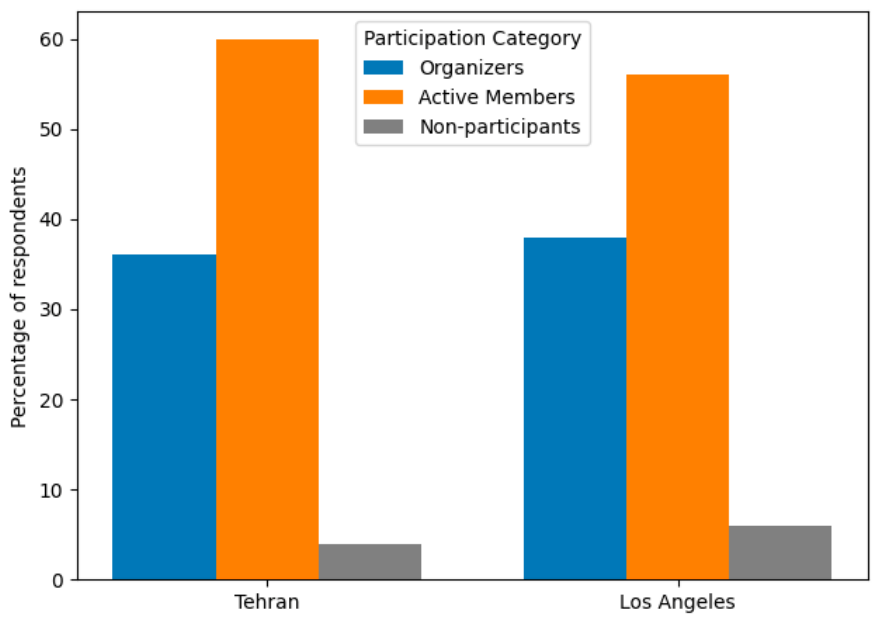
The results show high levels of engagement in both communities. At the same time, these exceptionally high participation rates should be interpreted cautiously given the community-based recruitment strategy employed in the study. The sampling approach likely resulted in the overrepresentation of respondents already connected to Armenian institutional and social networks, and therefore the reported participation levels should not be interpreted as population-level estimates for the broader Armenian communities in either city. Nevertheless, because similar recruitment procedures were employed across both study settings, the comparative differences observed between Tehran and Los Angeles remain analytically informative with respect to patterns of organizational participation and leadership distribution. However, participation in Tehran is more broadly distributed across the population, while in Los Angeles organizational leadership tends to be concentrated among specific socio-economic groups. The distribution of participation categories across the two cities is illustrated in
Figure 1.
3.4. Gender and Age Patterns of Participation
Participation patterns vary across demographic groups.
Table 5 summarizes participation rates by gender.
In Tehran, women represent a particularly active segment of community leadership, accounting for a majority of organizer roles. In Los Angeles, participation is more evenly distributed between genders.
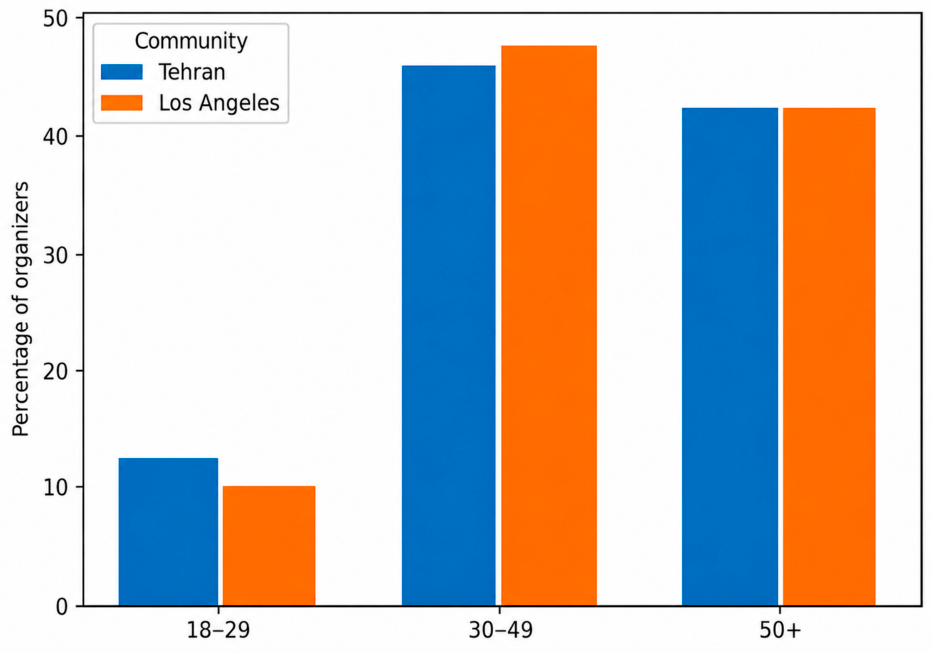
Age also plays a significant role in community leadership. The age distribution of individuals occupying organizer roles is illustrated in
Figure 2.
Organizers are predominantly drawn from middle-aged and older cohorts, reflecting the importance of long-term community involvement and established social networks.
The results indicate that individuals aged 30–49 and 50+ are significantly more likely to assume organizer roles than younger respondents.
3.5. Occupational Structure of Organizers
Occupational status also influences participation patterns.
Table 6 presents the results of the multinomial logistic regression analysis examining predictors of community participation.
The multinomial regression model demonstrated moderate explanatory power (Pseudo R2 = 0.18), which is consistent with expectations for cross-sectional sociological research examining complex forms of organizational participation and community engagement. The overall model was statistically significant (p < 0.001), indicating that the included socio-demographic and contextual variables collectively contributed to explaining variation in participation status.
The pooled regression results indicate that age and occupational status are significantly associated with organizer participation across the combined dataset. Individuals in professional occupations and older age groups show a substantially higher likelihood of occupying leadership roles.
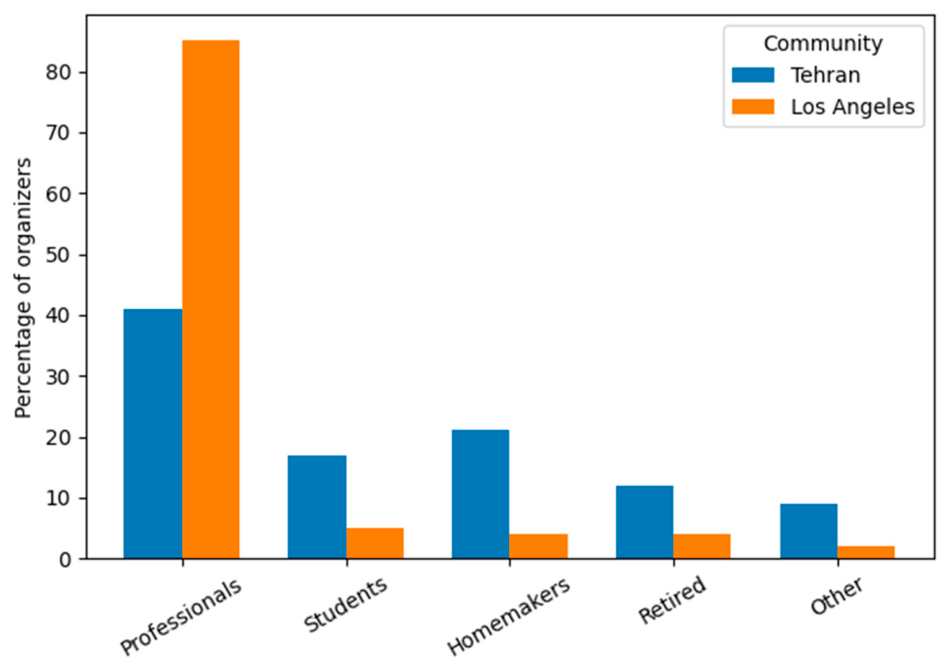
Host context also remains an important factor. Even after controlling for demographic characteristics, the two communities display distinct participation patterns reflecting differences in institutional environments. Descriptive patterns in the occupational composition of organizer roles indicate a comparatively greater concentration of professionals among community organizers in Los Angeles, whereas organizer participation in Tehran appears more broadly distributed across occupational categories. However, because the pooled multinomial regression framework did not incorporate a formal interaction term between occupational status and city of residence, these comparative differences should not be interpreted as statistically demonstrated variations in the strength of association between professional status and organizer participation across the two diaspora settings. Rather, they should be understood as contextually grounded comparative observations derived from the integrated interpretation of descriptive distributions, pooled regression tendencies, and qualitative interview evidence. These observations reflect comparative contextual patterns identified across the two study settings rather than formally estimated interaction effects within the regression model itself.
The empirical analysis reveals several consistent patterns. First, Armenian diaspora communities in Tehran and Los Angeles display different demographic and migration profiles. Second, while both communities exhibit relatively high levels of community participation, the structure of organizational leadership differs substantially. In Tehran, participation is widely distributed across demographic and occupational groups, reflecting long-established institutional infrastructures. In contrast, the Los Angeles community exhibits a more professionalized model of leadership in which organizational activity is concentrated among highly educated individuals.
Taken together, these findings demonstrate that patterns of diaspora participation are strongly shaped by migration history, institutional development, and socio-economic composition. The occupational distribution of community organizers in both settings is presented in
Figure 3.
4. Discussion
The findings of this study demonstrate that patterns of community participation within Armenian diaspora communities are strongly shaped by the historical and institutional contexts of settlement. By comparing the Armenian communities of Tehran and Los Angeles, the analysis shows that diaspora organizational capacity develops through distinct social configurations that reflect differences in migration history, demographic composition, and socio-professional structure. Rather than representing a uniform model of ethnic organization, Armenian diaspora communities display context-specific forms of participation and leadership formation.
The Armenian community in Tehran represents a long-established diaspora characterized by dense institutional infrastructures and broad-based community participation. The results indicate that community engagement in Tehran is widely distributed across demographic and occupational groups, suggesting that organizational participation has become embedded in everyday social life. This interpretation was reinforced by expert interviews conducted within the Tehran Armenian community. One community representative described participation in local institutions as “part of ordinary communal life extending across generations,” emphasizing that involvement in schools, churches, and cultural organizations was often perceived less as formal volunteering and more as a normal dimension of community belonging (Interview participant 7, Tehran). Such observations support the interpretation that participation in Tehran is embedded within historically continuous institutional structures rather than concentrated among specific socio-economic elites. Across interviews conducted in Tehran, recurring themes included intergenerational institutional continuity, normalization of communal participation, and the integration of educational, religious, and cultural organizations into everyday community life. This pattern corresponds to sociological perspectives that conceptualize ethnicity and diaspora communities as forms of social organization sustained through institutional reproduction (
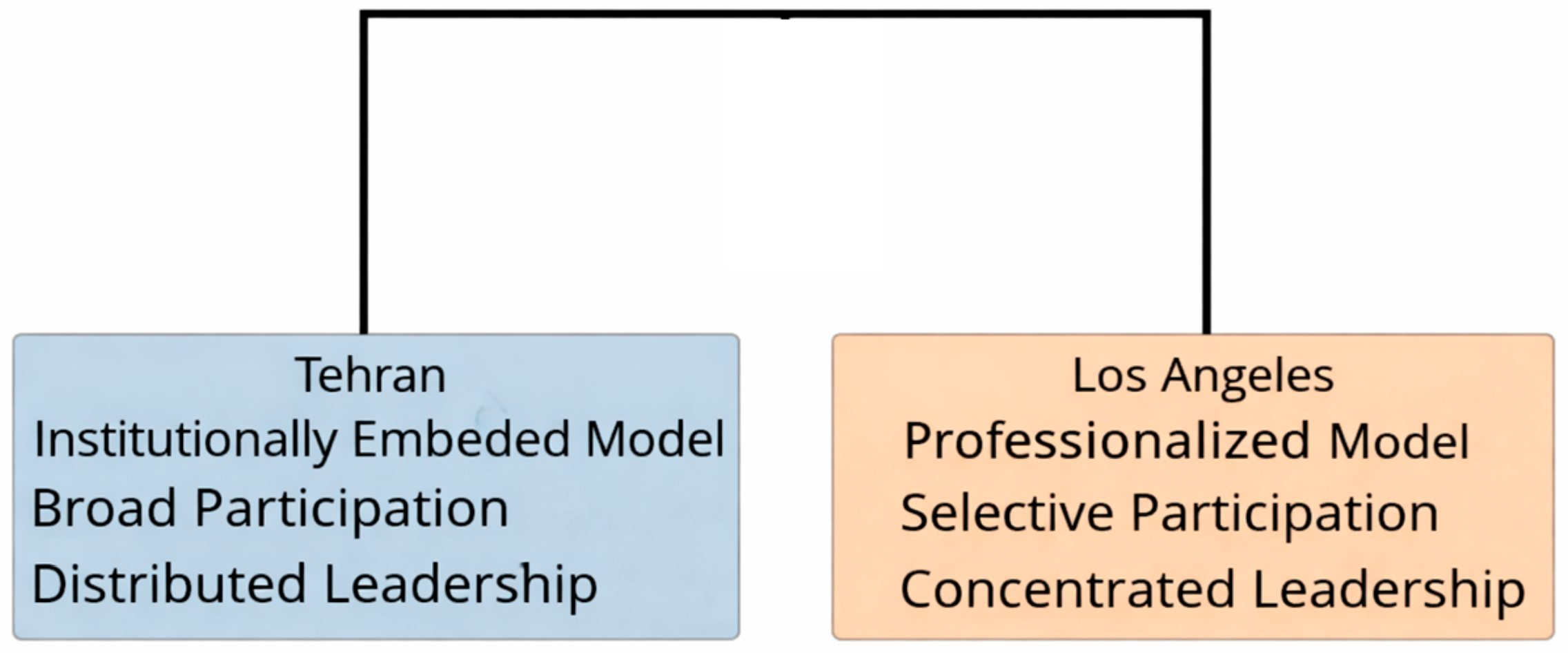
Barth 1969). In such contexts, community institutions, such as schools, churches, cultural associations, and social organizations, function not only as cultural spaces but also as mechanisms that support collective participation and leadership development across generations. To synthesize these findings, a conceptual model of diaspora community organization is proposed (
Figure 4).
An additional dimension emerging from the comparative analysis concerns the institutional composition of diaspora organizations themselves. Expert interviews suggested that the organizational ecology of Armenian community life differs between Tehran and Los Angeles with respect to the relative role of religious, cultural, educational, and professional institutions. In Tehran, Armenian community participation appears to remain closely connected to historically embedded communal structures, particularly churches, Armenian schools, and long-standing cultural associations that operate as integrated components of everyday community life. In contrast, while religious institutions such as the Armenian Apostolic Church continue to play an important role in Los Angeles, organizational participation there appears more differentiated across professional, cultural, charitable, and transnational networks shaped by successive migration waves and socio-economic diversification. These differences may partially account for the comparatively distinct patterns of leadership distribution observed across the two diaspora settings, with leadership participation in Tehran appearing more broadly embedded across diverse social groups, whereas leadership roles in Los Angeles appear comparatively concentrated among highly educated and professionally positioned individuals. However, this interpretation should be understood as a contextually grounded synthesis of descriptive participation patterns and qualitative interview evidence rather than as evidence of a formally estimated interaction effect within the multinomial regression framework.
These findings are consistent with broader scholarship emphasizing that diaspora communities with strong institutional infrastructures often demonstrate higher levels of social cohesion and organizational continuity (
Tölölyan 2007;
Bokser Liwerant 2021). In Tehran, the long historical presence of Armenians has enabled the development of stable community institutions that facilitate participation among diverse social groups. As a result, leadership roles are not restricted to specific socio-economic strata but are distributed across different segments of the community. These patterns may also be interpreted through the perspective of institutional completeness. The Tehran Armenian community appears to exhibit many characteristics associated with institutionally complete diaspora environments, including historically continuous religious, educational, cultural, and social infrastructures that support community participation across multiple domains of everyday life. Such institutional density may contribute to the broader social distribution of organizational participation observed in the Tehran case. By contrast, although Armenian institutions in Los Angeles remain highly developed and influential, the more heterogeneous and transnational character of the community appears associated with a comparatively more differentiated and professionalized organizational structure.
In contrast, the Armenian community in Los Angeles exhibits a different configuration of community organization. Although participation levels remain relatively high, the descriptive findings indicate that organizational leadership in Los Angeles is concentrated among professionals and highly educated individuals. Several interview participants in Los Angeles similarly emphasized the growing importance of professional and organizational expertise within diaspora institutions. As one respondent noted, “community organizations increasingly depend on individuals who possess professional networks, managerial experience, and the ability to mobilize financial and institutional resources” (Interview participant 14, Los Angeles). These qualitative observations help contextualize the descriptive concentration of professional respondents among organizer roles within the Los Angeles Armenian community. Interview material from Los Angeles more frequently emphasized themes of organizational specialization, professional expertise, transnational networking, and the increasing managerial complexity of diaspora institutions. This pattern reflects a more professionalized model of diaspora organization in which community institutions depend heavily on individuals with the resources and networks necessary to sustain organizational activities. Such patterns have been observed in other migrant communities where leadership formation is closely linked to socio-economic capital and professional status (
Koinova 2021).
The concentration of leadership among professionals in Los Angeles may reflect the relatively recent and heterogeneous character of Armenian migration to the United States. Unlike the historically continuous community in Tehran, the Armenian population in Los Angeles has been shaped by multiple migration waves originating from the Republic of Armenia and other parts of the diaspora. This diversity creates a more fragmented institutional landscape in which community organizations rely on active leadership from individuals with strong professional and social networks. In this sense, the Los Angeles case illustrates how diaspora communities may develop organizational capacity even in the absence of long-established institutional infrastructures.
These differences highlight the importance of migration history and settlement context in shaping patterns of diaspora organization. While the Tehran community demonstrates a model of institutionally embedded participation, the Los Angeles community reflects a model of professionalized leadership. Both models illustrate viable forms of diaspora community organization, but they operate through different social mechanisms. These findings should, however, be interpreted primarily as reflecting comparatively active and institutionally connected segments of the Armenian diaspora populations included in the study rather than precise estimates of participation prevalence at the broader population level. The comparative findings additionally suggest that diaspora organizations in Tehran and Los Angeles may differ with respect to their broader collective missions and transnational orientations. Expert interviews indicated that institutions within the Tehran Armenian community are more strongly oriented toward the preservation of long-standing communal continuity, including the maintenance of religious life, Armenian-language education, cultural reproduction, and local community cohesion within a historically established minority setting. In contrast, Armenian organizations in Los Angeles appear to combine cultural and religious functions with more extensive transnational activities, including homeland-oriented philanthropy, professional networking, advocacy initiatives, and engagement with broader global Armenian networks. These differences likely reflect the distinct migration histories and geopolitical positions of the two communities. The more transnationally connected environment of Los Angeles may help contextualize the observed concentration of leadership roles among highly educated professionals and individuals possessing broader social and economic networks. Conversely, the historically embedded institutional structure of the Tehran community appears to sustain a more internally cohesive and locally oriented model of diaspora participation.
The findings also contribute to ongoing debates about the relationship between ethnic community participation and immigrant integration. Some theoretical perspectives suggest that declining participation in ethnic institutions reflects successful incorporation into host societies (
Kymlicka 1995). However, the results presented here challenge this assumption by demonstrating that high levels of community participation can coexist with long-term settlement and integration. In the case of Tehran, strong community institutions function as social infrastructures that support collective engagement while maintaining stable relationships with the surrounding society.
Similarly, in Los Angeles, community organizations play an important role in maintaining cultural identity and social networks while enabling individuals to participate actively in the economic and professional life of the host society. These findings support arguments that diaspora participation should not necessarily be interpreted as a sign of social isolation but rather as a form of collective capacity that facilitates adaptation within diverse social environments (
Özveren and Faist 2020;
Valeeva 2022). The present findings are additionally consistent with recent scholarship emphasizing the integrative and institution-building functions of immigrant and diaspora organizations within host societies.
Another important finding concerns the role of generational and life-course factors in shaping community participation. Across both cities, leadership roles are predominantly occupied by middle-aged and older individuals. This pattern suggests that sustained community engagement is closely linked to settlement duration and accumulated social capital. Earlier arrival cohorts often develop stronger ties to community institutions and are therefore more likely to assume leadership positions over time.
The findings of this study suggest that patterns of diaspora participation are closely linked to the institutional environments in which communities develop. In contexts characterized by historically embedded community institutions, such as Tehran, policies that support institutional continuity and intergenerational participation may help sustain broad-based community engagement. In contrast, diaspora communities with more professionalized leadership structures, such as those observed in Los Angeles, may benefit from initiatives that encourage broader participation across different social and occupational groups in order to strengthen long-term organizational sustainability. More broadly, the results highlight the importance of recognizing diaspora institutions as key actors in migration governance and community development. Future research could expand this analysis by examining additional diaspora communities in other major metropolitan diaspora settings and by employing longitudinal designs to explore how patterns of community participation and leadership evolve across migration generations and changing institutional contexts.
These findings suggest that diaspora organizational capacity is shaped by the combined influence of historical institutional environments and the socio-economic composition of diaspora populations. Community institutions provide the structural framework within which leadership formation, social participation, and organizational sustainability occur.
The results also have broader implications for the study of diaspora governance and immigrant integration. Policies and initiatives aimed at strengthening diaspora engagement should take into account the existing institutional configurations within different communities. In contexts where institutional infrastructures are already well established, such as Tehran, policies may focus on supporting intergenerational participation and institutional continuity. In contrast, in communities characterized by more professionalized leadership structures, such as Los Angeles, initiatives that encourage broader participation across different social groups may contribute to strengthening long-term community sustainability (
Organisation for Economic Co-Operation and Development 2022).
Several limitations should be acknowledged. First, the use of quota-based and snowball sampling may have resulted in the overrepresentation of individuals who are more socially active within community networks. Second, measures of participation rely on self-reported data, which may be influenced by recall errors or social desirability bias. Finally, the cross-sectional nature of the dataset limits the ability to examine changes in community participation and leadership formation over time. Further comparative research using longitudinal designs and broader sampling strategies could additionally examine how homeland-oriented activities, transnational engagement, and institutional missions shape organizational dynamics and leadership structures across different diaspora communities. Future studies could further examine how specific categories of diaspora institutions, including religious, cultural, educational, and professional organizations, generate different patterns of leadership formation and community participation within diaspora settings. Such analyses would allow for a more differentiated understanding of how institutional specialization influences organizational capacity across migrant communities.
Despite these limitations, the study provides empirical evidence that diaspora communities develop distinct forms of organizational capacity shaped by historical and institutional contexts. The comparison between Tehran and Los Angeles demonstrates that community participation and leadership formation are not fixed characteristics of diaspora populations but rather adaptive social processes that evolve within specific migration environments.
Overall, the findings highlight the importance of viewing diaspora communities not only as cultural entities but also as dynamic social systems capable of organizing collective life across diverse host society contexts. By emphasizing the role of institutional environments and community participation, the study contributes to broader discussions on immigrant integration, diaspora governance, and the sociological dynamics of transnational communities.