
Article

The Psychosocial Challenges Encountered by Male Caregivers Caring for People Living with HIV/AIDS in a South African Community

by
Christian Dumba
and
Maditobane Robert Lekganyane
*
Department of Social Work, University of South Africa, Muckleneuck Campus, Pretoria 0003, South Africa
*
Author to whom correspondence should be addressed.
Soc. Sci. 2026, 15(6), 362; https://doi.org/10.3390/socsci15060362
Submission received: 24 March 2026 / Revised: 10 May 2026 / Accepted: 12 May 2026 / Published: 2 June 2026

Abstract

Community home-based care is an essential component of health care. Although mainly dominated by females, men have also played a crucial role as caregivers. Given the role stereotypes prescribed by societal norms driven by patriarchy, it is important to understand the challenges of males who perform duties that are deemed female roles like caring for people living with HIV/AIDS (PLHA). This study sought to explore the psychosocial challenges encountered by male community home-based caregivers caring for PLHA in a South African community. The study was conducted in Pretoria West, a community under the city of Tshwane Metro Municipality, South Africa. Designed with a phenomenological, explorative, and contextual research framework, this descriptive qualitative study involved ten male caregivers of PLHA who participated in semi-structured interviews that were thematically analysed. The study’s trustworthiness was upheld through credibility, confirmability, transferability and dependability. The results pointed to complex psychosocial issues experienced by male caregivers including the difficulties in managing caregiving responsibilities, struggling to balance caregiving and personal life, and the impact of caregiving on their wellbeing and lifestyle. Furthermore, caregivers were found to be uncertain and anxious. Male caregivers experience complex challenges that negatively affect their psychosocial wellbeing. It is essential to design wellness programmes that support this category of caregivers.

1. Introduction

Community Home-Based Care (CHBC) refers to a form of support rendered to individuals within their homes by members of their family, friends, and trained caregivers; it includes palliative, rehabilitative, and psychosocial needs (MEASURE Evaluation 2022; Qalinge 2011). As a form of healthcare, CHBC plays an important role in the provision of care and support to the chronically ill individuals. Nordin and Elf (2019) highlights the importance of care in the client’s natural environment, focusing on their active participation. Aantjes et al. (2014) trace CHBC programmes from as far back as the 1980s where they were mainly driven by community health workers from Non-Governmental Organisations (NGOs) and Faith-Based Organisations (FBOs), primarily targeting palliative care for HIV/AIDS before the development of Antiretroviral Therapy (ART). The 1990s saw growth driven by international funding to address medical personnel shortages (Schneider et al. 2008). With ART’s arrival in the mid-2000s, CHBC services evolved towards improving patient engagement and community involvement, marking the transition from HBC to CHBC (Aantjes et al. 2014). This form of care is mostly offered by Community-Based Organisations (CBOs) and is crucial in the management of PLHA and their families (MEASURE Evaluation 2022).
In South Africa, this system of care has been of a particular significance to PLHA. It began as an informal system until the South African government formally recognised it due to its effectiveness in reaching out to the targeted vulnerable members of the communities at a minimal cost (Zikhathile and Atagana 2018). The system predominantly serves the economically marginalised populations in the townships and rural areas where access to formal healthcare services is limited. Although CHBC is mostly rendered by ordinary women from communities with no to lower level of education, men also take part in this initiative. In South Africa’s Pretoria West community, men who participate in this system are mostly middle-aged and their roles include offering nursing, physical, domestic, and psychological care. They also support PLHA towards disclosure of their HIV positive statuses, trace patients who have defaulted on their treatment, and support those who for whatever reason, are not adhering to their medication (Ngcobo and Rossouw 2022). However, just like their female counterparts, these men do not have any medical background and experience (Lekganyane and Alpaslan 2019; Ngcobo and Rossouw 2022).
Although the caregivers’ day-to-day struggles are well documented, to the best of the authors’ knowledge, the literature which specifically addresses the experiences of male community home-based caregivers in South Africa is non-existent. Current literature has mostly adopted a gender-neutral or female-dominated approach to caregiving, which has left little empirical and theory-based knowledge on how psychosocial issues are distinctly experienced by male caregivers, especially when it comes to the influence of hegemonic gender norms, masculinity ideals, and cultural values on their caregiving processes, coping mechanisms, and access to formal and informal support structures (Moshabela et al. 2016; Mahlophe 2022). While Lekganyane and Alpaslan (2019) found that the key structural and organisational risk factors included shortages of resources, insufficient funding, lack of training, and dependence on community and informal sources of support, their study has neither depicted male caregivers as a unique group of analysis nor investigated their psychosocial wellbeing in greater detail. Increased discussions of CHBC in South Africa have recognised the role of male caregivers in responding to HIV as well as the social bias and cultural norms that dishearten men from partaking in caregiving (Moshabela et al. 2016). Likewise, Gottert et al. (2018) established that internalised stigma and social pressure because of hegemonic masculinity norms apply to male caregivers, though the dynamics remain under-researched in the daily lived experiences of male CHBC who provide care to individuals with HIV/AIDS in each locality.
Although researchers such as Dumba and Lekganyane (2025) acknowledge the importance of availing resources, funding, training, community mobilisation and informal sources of support, they do so without considering males as a unique category of caregivers who require specialised support systems given their unique challenges. Their study comprised a total of 22 females and only three males. Besides having only three male caregivers, this researcher did not zoom deeper into their unique experiences and challenges. Akouamba et al.’s (2025) scoping review of the impacts, needs, challenges and best practices of male caregivers pointed to crucial issues such as stigma and social pressures encountered by male caregivers as supported by some existing parts of literature (Gottert et al. 2018; Moshabela et al. 2016). However, the study fell short on the empirically drawn experiences of male caregivers of PLHA from the African continent and South Africa in particular. All these limitations, signify a definite lack of qualitative, context-specific studies, focusing on the voices of male caregivers and integrating gender and social support views systematically to understand psychosocial issues of these caregivers particularly from an African and a South African context.
A specific issue of interest for researchers was that very little is known about the experiences and trajectories of male community home caregivers regarding the psychosocial issues in the context of gender constrained care giving situation. It was therefore critical to fill in this gap to inform gender responsive interventions and policies that reinforce psychosocial support. Guided by the social support theory, which emphasises the role of emotional, informational, and instrumental support in mitigating stress and enhancing wellbeing, this study addressed a key empirical gap in understanding how gender norms intersect with male caregiving experiences as well as their access to support systems. Accordingly, our study sought to explore the psychosocial challenges experienced by male community home-based caregivers caring for PLHA in a South African community.

2. Structural, Psychological and Healthcare System Challenges Faced by Male Caregivers

Although the psychosocial issues that community home-based caregivers may experience in their daily caregiving roles have been well-documented, the literature around issues involving male community home-based caregivers in South Africa is inadequate. Current literature has adopted a gender-neutral or female-dominated approach to caregiving and therefore generated little empirical and theoretically informed knowledge of the unique experiences of male caregivers, especially regarding how hegemonic gender expectations and beliefs informing their caregiving roles, coping mechanisms, and access to formal and informal support systems (Moshabela et al. 2016; Mahlophe 2022).
Existing literature suggests that caregiving is commonly a female-dominated occupation, and that societal norms tend to discourage men from being involved in it (Moore 2023). The reality is that male caregivers play a significant role in society, yet they are confronted by numerous challenges with minimal support systems. Among the most prevalent issues faced by these caregivers is working in sociocultural environments that are defined by gender norms equating caregiving with femininity and therefore subjecting them to stigma and role conflict (Gunda and Sibanda 2025; Mahlophe 2022; Dumba and Lekganyane 2025). They also work with limited resources, encounter financial problems and different dynamics with their patients without or with little support (Gunda and Sibanda 2025; Mahlophe 2022; Dumba and Lekganyane 2025).
The above challenges have the potential to result in burnout and stress among caregivers and therefore end up deterring them from participating in caregiving. Deterring male caregivers from CHBC may have far-reaching consequences particularly given existing evidence which suggests that some older male patients prefer to be in the care of male caregivers (Lekganyane 2017). Therefore, having male caregivers deterred by some of these challenges from caregiving may result in some discomfort among these male patients who prefer to be cared for by male caregivers. In some parts of the literature, it is revealed that female caregivers are exposed to violence and rape in the hands of their male patients (Lekganyane 2024). The presence of male caregivers might therefore play a crucial role in minimising the exposure of these female caregivers to rape when interacting with some of their male patients (Lekganyane 2024). Based on these challenges, it was essential to further explore the psychosocial challenges encountered by male caregivers so that specific psychosocial interventions tailormade for them can be designed based on knowledge of what they are going through.

3. A Social Support Theoretical Perspective on Caregiving

The social support theory points to the importance of social links and relations that enhance the overall wellbeing of people during difficult and stressful circumstances (Leahy-Warren 2014). The difficult circumstances in which people find themselves include caring for PLHA and how the social links and relations affect the experiences of caregivers when rendering their caregiving services. Sources of social support as held by the social support theory include a network of people and structures such as families, friends, colleagues and organisations (Leahy-Warren 2014). According to the social support theory, social links and relations enhance people’s wellbeing by providing emotional support, practical support and informational support. Through emotional support, and shared caregiving experiences among male caregivers who care for People Living with HIV/AIDS gave them empathy, coping tactics, validation, and a real feeling of social belonging (Price et al. 2025).
In addition to emotional support, the above links and relations also contribute to the enhancement of wellbeing through practical support which involves assisting those in difficult circumstances with their daily tasks. It is a type of social support provided to individuals such as caregivers of PLHA to cope with the demands of caregiving (Drageset 2021). These daily tasks could include things like supporting caregivers with transportation to reach their patients. With informational support, people such as caregivers are provided with crucial information to enhance their wellbeing during their difficult caregiving trajectory. As held by the social support theory, informational support is crucial for male caregivers of PLHA because sharing caregiving information, coping strategies, and personal experiences increases their understanding, emotional health, and their ability to effectively manage caregiving responsibilities (Price et al. 2025).
Informational support results in high level of social support, less stress, hopelessness and burnout that assist caregivers to manage their caregiving-related challenges, maintain their wellbeing and render high-quality of care (Hazzan et al. 2022; Mohammadi et al. 2021). Social support theory also plays a crucial role in understanding caregiving contexts, given the difficult environments in which male community home-based caregivers operate. These caregivers frequently work with patients who face complex challenges, including HIV-related stigma, deterioration of health states and sometimes death and therefore need sustained emotional support to cope effectively with these demands. Lack of resources and the necessary equipment could also be addressed through instrumental support while issues around how to deal with stigma and discrimination might require informational support in a form of capacity building.

4. Materials and Methods

The subjective nature of the challenges, as experienced by male caregivers as the focus of this study, necessitated the employment of an exploratory descriptive qualitative research design which was guided by phenomenological, explorative, and contextual research strategies of inquiry, with semi-structured interviews adopted as data collection instrument. Qualitative research as supported by the above strategies enabled a comprehensive understanding of the participants’ experiences from their own subjective perspective while allowing the process to unfold in natural context without any manipulation.

4.1. Population and Sampling

A total of ten male community home-based caregivers caring for PLHA around South Africa’s Pretoria West community under the city of Tshwane metro municipality, were recruited to participate in the study. Participants were selected using non-probability sampling methods, namely purposive sampling and snowball sampling, in line with the study’s objectives and the difficulty of accessing the target population. Purposive sampling was used to deliberately select male caregivers who were most likely to provide rich and detailed information based on their caregiving experiences, while snowball sampling was utilised to identify additional eligible participants through referrals from initial participants. Participants were recruited through community-based organisations providing home-based care services in the city of Tshwane metropolitan area. Individual semi-structured face-to-face interviews were conducted, each lasting a maximum of one and a half hours per session. Of the ten participants, four were recruited through purposive sampling, while six were recruited through snowball sampling. Table 1 below provides the inclusion and exclusion criteria that was used to guide the sampling process:
Based on the above criteria, participants were recruited from the Pretoria West in South Africa and interviewed using the semi-structured face-to-face interviews until data saturation was reached on the tenth interview when subsequent interviews yielded no new themes and when there were no unexplained phenomena, satisfying both criteria for saturation (Guest et al. 2020). The process of recruitment involved using gatekeepers such as organisational managers and social workers who were involved in supporting these caregivers. The interviews were only conducted after the participants provided written informed consent following thorough preparation as well as upon conclusion of a pilot study on one non-participant caregiver who met the inclusion criteria and following the same process that was planned for the main study. The aim of a pilot test was to determine the methodological relevance as well as the potential effectiveness of the data collection tool. The findings of a pilot study indicated that the questions were understandable, pertinent, and practical, though some slight amendments were made to enhance the flow and coherence of the interview such as rephrasing and reordering some of the questions.

4.2. Data Collection

All interviews were conducted in English language in the offices of the community organisations to which the participants were attached based on the participants’ preference for a duration ranging between 45 and 60 min. Since participants were fluent in English and preferred to be interviewed in it; there was no need to translate the interview guide other than to simplify the questions so that they are clear to the participants. The interviews were guided by a five themed interview guide with two parts. Part one of this guide had questions that required participants to share their demographic information, which is presented in Table 2. In part two of the interview guide, participants were required to share their psychosocial challenges during their caregiving trajectory as guided by five main themes focusing on (1) their general experiences during the caregiving trajectory; (2) the challenges that they are encountering when executing their caregiving duties; (3) information on their caregiving duties and personal relationships; (4) managing the challenges of caregiving; and (5) how they see themselves in the future with caregiving.

4.3. Data Analysis

The collected data was analysed by two researchers separately and thematically using inductive techniques as guided by Braun and Clarke’s six phased qualitative analysis modality. The transcripts were coded systematically, and any coding discrepancies were carefully reviewed and resolved through consensus discussions to enhance reliability. Thematic analysis process proposed by Braun and Clarke (2006) involved, firstly, familiarising oneself with data wherein researchers immersed themselves within the data by transcribing the interview transcripts word-for-word and began to read them repeatedly to identify the implied messages and patterns by noting interesting points from the data. The researchers’ familiarity with the data let to a manual approach to the generation of initial codes across all the transcripts by highlighting similar potential patterns from each transcript with a highlight pen (patterns that were similar were given the same colour). From this exercise a total of nine codes were generated focusing on various issues including the caregivers’ wellness, emotional aspects of caregiving, coping with work pressures and others.
Once codes are generated, they were then sorted into candidate themes by combining similar ones together to develop an overarching theme. A total of eight candidate themes were in this regard generated as managing work responsibilities, caregiving and personal life; caregiving, wellbeing and lifestyle; caregiving and psychological state; caregiving and relationships; the caregiver and caregiving in the future; caregiving and stress as well as the caregiver and the patient’s health. Candidate themes were then critically reviewed by comparing each of them, collapsing similar ones and further splitting loaded ones. A total of five themes were generated through this exercise, namely the difficulties in managing work responsibilities, struggling to balance caregiving and personal life, the impact of caregiving on wellbeing and lifestyle as well as uncertainty and anxiety.
Upon reviewing these themes, they had to be clearly defined and labelled. To do this, researchers had to closely identify the essence of what they were about as well as determining what they have captured in terms of the data. This process resulted in the five themes labelled as the difficulties in managing work responsibilities; struggling to balance caregiving and personal life; the impact of caregiving on wellbeing and lifestyle as well as uncertainties and anxiety. Finally, a report was written to concisely, coherently and logically present the story that is told by the data, as presented further in Section 5.2.

4.4. Trustworthiness

Trustworthiness was enhanced through the classical principles of credibility, transferability, dependability, and confirmability. For credibility, data source triangulation, member checking and reflexivity were utilised as guided by Lincoln and Guba (1985). Triangulation entailed using literature sources from diverse disciplines and two researchers (one who was collecting the data and another who quality-assured it) (Carter et al. 2014; Korstjens and Moser 2018). Member checking was done by presenting the transcribed interviews and the emerging findings to the participants so that they could confirm if they indeed reflected their experiences (Birt et al. 2016). Through reflexivity, researchers made efforts to constantly reflect on their own assumptions and actions and their impact on the study throughout the process (Mills et al. 2010). This assisted researchers to appreciate and acknowledge their assumptions, which then enabled them to clearly separate their assumptions from the study process.
Transferability is a process of abstraction used to apply information drawn from specific persons, settings, and eras to others that have not been directly studied (Drisko 2024). In this regard, the researcher provided a thick (sizeable, full) and rich description of the research context, participants, methods and findings, and used purposive sampling to select participants who were representative of the population of interest. Dependability, according to Bitsch (in Anney 2015), is the constancy of results over time. Dependability was ensured by maintaining consistency across the research process, methods and findings. A thorough documentation and description of the process and methods used was adopted with the aim of enabling replication of the study by other researchers. The use of intercoder agreement, which entailed independent data analysis by an independent coder who then compared their interpretations for consistency, strengthened dependability even further. Conformability was upheld by using techniques like reflexivity, where researchers’ opinions, assumptions and prejudices were appraised and documented so that their impact can be clearly accounted for (Tong and Dew 2016). Through reflexivity, researchers acknowledged and addressed any personal or professional biases, assumptions or values that may have influenced the study. By consciously noting these assumptions throughout data collection and analysis process, researchers were able to minimise bias and remain attentive to the alignment of their interpretations with participants’ lived experiences.

4.5. Ethical Considerations

Ethically, the study was conducted within relevant prescripts, including subjecting the study protocol to the University of South Africa’s College of Human Sciences for ethical clearance and upholding informed consent by informing the participants about the study, its aim and procedures, before they could sign consent form for participation (Petrova et al. 2016; Vanclay et al. 2013). Participants’ identities were not revealed in anyway; instead, pseudonyms were used to protect their identities (Saunders et al. 2015). For beneficence and nonmaleficence, participants’ rights and welfare were respected throughout the study and prepared a social worker to remain on standby in cases where they become overwhelmed and need counselling (Yadlin et al. 2024; Vanclay et al. 2013). The study was generally conducted in such a way that it promotes social justice and human rights of all people who may be directly or indirectly affected.

5. Results

The findings of this study are in two parts. The first parts present the demographical findings that emerged from the close-ended questions aimed at understanding the contextual conditions of the participants. The second part is on the findings of the main study questions that emerged from the participants’ responses to the interview questions that developed from the overall study aim and objectives. To enhance structural clarity and analytic rigour, demographic characteristics are summarised in Table 1, while the qualitative findings are organised into conceptually distinct but interrelated themes.

5.1. Demographic Findings

A total of ten male caregivers, who were all from Pretoria West in South Africa’s city of Tshwane, took part in this study. Of these caregivers, two were part-time students, one had a school-leaving certificate and the remaining seven had post-school certificates. None had a diploma or degree. In terms of marriage, two were married, one was living with a partner and the remaining seven were single. Their overall income ranged from R4500 to R10,000 per month with a caseload ranging from one to twelve. The demographic profiles of participants (including age, education level, years of experience in caregiving, marital status, and caregiving workload) are presented separately to provide contextual grounding for the interpretation of qualitative findings. Table 2 below presents these demographic features of the research participants.

5.2. The Main Study Findings

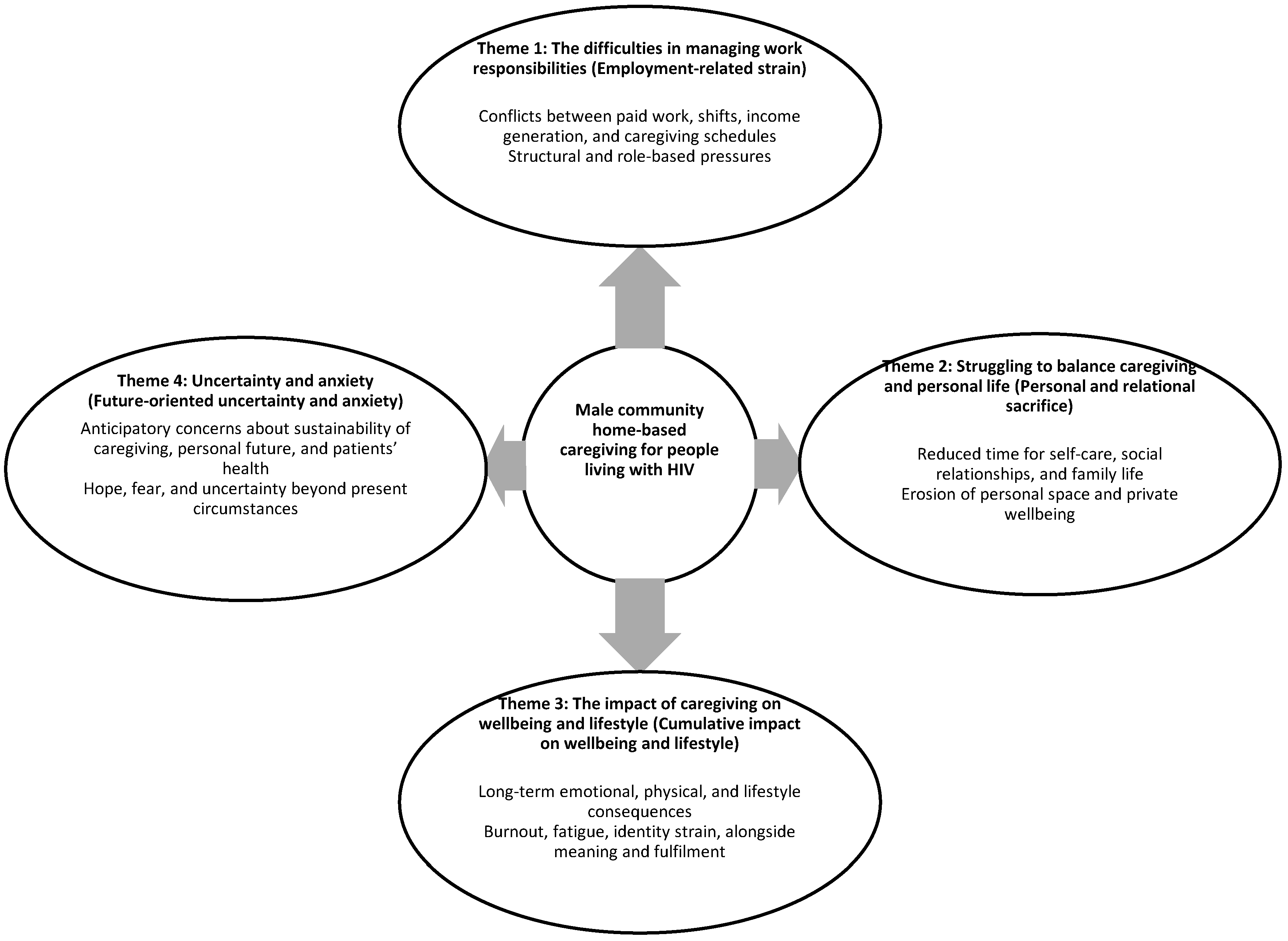
The main research findings emerged from the responses provided by the participants to the open-ended interview questions that were developed from the study aim and objectives. Themes overlap with each other (via similar stressors) but are conceptually distinct in terms of temporal focus (immediate, ongoing, cumulative, anticipatory) and psychosocial domain (structural, relational, embodied, emotional-futural). The diagram (Figure 1) depicts male community home-based caregiving to PLHA as the phenomenon of central importance, with four analytically distinct yet interrelated themes. All themes depict various psychosocial dimensions: structural, relational, cumulative, and future-oriented, thus warranting thematic specificity but with overlap. These responses were analysed thematically and gave rise to four themes that are presented in Figure 1 below.
  • Theme 1: The difficulties in managing work responsibilities.
Another part of the findings highlighted the difficulties encountered by caregivers while performing their caregiving duties. Navigating the delicate balance between work and caregiving was reported to be a daunting task of fulfilling professional obligations while providing compassionate care. This theme explores the intricate challenges arising from juggling a career with the demanding role of a caregiver, rather than broader personal or emotional strain.
Participant Three was among those who highlighted sentiments that built this theme as reported below:
“I have to juggle a lot of things and sometimes I feel overwhelmed. I have a part-time job as a security guard at night, so I have to sleep during the day when I am not caregiving. I don’t have much time for myself or my hobbies. I try to spend some quality time with my friends on the weekends and visit my parents on the other, but it’s hard to find a reliable respite caregiver who can take over my duties. As for social engagements, I have lost most of my contact with my friends. I don’t mean I don’t have their numbers to call them but the hanging out contact is no longer the same. Most of them are busy with their own careers and families same as me working a 12 h shift at most, it gets really exhausting.”
In line with Participant Three narratives were Participant Five, who said:
“Additionally, the physical demands of caregiving, such as lifting or assisting patients, can be taxing and finding time to recover physically while also fulfilling work duties can be a challenge. There’s also the emotional labour involved; caregiving requires a lot of emotional strength and resilience, which can sometimes leave me drained and impact my performance in other work roles.”
Participant Nine also indicated the difficulties of managing his work responsibilities by saying:
“It is not easy to balance my caregiving duties with other aspects of my life, but I try to manage as best as I can. I work as a part-time security guard, so I must coordinate my shifts with my caregiving assignments.”
Participant Ten, who noted the difficulties in managing work responsibilities, stated:
“It is very difficult to balance everything. I have to juggle my caregiving duties with my studies, as I am a part-time student at the university. I also have a girlfriend, who needs my attention and support. I sometimes feel stressed and overwhelmed by the demands and expectations of caregiving. …”
This part of the findings as supported by the participants’ storylines above, delves into the intricate challenges faced by caregivers on managing their caregiving duties. Evidence regarding struggles to fulfil professional responsibilities while providing compassionate care, leading to time constraints, workplace conflicts and the necessity for flexible work arrangements was also found in the literature, with researchers like George et al. (2020), indicating that the caregiving demands can lead to increased stress which can affect their quality of life. According to Gallagher-Thompson et al. (2014), providing care can be physically and emotionally exhausting.
The physical demands of caregiving, emotional labour and the need for resilience were noted as additional stressors impacting performance in other work roles (Theng et al. 2023). The difficulties in managing work responsibilities, that emerge from this study, point to a need for emotional, instrumental, as well as informational support. The physical and exhaustive nature of caregiving, for instance, suggests a need to take time off from work and receive some kind of emotional support through counselling and other forms of intervention. They (caregivers) might also need some training on how to best execute their duties through informational support (i.e., workshops and other forms of capacity building). Analytically, this theme reflects structural role strain linked to employment conditions, shift work, and income-generating responsibilities rather than overall life balance.
  • Theme 2: Struggling to balance caregiving and personal life
One of the issues that emerged from the responses of the participants regarding the psychosocial challenges was the difficulties of balancing work and personal life. While related to Theme 1, this theme is conceptually distinct in that it focuses on the intrusion of caregiving into personal, relational, and self-care domains rather than formal work responsibilities. Several participants contributed to this theme including Participants Five, seven, eight, Nine, and ten. Participant Nine described his struggles in balancing work and personal life. He stated the following:
“I also have to juggle my caregiving duties with my own personal needs, such as sleeping, eating, exercising and relaxing”.
In another interview conducted with Participant Five, he also articulated the need to prioritise self-care. This is how he expressed his experiences:
“Balancing caregiving responsibilities with personal life requires careful planning and setting clear boundaries. I make sure to allocate time for my hobbies, relaxation and social interactions to maintain my wellbeing. It’s essential to prioritise self-care to prevent burnout and sustain my ability to provide quality care to my patients.”
Participant Seven also alluded to his challenges with balancing work and personal life. He had the following to say:
“Most the things that I do, on my daily schedule, involve balancing caregiving tasks with my personal life. This includes managing time for work, personal relaxation and social activities. It’s a challenging role, but it’s also rewarding to be able to help others.”
Participant Eight hinted on the difficulties to balance work and personal life. He stated that due to this balancing difficulty, he ends up sacrificing his time for caregiving. This is how his narratives were captured:
“It is not easy to balance everything. I must sacrifice a lot of my time and energy for caregiving. I have a part-time job as a security guard, but it is not enough to cover all the expenses. I am also studying; everything needs my attention and support. It’s difficult to abandon my father’s brother, he is like a father to me. He has been there for me my whole life and I feel obliged to take care of him. I also have very little time for myself to relax or do something I enjoy. I hardly see my friends or go out anymore.”
In line with other participants, Participant Ten shared his views of not being able to engage in his other social activities due to caregiving duties. This is how he explained it:
“……I have very little time for myself, to relax or pursue my hobbies. I also miss out on a lot of social opportunities with my friends and peers.”
The struggle for balancing work and personal life was a common theme that resonated with several participants. Their experiences underscore the sacrifices often made in personal life due to work and caregiving responsibilities. What the participants alluded to in terms of the challenges of balancing work and life resonates with the discovery made by Archbold et al. (2015), that caregivers frequently face role strain as they balance a variety of obligations, which results in overwhelming emotions. The constraints placed on male caregivers by society to provide for their families often clash with their nurturing roles, which is consistent with Kayaalp et al. (2020) who opine that balancing caregiving responsibilities can be highly demanding, as it often requires individuals to divert personal resources such as time, energy, and finances away from their usual activities to meet caregiving demands.
Although missing out on family or social activities and having to juggle personal needs with caregiving duties were common among the participants, the importance of self-care and setting clear boundaries was emphasised by Participants such as the number Five. This reflected the understanding that maintaining personal wellbeing is crucial to prevent burnout and sustain the ability to provide quality care. Despite these difficulties as highlighted by the participants, there is a sense of reward and fulfilment in helping others. Reading the findings from the social support theory, it becomes apparent that caregivers need some kind of support on balancing personal and professional lives. As suggested by the social support theory, that could be enhanced through emotional support which can involve counselling or through informational support where these caregivers are taught on how to balance their personal and professional lives. This theme foregrounds the erosion of personal time, social relationships, and self-care practices, highlighting the private and relational costs of caregiving.
  • Theme 3: the impact of caregiving on wellbeing and lifestyle
According to the participants, caregiving can have a significant impact on a caregiver’s emotional wellbeing, physical health and overall lifestyle. This theme differs from Themes 1 and 2 by capturing cumulative psychosocial and physical outcomes of prolonged caregiving rather than day-to-day role conflicts. Caregivers reported feelings of stress, fatigue and isolation, but also noted positive impacts such as personal growth and increased empathy. Among participants, who articulated sentiments that built into this theme, were Participant Three who had this to say regarding the impact of caregiving on his wellbeing and lifestyle:
“Indeed, caregiving, while being gratifying and enriching, can also be quite draining. It frequently leads to feelings of anxiety, depression, isolation or frustration. I struggle with sleep, maintaining a balanced diet or finding moments of relaxation. I experience physical discomforts like backaches, headaches and constant tiredness. The demands of caregiving leave me with little time or energy for physical activities, social engagements or personal hobbies. I often feel as though I’m losing touch with my own identity.”
In the case of Participant Four, caregiving resulted in mixed impacts on his physical and overall lifestyle. He had this to say to researchers:
“Caregiving has had a mixed impact on my emotional wellbeing, physical health and overall lifestyle. On the positive side, caregiving has given me a sense of purpose, fulfilment and satisfaction. I feel proud of what I do, and I enjoy making a difference in people’s lives. …On the negative side, caregiving has caused me a lot of stress, anxiety and exhaustion. I sometimes feel overwhelmed, frustrated or depressed by the challenges and demands of the job.”
Echoing the sentiments like the above participants, Participant Five shares his journey as a male caregiver, hinting on how it has affected his wellbeing and lifestyle. He stated as follows:
“Caregiving is a demanding and emotionally challenging profession that can take a toll on both one’s emotional and physical health. While it’s incredibly rewarding to provide care and support to those in need, it’s essential to acknowledge the impact it can have on caregivers’ wellbeing. Over the years, I’ve learned to prioritise self-care and implement strategies to maintain a healthy work–life balance. This includes engaging in regular exercise, practicing mindfulness and stress management techniques, seeking emotional support from peers and supervisors and taking breaks when needed to prevent burnout.”
Participant Seven also opened up about his journey as a caregiver by stating the following:
“Don’t get me wrong, I love looking after my patient, but it can be draining at times. I don’t sleep as well as I used to, and my back is always sore from helping them get around. I used to play soccer with my friends every week, but that hasn’t been possible lately. It’s been tough on my mood too. There are days when I just feel burnt out, but seeing their smile makes it all worthwhile. I know I need to take better care of myself so I can keep being there for them. Sometimes I feel like I need to see a professional, just to talk to someone would be beneficial”.
Another participant who contributed to this theme was Participant Ten who expressed both the positive and negative impacts of caregiving. He finds purpose and satisfaction in his work and values the bond he formed with his patients while also experiencing stress, anxiety and depression. This is what Participant Ten said to researchers:
“Caregiving affects me in many ways, both positively and negatively. On the positive side, caregiving gives me a sense of purpose, fulfilment and satisfaction. I feel that I am doing something meaningful and valuable for my patients and for society. I also learned a lot from caregiving, such as patience, empathy and resilience. I develop a closer bond with my patients and appreciate them more. On the negative side, caregiving causes me a lot of stress, anxiety and depression. I often feel overwhelmed, frustrated and helpless by the demands and challenges of caregiving. I worry about my patients’ health and wellbeing, as well as my own. I also experience physical exhaustion, pain and illness from the long hours and heavy workload of caregiving. I must cope with the changes and losses that caregiving brings, such as the decline of my patients’ cognitive and functional abilities, deterioration of our relationship and the decline of personal and professional opportunities.”
The study’s findings as reflected in this theme demonstrate that caregiving has a significant impact on carers’ emotional wellbeing, physical health and overall lifestyle. Caregivers reported their experiences of both positive and negative effects. On the positive side, caregiving can be rewarding and enriching, resulting in personal growth, increased empathy, a sense of purpose, accomplishment and satisfaction. Caregivers take pride in improving people’s lives, learning new skills and knowledge and developing meaningful relationships (Targan and Roberts 2023). However, caregiving can also be exhausting, resulting in feelings of anxiety, depression, isolation, and frustration. Caregivers frequently struggle to maintain a healthy diet, get enough sleep, and find time to relax. Physical discomforts such as backaches and headaches are common, and caregiving demands frequently leave little time or energy for physical activities, social engagements, or personal interests. These issues can result in caregivers feeling overwhelmed, frustrated or depressed due to the psychosocial challenges and demands of their job. They may overlook aspects of their health and lifestyle, such as sleep, exercise, diet and hobbies, as well as personal goals, dreams or aspirations (Zhang and Bennett 2024).
Despite these challenges, caregivers recognise the importance of self-care and work–life balance. They recognise the emotional and physical toll that caregiving can take, as well as the importance of seeking professional help when necessary (Zhang and Bennett 2024). As such, while caregiving can have a significant impact on one’s wellbeing and lifestyle, it also allows for personal growth and fulfilment. Carers’ experiences in this regard highlight a need for support systems and resources to help them manage the psychosocial challenges and demands associated with their roles. This is consistent with the social support theory, which emphasises the role of support networks in stress management and wellbeing (Leahy-Warren 2014).
  • Theme 4: Uncertainty and anxiety
Another theme which emerged from analysis of the participants’ narratives involved uncertainty and anxiety. Unlike Theme 3, which centres on present wellbeing, this theme reflects anticipatory concerns related to caregivers’ future, job security, sustainability of caregiving, and patients’ health trajectories. Through this theme, participants highlighted the emotional challenges they face in their caregiving journey as well as uncertainties about their future in caregiving.
Participant One was among those who contributed to this theme. He expresses determination and purpose, acknowledging that his journey in caregiving will involve looking where his services will be needed. He had this to say:
“I have realised a lot of things in life. For example, I noticed that my life cannot end here so I have to look for where they need male home-based caregiving.”
Participant Two expressed concerns about the future of his caregiving role. He was unsure where caregiving would take him, indicating a lack of clarity about his future path. This is what he said:
“I don’t know where caregiving will take me. We’ll see how time goes.”
Participant Three expressed his aspirations and worries for the future. Although he recognised the uncertainties associated with providing care, he wished the best for both himself and his patients. This is what we extracted from the interview with him:
“Well, I don’t know what the future holds. I hope that my patients will remain stable and comfortable as long as possible. I hope that they will appreciate me and remember me fondly when they pass away. As for myself, I hope that I will be able to continue doing this job as long as I can. I hope that I will not burn out or get sick or injured. I hope that I will be able to balance my caregiving duties with my personal life and happiness.”
Participant Four was filled with doubt about the future. Though he accepted that the future was unpredictable, he nevertheless had hope for both his patients’ wellbeing and his own caregiving duties. The following was extracted from the interview conducted with him:
“I envision the future in terms of my caregiving responsibilities and the wellbeing of my patients as uncertain, but hopeful. I don’t know what will happen to me or my patients in the future, as there are many factors and variables that can affect our situations.”
Participant Eight was concerned about his patient and his own prospects. He wished for his patient’s health to stabilise or improve. He stated as follows:
“I am not sure what the future holds for me and my patient. I hope that his condition will improve or stabilise, and that he will be able to enjoy a good quality of life…”.
Participant Ten expressed his conflicting thoughts about the future. Though he was unsure of what lay ahead for him and his patients, he never wavered in his optimism or dedication to giving them the best care possible. He tried to make the most of the moment while preparing for the possibility that caregiving may not last forever. He stated as follows:
“I am not sure what the future holds for me and my patients. I hope that their conditions will improve or stabilise and that they will be able to enjoy a good quality of life. I also hope that I will be able to continue to provide them with the best care possible, and that I will have the resources and support that I need. I am aware that caregiving is not a permanent situation and that it will eventually end, especially if you are not employed in an organisation. I try to prepare myself for that possibility, but I also try to live in the present and make the most of every moment.”
As emerged from this theme, it would seem as if the outlook of caregivers is marked by a mixture of uncertainty, anxiety, hope and optimism. Caregivers expressed a range of emotions about the future, emphasising the importance of planning for the future while at the same time advocating for the needs of their patients. Their utterances reflected a sense of resilience and adaptability which are some of the key traits highlighted in the literature on caregiving (Charalambous 2023). This part of the findings also aligns with the findings from Ng and Indran’s (2021) study of the societal perceptions of caregivers linked to culture in 20 counties, which indicated that societal perceptions of caregivers can impact caregiving decisions, and therefore, either exacerbate or ameliorate the caregiver burden. The aspirations and worries for the future expressed by the participants reflect the complex emotional landscape of caregiving, characterised by a mixture of emotions such as hope, fear and uncertainty (Charalambous 2023). Uncertainty and anxiety are emotional aspects, which in the context of the social support theory, suggests the significance of emotional support.

6. Discussions

The overall purpose of this study was to develop an understanding of the psychosocial challenges encountered by male caregivers when caring for PLHA in a South African community. Situating the findings within the broader socio-structural and theoretical context, it became apparent that male caregivers navigate through a complex, layered, and contextually constrained caregiving journey. Based on our findings, it became evident that caregivers experience five interrelated challenges, namely: (1) managing work responsibilities alongside caregiving duties; (2) coping with the physically and emotionally demanding nature of caregiving; (3) balancing caregiving with personal and relational life; (4) experiencing cumulative impacts on wellbeing and lifestyle; and (5) living with uncertainty and anxiety regarding the future of caregiving. Rather than being discrete challenges, these experiences form a mutually reinforcing system of psychosocial strain shaped by gender norms, precarious employment conditions, and limited access to sustained social support. This study therefore extends existing knowledge by demonstrating that the challenges encountered by these male caregivers are not merely individual stress responses, but are embedded within broader patriarchal, socio-economic, and health system structures that govern community-based HIV care.
Regarding managing work responsibilities alongside caregiving duties, the findings must be understood against entrenched patriarchal norms that position men primarily as breadwinners rather than caregivers. Caregiving remains a socially constructed female task in South African society and the worth of men is usually measured in terms of their involvement in the labour market and economic sustenance. This normative gender order places male caregivers in a structurally contradictory situation wherein caregiving responsibilities exist alongside societal demands of uninterrupted labour involvement. This paper contributes to the discussion by showing that male caregivers have employment-related strain not just due to the time-consuming nature of caregiving, but also because gender norms do not allow them to discuss the nature of their caregiving roles at work thus limiting their access to formal workplace benefits and flexibility. Caregiving therefore emerges as an invisible and unacknowledged form of labour particularly in men-dominated social structures, as it is performed in the private sphere of the home. This invisibility contributes to stress and role strain among caregivers. These results are consistent with those of George et al. (2020), who find that caregiving demands come with a heavy stress burden and a decline in quality of life, especially in the area where various demands intersect. In the same manner, Gallagher-Thompson et al. (2014) define caregiving as a physical and emotional burden that builds up and becomes too much to handle without support. Nonetheless, our study contributes to the existing literature by emphasising on the active role of masculine norms in discouraging male caregivers from requesting support from employers, thereby increasing social isolation and exacerbating caregiver strain. This is in line with Grycuk et al. (2022) who demonstrate that the absence of adequate social support and the disruptions caused by COVID-19-related restrictions significantly exacerbated caregivers’ loneliness, burden, and psychological vulnerability.
This theme may be interpreted in the light of the social support theory as a strong lack of the instrumental and informational support at the structural level, especially in the sphere of employment and labour. Intimately connected, but analytically different, is the dilemma of caregiving and personal and relational life. Although past research studies mostly frame the work–care balance in terms of policy (e.g., leave entitlements or flexible working arrangements), our study anticipates the privatised psychosocial costs to male caregivers, such as erosion of social relationships, lack of intimacy, loss of leisure and impaired self-care practices. Even though Akouamba et al. (2025) highlight the significance of flexible work arrangements among male caregivers, the current results show that psychosocial load is not only tied to employment but also progressive loss of friends, love interests, and engagement in societal activities. Such losses are a kind of social disconnection that is undertheorised in the literature that examines caregiving among men. This theme, in terms of social support theory, demonstrates lack of emotional and relationship support, especially since masculine socialisation frowns on seeking help and emotional expression. Male caregivers are thus marginalised twice; firstly, by the caregiving load itself, and then by gender norms that limit access to the supportive networks. Role strain is also found by Archbold et al. (2015), though our paper expands on it by clearly placing it in the context of gendered norms that discourage emotional expression and encourage the utilisation of support among men. The cumulative effect of the caregiving on wellbeing and lifestyle is a third, analytically more profound stratum, of psychosocial vulnerability.
In line with Akouamba et al. (2025), the results show that male caregivers face deteriorations of emotional, physical, and lifestyle wellbeing, especially when they are not recognised and supported. Similar findings were reported by Valjee and Van Dyk (2014) who identified high levels of occupational stress among HIV caregivers in South Africa, highlighting the demanding nature of HIV-related caregiving. The contribution of our study is towards the literature on CHBC which has been dominated by the experiences of caregivers in general, without specific attention of the male caregivers whose experiences are unique, particularly given the patriarchal society in which they find themselves, as well the levels of stigma associated with HIV. It is anticipated that this study will contribute towards expanding a pool of literature from which to draw when developing psychosocial interventions for supporting these caregivers. Furthermore, unlike previous studies that have been generic and dominated by female caregivers, our study placed the unique experiences of male caregivers in the spotlight.
Mieh et al. (2013) likewise documented how caregiving affects caregivers’ physical, mental, and socio-economic wellbeing, while Knowlton et al. (2021) highlight the spill-over of caregiving stress into personal and family life in the absence of psychosocial support. Within the social support framework, this theme reveals pervasive gaps in emotional, instrumental, and informational support across time, rather than momentary shortages.
Finally, uncertainty and anxiety emerged as a future-oriented psychosocial dimension distinguishing the contribution of our study. Whereas much caregiving literature concentrates on present burden or immediate stress, this theme captures anticipatory anxiety related to job insecurity, sustainability of caregiving, patients’ health trajectories, and caregivers’ own ageing and livelihood futures. According to Knowlton et al. (2021), role ambivalence in caregivers is characterised by commitment to their caregiving duties and a wish to disengage because of emotional overload. Our study also revealed that caregivers experience a range of experiences such as hope, commitment, and anxiety, which is indicative of a dysfunctional emotional balance. Akouamba et al. (2025) also record emotional burdens including sadness, stress, frustration and anxiety among male caregivers, which are quite similar to the present study.
In the social support theory, uncertainty and anxiety indicates the unmet emotional and informational support requirements associated with future planning, role continuity, and psychological containment. Male caregivers face a continued anticipatory stress, as they lack clear career development or financial security, or psychosocial counselling. Combined, the results reveal that a social support theory offers a powerful analytical framework of understanding how the lack of emotional, informational, and instrumental support interplay with gender norms and structural inequalities to increase the psychosocial vulnerability of male caregivers. Another contribution of the study is that it has used this theoretical framework to incorporate male community home-based caregivers who provide care to the PLHA in South Africa, who are one population that has not been sufficiently represented in empirical and gender-responsive studies. This study transcends the scope of explaining caregiving issues through individualised explanation by conceptualising the issues as structurally embedded, gendered, cumulative and future-oriented with a view to providing a more holistic explanation of male caregiving in communities affected by HIV.
To conclude, our study has several valuable contributions on caregiving and HIV community health literature. Firstly, it builds on existing studies by pre-empting the male community home-based caregivers of PLHA in South Africa, which is a marginalised group in both empirical and theoretically driven research. Secondly, the results go beyond personalised accounts of caregiver stress by theorising males’ caregiving issues as structural, gender, cumulative, and future-oriented. Specifically, the study shows the interplay of patriarchal gender standards, precarious working environments, and access to enduring social support to generate multiple psychosocial vulnerability in male caregivers. Thirdly, our study utilised the social support theory to male HIV caregiving and thus offered a theoretically integrated account of the role and lack of emotional, informational, and instrumental support in influencing the lives of the caregivers over a period of their caregiving. Through this, our study generated knowledge about male caregiving in the context of HIV-affected populations and provides a subtle approach to understanding caregiving strain as a dynamic phenomenon that does not result in a concatenated set of stressors.

7. Study Limitations

This study was qualitatively designed, with a small sample size of ten male community home-based caregivers who were selected based on a single community in the metropolitan area of the city of Tshwane. Although this method allowed a rich and in-depth exploration of the lived experiences of participants, the results are context specific. Moreover, the sample was selected mostly via community-based organisations, and therefore, did not include male caregivers who are not part of the formal support systems and whose caregiving experiences might be different. The use of self-reported data using interviews might have had the risk of recall bias and socially desirable reporting, especially considering the gendered nature of caregiving, and the prevalence of masculinity norms. Moreover, the results may only a picture of the psychosocial challenges at one moment in time and not necessarily of the way these challenges will unfold throughout the caregiving process.

8. Conclusions and Recommendations

The main issues encountered by caregivers when rendering services to PLHA as emerged from this study involve struggling to manage work responsibilities, which in the context of the social support theory, could be cured through emotional, instrumental and informational support. Caregivers tend to struggle to draw a line between caregiving duties and their personal lives, an issue which runs a risk of compromising the quality of care that they provide. This study makes a scientific contribution, as it filled knowledge gap on the psychosocial issues of male caregivers. It is uniquely demonstrated that these psychosocial issues are not only influenced by the needs of care giving, but a combination of gender roles, structural limitations and inability to access formal support systems in CHBC for PLHA. It specifically provided knowledge on the importance of emotional, informational, and instrumental support and their impact on psychosocial vulnerability of male caregivers and therefore contributed to a pool of literature which can assist in developing programmes, policies and other psychosocial intervention strategies.
Besides the above challenges, caregiving tends to have some negative impacts on the wellbeing and lifestyle of the caregiver, which implies a need to support these caregivers through emotional and informational support. The wellbeing and lifestyle of the caregivers is not left untainted by the caregiving-related challenges, which leave them stressed and having sleeping difficulties. Uncertainty and anxiety were also found to be common, with caregivers dealing with what they do not know, particularly given the unpredictability of the health state of their patients. Our findings underscore the practical relevance of integrating caregiver-focused psychosocial support into community-based HIV programmes. Given the above conclusions, the following recommendations are proposed:
  • Interventions at the level of policy and government: Interventions at the policy level require the health and social development departments to recognise male community home-based caregivers as a distinct group in HIV care strategies. This official acknowledgment should lead to their inclusion in current community-care models, ensuring systematic wellness and psychosocial support. By integrating male caregiver support within existing community health worker programmes, rather than creating parallel structures, with the aim of addressing the historical invisibility of male caregivers and ensuring sustainable psychosocial support.
  • Community-based organisation and health service providers: Gender-responsive caregiver support interventions should be implemented by CBOs, NGOs, and primary health care facilities providing CBHC to PLHA. These interventions must include counselling services, peer support groups, and skills training at the community level, with peer support meetings guided by trained social workers. Capacity-building workshops should coincide with caregiver meetings to address identified gaps in emotional and informational support for male caregivers.
  • Caregiver support programme design: Gender-sensitive caregiver support programmes should address stigma and masculine norms that prevent male caregivers from seeking help. Discussions on gender norms, masculinity, emotional wellbeing, and help seeking should be integrated into programme design and caregiver training. Facilitators must be trained to create environments that normalise emotional expression among men, with initial training and periodic refresher courses to adapt to changing psychosocial needs.
  • Civil society and leadership in community: Advocacy for male involvement in caregiving within HIV-affected communities should be led by community leaders, faith-based organisations, and civil society. These groups can challenge existing gender stereotypes and promote caregiving as a communal responsibility through discussions, awareness campaigns, and educational forums. Such advocacy is most effective in local settings such as churches and community halls, particularly in areas with high HIV prevalence. Establishing informal community support networks is vital for reducing stigma and fostering shared caregiving responsibilities.
  • Future research recommendations: Future research should employ longitudinal designs to examine the evolving psychosocial challenges, coping strategies, and support needs of male caregivers. Comparative studies across diverse geographical and sociocultural contexts are recommended to explore variations in caregiving experiences. Additionally, mixed-method studies are needed to assess the impact of different types of support on caregiver wellbeing and care outcomes, while preserving qualitative insights. Comparative analysis between male and female caregivers would also aid in understanding gender-specific services in community-based HIV care.

Author Contributions

Conceptualization, C.D. and M.R.L.; methodology, C.D. and M.R.L.; validation, C.D. and M.R.L.; formal analysis, C.D.; investigation, C.D.; resources, C.D. and M.R.L.; data curation, C.D.; writing—original draft preparation, C.D.; writing—review and editing, C.D. and M.R.L.; visualization, C.D.; supervision, M.R.L.; project administration, C.D. and M.R.L.; funding acquisition, C.D. and M.R.L. All authors have read and agreed to the published version of the manuscript.

Funding

This study was funded by the University of South Africa’s masters and doctoral students’ funding programme (Funding Number 54946743 and the APC was funded by the University of South Africa).

Institutional Review Board Statement

This study was conducted in accordance with the Declaration of Helsinki and approved by the Institutional Review Board (the University of South Africa’s College of Human Sciences Research Ethics Committee, protocol code 5496743_CREC_CHS_2023 and approved on 23 November 2023).

Informed Consent Statement

Informed consent was obtained from all subjects involved in the study.

Data Availability Statement

Data is contained within the article.

Acknowledgments

The authors would like to acknowledge all participants who made it possible for this study to be concluded.

Conflicts of Interest

The authors declare no conflicts of interest. The funders had no role in the design of the study; in the collection, analyses, or interpretation of data; in the writing of the manuscript; or in the decision to publish the results.

Abbreviations

The following abbreviations are used in this manuscript:
CHBC Community home-based care
CBOsCommunity-based Organisations
CRECCollege Research Ethics Committee
PLHAPeople living with HIV/AIDS
PPEPersonal Protective Equipment

References

  1. Aantjes, Caroline, Tim Quinlan, and Joske Bunders. 2014. Integration of community home based care programmes within national primary health care revitalisation strategies in Ethiopia, Malawi, South-Africa and Zambia: A comparative assessment. Globalization and Health 10: 85. [Google Scholar] [CrossRef]
  2. Akouamba, Bertine Sandra, Sophie Audette-Chapdelaine, Ionela Gheorghiu, Hinatea Lai, Maggy Wassef, Adrian Mares, and Walter Marcantoni. 2025. Male caregivers: A scoping review of impacts, needs, challenges, and best practices. Discover Health Systems 4: 104. [Google Scholar] [CrossRef]
  3. Anney, Vincent Naano. 2015. Ensuring the Quality of the Findings of Qualitative Research: Looking at Trustworthiness Criteria. Journal of Emerging Trends in Educational Research and Policy Studies (JETERAPS) 5: 272–81. [Google Scholar]
  4. Archbold, Patricia G., Barbara J. Stewart, Merwyn R. Greenlick, and Theresa A. Harvath. 2015. Mutuality and preparedness moderate the effects of caregiving demand on role strain. Research in Nursing & Health 38: 229–43. [Google Scholar]
  5. Birt, Linda, Suzanne Scott, Debbie Cavers, Christine Campbell, and Fiona Walter. 2016. Member Checking: A Tool to Enhance Trustworthiness or Merely a Nod to Validation? Qualitative Health Research 26: 1802–11. [Google Scholar] [CrossRef]
  6. Braun, Virginia, and Victoria Clarke. 2006. Using thematic analysis in psychology. Qualitative Research in Psychology 3: 77–101. [Google Scholar] [CrossRef]
  7. Carter, Nancy, Denise Bryant-Lukosius, Alba DiCenso, Jennifer Blythe, and Alan J. Neville. 2014. The use of triangulation in qualitative research. Oncology Nursing Forum 41: 545–47. [Google Scholar] [CrossRef]
  8. Charalambous, Andrea. 2023. Caregiving and Caregivers: Concepts, Caregiving Models, and Systems. In Informal Caregivers: From Hidden Heroes to Integral Part of Care. Edited by Andrea Charalambous. Cham: Springer. [Google Scholar]
  9. Drageset, Jorunn. 2021. Social Support. In Health Promotion in Health Care—Vital Theories and Research. Edited by Gørill Haugan and Monica Eriksson. Cham: Springer, pp. 137–44. [Google Scholar]
  10. Drisko, James W. 2024. Transferability and generalization in qualitative research. Qualitative Health Research 35: 102–10. [Google Scholar] [CrossRef]
  11. Dumba, Christian, and Robert Lekganyane. 2025. The dynamics and pitfalls of home-based caregiving rendered by male caregivers in the city of Tshwane metropolitan municipality, South Africa. Critical Public Health 35: 1–28. [Google Scholar] [CrossRef]
  12. Gallagher-Thompson, Dolores, David W. Coon, and Larry W. Thompson. 2014. Caregiving and the impact on health: A review of the literature. The Gerontologist 54: 345–58. [Google Scholar]
  13. George, Emma S., Milica Kecmanovic, Tanya Meade, and Gregory S. Kolt. 2020. Psychological distress among carers and the moderating effects of social support. BMC Psychiatry 20: 154. [Google Scholar] [CrossRef] [PubMed]
  14. Gottert, Ann, Clare Barrington, Heath Luz McNaughton-Reyes, Suzanne Maman, Catherine MacPhail, Sheri A. Lippman, Kathleen Kahn, Rhian Twine, and Audrey Pettifor. 2018. Gender Norms, Gender Role Conflict/Stress and HIV Risk Behaviour Among Men in Mpumalanga, South Africa. AIDS and Behaviour 22: 1858–69. [Google Scholar] [CrossRef] [PubMed]
  15. Grycuk, Emilia, Yaohua Chen, Arianna Almirall-Sanchez, Dawn Higgins, Miriam Galvin, Joseph Kane, Irina Kinchin, Brian Lawlor, Carol Rogan, Gregor Russell, and et al. 2022. Care burden, loneliness, and social isolation in caregivers of people with physical and brain health conditions in English-speaking regions: Before and during the COVID-19 pandemic. International Journal of Geriatric Psychiatry 37. [Google Scholar] [CrossRef]
  16. Guest, Greg, Emily Namey, and Mario Chen. 2020. A simple method to assess and report thematic saturation in qualitative research. PLoS ONE 15: e0232076. [Google Scholar] [CrossRef]
  17. Gunda, Sabastian, and Sipho Sibanda. 2025. Expansion and deepening of social support systems for female caregivers who attended a group-based HIV prevention programme in Soweto, South Africa. Journal of Social Service Research 51: 1178–90. [Google Scholar] [CrossRef]
  18. Hazzan, Afeez Abiola, Jason Dauenhauer, Patti Follansbee, Joyce O. Hazzan, Katy Allen, and Ibukun Omobepade. 2022. Family caregiver quality of life and the care provided to older people living with dementia: Qualitative analyses of caregiver interviews. BMC Geriatrics 22: 86. [Google Scholar] [CrossRef] [PubMed]
  19. Kayaalp, Alper, Kyle J. Page, and Kathleen M. Rospenda. 2020. Caregiver Burden, Work-Family Conflict, Family-Work Conflict, and Mental Health of Caregivers: A Mediational Longitudinal Study. Work Stress 35: 217–40. [Google Scholar] [CrossRef]
  20. Knowlton, Amy R., Trang Q. Nguyen, Sarina Isenberg, Tuo-Yen Tseng, Zachary Catanzarite, Mary M. Mitchell, and Dulce Cruz-Oliver. 2021. Quality of life among caregivers of a vulnerable population living with HIV: Caregiving and relationship factors. AIDS and Behaviour 25: 360–76. [Google Scholar] [CrossRef]
  21. Korstjens, Irene, and Albine Moser. 2018. Series: Practical guidance to qualitative research. Part 4: Trustworthiness and publishing. European Journal of General Practice 24: 120–24. [Google Scholar] [CrossRef]
  22. Leahy-Warren, Patricia. 2014. Social support theory. In Theories Guiding Nursing Research and Practice: Making Nursing Knowledge Development Explicit. Edited by Joyce J. Fitzpatrick and Geraldine McCarthy. Cham: Springer Publishing Company, pp. 85–101. [Google Scholar]
  23. Lekganyane, Maditobane Robert. 2017. Experiencing and Managing Work-Related Challenges by Home-Based Caregivers Caring for People Living with HIV and AIDS: Guidelines for Support from a Social Work Perspective. Doctoral dissertation, University of South Africa, Pretoria, South Africa. [Google Scholar]
  24. Lekganyane, Maditobane Robert. 2024. A qualitative inquiry into the occupational challenges faced by home-based caregivers of people living with HIV in South Africa’s Gauteng province. Journal of Population and Social Studies 32: 757–80. [Google Scholar] [CrossRef]
  25. Lekganyane, Maditobane Robert, and Nicky Alpaslan. 2019. Suggestions by home-based caregivers caring for people living with HIV and AIDS on how social workers could support them in managing their work-related challenges. Social Work/Maatskaplike Werk 55: 141–57. [Google Scholar] [CrossRef]
  26. Lincoln, Yvonna S., and Egon G. Guba. 1985. Naturalistic Inquiry. Thousand Oaks: Sage Publications. [Google Scholar]
  27. Mahlophe, Mulalo. 2022. Challenges Experienced by Community Home-Based Caregivers in Mutale Municipality, South Africa. International Journal of Research in Social Sciences 13: 1–15. [Google Scholar]
  28. MEASURE Evaluation. 2022. Home-Based Care. MEASURE Evaluation. Available online: https://www.measureevaluation.org/measure/community-based-indicators/home-based-care.html (accessed on 26 July 2025).
  29. Mieh, Theresa M., Juliet Iwelunmor, and Collins O. Airhihenbuwa. 2013. Home-based caregiving for people living with HIV/AIDS in South Africa. Journal of health Care for the Poor and Underserved 24: 697–705. [Google Scholar] [CrossRef]
  30. Mills, Albert J., Gabriel Durepos, and Elden Wiebe, eds. 2010. Encyclopaedia of Case Study Research: Reflexivity. Thousand Oaks: SAGE Publications, Inc., pp. 789–90. [Google Scholar] [CrossRef]
  31. Mohammadi, Fateme, Mojtaba Farjam, Yousef Gholampour, Mojtaba Sohrabpour, Khodayar Oshvandi, and Mostafa Bijani. 2021. Caregivers’ perception of the caring challenges in coronavirus crisis (COVID-19): A qualitative study. BMC Nursing 20: 102. [Google Scholar] [CrossRef] [PubMed]
  32. Moore, Elena. 2023. Family care for older persons in South Africa: Heterogeneity of the carer’s experience. International Journal of Care and Caring 7: 265–86. [Google Scholar] [CrossRef]
  33. Moshabela, Mosa, Thembelihle Zuma, Joanna Orne-Gliemann, Collins Iwuji, Joseph Larmarange, Nuala McGrath, and ANRS 12249 TasP Study Group. 2016. “It is better to die”: Experiences of traditional health practitioners within the HIV treatment as prevention trial communities in rural South Africa (ANRS 12249 TasP trial). AIDS Care 28: 24–32. [Google Scholar] [CrossRef] [PubMed]
  34. Ng, Reuben, and Nicole Indran. 2021. Societal perceptions of caregivers linked to culture across 20 countries: Evidence from a 10-billion-word database. PLoS ONE 16: e0251161. [Google Scholar] [CrossRef]
  35. Ngcobo, Sanele, and Theresa Rossouw. 2022. Acceptability of Home-Based HIV Care Offered by Community Health Workers in Tshwane District, South Africa: A Survey. AIDS Patient Care and STDs 36: 55–63. [Google Scholar] [CrossRef]
  36. Nordin, Susanna, and Marie Elf. 2019. The importance of physical environment to support individual care. In Individualised Care. Edited by Suhonen Riitta, Minna Stolt and Papastavrou Evridiki. Cham: Springer, pp. 207–16. [Google Scholar]
  37. Petrova, Elmira, Jan Dewing, and Michelle Camilleri. 2016. Confidentiality in participatory research: Challenges from one study. Nursing Ethics 23: 442–54. [Google Scholar] [PubMed]
  38. Price, Mollie L., Claire Surr, Brendan Gough, David Howe, and Laura Ashley. 2025. The Provision of Social Support in an Online Support Forum for Caregivers of People with Comorbid Dementia and Cancer: Content Analysis Study. JMIR Cancer 11: e72217. [Google Scholar] [CrossRef]
  39. Qalinge, Lulama. 2011. Community home-based care programme: A marginalised key community resource. Social Work/Maatskaplike Werk 47: 51–58. [Google Scholar] [CrossRef]
  40. Saunders, Benjamin, Jenny Kitzinger, and Celia Kitzinger. 2015. Anonymising interview data: Challenges and compromise in practice. Qualitative Research 15: 616–32. [Google Scholar] [CrossRef]
  41. Schneider, Helen, Hlengiwe Hlophe, and van Dingie Rensburg. 2008. Community health workers and the response to HIV/AIDS in South Africa: Tensions and prospects. Health Policy and Planning 23: 179–87. [Google Scholar] [CrossRef] [PubMed]
  42. Targan, Alexandra, and Caroline Collins Roberts. 2023. Family and Other Caregivers. In Chronic Illness Care. Edited by Timothy P. Daaleman and Margaret R. Helton. Cham: Springer. [Google Scholar]
  43. Theng, Bunnarin, Jessica T. Tran, Hani Serag, Mukaila Raji, Huey-Ming Tzeng, ven Miaolung Shis, and Wei-Chen Lee. 2023. Understanding caregiver challenges: A comprehensive exploration of available resources to alleviate caregiving burdens. Curens 15: e43052. [Google Scholar] [CrossRef] [PubMed]
  44. Tong, Allison, and Mary Amanda Dew. 2016. Qualitative Research in Transplantation: Ensuring Relevance and Rigor. Transplantation 100: 710–12. [Google Scholar] [CrossRef]
  45. Valjee, Lavishni, and Alta C. Van Dyk. 2014. Impact of caring for people living with HIV on the psychosocial well-being of palliative caregivers. Curationis 37: 1201. [Google Scholar] [CrossRef][Green Version]
  46. Vanclay, Frank, James T. Baines, and C. Nicolas Taylor. 2013. Principles for ethical research involving humans: Ethical professional practice in impact assessment Part I. Impact Assessment and Project Appraisal 31: 243–53. [Google Scholar] [CrossRef]
  47. Yadlin, Aya, Ruth Tsuria, and Asaf Nissenbaum. 2024. Understanding Researcher Risk and Safety in Qualitative Research Online. Digital Society 3: 4. [Google Scholar] [CrossRef]
  48. Zhang, Yanan, and Matthew R. Bennett. 2024. Insights Into Informal Caregivers’ Well-being: A Longitudinal Analysis of Care Intensity, Care Location, and Care Relationship. The Journals of Gerontology: Series B 79: gbad166. [Google Scholar] [CrossRef]
  49. Zikhathile, Thobile, and Harrison Atagana. 2018. Challenges facing home-based caregivers in the management of health care risk waste. Journal of Primary Health Care & Family Medicine 15: 2700. [Google Scholar]
Figure 1. Thematic map of psychosocial challenges experienced by male community home-based caregivers.
Socsci 15 00362 g001
Table 1. The inclusion and exclusion criteria.
InclusionExclusion
  • Male
  • Genders other than males
  • Above 18 years
  • Below 18 years
  • Attached to a community organisation
  • Not attached to any organisation
  • Rendering services to people with HIV
  • Not rendering services to people with HIV
  • Have over 6 months as a caregiver
  • Been a caregiver for less than 6 months
  • Working in the Pretoria West area of the city of Tshwane
  • Working in areas outside the Pretoria West
Table 2. The demographic features of the participants.
ParticipantAgeEducationExperienceMarital StatusWorkload
123* Matric1 yearSingle12
224Home-based care certificate18 monthsSingle12
325Home-based care certificate3 yearsSingle1
430Heath care assistance certificate2 yearsSingle4
536First aid certificate8 yearsMarried12
630Home-based care certificate2 yearsCohabitated4
726Home-based care certificate3 yearsSingle5
825Student2 yearsSingle4
935Economic management3 yearsMarried3
1025Data2 yearsSingle2
* A school leaving certificate.
Disclaimer/Publisher’s Note: The statements, opinions and data contained in all publications are solely those of the individual author(s) and contributor(s) and not of MDPI and/or the editor(s). MDPI and/or the editor(s) disclaim responsibility for any injury to people or property resulting from any ideas, methods, instructions or products referred to in the content.