Surrogacy in Colombia: Contributions to a Transactional Regulation That Shall Guarantee Human Rights

 ,
,  ,
,  and
and
Abstract
1. Introduction
2. Theoretical Framework
2.1. Theory of Legal Transactions
2.2. Principle of Solidarity
2.3. The Right to Found a Family
3. Materials and Methods
4. Results: Transactional Dynamics of Surrogacy in Mexico and Colombia
5. Discussion: Legislative Guidelines for Transactional Regulation in Colombia
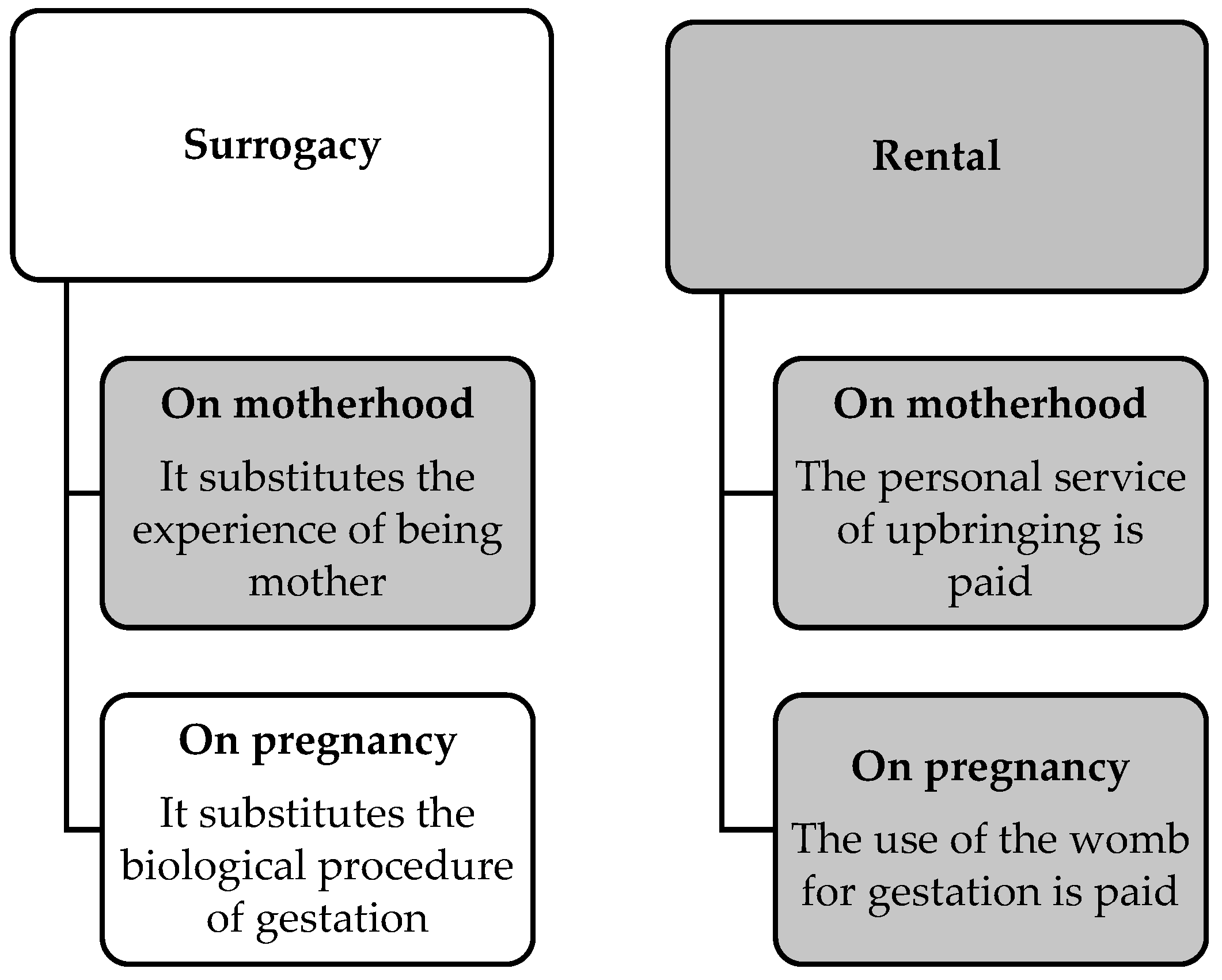
5.1. Differentiating Womb Rental, Surrogate Motherhood, and Gestational Surrogacy
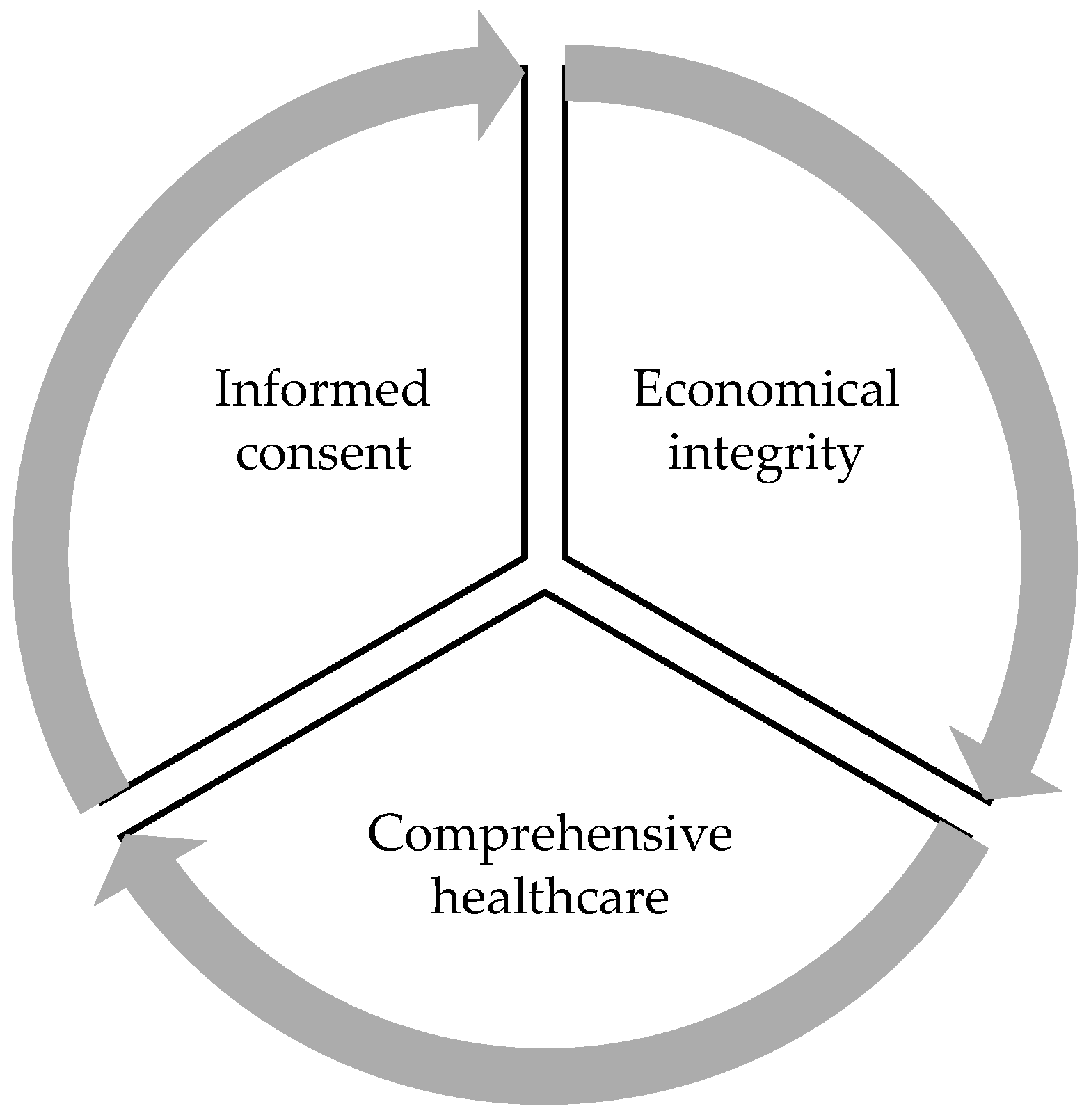
5.2. Ethical and Legal Justification for Surrogacy as a Transaction
5.3. Legal Dilemmas After Birth
6. Conclusions
Author Contributions
Funding
Institutional Review Board Statement
Informed Consent Statement
Data Availability Statement
Conflicts of Interest
Abbreviations
| ICBF | Instituto Colombiano de Bienestar Familiar/Colombian Institute of Family Welfare |
| WHO | World Health Organization |
| 1 | The Constitutional Court is the tribunal in charge of reviewing judges’ judgments in response to requests for constitutional protection. These judgments are classified as type T, from the word “Tutela”, which means protection, as the legal action to request this protection has the same name. |
| 2 | On this occasion, the Court recognized for the first time the need to clearly regulate surrogacy. It also held that the interests of the child born through this technique take precedence over contractual provisions, in addition to the fact that the genetic material of the gestational carrier at conception is decisive in granting her rights as a mother. |
| 3 | In this case, the Court explained that denying nationality to a child born through surrogacy jeopardizes its fundamental rights, prioritizing the best interests of the child over regulatory gaps. It also reaffirmed the need to establish clear rules to prevent discrimination and guarantee the recognition of filiation. |
| 4 | Here, the Court considered it feasible to grant Colombian nationality to a surrogate-born child, even though her Colombian gestational carrier did not share genetic material with her. |
| 5 | Bill 345 of 2023, now shelved, was the most recent regulatory initiative in Colombia. It was introduced under the direction of the Ministry of Justice and Law and the Ministry of Health and Social Protection in February 2023, in compliance with Judgment T-275 of 2022, in which the Constitutional Court urged the National Government to draft a Bill that would comprehensively overhaul surrogacy. |
| 6 | This article refers to the duties of Colombian citizens. One of them is as follows: “To act in accordance with the principle of social solidarity, responding with humanitarian actions to situations that endanger the life or health of people”. |
| 7 | For example, the social function of private property and the feminist sorority have been seen as forms of solidarity (Rueda and Pereira 2023). |
| 8 | This right is established in Article 16 of the Colombian Constitution. |
| 9 | When jurisprudence is not clear enough, the Constitutional Court may also unify interpretative criteria through the complex analysis of a specific case. These judgments are classified as type SU, which comes from the phrase “Sentencia Unificadora”. |
| 10 | This is especially related to the content of Article 42 of the Colombian Constitution, since one of its clauses establishes that “the couple has the right to decide freely and responsibly the number of their children”. In fact, the Mexican jurisprudence has indicated that this right is implicitly guaranteed by their Constitution (Armengol Alonso 2020). |
| 11 | Uruguay allows surrogacy to take place exclusively on an altruistic basis and subject to strict administrative oversight (Espejo Yaksic et al. 2022). |
| 12 | In these jurisdictions, courts have addressed surrogacy on a case-by-case basis, primarily through constitutional and family law litigation aimed at safeguarding fundamental rights, particularly in matters of filiation and the best interests of the child (Espejo Yaksic et al. 2022). |
| 13 | This is a translation of the Mexican legal terms “Gestación subrogada” (traditional surrogacy) and “Gestación sustituta” (gestational surrogacy). The equivalence in the English language was taken from the concepts exposed by Kaur et al. (2024). |
| 14 | These conditions are established in Article 380 Bis 3 of the Civil Code of Tabasco. |
| 15 | These conditions are established in Articles 283 and 285 of the Family Code of Sinaloa. |
| 16 | This information belongs to Article 380 Bis 1 of the Civil Code of Tabasco and Article 283 of the Family Code of Sinaloa. |
| 17 | This compensation cannot be confused with payment. The Court refers to a compensation that allows the gestational carrier to take care of her pregnancy without using her own money. For example, this includes special diets, equipment, or even transportation. |
| 18 | Textual excerpt from the article: “Anyone who participates in any act or transaction whereby a child or adolescent is sold, handed over, or trafficked for cash or any other form of compensation to a person or group of persons shall be liable to imprisonment (…)”. |
| 19 | These age ranges are also justified by the scientific literature, where the ideal ranges are 21 to 35 years (Patel et al. 2020). |
| 20 | In this case, the Supreme Court of Justice determined that filiation in situations of assisted reproduction must not be supported on genetic proof, but on demonstrating the permanent will to be a parent. |
| 21 | This is the statute that regulates the civil registry. It establishes the legal framework for registering events such as births, marriages, deaths, adoptions, and other acts that define a person’s legal status in society. |
| 22 | Although this concept has not been deeply developed in Colombian law and jurisprudence, the Constitutional Court has indicated in Judgment C-071 of 2025 that access to breastfeeding is a need in the first months of life; therefore, it is related to the child’s rights to care, comprehensive development, and family. In terms of surrogacy, this right has not been explored due to a lack of regulation, but it can be interpreted as a fundamental right when reviewing jurisprudence on breastfeeding in job contexts, such as Judgments C-118 of 2020 and T-169 of 2025. Note: Type C judgments are constitutional revisions of statutes or acts. |
References
- Abdullah, Fatma M. 2019. Legal and ethical aspects beyond commercial surrogacy: Modern form of human trafficking. Journal of Legal, Ethical and Regulatory Issues 22: 1–7. Available online: https://www.abacademies.org/articles/Legal-and-ethical-aspects-beyond-commercial-surrogacy-modern-form-of-human-trafficking-1544-0044-22-S1-260.pdf (accessed on 10 October 2025).
- Alberti, Pilar, Keith López, Nélyda Solana-Villanueva, and Silvia Pimentel-Aguilar. 2024. Alquiler de vientres como explotación reproductiva de mujeres rurales de Tabasco. Convergencia Revista de Ciencias Sociales 31: 1–42. [Google Scholar] [CrossRef] [Scilit]
- Amarteifio, Doris A., Rosemond A. Hiadzi, Peace M. Tetteh, and Isaac M. Boafo. 2025. Surrogacy in Ghana: A qualitative study exploring recruitment processes, eligibility criteria, stigma and postnatal care experiences among surrogate mothers. BMJ Open 15: e103535. [Google Scholar] [CrossRef] [Scilit]
- Arias Wojtan, Paulina W. 2025. The legal vacuum of surrogacy and its implications for childhood statelessness. Polish Journal of Political Science 11: 47–64. [Google Scholar] [CrossRef] [Scilit]
- Armengol Alonso, Cecilia. 2020. El derecho a casarse y formar una familia. In Voces por la Universalidad de los Derechos Humanos. A 70 Años de la Declaración Universal de los Derechos Humanos. Coordinated by Maria E. Franco Martín del Campo, Fabiola Martínez Ramírez, Jaime A. Verdín Pérez and Zamir A. Fajardo Morales. Santiago de Querétaro: Instituto de Estudios Constitucionales del Estado de Querétaro, pp. 327–49. Available online: https://archivos.juridicas.unam.mx/www/bjv/libros/13/6410/34.pdf (accessed on 10 October 2025).
- Bollinger Ríos, Victoria. 2021. Gestación por sustitución en México: ¿cuáles son los problemas a la luz de los estándares internacionales en materia de derechos humanos? Boletín Mexicano de Derecho Comparado 54: 479–508. [Google Scholar] [CrossRef] [Scilit]
- Brandão, Pedro, and Nicolás Garrido. 2022. Comercial surrogacy: An overview. Revista Brasileira de Ginecologia e Obstetrícia 44: 1141–58. [Google Scholar] [CrossRef]
- Brena Sesma, Ingrid. 2019. La Fecundación In Vitro en el Sistema Interamericano de Justicia: Implicaciones para México. Universidad Nacional Autónoma de México. Available online: https://archivos.juridicas.unam.mx/www/bjv/libros/12/5644/13.pdf (accessed on 10 October 2025).
- Bulletti, Francesco M., Romualdo Sciorio, Antonio Palagiano, Maurizio Guido, and Carlo Bulletti. 2023. Transmission of human life with a gestational carrier. Biomedical Journal of Scientific & Technical Research 52: 43569–89. [Google Scholar] [CrossRef] [Scilit]
- Cabanillas Sánchez, Antonio. 2019. Derecho a la Constitución de la Familia y a su Protección. Revista Electrónica Iberoamericana 13. Available online: https://www.urjc.es/images/ceib/revista_electronica/vol_13_EE/REIB_13_EE_Art.%20III.4.pdf (accessed on 10 October 2025).
- Callejas-Arreguin, Norma A. 2021. Maternidad subrogada en el mundo globalizado. Lo que toda gestante sustituta en México debe saber. Revista Legislativa de Estudios Sociales y de Opinión Pública 14: 169–206. Available online: https://biblat.unam.mx/hevila/Revistalegislativadeestudiossocialesydeopinionpublica/2021/vol14/no30/5.pdf (accessed on 10 October 2025).
- Casas Rodríguez, Zulma L., and Nelson M. Méndez. 2018. Derechos de la población LGBTI en Colombia. Desbordes 9: 77–94. Available online: https://hemeroteca.unad.edu.co/index.php/desbordes/article/view/3229 (accessed on 10 October 2025).
- Castillo Yara, Esperanza. 2022. Evolución del concepto de familia desde la Constitución de 1991. Vía Iuris 32: 113–31. [Google Scholar] [CrossRef] [Scilit]
- Craft-Rosenberg, Martha, and Shelley-Rae Pehler. 2011. Encyclopedia of Family Health. Newbury Park: SAGE Publications. [Google Scholar] [CrossRef] [Scilit]
- Dobernig Gago, Mariana. 2022. La maternidad subrogada en México. Revista de Bioética y Derecho, 75–92. [Google Scholar] [CrossRef] [Scilit]
- Ellenbogen, Adrian, Dov Feldberg, and Vyacheslav Lokshin. 2021. Surrogacy—A worldwide demand. Implementation and ethical considerations. Gynecological and Reproductive Endocrinology and Metabolism 2: 66–73. [Google Scholar] [CrossRef]
- Espejo Yaksic, Nicolás, Claire Fenton-Glynn, Fabiola Lathrop Gómez, and Jens M. Scherpe. 2022. La Gestación por Subrogación en América Latina. Suprema Corte de Justicia de la Nación. Available online: https://www.sitios.scjn.gob.mx/cec/sites/default/files/publication/documents/2022-07/LA%20GESTACION%20POR%20SUBROGACION_DIGITAL.pdf (accessed on 10 October 2025).
- Ethics Committee of the American Society for Reproductive Medicine. 2023. Consideration of the gestational carrier: An ethics committee opinion. Fertility and Sterility 119: 583–88. [Google Scholar] [CrossRef] [Scilit] [PubMed]
- Goli, Marjan, Shahnaz Kohan, Seiied M. Ahmadi Oloonabadi, Ziba Farajzadegan, and Zeinab Heidari. 2022. A reproductive health-care program for surrogate mothers: A mixed methods study. Journal of Education and Health Promotion 11: 250. Available online: https://pdfs.semanticscholar.org/ad92/5c60a663163a8bbf5406f8e6124f6034ee42.pdf (accessed on 10 October 2025). [CrossRef] [Scilit] [PubMed]
- Gorobets, Kostiantyn. 2022. Solidarity as a practical reason: Grounding the Authority of International Law. Netherlands International Law Review 69: 3–27. [Google Scholar] [CrossRef] [Scilit]
- Graham, Mary E., Angie Jelin, Alexander H. Hoon, Jr., Anna M. Wilms Floet, Eric Levey, and Ernest M. Graham. 2022. Assisted reproductive technology: Short- and long-term outcomes. Developmental Medicine & Childhood Neurology 65: 38–49. [Google Scholar] [CrossRef] [Scilit]
- Harland, Judge A. 2021. Surrogacy, identity, parentage, and children’s rights—Through the eyes of a child. Family Court Review 59: 121–30. [Google Scholar] [CrossRef] [Scilit]
- Hill, Shirley A. 2012. Families: A Social Class Perspective. Newbury Park: SAGE Publications. [Google Scholar] [CrossRef] [Scilit]
- Horsey, Kirsty, and Zaina Mahmoud. 2022. Surrogates’ and intended parents’ experiences of surrogacy arrangements: A systematic review. Reproductive Biomedicine Online 46: 7–9. [Google Scholar] [CrossRef] [Scilit]
- Hyder-Rahman, Nishat. 2021. Commercial gestational surrogacy: Unravelling the threads between reproductive tourism and child trafficking. Anti-Trafficking Review 16: 123–43. [Google Scholar] [CrossRef] [Scilit]
- Iliadou, Marianna. 2024. International surrogacy and stateless children: Article 7 UNCRC and the harmful effects of statelessness. Amicus Curiae 5: 474–92. [Google Scholar] [CrossRef] [Scilit]
- Kaur, Rajvir, Namita V. Joshi, and Jiwanjot Kaur. 2024. The concept of surrogacy: An analysis. Natural Volatiles & Essential Oils 11: 43–49. [Google Scholar] [CrossRef] [Scilit]
- Lamba, Nishtha, Vasanti Jadva, Kunal Kadam, and Susan Golombok. 2018. The psychological well-being and prenatal bonding of gestational surrogates. Human Reproduction 33: 646–53. [Google Scholar] [CrossRef] [Scilit] [PubMed]
- Lamm, Eleonora. 2013. Gestación por Sustitución. Ni maternidad Subrogada ni Alquiler de Vientres. Publicacions i Edicions de la Universitat de Barcelona. Available online: https://www.bioeticayderecho.ub.edu/sites/default/files/libro_gestacion_por_sustitucion.pdf (accessed on 10 October 2025).
- Mahmoud, Zaina, and Elizabeth C. Romanis. 2023. On gestation and motherhood. Medical Law Review 31: 109–40. [Google Scholar] [CrossRef] [Scilit] [PubMed]
- Marlés Herrera, María S., Nahín Numa Sanjuán, Sergio A. Jácome Jácome, Ludy A. Montañez Gélvez, Wilkar S. Mendoza Chacón, and Johan A. Estupiñán Silva. 2018. Inclusión LGBTI en Colombia: Reflexión jurídica y social. Revista Controversia, 137–61. [Google Scholar] [CrossRef] [Scilit]
- McLatchie, Lois, and Jennifer Lea. 2022. Surrogacy, Law & Human Rights. Scottsdale: ADF International. Available online: https://adfinternational.org/wp-content/uploads/2022/01/Surrogacy-Law-and-Human-Rights_digital.pdf (accessed on 10 October 2025).
- Miller, David. 2007. Human Rights, Basic Needs, and Scarcity. Working Papers Series, SJ007. Available online: https://www.politics.ox.ac.uk/sites/default/files/inline-files/SJ007_Human_Basicrights_Miller2.pdf (accessed on 10 October 2025).
- Moskalenko, Olena, and Denys Novikov. 2020. The principle of solidarity in the sense of exercising the right to social dialogue in the conditions of globalization. Krakowskie Studia Małopolskie 2: 31–44. [Google Scholar] [CrossRef] [Scilit]
- Nagy, Zsófia, and Andrea Erdősová. 2025. The issue of informed consent of the surrogate mother in context of surrogacy arrangements—Autonomy and dignity. Studia Iuridica Cassoviensia 13: 131–48. [Google Scholar] [CrossRef] [Scilit]
- Olavarría, María E. 2022. La no regulación de la gestación subrogada en México entre 2018 y 2021. ¿Laicismo o evangelismo? Interdisciplina 10: 111–28. [Google Scholar] [CrossRef] [Scilit]
- Ospina Fernández, Guillermo, and Eduardo Ospina Acosta. 2016. Teoría General del Contrato y del Negocio Jurídico, Séptima Edición, Cuarta Reimpresión. Bogotá: Temis. [Google Scholar]
- Palomares Cantero, Juan M. 2023. The right to breastfeeding of minors born through surrogacy: A biolegal and bioethical analysis. Medicina y Ética 34: 1018–35. [Google Scholar] [CrossRef] [Scilit]
- Patel, Ansha, Pratap Kumar, and P. S. V. N. Sharma. 2020. “The miracle mothers and marvelous babies”: Psychosocial aspects of surrogacy—A narrative review. Journal of Human Reproductive Sciences 13: 89–99. [Google Scholar] [CrossRef] [Scilit]
- Prastiyo, Wawan E., and Gde M. Swardhana. 2023. The opportunities for surrogacy legalization. Between the right to have children and a loophole of trafficking. Padjadjaran Journal of Law 10: 194–213. [Google Scholar] [CrossRef] [Scilit]
- Rojas A., Luis Emilio. 2019. Dimensiones del principio de solidaridad: Un estudio filosófico. Revista Chilena de Derecho 46: 845–68. Available online: https://revistachilenadederecho.uc.cl/index.php/Rchd/article/view/27147 (accessed on 10 October 2025). [CrossRef] [Scilit]
- Rueda, Natalia. 2023. Antecedentes y perspectivas de la regulación de la gestación subrogada en Colombia: Algunos aspectos problemáticos. Revista de Ciencias Sociales 82: 227–69. [Google Scholar] [CrossRef] [Scilit]
- Rueda, Natalia, and Esteban Pereira. 2023. La idea de Solidaridad en el Derecho. Bogotá: Universidad Externado de Colombia. [Google Scholar]
- Ruiz Burgos, Joaquina G., and Rubén J. Flores Medina. 2018. Las técnicas de reproducción asistida y sus efectos en la conceptualización legal de la maternidad, paternidad y filiación. Derecho Global. Estudios sobre Derecho y Justicia 3: 49–72. [Google Scholar] [CrossRef] [Scilit]
- Sandoval Casilimas, Carlos A. 2002. Investigación Cualitativa. In Especialización en Teoría, Métodos y Técnicas de Investigación Social. Edited by G. Briones. Bogotá: ICFES, pp. 11–311. [Google Scholar]
- Santamaría-Gutiez, Rebeca, Eva V. González-Albors, Francisco González-Sala, and Laura Lacomba-Trejo. 2025. Exploring attachment dynamics in surrogacy: A systematic review. Psychiatry International 6: 145. [Google Scholar] [CrossRef] [Scilit]
- Sánchez-Madrigal, Carmita. 2021. Apuntes de la gestación subrogada. Revista de Investigaciones Universidad del Quindío 33: 49–54. [Google Scholar] [CrossRef] [Scilit]
- Shenfield, Francoise, Basil Tarlatzis, Guiliana Baccino, Theofano Bounartzi, Lucy Frith, Guido Pennings, Veerle Provoost, Nathalie Vermeulen, and Heidi Mertes. 2025. Ethical considerations on surrogacy. Human Reproduction 40: 420–25. [Google Scholar] [CrossRef] [Scilit]
- Sinanaj, Nensi. 2022. The right to dignity of the surrogate mother. University of Bologna Law Review 6: 261–86. [Google Scholar] [CrossRef]
- Somma, Alessandro. 2015. Introducción al Derecho Comparado. Madrid: Universidad Carlos III de Madrid. Available online: https://www.corteidh.or.cr/tablas/r34961.pdf (accessed on 10 October 2025).
- Swain, Margaret E., and Colin J. Rogerson. 2021. Addressing legal issues in cross-border gestational surrogacy: Current topics and trends. Fertility and Sterility 115: 268–73. [Google Scholar] [CrossRef] [Scilit]
- Szygendowska, Marta. 2021. La gestación por sustitución como una forma de mercantilización del cuerpo femenino. Revista de Derecho (Valdivia) 34: 89–109. [Google Scholar] [CrossRef] [Scilit]
- Uribe Arzate, Enrique, and Jorge Olvera García. 2020. El principio constitucional de solidaridad, como directriz para la sociedad humana. Revista de Derecho, 10–30. [Google Scholar] [CrossRef] [Scilit]
- Valencia Zea, Arturo, and Álvaro Ortiz Monsalve. 2015. Derecho Civil. Tomo III: De las Obligaciones, Décima Edición, Primera Reimpresión. Bogotá: Temis. [Google Scholar]
- Vettorel, Arianna. 2021. Surrogacy contracts and international human rights law. Deportate, Esuli, Profughe, 61–69. Available online: https://www.unive.it/pag/fileadmin/user_upload/dipartimenti/DSLCC/documenti/DEP/numeri/n47/06_Vettorel.pdf (accessed on 10 October 2025).
- Wilches Durán, Rafael E. 2022. El rol del principio de solidaridad en el derecho concursal en Colombia. Reflexión teórica con ocasión de la pandemia/sindemia por la enfermedad de la COVID-19. Vniversitas 71: 1–18. [Google Scholar] [CrossRef] [Scilit]
- Wilcox, Hayley M., Christy L. Cummings, Thaddeus M. Pope, and Mark R. Mercurio. 2024. Gestational carrier pregnancies: Legal and ethical considerations for pediatricians. Pediatrics 153: E2023062805. [Google Scholar] [CrossRef] [Scilit]
- World Health Organization (WHO). 2023. Infertility Prevalence Estimates, 1990–2021. Geneva: WHO. Available online: https://www.who.int/publications/i/item/978920068315 (accessed on 10 October 2025).
- Zegers-Hochschild, Fernando, Bernard M. Dickens, and Sandra Dughman-Manzur. 2013. Human rights to in vitro fertilization. Gynecology & Obstetrics 123: 86–89. [Google Scholar] [CrossRef] [Scilit]



| Contractual Criteria | Mexico | Colombia (Constitutional Court’s Suggestions) | |
|---|---|---|---|
| Tabasco | Sinaloa | ||
| Nomenclature | Contracted surrogacy. | Surrogate motherhood or substitute motherhood. | Womb or uterus rental, surrogate motherhood or substitute motherhood. |
| Type of legal transaction | Contract. | Instrument. | Agreement or commitment. |
| Subject matter of the transaction (essential elements) | Gestation of an embryo with or without a genetic link between the embryo and the gestational carrier. | Gestation of an embryo with or without a genetic link between the embryo and the gestational carrier. | Gestation of an embryo without a genetic link between the embryo and the gestational carrier. |
| Requirements (natural elements) | The intended mother must have a physiological condition that prevents her from carrying a pregnancy to term. | The intended mother must have a physiological condition that prevents her from carrying a pregnancy to term. | The intended mother must have a physiological condition that prevents her from carrying a pregnancy to term. |
| The gestational carrier must be in good health, of a specific age, and have a limited history of surrogacies. She may also donate her eggs for gestation. | The gestational carrier must be in good health, of a specific age, have a limited history of surrogacies, and have at least one healthy child. She may also donate her eggs for gestation. | The gestational carrier must be in good health, of legal age, and have children of her own. She cannot donate her eggs for gestation. | |
| Characteristics | Bilateral 1, gratuitous 2, solemn 3, successive performance 4, named 5. | Bilateral, onerous 6 or gratuitous (optional), solemn, successive performance, named. | Bilateral, gratuitous, consensual 7, successive performance, unnamed 8. |
| Category | Proposed Prohibitive Regulation |
|---|---|
| Personal will | Clauses that prevent the gestational carrier from being released from her obligations prior to fertilization or during the first twenty-four (24) weeks of pregnancy. |
| Clauses that prevent the gestational carrier from voluntarily terminating the pregnancy at any time during gestation if: (1) the continuation of the pregnancy constitutes a danger to the life of the gestational carrier; (2) there is a serious malformation of the fetus that makes its life outside the womb unviable; or (3) the pregnancy is produced by non-consensual insemination or by a defect in informed consent during the insemination procedure. | |
| Clauses in which the parties undertake to perform acts or omissions that violate the free development of their personality, including, but not limited to, dietary, social, professional, sexual, or religious behaviors. | |
| Obstetric dignity | Clauses that contravene current legislation on dignified, respectful, and humanized childbirth. |
| Economical integrity | Clauses that include a penalty or sanction against the gestational carrier. |
| Clauses that seek to turn compensation into a fee for rendered services or bonuses for mediating the pregnancy. |
Disclaimer/Publisher’s Note: The statements, opinions and data contained in all publications are solely those of the individual author(s) and contributor(s) and not of MDPI and/or the editor(s). MDPI and/or the editor(s) disclaim responsibility for any injury to people or property resulting from any ideas, methods, instructions or products referred to in the content. |
© 2026 by the authors. Licensee MDPI, Basel, Switzerland. This article is an open access article distributed under the terms and conditions of the Creative Commons Attribution (CC BY) license.
Share and Cite
Apolón Urquijo, J.V.; Téllez Archila, D.A.; Mendoza Chacón, W.S.; Ramírez Villamizar, G.S. Surrogacy in Colombia: Contributions to a Transactional Regulation That Shall Guarantee Human Rights. Soc. Sci. 2026, 15, 252. https://doi.org/10.3390/socsci15040252
Apolón Urquijo JV, Téllez Archila DA, Mendoza Chacón WS, Ramírez Villamizar GS. Surrogacy in Colombia: Contributions to a Transactional Regulation That Shall Guarantee Human Rights. Social Sciences. 2026; 15(4):252. https://doi.org/10.3390/socsci15040252
Chicago/Turabian StyleApolón Urquijo, Juana Valentina, Dany Alejandra Téllez Archila, Wilkar Simón Mendoza Chacón, and Gladys Shirley Ramírez Villamizar. 2026. "Surrogacy in Colombia: Contributions to a Transactional Regulation That Shall Guarantee Human Rights" Social Sciences 15, no. 4: 252. https://doi.org/10.3390/socsci15040252
APA StyleApolón Urquijo, J. V., Téllez Archila, D. A., Mendoza Chacón, W. S., & Ramírez Villamizar, G. S. (2026). Surrogacy in Colombia: Contributions to a Transactional Regulation That Shall Guarantee Human Rights. Social Sciences, 15(4), 252. https://doi.org/10.3390/socsci15040252