
Living with the Volcano: Perception of Tsunami and Volcanic Risk Among Residents of Stromboli Island, Italy


Abstract
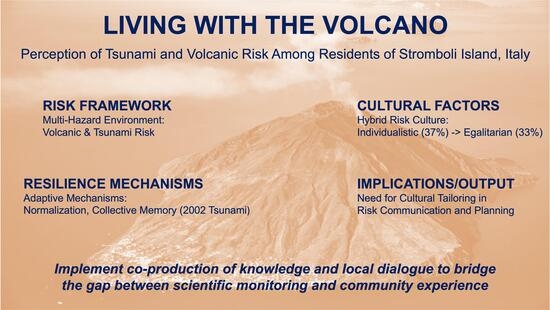
1. Introduction
2. Methods
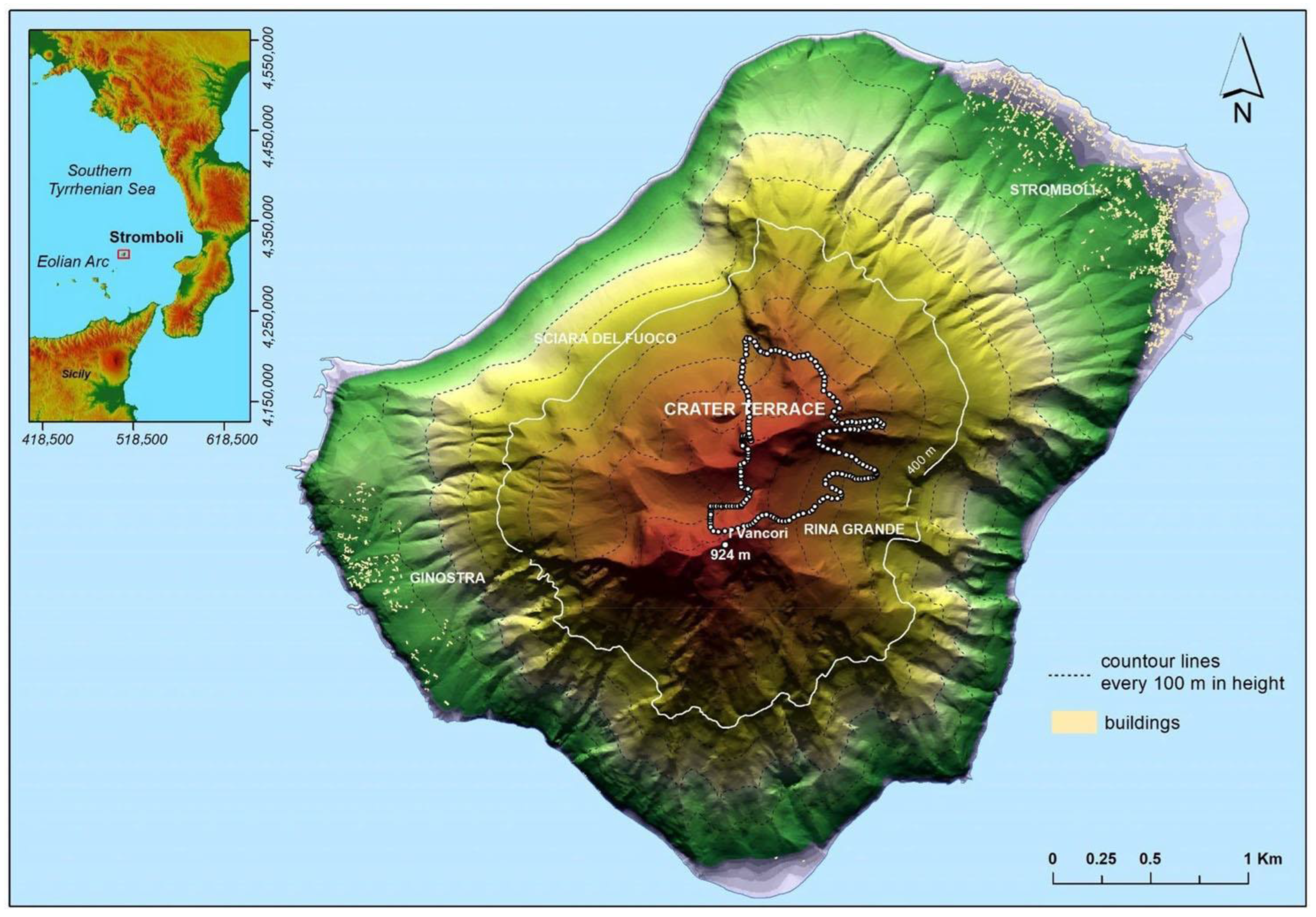
2.1. Study Area

2.2. Research Design
2.3. Participants and Sampling
2.4. Data Collection
2.5. Data Analysis and Coding
2.6. Ethical Considerations
3. Results
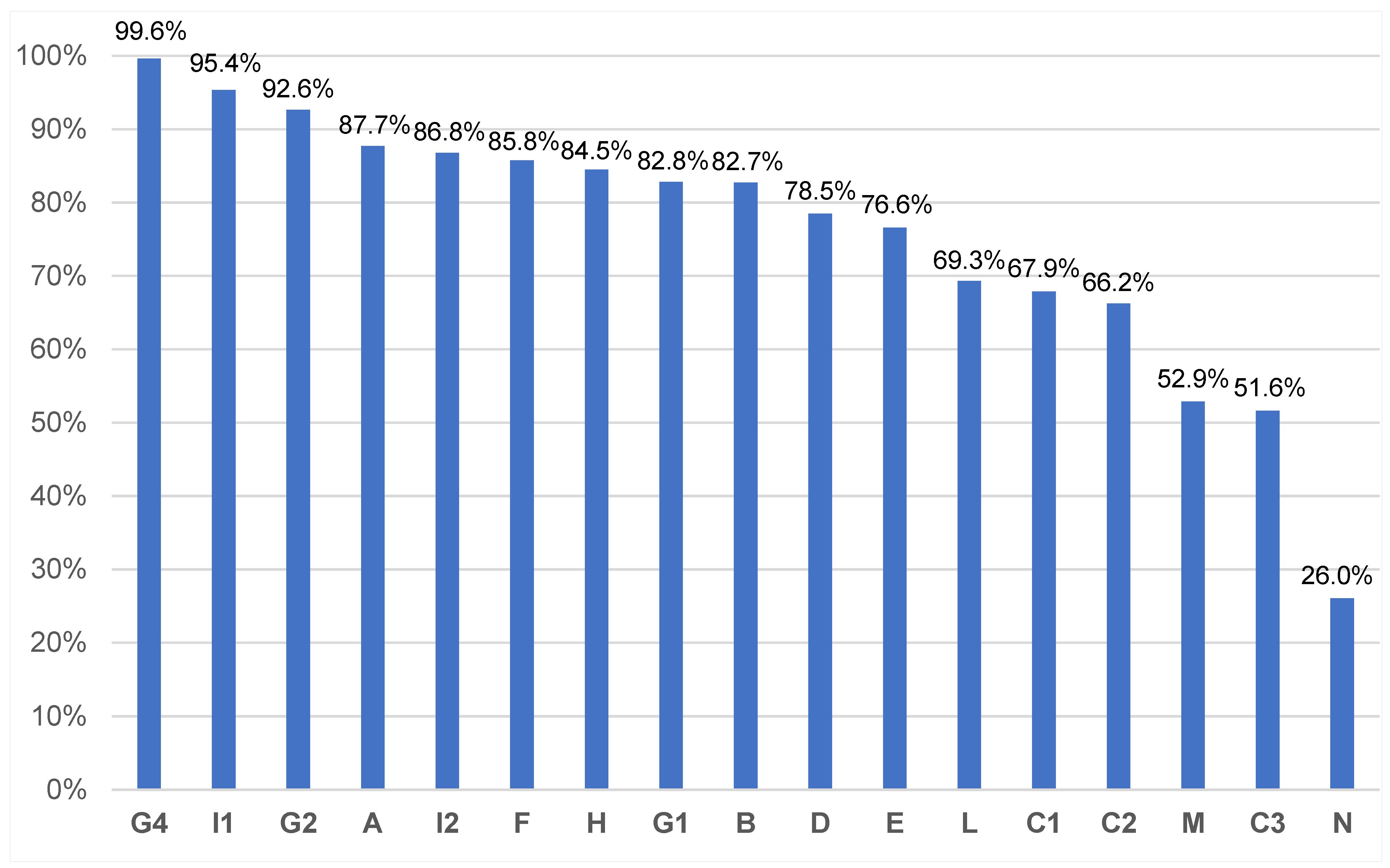
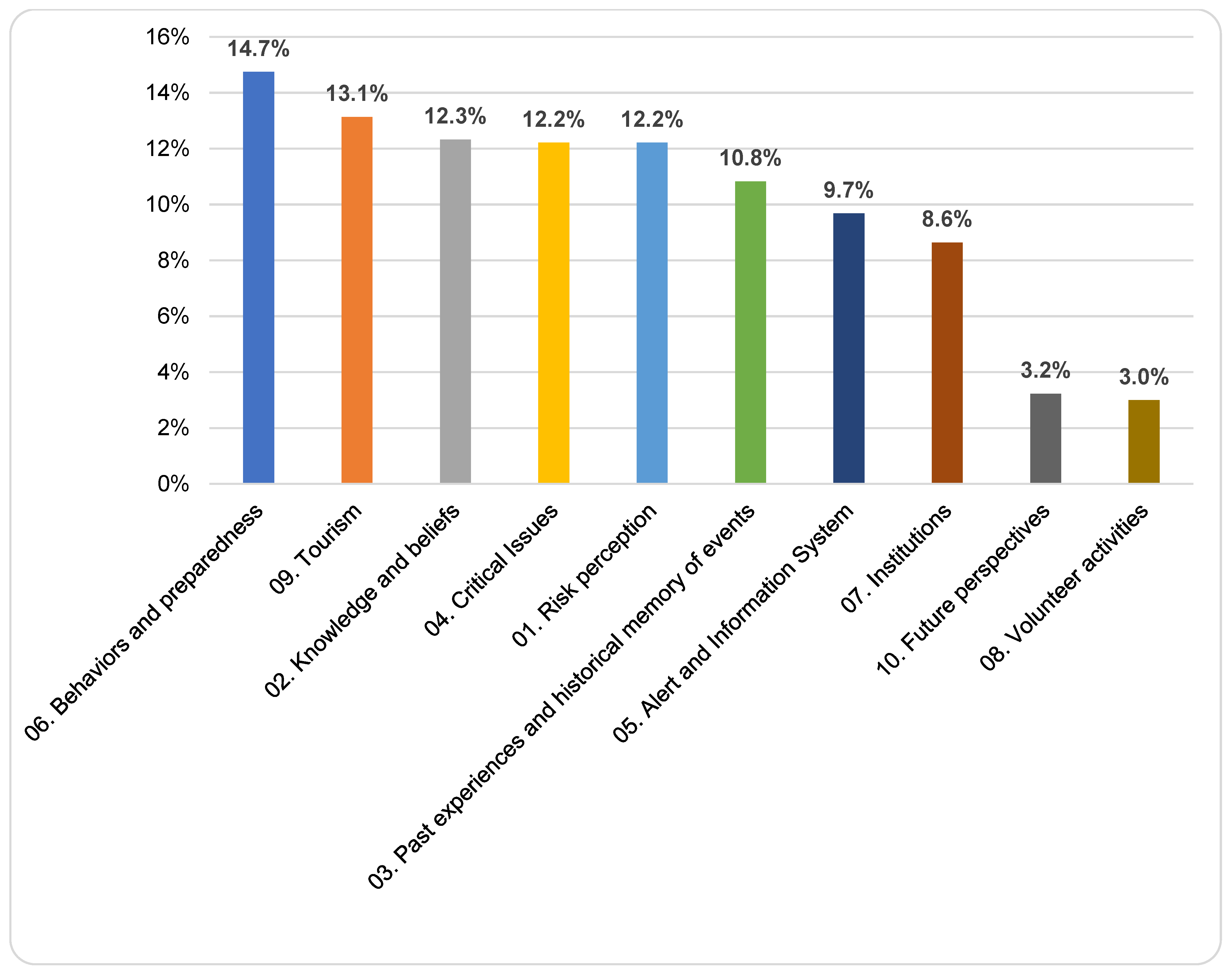
3.1. Overview of Coded Data
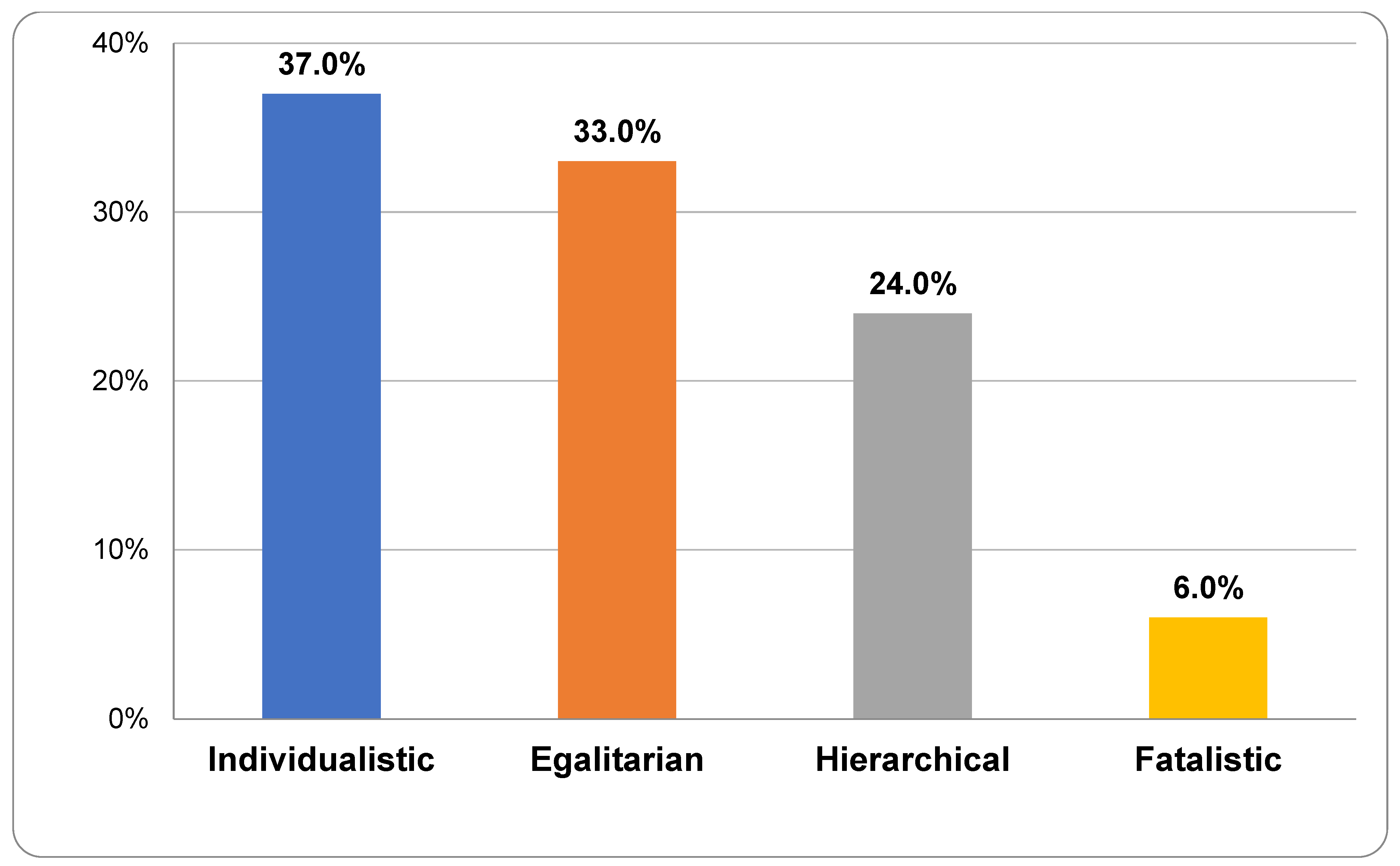
3.2. Cultural Orientations


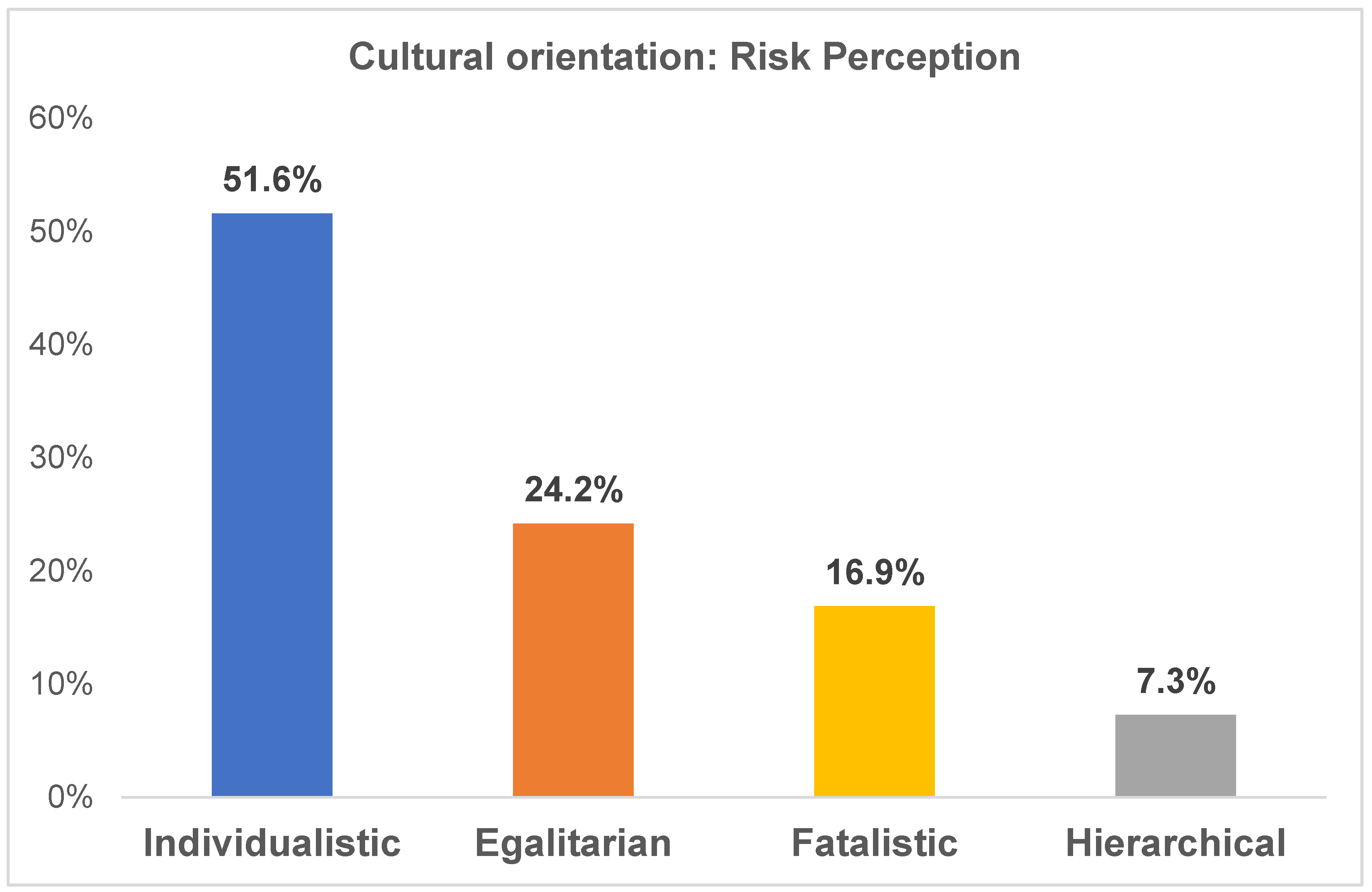
3.3. Living with “Iddu”: Risk Perception, Knowledge, and Memory

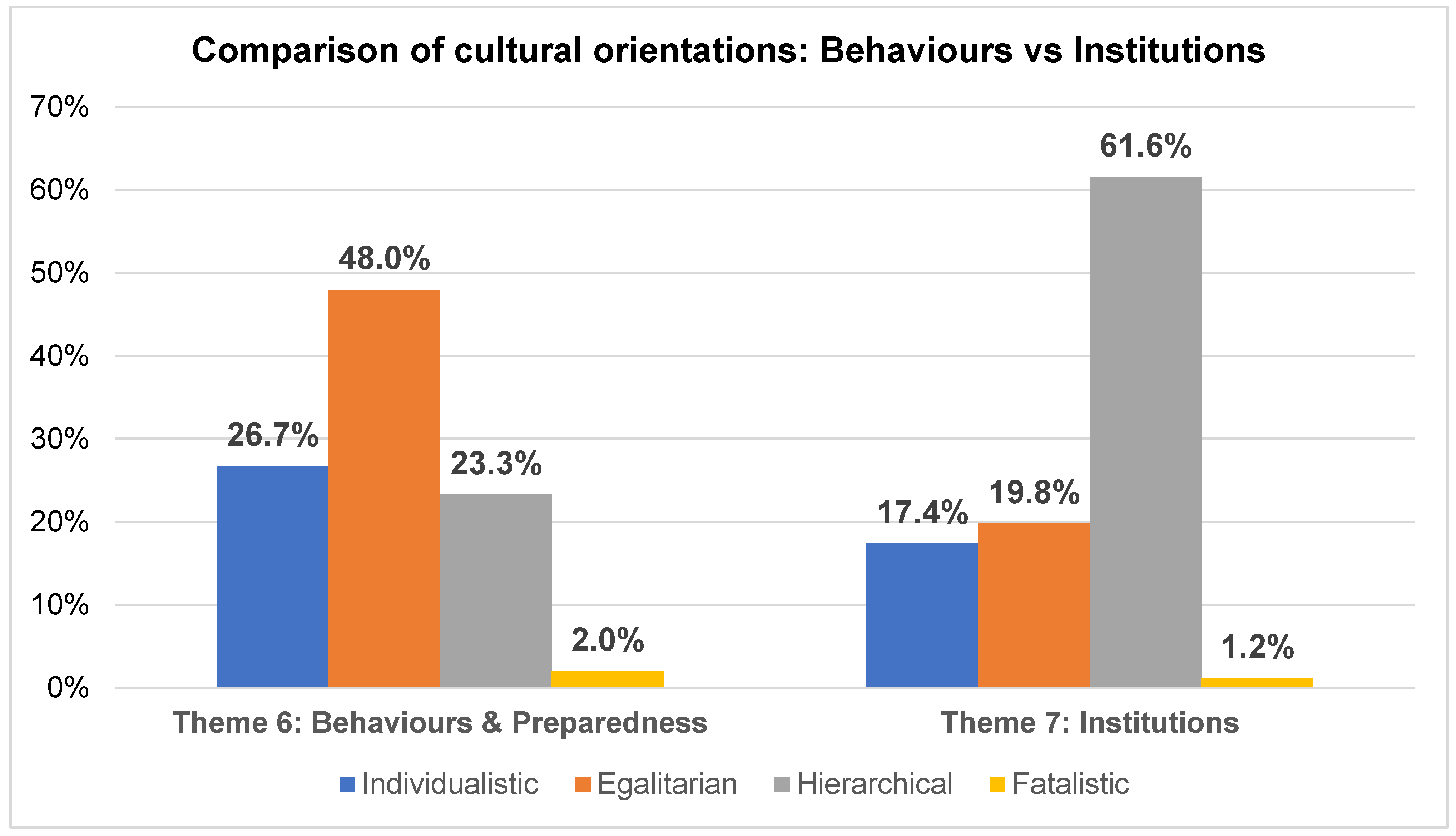
3.4. Preparedness in Action: Behaviours, Warnings, and Institutions

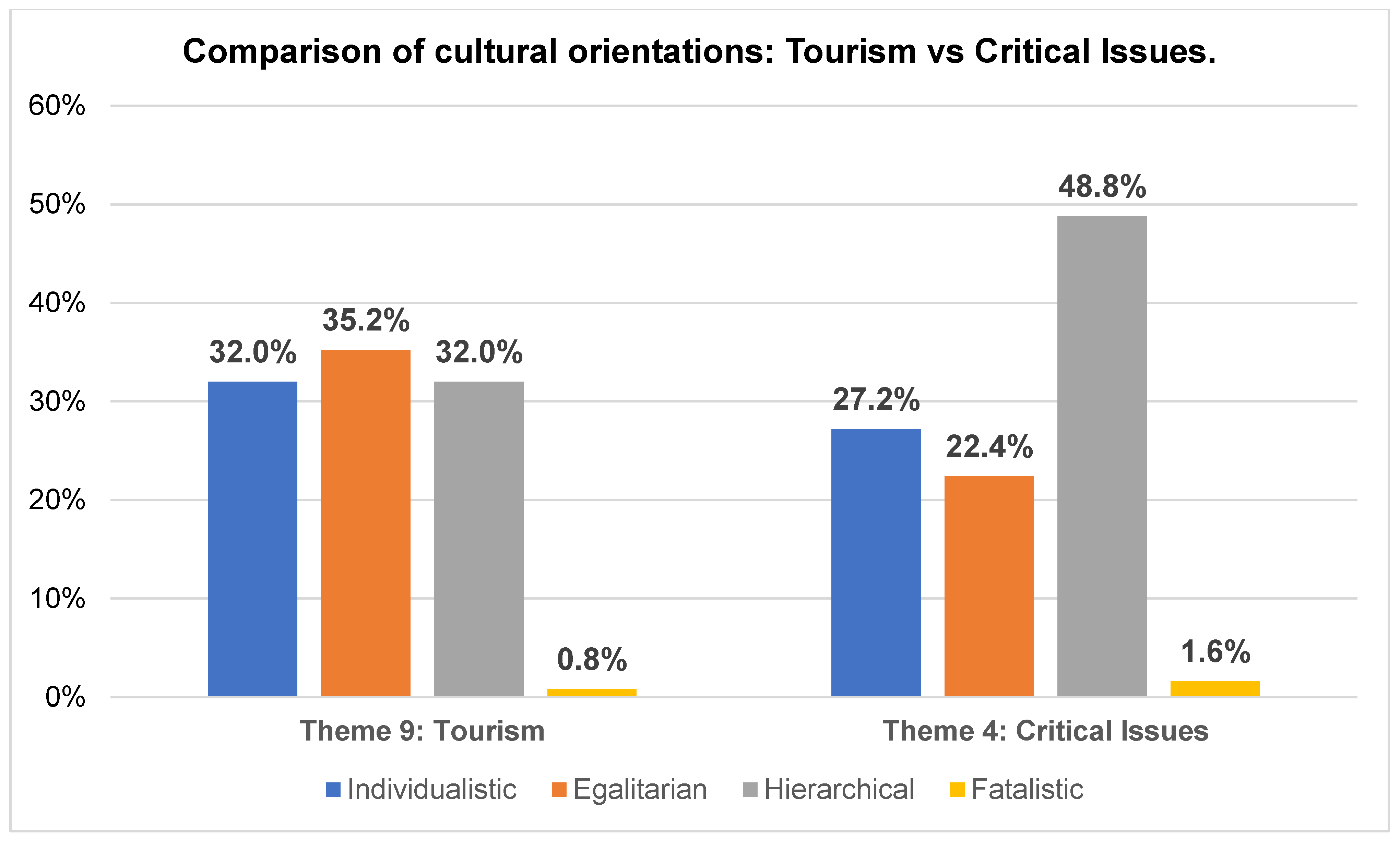
3.5. The Tourist Dilemma and Future Challenges

4. Discussion
4.1. Beyond Fatalism: A Hybrid Cultural Model
4.2. The “Trust Gap”: Why Top-Down Safety Fails
4.3. The Economic Filter: Tourism as a Double-Edged Sword
5. Limitations of the Study
6. Conclusions
Author Contributions
Funding
Institutional Review Board Statement
Informed Consent Statement
Data Availability Statement
Acknowledgments
Conflicts of Interest
References
- Bankoff, Greg. 2003. Cultures of Disaster: Society and Natural Hazard in the Philippines, 1st ed. London: Routledge. [Google Scholar] [CrossRef]
- Becker, Julia S., Douglas Paton, David M. Johnston, and Kevin R. Ronan. 2013. Salient beliefs about earthquake hazards and household preparedness. Risk Analysis 33: 1710–27. [Google Scholar] [CrossRef]
- Bisson, Marina, Claudia Spinetti, Roberto Gianardi, Karen Strehlow, Emanuela de Beni, and Patrizia Landi. 2023. High-resolution mapping and dispersion analyses of volcanic ballistics emitted during the 3rd July 2019 paroxysm at Stromboli. Scientific Reports 13: 13465. [Google Scholar] [CrossRef]
- Braun, Virginia, and Victoria Clarke. 2006. Using thematic analysis in psychology. Qualitative Research in Psychology 3: 77–101. [Google Scholar] [CrossRef]
- Cadag, Jake R. D., and Jean-Christophe Gaillard. 2011. Integrating knowledge and actions in disaster risk reduction: The contribution of participatory mapping. Area 44: 100–9. [Google Scholar] [CrossRef]
- Cerase, Andrea, Massimo Crescimbene, Federica La Longa, and Alessandro Amato. 2019. Tsunami risk perception in southern Italy: First evidence from a sample survey. Natural Hazards and Earth System Sciences 19: 2887–904. [Google Scholar] [CrossRef]
- Cugliari, Lorenzo, Massimo Crescimbene, Federica La Longa, Andrea Cerase, Alessandro Amato, and Loredana Cerbara. 2022. Tsunami risk perception in central and southern Italy. Natural Hazards and Earth System Sciences 22: 4119–38. [Google Scholar] [CrossRef]
- Douglas, Mary. 1985. Risk Acceptability According to the Social Sciences. New York: Russell Sage Foundation. Available online: http://www.jstor.org/stable/10.7758/9781610441582 (accessed on 12 February 2026).
- Douglas, Mary, and Aaron Wildavsky. 1982. Risk and Culture: An Essay on the Selection of Technological and Environmental Dangers, 1st ed. Oakland: University of California Press. Available online: http://www.jstor.org/stable/10.1525/j.ctt7zw3mr (accessed on 12 February 2026).
- Douvinet, Johnny, Noé Carles, Pierre Foulquier, and Matthieu Peroche. 2024. Tsunami hazard perception and knowledge of alert: Early findings in five municipalities along the French Mediterranean coastlines. Natural Hazards Earth System Sciences 24: 715–35. [Google Scholar] [CrossRef]
- Earle, Timothy C. 2007. Trust in Cooperative Risk Management: Uncertainty and Scepticism in the Public Mind, 1st ed. Edited by Michael Siegrist and Heinz Gutscher. London: Routledge. [Google Scholar] [CrossRef]
- Esteban, Miguel, Vana Tsimopoulou, Takahito Mikami, Nam Y. Yun, Anawat Suppasri, and Tomoya Shibayama. 2013. Recent tsunamis events and preparedness: Development of tsunami awareness in Indonesia, Chile and Japan. International Journal of Disaster Risk Reduction 5: 84–97. [Google Scholar] [CrossRef]
- Festinger, Leon. 1957. A Theory of Cognitive Dissonance. Redwood City: Stanford University Press. [Google Scholar] [CrossRef]
- Gaillard, Jean-Christophe. 2007. Resilience of traditional societies in facing natural hazards. Disaster Prevention and Management: An International Journal 16: 522–44. [Google Scholar] [CrossRef]
- Gravina, Teresita, Nicola Mari, Luca Farina, and Pierfrancesco Calabria. 2019. Tsunami risk perception along the Tyrrhenian coasts of Southern Italy: The case of Marsili volcano. Natural Hazards 97: 437–54. [Google Scholar] [CrossRef]
- Kelman, Ilan, Jean-Christophe Gaillard, and Jessica Mercer. 2015. Culture’s role in disaster risk reduction: Combining knowledge systems on small island developing states (SIDS). In Cultures and Disasters: Understanding Cultural Framings in Disaster Risk Reduction. Edited by Fred Krüger, Greg Bankoff, Terry Cannon, Benedikt Orlowski and E. Lisa F. Schipper. London: Routledge, pp. 208–21. [Google Scholar] [CrossRef]
- Mercer, Jessica, Ilan Kelman, Lorin Taranis, and Sandie Suchet-Pearson. 2010. Framework for integrating indigenous and scientific knowledge for disaster risk reduction. Disasters 34: 214–39. [Google Scholar] [CrossRef] [PubMed]
- Moreschini, Iacopo, Lorenzo Cugliari, Loredana Cerbara, Federica La Longa, Massimo Crescimbene, and Alessandro Amato. 2025. Tsunami risk perception of the touristic population of Stromboli Island: Towards effective risk communication strategies. Natural Hazards 121: 519–42. [Google Scholar] [CrossRef]
- Oliver-Smith, Anthony. 1996. Anthropological Research on Hazards and Disasters. Annual Review of Anthropology 25: 303–28. [Google Scholar] [CrossRef]
- Paton, Douglas. 2008. Risk communication and natural hazard mitigation: How trust influences its effectiveness. International Journal of Global Environmental Issues 8: 2–16. [Google Scholar] [CrossRef]
- Paton, Douglas, and David Johnston, eds. 2017. Disaster Resilience: An Integrated Approach, 2nd ed. Springfield: Charles C. Thomas Publisher Ltd. [Google Scholar]
- Patton, Michael Q. 2002. Qualitative Research and Evaluation Methods, 3rd ed. Thousand Oaks: Sage Publications. ISBN 0-7619-1971-6. [Google Scholar]
- Renn, Ortwin. 2008. Risk Governance: Coping with Uncertainty in a Complex World, 1st ed. London: Routledge. [Google Scholar] [CrossRef]
- Rittichainuwat, Bongkosh N. 2013. Tourists’ and tourism suppliers’ perceptions of crisis management. Tourism Management 34: 112–21. [Google Scholar] [CrossRef]
- Rosi, Mauro, Marco Pistolesi, Antonella Bertagnini, Patrizia Landi, Massimo Pompilio, and Alessio Di Roberto. 2013. Stromboli volcano, Aeolian Islands (Italy): Present eruptive activity and hazards. Geological Society, London, Memoirs 37: 473–90. [Google Scholar] [CrossRef]
- Slovic, Paul. 1987. Perception of risk. Science 236: 280–85. [Google Scholar] [CrossRef]
- Slovic, Paul. 1993. Perceived risk, trust, and democracy. Risk Analysis 13: 675–82. [Google Scholar] [CrossRef]
- Slovic, Paul. 2010. The Feeling of Risk: New Perspectives on Risk Perception, 1st ed. London: Routledge. [Google Scholar] [CrossRef]
- Tinti, Stefano, Anna Manucci, Gianluca Pagnoni, Alberto Armigliato, and Filippo Zaniboni. 2005. The 30 December 2002 landslide-induced tsunamis in Stromboli: Sequence of the events reconstructed from the eyewitness accounts. Natural Hazards and Earth System Sciences 5: 763–75. [Google Scholar] [CrossRef]
- Vaismoradi, Mojtaba, Jacqueline Jones, Hannele Turunen, and Sherrill Snelgrove. 2016. Theme development in qualitative content analysis and thematic analysis. Journal of Nursing and Practice 6: 100–10. [Google Scholar] [CrossRef]
- Wachinger, Gisela, Ortwin Renn, Chloe Begg, and Chistian Kuhlicke. 2013. The Risk Perception Paradox—Implications for Governance and Communication of Natural Hazards. Risk Analysis 33: 1049–65. [Google Scholar] [CrossRef] [PubMed]
- Yamori, Katsuya. 2014. Revisiting the Concept of Tsunami Tendenko: Tsunami Evacuation Behavior in the Great East Japan Earthquake. In Studies on the 2011 Off the Pacific Coast of Tohoku Earthquake. Edited by Hiroshi Kawase. Natural Disaster Science and Mitigation Engineering: DPRI Reports. Tokyo: Springer. [Google Scholar] [CrossRef]


| # | Question | Motivation, Information |
|---|---|---|
| 1. | Do you usually live on the island of Stromboli, or do you only come during certain periods of the year? How many generations has your family lived on Stromboli? | Information about the family unit, with particular reference to the number of generations residing on the island. Number of months per year spent on the island. |
| 2. | In your personal experience, what is risk? If necessary, the interviewer invited you to share some personal experiences related to risk. Further information: Have you ever heard of tsunami risk? Particularly in Stromboli? Were you on the island when the tsunami struck in 2002? Where were you at the time, with whom, and what were you doing? | Risk perception. Attitudes toward risk in the interviewee’s daily life. |
| 3. | Are you familiar with the warning system on Stromboli? Are you aware of how it works and what it signals? In your opinion, is the warning system useful or not? Are other islanders aware of it? Do the elderly and children know about it? Do you think the tourist population is informed? | Knowledge of the warning system and behaviours in the event of tsunamis or other dangerous phenomena. |
| 4. | The signs on the island that advise what to do in the event of a tsunami… In your opinion, are they visible? Are they adequate? Are they useful? Are they well-made? What should be changed or integrated? | Knowledge of escape routes and information panels. |
| 5. | Trying to imagine situations in your everyday life. What would you do if the tsunami warning sounded now? The interviewer proposed different scenarios. If you were on a boat… If you were on the coast… If you were at home or at work… | Behaviours and attitudes towards a possible tsunami phenomenon or other types of dangers. |
| 6. | Given the inherent risks of an island like Stromboli, do you feel you have a special role and responsibility for the safety of your loved ones and the community? And for the tourists who visit the island? | Social role played in the resident community. Sense of responsibility towards tourists and people who visit Stromboli. |
| Topic | Hierarchical [referring to external expectations and norms, originating from entities in positions of authority—vertical power] | Egalitarian [referring to external expectations and norms originating from entities in positions of equality or from one’s peers—horizontal power] | Fatalistic [attitude that considers any activity or knowledge about risk to be useless because it is independent of human influence] | Individualistic [referring to individual expectations and norms and behaviours and knowledge learned through self-study] |
| 01—Risk perception | [D71_74]; [D_92_95]; [D_234_240]; [G1_110_111]; [G1_281_293] [H_76_79]; [I1_26_28]; [L165_169]; [M_201_202]; | [B28_33]; [B74_80] [B99_105]; [C1_41_42]; [C1_50_52]; [C1_151_155]; [C1_160_162]; [C1_165_170]; [C1_C2_904_910] [D103_118]; [E_215_221] [G1_298_312]; [G4_535_544]; [G1_594_598]; [H_16_20]; [H_40]; [H_68_69]; [I1_13_19]; [I1_26_28]; [I1_57_70]; [I1_72_78]; [L_31_43]; [L_43_51]; [L_135_137]; [M_209_214]; | [A_11_19]; [A_48_50]; [A18_19]; [A38]; [A42]; [B50_52]; [B61_73]; [C1_53_58]; [C1_357_362]; [C2_593_596]; [C3_791]; [C1_2_837_886]; [D26_32]; [E7_17]; [E_83_93]; [F_40_56]; [F_60_70]; [F_72_82]; [F153]; [I1_55_67]; [N_542_546]; | [A11]; [B_15_24]; [B26]; [B41_48]; [B_112_114]; [B330_342]; [C1_37_39]; [C2_613_633]; [C3_893_901]; [D26_32]; [D34_41]; [D45_46]; [D_50_52] [D65_69]; [E7_17]; [E27_34]; [E_57_58]; [E_83_93]; [E_154_164]; [E_273_283]; [F_60_64]; [F_60_70]; [F_72_82]; [F_102_104]; [F_123_130]; [F153]; [H11_14]; [H_45_50]; [H_53]; [H_110_111]; [G1_41_55]; [G1_57_62]; [G1_65_81]; [G1_83_84]; [G1_86_92]; [G2_256_267]; [G3_272_279]; [G1_594_598]; [L_58_66]; [I1_13_19]; [I1_27_29]; [I1_47_54]; [I1_57_70]; [I1_70_76]; [I1_72_78]; [I1_84_90]; [I1_115_118]; [I1_191_202]; [I2_240]; [M_16]; [M_209_214]; [M_239_240]; [M_242_254]; [M_256_258]; [N_160_165] [N_332_342] [N_346_348] [N_495_501] [N_460_468] |
| 02-; 03—all topics | omissis | omissis | omissis | omissis |
Disclaimer/Publisher’s Note: The statements, opinions and data contained in all publications are solely those of the individual author(s) and contributor(s) and not of MDPI and/or the editor(s). MDPI and/or the editor(s) disclaim responsibility for any injury to people or property resulting from any ideas, methods, instructions or products referred to in the content. |
© 2026 by the authors. Licensee MDPI, Basel, Switzerland. This article is an open access article distributed under the terms and conditions of the Creative Commons Attribution (CC BY) license.
Share and Cite
Crescimbene, M.; Cugliari, L.; La Longa, F.; Moreschini, I. Living with the Volcano: Perception of Tsunami and Volcanic Risk Among Residents of Stromboli Island, Italy. Soc. Sci. 2026, 15, 157. https://doi.org/10.3390/socsci15030157
Crescimbene M, Cugliari L, La Longa F, Moreschini I. Living with the Volcano: Perception of Tsunami and Volcanic Risk Among Residents of Stromboli Island, Italy. Social Sciences. 2026; 15(3):157. https://doi.org/10.3390/socsci15030157
Chicago/Turabian StyleCrescimbene, Massimo, Lorenzo Cugliari, Federica La Longa, and Iacopo Moreschini. 2026. "Living with the Volcano: Perception of Tsunami and Volcanic Risk Among Residents of Stromboli Island, Italy" Social Sciences 15, no. 3: 157. https://doi.org/10.3390/socsci15030157
APA StyleCrescimbene, M., Cugliari, L., La Longa, F., & Moreschini, I. (2026). Living with the Volcano: Perception of Tsunami and Volcanic Risk Among Residents of Stromboli Island, Italy. Social Sciences, 15(3), 157. https://doi.org/10.3390/socsci15030157